Tag: Events

  • 3 State Policy Ideas to Accelerate Success in Transfer

    3 State Policy Ideas to Accelerate Success in Transfer

    The Beyond Transfer Policy Advisory Board is thinking creatively about financial and reputational incentives to improve transfer and learning mobility. In this article, two of the PAB’s members—Sharon Morrissey and Ron Anderson—who are both seasoned, system-level leaders, share their reflections on what is needed next to accelerate success in transfer and learning mobility.

    In April 2025, the Beyond Transfer Policy Advisory Board and Inside Higher Ed collaborated on a webcast entitled “Short-Term Reward, Long-Term Harm: How Current Transfer Practices Hurt Learners and Institutions.” This event drew nearly 400 live attendees across 46 states, including a mix of administrative, faculty and student service leaders from institutions of all kinds.

    During the webcast, participants were polled on the following question: “To what extent do you agree that new financial incentives or budgeting models could help institutions to prioritize improving transfer student outcomes?” The audience’s response was positive, with 85 percent agreeing at least somewhat. However, we see some divisions within the data, with 32 percent saying they “strongly agree” and 53 percent saying they “somewhat agree.”

    While that data might feel a bit hard to make sense of, it rings true to us. Between us we bring over seven decades of experience as faculty, institutional administrators and system office leaders across three states, Minnesota, North Carolina and Virginia. That experience has taught us that improving credit transfer and expanding learning mobility are some of the most complex challenges facing higher education.

    Why is this? For one, improving recognition of learning and credit transfer requires higher education institutions to contend with a wide range of prior learning experiences, including traditional college coursework, high school dual-enrollment courses, career and technical education, work-based learning, military service, industry certification, and more. This implies the participation of numerous learning providers, such as institutions of higher education, high schools, employers and the military. And it involves multiple decision-makers, such as students who choose transfer pathways, faculty who determine what learning to recognize and how to apply that learning to program requirements, enrollment managers who wish to recruit transfer students, registrars who process transcripts, deans and provosts who oversee academic standards, and presidents who are held accountable by policymakers for serving transfer students. In short, there is complexity at every step of the process.

    That complexity points to the fact that—as the mixed results of that poll show—if we are going to make true progress on transfer and learning mobility, we must find solutions that appeal to the priorities of multiple decision-makers. As we think about incentives, for example, the incentives that would influence the behavior of a faculty member are not the same as the incentives that would influence the behavior of an administrator. Those responsible for revenue may be more swayed by a policy that would augment an institution’s state appropriation for increased enrollment and graduation of transfer students, while those responsible for curriculum may be more inclined to accept and apply transfer credit to a degree program based on their assessment of how the prior learning aligns to the learning outcomes of their own local courses.

    Another key theme of the webcast—and, let’s be honest, nearly every discussion held these days about transfer—was that we must zero in on the credential applicability of prior learning. Past reform efforts have advanced incredible work such as understanding the student experience, increasing transfer student belonging, strengthening advising and creating infrastructure for efforts such as credit for prior learning. All that work is critical and must continue. But we must also double down on how to advance credential applicability of courses and other forms of prior learning. We are not helping transfer students meet their educational goals if we fail to apply their prior learning to program requirements.

    Finally, a third theme elevated in the webcast was about shifting culture and mindsets. Achieving increased credential applicability will require a shift away from the current culture that interrogates every aspect of a course or other prior learning experience to find a course-to-course equivalency. Does anyone really believe that a student cannot be successful in a subsequent course, or in the workforce, if they happen to read a different textbook? As the Council of Regional Accrediting Commissions recently elevated, the practice of interrogating the minutiae of courses and other learning experiences should, instead, focus at a higher level, on questions such as:

    • Does the sum of a student’s learning provide an appropriate foundation to set them up for continued academic success?
    • Can a student be successful in subsequent learning experiences, with appropriate just-in-time support? How can the institution provide that support?
    • What data do we have that a student will not be successful in a subsequent course?

    Based on our experience working with institutions and systems, we share here three state policy ideas that attend to these themes by 1) appealing to the priorities of multiple decision-makers, in this case both faculty and administrators; 2) zeroing in on credential applicability of prior learning; and 3) nudging broader cultural and mindset shifts.

    The first idea is for policymakers to explicitly include credit transfer and applicability within the design of state funding models by pinning rewards to credential applicability of groups of many courses. Right now, some—but not all—states have funding formulas that focus attention on transfer students’ outcomes. Those that do often include metrics such as the rate of students who transfer and bachelor’s degree completion for those who enter as a transfer student.

    On their own, these goalposts are too broad and have not yet produced the level of change needed. How can states improve this approach? We think one approach might be for states to collaborate with institutions to build various program-aligned credit thresholds and then reward institutions for applying that credit to degree requirements, such as:

    • Awarding and applying 15 program-aligned credits: The equivalent of what many refer to as a meta-major, designed to introduce students to a broad program area (e.g., allied health).
    • Awarding and applying 30 program-aligned credits: The equivalent of roughly the first year of college, often represented by a general education transfer core that is customized to include program-aligned courses.
    • Awarding and applying 60 program-aligned credits: The equivalent of a typical associate degree—but again, this must be a program-aligned associate degree.

    The goal here is for receiving institutions to not pull these credit blocks apart and pick and choose which credits apply. If students have met a threshold and their preparation is program-aligned, they should be advanced toward program completion for all of those credits. The groups of courses students have completed add to more than the sum of their parts. Students are journeying through a learning experience, with a variety of learning outcomes, that when looked at holistically are offering strong preparation for not just subsequent courses, but life and work. The mindset shift here is: Students do not need to have met every single learning outcome addressed in the receiving institution courses to be successful. They need to be prepared enough to be successful in subsequent courses, learning experiences and the workforce.

    Second, we encourage state policymakers to couple this policy change with demonstration projects that engage faculty in pedagogy, curriculum design and research. As receiving institutions accept and apply these groups of courses, what just-in-time supports should receiving institutions offer to students to ensure their success after transfer? How are students performing on a number of measures: in subsequent courses, for graduation and in the workforce? Which curricular design assumptions no longer hold? Where might classroom approaches be strengthened and evolved to reflect shifting needs of learners?

    Finally, all the findings of this work should be elevated through state recognition awards (ideally coupled with some funding) that promote the visibility and reputation of colleges and universities that are embracing all high-quality learning and moving learners toward credential completion.

    Through the Beyond Transfer Policy Advisory Board, we’ll continue to push against the status quo to imagine new possibilities for institutions and learners. Connect with us on Instagram (@beyondtransfer) to stay informed on the board’s latest policy insights and ideas, and visit our website to access prior research reports related to transfer, institutional finance and financial aid, including:

    • Beyond Transfer Policy Advisory Board. (2023). Affordability Disconnects: Understanding Student Affordability in the Transfer and Credit Mobility Era. See paper with visuals and blog.
    • Beyond Transfer Policy Advisory Board. (2023). Unpacking Financial Disincentives: Why and How they Stymie Degree-Applicable Credit Mobility and Equitable Transfer Outcomes. See paper with visuals and blog.
    Source link

  • A Microcourse for Sophomore Student Success

    A Microcourse for Sophomore Student Success

    Starting college can be a daunting transition for many students, with some moving cities or states and integrating into a new world of learning. That’s why most colleges invest significant time and energy to ensure first-year students have a successful start, connecting them to peers, support resources and faculty invested in their personal and academic growth.

    But the support often lags during the transition to sophomore year. Retention is a key factor in timely degree completion; students who leave college after the first year are much less likely to ever finish their program.

    That’s why DePaul University in Chicago piloted a new intervention this summer to bridge the transition from first-year to sophomore status. Through short online modules, students improved their time management, money management and career skills, preparing them to tackle the new academic year.

    What’s the need: As a university, DePaul has focused on improving second-year retention, said Jaclyn Jensen, professor of management and associate dean for undergraduate programs in the Driehaus College of Business at DePaul.

    Jensen was approached by a DePaul alumna, Pam Schilling, co-founder of the ed-tech company Archer Career, who was looking to apply for the Illinois Innovation Voucher program. The program provides funding for small or medium-size businesses that partner with higher education institutions in the state.

    Archer Career offers online, self-paced microlearning courses to support students and early-career professionals in achieving their career goals. Topics range from job search skills, such as networking or how to develop a LinkedIn profile, to personal skills, including identifying goals and career exploration.

    “This opportunity to seek funding was also the catalyst between leveraging our focus on retention in business students and that connected really seamlessly with her platform,” Jensen explained.

    How it works: The Rising Sophomore Success Program is structured as a collection of 10-minute modules, which include video and interactive activities. To select relevant course topics for RSSP participants, DePaul leaders used historical data on why students left the university, as well as demographic information to identify common pain points in the student experience.

    For example, DePaul has a large share of commuter students, so building students’ time management and executive functioning skills was important to enable them to juggle their various responsibilities.

    Students applied to be admitted to the program and completed the course during the summer after their first year.

    “From a student standpoint, we thought, ‘OK, we have this time when you’re not overwhelmed by taking multiple classes and you might actually have some time to carve out in meaningful ways to invest in your own success,’” Jensen said.

    Students were also supported by a peer mentor, an upper-level undergraduate in the business school, who facilitated weekly check-ins, talked through challenges and encouraged them in their learning.

    In addition, each student was paired with a professional mentor, either someone already in their support network or a graduate who could provide career advice.

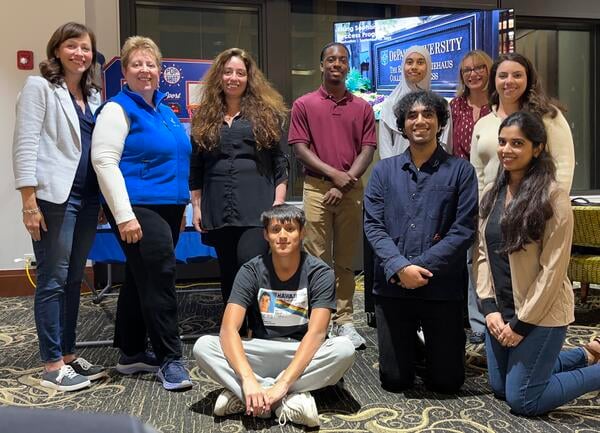
    For the pilot cohort, DePaul recruited 10 rising sophomores in the Driehaus College of Business, which included three incoming transfer students. The participants were celebrated with a kickoff event in the spring and a graduation ceremony during the fall after completing their Archer Career courses.

    What’s next: Following a successful pilot, DePaul and Archer Career were awarded a voucher from the state to integrate agentic artificial intelligence into the platform. It also provides funding for Archer Career and for DePaul personnel, including the peer mentor, an intern and a faculty researcher.

    The AI will offer personalized nudges and encouragement to students as they navigate the platform, similar to the way a coach might. Previously, a student intern hired to work on user design drafted messages for the peer mentor to send to students. Now, the university will automate the messages using AI.

    The nudges “will still rely on the behavioral data of students who are engaging in the platform, but it won’t be a member of the team manually sending those messages out at a particular time, but leveraging technology to help us do things like that,” Jensen explained.

    The goal is to scale the program to maximize impact and increase the number of students who can participate, Jensen said. DePaul plans to launch a more robust pilot of 50 student participants in summer 2026.

    If your student success program has a unique feature or twist, we’d like to know about it. Click here to submit.

    This article has been updated to clarify Jaclyn Jensen’s title.

    Source link

  • Advocates Defend In-State Tuition for Undocumented Students

    Advocates Defend In-State Tuition for Undocumented Students

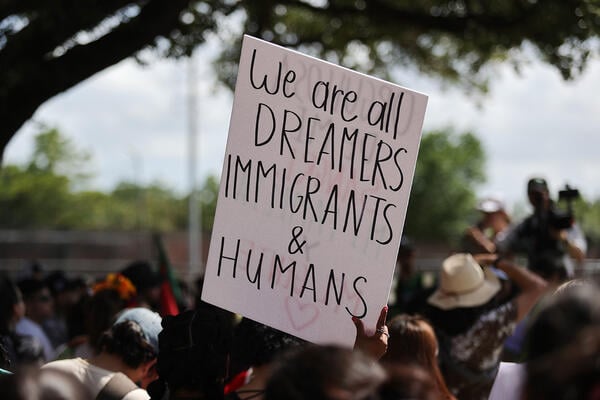
    Immigrant students and their advocates are working to reopen federal lawsuits that ended in-state tuition benefits for undocumented students in two states and another state where the same outcome seems imminent. Advocates say the judges ruled in favor of the government without a public hearing and the affected students weren’t given the opportunity to defend the policies.

    Since the summer, the U.S. Department of Justice challenged in-state tuition policies in Illinois, Kentucky, Minnesota, Oklahoma and Texas, claiming state laws extending in-state tuition prices to undocumented students breach federal law.

    In Texas and Oklahoma, attorneys general quickly sided with the DOJ and judges swiftly ruled to end in-state tuition benefits for undocumented students. As a result, tuition tripled for some undocumented students this fall, forcing them to make difficult choices about whether they could afford to stay enrolled.

    Kentucky’s undocumented students could soon face the same dilemma. The Kentucky Council on Postsecondary Education agreed to end in-state tuition benefits for local undocumented students in a settlement filed in September, but a judge has yet to make a ruling. Meanwhile, legal battles in Minnesota and Illinois are ongoing as these states defend their policies.

    Since these lawsuits first emerged, civil rights groups and students have sought to intervene or become parties to them. They’re hoping to reopen the quickly closed cases to have their say in court.

    A Latino civil rights organization, the Mexican American Legal Defense and Educational Fund, was the first to file a motion to intervene on behalf of undocumented students in Texas in June. A month later, the American Civil Liberties Union of Texas, the Texas Civil Rights Project, Democracy Forward and the National Immigration Law Center followed suit. They filed their own emergency motions to intervene on behalf of the activist group La Unión del Pueblo Entero, the Austin Community College District’s Board of Trustees and Oscar Silva, a student at the University of North Texas.

    MALDEF filed a similar motion on behalf of a group of undocumented students in Kentucky in August. And last week, the organization moved to intervene for students in Oklahoma, as well.

    Thomas A. Saenz, MALDEF president and general counsel, said undocumented students in Kentucky, Oklahoma and Texas “were promised regular tuition, and as a result of that promise, made the decision to attend public higher education institutions in those states,” but “that promise was stripped away wrongfully” and without public input.

    He stressed that, except for in extreme circumstances, such as cases involving national security, federal courts are meant to do their work in the public eye. But the Texas and Oklahoma laws got the ax without a public hearing. He also argued state lawmakers who dislike these policies can seek to repeal them, like any other state law, but there’s “no basis for legally challenging them.”

    “They’re not allowed to close the public out, do things behind closed doors,” Saenz said. “We ought to expect our courts to conduct their work in public. And that did not happen in Texas. It did not happen in Oklahoma.”

    A Bumpy Road

    Despite students and advocates’ efforts, the motions to intervene have hit a legal setback.

    In Texas, U.S. District Judge Reed O’Connor denied both MALDEF’s and the other groups’ motions to intervene. O’Connor, a George W. Bush appointee, said in court filings he agreed with the federal government and Texas that the motions were “legally futile” because federal law “pre-empts” the challenged Texas law. All of the groups seeking to intervene appealed the decision to the U.S. Court of Appeals for the Fifth Circuit.

    Saenz pushed back on the judge’s reasoning, saying O’Connor agreed with Texas and the DOJ’s conclusion “without any argument” or a public hearing where he could have heard a defense of the Texas Dream Act, the 24-year-old law that offered in-state tuition to undocumented students.

    “No administration of either party in nearly a quarter century has ever challenged the Texas Dream Act, so his conclusion of futility is simply ludicrous,” Saenz said.

    The law was never “presented,” according to Saenz. “That’s the way the courts are supposed to work. You’re supposed to have [an] argument presented in an adversarial manner. He simply signed off on a concocted agreement” between the Texas and U.S. attorneys general, he said.

    A group of higher ed institutions and organizations have rallied behind MALDEF and other advocacy groups. The Presidents’ Alliance on Higher Education and Immigration filed a 43-page amicus brief with the Fifth Circuit last week, defending interveners in Texas. Thirty-seven colleges, universities, higher education and immigrant rights organizations also signed on to the amicus brief, including the American Association of Colleges and Universities and the Association of Catholic Colleges and Universities.

    The district court decision “violates democratic principles by denying all interested parties their right to be heard,” the amicus brief read.

    Whether or not intervention efforts succeed, the stakes of these overturned state laws are too high not to try everything possible, said Miriam Feldblum, president and CEO of the Presidents’ Alliance.

    “This is about workforce development and supporting our domestic—including immigrant—talent pipeline that colleges and universities train, educate, nurture, and that go on to fuel the workforces … in communities and states,” she said.

    She also described intervening as a matter of “fairness.”

    “This is not about special treatment of undocumented students,” Feldblum said. “The tuition-equity challenges are targeting students who have grown up in the U.S., who have graduated from local high schools to pursue postsecondary education. This is what we want them to do. This is why we’re investing in their education.”

    Despite the roadblock, Saenz said he’s still confident motions to intervene will ultimately triumph.

    “I’m very hopeful, because it’s the law,” he said. “Intervention is legally required to be granted in all of these cases. And when we get to the merits of whether the tuition-equity laws are pre-empted or not, the law is absolutely on our side.”

    Source link

  • Where the Ed Dept. Stands After Longest Government Shutdown

    Where the Ed Dept. Stands After Longest Government Shutdown

    The House of Representatives passed a legislative package late Wednesday evening in a 222-209 vote, putting Congress one step closer to ending the federal government’s longest shutdown in history.

    Now, the legislation, which first passed the Senate late Sunday night, heads to the White House. There, President Donald Trump is expected to sign it into law.

    One policy expert told Inside Higher Ed that he expects to see little operational change for institutions as the government reopens. But he and others will be paying close attention to whether the Trump administration follows through on one of the bill’s key compromises: reversing the most recent round of federal layoffs.

    LEAD IN

    PITHY STATEMENT FROM SPEAKER JOHNSON OR WHITE HOUSE

    Part of the package would fund the Department of Veterans Affairs, military construction, the Department of Agriculture, the Supplemental Nutrition Assistance Program and Congress through the end of the fiscal year. But it only appropriates funding for the Department of Education and most other agencies until Jan. 30, using what is known as a continuing resolution. For the most part, the CR gives agencies access to the same levels of federal funding as the last fiscal year.

    Jon Fansmith, senior vice president for government relations at the American Council on Education, said because some of the Education Department’s staff continued working throughout October and into November, not much will change for colleges and universities.

    “Financial aid was being disbursed, student loans were being serviced, all those things. So there probably won’t be an immediate significant shift,” he said. “It will, of course, be important for [grant] programs who have not been able to contact program officers with concerns or questions to have staff now available to them again. But that’s probably the biggest thing.”

    Fansmith also noted that some education benefits for military service members, which in many cases have been disrupted and backlogged due to staffing shortages, will take some time to get back up to speed.

    The 4 Parts of the Stopgap Bill

    “There are veterans who have housing benefits and education benefits and all sorts of assistance that they’re using to fund their educations that have just not been coming through over the last six weeks,” he said. “And even when they turn the government back on … that backlog has only grown in the interim. So it’s not going to be an immediate resolution.”

    Senate Democrats also negotiated with Republicans to reverse Trump’s latest round of layoffs in the stopgap bill. Theoretically, the legislation should reinstate more than 460 Department of Education employees within five days of it being enacted.

    It mandates that any employee who was subject to a reduction in force during the shutdown “shall have that notice rescinded and be returned to employment status.” (The majority of those employees were tasked with overseeing federal grant programs for both K–12 and higher education.)

    But Rachel Gittleman, president of the Education Department’s union, argues the language in the bill doesn’t do enough to protect public servants. She worries that saying staffers must be “returned to employment status” could allow Education Secretary Linda McMahon to place union members on administrative leave and not actually put them back to work.

    “The Trump administration has shown us repeatedly that they want to illegally dismantle our congressionally created federal agency,” she said. As such, “We have no confidence that the U.S. Education Department will follow the terms of the continuing resolution or allow the employees named in October firings to return—or even keep their jobs past January.”

    Fansmith is also skeptical department employees will return to their jobs.

    “[The administration hasn’t] shown much willingness to follow what the law requires. So I would absolutely assume we should expect to see efforts to further reduce staffing,” he said. “They’re not hiding the fact they’re trying to do it, and they don’t have a lot of compunction about the methods they use to do so.”

    A department spokesperson, however, told Inside Higher Ed that all employees—both those who were furloughed and those laid off during the shutdown—will return to work, as they remain employees of the department.

    The department also pointed to a ruling from the federal district court in Northern California that blocked the reduction in force in late October, saying that under that order, all employees who received a RIF notice during the shutdown remain employees of the federal government.

    Inside Higher Ed reached out to multiple Republican and Democratic lawmakers in both the House and the Senate to ask about the concerns Gittleman and Fansmith raised. None responded prior to publication.

    Source link

  • Ken Bain Changed College Teaching Forever

    Ken Bain Changed College Teaching Forever

    Is it possible for someone you’ve never met to be a mentor?

    I don’t know how else to describe Ken Bain, author of What the Best College Teachers Do, a book that transformed not just my teaching, but my entire life.

    Ken Bain passed away on Oct. 10. I first learned this news on LinkedIn from Jim Lang, who did know and was directly mentored by Ken Bain and, like the several dozen folks who offered comments on his passing—and also me—whose life and work were profoundly affected by Ken Bain’s work.

    (I also recommend checking out this episode of Bonni Stachowiak’s Teaching in Higher Ed podcast, which remembers Ken Bain and provides links to his multiple appearances on the show.)

    I read an advance copy of What The Best College Teachers Do sometime in early 2004 in a period where I was starting to question the folklore of teaching I had absorbed as a student and graduate assistant, and it immediately changed how I thought about my own work, kicking off a process of consideration and experimentation around teaching writing that continues to this day.

    What the Best College Teachers Do reflects more than a decade of study and is entirely based in observations of teaching, teaching materials, student responses and reflections, interviews and other sources, filtered through various lenses (history, literary analysis, sociology, ethnography, investigative journalism) to draw both big conclusions about not just what teachers do, but how they think, how they relate to students, how they view their work and how they evolve their approaches.

    The method is relentlessly qualitative rather than quantitative, and it can be straightforwardly adapted to one’s own work.

    At least that’s how I used the book. Looking through some of the text for the first time in years, I can see significant strands of What the Best College Teachers Do DNA in my writing about the writer’s practice. The lens of “doing” as the central feature of any work has been part of my personal framework for so long that I almost lost its origin, but there it is.

    One of my very first posts at Inside Higher Ed, back before I even had my own section and was merely guesting at Oronte Churm’s joint, was on What the Best College Teachers Do.

    The book is more than 20 years old, but its framing questions are evergreen and even more relevant in this AI age. The book asks and answers the following questions:

    1. What do the best teachers know and understand?
    2. How do they prepare to teach?
    3. What do they expect of their students?
    4. What do they do when they teach?
    5. How do they treat students?
    6. How do they check their progress and evaluate their efforts?

    The book helpfully encapsulates the study’s findings under these categories, and as bullet points of good teaching practice they are spot-on. But I am also here to testify that they are not a substitute for the full experience of reading What the Best College Teachers Do, because the act of reading the specific illustrations and examples that gave rise to these findings allows for the individual to reflect on their own practices relative to others.

    The first thing I did after reading and absorbing What the Best College Teachers Do was change my attendance policy to no longer punish students based on a maximum number of absences. I’d engaged in this practice because it had been handed down as conventional wisdom: If you don’t police student attendance, they won’t show up. Bain’s best teachers challenged this conventional wisdom.

    The positive effects were immediate. I stepped up my game in terms of making sure class was viewed by students as productive and necessary. My mood improved, as I no longer stewed over students who were pushing their luck in terms of absences, daring me to dock their overall semester grade.

    Attendance went up! I asked students about this, and they said that when a class says you “get four absences” they were treating that as a kind of permission (or even encouragement) to go ahead and miss four classes. Student agency and self-responsibility increased. If they missed a class, they knew what they had to do, and it didn’t involve me.

    The experiments continued, leading ultimately to the writer’s practice and my embrace of alternative assessment, developments that made me a much more effective instructor and now, improbably, someone invited to colleges and universities to share his expertise on these subjects.

    It would not have happened without the work and mentorship of Ken Bain, mentorship I experienced entirely through reading his book.

    I worry that mentorship is going to be further eroded by AI, particularly if entry-level jobs with their apprenticeship tasks are now completed through automation, rather than by working with other, more experienced humans. The enthusiasm for letting large language models compress texts into summaries rather than reading the full work of another unique intelligence is also a threat.

    My conviction that our way forward through the challenge of AI is rooted in deeply examining the experiences of learning and fostering those experiences for students only grows stronger by the day. What the Best College Teachers Do is experiences all the way down, a book of observations conveyed in such a way that allows us to make use of them, literally, in what we do.

    A great man. A great mentor. Ken Bain’s work will live on through the many pedagogues he’s inspired.

    Source link

  • Transitioning to the Agentic University 2026–27

    Transitioning to the Agentic University 2026–27

    The dramatic enhancement in the capability of AI as it moves from bots to agents will bring about efficiencies and have a far greater impact on the day-to-day operations, strategies and effectiveness of our institutions. We will become less expensive, more personalized and more responsive to students and employers. Those are big claims, so for this column, I turned to my personal assistant, Google Gemini 2.5 Pro on Nov. 1, 2025, to help me with identifying the pathway to those outcomes.

    Caveats

    In this article, I can only hit the high points along the way in developing an agentic AI–enhanced university. This is merely a broad-brush, incomplete view that each university should adjust and enhance in order to meet its structures and needs. I also encourage you to read the valuable McKinsey article “Deploying agentic AI with safety and security: A playbook for technology leaders,” published on Oct. 15, 2025, for important security and safety information.

    Gemini Pro prefaced its recommendations with:

    This is the central strategic challenge for the next 36 months. The institution has successfully navigated the first wave—generative AI, which is about creating content. You are right to be concerned about the second, more powerful wave: agentic AI, which is about taking action.

    Where generative AI is a research assistant, an agentic AI is a 24/7, autonomous project manager. It can understand a high-level goal (e.g., “increase retention for first-generation students”), create a multi-step plan, execute that plan across different software systems and learn from its mistakes without constant human prompting.

    Competitors will use this to create profound operational efficiencies and new, hyper-personalized student services. The institutions that wait will be competing on price and quality against a rival that has automated its back office and given every student a personal AI adviser.

    This will take significant thought and planning across the university. It will be important that we include all members of the university community to make this a coordinated, comprehensive change that will significantly advance the efficiency, effectiveness and relevance of the institution. Timing is important. We must begin immediately if we hope to have major changes in place before the end of 2027. Let’s begin!

    First Half of 2026 Foundation and Vision

    We will need an executive task force with the knowledge, resources and shared vision to accomplish this task. Gemini recommends we be sure to include:

    • Chief information officer: To map the data and systems.
    • Chief financial officer: To identify cost-saving opportunities and fund pilots.
    • Provost: To champion the academic quality and student-facing initiatives.
    • VP of enrollment: To represent the entire student life cycle (recruitment to alumni).
    • VP of operations: To represent the “back office” (HR, grounds, facilities).

    The executive task force will want to set up opportunities for input and support of the initiative. Perhaps the first step will be to seek ideas of whether the first order of priority should be quality improvement (hyperpersonalization of services to the learners) or cost efficiency (operational excellence). Both of these will be needed in the long run in order to survive the agent-enabled competition that will be both of higher quality and less expensive. In seeking input on this choice, universitywide awareness can be fostered. Perhaps a broad university forum could be scheduled on the topic with smaller, targeted follow-ups with faculty, staff, students, administrators and external stakeholder groups scheduled as the initiative proceeds.

    One of the first steps of the executive task force will be to perform a universitywide Agent Readiness Audit. Since agents run on data and processes, we need to identify any data silos and process bottlenecks. These will be among our first priorities to ensure that agents can perform work smoothly and efficiently. Resolving these may also be among the most time-consuming changes. However, removing these data roadblocks can begin to show immediate progress in responsiveness and efficiency.

    Second Half of 2026 Into Spring 2027 Pilot and Infrastructure

    Gemini suggests that a good starting point in the summer of 2026 would be to set up two pilots:

    • Cost-Saving Pilot: The Facilities Agent
    • Goal: Reduce energy and maintenance costs.
    • Action: An AI agent integrates with the campus event schedule, weather forecasts and the building HVAC/lighting systems. It autonomously adjusts climate control and lighting for actual use, not just a fixed timer. It also fields all maintenance requests, triages them and dispatches staff or robotic mowers/vacuums automatically.
    • Quality-Improvement Pilot Example: The Proactive Adviser Agent
    • Goal: Improve retention for at-risk students.
    • Action: An agent monitors student data in real time (LMS engagement, attendance, early grade-book data). It doesn’t replace the human adviser. It acts as their assistant, flagging a student who is at risk before the midterm and autonomously executing a plan: sending a nudge, offering to schedule a tutoring session and summarizing the risk profile for the human adviser to review.

    Our most significant centralized expense will be to set up a secure digital sandbox. The pilots cannot live on a faculty member’s laptop. The CIO must lead the creation of a central, secure platform. This sandbox is a secure environment where AI agents can be developed, tested and given access to the university’s core data APIs (e.g., SIS, LMS and ERP).

    Gemini reminds me that, concurrently, we must set up a new entity. The generative AI rules were about plagiarism. The agentic AI rules must be about liability. The new entity is a kind of Agent Accountability Framework. It deals with policy questions such as:

    • Who is responsible when an agent gives a student incorrect financial aid advice?
    • What is the off-switch when an agent-driven workflow (like course wait lists) creates an inequitable outcome? Who has authority to flip the switch?
    • By whom and how are an agent’s actions audited?

    Implementation Across University Through Fall 2027

    There will be many personnel and staffing topics to address. By the summer of 2027, we should be well on the way to refining roles and position descriptions of employees. The emphasis should be efficient, enhanced redesign of roles rather than staffing cuts. Some cuts will come from normal turnover as staff find more attractive opportunities or retire. In most cases, employees will become much more productive, handing off their redundant, lower-level work to agents. For example, Gemini Pro envisions:

    • The admissions counselor who used to answer 500 identical emails now manages a team of AI agents that handle the routine questions, freeing the counselor to spend one-on-one time with high-priority applicants.
    • The IT help desk technician no longer resets passwords. The technicians now train the AI agent on how to troubleshoot new software and directly handle only the most complex, level-three issues.
    • The human adviser now manages a caseload of 500 students (not 150), because the AI assistant handles 90 percent of the administrative churn, allowing the adviser to focus on high-impact mentoring.

    Gemini Pro suggests that this approach can result in a higher-quality, more efficient university that will be able to compete in the years ahead. The final step is the most critical and is the job of everyone, from the president and board on down. We must champion a culture where AI agents are seen as collaborators, not replacements. This is a human-AI “co-bot” workforce.

    The institutions that win in 2027 will be those that successfully trained their managers to lead mixed teams of human and AI employees. This is the single greatest competitive advantage one can build.

    This framework will position the university not just to survive the agentic AI wave but to lead it, creating an institution that is both more efficient and, critically, more human-centered.

    Source link

  • Colleges Expand Basic Needs Support Following SNAP Freeze

    Colleges Expand Basic Needs Support Following SNAP Freeze

    The government shutdown may be nearing its end, but the delayed distribution of food assistance funds continues to pose a threat to Americans, including the basic needs security of college students. For now, the future of Supplemental Nutrition Assistance Program funding remains cloudy amid the federal government’s ongoing court battles against releasing the funds.

    Nearly three in five college students experience some form of basic needs insecurity, and two in five experience food insecurity, according to national surveys. In addition, approximately 3.3 million college students are eligible for federal food assistance, according to 2020 data, though a large share do not utilize SNAP due to lack of awareness.

    Financial insecurity is one of the top threats to student retention and persistence in higher education, meaning a lapse in support may impede some students’ ability to remain enrolled.

    Some colleges and universities have established new or expanded measures to plug the gap in food support for students during the shutdown, including expanding the hours of campus food pantries and promoting emergency grant funding.

    University of Minnesota

    Minnesota administrators announced on Nov. 3 that students affected by the lack of SNAP funds would be able to access one free meal a day in the residential dining hall until benefits resume. The university estimates fewer than 1,000 individuals on campus are enrolled in SNAP.

    In addition, the on-campus food pantry, Nutritious U, will offer expanded hours for the rest of the semester, opening one hour earlier to serve more students.

    Franklin Pierce University

    The New Hampshire–based university provides basic needs resources at several campus locations—including the library, counseling center and the Office of Outreach and Engagement—to ensure students can have access to food and hygiene products.

    The pantry, Rations for Ravens, is funded primarily through donations, both monetary and physical products.

    City University of New York

    CUNY chancellor Félix Matos Rodríguez announced the university system would allocate additional funding to all campuses “so they can stock extra supplies in their on-site food pantries or provide food assistance in other forms,” he wrote in a Nov. 7 email to students. CUNY students can visit any campus pantry in the system, regardless of their home enrollment, allowing them to access those with the most convenient hours and locations.

    The chancellor also urged students to apply for SNAP benefits for future assistance; students at the Bronx campuses (Lehman, Hostos and Bronx Community College) can also participate in a pilot program for community-based resources.

    Austin Community College

    Nearly half of the students at Austin Community College are food insecure, according to fall 2023 survey data. Since the government shutdown, officials have received up to 500 requests a week for emergency aid from the college’s 74,000 students, as reported by The Austin American-Statesman.

    The college has pantries on every campus, called River Food Bites, which now have extended hours to meet students’ needs. ACC also allocated $25,000 in emergency funding to purchase gift cards to the H-E-B grocery store, and staff plan to create meal kits to support students over winter break.

    Long Beach City College

    The California college expanded services at its food pantry locations, called Viking Vaults, by increasing food options and offering food cards to students who have been impacted by suspended SNAP benefits. Students can also apply for emergency aid, and the college outlined a list of FAQs to address their concerns during the shutdown.

    University of North Carolina at Chapel Hill

    UNC offers a variety of basic needs resources during a typical academic year, some of which have been expanded to meet the current surge in demand.

    Undergraduate and graduate students can access any of the six on-campus food pantries or nine gardens around campus to pick up food. Eligible students can also receive a free campus dining meal card through a referral form. In addition, the university is piloting a meal swipe donation program for the end of the term so students can share their unused meals with others.

    Students can also receive push notifications of events and other free resources through campus events.

    Source link

  • UC San Diego Sees Students’ Math Skills Plummet

    UC San Diego Sees Students’ Math Skills Plummet

    Laser1987/iStock/Getty Images

    The number of first-year students at the University of California, San Diego, whose math skills fall below a middle school level has increased nearly 30-fold over the past five years, according to a new report from the university’s Senate–Administration Working Group on Admissions. In the 2025 fall cohort, one in eight students placed into math below a middle school level, despite having a solid math GPA.

    The number of first-year students in remedial math courses at the university surged to 390 in fall 2022, up from 32 students in fall 2020. The remedial math course was designed in 2016 and only addressed missing high school math knowledge, but instructors quickly realized that many of their students had knowledge gaps that went back to middle or elementary school, the report states. For fall 2024, UC San Diego revamped its remedial math course to address middle school math gaps and introduced an additional remedial course to cover high school math. In fall 2025, 921 students enrolled in one of these two courses—11.8 percent of the incoming class.

    “This deterioration coincided with the COVID-19 pandemic and its effects on education, the elimination of standardized testing, grade inflation, and the expansion of admissions from under-resourced high schools,” the report states. “The combination of these factors has produced an incoming class increasingly unprepared for the quantitative and analytical rigor expected at UC San Diego.”

    Within the UC system, the San Diego campus isn’t alone, but its problem is “significantly worse,” the report states. This is partly because the university has, since 2022, admitted and enrolled more students from low-income schools that saw greater COVID-era learning loss than other UC campuses. Many other UC campuses are seeing similar, though smaller, declines in student preparation. About half of UC campus math chairs responded to a survey saying that the “number of first-year students that are unable to start in college-level precalculus” increased twofold between fall 2020 and fall 2025, and the other half said the number increased threefold. 

    High school grade inflation is not helping the university evaluate students’ math skills, the report states. In 2024, the average high school math GPA for students in Math 2, the middle school–level remedial math course, was 3.65—an A-minus.

    “At the same time our admit pool is slipping in math preparation, we see a slight improvement in their math grades from high school,” the report states. “The elimination of standardized testing together with COVID resulted in a mismatch between students’ course level/grades and their actual levels of preparation, with far-reaching implications for determining math readiness and course placement.”

    The working group put forward a number of recommendations for addressing these shortcomings, including using a “math index” based on historical placement data and transcript-based variables to “predict students’ likelihood of placement into remedial math.” The group also recommended establishing feedback mechanisms with high schools and requiring math placement testing by June 1 for incoming students, among other things.

    Source link

  • Trump Defends Enrolling International Students

    Trump Defends Enrolling International Students

    President Donald Trump stressed the value of international students in the U.S. during an interview aired on Fox News Monday.  

    Fox News host Laura Ingraham pressed Trump on why he wouldn’t curb international student enrollments, particularly from China. Trump told her doing so would “perhaps make people happy” but colleges and universities would “go out of business.”

    “You don’t want to cut half of the people, half of the students from all over the world that are coming into our country—destroy our entire university and college system—I don’t want to do that,” Trump said. He also claimed historically Black colleges and universities would “all be out of business.”

    “Look, I want to be able to get along with the world,” Trump added.

    Ingraham pushed back, raising concerns about Chinese spying and intellectual property theft. But Trump framed welcoming international students as an economic decision.

    “We take in trillions of dollars from students,” he said. “You know, the students pay more than double when they come in from most foreign countries. I want to see our school system thrive. And it’s not that I want them, but I view it as a business.”

    The annual Open Doors report from the Institute of International Education estimates the economic value of foreign students in the U.S. to be about $50 billion per year.

    In May, Secretary of State Marco Rubio threatened to “aggressively revoke” Chinese students’ visas and intensify vetting for Chinese visa applications. But Trump reversed course this summer and proposed the U.S. allow 600,000 Chinese students into the country, prompting backlash from some members of his base, the Associated Press reported.

    The move, and Trump’s reiterated support for it on Fox this week, seem to contradict other actions his administration has taken, such as revoking international students’ visas, arresting international students for First Amendment–protected protests and ramping up scrutiny of international student visa applicants. Some campuses have experienced steep declines in international student enrollments this semester.

    Source link

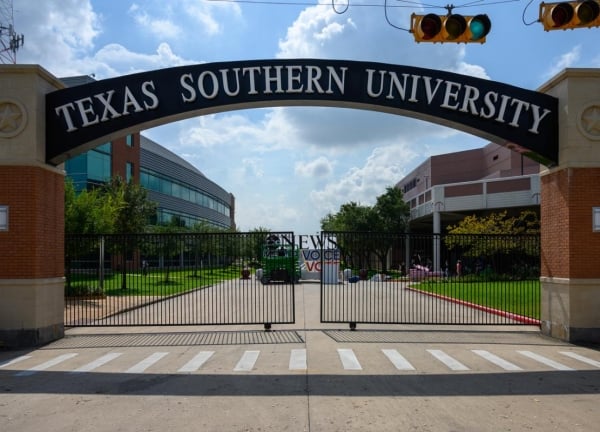
  • Texas Gov. Orders Financial Investigation of Texas Southern

    Texas Gov. Orders Financial Investigation of Texas Southern

    Istockphoto.com/michelmond

    Texas governor Greg Abbott and lieutenant governor Dan Patrick have ordered an investigation of Texas Southern University, a historically Black institution in Houston, after a state audit found evidence of financial mismanagement and bookkeeping inconsistencies, The Texas Tribune reported. Patrick also said he would look into freezing state funding to the institution.

    The audit found 700 invoices, totaling $280 million, linked to contracts that were listed as expired in the institution’s database. Another 800 invoices, worth $160 million, were dated before the purchases were approved, the Tribune reported. TSU was also months late in turning in financial statements for the past two fiscal years.

    The auditor attributed the errors to staffing vacancies, poor asset oversight and weak contracting processes.

    TSU officials said they had already fixed some of the issues outlined in the audit.

    “Texas Southern University has cooperated with the state auditor in evaluating our processes,” officials said in a statement. “The University enacted corrective measures prior to the release of the interim report, including a new procurement system. We look forward to gaining clarity and continuing to work with the state auditor to ensure transparency for all taxpayers of Texas.”

    Source link