Tag: Events

  • Miami Dade Fights Hearing on Trump Library Land Deal

    Miami Dade Fights Hearing on Trump Library Land Deal

    Ever since Miami Dade College announced last month that it was donating land for the construction of Donald J. Trump’s presidential library, the community college has faced criticism. Now it is fighting in court to prevent a public hearing on the deal, which would resolve a lawsuit brought by a citizen who has argued the move is illegal.

    At a Sept. 23 board meeting, Miami Dade College transferred land to the state of Florida to be used for Trump’s presidential library. Critics alleged that the meeting was rushed, failed to offer adequate public notice on the specifics of the deal and lacked any discussion or debate; a public notice referenced only a “potential real estate transaction” as the reason for the meeting.

    Some estimates have put the value of the 2.6-acre site in downtown Miami at $250 million to $300 million, though others say it is worth $67 million. But regardless of the dollar amount, Miami Dade College is giving the land away for free.

    Marvin Dunn, a local historian, sued to block the transfer, alleging in his lawsuit that the Board of Trustees “unquestionably violated” state anticorruption laws. Dunn argued in a court filing that “depriving the public of reasonable notice of this proposed decision was a plain violation of the Sunshine Act and of the Florida Constitution” and asked for an injunction to block the transfer.

    Judge Mavel Ruiz of Florida’s 11th Judicial Circuit granted Dunn a temporary injunction earlier this month, noting that he is likely to prove his claims about sunshine law violations, but she did not altogether block the land transfer. She also left the door open for the Board of Trustees to redo the deal.

    “It is understood that the board can provide the reasonable disclosure and convey this property as they see fit,” Ruiz said. “That’s why this is not a case, at least for this court, rooted in politics.”

    Jesus Suarez, an attorney for Continental Strategy (founded in 2022 by former Republican lawmaker Richard Corcoran, who was later tapped to lead New College of Florida), which is representing Miami Dade College, has contended that the deal is completely aboveboard.

    “The law doesn’t require that there be any specificity in the notice,” Suarez has argued. College lawyers also said they would appeal the ruling to temporarily block the transfer.

    State officials have bristled at Ruiz’s temporary injunction. Florida attorney general James Uthmeier, who has assigned members of his staff to assist the college in its legal battle, told The Miami Herald the temporary injunction is not technically in place because it was not issued as a written order.

    Dunn, meanwhile, is seeking to expedite legal proceedings, aiming for a trial to begin by January.

    While Ruiz emphasized that the case is not about politics, the MDC board, which is appointed by Republican governor Ron DeSantis, is overwhelmingly comprised of Republican donors. Board chair Michael Bileca and trustee Jose Felix Diaz are also former GOP lawmakers.

    Of the seven trustees, six have donated to Republican candidates and causes. Miami Dade College president Madeline Pumariega, who has defended the way the board handled the transfer, has also donated to GOP candidates, though she has given to Democrats in the past as well. (Most of the presidents at Florida’s 40 public institutions have either Republican ties or past donations.)

    Miami Dade College officials did not respond to a request for comment from Inside Higher Ed.
    Source link

  • IU Alumni Pull Donations Over Student Newspaper Censorship

    IU Alumni Pull Donations Over Student Newspaper Censorship

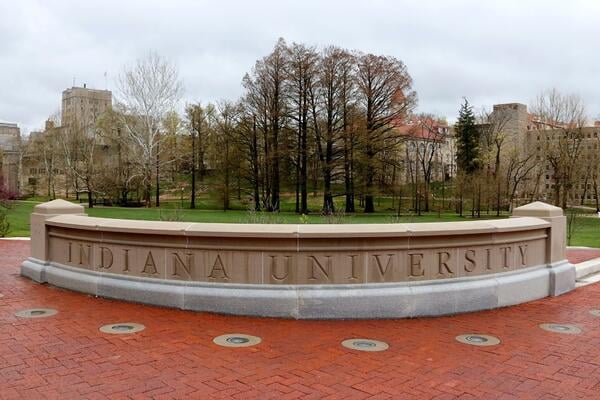
    Indiana University’s decision to suspend the print publication of its student newspaper is costing the institution: Alumni are pulling donations in protest. The university ended the Indiana Daily Student’s print edition after firing the paper’s adviser, who refused to comply with administrators’ request to remove news coverage from a homecoming edition of the paper.

    University leaders insist they’re not censoring the student paper but moving it to a digital platform in line with a business plan adopted last year to address the paper’s deficits. But alumni aren’t buying it, IndyStar reported. Some are asking what came of donations they made to a fund dedicated to the student publication after the newspaper reported students faced hurdles to spending the money. Other alumni are pulling their donations altogether.

    Former journalism student Patricia Esgate canceled $1.5 million in bequests she planned to leave to the university. Alum Ryan Gunterman, executive director of the Indiana High School Press Association and the faculty adviser of Franklin College’s student newspaper, posted on Facebook that he and his wife were ceasing all future donations after giving money to the university and newsroom for over two decades. Toby Cole, a fourth-generation alum of the institution, told IndyStar in an email that his family was ending its monthly contributions and a $300,000 planned gift for scholarships.

    “If IU can pay our [football] coach almost $100mm we can fund our IDS,” Cole said in the email. “Problem is ‘they’ don’t want an independent free speaking print newspaper because students actually wield power with it.”

    Source link

  • Misogyny and “Hoeflation” at the Nat’l Assoc. of Scholars

    Misogyny and “Hoeflation” at the Nat’l Assoc. of Scholars

    In an essay for Minding the Campus titled, “College Students in a Romance Recession, Boys Blame ‘Hoeflation,’” Jared Gould blames women for these imagined problems on campus, part of “a broad feminization of our institutions, which, to say the least, is not a good thing.”

    Gould uses the term “hoeflation” in his title to explain the problem of women being more selective than men on dating apps: “This imbalance has led young men to coin the term ‘hoeflation,’ the grind of chasing women they might barely fancy, but will date just to escape loneliness.” Oh, the poor lonely men, forced to work so hard to get laid by women they don’t like and call a “ho.” Why do all of these women—sorry, “hoes”—reject these obviously wonderful and respectful men?

    But ultimately the real problem, Gould says, is “leftist professors, who, bent on fueling radicalization, are largely to blame for the chasm between the sexes.” Those feminist faculty, Gould says, must be eliminated from universities to allow beautiful romances to blossom between the real men and their “hoes.”

    Why is Minding the Campus publishing this misogynist nonsense? Minding the Campus is a leading conservative voice about academia, owned by the National Association of Scholars, with Peter Wood as its executive editor.

    For a moment, I wondered if perhaps the NAS had been fooled by a left-wing hoax, publishing a work of such gross misogyny that had been planted to humiliate them. But no, Gould is not some random idiot. This idiot is the managing editor of Minding the Campus, following positions as a research fellow at Speech First and a senior editor at Campus Reform. He’s an influential voice and editor within the conservative movement.

    Beyond his open embrace of misogyny, Gould suffers from a lack of fact-checking skills.

    Gould wrote, “This August, a University of Tennessee professor canceled class to celebrate Taylor Swift’s engagement. Rather than using the moment to critique Swift’s portrayal of marriage as the ultimate career capstone, his canceling class quietly reinforced the idea that dating and partnership are secondary to education, career, and financial goals.”

    In reality, Tennessee communications professor Matthew Pittman was teaching his social media class and recorded a skit with his students pretending to cancel class despite the “biochem midterm” (in August!) he claimed was planned that day. It was a test of how misinformation spreads online and persists even after the truth is revealed, and Gould failed the test miserably.

    Gould got fooled multiple times by the hoax after being informed that it was a hoax, initially writing in August that the cancellation of class was “staged” but still somehow thinking it was real, both in his own article and another essay by Samuel Abrams at Minding the Campus. Just two months later, Gould is still repeating the fake story.

    Of course, even if a professor had canceled class to celebrate Swift’s upcoming marriage, that would be precisely the opposite of showing how “dating and partnership are secondary” to other goals. Gould managed to repeatedly fall for a hoax and still draw all the wrong conclusions from the fake news.

    But let’s not allow Gould’s misogyny and incompetence to distract us from how incredibly stupid his essay truly is. Gould began his article with a remarkably broad generalization based on one strange anecdote: “Love seems to be over for college students. That’s at least what I gathered from a recent conversation with a student in Texas.” Gould reported that this man is “not scoring dates” even though he took a dance class, which, it turned out was “a giant sausage fest” full of men seeking to find that most elusive creature, the single woman on a college campus. Assuming that this student is real, it’s still difficult to connect Gould’s bizarre conclusions from this pointless story with a data set of precisely one dude.

    According to Gould, “College girls have stopped looking for dates, and the men—well, they’ve learned to keep their eyes glued to the ground, lest they star in a viral TikTok captioned, ‘Guy looked at me—send help.’” Ah, yes, the poor men, unable to even look at anyone on campus because the feminazis will call 911 if they can see a man’s eyes. No wonder men are so rare on college campuses, when even their eyes are oppressed and they must pay the terrible price of “hoeflation.”

    Although it may be tempting to laugh at Gould’s embarrassing attempt at cultural analysis, his solution is ominous: “reforming higher education. We should dismantle the careerist catechism that emanates from it and shutter its sex fairs that peddle pleasure as a proxy for partnership.”

    Beyond banning “sex fairs,” Gould wants massive repression to “de-trench institutions of leftist professors.” We’ve seen a lot of awful excuses on the right for silencing speech on campus, from pretending to care about antisemitism to defending white people from the crime of diversity. But helping men get dates and sparing them the costs of “hoeflation” may be the worst reasons yet offered by conservatives for their campaign of campus censorship.

    John K. Wilson was a 2019–20 fellow with the University of California National Center for Free Speech and Civic Engagement and is the author of eight books, including Patriotic Correctness: Academic Freedom and Its Enemies (Routledge, 2008), and his forthcoming book The Attack on Academia. He can be reached at [email protected], or letters to the editor can be sent to [email protected].

    Source link

  • $1.2B Fine, Nix Trans Athlete Wins, More

    $1.2B Fine, Nix Trans Athlete Wins, More

    Juliana Yamada/Los Angeles Times/Getty Images

    The details of the Trump administration’s demands on the University of California, Los Angeles—in addition to the previously reported $1.2 billion payout the federal government asked for—have finally been revealed. A lawsuit by UC faculty unions forced the higher ed system to release a copy of a draft resolution agreement, shedding light on the terms UC was first faced with nearly three months ago.

    The Trump administration has demanded, among other things, that UCLA not enroll “foreign students likely to engage in anti-Western, anti-American, or antisemitic disruptions or harassment.” In the same paragraph, the proposed resolution agreement says UCLA would have to “socialize international students to the norms of a campus dedicated to free inquiry and open debate.”

    The federal government also demanded that UCLA ban overnight campus demonstrations and mandate that masked campus protesters reveal their identities when asked.

    Multiple provisions aim to limit transgender individuals’ rights. The document demands that UCLA’s medical school and affiliated hospitals stop “performing hormonal interventions and ‘transgender’ surgeries” on anyone under 18; stop allowing transgender women to play on women’s sports teams; strip records, awards and other recognition from transgender women athletes; and send personal apologies to the cisgender women who placed lower than trans athletes.

    California voters banned affirmative action in public education nearly 30 years ago, but the demand letter suggests the Trump administration doesn’t think UCLA has complied. It would require UCLA to bar providing “information about candidates’ race, sex, ethnicity, or other protected characteristics to faculty or other UCLA personnel with decision-making authority over hiring, retention, promotion or tenure.”

    Other provisions target affirmative action in hiring and student admissions, including a line that says, “UCLA shall discontinue race- and ethnicity-based scholarships.” The proposed agreement says “proxies used to effectuate race-based or sex-based outcomes” aren’t allowed in selecting for fellowship programs and also bans the use of such undefined proxies in hiring and admissions.

    The document’s release comes after UC said in early August that it would negotiate with the federal government, citing the estimated $584 million in funding that at least three different federal agencies had announced they were suspending. That funding freeze followed a July 29 letter to UC from the Department of Justice, which said its months-long investigations across the system had so far concluded that in its response to a pro-Palestinian protest encampment in spring 2024, UCLA violated the equal protection clause of the 14th Amendment and Title VI of the Civil Rights Act of 1964.

    It was yet another example of the Trump administration accusing a selective university of tolerating antisemitism and cutting off hundreds of millions of federal dollars. But, unlike Harvard and Columbia Universities, UCLA is a public institution, and its targeting by the federal government represents an expansion of the administration’s campaign to overhaul higher ed.

    Last week, the University of Virginia became the first known public institution to settle with the administration over discrimination allegations. That settlement didn’t require a payout, but among other things, UVA committed to not use proxies for race; to end all diversity, equity and inclusion programming; and to prohibit trans athletes from participating in sports.

    Media earlier reported some of the administration’s demands on UCLA, but university officials didn’t make the details public until Friday, when a lawsuit by the UCLA Faculty Association and Council of UC Faculty Associations forced them to.

    “Accession to these demands would be to undermine everything that has made the UC the successful engine of social mobility and economic might that it has been for our state,” Anna Markowitz, president of the UCLA Faculty Association, wrote in an email. “It will harm undergraduate learning opportunities, and hamper UC’s ability to be a scholarly leader on the international stage. It enshrines ideology at the heart of the institution rather than decades of empirical and scholarly understanding. We stand against this extortion effort.”

    Markowitz said the “UCLA FA and CUCFA have stood with our union colleagues in calling for no negotiations since the beginning.” The university administration “is under intense federal pressure,” she said, and she urged them to resist—“particularly because other faculty legal action has resulted in the restoration of nearly all of the temporarily suspended federal grants.”

    Indeed, Stett Holbrook, a UC spokesperson, wrote in an email to Inside Higher Ed Monday that “as for terminated federal research funds, that figure is in the tens of millions”—a far cry from the August estimate of $584 million.

    He provided a statement saying, “UC has been clear it must evaluate its response to the administration’s settlement proposal that, like all settlement communications, is confidential. As stated previously, the proposed $1.2 billion settlement payment alone would derail work that saves lives, grows our economy, and fortifies our national security. UC remains committed to protecting the mission, governance, and academic freedom of the University.”

    White House and DOJ officials didn’t respond to requests for interviews Monday or answer written questions.

    Source link

  • National Institute on Transfer Prepares to Close

    National Institute on Transfer Prepares to Close

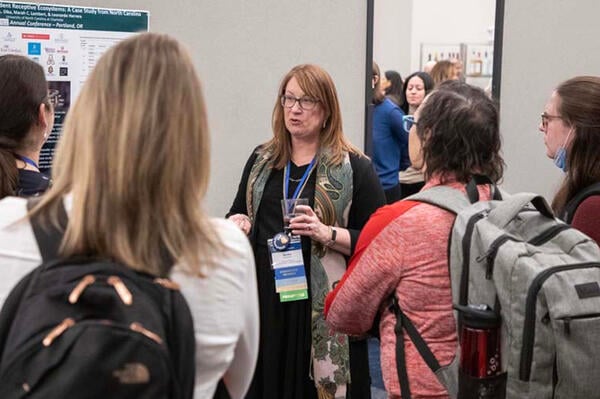
    For over two decades, the National Institute for the Study of Transfer Students has bridged two worlds—the researchers who study transfer students and the campus staff who work with them. Located at the University of North Georgia, NISTS has gathered these groups for annual conferences, disseminated resources and research, and doled out awards for groundbreaking work.

    Now, university leaders say they can no longer afford to fund NISTS. At the end of October, NISTS, at least in its current form, will shutter.

    The institute “has made a lasting impact in improving transfer policy and practice nationwide,” and “its research has informed how colleges and universities support transfer student success,” university officials said in a statement.

    But “unfortunately, due to ongoing budget constraints and a realignment of institutional priorities, the university is no longer able to financially support the Institute,” the statement read. “We are proud of the Institute’s legacy and the many partnerships it has built, and we remain committed to serving transfer students through our academic programs and student success initiatives.”

    Janet Marling, NISTS’s executive director, said that over the past year, institute staff tried but ultimately couldn’t find a new permanent home for their work—at least for now. She hopes that other organizations will carry on parts of the institute’s work, including its conferences and programs, and house its research and resources so transfer professionals can continue to benefit from them.

    “We have heard, time and time again, there just isn’t anyone else providing the resources, the community, the networking, the translation of research to practice in the transfer sphere in the way that NISTS is doing it,” Marling said.

    ‘A Terrible Loss’

    NISTS prides itself on taking a unique approach, connecting staff who span the transfer student experience—from admissions professionals to advisers to faculty members—in an effort to holistically improve transfer student success. Transfer practitioners and researchers worry NISTS’s closure will have ripple effects across the field.

    Alexandra Logue, professor emerita at the CUNY Graduate Center, said the transfer process inherently involves multiple institutions working together, including, in some cases, across state lines; about a quarter of transfer students choose to go to a four-year college or university in another state.

    Logue appreciated that NISTS conferences offered a rare “chance for people from all the different states in the country to come together” to coordinate and swap best practices. Such programs also allowed transfer researchers like her to share their findings with staff working directly with transfer students on campuses.

    “The research that we do is pointless if it isn’t put into practice,” Logue said.

    While other organizations are doing powerful work to improve transfer student outcomes, NISTS played a major role in bringing new visibility to transfer students’ needs by making them a singular focus, said Stephen Handel, a NISTS advisory board member.

    The institute “added a legitimacy to a constituency of students that often got forgotten,” Handel said. “NISTS was completely focused on that constituency alone, and that’s what made it unique.”

    Eileen Strempel, also on the advisory board, said she got involved with NISTS when she served as an administrator at Syracuse University and sought to create a strategic plan to improve transfer outcomes—an area she hadn’t done much work in before.

    “I felt like, oh, wow, there’s a brain trust already for me, the neophyte, the learner who doesn’t know very much about transfer at all,” she said. She called the closure “a terrible loss.”

    She said NISTS leaders often asked conference participants how many of them had never attended a convention focused on transfer students before; Each year, most hands went up.

    “To me, what that moment always crystallized was the important role that NISTS had” in helping practitioners figure out “how they could learn from other colleagues, that they didn’t need to recreate the wheel,” Strempel said.

    Those lessons have had downstream effects on students.

    Each practitioner came out better equipped “to help hundreds, if not thousands of students,” Strempel said.

    Marling said one of the most exciting parts of the work was seeing its impact on students across the country. For example, she watched graduates of NISTS’s post-master’s certificate program in transfer leadership and practice go on to make meaningful changes on their campuses, such as establishing new transfer partnerships with other institutions or revamping training for advisers to improve transfer students’ experiences.

    She said she feels “profoundly sad” about NISTS shuttering at University of North Georgia, but she also believes NISTS will live on in some form because of the “tremendous outpouring of support and concern” that followed the announcement of its closure.

    “I’m very hopeful that the spirit of NISTS will continue,” whether that’s as an institute elsewhere or “within the many, many transfer champions that are working in higher education across the country. I’m really excited to see how individuals and institutions take what they’ve learned from NISTS and continue to grow their focus on transfer students and continue to provide equitable opportunities for these students.”

    Source link

  • 3 Arrests Made at University of Michigan Protest

    3 Arrests Made at University of Michigan Protest

    Courtesy of the University of Michigan.

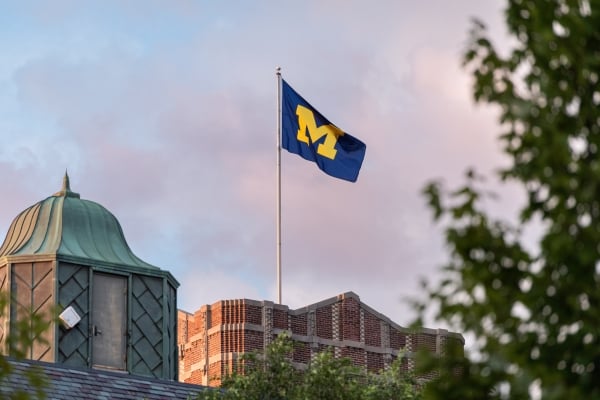
    Three pro-Palestinian protesters were arrested on the University of Michigan campus Wednesday, MLive Media Group, a local news organization, reported.

    The TAHRIR Coalition, a campus student group, led the protest in response to an event held by the university’s Students Supporting Israel chapter, which featured several Israel Defense Forces soldiers.

    Melissa Overton, the university’s deputy chief of public safety and security, told MLive that the individuals arrested were not affiliated with the university. She said the protesters blocked the exit to an underground parking garage and refused to move when ordered to. 

    They were charged with resisting and obstructing police, attempting to disarm an officer, disorderly conduct, and outstanding warrants, Overton said. The case has been forwarded to a prosecutor, she noted.

    Erek Mirque, a member of TAHRIR, told MLive that the arrests came as a surprise and that he was unaware of any confrontation with officers before the arrests.

    “We did not expect the situation to escalate the way that it did,” he said.

    Source link

  • Students Share Feelings of Belonging on Campuses

    Students Share Feelings of Belonging on Campuses

    Seven in 10 college students say most or nearly all students on their college campus feel welcomed, valued and supported, according to a July 2025 survey by Inside Higher Ed and Generation Lab.

    The data, collected from over 260 two- and four-year colleges across the country, paints a relatively rosy picture of students’ sentiments on campus this fall against the backdrop of free speech restrictions, tense protests and cutbacks to programs that serve students from racial minorities.

    While respondents indicated the average student is welcome at their institution, they were less confident about whether they themselves fit in academically or socially.

    Fewer than one-third of respondents said they have an “excellent” or “above average” sense of social belonging on campus; 42 percent reported “average” feelings of belonging. Additionally, 38 percent of students said they had an “excellent” or “above average” sense of academic fit at their institution, while just under half said they had an average sense of academic fit.

    Survey data also pointed to positive sentiments about personal and academic inquiry. When asked how encouraged and supported they felt to explore different perspectives and challenge their beliefs, a majority of students indicated they feel “somewhat” (45 percent) or “very” supported (35 percent) on campus.

    A Warm Welcome

    Campus climate, or the perception of how much respect and inclusion students feel on campus, is tied to learning; research shows that students who face discrimination are less likely to succeed academically. Research has also found that students of color are less likely than their white peers to report feeling at home at college.

    Inside Higher Ed’s Student Voice survey found minor variance among racial groups in reporting a generally positive campus climate. White students (75 percent) and Asian American or Pacific Islander students (73 percent) were most likely to indicate “most” or “nearly all” students are welcome on campus, compared to Hispanic (71 percent) or Black (68 percent) respondents. Seventy percent of “other” students, which Generation Lab classifies as students of two or more races or who come from outside the U.S., had positive reviews on campus climate.

    Adult and two-year students were more likely to say nearly all students are welcome on campus (24 percent) than the average respondent (20 percent), which could reflect the diverse student bodies at two-year institutions and the preferences of adult learners to enroll in two-year or online institutions.

    By comparison, students who had considered leaving college were less likely to say “most” or “nearly all” students are welcomed (64 percent) compared to all respondents (73 percent) or students who had never considered dropping out (77 percent).

    Three percent of survey respondents wrote in other responses, indicating they completed their classes online and therefore could not speak to the campus climate.

    Academic Success and Belonging

    The survey also asked students to rank their own sense of social belonging and academic fit on a scale of poor to excellent.

    Across racial demographics, Asian American and Pacific Islander (AAPI) students were most likely to rate their social belonging as high (33 percent), followed by white and international students (30 percent each), Black students (25 percent), and Latinos (22 percent).

    On academic fit, white students had the highest ratings; 43 percent of respondents said their fit was “excellent” or “above average,” followed by AAPI (42 percent), Black students (33 percent) and Latino students (30 percent).

    Students who had considered leaving college were much more likely than their peers to report they had a “poor” sense of belonging (15 percent versus 6 percent).

    First-generation students were more likely to rate their sense of academic fit and social belonging as “below average” or “poor” (17 percent and 37 percent, respectively) compared to their continuing-generation peers (13 percent and 28 percent).

    DEI Cutbacks

    Inside Higher Ed’s survey also asked students whether federal actions to limit diversity, equity and inclusion have impacted their experiences. The most popular response was “no real impact on my experience” (37 percent), and a handful of students wrote in that they anticipated greater impact after returning to campus this fall. This view held across racial groups, with the greatest share of respondents saying it hasn’t impacted their experience.

    About 20 percent of students said the changes to DEI on campus have “somewhat negatively impacted my experience” and 16 percent indicated “I don’t feel impacted, but my peers have been negatively impacted.”

    Nonbinary students were most likely to say it’s severely negatively impacting their experience (39 percent).

    Ten percent of respondents said they are somewhat or significantly impacted in a positive manner by the changes.

    Source link

  • A Study Abroad Life Design Course for Transfers

    A Study Abroad Life Design Course for Transfers

    For many college students, connecting their interests to career and life goals can be a challenge. Transfer students may find it especially difficult because they lack familiarity with the campus resources available to help them make those connections. A course at the University of Minnesota Carlson School of Management aims to help these students chart their path, in part by sending them on an international trip.

    The Design Your Life in a Global Context course encourages transfer students to apply design thinking principles to their college career and beyond and organizes a short study abroad trip led by a faculty member. The experience, mostly paid for by the institution, breaks down barriers to the students’ participation and aims to boost their feelings of belonging at the university.

    The background: Since 2022, all students in the Carlson School of Management undergraduate program have been required to complete an international experience. The goal is to motivate them to be globally competent, to support their development as business leaders and to create collaboration with international colleagues, according to the school’s website.

    Study abroad experiences have been tied to personal and professional development. A recent survey of study abroad alumni by the Forum on Education Abroad found that 42 percent of respondents indicated studying in another country helped them get their first job.

    For U of M’s business school students, these experiences are made possible by funding from the Carlson Family Foundation, which provides scholarships through the Carlson Global Institute and the Learning Abroad Center.

    In addition to Design Your Life in a Global Context, the university offers Design Your Career in Global Context, which sends students on a similar short study abroad experience.

    The framework: Design Your Life in a Global Context meets once a week throughout the fall semester and then culminates in a 10-day trip to Japan, a country instructor Lisa Novak selected because of its unique focus on work-life balance and well-being.

    “If you’re familiar with the concepts of ikigai, it’s all about finding one’s purpose and aligning what you love, what the world needs, what you’re good at and what you can be paid for,” said Novak, director of student engagement and development at the Carlson School. “We’re going to be learning about this concept while we’re abroad.”

    Because transfer students, like first-year students, can face challenges acclimating to their new campus and connecting with peers, the class is designed in part to provide them with resources and instill a sense of belonging within their cohort.

    In addition, the course helps students apply life design principles to their whole lives, modeled after Stanford University’s design thinking framework.

    “Through the class, we equip students with the tools and strategies to design their college and career experience that aligns with their values, interests, strengths, needs and goals,” Novak said.

    Going abroad: During the 10-day trip, students explore Tokyo and Okinawa.

    They visit Gallup’s Tokyo office to learn about the Clifton strengths assessment and the research the organization is doing in Japan. In Okinawa, students learn from residents living in a “blue zone,” an area of the world where people live the longest and have the fewest health complications.

    “We learn about some of the factors that contribute to longevity in that area of the world and then connect that back to designing one’s life and a life of purpose,” Novak said.

    In addition to class content, the trip offers students an opportunity to participate in intercultural learning and experience international travel that may be unfamiliar.

    Before they leave for Japan, Novak and her colleagues from the Carlson Global Institute support students with travel logistics, including securing a passport, creating a packing list and navigating currency exchange.

    “I also bring in different food from the area,” Novak said. “We call it ‘taste of Japan.’ I have different candy or snacks from Japan and they get to experience the culture a little bit in that way and get excited about what we’re doing.”

    Novak also leads guided reflections with students before, during and after the trip to help them make sense of their travels and how the experience could shape their worldview.

    “I just hope that they recognize that the world and business are increasingly global and connected,” Novak said. “Being able to navigate difference and build connections and have conversations with people that are so different than you is a powerful learning experience.”

    Source link

  • How Universities Are Responding to Trump’s Compact

    How Universities Are Responding to Trump’s Compact

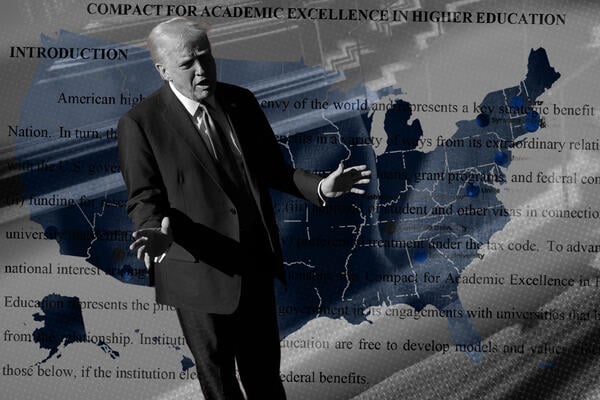
    In the weeks since Trump officials asked university leaders to give feedback on their plan to ensure that colleges are adhering to the administration’s priorities, several of those leaders and others in higher ed have made clear that the proposal is a nonstarter—at least in its current form.

    So far, leaders at 11 universities have publicly said they won’t sign the current draft of the “Compact for Academic Excellence in Higher Education,” according to an Inside Higher Ed database. Two others have said they are providing feedback. Universities will be added to the map and table below as they make public statements.

    The wide-ranging proposal would require universities to ban consideration of race or sex in hiring and admissions, freeze tuition, commit to not considering transgender women to be women and shut down departments that “punish, belittle” or “spark violence against conservative ideas,” among other provisions. Trump officials say universities that sign on could get access to some benefits such as preferential treatment for grant funding. But those that don’t want to adhere to the agreement are free to “forego [sic] federal benefits.”

    Higher ed leaders and observers see the compact as the Trump administration’s blueprint for overhauling America’s colleges and universities. Trump officials view it as an opportunity for the “proactive improvement of higher education for the betterment of the country.” Critics have urged institutions to reject the proposal, arguing it undermines institutions’ independence and carries steep penalties.

    Nine universities were initially asked Oct. 1 to give “limited, targeted feedback” by Oct. 20 on the document that Trump officials said was “largely in its final form.” President Trump said in mid-October that any college that wants to “return to the pursuit of Truth and Achievement” could sign on but didn’t explain how interested institutions could do so. No college has publicly taken Trump up on his offer. The administration is reportedly planning to update the document in response to the feedback and send out a new version in November.

    Source link

  • Rethinking Leadership Development in Higher Ed (opinion)

    Rethinking Leadership Development in Higher Ed (opinion)

    Higher education is in the midst of a crisis of confidence that has long been building. In this time of volatility, complexity and uncertainty, the steady hand of leaders matters more than ever. Yet academia does—at best—a very uneven job of preparing academic leaders for steady-state leadership, much less for times when the paradigm is shifting. This moment is creating an opportunity to reconsider how we prepare leaders for what will come next.

    Why Is Leadership So Uneven in Higher Ed?

    A primary reason lies in how we select and develop leaders. In academia, searches for department chair, dean and provost often emphasize top-level scholarly and research credentials and only secondarily consider an individual’s experience, perspective and ability to influence and motivate others to support shared missions. Academics in general do not respond well to directives: They expect to be persuaded, not commanded. Additionally, it is often only after being hired that those in formal positions of authority are provided with leadership-development opportunities to help foster those interpersonal skills—too late for foundational growth.

    These approaches to recruiting formal leaders are rooted in flawed assumptions about how leadership works. True leadership is not about commanding compliance but about shaping unit culture through influence. Many leaders fail by not understanding the difference. An effective leader is a person of strong character who can build trusting relationships with others; these skills take time to develop and usually take root even before a person assumes a leadership role.

    Another important reason that leadership in higher ed is uneven arises from conceptualizing leadership as a “heroic” individual endeavor. The same skills that help a formal leader to be successful—such as understanding the alignment of their actions with the unit’s mission; strong communication skills, including listening; the ability to navigate conflict, negotiation and conflict resolution; and formulating and articulating clear collective goals— are equally crucial for others to exercise to be fully engaged participants.

    Leaders with formal roles and titles play a crucial role in promoting a productive and collegial culture. At the same time, they do not do so alone: It is equally important that participants who are not in formal administrative roles are also seen (and see themselves) as central in shaping these environments, and that they are aware of how their own actions and interpersonal dynamics contribute to their working and learning experiences.

    In short, leadership responsibility is not limited to administrators. There are layers of formal leadership roles embedded inside departments and schools, visible whenever faculty members and staff take on responsibilities for shared governance and advisory roles; lead team research or manage grant portfolios; and select (hire), supervise, evaluate and mentor colleagues and other early-career individuals. These faculty and staff are leaders, too, whether or not they see, accept or internalize those roles.

    When leadership is viewed simply as an individual attribute rather than a process that emerges from the relationships among people in teams, organizations miss the opportunity to develop cultures of excellence that support integrity, trust and collaboration at all levels. Thus, we argue that leadership ought to be understood as an ongoing process of character development and a responsibility shared by all members of an organization—not something that can be addressed in a one-off workshop, but as an integral dimension of the work.

    The Foundations of Leadership: Influence Before Authority

    Rather than framing leadership as something only people with formal authority do, a more productive model is to view leadership as influence. By influence we mean modeling the behaviors we seek to share and promote in our groups so that we can better shape the way we solve problems collectively. Leadership is not in essence a position; it is contributing to an ongoing process of shaping culture, norms and behavior within a unit.

    Social psychology shows that we influence each other constantly. The more time we spend with people, the more we become like them and vice versa. This means that bad habits can spread as easily as good ones. When everyone is given an opportunity to develop good habits, they are more likely to spread throughout the community. Our character affects how we influence others. We are much more likely to be influenced by a person who demonstrates integrity and curiosity than we are by someone who is demanding and unwilling to listen.

    Here are some areas of practice for developing better influence:

    • Self-awareness and self-management: Focusing on oneself first helps individuals identify their strengths and areas for growth, while encouraging them to recognize and respect their roles and responsibilities in the current situation. Understanding oneself, one’s values, habits and motivations, is foundational to recognizing how we affect and are affected by those around us.
    • Conflict resolution: Healthy debate is foundational to innovation and growth. Developing strong conflict-resolution skills contributes to increased perspective-taking, depersonalizing disagreement and yielding more effective discussion and problem solving.
    • Decision-making: Understanding how we make decisions, and more importantly how heuristics influence and bias our decision-making, can help people slow down to make more ethical and effective decisions.

    Opportunities for influence are available to everyone, not just those in formal leadership roles. Early-career faculty, staff and students can cultivate influence by setting examples for collaboration, through ethical behavior and by contributing to collective problem-solving. Leadership is not centrally about having authority over others; it is about shaping an environment in which ethical decision-making, respect and shared purpose flourish.

    Reimagining Leader Development in Higher Ed

    Now more than ever, individuals need support in managing their careers with integrity and purpose—aligning their personal values and goals with those of their institutions. Leadership development should not be viewed as a costly add-on. In fact, it can be integrated into the everyday fabric of academic life through accessible and scalable methods, including:

    • Peer-learning cohorts that provide space for discussion and reflection on leadership challenges.
    • Guided personal reflections on workplace dynamics, communication and decision-making.
    • Structured mentoring programs that cultivate leadership skills through real-world interactions.
    • Deliberative conversations around such themes as research ethics, authorship and collaboration to build trust and integrity within teams.
    • Conflict-resolution training embedded in routine professional development activities.

    Our experience at the National Center for Principled Leadership and Research Ethics shows that even modest efforts—like those above—can spark essential conversations between mentors and mentees, improve communication, and positively influence both unit climate and individual well-being. To support this work, we offer a free Leadership Collection—an online collection of tools, readings and practical exercises for anyone seeking to lead more effectively, regardless of their title or career stage.

    When leadership development is embraced as a core part of academic life—not just a formal program or a luxury for a few—it can become a catalyst for healthier, more purpose-driven institutions.

    Conclusion: Leadership Development as a Cultural Foundation

    Reserving leadership-development programming only for when people reach formal leadership roles is a missed opportunity to develop broader and more inclusive working cultures. Such cultures emerge from the relationships among the members of a group. Building better relationships starts with personal growth, self-awareness and emotional intelligence for each member. Taking responsibility for one’s own professional growth and for one’s influence on others is also an important kind of leadership.

    True leadership, therefore, is not about directing others but about fostering environments in which good habits, strong ethics and meaningful engagement flourish. If universities want to build sustainable cultures of excellence, in which leadership is no longer an individual endeavor but a shared commitment to collaboration, they should start embedding it in professional development and routine practice for all. As uncertainty prevails, budgets are cut and people are navigating deep change, now is the moment to reconsider how we shape leaders in higher education.

    Elizabeth A. Luckman is a clinical associate professor of business administration with an emphasis in organizational behavior and director of leadership programs at the National Center for Principled Leadership and Research Ethics at the University of Illinois at Urbana-Champaign.

    C. K. Gunsalus is the director of NCPRE, professor emerita of business and research professor at the Grainger College of Engineerings Coordinated Sciences Laboratory at the University of Illinois at Urbana-Champaign.

    Nicholas C. Burbules is the education director of NCPRE and Gutgsell Professor Emeritus in the Department of Education Policy, Organization and Leadership at the University of Illinois at Urbana-Champaign.

    Source link