Tag: Events

  • More UChicago Ph.D. Programs Will Pause Admissions

    More UChicago Ph.D. Programs Will Pause Admissions

    Jacek Boczarski/Anadolu/Getty Images

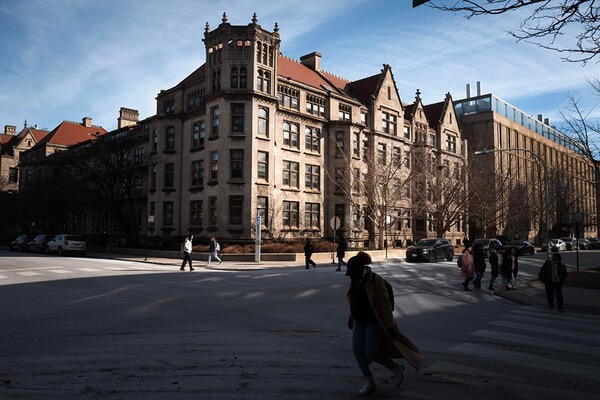
    The University of Chicago’s Arts and Humanities Division is now pausing new Ph.D. student admissions for the 2026–27 academic year across all departments except philosophy and one program within the music department. The move expands on last week’s announcement from the dean that about half of all departments would pause admissions, while the rest would reduce the number of admissions.

    The departments that won’t be accepting Ph.D. students now include art history, cinema and media studies, classics, comparative literature, East Asian languages and civilizations, English language and literature, Germanic studies, linguistics, Middle Eastern studies, Romance languages and literatures, Slavic languages and literatures, and South Asian languages and civilizations, plus the music department’s ethnomusicology and history and theory of music programs.

    The Social Sciences Division has also announced it will not admit Ph.D. students into four programs in 2026-27: anthropology, political economy, social thought, and conceptual and historical studies of science. The UChicago Crown Family School of Social Work, Policy and Practice had earlier announced it was pausing Ph.D. admissions and the Harris School of Public Policy said it was pausing admissions for the Harris Ph.D. (in public policy studies), the political economy Ph.D. and the master of arts in public policy with certificate in research methods.

    The announcements reflect how the deeply indebted university is responding to budget issues. But UChicago is just one of multiple highly selective universities—including Boston University and the University of Pennsylvania—that have announced over the past year that they were freezing or scaling back Ph.D. admissions and programs amid financial pressures and other factors.

    UChicago had formed committees of faculty and staff to plan over the summer for changes within the Arts and Humanities Division. But on Aug. 12, division dean Deborah Nelson announced the initial pause, stressing that “this decision is not the recommendation of any committee.”

    Then on Wednesday, Nelson wrote a new email, obtained by Inside Higher Ed, announcing a revised plan “based on the strong recommendation of the PhD committee and department chairs.”

    “After the announcement last week, I met with all department chairs and consulted with the faculty-led committee on PhD programs,” Nelson wrote. “Nearly all faculty leadership agreed that instead of admitting students to only a select number of departments, they preferred a broader pause for the division so we can spend time this coming year to collectively assess and better navigate the challenges we face.”

    A department chair who asked not to be named confirmed to Inside Higher Ed that chairs met with the dean last Friday to discuss the pause, and most department chairs agreed it should be applied throughout the division to allow for more collaborative work during the academic year on the future of Ph.D. education at UChicago.

    Nelson also wrote in her Wednesday email that she “heard from many faculty that the initial decision caught them off guard. The timing of my initial announcement about PhD cohorts was partly driven by deadlines to submit information to software platforms that would have made semi-public our decisions to open or close applications to programs. And I wanted to make sure our community knew about these decisions first.”

    In an email, a university spokesperson simply said, “As Dean Nelson noted in her email, the decision to revise the plan for PhD admissions in the Arts & Humanities Division for academic year 2026-27 was based on the strong recommendation of the PhD committee and department chairs. Crown, Harris and SSD have also made announcements regarding pauses in PhD admissions for the 2026-2027 academic year.”

    Clifford Ando, the Robert O. Anderson Distinguished Service Professor of Classics, History and the College, told Inside Higher Ed Thursday that “we easily have the resources to support the humanities without inflicting cuts disproportionate to the humanities’ role in creating the financial crisis.”

    “We are in the unique position of being a well-resourced university that has been so reckless with our resources that we now have to make decisions as if we were a poor one,” Ando said.

    Source link

  • Helping College Students Emotionally Before They Turn to AI

    Helping College Students Emotionally Before They Turn to AI

    Photo illustration by Justin Morrison/Inside Higher Ed | Kirillm/iStock/Getty Images

    As more students engage with generative artificial intelligence and chat bots, the ways they use AI are changing. A 2025 report published by the Harvard Business Review found that, according to the discourse on social media, “therapy/companionship” is the No. 1 use case for generative AI chat bots.

    For college counseling centers, this change reflects students’ desire for immediate support. “This is not a generation that would call a counseling center and get an appointment two weeks, four weeks later,” said Joy Himmell, director of counseling services for Old Dominion University. “They want help when they want it.”

    But it’s important for counseling centers to educate students on the risks of using generative AI tools for well-being support, Himmell said.

    The research: While ChatGPT and similar text-generating chat bots are touted as productivity tools that can expedite learning and workflow, some people turn to them for personal and emotional support.

    According to a 2024 safety report, OpenAI found that some users experience anthropomorphization—attributing humanlike behaviors and characteristics to nonhuman entities—and form social relationships with the AI. Researchers hypothesized that humanlike socialization with an AI model could affect how individuals interact with other people and hamper building healthy relationship skills.

    A 2025 study from MIT Media Lab and Open AI found that high usage of ChatGPT correlates with increased dependency on the AI tool, with heavy users more likely to consider ChatGPT a “friend” and to consider messaging with ChatGPT more comfortable than face-to-face interactions. However, researchers noted that only a small share of ChatGPT users are affected to that extent or report emotional distress from excessive use.

    Another study from the same groups found that higher daily usage of ChatGPT correlated with increased loneliness, dependence and problematic use of the tool, as well as lower socialization with other humans.

    In extreme cases, individuals have created entirely fabricated lives and romantic relationships with AI, which can result in deep feelings and real hurt when the technology is updated.

    This research shows that most people, even heavy users of ChatGPT, are not seeking emotional support from the chat bot and do not become dependent on it. Among college students, a minority want AI to provide well-being support, according to a different survey. A study from WGU Labs found that 41 percent of online learners would be comfortable with AI suggesting mental health strategies based on a student’s data, compared to 38 percent who said they would be somewhat or very uncomfortable with such use.

    In higher education: On campus, Himmell has seen a growing number of students start counseling for anxiety disorders, depression and a history of trauma. Students are also notably lonelier, she said, and less likely to engage with peers on campus or attend events.

    Student mental health is a top retention concern, but few counseling centers have capacity to provide one-on-one support to everyone who needs it. At her center, more students prefer in-person counseling sessions, which Himmell attributes to them wanting to feel more grounded and connected. But many still engage with online or digital interventions as well.

    A significant number of colleges have established partnerships with digital mental health service providers to complement in-person services, particularly since the COVID-19 pandemic necessitated remote instruction. Such services could include counseling support or skill-building education to reduce the need for intensive in-person counseling.

    Digital mental health resources cannot replace some forms of therapy or risk assessment, Himmell said, but they can augment counseling sessions. “Having automated AI systems with emotional intelligence to be able to convey some of those concepts and work with students, in some ways, it actually frees the counselor in terms of doing that kind of [skill building], so that we can get more into the nitty-gritty of what we need to talk about,” she explained.

    AI counseling or online engagement with ChatGPT is not a solution to all problems, Himmell said. For those who use chat bots as companions, “it sets up a system that is not based in reality; it’s a facade,” Himmell said. “Even though that can serve a purpose, in the long run, it really doesn’t bode well for emotional or social skill development.”

    Faculty and staff need to learn how to identify students at risk of developing AI dependency. Compared to anxiety or depression, which have more visible cues in the classroom, “the symptomology related to that inner world of AI and not engaging with others in ways that are helpful is much more benign,” Himmell said. Campus stakeholders can watch out for students who are disengaged socially or reluctant to engage in group work to help identify social isolation and possible digital dependency.

    AI in the counseling center: Part of addressing student AI dependency is becoming familiar with the tools and helping students learn to use them appropriately, Himmell said. “We need to be able to harness it and use it, not be afraid of it, and embrace it,” she said. She also sees a role for counseling centers and others in higher education to provide additional education on AI in different formats and venues.

    Old Dominion partners with TalkCampus, which offers 24-7 peer-based support. The counseling service is not automated, but the platform uses AI to mine the data and identify risk factors that may come up in conversation and provide support if needed.

    Source link

  • Speed Checks

    Speed Checks

    Should a student be allowed to take the same class five or six times without someone intervening?

    An older school of community college thought used to refer to the “right to fail.” It was a version of tough love, combined with a libertarian sense that students know best what they need. If someone needs to fail calculus several times to figure out that engineering might not be the path for them, this camp would say, then so be it. Sometimes the ninth time is the charm. Failure may be the best teacher, but sometimes even the best teacher needs some repetition to get the point across.

    Early in my career, I was sympathetic to this viewpoint. After all, it applies in many other spheres of endeavor. For example, it became brutally clear at a young age that professional baseball was not in my future; I indulged my right to fail nearly every time I swung a bat. Crashing out as hard as I did, as early as I did, spared me the frustration that many players feel later in life when they top out in the minor leagues but keep trying to redeem years of sunk cost. Sales positions involve rapid and frequent failure. Actors and comedians know well what it is to crater an audition or to bomb in front of a crowd. Learning what doesn’t work is part of learning what does. Why should academia be any different? Besides, some people are late bloomers, and community colleges are all about second chances.

    Two things changed my mind. The first was getting to know students better. The second was changes to federal financial aid.

    Students clued me in over time, each in different ways. For a couple of years in grad school, I worked a few hours a week in the campus writing center as a tutor. I remember working with a student on a draft of her paper; the paper was full of grammatical mistakes, awkward constructions, abrupt transitions and the various signs of an uncomfortable writer.

    As we discussed each type of mistake, she got flustered, saying that she knew what she did wrong, but she didn’t know why. To prove her point, she showed me a note she had written her friend earlier that day. The note wasn’t eloquent, but it was clear, readable and effective; in other words, it was everything the paper wasn’t. When I asked her what the difference was, she replied that she actually cared about the note.

    Aha!

    What looked like a lack of ability or knowledge was actually a sign of indifference. When she cared, she was perfectly capable of writing reasonably well. The paper felt forced because it was forced.

    What’s true at the assignment level can be true at the course level, too. It’s hard to do well in a class you don’t care about.

    But sometimes students get stuck in ruts. (We all do, for that matter.) Tunnel vision can set in, and they might not see an alternative to the path they’re on. That’s when another set of eyes can make a difference.

    Years ago, when we still had in-person registration, a student came to me to get permission to take a course for the fourth time. When I asked why he failed it the first three times, he responded that he hated it. I asked why he wanted to retake a class he hated. He responded that it was a requirement. But it wasn’t, I pointed out; it was only a requirement for one major, and we had other majors. He looked puzzled.

    I asked if he’d had a class he liked. He mentioned liking a psych class. I told him that we had a psych major and showed what he would need to do to graduate with that. His entire demeanor changed. About a year later, he and his girlfriend stopped by my office to thank me; his entire outlook had changed, and he was on a track he enjoyed. He always had the native ability—he just needed someone to point out that there was another option. Human intervention wasn’t about stopping or scolding, it was about pointing out an option that hadn’t occurred to him.

    Later, of course, feds lowered the lifetime limit for Pell eligibility. Suddenly, spending multiple semesters on the same class made it much less likely that a student would finish at all. Whatever the merits of that policy change, its impact is real. Before a student burns through too much aid, I think we have an obligation to interrupt the spiral and see if there’s a more productive path.

    That view lacks the simple clarity of “the right to fail,” but I think it comes closer to reflecting the world in which students live. Speed checks save lives, and check-ins save careers. I’d rather have someone intervene than watch the student keep hitting their head against the wall, only to (eventually) walk away with student loans and nothing to show for them.

    Source link

  • Strike Failed to Pressure Rochester Into Non-NLRB Election

    Strike Failed to Pressure Rochester Into Non-NLRB Election

    For a month this spring, the University of Rochester Graduate Labor Union, a group of Ph.D. student workers, staged a strike. Workers walked off the job, demanding that the university host a private unionization election so they could vote and win recognition of the union—all without having to go through the Trump-era National Labor Relations Board.

    But after workers protested during the May 16 commencement ceremony, GLU representatives told them that organizing committee members had voted unanimously to “pause” the strike. And, with fall semester classes starting Monday, the organizers say they have no plans to rekindle it.

    “We didn’t achieve what we wanted, which was them giving us a fair process for an election,” said Katie Gregory, a seventh-year environmental sciences Ph.D. worker. But, she said, “none of us consider the fight here to be over in terms of support for a union.”

    George Elkind, a fourth-year visual and cultural studies Ph.D. worker, said, “We intend to continue fighting for a fair election process.”

    The strike was both a carryover from an intense period of grad student union activity during the Biden administration—roughly 38 percent of grad student workers are unionized, according to a report from last August—and an indication of how President Trump’s return to the White House has raised concerns that the NLRB has become less favorable to unions.

    Last year, during Biden’s presidency, University of Rochester officials and GLU organizers discussed plans for a private election, which both parties were amenable to. If they had reached an agreement, the NLRB—which usually handles unionization votes at private nonprofit institutions such as Rochester—wouldn’t have been involved.

    But after Trump retook the White House in January—and fired a Democratic NLRB member and the agency’s general counsel—the university changed its tune. In February, a university lawyer told student organizers the institution no longer wanted a private election, citing multiple reasons, according to a document that Ph.D. student workers provided to Inside Higher Ed. Instead, the lawyer wrote, they could pursue an election with the Trump-era NLRB.

    Taking that route would be risky—not just for their own prospective union’s chances of winning recognition, but also for the continued rights of grad workers across the country to unionize. Some union supporters worry an NLRB dominated by Trump appointees might use a grad student unionization case such as Rochester’s to overturn the 2016 Columbia University precedent establishing that private nonprofit university grad workers can unionize through the NLRB.

    If that precedent were overturned, student workers could continue to unionize at public universities in the states that allow such action, but those at private institutions would have no other path than to seek voluntary recognition from their universities.

    So far, GLU hasn’t succeeded in pressuring the University of Rochester once again to back a private union vote that would circumvent the NLRB. Gregory and Elkind both said the outcome of the strike might have been different if more Ph.D. workers had withheld their labor.

    The union would have represented more than 1,400 students, Elkind said. About 300 withheld at least a day of work, Gregory said, but having 1,000 strike on day one would’ve sent a very different message.

    Elkind said a “more sweeping strike with bigger numbers … would have had [university leaders] at the table within days.”

    Both said the Trump administration’s attempts to remove international students from the U.S. had a “chilling effect” on strike participation. Elkind, who said about half of grad students at the university are international, called it “a horror show of a national environment.”

    They also pointed to the university’s announcement of “attestation” forms that asked workers to indicate how much they were working—allowing the university to cut off pay for strikers if it wished.

    “Clearly, a tactic to impact the strike participation,” Gregory said. The university didn’t move forward with requiring the forms; in an email, Sara Miller, a university spokesperson, said it “never implemented an attestation form and denies any allegation of ‘scare tactics.’”

    University representatives also “refused to acknowledge the union as an entity,” Gregory said. For instance, they responded to organizing committee members’ communications as if they were merely students, offering them help with issues such as registration.

    “It was a real slap in the face,” she said.

    In their May 18 email calling off the strike, GLU members noted the semester was ending, writing that “many grads only have 9-month stipends and do not have labor to withhold during the summer.”

    But Elkind and Gregory both said organizing is continuing. And the provost, in a Friday memo, announced new, universitywide minimum stipends for “full-time, full tuition remission PhD students”: $25,000 for nine-month stipends and $34,000 for yearlong stipends.

    “I think they’re trying to curb labor organizing and unrest,” Elkind said.

    Miller, the university spokesperson, wrote in an email that “the recent stipend update marks another step in implementing the University’s long-standing plans to enhance our graduate programs and was not related, in any way, to students’ prior organizing and/or protest activity.”

    In recent years, Miller said, Rochester has expanded support for full-time Ph.D. students to include “subsidized health, dental and vision insurance; childcare benefits; raising stipends, and enhanced access to mental wellbeing and counseling services.”

    And again, she said, “the students continue to have and have always had access to the National Labor Relations Board (NLRB).”

    Source link

  • 6,000 Student Visas Revoked

    6,000 Student Visas Revoked

    Photo illustration by Justin Morrison/Inside Higher Ed | gradisca and Uladzimir Zuyeu/iStock/Getty Images

    The State Department has revoked 6,000 student visas so far this year, Fox News reported along with The Washington Post.

    Of that group, 4,000 were revoked due to crimes, including assault, driving under the influence and burglary. However, a department spokesperson told the Post that the students whose visas had been revoked “either faced arrest or charges,” but the spokesperson didn’t specify whether they were convicted.

    The spokesperson also said that between 200 and 300 visas were revoked due to “support for terrorism.” President Donald Trump has previously labeled pro-Palestinian student protesters as terrorist sympathizers and has targeted international students over their pro-Palestinian activism.

    The Post article does not address whether these students will have to stop their studies and leave the U.S. A visa—the stamp that permits an individual to enter the U.S.—is different from one’s nonimmigrant status, which refers to whether they are lawfully in the country, something immigration experts stressed amid a slew of student visa revocations in March and April.

    Source link

  • Complaints About Federal Student Aid Office Rise Sharply

    Complaints About Federal Student Aid Office Rise Sharply

    Photo illustration by Justin Morrison/Inside Higher Ed | Marvin Joseph/The Washington Post/Getty Images | MauMyHaT/iStock/Getty Images | subtik/E+/Getty Images

    Complaints about the Office of Federal Student Aid’s operations have increased significantly over the past few months, according to the latest edition of a survey from the National Association of Student Financial Aid Administrators. Challenges that were once just kinks behind the scenes are evolving to become student-facing issues on the front line, the association says.

    The share of institutions reporting disruptions to communication, responsiveness or processing timelines rose from 59 percent in May to 72 percent in July. Meanwhile, the share of aid offices reporting student confusion about the process increased from 32 percent to 51 percent.

    The report, which is based on responses from financial aid officers at more than 500 NASFAA member institutions across the country, builds upon a similar survey conducted in May. It shows rising frustration with the FSA, despite the agency’s attempt to rehire about 50 of the more than 300 employees laid off earlier this year.

    “I wasn’t overly surprised” by the data, said NASFAA president Melanie Storey. “But it was largely a disappointment that the trajectory is moving in the wrong direction.”

    She added that the new loan caps and repayment plan changes detailed in President Trump’s One Big Beautiful Bill Act could compound the damage, creating long-term consequences for college attainment rates.

    Given the “fissures and cracks around trust in higher education, we need to eliminate barriers and support students clearly and consistently—and that includes helping them figure out how they’re going to finance their higher education,” Storey said. “If this trajectory continues, I’m really concerned about the decisions that students and families are going to be able to make to enroll in postsecondary education.”

    An Education Department official called the NASFAA report inaccurate and accused the organization of “peddling a false narrative to preserve the status quo.”

    “It is an embarrassment for NASFAA to release a ‘survey’ that blatantly parrots falsehoods and is not representative of the higher education community nor the American people’s overwhelming charge for change,” deputy press secretary Ellen Keast said in an email to Inside Higher Ed. “While NASFAA stands idly by ready to see us fail, the Trump Administration has just launched the earliest FAFSA form ever, which they are well aware of and decided to ignore.”

    Storey responded that NASFAA has tried repeatedly to partner with the administration in their “shared goal of serving students,” applauding efforts such as FAFSA beta testing.

    But to dismiss the survey results as “fabricated or political undermines the expertise of those working directly with students every day, eager to deliver on the promise of postsecondary education, and shows that the administration is not interested in working with experts in the field to achieve the best results for students; instead, it is focused on advancing its own agenda,” she said.

    Worsening Outcomes

    It’s been an eventful few months for the FSA. Mass layoffs throughout the department, first announced in March, quickly faced legal challenges; in May, a district court temporarily blocked the executive action. But any hopes that the staffing shortage would be resolved were squashed when the Supreme Court overturned the lower court’s ruling in July. And while the justices have yet to hear the full case or issue a final ruling, the order allows Education Secretary Linda McMahon to proceed with the pink slips.

    Storey said that some of the increased frustration and concern higher ed officials expressed in the survey may be related to timing; the district court ruling spurred cautious optimism in May, which had largely tanked by July. Similarly, the repercussions of staffing shortages were not necessarily evident in May but are now becoming clear. She also noted that the mounting discontent could simply be a reflection of the cyclical nature of student aid and the imminent start of the new academic year.

    Either way, the survey suggests that FSA operations are flagging, and many NASFAA members say it’s preventing them from properly processing aid. For example, 63 percent of institutions that have submitted their E-App—a form that must be completed and approved in order to receive federal aid—said their submission had yet to be processed in July.

    Department officials argue that this data is biased due to NASFAA’s survey method. They point specifically to the sample size, saying that the 500 institutions represented are predominantly nonprofit or public institutions, reflecting only a sliver of the more than 5,000 that FSA works with—and are the ones most likely to harbor anti-Trump sentiments.

    The department also described the survey’s questions as biased toward the negative and said it was conducted just as the department finished updating its Partner Connect Portal to address various complaints, meaning the results don’t accurately reflect the new changes.

    But Storey stood by her view that most of the challenges financial aid offices face today are the same as those they reported in May, only worse, and with longer delays in response time.

    For example, previous Inside Higher Ed reporting shows that when students hit a wall and cannot log in to the FAFSA application portal, college advisers struggle to reach the central processing system that manages user IDs. While a department spokesperson said all help lines remain fully open, multiple college and NASFAA representatives say they have been unable to get through at certain times.

    The latest survey shows this is still a major problem. More than half of institutions reported issues with federal call centers, and more than 40 percent cited problems with the National Student Loan Data System. In addition, over a third flagged disruptions with student loan servicing. Collectively, the NASFAA report said, these failures affect colleges’ ability to resolve aid issues for students in real time.

    Once the delays start to hit students—which is happening more and more often, according to NASFAA’s report—it could leave them without access to loans and therefore unable to pay their bills and stay enrolled. Although colleges can grant students extensions for tuition payments or on-campus housing fees, they can’t change when off-campus rent or childcare payments are due. Situations like these often force students to take a job and attempt to pay off their debt with some college but no degree.

    So unless FSA addresses its shortcomings, Storey said, the impact could be far-reaching.

    “It’s a compounding of issues and uncertainties that I think could have a long-lasting and significant impact on postsecondary enrollment and financing,” she said.

    Source link

  • How to Be Interim Dean and Make an Impact (opinion)

    How to Be Interim Dean and Make an Impact (opinion)

    A little more than a year ago, I was appointed interim dean of my college. My predecessor had left us abruptly, and as a former school chair and senior associate dean, I was a predictable choice. Here are some recommendations based on this unexpected journey.

    Before You Even Begin

    Ask your provost to add the option of applying for the dean position to your appointment letter, just in case. I did but soon determined I would not be a candidate. I had become too much of an insider over the prior 13 years to be the improvement agent I thought my college needed. In my experience, external hires are better at bringing about critical change because they arrive without a set reputation and entrenched expectations. The fact that several colleagues encouraged me to apply for the position made clear to me that many people wanted things to stay the same. Many of them seemed to say, “We know you, and we know you won’t rock the boat.”

    Seek the Fellowship of Staff

    As an interim dean, more so than a full-term dean, you quickly need to earn the respect and goodwill of the college staff, associate deans, chairs and directors. I received buy-in by acknowledging that the continued success of the college didn’t depend on me as “decider in chief,” but on the hands-on collaboration from everyone. Send clear signals that “it’s the team, not the dean.”

    ‘Not All Those Who Wander Are Lost’

    I participated in a formal orientation for new administrators by the University System of Georgia about legal, organizational and leadership matters. Other than that, I was mostly left to my own devices, especially when it came to prioritizing among the numerous events and meetings to which a dean gets invited. I ended up wandering into events at which I was the only dean, but ironically this earned me much fortuitous appreciation. When requesting a meeting with a newly elected Faculty Senate leader, they told me my kind of outreach was unheard-of. We had a great convo over a double espresso, and I learned loads about faculty concerns and hopes.

    Seek the Fellowship of Other Deans

    Deans operate at the intersection between senior leadership and department chair, and being wedged in the middle makes for good collegial collaboration. My fellow deans communicated swiftly and reliably and shared draft documents, and we often managed to speak with a common voice on issues. I reciprocated their support by creating a fancy name (“Veritable Decanalia”) for our monthly social gatherings at a hotel bar.

    Don’t Be Interim

    Don’t think of yourself as a placeholder who just keeps the trains running. You are, in fact, the dean, and it’s OK to improve upon your predecessor’s strategies. While you should think twice about too many radical changes (for example, to your college’s reporting structure), feel free to add your own signature. In my case, the signature moves had to do with a focus on student success. For example, two months after taking charge, I adjusted existing budget priorities based on recent data and moved 40 percent of new funding to support graduate education. I also convinced the college advisory board members to become a “giving board” and help fund additional need-based dean’s scholarships for undergraduate students.

    Finally, I surprised everyone by organizing a Year of the Liberal Arts at my STEM-focused university. Such activities can amplify your college’s reputation, and more so when nobody expects this level of activity while an interim person is dean. And they signal to prospective dean candidates that your college is a vibrant place they might want to join.

    And: Be Interim

    Does that sound contradictory? Well, the temporary nature of your appointment can increase the success of your successor if you take care of essential housekeeping items before they arrive. Your successor should not, as one of their first actions, be obliged to impose a spending freeze on a department whose chair overspent by several hundred thousand dollars, and they should not have to press a unit into a memorandum of understanding to return to their contractually mandated (but clandestinely lowered) teaching load. It’s easier for you to repair such matters, and the new dean can begin their work without turning into Draco, the enforcer.

    Over all, heed Gandalf’s advice from The Lord of the Rings for your interim appointment: “All we have to decide is what to do with the time that is given to us.” If being constantly reminded of the limited nature of the position bothers you, don’t go for this kind of job. My appointment as interim dean was announced at the same time as the timeline and details for the search committee to replace me; the search process ran simultaneously with my daily work, and an eager staff member changed the nameplate outside my office door two weeks before I moved out. So it goes.

    If you enjoy, for a window of six months to one year, improving the conditions within which students, staff and faculty may thrive, jump at the chance. Your rewards include a steep learning curve and a better understanding of your own institution and higher education in general.

    Of course, while you are on this exhilarating journey of servant leadership, start planning early on for the time after your appointment ends. I admit to having a momentary feeling of relief about moving out of a position that included, especially since January 2025, more political and budgetary emergencies than I had bargained for. But I was just as swiftly persuaded to support my new dean by remaining part of the college leadership team, albeit in an appointment that honored what I had recently learned.

    Richard Utz is senior associate dean for strategic initiatives in the Ivan Allen College of Liberal Arts at Georgia Tech.

    Source link

  • Public Media Cuts Could Limit Students’ Career Exploration

    Public Media Cuts Could Limit Students’ Career Exploration

    Student journalists have their fingerprints on more than 282 public radio or television stations across the country, providing behind-the-scenes support, working as on-screen talent or reporting in their local communities for broadcast content. But over $1 billion in federal budget cuts could reduce their opportunities for work-based learning, mentorship and paid internships.

    About 13 percent of the 319 NPR or PBS affiliates analyzed in a report from the Center for Community News at the University of Vermont operate similarly to teaching hospitals in that a core goal of the organization is to train college students. Nearly 60 percent of the stations “provide intensive, regular and ongoing opportunities for college students” to intern or engage with the station.

    Scott Finn, news adviser and instructor at the Center for Community News and author of the report, worries that the cuts to public media and higher education more broadly could hinder experiential learning for college students, prompting a need for additional investment or new forms of partnerships between the two groups.

    In July, Congress rescinded $1.1 billion in federal funding for the Corporation for Public Broadcasting, which funds public media stations including NPR and PBS. The cuts threaten the financial stability of many stations, some of which are directly affiliated with colleges and universities.

    Working at a public media station provides a variety of benefits for students, Finn said. In his courses, Finn partners with community outlets that will publish students’ stories, depending on the quality and content, which he says motivates students to submit better work.

    “Being published, being broadcast is important. The whole focus of the exercise changes,” Finn said. “It’s not just trying to please me as the instructor or a tick box for a grade. They have real-world consequences. Their story will have an impact. It will move people, it will change policy, and that knowledge them inspires them to work harder.”

    Most students want internship opportunities; a recent study by Strada found students rate paid internships as the most valuable experience for improving their standing as a candidate for future jobs. But nationally, there’s a shortage of available, high-quality internships compared to the number of students interested in participating, according to a 2024 report from the Business–Higher Education Forum.

    A Handshake survey from earlier this year found 12 percent of students in the survey didn’t have an internship before finishing their degree, largely because they lacked the time or weren’t selected for one.

    For interns or students working directly in the studio, partnering alongside career journalists also gives them access to a professional network and a career field they may not otherwise engage in.

    But student journalists aren’t the only ones who lose out when internship programs are cut.

    Emily Reddy serves as news director at WPSU, a PBS/NPR member station in central Pennsylvania associated with Penn State University. Reddy hosts a handful of student reporting interns throughout the calendar year, training them to write, record and broadcast stories relevant to the community.

    “[Interns] bring an energy to the newsroom,” Reddy shared. “They’re enthusiastic. They are excited to go out to some board meeting that no one else wants to go to. They bring us stories that we wouldn’t know about otherwise.”

    WPSU uses a variety of funding sources to pay student interns, including endowed scholarships at the university and donated funds. But like many other stations, WPSU is facing its own cuts. Earlier this year, Penn State reduced funding to the station by $800,000, or around 9 percent of the station’s total budget. That resulted in a cut of $400,000 from CPB.

    In response, WPSU shrank its full-time head count, laying off five staff members and cutting hours for three. Roles vacated by retirements were left unfilled. In October, the station will lose around $1.3 million as a result of the federal cuts, though Reddy doesn’t know what the full impact will be on staffing.

    WPSU had planned to increase its internship offerings, and Reddy is still hopeful that will happen. However, the laid-off personnel were among those responsible for managing learners.

    “The big thing that I’m concerned about working with students is that you can’t just have the students; somebody has to train them, somebody has to edit them, somebody has to voice coach them and clean up their productions,” Reddy said.

    About 12 percent of the stations in the Center for Community News’s report don’t sponsor interns, and they pointed to budget cuts as a key reason why. For stations experiencing financial pressures, Finn hopes newsrooms find creative ways to keep students involved in creating stories, including classroom partnerships or faculty editors who trim and refine stories. Universities are uniquely positioned to assist in this work, Finn said, because they have more resources than public stations and have a strong motivation to place students in successful internship programs.

    “This is a really important time for universities to double down on their relationship with public media stations and not walk away from it,” Finn said. “A lot of [stations] are these underutilized resources, in terms of student engagement and student learning.”

    Finn also says alumni and other supporters of student learning and public media can help to fill in gaps in funding, whether that’s supporting a paid full-time faculty role to serve as a liaison between students and stations or to endow internship dollars.

    “If public media stations are important to student success, then university advancement has to embrace the public media station as a part of its mission and help raise money for it,” Finn said.

    Source link

  • Colleges Expect to Reduce Student Support Budgets

    Colleges Expect to Reduce Student Support Budgets

    College and university staff often bemoan that they’re being asked to do more with less, and a recent survey underscores that sentiment. Thirty percent of institutions surveyed by Tyton Partners expect decreases of greater than 2 percent to their student support budgets over the next three academic years, while fewer than 25 percent expect an increase in budgets.

    Financial pressures are tied in part to declining enrollments, as well as to changes in federal structures that reduce access to aid, according to the report.

    Eighty percent of institutions expect budgets for support services in enrollment and admissions to shrink, and 50 percent anticipate cuts to student support services. Other student-facing offices expecting declines are academic program delivery and innovation (33 percent), career readiness (29 percent), and research development and funding (20 percent).

    Threats to international student enrollment and visa complications could also significantly harm institutional resources and student success efforts; nearly 50 percent of four-year institutions cited international enrollment as critical to sustaining support budgets.

    Executive orders and state legislation limiting efforts to support specific racial, ethnic and gender minorities have also reduced institutional investment in identity-based programs. Forty-four percent of public four-year colleges have seen programming for affinity groups decrease over the past 12 months, compared to 28 percent of two-year colleges and 25 percent of private four-year colleges.

    While financial threats may hamper institutions’ ability to increase or scale offerings, a majority of student respondents said they’re not using the resources available on campus at this time anyway.

    Students say they don’t take advantage of the support offices because they don’t see the relevancy (42 percent), because they doubt the service would be helpful, have not needed the service or want to do things on their own. Thirty percent said the services were offered at inconvenient hours, lacked walk-in appointments or had no flexibility in modality.

    Methodology

    Tyton Partners’ “Driving Toward a Degree” report includes responses from 468 administrators, 1,100 front-line support staff members, 1,038 four-year students and 403 community college students. The study was fielded in the spring. Those at public four-year colleges made up the greatest share of respondents, followed by private four-year institutions and two-year colleges.

    Affordability: When administrators were asked how they’d respond to federal financial aid cuts during a time of financial constraint, 41 percent of public four-year colleges said they plan to expand institutional aid to offset students’ lost funding, compared to 25 percent of two-year colleges and 30 percent of private four-year institutions. Four-year private colleges and universities also reported re-evaluating enrollment strategies based on aid dependency, raising concerns about access for low-income students who may not be able to pay the full price of tuition, according to the report.

    Students say financial aid and support are critical to their retention; previous studies point to cost being one of the top reasons why a student leaves higher education. Over half of students (59 percent) in Tyton’s report said financial aid counseling is very important to their decision to re-enroll, compared to 52 percent who indicated academic registration was very important and 49 percent who cited mental health counseling.

    Staffing constraints: Retaining support staff is another challenge that institutions reported; over 60 percent say they’re having a hard time filling vacancies or face hiring freezes in support departments.

    For many students, academic advising is a cornerstone of success in higher education, but many departments are under stress due to high caseloads (42 percent) and frequent turnover in staff (31 percent), according to the report. Despite these headwinds, 74 percent of public four-year institutions and 72 percent of large institutions (those with more than 10,000 undergraduates) plan to increase the caseloads of staff members to recoup lost revenue.

    “Gaps in staffing directly erode advising capacity and quality,” the report authors wrote. “Our survey shows that advisers managing caseloads of 300 or more students are not only less able to engage regularly with those they serve but also more likely to leave their roles. This dynamic fuels a cycle of turnover and declining support quality, undermining institutions’ ability to sustain consistent, high-impact advising.”

    Other popular strategies institutions may employ to combat staffing challenges include reassigning duties across departments, reducing or delaying services, or shifting services to peer advisers or part-time staff members.

    To combat large caseloads, some institutions are considering implementing structured group advising sessions and developing flexible capacity for peak times, the survey noted.

    Source link

  • Texas A&M Professor Arrested on Indecent Exposure Charge

    Texas A&M Professor Arrested on Indecent Exposure Charge

    Texas A&M University professor Russell Taylor Johns was arrested by university police last Wednesday following an allegation that he exposed himself at the University of Texas at Austin earlier this year, KBTX reported

    Johns, who hadn’t yet begun teaching but was hired to join Texas A&M’s Harold Vance Department of Petroleum Engineering this fall, worked at UT Austin from 1995 to 2010 and was invited back to campus in April by its department of petroleum and geosciences. Court documents obtained by KBTX allege that Johns exposed his genitals and touched himself inappropriately at the UT Austin student center on April 29. A staff member told police that she saw Johns masturbate while looking at two female students sitting across from him.

    Johns previously taught in the Department of Energy and Mineral Engineering at Pennsylvania State University.

    Johns was booked at the Brazos County Detention Center and released on a $7,000 bond. His bond conditions require that he not contact the alleged victims or their families, refrain from committing additional offenses, and submit to random drug testing. In Texas, indecent exposure is a Class B misdemeanor and punishable by up to 180 days in jail and a $2,000 fine.

    Texas A&M did not return Inside Higher Ed’s request for comment Tuesday. A university spokesperson told KSAT that the university was not aware of the allegation when Johns was hired and that he is currently suspended.

    Source link