Tag: Events

  • Student Preferences in On-Campus Housing

    Student Preferences in On-Campus Housing

    YinYang/iStock/Getty Images Plus

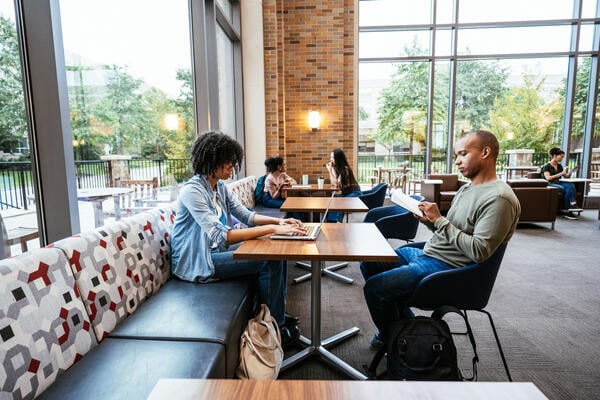
    What do students look for in on-campus housing? According to university staff, students are most satisfied with their space when it’s well furnished and clean.

    A new report from StarRez, a student housing management platform, identified room conditions and a sense of community as top priorities for on-campus housing residents. The survey also found that a majority of institutions see social events and mental health support as key to the student experience in residence halls.

    In addition, the research reveals that today’s students prefer privacy in their living space but are still interested in creating connections and engaging with peers who share their residence hall. They are also open to opportunities to build living-learning communities.

    Methodology

    StarRez’s survey was fielded between Feb. 10 and April 14, 2025. It yielded 459 responses from 418 institutions across the globe, including 360 institutions based in the Americas.

    Setting the stage: An estimated 16 percent of all undergraduates live on campus, including 30 percent of those who attend four-year, public institutions and 43 percent of students at independent colleges, according to an analysis from the American Association of Community Colleges.

    Previous research shows that students who live in residential housing on campus are more likely than their peers who live off campus to persist and complete a degree. This trend may be due in part to the proximity to peer support, academic resources and security in basic needs that living on campus affords.

    In recent years, many colleges have seen a housing crunch impact their students, resulting in less-than-ideal accommodations and residence halls exceeding capacity. StarRez’s survey found that 64 percent of responding institutions had 90 percent or higher occupancy rates; 15 percent had occupancy rates of 99 percent or higher. Yet nearly 57 percent of students do not have access to on-campus housing, according to respondent data.

    But StarRez’s report points to a post-pandemic spike in students interested in living on campus—a trend that has leveled out this year—meaning the exceptionally high demand for on-campus housing may decline.

    Affordability also remains a growing concern in the campus housing market. Student housing prices are rising faster than those of single-family housing, growing 8.8 percent in 2023 compared to multifamily rentals, which rose 4.5 percent in cost over the same period.

    Survey says: When students say they’re satisfied with their housing, approximately one-third are referring to the room conditions and furnishings, their sense of community, or the residence hall’s amenities, according to institutional respondents.

    On the flip side, cost, facility issues and dissatisfaction with food or meal plans were the most commonly reported criticisms of on-campus living. Inside Higher Ed’s Student Voice survey from 2023 found that 48 percent of students believe their dining hall options need improvement and 37 percent said dining facilities need improvement.

    Across room types, apartment-style housing is the most requested option by students (34 percent), followed by suite-style housing (27 percent) and traditional dorms (21 percent), according to StarRez’s survey. The report also found that a greater share of students want their own space; at a majority of institutions (51 percent), students rank single rooms as their top choice on the housing application.

    Not every housing placement turns out to be successful. A majority of colleges said more than 10 percent of their residents requested a room change during the year, with 8 percent saying between 25 and 50 percent of residents asked for a new room.

    Among events offered to residents, 90 percent said social events are the most popular and widely attended, followed by recreational activities (56 percent) and wellness programs (39 percent).

    When asked which health and well-being activities students most often requested of their housing facility, nearly 60 percent of respondents said mental health support programs, and over half (56 percent) wanted social events and community-building activities. Less popular responses included counseling and peer support networks (46 percent), healthy dining options (38 percent), and financial and academic support services (36 percent).

    Living-learning communities continue to grow in popularity, with four out of five colleges offering this type of student housing. Academic-focused communities (23 percent) and honors programs (17 percent) were the most popular LLCs, while career (5 percent) and leadership-focused (6 percent) groups were the least popular.

    National data shows students with disabilities are enrolling in higher education at higher rates, and StarRez’s report points to an increase in emotional support animals making their way to campus as well. One-third of institutions said between 3 and 10 percent of residents have emotional support animals, with 3 percent of respondents saying more than 10 percent of students have them.

    Fewer institutions reported offering gender-inclusive housing in 2025 (69 percent) than in 2024 (73 percent), and there was little difference in the number who said they were considering implementing gender-inclusive housing space.

    Growth in international student enrollment is also pushing an increase in housing demand from international students, with 34 percent of respondents indicating a slight increase and 6 percent reporting a significant increase. A majority of respondents house fewer than 10 percent of their international students on campus. The report data does not reflect recent federal actions this spring that may impede international student enrollment in the fall.

    So what? Based on the report’s findings, authors recommend housing providers consider:

    • Students’ desire for privacy, mental health and belonging, which are core to their experiences on campus.
    • More students want apartment-style and single-room housing options, creating opportunities for institutions to adapt spaces to match this need.
    • Living and learning communities can provide high-impact experiences for residents, leading to greater satisfaction and retention.

    How does your institution promote belonging and well-being in the residence halls? Tell us more.

    Source link

  • Columbia “Incorporating” IHRA Antisemitism Definition

    Columbia “Incorporating” IHRA Antisemitism Definition

    Columbia University’s acting president says the institution is incorporating the controversial International Holocaust Remembrance Alliance definition of antisemitism into the Office of Institutional Equity’s work. That office investigates discrimination complaints against students and employees.

    “Formally adding the consideration of the IHRA definition into our existing anti-discrimination policies strengthens our approach to combating antisemitism,” Claire Shipman said in a statement Tuesday announcing “additional commitments to combatting antisemitism.”

    The IHRA, which calls its definition a “working definition,” says antisemitism “might include the targeting of the state of Israel, conceived as a Jewish collectivity. However, criticism of Israel similar to that leveled against any other country cannot be regarded as antisemitic.”

    It also says antisemitism might include “comparisons of contemporary Israeli policy to that of the Nazis” or “claiming that the existence of a State of Israel is a racist endeavor.”

    Columbia’s leaders, like those at Harvard University, have been negotiating with the Trump administration to restore funding the federal government said it froze over alleged campus antisemitism. Harvard announced in January that it would start using the IHRA definition when evaluating complaints of antisemitic harassment or discrimination—before its public war with the Trump administration began.

    In a statement, Afaf Nasher, executive director of the Council on American-Islamic Relations’ New York chapter, called Columbia’s move “an attack on free speech” and a “shameless weaponization of antisemitism in order to stifle the ability of students to speak out against the ongoing genocide of Palestinians by the Israeli government.”

    Shipman also announced that Columbia would not “recognize or meet with the group that calls itself ‘Columbia University Apartheid Divest’ (CUAD), its representatives, or any of its affiliated organizations. Organizations that promote violence or encourage disruptions of our academic mission are not welcome on our campuses and the University will not engage with them.”

    Source link

  • F-1, J-1 Student Visa Issuances Dropped in May

    F-1, J-1 Student Visa Issuances Dropped in May

    The U.S. Department of State issued 12,689 fewer F-1 visas in May 2025 compared to the May before, which could forecast a decline in international students able to attend U.S. universities this fall.

    Recently published data from the State Department shows a 22 percent drop in F-1 visas issued across the world and a 13 percent decline in J-1 visas.

    While visa issuances can help predict international student enrollment trends, they don’t tell the full story, said Rachel Banks, senior director for public policy and legislative strategy at NAFSA, the association of international educators. Still, the trend line isn’t positive.

    “We’re not really going to know until we get through September to know everyone who arrives, to know what the enrollment really looks like,” Banks said. “But it’s certainly not encouraging.”

    Over the past few months, President Donald Trump has cracked down on international students via arrests, travel bans and revocations of legal status. Those moves and other executive orders could affect the number of F-1 and J-1 visas issued.

    In May, the administration said it would revoke visas from Chinese nationals who have ties to the Chinese Communist Party. The number of Chinese nationals issued a F-1 visa in May declined by 15 percent (or about 2,578 students). The State Department also paused visa interviews in late May while the agency developed a policy to screen international students’ social media profiles. Interviews resumed in June once the policy was in place.

    The interview pause may have contributed to but cannot fully explain the decline in visa issuances, said Finn Reynolds, head of market research at Lawfully, a legal tech start-up focused on immigration.

    The State Department doesn’t publish the number of visa applications or interviews it engages in, which means the decline could be tied to a decreased demand or slower processing by the department, Reynolds added. A May 27 survey by Study Portal found student interest in studying in the U.S. has dropped to its lowest point since COVID-19, with fewer students interested in U.S. programs and instead considering other English-speaking nations such as the U.K. or Australia.

    Additionally, the State Department doesn’t share daily visa issuance numbers, meaning the drop could be tied solely to the pause in the final week of May, Banks said. The connection, over all, is unclear.

    The data also points to the effect of travel restrictions on students from certain nations. The Trump administration banned visitors from 12 countries and implement heightened restrictions for seven other countries in June. The May numbers show a nearly 150 percent decline in F-1 visa issuances (or 451 visas) and a 105 percent decline in J-1 issuances (157 visas) to citizens from the impacted nations, even before the ban took place.

    One factor not reflected in the data is the number of students returning to their institutions who already hold visas. Students don’t need to receive a new visa if they remain in the U.S.; they only need one when traveling in and out of the country. Given the disruption to Student Exchange and Visitor Information System statuses in April, many students chose to remain in the U.S. over their summer break, Banks said.

    Reynolds expects to see a further drop in visa issuances for June and July, because social media vetting procedures result in fewer appointment slots.

    Students in China, Ghana, India, Japan, Niger and Nigeria have had the most trouble getting appointments, according to NAFSA members.

    “We’re halfway through July, and there’s still students who are struggling to get an appointment; that’s troubling,” Banks said.

    Future policies could also bottleneck the visa pipeline for international students. A proposed rule at the Office of Management and Budget would end duration-of-stay policies and instead implement a fixed date for how long students can remain in country on their visa.

    “We’re very concerned that if that were to go through, that sort of adds to further disruptions and hurdles that students have to jump over, that then gives students more reason to say, ‘You know, this seems like a hassle, this seems like I’m not welcome, I’m going to find another opportunity to pursue,’” Banks said.

    Enrollment Declines Loom

    Colleges and universities are already anticipating declines in their international student populations. The Institute of International Education found that 40 percent of institutions projected declines in their undergraduate population of international students, and 49 percent anticipated a drop in graduate student populations.

    A NAFSA survey of about 150 members institutions this summer found 78 percent of institutions predict a decline in both undergrad and graduate international students.

    Each year, institutions enroll 1.1 million international students, about 6 percent of all college students in the U.S.

    Calculations by The Financial Times, published last week, found that a decline of even 10 percent in international student enrollment would cost U.S. colleges and universities $3 billion in revenue. A significant portion of this loss would be in tuition revenue; a 10 percent drop would result in a $900 million decrease in tuition dollars.

    Source link

  • Wins and Losses of the Reconciliation Bill

    Wins and Losses of the Reconciliation Bill

    Kevin Dietsch/Getty Images

    It’s been six months since the second Trump administration took office, and in that time it has radically changed the policy around federal student loans, grants and college accountability. With the One Big Beautiful Bill Act now signed into law, Inside Higher Ed’s editor in chief, Sara Custer, spoke with news editor Katherine Knott about what’s in the bill and the outcome of the sector’s efforts to influence the massive piece of legislation. 

    In a recent episode of The Key, Inside Higher Ed’s news and analysis podcast, they also checked in on Harvard and Columbia’s negotiations with the administration and shared what they’ll be looking out for in the next six months. 

    Source link

  • China “Will Blow Us Away” if Trump Destroys U.S. Universities

    China “Will Blow Us Away” if Trump Destroys U.S. Universities

    The first Nobel Prize–winning scientist to join a White House cabinet, Steven Chu made history when he became Barack Obama’s energy secretary in 2009. But his move to Washington cost him an incredible $300 million.

    “I joined the Nvidia board in 2004, before the company took off, but I had to sell my shares in 2009 when I joined government,” Chu said about his early involvement in the microchip firm that recently became the world’s most valuable company with a $4 trillion capitalization.

    “At the time Nvidia was a small graphics company, but there were rules about conflict of interest so I had to sell,” he told Times Higher Education. With Nvidia’s stock rising 22,000 percent in the past decade alone, Chu’s stake would be worth $300 million, he said.

    Nvidia’s astonishing rise has amazed the stock market in recent years, but Chu, who won the Nobel Prize in physics in 1997, felt the company had huge promise when he joined.

    “When Jenson Huang [Nvidia’s founder] told me about developing this high-level chip, I said, ‘If you do that, this computer will be at the heart of every supercomputer in the world.’ And he did it,” recalled Chu.

    Sanguine about his lost wealth, Chu’s main takeaway from Nvidia is not his own misfortune. Instead, he worries that this American success story—co-created by a Taiwanese-born Stanford graduate, employing foreign-born engineering talent—might not have been able to happen today given the double whammy faced by U.S. academia: massive cuts to federal science budgets and an immigration crackdown deterring many students, particularly from China, from applying to U.S. institutions.

    “Trump wants to cut science budgets by half or more and reduce the number of foreign postdocs—particularly from China,” explained Chu, speaking earlier this month at the annual Lindau Nobel Laureate Meeting in southern Germany.

    “That’s a problem because if you go to any major research university, you’ll find about a third of researchers are East Asian.”

    Chu’s own parents—born and educated in China before moving to the Massachusetts Institute of Technology in the 1940s—are a good example of how this brain gain has worked in America’s favor. “When the Communists took over, they couldn’t go back, but this is how America got many of its best scientists and engineers—as refugees from Germany, Italy and China.”

    “That’s true for business, too—many of America’s captains of industry, from Jenson Huang to [ex-Intel boss] Andy Grove and Alexander Graham Bell, were immigrants,” he said.

    Reflecting on how America “didn’t become a scientific superpower until World War II,” Chu said he believes the 1930s are instructive in other ways. “In this era America took what was innovative and applied it to industry. That allowed places like Ford to take what Volkswagen and Peugeot was doing but do it cheaper, but good enough to work,” he said.

    “That is what China is doing to America now—for instance, taking the electric car and making it cheaper and now better. What we did to Europe, China and now Korea are doing to us,” he said.

    Traditionally, the U.S. has been able to stay ahead thanks to its education system, in particular its generously funded world-leading research universities. With that system under attack, however, that advantage is weaker, he said. “Something magical happens at Ph.D. level in U.S. universities—we teach creativity. China is trying to learn this … and then apply it to their industrial sector. When they do, they will blow us away.”

    Without America’s outstanding universities and with its foreign talent pool diminished, China’s path to global dominance will be immeasurably easier, predicted Chu. “Trump is perfectly willing to destroy institutions that any country in the world would give its eyeteeth for,” he said.

    Unusually for a Nobel laureate, Chu’s prize did not mark the peak of his scientific achievements. He led a committee that recommended the creation of ARPA-E, a science agency that has funded more than $4 billion in battery, nanotech and other types of energy research since 2009, generating spin-out companies worth more than $22 billion.

    Meanwhile, his time as energy secretary saw further investment, including the funding of an experimental $1 billion carbon-capture plant in Louisiana—a stark contrast to the “drill, baby, drill” priorities of the current administration. Obama also credited his expertise as a major reason why the cleanup after the Deepwater Horizon disaster in 2010—the biggest oil spill in history—was successful.

    And there are his brushes with some of the 21st century’s biggest tech companies, even if Nvidia wasn’t the only big fish he missed out on. “I knew [financier] Richard Blum, who said he could get me on the board of Apple— I didn’t say yes because I had a lot of nonprofit activities, but that was 2006, the year before the iPhone was launched,” he reflected.

    Not that he thinks the money would have made much difference. “If I was worth a couple of hundred million dollars, would I have stopped doing science and just bought sports cars and houses? I hope not.”

    Source link

  • Americans Recognize Nuances of Higher Ed’s Value

    Americans Recognize Nuances of Higher Ed’s Value

    While the Trump administration has painted a bleak picture of the higher education sector as a costly enterprise that burdens taxpayers and pushes leftist ideologies, new survey data shows that most Americans—regardless of their political leanings—still value it.

    “Increasingly, higher ed is being cast as elite, expensive and not connected with everyday Americans,” said Sophie Nguyen, senior policy manager with the higher education team at New America, the left-leaning think tank that published its annual Varying Degrees survey on Wednesday. “There’s a significant disconnect in the narrative about what higher ed is” and how it’s perceived.

    Capturing the American public’s views on the purpose of higher education drove many of the questions Nguyen and her colleagues asked 1,631 respondents in March for the ninth iteration of the survey.

    After reaching a low point last year, the data shows that satisfaction with higher education is on the rise: 40 percent of respondents—including 42 percent of both Republicans and Democrats—reported that higher education is “fine as it is,” compared to 36 percent who said the same last year.

    “We see a lot of alignment between Democrats and Republicans, something we haven’t heard a lot about,” Nguyen said, describing such data points as “the common ground” colleges can tap into when defending their worth to both consumers and lawmakers.

    New America’s findings are in line with a poll Gallup also released Wednesday in partnership with the Lumina Foundation, which shows that 42 percent of Americans surveyed said they have a “great deal” or “quite a lot” of confidence in higher education, compared to a low of 36 percent in 2024 and 2023—though it’s still far from the nearly 60 percent confidence peak in 2015. The share of people who reported “very little” or no confidence is also on the decline, falling from 32 percent last year to 23 percent this year. Although Democrats reported much higher confidence in higher education institutions, Republican confidence in both four- and two-year colleges rose by 11 and 12 percentage points, respectively, compared to last year.

    Data visualization of change in confidence in four- and two-year colleges, by political party.

    Respondents cited the economic and social benefits of higher education, its standing at the forefront of innovation, the quality of education and training—both for jobs and exposure to different viewpoints—as drivers of the uptick in their confidence.

    The Trump administration’s war on higher ed may have played a role, said Courtney Brown, Lumina’s vice president of impact and planning.

    “It is possible that we are seeing people in support of the sector because they see so many attacks,” she said. Whatever the reason, she said the new data is positive, and if institutions want to restore confidence to 2015 levels they should consider “how they can build on this moment and show up for students and ensure they’re getting value.”

    Like Gallup’s report, New America’s survey revealed partisan divides as well as agreements. Sixty percent of Republicans said colleges are having a negative impact on the country, while 75 percent of Democrats said they’re having a positive impact. But respondents from both parties were much more aligned on questions about specific aspects of higher ed’s value and purpose.

    While Republican lawmakers pressure universities into proving their return on investment, the vast majority of Americans, including both Republicans and Democrats, believe higher education should function as more than a transaction. They say it should not only equip students with the skills and knowledge to succeed in their chosen fields (97 percent of Democrats; 98 percent of Republicans), but also help students become informed citizens (97 percent of Democrats; 89 percent of Republicans) and critical thinkers (97 percent of Democrats; 92 percent of Republicans).

    “The rhetoric coming from Washington tends to be a caricature of what are some real issues facing college campuses and the sector in general,” Beth Akers, a senior fellow at the right-leaning American Enterprise Institute who focuses on the economics of higher education, said at a media briefing about New America’s survey. While “there’s room for improvement … it’s unfortunate that the rhetoric is empowering misinformation about what institutions are doing.”

    Bar chart of responses to the question "How important do you think it is for colleges and universities to do the following?" Responses are detailed earlier in thes tory.

    Even as Trump and his political allies move to dramatically cut federal funding for university research—which advocates say will devastate university budgets, local economies and progress toward lifesaving research—88 percent of Republicans and 97 percent of Democrats believe it’s important to some degree that colleges and universities conduct research to expand understanding in various subjects.

    Despite political rhetoric that suggests otherwise, American higher education has delivered an array of personal and societal benefits for decades, Lynn Pasquerella, president of the American Association of Colleges and Universities, said during a news briefing on the report.

    “Higher ed continues to be the single most powerful socioeconomic catalyst in America, which is associated not only with higher earnings, but longer productive lives, better physical and mental health, resilience, adaptability, and personal development and fulfillment,” she said. “At the societal level, education drives long-term economic growth for local communities and the nation.”

    More broadly, it “strengthens our democracy,” because it “tends to mitigate or tame authoritarian tendencies” and “reduces individuals’ sensitivities to potential triggers by providing them with psychological protection in the form of self-esteem, personal security and autonomy,” she said. “It fosters a moral imagination—imagining what it’s like to be in the shoes of another, different from oneself—and interpersonal trust.”

    Despite the Trump administration and its allies’ attacks on diversity, equity and inclusion initiatives, the survey data shows that an overwhelming majority of Republicans and Democrats agree that higher education should create an environment where students of all backgrounds feel supported, provide a platform for exploration of diverse ideas and foster cross-cultural understanding.

    Bar chart showing responses to the question "How important do you think it is for colleges and universities to do the following" including "create an environment where students of all backgrounds feel supported" and "provide a platform for exploration of diverse ideas."

    Although New America’s survey suggests that most Americans recognize the layered value of higher education, Republican lawmakers have increasingly focused on both controlling the subjects colleges can teach and research and making it harder for students and colleges to access federal funding.

    The sweeping policy bill Trump signed into law earlier this month requires colleges to show that their graduates earn more than an adult with only a high school diploma or risk losing access to federal loans. Trump has also proposed billions of dollars in cuts to education funding, including eliminating all federal support for college-access programs that have long helped low-income, first-generation and students with disabilities navigate higher education.

    While Republicans and Democrats are divided on who they think should be primarily responsible for paying for college—76 percent of Democrats believe the government should; 67 percent of Republicans believe students should—respondents from both parties cited cost as the single biggest barrier to enrolling in or finishing college.

    At the same time, 75 percent of respondents over all (91 percent of Democrats and 58 percent of Republicans) said the federal government should spend more on making college more affordable.

    Hironao Okahana, vice president and executive director of the Education Futures Lab at the American Council on Education, said this data offers a ray of optimism for the higher education sector navigating an onslaught of partisan attacks from Republican policymakers.

    “The public is seeing higher education as a sector beyond some of the sound bites we’re hearing,” he said. “They’re seeing that it has more nuance and texture, and that there’s not just one way higher education can contribute to society.”

    Source link

  • We Can’t Ban Generative AI but We Can Friction Fix It (opinion)

    We Can’t Ban Generative AI but We Can Friction Fix It (opinion)

    As the writing across the curriculum and writing center coordinator on my campus, faculty ask me how to detect their students’ use of generative AI and how to prevent it. My response to both questions is that we can’t.

    In fact, it’s becoming increasingly hard to not use generative AI. Back in 2023, according to a student survey conducted on my campus, some students were nervous to even create ChatGPT accounts for fear of being lured into cheating.  It used to be that a student had to seek it out, create an account and feed it a prompt. Now that generative AI is integrated into programs we already use—Word (Copilot), Google Docs (Gemini) and Grammarly—it’s there beckoning us like the chocolate stashed in my cupboard does around 9 p.m. every night.

    A recent GrammarlyGO advertisement emphasizes the seamless integration of generative AI. In the first 25 seconds of this GrammarlyGO ad, a woman’s confident voice tells us that GrammarlyGO is “easy to use” and that it’s “easy to write better and faster” with just “one download” and the “click of a button.” The ad also seeks to remove any concerns about generative AI’s nonhumanness and detectability: it’s “personalized to you”; “understands your style, voice and intent so your writing doesn’t sound like a robot”; and is “custom-made.” “You’re in control,” and “GrammarlyGO helps you be the best version of yourself.”  The message: Using GrammarlyGO’s generative AI to write is not cheating, it’s self-improvement. 

    This ad calls to my mind the articles we see every January targeting those of us who want to develop healthy habits. The ones that urge us to sleep in our gym clothes if we want to start a morning workout routine. If we sleep in our clothes, we’ll reduce obstacles to going to the gym. Some of the most popular self-help advice focuses on the role of reducing friction to enable us to build habits that we want to build. Like the self-help gurus, GrammarlyGO—and all generative AI companies—are strategically seeking to reduce friction by reducing time (“faster), distance (it’s “where you write”) and effort (it’s “easy”!). 

    Where does this leave us? Do we stop assigning writing? Do we assign in-class writing tests? Do we start grading AI-produced assignments by providing AI-produced feedback? 

    Nope. 

    If we recognize the value of writing as a mode of thinking and believe that effective writing requires revision, we will continue to assign writing. While there is a temptation to shift to off-line, in-class timed writing tests, this removes the opportunity for practicing revision strategies and disproportionately harms students with learning disabilities, as well as English language learners.  

    Instead, like Grammarly, we can tap into what the self-help people champion and engage in what organizational behavior researchers Hayagreeva Rao and Robert I. Sutton call “friction fixing.” In The Friction Project (St. Martin’s Press, 2024), they explain how to “think and live like a friction fixer who makes the right things easier and the wrong things harder.” We can’t ban AI, but we can friction fix by making generative AI harder to use and by making it easier to engage in our writing assignments. This does not mean making our writing assignments easier! The good news is that this approach draws on practices already central to effective writing instruction. 

    After 25 years of working in writing centers at three institutions, I’ve witnessed what stalls students, and it is rarely a lack of motivation. The students who use the writing center are invested in their work, but many can’t start or get stuck. Here are two ways we can decrease friction for writing assignments: 

    1. Break research projects into steps and include interim deadlines, conferences and feedback from you or peers. Note that the feedback doesn’t have to be on full drafts but can be on short pieces, such as paragraph-long project proposals (identify a problem, research question and what is gained if we answer this research question). 
    1. Provide students with time to start on writing projects in class. Have you ever distributed a writing assignment, asked, “any questions?” and been met with crickets? If we give students time to start writing in class, we or peers can answer questions that arise, leaving students to feel more confident that they are going in the right direction and hopefully less likely to turn to AI.

    There are so many ways we faculty (unintentionally) make our assignments uninviting: the barrage of words on a page, the lack of white space, our practice of leading with requirements (citation style, grammatical correctness), the use of SAT words or discipline-specific vocabulary for nonmajors: All this can signal to students that they don’t belong even before they’ve gotten started. Sometimes, our assignment prompts can even sound annoyed, as our frustration with past students is misdirected toward current students and manifests as a long list of don’ts. The vibe is that of an angry Post-it note left for a roommate or partner who left their dishes in the sink … again!

    What if we were to reconceive our assignments as invitations to a party instead?  When we design a party invitation, we have particular goals: We want people to show up, to leave their comfort zones and to be open to engaging with other people. Isn’t that what we want from our students when we assign a writing project? 

    If we designed writing assignments as invitations rather than assessments, we would make them visually appealing and use welcoming language.  Instead of barraging students with all the requirements, we would foreground the enticing facets of the assignment. De-emphasize APA and MLA formatting and grammatical correctness and emphasize the purpose of the assignment. The Transparency in Learning and Teaching in Higher Education framework is useful for improving assignment layout. 

    Further, we can invite students to write for real-world audiences and wrestle with what John C. Bean calls “beautiful problems.” As Bean and Dan Melzer’s Engaging Ideas: The Professor’s Guide to Integrating Writing, Critical Thinking, and Active Learning in the Classroom (Wiley, 2021) emphasizes, problems are naturally motivating. From my 25 years of experience teaching writing, students are motivated to write when they:

    • write about issues they care about;
    • write in authentic genres and for real-world audiences;
    • share their writing in and beyond the classroom;
    • receive feedback on drafts from their professors and peers that builds on their strengths and provides specific tasks for how to improve their pieces; and
    • understand the usefulness of a writing project in relation to their future goals. 

    Much of this is confirmed by a three-year study conducted at three institutions that asked seniors to describe a meaningful writing project. If assignments are inviting and meaningful, students are more likely to do the hard work of learning and writing. In short, we can decrease friction preventing engagement with our assignments by making them sound inviting, by using language and layouts that take our audience into consideration, and by designing assignments that are not just assessments but opportunities to explore or communicate. 

    How then do we create friction when it comes to using generative AI? As a writing instructor, I truly believe in the power of writing to figure out what I think and to push myself toward new insights. Of course, this is not a new idea. Toni Morrison explains, “Writing is really a way of thinking—not just feeling but thinking about things that are disparate, unresolved, mysterious, problematic or just sweet.” If we can get students to truly believe this by assigning regular low-stakes writing and reinforcing this practice, we can help students see the limits of outsourcing their thinking to generative AI. 

    As generative AI emerged, I realized that even though my writing courses are designed to promote writing to think, I don’t explicitly emphasize the value of writing as mode of discovery, so I have rewritten all my freewrite prompts so that I drive this point home: “This is low-stakes writing, so don’t worry about sentence structure or grammar. Feel free to write in your native language, use bullet points, or speech to text. The purpose of this freewriting is to give you an opportunity to pause and reflect, make new connections, uncover a new layer of the issue, or learn something you didn’t know about yourself.” And one of my favorite comments to give on a good piece of writing is “I enjoy seeing your mind at work on the page here.” 

    Additionally, we can create friction by getting to know our students and their writing. We can get to know their writing by collecting ungraded, in-class writing at the beginning of the semester. We can get to know our students by canceling class to hold short one-on-one or small group conferences. If we have strong relationships with students, they are less likely to cheat intentionally. We can build these bonds by sharing a video about ourselves, writing introductory letters, sharing our relevant experiences and failures, writing conversational feedback on student writing, and using alternative grading approaches that enable us to prioritize process above product. 

    There are no “AI-proof” assignments, but we can also create friction by assigning writing projects that don’t enable students to rely solely on generative AI, such as zines, class discussions about an article or book chapter, or presentations: Generative AI can design the slides and write the script, but it can’t present the material in class. Require students to include interactive components to their presentations so that they engage with their audiences. For example, a group of my first-year students gave a presentation on a selection from Jonathan Haidt’s The Anxious Generation, and they asked their peers to check their phones for their daily usage  report and to respond to an anonymous survey.

    Another group created a game, asking the class to guess which books from a display had been banned at one point or another. We can assign group projects and give students time to work on these projects in class; presumably, students will be less likely to misuse generative AI if they feel accountable in some way to their group. We can do a demonstration for students by putting our own prompts through generative AI and asking students to critique the outputs. This has the two-pronged benefit of demonstrating to students that we are savvy while helping them see the limitations of generative AI. 

    Showing students generative AI’s limitations and the harm it causes will also help create friction. Generative AI’s tendency to hallucinate makes it a poor tool for research; its confident tone paired with its inaccuracy has earned it the nickname “bullshit machine.” Worse still are the environmental costs, the exploitation of workers, the copyright infringement, the privacy concerns, the explicit and implicit biases, the proliferation of mis/disinformation, and more. Students should be given the opportunity to research these issues for themselves so that they can make informed decisions about how they will use generative AI. Recently, I dedicated one hour of class time for students to work in groups researching these issues and then present what they found to the class. The students were especially galled by the privacy violations, the environmental impact and the use of writers’ and artists’ work without permission or compensation. 

    When we focus on catching students who use generative AI or banning it, we miss an opportunity to teach students to think critically, we signal to students that we don’t trust them and we diminish our own trustworthiness.  If we do some friction fixing instead, we can support students as they work to become nimble communicators and critical users of new technologies.

    Catherine Savini is the Writing Across the Curriculum coordinator, Reading and Writing Center coordinator, and a professor of English at Westfield State University. She enjoys designing and leading workshops for high school and university educators on writing pedagogy.

    Source link

  • Pa. Clinic Run by Students Supports Community Health

    Pa. Clinic Run by Students Supports Community Health

    Experiential learning opportunities provide students with a space to connect in-classroom learning to real-world situations. A student-run clinic at Widener University provides graduate health science professional students with hands-on learning and career experiences while supporting community health and well-being for Chester, Pa., residents.

    The Chester Community Clinic was founded in 2009 for physical therapy services but has since expanded to cover other health and wellness services, including occupational therapy and speech-language pathology. The clinic gives students studying those fields leadership opportunities, experience working with diverse clients and the confidence to tackle their professional careers.

    What’s the need: Before the clinic was established, physical therapy students at Widener would volunteer at a pro bono clinic in nearby Philadelphia. But students pushed for a clinic within Chester, which is considered a primary care health professional shortage area, meaning it lacks enough providers to serve the local population.

    For some patients, a lack of health insurance can impede their ability to receive care. In Pennsylvania, 5.4 percent of residents are without private or public health insurance, roughly two percentage points lower than the national average. The clinic addresses gaps in health care by providing services for free while educating future health science professionals.

    How it works: The clinic is led by a board of 12 to 14 students from each class and supervised by faculty and community members who are licensed physical therapists. Students begin service in their second semester of the program and participate in the clinic until their final clinical placement.

    Most clients are referred by a physician but have been turned away from local PT clinics due to a lack of health insurance or because they exceeded the allotted insurance benefits for PT.

    During appointments, students provide direct physical therapy services to patients, including making care plans, walking them through exercises and creating medical records.

    Over the years, the clinic has expanded to include occupational therapy, speech-language pathology, clinical psychology and social work services. In 2024, Widener included a Community Nursing Clinic to provide pro bono services as well.

    All students studying physical therapy, occupational therapy and speech-language pathology at Widener volunteer at the clinic as part of the program requirements. PT students are required to serve a minimum of three evenings per semester; board members typically serve more hours.

    The clinic’s multifaceted offerings increase opportunities for students to work across departments, engaging with their peers in other health professions to establish interdisciplinary plans for care.

    Free Talent

    Other colleges and universities offer pro bono student services to support community members and organizations:

    • Gonzaga University has a student-led sports consulting agency that offers strategy ideas and tools to sports brands and teams.
    • Utah Valley University students can intern with a semester-long program that provides digital marketing to businesses in the region.
    • American University’s Kogod School of Business has a business consulting group that provides students with project-based consulting experience.
    • Carroll University faculty and students in the behavioral health psychology master’s program run a free mental health clinic for those in the area.

    The impact: Since the clinic began in 2009, students have provided over 12,000 physical therapy appointments to community members, worth about $1.3 million in costs, according to a 2024 press release from the university.

    A 2017 program evaluation, published in the Internet Journal of Allied Health Sciences and Practice, found that PT students who served in the pro bono clinic felt more equipped to launch into clinical work. They were prepared to manage documentation, use clinical reasoning and engage in interprofessional communication.

    A 2020 study of the clinic also found that students performed better than expected in cultural competence, perhaps due to their experience engaging with clients from a variety of ethnicities, socioeconomic backgrounds, health literacy levels, religions and languages.

    Both Widener and students in the health science professions continue to support the development of other pro bono clinics. The class of 2015 created The Pro Bono Network, facilitating advancement of student-run pro bono services among 109 member institutions across the country. This past spring, Widener’s annual Pro Bono Network Conference welcomed 250 individuals working at or affiliated with pro bono clinics, and featured 32 student leaders presenting their work.

    How do your students gain hands-on experience and give back? Tell us more.

    This article has been updated to reflect the addition of a pro bono nursing clinic in 2024, not the creation of it, and to identify students as health science professional students, not health professional students.

    Source link

  • Tax Policy Belongs in Liberal Arts Curriculum (opinion)

    Tax Policy Belongs in Liberal Arts Curriculum (opinion)

    As congressional Republicans scratched and clawed to pass President Trump’s signature policy effort, the One Big Beautiful Bill Act—a sprawling, tax-heavy package celebrated as much for its branding as for its contents—it is notable how few people could explain what exactly was in it. Tax cuts for some, probably. A Social Security bonus, maybe. A gutting of public benefits, almost certainly. What is clear, though, is that the bill’s complexity was always in service of its politics: When no one understands tax policy, it’s much easier to sell whatever story you want.

    That confusion is exactly why we should be teaching tax policy more broadly—not just in sparsely attended law school classes and accounting departments, but in general education curricula and first-year seminars. Tax isn’t just a technical rule-following subject; it’s a civic one. Tax policy shapes everything from fairness and inequality to the functional shape of the state itself. Yet, most students will graduate college without ever being asked to consider what tax is for—much less whom it helps, whom it harms and why it remains so easy to obscure.

    That is precisely the starting point for the course I designed at Drexel University, Introduction to Tax Theory and Policy, which I teach in our innovative undergraduate law major, housed at the Thomas R. Kline School of Law. It’s not a course for aspiring tax attorneys, prospective C.P.A.s or Excel mavens—few of my students intend to practice tax law. They’re interested in criminal or family law, or they’re business majors, future social workers, engineers or undecided second-years. But they’re all taxpayers—and that’s the relevant bit.

    Courses like mine aim to democratize access to legal and policy tools so that all students, irrespective of their major, can become more informed and empowered participants in civic life. In class, we don’t parse tax rates or calculate deductions. No calculators are required, and at no point is anyone expected to consider the straight-line depreciation of an apartment complex. We ask why the system is built the way it is, and we talk about the power that it reflects and protects. We talk about values: what kinds of behavior the tax code encourages or punishes. We talk about trust and legitimacy: What happens when people believe the system is rigged, and what if they’re right? In short, we treat tax not as a set of arcane rules and rates to memorize, but as a lens through which we can better understand the power structures we live under.

    The surprising part (at least to me, when I first taught it and admittedly just hoped I wouldn’t be lecturing to an empty room) is how much students connect with this approach. More than connect with it—they often enjoy it. I’ve received feedback from students that describes the class as life-changing and course reviews that have noted how it changed assumptions regarding what tax even is. High praise from 19- and 20-year-olds.

    The course itself draws on philosophy, political theory, economics and law—but what it really cultivates is a kind of civic literacy. It asks students to think about who they are in relation to the state and how much of their future may be shaped by the tax policy they’ve never been taught to see. For many, it is the first time they’ve encountered taxation not as something to dodge, but as something to question, debate and reimagine in furtherance of their own values.

    In one session, we explore how the tax code is employed as a kind of soft steering wheel in the economy—how it at turns encourages homeownership, subsidizes sports stadiums, directs corporate research and development, and shapes (or even outright creates) the market for electric vehicles. Another week, we explore estate taxes and inheritance: not just who pays, but what it means to redistribute wealth across generations and what happens when we don’t. We read Garrett Hardin’s “The Tragedy of the Commons,” engage in spirited debates about the potential for tax to solve the artificial intelligence copyright debate, and unpack why TurboTax spent two decades fighting free filing.

    Over the course of the class, the question shifts away from what is a tax and toward whose values does this system reflect? That shift—from mere definitional awareness to focused critical engagement—is when I know the class is working. Students cease to see tax as someone else’s problem and begin seeing it as a potent tool of and for democracy.

    In their final papers, students have proposed remarkably forward-looking and sophisticated tax policy reforms—reflecting both creativity and civic seriousness. One student argued that companies receiving public subsidies through tax credits, like chemical and drug manufacturers, should be barred from claiming additional credits to remediate harms their products create. Another proposed a data-collection “sin tax” aimed at discouraging exploitative surveillance practices by tech companies. These aren’t rote academic exercises. They’re thoughtful intervention proposals that treat tax as a lever for shaping society.

    If tax policy determines who gets what, who pays for it and how the government keeps a hand in the marketplace, then it belongs squarely at the heart of a liberal arts education. We don’t cabin discussions of justice in law schools, and we don’t isolate questions of the public good in policy programs—why do we treat taxation, which intersects with both and innumerable other facets of modern life, as off-limits or too technical for undergraduates?

    This isn’t a plea to teach undergraduates to file their own taxes—though there is probably a case to be made for that, too. It’s about ensuring curricula help them understand how the world works and how it’s been designed to work for some more than others. That means tackling the politics of Internal Revenue Service funding, exploring how “tax relief” often functions as an upstream transfer of wealth and how a positively sprawling bill like the one recently passed through Congress can obscure much more than it reveals.

    If no one understands how tax policy works, how can anyone meaningfully weigh in on whether they support one revenue bill or another? On issues like immigration, abortion or education funding, many people bring at least some passing knowledge or lived experience to the conversation. Tax remains, for most, a black box. The more opaque it becomes, the more tempting it is for lawmakers to retreat into it—tucking major redistributive choices into the shadows of the tax code, where they can be shielded from public scrutiny.

    On the other hand, when students come to see tax as a form of the civic superstructure—something they live within and not just under—they are empowered to not only understand tax policy but to shape it. That should be one of the goals of any serious undergraduate education.

    We don’t have to, and should not, keep treating tax as one professional niche within other professional niches. If we want students to understand how tax relates to power, fairness and democratic participation, we should give them the tools to talk about it. This needn’t focus on the rates and rules but should illustrate the values taxes reflect and trade-offs they embed.

    Courses like mine don’t require a background in economics, accounting or law. They require a willingness to take seriously the idea that how we tax equates to how we govern. If we can help students see tax not as a source of dread or line item on their paycheck, but as the site of collective economic decision-making, we don’t just produce better-informed graduates—we’ll also produce more engaged citizens.

    Andrew Leahey is a practice professor of law at Drexel University’s Thomas R. Kline School of Law.

    Source link

  • Mixed Findings on Community Colleges’ Shared Governance

    Mixed Findings on Community Colleges’ Shared Governance

    A new report, released by the American Association of University Professors Tuesday, found mixed results when it comes to community colleges’ shared governance practices.

    The report used data from the AAUP’s inaugural survey of community colleges, conducted in partnership with the Center for the Study of Community Colleges. In the first survey of its kind, faculty leaders at 507 community colleges were asked to assess their institutions’ shared governance practices in 26 different decision-making areas; faculty senate chairs and governance officials responded at 59 colleges.

    The institutions excelled in some areas and proved lackluster in others. For example, at most institutions surveyed, especially those with tenure systems, faculty had an AAUP-recommended level of authority over decisions about curricula, salary policies, teaching assignments, faculty searches and evaluations, and tenure and promotion standards. But when it came to other decision-making areas—like budgets, provost selection, buildings and strategic planning—faculty were given little say, according to the report.

    Community college professors also participated less than faculty at four-year institutions in most academic and personnel-related decisions, though they played more of a role in decisions about salary policies. The report speculated that the prevalence of community college faculty unions may account for the difference. At higher ed institutions where faculty engage in collective bargaining, faculty tend to have more authority in salary policies and teaching loads. At community colleges, unionized faculty are also more engaged in decisions about full-time, non-tenure-track faculty promotion.

    “Community college–based faculty members and administrators can use the tools described in this report to assess governance practices at their institu­tions and compare those practices with national trends to identify areas where levels of faculty authority might be strengthened,” the report says. “Given the current political climate, economic uncertainty, demographic changes, and chronic underfunding of US higher education, now is the time for community colleges to identify and correct weaknesses in their own shared governance practices.”

    Source link