Tag: Events

  • The ART of Professionalism (opinion)

    The ART of Professionalism (opinion)

    A career is much like a work of art: We select an area to study—a medium, of sorts—in which to pursue an interest or a desire. We start by obtaining foundational knowledge before creating something that contributes to the greater society. Some may benefit from what is produced; others may not. Some will appreciate the output; others will not gain much, if anything, from what is constructed. At the center of the result is the artist themselves. Others along the way lend their own expertise, time and insights toward the outcome. However, it is the unique skills, perspectives, knowledge, choices and behaviors of the artist that determine what is created.

    We are all artists in the making. We have a profession in which we have chosen to engage. As graduate students or postdoctoral scholars, we gain the foundations needed for our chosen discipline. During our time training in higher education, we focus on acquiring technical skills and techniques to contribute to sustaining and expanding our fields of study. We set upon the path to becoming experts through trial and error, discovery and disappointments, gains and losses.

    Like with a work of art, we may start from a place of uncertainty: What can appear to be confounding fragments of a greater idea can coalesce in ways that surprise and satisfy us. We pull together parts and pieces to make something whole or even construct something unique. Yet while we are engaged in this creative and intellectual process, we must also work within defined boundaries. Expectations and ethical standards guide our professional conduct. Understanding these nuances is essential to forming a professional identity.

    Each profession carries its own expectations for behavior, decision-making and accountability. Cambridge defines “professionalism” as “the qualities connected with trained and skilled people.” We can have strong technical skills and deep knowledge in our particular disciplines; however, these alone do not guarantee our level of professionalism when we are actually in the workforce interfacing with supervisors, colleagues, team members and clients.

    While having the foundational skills and understanding may guarantee some success within a career, it is actually the capacity for acquiring and applying what I’ve termed “human-centered competencies” that ensures a greater degree of career fulfillment. Human-centered competencies consist of behaviors that involve a deeper sense of self-awareness. Recognizing and managing our behaviors, and understanding how they may impact those interacting with us, helps us relate to others in ways that forge effective communication, efficacious decision-making, constructive conflict resolution and fruitful work endeavors.

    With this in mind, let’s explore the ART of professionalism through some simple reflective exercises. Think about the questions presented here as intended to encourage an honest reflection on the art we are creating within our own spheres of influence.

    Attitude

    Our attitude is an outward reflection of what we are thinking and how we are feeling. Our attitude toward an assignment, toward a co-worker, toward ourselves or toward life itself is exemplified through our behaviors. Are we respectful and kind to others? Do we smile at who we see in the mirror or constantly chastise ourselves for what we have done (or not done)? Do we tend to jump to negative conclusions regarding those with whom we interact? Do we shake hands, look people in the eye and smile? Or are we downcast, avoidant and possibly even surly? How do we appear? Are we dressed for the part—one in which we want to be respected and taken seriously—or do we look like we would rather be on the couch bingeing on Netflix and eating potato chips?

    Our attitude says a lot about ourselves, and sometimes we do not even have to open our mouths to reveal it. Our internal dialogue can have an impact on our external behaviors, so we need to be aware of our attitude. We can improve it, if needed. We can start by examining how we carry ourselves, as our posture and physical appearance convey nonverbal messages. How we show up is also important to consider. Are we prepared for meetings? Do we speak up with confidence? Do we actively listen to others and appreciate their contributions?

    Our attitude reflects our frame of mind, and we illustrate who we are through our attitude. We also should keep in mind that each of us represents more than ourselves; we reflect the values and credibility of our professional communities.

    Responsibility

    Within the work environment we all have duties, projects or assignments that we manage. Responsibility involves taking ownership of our decisions, our actions and our outcomes. Work involves interdependence; it is rare that we can achieve a goal all on our own. Even artists need people who help them develop their skills, manufacture their tools, market their work and provide venues to exhibit their talent. Within the workplace, we will need others and others will need us.

    Responsibility, therefore, is a crucial competency to have as a professional. Exhibiting responsibility involves both dependability and accountability. Being dependable is a choice, and this can involve time management, setting boundaries and fulfilling obligations; we show up on time and we follow through with what we say we are going to do. Accountability means that we acknowledge when things have not worked out as planned, we recognize our contributions to successes and we face the consequences of our decisions and actions, whether positive or negative. Instead of evaluating situations as win or lose, we can choose to look at outcomes as win or learn. Whether we experience a victory or suffer a defeat, we can always learn from the process. In essence, responsibility is about us doing our part so that we contribute, in a mindful way, to the success and well-being of our colleagues and co-workers.

    Trust

    Trust is by far the most important component of professionalism. Trust looks different in a professional atmosphere than it does in personal life. Trust involves being genuine with others. We want to be able to count on others and to believe that they are being honest with us. The same expectations for honesty should hold when it comes to our own behavior.

    Trust involves being reliable, striving to meet expectations, fulfilling obligations, avoiding gossip and feeling secure in the knowledge that harm will not be done or betrayal will not occur. As professionals, it is imperative that we are trustworthy, as this is a fundamental component of human interactions. Being competent at trust involves building goodwill, being cooperative, displaying integrity, adhering to our values, engaging in sincere interactions and forming strong alliances. Without trust, bonds are broken, relationships are destroyed and organizations fail. We need to examine our words and our actions to evaluate how trustworthy we may seem to others. Being empathetic, reliable and ethical will serve us well as we pursue our passion and contribute our talents to the well-being of those with whom we work, as well as those who benefit from what our teams and organizations produce.

    Conclusion: Building a Body of Work

    As professionals, we are not just building careers; we are creating something much more enduring: a body of work, a reputation, a legacy. The skills we acquire in our chosen disciplines are only part of the equation. Equally important are the attitudes we embody, the responsibilities we accept and the trust we build. It takes time, reflection and endurance to create a great work of art; the same is true for our careers. The process may be unpredictable, but the core elements—our values, our character and our professionalism—will determine how our work is received and remembered.

    So ask yourself: What kind of professional artist do you want to be? What are you creating through your everyday choices? How will your ART— attitude, responsibility and trust—shape your path forward?

    Rhonda Sutton is dean of professional development at North Carolina State University’s Graduate School. She oversees a team that provides programming focused on career readiness, communication skills and teaching for graduate students and postdoctoral scholars. She also facilitates professional development initiatives on leadership, mentoring and wellness. Rhonda is a member of the Graduate Career Consortium, an organization providing an international voice for graduate-level career and professional development leaders.

    Source link

  • ‘Big, Beautiful Bill’ Means Big Changes for Higher Ed

    ‘Big, Beautiful Bill’ Means Big Changes for Higher Ed

    Following a flyover by a B-2 bomber, President Donald Trump signed a sweeping policy bill into law Friday, celebrating the Fourth of July and commending congressional Republicans for meeting his self-imposed deadline.

    The legislation, which narrowly passed the House on Thursday, promises to significantly change how colleges operate. Higher education groups and advocates warned that the bill will hurt low-income families while proponents praised the changes as necessary reforms.

    Much of the debate over the bill dubbed the One Big Beautiful Bill Act centered on the nearly $1 trillion in cuts to Medicaid, as well as changes to the tax code that will benefit the very rich. But the 870-page piece of legislation also overhauls higher education policy to cap some student loans, eliminate the Grad PLUS program and use students’ earnings to hold colleges accountable. Taken together, higher education experts say, the legislation would transform the sector, hurt universities’ finances and hinder college access.

    But the legislation doesn’t include some of the proposals that most worried college leaders, such as cuts to the Pell Grant program and a 21 percent endowment tax rate. Wealthy private colleges will still face a higher tax rate on their endowments, up to 8 percent. (The current rate is 1.4 percent.)

    Some higher ed lobbyists commended Republicans for backing off some of the deeper cuts, but they are worried about a number of changes in the bill.

    Eliminating Grad PLUS loans could mean fewer students attend graduate school, which would be a hit to universities’ bottom lines, especially at institutions that rely heavily on graduate programs for tuition revenue. Similarly, capping Parent PLUS loans at $65,000 per student could hurt Black and Latino families, who disproportionately use the loans. The legislation also consolidates repayment plans, giving future borrowers two options. Consumer protection advocates worry the bill will exacerbate the student debt crisis and drive students to private loans.

    The student loan changes take effect July 2026.

    Catch Up on Our Coverage of the Bill

    Lawmakers also agreed to expand the Pell Grant to short-term job-training programs, achieving a long-sought goal for community colleges and other groups. In a last-minute change, the expansion excludes unaccredited providers.

    “While somewhat improved over its original version, [the bill] contains a mix of new taxes and spending cuts that will force even more difficult decisions on chief business officers and further strain revenue that helps make college affordable for students and families,” said Kara Freeman, president of the National Association of College and University Business Officers. “The long-term implications of this legislation for higher education and American innovation are likely to be profound.”

    Over all, the One Big Beautiful Bill Act will add about $3.3 trillion to the national debt over the next 10 years, according to the Congressional Budget Office. Republicans said they had hoped to curb spending and address the growing deficit with the legislation, and some conservatives balked at the price tag. Still, pressure from the president to deliver a legislative victory won out, even as some lawmakers waffled for hours over whether to support the bill. Politico reported that Trump called lawmakers and met with them in person to make his case.

    Republicans lawmakers and Trump administration officials praised the legislation, saying it would lower the cost of college and boost accountability. One of the major changes ties colleges’ access to federal student loans to students’ earnings. Programs that fail to show their graduates earn more than an adult with only a high school diploma could be cut off from loans. One rough analysis found that fewer than half of two-year degree programs would pass the earnings test, but community colleges are less reliant on loans.

    “Overall, the Senate’s ‘do no harm’ proposal would strengthen the higher education system,” wrote Preston Cooper, a senior fellow at the conservative American Enterprise Institute, who conducted the analysis. “But the current political environment presents a once-in-a-generation chance to fix the broken federal role in higher education. Lawmakers shouldn’t miss the opportunity to go further.”

    Another analysis from the Postsecondary Education and Economics Research Center at American University found that programs that would fail the earnings test enroll about 1 percent of students. But the test wouldn’t apply to certificate programs, where one in five students are pursuing a credential that doesn’t provide the necessary earnings boost, according to the PEER Center. Other experts have argued that the accountability plan should’ve taken into account the cost of programs and students’ debt loads.

    Colleges generally preferred the earnings-based accountability plan, which is similar to the Biden administration’s gainful-employment rule, though lobbyists had wanted lawmakers to make some changes. House Republicans had planned to make institutions pay an annual penalty based on students’ unpaid loans, which could’ve cost colleges billions.

    Jason Altmire, president of Career Education Colleges and Universities, the national trade association representing for-profit institutions, congratulated Congress in a statement Thursday for passing the “monumental legislation.”

    He praised the short-term Pell expansion as well as the “no tax on tips” policy, among other provisions. But he’s concerned about parts of the new accountability framework, though “we strongly support the fact that the measure applies equally to all schools in all sectors of higher education, a longtime CECU priority.”

    Altmire and CECU oppose the loan caps and eliminating Grad PLUS loans. “These cuts will negatively impact students and limit access for those who are most in need,” he said in the statement. “These provisions are ill-advised and we hope Congress will revisit them in the future. Overall, we are grateful that our voice was heard and so many of our longtime priorities were included in the final bill. We look forward to working with Congress to make improvements through future legislation.”

    Charles Welch, president of the American Association of State Colleges and Universities, said in a statement that the cuts to Medicaid and other programs will hurt regional public universities, which are typically “the first victim of tightened budgets.”

    “Never has the federal government divested itself of financial responsibility to such an extent, imperiling previously stretched state and local budgets as they seek to cover newly obligated burdens,” Welch said.

    Welch added that colleges in the association must put their “profound disappointment in the reconciliation bill aside” to focus on the appropriations process, which will kick into high gear this month. The appropriations bills in Congress set the spending limits and direct agencies how to dole out federal dollars. The Trump administration has proposed deep cuts to the Education Department’s budget, including zeroing out college-access programs like TRIO.

    “The American Association of State Colleges and Universities urges Congress to reassert its constitutionally endowed authority over government expenditures, eliminating executive overreach and fully funding the programs, grants, and institutions that serve our nation’s postsecondary students,” Welch said.

    Source link

  • Drops in International Student Tuition Could Pose Credit Risk

    Drops in International Student Tuition Could Pose Credit Risk

    Photo illustration by Justin Morrison/Inside Higher Ed | skynesher/E+/Getty Images

    Colleges and universities with a high percentage of international students face a credit risk as the federal government continues to target international students, according to a new report from Moody’s Ratings.

    Those most at risk include the 11 percent of American institutions where international students make up more than 20 percent of the student body, the ratings agency said, as well as institutions that are already struggling financially. (In total, 6 percent of students at U.S. institutions come from other countries.)

    “The reduction in international students presents a credit risk for universities heavily reliant on this demographic because of potential declines in tuition income, as international students typically pay full tuition fees,” the report states. “Additionally, with declining numbers of high school students over the next several years in the U.S. leading to fewer domestic students, universities intending to fill the gap with more international students may fall short.”

    The report follows the Trump administration’s months-long attack on immigrants and international students specifically, which began with the sudden removal of thousands of students from the Student Exchange and Visitor Information System, putting their legal status at risk. Since then, the administration has implemented a travel ban that includes 12 countries, prohibiting students from those countries from studying in the United States, and has targeted international students at Harvard University specifically, attempting to end the university’s ability to host international students. The State Department has also increased scrutiny into student visa applicants’ social media presences.

    It’s unclear as of yet how those factors will impact international enrollment in the fall. According to a recent report by the Institute of International Education, an approximately equal number of colleges and universities said they expected their international enrollment in the 2025–26 academic year to increase (32 percent), decrease (35 percent) and stay the same (32 percent) from this year’s numbers. But the percentage who expect a decrease was much higher than last year, when only 17 percent of institutions thought they might lose international students.

    The hit to the sector may not be as significant as it would be in countries like the United Kingdom and Australia, where about 25 percent of all students are international, Moody’s reported. Still, if the U.S. lost 15 percent of its international student population, a substantial number of colleges could experience at least moderate financial repercussions, according to one projection.

    About one in five colleges’ and universities’ EBIDA (earnings before interest, depreciation and amortization) margins would shrink by 0.5 to two percentage points, according to the ratings agency’s calculations.

    “For entities that already are under fiscal stress and have low EBIDA margins (the median EBIDA for private nonprofit colleges and universities was 11.7 percent in fiscal 2024 and 10.7 percent for publics), a change of one or two percentage points could push them into negative territory, especially if they are heavily discounting domestic tuition or losing enrollment because of demographic shifts,” according to the report. “Also, many small private schools may need to contend with federal changes to student loan and aid programs, further depressing domestic enrollment prospects and stressing budgets, especially for those with low liquidity.”

    The report stresses that this model does not account for any steps the institutions might take to mitigate those losses—especially at wealthier institutions. (Fifty-four percent of institutions with at least 15 percent international students are highly selective, while 25 percent are nonselective.)

    “Institutions that are highly selective, or those with considerable reserves, may better absorb the impacts by adjusting operations or increasing domestic enrollment,” it states. “Some elite institutions are less reliant on tuition, deriving income from endowments, fundraising or research, thereby mitigating the financial impact.”

    Source link

  • The Meaning of July 4 to Political Science Teacher (opinion)

    The Meaning of July 4 to Political Science Teacher (opinion)

    Every year for the past 25 years, I have taught an intermediate-level undergraduate course at Indiana University Bloomington called The Declaration of Independence and the Meaning of American Citizenship. I love teaching this course, because it allows students to engage history by interpreting a rather simple text that is well recognized even if not necessarily well understood—and this tension between vague familiarity and real understanding makes the teaching fun.

    My basic approach to the topic and the course, outlined on the syllabus, has remained pretty fixed over the years:

    This class will pay special attention to the meaning of “America.” It will address serious questions about what it means to think “historically.” It will trace and analyze the many ways that the meanings of American citizenship have been contested since 1776, and it will do so through a focus on alternative interpretations of the Declaration of Independence, which has sometimes been called the “birth certificate of American democracy.”

    The Declaration is not the only important text in American political history. In particular, we will pay attention to its complex relationship to the U.S. Constitution, the other seminal “founding” document of the U.S. political system. But it is a very important touchstone for many important historical debates, and it is an even more important symbol of American political identity (which is why the late historian Pauline Maier referred to it as “American Scripture”).

    The Declaration is also a very instructive example of the fact that core political symbols, texts and principles can be interpreted in different ways and are often heavily contested. Such rhetorical contests play an important role in the evolution of democracy over time, as disenfranchised groups appeal to “foundational” texts, like the Declaration, to justify their demands for recognition and inclusion—and as those who oppose recognition and inclusion also sometimes draw upon the same texts, though in very different ways.

    In this course we will discuss how the Declaration has been a source of inspiration for activists and social movements seeking to democratize American society, and how it has also been used, differently, by opponents of democratization.

    As we will see, there is not one true “meaning” of the Declaration.

    But there are more and less nuanced, and more and less inclusive, interpretations of the Declaration. The primary goal of this course is to develop a historically and philosophically informed understanding of the Declaration—what it says, what it has meant, how it has justified many of the things most of us hold dear and some things many of us find revolting—and, by doing so, to nurture a more informed and reflexive understanding of contemporary American democracy. And because it is a course taught in a U.S. public university, to students most if not all of whom are citizens of the U.S., such an understanding has potentially significant implications for the way each of us thinks and acts as a citizen.

    The course was originally inspired by a chance encounter, many decades ago, with a fascinating anthology, published in 1976—the year of the Bicentennial—and edited by famed labor historian Philip S. Foner, entitled We, The Other People: Alternative Declarations of Independence by Labor Groups, Farmers, Woman’s Rights Advocates, Socialists, and Blacks, 1829–1975. This volume, as its title suggests, furnishes a wide range of texts to explore with students. Over the years, I have incorporated dozens of other texts, some modeled directly on the 1776 Declaration, others simply drawing heavily on it, including the speeches of a great many presidents, especially Lincoln.

    Central to the course are three famous speeches delivered by dissenters who were widely reviled in their time: Frederick Douglass’s 1852 “What to the Slave is the Fourth of July?”; Eugene V. Debs’s “Liberty,” given in 1895 upon his release from six months in prison for leading the 1894 Pullman strike; and Martin Luther King Jr.’s “I Have a Dream” speech, given at the August 1963 March on Washington for Jobs and Freedom.

    But the syllabus also includes speeches by Confederate leaders Jefferson Davis and Alexander Stephens; populist Tom Watson; and segregationist governor George C. Wallace. Elizabeth Cady Stanton’s “Declaration of Sentiments,” adopted in 1848 at the Seneca Falls Convention for women’s rights, plays an important role; so too the 1898 “White Declaration of Independence” published by white racists in Wilmington, N.C., who overthrew a multiracial city government and terrorized the Black community.

    The course is very historical, but also very contemporary, because July 4 comes every year, and because past historical struggles over the meaning of the Declaration continue to resonate in the present—and indeed are sometimes revived in the present.

    But in the coming year the course will be more relevant than ever, because President Donald Trump has made clear that he plans to turn the entire year leading up to next year’s 250th anniversary of the Declaration’s signing into a celebration of “American greatness”—and thus of himself.

    Back in May 2023, Trump released a campaign video promising what Politico described as “a blowout, 12-month-long ‘Salute to America 250’ celebration,” including “a ‘Great American State Fair,’ featuring pavilions from all 50 states, nationwide high school sporting contests, and the building of Trump’s ‘National Garden of American Heroes’ with statues of important figures in American history.”

    In his second week in office, Trump issued two executive orders centered on the Declaration. The first, “Celebrating America’s 250th Birthday,” announced that “it is the policy of the United States, and a purpose of this order, to provide a grand celebration worthy of the momentous occasion of the 250th anniversary of American Independence on July 4, 2026.” The other, “Ending Radical Indoctrination in K–12 Schooling,” mandated the termination of “radical, anti-American ideologies” and the re-establishment of a “President’s Advisory 1776 Commission” charged with promoting patriotic education.

    Trump has long laid claim to “the spirit of July 4, 1776.” In the final days of his first term, as the nation was overtaken by a wave of Black Lives Matter demonstrations protesting the police killing of George Floyd, he established his “1776 Commission,” which was intended to legitimate his increasingly repressive approach to the demonstrations and to energize his 2020 re-election campaign (the resulting report was also an explicit repudiation of The New York Times’ 2019 “The 1619 Project”).

    The commission and its hurriedly draftedThe 1776 Report” failed to help fuel Trump’s failing 2020 campaign. But its broader ideological mission—to inaugurate a MAGA-inflected cultural revolution in a second Trump term—was hardly defeated.

    The MAGA movement’s attempt to overthrow Joe Biden’s 2020 election— “Today is 1776,” tweeted MAGA congresswoman Lauren Boebert on Jan. 6, 2021, speaking for the thousands of “3 Percenters,” “Proud Boys” and assorted “patriot” groups that invaded the Capitol building—may have failed. But only temporarily. For Trump has returned to the White House with a vengeance and has commenced an ideological and economic assault on higher education, committed to “Restoring Truth and Sanity to American History” by purging society of “divisive narratives that distort our shared history.”

    Historical understanding and social criticism are out and national reverence is in.

    I cannot imagine a more exciting time to be teaching a course on the Declaration of Independence and the meaning of American citizenship.

    But I also cannot imagine a more challenging and indeed precarious time to do so.

    For the course—which does not seek to promote reverence or national pride or “American greatness”—is at odds with the prevailing spirit of the time, or at least its ascendant ideology.

    It seeks to promote historical understanding, based on serious historical scholarship, and a general appreciation for the complex ways that the Declaration has figured in debates and conflicts over the shifting meaning of American citizenship. The course refuses to ignore or whitewash the ways that patriotism and even the preamble of the Declaration itself have been mobilized to oppose the forms of inclusion, and democratization, that we now take for granted (like the abolition of chattel slavery, considered by Southern states to be such a despotic violation of slaveholder property rights that they seceded from the Union, and formed the Confederacy, by appealing to the Declaration’s “consent of the governed”).

    It also refuses to treat American history as the happy working out over time of a beneficent commitment to universal freedom that was embraced from the beginning by all Americans. For while certain universalist words were there from the beginning—coexisting with much less universalistic words, to be sure—a commitment to their universal application was most definitely not there from the beginning. That promise took decades and even centuries to be even haltingly redeemed, partially and in steps, due to the blood, sweat and tears of generations of brave activists—a process that continues to this day. And the fact that the Declaration’s words played such an important role in this contentious politics is the very reason why it is such a seminal text, one that deserves appreciation and celebration even as it is a human invention not above moral reproach or historical critique.

    In politics as in life, criticism, and not easy praise, is the sincerest form of flattery.

    As a professor, my approach to the course material is not partisan in any sense. I have no interest in changing the minds of any of my students, whatever they happen to think, except in the sense that all good teaching is about getting students to think more deeply and more regularly. In this sense, I seek to change the mind of every student, by engaging every student with historical materials, and ideas, and intellectual challenges, and by fostering a climate of respectful questioning and disagreeing in the classroom so that students can hear and listen to those with viewpoints different from their own. The pedagogy of higher education is not normal out in the world beyond the academy, though it would not be a bad thing if it were much more normalized than it currently is. That is why colleges and universities exist.

    All the same, we have arrived at a historical moment in the U.S., perhaps unlike any before, in which such education is considered partisan, and denounced as “indoctrination,” by a MAGA movement and a Trump administration obsessed with a closing of borders, and ranks, and minds, in the name of patriotic “unity” and “American greatness.”

    At a time when historical education is reduced to the celebration of national greatness, a historically serious course on the Declaration of Independence that treats it as a text to be critically engaged, not worshipped, might be considered subversive. Indeed, GOP-controlled state legislatures across the country, following the Trump administration’s lead, have instituted a wide range of measures designed to subject university teaching to heightened political scrutiny (in my own state of Indiana, vague “intellectual diversity” standards have been enacted into law, and Attorney General Todd Rokita has created a web portal, ominously named “Eyes on Education,” that encourages parents and teachers to report “objectionable” forms of teaching).

    The problem with such censoriousness is that, if taken seriously, it is hard to see how the Declaration is worth anything at all. None other than Frederick Douglass himself noted precisely this back in 1852: “There was a time when, to pronounce against England, and in favor of the cause of the colonies, tried men’s souls. They who did so were accounted in their day, plotters of mischief, agitators and rebels, dangerous men. To side with the right, against the wrong, with the weak against the strong, and with the oppressed against the oppressor! Here lies the merit, and the one which, of all others, seems unfashionable in our day. The cause of liberty may be stabbed by the men who glory in the deeds of your fathers.”

    Since July 4, 1776, the Declaration’s words have resonated at every moment when citizens have together sought to make the society, in the words of that other foundational text, the Constitution, “a more perfect union.” To dismiss the critical appropriation of the Declaration is to devalue both the text itself and the entire course of American history.

    This July 4, I will be reflecting on the historical and the contemporary meaning of the text whose publication Americans will celebrate, and gearing up to once again teach The Declaration of Independence and the Meaning of American Citizenship at a time when it could not be more relevant.

    Jeffrey C. Isaac is completing a book, entitled Defending Democracy’s Declaration, that challenges the ways that the MAGA movement is poised to weaponize the 250th anniversary of the signing of the Declaration of Independence. The James H. Rudy Professor of Political Science at Indiana University Bloomington, Isaac writes regularly on current affairs at his blog, Democracy in Dark Times, and at his new Substack dedicated to the forthcoming book, also named Defending Democracy’s Declaration.

    Source link

  • A Re-Engagement Strategy for Administrators (opinion)

    A Re-Engagement Strategy for Administrators (opinion)

    In American higher education, teaching is our business, research our currency and service our obligation. It has always perplexed me that the pursuit of higher education administration has traditionally compelled individuals to move away from a continued practice of two of these core faculty functions. The path of a faculty administrator is typically marked by a shift away from teaching and research, an evolution that makes returning to the faculty for some almost an impossibility, after years of being disconnected from the disciplinary practices that propelled their trajectory through the faculty ranks to secure an administrative role in the first place.

    At Kennesaw State University, we are exploring a new approach to academic leadership that reverses this traditional model of administrative disconnect. Starting this past academic year, every senior academic administrator serving on the provost’s leadership team (including all deans) joined me (serving as provost) in a commitment to teaching or researching annually, with the goal of helping us better understand and serve our university community. For some, the move to formally carve out approximately 10 percent of their time for either teaching or research validates ongoing teaching and research practices, while for others, it provides administrative latitude to reignite their passion for teaching and/or research.

    KSU’s president, Kathy Stewart Schwaig, co-taught an honors course with me this past spring, leading this strategy by example. President Schwaig, who holds a Ph.D. in information systems and whose leadership trajectory has evolved through faculty ranks across two Georgia institutions, takes this philosophical commitment to staying connected to the business of higher education even a step further, as she is currently enrolled as a graduate student at Dallas Theological Seminary pursuing a master’s in biblical and theological studies.

    As Kennesaw State, a Carnegie-designated R-2 institution that serves a population of more than 47,800 students, some could see this strategy as a pragmatic way of extending the capacities of the senior academic administrators to serve the institution’s growing needs in research and teaching. At a time when the capacities of faculty colleagues are being optimized to serve one of the nation’s largest and fastest-growing public institutions, the members of the senior academic administrative team are committing to optimize their own collective capacities to serve the mission of the university.

    The consequences will be more than just pragmatic, however. The annual commitment to serve as a higher education practitioner in addition to a higher education administrator could help us pursue administrative approaches that are rooted in a pragmatic understanding of both the shifting needs of industry and the changing needs of students entering higher education today. And it can also help build goodwill among faculty colleagues, who sometimes feel university administrators fail to fully comprehend the growing challenges of the classroom and pressures of research productivity.

    Serving as provost, I have found my annual commitment to teaching an opportunity to inform administrative priorities. In fall 2020, when we struggled to comprehend how best to reopen and calibrate to the safety needs of the COVID pandemic, I was scheduled to teach a senior seminar course in the Department of Dance, while I served as dean of the College of the Arts at KSU. For a moment, I thought I should excuse myself from the added responsibilities of teaching a course at a time when my administrative capacities were being tested in rather unconventional ways. Better judgment prevailed, however, as I realized that out of every year that I continued to teach in my higher education career, this would be the semester when being in the classroom and experiencing the challenge alongside my faculty colleagues was most critical.

    I would be lying if I said the experience was transformative. The challenges of lecturing with a face mask to socially distant students, split into two groups and separated by technology and physical space, was an experience that most faculty would likely agree was frustrating. But serving as dean and being in the classroom all semester allowed me to skip past several steps to serve the needs of my faculty colleagues with an understanding and empathy that was experientially relevant.

    I am hoping that the impact of KSU’s administrative re-engagement strategy will be similarly impactful, ensuring that all senior academic administrators reignite their capacities to contribute to the teaching and research mission of the university. The idea seems to have been embraced at the outset by most; its sustainability, however, will require a continued institutional commitment and individual prioritization. While the true outcomes are yet to be empirically assessed, my hope is that this move will convert administrative faculty into faculty administrators, building their capacities to more effectively serve the growth of our institution with relevant, ongoing experiences in teaching and research.

    Ivan Pulinkala is the provost and executive vice president for academic affairs at Kennesaw State University.

    Source link

  • College Works to Reduce Failure Rates in Entry-Level Courses

    College Works to Reduce Failure Rates in Entry-Level Courses

    First-year students who perform poorly in a course are particularly at risk of dropping out. To help boost retention of such students, the University of the Pacific has made strategic investments in promoting their success, including by remodeling gateway courses.

    During an institutional data analysis, leaders at the California institution found that first-year students who earned a D or F grade or withdrew from a class (also called DFW rate) were less likely to persist into their second year, which affected the university’s overall attrition rate.

    In particular, students who didn’t pass their gateway classes in economics, math, biology, physics or chemistry were less likely to remain enrolled at the university.

    To improve student success, the university created top-down initiatives and structures to encourage student feedback, experimentation in the classroom and cross-departmental solutions to better support incoming students.

    What’s the need: A 2018 study by EAB found that, on average, three in 10 students enrolled in any given course don’t earn credit for it, leaving them with what are known as “unproductive credits.” Among the gateway courses analyzed—Calculus 1, General Biology, Chemistry 1 and General Psychology—some universities reported an unproductive-credit rate as high as 46 percent.

    A variety of factors can cause high DFW rates, including a lack of academic preparation or personal struggles experienced by first-year students, according to EAB’s report. Other research has shown that variability in the quality of instruction or in assessment tools can also increase DFW rates.

    Closing the gap: To address obstacles in the classroom, the provost and dean of the College of the Pacific, the university’s liberal arts college, which houses the gateway courses, meet regularly with department chairs who oversee those courses.

    Addressing DFW rates can be a challenge for institutions because it often focuses attention on the faculty role in teaching, learning and assessment, leaving instructors feeling targeted or on the hot seat. To address this, the provost is working to create a culture of innovation and experimentation for course redesign, encouraging new approaches and creating institutional support for trying something new or pivoting, even if it’s not successful.

    One of the opportunities identified involved embedding teaching assistants in classes to serve as tutors for students and provide feedback to instructors. The embedded TAs are students who successfully completed the course, enabling them not only to mentor incoming students but also to provide a unique perspective on how to change the classroom experience.

    The university has also created a retention council, which invites stakeholders from across the institution to break silos, identify structural barriers and discuss solutions; that has made a significant difference in addressing retention holistically, campus leaders said.

    The university also hired an executive director of student success and retention who meets weekly with academic success teams from every department.

    Another Resource

    Indiana University Indianapolis’s Center for Teaching and Learning developed a productive discussion guide to facilitate conversations around course redesign and addressing DFW rates. Read more about it here.

    How it’s going: Since implementing the changes, the university saw a 5 percent year-over-year drop in D’s, F’s and withdrawals among gateway courses. Retention of first-year, first-time students has also climbed from 86 percent in 2020 to 89 percent this past year.

    Demand for curriculum redesign has grown from about 20 courses in the past year to 50 courses this year, requiring additional investment and capacity from leadership, administrators said. Faculty also indicate that they’re feeling supported in the course redesign process.

    In the future, university leaders said, they will also redesign the first-year experience with a greater focus on integrating academic, experiential and student life along with academic advising to encourage belonging and a sense of community. For example, they plan to use data to identify students who may need additional support to navigate life challenges or financial barriers.

    We bet your colleague would like this article, too. Send them this link to subscribe to our newsletter on Student Success.

    Source link

  • Scientists Took Support “For Granted” Before Trump

    Scientists Took Support “For Granted” Before Trump

    Devastating cuts to U.S. science under Donald Trump’s presidency have been made possible by a pervasive complacency that scientific achievements will always be celebrated, a leading American Nobel Prize winner has said.

    Frances Arnold, who won the Nobel Prize in Chemistry in 2018 for her work on engineering enzymes, told an audience of young scientists in Germany that the “utter chaos” in U.S. politics of recent months, which has seen billions of dollars removed from scientific research, might be viewed in terms of a wider failure to communicate the value of scientific discovery.

    “Never take for granted that scientific achievement is celebrated—we took it for granted, and for far too long, and we are paying the price,” Arnold told the June 29 opening ceremony of the Lindau Nobel Laureate Meeting, an annual conference that brings together Nobel laureates and early-career researchers.

    “Instead of viewing science as the foundation of prosperity, as an investment in the future, it is being portrayed as a burden on taxpayers,” said Arnold, professor of chemical engineering at the California Institute of Technology.

    The Trump administration has so far canceled at least $10 billion in federal grants on the grounds that they contravene its anti-DEI agenda, but further unprecedented cuts are in the pipeline; under Trump’s so-called Big Beautiful Bill, the National Science Foundation’s budget will be cut by 57 percent, by $5 billion, while the National Institutes of Health will see its support slashed by 40 percent, or $18 billion.

    In an address given on behalf of 35 Nobelists attending the conference on the Swiss–Austrian border, Arnold said that this “concerted attack on the universities will drive many brilliant young scientists to Europe and other places,” adding, “I hope you will make the best use of this opportunity and give them a home.”

    On the need for more effective communication of science’s benefits, Arnold, who chaired former U.S. president Joe Biden’s presidential council on science and technology for four years, said she hoped other nations would “learn the lesson that we are learning the hard way—that it is so important to convey the joy of science, the joy of discovery and the benefits to our friends and neighbors outside the academic laboratory.”

    “They pay the bills but do not necessarily understand the benefits [of science]—it is up to us to explain that better.”

    Arnold’s comments about the likely U.S. brain drain were also picked up by Germany’s science minister, Dorothee Bar, who told the conference that her government would make funds available in its high-tech strategy, due to be launched shortly, to attract international researchers.

    “We are launching the One Thousand Minds Plus scheme to attract minds from across the world, including from the U.S.,” she said on the plans to divert some of the $589 billion technology and infrastructure stimulus plan toward recruiting global talent.

    Appealing directly to disaffected U.S. researchers, Bar said, “You are always welcome here in Germany.”

    Source link

  • USF Ditches Search Firm That Helped U of Florida Pick Ono

    USF Ditches Search Firm That Helped U of Florida Pick Ono

    Bryan Bedder/Stringer/Getty Images

    The University of South Florida has dropped SP&A Executive Search as the firm leading its presidential search, The Tampa Bay Times reported Tuesday. The move comes after the Florida Board of Governors rejected the candidate that SP&A had helped the University of Florida pick for its top job: former University of Michigan president Santa Ono, whom the UF board unanimously approved.

    Ono’s rejection came after conservatives mounted a campaign opposing him, citing his past support of diversity, equity and inclusion and his alleged failure to protect Jewish students.

    After that failed hire, Rick Scott, a Republican U.S. senator representing Florida, blamed SP&A, telling Jewish Insider that the firm didn’t sufficiently vet Ono.

    SP&A describes itself on its website as a “boutique woman- and minority-owned executive search firm.” Scott Yenor—a Boise State University political science professor who resigned from the University of West Florida’s Board of Trustees in April after implying that only straight white men should be in political leadership—highlighted that description in an essay he co-wrote, titled “How did a leftist almost become president of the University of Florida?”

    “We can only speculate about how the deck was stacked,” Yenor and Steven DeRose, a UF alum and business executive, wrote. “SP&A colluded with campus stakeholders, especially faculty, when they were retained. Together, they developed the criteria necessary to hire a Santa Ono.”

    They also pointed out that SP&A was leading the USF search. SP&A didn’t respond to Inside Higher Ed’s requests for comment Wednesday.

    USF didn’t provide an interview or answer written questions. In a June 20 statement, USF trustee and presidential search committee chair Mike Griffin said the university was now using the international firm Korn Ferry.

    “We value the expertise of our initial search consultant and thank them for their engagement,” Griffin wrote.

    Source link

  • Religion’s Ever-Shifting Role in American Higher Education

    Religion’s Ever-Shifting Role in American Higher Education

    Religion, particularly Protestantism, was central to the mission of the country’s first universities. Chapels were constructed at the center of campuses. University presidents, often devout, worried over the salvation of their students.

    James W. Fraser’s new book, Religion and the American University (Johns Hopkins University Press), offers a detailed history of how religion’s role in higher ed has been upended again and again by transformative events, including the discovery of evolution, the emergence of biblical criticism, the Industrial Revolution and the advent of the modern-day research university.

    It outlines how religion cropped up in students’ lives in new ways as they continued to grapple with moral and ethical questions and as various denominations and faiths vied for their attention and adherence. The book charts how the academic study of religion developed, how campus chaplains and religious student groups diversified along with student bodies, and how religious differences on campuses created new learning opportunities and tensions.

    Fraser, a professor emeritus of history and education at New York University and a United Church of Christ minister, argues that while much of academe pushes religion to its periphery, today’s students are still concerned with questions of spirituality and meaning.

    Fraser spoke with Inside Higher Ed about the new book. The conversation has been edited for length and clarity.

    Q: Your book details massive changes in the role of religion in higher ed, from Protestant-dominated universities to institutions with more diverse student bodies and chaplaincies, and from religion-centric to more secularized. You describe a shift away from the idea of colleges that “transmitted knowledge” to colleges that “created new knowledge” as research universities came about. What do you think higher ed has gained or lost in these transitions?

    A: There is no question that the transition from the old-fashioned teaching college to the research university has done a couple of really important things, not only for students but for society. One is that being able to invite students to be fellow researchers in the pursuit of knowledge is always a much better pedagogical approach than “You will learn this, and you will learn that,” and people can learn it and forget it pretty quickly.

    I also think for all of us who criticize the research university, we have to remember all of the extraordinary accomplishments. Human life is twice as long because of medical research. Food supplies are much more plentiful because of agricultural research. Educational studies have helped more and more students learn how to read. The list goes on and on. The breakthroughs of the research university are huge.

    In terms of what is lost, I think the clearest issue is in some ways described by Julie A. Reuben in The Making of the Modern University. The intellectual developments have gotten so much stronger than … attention to issues of meaning, purpose and belonging … Attention to issues of spirituality and faith have been marginalized significantly, and there’s certainly a norm in the research university now that scientific research—what you can count—counts the most. And what you care about and what you value count less. And that I find very problematic.

    Q: You discuss in the book how today’s students have a deep interest in meaning-making and spirituality, if not religion, per se. Do you think it’s part of a college’s role to address that, and if so, how should institutions go about it?

    A: I think it better be a part of colleges’ role, and I would say that for a couple of reasons. One is, asking questions of meaning, purpose, belonging, questions of faith, questions of morality, are pretty essential if we’re going to maintain and protect our democracy and our society in the 21st century. And if we simply say institutions are going to do this very specific kind of research and are going to teach professional skills, and we’re going to evaluate universities by how much money the students make when they graduate, we stop teaching about things that will sustain our society and will sustain human beings in the future. That’s a huge loss. The second issue is, I just think it’s stupid for universities to disregard student interest when it’s there. If students are interested in these things, we should find ways to talk about it.

    I also think—and this is an issue explored in the book a lot—it’s often in the extracurricular areas that the students are able to pursue these [questions]. They pursue them with chaplains, they pursue them with their own individual groups, whether it’s Baháʼí Fellowship or InterVarsity Christian Fellowship. They find other ways … But I don’t think that lets faculty off the hook to develop the kinds of courses [that] let it be done as part of the regular academic curriculum. That’s what we do as professors, and that’s something we ought to offer our students. I think it’s cheap letting ourselves off the hook when we say, “Oh well, they’ll find it elsewhere.”

    Q: In the book, you repeatedly highlight a tension within religious communities as to whether to invest in and urge students toward explicitly religious colleges or whether to prioritize building up religious infrastructure at unaffiliated colleges—like chaplains, Hillels and other religious student organizations. Do you think that tension plays out today, and if so, in what ways?

    A: I think it plays out very much today. There are people who feel like their young people will only be safe in religious institutions. And there are other people who say, “No, let’s go to the best college we can find. Let’s go to the best state university we can find.”

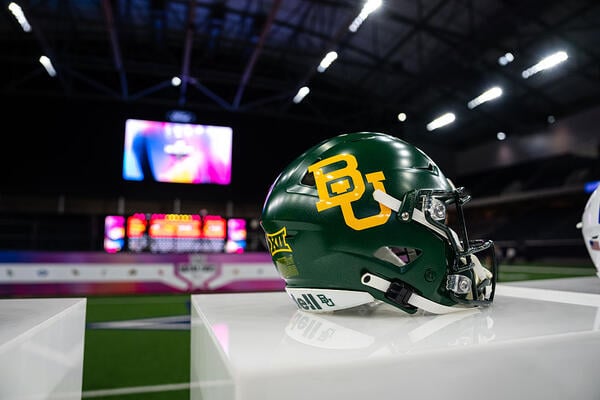
    I have a bias. I favor the religious groups that are finding ways to make a place for themselves in the larger universities. As a conclusion of this book, I talk about Baylor University, which is trying so hard to do both—to both be a religious school and a Research-1 university. And I wish them luck. I admire them. And I think it’s going to be more difficult than they think it’s going to be.

    But I think that for many universities … religion finds its own place on the margins, and that can be with chaplains, that can be with student groups. But students care about these issues, and they’re not going to disappear.

    Q: The book touches on the beauties of campus religious diversity but also some of the challenges, including the ways that campuses have been rocked by the October 2023 attack on Israel by Hamas and Israel’s invasion of Gaza. Since then, campus antisemitism has been a flash point for the Trump administration’s dealings with higher ed and institutions have been penalized for how they’ve handled pro-Palestinian protests. Having watched how these issues played out, is there anything you would have added to the book on the topic?

    A: I mentioned it in one paragraph in the end because it was just going to press, but I would have done a lot more with the challenges that religious diversity [brings]. We live in a world where the Trump administration is attacking diversity, and yet religious diversity is a kind of diversity. Chaplains are telling me they’re feeling tensions about that.

    I think the violence, particularly since the Hamas attack on Israel and Israel’s response in Gaza, has set student against student in a way that is going to take decades to recover. Whether you’re a Jewish chaplain or a Muslim chaplain or a chaplain of some other faith, trying to deal with that, with that kind of student pain and student anger and student lashing out and student response, is making it very difficult. Discussions about religion are more difficult than they were two years ago.

    And the same is true for religious studies. We’ve seen several examples of religious studies professors who have gotten in trouble. One got in trouble for showing a picture of the Prophet Muhammad in class when some interpretations of Islam say you can’t do it. Another professor lately, who The New York Times profiled, got fired. She was a Jewish professor, but she was outspoken in defense of Gaza, the Palestinian population, and she got fired for it. These things are going to happen. And the pressure on universities—a couple of chaplains have told me they feel like the administration is looking over their shoulders in a way that was not true two years ago and asking, “What are you saying to the students? What are they praying about? Why do we need this kind of disruption?”

    I was talking to one of my [former] students, a current chaplain, and he said that this last year has been the most difficult of his decades in chaplaincy. I think that’s not rare.

    Q: You focus a sizable chunk of the book on the role of religion at public universities, which aren’t necessarily the first institutions that come to mind when we think about higher education and religion. Why was it important to you to include these institutions and make them a focus?

    A: The obvious answer is the majority of American students go to public universities, by far. And to do a study of any aspect of American higher education that ignores public universities is simply silly. I’ve read some other studies that I thought were very thoughtful about religion that didn’t include public universities, and I thought, “But that’s where the students are. We’ve got to do that.”

    The second issue is, I found public universities’ relationship with religion very interesting and far more complicated than I thought. In the 1880s, University of Illinois expelled a student for not attending chapel. As late as the eve of World War II in 1939, a quarter of state universities had chapel services—not always required, but they offered them. So, state universities were … pretty much generic Protestant institutions until really the 1960s, 1970s. Faculty culture wasn’t particularly religious in the way it was in the 19th century, but the campus culture and the campus assumptions were.

    The other thing I found is that there’s a wily religious life on state university campuses of one sort or another. It’s often led by chaplains working around the margins, and they feel marginalized, but they’re also very effective working around the margins … I was intrigued.

    [For example,] I was intrigued by the University of Nevada, Reno, a public university barred by the state Constitution from supporting religion, but it fosters dialogue. I wish more universities were willing to do that. They hosted a conversation on the role of women in religion [in partnership with a local synagogue]. A public university cannot take a stand—we favor this or we favor that—but they don’t need to be afraid of hosting conversations on a variety of topics … That engages with the community. I think universities hold back from engaging with communities on all sorts of issues, but they certainly hold back from engaging with religious communities.

    Source link

  • Bronx CC, Olin, Bethune-Cookman, TCU and More

    Bronx CC, Olin, Bethune-Cookman, TCU and More

    Shantay Bolton, who most recently served as executive vice president of administration and finance and chief business officer at Georgia Tech, became president and chief executive officer of Columbia College Chicago on July 1.

    Sandra Bulmer, dean of Southern Connecticut State University’s College of Health and Human Services, has been appointed interim president of the institution, effective July 1.

    Joyce Ester, who most recently served as president of Normandale Community College in Bloomington, Minn., became president of Governors State University in Illinois on July 1.

    Heather Gerken, dean of Yale Law School, has been named president of the Ford Foundation, effective in November.

    Joseph Greene, vice chancellor of finance and administration at Johnson & Wales University, has been appointed president of the Johnson & Wales Providence campus, effective fall 2025.

    Charles Lee Isbell Jr., provost of the University of Wisconsin at Madison, has been named chancellor of the University of Illinois at Urbana-Champaign and vice president of the University of Illinois system, effective Aug. 1.

    Larry Johnson Jr., president of the City University of New York’s Guttman Community College, has been appointed president of CUNY’s Bronx Community College, effective July 14.

    David Jones, a former vice president for student affairs and enrollment management at Minnesota State University, Mankato, became interim president of Southwest Minnesota State University on July 1.

    May Lee, vice president and chief strategy officer for institutional impact at Rensselaer Polytechnic Institute, has been named president of Olin College of Engineering in Massachusetts, effective Aug. 18.

    Albert Mosley, president of Morningside University in Sioux City, Iowa, has been appointed president of Bethune-Cookman University in Florida, effective July 7.

    Jeanette Nuñez, the interim president of Florida International University who formerly served as a Florida state representative and lieutenant governor, has been named FIU’s permanent president.

    Daniel Pullin, who spent the past two years as president of Texas Christian University, has been appointed TCU chancellor, effective May 30.

    Manya Whitaker, interim president of Colorado College, was named the institution’s permanent president in June.

    James Winebrake, provost and vice chancellor for academic affairs at the University of North Carolina at Wilmington, has been appointed president of Coastal Carolina University, effective July 7.

    Source link