Tag: Events

  • Teaching Students Practical Life Skills

    Teaching Students Practical Life Skills

    Higher education is designed to prepare students for their future lives and careers by imparting technical and soft skills, but what about practical, hands-on tasks, like managing a home or vehicle?

    A 2023 survey found that young adults lack practical life skills, with two-thirds (68 percent) of millennials and Gen Z unable to change their car oil, nearly half (48 percent) unable to change a tire and 46 percent unable to tie a tie. Eighty percent of Gen Z respondents said they do not feel like they have figured out adulting.

    A workshop series at George Mason University in Virginia, titled Now What?, helps build students’ practical knowledge and well-being by giving them life advice and skills, such as how to change a tire.

    In this episode of Voices of Student Success, host Ashley Mowreader spoke with Ethan Carter, associate director of programs, well-being and assessment, and graduate student assistant Dianna Philipps, to learn more about the program offerings and how it supports student success.

    An edited version of the podcast appears below.

    Inside Higher Ed: I wonder if we can just start by talking about the inspiration for this program. Where did the idea come from?

    Ethan Carter: I came up with the idea, because as a [student activities] programmer, it is difficult to replicate things. When I thought a lot about being a college student—which was several years ago—I was like, “Man, what were the things that I wish I had known back then?” And so I kind of tried to think about something catchy, and I said, “Well, there were lots of things— I would do something, and then I’d be like, ‘So now what?’’ And so I was like, “Oh, that would be a really good little catchy phrase.”

    Also, from a programming standpoint, it is very adaptable to what we want to do. I don’t have to replicate my programs, but we can have the theme of Now What?, and seeking what students would want to know more about in their lives. Not that what I wanted to learn was bad. It was just, things change.

    Inside Higher Ed: When you address that question of Now What?, what are some of the themes you all have talked about? What has programming looked like practically?

    Dianna Philipps: One of our main ones would be the “how to change a tire” one. I feel like most people on campus have a car, [but] they don’t really think of the things that come with having a car.

    So when you see the tire-changing [workshop], you’re like, “Oh, what if I do get a flat tire? Like, maybe I should learn how to handle that if I’m on my own on the road or something.” I feel like things like that really stand out to students when they see it.

    Inside Higher Ed: Something I thought was cool is that your roles focus on well-being and recreation and this program is an interesting intersection of those two ideas. I wonder if you can talk about how this contributes to students’ well-being and thriving on campus.

    Carter: When you work on a college campus, and the big theme behind the campus is about well-being, you try and find out, where do you fit? And for us, it wasn’t just in the fitness realm. We wanted to think about something that was what we would consider our niche.

    I settled on practical well-being because it is adaptable and relatable. Recreation is usually seen as something that does provide movement, but I wanted to capitalize on that and build off of the aspect of, just, living in general can be tough. It also opens the door for us to be able to partner, because a lot of our programs within themselves are not things that we run, and it’s not our expertise, but it is a place where we can be a hub and connect individuals, which kind of ties in with the well-being aspect, like, you need to find your own well-being.

    Inside Higher Ed: Who are those partners across campus, and how do they participate in this?

    Carter: Anyone and everyone is actually who we get to partner with. The [change a] tire one is done with our facilities group and specifically the auto shop—they help us with any vehicle-based activities that we have going on.

    We’ve also connected with Student Health Services for ones that are related to health insurance, with anything about self-care. And then we did another [event] with academics for a little bit, talking about preparing for exams and test-taking and things like that.

    One of my other favorite [events] is intercollaboration within a department. So like, how to do a hike, how to change a flat tire on a bike.

    I think we had one more connection, oh, with dining. Dining teaches us how to cook, and so we’ve done a Super Bowl one where we made a special dip and some other little fun delicacies.

    Inside Higher Ed: What have you learned from students and their feedback as you’ve done the events over the past year or so? What did they enjoy about it?

    Philipps: I would say the main feedback is that it was very helpful for them. I think most of the people who have come to one event, they’re the ones who continue going to each of the events. I think it just helps them learn the things that they don’t know, because they’re like, you don’t know what you don’t know until you, I guess, go to the event. So that kind of helps them a lot.

    Inside Higher Ed: There are knowledge gaps for all students as they come on college campuses—whether that’s academic preparedness or just life skills that you might not know. If you’ve never owned a car before, you might not know how to jump your car or change a tire, or if you’ve never had a full-size kitchen before, you might not know how to cook a Super Bowl dish. So I think it’s really cool that you all give them the opportunity to identify what they don’t know, but then also just close those gaps and help them feel like they’re not left behind or unsure of what they do next.

    Carter: I would also add that they’ve enjoyed putting their hands on the tools that help them.

    We do one [workshop] on how to use hand tools, and sometimes the power drill is the [tool] that we get to play around with. Other times it’s a hammer and nail. Sometimes we play around with a tape measure. And I’ve appreciated the vulnerability of the students and admitting like, “Hey, this is what I don’t know,” and it provides an opportunity for me to talk more about like, “Hey, this is what I was feeling when I was a college student.”

    When you are thinking about all the resources that are available to you on campus, it’s important that you’re able to admit that you don’t know how to do something, and then go out and ask someone, because most of the time, most of those tools are readily available for you on campus. You just have to be pointed in the right direction, and people can’t give you what they don’t know you need. So that would be something else that I would say has been a great benefit for me in connecting with other campus partners and connecting with those students.

    Inside Higher Ed: I remember when I was a college student, I was really afraid of the makers’ studio, where the VR lab and the 3-D printing are. It just felt so intimidating to go in and actually try things out. But once you have an experience like this, where it’s a little more hands-on and assisted, you feel like you have the skills to do it.

    I bet there’s also an element of introduction to staff on campus. Maybe students have never met a facilities manager before, and now, after changing a tire with them, they can ask for help in other ways. Or if you’ve never talked to the Student Health Center, now you feel more comfortable talking about health insurance or other things like that.

    If you had to give advice or insight to another college or university that was looking to replicate your idea, what would you say you’ve learned? Or what are some best practices for people to know?

    Carter: First one is, what I actually tell the students all the time, is to be yourself within your organization. You maybe have a limited budget, and you only have certain resources available to you, so it’s important for you to not try and go and do what everybody else is doing. It’s important for you to do what you’re able to do, and then to connect with your students and allow them to be part of the construction of what your program is going to be.

    It may start out as just being something where you’re looking at budgets, and then another student comes in—because you are making this for the students. So if you don’t have the student audience that is available for what you’re providing, like, it isn’t super helpful.

    So do that, and then the adaptability aspect: Be OK with something not working. Because when you hear “no” or no one comes, that is good information; you know not to do that anymore. A lot of people get offended by that and are like, “Oh, I’m a horrible programmer” or whatnot.

    It could be that you’re doing it at the wrong time, or it’s just that students are not available for that. Why would we do something that’s related to budget and all the students that need to do the budget stuff are in class in the a.m., so maybe I should try it in the evening. Things of that nature. So be OK not always having everything get hit out of the ballpark. And then if you do find something, you try and make it better as you go.

    Inside Higher Ed: You mentioned that this is a different sort of programming and something that you all can adapt to reflect student needs. I’ve heard a lot from people who work on college campuses that post-COVID, it’s just been harder to get students to show up for things or feel like you’re being responsive to their needs. Have you felt like this has accomplished that goal in being adaptable, but also engaging students?

    Carter: I would say it depends, and it really depends on what’s going on and what the particular group you’re working with is all about. So, Dianna, if you don’t mind sharing some of your ideas to try and help us get some people coming.

    Philipps: One of the main ones would be changing locations. Especially if you’re on a bigger campus, trying to make it more central so it can target different types of people, either coming from class or coming from the dining hall or things like that.

    Just back to what Ethan had said about being creative with it, and if something doesn’t work, look at what did work, keep that and then change what didn’t work. You can learn from that. See what things people are actually going to, what they actually need help with. So, again, being adaptable to things.

    Inside Higher Ed: You mentioned earlier that students who come to one event might come to multiple—like, they really appreciate the skills that they’re building. Have you seen that that’s true of a handful of students or more?

    Carter: It makes you feel good when you see somebody that you’ve seen before; it kind of increases your self-esteem. You’re like, “Oh, I did something, right?”

    I think the bonus is that they invite their friends and they make them aware. I think that a lot of times, even as an adjunct professor, I’ve had to change my perspective of it isn’t what the student looks like, because most of the time when I’ve talked to my students, they look like they don’t care about my class. But then I mentioned that to them, and they’re like, “No, you’re one of the coolest professors that I’ve ever had.” I’m like, “I can’t tell from looking at your face.”

    So when we’re doing our programming, it may not be that the students don’t like it, they just may not be aware, which is why we’ve tried really, really hard to go to the students to make the things available—not just putting a flier in front of their face, but providing them an opportunity where they can go and do something.

    I would say we’ve gotten the greatest number of students coming to things when we went to another class with content that was in line with what we were doing; we were complimenting what an instructor was teaching. And then the students are like, “We had no idea that this was going on; what other programming do you have available?”

    So I would say that that has been super, super helpful, going to the students and just becoming more and more visible, shaking hands and getting to know people, which, again, it seems like it’s common sense, but you do have to become visible in a way that is helpful and not harmful.

    Inside Higher Ed: You mentioned working with other staff on campus; have faculty been a partner in this work as well?

    Carter: We have gotten to work with them. And like I said, when we invite ourselves to their class, it doesn’t work out so well. When we are paying attention to what it is that they’re teaching and ask them, “Hey, this is something that we’re offering. Is there, maybe, 15 or 20 minutes that we can come and complement some of the stuff that you’re teaching?” That actually ends up being a two-way thing, because usually that instructor is willing to come over to our workshops and provide some informational knowledge, and so that has been super, super helpful with that. So having a crossover is good.

    Inside Higher Ed: This series is all about helping Gen Z prepare for unknown futures and navigate their world after college. When we talk about the role of higher education, I think we talk a lot about careers, about students building life skills like critical thinking and things like that. But there’s also this idea of helping students just be people, having that practical wellness. I wonder if you can tie this all together—why this is important for colleges and universities to do, and how this is foundational to not only the students’ success, but also just being responsive to their needs?

    Carter: We have a saying in our well-being practices—our goal is to help students to live just as they breathe.

    When you think about well-being and the holistic aspect of it, it’s important that people realize that eating well can be tied into you, just coming and sitting in a facility, being around people. It can also be exercise. It can also be yoga. It can also be about you being able to get the job done, or even going through a bout of anxiety and finding out you know how to be resilient in that space, or how to ask for help.

    When it comes to our programming, we want to do what’s going to help people to be the best version of themselves. And that’s a journey that students have to take, and we’re on that journey with them.

    We want to walk alongside the student and provide the things that they need, to help them to feel like, “Hey, you know, I feel like I’m a better adult,” and at the end of the day, want to come back and give to other students. So being a human being is what we’re all about, and we want to support that in the best way possible, through our programming. And if we don’t have the programming, we can point them to other services and other individuals on a college campus, because that’s what universities are here for.

    In higher education, the more that we acknowledge the humanity of others, I think the better off that we’ll be, as opposed to trying to figure out things in a box. We’re not people built in boxes; we’re people with unique qualities and differences.

    Philipps: I would add that these events also teach us how to ask for help. Because I feel like that’s a big thing, especially when we’ll have actual careers and stuff, you don’t know everything as much as you may think you do. So just having that skill of asking for help, or just even getting assistance collaborating with others, is really important, and I think we get that from these events.

    Get more content like this directly to your inbox. Subscribe here.

    Source link

  • State Dept. to Expand Social Media Screening for Intl. Students

    State Dept. to Expand Social Media Screening for Intl. Students

    John McDonnell/Getty Images

    The Trump administration is planning to implement a policy that would require all student visa applicants to undergo social media vetting, according to a cable sent by Secretary of State Marco Rubio, Politico reported Tuesday. All new student visa interviews have been paused in preparation for the new policy.

    “The Department is conducting a review of existing operations and process for screening and vetting of student and exchange visitor (F, M, J) visa applicants, and based on that review, plans to issue guidance on expanded social media vetting for all such applicants,” the memo reads, according to a copy published in full on social media by independent journalist Marisa Kabas.

    The planned changes come amid the federal government’s ongoing attacks on student visa holders, which began in March with the detention of multiple students and recent graduates who had been involved in pro-Palestinian protests on their campuses. Shortly after, the administration terminated thousands of student visa holders’ records in the Student Exchange and Visitor Information System, the database the houses international students’ records, leading to a slew of legal actions from students who feared they wouldn’t be able to continue studying in the U.S.

    Most recently, the Trump administration announced last week that it would prohibit Harvard University from enrolling international students as punishment for allegedly failing to prevent antisemitism and harassment on campus during last year’s pro-Palestinian encampments. Though that action was quickly blocked by a judge, the move could be devastating for the Ivy League institution, where international students make up more than a quarter of the student body.

    The proposed policy would increase the amount of time, manpower and resources required to process visa applications, according to experts.

    Faye Kolly, an immigration attorney based in Texas, noted that it’s not unusual for immigration officials to review visa applicants’ social media profiles, which they are required to list on certain immigration forms. But the administration has begun specifically screening the social media accounts of some returning students with visas who had participated in pro-Palestinian campus protests, though Politico reported that State Department officials had found the guidance on how to complete those screenings vague.

    It is not clear how this expanded vetting process will unfold; Rubio included no details in the memo, which said further guidance would be disseminated in the coming days. Though the memo didn’t say as much, Kolly predicted that the extra screening will involve looking “at [applicants’] social media handles more closely for what I’m assuming is going to be speech that could be considered either anti-Israel or pro-Gaza.”

    International education advocates have sounded the alarm on the proposed policy, arguing that it limits prospective students’ right to free expression and illustrates the Trump administration’s devaluation and distrust of international students.

    Fanta Aw, the CEO of NAFSA, an association for international educators, told Politico, “The idea that the embassies have the time, the capacity and taxpayer dollars are being spent this way is very problematic. International students are not a threat to this country. If anything, they’re an incredible asset to this country.”

    Kolly told Inside Higher Ed that the move harks back to the SEVIS terminations in March and April. Both actions, she said, indicate the administration’s lack “of nuance … regarding international students. It’s [taking] a simplistic approach to a very complex issue. When you target international students en masse, it’s irresponsible.”

    Daryl Bish, the president of EnglishUSA, which represents all English language programs in the country, said the change will reverse recent progress on the visa approval process and have an “immediate impact” on enrollment in English language programs.

    “The extraordinary decision to pause visa interviews, under the guise of security and enhanced vetting, is a dangerous precedent that will have immediate short-term consequences,” Bish said. “Visa appointment wait times have, generally, improved since the pandemic. This means that many students apply for the visa close to their program start date. The pause in interviews, if protracted, will force these students to change their plans.”

    Elora Mukherjee, a law professor at Columbia University and the director of the law school’s Immigrants’ Rights Clinic, also criticized the government for pausing new student visa interviews in the interim—especially as the memo gave no indication of how long the pause might last.

    “The pause is destructive to our national interests and America’s reputation in the world, and its effects may be felt for years. It has thrown the lives of tens of thousands of prospective international students into turmoil and will cause chaos and disruption at colleges and universities across the country. International students have been preparing for months to join U.S. colleges and universities in the fall, and schools have been preparing to welcome them,” she wrote in an email to Inside Higher Ed.

    “It is unclear how long the ‘pause’ will be in place, what heightened scrutiny visa applicants will face once the pause is lifted, and the extent to which decisions about granting visas may be tainted by prejudices based on race, religion, and national origin.”

    Source link

  • UF Board Votes Unanimously to Hire Ono

    UF Board Votes Unanimously to Hire Ono

    Despite mounting conservative criticism over Santa Ono’s stance on diversity, equity and inclusion, the University of Florida Board of Trustees on Tuesday overwhelmingly voted to hire the former University of Michigan president as its next leader.

    Ono, who held three prior presidencies, was named the sole finalist for the top job at Florida in early May. As a traditional academic, Ono marks a break from the norm at Florida’s public universities, where the emphasis in the past few years has been on hiring former Republican lawmakers and others with political connections.

    But his candidacy faced heavy criticism from conservative critics such as anti-DEI activist Chris Rufo, Heritage Foundation president Kevin Roberts and several Florida lawmakers, including Republican U.S. senator Rick Scott, who called for an investigation into the search that yielded Ono due to his past remarks on DEI. Some critics have claimed that Ono is a radical liberal academic who made an about-face on DEI due to careerist ambitions.

    Ono, who made more than $1.3 million a year at Michigan, where he was under contract until 2032 before he stepped down to pursue the Florida job, could earn up to $3 million a year at UF, according to the salary range.

    Ono’s Evolution on DEI

    Rufo has led the charge among Ono’s conservative critics.

    “Woke is threatening a return to power,” Rufo declared in an opinion piece in the conservative City Journal in which he argued that Ono’s noted past support of DEI policies was disqualifying.

    (Although Rufo argued that Ono’s presidency would threaten to undo changes to education in the state driven by Republican Ron DeSantis, the governor has defended the pick.)

    Prior to Tuesday’s meeting, Rufo circulated various videos of Ono speaking in favor of DEI policies and against systemic racism. While those videos gained traction on social media, the posts did not sway the UF Board of Trustees, which voted unanimously to hire Ono.

    But Ono’s changing stances on DEI did hang over much of Tuesday’s meeting, popping up in multiple questions where Ono discussed his evolution on the issue and noted that he dismantled DEI initiatives at the University of Michigan after his perspective began to shift in late 2023.

    “I did not come to bring DEI back; I came to make sure it never returns,” Ono told UF trustees.

    Ono argued that while he initially agreed with the aims of DEI programs, while president of the University of Michigan he came to see that such initiatives were divisive and diverted resources from student success, leading to his decision to shutter the DEI office there earlier this year.

    He argued that “large DEI bureaucracies” stifle open dialogue and erode trust on campus and that “it became clear to me through experience, not theory, that something had gone wrong.”

    Ono sought to distance himself from his prior statements, arguing that what matters “is not what I said two to six years ago,” as depicted in the videos, but rather what he has done in the last 18 months, which includes winding down the DEI office at Michigan before he resigned last month. Although the move came after increased criticism of DEI spending at Michigan, Ono cast it as a move that grew out of conversations he began having in late 2023 in which he questioned the efficacy of such initiatives.

    He also stressed again how his vision aligns with the goals of UF and DeSantis.

    “I understand and support what Florida’s vision for higher education represents: a decisive move away from ideological bias and activist-driven culture that has come to define too many colleges and universities in this country and abroad,” Ono said. “The goal is not to replace one orthodoxy with another. It is to restore balance, to protect the pursuit of truth and create a university environment where all students can thrive, regardless of their viewpoint. Florida is showing the nation that it’s possible to elevate academic excellence without ideological indoctrination.”

    While issues like faculty recruiting and retention, post-tenure review, college athletics, and other aspects of running the university were addressed in an almost three-hour public interview, much of that time, and the board’s questions, centered on DEI and campus protests.

    For instance, Ono was asked multiple times about concerns of rising antisemitism on campus.

    He responded that antisemitism is “a persistent threat, especially on college campuses” that “too often hides behind the language of political critique” and has been “normalized in the name of activism.” Ono also emphasized a commitment to keeping Jewish students safe at UF.

    Asked about his decision to allow a pro-Palestinian encampment to remain at Michigan for 30 days, Ono said that the university did not want to escalate the situation and create an atmosphere of unrest close to commencement. He added that he spoke with Jewish students who were worried about how removing the encampment might disrupt commencement. Ono also said that Michigan subsequently updated its time, place and manner policies to prevent future encampment protests.

    A Looming Battle?

    Although the UF Board of Trustees approved the Ono hire, it’s not a done deal, as the Florida Board of Governors has the final say.

    That board will meet in either mid-June or at a special meeting to consider Ono. That could provide another opportunity for Ono’s conservative critics to derail the hire if the Board of Governors comes out against the selection.

    Florida representative Greg Steube, a Republican, immediately called for the board to block the hire.

    “The @UF Board of Trustees has made a grave mistake. Today, Dr. Ono gave it his best ‘college try’ walking back his woke past, claiming he’s now ‘evolved.’ But I’m not sold. This role is too important to gamble on convenient conversions,” Steube wrote on social media Tuesday.

    At least one member of the Board of Governors noted over the weekend that concerns about Ono will be addressed.

    “The UF Board of Trustees is responsible for vetting the issues raised by concerned stakeholders, which their fiduciary obligations require they do, and which they need to do before making a decision. If/when the BOT acts, it will come to the Board of Governors, where the Board of Governors must agree to confirm the candidate for President of UF. The BOG takes this responsibility seriously, and issues will likely be fully reviewed and discussed publicly,” FLBOG member Alan Levine wrote in a Sunday social media post before Ono was hired.

    While the Board of Governors does have the power to derail Ono’s selection, members could have done so earlier—and behind closed doors—if they had concerns. Under a policy established last year, the Board of Governors must sign off on a list of presidential finalists identified by search committees before those candidates can be considered by individual boards. So the board could’ve wielded that veto power of sorts to remove Ono before he was named as a sole finalist.

    If confirmed, Ono will replace interim president Kent Fuchs, who came out of retirement after then-president Ben Sasse stepped down last July, weeks before a spending scandal emerged.

    Elsewhere in the state, the University of West Florida tapped former Republican lawmaker and current Florida commissioner of education Manny Diaz Jr. as its interim president in a process some trustees argued was rushed and lacked transparency. As the fifth president hired to lead a public university in Florida this year (including those serving in an interim capacity), Ono is the only one who is not either a former Republican lawmaker or connected to the governor’s office.

    Source link

  • Five Science-Backed Ways to Improve Academic Writing (opinion)

    Five Science-Backed Ways to Improve Academic Writing (opinion)

    I vividly recall when an editor in chief invited me to publish in a well-known journal. Fresh from defending my dissertation, I still grappled with understanding how publishing worked in academia—like whether I should try to imitate the densely written, abstract sentences that appeared in the journal he edited. I thumbed the latest issue and looked at him. “Do you have a house style I should use?”

    He shuddered and gave a response I’ve since heard echoed by other editors in chief of similarly well-respected journals: “Please don’t! We publish manuscripts despite how they’re written.”

    But this candid advice leaves most graduate students and even seasoned faculty members with another dilemma. If you can’t imitate articles published in the best journals, how do you write up your research so it gets published?

    During my early years of teaching writing courses, I discovered that students seldom revised their work significantly, even when they received extensive feedback from both me and their peers. In fact, students failed to revise even when they received feedback and grades from their peers.

    All writing students also struggle with the idea that both feedback and grades on their writing are subjective, a reflection of how a particular instructor prefers students to write in a specific course. In addition, English literature and creative writing courses teach students that writing is a combination of mystery and art.

    In contrast, researchers in cognitive neuroscience and psycholinguistics identified the features that make sentences easy or difficult to read decades ago. As a result, we can teach students how to make their sentences clear—no matter how complex the subject—by teaching science-based writing methods. And as a graduate student or faculty member, you can improve your own academic writing—and your chances for publication—by focusing on the five basic principles that cause readers to perceive sentences as clear.

    1. Active voice makes sentences easier to read.

    In studies, researchers have discovered that readers comprehend sentences more rapidly when sentences reflect cause and effect. We can trace this to two factors. First, our brains naturally perceive cause and effect, which evolved as a survival mechanism. Research shows, for instance, that infants as young as 6 months old may identify cause and effect.

    Second, English sentence structure reflects causes and effects in its ordering of words: subject-verb-object. As researchers discovered, participants read sentences with active voice at speeds one-third faster than they read sentences in passive voice. Moreover, these same participants misunderstood even simple sentences in passive voice about one-quarter of the time. While many writing instructors require students to use active voice, few alert students to the specific benefits of active sentences that make them easier to read. These sentences are shorter, more efficient and more concrete, while sharpening readers’ sense of cause and effect.

    Consider the differences between the first example below, which relies on passive voice, and the second, which uses active voice.

    Passive: It has been reported that satiety may be induced by the distention of the gastric antrum due to the release of dissolved gas from carbonated water, which may improve gastric motility, thereby reducing hunger.

    Active: Cuomo, Savarese, Sarnelli et al. reported that drinking carbonated water distends the gastric antrum through the release of dissolved gas, inducing satiety and improving gastric motility, all of which reduce hunger.

    1. Actors or concrete objects turn sentences into microstories.

    Academic writing naturally tackles complex content that can prove challenging even to subject matter experts. However, writers can make even challenging content comprehensible to nonexperts by making cause and effect clear in their sentences by using nouns that readers can easily identify as subjects. When the grammatical subjects in sentences are nouns clearly capable of performing actions, readers process sentences with greater speed and less effort. For actors, use people, organizations or publications—any individual, group or item created with intention that generates impact.

    We unconsciously perceive these sentences as easier to read and recall because identifying actors and actions in sentences aids readers in fixing both a word’s meaning and the role it plays in sentence structure. Furthermore, these nouns enhance the efficiency of any sentence by paring down its words. Take these examples below:

    Abstract noun as subject: Virginia Woolf’s examination of the social and economic obstacles female writers faced, due to the presumption that women had no place in literary professions and so were instead relegated to the household, particularly resonated with her audience of young women who had struggled to fight for their right to study at their colleges, even after the political successes of the suffragettes.

    Actor as subject: In A Room of One’s Own, Virginia Woolf examined social and economic obstacles female writers faced. Despite the political success of the suffragettes, writers like Woolf battled the perception that women had no place in the literary professions. Thus Woolf’s book resonated with her audience, young women who had to fight for the right to study at their colleges.

    1. Pronouns send readers backward, but readers make sense of sentences by anticipating what comes next.

    If writers imitate the academic writing they see in print, they typically rely on pronouns as the subjects of sentences, especially “this,” “that,” “these,” “those” and “it.” However, pronouns save writers time but cost readers significantly, for two reasons.

    First, readers typically assume that pronouns refer to a single noun rather than a cluster of nouns, a phrase or even an entire sentence. Second, when writers use these pronouns without nouns to anchor their meaning, readers slow down and frequently misidentify the meanings of pronouns. Moreover, readers rated writing samples with higher numbers of pronouns as less well-written than sentences that relied on actors as subjects—or even pronouns like “this” anchored by nouns like “outcome.”

    Pronoun as subject: Due to the potential confounding detrimental effects of sulfonylureas and insulin in the comparator arms of the trials evaluating anticancer effects of metformin/thiazolidinediones, it is difficult to draw any firm conclusions from prior studies.

    Actor as subject: In trials to assess the anticancer effects of metformin/thiazolidinediones, we had difficulty drawing any firm conclusions from prior studies due to potential confounding detrimental effects from sulfonylureas and insulin.

    1. Action verbs make sentences more concrete, efficient and memorable.

    Open any newspaper or magazine and, even in just-the-facts-ma’am hard news stories, you’ll find action verbs, like “argues,” “reinvents,” “writes” and “remakes.” In contrast, most writers overrely on nonaction verbs. These verbs include “is,” “has been,” “seems,” “appears,” “becomes,” “represents” and that evergreen staple of academic writing, “tends.”

    Action verbs enable readers to immediately identify verbs, a process central to comprehending sentence structure and understanding meaning alike. Furthermore, action verbs make sentences more efficient, more concrete and more memorable. In one study of verbs and memory, readers recalled concrete verbs more accurately than nonaction verbs.

    When we read action verbs, our brains recruit the sensory-motor system, generating faster reaction times than with abstract or nonaction verbs, which are processed outside that system. Even in patients with dementia, action verbs remain among words patients with advanced disease can identify due to the semantic richness of connections action verbs recruit in the brain.

    Nonaction verbs: Claiming the promotion of research “excellence” and priding oneself in the record of “excellence” has become commonplace, but what this excellence is concretely about is unclear.

    Action verbs: Research institutions claim to promote faculty on the basis of research “excellence,” but institutions define “excellence” in many ways, with few clear definitions.

    1. Place subjects and verbs close together.

    When we read, we understand sentences’ meaning based on our predictions of how sentences unfold. We unconsciously make these predictions from our encounters with thousands of sentences. Most important, these predictions rely on our ability to identify grammatical subjects and verbs.

    We make these predictions easily when writers place subjects and verbs close together. In contrast, we struggle when writers separate subjects and verbs. With each increase in distance between subjects and verbs, readers exert greater effort, while reading speeds slow down. More strikingly, readers also make more errors in identifying subjects and verbs with increases in the number of words between subjects and verbs—even in relatively short sentences.

    For example, in this sentence, readers must stumble through two adjective clauses, noted in orange below, before encountering the verb “decreases,” paired with the underlined subject, “rule”:

    Specifically, a rule that indicates a reduction in delay that precedes an aversive consequence decreases procrastination in university students.

    But this separation strains working memory, as readers rely on subject-verb-object order to identify sentence structure. Ironically, as academic writers gain sophistication in their subject-matter expertise, they frustrate readers’ mechanisms for comprehension. Your urge to immediately modify the subject of your sentence with phrases and clauses slows reading and increases readers’ sense of conscious effort.

    On the other hand, reading speeds increase while effort decreases when subjects and verbs appear close together. Introduce your main point with a subject and verb, then modify them with clauses or phrases:

    Specifically, university students decrease procrastination when they face aversive consequences immediately for failure to meet deadlines.

    These principles will work in any discipline, enabling writers to control how editors and peer reviewers respond to their manuscripts and proposals. These changes can help make an academic career successful, crucial in today’s competitive environment.

    Yellowlees Douglas is a former professor of English at Holy Names University and was a director of five writing programs at universities including the City University of New York and the University of Florida. She is the author, most recently, of Writing for the Reader’s Brain: A Science-Based Guide (Cambridge University Press, 2024).

    Source link

  • Harvard Sues to Protect International Enrollment

    Harvard Sues to Protect International Enrollment

    APCortizasJr/iStock Unreleased/Getty Images

    Less than a day after having its ability to host international students revoked by the federal government, Harvard University successfully sued the Trump administration to block the move. A judge granted a temporary restraining order late Friday morning.

    Department of Homeland Security Secretary Kristi Noem announced Thursday afternoon that the Trump administration had stripped Harvard’s Student and Exchange Visitor Program certification in a letter that vaguely accused Harvard of a “failure to adhere to the law.” 

    However, the letter did not name any specific violations of the law by Harvard.

    On Friday morning, Harvard threw a legal counterpunch, filing a lawsuit challenging the revocation of SEVP certification and seeking a temporary restraining order to halt the action, which could cost Harvard to suddenly lose more than 6,000 students if they are unable to enroll. (International enrollment typically makes up about a quarter of Harvard’s head count.) Beyond blocking new enrollments, the revocation would require current international students to transfer. 

    Harvard president Alan Garber blasted the SEVP revocation as “unlawful and unwarranted” and said it was a punitive effort by the Trump administration in response to Harvard’s rejection of demands to reform governance, admissions, hiring processes and more following allegations of antisemitism and harassment that stemmed from pro-Palestinian protests last year. (Harvard filed a separate lawsuit pushing back on those demands last month, prompting the Trump administration to retaliate by freezing $2.7 billion in grants and contracts, or about a third of its federal research funding.)

    “It imperils the futures of thousands of students and scholars across Harvard and serves as a warning to countless others at colleges and universities throughout the country who have come to America to pursue their education and fulfill their dreams,” Garber wrote in a message to campus.

    He added, “We will do everything in our power to support our students and scholars.”

    Harvard’s lawsuit echoed Garber’s points in an even sharper tone, accusing the federal government of blatantly violating the First Amendment and Harvard’s due process rights.

    “With the stroke of a pen, the government has sought to erase a quarter of Harvard’s student body, international students who contribute significantly to the University and its mission,” lawyers representing Harvard argued in Friday’s early-morning legal filing.

    Harvard’s lawsuit named DHS, Noem and other officials within the department as defendants, as well as the U.S. Departments of Justice and State and agency leaders.

    Assistant DHS secretary Tricia McLaughlin fired back at Harvard in a response to Inside Higher Ed.

    “This lawsuit seeks to kneecap the President’s constitutionally vested powers under Article II. It is a privilege, not a right, for universities to enroll foreign students and benefit from their higher tuition payments to help pad their multibillion-dollar endowments. The Trump administration is committed to restoring common sense to our student visa system; no lawsuit, this or any other, is going to change that. We have the law, the facts, and common sense on our side,” she wrote.

    Another Legal Setback

    A judge swiftly agreed with Harvard’s argument, signing off on the temporary restraining order to prevent revocation of the university’s SEVP certification within hours of the lawsuit being filed.

    In a brief opinion, a district court judge in Massachusetts wrote in response to Harvard’s legal filing that the temporary restraining order was “justified to preserve the status quo.” The judge blocked DHS from stripping SEVP certification, at least temporarily, and granted a hearing. 

    A date for the hearing was not specified in court documents.

    The temporary restraining order is one of multiple legal setbacks the Trump administration has faced recently as it has sought to pull student visas over minor infractions (and for constitutionally protected speech), cap federal research funding reimbursement rates, and slash staff at the Department of Education and other agencies. Many of those efforts face ongoing challenges.

    On Thursday, for example, a federal judge barred the Trump administration from firing thousands of Department of Education employees as part of a sweeping reduction of force.

    The federal government has already appealed that decision.

    ‘Do This Everywhere’

    The Trump administration’s latest action against Harvard prompted broad condemnation from academics and free speech groups, who argued that the federal government did not follow legal processes for stripping SEVP certification and had ignored the university’s due process rights.

    “The administration has clearly targeted Harvard in recent months. In doing so, it has violated not only Harvard’s First Amendment rights, but also the rights of the university’s students and faculty,” the free speech group Foundation for Individual Rights and Expression wrote in a Friday social media post. “We commend Harvard for standing up for itself. Free speech and academic freedom are essential to higher education. They are values worth fighting for.”

    Despite widespread concerns from academics and lawyers that stripping Harvard’s SEVP certification is not legal, multiple Republican officials have endorsed Noem’s actions.

    Rep. Randy Fine, a Republican who represents Florida and a member of the House Education and the Workforce Committee, cheered on the move in a Friday appearance on FOX Business. Fine, a two-time Harvard graduate, said the Trump administration should “do this everywhere” amid concerns about antisemitic behavior and harassment on college campuses.

    Fine also took a dim view of international students exercising their First Amendment rights.

    “We should not be bringing people into America to get an education who hate us. They should be coming here to get an education, and frankly they should keep their mouths shut beyond that. I don’t go into someone else’s house and complain about it when I’m there,” Fine said.

    Source link

  • Harvard Wins Injunction to Protect International Enrollment

    Harvard Wins Injunction to Protect International Enrollment

    APCortizasJr/iStock Unreleased/Getty Images

    Less than a day after having its ability to host international students revoked by the federal government, Harvard University successfully sued the Trump administration to block the move. A judge granted a temporary restraining order late Friday morning.

    Department of Homeland Security Secretary Kristi Noem announced Thursday afternoon that the Trump administration had stripped Harvard’s Student and Exchange Visitor Program certification in a letter that vaguely accused Harvard of a “failure to adhere to the law.” 

    However, the letter did not name any specific violations of the law by Harvard.

    On Friday morning, Harvard threw a legal counterpunch, filing a lawsuit challenging the revocation of SEVP certification and seeking a temporary restraining order to halt the action, which could cost Harvard to suddenly lose more than 6,000 students if they are unable to enroll. (International enrollment typically makes up about a quarter of Harvard’s head count.) Beyond blocking new enrollments, the revocation would require current international students to transfer. 

    Harvard president Alan Garber blasted the SEVP revocation as “unlawful and unwarranted” and said it was a punitive effort by the Trump administration in response to Harvard’s rejection of demands to reform governance, admissions, hiring processes and more following allegations of antisemitism and harassment that stemmed from pro-Palestinian protests last year. (Harvard filed a separate lawsuit pushing back on those demands last month, prompting the Trump administration to retaliate by freezing $2.7 billion in grants and contracts, or about a third of its federal research funding.)

    “It imperils the futures of thousands of students and scholars across Harvard and serves as a warning to countless others at colleges and universities throughout the country who have come to America to pursue their education and fulfill their dreams,” Garber wrote in a message to campus.

    He added, “We will do everything in our power to support our students and scholars.”

    Harvard’s lawsuit echoed Garber’s points in an even sharper tone, accusing the federal government of blatantly violating the First Amendment and Harvard’s due process rights.

    “With the stroke of a pen, the government has sought to erase a quarter of Harvard’s student body, international students who contribute significantly to the University and its mission,” lawyers representing Harvard argued in Friday’s early-morning legal filing.

    Harvard’s lawsuit named DHS, Noem and other officials within the department as defendants, as well as the U.S. Departments of Justice and State and agency leaders.

    Assistant DHS secretary Tricia McLaughlin fired back at Harvard in a response to Inside Higher Ed.

    “This lawsuit seeks to kneecap the President’s constitutionally vested powers under Article II. It is a privilege, not a right, for universities to enroll foreign students and benefit from their higher tuition payments to help pad their multibillion-dollar endowments. The Trump administration is committed to restoring common sense to our student visa system; no lawsuit, this or any other, is going to change that. We have the law, the facts, and common sense on our side,” she wrote.

    Another Legal Setback

    A judge swiftly agreed with Harvard’s argument, signing off on the temporary restraining order to prevent revocation of the university’s SEVP certification within hours of the lawsuit being filed.

    In a brief opinion, a district court judge in Massachusetts wrote in response to Harvard’s legal filing that the temporary restraining order was “justified to preserve the status quo.” The judge blocked DHS from stripping SEVP certification, at least temporarily, and granted a hearing. 

    A date for the hearing was not specified in court documents.

    The temporary restraining order is one of multiple legal setbacks the Trump administration has faced recently as it has sought to pull student visas over minor infractions (and for constitutionally protected speech), cap federal research funding reimbursement rates, and slash staff at the Department of Education and other agencies. Many of those efforts face ongoing challenges.

    On Thursday, for example, a federal judge barred the Trump administration from firing thousands of Department of Education employees as part of a sweeping reduction of force.

    The federal government has already appealed that decision.

    ‘Do This Everywhere’

    The Trump administration’s latest action against Harvard prompted broad condemnation from academics and free speech groups, who argued that the federal government did not follow legal processes for stripping SEVP certification and had ignored the university’s due process rights.

    “The administration has clearly targeted Harvard in recent months. In doing so, it has violated not only Harvard’s First Amendment rights, but also the rights of the university’s students and faculty,” the free speech group Foundation for Individual Rights and Expression wrote in a Friday social media post. “We commend Harvard for standing up for itself. Free speech and academic freedom are essential to higher education. They are values worth fighting for.”

    Despite widespread concerns from academics and lawyers that stripping Harvard’s SEVP certification is not legal, multiple Republican officials have endorsed Noem’s actions.

    Rep. Randy Fine, a Republican who represents Florida and a member of the House Education and the Workforce Committee, cheered on the move in a Friday appearance on FOX Business. Fine, a two-time Harvard graduate, said the Trump administration should “do this everywhere” amid concerns about antisemitic behavior and harassment on college campuses.

    Fine also took a dim view of international students exercising their First Amendment rights.

    “We should not be bringing people into America to get an education who hate us. They should be coming here to get an education, and frankly they should keep their mouths shut beyond that. I don’t go into someone else’s house and complain about it when I’m there,” Fine said.

    Source link

  • Longtime Professor Offers Administrators Advice (opinion)

    Longtime Professor Offers Administrators Advice (opinion)

    I read articles constantly in various journals, including this one, on how to be successful in various administrative roles—department chair, dean, provost, president, etc. Most of these are addressed to institutions not at all like mine, and many of the pieces are facile.

    I am a senior faculty member bordering 50 years at a small private university of fewer than 900 undergrads and fewer than 500 graduate enrollments. I have held most leadership roles, won just about all the available honors and have had offers from other institutions as dean and vice president, among other roles. I have declined them all because I am at heart a classroom teacher and my dedication to my institution is inviolate.

    In my long tenure, I have seen many senior administrators come and go, and I have kept notes on the bad ones. Some left significant damage not easily repaired. Reflecting on a recently departed senior administrator inspired me to articulate some advice and a few rules for success or failure at institutions such as mine.

    1. Know the institution that you come to serve. This requires far more than a general overview; it necessitates a deep dive into the culture and nature of the place. Do not invoke the platitude “from my experience at other places, I have concluded …” Very large universities may reflect somewhat similar characteristics, but even that is questionable. However, institutions such as mine differ distinctively in their culture, including history, experiences, individuals and makeup. Learn all that you can about this before arriving, and once on campus devote the necessary time to knowing the individuals who are key players, especially those who through long service have shaped the character of the place.
      New administrators often privilege new members of the community, who, like them, are novices, in hopes that they will be more amenable to reshaping the environment. However, it is those with long history who are embedded in the culture and who have deep connections with many important constituencies, including peers, the Board of Trustees and alumni. A new administrator may believe that they have a mandate to change the culture. But traditions are the lifeblood of small institutions, and they don’t die readily. Supposed mandates can dissipate quickly. First gain trust before venturing into this potential minefield.
    2. If the institution is in such despair that immediate drastic action is imperative, ask yourself honestly if you can handle the responsibility of the challenge. Success may be ephemeral, and even if you achieve short-term goals, you may burn bridges that can continue to haunt you. My institution has not experienced existential travail, but some leaders during my tenure have exploited unease and trepidation, taking advantage of fears about salary stagnation, job reductions, benefits suspensions or even, in extreme cases, mentioning other college closings to promote their agendas. Academia today is precarious, and honesty is necessary, but fear is a poor leadership strategy.
    1. Put the institution above yourself. When you lose the trust of the community, it is merely a matter of time. No action is more damning for an administrator than résumé-building for the next position. Every action must be in the interests of the institution rather than one’s own benefit. Over 50 years, I have witnessed several leaders whose actions were so patently self-serving that I wished only that they would move away—whether up or down, I didn’t care. This is a character flaw. What one may consider as career enhancement can come at the expense and livelihood of my peers and colleagues.
      In my early days as an ambitious potential climber, my president counseled me, to privilege my personal career as I pursued the next step might be successful or not. But to privilege my institution with all my energy, talent and commitment would lead to a more fulfilling life. I didn’t appreciate the admonishment at the time, but I came to internalize it. I won’t impose this mindset on others, and personally I would be a wealthier man if I had acted differently, but it has provided a personal career satisfaction that far exceeds any material or ego considerations. My mantra is to “devote heart and soul to the institution to the day of departure, and even beyond.”
    1. Be honest, transparent, ethical and kind. Administrators often have to make hard decisions that drastically affect individual lives. You must act, but do so with integrity, empathy and kindness. Take responsibility for the decisions that you make; do not blame others or the situation for actions that you administer. Eschew pronouncements (which I have heard more than once) that “these actions are for better positioning the institution for long-term success.” That may be true, but tone-deaf remarks do not offer solace to individuals losing their careers for the institution’s “future well-being,” nor do they generally resonate well for institutional morale.
    2. Faculty and staff morale is fragile, particularly at small institutions such as mine. Compromising it is hazardous. Keep steadfast: Sincerity and trust should be your guiding principles. If people trust you, they will bear considerable pain. If they do not trust you, then you will fail no matter what your motives.

    The responsibility of leadership in the contemporary environment is a daunting undertaking. It demands skill, fortitude, courage, principles and character. From my long years of observations, many who carry significant titles do not demonstrate the requisite capabilities. One hopes that the few best practices expressed above may point toward some standards.

    Joe P. Dunn is the Charles A. Dana Professor and chair of the Department of History and Philosophy at Converse University.

    Source link

  • What AI Can’t Read: Ambiguities and Silences (opinion)

    What AI Can’t Read: Ambiguities and Silences (opinion)

    A year ago, I saw artificial intelligence as a shortcut to avoid deep thinking. Now, I use it to teach thinking itself.

    Like many educators, I initially viewed artificial intelligence as a threat—an easy escape from rigorous analysis. But banning AI outright became a losing battle. This semester, I took a different approach: I brought it into my classroom, not as a crutch, but as an object of study. The results surprised me.

    For the first time this spring, my students are not just using AI—they are reflecting on it. AI is not simply a tool; it is a mirror, exposing biases, revealing gaps in knowledge and reshaping students’ interpretive instincts. In the same way a river carves its course through stone—not by force, but by persistence—this deliberate engagement with AI has begun to alter how students approach analysis, nuance and complexity.

    Rather than rendering students passive consumers of information, AI—when engaged critically—becomes a tool for sharpening analytical skills. Instead of simply producing answers, it provokes new questions. It exposes biases, forces students to reconsider assumptions and ultimately strengthens their ability to think deeply.

    Yet too often, universities are focused on controlling AI rather than understanding it. Policies around AI in higher education often default to detection and enforcement, treating the technology as a problem to be contained. But this framing misses the point. The question in 2025 is not whether to use AI, but how to use it in ways that deepen, rather than dilute, learning.

    AI as a Tool for Deep Engagement

    This semester I’ve asked students to use AI in my seminar on Holocaust survivor testimony. At first glance, using AI to analyze these deeply human narratives seems contradictory—almost irreverent. Survivor testimony resists coherence. It is shaped by silences, contradictions and emotional truths that defy categorization. How can an AI trained on probabilities and patterns engage with stories shaped by trauma, loss and the fragility of memory?

    And yet, that is precisely why I have made AI a central component of the course—not as a shortcut to comprehension, but as a challenge to it. Each week, my students use AI to transcribe, summarize and identify patterns in testimonies. But rather than treating AI’s responses as authoritative, they interrogate them. They see how AI stumbles over inconsistencies, how it misreads hesitation as omission, how it resists the fragmentation that defines survivor accounts. And in observing that resistance, something unexpected happens: students develop a deeper awareness of what it means to listen, to interpret, to bear witness.

    AI’s sleek outputs conceal a deeper problem: It is not neutral. Its responses are shaped by the biases embedded in its training data, and by its relentless pursuit of coherence—even at the expense of accuracy. An algorithm will iron out inconsistencies in testimony, not because they are unimportant, but because it is designed to prioritize seamlessness over contradiction, clarity over ambiguity. But testimony is ambiguity. Memory thrives on contradiction. If left unchecked, AI’s tendency to smooth out rough edges risks erasing precisely what makes survivor narratives so powerful: their rawness, their hesitations, their refusal to conform to a clean, digestible version of history.

    For educators, the question is not just how to use AI but how to resist its seductions. How do we ensure that students scrutinize AI rather than accept its outputs at face value? How do we teach them to use AI as a lens rather than a crutch? The answer lies in making AI itself an object of inquiry—pushing students to examine its failures, to challenge its confident misreadings. AI does not replace critical thinking; it demands it.

    AI as Productive Friction

    If AI distorts, misinterprets and overreaches, why use it at all? The easy answer would be to reject it—to bar it from the classroom, to treat it as a contaminant rather than a tool. But that would be a mistake. AI is here to stay, and higher education has a choice: either leave students to navigate its limitations on their own or make those limitations part of their education.

    Rather than treating AI’s flaws as a reason for exclusion, I see them as opportunities. In my classroom, AI-generated responses are not definitive answers but objects of critique—imperfect, provisional and open to challenge. By engaging with AI critically, students learn not just from it, but about it. They see how AI struggles with ambiguity, how its summaries can be reductive, how its confidence often exceeds its accuracy. In doing so, they sharpen the very skills AI cannot replicate: skepticism, interpretation and the ability to challenge received knowledge.

    This approach aligns with Marc Watkins’s observation that “learning requires friction.” AI can be a force of productive friction in the classroom. Education is not about seamlessness; it is about struggle, revision and resistance.

    Teaching history—and especially the history of genocide and mass violence—often feels like standing on a threshold: one foot planted in the past, the other stepping into an uncertain future. In this space, AI does not replace the act of interpretation; it compels us to ask what it means to carry memory forward.

    Used thoughtfully, AI does not erode intellectual inquiry—it deepens it. If engaged wisely, it sharpens—rather than replaces—the very skills that make us human.

    Jan Burzlaff is a postdoctoral associate in the Jewish Studies program at Cornell University.

    Source link

  • What Ruth Simmons Taught Me About Standing for Something

    What Ruth Simmons Taught Me About Standing for Something

    Those who know me are well aware that I have a professional crush on Ruth Simmons. I have talked about how much I admire her career and the bold stances she has taken publicly and taken opportunities to ask others about how she has encouraged and mentored them. When presented with a chance to meet her, I quickly bought an airline ticket and counted down the days.

    For those who are unfamiliar with her career, she was the first Black president of an Ivy League institution; holds the title of president emerita of Smith College, Brown University and Prairie View A&M University; and as of this past weekend, has been awarded 41 honorary degrees.

    The last of these degrees was conferred by Southern Methodist University, which is where I earned my doctoral degree. Michael Harris, a professor at SMU, was the Faculty Senate president who nominated Simmons to receive the award. As a result, he was invited to the dinner given in her honor, and it was my great fortune his wife was unable to attend. He jokes that only one person references Simmons as often as I do, and he felt obligated to ask if I was interested in attending.

    Prior to the dinner, Simmons was the speaker at a campuswide symposium, where signed copies of her book, Up Home, were distributed to attendees. She spoke about her childhood and career, offering advice to all in attendance.

    Her final statement felt like a follow on to my last “Call to Action” piece, which encouraged everyone to fight on behalf of higher education:

    “It’s in those moments, even when you’re wrong or when people think you’re wrong, that you’re elevated. It’s in those moments that you stand for something and know what is beyond the pale, in the things that you see before you. And so if, like my mother, you see somebody being unfairly treated, how dare you be silent? How dare you if you see someone doing something that trespasses. What should we be doing as human beings? How dare we not say something?

    “So the question I get when I do my book events, from students and everyone else, is ‘What should I be doing in this moment?’ Everybody’s question is ‘What should I be doing now?’ I don’t have an answer for everybody, but I do know that at 80 years old, I get up every day ready to do something, and that’s what I always answer. ‘You’ve got to do something.’ It is not a moment to sit on the sidelines and be comfortable and say, ‘Oh, let everybody else worry about that.’ Shame on you if you draw that conclusion right now.”

    I couldn’t agree more.

    Like Ruth Simmons, I’ve received many questions from people who are unsure how or if they can fight, having read my recent piece. Some colleagues feel they can’t fight because they are in red states, or they worry they could put themselves or their institutions at risk through their actions. Others feel they lack the credibility or the authority to lead a fight. Still others worry they need to take on the fight on behalf of the whole industry and are already exhausted.

    Fighting on behalf of higher education isn’t a one-size-fits-all endeavor. I would encourage, as Simmons notes, that this can include addressing mistruths, defending those who are being treated unfairly and speaking out when the moment demands it. I believe that fighting for higher education means that we each defend the academy within our spheres of influence in big and small ways.

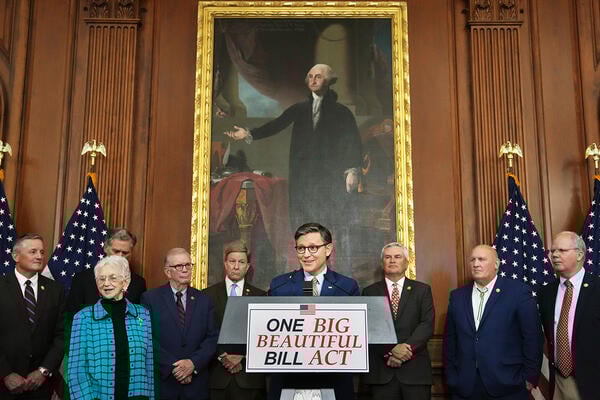
    For example, arm yourself with facts and be prepared to address misinformation you may hear about the “Big Beautiful Bill,” which was just approved by the House GOP and has been sent to the Senate. As passed by the House, it includes limiting Pell eligibility and eliminating subsidized student loans.

    Know what the impact of the House’s proposed endowment tax will be on the institutions that will be impacted. Be versed in how institutions are reeling from the elimination of research grants and how the bill will now further impact them. It is clear to me that these are the first cuts for institutions, but they won’t be the last. The goal is to have fiscal death by a thousand cuts. I would argue it is our responsibility to speak out—to fight— when we hear people discussing the federal budget and grant cuts and explain the impacts these cuts are having on student persistence, on campuses, on research, and on everyday people.

    Despite my choice of language and the traditional connotation associated with it, I don’t think of fighting as only a negative concept. Or, at the very least, I was raised in a Hispanic household where the duality of challenge and support was viewed as a given, rather than a negative. A colleague of mine said that he felt my language was solely confrontational. I suggested in response that fighting to me means asserting an alternative, which includes sharing expertise, data and information, and serving as a sense maker. I believe it covers addressing falsehoods and defending the truth. It is up to each of us if we view and live this only as a negative.

    It’s possible that Simmons’s advice feels aligned with my thinking because I want so dearly to be aligned with her, but the reality is that there’s something about a fighter that is always aligned with another fighter, and for that reason I hope you’ll see yourself in her words and in mine. Once again, I invite you to fight.

    Source link

  • King Misrepresented in Anti-DEI Congressional Hearing

    King Misrepresented in Anti-DEI Congressional Hearing

    In January 2024, I wrote a Forbes article titled, “How Martin Luther King Would Respond to Today’s Attacks on DEI.” I declared therein that King would be outraged and disgusted by the catastrophic assault on values for which he fought, was arrested 29 times and ultimately died. Were he still alive today, I know for sure that King would call on leaders to demonstrate more courage and integrity as DEI is being recklessly torn down in our nation’s K-12 schools, higher education institutions, government agencies and businesses. He would insist on brave truth telling, nonviolent resistance, larger and more audacious multiracial coalitions, and strategically pulling every possible lever in defense of racial justice. King would not have been okay with colleges and universities closing culture centers and multicultural affairs offices, scrubbing their websites of language pertaining to antiracism and equity, and firing innocent DEI practitioners who broke no laws and did nothing wrong.

    Regarding his dream, I insisted the following in the aforementioned Forbes article about King: “Paradoxically, many people who know little about the greatest American civil rights leader of all time at least know he famously spoke these words: ‘I have a dream that my four little children will one day live in a nation where they will not be judged by the color of their skin, but by the content of their character.’ The part about not judging people by skin color gets weaponized to justify colorblindness.”

    Unsurprisingly, this very thing happened this week in a U.S. House of Representatives hearing titled “Restoring Excellence: The Case Against DEI.” I was the lone expert witness for the Democrats, a role I had played twice before on Capitol Hill.

    Robert Onder, a Republican congressman representing Missouri, prefaced a question to me by reciting the go-to line from King’s speech. “Let me read to you a quote you may have heard of, maybe you haven’t, it goes something like this …”

    Two things ran through my mind at the time. First was “Oh, here we go with the tired, predictable misrepresentation of Martin Luther King’s stance on colorblindness.” Secondly, I thought, “Of course I have heard these words—I have been a Black man in America for nearly 50 years; I am a proud graduate of a historically Black university; I spent a decade as a member of the Africana studies faculty at the University of Pennsylvania; I have delivered numerous Martin Luther King Day keynote addresses for universities and companies across the country (including this one in 2016 at Duke University in which I critiqued the twisting of King’s Dream speech); and I have read dozens of MLK sermons, speeches and letters, including but not limited to those published in A Testament of Hope: The Essential Writings and Speeches—how absurd to even suggest that I may be hearing these words for the first time.” It was the most disgusting moment of the hearing for me, yet I somehow maintained my composure.

    I have said it many times before, but it is worth repeating during these dangerous times in higher education and our democracy: King was not a proponent of colorblindness. He hated racism against African Americans and other people of color. He called white supremacy by its name. He called Black people by their names as he fearlessly demanded equity, opportunity and justice for them. The remedies he advocated were extraordinarily race-forward and color-conscious. Any policy or practice in higher education or elsewhere that insists on colorblindness is a misrepresentation of King’s stance.

    There is at least one other noteworthy thing about the annoying evocation of King in the congressional hearing: The civil rights icon said judged “by the content of their character,” but Onder and other Republicans kept insisting on narrowly judging applicants by standardized college entrance exams that tell admission professionals more about those prospective students’ ZIP codes, socioeconomic statuses, the ability of their families to pay for expensive test prep courses and tutors, and the abundance of resources in the K-12 schools they attended.

    Ironically, DEI opponents often fail to recognize and appreciate the incredibly valuable proxies for character, leadership, creativity and other strong indicators of undeniable potential for greatness in holistic admissions practices.

    Those of us who love King and truly value the race-consciousness of the unrealized American dream for which he fought, was repeatedly jailed and died must continue to help our family members, neighbors, colleagues, presidents and governing board members, students, and elected officials understand why wholesale, decontextualized advocacy for colorblindness is wrong, unfair and bad for our democracy.

    If we really want to honor King, especially during this time, more of us would demonstrate brave resistance to the enormously consequential dismantling of DEI in educational institutions and our broader society. The civil rights hero is widely known for peace, love and nonviolence—what Cornel West calls the “Santa Clausification” of King.

    But to be sure, King would have hated the weaponization of government to dismantle DEI broadly and racial equity efforts specifically right now. He would have put up the biggest fight and demanded that leaders, including those in higher education, stop cowardly surrendering to white supremacy and hate. More of us should do that, too.

    Shaun Harper is University Professor and Provost Professor of education, business and public policy at the University of Southern California, where he holds the Clifford and Betty Allen Chair in Urban Leadership.

    Source link