Tag: Examples

  • What Is Bloom’s Taxonomy? 100+ Question Stems & Examples

    What Is Bloom’s Taxonomy? 100+ Question Stems & Examples

    One of the most powerful aspects of Bloom’s Taxonomy is the ability to ask engaging, interactive questions that offer immediate, actionable insights—allowing educators to create highly participatory learning environments that align perfectly with Top Hat’s mission.

    If you’re new to Bloom’s Taxonomy, here’s what you need to know: it consists of hierarchical levels (normally arranged in a pyramid) that build on each other and progress towards higher-order thinking skills. Each level contains verbs, such as “demonstrate” or “design,” that can be measured to gain greater insight into student learning.

    Get a fresh set of Bloom’s Taxonomy questions to apply in any course. Download 100+ Bloom’s Taxonomy question stems now.

    Table of contents

    1. What is Bloom’s Taxonomy?
    2. Revised Bloom’s Taxonomy
    3. Bloom’s Taxonomy for adjunct professors
    4. Examples of Bloom’s Taxonomy question stems
    5. Additional Bloom’s Taxonomy example questions
    6. Bloom’s Taxonomy higher-order thinking questions for college classrooms
    7. Frequently asked questions

    What is Bloom’s Taxonomy?

    The original Bloom’s Taxonomy framework consists of six Bloom’s levels that build off of each other as the learning experience progresses. It was developed in 1956 by Benjamin Bloom, an American educational psychologist. Below are descriptions of Bloom’s levels:

    • Knowledge: Identification and recall of course concepts learned
    • Comprehension: Ability to grasp the meaning of the material 
    • Application: Demonstrating a grasp of the material at this level by solving problems and creating projects
    • Analysis: Finding patterns and trends in the course material
    • Synthesis: The combining of ideas or concepts to form a working theory 
    • Evaluation: Making judgments based on the information students have learned as well as their own insights

    Revised Bloom’s Taxonomy

    A group of educational researchers and cognitive psychologists developed the new and revised Bloom’s Taxonomy framework in 2001 to be more action-oriented. This way, students work their way through a series of verbs to meet learning objectives. Below are descriptions of each of the levels in revised Bloom’s Taxonomy:

    • Remember: To bring an awareness of the concept to learners’ minds.
    • Understand: To summarize or restate the information in a particular way.
    • Apply: The ability to use learned material in new and concrete situations.
    • Analyze: Understanding the underlying structure of knowledge to be able to distinguish between fact and opinion.
    • Evaluate: Making judgments about the value of ideas, theories, items and materials.
    • Create: Reorganizing concepts into new structures or patterns through generating, producing or planning.

    Each level in the Bloom’s Taxonomy chart below is associated with its own verbs, outcomes, and question stems that help you plan effective instruction and assessment.

    Level Description Revised Bloom’s Taxonomy Verbs
    Remember Recall facts and basic concepts Define, List, Identify
    Understand Explain ideas or concepts Summarize, Describe, Classify
    Apply Use information in new situations Demonstrate, Implement, Solve
    Analyze Break down information into parts Compare, Organize, Differentiate
    Evaluate Justify a decision or viewpoint Judge, Defend, Critique
    Create Produce original work or ideas Design, Construct, Develop

    Bloom’s Taxonomy for adjunct professors

    Free Download: Bloom’s Taxonomy Question Stems and Examples

    Bloom’s Taxonomy questions are a great way to build and design curriculum and lesson plans. They encourage the development of higher-order thinking and encourage students to engage in metacognition by thinking and reflecting on their own learning. In The Ultimate Guide to Bloom’s Taxonomy Question Stems, you can access more than 100 examples of Bloom’s Taxonomy questions examples and higher-order thinking question examples at all different levels of Bloom’s Taxonomy. 

    Examples of Bloom’s Taxonomy question stems

    Bloom’s Taxonomy question stems

    • Knowledge: How many…? Who was it that…? Can you name the…? 
    • Comprehension: Can you write in your own words…? Can you write a brief outline…? What do you think could have happened next…?
    • Application: Choose the best statements that apply… Judge the effects of… What would result …? 
    • Analysis: Which events could have happened…? If … happened, how might the ending have been different? How was this similar to…?
    • Synthesis: Can you design a … to achieve …? Write a poem, song or creative presentation about…? Can you see a possible solution to…?
    • Evaluation: What criteria would you use to assess…? What data was used to evaluate…? How could you verify…?

    Support Bloom’s Taxonomy higher order thinking in your classroom. Get 100+ Bloom’s taxonomy question stems in our interactive resource.

    Revised Bloom’s Taxonomy question stems

    • Remember: Who…? What…? Where…? How…?
    • Understand: How would you generalize…? How would you express…? What information can you infer from…?
    • Apply: How would you demonstrate…? How would you present…? Draw a story map… 
    • Analyze: How can you sort the different parts…? What can you infer about…? What ideas validate…? How would you categorize…?
    • Evaluate: What criteria would you use to assess…? What sources could you use to verify…? What information would you use to prioritize…? What are the possible outcomes for…?
    • Create: What would happen if…? List the ways you can…? Can you brainstorm a better solution for…? 

    Additional Bloom’s Taxonomy example questions

    Bloom’s Taxonomy serves as a framework for categorizing levels of cognitive learning. Here are 10 Bloom’s Taxonomy example questions, each corresponding to one of the six levels of Bloom’s Taxonomy, starting from the lowest level (Remember) to the highest level (Create):

    1. Remember (Knowledge): What are the four primary states of matter? Can you list the main events of the American Civil War? What are the three branches of government?
    2. Understand (Comprehension): How would you explain the concept of supply and demand to someone who is new to economics? Can you summarize the main idea of the research article you just read? Can you explain the concept of opportunity cost in your own words?
    3. Apply (Application): Given a real-world scenario, how would you use the Pythagorean theorem to solve a practical problem? Can you demonstrate how to conduct a chemical titration in a laboratory setting? How would you apply Newton’s laws in a real-life scenario?
    4. Analyze (Analysis): What are the key factors contributing to the decline of a particular species in an ecosystem? How do the social and economic factors influence voting patterns in a specific region? What patterns can you identify in the data set?
    5. Evaluate (Evaluation): Compare and contrast the strengths and weaknesses of two different programming languages for a specific project. Assess the effectiveness of a marketing campaign, providing recommendations for improvement. Which historical source is more reliable, and why?
    6. Create (Synthesis): Design a new and innovative product that addresses a common problem in society. Develop a comprehensive lesson plan that incorporates various teaching methods to enhance student engagement in a particular subject. Design an app that solves a problem for college students.

    Download Now: Bloom’s Taxonomy Question Stems and Examples

    Bloom’s Taxonomy higher-order thinking questions for college classrooms

    Higher-order thinking questions are designed to encourage critical thinking, analysis, and synthesis of information. Here are eight examples of Bloom’s Taxonomy higher-order thinking questions that can be used in higher education:

    1. Critical Analysis (Analysis): “What are the ethical implications of the decision made by the characters in the novel, and how do they reflect broader societal values?”
    2. Problem-Solving (Application): “Given the current environmental challenges, how can we develop sustainable energy solutions that balance economic and ecological concerns?”
    3. Evaluation of Evidence (Evaluation): “Based on the data presented in this research paper, do you think the study’s conclusions are valid? Why or why not?”
    4. Comparative Analysis (Analysis): “Compare and contrast the economic policies of two different countries and their impact on income inequality.”
    5. Hypothetical Scenario (Synthesis): “Imagine you are the CEO of a multinational corporation. How would you navigate the challenges of globalization and cultural diversity in your company’s workforce?”
    6. Ethical Dilemma (Evaluation): “In a medical emergency with limited resources, how should healthcare professionals prioritize patients, and what ethical principles should guide their decisions?”
    7. Interdisciplinary Connection (Synthesis): “How can principles from psychology and sociology be integrated to address the mental health needs of a diverse student population in higher education institutions?”
    8. Creative Problem-Solving (Synthesis): “Propose a novel solution to reduce urban congestion while promoting eco-friendly transportation options. What are the potential benefits and challenges of your solution?”

    You can use these questions to spark meaningful class discussions, guide research projects, or support student-led investigations, making your lessons interactive and engaging.

    Want more revised Bloom’s Taxonomy verbs and questions? Download 100+ Bloom’s taxonomy question stems now.

    Frequently asked questions

    Q: What are Bloom’s Taxonomy question stems?
    A: Bloom’s Taxonomy question stems are short question prompts designed to help you align classroom learning activities with the various levels of learning, from remembering and understanding to applying, analyzing, evaluating, and creating.

    Q: How are Bloom’s Taxonomy verbs used?
    A: Verbs like “describe,” “design,” and “evaluate” clarify learning goals and help students understand what’s expected of them at each stage.

    Q: Why are the six levels of Bloom’s Taxonomy important?
    A: They provide a scaffold for helping students move from basic recall to complex analysis and creation—supporting critical thinking and deep learning.

    🎓 Get Your Free Resource

    Make your next lesson more engaging and intentional. Download 100+ Bloom’s Taxonomy Question Stems to start building stronger assessments and more interactive learning today.

    Tagged as:

    Source link

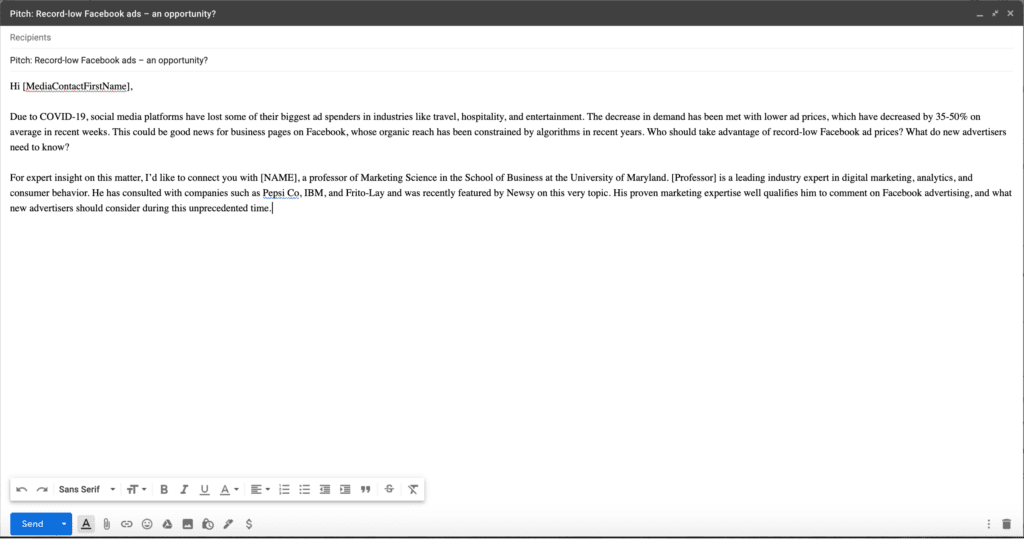
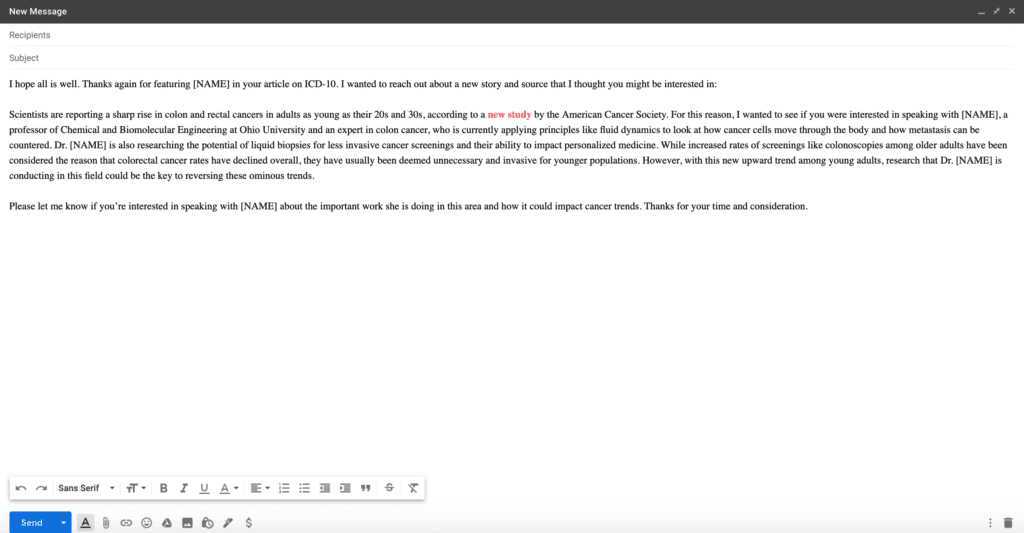
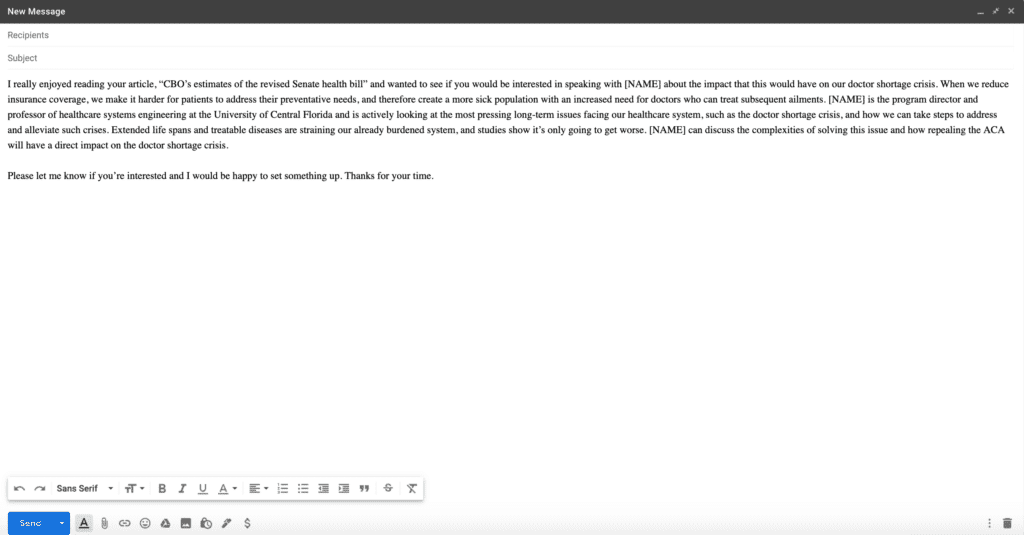
  • How To Write A Media Pitch Examples

    How To Write A Media Pitch Examples

    How to Write a Media Pitch

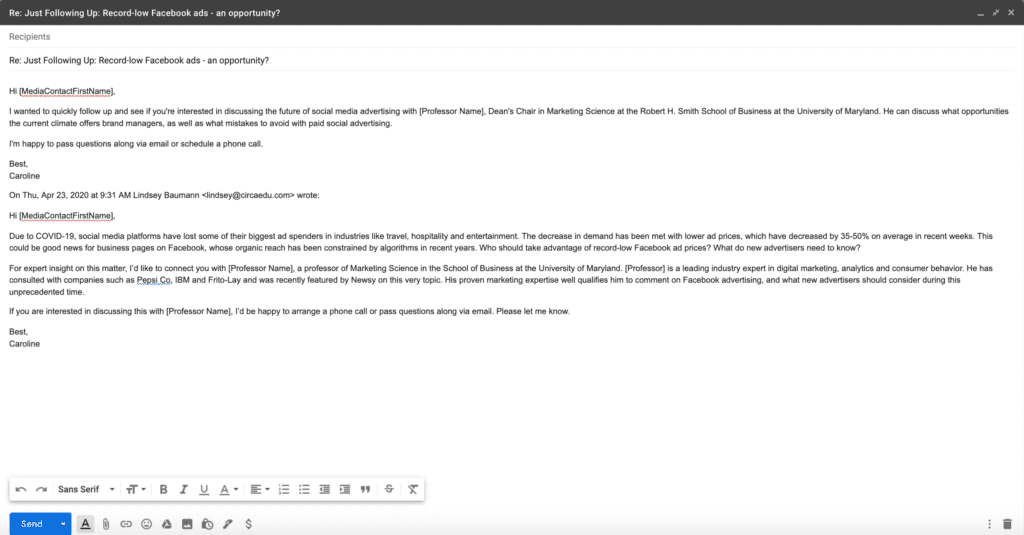
    Pitching compelling storylines and sources are the crux of any public relations strategy. In the higher education digital marketing space, we at Archer Education leverage the expertise of professors from our partner institutions to help increase the school’s visibility, student enrollment, thought leadership, and brand awareness. 

    Professors make excellent sources for stories through unmatched expertise and experience in their respective fields, but without the correct messaging and communication strategy, this opportunity could be missed. 

    In this article, we’ll go over how to write a media pitch in higher education and review the most common types of media pitches.

    What Is a Media Pitch?

    Media pitches in higher education are strategic communications sent to journalists, editors, or media outlets to promote faculty expertise, research, or institutional initiatives. These pitches typically highlight faculty insights on current events, groundbreaking studies, or thought leadership in their field.

    These pitches are particularly key to faculty promotion because they enhance visibility, establish credibility, and position faculty as subject matter experts. Media coverage can lead to invitations for speaking engagements, collaborative research opportunities, and increased citations — all of which contribute to professional advancement for the faculty member and enhanced institutional reputation.

    How to Create Your Media Pitch 

    Before we dive into best practices, tips, and examples of PR pitching, let’s go over some of the basics of how to structure a media pitch. Creating a set standard for yourself and your team will not only streamline the process and allow you to be as efficient as possible, but it will also ensure consistency amongst your team and allow for smooth training programs.

    Select the Right Type of Journalism Lead

    Before you even start writing a pitch, you want to make sure you find a lead that will entice whoever you are reaching out to. The lead is the angle into your story that makes everything relevant. You can look for two types of leads that are applicable throughout journalism:

    1. A news peg is a trending story or topic in the news that relates to what you’re pitching. For example, leveraging a political debate or a new medical study that was just released. This allows you to hook the reader with a relevant and widespread story.
    2. A time peg represents an upcoming date or event. For example, anniversaries of days like 9/11 or Hurricane Katrina, days or weeks dedicated to specific causes like “Health IT Week” or “Mental Health Awareness Day,” or even months like “Breast Cancer Awareness Month.”

    These types of dates and events can be easily leveraged for PR purposes as media outlets will often shape content around significant or relevant time pegs. In order to keep track and take advantage of these dates, it’s helpful to create and consistently update an internal editorial calendar with your team.

    Develop Your Pitch Structure

    Below is the basic outline/structure you should consider when writing a media pitch: 

    • As mentioned above, start with the lead. This should be the first thing the reporter or editor reads. An enticing lead that is relevant to their beat will ensure they continue through your pitch.
    • The second part is your call-to-action. This is the action you want your audience to take. Whether it is writing a product review, publishing a piece of content, or conducting an interview, it’s important to make your intention here as clear as possible.
    • Next comes your value proposition. This is a key piece of the puzzle as it will be the meat of the pitch; this is where you can showcase the value of what you are offering and why they should be interested in it. It is essential in differentiating yourself from the hundreds of other pitches they receive.
    • The last piece of the pitch is your conclusion. This is a straightforward recap that includes a  recap of the call-to-action and a thank you. 

    Use the Right Subject Line for Your Pitch Email

    Subject lines are the first and sometimes only thing that a media contact will see — often determining whether they will even bother to open your email or not. Ensuring that your subject line is clear, concise, and enticing is critical. According to Omeda, subject lines with 20 characters or fewer achieve the highest open rates, averaging 29.9%. Open rates decline to 17.3% for subject lines between 20 and 124 characters. 

    Interestingly, subject lines exceeding 174 characters see a slight recovery in open rates, averaging around 23%. However, due to potential display issues and the risk of being cut off, it’s generally recommended to keep subject lines concise. Prioritizing brevity ensures better visibility across various devices and enhances the likelihood of engagement.

    While creating a subject line that produces an “open” should always be the goal, you should make sure to avoid using “click-bait” phrasing as a tactic to draw in the recipient, as this is considered unprofessional. The last thing you want to do is mislead your audience or appear spammy.

    How to Pitch the Media: Communication Strategies

    Now that you understand the basics on how to write and structure a media pitch, let’s cover some media pitching strategies that can lead to greater success. 

    Use Timely Stories and Research               

    Don’t deprive yourself of using relevant news pegs or research as your hook for your pitch. It’s no secret that the media lives off of news pegs, trending topics, and new research to tell their stories. To increase the chances of someone showing interest in your pitch, it’s important to make their job as easy as possible. It’s a good idea to spell out the story for them so that your source or story fits in seamlessly with trending news topics and their target audience’s interests.

    Reporters and editors receive hundreds of pitches every day, so providing them with a story that their readers will be interested in and offering sources to help supplement that story will make them more compelled to move forward with the conversation. 

    Along these same lines, always try to include hyperlinks to any research or statistics that you reference in your pitch. You don’t want them to shy away from expressing interest or continuing the conversation simply because they don’t have time to do the legwork to track down the sources themselves.

    Know the Reporter’s Beat 

    You can have the best pitch in the world, but if it doesn’t align with the reporter’s beat (the types of stories they cover), then it will provide no use or value to them. In fact, it will only blatantly show that you are sending out mass email distributions and aren’t doing the appropriate research and legwork before pitching them. While it’s not always realistic or feasible, personalize pitches whenever possible and mention any related articles that they recently wrote.

    Keep it Concise and Know Your Story

    As previously mentioned, media contacts receive hundreds of pitches a day. If you’re lucky enough to get yours opened, the worst thing that someone with very little time can be confronted with is an unnecessarily long pitch. Find out how to say everything that you need to say in a paragraph or less (with rare exceptions). The more specific and focused you can be, the better. It’s also crucial to understand and communicate the story you’re trying to tell and how it aligns with the larger media trends yet provides a unique angle to the storyline. 

    Follow Up Is Key to Media Pitching

    Following up on initial email pitches is one of the most crucial elements of the pitching process. This is where most of your interest and responses will come from, so ensure that you schedule reminders to follow up. 

    Generally, it’s appropriate to wait about one week until you send follow-ups out; this will ensure that the media contact has sufficient time to get through their emails and respond if they are planning to. If the story is incredibly time-sensitive, you can follow-up a bit sooner. Similarly, if it is not a time-sensitive story at all, then waiting a little longer than a week can be a good strategy.  Just be sure to include your original pitch at the bottom of your follow-up email to help jog the recipient’s memory and provide more context. 

    Media Pitch Examples

    Now that you have the information that you need to be successful with your pitch writing, here are some real-life examples of media pitches and pitch letters that our team sent to the media. 

    1. Cold Pitch

    A cold pitch is an unsolicited email or message sent to a journalist or media outlet with whom there is no prior relationship. It typically introduces a faculty member’s expertise or research in hopes of securing media coverage.

    2. Pitch for Established Contact/Relationship

    This type of pitch is sent to a journalist or media contact with whom a relationship already exists. It builds on past interactions, making it more likely to be well received and result in coverage.

    3. Personalized Pitch

    A personalized pitch is tailored specifically to a journalist’s interests, past work, or the needs of their publication. It demonstrates a clear understanding of their audience and increases the chances of engagement.

    4. Follow-Up Pitch

    A follow-up pitch is sent after an initial pitch to reinforce interest, provide additional details, or remind the recipient about the story idea. It’s essential for maintaining momentum and increasing response rates.

    How to Write Media Pitches That Consistently Convert

    In today’s media landscape, consistent PR exposure is essential for faculty members looking to establish themselves as thought leaders and elevate their institution’s brand. At Archer Education, we specialize in crafting strategic media pitches that align with timely news cycles, ensuring professors and researchers receive the visibility they deserve. Whether through cold outreach, leveraging existing media relationships, or personalized pitches, we help faculty secure media placements that enhance their credibility, attract prospective students, and showcase their expertise to a broader audience.

    Our experience in higher education marketing allows us to effectively position faculty members in conversations that matter, increasing opportunities for interviews, guest articles, and thought leadership features. Don’t let valuable media opportunities go untapped — connect with us today to develop a custom PR strategy that amplifies your faculty’s impact and strengthens your institution’s reputation.

    Source link

  • How to Develop a Student Persona: Strategies and Examples

    How to Develop a Student Persona: Strategies and Examples

    Why College Student Personas Are Critical for Enrollment Marketing Success

    Every message has an audience. Even this article was written with you in mind: someone navigating the complexities of higher ed marketing and looking for a smarter way to connect with students. 

    In the competitive world of college and university marketing, developing comprehensive college student personas is essential. A well-crafted persona helps you move beyond generic outreach and into the realm of meaningful engagement, putting you in the shoes of your prospective students to tell the story of: 

    A story-driven, persona-based approach allows you to lower acquisition costs, boost student engagement, and reinforce your institution’s mission. But more importantly, it helps students feel seen. When students feel welcomed and understood, real connection happens. 

    That’s when a prospect takes a first step toward becoming a future graduate.

    What Are Student Personas

    College student personas are fictional, research-based profiles that represent key segments of your institution’s prospective audience. 

    A persona can help you understand an audience group’s motivations, goals, challenges, backgrounds, and even decision-making behaviors. Rather than marketing to a broad, faceless group, personas allow you to tailor your messaging to be more relevant and compelling. 

    A well-detailed student persona might include details such as: 

    Ideally, each persona will be grounded in data from multiple sources including surveys, interviews, feedback from admissions, and digital marketing analytics, if available.

    How Personas Enhance the Student Journey

    Student personas are a critical jumping-off point for marketing and enrollment efforts in higher education. Persona identification should occur early in the brand development process to ensure that the brand, messaging, and story align with each audience — whether it is career changers, veterans pursuing education in civilian life, or working nurses looking to advance in their careers. 

    A persona-driven approach focuses on a multifaceted view of your college or university’s core audiences, primarily consisting of their demographics, psychographics, and behavioral attributes.

    While developing multiple custom personas for all your degree programs may seem daunting and can be time consuming, the effort will pay off in the long run in terms of enrollment and student success. 

    Aligning all key stakeholders involved in developing and deploying the story and identity of a brand around key student personas is also critical to creating a more cohesive and clear experience for students throughout their journey. These personas should inform and influence all teams and stakeholders in their strategies — from paid media ads and targeting, to blog content, to website copy and landing pages, to nurture campaigns. 

    No matter where students are in their educational journey, having a seamless experience across all channels and touchpoints is more important than ever before. 

    Utilizing various forms of primary and secondary research in the form of interviews, focus groups, market research, historical student data, and more, we at Archer Education are able to craft a deeper and more comprehensive understanding of what prospective students care about and how to most effectively reach and engage with them.

    Steps to Create College Student Personas

    Creating college student personas starts with research. Whether your enrollment marketing team does the research itself or relies on secondary sources (we suggest using a combination of both) the information-gathering process for developing student personas is essentially the same. Enrollment marketers will want to begin by gathering a lot of information from a wide range of sources.

    1. Conduct Discovery Interviews

    Interviews with key institutional stakeholders including program directors, enrollment and admissions teams, faculty, alumni, and current students are an important source of information for understanding student aspirations and goals, challenges and pain points, and even lifestyle circumstances. 

    We recommend speaking with as many stakeholders as possible to gather diverse insights and perspectives through one-on-one discussions, group interviews, and focus groups to inform robust college student personas. The interviewer’s goals are to:

    Stories and examples gathered during interviews with current students and alumni about how your program helped them achieve their educational or career goals are especially effective for connecting with prospective students. 

    2. Mine Historical Student Data

    Existing student demographic data (if available) including age, gender, prior education (degree type and level), and job title can help provide very tangible and relevant information for student personas. Institutions that consistently track and report data have an advantage, while brand-new programs that lack historical data may need to lean more heavily on other sources. 

    Student or alumni reports or survey results, if available, can provide great supplemental information for getting to know prospective, current, and former students better.

    3. Conduct Market Research

    Many students today, and nontraditional adult learners in particular, are hyperfocused on outcomes and looking for a return on investment in their chosen degree program. Marketing tools and resources enrollment marketers can use to make their program’s case to prospective students include:

    4. Leverage Audience Intelligence Tools

    The ability to gather insights into audiences through social listening and other data sources — known as audience intelligence — is gaining traction with marketers as tools become more advanced. At Archer, one tool that our team uses is Sparktoro, an audience research tool that crawls millions of social profiles and web pages to learn what (and who) your audience reads, listens to, watches, follows, shares, and talks about online. This is a helpful supplemental tool that can help provide a clearer picture of your audiences across various data points and attributes.

    If you’re not in a position to pay for audience intelligence tools, some free tools are available, such as CareerOneStop, which is sponsored by the U.S. Department of Labor. This tool is more limited to demographic information, but it can be helpful for learning more about certain industries or occupations that relate to a given student persona. 

    Facebook Audience Insights is another free tool that we have leveraged in the past to gain a better understanding of users connected to our partners’ pages, as well as to learn about the interests and affinities of a given audience. The tool has become more limited as Facebook has tightened up its access to users’ data and profile attributes, but it still may be worth checking out — especially if Facebook is one of your primary marketing channels.

    5. Synthesize Research and Outline Personas

    When discovery interviews are complete and market, audience, and other research has been gathered, it’s time to begin synthesizing what you’ve found and outlining your data-informed personas. 

    Depending on the scope of your project and goals, the structure and template you decide to use for college student personas may look quite different. Personas developed for the entire graduate school of an institution, for example, will probably look very different from personas created for one specific program. 

    Regardless of the scope and subsequent approach, you should ensure that you’ve covered your bases across the spectrum of core audiences while trying to make each as distinct as possible from one another — either in terms of shared interests and goals, or in terms of demographic factors such as incoming occupation (such as being a working nurse) or lifestyle circumstances (such as being a stay-at-home parent returning to school). 

    Once you’ve identified the distinct student personas you want to focus on, it’s time to build them out in greater detail. The more in-depth information you’ve gathered, the easier it will be to create distinct, detailed personas that are applicable. When creating personas, make sure to honor your institution’s commitment to diversity, equity, and inclusion by representing students of different races, ethnicities, gender identities, and abilities. Don’t let your personas reinforce stereotypes. 

    There are many different templates and approaches you can use to develop personas — and there is no “right” way. Again, it really depends on your specific goals and how you can make the personas as applicable and actionable as possible. 

    At Archer, our teams find that including areas such as skills, interests, incoming occupations, age, education, media usage, and more are important. Also, we highly recommend including a “story” section (as in the examples below) to humanize your fictional student and create a clearer picture of who this persona is and what they care about.

    College Student Persona Examples 

    When we are tasked with creating personas across multiple programs and verticals, we like to create a persona architecture with overarching personas and subpersonas so we can plug them in across various programs, depending on our partner’s needs and goals. This gives our enrollment marketing teams options to target student personas on a broader or more granular level, depending on what makes the most sense for the program. 

    The persona examples for students below feature overarching personas for a mix of tech/coding bootcamp programs with detailed subpersonas for each target beneath.


    Technology is a broad field with opportunities for individuals who come in with a diverse mix of experience, education, interests, and skills. Developing a broader overarching persona (with subpersonas underneath) can help provide a high-level snapshot into a broader group of individuals who still share important commonalities. You can include things such as an overview and some of the top motivations that are most relevant to that audience, in addition to other elements that help showcase who this audience is and what they care about. 

    Then drill down using the data and stories you’ve collected in your research to animate your multiple subpersonas. Below is a subpersona we created for a partner’s tech bootcamp degree program.

    The next example below is a program-specific persona created for a single degree program. Programmatic personas typically include more in-depth and detailed information than personas designed to encompass more than one program. Notice the inclusion of sample job titles and skills.

    Developing student personas will not only help your institution attract the right students, it will help your marketing teams, enrollment specialists, and administrators identify and better understand your students’ needs and goals — a win-win for educators and students alike. 

    Creating Student Personas to Drive Enrollment 

    Persona-based marketing is a tried-and-true tool for customer acquisition, and higher education is no exception. When exploring colleges or degree programs, students want to know which one will be a good fit for them. Recognizing themselves in your marketing materials can make the difference between their moving forward in the enrollment funnel and moving on to a competitor. 

    At Archer Education, we partner with dozens of institutions to craft story-driven, persona-based approaches to student acquisition. Request more information and see what Archer can do to help you connect with and enroll the right students.

    Source link

  • 25 Evaluative Thesis Examples (2025)

    25 Evaluative Thesis Examples (2025)

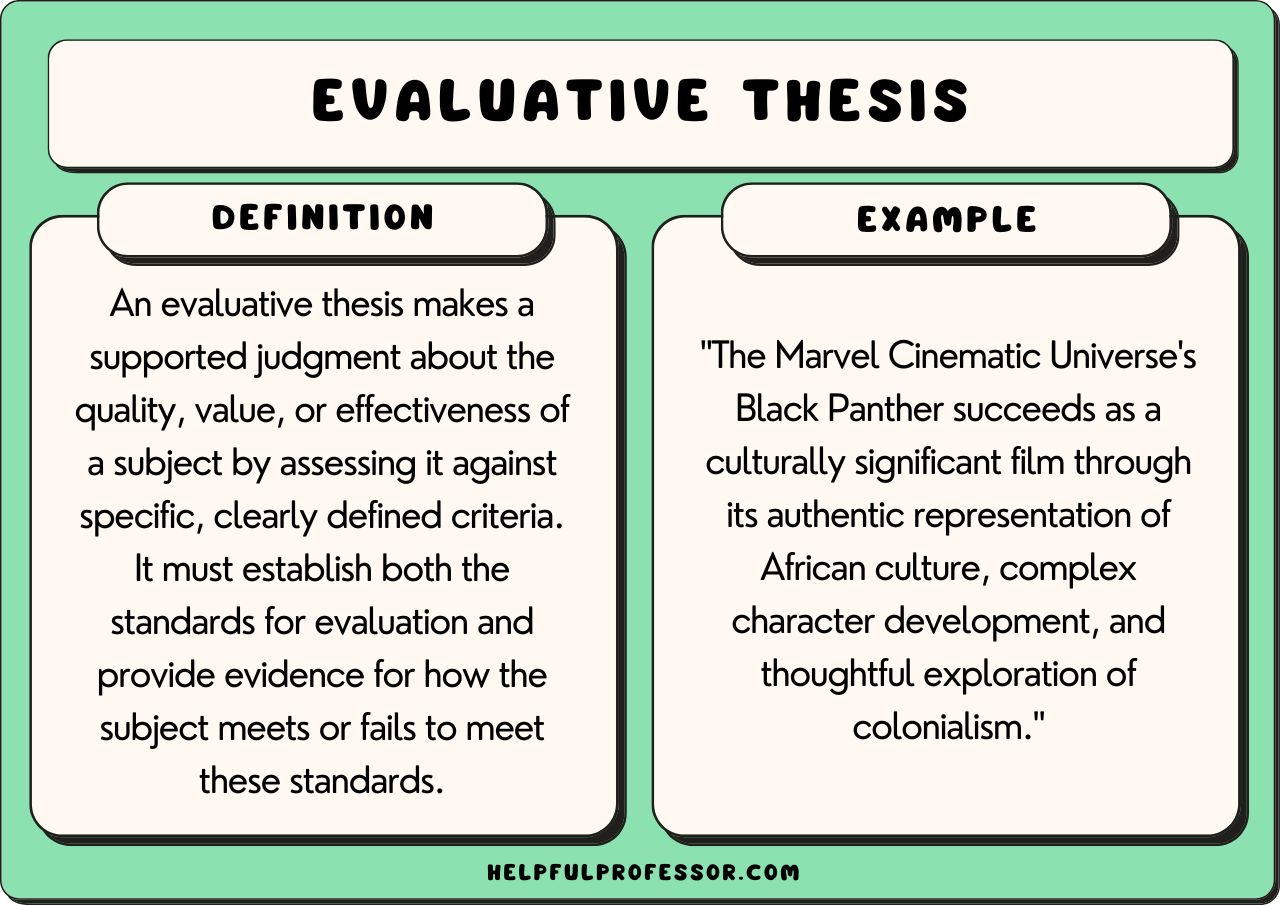
    An evaluative thesis makes a judgment about the quality, importance, or effectiveness of something based on specific criteria.

    Here’s its structure:

    [Subject] + [Judgment based on criteria] + [Criteria/Standards]

    And here’s a simple example:

    “The Marvel Cinematic Universe’s Black Panther succeeds as a culturally significant film through its authentic representation of African culture, complex character development, and thoughtful exploration of colonialism.”

    You’ll notice the necessary elements in that statement that make it specifically an evaluative thesis statement:

    • It states what is being evaluated (Black Panther)
    • It makes a value judgment (succeeds)
    • It provides specific criteria for the evaluation (representation, character development, themes)

    Makes sense? Let’s explore some more examples.

    Evaluative Thesis Examples

    #25. The Finnish Education System

    “The Finnish education system stands as the most effective model of public education among developed nations, demonstrated by its student-centered learning approach, high teacher qualification standards, and emphasis on equity over standardized testing.”

    • Subject: Finnish education system
    • Judgment: most effective model
    • Criteria: student-centered learning, teacher qualifications, equity focus

    #24. Social Media and Youth Health

    “Social media platform Instagram proves particularly detrimental to adolescent mental health due to its emphasis on physical appearance, promotion of social comparison, and algorithmic amplification of unrealistic lifestyle content.”

    • Subject: Instagram’s impact on adolescent mental health
    • Judgment: particularly detrimental
    • Criteria: appearance focus, social comparison, algorithmic amplification

    #23. Nordic Welfare State

    “The Nordic welfare state model demonstrates superior effectiveness in reducing income inequality through its progressive taxation system, universal social services, and strong labor market protections.”

    • Subject: Nordic welfare state model
    • Judgment: superior effectiveness
    • Criteria: taxation, social services, labor protections

    #22. Urban Gentrification

    “Contemporary urban gentrification policies in major U.S. cities fail to serve community interests based on their displacement of long-term residents, erosion of cultural heritage, and acceleration of economic segregation.”

    • Subject: Urban gentrification policies
    • Judgment: fail to serve community interests
    • Criteria: displacement, cultural preservation, economic integration

    #21. Aging Population

    “Japan’s aging population management strategies excel in addressing demographic challenges through their innovative healthcare delivery, intergenerational community programs, and technology integration for elderly care.”

    • Subject: Japan’s aging population management
    • Judgment: excel in addressing challenges
    • Criteria: healthcare delivery, community programs, technology integration

    #20. Indigenous Reconciliation

    “The Australian reconciliation process with Indigenous peoples remains inadequate due to insufficient land rights recognition, limited political representation, and weak implementation of cultural preservation policies.”

    • Subject: Australian reconciliation process
    • Judgment: remains inadequate
    • Criteria: land rights, political representation, cultural preservation

    #19. German Education System

    “Germany’s dual vocational education system proves highly successful in youth workforce development through its integration of classroom learning, practical training, and industry partnerships.”

    • Subject: German dual vocational education
    • Judgment: highly successful
    • Criteria: classroom learning, practical training, industry partnerships

    #18. Canadian Multiculturalism

    “Canada’s multiculturalism policy emerges as an exemplary model for cultural integration based on its legal framework for equality, support for cultural expression, and inclusive citizenship practices.”

    • Subject: Canadian multiculturalism policy
    • Judgment: exemplary model
    • Criteria: legal framework, cultural support, citizenship practices

    #17. Mental Health Shortcomings

    “South Korea’s mental health services demonstrate critical shortcomings in addressing public needs through their limited accessibility, high stigmatization, and insufficient preventive measures.”

    • Subject: South Korean mental health services
    • Judgment: critical shortcomings
    • Criteria: accessibility, stigma levels, prevention efforts

    #16. Environmental Conservation

    “New Zealand’s environmental conservation strategies show remarkable effectiveness in biodiversity protection through their indigenous knowledge integration, community-based management, and ecosystem-wide approach.”

    • Subject: NZ environmental conservation strategies
    • Judgment: remarkable effectiveness
    • Criteria: indigenous knowledge, community management, ecosystem approach

    #15. Refugee Integration

    “The European Union’s refugee integration programs demonstrate significant inadequacies based on their inconsistent implementation, limited resource allocation, and poor cultural sensitivity training.”

    • Subject: EU refugee integration programs
    • Judgment: significant inadequacies
    • Criteria: implementation consistency, resources, cultural training

    #14. Public Housing System

    “Singapore’s public housing system emerges as an exceptional model of urban planning through its racial integration policies, affordable pricing structures, and community-centered design.”

    • Subject: Singapore’s public housing
    • Judgment: exceptional model
    • Criteria: racial integration, affordability, community design

    #13. Renewable Energy Transition

    “Scotland’s renewable energy transition shows remarkable success in sustainable development through its community ownership schemes, technological innovation, and grid modernization efforts.”

    • Subject: Scotland’s renewable transition
    • Judgment: remarkable success
    • Criteria: community ownership, innovation, grid modernization

    #12. Gender Equality Initiatives

    “Rwanda’s gender equality initiatives stand out as particularly effective in advancing women’s rights through quota systems, economic empowerment programs, and anti-violence legislation.”

    • Subject: Rwanda’s gender equality initiatives
    • Judgment: particularly effective
    • Criteria: quotas, economic programs, legislation

    #11. Digital Democracy

    “Taiwan’s digital democracy tools excel in promoting civic engagement through their transparency mechanisms, participatory budgeting platforms, and citizen feedback systems.”

    • Subject: Taiwan’s digital democracy tools
    • Judgment: excel in promoting engagement
    • Criteria: transparency, participation, feedback systems

    #10. Bike Infrastructure

    “The Netherlands’ bicycle infrastructure proves exemplary in sustainable urban mobility through its comprehensive network design, safety prioritization, and integration with public transit.”

    • Subject: Dutch bicycle infrastructure
    • Judgment: exemplary
    • Criteria: network design, safety, transit integration

    #9. Environmental Education

    “Costa Rica’s environmental education curriculum demonstrates outstanding effectiveness in fostering ecological awareness through its experiential learning approach, local ecosystem focus, and community involvement.”

    • Subject: Costa Rica’s environmental education
    • Judgment: outstanding effectiveness
    • Criteria: experiential learning, ecosystem focus, community involvement

    #8. Elder Care Systems

    “Denmark’s elder care system shows superior quality in supporting aging populations through its home care emphasis, social inclusion programs, and preventive health measures.”

    • Subject: Danish elder care
    • Judgment: superior quality
    • Criteria: home care, social inclusion, preventive health

    #7. E-Governance

    “Estonia’s e-governance platform emerges as a leading model of digital public services through its user-centered design, robust security measures, and comprehensive service integration.”

    • Subject: Estonian e-governance
    • Judgment: leading model
    • Criteria: user design, security, service integration

    #6. Rehabilitation in Norway

    “Norway’s prison rehabilitation system demonstrates exceptional effectiveness in reducing recidivism through its emphasis on education, psychological support, and gradual reintegration programs.”

    • Subject: Norwegian prison rehabilitation
    • Judgment: exceptional effectiveness
    • Criteria: education, psychological support, reintegration

    #5. Urban Policy

    “Barcelona’s urban superblock initiative proves highly successful in improving city livability through its pedestrian prioritization, green space expansion, and local business support.”

    • Subject: Barcelona’s superblock initiative
    • Judgment: highly successful
    • Criteria: pedestrian spaces, green areas, business support

    #4. Truth and Reconciliation

    “South Africa’s Truth and Reconciliation Commission shows mixed effectiveness as a transitional justice mechanism based on its victim testimony process, amnesty provisions, and reparation implementation.”

    • Subject: SA Truth and Reconciliation Commission
    • Judgment: mixed effectiveness
    • Criteria: testimony process, amnesty, reparations

    3. Gross National Happiness

    “Bhutan’s Gross National Happiness index emerges as an innovative model for measuring societal progress through its cultural preservation metrics, environmental sustainability indicators, and community vitality assessments.”

    • Subject: Bhutan’s GNH index
    • Judgment: innovative model
    • Criteria: cultural metrics, environmental indicators, community vitality

    #2. Growth Mindsets

    “The widely-adopted ‘growth mindset’ intervention proves ineffective as a universal educational tool due to its oversimplified implementation, lack of cultural context consideration, and overemphasis on individual rather than systemic factors.”

    • Subject: Growth mindset intervention
    • Judgment: ineffective as universal tool
    • Criteria: implementation, cultural context, systemic consideration

    #1. Dopamine Detox

    “Social media’s ‘dopamine detox’ trend emerges as a problematic self-help approach through its misrepresentation of neuroscience, one-size-fits-all recommendations, and neglect of underlying mental health factors.”

    • Subject: Dopamine detox trend
    • Judgment: problematic approach
    • Criteria: scientific accuracy, universal recommendations, mental health consideration


    Chris

    Dr. Chris Drew is the founder of the Helpful Professor. He holds a PhD in education and has published over 20 articles in scholarly journals. He is the former editor of the Journal of Learning Development in Higher Education. [Image Descriptor: Photo of Chris]

    Source link

  • 25 Analytical Thesis Statement Examples (2025)

    25 Analytical Thesis Statement Examples (2025)

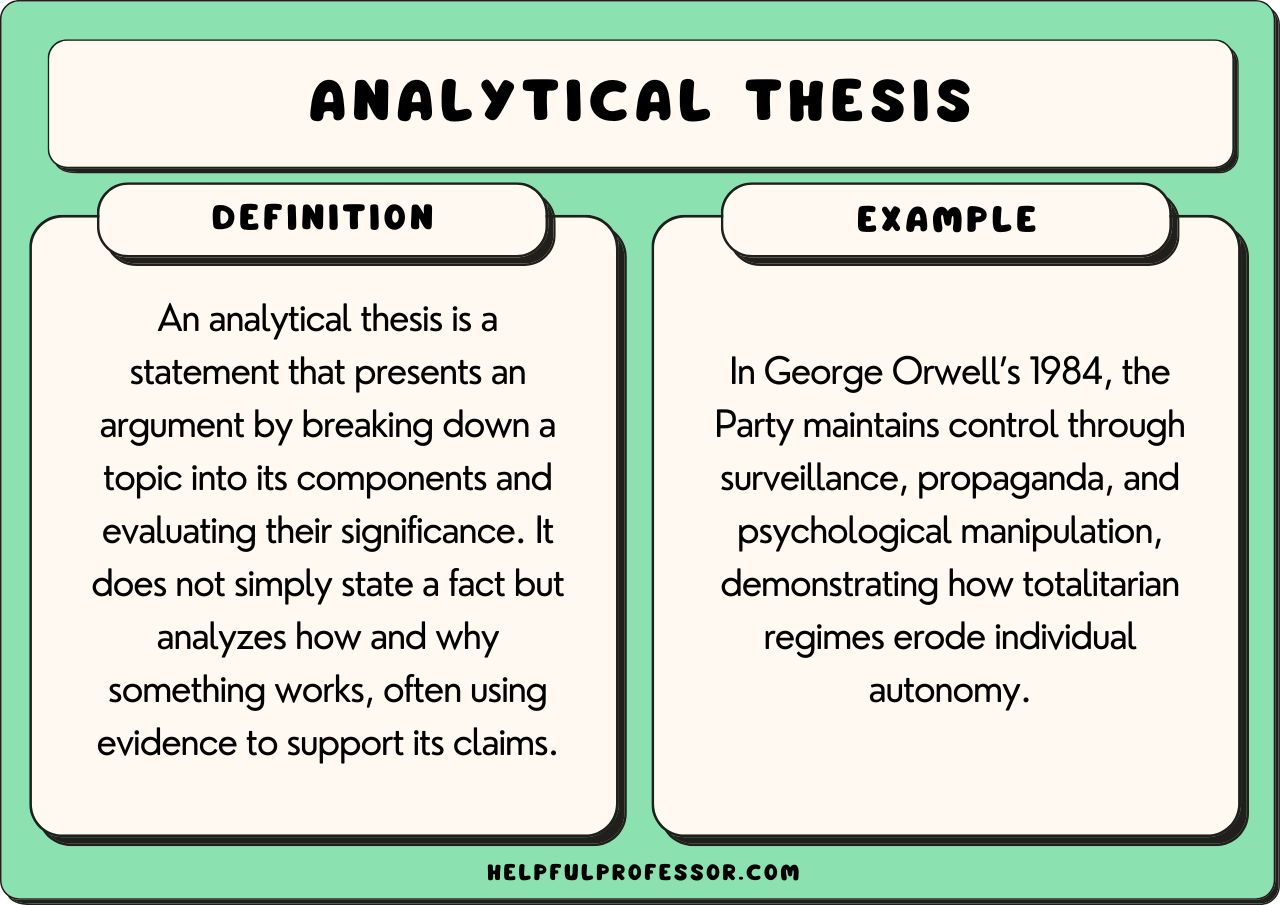
    An analytical thesis statement is designed to present interpretation and analysis, not a subjective argument. This makes it different from an argumentative thesis statement.

    To demonstrate how to write an analytical thesis statement, consider these two statements and how they differ:

    • Analytical: The rise of social media addiction is influenced by dopamine-driven feedback loops, algorithmic personalization, and social validation, which collectively shape user behavior and mental health outcomes.
    • Argumentative: Social media platforms should be required to regulate algorithmic engagement features, as they exploit psychological vulnerabilities, contribute to declining mental health, and disproportionately affect young users.

    Notice how the argumentative thesis statement presents a forceful point of view, while the analytical statement presents an interpretation only, stopping short of suggestions or argumentative language.

    In this article, I will present a range of analytical thesis statements in a template format so you can select one and insert your topic’s information. So, all you need to do is select one that looks good for you!

    Analytical Thesis Statement Examples

    Template 1:
    The concept of ____ is impacted by ____, ____, and ____ in ____.

    Example:
    The concept of social mobility is impacted by education, economic policies, and cultural capital in modern societies.

    Template 2:
    By examining ____, ____, and ____, it becomes clear that ____ plays a crucial role in ____.

    Example:
    By examining urban planning, public transportation, and economic development, it becomes clear that infrastructure plays a crucial role in social equity.

    Template 3:
    An analysis of ____ reveals how ____, ____, and ____ contribute to ____.

    Example:
    An analysis of misinformation reveals how cognitive biases, media algorithms, and political polarization contribute to the spread of false narratives.

    Template 4:
    The evolution of ____ in ____ is shaped by ____, ____, and ____.

    Example:
    The evolution of feminist movements in Western society is shaped by legal changes, cultural shifts, and media representation.

    Template 5:
    Through an examination of ____, it becomes evident that ____, ____, and ____ shape ____.

    Example:
    Through an examination of prison reform, it becomes evident that rehabilitation programs, sentencing policies, and racial disparities shape recidivism rates.

    Template 6:
    The portrayal of ____ in ____ demonstrates the impact of ____, ____, and ____.

    Example:
    The portrayal of mental illness in film demonstrates the impact of stigma, public perception, and healthcare accessibility.

    Template 7:
    By deconstructing ____, one can see how ____, ____, and ____ influence ____.

    Example:
    By deconstructing global trade agreements, one can see how economic dependency, labor exploitation, and diplomatic relations influence international markets.

    Template 8:
    Examining ____ through the lens of ____, ____, and ____ reveals its significance in ____.

    Example:
    Examining voting behavior through the lens of social identity, economic status, and media influence reveals its significance in shaping election outcomes.

    Template 9:
    The contrast between ____ and ____ in ____ reveals the deeper meaning behind ____.

    Example:
    The contrast between individualistic and collectivist cultures in decision-making reveals the deeper meaning behind social responsibility and personal autonomy.

    Template 10:
    The recurring pattern of ____ in ____ emphasizes the importance of ____, ____, and ____.

    Example:
    The recurring pattern of financial crises in capitalist economies emphasizes the importance of government regulation, market stability, and corporate accountability.

    Template 11:
    The development of ____ in ____ illustrates how ____, ____, and ____ shape ____.

    Example:
    The development of mass surveillance in modern governments illustrates how technology, security concerns, and privacy debates shape civil liberties.

    Template 12:
    Through the use of ____, ____, and ____, ____ conveys the theme of ____.

    Example:
    Through the use of propaganda, historical narratives, and educational systems, nationalist movements convey the theme of cultural superiority.

    Template 13:
    An analysis of ____ reveals how ____, ____, and ____ contribute to ____.

    Example:
    An analysis of poverty reveals how systemic inequality, labor market trends, and government policy contribute to socioeconomic stratification.

    Template 14:
    The structure of ____ in ____ reinforces the themes of ____, ____, and ____.

    Example:
    The structure of healthcare systems in different countries reinforces the themes of accessibility, cost, and quality of care.

    Template 15:
    The historical context of ____ shapes its representation in ____ through ____, ____, and ____.

    Example:
    The historical context of colonialism shapes its representation in modern political relations through economic dependency, territorial disputes, and cultural influences.

    Template 16:
    The relationship between ____ and ____ is defined by ____, ____, and ____.

    Example:
    The relationship between crime rates and economic instability is defined by unemployment, social services, and law enforcement policies.

    Template 17:
    The depiction of ____ in ____ serves as a reflection of ____, ____, and ____.

    Example:
    The depiction of gender roles in advertising serves as a reflection of societal norms, consumer behavior, and corporate interests.

    Template 18:
    Through an exploration of ____, ____, and ____, ____ exposes the complexity of ____.

    Example:
    Through an exploration of migration patterns, government policies, and economic opportunities, global labor markets expose the complexity of immigration trends.

    Template 19:
    A close examination of ____ reveals how ____, ____, and ____ contribute to ____.

    Example:
    A close examination of environmental degradation reveals how industrialization, policy failures, and consumer behavior contribute to climate change.

    Template 20:
    By analyzing ____, one can better understand the role of ____, ____, and ____ in ____.

    Example:
    By analyzing online activism, one can better understand the role of digital platforms, political engagement, and social movements in shaping public discourse.

    Template 21:
    The conflict between ____ and ____ in ____ demonstrates the tension created by ____, ____, and ____.

    Example:
    The conflict between privacy and national security in modern democracies demonstrates the tension created by surveillance laws, terrorism threats, and civil rights concerns.

    Template 22:
    The portrayal of ____ in ____ illustrates the complexities of ____, ____, and ____.

    Example:
    The portrayal of wealth distribution in capitalist societies illustrates the complexities of income inequality, taxation policies, and social mobility.

    Template 23:
    The transformation of ____ in ____ illustrates the impact of ____, ____, and ____ on ____.

    Example:
    The transformation of education systems in response to digital learning illustrates the impact of technology, accessibility, and curriculum design on student outcomes.

    Template 24:
    The recurring pattern of ____ in ____ emphasizes the importance of ____, ____, and ____.

    Example:
    The recurring pattern of political polarization in democratic elections emphasizes the importance of media bias, ideological division, and voter engagement.

    Template 25:
    The contrast between ____ and ____ in ____ reveals the deeper meaning behind ____.

    Example:
    The contrast between economic protectionism and free trade policies in global markets reveals the deeper meaning behind national interests and economic interdependence.


    Chris

    Dr. Chris Drew is the founder of the Helpful Professor. He holds a PhD in education and has published over 20 articles in scholarly journals. He is the former editor of the Journal of Learning Development in Higher Education. [Image Descriptor: Photo of Chris]

    Source link

  • 101 Hidden Talents Examples (2024)

    101 Hidden Talents Examples (2024)

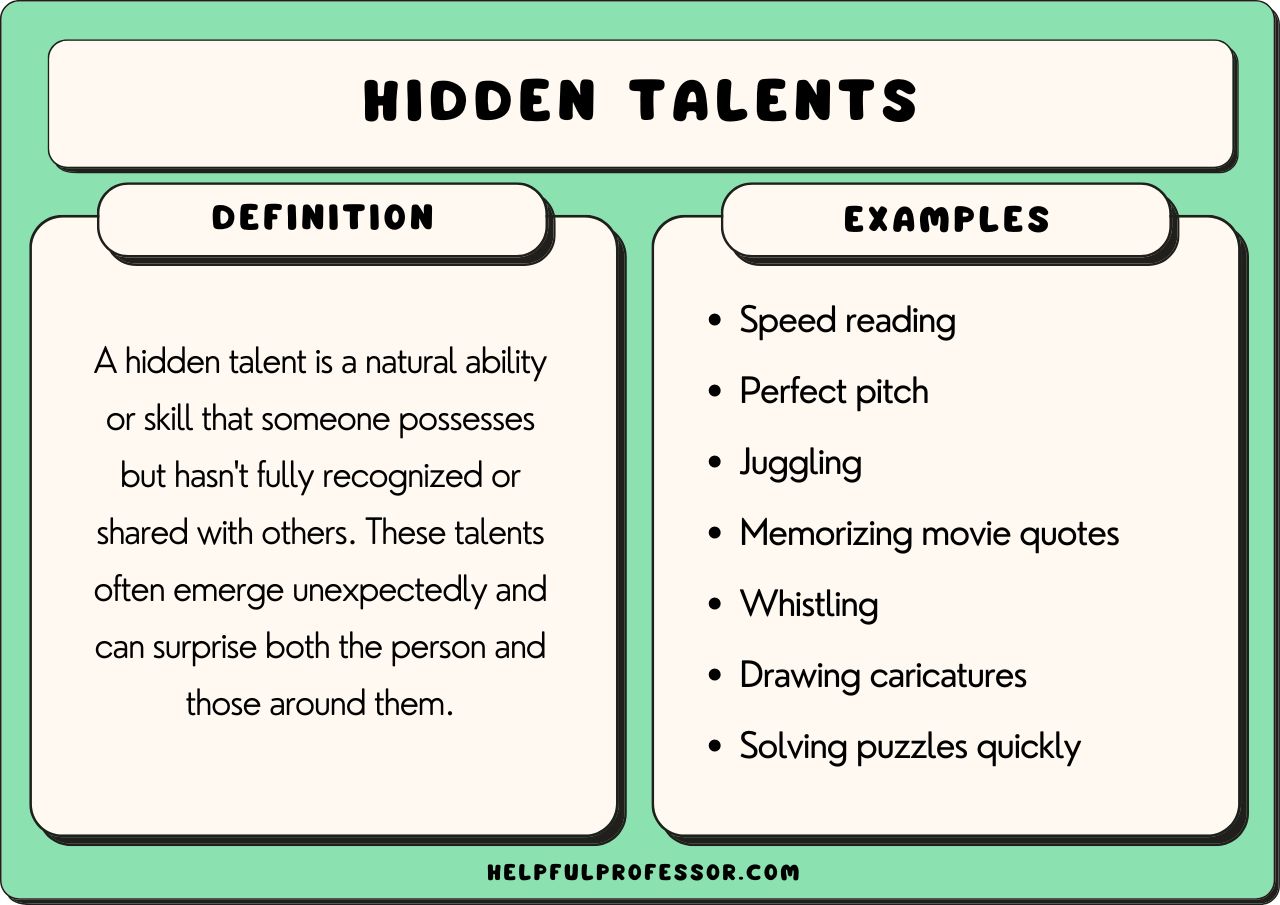
    A hidden talent is a skill or ability that you might have that isn’t known to many people, perhaps not even family or friends.

    It’s often something people don’t expect from you because you haven’t had the opportunity to reveal it. As a result, your hidden talent might surprise people around you!

    Hidden talents can range from artistic abilities to technical skills, or even unique problem-solving approaches that haven’t been shared with others. Don’t underestimate yourself – think about the things you’re good at, which you might not get credit for yet! Let’s explore some examples.

    Hidden Talents Examples

    a man showing off his hidden talent of sculpture making

    1. Pattern Recognition

    Many people have a knack for spotting patterns in data, behaviors, or their surroundings without realizing it. This talent allows individuals to quickly identify trends, solve problems, or predict outcomes. People with this ability often excel in fields like data analysis, art, or even storytelling, where seeing connections is key.

    2. Empathic Listening

    Some individuals are naturally good at understanding not just what someone is saying but also the emotions behind it. This goes beyond active listening—it’s about picking up on subtle cues like tone, body language, and unspoken emotions. Empathic listeners make others feel heard and validated, often becoming the go-to person for advice.

    3. Intuitive Problem-Solving

    Some people solve problems instinctively without knowing the formal processes behind it. They can think on their feet, using creativity and common sense to fix issues quickly. This talent often emerges in situations where there’s no clear solution, and their gut feeling leads them to the right answer.

    4. Spatial Awareness

    The ability to visualize how objects or shapes will fit into a space is a rare but valuable skill. It can be applied to fields like interior design, architecture, or even packing a car. People with strong spatial awareness can mentally manipulate objects and foresee how they’ll function in a given area.

    5. Storytelling

    Not everyone realizes they have the ability to capture an audience’s attention with a story, but this hidden talent is more common than we think. It’s not just about telling a tale; it’s about structuring information in a way that’s engaging, whether in writing, speech, or visuals.

    6. Emotional Regulation

    Some people have a natural ability to remain calm in stressful situations, managing their emotions effectively without suppressing them. This talent allows them to navigate difficult circumstances without becoming overwhelmed, making them great leaders, mediators, or caregivers.

    7. Networking Without Effort

    While many struggle with networking, some people effortlessly build connections wherever they go. This talent isn’t just about being extroverted—it’s about creating meaningful interactions and making people feel comfortable. These individuals excel in collaborative environments, even if they don’t realize the strength of their interpersonal skills.

    Hidden Talents of Women

    woman multitasking

    1. Multitasking

    Many women are naturally adept at juggling multiple responsibilities simultaneously, from work tasks to managing household duties, social commitments, and family care. This ability to balance various roles often goes unnoticed because it’s seen as part of the routine, but it’s a significant hidden talent that requires focus and organization.

    Learn more about multitasking here

    2. Emotional Intelligence

    Women often possess strong emotional intelligence, being highly attuned to the emotions of others and navigating social interactions with empathy. This ability allows them to manage relationships effectively, diffuse conflicts, and offer emotional support, making them excellent friends, partners, and leaders.

    3. Community Building

    Women frequently excel in fostering community and bringing people together. Whether it’s organizing social groups, advocating for local causes, or building strong support networks, women have a hidden talent for connecting individuals and cultivating a sense of belonging and solidarity.

    4. Adaptability

    Women often demonstrate a remarkable ability to adapt to changing circumstances, whether it’s shifting between personal and professional roles or responding to unexpected life challenges. This hidden talent allows them to remain resilient and flexible, making them effective problem-solvers in dynamic environments.

    5. Non-Verbal Communication

    Many women have a keen sense of non-verbal communication, such as reading body language, facial expressions, and tone. This skill often gives them an intuitive understanding of what others are feeling or thinking without explicit communication, which can be particularly useful in navigating social and professional situations.

    See more: Non-verbal Communication Examples

    6. Detail-Oriented Organization

    Women often have an eye for detail, whether in managing tasks, organizing events, or handling complex projects. This hidden talent ensures that things run smoothly, even when juggling a lot of moving parts. Their attention to detail ensures nothing is overlooked, which can be vital in both personal and professional life.

    7. Conflict Mediation

    Women often excel at mediating conflicts, whether between friends, family members, or colleagues. Their talent for empathizing with multiple perspectives and finding common ground allows them to diffuse tense situations and encourage constructive dialogue, often without drawing attention to their role in resolving issues.

    Hidden Talents for Students

    student gets A+ on essay

    1. Time Management

    Many students develop a hidden talent for managing their time effectively, balancing school, extracurricular activities, part-time jobs, and social life. Even if they feel overwhelmed, their ability to prioritize tasks and meet deadlines is a valuable skill that often goes unnoticed.

    2. Adaptability to New Technologies

    Students today have a natural talent for quickly adapting to new technologies and digital platforms. Whether it’s learning new software, utilizing online tools for schoolwork, or staying connected through social media, their tech-savviness allows them to navigate digital environments effortlessly.

    3. Peer Support

    Many students have a hidden talent for providing emotional and academic support to their peers. Whether it’s tutoring a friend, offering advice, or simply being a good listener, students often build strong support networks without realizing the importance of their role in others’ success.

    4. Creative Problem-Solving

    Students frequently use creative problem-solving skills in projects, group work, or personal challenges. Whether it’s figuring out how to study more efficiently or finding innovative ways to complete assignments, their ability to think outside the box often goes unnoticed.

    5. Self-Motivation

    Many students develop the ability to self-motivate, pushing themselves to achieve goals without external pressure. This hidden talent comes into play when studying for exams, completing assignments, or pursuing personal projects, even when faced with distractions or fatigue.

    6. Collaboration

    Working in group projects, sports teams, or clubs, students often hone their ability to collaborate with others. This hidden talent helps them navigate different personalities and work styles, improving their communication and teamwork skills without being explicitly recognized.

    7. Resilience

    The ability to bounce back from failures or setbacks is a hidden talent that many students possess. Whether it’s dealing with a tough exam, rejection from a club, or personal challenges, their resilience helps them keep going and adapt to difficult situations. This quality is often overlooked but is crucial for long-term success.

    Famous People’s Unusual Talents

    1. Steve Jobs – Calligraphy

    Before he became a tech icon, Steve Jobs took a calligraphy course in college, which he credited for influencing the aesthetic sense behind Apple’s typography and design. His hidden talent in understanding typefaces and design helped Apple stand out with sleek and user-friendly interfaces, from the early Mac computers to the iPhone.

    2. Angelina Jolie – Knife Throwing

    Angelina Jolie, known for her acting and humanitarian work, has a hidden talent for knife throwing. She developed this skill while training for action roles and has mentioned it in interviews, even showcasing it in some of her films. This surprising ability adds to her persona as someone who can embody fierce, action-packed roles effortlessly.

    3. Neil deGrasse Tyson – Ballroom Dancing

    Astrophysicist Neil deGrasse Tyson is well-known for making science accessible to the public, but his hidden talent is ballroom dancing. In college, he was a competitive dancer, excelling in multiple styles, including Latin and standard ballroom. His agility and rhythm on the dance floor contrast with his intellectual image.

    4. Margaret Thatcher – Chemistry

    The “Iron Lady” of British politics, Margaret Thatcher, had a background in chemistry. Before becoming the UK’s Prime Minister, she worked as a research chemist, contributing to the development of soft-serve ice cream. Her hidden talent in science was largely overshadowed by her political career, but it reveals a sharp analytical mind.

    5. Harrison Ford – Carpentry

    Before landing his role as Han Solo in Star Wars, Harrison Ford was a skilled carpenter. His hidden talent for woodworking led him to build furniture for famous directors and actors, which indirectly helped him network in Hollywood. His craftsmanship reflects his practical and hands-on nature outside of acting.

    6. Bob Dylan – Iron Sculpting

    Aside from his iconic music career, Bob Dylan has a hidden talent for sculpting with iron. He’s an accomplished metalworker and has showcased his sculptures in exhibitions. This talent allows him to express his creativity in a different medium, showing another side of his artistic persona.

    7. Serena Williams – Nail Art

    Tennis star Serena Williams has a lesser-known passion for nail art. She is a certified nail technician and has expressed her love for doing nails as a way to unwind. Her hidden talent showcases her meticulous attention to detail, which likely mirrors the focus and precision she brings to the tennis court.

    The Full List of 101 Hidden Talents

    Conclusion

    Your hidden skill is yours and yours alone! It can be anything at all, but remember, be proud of your unique and deep down hidden abilities that others might not know about. Pick your moment to reveal it in a way that might surprise and delight your friends! For more about talents, read my full guide on what is a talent?


    Chris

    Dr. Chris Drew is the founder of the Helpful Professor. He holds a PhD in education and has published over 20 articles in scholarly journals. He is the former editor of the Journal of Learning Development in Higher Education. [Image Descriptor: Photo of Chris]

    Source link

  • How to Implement Diagnostic Assessment Examples

    How to Implement Diagnostic Assessment Examples

    Diagnostic assessment examples can help ground the concepts of diagnostic assessment in education. Plus, these examples can be an effective tool in gauging student progress and comprehension of course concepts. 

    What is Diagnostic Assessment in Education?

    An essential part of course planning for instructors to consider is how to gauge student understanding of course concepts. At the beginning of each academic term, it’s important to consider the upcoming curriculum, and how to best assess students.

    Diagnostic assessment typically takes place at the start of a semester to evaluate a student’s current level of knowledge and skills and their strengths and weaknesses on a particular topic.

    Similar to ipsative assessments, where professors examine students’ prior work in order to assess their current knowledge and abilities, diagnostic assessments are a type of “assessment as learning.” This is distinct from “assessments of learning” or “assessments for learning.”

    Distinction Between Different Types of Assessments

    Assessment for learning, also known as formative assessments, make use of information about student progress to improve and support student learning and guide instructional strategies. They are generally instructor-driven but are for student and instructor use. Assessments for learning can occur throughout the teaching and learning process, using a variety of platforms and tools. They engage instructors in providing differentiated instruction and provide feedback to students to enhance their learning.

    Assessment as learning (formative assessment) involves active student reflection on learning, monitoring of their own progress by supporting students to critically analyze and evaluate their own learning. Contrarily, they are student-driven and occur throughout the learning process. 

    Assessment of learning (summative assessment) involves evidence of student learning to make judgments about student progress. They provide instructors with the opportunity to report evidence of meeting course objectives and typically occur at the end of a learning cycle using a variety of tools. The evaluation compares assessment information against criteria based on curriculum outcomes for the purpose of communicating to students about student progress and making informed decisions about the teaching and learning process.

    What are Diagnostic Assessments Used For?

    Students may write examples of diagnostic assessments to help professors gain insight into their existing awareness and capabilities both preceding and following instruction. As such, a diagnostic evaluation can be either:

    • A pre-course diagnostic assessment
    • A post-course diagnostic assessment

    Upon completion of a post-course diagnostic assessment, a professor can compare it against the student’s pre-course diagnostic assessment for that same course and semester in order to identify possible improvements in various specific areas. Professors can then use this information to adjust and adapt their curricula to better meet the needs of future students.

    Professors can utilize diagnostic assessment in education to plan individualized learning experiences for each student that provide both efficient and meaningful instruction.

    Examples of Diagnostic Assessment Tools and Technologies

    There are many different educational tools and technologies that enable professors and students to get instant results from learning, including Top Hat, Socrative, Kahoot, Quizziz, Mentimeter and Quizlet. Within each of these tools and technologies are several different examples of diagnostic assessments you can apply to various disciplines.

    Diagnostic Assessment Examples

    Diagnostic assessments can be conducted in many different ways, including as sets of written questions, such as in short answer or multiple choice form, as well as reflection exercises, long answer questions and creative projects.

    In courses containing group work, useful types of diagnostic assessments may include self-assessments in which group members each rate themselves based on various guidelines. The group then collects specific samples of each member’s prior work to understand the member’s mindset that led that member to give him or herself that rating.

    Different types of diagnostic assessments include:

    • Anticipation guides
    • Conference/interview
    • Formal assessment
    • Gap-closing
    • Graffiti walls
    • Journals
    • KWL
    • Mind maps
    • Parallel activity
    • Performance tasks
    • Posters
    • Quiz/test
    • Student surveys
    • Word splash

    Below, we share examples of how diagnostic assessments can be implemented in different disciplines, as well as easy-to-use tools that streamline the assessment design process for instructors.

    Diagnostic Assessment Examples for Physics

    In physics courses, instructors issue a set of conceptual questions to students at the start of the semester in order to assess the students’ current understanding of the fundamentals of physics.

    In certain educational disciplines, standardized diagnostic assessment examples have been developed that instructors can use for any course within that discipline. In physics, one of the most commonly used examples of diagnostic assessment is the Force Concept Inventory, which contains question sets about concepts, like gravity, velocity, mass and force, which are typically taught in a basic first-semester Newtonian physics course.

    Tools for Diagnostic Assessments in Physics

    Physics instructors can use Top Hat’s Polls and Quizzes feature to design diagnostic evaluations that engage students effectively. Use polls to demonstrate student understanding and see which course concepts may need further review. Frequent quizzes can be used to help students challenge themselves.

    Top Hat’s surveys and polls tools include checkpoints to help break lectures up into more manageable chunks, prompt discussions and motivate students to apply what they learn. Top Hat’s in-class polls and quizzes are multimedia-rich, helping professors engage students fully in the learning and assessment process. Examples of diagnostic assessment in education using these tools include click-on-target, word answer and word matching.

    Diagnostic Assessment Examples for Psychology

    The professor may conduct a survey in order to evaluate assumptions students currently hold about concepts like the nature of the mind versus human behavior.

    In psychology or sociology courses dealing with controversial or sensitive topics, instructors may conduct student surveys to allow learners to pose questions or potentially controversial viewpoints anonymously, allowing for more open classroom discussions and more thorough understandings of preconceived notions students might hold. 

    Examples of Diagnostic Assessment in Psychology Tools

    Socrative is a quiz and assessment website that lets instructors design interactive quizzes particularly suitable for complex topics in psychology, like bio-psychology, criminological psychology, statistics and research methods.

    D2L lets instructors create several types of diagnostic assessments for psychology, including quizzes, surveys and self-assessments.

    Diagnostic Assessment Examples for Creative and Fine Arts

    Instructors can also use pre-assessment and self-assessment tests to help better direct their effort to inspire their students to engage with class material by seeing what students already comprehend about the complexities of the creative process. They can also collect initial portfolios to judge fine-arts students’ artistic abilities while simultaneously conveying the course objectives.

    Examples of Diagnostic Assessment in Education in Creative Arts and Fine Arts Tools

    Besides allowing professors to create customized short-form quizzes, Canvas Quizzes also contains a special “Assignments” feature that lets students upload a file for assessment. This can include a piece of creative written, illustrated or even audio/visual material. That flexibility of media allows professors to examine a broader range of skills and competencies than can be assessed through simple question and answer assessments alone.

    Diagnostic Assessment Examples for STEM courses

    More than other subjects, math can create a particularly large amount of anxiety in students who struggle with the subject, yet it can be significantly more difficult for instructors to target math interventions for students. If math anxiety and issues with math aren’t properly identified and targeted soon enough, however, they could easily escalate into much more deeply-rooted learning problems even more challenging for students to overcome.

    Diagnostic assessments help professors gauge students’ current level of competency in complex problem-solving in a number of prerequisite areas before beginning to teach them concepts intended to build upon that knowledge. This may include basic algebraic manipulations, cell cycles, solving equations and chemical equations. By implementing data-driven approaches, professors can specifically examine how students think about math and what strategies and skills they bring with them to approach a math problem.

    An effective diagnostic assessment for math typically examines only one skill or set of skills at a time. That way, professors can more easily identify areas and concepts where students may be in need of further review.

    Tools for Diagnostic Assessments in STEM courses

    Top Hat offers a suite of secure tests and exam features that allow instructors to create diagnostic assessments for both in-person and online learning settings with equal ease and efficiency. Whether remote and proctored diagnostic assessment for math or on-premise and open book diagnostic assessment for math, Top Hat’s secure tests and exams feature lets you choose from 14 different question types or access the Top Hat Catalog and select from a variety of pre-made test banks for mathematics diagnostic assessment.

    For online testing, you can verify identities and devices, monitor activity and receive reports flagging irregular behavior. You can create, deploy and receive exams all in one place and have the exams auto-graded. Helping make mathematics diagnostic assessment easier, you can also customize question types and assignment settings and you can let students upload mathematics diagnostic assessment projects as PDF files, spreadsheets and slide presentations.

    Key Examples of Diagnostic Assessments

    Unit Pretests

    Unit pretests are a type of diagnostic evaluation tool that does not involve students receiving any grades. Instead, unit pretests are a diagnostic test in education example of how to determine a student’s awareness of a certain unit or module of learning within a larger course before proceeding to learn it. This type of diagnostic test in education example may include multiple-choice or fill-in-the-blank questions, as opposed to those of a more open-ended nature. For best use of these examples of a diagnostic test in education, unit pretests are most effective when concentrated on the core skill or concept for students to understand rather than the finer minutiae of the subject matter.

    Exit Tickets

    Exit tickets are a straightforward example of how to most effectively gauge student understanding after teaching a lesson, when you’re looking to see how effectively your students have met the objectives for that lesson or unit.

    Instructors ask students a simple question relating to a key concept taught in the lesson they’ve just concluded. Students jot down their answers on a “ticket” they deliver to the instructor upon their “exit” from the classroom. This allows instructors to adapt and adjust their curriculum for the following lesson or semester to align actual exit ticket results more closely with desired outcomes.

    Conclusion

    Diagnostic assessment examples like these provide instructors insights that help them to better create curricula customized to their students’ current level of knowledge, skills, strengths and weaknesses and, thereby, to better aid their students in achieving the objectives of the course. Likewise, professors can apply examples of diagnostic assessment in education like these after teaching a lesson or course in order to determine how well the objectives for that lesson or course were met and, based on that information, better strategize and adapt the curriculum for the next lesson or course.

    As these diagnostic assessment examples show, diagnostic evaluations are generally informal and simple to use. They typically require no high-level training to create and don’t require following any standardized protocol. Instructors can alter or more finely tune their assessment methods any time they wish. Instructors can share what they discover through the various types of diagnostic assessments they use with their peers quickly and easily. These examples of diagnostic tests in education and others like them work for any discipline and, most importantly, once applied with the right tools and technologies, diagnostic assessments in education show fast and efficient results.

    Tagged as:

    ,

    Source link

  • Three Examples of Interactive Syllabi (Designed with Open Educational Resources from a University Library)

    Three Examples of Interactive Syllabi (Designed with Open Educational Resources from a University Library)

    Last week, I had the opportunity to present at the Open Education Conference. It was virtual and the content was definitely interesting! 

    My session was held on Monday, October 18 • 3:45pm – 4:25pm and it was titled, “Designing an Interactive OER Syllabus as an Equitable Practice”. 

    During the session, I talked about my interactive OER syllabus and I had the opportunity to network with some amazing colleagues. One of the amazing faculty members from my institution attended as well – shout out to Dr. Trina Geye!

    I am passionate about open educational resources and I like fact that OERs can save students money. This is very important for our Texas college students. Open Educational Resources are equitable resources!

    Here are the notes from the presentation:

    I know some of you are wondering WHY I incorporate OERs instead of textbooks for my courses…. This is why…

    • Day-One Access/No-Cost (Equitable)
    • Easier for the Student
    • Mobile Access
    • Linkable to Canvas
    • Easier for the Professor (Updates/Changes)

    I always emphasize partnering with the library to find additional educational resources. Here are some starting points!

    • Podcast Links
    • Guides from Prior Semesters (Student Approved Work)
    • YouTube Videos
    • Database Article Links
    • E-Books
    • Lib Guides

    As you transition from semester-to-semester, I always recommend this checklist for “refreshing” your OER syllabus:

    • Check Your Links
    • Check for More Relevant Resources
    • Develop a Pre and Post Semester Checklist
    • Integrate Your OER Endeavors with Research

    In fact, here’s a copy of my OER syllabi:

    I also design a syllabus and Canvas tour for my students to help them become more familiar with the content.

    Students in my classes (both graduate and undergraduate students) REALLY enjoy the free resources and they are also “more up-to-date” than a traditional textbook.

    Have any questions about OERs? Contact me.

    ***

    Enjoy!

    Check out my book – Retaining College Students Using Technology: A Guidebook for Student Affairs and Academic Affairs Professionals.

    Remember to order copies for your team as well!

    Thanks for visiting! 


    Sincerely,


    Dr. Jennifer T. Edwards
    Professor of Communication

    Executive Director of the Texas Social Media Research Institute & Rural Communication Institute

    Source link