

In this replay episode of the Education Exchange, Robert Enlow, the President and CEO of EdChoice, joins Paul E. Peterson to discuss the tax credit scholarship provision that was part of budget reconciliation bill, which was passed by Congress and signed into law on July 4, 2025.
Tag: exchange
-
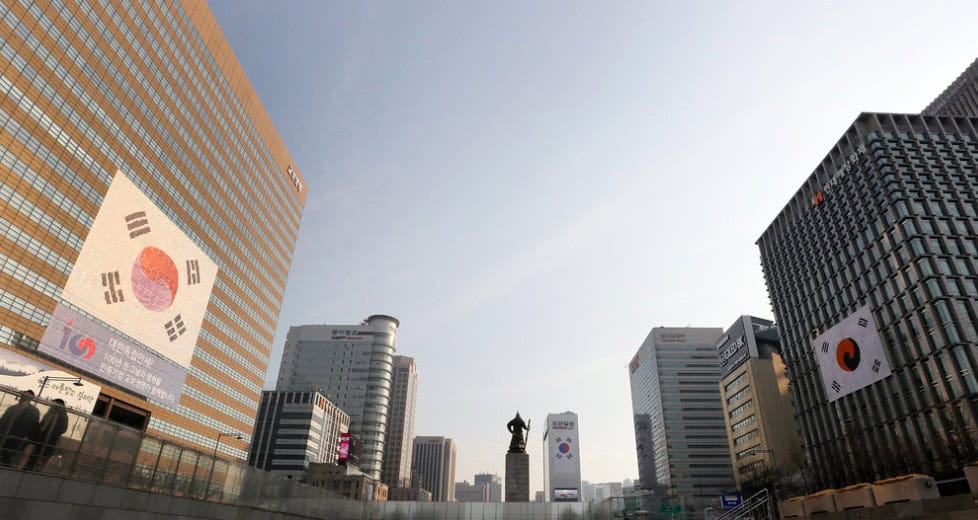
Fulbright at 75, Reform at 30: recasting US-Korea educational exchange
This year marks the 75th anniversary of the Fulbright Program in Korea, one of the oldest and most robust binational educational exchanges in the world.
Coinciding with this milestone is the 30th anniversary of South Korea’s landmark 5.31 Education Reform – a policy blueprint that sought to transform the nation’s education system into a more open and globally competitive ecosystem.
The Fulbright legacy in Korea illustrates how long-term bilateral cooperation has scaffolded national education strategies and fostered intellectual diplomacy across generations.
The strategic alliance between the Republic of Korea and the United States has been underpinned by an enduring educational partnership. Education has always been more than a soft-power tool in this relationship; it has served as a central pillar for shared values, talent development, policy learning, and institutional co-evolution.
At a time when the Indo-Pacific region is undergoing profound geopolitical, technological, and demographic shifts, reaffirming the educational ties between Korea and the US is a strategic imperative.
Fulbright Korea: peacebuilding through knowledge
Established through a 1950 agreement, Korea became one of the first countries to join the Fulbright Program, though the Korean War delayed its launch until 1960. Revised agreements in 1963 and 1972 created the Korean-American Educational Commission (KAEC) and introduced joint funding, making Korea one of 49 nations to co-finance the programme with the US.
Since then, Korea has often matched or exceeded US contributions. Today, KAEC awards over 200 grants annually to Korean and American participants, supporting a global network of Fulbright scholars and more than 7,600 Korean alumni across diverse fields.
Fulbright Korea exemplifies educational diplomacy at its best. Graduate fellowships support future policymakers and scientists, while English teaching assistants serve across Korea’s provinces, enhancing not just language acquisition but also cross-cultural understanding.
These initiatives echo the lifelong learning ambitions embedded in Korea’s broader educational reforms, showing how international exchange and domestic innovation can reinforce each other. These long-standing programs have strengthened Korea’s education system while fostering mutual understanding, helping to build enduring people-to-people ties that support bilateral cooperation.
Fulbright Korea exemplifies educational diplomacy at its best
The US also supports student mobility and academic advising in Korea through EducationUSA, housed at KAEC, which offers Korean students up-to-date information on American higher education. Korea continues to rank among the top sending countries of international students to the US, with over 43,000 enrolled in 2023/24, making it the third-largest sender.
While the Ministry of Education’s 2024 data reports 3,179 American students enrolled in Korean higher education, US study abroad figures suggest that nearly twice as many participate in programmes based in Korea. The US has also been recognised as a key partner in Korea’s Study Korea 300K Project, which seeks to host 300,000 international students by 2027.
Institutional transformation and globalisation
The 5.31 Education Reform, declared in 1995 amidst the waves of globalisation, aimed to modernise Korea’s education system through two core principles: globalisation and informatisation.
These pillars reshaped how universities operate, allowing for greater curricular flexibility, the introduction of credit banking and recognition of prior learning, and the rapid adoption of digital tools. Competitive government initiatives like Brain Korea 21 and, later, the University Restructuring Plan incentivised research output and global benchmarking.
Despite uneven implementation, the reform not only accelerated the internationalisation of Korean higher education but also deepened its ties with US institutions. By 2008/09, over 75,000 Korean students were enrolled in US higher education, placing Korea among the top sending countries globally.
Given its relatively small population, this figure represented the highest per capita rate of US-bound students in the world. At the same time, Korea became an increasingly attractive destination for American students, with study abroad numbers growing substantially over the past two decades, growing from 2,062 in 2008/09 to 5,909 in 2022/23.
Even before the 5.31 reform, US higher education institutions played a pivotal role. In the decades following the Korean War, American graduate programs served as critical training grounds for a generation of Korean scholars. These individuals returned not as passive recipients or brokers of foreign models but as active knowledge creators who adapted global ideas to local contexts, built research infrastructure, and mentored emerging academics.
This process of intellectual circulation laid the groundwork for Korea’s ascent in global university rankings and research productivity. Foundational initiatives such as the Minnesota Project and the US-supported establishment of KAIST in 1971 were emblematic of this transformation.
Transnational education and role of program providers
Transnational education has added new depth to Korea-US educational co-operation. The Incheon Global Campus, which hosts the Korean branches of five US universities, enables local students to earn US degrees without leaving the country.
These institutions bring American accreditation standards and pedagogical approaches into the Korean context, serving as important centres for cross-cultural learning and academic collaboration. Increasingly, they also function as supportive platforms for study abroad, facilitating intercultural engagement. Modest but meaningful forms of faculty and scholarly exchange further enrich these settings.
Not-for-profit organisations such as IES Abroad have also become indispensable facilitators of educational exchange. Marking its 75th anniversary in 2025 as well, IES Abroad shares a parallel legacy with Fulbright Korea in advancing international education.
Its recently established Seoul Center has already hosted over 220 US students, exemplifying the growing role of study abroad programme providers in fostering engagement with Korean society. By offering for-credit academic programmes, cultural and language immersion, and hands-on learning opportunities, these providers play a crucial role in sustaining the depth and accessibility of bilateral educational exchange.
Toward mutuality and innovation
Together, these developments have yielded significant accomplishments: a thriving academic pipeline, robust knowledge circulation, improved global rankings for Korean institutions, and a steady increase in intercultural literacy among students from both countries. Korean graduates with US degrees now occupy leadership roles in government, academia, and business. American students return with deeper cultural understanding, with many pursuing careers in diplomacy, education, or East Asia-focused industries.
However, challenges remain. Some observers have raised concerns about the asymmetrical flow of talent, particularly during earlier decades when “brain drain” seemed more plausible than circulation.
Others caution against over-Americanisation in curricula and institutional culture. Korea’s demographic decline and the rising cost of US education now pose additional obstacles to sustained exchange. National policy shifts, ideological realignments, and increasing public scrutiny of foreign involvement in higher education further complicate the outlook.
Reimagining educational diplomacy
The pressing challenges highlight the importance of rearticulating a shared vision for the future, particularly as the direction of bilateral commitments established under previous administrations continues to evolve.
Mutual investment in scholarship funds, stronger collaboration among diverse stakeholders within the broader international education field, more accessible hybrid learning models, and enhanced joint governance of transnational campuses can all help to future-proof the Korea-US educational partnership.
In 2025, as we commemorate 75 years of Fulbright Korea and IES Abroad, and reflect on 30 years since Korea’s 5.31 reform, it becomes evident that international exchange and domestic transformation are not separate trajectories but mutually reinforcing forces. Korea-US educational cooperation has evolved from aid-driven assistance to a platform for peer-to-peer growth and innovation.
If approached strategically, the next chapter of this relationship can not only address pressing policy challenges but also reimagine the purpose of education in a world increasingly defined by brittleness, anxiety, nonlinearity, and incomprehensibility.
-

State Department Unveils Student and Exchange Visitor Visa Social Media Vetting Guidance – CUPA-HR
by CUPA-HR | June 24, 2025
On June 18, the Department of State issued a cable to all U.S. diplomatic and consular posts formally expanding the screening and vetting process for applicants of F, M and J (FMJ) nonimmigrant visas. The State Department guidance resumes FMJ appointment scheduling after a previous announcement from the agency paused all student visa interviews as they prepared for the new social media screening and vetting guidance.
Background
At the end of May, the State Department announced that U.S. embassies and consular sections were pausing new student visa interviews as they awaited further guidance on new social media screening and vetting requirements. CUPA-HR joined the American Council on Education and other higher education associations on a letter to Secretary of State Marco Rubio requesting the agency quickly implement the new vetting measures to ensure new student visas could be efficiently processed before the 2025-2026 academic year. No further guidance was publicly announced between the announced pausing of student visa interviews and the cable sent out to all diplomatic and consular posts.
New Screening and Vetting Guidance
The cable directs consular sections to resume scheduling FMJ appointments after implementing the new vetting procedures. The guidance requires officers to conduct “a comprehensive and thorough vetting of all FMJ applicants, including online presence, to identify applicants who bear hostile attitudes toward our citizens, culture, government, institutions, or founding principles; who advocate for, aid, or support designated foreign terrorists and other threats to U.S. national security; or who perpetrate unlawful antisemitic harassment or violence.” The posts are directed to implement the new guidance within five business days.
As explained in the cable, consular officers are directed to conduct intake and interviews in accordance with standard procedures, but once an FMJ applicant is otherwise eligible for the requested nonimmigrant status, officers must temporarily refuse the case under Section 221(g) of the Immigration and Nationality Act (INA). After refusing the case, officers must request the applicant set all social media accounts to “public,” after which the officer must examine “the applicant’s entire online presence — not just social media activity — using any appropriate search engines or other online resources.”
The new vetting procedures could limit the consular officers’ ability to process student visa applications quickly and efficiently as the cable also mentions that consular sections should “consider the effect of this guidance on workload” when resuming the scheduling of FMJ appointments. Even with these concerns, the cable does request expedited appointments for certain FMJs, including J-1 physicians and F-1 students seeking to study at U.S. institutions where the international student body constitutes 15 percent or less of the total student population.
While much of the advocacy from interested stakeholders on this issue revolves around students, individuals seeking J-1 visas to participate in cultural and educational exchange programs to conduct research or teach at institutions could be subject to an enhanced level of scrutiny. CUPA-HR will continue to monitor for updates related to the FMJ vetting processes.
-
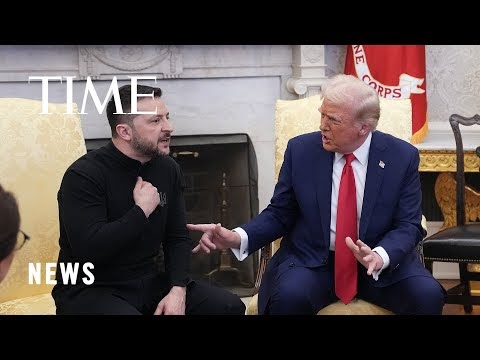
After Heated Oval Office Exchange, Trump Ends Pivotal Meeting With Zelensky Early (Time)
Ukraine President Volodymyr Zelensky wouldn’t concede the point. A tense Oval Office meeting Friday that was supposed to end in Ukraine agreeing to share mining resources with the U.S. devolved into a heated argument as President Donald Trump and Vice President J.D. Vance insisted Ukraine should express more gratitude for U.S. support and agree to a ceasefire with Russia, even without clear security guarantees from the U.S.
“You don’t have the cards right now,” Trump told Zelensky, as the two interrupted each other during a forceful exchange in front of TV cameras. -

Can knowledge exchange fix a broken economy?
There’s always a challenge in trying to describe knowledge exchange, how it’s funded, why it’s worth worrying about, and what it actually does to the economy.
Mechanisms
The default is to talk about its underpinning mechanisms. The way that money goes to universities, their partners and then circulates into the real economy, and then hopefully something good happens. The problem with this approach is that outside of experts and hardy enthusiasts like me this approach is, well, rather dull.
And knowledge exchange is a less than glamorous name for some of the most important work universities do. ESRC, one of UKRI’s funding councils, has a rather elegant way of describing it:
The Economic and Social Research Council (ESRC) is committed to encouraging collaboration between researchers and businesses, policymakers, the public and third sector organisations (for example charities and voluntary groups). This can create mutual benefits and contribute to positive economic and social impacts outside academia, for example through changes to policy and practice or new products and services created by commercialising research. Two-way interactions of this type are often collectively referred to as knowledge exchange. This is an umbrella term that covers a wide range of activities researchers might engage in, including policy engagement, public engagement, commercialisation and business engagement.
A less elegant way is to say that universities working together with other organisations can make the economy and society stronger. It is not a dry technocratic thing but the very way in which the wonderful things that are produced in universities become useful. Great ideas without an audience are interesting but fruitless. An expectant audience with no great ideas are bound for disappointment.
This means that there must be both the conditions for useful ideas to be produced and the conditions for organisations to make use of them. Research England, another funding body of UKRI, funds knowledge exchange through the Higher Education Innovation Fund (HEIF) and the Connecting Capability Fund (CCF). While HEIF is a more general knowledge exchange fund the CCF is focussed on the commercialisation of research with business. These funds are small compared to the overall research funding pots. HEIF is a formula based fund of £260m compared to an overall UKRI budget of over £8bn.
The key question isn’t whether knowledge exchange is a good thing. It self evidently is. But whether the intervention by funders is producing bigger impacts than would naturally happen through universities working with businesses, policy makers, and other groups. After all, universities would still benefit from equity in spin-outs and bask in the warm glow of civic participation even if they weren’t supported to do so.
Reports
UKRI has brought out three new reports that look at knowledge exchange funding.
The first report is an evaluation of HEIF carried out by Tomas Coates Ulrichsen. The part which UKRI will be most proud of, and should definitely cause them to consider whether their funding is enough, is that every £1 invested in HEIF produces £14.8 return on investment if you crowd in actual and estimated external impacts. Perhaps even more impressively the report also suggests that “38% of knowledge exchange outputs and incomes would not have happened in the absence of HEIF.” This isn’t activity that is being paid for twice but activity that is actually being created.
However, while this makes the case persuasively for the value of HEIF it’s the summary which gives us a bigger clue into what is going on in the economy. The report notes
The past two decades has seen KE income secured by English HEPs grow significantly in real terms, with KE income 81% higher in 2022/23 than in 2003/04 for HEPs in receipt of HEIF during the period 2017/18 – 2022/23 (the vast majority of HEPs in England). However, what is clear is that this twenty-year period is characterised by two very different decades. While KE income grew strongly – and faster than the economy as a whole – during the first decade, the past ten years has seen this growth largely stagnate. The limited growth in KE income may well reflect the multiple crises and shocks the UK has faced since then, not least with the Covid-19 pandemic, cost of living crisis, and departure from the European Union and the effects of this on R&D with research grants and contracts income to HEPs from European sources declining almost 30% in real terms since the EU referendum in 2016. KE income now appears to track trends in the economy more widely (as measured by the UK’s GDP).
To read the inverse of this is that the wider economy is a constraining factor on the ability of universities to deploy their research for social and economic benefit.
There is perhaps a tacit assumption that if universities produce great and useful research it will lead to great and useful things in the economy and society. This is only true as long as the economy has the absorptive capacity to keep the cycle of knowledge exchange investment which leads to knowledge exchange outputs which supports knowledge exchange income churning.
Help/HEIF
The evaluation of HEIF carried out by PA Consulting is particularly illuminating within this frame. The key findings are that in a changing policy environment HEIF has anchored the sector to make some significant social and economic impacts. It is the flexibility of the fund which has allowed specialisms to develop, the autonomy of the fund has found favourability in the sector, its stability has allowed for long-term partnerships, and a more permissive approach to accountability has allowed providers to demonstrate their value without drowning under administration.
The report is full of examples of how HEIF funding has catalysed wider social and economic activity but the examples have two things in common. The first is that allowing flexibility in the fund means it can be deployed in multiple partners in multiple ways. This means that even where there are wider economic challenges the funding can be tailored to suit the challenges of local economies. The second is that the long-term nature of the fund allows for greater stability within partnerships to withstand adverse economic headwinds.
Together, the two reports point toward HEIF as being successful as it demonstrably supports economic growth but does so through flexibility and provider autonomy linked, to a lesser or greater extent, to national priorities. It’s only a small fund but it is impactful.
Same old SMEs
The final report on CCF by Wellspring again demonstrates a positive return on investment. The programme has led to 200 new spin-outs and supported over 1,500 SMEs. The programme has led to the launch of at least 338 products and services and it is expected more will be launched over time, particularly in high-tech spin-outs.
The obvious albeit incorrect conclusion to draw would be that if each of these interventions induce such strong economic benefits then making the intervention larger would make the economy stronger. In fact, if the economic returns are so strong then the projects could presumably be 10, 100, or 1,000 times bigger, and continue to provide economic return.
Instead, what these reports highlight is that knowledge exchange funding is a product of the wider economy. There is a natural limit to how much activity can take place as there comes a point where the economy is not large enough or dynamic enough to absorb the benefits of universities’ work. In fact, these reports indirectly demonstrate how economies get stuck into a death spiral. Productivity stalls which prevents the absorption of innovative products and services. Without innovative products and services the economy cannot become more productive. And so on.
The benefits these schemes are realising would suggest they are not close to meeting the capacity of the economy and could therefore be much larger. It is also a matter of purpose. The funds are designed on a premise that there is capacity to make use of university work. It is a much harder question to imagine how funding should be designed where it is necessary to restart a broken economy.
The impact of these funds is striking, the reports written about them are convincing, however they open a door to a wider question of whether knowledge exchange funding is big enough, well directed enough, or tooled properly, to fix the UK’s entrenched economic issues including its collapsed productivity.
