For decades, English has dominated the global education ecosystem. While it opened doors for many, it also quietly closed them for millions of learners worldwide who do not speak English fluently. In today’s digital era, however, a powerful shift is underway. Multilingual digital education is emerging as one of the most effective ways to make learning inclusive, accessible, and equitable for students everywhere.
As digital platforms expand, education is no longer limited by geography—but language remains a critical barrier. Addressing this challenge is key to ensuring that digital education truly serves everyone, not just a privileged few.
The Global Language Barrier in Education
Despite the growth of online learning, a large portion of educational content is still delivered primarily in English. This creates obstacles for:
Non-English speakers
First-generation learners
Students from rural or underserved regions
Migrant and refugee communities
Adult learners returning to education
When learners struggle to understand the language of instruction, comprehension drops, confidence weakens, and dropout rates increase. Research consistently shows that students learn more effectively when taught in a language they understand well, especially during foundational learning years.
This is where multilingual digital education becomes transformative.
What Is Multilingual Digital Education?
Multilingual digital education refers to online learning platforms, tools, and content that are available in multiple languages, enabling learners to access the same high-quality education regardless of their primary language.
This includes:
Video lessons with multilingual narration or subtitles
Localized course materials and assessments
AI-powered real-time translation
Voice-based learning in native languages
Digital textbooks adapted for cultural relevance
By removing language as a barrier, digital education becomes more inclusive and learner-centric.
Why Multilingual Learning Matters in the Digital Age
1. Improves Learning Outcomes
Students understand concepts faster and retain knowledge better when learning in their strongest language. Multilingual content reduces cognitive overload caused by language translation in the learner’s mind.
2. Builds Learner Confidence
When students can participate without fear of language mistakes, engagement increases. This leads to better classroom interaction, stronger self-expression, and improved academic performance.
3. Supports Educational Equity
Language-inclusive platforms help bridge the gap between privileged learners and underserved communities, ensuring that access to quality education does not depend on language fluency.
4. Encourages Lifelong Learning
Adults who may have avoided education due to language barriers are more likely to upskill and reskill when learning is available in familiar languages.
The Role of Technology and AI in Multilingual Digital Education
Modern technologies are accelerating the growth of multilingual education globally.
AI and Machine Translation
AI-driven tools now enable accurate content translation, voice-to-text learning, and real-time subtitles—making multilingual delivery scalable and cost-effective.
Adaptive Learning Platforms
These platforms detect learner preferences and automatically deliver content in the most suitable language, improving personalization.
Mobile Learning Apps
Mobile-first platforms offering multilingual support are reaching learners in remote and low-connectivity regions, ensuring education is portable and flexible.
Global Impact of Multilingual Digital Learning
Across continents, multilingual digital education is driving meaningful change:
Higher enrollment and completion rates
Increased learner confidence and participation
Better understanding of technical and vocational skills
Preservation of linguistic and cultural diversity
Education delivered in multiple languages does not reduce global unity—it strengthens it.
Challenges in Implementing Multilingual Education
Despite its benefits, several challenges remain:
Maintaining accuracy and quality across languages
Addressing cultural nuances in learning content
Training educators for multilingual digital delivery
Balancing scalability with local relevance
However, advancements in AI, open educational resources, and global collaboration are rapidly solving these challenges.
The Future of Global Digital Education
The future of education is not English-only—it is inclusive, multilingual, and learner-driven. As digital learning becomes mainstream, platforms that prioritize language accessibility will lead the next generation of education.
Global education organizations, EdTech companies, and institutions are increasingly recognizing that language inclusion is not optional—it is essential.
When students learn in a language they understand, education becomes more than information delivery; it becomes empowerment.
Frequently Asked Questions (FAQs)
Why is multilingual digital education important?
It removes language barriers, improves comprehension, and ensures equitable access to education for non-English speakers worldwide.
Is multilingual education effective online?
Yes. Studies show learners perform better academically and remain more engaged when learning is available in a familiar language.
How does AI support multilingual learning?
AI enables real-time translation, speech recognition, adaptive content delivery, and personalized multilingual learning experiences.
Does multilingual education replace English learning?
No. It supports foundational learning while allowing learners to gradually develop additional language skills, including English.
Conclusion
Multilingual digital education is transforming global learning by breaking language barriers and opening doors for millions of learners worldwide. It ensures that education is not limited by language, geography, or background. As digital platforms expand, embracing language diversity will be essential to building a fair, effective, and truly global education system.
Education should be understood by all, because access to knowledge should never depend on the language someone speaks.
Showcasing the opportunities offered as a nurse generalist has the potential to positively impact the recruitment and retention of nurses for rural communities.
Rural nursing offers a unique and rewarding career path for nurse generalists who are seeking diverse experiences, greater autonomy, and the chance to make a meaningful impact in rural communities. Unlike nurses in urban or specialized settings, nurse generalists in rural areas often provide a wide range of services across the lifespan.
More experience and greater responsibility
One of the most significant opportunities for nurse generalists in rural settings is the breadth of practice. In smaller, rural hospitals or clinics, nurse generalists are often required to work across multiple specialties such as pediatrics, geriatrics, emergency care, medical-surgical nursing, and women’s health, sometimes all within the same shift. This broad exposure allows nurses to build a versatile clinical skill set and develop confidence in managing a wide variety of conditions. For those who thrive on variety and lifelong learning, rural nursing can be deeply satisfying.
Rural healthcare environments also often have fewer healthcare professionals available, which means nurse generalists frequently take on leadership roles and function with a high level of independence. Nurses may be responsible for initial assessments, treatment planning, health education, and follow-up care with less direct oversight from physicians. This autonomy not only builds critical thinking and decision-making skills but also prepares nurse generalists for advanced roles such as nurse practitioner, clinical leader, or rural health administrator.
Connection, creativity, and compensation
One of the most fulfilling aspects of rural nursing is the close connection to the community. Nurse generalists often serve patients they know personally, which fosters trust and long-term relationships. This community integration positions nurses as trusted health advocates, educators, and role models. The ability to see the direct impact of one’s work on individuals, families, and the community provides a unique level of professional and personal satisfaction that is sometimes harder to find in larger, urban settings.
In rural settings, limited resources and workforce shortages often require creative problem-solving and innovation. Nurse generalists are uniquely positioned to influence care models by suggesting process improvements, initiating community health programs, or integrating technology such as telehealth into patient care. Rural healthcare organizations often welcome these innovations, and nurse generalists may find it easier to get involved in policymaking, grant writing, or quality improvement initiatives that have immediate and tangible results.
Due to the challenges of attracting and retaining healthcare professionals in rural areas, many regions also offer incentives for nurse generalists willing to work in underserved locations. These may include loan forgiveness programs, housing stipends, relocation assistance, or sign-on bonuses. Additionally, the rural setting can provide a solid foundation for future advancement, whether through graduate education or leadership roles. The broad experience gained as a rural generalist is highly valued in both rural and urban healthcare systems.
A dynamic and meaningful career
While rural nursing does come with its challenges, such as professional isolation, limited resources, and fewer immediate specialist referrals, many nurse generalists find that these obstacles are outweighed by the deep sense of purpose and professional growth they experience. The need to be resourceful, adaptable, and compassionate often leads to a stronger sense of resilience and a deeper commitment to nursing as a vocation.
For nurse generalists seeking a dynamic and meaningful career, rural nursing presents a wealth of opportunities. It allows for a diverse clinical practice, encourages leadership and autonomy, fosters deep community relationships, and offers avenues for personal and professional growth. Rural nurse generalists not only broaden their own skills and experiences but also contribute significantly to closing the healthcare gap in rural communities.
Credit for prior learning is one strategy colleges and states can employ to expedite adult learners’ progress toward their degrees and promote student success. Past research also shows that students who take advantage of CPL opportunities have higher employment rates and increased earnings after graduation.
But administering CPL can be a challenge, in part because of different departments’ and academic disciplines’ understanding and evaluation of prior experience.
In the most recent episode of Voices of Student Success, host Ashley Mowreader speaks with Colleen Sorensen, Utah Valley University’s director of CPL and student assessment services, about new state legislation requiring credit for prior learning opportunities for students and how her office supports instructors and learners navigating CPL.
An edited version of the podcast appears below.
Colleen Sorensen, director of credit for prior learning and student assessment services
Colleen Sorensen, Utah Valley University
Q: Can you introduce yourself, your work and your institution to our audience?
A: My name is Colleen Sorensen. I’ve been at Utah Valley University located in Orem, Utah, for about 31 years. We’re a pretty large institution; we’re actually the largest in the state of Utah. Our enrollment in fall 2024 was 46,809 students. Now, of that, about 45,000 were undergraduates, just under 1,000 were graduate students, and we actually have a pretty large number of concurrent enrollment students. About 16,000 of our students are working towards adding some college-level work while they’re still in high school, and we’re open enrollment. All of that together makes for a really interesting blend of individuals, from first-generation to returning students to nontraditional who all come together at Utah Valley.
I have the lucky pleasure of working with them in the space of credit for prior learning. I was officially made director [of CPL] in 2022; before that, I’ve been over all of testing services for the institution for about the last 25 years. So I’ve been a part of the credit for prior learning process with exam administration for challenge exams and CLEP and ACT and SAT and standardized assessments and professional licensure assessments. Now I get to work also in the space of making credit for prior learning, instead of it being just a department-run system, to taking that and scaling it and modeling it across the entire institution so that all of our academic departments have access to and support to develop credit for prior learning options.
Q: When you talk about this expansion and scaling of credit for prior learning across the institution, can you share more about how that looks and what that’s meant, in terms of where you started and now the vision moving forward?
A: When I started in this, we had a few areas that were already doing quite a bit of work in this space.
One of the things we value in the state of Utah is service, and so a lot of our students will stop out from college and go serve as missionaries across the world for 18 to 24 months.
During that time, they’re often learning a new language. Then they come back to UVU. Our language department recognized that years ago and put together a credit for prior learning process for those students to earn upwards of 16 credits of language [courses] if they can demonstrate [their skill] through a placement test and a course with a faculty member. If they pass that course, they’ll get up to 16 credits of 1000- to 2000-level language. So that’s been going on for a long time.
In 2019, there was legislation that was passed just before COVID that required all of the public higher ed institutions in the state of Utah to provide credit for prior learning options at a larger scale. So with the pandemic, that kind of put it on the back burner for a while, but in 2022 I started to pick this up as a new assignment.
At first, I met with different department chairs. I don’t know if it was just wrong timing with the pandemic, but it felt like a lot of doors closed to it at that time. But there were a few departments that were like, “Oh, I was one of those nontraditional students. I would like to see more opportunities in this space.”
And so slowly but surely, I started working with a few faculty, a few departments and started building sustainable systems of, how can we assess these students? Because each student is unique in what they bring as an adult learner. It’s not just like, “Let’s open this one program and as long as they have step one, two, three and four, they can award credit.” Each student needs to be looked at very uniquely. So I designed what I call a concierge approach to this process, where students can apply through our credit for prior learning website. We have a small team of students and part-timers and myself who are looking at what the student has provided. We’re prompting them with different things and then we’re reaching out within the academic community at UVU to look at possible matchups for credit for prior learning. So when we started, we only had a few departments that would engage with us, and now up to 75 percent of our academic departments are not just looking at but considering and awarding credit.
This year alone, we’ve awarded almost 6,000 credits to CPL over 1,500 courses. In just six months, we’ve saved students over $1.6 million in tuition. So that’s exciting to me.
Q: You bring up an interesting point with this division of responsibility between your office and then the faculty and the academic role in CPL. We want to ensure that students are actually meeting those learning outcomes and that the credits that we’re awarding them do reflect their experiences. But there can be some tension or a challenge point there when it comes to ensuring that there are these systems set up and making sure that every student is being recognized in the ways that reflect their abilities and their learning.
I wonder if you can talk about building that bridge between your office and these academic departments and how you opened up the conversation to make this a space that’s both trusting but also institutionalized.
A: What’s been really important is for me to establish [is] that I’m here to support academic departments and to ensure that the CPL policy that I’m the steward of is being met, but that the governance happens with the subject matter experts and the departments themselves.
Because the way that the school of business assesses prior learning is going to be very different than the way that dance or the botany lab assesses prior learning. I wanted to make sure that each department chair and subject matter expert understands that they’re in charge of deciding what we assess, how we assess it and when we assess it.
Some departments only look at 4000-level coursework for CPL. Others look at 1000- [and] 2000-level coursework. It’s not my job to tell them how to do that within their area. They’re the ones who know. My job is to support them with [questions such as:] Do we need to bring in a national expert in your area if the department is not feeling confident in doing this yourself? Or to bring in templates for them or trainings for them of how to assess their particular type of coursework?
That’s how I support them and then help them navigate through the whole process so that it’s not left to bureaucracy, red tape of sorts, just to support them all the way through.
Q: CPL can be a very confusing process for the student. Can you talk about how UVU seeks to support students as they navigate the process? One, in understanding that this is available to them and that you can recognize their prior learning, but also, what that process looks like and how they might feel navigating that situation.
A: Some departments have things really well established on their websites. Others do not. And so that’s why we have the CPL office and the CPL website. It’s a basic inquiry; it just asks a few questions to the student of, what are your academic goals? What do you think you might be eligible for and how much involvement do you want from us? Do they want a phone call from one of our CPL concierge support individuals, or do they just want to be sent on their way and take care of it themselves?
We really allow the student to gauge that, but we’re here to support them from inquiry all the way up until the credit is awarded. They can walk into our office, or they can contact us via the website and we’ll help them figure out any part of the process such as, do we just need to connect two individuals together? Do we have a faculty member who might be away and so their request has been sitting in a queue for longer than feels natural or normal to a college student? Or what is the natural process that the department has established?
Some departments will say that they’ll review inquiries during these windows of time and maybe the student didn’t catch that piece of information. We’ll reinforce that for the department to say, “Yes, you’re in the queue. It’s going to get reviewed during XYZ, so just hang tight and if you have any other questions, contact us again.”
We are there to support [students] all the way through. That’s the concierge aspect of it, and we found that to be really valuable, because there’s a lot of moving parts when it comes to credit for prior learning and creative solutions that we might not have thought of.
I’ll get three or four different areas together—I might get an associate dean, an adviser and two subject matter experts in a room together. I’m like, “OK, let’s look at this case. What can we do with what we know and what have we not thought of before? How do we best support the student in their academic goals while still keeping all of our academic rigor required?”
Q: I imagine you play the role of translator sometimes, too—helping the student understand what the department is asking and helping the department understand what the student wants to know—which can be a really needed role. It’s wonderful that you have yourself and your team to help draw those dots and connect the lines and make sure everybody’s working towards the same goal.
A: Yes. I’m setting up working with different departments on, “OK, if they do a challenge exam or they do a portfolio review, can they do a second [attempt]?” There are pros and cons to each, right? We want academic rigor, but also, depending on the area, it’s very contextual per level of course and program.
So for someone who’s going for a very high level of coursework [in CPL], is it a one-time [exam] or do you offer a retake, [giving them] one more time with some feedback, helping the student to be able to speak to the learning outcomes more clearly? I’ve seen departments do it both ways. Some will say, “No, they should either know it or they don’t, or they need to be in the classroom.”
The academic departments will go to their board of trustees and talk about it and have a good conversation of, “How much leeway do we want to give here?” Our policy states that you’re allowed up to one retake or not. Sometimes it works in the benefit [of the student] to have it be an all or nothing. And again, that’s very department and program specific. It’s not my job to tell them what it should or shouldn’t be; they know best.
Q: CPL can be very resource intensive, one, for the institution and the faculty or whoever is assessing the project, and sometimes there’s a fee associated for students. Can you talk about the labor, the time and the resources that go into this work and how you help coordinate that? And how is the institution investing in this work?
A: That is the hottest topic of conversation in this work. We’re a very large institution, the course load of our faculty— Adding this on top of it can feel significant in how much time it takes. This isn’t a quick grading process. To grade a portfolio, or to prepare for an oral interview or to write a challenge exam that needs to be updated on a regular basis, all of that takes faculty time.
At the moment, at our institution, there are small amounts of dollars involved that go back to the department who do the assessments and then the department decides whether they pool that money together or they pay out to their faculty. Often they’ll have a conversation among themselves of what’s the best usage of this and do a collaborative decision. Some it’s to pay the faculty; for others, it’s to help fund something that all of the faculty have agreed to.
Ideally, in our future, we would like to see more fees, smaller out of pocket, less than $100 fees, attached to credit for prior learning assessments. But we don’t have full consensus yet among all ofour leadership, and so that is still to be determined at our institution.
Q: Good luck with that conversation. It’s always fun to enter shared governance conversations, especially when we’re talking about student success and what’s gonna be best for the learner at the end of the day.
As we’re thinking about scaling and institutionalizing CPL across UVU, one thing I wanted to ask about is some of those processes that can be very easy. We’ve talked about language requirements and how students who have come from their missions—that’s a pretty set process and it’s pretty understood and simple to navigate for the student. Are there other processes that you’re looking at or working with departments to streamline how this works and what a student can expect?
A: There’s a few things that we’re doing to help this. One, we’re encouraging every department to have some real estate on their home page, on their website, of CPL options so that students can look very quickly if they’re shopping at two o’clock in the morning and don’t want to wait for a response from one of our team who tend to work more traditional hours. We want websites to be able to cater to that, as well as we want advising conversations to be able to cater to that.
We’re even asking faculty to put CPL options on their syllabi, so that if a student sits down on day one and they’re looking at this course and they’re looking at the topics, they’re looking at the learning outcomes, they’re like, “I already know this.” Wouldn’t it be great to also see, “And here’s a credit for prior learning option that you could challenge this,” that maybe they missed up until this point in advising or on the websites, or maybe they didn’t know to contact the CPL office? The syllabus is also another place of marketing as well as [traditional] marketing, which we attempt to do quite a bit of, that could help the student to recognize that there’s another option here.
Q: If you had to give advice to a peer working in a similar role at a different institution, are there any lessons you’ve learned or insights you would want to pass on in this work and the ways that you’ve been advancing this university goal?
A: Start small, but strategically. Like find a department or a faculty champion who has a clear use case, like a common industry certification or a workforce training pathway and then support them with some tools, some templates, some training. Don’t just tell them, “You got to figure this out.”
Center it on the student experience. Talk with your students, learn what they wish could have happened, because there’s so much that can be done, or that might already be being done. It’s just that this department may not understand what that department is doing.
Something that we did this year for the first time is we hosted a faculty summer institute. It’s a three-week commitment, but it’s one day of being together in person. Faculty had to apply for this, and there were four areas of focus—you needed to have a tangible asset at the end of this. One was to develop a CPL pathway. Another was to embed a credential into a program. Another was experiential learning, and the fourth was a continuing education credit process for those who have finished up and now they just want to add on.
We did offer a stipend to these individuals who were approved to come to this training. We spent the morning in education—we brought in Nan Travers, director of the Center for Leadership in Credential Learning from SUNY Empire State College, who is considered the fairy godmother of all credentialing. She was fabulous—to teach and train our faculty. Then we brought in a statewide person to discuss workforce alignment. Then we had a luncheon and we strategically placed all of the faculty into their area of focus. So seated at my table were faculty all focused on generating a credit for prior learning pathway. We had botany, biotech, psychology, computer science and business accounting. They’re all coming in from different schools within the institution.
We sat together at lunch and then we had an afternoon of working on the projects. So Nan was there, as the expert; she would come around to the tables and discuss things and answer questions. But these faculty got to interact with each other, with people outside of their standard focus, and they loved it. They said, at the end of the day, “I never get to do this. I never get to talk with faculty outside of my own area of focus.” They were passing phone numbers to each other. They were sharing their models and thinking and helping tweak each other’s.
It was such a fun, collaborative experience. And we have 11 new CPL pathways that came out of that one day, and then we gave them another three weeks to work on it. We plan to continue to do that summer after summer. We need funding from our administration to help pay the faculty to do that, but I will advocate to do that again and again. It was so successful.
Q: It’s almost like a CPL incubator, like how they have the student entrepreneurship programs, but for faculty to think about ways to be entrepreneurial in their own field.
A: Yeah and, you know, they said, “Thank you for thinking about me and my needs as the faculty member,” really taking care to be able to answer their questions and help them get over those mental blocks that they were experiencing of, “I don’t know how to address this or this or this.” We took care of all of that that day.
Q: It’s nice to just do it all in one day sometimes, too, right? It’s not an email chain. It’s not a series of meetings—like, we can all just sit in the same room and figure it out all in one go.
A: One thing we’re known for in Utah is we like soda with mix-ins. So we had a little beverage bar for them to go get drinks whenever they wanted, with a cute little mix-in to keep them energized and caffeinated all afternoon.
Q: That’s so fun. So as you’re thinking about this work, what are your goals for the upcoming year? Where do you want this program to go?
A: Yeah. There’s a couple things. One, I would like to get us from 75 percent of departments tapping into CPL to over 90 percent, for starters.
We’ve been hosting at UVU for the last three years a statewide conference. We brought in all the other USHE [Utah System of Higher Education] schools to just share best practices in credit for prior learning and ask things such as: How do we make this work? How do we track the data? How do we compare things and be more inclusive as a whole structure within the state of Utah and have less competition between schools? How do we be more collaborative in this process? So continuing to expand that conference is one thing.
I’m partnering with another school, Salt Lake Community College, starting this fall to do a once-a-month lunch and learn hourlong best practices over the phone. Covering, “Hey, what’s keeping you up at night? What are your headaches? How have you solved this?” Just allowing everyone to learn together, because we’re all pretty new, since this legislative mandate in 2019, of really bringing this into fruition. And how do we not reinvent the wheel, but just learn from each other?
Those are a few things, as well as, UVU launched a campuswide adult learner initiative in 2022, and it’s strategically housed within the provost suite. It’s focused on reimagining adult education over all. We’re focusing on student support and faculty support, as well as credit for prior learning. As I said earlier, kind of getting into the mind of the adult learner. I’d really like to see more conversation in the coming year, and my goal is to have conversations around this—could we do shorter-term classwork, or more hybrid classwork, where students are on campus? Because we find there’s great value in face-to-face, what if we’re only bringing them to campus once a week and we’re hybrid twice a week for courses? Can we offer more adult learner–friendly pedagogy? What does that look like and how can we accomplish that? So, I’d like to spend more time in that space in the coming year and really listening to students of what’s working and what’s not working.
Why the CEO of a pioneering firm assembled a brand-new leadership team.
PANEL DISCUSSION | moderated by Victor Rivero
Jamie Candee is relentless in her pursuit to put the educator first in everything that her online teaching and learning company does.
So it follows that Jamie, recently featured as one of the Top 100 Influencers in EdTech by EdTech Digest, would expand her executive team with industry experts and educators:
Marcus Lingenfelter, Senior VP of Strategic Initiatives and Partnerships;
Karen Barton, Ph.D., Senior VP of Research and Design;
Jason Scherschligt, VP of Product Strategy and Experience; and
Christy Spivey, VP of Curriculum and Assessment Development
…join her company, Edmentum, as it experiences strong growth and demand for partnerships with educators across the globe.
(pictured above, from left: Marcus, Karen, Jason, Christy)
Built on 50 years of experience in education, the company’s solutions currently support educators and students in more than 40,000 schools nationwide.
“I am beyond ecstatic to welcome all of our new executive team members,” says Jamie.
“Our team has been trailblazers in education technology, and we are just getting started. As we enter a new chapter, we have assembled the right team to better serve educators worldwide,” she says.
In this panel-in-print, we get up close with the individuals on her newly expanded team to get a better idea of the people leading the technology, and how their mindset and their approach will be key components of their future success.
They have a lot to say.
At a later point, we’ll follow up to see how they’ve done—and where they’re headed next.
For now, enjoy an enlightening conversation.
As former teachers, why do you think it’s important to have an educator’s perspective in the edtech business?
Karen Barton: Educators, students, and their contexts vary, and sometimes vary in ways designers may not have anticipated, even in ways that may have unintentional outcomes. Understanding the contexts in which any solution is being utilized is critical to ensuring the solution best meets the needs of the educators and learners.
Christy Spivey: The most important thing we can do is listen to educators and what they need. Any decision that is made for a new product must be made with the best interest of the teacher in mind. That’s a philosophy we embrace at Edmentum. What we need to do is extend that to having great empathy for educators and build programs that delight them and allow them to have a better connection to improving learning for their students.
What was the biggest lesson you learned from your previous positions that will inform your current work?
Karen Barton: 3 things: 1) The interactions we have with one another matter. They matter because when those interactions are positive, there is engagement, trust, joy, and success in our work, in the educators we serve, and in our personal lives and communities. 2) Data is only as powerful as our collection of it and should not be limited by the modeling paradigms of the past. And, 3) we should understand that even the best designs, methods, and intentions may not be aligned with the way in which educators leverage our solutions. As such, we should be sure to focus on what educators and learners really need – first – and work to meet those needs with flexibility, innovation, and usefulness.
Marcus Lingenfelter: No significant challenges are overcome by any one individual, organization, or governmental entity – ergo, strategic partnerships are critical to mission success. Consider the partners enlisted to put American Neil Armstrong on the moon. Competing aerospace companies Boeing, Northrop Grumman, and Lockheed Martin aligned their unique capabilities to the demanding requirements to realize technological and engineering capabilities previously regarded as science fiction. Education’s challenges today are equally daunting and require a similar approach that aligns interests and capabilities of multiple organizations to ensure mission success. That mission – student success!
Jason Scherschligt: Many times in my career I’ve been reminded of the value of observing and understanding the challenges of those who use your product. If you want to lead a product, you need to get out of your office and experience what your users experience. Educators work in complex environments with a unique set of demands and pressures. I want our product teams to obsess over the needs of educators. Getting to know educators in their natural environment is the best way to do that.
Christy Spivey: Most of my career has been spent in Education. First as a classroom teacher and then at Edmentum. Over the years, I have worked with many educators and school districts, and all of them have one thing in common – needing more time to help students achieve their goals. With this experience, I am excited to continue to work with educators to make sure that everything we create exceeds educators’ and students’ expectations.
Marcus Lingenfelter, Edmentum’s newly-appointed Senior Vice President of Strategic Initiatives and Partnerships, has two decades of leadership experience in postsecondary education including campus roles at the University of Virginia and Penn State University along with cabinet-level positions at Widener University and Harrisburg University of Science and Technology. He previously served as Senior Vice President of Advancement for the National Math and Science Initiative (NMSI) – the non-profit established to dramatically improve math and science educational outcomes for the country.
What would you say is the biggest need for educators today?
Karen: Empowerment – the freedom to meet the needs of their learners in a variety of ways; and the training and support to ensure they are equipped to do so.
Christy: Educators need to feel supported and to have their voices heard. If we can provide educators with tools and data that give them the information they need to maximize their time with their students, then we are supporting teachers in a way that gives them the ability to use their talents in the classroom.
Why should educators feel optimistic about the future of education technology?
Marcus: Education technology, when properly deployed, has the ability to put a highly effective state-certified teacher in front of every student regardless of location or personal circumstances. Whether it is reaching students located in exceptionally rural parts of the country where teachers can’t be recruited or into the urban centers that experience high teacher turnover rates, technology has the ability to positively impact some of education’s most intractable challenges. Therefore, educators concerned about equity and access for all students should feel tremendous optimism about what the present and future hold for impacting student outcomes via education technology.
Jason: Several trends in technology and culture are converging in ways that will help educators and students succeed. These include big data sets and powerful analytics, which will help us understand the outcomes produced by our instruction and assessment, and new interactive capabilities, like virtual and augmented reality, which will enable teachers to provide really creative and engaging learning experiences. At our company, we won’t chase technology for sizzle, but apply it on a solid base of research to genuinely help teachers teach and students learn.
What trends in education have you most excited?
Karen: I’m most excited about the shift away from a sole focus on state summative tests and a focus on supporting educators in collecting evidence through multiple and varied measures and meeting the needs of all learners.
Christy: I’m really excited about the focus on equity and access in education today. We live in a time where the power of technology should be providing access to all kinds of instruction for all student populations. There’s no reason we shouldn’t be fighting as edtech professionals to ensure every student has access to this technology. I’m also excited about the discussions around new ways to assess student learning. If we really want to know how students learn, then we need to rethink how we assess that knowledge.
Karen Barton, Ph.D. joins Edmentum as the Senior Vice President of Research and Design, bringing 20 years of experience in education to the role. She previously served as Vice President of Learning Analytics at Discovery Education and most recently as Vice President of Assessment Solutions at NWEA. In her new role, Karen will lead Edmentum’s research, academic program design, and psychometric efforts, with a focus on ensuring every Edmentum program is valid, reliable, endorsed by educators, and produces positive student outcomes.
What is technology’s role in education?
Karen: To support educators in providing engaging and accessible material to all students, freeing their preparation time to focus on needs of individual students (not just prepping material for the whole class), and providing data, recommendations, and relevant content for each student – where they are in their learning journey and what they need to move forward. For students to have access to greater experiences and learning in the medium of their future, and exposure to digital opportunities (careers, access to information, working digitally, etc.).
Jason: I think it’s fundamentally augmentative. You can never take people out of education, because the entire enterprise of education is intended to help people become more capable and societies become stronger. So, technology in education exists to help teachers and students thrive, rather than to replace anyone.
What four trends in the coming years are edtech “trends to watch”, ones that will require some shaping and leadership? Name and define the trend, and describe briefly the sort of leadership that may be required to navigate it.
Karen:
Innovations in data modeling to expand our understanding of student learning, strategies, and needs.
Collaborative problem solving to build skills necessary for working in teams in career and even in college courses.
Adaptive learning, that is, not only adapting assessments but adapting recommendations of instruction. This should incorporate rich models of data and learning. It will be important for these systems to incorporate educator and student perspectives relative to learning needs.
Tighter integration of assessment and learning, where assessments close to the classroom become part of the larger system of assessments connected to state-level assessments and accountability. Ensuring the purposes and usefulness of classroom based assessments do not lose their value and meaning when put into an accountability context will be critical.
Jason:
These four really come to mind:
Really granular competency-based education (CBE), where every morsel of learning and assessment is closely aligned to specific standards and outcomes.
Adaptive learning, where we use artificial intelligence to deliver the right kind of instruction at the right time for the student.
Gamification, where the psychology of motivation and competition are applied to enable learning.
This one’s a bit of a personal interest, but technology applied to teaching the arts and humanities. Historically, edtech has emphasized math and hard sciences, where right and wrong answers might be easy to calculate, but I’m especially interested in watching how technology is applied to more nebulous and complex artifacts like poems and plays and paintings and history.
Jason Scherschligt joins Edmentum as Vice President of Product Strategy and Experience. He brings more than 18 years of experience leading innovative product management and user experience approaches in organizations like the Star Tribune, Capella University, Jostens and GoKart Labs. Jason will focus on designing and managing industry changing, captivating education products that truly empower educators, engage students, and provide education leadership with the insights they need to develop and maintain education programs that create access, equity, engagement, and positive learning outcomes.
What is the responsibility of a more established company such as yours to the edtech space? What makes you say that?
Marcus: As the nation’s original distance learning platform (PLATO), Edmentum most certainly has a responsibility to lead. However, such leadership is not just in the “edtech space” per se, but rather for helping all our education partners realize positive student learning outcomes for the benefit of all concerned. The challenges facing our communities – local and global – are significant and require everyone to lift their gaze to get the bigger perspective and then act responsibly, in collaboration with others, to solve the problems.
Christy: For any edtech company, there is a big responsibility to make sure that all programs and solutions we provide really have the educator in mind. We can only do that if we work with educators directly and listen to what they need. We also have a responsibility to use technology to bring more access and equity to student learning. At our company, we want to be at the forefront of pushing for innovative and proven programs that work for all students and educators.
Christy Spivey assumes the role of Vice President of Curriculum and Assessment Development for Edmentum. During her tenure, Christy has served in a variety of roles shaping the company’s curriculum development strategy. Embracing her experience in the classroom, she ensures educators are involved in every step of Edmentum’s design and development to provide programs that meet the needs of educators everywhere. Christy leads a team of deeply committed curriculum and assessment designers focused on creating a new paradigm in differentiated instruction, blended learning, and active learning models.
Anything else you might care to add or emphasize, any parting words of edtech-relevant wisdom, or commentary about the future of edtech?
Karen: Educational technology has the potential to revolutionize our education systems – from primary through university and career training, and how we teach, train, learn and collaborate, and to bring societal balance. To do so, we need to attend to building platforms, data, content, and assessments that balance our attention across the diversities of learners and contexts, and work to address the discomfort of change that comes with progress – change that will require edtech companies to attend to legislation around the educational systems that govern educational models, as well as to be very cognizant and intentional around data privacy.
Jason: I often think about Marc Andreesen’s aphorism that software is eating the world: almost every interaction or transaction we conduct somehow involves software, and that includes educational experiences. We can’t escape that, but we can shape it. Education remains humanity’s best hope for its future, and I’m excited that we get to shape how teachers apply software to enable student achievement.
Christy: Today’s students should be going to school and interacting with technology in the same way they do in their social lives and time outside of school. We have a responsibility to support educators who want to make technology a seamless part of their instruction to engage students in learning. We need to have empathy for the complexity of teaching and learning and find ways to make both easier for students and educators.
—
Victor Rivero is the Editor-in-Chief of EdTech Digest. Write to: [email protected]

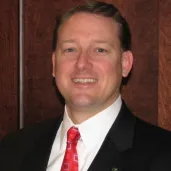 Marcus Lingenfelter, Edmentum’s newly-appointed Senior Vice President of Strategic Initiatives and Partnerships, has two decades of leadership experience in postsecondary education including campus roles at the University of Virginia and Penn State University along with cabinet-level positions at Widener University and Harrisburg University of Science and Technology. He previously served as Senior Vice President of Advancement for the National Math and Science Initiative (NMSI) – the non-profit established to dramatically improve math and science educational outcomes for the country.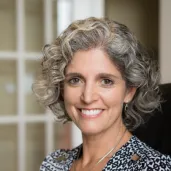
 Jason Scherschligt joins Edmentum as Vice President of Product Strategy and Experience. He brings more than 18 years of experience leading innovative product management and user experience approaches in organizations like the Star Tribune, Capella University, Jostens and GoKart Labs. Jason will focus on designing and managing industry changing, captivating education products that truly empower educators, engage students, and provide education leadership with the insights they need to develop and maintain education programs that create access, equity, engagement, and positive learning outcomes.
 Christy Spivey assumes the role of Vice President of Curriculum and Assessment Development for Edmentum. During her tenure, Christy has served in a variety of roles shaping the company’s curriculum development strategy. Embracing her experience in the classroom, she ensures educators are involved in every step of Edmentum’s design and development to provide programs that meet the needs of educators everywhere. Christy leads a team of deeply committed curriculum and assessment designers focused on creating a new paradigm in differentiated instruction, blended learning, and active learning models.