Tag: Expands

  • Week in review: Trump expands travel ban

    Week in review: Trump expands travel ban

    Most clicked story of the week

    Beginning Jan. 1, individuals from 39 countries will face a partial or full travel ban to the U.S., following a proclamation from President Donald Trump. The expansion more than doubles the number of countries with restrictions and includes Nigeria, one of the U.S.’s top 10 sources for international students. 

    Number of the week: $2.5B

    The anticipated value of Coursera following the ed tech company’s planned acquisition of Udemy. Both MOOC providers cited demand for their artificial intelligence offerings as a motivating factor behind their merger.

    Cuts at religious colleges:

    • DePaul University, in Chicago, laid off 114 staff members as it seeks to shrink its fiscal 2026 budget gap of $12.6 million. Earlier this year, the Catholic nonprofit froze hiring, forewent merit pay increases for faculty and staff, lowered executive pay and reduced retirement contributions for senior administrators.
    • Christian Brothers University, in Tennessee, intends to eliminate 16 full-time faculty positions at the end of the spring semester. The long-struggling Catholic nonprofit notched a win earlier this month, when its accreditor removed it from probation after two years. 

    Pushback on conservative policies:

    • Attorneys general from 20 states are suing the Trump administration over its efforts to levy a $100,000 fee on new applications for H-1B visas. The lawsuit, the third of its kind, argued that the cost on skilled worker visas violates the Administrative Procedure Act because it didn’t go through a notice-and-comment period and because the fee itself is “arbitrary and capricious.”
    • A bipartisan group of federal lawmakers is urging the U.S. Department of Education to classify advanced nursing degrees as “professional” under a proposed framework for student loan lending caps. The designation would double the borrowing cap for graduate students in nursing programs to $200,000, and without it, the current “health care shortage, especially in primary care,” would worsen, they argued. 
    • Faculty and students at Alabama public colleges are continuing to fight the legality of a state law that prohibits public educational institutions from sponsoring diversity, equity and inclusion programs or having DEI offices. The group appealed an August decision that kept the law in place, arguing the federal judge had misconstrued the First Amendment and overlooked important facts.

    Quote of the Week


    It is our responsibility to teach students to use [artificial intelligence] ethically and effectively, and we have to do that with a lot of strategic intentionality.

    Shonda Gibson

    Chief transformation officer at the Texas A&M University System


    Texas A&M recently partnered with Google to offer its students free access to and training on the tech company’s suite of AI tools. Gibson told Higher Ed Dive that the partnership will prepare graduates to enter a workforce increasingly shaped by AI.

    Source link

  • Trump expands travel bans and restrictions to 39 countries

    Trump expands travel bans and restrictions to 39 countries

    This audio is auto-generated. Please let us know if you have feedback.

    Dive Brief:

    • President Donald Trump on Tuesday fully banned individuals from an additional seven countries from traveling to the U.S., as well as those with travel documentation from Palestinian authorities, effective Jan. 1.
    • In a presidential proclamation, he also placed partial entry limitations on 15 additional countries, including Nigeria, one of the top 10 sources for international students in the U.S.
    • Higher education officials pushed back on the travel ban expansion — which will include 39 countries — arguing it will further constrict the U.S.’s international student pipeline and stymie the country’s global competitiveness.

    Dive Insight:

    Both partial and full federal travel restrictions block F and J visas, the types mostly frequently used by international students. F visas are more commonly known as international student visas. And certain foreign students can obtain J visas, which also cover short-term college instructors and researchers.

    In June, Trump issued a presidential proclamation that banned or restricted entry into the U.S. from 19 countries, a move which sparked several lawsuits. Tuesday’s proclamation more than doubled the number of affected countries.

    NAFSA: Association of International Educators called the expansion “anticipated” but “disappointing and misguided” in a Tuesday statement.

    “At a time when countries including China, Canada, Germany, and Japan are actively courting talented students, scholars, and researchers from around the world, this travel ban sends the message that the United States is better off without their contributions,” the group said. “The administration’s latest actions will undoubtedly prevent some of the world’s best and brightest students from contributing to U.S. predominance in research, science, and innovation.”

    Miriam Feldblum, president and CEO of the Presidents’ Alliance on Higher Education and Immigration, called the travel ban “a self-inflicted wound that directly undermines our economic competitiveness and our ability to welcome and retain global talent.” 

    “It signals to the world that the U.S. is no longer a welcoming destination for talent from around the world,” she said in a Wednesday statement.

    The proclamation exempts lawful permanent residents, current visa holders, and “individuals whose entry serves U.S. national interests” from the restrictions. It also exempts certain visa categories for athletes and diplomats.

    It did not list exceptions for international students, arguing that individuals overstaying their F and J visas, among other types, necessitate travel bans against some countries.

    High visa-overstay rates among individuals from these countries “demonstrate disregard for U.S. immigration laws and burden American enforcement resources,” the proclamation said.

    For example, Trump cited visa overstays in part when placing partial travel restrictions on Nigeria.

    In his proclamation, Trump alleged that more than 1 in 10 Nigerian citizens in the U.S. on a F, J or M visa overstay their visa, citing an annual report from U.S. Customs and Border Protection. An M visa allows foreign students to study at a vocational or approved nonacademic institution.

    But NAFSA said that data is “known to be deeply flawed.” Feldblum similarly called it “highly flawed and selective.” Both cited a June report from the National Foundation for American Policy, which conducts public policy research.

    Researchers at the nonprofit found that Trump’s June travel ban “significantly overstates the number of overstays from individual countries” in part by counting people who already left the country and people who changed status inside the U.S.

    “The overstay report allowed for a veneer of data to justify predetermined policy decisions,” the foundation report said. It added that the U.S. Department of State could address overstays by denying individual applications from people they suspect will overstay — “a less draconian approach than banning everyone in that country from entering the United States.”

    Nigeria first became a top 10 country for international students in 2020-21 and has held that status since. In 2024-25, almost 22,000 Nigerian students studied in the U.S.

    The number of foreign students from Nigeria studying in the U.S. has risen steadily for at least a decade and a half, except for a small dip during the height of the pandemic, according to Open Doors data.

    Countries facing travel restrictions as of Jan. 1 2026

    *extended from June travel ban.
    **changed from partial restrictions under June travel ban.
    ***applies only to immigrant visas.

    The new proclamation moves two countries — Laos and Sierra Leone — from partial to full travel restrictions. It is lowering restrictions on only one country: Turkmenistan. 

    Trump will allow nonimmigrant visas, like student visas, to be processed for Turkmenistani citizens “because Turkmenistan has engaged productively with the United States and demonstrated significant progress since the previous Proclamation,” Trump’s proclamation said. 

    Turkmenistan’s embassy on Wednesday said the country had shown “substantial progress in improving identity-management and information-sharing procedures.”

    Immigrants from Turkmenistan will continue to be denied entry.

    Source link

  • U of Kansas Expands Program for Students With Disabilities

    U of Kansas Expands Program for Students With Disabilities

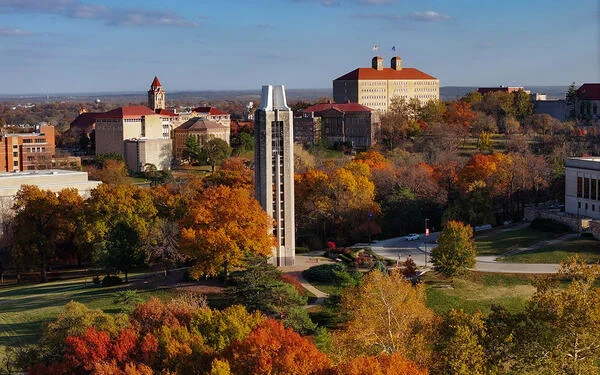
    The University of Kansas has received a five-year, $1.9 million grant from the U.S. Department of Education’s Office of Postsecondary Education to grow the university’s transition program for students with intellectual disabilities.

    KU Transition to Postsecondary Education (KU TPE) first launched at the Lawrence campus in 2015 to provide experiences for such students to engage in higher education and land a meaningful job. Now, the program will expand to two neighboring institutions, increasing opportunities for learners in the state.

    The background: Approximately one in five individuals with disabilities graduate from college, compared to 38 percent of people without disabilities, according to a 2024 report from the U.S. Government Accountability Office.

    The Transition and Post-secondary Programs for Students with Intellectual Disabilities (TPSID) grant provides funding to colleges and universities to create or expand programming for students who meet the criteria.

    Other colleges, including Utah Valley University, have received similar grants from ED to kick-start educational programs for individuals with intellectual disabilities. For the 2025 award year, Northeastern State University in Oklahoma, Washington State University, Texas A&M University–San Antonio, Georgian Court University in New Jersey, Indiana University of Pennsylvania, the University of Memphis and Curry College in Massachusetts were among the grant recipients.

    How it works: Students enrolled in KU TPE complete two-year undergraduate certificates, with the goal of landing a competitive job after graduation that aligns with their personal and career goals, according to the university press release.

    “Students come in as full-fledged, card-carrying Jayhawks,” Dana Lattin, research project director at KU TPE, said in a university press release. “They take courses like those in any other program of study that are aligned with their career and personal interest.”

    TPE students complete 24 credit hours—about six credits per semester—including nine credits on career and life planning, three credits for communication coursework, three credits for health and wellness classes, and nine for electives. In addition, students are encouraged to find employment and paid internships while enrolled, helping set them up for success after graduation.

    Part of the program’s effectiveness stems from the students’ integration into campus life, researchers said. TPE participants engage in campus resources and activities—including clubs, organizations and events—just like their peers enrolled in bachelor’s degree programs.

    Data shows that 74 percent of graduates are employed in their communities after completing their credential; by comparison, only 6 percent of all adults with disabilities in Kansas are employed in a competitive role.

    Scaling up: Campus leaders plan to use the funding to increase program supports for KU TPE participants, including adding credential programs, bolstering peer supports and establishing more career development elements, according to the program abstract submitted to ED.

    The university will also establish a consortium with Wichita State University Tech and Benedictine College, also in Kansas, to create additional transition programs for students with disabilities. The goal is to increase enrollment opportunities for as many as 48 students across the state.

    The KU research team is also looking for additional funding from the state to ensure the programs are sustainable.

    “Sharing that 75 percent of people with intellectual disability who attend college are competitively employed, many of which are working full-time, will help show the value of ongoing support for these programs in Kansas,” Lattin said.

    Get more content like this directly to your inbox. Subscribe here.

    Source link

  • SUNY Expands Local News Collaborations for Student Learning

    SUNY Expands Local News Collaborations for Student Learning

    Over the past decade, local newsrooms have been disappearing from the U.S., leaving communities without a trusted information source for happenings in their region. But a recently established initiative from the State University of New York aims to deploy student reporters to bolster the state’s independent and public news organizations.

    Last year SUNY launched the Institute for Local News, engaging a dozen student reporting programs at colleges across the state—including Stony Brook University, the University at Buffalo and the University at Albany—to produce local news content. Faculty direct and edit content produced by student journalists for local media partners.

    This summer, the Institute sent its first cohort of journalism interns out into the field, offering 20 undergraduates paid roles in established newsrooms. After a successful first year, SUNY leaders plan to scale offerings to include even more student interns in 2026.

    The background: The Institute for Local News has a few goals, SUNY chancellor John B. King told Inside Higher Ed: to mobilize students to engage in local news reporting in places that otherwise may not be covered, to instill students with a sense of civic service and to provide meaningful experiential learning opportunities.

    News deserts, or areas that lack news sources, can impact community members’ ability to stay informed about their region. New York saw a 40 percent decrease in newspaper publications from 2004 to 2019, according to data from the University of North Carolina.

    Research from the University of Vermont’s Center for Community News found that over 1,300 colleges and universities are located in or near counties defined as news deserts, but last year nearly 3,000 student journalists in university-led programs helped those communities by publishing tens of thousands of stories in local news outlets.

    A 2024 study from the Business–Higher Education Forum found a lack of high-quality internships available for all college students, compared to the number of students who want to partake in these experiences. Research also shows students believe internships are a must-have to launch their careers, but not everyone can participate, often due to competing priorities or financial constraints.

    To combat these challenges, SUNY, aided by $14.5 million in support from the New York State budget, is working to expand internship offerings—including in journalism—by providing pay and funds for transportation and housing as needed.

    “We think having those hands-on learning opportunities enriches students’ academic experience and better prepares them for postgraduation success,” King said.

    The Institute for Local News is backed by funding from the Lumina Foundation and is part of the Press Forward movement.

    On the ground: Grace Tran, a rising senior at SUNY Oneonta majoring in media studies, was one of the first 20 students selected to participate in an internship with a local news organization this summer.

    Tran and her cohort spent three days at Governor’s Island learning about journalism, climate issues and water quality in New York City before starting their assignments for the summer. Tran worked at Capital Region Independent Media in Clifton Park as a video editor and producer, cutting interviews, filming on-site and interviewing news sources.

    “I wasn’t a journalism buff but more [focused on] video production,” Tran said. “But having this internship got me into that outlet, and it taught me so much and now I feel like a journalism buff.”

    In addition to exploring new parts of the region and digging deeper into news principles, Tran built a professional network and learned how to work alongside career professionals.

    “It’s my first-ever media job and there were no other interns there; it was just me with everyone else who’s been in this industry for such a long time,” Tran said. “It built a lot of [my] communication skills—how you should act, professionalism, you know, you can’t go to a site in jeans or with a bad attitude.”

    Meeting the other SUNY journalism interns before starting full-time was important, Tran said, because it gave her peers for feedback and support.

    What’s next: SUNY hopes to replicate this year’s numbers of 160 students publishing work and 20 summer interns through the Institute for Local News and expand internships in the near future, King said.

    The Institute for Local News is just one avenue for students to get hands-on work experience, King said. SUNY is building out partnerships with the Brooklyn and New York Public Library systems for internships, as well as opportunities to place interns with the Department of Environmental Conservation to focus on climate action.

    “We have a ways to go to get to our goal for every SUNY undergraduate to have that meaningful internship experience,” King said. “But we really want to make sure every student has that opportunity.”

    Do you have a career-focused intervention that might help others promote student success? Tell us about it.

    Source link

  • BPP Education Group expands portfolio with acquisition of Sprott Shaw College

    BPP Education Group expands portfolio with acquisition of Sprott Shaw College

    BPP Education Group’s growth plan has been backed by the private equity firm TDR Capital, with a view to expand geographically into various sites around the world.

    The group, which provides education and training in various fields of work like Law and Finance, hopes to increase the variety of ITS portfolio of courses through the acquisition of dynamic education businesses like Sprott Shaw College.

    Sprott Shaw College (SSC), founded in 1903, is one of the largest regulated career colleges IN Canada and offers students connections with real-word opportunities to ready them for work in positions such as nursing and business.

    Prior to the deal, it was a subsidiary of Global Education Communities Corporation (GECC), which is one of the largest education and student housing investment companies in Canada.

    The college also places a large focus on cultural awareness and inclusivity – and its courses are designed with these in mind.

    According to Graham Gaddes, CEO of BPP, the acquisition marks an “important milestone into BPP’s internationalisation”.

    “The acquisition will support SSC’s plans to continue to be agile in meeting the needs of the domestic and international community, with programmes developed with cultural awareness and inclusivity in mind,” he added. “We admire what Sprott Shaw College has achieved to date and look forward to welcoming the team to the BPP Education Group.”

    The college has grown substantially in size with integrity and has gained respect from the global education community
    Toby Chu, GECC

    This purchase opens doorways for BPP to offer a vast range of professional education programs due to an alignment with other institutions in its portfolio, such as Ascenda School of Management and Arbutus College.

    The programs would range from certificates to degree levels, which would aid both domestic and international students.

    Toby Chu, president and CEO of GECC, said that he is “confident that Sprott Shaw College will continue to flourish under BPP’s ownership”.

    The college had weathered many difficulties in recent years, he said, including the Covid-19 pandemic and more recent study permit caps in Canada.

    “Despite these challenges, the college has grown substantially in size with integrity and has gained respect from the global education community. I am confident that Sprott Shaw College will continue to flourish under BPP’s ownership,” he said.

    Source link

  • Australia expands accepted English language tests for visa applications

    Australia expands accepted English language tests for visa applications

    LanguageCert Academic, CELPIP General, and the Michigan English Test (MET) are now officially accepted for use in Australian visa applications.

    With this update, a total of nine tests from eight different providers are now officially recognised for Australian visa purposes. These include previously accepted options such as IELTS, Pearson (PTE Academic), Cambridge English, TOEFL iBT, and OET. Notably, IELTS Academic and IELTS General Training are now registered as separate tests.

    Commenting on the news, Sharon Harvey, CEO of Michigan Language Assessment, said: “We are proud that Michigan Language Assessment has been approved by the government of Australia for MET to be used for Australian visa purposes. This recognition is a clear acknowledgment of the validity and reliability of MET, and of its value in assessing and certifying English language skills.”

    We are proud that Michigan Language Assessment has been approved by the government of Australia for MET to be used for Australian visa purposes

    The company, which launched in 2009 and enhanced with a secure digital version in 2021, said that to earn this status, MET underwent an extensive validation process.

    Meanwhile, LanguageCert‘s partnerships and recognitions director Fraser Cargill said the company was “excited to deepen our engagement in Australia, supporting individuals as they pursue opportunities in this dynamic country”.

    “This contract reflects our ongoing commitment to supporting government departments with secure solutions and individuals worldwide in achieving their academic, professional or personal goals through accessible and trusted language assessment,” he added.

    As of August 7, updated score requirements for certain tests have been implemented, with full details available on the Department of Home Affairs website.

    For its part, CELPIP General said it was “pleased to announce” that its test was one of those accepted by the Australian government as proof of English langage proficiency for visa purposes.

    “With this designation, we are pleased to provide test takers seeking to attain an Australian visa with the same dedicated assessment of English language proficiency that is tried and true for the government of Canada and other score users,” it said.

    Source link

  • Leverage expands services to Türkiye

    Leverage expands services to Türkiye

    “The Turkish young, sitting at the centre of Europe and Asia, are true globalists. Their appetite for winning on the international stage is a delight to watch,” said Akshay Chaturvedi, CEO of Leverage Edu announcing the news that the edtech firm, which specialises in study abroad services, will be launching its services in Türkiye.

    “To fuel those dreams, we are incredibly excited to launch LeverageTürkiye — starting with our AI tools for counsellors, the Leverage Edu consumer app for students, Student-ops 360 for partners, and a line-up of special exclusive products tailored to meet that ‘education to career’ arc.”

    With over 50,000 Turkish students pursuing higher education abroad in 2024 – a number that continues to climb – the country has emerged as a critical player in the global education landscape.

    Leverage Edu CEO and founder, Akshay Chaturvedi with Ali Can Cirak, regional manager, business development.

    Factors fuelling this growth include Türkiye’s youthful population, where more than 50% of its citizens are under 30, and an increasing demand for globally recognised degrees in fields such as engineering, medicine, and business.

    The Turkish young, sitting at the centre of Europe and Asia, are true globalists
    Akshay Chaturvedi, Leverage Edu

    “Türkiye represents a very dynamic opportunity, just given where it sits on our planet,” said Chaturvedi. “As a country with a vibrant young population and increasing global mobility, it not only offers immense potential for growth but also serves as a bridge linking two of the most dynamic educational ecosystems in the world – the East and the West – hence an important first-level brick on top of which we’d like to build much more.” 

    To support its Turkish students and partners, Leverage is deploying a dedicated team on the ground in Türkiye, including a country manager to oversee operations and drive business success in the region. Additionally, several university representative desks will be dedicated to Turkish students.

    In the coming months, Leverage’s ancilllary services Fly Finance and Fly Homes will also be available in Türkiye.

    “We are committed to creating many win-wins, for students and institutions alike,” Chaturvedi added.

    Source link

  • Counslr Launches in New Mexico and Illinois; Expands Footprint in New York to Increase Access to Mental Health Support

    Counslr Launches in New Mexico and Illinois; Expands Footprint in New York to Increase Access to Mental Health Support

    NEW YORK, NY – Counslr, a leading B2B mental health and wellness platform, announced today that it has expanded its footprint into the State of New Mexico starting with a partnership with Vista Nueva High School, Aztec, NM; and into the State of Illinois starting with a partnership with Big Hollow School District, Ingleside, IL. These initial partnerships will empower students and staff to prioritize their mental health by enabling them to access unlimited wellness resources and live texting sessions with Counslr’s licensed and vetted mental health support professionals, who are available on-demand, 24/7/365. By increasing accessibility to Counslr’s round-the-clock support, Vista Nueva and Big Hollow aim to bridge gaps in mental health support for students and staff, enabling those who previously did not or could not access care, whether due to cost, inconvenience, or stigma, to receive the support they desire.

    1 in 6 youth suffer from a mental illness, but the majority do not receive mental health support due to substantial obstacles to care. Additionally, mental health is even a bigger challenge in rural America due to unique barriers, including fewer providers resulting in longer wait times or insufficient access to crucial mental health services. This resource scarcity underscores the urgency for additional resources and innovative solutions to bridge this critical gap in mental health care for school communities.

    “We are happy to be able to offer students another tool that they can use to support their mental well-being. Knowing that students have been able to speak with a professional outside of school hours helps us know this app was needed and is useful,” states Rebekah Deane, Professional School Counselor, Vista Nueva High School. “We hope this tool also assists students in learning how to navigate systems so that when they graduate high school they know these options exist and they can continue to seek out support when necessary.”

    As factors such as academic pressures, social media influence, burnout and world events contribute to heightened stress levels and mental health challenges, schools throughout the country are recognizing the growing need to offer more accessible resources and preventative mental health services to both students and staff.

    “Counslr provides an extremely easy-to-access platform for those who otherwise may not seek the help they need, and we are very excited to join Counslr in this partnership. We are all very well aware of the impact that technology has had on the mental health of our students and we feel that Counslr can meet our students in a setting they are comfortable with,” states Bob Gold, Big Hollow School District Superintendent. “Outside of our students, we are thrilled to be able to offer this service to the amazing adults who work with our students every day. There are so many families dealing with some sort of trauma, and the life of an educator is no different.  These adults tend to give so much of themselves to their students, so we strongly feel that our efforts here to join with Counslr is our way of providing an opportunity for our educators to focus on their own mental health.”

    In addition to the geographic expansion,Counslr has also expanded its existing footprint in states like New York, most recently partnering with the Silver Creek Central School District to support its students and staff.  

    “We know mental health needs are on the rise, for students and adults.  To me, Counslr is a resource our students and staff both deserve,” states Dr. Katie Ralston, Superintendent, Silver Creek Central. “In the beginning stages at Silver Creek Central, it has proven to be an asset, as it offers access to everyone on the spot, any day, for any situation.”

    “Supporting diverse populations of students and faculty across the country clearly illustrates that mental health knows no boundaries,” said Josh Liss, Counslr CEO. Adding that, “With 86% of Counslr’s users being first-time care seekers, we strive to reach these silent sufferers who need help, but do not or cannot access it, no matter where they are located.”

    ABOUT COUNSLR

    Counslr is a text-based mental health support application that provides unlimited access to robust wellness resources and live texting sessions with licensed professionals, 24/7/365. Users can access support on-demand within two minutes of opening the app, or by scheduled appointment. Through real-time texting, users enjoy one-on-one, private communication with a licensed counselor that can be conducted anytime, anywhere. Counslr was designed to help individuals deal with life’s day-to-day issues, empowering individuals to address concerns while they are “small” to help ensure that they stay “small”. Counslr partners with organizations of all shapes and sizes (companies, unions, nonprofits, universities/colleges, high schools, etc) so that these entities can provide Counslr’s services to their employees/members/students at no direct cost. For more information, please visit www.counslr.com.

    eSchool News Staff
    Latest posts by eSchool News Staff (see all)

    Source link

  • Top Hat Expands AI Capabilities To Further Reinforce Evidence-Based Learning

    Top Hat Expands AI Capabilities To Further Reinforce Evidence-Based Learning

    TORONTO – September 25, 2024 – Leading provider of higher education engagement solutions Top Hat announced today three new innovative additions to its platform’s growing AI capabilities that further the company’s mission of empowering evidence-based learning.

    The new optional features are an extension of Ace, Top Hat’s AI-powered assistant launched in fall 2023, which has already been embraced by more than 40,000 educators and students to foster more impactful learning experiences. On top of helping educators quickly adopt proven teaching strategies and scaling personal support for students, Ace now provides new tools to help foster discussion and practice.

    “Top Hat was founded as a technology company in 2009 with one mission: reimagine the lecture experience. Today, we are rethinking how AI can change the entire higher education experience,” said Maggie Leen, CEO of Top Hat. “Ace wasn’t designed to replace anyone or anything—it was designed to enhance connections between educators and students by facilitating the kinds of evidence-based learning that we know leads to improved outcomes. These new innovations further that capability, while continuing to give educators and institutions complete control over how Ace is used.”

    AI-Generated Discussion Questions

    First among the new features is the ability to use Ace’s AI-powered lecture enhancer to generate discussion questions in a few clicks, allowing educators to encourage more student interactions in classroom sessions. Ace generates the questions from educators’ own lecture slides, making it easy to use the proven strategy of low stakes, frequent assessments to drive student participation. 

    The discussion question generation option is available now to all Top Hat users.

    Expanded Study Assistant Access

    The availability of Ace’s study assistant feature has been expanded to all Top Hat users on desktop and in the mobile app. This gives all students access to the kind of personalized study support normally only available through a tutor, whenever and wherever they need it. Students are already using Ace to break down concepts, find guidance through difficult homework questions, and test their knowledge anytime and anywhere.

    AI-Powered On Demand Practice Sessions

    Ace’s new practice tool lets students independently test their knowledge, when they want and as often as they choose. Students simply start a quick practice session on the Top Hat mobile app, and Ace generates multiple choice questions based on the content in their assignment. They then get instant feedback so they can review their learnings and score in each session, helping build confidence in their understanding of the material.

    Students can now generate practice sessions in Top Hat Interactive eTexts as well as additional content their instructor assigns. 

    What do students think of learning with Ace? They love it. As Arielle Bennett, student at the University of Pennsylvania puts it, “Ace is AMAZING!! It answered all of my questions in a timely, detailed manner and provides the best summaries of the chapter. With Ace, I have taken more precise and in-depth notes and have better understood the course content as well.”

    For more information on how Top Hat is using AI responsibly and securely to foster impactful learning, visit https://tophat.com/ai-guiding-principles/.

    About Top Hat

    As the leader in student engagement solutions for higher education, Top Hat enables educators to employ proven student-centered teaching practices through interactive content and tools enhanced by AI, and activities in in-person, online and hybrid classroom environments. To accelerate student impact and return on investment, the company provides a range of change management services, including faculty training and instructional design support, integration and data management services, and digital content customization. Thousands of faculty at 750 leading North American colleges and universities use Top Hat to create meaningful, engaging and accessible learning experiences for students before, during, and after class.

    Contact [email protected] for media inquiries.

    Source link