
Tag: Expect

  • Colleges Expect to Reduce Student Support Budgets

    Colleges Expect to Reduce Student Support Budgets

    College and university staff often bemoan that they’re being asked to do more with less, and a recent survey underscores that sentiment. Thirty percent of institutions surveyed by Tyton Partners expect decreases of greater than 2 percent to their student support budgets over the next three academic years, while fewer than 25 percent expect an increase in budgets.

    Financial pressures are tied in part to declining enrollments, as well as to changes in federal structures that reduce access to aid, according to the report.

    Eighty percent of institutions expect budgets for support services in enrollment and admissions to shrink, and 50 percent anticipate cuts to student support services. Other student-facing offices expecting declines are academic program delivery and innovation (33 percent), career readiness (29 percent), and research development and funding (20 percent).

    Threats to international student enrollment and visa complications could also significantly harm institutional resources and student success efforts; nearly 50 percent of four-year institutions cited international enrollment as critical to sustaining support budgets.

    Executive orders and state legislation limiting efforts to support specific racial, ethnic and gender minorities have also reduced institutional investment in identity-based programs. Forty-four percent of public four-year colleges have seen programming for affinity groups decrease over the past 12 months, compared to 28 percent of two-year colleges and 25 percent of private four-year colleges.

    While financial threats may hamper institutions’ ability to increase or scale offerings, a majority of student respondents said they’re not using the resources available on campus at this time anyway.

    Students say they don’t take advantage of the support offices because they don’t see the relevancy (42 percent), because they doubt the service would be helpful, have not needed the service or want to do things on their own. Thirty percent said the services were offered at inconvenient hours, lacked walk-in appointments or had no flexibility in modality.

    Methodology

    Tyton Partners’ “Driving Toward a Degree” report includes responses from 468 administrators, 1,100 front-line support staff members, 1,038 four-year students and 403 community college students. The study was fielded in the spring. Those at public four-year colleges made up the greatest share of respondents, followed by private four-year institutions and two-year colleges.

    Affordability: When administrators were asked how they’d respond to federal financial aid cuts during a time of financial constraint, 41 percent of public four-year colleges said they plan to expand institutional aid to offset students’ lost funding, compared to 25 percent of two-year colleges and 30 percent of private four-year institutions. Four-year private colleges and universities also reported re-evaluating enrollment strategies based on aid dependency, raising concerns about access for low-income students who may not be able to pay the full price of tuition, according to the report.

    Students say financial aid and support are critical to their retention; previous studies point to cost being one of the top reasons why a student leaves higher education. Over half of students (59 percent) in Tyton’s report said financial aid counseling is very important to their decision to re-enroll, compared to 52 percent who indicated academic registration was very important and 49 percent who cited mental health counseling.

    Staffing constraints: Retaining support staff is another challenge that institutions reported; over 60 percent say they’re having a hard time filling vacancies or face hiring freezes in support departments.

    For many students, academic advising is a cornerstone of success in higher education, but many departments are under stress due to high caseloads (42 percent) and frequent turnover in staff (31 percent), according to the report. Despite these headwinds, 74 percent of public four-year institutions and 72 percent of large institutions (those with more than 10,000 undergraduates) plan to increase the caseloads of staff members to recoup lost revenue.

    “Gaps in staffing directly erode advising capacity and quality,” the report authors wrote. “Our survey shows that advisers managing caseloads of 300 or more students are not only less able to engage regularly with those they serve but also more likely to leave their roles. This dynamic fuels a cycle of turnover and declining support quality, undermining institutions’ ability to sustain consistent, high-impact advising.”

    Other popular strategies institutions may employ to combat staffing challenges include reassigning duties across departments, reducing or delaying services, or shifting services to peer advisers or part-time staff members.

    To combat large caseloads, some institutions are considering implementing structured group advising sessions and developing flexible capacity for peak times, the survey noted.
    Source link

  • What to Expect as the Senate Tackles Reconciliation

    What to Expect as the Senate Tackles Reconciliation

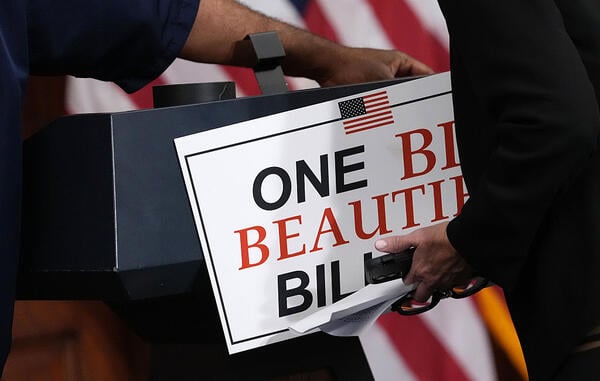
    The clock is ticking for Senate Republicans as they rush to approve a sweeping bill that cuts spending and taxes and pays for some of President Donald Trump’s top agenda items by the Fourth of July.

    If passed, the complex piece of legislation—known as the One Big Beautiful Bill Act—could entirely reshape the student loan system, increase endowment taxes, force colleges to repay their students’ unpaid loans and significantly cut Medicaid, among other changes.

    The House passed the measure late last month, putting the ball in the Senate’s proverbial court. But key senators have since said little about the higher ed provisions in the bill, so it’s unclear what lawmakers in the upper chamber will prioritize. Higher ed experts predict risk-sharing, or the plan to require colleges to pay a penalty for unpaid loans, likely won’t survive. Other issues, like whether to change the eligibility criteria for the Pell Grant, are more uncertain. But any changes to the House bill will come at a cost, as saving one program likely will mean deeper cuts to another.

    Over all, lawmakers will face a difficult balancing act to get the legislation through the Senate without endangering a second passage in the House, where bill advanced by the skin of its teeth. And Trump has called the bill the single most important piece of legislation in his second term, suggesting that failure is not an option.

    “The One, Big, Beautiful Bill will implement President Trump’s Make America Great Again agenda by delivering the largest tax cut in American history, the largest border security investment in history, and the largest deficit reduction in nearly 30 years,” Press Secretary Karoline Leavitt said in a statement last month. “The Senate should pass this critical legislation as soon as possible to usher in America’s Golden Age.”

    The Congressional Budget Office has estimated the bill would add $2.4 trillion to the deficit over a decade.

    What’s Next

    The Senate Health, Education, Labor and Pensions Committee hasn’t yet released its version of a reconciliation bill, though a draft is expected soon since congressional leaders are hoping to get a vote on the legislation by June 16, sources familiar with the Hill say. Lawmakers are using the reconciliation process, so they only need 51 votes in the Senate to pass the bill. But if the Senate version is at all different from the House’s, the House will have to vote again before the legislation can reach the president’s desk.

    When a bill does drop, it will likely skip the traditional committee markup, so the legislation can reach the Senate floor for a vote faster. But that fast tracking will limit the time for college leaders and others to review and weigh in on the bill.

    Policy analysts say Senate and House Republicans will likely have to make some compromises in order to move the bill forward. Some Senate Republicans may stand firm and advocate for changes on certain provisions, but the question is which ones will earn priority and which ones will fall by the wayside. For instance, can moderate Republicans save both the Pell Grant and Medicare? Or will they have to choose between the two?

    In many cases, what spending cuts and program changes survive is going to depend on “how the tug-of-war between the House and Senate plays out,” said Preston Cooper, a senior fellow at the American Enterprise Institute, a right-leaning think tank.

    All of this, however, could be thrown for a loop if former Trump adviser Elon Musk holds any influence. The billionaire tech mogul who previously led Trump’s Department of Government Efficiency has launched an all-out feud with the president over social media, calling the bill a “disgusting abomination” and saying, “shame on those who voted for it.”

    At Odds Over Accountability

    If the reconciliation bill does move forward, policy experts expect the Senate to propose a very different version than the House. And Michelle Dimino, director of education at Third Way, a left-leaning think tank, said she’s looking to the Lowering Education Costs and Debt Act, a bill introduced by Louisiana senator Bill Cassidy in 2023, for an outline of what it may include. (Cassidy is the chair of the Senate education committee.)

    “Senate and House Republicans have not always been aligned in their approach to higher ed reform,” she said. And “unsurprisingly, each chamber tends to favor legislation that originated internally.”

    One of the most notable differences Dimino and others anticipate between the House and Senate is how each tries to hold colleges accountable for students’ financial outcomes.

    House Republicans want to use risk-sharing, a strategy that would require colleges and universities to pay a fee each year based on the amount of loans their graduates (or those who left without a degree) have failed to repay. But the formula for calculating that fee is complicated, and colleges have a lot of questions about how it works and whether it’s fair. The Congressional Budget Office estimated that these risk-sharing payments would total $1.3 billion by 2034 and then continue to increase annually.

    Meanwhile, the Lowering Education Costs Act calls for a plan similar to the gainful-employment rule—a metric that ties colleges’ financial aid eligibility to their students’ earnings and debt levels. The idea was first introduced by President Obama, scrapped by President Trump in his first term and then expanded by President Biden.

    Under gainful employment, colleges would have to show their graduates make more than someone with a high school diploma and that their loan payments will be affordable. If a college ever falls below those thresholds, it could lose access to all federal student aid. The Senate plan would likely apply to all colleges, whereas the current gainful-employment rule only applies to for-profit colleges and nondegree programs.

    Higher education lobbyists are generally more supportive of the Senate’s anticipated proposal. But they note that while it’s a much lesser evil than risk-sharing, concerns remain, especially about how it would affect institutions.

    “When the data is not available … we are operating off concepts and ideas,” said Emmanual Guillory, senior director of government relations at the American Council on Education. “So it begs the question: What is the intended outcome and is this proposal the solution?”

    Other Key Issues to Watch

    What is less certain, policy experts noted, is whether the Senate will sign off on the House’s plans to consolidate student loan repayment plans, cap loans, increase endowment taxes and change who is eligible for the Pell Grant. For example, while the House proposed waiving borrowers’ interest if their monthly income-based payment isn’t enough to cover what’s owed and forgiving remaining debt after 30 years of payments, Cassidy’s legislation would create a more traditional plan where students accrue interest but all is forgiven after 20 or 25 years of payments.

    And though the House plan would eliminate subsidized loans, end the Grad PLUS loan program and limit Parent PLUS, experts predict that the Senate will likely end both Grad and Parent PLUS and put more aggressive limits on how much students can borrow over all.

    But other aspects like Pell Grant eligibility were not discussed in Cassidy’s 2023 bill at all. So while the House would expand the Pell Grant to short-term workforce programs and limit access for the full-time Pell program, it’s unclear what, if anything, the Senate would propose. At a recent hearing, some senators appeared reticent to make deep cuts to the Pell program, though lawmakers have generally supported the concept of workforce Pell.

    Over all, it’s hard to know exactly where the Senate will fall on most issues, Guillory said, especially because unlike during most sessions, it seems the House has the upper hand.

    “I think the Senate would like to propose a very different bill that would require a lot of back-and-forth compromise, but they are feeling more and more pressure from the House to make fewer changes in order to get the bill passed quicker and to meet that July 4 deadline,” he said.

    Source link

  • As Recession Risk Rises, Don’t Expect 2008 Repeat (opinion)

    As Recession Risk Rises, Don’t Expect 2008 Repeat (opinion)

    Months into the second Trump administration, clear trends are reshaping the higher education landscape. Economic uncertainty stemming from inconsistent tariff policies has left businesses and consumers grappling with unpredictability. Meanwhile, efforts by the administration and congressional leadership to overhaul federal funding for higher education, including cuts to research grants and proposed cuts to Pell Grants and student loans, have created significant challenges for the sector.

    The U.S. economy contracted slightly in the first quarter of 2025, with the administration’s erratic and unpredictable policies amplifying recession risks. These fluctuations have led some to draw comparisons to the 2008 Great Recession, particularly regarding public higher education. While some lessons of that recession for higher education, such as those related to state appropriations, remain relevant, others may not apply due to the administration’s unique policies and priorities.

    Since the 1980s, economic downturns have increasingly impacted public higher education, primarily due to state budget cuts. During the 1980 recession, state educational appropriations per full-time-equivalent student dropped by 6 percent but recovered to pre-recession levels by 1985. In contrast, during the 2008 Great Recession, funding fell by nearly 26 percent, and most states never fully restored funding to pre-recession levels before the COVID-19 pandemic once again disrupted budgets in 2020. This prolonged recovery left public institutions financially weakened, with reduced capacity to support students.

    More than a decade after the Great Recession, public institutions were struggling to regain the level of state funding they once received. This prolonged recovery significantly affected student loan borrowing. The Great Recession weakened higher education systems as states shifted funds to mandatory expenses and relied on the federal student loan system and Pell Grants to cover a growing share of students’ educational costs. As a result, when states reduce funding, students and their families shoulder more financial responsibility, leading to greater student loan debt.

    During the Great Recession, public institutions were operating with reduced funding and downsizing, even as rising joblessness drove more people to enroll in college. Before 2008, total enrollment in degree-granting institutions was about 18.3 million, but by 2011–12, it exceeded 21 million. This period marked the emergence of the modern student loan crisis. Public institutions, already strained by reduced funding, faced the dual challenge of accommodating more students while maintaining quality. For many students, especially those pursuing graduate degrees, borrowing became a necessity. The economic downturn exacerbated these trends, further entrenching reliance on debt to finance education.

    A future recession could have an even more pronounced impact on public higher education, particularly in terms of state funding. The recently passed House budget bill, which proposes substantial cuts to higher education and Medicaid, exacerbates this risk by forcing states to prioritize addressing these funding shortfalls. Consequently, as legislatures shift resources to more immediate needs, both states and students may find themselves unable to rely on federal aid to support education. Long-standing research indicates that states will prioritize health-care funding over higher education. This pattern suggests that recent state investments in higher education could be rolled back or significantly reduced, even before a recession takes hold.

    The financial pressures on public institutions are already evident. Some systems are considering closing branch campuses, while others are cutting programs, laying off staff or grappling with declining enrollments. In addition, public regional institutions are particularly at risk, as they depend heavily on state funding and serve many of the students most vulnerable to financial challenges. If a recession occurs, these institutions may face severe and rapid downsizing.

    Following downsizing, a key consideration is whether a future recession will lead to an enrollment rebound similar to that seen during the Great Recession. This issue can be analyzed through two key factors: (1) the severity of joblessness and (2) the availability of grants, scholarships and loans, as well as the repayment structures of those loans.

    During the 2008 crisis, unemployment peaked at 10 percent, double the pre-recession rate, with a loss of 8.6 million jobs. Higher unemployment historically benefits higher education as individuals seek to retool their skills during economic downturns. Economists predict that under the current administration, unemployment could rise from 4.1 percent to between 4.7 percent and 7.5 percent, though projections are uncertain due to volatile policies. While higher unemployment might lead more people to consider enrolling in college, proposed changes to financial aid policies could significantly dampen such trends.

    The House’s One Big Beautiful Bill Act introduces stricter eligibility requirements for Pell Grants, such as tying awards to minimum credit-hour thresholds. Students would need to enroll in at least 30 credit hours per year for maximum awards and at least 15 credit hours per year to qualify at all. Furthermore, the bill eliminates subsidized student loans, meaning students would accrue interest while still in school. This change could add an estimated $6,000 in debt per undergraduate borrower, increasing the financial burden on students and potentially deterring enrollment.

    On the repayment side, the proposed Repayment Assistance Plan would replace existing income-driven repayment options. Unlike current plans, RAP bases payments on adjusted gross income rather than discretionary income, resulting in higher monthly payments for lower-income borrowers. Although RAP ensures borrowers do not face negative amortization—which is important for borrowers’ financial and mental distress—the 30-year forgiveness timeline is longer than that of current IDR plans, and the lack of inflation adjustments makes it less appealing than current IDR plans. Together, these changes could discourage potential students, particularly those from low-income or disadvantaged backgrounds, and depress graduate student enrollment.

    The bill also introduces a risk-sharing framework that requires institutions to repay the federal government for a portion of unpaid student loans. This framework, based on factors such as student retention and default rates, could influence enrollment decisions. Institutions might avoid admitting students who pose financial risks, such as those from low-income backgrounds, with lower precollege performance or nonwhite students, thereby restricting access and perpetuating inequities. Alternatively, some institutions may opt out of the student loan system entirely, further limiting opportunities for those who rely on federal aid.

    Recent executive actions pausing international student visa interviews will hinder the ability to recruit international students and eliminate the potential for these students to help subsidize low-income domestic students. As a result, institutions have fewer resources to support key groups in the administration’s electoral base without burdening American taxpayers. These actions not only increase the cost of higher education but also appear inconsistent with a fiscally conservative ideology.

    Mass layoffs in the Department of Education have delayed financial aid processing and compliance and hindered institutions’ ability to support more low-income students during an economic downturn. These personnel play a critical role in ensuring that state higher education systems receive the funding needed to expand access for low-income students. During the last recession, their efforts were essential to fostering student success, but under the current administration, the federal government continues to be an unreliable partner.

    While lessons from the Great Recession may offer some insight for public higher education during a future recession, the financial context and the priorities of the administration and congressional majority leadership differ significantly. Unlike the Great Recession, the next economic downturn may not lead to a surge in higher education enrollment. Without proactive measures to protect funding, expand financial aid and increase opportunity, public higher education risks reduced capacity and declining student outcomes. These changes will likely undermine higher education’s role as a pathway to economic mobility and societal progress.

    Daniel A. Collier is an assistant professor of higher and adult education at the University of Memphis. His work focuses on higher education policy, leadership and issues like student loan debt and financial aid; recent work has focused on Public Service Loan Forgiveness. Connect with Daniel on Bluesky at @dcollier74.bsky.social.

    Michael Kofoed is an assistant professor of economics at the University of Tennessee, Knoxville. His research interests include the economics of education, higher education finance and the economics of financial aid; recent work has focused on online learning during COVID. Connect with Mike on X at @mikekofoed.

    Source link

  • What to Expect at Your First InsightsEDU Conference

    What to Expect at Your First InsightsEDU Conference

    Whether you’re new to higher education conferences or a seasoned professional looking for fresh expertise, InsightsEDU offers a truly unique experience. As one of the premier conferences focused exclusively on marketing and enrollment management growth, this event is perfectly poised to equip you with networking opportunities that cultivate your understanding of the latest trends and strategies shaping the higher education sector.  

    If you are attending InsightsEDU for the first time, you can look forward to a wealth of knowledge and connections that will enhance your career in higher education and spark new strategies for enrollment growth. In this blog, we’ll guide you through what to expect and how to maximize your time at InsightsEDU 2025, taking place February 12-14, 2025 at The Ritz-Carlon in New Orleans, Louisianna.

    The Purpose of InsightsEDU 

     InsightsEDU serves as a vital platform for higher education professionals to come together and explore the evolving landscape of marketing and enrollment. This conference provides attendees with knowledge and insights to specifically address the needs and preferences of the Modern Learner.   

    By focusing on the unique challenges and opportunities faced by students and institutions alike, InsightsEDU fosters a dynamic learning environment that encourages collaboration and innovation, while empowering higher ed professionals to enhance their impact within their institutions.  

    Elevate Your Knowledge while Immersed in NOLA Atmosphere 

    The 2025 InsightsEDU Conference will take place in New Orleans, where attendees can look forward to valuable insights into the latest trends and strategies in higher education while enjoying the vibrant atmosphere of this iconic city. With over 100 colleges and universities represented, including higher education marketers, enrollment managers, and university leaders, you’ll find plenty of chances to network with peers who share your interest and challenges in the realm of higher education.  

    We are committed to providing attendees with an unforgettable experience, and this year’s event will fully embrace the NOLA flair. Highlights include the Bourbon Street Bash, featuring a lively parade, a reception at Bourbon Vieux, and a live jazz performance, allowing you to immerse yourself fully in New Orleans’ culture.    

    This conference promises to blend professional development with the vibrant atmosphere that New Orleans has to offer, ensuring a memorable and impactful experience for attendees.  

    Dive into Engaging Sessions  

    With over 38 sessions lined up, InsightsEDU 2025 offers a diverse range of learning opportunities, from keynote speeches and panel discussions to hands-on workshops. Sessions cover important topics related to emerging marketing trends, enrollment strategies, and evolving student demographics.  

    Sessions like “The Evolving Expectations of the Modern Learner” will explore how institutions can adapt to better serve today’s students, while “From Waitlist to Wins: Creative Strategies to Streamline Admissions & Maximize Enrollment” will share tactics for optimizing the enrollment experience. Additionally, the session “Mapping Content to the Student Journey: A Strategic Approach to Persona-Driven Marketing” will provide insights into aligning your marketing strategies with the needs and preferences of prospective students. These are just a few examples of the many sessions tailored to address the challenges and opportunities facing higher education.  

    With sessions led by over 40 experts in the field, InsightsEDU offers attendees invaluable access to innovative ideas and proven best practices, ensuring you leave the conference equipped with actionable insights to enhance your marketing and enrollment strategies.  

    Making the Most of Networking Opportunities   

    Networking is integral to the InsightsEDU experience, and we’ve crafted ample opportunities for you to connect with peers across disciplines, institutions, and roles. Sessions are designed to focus on the most timely and impactful topics in higher education, aiming to spark innovation and the exchange of ideas among peers. These sessions offer a valuable opportunity to gain fresh insight into shared challenges, while fostering genuine connections and unlocking potential solutions.  

    In addition to these structured moments, dedicated networking breaks and social events provide relaxed spaces to further connect with conference attendees. These moments are designed to cultivate conversations that can lead to valuable professional connections and collaborations. Networking takes many forms at InsightsEDU, with multiple touchpoints designed to cultivate meaningful connections. New sessions, like the “Flow Into Focus: A Yoga Journey for Modern Minds,” hosted by Dr. Jodi Blinco, offer a refreshing way to balance professional growth and personal wellness. This unique session creates another valuable opportunity to connect with peers in a relaxed setting, adding a fresh dimension to the conference experience.  

    To help you make the most of these opportunities, we encourage you to use the conference app as a resource. The app offers features that allow you to connect directly with colleagues, participate in discussion forums, and access the conference agenda, all of which support your networking efforts while keeping you informed. InsightsEDU is the perfect setting to expand your network and engage meaningfully with fellow higher ed professionals navigating today’s landscape.   

    Unlock New Opportunities at InsightsEDU    

    With February right around the corner, now is the perfect time to register for this premier higher education conference dedicated to empowering and igniting innovation within the sector. Take advantage of this opportunity to expand your knowledge and connect with fellow professionals. By actively participating and embracing the conference atmosphere, you can make the most of your experience, gain practical skills, and build meaningful connections.  

    Are you ready to be part of this invaluable event? Register by December 13th to enjoy the early-bird rate and secure discounted attendance for you and your team! 

    Source link

  • What to Expect on Your Organizational Development Journey

    What to Expect on Your Organizational Development Journey

    Next Steps to Empower Your Multiyear Growth Road Map

    In higher education organizations, enrollment management plans can be like the weather: short term, ever changing, and subject to the whims of the seasons each year. 

    But for your organization and programs to thrive no matter the conditions, a multiyear growth road map is needed to keep all parts of the organization aligned and moving toward a strategic set of goals. 

    In my last article, I discussed the importance of taking a step back to assess the people, processes, and technology of your organization to identify opportunities for improvement and high-quality growth. This critical first step results in an organizational development plan that moves your institution from good, to better, to best in class. 

    With this article, we’ll dig deeper to outline how you can build a multiyear growth road map that allows you to weather everything from regulatory storm clouds to enrollment droughts, keeping your focus on a longer-term strategy. You’ll learn how to get started, measure your progress, and ensure that feedback loops are in place for continuous improvement. 

    A multiyear growth road map helps your teams move beyond term-to-term thinking to develop activities that ladder up and contribute to a true organizational vision. Everyone has a part to play that is specific, measured, and celebrated.  

    The First 90 Days

    As with any effective plan, laying a strong foundation can lead to long-term success. In the context of your multiyear strategic road map, building the foundation involves these steps:  

    Year One: The Blueprint

    With a solid understanding of your institution’s current landscape — both internally and externally — it’s time to launch into the first year of your strategic road map. These 365 days are about implementing basic changes to boot up the structures, systems, and processes that will support growth in later years. 

    Year Two: Optimize and Accelerate 

    With a firm foundation now in place from your first year’s efforts, the focus shifts toward refinement, optimization, and acceleration of your growth initiatives. This phase is crucial, as it’s where you begin to see the fruits of your labor blossom.

    Years Three and Four: Knowledge Sharing and Independence 

    As your strategic initiatives mature, the focus will naturally transition toward sharing knowledge and strengthening your internal teams. This critical period in years three and four is about empowering your staff and shifting your role from hands-on implementer to guiding coach.

    The Journey to Sustainable Development Starts Today

    Successful organizational development requires a multiyear effort that encompasses careful planning, precise execution, and a dedicated team of leaders. From the initial 90 days to the subsequent years, each phase of the process moves your institution closer to becoming stronger and more agile.

    Our team at Archer Education has helped dozens of institutions build and execute comprehensive multiyear strategic plans. These plans are tailored to enhance enrollment and retention, setting each institution on a path to long-term success.

    If you’re ready to transform your organization and achieve remarkable results, reach out to us at Archer Education. Let’s make your educational vision a reality together.

    Subscribe to the Higher Ed Marketing Journal:


    Melanie Andrich

    Melanie Andrich is vice president of strategy and development at Archer Education. Melanie is a results-driven higher education leader with 20-plus years of experience in developing and supporting high-quality, accessible, and scalable academic programs and services. She spent the first half of her career at Rutgers University running study abroad programming and leading the first fully online professional master’s degree program for the university. She then moved into management consulting to help colleges and universities with academic innovation, enrollment management, and organizational transformation initiatives.

    Source link