The HEPI blog was kindly authored by Fiona Ellison, Co-Director, Unite Foundation
University is often described as a transformative experience, full of growth, challenge, and discovery. But for care-experienced and estranged students, the journey through higher education is often shaped by the absence of family support, financial insecurity, and a lack of belonging. The Unite Foundation has taken a deep dive into the latest findings from the HEPI and Advance HE Student Academic Experience Survey 2025 (SAES), offering a clear picture of these students’ realities and developing a call to action.
The cost of insecurity
Care-experienced & estranged students are much more likely to drop out of university but we also know from the findings from the SAES that they’re much more likely to consider dropping out as well:
43% of care–experienced students and 44% of estranged students have considered withdrawing from university, compared to 28% of their peers.
Whilst the survey doesn’t give us insight into the reasons why, it does provide clues. For example, care-experienced students are experienced and estranged students work significantly more hours in paid employment:
Care–experienced students work on average 11.3 hours/week, and estranged students work 11.1 hours/week, compared to 8.8 hours/week for other students.
This extra workload often stems from limited access to family financial support and a student finance system that doesn’t fully meet the needs of independent students. As HEPI highlighted in their work on minimum income standards those studying without financial support, even with the full maintenance loan, would still need to work over 20 hours at minimum wage to achieve the minimum income standard needed to survive at university.
We see this increased workload play out in students’ ability to attend lectures and complete academic work:
44% of care experienced students requested deadline extensions, compared to 29% of non-care experienced students.
It’s no wonder that only 79% of care-experienced students complete their undergraduate degrees compared to 89% of non-care-experienced students, and just 64% achieve a good honours degree compared to 77% of their non-care-experienced peers. We don’t have reliable data on estranged students – but that’s for another blog! If students are having to work longer hours just to afford to live, then it’s no wonder academic studies will often take a back seat.
However, there is a shining light. Housing is more than shelter – it’s a foundation for success. The Unite Foundation has, over the last 14 years, provided free, year-round accommodation to care-experienced and estranged students, removing a major barrier to continuity and wellbeing. Data published to celebrate our 10th birthday found that there is ‘strong evidence that the scholarship improves educational outcomes of the students we support, specifically in year-to-year progression and completion’.
These figures highlight how housing insecurity and financial pressure can directly impact academic persistence and performance – but whilst there is a simple answer, not enough institutions are truly looking at the evidence-based solution to address the inequality this group of students face.
Loneliness and the need for community
One of the most striking findings within the report is the prevalence of loneliness:
45% of estranged students and 36% of care experienced students feel lonely “all or most of the time,” compared to 27% of other students.
Loneliness affects mental health, engagement, and retention. While it’s encouraging that loneliness among care-experienced students has decreased from 48% in 2023, the rise among estranged students signals a need for targeted support.
For this group of students, studying without the support network of family means the lack of ready-made networks needed when times are hard. The All of Us community was designed by and for care-experienced and estranged students to connect with peers – whether online or in real life. The handy guide #AllOfUsLocal is a practical toolkit that institutions can take to help create a community in your institution to create ways to support care experienced and estranged students to avoid isolation.
A mixed picture on wellbeing
Encouragingly, care-experienced students report similar levels of wellbeing to their non-care-experienced peers:
Life satisfaction: 6.7 vs. 6.6
Happiness yesterday: 6.2 for both groups
Anxiety yesterday: 4.6 for both groups
However, estranged students consistently report lower scores:
Happiness yesterday: 5.9
These differences underscore the emotional toll of estrangement and the importance of tailored support that ensures estranged students can access at any point – given we know for many students estrangement happens through their academic journey.
What next?
The Student Academic Experience Survey continues gives us the evidence about what this group of students thinks and feels about their time in higher education – it makes for some pretty tough reading. However, there isn’t anything new or surprising in the report for those of us that work in this space.
We now need to move beyond data and turn these insights into action. Universities, policymakers, and sector leaders must work together to ensure that care-experienced and estranged students are a target for activity. To do this, we need:
Universities to prioritise year-round, affordable accommodation – Institutions should commit to providing or partnering on secure, year-round housing options for care-experienced and estranged students, recognising housing as a foundation for academic success.
Targeted financial support and flexible funding models – Review and adapt bursary and hardship funding to reflect the true cost of living for independent students, especially those without family support.
Better data collection and visibility – Universities and sector bodies must improve the identification and tracking of estranged students to ensure their needs are recognised and met.
Embedding community-building initiatives – Adopt and promote tools like #AllOfUsLocal to reduce loneliness and foster belonging on campus. You can join our HE Peer Professionals network to share your challenges, celebrate successes and learn from others about how to support community-building activities.
At the Unite Foundation, we’ll shortly launch our new strategy, which will include practical steps that higher education institutions can take to ensure a focus on housing plays a key role in driving equality for care-experienced and estranged students. If you want to be the first to know about what we’re up to, do sign up to our newsletter.
We know a lot about undergraduate student experience and how these students experience life at university, especially when it comes to considering a sense of belonging.
However, our understanding of the postgraduate student experience is arguably lacking compared to what we know about the experiences of their undergraduate counterparts.
Despite growing numbers and increasing strategic importance, postgraduate students remain largely invisible in both published research and institutional strategy.
As Katharine Hubbard recently pointed out on Wonkhe, despite the large and diverse postgraduate population within UK higher education institutions the equity of outcomes conversation rarely extends to consider postgraduates. Amid financial pressures, universities are increasingly market-driven, often prioritising initiatives that enhance the undergraduate experience. Yet, in 2023-24, UK institutions awarded more postgraduate qualifications than undergraduate ones, generating what was (in 2022-23) an estimated £1.7 billion in income. So why aren’t we paying more attention to how they experience university?
Working out the scenario
There is growing recognition that the postgraduate taught (PGT) student experience is qualitatively distinct from that of undergraduates. Postgraduate taught courses, often one-year-long Master’s degrees, attract students with varying motivations and expectations, who may also be facing challenges in pursuing their studies. For example, PGT students often face compressed timelines, intense academic demands and limited opportunities for social and academic integration due to the short duration of their courses. They often return to study after time in the workforce and may be juggling additional responsibilities such as paid work, caregiving or visa constraints alongside their studies.
A one-size-fits-all student support model applied to all taught students assumes some equivalence across the needs of undergraduate and postgraduate student cohorts, but we know that students are not homogenous. We need to approach the design and delivery of postgraduate courses without the assumptions that postgraduate students are inherently more autonomous or resilient as this can lead to a lack of tailored academic support, limited personal tutoring and underdeveloped community-building initiatives.
This neglect is particularly concerning given the strategic importance of PGT students to institutional and national agendas: the development of skilled employment sectors, and investment in the research pipeline (not to mention the role PGT fees play in supporting) institutional finances. Yet, as has been shown in recent Advance HE-led Postgraduate Taught Experience Surveys, without adequate support, many PGT students report feeling isolated, academically underprepared or unsupported in navigating career pathways post-graduation.
Reacting to wider trends
The past decade has seen a boom in research into the undergraduate student experience, but efforts to understand the experience of PGT students is evidently lagging behind. For every single peer-reviewed article published on how postgraduate students experience belonging, thirteen are published on undergraduates. As a sector, what should we do about this?
To address this imbalance, institutions need to recognise that postgraduate students are not undergraduate students; they have different expectations and therefore need to be responded to differently. Institutions need to stop trying to apply an undergraduate student experience lens to postgraduate student cohorts – let’s all look outside the lens.
And we need to stop making assumptions about our postgraduate students and ask better questions. Who are our postgraduate students? How many are alumni? How many commute? How is information like this being used to shape the welcome and induction offering that is given to these students? This is all central to fully understanding the challenge.
The hidden curriculum
There is also a need to think about how information about specific postgraduate cohorts is being disseminated to the staff involved in teaching and supporting these cohorts? Our own surveys of PGT students have identified multiple examples of international students who have spent weeks navigating unfamiliar academic cultures and trying to decipher the “hidden curriculum” of academia.
An example from one institution highlighted multiple international students believing that the institutional virtual learning environment “Blackboard” that they often heard being referred to, was an actual chalk-based blackboard that everyone else knew where it was located, except for them. That is not a failure of the students but of communication with them.
Higher education institutions need to ensure that students experiencing the compressed timescales that many PGT students face, being enrolled on a year-long course, are still able to access equitable opportunities for student support, personal and professional development and career services. Lengthy wait times, drawn-out applications or referral processes are unlikely to meet the needs of students enrolled on the intensive and relatively short courses which reflect many PGT programmes. Postgraduate students still need the wrap around support that undergraduate students need!
Postgraduate students are so much more than an extension of the undergraduate community. They are purposeful, motivated and diverse and form a vital component of the academic community. We need to ensure that we, as an academic community, are not taking our eyes off this crucial population of students who are essential both for the success of individual institutions and the wider sector as a whole.
This HEPI blog was kindly authored by Abi Pearson, Employability Project Assistant (Placement Year) at the University of Sheffield and a third-year BA Sociology with Social Policy student
At the University of Sheffield, the Law Family Ambition Programme aims to support the success of young men from pre-16 through to graduation and beyond, made possible through a philanthropic donation from the Law Family Charitable Foundation. The programme focuses on young men’s educational attainment and delivering support through a whole-provider approach, with targeted support from areas such as the Careers Service and Student Equality, Diversity and Inclusion.
HEPI’s recent report on the educational underachievement of boys and young men provides evidence of the importance of qualifications, demonstrating the significance of programmes like Ambition working to get young men into higher education:
Men with no qualifications are nearly twice as likely to be unemployed as women with no qualifications but there is virtually no gender gap in unemployment rates for people who have two A-levels or equivalent.
As a placement student for the Careers and Employability Service, I acted as one of the Careers contacts for recipients of the Law Family Ambition Scholarship (‘Ambition Scholars’). I managed the Equal Opportunities in Careers scheme, tasked with hosting events and improving Careers Service provisions for widening participation students, including Ambition Scholars, as well as supporting the operational delivery of the Ambition Programme itself.
In the second half of my placement year, I was given the opportunity to lead an internship programme developed for Ambition Scholars and Equal Opportunities students at the University of Sheffield, in which I was able to contribute to change by connecting students to meaningful work experience. Ambition Scholars were given enhanced support at every stage of their application, with some Scholars who did not apply still reaching out to show appreciation at our readiness to support them.
Being able to work as a placement student in this area has been endlessly fascinating. From witnessing the success of Adolescence in conversations with University peers to working with the demographics its discourses concern, I have been given the rare opportunity to witness a new dimension to a world that I believed myself to be so familiar with in higher education.
In experiencing higher education practice as both a student and staff member, I also increasingly see the value of keeping students involved with work that affects them. I had the opportunity to work with many Scholars within the Ambition cohort, as well as support the recruitment of an Ambition Student Intern in the Careers Service and work with them for the duration of their internship. The Intern provided us with Scholar insights during various pursuits, ensuring that practice was consistently student-centred and appropriately pragmatic, ending his internship by co-leading a session for staff in the Operations Group based on the recommendations of himself and fellow Scholars.
Working on this programme has certainly come with challenges. As is the problem for others across the sector, finding a communication style that works for our key demographic remains difficult as well as attempts at community-building for Scholars who perhaps do not see a benefit in connecting with students from similar backgrounds to themselves once arriving at University. This has meant that engagement with support services and events remains low and relatively unchanging throughout Scholars’ journeys.
However, in this regard, I was taught one of many defining lessons of my placement year: lack of engagement and success are not mutually exclusive. During some focus groups I was able to lead on, Scholars often remarked that, despite not engaging with much of the support offered within Ambition, the safety net of the programme itself was one of its most valuable assets. It is possible that, for students, success in a programme like this is not defined by its popularity, but rather its durability and consistency through unprecedented times for young people and higher education. This approach means that Scholars are able to thrive on their own terms at University, in the knowledge that there is always a team there to support them.
And so, as my placement draws to a close, my key reflection is thus: taking a Placement Year at your own University is well worth it. The microcosm of the world that universities present allows me to return to my final year with a multiperspectivity which will benefit me in finishing my degree and beyond. Working on the Ambition Programme, especially, has given me the chance to contribute to challenging belief systems whilst simultaneously experiencing the development of my own, advancing my personal as well as my professional development beyond what I could have imagined at the start.
This HEPI guest blog was kindly authored by Cheryl Watson, VP of Education, UK at TechnologyOne
While you are here, don’t forget to complete the survey on HEPI’s work. It will only take a few minutes and will help inform our future output. You can access the survey here.
Why we need to redesign student life around inclusion, access and equity
There’s no such thing as a typical student anymore. Today’s students are more diverse, stretched, and balancing financial pressures alongside study, care, and work responsibilities.
Yet many university systems still assume a narrow definition of who students are and how they live. As participation widens, institutions face a challenge: equity of access no longer guarantees equity of experience.
Universities have made real progress in widening access, but many aspects of student life are still designed around an outdated, one-size-fits-all model. For non-traditional students, the cost of that mismatch can be significant.
The Minimum Income Standard for Students 2024 (MISS24) report, developed by the Centre for Research in Social Policy (CRSP) at Loughborough University and published by HEPI and TechnologyOne, revealed that students under financial stress or managing additional responsibilities are more likely to struggle with engagement, persistence, and success.
The myth of the ‘traditional student experience’
The image of the ‘traditional’ student – financially supported, living on campus, and attending in person full-time – is increasingly out of step with reality. According to HEPI and Advance HE, 68% of students now work part-time to support themselves.
Others commute long distances, care for family members or study while managing health conditions. Yet academic and campus life often centres around those with time, money and flexibility, creating barriers for others.
Who are non-traditional students?
‘Non-traditional’ students are those whose lives don’t neatly align with the structures of traditional university study. This includes:
commuters who travel in from home each day, often at significant personal cost;
students from low-income households, for whom maintenance loans fall well short;
mature-age students, carers, or those with parenting responsibilities;
students living with disabilities or chronic health conditions; and
first-in-family students, navigating systems and expectations without precedent.
These students comprise a significant portion of the sector. Meeting their needs should not be seen as an add-on, but as essential to building a fairer system.
The hidden barriers reshaping student life
Rigid timetables, inflexible systems, and unclear support structures can turn everyday aspects of student life into barriers. For students juggling work, care or long commutes, these barriers can add stress and negatively impact attendance, engagement, and overall well-being.
The people I know that commute, it’s mostly because they couldn’t afford to live or it would be way more expensive for them to live in student accommodation because they live so close.
I worked with someone, and she’d be in Uni all day from 9 am to 5 pm because she might have something that started at 9am and then finished at 6pm, because the timetable is not synced up.
Accommodation contracts and payment schedules often clash with student loan timings, leaving some students short on essentials or reliant on overdrafts and food banks. These are not isolated challenges but systemic issues that call for sector-wide solutions.
Building a fairer future for higher education
To build a fairer, more inclusive higher education system, universities and policymakers need clear evidence on what effective support looks like.
The upcoming Minimum Income Standard for Students 2025 (MISS25) report – a follow-up to MISS24 with HEPI – will provide that evidence, offering the most detailed picture yet of the true cost of participating in university life for first-year students living in purpose-built accommodation.
It will help the sector understand what it takes for students to stay afloat, take part fully, and succeed, particularly for those managing disabilities, low incomes, or additional responsibilities.
What students say they need to succeed
Focus groups from the MISS25 research highlight that students need time, flexibility and support that reflects their real lives. Financial pressure and scheduling conflicts can limit their ability to join societies, attend events, or fully participate in academic life.
‘We just need time and space to breathe’
Many students described university life as overwhelming, mostly because of how tightly packed, inflexible, and unsupported it can feel. Rigid schedules and disconnected systems create extra strain, especially for students who need to manage work, transport, or health appointments.
As the report will show, even students receiving the maximum maintenance loan must work long hours every week just to meet a minimum standard of living.
‘It’s hard to join in when you’re just trying to survive’
Participating in societies, sports, and social life is a vital part of the university experience. But for many, the rising cost of living means opting out is the only option.
This impacts wellbeing, confidence, and the chance to build networks that support success.
These challenges are often most acute in the first year, when students are building social connections and learning to navigate university systems for the first time.
‘Uni should be built around real students, not ideal ones’
Students shared how university systems don’t match their realities. Timetables that assume all-day availability, unclear payment schedules, and expectations around placements can all create friction for students managing extra responsibilities or financial pressures.
To support success, universities need to understand and address these gaps.
Why inclusive design must be the next priority
The barriers many students face are design challenges, not a matter of individual resilience. Inclusive design means creating flexible timetables, accessible learning environments, and clear, consistent support structures that work for all learners.
When these systems are in place, students can focus on learning and contributing to their communities, rather than constantly navigating obstacles.
Rethinking support beyond financial aid
While financial support is still crucial, students need systems that align with their lives to reduce unnecessary stress and uncertainty. Predictable processes, transparent communication, and flexible learning options are all part of enabling participation and success.
Explore the full MISS25 report
The upcoming Minimum Income Standard for Students 2025 report (MISS25) offers a data-driven roadmap for a more inclusive student experience. Sign up to receive a copy of the report to explore the findings and discover how better insight can drive better outcomes across your institution.
TechnologyOne is a Partner of HEPI. TechnologyOne is a global Software as a Service (SaaS) company. Their enterprise SaaS solution transforms business and makes life simple for universities by providing powerful, deeply integrated enterprise software that is incredibly easy to use. The company takes complete responsibility to market, sell, implement, support and run solutions for customers, which reduce time, cost and risk.
In his criminally underread 1978 book The Grasshopper, the philosopher Bernard Suits takes seriously the science-fiction commonplace that, once robots are doing everything for us, humans will have to find something else to do.
His response is that we’d play, living lives of leisure, like Aesop’s grasshopper, and engaging in activities with a lusory attitude: living playfully, engaging in activities not because we have to, but because we want to. Fully-automated luxury play! As much as I could easily play videogames all day, work isn’t going anywhere any time soon. But the rise of AI in education has prompted me to revisit this topic.
Universities are, quite rightly, thinking very carefully about what their staff and students do with AI, emphasising the ways in which it can enhance, and perhaps even replace, aspects of our work. But there are separate, parallel questions: what can’t AI do for us, and what shouldn’t it do? And what are we going to do with all the time it saves us?
Doing and being seen to have done
Human lives are full of experiences, and there’s a danger with the rise of AI that we weaken our connection with the actual doing of things. AI might help us to plan a holiday itinerary, book a hotel or draft a jealousy-inducing social media post (or even deepfake pics from a holiday that didn’t happen), but it can’t go on holiday for us. And similarly, in learning environments, whilst it can enhance learning, overreliance on AI runs the risk of hollowing out the experiential core of learning and leaving students not having actually done anything.
A real challenge for educators is to know how to get students to understand the value of experience in a world that incentivises taking shortcuts. I lead Rise at Manchester Met: a co-curricular programme that is designed to draw together all the things that students do that aren’t their degree, and our team works hard to help students to understand that they are more than their degree subject.
The traditional catch-all term for this is “extra-curricular” – it’s the things that students do in addition to the curricula they are following. But in practice “co-curricular” is a more accurate term. “Co” indicates that activity happens alongside and with the curriculum. There is a crossover in the experiences that students are having. Picture the curriculum and co-curricular activities as two streams that are sometimes totally divergent, sometimes parallel, and often overlapping in productive ways.
Identity shapes participation
Students don’t stop being students when they engage in co-curricular activities, but similarly they don’t stop being a community organiser, or a hockey player, or a freelance arts journalist, when they’re in the classroom. My doctoral thesis argued that half of the “game” of higher education is students understanding how they can bring their own identities to transform their participation, and “position-switch” between roles. The co-curricular is at its most powerful when these distinct identities and experiences begin to transform and enhance each other.
Moving from “extra” to “co” also challenges the primacy of the core curriculum as the foundation of student experience, and acknowledges that, for many of our students, “student” might not be their primary identity. We must accept that, for some students, their co-curricular activity might be more engaging, more relevant and more career-focused than their core degree programme. For others, the stuff they are doing outside their degree programme might be necessary and unavoidable, and will often pre-date their involvement at university; paid-work and caring responsibilities tend to take precedence over lectures, and there may be ways to make this count too.
However, when you type “co-curricular” into your search engine of choice, you won’t really see university websites. It’s a term that, at present, seems to be owned by the upper-end of British private boarding schools. In a sense this stands to reason; pupils essentially live in these schools during term time, and activities take place as part of their wider life at school. Here “co-curricular” is an expectation, and provides the social and cultural capital building for which British private schools are famous.
This conceptual dominance raises an issue of social justice, though. There is a sense that all of the “extra” stuff, at both schools and universities, is the domain of students who are privileged enough to take part, and who have the time and resources to make it happen. Working outside the curriculum is too often seen as a privilege for the privileged, and effectively becomes self-fulfilling as students with the free time to volunteer reap the developmental benefits of volunteering their time. Other students are already on the back foot when it comes to claiming their share of experience.
Embarrassment of riches
Rise was set up to challenge this narrative, by giving students time and resource to develop their social capital in flexible ways, and to recognise developmental activities that might not have traditionally been included under the extra-curricular umbrella. There’s a broader conversation to be had in the sector, not about how we encourage already busy students to do more, but about how we encourage students to recognise their learning beyond the curriculum.
In Manchester and beyond, the skills pendulum seems to swinging once more away from digital skills and towards “soft skills” – again, reflecting AI’s dominance of education conversations. Co-curricular space has a valuable contribution to make to developing empathy, critical thinking and interacting with other human beings. It is, ultimately, about sharing experiences, and the more we can expand this, the more everyone will benefit.
Students will have experiences outside of their degree programmes whether we design for it or not, but a renewed emphasis on co-curricular activity would allow them (and us) to understand that formal education settings don’t have a monopoly on learning and development. We worry so much about students being “time-poor”; what happens if we understand this as “experience-rich” instead, and recognise their learning accordingly?
In an AI-dominated dystopia, the co-curricular might be where we find the last vestiges of human experience in higher education. Being more optimistic, in a Grasshopper-influenced utopia, we’d all have the time to luxuriate in human experience. Co-curricular space provides insight into what this might look like, and gives students ways to develop away from the curriculum that might speak to future possibilities.
Interested in thinking more about co-curricular experience? At Manchester Met we’re pulling together a cross-sector group of HE professionals working in co-curricular space, and we’d love your input. Click here to sign up for updates.
Transnational education (TNE) is an increasingly prominent feature in the UK higher education landscape. The sector now has more than 600,000 TNE students, who study outside the UK for awards made by UK providers. Growth in the number and diversity of TNE students shows no sign of stopping. This has implications for institutional strategy and for the UK’s global reputation. At the same time, it asks us to consider the quality of the TNE student experience.
The 2024 HEPI report recommends practical ways to increase public understanding of the TNE student experience. These include: wider engagement with the Quality Assurance Agency’s Quality Enhancement of Transnational Education (QE-TNE) scheme; and greater use of external surveys of TNE students. Jisc’s new report focuses on the digital experience of TNE students and staff.
Things rarely stay still for very long in the TNE world. What has changed in the six months between the two reports, and what can we learn now?
In April, the Higher Education Statistics Agency (part of Jisc) published the latest aggregate offshore record. There were 621,065 UK TNE students in 2022-23, an increase of 8 per cent on the previous year. The total number of TNE students has grown every year since the current record was established in 2019-20. This trend looks set to continue, with India attracting particular recent attention. The government’s revised International Education Strategy is expected to have a renewed emphasis on TNE growth.
Meanwhile, at home, higher education providers face financial headwinds, combined with a potentially unfavourable policy environment for international students in the UK. Is TNE part of the answer? TNE projects are notoriously complex and have long lead-in times, making the direct impact on a provider’s bottom line hard to gauge. But many providers recognise the long-term strategic value of TNE projects, and are ready to invest even at a time of financial uncertainty for the sector.
April also saw a change of mind by two regulators: the Office for Students in England, and Medr in Wales. They jointly paused the development of TNE data sets based on individual student records, a requirement that would have been excessively burdensome on providers. Instead, there will be an expanded aggregate offshore record, such as was already planned in Scotland and Northern Ireland. In the absence of more granular data, it is all the more important that we find ways to understand the quality of the TNE student experience.
One aim of the HEPI report was to give a higher profile to TNE students in the policy agenda. This month’s Jisc report maintains the profile of TNE students by summarising the known digital challenges to global educational delivery from the perspective of 21 UK higher education providers. Digital is central to the success of all TNE students: whether learning in classrooms, dialling in or in asynchronous online modes of study. In every case, technology is woven throughout curriculum delivery and beyond. Jisc found that:
In aiming to deliver an equitable learning experience, we cannot assume that connectivity, digital resource access and prior digital experience in host countries is the same as in the UK
Intermittent access to the internet is common in many countries, often due to disrupted electricity supply. Technology infrastructure is especially vulnerable during times of extreme weather, natural disaster, civil unrest or war
Challenges associated with accessing digital resources and learning materials are common. They can be caused by software or publisher licensing restrictions, export control laws and/or host country restrictions
Significant fees can be charged for TNE student access to software or e-publications. This reflects how publishers define a student as ‘belonging’ to an institution
There are cultural differences in expectations related to how digital is used to support learning, teaching and assessment
Cultural differences also create challenges in understanding and adapting to UK academic norms associated with academic integrity, copyright, plagiarism, effective use of AI and assessment rubric
The digital skills and capabilities expected of HE students and staff can differ between countries and cultures
This month’s Jisc report is the first of two on the TNE student and staff digital experience. The second report will summarise the views of over 4,800 TNE students and 400 staff, across 50 instances of global delivery. It will be published in October 2025 and launched at the Universities UK International TNE conference.
In a digitally-driven world, artificial intelligence (AI) has become the latest technology that either will save or doom the planet depending on who you speak with. Remember when telephones (the ones that hung on the wall) were dubbed as privacy invaders? Even the radio, television, and VHS tapes were feared at the beginning of their existence. Artificial intelligence is no different, but how can we ease the minds of those educators who have trouble embracing the newest innovation in emerging technologies? A shift in the fundamental mindset of educators and learners will be vitally important as AI becomes more and more commonplace. To guide this transformative learning process, critical thinking will become an invaluable commodity.
The critical thinking model developed by Dr. Richard Paul and Dr. Linda Elder is pragmatic and fosters the critical thinking skills needed to navigate AI. Critical thinking is defined by Paul and Elder as “the art of analyzing and evaluating thought processes with a view to improving them” (Paul and Elder 2020, 9). The key is to teach your students ways to improve their thinking and using the Paul and Elder model can be an effective tool.
Navigating the Disorienting Dilemma
As we reason through this innovative technology, we will question truth and reality. Teaching students to analyze critically the information generated from AI chatbots will become necessary for a progressing society. Determining fact from fiction will be a skill that dedicated educators will train their students to harness in the work they complete.
Mezirow (1994, 224) contended that a transformative learning experience starts with a disorienting dilemma that causes an individual to question their understanding of previous assumptions by critically reflecting, validating the critical reflection with insight, and acting upon the new information. I, like many I assume, believed that artificial intelligence was a far-fetched concept that would only be real in the movies; however, AI is here and large-language models, such as Chat-GPT and Gemini, are only going to get more sophisticated with time. I also realized that once I was exposed to the Paul and Elder model for critical thinking in grad school, I was ignorant. I had my transformative moment when I realized that critical thinking is more complex than I thought and that I would need to step up my thinking game if I wanted to become an advanced thinker. Artificial intelligence will challenge even the most confident thinkers. Determining fact from fiction will be the disorienting dilemma that will lead us on this transformative journey. As educators, three strategies that we can use to support this transformation with students are to step up our thinking game, model critical thinking, and use AI for our benefit.
Step Up Your Thinking Game
An advanced thinker not only poses questions to others but focuses within. Understanding the why behind reasoning, acknowledging personal biases and assumptions, and valuing other’s perspectives are key to developing critical thinking skills. The reason that you and your students choose to use AI should be clear and intentional. AI is a tool that produces instantaneous solutions. The resulting details from AI should be analyzed for accuracy, logic, and bias. Results should be compared with multiple sources to ensure that the information, the conclusions, and the implications are precise and complete. Practicing these strategies fosters the development of intellectual virtues, such as intellectual humility, intellectual autonomy, and intellectual integrity.
Model Critical Thinking
As educators, we serve as leaders. Ultimately, our students look up to us and use our guidance in their learning. By modeling critical thinking with students, you are leading the way to fostering intentional questioning, ethical principles, and reflective practices. A start is to change the focus of your teaching from the expectation that students regurgitate information to focusing on more challenging, thought-provoking content that fosters thinking. AI can be a helpful tool for coming up with ideas, helping to shape lesson plans, and designing activities, but the real work will come from designing authentic questions that students can be trained to ask regardless of what the AI generates, such as:
How can I verify the validity and accuracy of this information?
Does the response represent logical and in-depth details?
Is the information precise, significant, and relevant to the knowledge that I am seeking?
Are perspectives that differ from mine represented or can I recognize bias in the information?
What other questions could be asked to dive deeper and more concisely into the information?
Use AI for Your Benefit
Generating activity ideas or lesson plans, creating rubrics, and assisting with basic writing tasks are three ways to easily get started with an AI chatbot. If the output is not what you expected or is incomplete, continue to give the chatbot more information to drive the chatbot to produce the desired outcome. Once you begin practicing with an AI chatbot, achieving your desired outcomes will become second nature.
Using learning outcomes as the basis for an inquiry provides AI with the information needed to generate an activity or lesson plan in seconds with objectives, timed components, suggestions for implementation, a materials list, closing, and follow-up ideas for the activity. Try typing a statement into an AI chatbot, such as ChatGPT or Gemini, and be amazed at the magic. When formulating your inquiry, remember to start with the end goal in mind and describe to AI the output you want. For example, type “Use this learning outcome to create an activity: (add learning outcome)”. AI will generate a comprehensive activity with all the bells and whistles.
Rubric development can be a cumbersome process; therefore, using AI to generate a rubric for a project that you have poured sweat and tears into creating is a very simple and time-saving process. Ask AI to generate a rubric based on the information and directions that you give your students. If the generated rubric is not the right style or in the right format, simply refocus the AI chatbot by being more explicit in your instructions. For example, you may need to be as specific as “Create an analytic rubric with 100, 90, 80, 70, and 0 as the levels of performance using the following expectations for the assignment (paste directions and outcomes). As always, use your critical thinking skills to evaluate the rubric and edit it to best meet your needs before sharing it with students.
Use AI to assist you with generating clearer and more concise messages. When creating an email, giving student feedback, or writing in general, a quick and easy way to use AI to assist you is to give the command “make this sound better” and plop in your message. When teaching your students to use AI, have them question the output that was generated. For example, “Why is this statement more clear and concise than my original thought” or “What can I learn from how AI changed my verbiage?” Focusing on the “why” of the produced information will be the key to fostering critical thinking with your students.
AI is a resourceful and impactful, yet imperfect tool. Fostering critical thinking with your students will help them develop the skills needed to recognize bias, inaccuracies, and AI hallucinations. With the practice of creating specific instructions and questioning the outcome, students will learn to trust themselves to defend AI-generated information.
Dr. Tina Evans earned her Ed.D. in Adult Education from Capella University in 2024. With over 25 years of experience in the education field, she brings deep expertise in higher education curriculum design, technology integration, and evidence-based practices for adult learners. Driven by a passion for critical thinking and a genuine commitment to supporting others, Dr. Evans continues to make a meaningful impact in both her professional and personal spheres.
In a digitally-driven world, artificial intelligence (AI) has become the latest technology that either will save or doom the planet depending on who you speak with. Remember when telephones (the ones that hung on the wall) were dubbed as privacy invaders? Even the radio, television, and VHS tapes were feared at the beginning of their existence. Artificial intelligence is no different, but how can we ease the minds of those educators who have trouble embracing the newest innovation in emerging technologies? A shift in the fundamental mindset of educators and learners will be vitally important as AI becomes more and more commonplace. To guide this transformative learning process, critical thinking will become an invaluable commodity.
The critical thinking model developed by Dr. Richard Paul and Dr. Linda Elder is pragmatic and fosters the critical thinking skills needed to navigate AI. Critical thinking is defined by Paul and Elder as “the art of analyzing and evaluating thought processes with a view to improving them” (Paul and Elder 2020, 9). The key is to teach your students ways to improve their thinking and using the Paul and Elder model can be an effective tool.
Navigating the Disorienting Dilemma
As we reason through this innovative technology, we will question truth and reality. Teaching students to analyze critically the information generated from AI chatbots will become necessary for a progressing society. Determining fact from fiction will be a skill that dedicated educators will train their students to harness in the work they complete.
Mezirow (1994, 224) contended that a transformative learning experience starts with a disorienting dilemma that causes an individual to question their understanding of previous assumptions by critically reflecting, validating the critical reflection with insight, and acting upon the new information. I, like many I assume, believed that artificial intelligence was a far-fetched concept that would only be real in the movies; however, AI is here and large-language models, such as Chat-GPT and Gemini, are only going to get more sophisticated with time. I also realized that once I was exposed to the Paul and Elder model for critical thinking in grad school, I was ignorant. I had my transformative moment when I realized that critical thinking is more complex than I thought and that I would need to step up my thinking game if I wanted to become an advanced thinker. Artificial intelligence will challenge even the most confident thinkers. Determining fact from fiction will be the disorienting dilemma that will lead us on this transformative journey. As educators, three strategies that we can use to support this transformation with students are to step up our thinking game, model critical thinking, and use AI for our benefit.
Step Up Your Thinking Game
An advanced thinker not only poses questions to others but focuses within. Understanding the why behind reasoning, acknowledging personal biases and assumptions, and valuing other’s perspectives are key to developing critical thinking skills. The reason that you and your students choose to use AI should be clear and intentional. AI is a tool that produces instantaneous solutions. The resulting details from AI should be analyzed for accuracy, logic, and bias. Results should be compared with multiple sources to ensure that the information, the conclusions, and the implications are precise and complete. Practicing these strategies fosters the development of intellectual virtues, such as intellectual humility, intellectual autonomy, and intellectual integrity.
Model Critical Thinking
As educators, we serve as leaders. Ultimately, our students look up to us and use our guidance in their learning. By modeling critical thinking with students, you are leading the way to fostering intentional questioning, ethical principles, and reflective practices. A start is to change the focus of your teaching from the expectation that students regurgitate information to focusing on more challenging, thought-provoking content that fosters thinking. AI can be a helpful tool for coming up with ideas, helping to shape lesson plans, and designing activities, but the real work will come from designing authentic questions that students can be trained to ask regardless of what the AI generates, such as:
How can I verify the validity and accuracy of this information?
Does the response represent logical and in-depth details?
Is the information precise, significant, and relevant to the knowledge that I am seeking?
Are perspectives that differ from mine represented or can I recognize bias in the information?
What other questions could be asked to dive deeper and more concisely into the information?
Use AI for Your Benefit
Generating activity ideas or lesson plans, creating rubrics, and assisting with basic writing tasks are three ways to easily get started with an AI chatbot. If the output is not what you expected or is incomplete, continue to give the chatbot more information to drive the chatbot to produce the desired outcome. Once you begin practicing with an AI chatbot, achieving your desired outcomes will become second nature.
Using learning outcomes as the basis for an inquiry provides AI with the information needed to generate an activity or lesson plan in seconds with objectives, timed components, suggestions for implementation, a materials list, closing, and follow-up ideas for the activity. Try typing a statement into an AI chatbot, such as ChatGPT or Gemini, and be amazed at the magic. When formulating your inquiry, remember to start with the end goal in mind and describe to AI the output you want. For example, type “Use this learning outcome to create an activity: (add learning outcome)”. AI will generate a comprehensive activity with all the bells and whistles.
Rubric development can be a cumbersome process; therefore, using AI to generate a rubric for a project that you have poured sweat and tears into creating is a very simple and time-saving process. Ask AI to generate a rubric based on the information and directions that you give your students. If the generated rubric is not the right style or in the right format, simply refocus the AI chatbot by being more explicit in your instructions. For example, you may need to be as specific as “Create an analytic rubric with 100, 90, 80, 70, and 0 as the levels of performance using the following expectations for the assignment (paste directions and outcomes). As always, use your critical thinking skills to evaluate the rubric and edit it to best meet your needs before sharing it with students.
Use AI to assist you with generating clearer and more concise messages. When creating an email, giving student feedback, or writing in general, a quick and easy way to use AI to assist you is to give the command “make this sound better” and plop in your message. When teaching your students to use AI, have them question the output that was generated. For example, “Why is this statement more clear and concise than my original thought” or “What can I learn from how AI changed my verbiage?” Focusing on the “why” of the produced information will be the key to fostering critical thinking with your students.
AI is a resourceful and impactful, yet imperfect tool. Fostering critical thinking with your students will help them develop the skills needed to recognize bias, inaccuracies, and AI hallucinations. With the practice of creating specific instructions and questioning the outcome, students will learn to trust themselves to defend AI-generated information.
Dr. Tina Evans earned her Ed.D. in Adult Education from Capella University in 2024. With over 25 years of experience in the education field, she brings deep expertise in higher education curriculum design, technology integration, and evidence-based practices for adult learners. Driven by a passion for critical thinking and a genuine commitment to supporting others, Dr. Evans continues to make a meaningful impact in both her professional and personal spheres.
PITTSBURGH — Stephen Wells was trained in the Air Force to work on F-16 fighter jets, including critical radar, navigation and weapons systems whose proper functioning meant life or death for pilots.
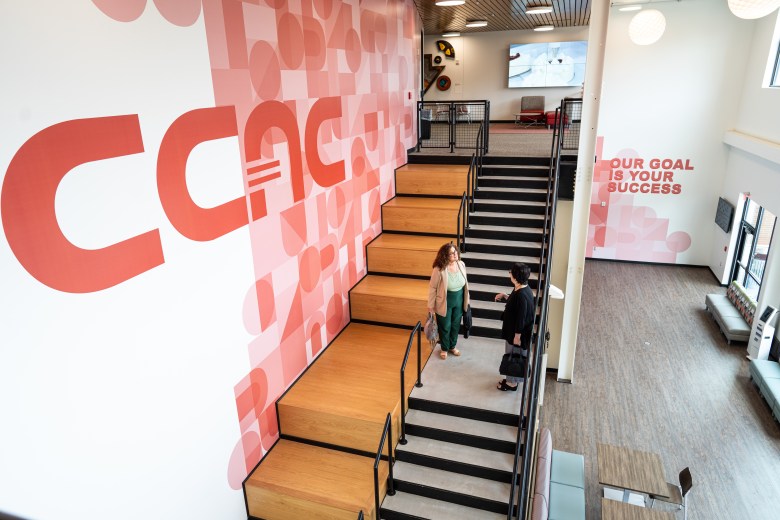
Yet when he left the service and tried to apply that expertise toward an education at Pittsburgh’s Community College of Allegheny County, or CCAC, he was given just three credits toward a required class in physical education.
Wells moved forward anyway, going on to get his bachelor’s and doctoral degrees. Now he’s CCAC’s provost and involved in a citywide project to help other people transform their military and work experience into academic credit.
What’s happening in Pittsburgh is part of growing national momentum behind letting students — especially the increasing number who started but never completed a degree — cash in their life skills toward finally getting one, saving them time and money.
Colleges and universities have long purported to provide what’s known in higher education as credit for prior learning. But they have made the process so complex, slow and expensive that only about 1 in 10 students actually completes it.
Many students don’t even try, especially low-income learners who could benefit the most, according to a study by the Western Interstate Commission for Higher Education and the Council for Adult and Experiential Learning, or CAEL.
“It drives me nuts” that this promise has historically proven so elusive, Wells said, in his college’s new Center for Education, Innovation & Training.
Stephen Wells, provost at the Community College of Allegheny County in Pittsburgh. An Air Force veteran, Wells got only a handful of academic credits for his military experience. Now he’s part of an effort to expand that opportunity for other students. Credit: Nancy Andrews for The Hechinger Report
That appears to be changing. Nearly half of institutions surveyed last year by the American Association of Collegiate Registrars and Admissions Officers, or AACRAO, said they have added more ways for students to receive these credits — electricians, for example, who can apply some of their training toward academic courses in electrical engineering, and daycare workers who can use their experience to earn degrees in teaching.
Related: Interested in innovations in higher education? Subscribe to our free biweekly higher education newsletter.
The reason universities and colleges are doing this is simple: Nearly 38 million working-age Americans have spent some time in college but never finished, according to the National Student Clearinghouse Research Center. Getting at least some of them to come back has become essential to these higher education institutions at a time when changing demographics mean that the number of 18-year-old high school graduates is falling.
“When higher education institutions are fat and happy, nobody looks for these things. Only when those traditional pipelines dry up do we start looking for other potential populations,” said Jeffrey Harmon, vice provost for strategic initiatives and institutional effectiveness at Thomas Edison State University in New Jersey, which has long given adult learners credit for the skills they bring.
Being able to get credit for prior learning is a huge potential recruiting tool. Eighty-four percent of adults who are leaning toward going back to college say it would have “a strong influence” on their decision, according to research by CAEL, the Strada Education Foundation and Hanover Research. (Strada is among the funders of The Hechinger Report, which produced this story.)
The Center for Education, Innovation & Training at the Community College of Allegheny County in Pittsburgh. The college is part of a citywide effort to give academic credit for older students’ life experiences. Credit: Nancy Andrews for The Hechinger Report
When Melissa DiMatteo, 38, decided to get an associate degree at CCAC to go further in her job, she got six credits for her previous training in Microsoft Office and her work experience as everything from a receptionist to a supervisor. That spared her from having to take two required courses in computer information and technology and — since she’s going to school part time and taking one course per semester — saved her a year.
“Taking those classes would have been a complete waste of my time,” DiMatteo said. “These are things that I do every day. I supervise other people and train them on how to do this work.”
On average, students who get credit for prior learning save between $1,500 and $10,200 apiece and nearly seven months off the time it takes to earn a bachelor’s degree, the nonprofit advocacy group Higher Learning Advocates calculates. The likelihood that they will graduate is 17 percent higher, the organization finds.
Justin Hand dropped out of college because of the cost, and became a largely self-taught information technology manager before he decided to go back and get an associate and then a bachelor’s degree so he could move up in his career.
He got 15 credits — a full semester’s worth — through a program at the University of Memphis for which he wrote essays to prove he had already mastered software development, database management, computer networking and other skills.
“These were all the things I do on a daily basis,” said Hand, of Memphis, who is 50 and married, with a teenage son. “And I didn’t want to have to prolong college any more than I needed to.”
Meanwhile, employers and policymakers are pushing colleges to speed up the output of graduates with skills required in the workforce, including by giving more students credit for their prior learning. And online behemoths Western Governors University and Southern New Hampshire University, with which brick-and-mortar colleges compete, are way ahead of them in conferring credit for past experience.
“They’ve mastered this and used it as a marketing tool,” said Kristen Vanselow, assistant vice president of innovative education and partnerships at Florida Gulf Coast University, which has expanded its awarding of credit for prior learning. “More traditional higher education institutions have been slower to adapt.”
It’s also gotten easier to evaluate how skills that someone learns in life equate to academic courses or programs. This has traditionally required students to submit portfolios, take tests or write essays, as Hand did, and faculty to subjectively and individually assess them.
Now some institutions, states, systems and independent companies are standardizing this work or using artificial intelligence to do it. The growth of certifications from professional organizations such as Amazon Web Services and the Computing Technology Industry Association, or CompTIA, has helped, too.
“You literally punch [an industry certification] into our database and it tells you what credit you can get,” said Philip Giarraffa, executive director of articulation and academic pathways at Miami Dade College. “When I started here, that could take anywhere from two weeks to three months.”
Data provided by Miami Dade shows it has septupled the number of credits for prior learning awarded since 2020, from 1,197 then to 7,805 last year.
“These are students that most likely would have looked elsewhere, whether to the [online] University of Phoenix or University of Maryland Global [Campus]” or other big competitors, Giarraffa said.
Fifteen percent of undergraduates enrolled in higher education full time and 40 percent enrolled part time are 25 or older, federal data show — including people who delayed college to serve in the military, volunteer or do other work that could translate into academic credit.
“Nobody wants to sit in a class where they already have all this knowledge,” Giarraffa said.
At Thomas Edison, police academy graduates qualify for up to 30 credits toward associate degrees. Carpenters who have completed apprenticeships can get as many as 74 credits in subjects including math, management and safety training. Bachelor’s degrees are often a prerequisite for promotion for people in professions such as these, or who hope to start their own companies.
The University of Memphis works with FedEx, headquartered nearby, to give employees with supervisory training academic credit they can use toward a degree in organizational leadership, helping them move up in the company.
The University of North Carolina System last year launched its Military Equivalency System, which lets active-duty and former military service members find out almost instantly, before applying for admission, if their training could be used for academic credit. That had previously required contacting admissions offices, registrars or department chairs.
Among the reasons for this reform was that so many of these prospective students — and the federal education benefits they get — were ending up at out-of-state universities, the UNC System’s strategic plan notes.
“We’re trying to change that,” said Kathie Sidner, the system’s director of workforce and partnerships. It’s not only for the sake of enrollment and revenue, Sidner said. “From a workforce standpoint, these individuals have tremendous skill sets and we want to retain them as opposed to them moving somewhere else.”
California’s community colleges are also expanding their credit for prior learning programs as part of a plan to increase the proportion of the population with educations beyond high school.
“How many people do you know who say, ‘College isn’t for me?’ ” asked Sam Lee, senior advisor to the system’s chancellor for credit for prior learning. “It makes a huge difference when you say to them that what they’ve been doing is equivalent to college coursework already.”
In Pittsburgh, the Regional Upskilling Alliance — of which CCAC is a part — is connecting job centers, community groups, businesses and educational institutions to create comprehensive education and employment records so more workers can get credit for skills they already have.
That can provide a big push, “especially if you’re talking about parents who think, ‘I’ll never be able to go to school,’ ” said Sabrina Saunders Mosby, president and CEO of the nonprofit Vibrant Pittsburgh, a coalition of business and civic leaders involved in the effort.
“Our members are companies that need talent,” Mosby said.
There’s one group that has historically pushed back against awarding credit for prior learning: university and college faculty concerned it might affect enrollment in their courses or unconvinced that training provided elsewhere is of comparable quality. Institutions have worried about the loss of revenue from awarding credits for which students would otherwise have had to pay.
That also appears to be changing, as universities leverage credit for prior learning to recruit more students and keep them enrolled for longer, resulting in more revenue — not less.
“That monetary factor was something of a myth,” said Beth Doyle, chief of strategy at CAEL.
Faculty have increasingly come around, too. That’s sometimes because they like having experienced students in their classrooms, Florida Gulf Coast’s Vanselow said.
Still, while many recognize it as a recruiting incentive, most public universities and colleges have had to be ordered to confer more credits for prior learning by legislatures or governing boards. Private, nonprofit colleges remain stubbornly less likely to give it.
More than two-thirds charge a fee for evaluating whether other kinds of learning can be transformed into academic credit, an expense that isn’t covered by financial aid. Roughly one in 12 charge the same as it would cost to take the course for which the credits are awarded.
Debra Roach, vice president for workforce development at the Community College of Allegheny County in Pittsburgh. The college is working on giving academic credit to students for their military, work and other life experience. Credit: Nancy Andrews for The Hechinger Report
There are other confounding roadblocks and seemingly self-defeating policies. CCAC runs a noncredit program to train paramedics, for example, but won’t give people who complete it credits toward its for-credit nursing degree. Many leave and go across town to a private university that will. The college is working on fixing this, said Debra Roach, its vice president of workforce development.
It’s important to see this from the students’ point of view, said Tracy Robinson, executive director of the University of Memphis Center for Regional Economic Enrichment.
“Credit for prior learning is a way for us to say, ‘We want you back. We value what you’ve been doing since you’ve been gone,’ ” Robinson said. “And that is a total game changer.”
Contact writer Jon Marcus at 212-678-7556, [email protected]orjpm.82 on Signal.
The Hechinger Report provides in-depth, fact-based, unbiased reporting on education that is free to all readers. But that doesn’t mean it’s free to produce. Our work keeps educators and the public informed about pressing issues at schools and on campuses throughout the country. We tell the whole story, even when the details are inconvenient. Help us keep doing that.