Tag: expert

  • Algal bloom expert loses job amid outbreak – Campus Review

    Algal bloom expert loses job amid outbreak – Campus Review

    After nearly three decades researching South Australia’s oceans at Flinders University, a leading algal bloom expert now faces an uncertain future after being told his role is being scrapped under a major restructure.

    Please login below to view content or subscribe now.

    Membership Login

    Source link

  • Why one reading expert says ‘just-right’ books are all wrong

    Why one reading expert says ‘just-right’ books are all wrong

    by Jill Barshay, The Hechinger Report
    October 27, 2025

    Timothy Shanahan, a professor emeritus at the University of Illinois at Chicago, has spent his career evaluating education research and helping teachers figure out what works best in the classroom. A leader of the National Reading Panel, whose 2000 report helped shape what’s now known as the “science of reading,” Shanahan has long influenced literacy instruction in the United States. He also served on the National Institute for Literacy’s advisory board in both the George W. Bush and Barack Obama administrations.

    Shanahan is a scholar whom I regularly consult when I come across a reading study, and so I was eager to interview him about his new book, “Leveled Reading, Leveled Lives.” (Harvard Education Press, September 2025). In it, Shanahan takes aim at one of the most common teaching practices in American classrooms: matching students with “just-right” books. 

    He argues that the approach — where students read different texts depending on their assessed reading level — is holding many children back. Teachers spend too much time testing students and assigning leveled books, he says, instead of helping all students learn how to understand challenging texts.

    “American children are being prevented from doing better in reading by a longstanding commitment to a pedagogical theory that insists students are best taught with books they can already read,” Shanahan writes in his book. “Reading is so often taught in small groups — not so teachers can guide efforts to negotiate difficult books, but to ensure the books are easy enough that not much guidance is needed.”

    Comprehension, he says, doesn’t grow that way.

    The trouble with leveled reading

    Grouping students by ability and assigning easier or harder books — a practice known as leveled reading — remains deeply embedded in U.S. schools. A 2018 Thomas B. Fordham Institute survey found that 62 percent of upper elementary teachers and more than half of middle school teachers teach at students’ reading level rather than at grade level.  

    That may sound sensible, but Shanahan says it’s not helping anyone and is even leading teachers to dispense with reading altogether. “In social studies and science, and these days, even in English classes,” he said in an interview, “teachers either don’t assign any readings or they read the texts to the students.” Struggling readers aren’t being given the chance — or the tools — to tackle complex material on their own.

    Instead, Shanahan believes all students should read grade-level texts together, with teachers providing more support for those who need it.

    Related: Our free weekly newsletter alerts you to what research says about schools and classrooms.

    “What I’m recommending is instructional differentiation,” he said in our interview. “Everyone will have the same instructional goal — we’re all going to learn to read the fourth-grade text. I might teach a whole-class lesson and then let some kids move on to independent work while others get more help. Maybe the ones who didn’t get it, read the text again with my support. By the end, more students will have reached the learning goal — and tomorrow the whole class can take on another text.”

    27 different ways

    Shanahan’s approach doesn’t mean throwing kids into the deep end without help. His book outlines a toolbox of strategies for tackling difficult texts, such as looking up unfamiliar vocabulary, rereading confusing passages, or breaking down long sentences. “You can tip over into successful reading 27 different ways,” he said, and he hopes future researchers discover many more. 

    He is skeptical of drilling students on skills like identifying the main idea or making inferences. “We’ve treated test questions as the skill,” he said. “That doesn’t work.”

    There is widespread frustration over the deterioration of American reading achievement, especially among middle schoolers. (Thirty-nine percent of eighth graders cannot reach the lowest of three achievement levels, called “basic,” on the National Assessment of Educational Progress.) But there is little agreement among reading advocates on how to fix the problem. Some argue that what children primarily need is more knowledge to grasp unfamiliar ideas in a new reading passage, but Shanahan argues that background knowledge won’t be sufficient or as powerful as explicit comprehension instruction. Other reading experts agree. Nonie Lesaux, dean of the Harvard Graduate School of Education who specializes in literacy in her own academic work, endorsed Shanahan’s argument in an October 2025 online discussion of the new book. 

    Shanahan is most persuasive in pointing out that there isn’t strong experimental evidence to show that reading achievement goes up more when students read a text at their individual level. By contrast, a 2024 analysis found that the most effective schools are those that keep instruction at grade level. Still, Shanahan acknowledges that more research is needed to pinpoint which comprehension strategies work best for which students and in which circumstances.

    Misunderstanding Vygotsky

    Teachers often cite the Russian psychologist Lev Vygotsky’s “zone of proximal development” to justify giving students books that are neither too easy nor too hard. But Shanahan says that’s a misunderstanding of Vygotsky’s work.

    Vygotsky believed teachers should guide students to learn challenging things they cannot yet do on their own, he said.

    He offers an analogy: a mother teaching her child to tie their shoes. At first, she demonstrates while narrating the steps aloud. Then the child does one step, and she finishes the rest. Over time, the mother gradually releases control and the child ties a bow on his own. “Leveled reading,” Shanahan said, “is like saying, ‘Why don’t we just get Velcro?’ This is about real teaching. ‘Boys and girls, you don’t know how to ride this bike yet, but I’m going to make sure you do by the time we’re done.’ ”

    Related: What happens to reading comprehension when students focus on the main idea

    Shanahan’s critique of reading instruction applies mainly from second grade onward, after children learn how to read and are focusing on understanding what they read. In kindergarten and first grade, when children are still learning phonics and how to decode the words on the page, the research evidence against small group instruction with different level texts isn’t as strong, he said. 

    Learning to read first – decoding – is important. Shanahan says there are rare exceptions to teaching all children at grade level. 

    “If a fifth grader still can’t read,” Shanahan said, “I wouldn’t make that child read a fifth-grade text.” That child might need separate instruction from a reading specialist.

    Advanced readers, meanwhile, can be challenged in other ways, Shanahan suggests, through independent reading time, skipping ahead to higher-grade reading classes, or by exploring complex ideas within grade-level texts.

    The role of AI — and parents

    Artificial intelligence is increasingly being used to rewrite texts for different difficulty levels. Shanahan is skeptical of that approach. Simpler texts, whether written by humans or generated by AI, don’t teach students to improve their reading ability, he argues.

    Still, he’s intrigued by the idea of using AI to help students “climb the stairs” by instantly modifying a single text to a range of reading levels, say, to third-, fifth- and seventh-grade levels, and having students read them in quick succession. Whether that boosts comprehension is still unknown and needs to be studied.

    AI might be most helpful to teachers, Shanahan suspects, to help point to a sentence or a passage that tends to confuse students or trip them up. The teacher can then address those common difficulties in class. 

    Shanahan worries about what happens outside of school: Kids aren’t reading much at all.

    He urges parents to let children read whatever they enjoy — regardless if it’s above or below their level — but to set consistent expectations. “Nagging may not be effective,” he said. “But you can be specific: ‘After dinner Thursday, read the first chapter. When you’re done, we’ll talk about it, and then you can play a computer game or go on your phone.’ ”

    Too often, he says, parents back down when kids resist. “They are the kids. We are the adults,” Shanahan said. “We’re responsible. Let’s step up and do what’s right for them.”

    Contact staff writer Jill Barshay at 212-678-3595, jillbarshay.35 on Signal, or [email protected].

    This story about reading levels was produced by The Hechinger Report, a nonprofit, independent news organization focused on inequality and innovation in education. Sign up for Proof Points and other Hechinger newsletters.

    This <a target=”_blank” href=”https://hechingerreport.org/proof-points-shanahan-leveled-reading/”>article</a> first appeared on <a target=”_blank” href=”https://hechingerreport.org”>The Hechinger Report</a> and is republished here under a <a target=”_blank” href=”https://creativecommons.org/licenses/by-nc-nd/4.0/”>Creative Commons Attribution-NonCommercial-NoDerivatives 4.0 International License</a>.<img src=”https://i0.wp.com/hechingerreport.org/wp-content/uploads/2018/06/cropped-favicon.jpg?fit=150%2C150&amp;ssl=1″ style=”width:1em;height:1em;margin-left:10px;”>

    <img id=”republication-tracker-tool-source” src=”https://hechingerreport.org/?republication-pixel=true&post=113055&amp;ga4=G-03KPHXDF3H” style=”width:1px;height:1px;”><script> PARSELY = { autotrack: false, onload: function() { PARSELY.beacon.trackPageView({ url: “https://hechingerreport.org/proof-points-shanahan-leveled-reading/”, urlref: window.location.href }); } } </script> <script id=”parsely-cfg” src=”//cdn.parsely.com/keys/hechingerreport.org/p.js”></script>

    Source link

  • Expert council on governance reports – Campus Review

    Expert council on governance reports – Campus Review

    Universities will be required to justify how much is spent on consultants and disclose whether vice-chancellors are drawing multiple incomes as recommended by a governance committee on Saturday.

    Please login below to view content or subscribe now.

    Membership Login

    Source link

  • Return of the expert – HEPI

    Return of the expert – HEPI

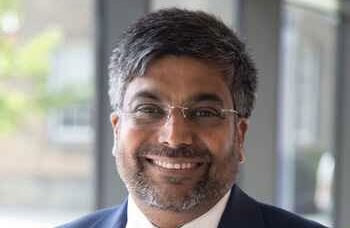
    • Professor Nishan Canagarajah, President and Vice-Chancellor of the University of Leicester, argues it is time for universities to engage their political muscles and shift the narrative.
    • Professor Canagarajah will join a panel at the Labour Party Conference on ‘What can universities do for you? How “civic universities” are supporting their communities’ on Monday, 29 September 2025 – further details are at https://www.tickettailor.com/events/universityofleicesterpublicaffairs.

    An ideological challenge

    ‘Universities are part of a “crumbling public realm”’.  Keir Starmer’s declaration in Brighton last year provided a clarion call for the need to invest in the sector which he argued, like other public services such as the NHS and prisons, had suffered a legacy of chronic underinvestment.

    But what is also intrinsic in Starmer’s observation is that universities are losing their place in society. We have lost our voice – drowned out by arguments over the value of a degree, immigration and foreign students, tuition fees and ‘wokeness’. Universities are not seen as being relevant and their wider societal value is often misunderstood. In all the noise around earning a degree – often reduced to a transaction where costs and benefits are weighed – the deeper purpose is frequently lost. 

    It was famously said by Michael Gove that ‘the people of this country have had enough of experts’ – but perhaps now the time has come for experts in universities to re-enter the stage.

    UK universities have always been a cornerstone of national progress. From pioneering life-changing research to nurturing the next generation of leaders, our institutions are woven into the fabric of our society and communities. Now more than ever, we have an opportunity to step forward with confidence to help tackle the pressing, economic, social and health challenges we are facing.

    It is time for a new narrative as we engage our political muscles and demonstrate universities are vital to shaping a brighter future for Britain. 

    From wokeness to winner – how to change the narrative

    Four years ago, the Daily Mail headline screamed ‘The University of Woke’ in describing Leicester’s efforts to widen its curriculum. In 2025, Leicester became the Daily Mail University of the Year, described as ‘a model university for the 21st century’ and was shortlisted for both Times Higher Education University of the Year and The Times and Sunday Times University of the Year. 

    There are lessons to be learnt from Leicester’s journey from pariah to exemplar:

    1. Do not be afraid to do the right thing: Despite the media onslaught, Leicester persevered with its agenda to break down barriers and develop a non-elitist curriculum. Now the University is heralded as a model of inclusivity.
    2. Be bold-stand above the parapet: Universities do not need to shout louder – they need to be heard more. We must regain the ground we have lost historically under attack of being too politically liberal, lacking ideological diversity and over free speech.
    3. Show relevance to society: The disconnect between universities and the public must be tackled. Leicester has joined forces with others to become a part of communities, to engage with them and open its facilities. Our impacts are being brought to the attention not only of the public, but to key stakeholders and to politicians.  It is about regaining political and public trust. It is why we are here in Liverpool for the Labour Party Conference.
    4. Rediscover our confidence: From IVF to DNA profiling, the World Wide Web to AI, UK universities have shaped the modern world. At Leicester, we proudly celebrate Sir Alec Jeffreys’s discovery of genetic fingerprinting—not just for its scientific brilliance, but for its enduring inspiration. These discoveries connect with the public. But beyond the headlines are thousands of quieter innovations – new research and policy insights, business support, school outreach, and community partnerships – that improve lives every day. It’s time to shine a light on these contributions and celebrate the sector’s role in building a better Britain.

    More than degrees 

    Universities are not just places of learning – they are engines of innovation, inclusion, and economic growth. Consider the impact: 

    • We contribute over £115 billion to the UK economy annually and support 815,000 jobs. 
    • International students bring a net benefit of £37.4 billion to the UK, enriching our campuses and communities. 
    • Every £1 of public investment in universities yields £14 in economic return. 
    • We train the doctors, nurses, teachers, and public servants who keep our country running. 
    • Our research leads to cleaner energy, smarter cities, and healthier lives. 

    These contributions are felt in every region, every sector, and every household.  

    A paradox 

    Yet today, we face a paradox: a nation that benefits immensely from its universities but often questions their value. The sector is buffeted by direct and indirect policy headwinds – from immigration restrictions and post-study visa curbs to fragmented regional R&D funding and the prospect of an international levy – which according to a new report from the Centre for Cities, Town and gown: The role of universities in city economies will have a greater impact in Leicester than anywhere else in the UK. 

    The result of this paradox? An untapped potential that we must address head-on. 

    With the Labour Government more than a year into its term, we have an opportunity to put universities back at the heart of our national conversation – as a positive force for change. But we can’t expect others to make the case for us while we sit back silently and nod sagely. We must roll up our sleeves and demonstrate how we can serve Government priorities.

    A solution

    With Labour’s five missions – economic growth, opportunity, NHS renewal, clean energy, and safer streets – universities are uniquely placed to help deliver real change. We are not a cost to be managed, but a partner to empower the country. 

    At Leicester, for example, our Space Park Leicester significantly contributes to the UK government’s priorities for economic growth and clean energy by fostering a collaborative hub for the space sector and leveraging satellite data for environmental solutions. The £100m facility is an innovation hotbed for driving job creation, inward investment and working with industry to develop new technologies which support clean energy transition.

    With respect to NHS renewal, we partner with the University Hospitals of Leicester NHS Trust to deliver world-class clinical innovations in areas such as diabetes, ethnic health and respiratory diseases, and secure real change in the city and beyond. We are also diversifying the medical workforce through a ground-breaking Medicine with Foundation Year programme designed as a widening-participation route to attract students from underrepresented backgrounds who have the potential to succeed in medicine.

    We are creating opportunities for school-aged children from disadvantaged backgrounds through our IntoUniversity Centre, which supports young people to improve academic attainment, raise aspirations and progress into higher education or other career paths. While helping to ensure safer streets through a strong partnership with police, community engagement and research projects, including the creation of the Policing Academic Centre of Excellence which uses the latest advances in science and technology to solve strategic and operational policing challenges.

    Every university in the UK has a similar story to tell with their own impactful examples that help shape a brighter future.

    That’s why the University of Leicester, along with university colleagues from across the sector, will be attending this year’s party conferences, to engage constructively with policymakers, share ideas, and build alliances. We believe in collaboration, not confrontation – and in the power of shared purpose.

    In a future that is increasingly knowledge intensive and in which our global success will be predicated on our use of technology, AI and big data, universities are central to the UK’s ambitions and future success. It is time for the return of the expert – time for universities to step forward, shape the debate, participate in the national conversation and ensure that universities can continue to drive progress in the way that we have for many centuries. 

    Source link

  • Be a Visible Expert with Dr Lily Rosewater of Pitch Science

    Be a Visible Expert with Dr Lily Rosewater of Pitch Science

    Dr Lily Rosewater designs websites, brand assets, and has a service for social media on demand at her company, Pitch Science. I knew she’d be a great expert to share with you. She joins me live from Australia to talk about what it means to be a visible expert for scientists and researchers.

    Lily is an expert for scientist websites, social media, and branding through her company, Pitch Science. What about you? What would it mean to be more visible as an expert yourself? We talk about how many academics are known in their communities, but hidden online. Are you one of the HiddenExperts™? Whether it’s been intentional for you or not, you may want people to find you and your research online. Lily can help you too.

    This interview will be also be shared on Spotify soon.

    Dr Lily Rosewater is a science communicator, neuroscientist, and founder of Pitch Science. Armed with experience in both scientific research and digital marketing, Lily helps life science organisations and individual scientists share their brilliant ideas with the public to produce meaningful change.

    Lily Rosewater, PhD

    At Pitch Science, she turns science into stories through her purposeful, strategic, and human-centred online science content. Lily’s branding and website design services transform HiddenExperts™️ into VisibleExperts, so that scientists and science brands are ready to guide online conversations and get their work seen by those who matter. She is also empowering scientists to do science communication themselves and extend their reach beyond traditional academic channels with science communication training sessions and her Pitch Lab community. Because the more research expertise is shared online, the more it benefits everyone.

    Source link

  • Free Speech Expert Discusses Open Expression and Trump

    Free Speech Expert Discusses Open Expression and Trump

    The University of California National Center for Free Speech and Civic Engagement launched in 2017, at a time when students were shouting down conservative speakers on campus, raising questions about what role the First Amendment did—and should—play in higher education.

    Just eight years later, things have only gotten more complicated—first in the aftermath of an explosive protest movement against Israel’s war in Gaza and then in the wake of the Trump administration’s censorship across all areas of academe.

    Amid the chaos, the center and its fellows—researchers from a breadth of disciplines who work on projects related to open expression and civic engagement—continue to educate universities about the First Amendment and investigate the day’s most pressing free speech issues.

    Its executive director, Michelle Deutchman, who worked as an attorney for the Anti-Defamation League for 14 years before joining the center, stopped by the Inside Higher Ed office in Washington, D.C., last week to discuss the federal government’s attacks on free expression in higher education. The interview has been edited for length and clarity.

    1. What are your biggest concerns with regard to the Trump administration and free speech and open expression in higher ed right now?

    Well, sadly, there’s kind of a long list. I think, from my vantage point, one of the greatest concerns is seeing students, and particularly international students, being, basically, taken away on what appears to be the basis of viewpoints and opinions that they might have shared, either in the form of protest or, in one case, an op-ed. That really flies in the face of exactly what the First Amendment is supposed to protect against, especially in a public institution, which is that it’s supposed to be a restraint on government. In fact, what we’re seeing right now is the government stepping over the line of what is permitted, and that is definitely creating, I think, a chilling effect, not just for international students, but for students across the board, whether they’re protesting or not.

    I also think that the specter of investigations on campuses—this list of 60 campuses [being investigated for alleged antisemitism], this idea that if you’re on a campus that’s potentially going to be under investigation—might impact what you say in class, outside of class, how you teach, everything that’s fundamental to the academy.

    2. What are some of the most common questions you’re getting about what is going on?

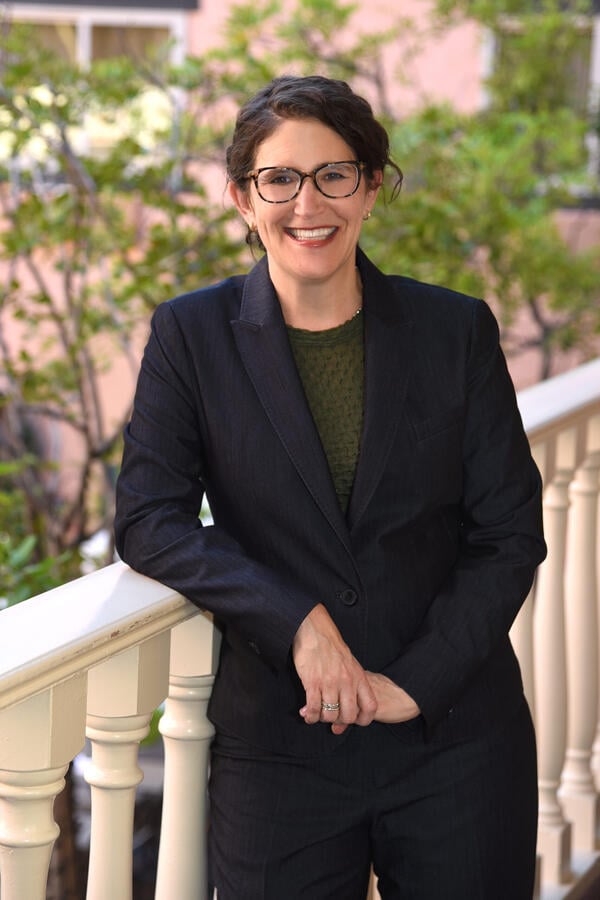
    Michelle Deutchman, a light-skinned woman wearing glasses and a dark suit over a dark green top.

    Deutchman has led UC’s National Center for Free Speech and Civic Engagement for eight years.

    Laurel Hungerford

    I don’t get as many questions as you would think, because I don’t give legal advice, and right now, what a lot of people want is legal advice. But I think one of the things that I’m struggling with is, how do you talk about open expression and dialogue in a moment when it’s largely being suppressed on campuses? One of the questions that people have been asking is what to say to students about the risk factors in terms of being very vocal with your opinions, and how should administrators address that—both wanting to, of course, encourage them to use their voices, but also wanting to be transparent about what the risks might be.

    There’s just a lot of other, bigger questions that are just about, what does this mean in general for higher education? Is this like an existential moment? What about the coercive use of money? A lot of questions of: Can the government do that? And I think it’s a really challenging situation where the answer is: Not sure that they should be doing it, but they are. So, how do we handle that sort of in-between space while we wait for the law to catch up to what’s going on on the ground?

    3. There’s been a lot of emphasis on civic dialogue education as one antidote to tensions around political speech on campus. Do you feel like this moment is sort of setting those efforts back at all?

    I don’t want to say they’re setting them back. I worry a little that they might be getting set aside. And that’s a concern that I’ve had, really, since after Oct. 7, where we saw so much time and energy go into the basics about the First Amendment and about time, place and manner, and about whether or not to use law enforcement, that there became a big focus on the enforcement regulations as opposed to sort of education. I think now, so much energy is being put into how to defend higher education against this assault that I worry that efforts that focus on how we teach not just students but all members of higher education communities to engage with one another and listen to one another and build the muscle of civic dialogue—I worry that there isn’t enough bandwidth to pay attention to that, and setting it aside, I think, is to the detriment of everyone at this moment.

    4. How is Trump’s cutting of grants his administration deems related to diversity, equity and/or inclusion connected to the government’s other attacks on speech?

    I think that the cutting of those kinds of grants is just another attempt at government censorship of speech. Expression and speech are the cornerstones of the creation and transmission of knowledge. So, I think that it you’re stopping grants about certain topics, topics that are either being researched or topics that are being taught, that is something that falls sort of in the viewpoint discrimination area and really runs afoul of the Constitution. We’ve certainly seen some successes in court cases and injunctions, but I think part of the problem is the gap between when an executive order is signed and when an injunction happens, the chilling effect that happens across the university, and this idea that I don’t know that you can unring certain bells.

    5. Though many are calling the Trump administration’s attacks unprecedented in many ways, there have been other moments in history when free speech on college campuses has been under assault. What do those moments teach us about what is happening today?

    I wish I could tell you that I am a historian, but I’m a lawyer, so I don’t necessarily have that historical perspective. Certainly, I think people say that this is the greatest threat to academic freedom and to the autonomy of the university since McCarthyism. It’s hard to know how, then, to take that information and do something with it, right? I mean, the hopeful take is: Well, we made it through that, even though it was a dark time.

    I mean, look, I’m a [University of California, Berkeley] Cal Bear. UC had people do loyalty oaths; it was not a good moment, and look where we are now. I think that is sort of the optimistic hope.

    I think the less optimistic [perspective] is that, in some ways, what we’re experiencing is much more far-reaching, and we will just have to wait and see what happens.

    Source link

  • Monash underpays $7.6m as ‘expert council’ on uni governance members announced

    Monash underpays $7.6m as ‘expert council’ on uni governance members announced

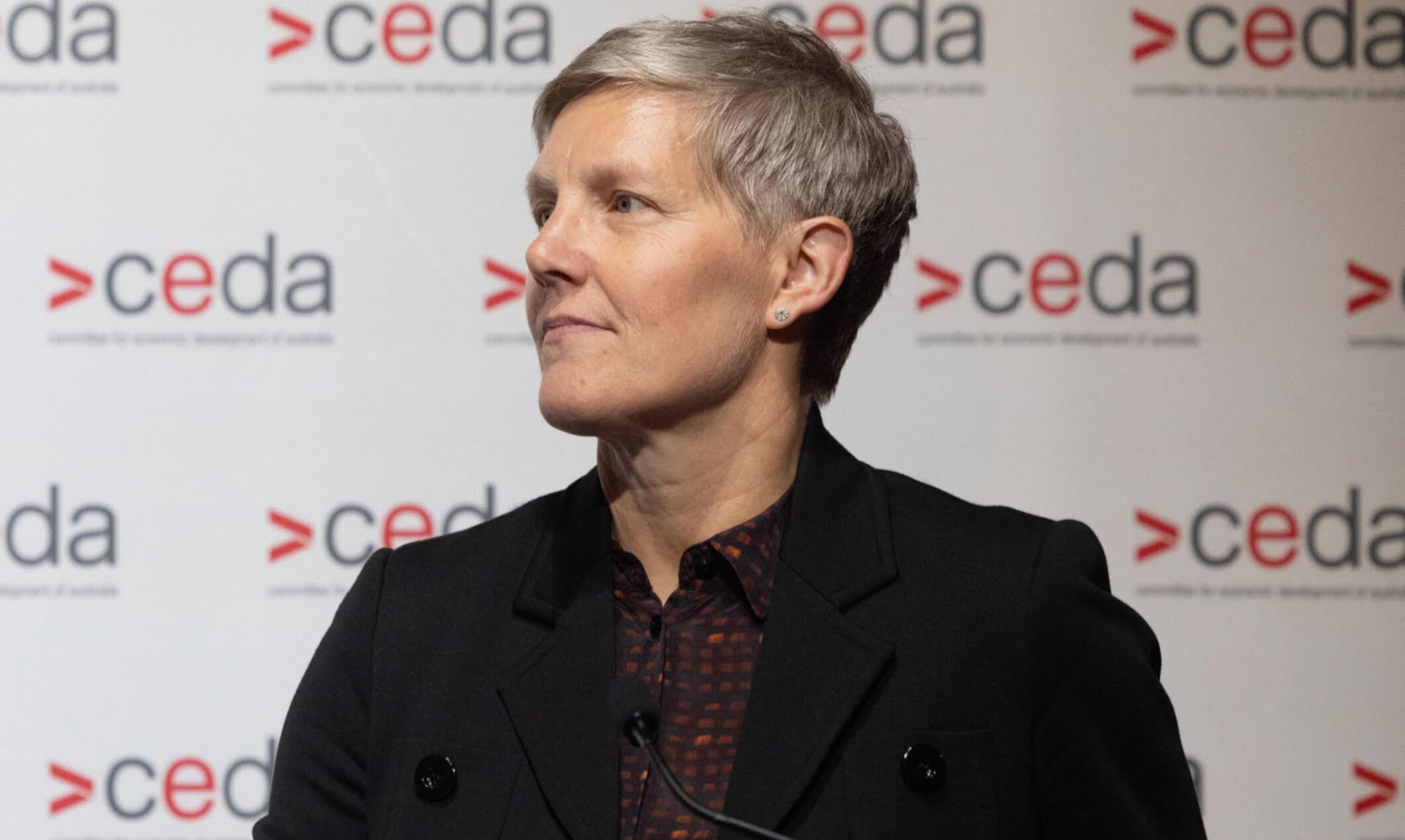
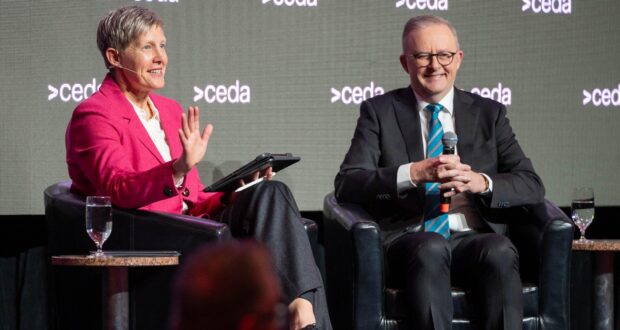
    CEDA CEO Melinda Cilento interviewing Prime Minister Anthony Albanese in August last year. Picture: Irene Dowdy

    The members who will sit on the council overseeing university governance and advising government on “universities being good employers” have been announced.

    Please login below to view content or subscribe now.

    Membership Login

    Source link