Tag: Explore

  • With News Decoder, students explore their role in the world

    With News Decoder, students explore their role in the world

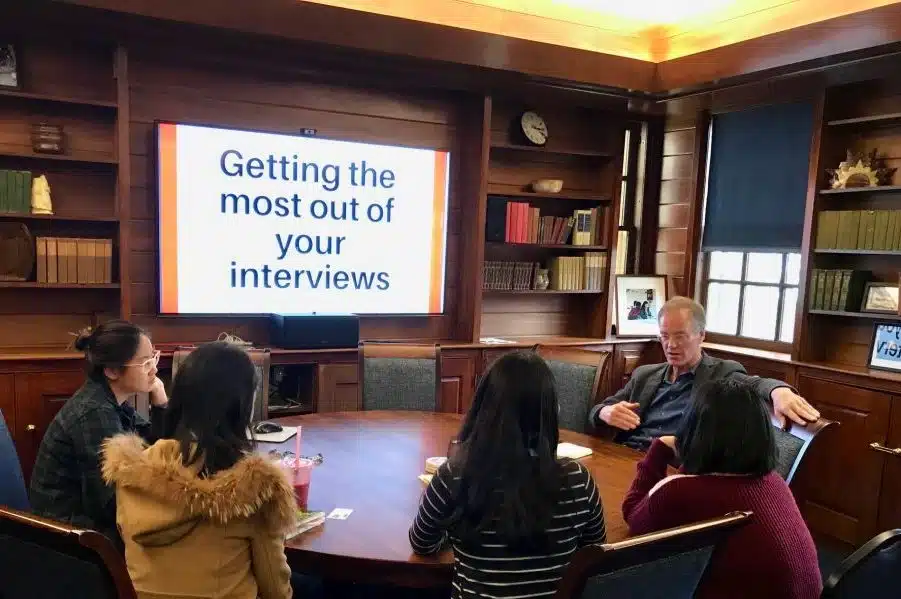
    Back in 2020, during the height of the Covid epidemic, high school students in the U.S. state of Connecticut sat down with News Decoder founder Nelson Graves to explore a number of thorny topics that ranged from the death penalty to whether animals should be kept in zoos.

    The students in “American Voices & Choices: Ethics in Modern Society” at Westover School had been working with News Decoder since the start of that academic year, mastering the process we call Pitch, Report, Draft and Revise — or PRDR — to identify topical issues at the intersection of ethics and public policy.

    They pitched ideas they wanted to report on: teen health; police brutality; abortion; economic privilege in the environmental movement; the risks of experimental vaccines; the impact of alcohol on youth.

    Later, each student received detailed feedback from a News Decoder editor, aimed at helping them narrow their research and produce original reporting.

    Westover was an early News Decoder school partner. Since our founding 10 years ago, News Decoder has worked with high school and university students in 89 schools across 23 countries.

    Decoding news in school

    Teachers have used us as part of their course curricula, as extra credit assignments and as standalone learning opportunities for their students.

    At Realgymnasium Rämibühl Zürich in Switzerland, teacher Martin Bott brings News Decoder in each year. In one weeklong workshop, students produced podcasts. Over five days, they pitched News Decoder stories about a problem they identified in their local communities, identified an expert to interview, found how that problem was relevant to people in other countries and then wrote a podcast script, revised it and recorded it. “[News Decoder] enabled me to do a few projects which really open up perspectives for the students, give them a taste of life beyond the classroom and of the world of journalism,” Bott said. 

    In another workshop for RGZH, News Decoder turned students into “foreign correspondents.” They were tasked with finding stories in Zurich that people in other countries would find interesting. Like the students in the podcasting workshop, they then found an expert to interview, wrote a draft and revised it with the goal of publishing it on News Decoder. 

    One student in the workshop noticed a demonstration of people with dogs and got up the nerve to talk to one of them. They were from an organization that rescued Spanish greyhounds and she decided it would be a good idea for a News Decoder story. The story she wrote ended up as one of News Decoder’s most-read stories of all time.

    Not only have Bott’s students been able to publish stories on News Decoder, many of these stories, including the article about the greyhounds, have won awards in our twice yearly global storytelling competition. 

    “We’ve been delighted to get so many of those stories published on News Decoder,” Bott said. “That’s very, very motivating for the students. And it’s a wonderful learning process for them because they realise it’s not just about school rules and so on out there.”

    Challenging students to do more

    Bott said that working with professionals at News Decoder gets the students to step up. “When you’re a journalist, you’ve got a responsibility,” he said. “That’s something we’ve been able to talk about with journalists who’ve met us from various parts of the world through News Decoder. And you’ve got real pressure as well. And they’re not, I think they’re not quite used to that. So it really opens their eyes.”

    At The Hewitt School in New York, 15 teens at the all-girls school meet once a month as a club. They read and discuss News Decoder stories and pitch their own stories. They also prepare for a cross-border webinar; each year they join with students from a News Decoder partner school in another country, and decide with those students on a topic to explore. 

    They then research the topic, interview experts and come together with the students from the other school to present their findings live in a video conference before an audience of people from the two schools.

    In 2024, students from The Thacher School in California worked with peers at the European School of Brussels II on a webinar on consumerism and the human impacts of climate change. 

    Russell Spinney is faculty adviser for News Decoder at Thacher. “The webinars really were kind of ways just to get to know each other, discover that we actually do have some common interests. But not only that, that we also have problems that are similar,” he said. 

    “News Decoder’s workshops,” he said, “get students to think of ways to communicate their research beyond the classroom and connect with what’s going on in the world.” News Decoder has partnered schools this way in some 50 school-school webinars. 

    Source link

  • Explore the earnings for graduates of beauty schools, other certificate programs

    Explore the earnings for graduates of beauty schools, other certificate programs

    Schools that train hairstylists, dental assistants and health aides will be able to keep getting federal student loan dollars even if the professionals they turn out don’t end up earning any more than a high school graduate.

    That’s because programs like those, which don’t end in a college degree, were granted an exemption from new accountability measures under President Donald Trump’s ”big, beautiful bill.” 

    A Hechinger Report analysis of federal data found at least 1,280 such certificate programs could have been at risk of their students losing access to federal student loans — but a successful lobbying effort excluded them from the accountability measures. 

    Related: Become a lifelong learner. Subscribe to our free weekly newsletter featuring the most important stories in education. 

    Under the new law, most graduates of associate, bachelor’s and graduate degree programs must earn at least as much as someone who has only a high school diploma. If programs fail to hit that benchmark for two out of three years, their students will no longer be eligible for federal student loans. (And the schools must warn students of this possibility if they miss the mark for just one year). Without that borrowing power, many students could not afford to attend. And without those students, some of the schools might not survive. 

    Using the table below, see which certificate programs might have been flagged under the Trump law if not for the exemption. If graduates of a particular program ended up earning less than adults with only a high school diploma, that program could have faced losing eligibility for federal student loans under the Trump law.

    Methodology

    What exactly does the “big, beautiful bill” call for?

    The legislation requires the Department of Education to compare earnings of working adults who have only a high school diploma to the earnings of adults four years after they complete a degree program or graduate certificate. If a postsecondary program’s graduates fail to outearn adults with only high school degrees for two out of three years, students can no longer obtain federal student loans to attend that program. 

    The law also sets up an appeals process and a way for programs to apply to regain eligibility for federal student loans.

    What data was analyzed? 

    The law directs the education secretary to use census data to calculate median earnings for working adults with only a high school degree in the state where a program is located. The Department of Education will release regulations that spell out exactly how to do that math. For example, the law does not spell out whether it will look at census data averaged out over 12 months or a longer period of time. 

    For earnings data for high school graduates, The Hechinger Report relied on calculations from the Department of Education, which were derived from the 2022 American Community Survey 5-Year Estimates Public Use Microdata Sample from the U.S. Census Bureau.

    To calculate median earnings for graduates, the law directs the Education Department to put together earnings data for a cohort of at least 30 graduates who received federal student aid for postsecondary education — which typically includes grants, loans or work-study. Graduates are excluded if they’re currently enrolled in another higher education program. If there are fewer than 30 students in a cohort, the Education Department can lump together several years of data to get to 30 students.

    To get earnings data for graduates of certificate programs, Hechinger used a federal database known as College Scorecard. We downloaded field of study data for the 2022-23 school year. From this data, The Hechinger Report extracted information about certificate programs, at their main campuses, and included only programs that had median earnings data. The federal database suppresses earnings data for small programs. That left 4,431 currently operating certificate programs. 

    How was a program determined to be at possible risk of failing the accountability measure?

    For each program, The Hechinger Report compared median graduate earnings to the high school graduate earnings data of the state where the program was located. If the graduates earned less, the program was considered to be at risk.  

    Under the law, postsecondary programs that don’t meet the earnings benchmark for one year have to inform all current students that they are at risk of losing their eligibility for federal student loans. 

    Are there any limitations to the data? 

    The “big, beautiful bill” takes online programs into account by considering whether students live in the same state where their academic program is based. Under the law, student earnings are compared with national data rather than state data when fewer than half of enrolled students live in the state where the school is located, which may be the case for online programs. 

    The Hechinger Report’s analysis instead compares every program with state earnings. That’s because the College Scorecard field of study data set is limited and only includes information about graduates employed within the same state as the institution, not whether enrolled students live in the same state as the program. In addition, College Scorecard data provides earnings data for all graduates without a breakdown for whether they receive federal aid.

    Also, the Hechinger database looks at the available median earnings of all students four years after graduation for the school year 2022-23, regardless of the number of graduates. Though College Scorecard suppresses data on smaller programs, median earnings data is available for programs with 16 or more working graduates. The “big, beautiful bill” directs the Department of Education to instead lump together years of data to create cohorts of at least 30 students.

    Contact investigative reporter Marina Villeneuve at 212-678-3430 or [email protected] or on Signal at mvilleneuve.78

    This story about beauty schools was produced by The Hechinger Report, a nonprofit, independent news organization focused on inequality and innovation in education. Sign up for the Hechinger newsletter.

    The Hechinger Report provides in-depth, fact-based, unbiased reporting on education that is free to all readers. But that doesn’t mean it’s free to produce. Our work keeps educators and the public informed about pressing issues at schools and on campuses throughout the country. We tell the whole story, even when the details are inconvenient. Help us keep doing that.

    Join us today.

    Source link

  • UNITED ‘25: Principals explore solutions to pressing K-12 challenges

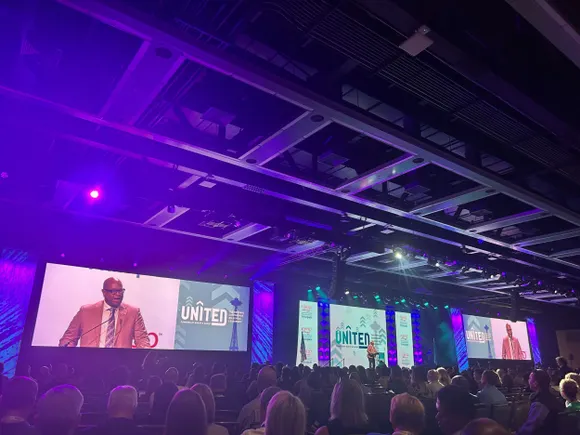
    UNITED ‘25: Principals explore solutions to pressing K-12 challenges

    Principals from K-12 schools across the country traveled to Seattle to attend UNITED, the National Conference on School Leadership, July 11-13, where they discussed and shared solutions for the many challenges facing the education sector.

    From concerns over school safety to the dilemma of chronic absenteeism, school leaders heard about innovative ways to tackle these issues by embracing local partnerships or looking into resources from national organizations. 

    Principals also learned about creative approaches emerging in the classroom. At one Indiana high school, for example, a public relations class is helping both to boost the school’s messaging to its community and to build students’ media skills. District administrators at Portland Public Schools, meanwhile, discussed how they’ve navigated and sustained a high-impact tutoring program in the state’s largest school district. 

    Read on for K-12 Dive’s coverage of the 2025 annual combined meeting of the National Association of Elementary School Principals and the National Association of Secondary School Principals.


    Source link

  • Students Explore STEM with Engineers

    Students Explore STEM with Engineers

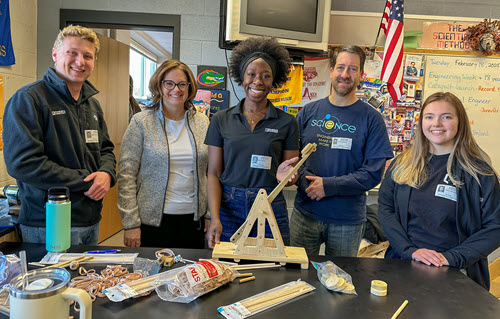
    Middletown, PA – Phoenix Contact engineers head back into the classroom this week to teach sixth-grade science class at Middletown Area Middle School in Middletown, Pa. The classes are part of Phoenix Contact’s National Engineers Week celebration.

    Phoenix Contact has worked with the school every February since 2007. The engineers lead hands-on lessons that make science fun. The goal is to inspire young people to consider careers in science, technology, engineering, and math (STEM).

    The lessons include:

    • Building catapults
    • Racing cookie tins down ramps
    • Building an electric motor
    • Learning about static electricity with the Van de Graaff generator

    “Our engineering team created this outreach program many years ago, and the partnership with Middletown Area School District has stood the test of time,” said Patty Marrero, interim vice president of human relations at Phoenix Contact. “National Engineers Week is a special time for them to share their passion for technology with students. It’s also our chance to thank our engineers for the creativity and innovations that drive our company forward.”

    About Phoenix Contact

    Phoenix Contact is a global market leader based in Germany. Since 1923, Phoenix Contact has created products to connect, distribute, and control power and data flows. Our products are found in nearly all industrial settings, but we have a strong focus on the energy, infrastructure, process, factory automation, and e-mobility markets. Sustainability and responsibility guide every action we take, and we’re proud to work with our customers to empower a smart and sustainable world for future generations. Our global network includes 22,000 employees in 100+ countries. Phoenix Contact USA has headquarters near Harrisburg, Pa., and employs more than 1,100 people across the U.S.

    For more information about Phoenix Contact or its products, visit www.phoenixcontact.com, call technical service at 800-322-3225, or email [email protected].

    eSchool News Staff
    Latest posts by eSchool News Staff (see all)

    Source link