Tag: Expression

  • Will free expression make a comeback at Haverford College?

    Will free expression make a comeback at Haverford College?

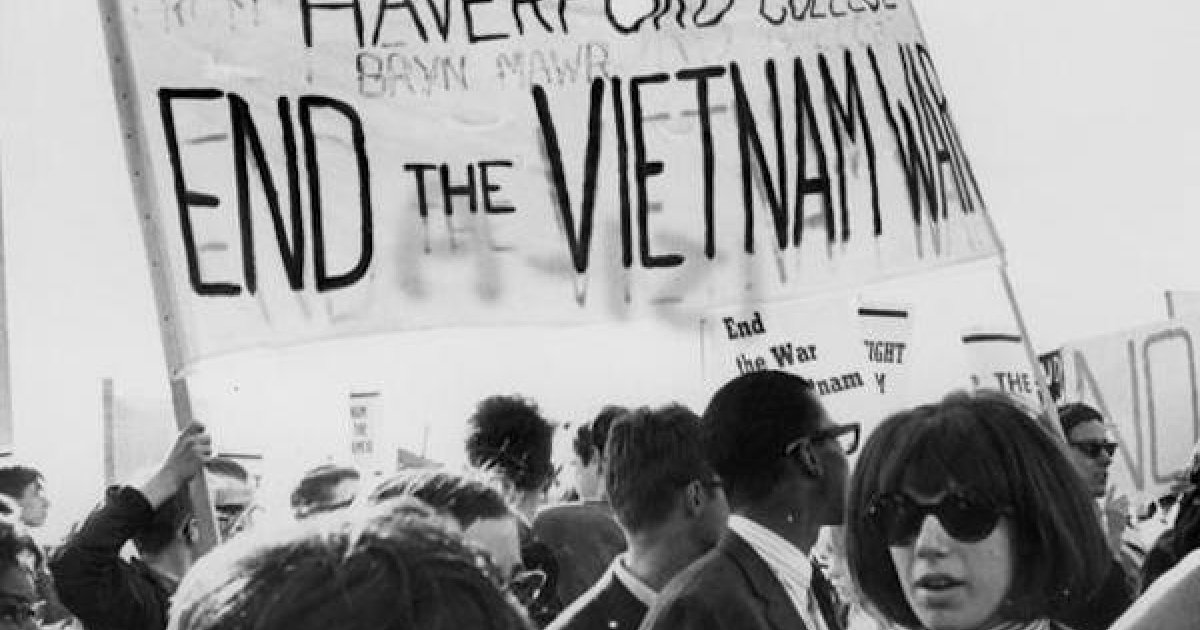
    One of the oldest and most respected liberal arts institutions in America, Haverford College has a long history of principled protest — from its abolitionist Quaker founders to the anti-Vietnam War movement of the 20th century. In recent years, that tradition has sadly curdled into a culture of censorship. But a new free-speech committee plans to restore this lost legacy.

    In the 1960s, Haverford students joined the Free Speech Movement launched at UC Berkeley, and, bucking the national trend at the time, found themselves aided by their administrators. Haverford even chartered buses so students could attend anti-Vietnam War protests around the country.

    But Haverford has in recent years developed one of the most restrictive campus speech climates in the country. The college has plummeted in FIRE’s College Free Speech Rankings, landing 220th out of 251 schools in terms of how comfortable students are in expressing their ideas. Making matters worse, Haverford has taken the radical step of codifying its own decline. In a 2021 overhaul of its Honor Code, the college allowed the Honor Council to put students on trial for their political opinions. FIRE named it “Speech Code of the Month” and urged President Wendy Raymond to reject the changes. She did not.

    Four years later, the tide is finally turning.

    On July 9, 2025, Haverford’s Ad Hoc Committee on Freedom of Expression, Learning, and Community publicly released its final report, marking a pivotal course correction. The committee said the school’s Social Honor Code “is overly proscriptive and therefore restricts expressive freedom,” inferring that, when the code was written, “students were trying to legislate power dynamics between individuals based on a broader perception of societal imbalances and pursuit of social justice.” The committee criticized the code’s intrusion into interpersonal relationships and enforcement of ideological conformity, contributing to “a climate of silencing non-dominant viewpoints” and stifling “deeper learning and dialogue.”

    The committee got it exactly right.

    At Haverford — where liberals currently outnumber conservatives six-to-one — social justice is a broadly shared value. In 2021, that value motivated an egregiously censorious speech code. Now, nudged by news headlines in which the federal government has sought to effectively nationalize a private university and routinely undermines the First Amendment, Haverford seems to have rediscovered the importance of free speech.

    As former ACLU Executive Director Ira Glasser famously warned, “Speech restrictions are like poison gas. You see a bad speaker out there, and you don’t wanna listen to him or her anymore. So you got this poison gas and you say, ‘I’m gonna spray him with it!’ And then the wind shifts. And pretty soon, the gas blows back on you.”

    Glasser added: “And so, free speech is a kind of insurance policy. And the price you pay for that insurance policy is you gotta listen to bad people.”

    Haverford’s committee deserves credit for recognizing the absolute necessity of a strong free speech culture to a liberal arts education. Notably, the committee affirmed the importance of an open marketplace of ideas in carrying out Haverford’s educational mission, called on President Raymond to adopt an institutional statement supporting free expression, and recommended greater schoolwide investment in civil discourse programming. Perhaps most significantly, the committee called for revisions to the Social Honor Code. These changes could improve Haverford’s “red light” rating in FIRE’s Spotlight Database of speech codes as well as raise the college’s standing in our College Free Speech Rankings.

    The world is better when we embrace the humility of uncertainty — when we are willing to listen to others, debate them, work to understand them — no matter how immovable our current beliefs feel.

    Last December, FIRE sent the committee a letter offering resources and support as they reviewed Haverford’s speech climate and policies. The committee subsequently cited FIRE’s publicly available policy guidance on acceptable time, place, and manner restrictions in its final report. And the college’s new “Interim Policy on Expressive Freedom and Responsibility” passed our Policy Reform team’s review with flying colors. We encourage Haverford to make this policy permanent.

    In addition to harnessing FIRE’s insights, the committee turned to students, faculty, staff, and alumni for feedback. And even before the committee was formed, a group of students and alumni made their concerns clear with The New Kronstadt (an online magazine I created through FIRE’s Campus Scholars Program), named after the Kronstadt Rebellion in which socialist sailors in the early Soviet Union demanded free speech and other civil liberties. Vladimir Lenin didn’t take kindly to these demands and ordered the sailors slaughtered. Soviet troops massacred the rebels, illustrating how sometimes the most brutal form of censorship comes from within shared communities.

    Sounding the FIRE alarm at Haverford College

    Despite its proud history at my school, it is clear that free speech is not fully valued at Haverford College today.


    Read More

    Quite often, movements rooted in moral causes attract idealists, and idealists tend to crave clarity. Demanding conformity then becomes a way of reducing ambiguity in a morally messy world. But as Haverford alumnus and aspiring archivist Nicholas Lasinsky wrote in an op-ed for The New Kronstadt, “The world is better when we embrace the humility of uncertainty — when we are willing to listen to others, debate them, work to understand them — no matter how immovable our current beliefs feel. This is a fundamental step in any journey to understanding a topic, and a fundamental step of education.”

    Haverford seems poised to take that step again. As a Haverford alum and FIRE staffer, I’m proud to see my alma mater return to its pro-free speech roots. The work I do every day to defend free expression is shaped by the values, people, and intellectual traditions I came to know at Haverford.

    This summer, I attended the Colorado Conference on Civic Discourse to facilitate a workshop titled “Let’s Talk: Student Civil Discourse.” The keynote conversation featured Cornel West, a visiting professor at Haverford in the late 1970s and early 1980s and a frequent guest speaker on campus ever since. After watching West, a prominent left-wing defender of free thought and expression, engage in civil discourse with his friend and longtime sparring partner, the conservative legal scholar Robert P. George, I had a chance to speak with West. His face lit up when he heard I’d studied at Haverford. He remembered my old English professor and Haverford’s former president, Kimberly Benston, as a brilliant scholar of the often-censored writers Ralph Ellison and Amiri Baraka. Reflecting on how those authors shaped us, we lingered on the final line of Ellison’s Invisible Man: “Who knows but that, on the lower frequencies, I speak for you?”

    When any honest, unfiltered voice is heard, it can speak beyond identity and viewpoint, breaking a silence we may not know we shared. Finding the courage to speak is our shared human condition. 

    On a deeper level, Ellison’s Invisible Man is not only the story of one nameless black man navigating 1940s America, but a meditation on the universal struggle for self-definition and human dignity — and the necessity of free speech to achieve it. For when any honest, unfiltered voice is heard, it can speak beyond identity and viewpoint, breaking a silence we may not know we shared. Finding the courage to speak is our shared human condition. 

    This month, Haverford found its voice again — and called for its administrators to reaffirm the right of its community to speak freely. Now, college leadership must answer. President Raymond must ensure the committee’s words do not ring hollow and take action to ensure the Social Honor Code is revised to permit free speech. The college should also adopt an institutional statement on free expression and implement the cultural investments and pedagogical programming the committee prescribed. If the committee’s recommendations take hold, a frequent Quaker refrain and campus ideal can resonate with renewed promise: “Let your life speak.

    Source link

  • The mercenary spyware industry is a menace to global free expression

    The mercenary spyware industry is a menace to global free expression

    Eli Kronenberg is a rising junior and a FIRE summer intern.


    In the last decade, the rise of the mercenary spyware industry has created a potent new weapon for authoritarian regimes bent on silencing dissent. Represented most prominently by the Israeli-based NSO Group and its flagship spyware Pegasus, surveillance malware is often sold to the world’s most repressive governments with little thought given to the nature of its eventual use.

    Regimes like those in Saudi Arabia and Egypt have long track records of suppressing political opposition and independent journalism. When they acquire state-of-the-art surveillance technology, the result is a crackdown on free expression worldwide, carried out using the devices in our very pockets. And because the surveillance is secret and largely undetectable, it impacts anyone with a reason to suspect that the government might not like what they have to say.

    What is mercenary spyware?

    Mercenary spyware is a type of malicious software developed and sold by private companies to governments. Unlike general malware, which spreads widely and somewhat randomly, mercenary spyware is designed to infiltrate specific devices and extract information. 

    The University of Toronto’s Citizen Lab has published numerous reports explaining how spyware like Pegasus is used to hack the personal devices of political opponents in retaliation for criticizing the government. Victims include an Italian journalist critical of the Meloni government, an Egyptian opposition politician with presidential ambitions, dozens of Catalan separatist leaders in Spain, Mexican journalists investigating presidential corruption, and even a Saudi dissident living in exile in Canada.

    “The consequences that we’ve seen in our research are profound,” said Ronald Deibert, the director of the Citizen Lab. “People are afraid to engage over social media, to use the internet, paranoid about their surroundings, about their social relationships. There’s an obvious chilling effect.”

    Here’s how it works: Mercenary spyware companies like NSO Group search technological operating systems for novel security vulnerabilities known as “zero-days,” which can be used to infiltrate products as ubiquitous as Apple iPhones. Then, they develop spyware designed to exploit these zero-days and sell it to governments, ostensibly for law enforcement and intelligence agencies to use for legitimate data-gathering purposes. 

    In practice, governments with long histories of repression often abuse spyware to hack the devices of anti-government activists, journalists, and other members of civil society. And, even for democratic regimes who preach tolerance of dissent, the temptation of spyware capabilities often proves too powerful. 

    All it takes is one click on a phishing message for spyware to be implanted onto a device. From there, governments can read all of the target’s communications, track the device’s location, and secretly turn on the camera and microphone to listen to live conversations — without the victim receiving any indication that their device has been compromised.

    In recent years, spyware has evolved past the point of needing victims to fall for fake links, instead relying on “zero-click” attacks which automatically implant the spyware without requiring the user to do anything. Not even the most meticulous digital hygiene measures can keep those who have drawn the government’s ire safe in this day and age. 

    “I imagine from the perspective of an operative who’s using this type of product, how addictive it must be,” Deibert said. “It’s almost godlike to be able to just drop into somebody’s life, find out everything about them, watch what they’re doing, turn on the microphone, turn on the camera. That is extremely compelling from an intelligence collection point of view, and opens up all sorts of opportunities that otherwise wouldn’t exist for those types of operatives, which explains why the business is so lucrative.”

    While today’s surveillance agents have shiny new tools, their tactics are tried and true. The Nazis famously used IBM punch cards to categorize citizens by ethnicity and other metrics, as well as wiretaps to track Jews, political dissidents, and other “undesirables.” In East Germany, the Stasi used hidden cameras and bugging devices to maintain files on more than one-third of the population. They even stored body odors to identify dissidents using dogs. The Chinese Communist Party uses facial recognition software so advanced they caught a suspect in a crowd of 60,000 people — and that was seven years ago.

    In 2025, it is easier than ever to invade the private lives of those who dare speak up against public officials. The mercenary spyware industry emerged in the early 2010s, coinciding with the rise of social media-enabled revolutions like the Arab Spring. For regimes seeking to quell political opposition but lacking the technological means to effectively control it, mercenary spyware companies provided a saving grace.

    “What this market offers them is the ability to leapfrog ahead in surveillance capacity, in espionage capacity, effectively drawing from some of the world’s most well-trained, sophisticated veterans of intelligence agencies,” Deibert said.

    Reining in the industry

    Fortunately for supporters of free expression, the U.S. has taken concrete steps to crack down on mercenary spyware companies. In 2023, former President Joe Biden issued an executive order directing agencies to cease procuring commercial spyware that poses a threat to human rights or national security. Twenty-two countries signed on to the Biden administration’s “Joint Statement on Efforts to Counter the Proliferation and Misuse of Commercial Spyware,” pledging to implement similar guardrails. 

    The industry’s biggest fish, NSO Group, was added to the Commerce Department’s trade blacklist in 2021, stifling the company’s business prospects on American soil. NSO has also been dealt blows by the courts, most recently being ordered to pay WhatsApp $170 million in damages after its spyware was used to hack over 1,000 accounts on the messaging app.

    “To me, that was all a roadmap of how you go about effectively reining in this wild west that’s causing all sorts of harm,” Deibert said of these efforts.

    The bad news? While some of the world’s biggest spyware developers have been wounded, they won’t give up easily. NSO Group recently hired a new lobbying firm with the mission of reigniting its relationship with Washington lawmakers and reversing the novel regulations, according to an April report by WIRED

    Those efforts have been rebuffed for now. The Trump administration canceled a meeting with NSO officials in May, citing the company being “not forthcoming in its motives for seeking the meeting,” according to an unnamed official in the Washington Post

    Still, spyware companies and their opportunistic governmental clients thrive when operating from the shadows. The U.S. must remain vigilant and further crack down on companies whose spyware is used to spy on civil society, ensuring that political dissidents worldwide can speak without the threat of dictators — or even democratically elected governments — invading their pockets and upending their lives.

    Source link

  • Justin Amash | The Foundation for Individual Rights and Expression

    Justin Amash | The Foundation for Individual Rights and Expression

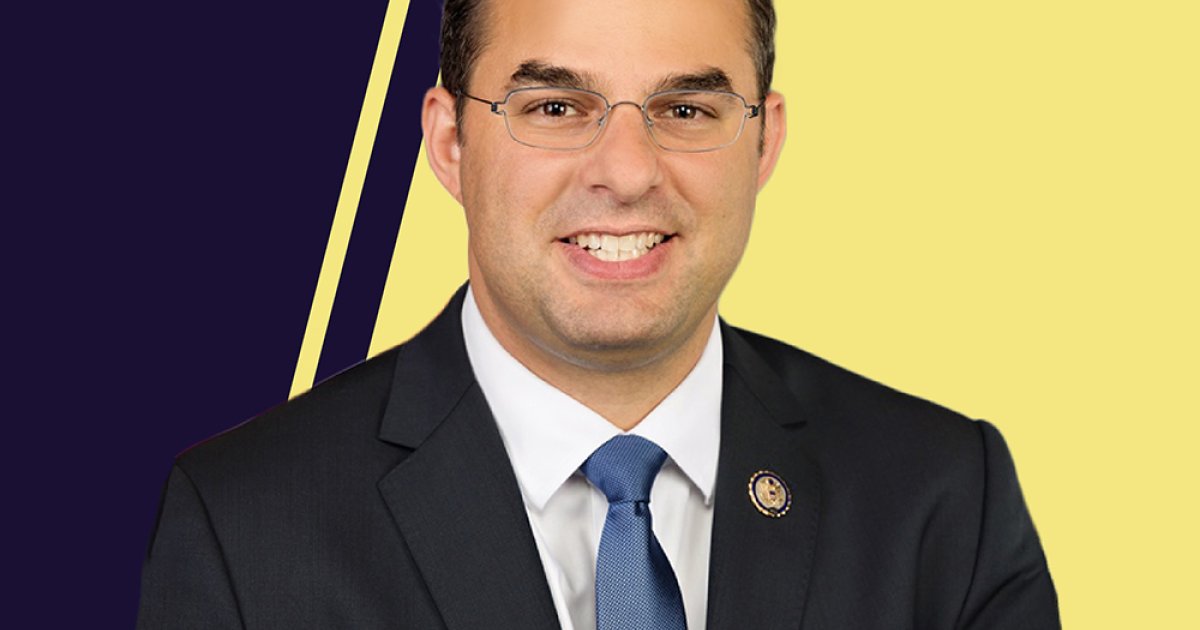
    Throughout his career, former Congressman Justin Amash
    has been a strong advocate for freedom of speech, writing that “The
    value of free speech comes from encountering views that are
    unorthodox, uncommon, or unaccepted…Free speech is a barren
    concept if people are limited to expressing views already widely
    held.”

    In this special live episode, filmed in front of 200+
    high schoolers attending FIRE’s Free Speech Forum at American
    University in Washington, D.C., Amash takes questions from the
    audience and discusses his upbringing, his political career, the
    state of American politics, and how the Constitution guided his
    work in Congress.

    Earlier this year, Congressman Amash
    joined
    FIRE’s Advisory Council.

    Timestamps:

    00:00 Intro

    03:30 Upbringing

    06:21 Law school

    13:15 Time in Congress

    15:59 Why Amash publicly explained each of his
    votes

    26:30 On being the first libertarian in Congress

    30:57 Connection between his principles and free
    speech

    33:10 Trump’s first impeachment

    42:48 Dealing with pushback from constituents

    46:03 Term limits for members of Congress?

    55:25 How high schoolers can pursue a career in
    politics

    59:45 Has there been a regression in First Amendment
    protections?

    01:07:32 What Amash is up to now

    01:08:06 Outro

    Enjoy listening to the podcast? Donate to FIRE today and
    get exclusive content like member webinars, special episodes, and
    more. If you became a FIRE Member
    through a donation to FIRE at thefire.org and would like access to
    Substack’s paid subscriber podcast feed, please email
    [email protected].

    Source link

  • Extortion in plain sight | The Foundation for Individual Rights and Expression

    Extortion in plain sight | The Foundation for Individual Rights and Expression

    This essay was originally published by The Dispatch on July 4, 2025.


    Paramount Global’s decision to pay $16 million to end President Donald Trump’s lawsuit over a 60 Minutes interview with Kamala Harris was a “win for the American people,” according to Trump’s lawyers. And it happened because “CBS and Paramount Global realized the strength of this historic case and had no choice but to settle.”

    Well, not quite.

    The case is “historic” for sure, but not in a good way or because the advocates came up with profound theories of media law. Quite to the contrary: The case is so baseless, so devoid of factual or legal support, and so diametrically opposed to basic First Amendment principles it is hard to imagine how those who filed it sleep at night. 

    The main question about Paramount’s decision to settle this comically frivolous lawsuit is not why the company decided to settle, but why did resolving it take this long if the “historic case” were so “strong?” The reason for the settlement is obvious. Paramount, the corporate parent of the CBS television network, had a gun to its head. 

    Paramount must get approval from the Federal Communications Commission for its proposed $8 billion merger with Skydance Media (which includes the transfer of 28 CBS-owned and -operated broadcast stations). The merger agreement expired April 7 but was extended to July 7. So it was pay-up or shut-up time.

    The holdup, in every sense of that word, came in the form of FCC Chairman Brendan Carr, whom President Trump elevated to head the commission on Inauguration Day. As one of his first official acts, Carr opened his own investigation of the Harris interview over supposed “news distortion,” and he slow-rolled the FCC’s merger review process. The Securities and Exchange Commission and European regulators had approved the merger back in February, but the FCC continued to “ponder” the matter as the deal clock ticked down.

    Trump’s $16M win over ’60 Minutes’ edit sends chilling message to journalists everywhere

    Trump’s $16M win over a “60 Minutes” edit sends a chilling message to journalists everywhere. FIRE’s Bob Corn-Revere calls it what it is: the FCC playing politics.


    Read More

    But let’s give him the benefit of the doubt: Couldn’t it be that Carr was just carefully considering nuanced issues of media law in order to safeguard the public from big-network media bias? After all, Trump had claimed that CBS had edited its interview deceptively to make Harris “look better” — something he called “totally illegal,” an “UNPRECEDENTED SCANDAL,” and for which the FCC should “TAKE AWAY THE CBS LICENSE.” Never mind that networks are not licensed by the FCC (stations are), the rant led to the lawsuit in Texas and later the FCC investigation.

    Loopy all-cap social media posts aside, there was never a legitimate basis either for the lawsuit or the FCC action. Every day, from the smallest newspaper to the largest network, reporters and editors must digest and condense the information they collect — including quotes from politicians and other newsmakers — to tell their stories concisely and understandably. For instance, Trump has repeatedly received the same treatment. Fox News repeatedly edited interviews with then-candidate Trump during the campaign, editing answers to enhance coherence, eliminate digressions, and excise insults. Making sense of the stuff that pours from politicians’ mouths is not easy. And here, CBS was accused of something unforgivable: committing standard journalism. 

    This was never about swapping out answers to different questions or rewriting answers, as Trump and his supporters falsely claim. During the interview, 60 Minutes correspondent Bill Whitaker asked then-Vice President Harris a question about the Biden administration’s relationship with Israeli Prime Minister Benjamin Netanyahu: 

    MR. BILL WHITAKER: But it seems that Prime Minister Netanyahu is not listening. The Wall Street Journal said that he — that your administration has repeatedly been blindsided by Netanyahu, and in fact, he has rebuffed just about all of your administration’s entreaties.

    VICE PRESIDENT KAMALA HARRIS: Well, Bill, the work that we have done has resulted in a number of movements in that region by Israel that were very much prompted by, or a result of many things, including our advocacy for what needs to happen in the region. And we’re not going to stop doing that. We are not going to stop pursuing what is necessary for the United States to be clear about where we stand on the need for this war to end.

    CBS broadcast two excerpts of Harris’ answer on two separate programs: On Face the Nation, CBS aired the first sentence of Harris’ answer. On 60 Minutes, CBS aired the last sentence of the answer. Really — that’s all this is about.

    The FCC in the past has never defined the editing process as “news distortion.” In fact, it has steadfastly maintained the First Amendment bars it from doing so. Chairman Carr’s decision to reopen a closed complaint in a matter he knows to be baseless and beyond the FCC’s authority is unprecedented and indefensible.

    We need a far stronger word than ‘hypocrite’ to capture this moment. We have a president who on day one issued an executive order purporting to ‘restore free speech’ … [then] deployed agency heads to retaliate against news organizations that displease him.

    And the arguments in the now-settled lawsuit are even more frivolous (if that’s even possible). Trump’s lawyers argued that the Harris interview violated the Texas Deceptive Trade Practices Act and the federal Lanham Act as a “false, misleading, or deceptive act or practice” and asserted $20 billion in damages. Those laws are designed to prevent consumer deception in marketing practices (like turning back the odometer on a used car) or false advertising. They simply don’t apply to editorial judgments by news organizations. No court in any jurisdiction has ever held that such a cause of action might be valid, and few plaintiffs have ever attempted to bring such outlandish claims. Those who have done so were promptly dismissed.

    But who needs good arguments or supporting legal authority when federal regulators are willing to ignore their oath to uphold the Constitution and back your political power play?

    Of course, Carr has maintained that there was no link between the Texas lawsuit and the FCC’s merger review or news distortion investigation. But let’s get real. Before he was named chairman, Carr said he didn’t think the 60 Minutes interview “should be a federal case,” and “we don’t want to get into authenticating news or being a Ministry of Truth.”

    But once Trump announced Carr as his pick to head the agency, Carr changed his tune, telling Fox News the FCC would review the 60 Minutes complaint while considering whether to approve the Paramount-Skydance merger. The hypocrisy here is staggering. As chairman, Carr has routinely boasted that he wants to move quickly to spur business and investment. Yet here, he mysteriously lagged in reviewing the Paramount Global-Skydance merger (coincidentally, no doubt) as settlement negotiations dragged on in Texas.

    We need a far stronger word than “hypocrite” to capture this moment. We have a president who on day one issued an executive order purporting to “restore free speech” and to bar any federal official from engaging in censorship. At the same time, the very same president deployed agency heads to retaliate against news organizations that displease him and to do so in support of his private litigation efforts. And we have an FCC chairman who used to say things like “[a] newsroom’s decision about what stories to cover and how to frame them should be beyond the reach of any government official, not targeted by them,” who has made micromanaging news editing a defining principle of his administration.

    Meanwhile, settlement of Trump’s case against CBS and the anticipated merger approval raise some significant questions. Sens. Elizabeth Warren, Bernie Sanders, and Ron Wyden have asked whether the settlement might violate federal bribery laws, which prohibit corruptly giving anything of value to public officials to influence an official act. In a similar vein, the Freedom of the Press Foundation has threatened (as a Paramount shareholder) to bring a derivative action against the company for conflict of interest, and last May filed a shareholder information demand. 

    Whatever else may happen, this week’s settlement announcement is not the end of this saga. But one thing is clear: The bullying tactics that led to this settlement stain our nation’s character and taint not just those who engage in them but also those who give in.

    Source link

  • Introducing Expression, FIRE’s official new Substack

    Introducing Expression, FIRE’s official new Substack

    We believe that the ability to speak your mind, question authority, and listen to opposing views is not just a basic right but the cornerstone of a free society.

    That’s why FIRE’s officially launching on Substack — to speak up, push back, and encourage debate. As a platform that deeply believes in free speech, Substack is a natural home for FIRE content.

    SIGN UP FOR FIRE’S SUBSTACK TODAY

    This will be a space for FIRE’s best commentary, analysis, and storytelling. Think of it as FIRE Magazine, curated from staff op-eds, explainers, and the pages of our Newsdesk.

    Our decision to launch on Substack has to do with a rapidly changing media landscape.

    Over 20% of Americans now regularly get their news from social media platforms. But there’s a catch:  Platforms, particularly X, punish users for sharing links in their posts, throttling traffic to other websites, including ours. Historically, FIRE’s website got a significant portion of its traffic from social media posts. Those days are long gone, and AI platforms don’t want you to click any links at all.

    Enter Substack.

    The newsletter platform, which has grown from a few million subscribers five years ago to over 35 million today, offers us a way to deliver important stories and analysis directly to your inbox. No need to go to FIRE’s homepage. Now the content will come directly to you.

    From breaking news analysis and legal battles to cultural trends, Expression is where we go beyond the headlines — taking you into the fight to defend the First Amendment and bringing you the stories that shape (and threaten) free speech in America.

    To get you started, we’ve already published a collection of posts:

    Whether you’re a die-hard free speech advocate, a curious skeptic, or someone who just wants to understand the stakes, this is your home for smart, principled, and fearless writing.

    Subscribe now to join the fight — and the conversation. Subscribing is free, but by upgrading to become a paid subscriber, you also become a FIRE Member.

    Membership benefits include invitations to exclusive events, a subscription to the FIRE Quarterly magazine, updates on free speech issues, and access to private events and interactions with FIRE staff. By becoming a member, your additional support helps us fight censorship, defend free thought, and protect your most basic and powerful freedom — expression.

    Source link

  • No gay rights without free expression

    No gay rights without free expression

    Three dates reliably bring me dread: the first Tuesday in November, April 15, and the day the Foundation for Individual Rights and Expression releases its annual College Free Speech Rankings.

    Each spring offers new reasons to despair, and this year’s report doesn’t disappoint. According to the poll of nearly 60,000 undergraduates at more than 250 schools across the country, the percentage of students who believe that it is at least “rarely” acceptable to shout down a speaker, block other students from hearing a speaker, or violently disrupt a speech has risen to 68%, 52% and 32% respectively. Majorities believe that speeches promoting six out of eight controversial propositions — “Transgender people have a mental disorder,” “Abortion should be completely illegal,” and “Black Lives Matter is a hate group” among them — should be banned from campus. (71%, meanwhile, say that speeches endorsing the genocidal call “From the river to the sea, Palestine will be free” should be allowed.) And while either half or the majority of students believe that 15 out of 17 types of student groups ranging from “Christian” to “Democrat” to “LGBTQ” should be eligible to receive student activity fees, only 40% say the same for “pro-Israeli” ones (49% say pro-Palestinian groups should be eligible to receive student activity fees).

    Five years of FIRE surveys demonstrate that the nation’s future leaders harbor a shocking degree of ignorance about America’s uniquely robust free speech principles, content neutrality foremost among them. To be sure, college students are like many other if not most Americans in this regard. Ask any random person on the street if they believe in free speech, and they’ll probably say “yes,” but dig down and you’ll discover that they adhere to the proposition, “free speech for me, but not for thee.” It’s all well and good to support the right to free speech of people with whom you concur; it’s the willingness to support the rights of those whose message you despise that is the true test of one’s commitment to the principle of free expression.

    Particularly disturbing to me in reading this year’s survey is a trend I’ve been monitoring for some time: the persistently lower support for free speech among LGBT students compared to their heterosexual peers. As in past surveys, this year’s poll found that students in eight categories ranging from Gay/Lesbian to Pansexual (essentially, anything other than “straight”) were more likely than their heterosexual classmates to support censorship. For instance, while 69% of heterosexual students believe it is “never” or “rarely” acceptable to shout down a speaker, that figure stands at 49% for gay and lesbian students and 39% for queer ones. Similarly, 80% of straights oppose blocking other students from hearing a speaker, but only 69% of gays and 68% of queers agree. And while 75% of queer students think that a speech arguing “Collateral damage in Gaza is justified for the sake of Israeli security” should “definitely” or “probably” be banned, a mere 13% say the same for a speech promoting the destruction of Israel.

    Put aside the monumental ignorance that leads some LGBT students, of all people, to take the side of murderous religious fanatics over the sole democracy in the Middle East. What makes these figures so tragic is that, were it not for the First Amendment and the robust protections it affords for free expression, none of these students would be enjoying the freedoms they so blithely take for granted today. For the legal equality and social acceptance that LGBT people now have is entirely a product of America’s free speech culture.

    Consider that, in postwar America, homosexuality was a crime in every state, a sin according to organized religion, and a mental disorder in the eyes of the medical establishment. Gay bars and other gathering places were routinely raided by police and gay men and women were subjected to horrific medical experiments in a sadistic attempt to “cure” them of their “disease.” When Senator Joe McCarthy launched his crusade against communists and homosexuals in the State Department, it was reported that three-fourths of the mail pouring into his office was primarily fixated on the latter scourge.

    In the 1950s, a small band of incredibly courageous people began a decades-long effort to change this state of affairs, and throughout it they did so by relying upon the Constitutional right to free expression. The first Supreme Court case to deal with the subject of homosexuality, ONE, Inc. vs. Olesen was a challenge to federal government censorship. Beginning in 1953, the U.S. Post Office and the Federal Bureau of Investigation launched a crusade against ONE, the country’s first widely circulated, national gay periodical. The following year, Los Angeles Postmaster Otto Olesen declared the magazine (which contained nary a racy photo or explicitly sexual article) as “obscene, lewd, lascivious and filthy” and therefore unmailable under the Comstock Act of 1873.

    The magazine brought a suit against the Postmaster in federal court in California. Ruling in favor of the defendant, the Court stated that “The suggestion advanced that homosexuals should be recognized as a segment of our people and be accorded special privilege as a class is rejected.” The case made its way to the Supreme Court, which in 1958 issued a brief per curiam decision overruling the lower court’s decision, effectively legalizing pro-gay political expression in the United States. In its first issue published after the ruling, ONE declared that “For the first time in American publishing history, a decision binding on every court now stands. … affirming in effect that it is in no way proper to describe a love affair between two homosexuals as constitut(ing) obscenity.”

    Several years later, in 1962, the right of gay people to express themselves as freely as their heterosexual countrymen was further advanced with the Supreme Court case MANual Enterprises vs. Day. MANual Enterprises was a publisher of “beefcake” magazines, publications whose images of scantily clad young men were no more prurient than those of the “pin-up” girls popular among American GIs during the Second World War. Following a campaign of government harassment similar to that endured by ONE, the company appealed its case to the Supreme Court. This time, the Court decided to hear the case. The government’s singling out homosexuals and denying them the right to receive certain publications through the mail, the company’s lawyer argued, “reduces a large segment of our society to second class citizenship.” It was a daring argument, utilizing a term popularized by the African American civil rights movement. “If we so-called normal people, according to our law, are entitled to have our pin-ups, then why shouldn’t the second-class citizens, the homosexual group . . . why shouldn’t they be allowed to have their pin-ups?”

    Writing for the majority in a 6–1 decision, Justice John Marshall Harlan II stated that while he personally found the magazines to be “dismally unpleasant, uncouth and tawdry . . . these portrayals of the male nude cannot fairly be regarded as more objectionable than many portrayals of the female nude that society tolerates.” However qualified by his expressions of personal distaste, Harlan’s argument that erotic images created for the titillation of homosexuals were not inherently more obscene than those designed to arouse their heterosexual fellow citizens recognized an important principle that laid the groundwork for further gay rights legal victories to come.

    Three years later, another instance of free expression in the furtherance of gay civil rights occurred outside the White House gates. A group of 10 men and women affiliated with the Mattachine Society of Washington, D.C., one of the first gay rights organizations in the country, formed a picket on the sidewalk across the street from Lafayette Square. Marching in an oval-like motion and dressed in business attire, they held signs declaring, “FIFTEEN MILLION U.S. HOMOSEXUALS PROTEST FEDERAL TREATMENT, GOVERNOR WALLACE MET WITH NEGROES, OUR GOVERNMENT WON’T MEET WITH US and “U.S. CLAIMS NO SECOND CLASS CITIZENS, WHAT ABOUT HOMOSEXUAL CITIZENS?” Four years before the much more famous Stonewall Riot erupted in Greenwich Village, this was the first organized public demonstration for gay rights in the United States.


    Though the protest garnered scant media attention, it inspired gay men and women across the country more than anything up to that time. “Nothing like these demonstrations has been seen before,” Eastern Mattachine Magazine, a publication of the Mattachine Society, enthused. “The most hated and despised of minority groups has shown its face to the crowds, and it is plain for all to see that they are not horrible monsters. They are ordinary looking, well-dressed human beings!” For one of the picketers, the event was “the most important day of my life” next to her marriage to her partner over two decades later.

    For the leader of the march, Mattachine Society co-founder Frank Kameny, free expression had been a vital tool since the federal government fired him for being gay. In 1957, the Harvard-trained Army Map Service astronomer was recalled from his observatory in Hawaii to Washington. Army officials had discovered an arrest record for “lewd and indecent acts” he allegedly committed in a police entrapment operation while visiting San Francisco. Kameny was fired on the spot and joined the ranks of the thousands of other patriotic American gay men and women rejected by their government solely because of their sexual orientation.

    What distinguished Kameny from the rest was that he had the courage to fight back, and the wherewithal to base his case for equality on the Declaration of Independence and the Constitution. He appealed to the Civil Service Commission (predecessor to the Office of Personnel Management), and when that failed, argued his case all the way to the Supreme Court. Not even the ACLU was willing to defend a homosexual in 1960, however, and so Kameny, who had no formal legal training, represented himself. In his petition to the Court, he wrote:

    The government’s entire set of policies and practices in this field is bankrupt, and needs a searching re-assessment and re-evaluation — a re-assessment and re-evaluation which will never occur until these matters are forced into the light of day by a full court hearing, such as is requested by this petition.

    Kameny was denied his opportunity to expose the irrationality of government discrimination against homosexuals in “the light of day” — the Court refused to hear his case. But the setback was only temporary. Kameny began a lifelong campaign for equality on all fronts that culminated with his receiving a formal apology from OPM Director John Berry — himself a gay man — in 2009.

    The most celebrated moment in the history of the gay rights movement, the Stonewall Riot of 1969, was, at its heart, a protest in defense of the First Amendment’s protection of freedom of association. As in many jurisdictions across the United States at the time, serving alcohol to homosexuals was illegal in New York City, as was dancing between two members of the same sex. This led to a situation in which the only gay bars allowed to operate were controlled by the mafia, who paid the police for the privilege. This arrangement, however, did not stop the police from regularly raiding the bars and carting out patrons for arrest and humiliation before tipped-off newspaper photographers.

    On the evening of June 28, 1969, a group of patrons at the Stonewall Inn said: Enough. According to the Constitution, all Americans have the freedom to associate with one another; nowhere does it state that this right is exclusive to heterosexuals or, for that matter, people with brown eyes or black hair. Patrons forcibly resisted arrest, the NYPD called in backup, and for almost a week, the police and gay people engaged in running street battles outside the Stonewall. The following June, New York City held the world’s first gay pride parade, a tradition that has now extended to an entire month of commemoration and celebration of the freedom to be oneself.

    So much of the widespread acceptance that LGBT people enjoy today is attributable to free expression. Social attitudes were gradually changed by films like 1972’s That Certain Summer, the first gay-themed TV-movie and one of the earliest positive portrayals of gay people, and TV shows like Will & Grace, which brought lovable gay characters into the homes of millions of people across America and around the world. (And which then-Vice President Joe Biden cited as playing a role in his own evolution on the issue, a gaffe that forced President Obama to declare that he, too, now supported marriage equality). The AIDS activism of the 1980s and 1990s, much of it confrontational, awakened the country to the devastating effects of a terrible disease. The decision by celebrities, athletes, politicians, and business leaders to come out continues to have an immeasurably positive impact on the way straight people treat their gay neighbors, colleagues, and family members. Indeed, coming out is itself an act of free expression; every gay person utilizes it when they acknowledge the truth about themselves to others.

    Considering this awe-inspiring history, the sort of thing that ought to make young people proud to be American, how is it that free speech is opposed by so many of the students who have benefitted from it most? One reason is power dynamics. While gay people desperately needed free expression to press their case when they were treated as criminals by their own government, today, pro-LGBT sentiment is widespread throughout corporate America, Hollywood, the non-profit sector, the business world, higher education, labor unions, and white-collar professions. Why, the college sophomore asks, should we allow bigots to challenge this hard-won consensus and potentially drag us back to the proverbial Stone Age? This dynamic is hardly exclusive to the LGBT movement; just look at all the right-wing critics of “woke” censoriousness who have gone silent since Donald Trump returned to the White House and launched an anti-free speech campaign against his critics. This is all the more reason to support content-neutral free speech policies: in a democracy, power changes hands, and smothering the speech of one’s adversaries creates a precedent for them to do the same once they’re in charge.

    Another reason is a total lack of knowledge about the history outlined in this essay. Young LGBT people today are far likelier to know about Marsha P. Johnson, a drag queen who has earned iconic status for “throwing the first brick” at Stonewall despite not even being there when it erupted, than they are Frank Kameny, Elaine Noble, Bayard Rustin, or Martina Navratilova. The early gay rights movement is too heavily composed of “cisgender” white men to serve today’s “intersectional” purposes. Working within the system, using the methods provided by the Constitution, trying to persuade those who disagree with you, all of these are forms of “respectability politics,” the strategy of sell-outs. In this narrative, Stonewall is given primacy, a riot against cops better suited to inspire a radical political agenda than the slow and steady work of lobbying, legislating and litigating.

    Finally, there’s the influence of academic queer theory and the proliferation of “queer” as not so much a sexual identity but a political one. Like other modes of critical theory, queer theory seeks to subvert hierarchies and challenge established knowledge, “queering” them such that they become totally unrecognizable in their original form. It’s through sophistry like this that constitutionally protected speech becomes “violence” to be suppressed. Tolerance, a word once esteemed by gay and lesbian activists seeking a place at the table in a pluralistic society, is now denigrated in the fashion of Herbert Marcuse’s concept of “repressive tolerance,” which argues that because the expression of conservative views is harmful to marginalized groups, it ought to be suppressed.

    As a gay writer who has reported from countries where gay people live under extreme social and legal subjugation, I have witnessed first-hand the inextricable connection between free expression and LGBT rights. Looking at a map of the world, it’s no coincidence that the countries most accepting of LGBT people are liberal democracies that, however imperfectly, ensure freedom of expression, and that by and large the world’s dictatorships and illiberal regimes either criminalize or harshly repress homosexuality. Just as there is no equality for gay people without free expression, the equality of gay people will not be ensured unless the right to free expression applies equally to everyone.

    Source link

  • No gay rights without free expression

    No gay rights without free expression

    Three dates reliably bring me dread: the first Tuesday in November, April 15, and the day the Foundation for Individual Rights and Expression releases its annual College Free Speech Rankings.

    Each spring offers new reasons to despair, and this year’s report doesn’t disappoint. According to the poll of nearly 60,000 undergraduates at more than 250 schools across the country, the percentage of students who believe that it is at least “rarely” acceptable to shout down a speaker, block other students from hearing a speaker, or violently disrupt a speech has risen to 68%, 52% and 32% respectively. Majorities believe that speeches promoting six out of eight controversial propositions — “Transgender people have a mental disorder,” “Abortion should be completely illegal,” and “Black Lives Matter is a hate group” among them — should be banned from campus. (71%, meanwhile, say that speeches endorsing the genocidal call “From the river to the sea, Palestine will be free” should be allowed.) And while either half or the majority of students believe that 15 out of 17 types of student groups ranging from “Christian” to “Democrat” to “LGBTQ” should be eligible to receive student activity fees, only 40% say the same for “pro-Israeli” ones (49% say pro-Palestinian groups should be eligible to receive student activity fees).

    Five years of FIRE surveys demonstrate that the nation’s future leaders harbor a shocking degree of ignorance about America’s uniquely robust free speech principles, content neutrality foremost among them. To be sure, college students are like many other if not most Americans in this regard. Ask any random person on the street if they believe in free speech, and they’ll probably say “yes,” but dig down and you’ll discover that they adhere to the proposition, “free speech for me, but not for thee.” It’s all well and good to support the right to free speech of people with whom you concur; it’s the willingness to support the rights of those whose message you despise that is the true test of one’s commitment to the principle of free expression.

    Particularly disturbing to me in reading this year’s survey is a trend I’ve been monitoring for some time: the persistently lower support for free speech among LGBT students compared to their heterosexual peers. As in past surveys, this year’s poll found that students in eight categories ranging from Gay/Lesbian to Pansexual (essentially, anything other than “straight”) were more likely than their heterosexual classmates to support censorship. For instance, while 69% of heterosexual students believe it is “never” or “rarely” acceptable to shout down a speaker, that figure stands at 49% for gay and lesbian students and 39% for queer ones. Similarly, 80% of straights oppose blocking other students from hearing a speaker, but only 69% of gays and 68% of queers agree. And while 75% of queer students think that a speech arguing “Collateral damage in Gaza is justified for the sake of Israeli security” should “definitely” or “probably” be banned, a mere 13% say the same for a speech promoting the destruction of Israel.

    Put aside the monumental ignorance that leads some LGBT students, of all people, to take the side of murderous religious fanatics over the sole democracy in the Middle East. What makes these figures so tragic is that, were it not for the First Amendment and the robust protections it affords for free expression, none of these students would be enjoying the freedoms they so blithely take for granted today. For the legal equality and social acceptance that LGBT people now have is entirely a product of America’s free speech culture.

    Consider that, in postwar America, homosexuality was a crime in every state, a sin according to organized religion, and a mental disorder in the eyes of the medical establishment. Gay bars and other gathering places were routinely raided by police and gay men and women were subjected to horrific medical experiments in a sadistic attempt to “cure” them of their “disease.” When Senator Joe McCarthy launched his crusade against communists and homosexuals in the State Department, it was reported that three-fourths of the mail pouring into his office was primarily fixated on the latter scourge.

    In the 1950s, a small band of incredibly courageous people began a decades-long effort to change this state of affairs, and throughout it they did so by relying upon the Constitutional right to free expression. The first Supreme Court case to deal with the subject of homosexuality, ONE, Inc. vs. Olesen was a challenge to federal government censorship. Beginning in 1953, the U.S. Post Office and the Federal Bureau of Investigation launched a crusade against ONE, the country’s first widely circulated, national gay periodical. The following year, Los Angeles Postmaster Otto Olesen declared the magazine (which contained nary a racy photo or explicitly sexual article) as “obscene, lewd, lascivious and filthy” and therefore unmailable under the Comstock Act of 1873.

    The magazine brought a suit against the Postmaster in federal court in California. Ruling in favor of the defendant, the Court stated that “The suggestion advanced that homosexuals should be recognized as a segment of our people and be accorded special privilege as a class is rejected.” The case made its way to the Supreme Court, which in 1958 issued a brief per curiam decision overruling the lower court’s decision, effectively legalizing pro-gay political expression in the United States. In its first issue published after the ruling, ONE declared that “For the first time in American publishing history, a decision binding on every court now stands. … affirming in effect that it is in no way proper to describe a love affair between two homosexuals as constitut(ing) obscenity.”

    Several years later, in 1962, the right of gay people to express themselves as freely as their heterosexual countrymen was further advanced with the Supreme Court case MANual Enterprises vs. Day. MANual Enterprises was a publisher of “beefcake” magazines, publications whose images of scantily clad young men were no more prurient than those of the “pin-up” girls popular among American GIs during the Second World War. Following a campaign of government harassment similar to that endured by ONE, the company appealed its case to the Supreme Court. This time, the Court decided to hear the case. The government’s singling out homosexuals and denying them the right to receive certain publications through the mail, the company’s lawyer argued, “reduces a large segment of our society to second class citizenship.” It was a daring argument, utilizing a term popularized by the African American civil rights movement. “If we so-called normal people, according to our law, are entitled to have our pin-ups, then why shouldn’t the second-class citizens, the homosexual group . . . why shouldn’t they be allowed to have their pin-ups?”

    Writing for the majority in a 6–1 decision, Justice John Marshall Harlan II stated that while he personally found the magazines to be “dismally unpleasant, uncouth and tawdry . . . these portrayals of the male nude cannot fairly be regarded as more objectionable than many portrayals of the female nude that society tolerates.” However qualified by his expressions of personal distaste, Harlan’s argument that erotic images created for the titillation of homosexuals were not inherently more obscene than those designed to arouse their heterosexual fellow citizens recognized an important principle that laid the groundwork for further gay rights legal victories to come.

    Three years later, another instance of free expression in the furtherance of gay civil rights occurred outside the White House gates. A group of 10 men and women affiliated with the Mattachine Society of Washington, D.C., one of the first gay rights organizations in the country, formed a picket on the sidewalk across the street from Lafayette Square. Marching in an oval-like motion and dressed in business attire, they held signs declaring, “FIFTEEN MILLION U.S. HOMOSEXUALS PROTEST FEDERAL TREATMENT, GOVERNOR WALLACE MET WITH NEGROES, OUR GOVERNMENT WON’T MEET WITH US and “U.S. CLAIMS NO SECOND CLASS CITIZENS, WHAT ABOUT HOMOSEXUAL CITIZENS?” Four years before the much more famous Stonewall Riot erupted in Greenwich Village, this was the first organized public demonstration for gay rights in the United States.


    Though the protest garnered scant media attention, it inspired gay men and women across the country more than anything up to that time. “Nothing like these demonstrations has been seen before,” Eastern Mattachine Magazine, a publication of the Mattachine Society, enthused. “The most hated and despised of minority groups has shown its face to the crowds, and it is plain for all to see that they are not horrible monsters. They are ordinary looking, well-dressed human beings!” For one of the picketers, the event was “the most important day of my life” next to her marriage to her partner over two decades later.

    For the leader of the march, Mattachine Society co-founder Frank Kameny, free expression had been a vital tool since the federal government fired him for being gay. In 1957, the Harvard-trained Army Map Service astronomer was recalled from his observatory in Hawaii to Washington. Army officials had discovered an arrest record for “lewd and indecent acts” he allegedly committed in a police entrapment operation while visiting San Francisco. Kameny was fired on the spot and joined the ranks of the thousands of other patriotic American gay men and women rejected by their government solely because of their sexual orientation.

    What distinguished Kameny from the rest was that he had the courage to fight back, and the wherewithal to base his case for equality on the Declaration of Independence and the Constitution. He appealed to the Civil Service Commission (predecessor to the Office of Personnel Management), and when that failed, argued his case all the way to the Supreme Court. Not even the ACLU was willing to defend a homosexual in 1960, however, and so Kameny, who had no formal legal training, represented himself. In his petition to the Court, he wrote:

    The government’s entire set of policies and practices in this field is bankrupt, and needs a searching re-assessment and re-evaluation — a re-assessment and re-evaluation which will never occur until these matters are forced into the light of day by a full court hearing, such as is requested by this petition.

    Kameny was denied his opportunity to expose the irrationality of government discrimination against homosexuals in “the light of day” — the Court refused to hear his case. But the setback was only temporary. Kameny began a lifelong campaign for equality on all fronts that culminated with his receiving a formal apology from OPM Director John Berry — himself a gay man — in 2009.

    The most celebrated moment in the history of the gay rights movement, the Stonewall Riot of 1969, was, at its heart, a protest in defense of the First Amendment’s protection of freedom of association. As in many jurisdictions across the United States at the time, serving alcohol to homosexuals was illegal in New York City, as was dancing between two members of the same sex. This led to a situation in which the only gay bars allowed to operate were controlled by the mafia, who paid the police for the privilege. This arrangement, however, did not stop the police from regularly raiding the bars and carting out patrons for arrest and humiliation before tipped-off newspaper photographers.

    On the evening of June 28, 1969, a group of patrons at the Stonewall Inn said: Enough. According to the Constitution, all Americans have the freedom to associate with one another; nowhere does it state that this right is exclusive to heterosexuals or, for that matter, people with brown eyes or black hair. Patrons forcibly resisted arrest, the NYPD called in backup, and for almost a week, the police and gay people engaged in running street battles outside the Stonewall. The following June, New York City held the world’s first gay pride parade, a tradition that has now extended to an entire month of commemoration and celebration of the freedom to be oneself.

    So much of the widespread acceptance that LGBT people enjoy today is attributable to free expression. Social attitudes were gradually changed by films like 1972’s That Certain Summer, the first gay-themed TV-movie and one of the earliest positive portrayals of gay people, and TV shows like Will & Grace, which brought lovable gay characters into the homes of millions of people across America and around the world. (And which then-Vice President Joe Biden cited as playing a role in his own evolution on the issue, a gaffe that forced President Obama to declare that he, too, now supported marriage equality). The AIDS activism of the 1980s and 1990s, much of it confrontational, awakened the country to the devastating effects of a terrible disease. The decision by celebrities, athletes, politicians, and business leaders to come out continues to have an immeasurably positive impact on the way straight people treat their gay neighbors, colleagues, and family members. Indeed, coming out is itself an act of free expression; every gay person utilizes it when they acknowledge the truth about themselves to others.

    Considering this awe-inspiring history, the sort of thing that ought to make young people proud to be American, how is it that free speech is opposed by so many of the students who have benefitted from it most? One reason is power dynamics. While gay people desperately needed free expression to press their case when they were treated as criminals by their own government, today, pro-LGBT sentiment is widespread throughout corporate America, Hollywood, the non-profit sector, the business world, higher education, labor unions, and white-collar professions. Why, the college sophomore asks, should we allow bigots to challenge this hard-won consensus and potentially drag us back to the proverbial Stone Age? This dynamic is hardly exclusive to the LGBT movement; just look at all the right-wing critics of “woke” censoriousness who have gone silent since Donald Trump returned to the White House and launched an anti-free speech campaign against his critics. This is all the more reason to support content-neutral free speech policies: in a democracy, power changes hands, and smothering the speech of one’s adversaries creates a precedent for them to do the same once they’re in charge.

    Another reason is a total lack of knowledge about the history outlined in this essay. Young LGBT people today are far likelier to know about Marsha P. Johnson, a drag queen who has earned iconic status for “throwing the first brick” at Stonewall despite not even being there when it erupted, than they are Frank Kameny, Elaine Noble, Bayard Rustin, or Martina Navratilova. The early gay rights movement is too heavily composed of “cisgender” white men to serve today’s “intersectional” purposes. Working within the system, using the methods provided by the Constitution, trying to persuade those who disagree with you, all of these are forms of “respectability politics,” the strategy of sell-outs. In this narrative, Stonewall is given primacy, a riot against cops better suited to inspire a radical political agenda than the slow and steady work of lobbying, legislating and litigating.

    Finally, there’s the influence of academic queer theory and the proliferation of “queer” as not so much a sexual identity but a political one. Like other modes of critical theory, queer theory seeks to subvert hierarchies and challenge established knowledge, “queering” them such that they become totally unrecognizable in their original form. It’s through sophistry like this that constitutionally protected speech becomes “violence” to be suppressed. Tolerance, a word once esteemed by gay and lesbian activists seeking a place at the table in a pluralistic society, is now denigrated in the fashion of Herbert Marcuse’s concept of “repressive tolerance,” which argues that because the expression of conservative views is harmful to marginalized groups, it ought to be suppressed.

    As a gay writer who has reported from countries where gay people live under extreme social and legal subjugation, I have witnessed first-hand the inextricable connection between free expression and LGBT rights. Looking at a map of the world, it’s no coincidence that the countries most accepting of LGBT people are liberal democracies that, however imperfectly, ensure freedom of expression, and that by and large the world’s dictatorships and illiberal regimes either criminalize or harshly repress homosexuality. Just as there is no equality for gay people without free expression, the equality of gay people will not be ensured unless the right to free expression applies equally to everyone.
    Source link

  • Free Speech Expert Discusses Open Expression and Trump

    Free Speech Expert Discusses Open Expression and Trump

    The University of California National Center for Free Speech and Civic Engagement launched in 2017, at a time when students were shouting down conservative speakers on campus, raising questions about what role the First Amendment did—and should—play in higher education.

    Just eight years later, things have only gotten more complicated—first in the aftermath of an explosive protest movement against Israel’s war in Gaza and then in the wake of the Trump administration’s censorship across all areas of academe.

    Amid the chaos, the center and its fellows—researchers from a breadth of disciplines who work on projects related to open expression and civic engagement—continue to educate universities about the First Amendment and investigate the day’s most pressing free speech issues.

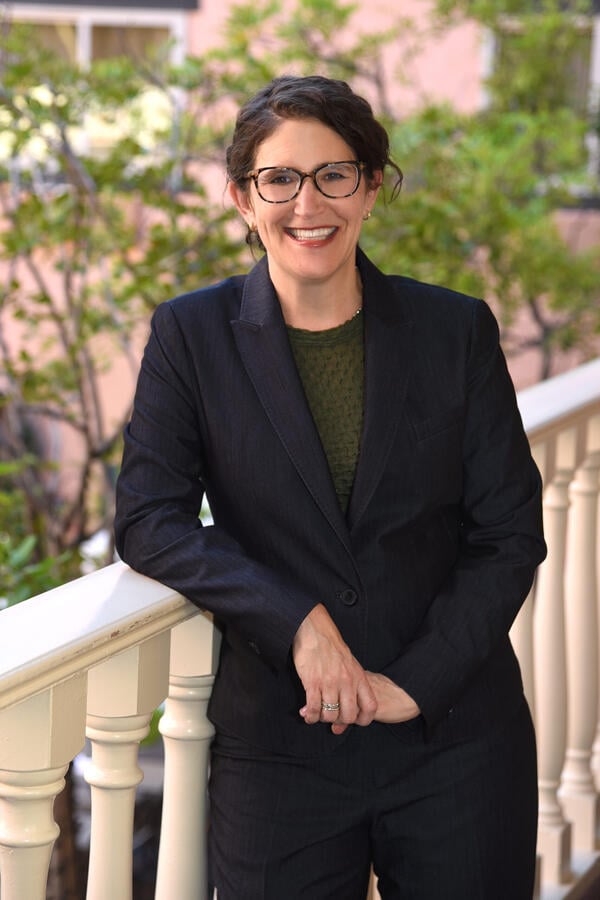
    Its executive director, Michelle Deutchman, who worked as an attorney for the Anti-Defamation League for 14 years before joining the center, stopped by the Inside Higher Ed office in Washington, D.C., last week to discuss the federal government’s attacks on free expression in higher education. The interview has been edited for length and clarity.

    1. What are your biggest concerns with regard to the Trump administration and free speech and open expression in higher ed right now?

    Well, sadly, there’s kind of a long list. I think, from my vantage point, one of the greatest concerns is seeing students, and particularly international students, being, basically, taken away on what appears to be the basis of viewpoints and opinions that they might have shared, either in the form of protest or, in one case, an op-ed. That really flies in the face of exactly what the First Amendment is supposed to protect against, especially in a public institution, which is that it’s supposed to be a restraint on government. In fact, what we’re seeing right now is the government stepping over the line of what is permitted, and that is definitely creating, I think, a chilling effect, not just for international students, but for students across the board, whether they’re protesting or not.

    I also think that the specter of investigations on campuses—this list of 60 campuses [being investigated for alleged antisemitism], this idea that if you’re on a campus that’s potentially going to be under investigation—might impact what you say in class, outside of class, how you teach, everything that’s fundamental to the academy.

    2. What are some of the most common questions you’re getting about what is going on?

    Michelle Deutchman, a light-skinned woman wearing glasses and a dark suit over a dark green top.

    Deutchman has led UC’s National Center for Free Speech and Civic Engagement for eight years.

    Laurel Hungerford

    I don’t get as many questions as you would think, because I don’t give legal advice, and right now, what a lot of people want is legal advice. But I think one of the things that I’m struggling with is, how do you talk about open expression and dialogue in a moment when it’s largely being suppressed on campuses? One of the questions that people have been asking is what to say to students about the risk factors in terms of being very vocal with your opinions, and how should administrators address that—both wanting to, of course, encourage them to use their voices, but also wanting to be transparent about what the risks might be.

    There’s just a lot of other, bigger questions that are just about, what does this mean in general for higher education? Is this like an existential moment? What about the coercive use of money? A lot of questions of: Can the government do that? And I think it’s a really challenging situation where the answer is: Not sure that they should be doing it, but they are. So, how do we handle that sort of in-between space while we wait for the law to catch up to what’s going on on the ground?

    3. There’s been a lot of emphasis on civic dialogue education as one antidote to tensions around political speech on campus. Do you feel like this moment is sort of setting those efforts back at all?

    I don’t want to say they’re setting them back. I worry a little that they might be getting set aside. And that’s a concern that I’ve had, really, since after Oct. 7, where we saw so much time and energy go into the basics about the First Amendment and about time, place and manner, and about whether or not to use law enforcement, that there became a big focus on the enforcement regulations as opposed to sort of education. I think now, so much energy is being put into how to defend higher education against this assault that I worry that efforts that focus on how we teach not just students but all members of higher education communities to engage with one another and listen to one another and build the muscle of civic dialogue—I worry that there isn’t enough bandwidth to pay attention to that, and setting it aside, I think, is to the detriment of everyone at this moment.

    4. How is Trump’s cutting of grants his administration deems related to diversity, equity and/or inclusion connected to the government’s other attacks on speech?

    I think that the cutting of those kinds of grants is just another attempt at government censorship of speech. Expression and speech are the cornerstones of the creation and transmission of knowledge. So, I think that it you’re stopping grants about certain topics, topics that are either being researched or topics that are being taught, that is something that falls sort of in the viewpoint discrimination area and really runs afoul of the Constitution. We’ve certainly seen some successes in court cases and injunctions, but I think part of the problem is the gap between when an executive order is signed and when an injunction happens, the chilling effect that happens across the university, and this idea that I don’t know that you can unring certain bells.

    5. Though many are calling the Trump administration’s attacks unprecedented in many ways, there have been other moments in history when free speech on college campuses has been under assault. What do those moments teach us about what is happening today?

    I wish I could tell you that I am a historian, but I’m a lawyer, so I don’t necessarily have that historical perspective. Certainly, I think people say that this is the greatest threat to academic freedom and to the autonomy of the university since McCarthyism. It’s hard to know how, then, to take that information and do something with it, right? I mean, the hopeful take is: Well, we made it through that, even though it was a dark time.

    I mean, look, I’m a [University of California, Berkeley] Cal Bear. UC had people do loyalty oaths; it was not a good moment, and look where we are now. I think that is sort of the optimistic hope.

    I think the less optimistic [perspective] is that, in some ways, what we’re experiencing is much more far-reaching, and we will just have to wait and see what happens.

    Source link

  • Is cancel culture dead? | The Foundation for Individual Rights and Expression

    Is cancel culture dead? | The Foundation for Individual Rights and Expression

    The co-authors of “The Canceling of the American Mind”
    discuss its new paperback release and where cancel culture stands a
    year and a half after the book’s original publication.


    Greg Lukianoff

    Rikki Schlott

    Timestamps:

    00:00 Intro

    04:35 Origin of book

    07:56 Definition of cancel culture

    17:55 Mike Adams, canceled professor

    23:51 Alexi McCammond, former Teen Vogue
    editor-in-chief

    31:57 Echo chambers on social media

    35:09 Trump administration ‘canceling’ law firms and
    higher ed institutions

    44:02 Rikki’s libertarian political identity

    51:02 Is cancel culture dead?

    54:26 Outro


    Read the transcript.

    Enjoy listening to the podcast? Donate to FIRE today and
    get exclusive content like member webinars, special episodes, and
    more. If you became a FIRE Member
    through a donation to FIRE at thefire.org and would like access to
    Substack’s paid subscriber podcast feed, please email [email protected].

    Show notes:

    Source link

  • On Mahmoud Khalil | The Foundation for Individual Rights and Expression

    On Mahmoud Khalil | The Foundation for Individual Rights and Expression

    First Amendment lawyer
    Marc Randazza
    and immigration lawyer
    Jeffrey Rubin
    join the show to discuss the arrest,
    detention, and possible deportation of green card holder Mahmoud
    Khalil.

    Timestamps:

    00:00 Intro

    00:53 Latest updates on Khalil

    02:51 First Amendment implications

    06:08 Legal perspectives on deportation

    11:54 Chilling effects on free expression

    21:06 Constitutional rights for non-citizens

    24:03 The intersection of free speech and immigration
    law

    27:02 Broader implication of immigration policies

    37:51 Outro

    Enjoy listening to the podcast? Donate to FIRE today and
    get exclusive content like member webinars, special episodes, and
    more. If you became a FIRE Member
    through a donation to FIRE at thefire.org and would like access to
    Substack’s paid subscriber podcast feed, please email
    [email protected].

    Show notes:

    – “We will be
    revoking the visas and/or green cards of Hamas supporters in
    America so they can be deported.
    ” Secretary of State Marco
    Rubio via X (2025)

    – “‘ICE proudly
    apprehended and detained Mahmoud Khalil, a radical foreign
    Pro-Hamas student on the campus of @Columbia University. This is
    the first arrest of many to come.
    ‘ President Donald J.
    Trump” The White House via X (2025)

    – “WATCH: White
    House downplays stock market declines as ‘a snapshot’
    ” PBS
    NewsHour (2025)

    – “Secretary
    Rubio’s remarks to the press
    ” U.S. Department of State
    (2025)

    – “Mahmoud
    Khalil. Notice to appear.
    ” Habeeb Habeeb via X (2025)

    Source link