Tag: Face

  • Working Students Face New Challenges in a Shifting Policy Landscape

    Working Students Face New Challenges in a Shifting Policy Landscape

    Most undergraduates today are juggling academics with paid work, many logging 40 or more hours a week. That load leaves little margin: more non-academic responsibilities, less time for coursework, and fewer opportunities to engage on campus mean these students often feel the effects of federal policy changes first.

    The budget reconciliation bill signed into law on July 4 threatens to make those challenges worse, reshaping student loans and public benefit programs like the Supplemental Nutrition Assistance Program (SNAP) and Medicaid in ways that risk cutting off critical financial lifelines. On Pell Grants, the news is mixed: the bill restores a revised Workforce Pell program that could open doors to short-term training, but makes other changes that may reduce access for some students.

    For working students already balancing jobs, school, and basic needs, these changes could tip the balance toward longer time to degree, greater debt, or leaving school altogether. Using recent data, we explore how these students are making ends meet now, and what colleges, universities, and policymakers can do to protect and strengthen the supports that help them stay enrolled and graduate.

    Profile of student workers

    According to the 2020 National Postsecondary Student Aid Study (NPSAS:20), nearly three-quarters of undergraduate students work while enrolled, with around a third of those students working full time. Results from Trellis Strategies’ 2024 Student Financial Wellness Survey (SFWS) identified similar rates of employment, allowing the ability to cross-reference specific questions about overall financial wellness. In this post, we compare SFWS respondents who answered “yes” to the question “Do you work for pay?” with those who answered “no.”

    About half of all SFWS respondents reported using income from their employment to pay for school. However, many working students have additional financial commitments beyond their education. For example, 19 percent of working respondents indicated they provide financial support to a child, and 18 percent provide the same support to their parents or guardians. Overall, about half of working SFWS respondents (47 percent) shared that it was important for them to support their family financially while in college, compared to 38 percent of their non-working peers.

    This heightened familial commitment is reflected in the fact that many working students—36 percent of those responding to the 2024 SFWS—identify primarily as workers who go to school, rather than students who work. Furthermore, working students attend part-time at higher rates (38 percent) compared to their non-working peers (28 percent).

    How working students pay for college

    Most students who were working at the time the 2024 SFWS was administered self-reported using their employment to pay for college (see Figure 2). Many used personal savings as well, but only seven percent were able to “work their way through college” using employment and/or personal savings alone. Instead, working students, similar to their peers who don’t work, depend upon aid such as grants and loans to be able to access higher education.

    Nationally representative data from NPSAS:20 show that almost 40 percent of working students receive Pell Grants and more than a third borrow federal student loans (non-working students receive federal aid at similar rates).

    For these students, losing part of their federal aid could mean they can no longer afford higher education. This is especially true for those students with limited financial flexibility to fall back on. Working students in the SFWS were more likely to report using credit cards to pay for college and were less likely to receive financial support from parents or family, as compared to their non-working peers.

    Implications of policy changes

    The reconciliation bill passed by Congress in July 2025 (the One Big Beautiful Bill Act) includes many changes that impact students, with particularly significant consequences for those who work.

    On Pell Grants, the bill offers both opportunities and new concerns. It restores a revised Workforce Pell Grant program, starting July 2026, that expands the traditional Pell Grant to include eligible short-term non-degree programs at accredited institutions, an option that could help working students earn credentials more quickly and move into higher-paying jobs.

    At the same time, the bill restricts Pell eligibility when other scholarships, grants, or non-federal aid fully cover a student’s cost of attendance. Under this system, a working student who receives a private scholarship that might otherwise allow them to decrease their working hours could instead see their Pell Grant decrease. While intended to prevent Pell from being awarded in “full-ride” situations, the change could also affect working students who have substantial financial responsibilities beyond the calculated cost of attendance.

    The bill also includes significant changes to federal student loan programs and repayment options, with most of the changes effective as of July 1, 2026. Parents borrowing Parent PLUS loans will now have annual and aggregate borrowing caps. About one in 10 undergraduate students, including among working students, reported that their parents borrowed loans for their education. Limits on this borrowing may constrain the financial resources of some students, with possible negative consequences for their academic momentum.

    Changes to SNAP and Medicaid will affect state budgets, putting higher education at risk and making it harder for people to enroll in and complete a credential while meeting their basic needs. Many students, despite also working, already face significant barriers such as food and housing insecurity, as found in the 2024 SFWS.

    While no changes were made to student-specific eligibility criteria in SNAP, new work requirements in SNAP and Medicaid prioritize work over education, making it harder for people to complete a credential while maintaining access to food and health assistance. These work requirements will also create new administrative hurdles, which research shows result in people being kicked off of Medicaid despite being eligible.

    The net effect of these changes will relegate more people to low-wage work by delaying or denying their ability to complete credentials that would provide higher wages, lower unemployment and poverty rates, and less use of public benefits. While the Medicaid work requirement changes don’t begin until January 2028, the SNAP changes were effective upon signing of the bill. However, states are awaiting further guidance from the U.S. Department of Agriculture on how to administer those changes.

    Any reduction in financial aid or public assistance resources for students may mean that more students will need to work longer hours while enrolled to make ends meet. Besides reducing the number of hours available to study, work schedules can also directly conflict with class schedules and other campus activities.One-quarter of working respondents in the 2024 SFWS reported missing at least one day of classes due to conflicts with their job, and 56 percent of students with jobs agreed or strongly agreed that their job interfered with their ability to engage in extracurricular activities or social events at their school. Students with a weaker sense of connection and belonging at their institution have been shown to have worse academic performance and retention rates than their peers.

    Supporting working students

    While changes to federal student aid programs are still being debated, colleges and universities can ensure they have programs and processes in place to support working students at their campuses. Institutional leaders can:

    • Develop or enhance robust support systems, such as emergency grants, connection to public services, and adequate financial aid, to help students weather financial challenges, develop a stronger connection to their institution, and remain enrolled.
    • Implement strategic course scheduling that can help students more effectively plan employment, child care, transportation, and other needs so they can enroll in and complete more classes in a timely way.
    • Leverage regular data collection to respond to the needs of their specific student body. Participating in the annual Student Financial Wellness Survey is free and provides institutions with a customized report, benchmarking insights, and de-identified student data.
    • Policymakers should consider how programs can best serve students juggling multiple time commitments and financial priorities. Robust social services, such as child care and access to public assistance programs, can allow more working students the opportunity to thrive. Adequate financial aid can help students work less and complete their credentials sooner, opening the door to higher wages.

    If you have any questions or comments about this blog post, please contact us.

    Source link

  • Autistic College Students Face Dramatically Higher Rates of Mental Health Challenges, New Research Shows

    Autistic College Students Face Dramatically Higher Rates of Mental Health Challenges, New Research Shows

    Autistic college students are experiencing anxiety and depression at significantly higher rates than their non-autistic peers, according to new research from Binghamton University that analyzed data from nearly 150,000 undergraduate students across 342 institutions nationwide.

    The study, published in the Journal of Autism and Developmental Disorders, represents one of the most comprehensive examinations to date of mental health challenges facing autistic students in higher education—a population that researchers say has been historically underrepresented in academic research despite growing enrollment numbers.

    “What we found is really staggering—autistic individuals endorse much higher rates of anxiety and depression compared to their non-autistic peers,” said Diego Aragon-Guevara, the study’s lead author and a PhD student in psychology at Binghamton University.

    The research team analyzed data from the National Survey of Student Engagement (NSSE), which in 2021 became the first year that autism was included as an endorsable category in the survey. This milestone allowed researchers to conduct the first large-scale comparison of mental health outcomes between autistic and non-autistic college students.

    “We were really excited to see what the data would tell us. It was a big opportunity to be able to do this,” said Dr. Jennifer Gillis Mattson, professor of psychology and co-director of the Institute for Child Development at Binghamton University, who co-authored the study.

    The findings come at a critical time for higher education institutions as autism diagnoses continue to rise nationwide and more autistic students pursue college degrees. The research highlights a significant gap in support services that could impact student success and retention.

    “We know the number of autistic college students continues to increase every single year,” Gillis-Mattson noted. “We really do have an obligation to support these students, and to know how best to support these students, we need to look beyond just autism.”

    The study reveals that campus support systems may be inadvertently overlooking mental health needs while focusing primarily on autism-specific accommodations. Aragon-Guevara, whose research focuses on improving quality of life for autistic adults, said this represents a critical oversight in student services.

    “Support personnel might address an individual’s autism and, in the process, overlook their mental health issues,” he explained. “More care needs to be put into addressing that nuance.”

    The research underscores the need for institutions to develop more comprehensive support frameworks that address both autism-related needs and concurrent mental health challenges. The findings suggest that traditional disability services approaches may need significant enhancement to serve this population effectively.

    “We want to provide the best support for them and to make sure that they have a college experience where they get a lot out of it, but also feel comfortable,” Aragon-Guevara said.

    Dr. Hyejung Kim, an assistant professor in Binghamton’s Department of Teaching, Learning and Educational Leadership, noted that the complexity of factors affecting autistic students requires deeper investigation. 

    “This population often skews male, and interactions between personal factors and conditions such as anxiety and depression may shape overall well-being in college,” she said.

    Kim also pointed to additional considerations that institutions should examine. 

    “Autistic students are also more likely to pursue STEM fields, and many report different experiences with faculty and staff across institutional settings,” she said. “We still have much to learn about how these and other contextual factors relate to mental well-being.”

    The Binghamton team views this study as foundational research that confirms the scope of mental health challenges among autistic college students. Their next phase will investigate specific contributing factors, including social dynamics, faculty support, campus accessibility, and other environmental elements that influence student well-being.

    “There are so many elements that go into being comfortable in the new environment that is college,” Aragon-Guevara explained. “We want to look into that and see if there are any deficits in those areas that autistic college students are experiencing, so that we know where we can help support them, or create institutional things to help improve quality of life as a whole.”

    The research is part of a broader effort at Binghamton to better understand and support autistic students in higher education, with plans to collaborate with campus partners to develop targeted interventions based on their findings.


    Source link

  • Undocumented Kids Face Narrowed Pathways, Stifled Futures – The 74

    Undocumented Kids Face Narrowed Pathways, Stifled Futures – The 74

    School (in)Security is our biweekly briefing on the latest school safety news, vetted by Mark KeierleberSubscribe here.

    In a battle over undocumented students’ access to public schooling — and, frankly, their futures — the Trump administration agreed this week to pause new federal rules designed to bar immigrants from Head Start and other education programs. 

    My colleague Jo Napolitano reports the reprieve, through Sept. 3, applies in 20 states and Washington, D.C., after state attorneys general sued to stop new rules designed to give undocumented preschoolers and other immigrant students the boot.

    Health and Human Services Secretary Robert. F. Kennedy Jr. visits a Head Start program on May 21 to promote healthy eating. On July 10, he issued a directive barring undocumented students from the federally funded early education program. (Facebook/HeadStart.gov)

    Those regulations could end up restricting educational opportunities for the youngest learners. But as Jo explains in her newest analysis, it’s just one part of a multifaceted approach to bar undocumented students from learning from cradle to career. 

    Read Jo’s full analysis — and learn how the changes could undercut the chance immigrant youth get for a better life. 


    In the news

    More on Trump’s immigration crackdown: In Arizona, unaccompanied minors are facing immigration judges alone — without help from lawyers — after the administration cut off access to funding for their defense. A court order has restored the money temporarily through September. | Arizona Republic

    • The Trump administration instructed federal agents to give detained migrant teenagers the option of voluntarily returning to their home countries instead of being confined in government-overseen shelters. | CBS News
    • Attorneys for immigrant children say youth and families are being detained in “prison-like” facilities even as the administration seeks to terminate rules that mandate basic safety and sanitary conditions for children. | CBS News
    • The Denver school district says fear of federal immigration enforcement led to a surge in student absences. A review of attendance data by The Denver Gazette suggests a more nuanced picture. | The Denver Gazette
    • Undocumented students who attended K-12 schools in the U.S. last year before getting deported share their stories. | USA Today
    Sign-up for the School (in)Security newsletter.

    Get the most critical news and information about students’ rights, safety and well-being delivered straight to your inbox.

    Penny Schwinn, who was in line to be the Education Department’s second in command, has dropped out of consideration following critiques of her conservative bona fides, including for past support of campus equity initiatives. | The 74

    ‘Trampling upon women’s rights’: The Oregon Department of Education is the latest agency to come under federal investigation over allegations the state allows transgender students to compete in women’s sports. | Oregon Public Broadcasting

    New Education Department guidance encourages the use of federal money to expand artificial intelligence in classrooms, which the agency said has “the potential to revolutionize” schools. | Education Week 

    • The Trump administration’s “AI Action Plan” comes after the Senate failed to pass rules in the “big, beautiful” tax-and-spending bill designed to prevent states from regulating AI. Instead, Trump’s guidance directs the Federal Communications Commission to evaluate state regulations and block any “AI-related federal funding” to any states with rules deemed “burdensome.” | The White House

    How a 45-second TikTok video portraying a campus shooting — created by middle school cheerleaders — led to criminal charges. | ProPublica

    A phishing campaign has taken advantage of mass layoffs at the Education Department by mimicking a portal maintained by the agency to manage grants and federal education funding. | DarkReading

    Drones are being pitched as the next big thing to thwart school shootings — but district leaders are balking at the million-dollar price tag. | WCTV

    ‘Critical gaps’: An inspector general report in Washington, D.C., uncovered flaws in the city school system’s gun violence prevention efforts, including a backlog on repairs to security equipment. | The Washington Post

    Wisconsin schools are installing controversial license plate readers that have been used by law enforcement to track down undocumented immigrants. | Milwaukee Journal Sentinel


    ICYMI @The74

    Sierra Rios and her daughter Nevaeh (Sierra Rios)

    For Decades, the Feds Were the Last, Best Hope for Special Ed Kids. What Happens Now?

    A Student’s View: Cell Phone Bans Won’t Fix Education

    Report: ‘A Mixed Picture’ in Pandemic Recovery for American Children


    Emotional Support

    Chompers gonna chomp. Photo credit: Bev Weintraub


    Get stories like these delivered straight to your inbox. Sign up for The 74 Newsletter

    Source link

  • Northwestern University cuts 425 jobs in face of federal funding pressure

    Northwestern University cuts 425 jobs in face of federal funding pressure

    Dive Brief:

    • Northwestern University plans to cut about 425 staff jobs— amounting to roughly 5% of the private nonprofit’s staffing budget — senior leaders said Tuesday in a community message. 
    • Nearly half of the jobs are vacant, while others will be cut through layoffs, which administrators are working to complete within 48 hours of the announcement. 
    • The Illinois university is navigating a host of financial challenges, including federal research funding cuts and a potentially higher endowment tax under the Republicans’ new spending law.

    Dive Insight:

    In their message Tuesday, Northwestern President Michael Schill, Provost Kathleen Hagerty and Chief Financial Officer Amanda Distel described recent months as “among the most difficult in our institution’s 174-year history.”

    About a month and a half ago, the same group of officials said the university faced “an increasing strain” on its finances from both looming federal policy changes and increasing expenses.

    At the time, they rolled out a series of austerity measures, including a pause on employee raises, a hiring freeze for faculty and staff, health insurance changes, reduced capital spending, and lowered budgets for academic and administrative units. 

    While the university has cut nonpersonnel budgets by 10%, employee costs make up 56% of Northwestern’s total annual spending. “We still are left with a budgetary gap that cannot be bridged without cutting personnel costs,” the officials said. 

    The layoffs announced this week represent “a drastic step that causes pain and anxiety both for the individuals whose lives are affected, but also for our entire community, and we do not take it lightly,” they said. They also noted that schools and units were given discretion in making cuts and asked to “think strategically”  to minimize the impact to units, workers, students and the university.

    Northwestern is among the prominent universities targeted by the Trump administration through probes into their responses to antisemitism on campus by the U.S. departments of Education and Health and Human Services

    The university, however, has reported an 88% year-over-year decline in complaints of antisemitic discrimination or harassment as of November 2024.

    Nonetheless, the Trump administration in April reportedly froze $790 million funds to Northwestern. Although the university at the time hadn’t received official notification of a targeted freeze from the government, it saw around 150 stop-work orders and grant terminations from federal agencies by May 1.

    Last week, The Wall Street Journal reported via an anonymous source that the Trump administration was in talks with Northwestern and other universities about possible deals that would involve a hefty fine to resolve the investigations. The news followed Columbia University’s controversial settlement with the government requiring a $221 million payment in return for the government restoring most of its research funding.

    In an op-ed published in The Daily Northwestern on Tuesday, a group of Northwestern faculty described such fines as a “ransom” and called on university leadership to “resist the administration’s attack on fundamental democratic principles by refusing to ‘make a deal’ with the administration.” 

    Source link

  • Schools and colleges nationwide face Trump investigations

    Schools and colleges nationwide face Trump investigations

    The Trump administration moved quickly after taking office to open dozens of investigations into schools and universities nationwide. Most of those announced publicly mark a dramatic shift in priorities from previous administrations.

    The Education Department and other agencies are looking into allegations of antisemitism and racial discrimination against white students at dozens of colleges. The agency also has begun investigating policies that protect transgender athletes and, in some cases, targeted entire state departments of education as part of that work.

    Related: Become a lifelong learner. Subscribe to our free weekly newsletter featuring the most important stories in education. 

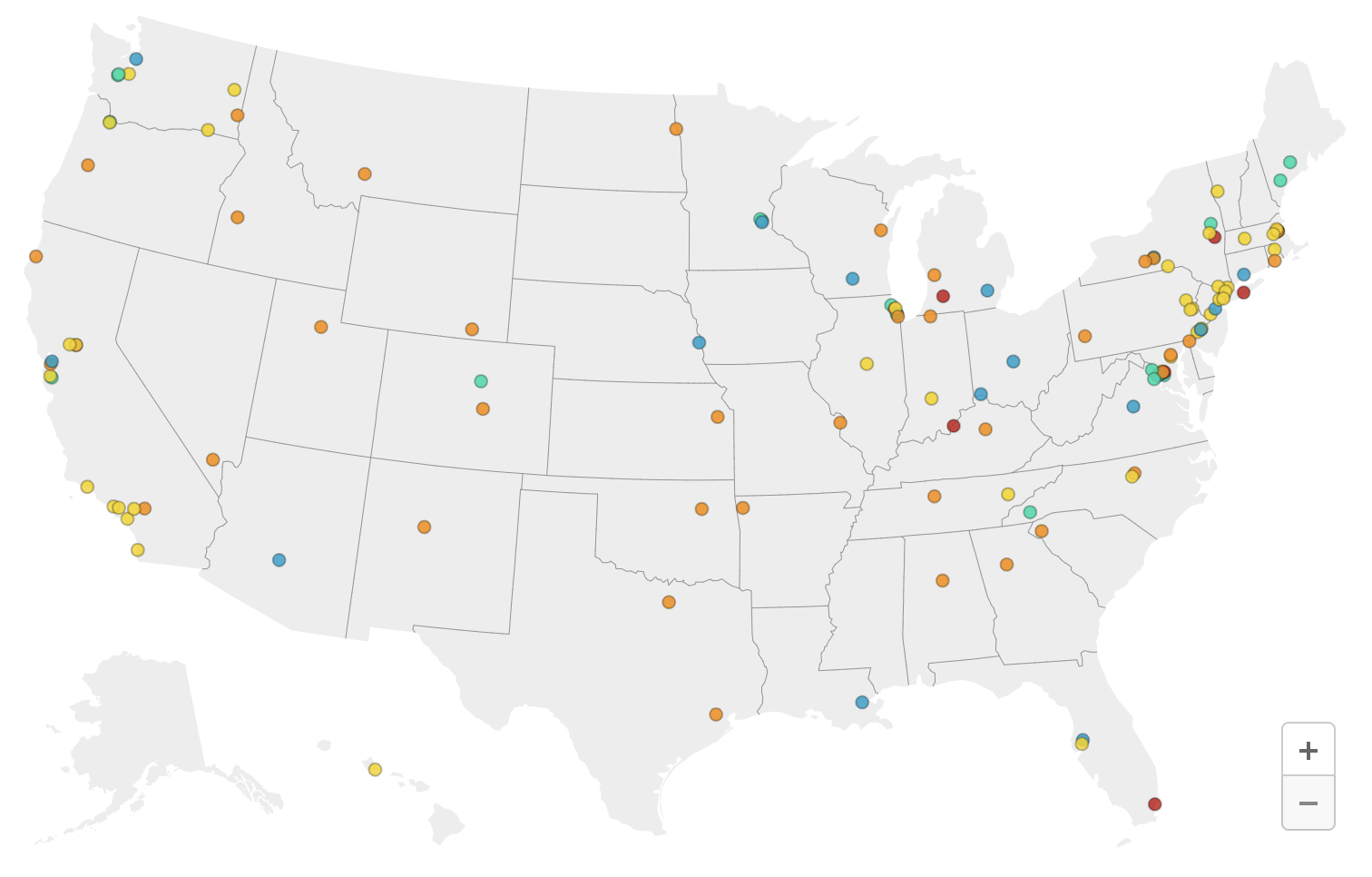
    Here’s a look at investigations the Trump administration has announced. This map and list will be updated. Know of an investigation we missed? Tell us: [email protected]

    Although the majority of investigations that have been opened are in states considered to be liberal, almost every state in the country has at least one entity under scrutiny. And many institutions face more than one investigation.

    Related: Tracking Trump: His actions to dismantle the Education Department, and more

    To date, colleges and universities have received the most attention from the administration, with more than 60 targeted over alleged incidents of antisemitism and another 45 under scrutiny over their work with a program that aims to increase diversity among Ph.D. candidates. Most of the K-12 investigations involve transgender policies, including those about access to sports and locker rooms. 

    Contact investigations editor Sarah Butrymowicz at [email protected] or on Signal: @sbutry.04

    This story about Trump investigations was produced by The Hechinger Report, a nonprofit, independent news organization focused on inequality and innovation in education. Sign up for the Hechinger newsletter.

    The Hechinger Report provides in-depth, fact-based, unbiased reporting on education that is free to all readers. But that doesn’t mean it’s free to produce. Our work keeps educators and the public informed about pressing issues at schools and on campuses throughout the country. We tell the whole story, even when the details are inconvenient. Help us keep doing that.

    Join us today.

    Source link

  • Pennsylvania officers face First Amendment lawsuit for trying to criminalize profanity and using patrol car to chase man who recorded police

    Pennsylvania officers face First Amendment lawsuit for trying to criminalize profanity and using patrol car to chase man who recorded police

    ALLENTOWN, Pa., July 23, 2025 — In a bizarre scene, a police officer in Allentown, Pennsylvania, drove his patrol cruiser down a sidewalk at a man who was protesting police misconduct by filming outside a police station. 

    Today the Foundation for Individual Rights and Expression filed a lawsuit defending Phil Rishel’s rights to film and criticize police activity in public spaces — behavior that is protected by the First Amendment — without being assaulted or retaliated against for doing so. 

    “The retaliation over my speech confirms that there is a huge issue with the culture of the Allentown Police Department,” said Phil. “These officers have a disdain for the rights of the people they’re sworn to protect — and I hope my lawsuit changes things for the better.”

    Since 2015, the City of Allentown, Pennsylvania, has paid at least $2 million related to claims of police misconduct. In 2023, Phil began protesting in Allentown by non-disruptively recording police activity while standing on public sidewalks outside local police precincts.

    COURTESY PHOTOS OF PHIL RISHEL

    On March 26, 2024, Phil went to the Hamilton Street police station, where he stood on a public sidewalk and recorded what he could see in plain view. Approximately 15 minutes after he arrived, an officer approached him and briefly paused while looking at a “No Trespassing” sign. Phil responded, “Yeah, that’s a nice sign. Too bad it doesn’t apply to the public sidewalk.” The officer then silently walked away from Phil into the depths of the garage and up a vehicle ramp. Phil called out after him about his disregard of a sign next to the ramp that read: “PEDESTRIANS MUST USE STAIRS ONLY.”

    About 10 minutes later, the officer drove his patrol car out of the garage and sharply turned onto the sidewalk towards Phil while blaring the siren. The officer pursued him down the sidewalk, even driving around a lamppost in his way and back onto the sidewalk to chase Phil. The officer then exited the car, went into the office, and emerged with a police sergeant. They accused Phil of loitering and banned him from the public sidewalk under threat of arrest. 

    WATCH THE VIDEO FOOTAGE

    The next day, Phil returned to the same public sidewalk outside the Hamilton Street station’s parking garage and picked up where he left off, recording police activity in plain view. The same sergeant threatened to arrest him for returning and told him that filming the police “is not a First Amendment right,” while also claiming that Phil’s profanity the previous day constituted disorderly conduct. Ultimately, he charged Phil with disorderly conduct and loitering via a criminal citation sent in the mail.

    At the hearing on the criminal charge, the sergeant testified that Phil was in an area closed for construction and blocked pedestrian traffic and the parking garage entrance, but none of this was true, as shown by the video Phil took that day. Based on the sergeant’s testimony, the court found Phil guilty on the loitering charge, although the conviction was reversed on appeal. The disorderly conduct charge was dismissed by the lower court based on longstanding Pennsylvania case law.

    The First Amendment protects citizens’ right to film police officers and their activities. It also protects individuals who verbally criticize police and their actions, even by cursing or using profane language. 

    FIRE’s lawsuit seeks to enforce these established constitutional rights for Phil and other Allentown citizens. The complaint seeks a declaration that the Allentown police violated First Amendment rights, an injunction against the City of Allentown for failing to provide adequate training to its police officers about protecting and respecting First Amendment rights, and an award of damages to Phil for the treatment he received.

    “Citizens trying to hold police officers accountable should not be punished,” said FIRE attorney Zach Silver. “Public officials, including police officers, must uphold the law and respect citizens’ right to record police and to use harsh language, not bully them into silence.”

    The Foundation for Individual Rights and Expression (FIRE) is a nonpartisan, nonprofit organization dedicated to defending and sustaining the individual rights of all Americans to free speech and free thought—the most essential qualities of liberty. FIRE educates Americans about the importance of these inalienable rights, promotes a culture of respect for these rights, and provides the means to preserve them.

    CONTACT
    Katie Stalcup, Communications Campaign Manager, FIRE: 215-717-3473; [email protected] 

    Source link

  • Universities should face the consequences for misleading students over the cost of living

    Universities should face the consequences for misleading students over the cost of living

    Why do students run out of money? And is it their mistake?

    It’s partly because student maintenance support has not kept pace with the cost of living.

    Last year, the Centre for Research in Social Policy (CRSP) at Loughborough University calculated that students need £18,632 a year outside London (and £21,774 a year in London) to have a minimum acceptable standard of living.

    But if you’re living away from home in England, the maximum maintenance loan is £10,227 – and it’s less than that once your parents earn over £25,000.

    And if you’re an international student, the Home Office’s “proof of funds” figure – the money you need to show you have in the bank to cover your living costs – has been (un)helpfully aligned to that inadequate figure.

    In that scenario, you’d need help with budgeting – especially if you’ve never lived away from home before, if you’ve not participated in higher education before, or if you’ve never lived in the UK before.

    You’d want to know, for example, how much a TV license costs. The good news is that your chosen university has a guide to student living costs, and it lists the license as costing £159 per year.

    The problem? £159 was the 2021 rate – a TV licence now costs £174.50. Still, one little mistake like that isn’t going to break the bank, surely?

    Delay repay

    Over the past few years I’ve whiled away some of my train delays surfing around university websites looking at what the sector says about student cost of living.

    I’ve found marketing boasts dressed up as money advice, sample student budgets that feature decades old estimates, and reassuringly precise figures that turn out to be thumbs in the air from the ambassadors in the office.

    Often, I find webpages that say things like this:

    The problem is that the “fact” turns out to be from 2023, the source on the “lowest rents” claim turns out to be “not yet reliable”, and the “one of the cheapest pints in the country” claim has its source this story in the Independent. From 2019.

    That’s also a webpage that says you can get a bus to the seaside and back for £4.30 (it’s currently £12), a ferry to Bruges for £50 (the route was withdrawn in 2020), and a train to London for “for just over a tenner” – when even with a railcard, the lowest fare you’ll find is £22.66.

    Campus gym prices are listed as less than £20 a month (it’s actually from £22.95 for students), rent for a one-bed city flat is listed as £572 (the source actually says £623.57), and you’re even told that you can head to a “legendary” local nightclub to “down a double” for £1.90.

    Sadly, even Spiders Nightclub is having to cover “the increasing cost of basic overheads” and “the ongoing inflationary cost of purchasing stock”. The current price is £2.50.

    Those were the days

    Sometimes, I find tables like this – where the costs listed appear to be exactly the same as when the webpage was updated in 2022.

    HERTS 1

    Actually, that’s not quite true. Someone has bothered to update the lower rent estimate up to £500 a month since then – leaving all of the other figures unchanged.

    Archive.org allows me to see all sorts of moments when someone, somewhere, has performed an update. Of sorts.

    Here’s one where food and rent have gone up, but everything else is as it was in 2022. The main difference is that the “Yearly costs for students” lines in the table have been deleted – presumably because they would stretch credibility.

    Not every university has a run at listing costs. Many (over 30 at the time of typing) refer their readers to the Which? Student Budget Calculator.

    The Which? Student budget calculator was deleted in 2022 – and even when it was live, its underpinning figures were last updated in 2019.

    Sometimes the google search takes you to undated slide decks and PDFs. This metadata suggests that this one is from 2023 – although the figures in it look suspiciously similar to the numbers in the UG prospectus in 2015.

    To be fair, that’s a university that has at least got an updated chart showing sample costs in its international arrival guide – with a reassuring note that average costs are correct as of March. You’d perhaps be less reassured to find that those average costs – other than the cost of (university) accommodation – have remained exactly as they were since last year.

    Sometimes, a picture is painted of painstaking research carried out by dedicated money advisors. Here’s a table that says the minimum costs have been estimated by the university’s support teams:

    How lucky students in that city are, given that the only things that have increased over the past year are accommodation and rent:

    Actually, tell a lie. Many of the costs seem to be identical to those in 2020:

    Save us from your information

    Lost of the sample budgets and costs are unsourced – but not all of them. A large number quote figures from Save the Student’s student money survey – which last year used responses from 1,010 university students in the UK to calculate the results.

    Even if that was a dataset that could be relied upon at provider or city level, that was a survey that found 67 per cent of students skipping meals to save money, 1 in 10 using food banks and 60 per cent with money related mental health problems. Not a great basis on which to budget, that.

    Others quote their costs from the NatWest Student Living Index – which for reasons I’ve explained in 2024, 2023 and 2022, isn’t an approach that I think comes close to being morally sound.

    Plenty of universities don’t list costs at all, but imply to international students that the “proof of funds” figure has been calculated by Home Office officials as enough to live on:

    It has, of course, just been copied across from DfE’s maximum maintenance loan – a figure widely believed to be wholly inadequate as an estimate of living costs for students.

    Sometimes you find things like this, a set of costs “based on feedback from our current international undergraduate and master’s students”. Someone has gone in and updated the costs for university halls – but hasn’t updated anything else, and nor have they updated the estimate for total monthly living expenses:

    Sometimes you find things like this – costs that haven’t changed in two years contained in an official looking document called “Student Regulations and Policies: Standard Additional Costs”:

    And sometimes you find miracles. Here’s a university where most of the costs haven’t increased in 18 months, and the cost of clothing has fallen dramatically – despite ONS calculating that clothing inflation is currently 5.9 per cent.

    Then there’s charts like this that are “subject to change” – although no change since last summer:

    Or unsourced tables like this, where somehow student costs have started to fall. I want to move there!

    2024. Here’s 2025:

    The long arm

    The good news for prospective students – and the bad news for universities – is that this is all now going to have to change.

    Looking at all of this through the lens of the new Digital Markets, Competition and Consumers (DMCC) Act, it’s hard to avoid the conclusion that universities have been sailing remarkably close to the wind – and that the wind direction has now changed dramatically.

    Under DMCC, the systematic provision of outdated cost-of-living information would likely constitute a serious breach of consumer protection law. The Act makes it automatically unfair to omit material information from invitations to purchase – and there’s little doubt that accurate living costs are material information for prospective students making decisions about whether and where to study.

    Crucially, there’s no longer any need to prove that students were actually misled by the information, or that it influenced their decision-making. The omission itself is the problem.

    The legal framework has fundamentally shifted in universities’ disfavour. The scope of what counts as material information has expanded beyond those categories defined by EU obligations, while misleading actions are no longer restricted to predefined “features” of a product or service.

    Instead, any information relevant to a student’s decision can now trigger a breach – meaning universities can no longer rely on narrow, checklist-based approaches to compliance. Outdated transport costs, inflated claims about local entertainment prices, or misleading accommodation estimates all fall squarely within this expanded scope, even though they might previously have been considered peripheral to the core “product” of education.

    The Act has also lowered the threshold for proving breaches of professional diligence. Previously, universities might have argued that minor cost discrepancies didn’t cause “material distortion” of student decision-making. Now, practices need only be “likely to cause” a different decision – shifting the focus from proving impact to ensuring accurate practice from the outset.

    The Act explicitly recognises that certain groups of consumers are particularly vulnerable, and that practices which might not affect others can cause disproportionate harm to those groups.

    International students – who rely heavily on university cost estimates for visa applications and have limited ability to verify information independently – are a textbook example of vulnerable consumers. So too are first-generation university students, those from lower-income families, and young people making major financial commitments for the first time. The Act requires universities to proactively identify and mitigate risks to these vulnerable groups as part of their duty of care.

    The Competition and Markets Authority now has significant new enforcement powers, including the ability to impose civil penalties of up to 10 per cent of an organisation’s turnover and to hold corporate officers personally liable where they have consented to or negligently allowed breaches to occur.

    Given the sector-wide nature of these problems, and the ease with which accurate cost information could be obtained and maintained, it would be difficult for universities to argue that continued reliance on years-old estimates meets the standard of professional diligence now required by law.

    The sector has had years to get this right voluntarily. With enhanced legal obligations, fundamentally expanded definitions of what constitutes actionable information, lowered thresholds for proving breaches, and much sharper enforcement teeth now imminent, universities that continue to present outdated or inaccurate living costs as current information may find that their casual approach to accuracy has become a rather expensive mistake. Their mistake.

    Source link

  • 3 More Campus Leaders Face Congress

    3 More Campus Leaders Face Congress

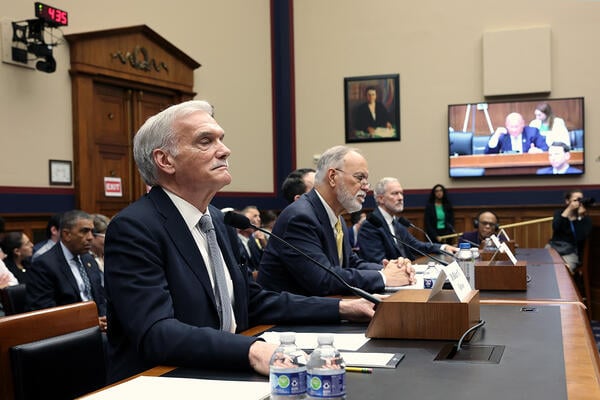
    For the fifth time since late 2023, congressional Republicans on Tuesday interrogated a group of university leaders about campus antisemitism. But unlike previous hearings, this one was short on fireworks and viral moments, even as the three leaders—Georgetown University interim president Robert Groves; University of California, Berkeley, chancellor Rich Lyons; and City University of New York chancellor Félix V. Matos Rodríguez—faced a grilling over faculty remarks, foreign funding and alleged failures to protect Jewish students from discrimination and harassment.

    While the first hearing, in December 2023, contributed to the ouster of the presidents of Harvard University and the University of Pennsylvania, who equivocated on a hypothetical question about calls for the genocide of Jewish students, subsequent sessions have not had the same impact.

    Conducted by the Republican-led Committee on Education and the Workforce, Tuesday’s hearing—titled “Antisemitism in Higher Education: Examining the Role of Faculty, Funding and Ideology”—spanned more than three hours and was interrupted several times by pro-Palestinian protesters, who were quickly removed. In sometimes-heated questioning, lawmakers focused on controversial social media posts by college employees and hypothetical situations, such as whether a faculty union might demand a boycott of Israel in collective bargaining agreements.

    But the campus leaders largely avoided gaffes and appeared to emerge mostly unscathed.

    Here are highlights from Tuesday’s hearing.

    Social Media in the Spotlight

    While past hearings often centered on what happened on campus—particularly at institutions that had pro-Palestinian encampments—at Tuesday’s hearing lawmakers focused more on social media, questioning and condemning posts by professors that were critical of Israel. Some posts also seemed to show support for Hamas’s terrorist attack on Israel on Oct. 7, 2023.

    Rep. Glenn Thompson, a Pennsylvania Republican, specifically highlighted a social media post from Georgetown employee Mobashra Tazamal, associate director of a multiyear research project on Islamophobia who allegedly reposted a statement that said, “Israel has been recreating Auschwitz in Gaza for two years.” Thompson asked interim president Robert Groves if he thought it was “appropriate for a Georgetown-affiliated scholar to publicly endorse a statement comparing Israel actions in Gaza to the evil of Auschwitz.”

    Groves made it clear that he rejected the statement and apologized to anyone harmed by it. But he also defended Georgetown officials for not disciplining Tazamal for the post.

    “That’s behavior covered under the First Amendment on social media that we don’t intervene on,” Groves told Thompson in response. “What we do intervene on quickly is behavior that affects our students in the classroom and research-related activities that involve students.”

    Republican lawmakers also asked about posts by Ussama Makdisi at UC Berkeley, zeroing in on one that read, “I could have been one of those who broke through the siege on October 7,” the title of an article sympathetic to the Palestinian plight that praised the “determination and courage” of the attackers.

    Several Republicans pressed Berkeley chancellor Rich Lyons on how he perceived that post and why Makdisi, a Palestinian American scholar who teaches history, was hired in the first place. Lyons, who became chancellor last July, acknowledged his concerns about the post.

    “I believe it was a celebration of the terrorist attack on Oct. 7,” he told lawmakers.

    Despite that acknowledgement, Lyons twice defended Makdisi as “a fine scholar” and said he was hired as the inaugural chair of a new Palestinian and Arab Studies program based on his qualifications. His defense prompted a sharp rebuke from Lisa McClain, a Michigan Republican.

    “I’m sure there’s a lot of murderers in prison that are fine people, too, fine scholars, but they do some pretty nefarious and heinous acts,” McClain responded to Lyons.

    Protest Interruptions

    Pro-Palestinian protesters interrupted Tuesday’s proceedings at least four times. Authorities quickly shut down and removed protesters, who were not visible and only faintly audible via live stream.

    The protesters seemed to be targeting City University of New York chancellor Félix V. Matos Rodríguez, given that the interruptions occurred when he was speaking or being questioned by Congress. Partial phrases audible over the live stream included “blood on your hands” and “genocidal warmonger.”

    Florida Republican Randy Fine fired back after one such interruption.

    “Shut up and get out of here,” he bellowed at a protester, calling them a “loser” before blaming campus leaders for the disruption. “I hold you all responsible for this. It is the attitude that you have allowed on your college campuses that make people think that this is OK.”

    Stefanik Targets Legal Clinic

    New York Republican Elise Stefanik made headlines in prior hearings when she asked the hypothetical genocide question that tripped up the presidents of Harvard, Penn and the Massachusetts Institute of Technology. But for the first time in five antisemitism hearings, she did not ask that question. Instead she focused on a legal clinic at the CUNY School of Law

    She expressed concern that the legal clinic, CUNY CLEAR, is representing Mahmoud Khalil, the Columbia University graduate who was arrested without charge and incarcerated for three months for his role in organizing pro-Palestinian campus protests.

    Khalil, who was freed last month, has not been accused of a crime and has subsequently sued the Trump administration, alleging he was falsely imprisoned and smeared by the federal government for First Amendment–protected activism.

    “Does it concern you that New York taxpayers are paying the salary for the legal defense fund of Mahmoud Khalil?” Stefanik asked Rodriguez. ”And I’ll remind you who Mahmoud Khalil is: This is the chief pro-Hamas agitator that led to the antisemitic encampments at Columbia, the rioting and violent takeover of Hamilton Hall, the harassment and physical assault of Jewish students.”

    The CUNY chancellor told Stefanik he was not aware CUNY CLEAR was representing Khalil, but that such decisions are “made in the clinics” and at the individual campus level.

    Dems Needle the GOP

    Democratic lawmakers focused less on the presidents on the stand than on the hearing itself. Several cast antisemitism concerns as pretext for the Trump administration’s crackdown on higher education. They also criticized the administration for slashing staff at the Office for Civil Rights, the enforcement arm of the Department of Education tasked with investigating antisemitism and other complaints.

    Suzanne Bonamici, an Oregon Democrat, argued that Republicans are “weaponizing the real problems of the Jewish community” to attack higher education. She also noted that Republicans have been largely silent about President Donald Trump’s own antisemitic remarks recently.

    Bobby Scott, a Virginia Democrat and ranking member of the Education and Workforce Committee, argued that the Trump administration is not approaching concerns about antisemitism in good faith but rather as a way to exert control.

    “The Trump administration is destabilizing higher education itself, eroding trust, silencing dissent and undermining universities’ ability to promote diversity and critical inquiry, while at the same time sabotaging the Office [for] Civil Rights,” he said in closing remarks. “Who suffers most from this strategy? It’s the students, Jewish and non-Jewish, marginalized and unrepresented. They’re the ones who will be left vulnerable and voiceless. This should not be a partisan debate. It should be about ensuring that our schools are safe, inclusive and intellectually vibrant.”

    However, House Education and Workforce chairman Tim Walberg, a Michigan Republican, made it clear that despite criticism from Democrats, such hearings will continue to be held.

    “We need to continue to highlight bad actors in our higher education institutions,” Walberg said.

    Source link

  • To speak or not to speak: Universities face the Kalven question

    To speak or not to speak: Universities face the Kalven question

    In the wake of the Trump administration’s extralegal attack on Harvard University, which is essentially an attempted government takeover of a private school, the importance of academic freedom and institutional independence is clearer than ever. Had Harvard meekly complied with the demands in the hopes of maintaining its funding, it would’ve set a dangerous precedent for political interference in higher education. 

    Enter the Kalven Report: the north star for institutions striving to foster academic freedom. Crafted by the University of Chicago in response to Vietnam-era foment, the report warns that a university, though it may have the constitutional right to speak about unrelated political issues, should not take an official stance on these issues because of the chilling effect it has on the ability of university community members to discuss and debate amongst themselves.

    But it allows for two exceptions. First, when it comes to threats to the university’s very mission and values of free inquiry, the Kalven report explains, “it becomes the obligation of the university as an institution to oppose such measures and actively to defend its interests and its values.” Second, when university ownership of property, its receipt of funds, its awarding of honors, or its membership in other organizations is at issue, the university is likewise entitled to defend itself.

    Both exceptions apply to Harvard.

    There is no standard by which an “exceptional” threat to the university can be determined. Instead, that is up to the university’s administration to determine. Kalven stresses that “it must always be appropriate, therefore, for faculty or students or administration to question whether in light of these principles the University in particular circumstances is playing its proper role.” 

    But by issuing a statement at all, the university risks chilling the speech of those who wish to question it.

    The decision by many universities to sign a “Call for Constructive Engagement” statement, published in April as a response to government pressure, may likewise be deemed an appropriate response by virtue of the Kalven exceptions. Yet, the question remains: was it wise to do so?

    By issuing a statement at all, the situation risks chilling the speech of those who may disagree.

    Developed by college and university leadership in conjunction with the American Association of Colleges and Universities, the statement urges opposition to “undue government intrusion in the lives of those who learn, live, and work on our campuses” and rejects “the coercive use of public research funding.” It is signed by over 650 institutional leaders and counting.

    And while the signatories explicitly affirm their “commitment to serve as centers of open inquiry where . . . faculty, students, and staff are free to exchange ideas . . . without fear of retribution,” they cannot escape the fact that their willingness to make an institutional statement risks undermining that commitment to open inquiry. After all, there are undoubtedly many people on those 650 campuses who agree, either in whole or in part, with the Trump administration’s efforts.

    The Kalven report issues a “heavy presumption” against making statements, “however appealing or compelling” the social or political value in question may be. This is partly because there is no escaping the question of who will decide which situations qualify as exceptional — there is no standard set by Kalven, simply the distinction of an “exceptional” circumstance. By issuing a statement at all, the situation risks chilling the speech of those who may disagree.

    There are other actions an institution can take to protect itself. Remaining neutral does not mean the university cannot advocate for itself against unconstitutional action. Nothing in the Kalven Report requires colleges to submit to unlawful action that merits a lawsuit. But when an institution adopts a statement on behalf of all its members, this stifles dissent and free inquiry because to question university statements then becomes tantamount to questioning the very values of that institution. This, in turn, negatively impacts students’ education. As J.S. Mill famously argued in On Liberty, “The only way in which a human being can make some approach to knowing the whole of a subject, is by hearing what can be said about it by persons of every variety of opinion.”

    Indeed, in many cases, schools that have signed the letter don’t always uphold the values of free speech internally.

    For example, Columbia University signed the Constructive Engagement letter — and ranks second-to-last on FIRE’s Free Speech Rankings. Its faculty have experienced pushback from university administrators in response to their scholarship for decades, from the 2001 case of George Fletcher to the 2024 case of Adbul Kayum Ahmed. Nearly half (48%) of Columbia faculty think academic freedom on their campus is “not at all” or “not very” secure. Signing an open letter does little to improve the situation.

    To preserve a culture of open debate and expression, colleges and universities must have the courage to defend their principles on campus and in court.

    Another signatory to the statement, University of Pennsylvania has recently illustrated why statements aren’t an all-purpose solution but are instead an invitation for side-taking. The university faced significant backlash after it began to offer statements deemed inadequate in the weeks following October 7, including those by President Liz Magill and by members of Penn’s Board of Trustees.

    In response to a displeased alumnus, administrators released a slew of institutional statements, putting even more daylight between themselves and anything resembling institutional neutrality. Concerns over antisemitism eventually led to Magill’s resignation and the Pennsylvania House of Representatives withholding $31 million in state funding from Penn’s veterinary school. Finally in September, then-interim President J. Larry Jamson declared Penn would no longer issue statements in response to social and political events.

    Penn’s policy shift was a good call, even if it took a lot to get there. Modeling Kalven, Penn made a carve-out by promising not to comment on any more issues “except for those which have direct and significant bearing on University functions.” The only problem is that that loophole was on full display weeks ago when Penn signed the Constructive Engagement letter. Penn is once again speaking with its institutional voice by way of signature, finding itself aligned with a stance that is by nature political.

    To preserve a culture of open debate and expression, colleges and universities must have the courage to defend their principles on campus and in court. It is therefore worth considering whether signing the AACU statement was a smart move or an instance of political posturing that may end up doing more harm than good.


    Dinah Megibow-Taylor is a FIRE intern and a rising second-year at the University of Chicago.

    Source link

  • Most Student Borrowers Face Other Money Challenges

    Most Student Borrowers Face Other Money Challenges

    Just over half of student loan borrowers consider themselves financially insecure, while about three-quarters said they had experienced an adverse financial event, like skipping a bill, in the past year, according to a survey from the Pew Charitable Trusts exploring the attitudes of student loan borrowers after federal student loan repayments restarted in October 2023 following a three-year pause. The survey was conducted in the summer of 2024.

    Existing financial challenges are closely associated with struggles to repay student loans, the survey found. About 23 percent of respondents indicated they had missed some or all of their student loan payments since October 2023, but that number was higher among those who are financially insecure (34 percent) and those who had experienced a negative financial event (30 percent).

    But paying off student loans isn’t just challenging for those facing other financial difficulties. Among all borrowers, 57 percent said they found it difficult to afford their loans, including 41 percent of those who said they do not consider themselves financially insecure. Over a third of borrowers also said they found repaying their student loans more stressful than paying their other bills.

    The Education Department estimates that nearly 25 percent of borrowers have either defaulted on their loans or will default in the next several months. In May, the agency restarted collections on unpaid loans.

    Source link