Tag: Facebook

  • Why are Miami police questioning a woman over Facebook posts?

    Why are Miami police questioning a woman over Facebook posts?

    This essay was originally published by UnHerd on Jan. 20, 2026.


    “This is freedom of speech. This is America, right?”

    Those were the incredulous words of Raquel Pacheco, a U.S. Army veteran and three-time candidate for local office. She made the remark while being questioned by police at her Miami Beach home last week for criticizing her mayor on Facebook.

    On Jan. 6, Miami Beach Mayor Steven Meiner posted a message on his official Facebook page saying, among other things, that “Miami Beach is a safe haven for everyone” and that the city “is consistently ranked by a broad spectrum of groups as being the most tolerant in the nation.”

    Speech is not a crime — even if it complicates ICE’s job

    Aaron Terr explains why alerting others to law enforcement activity, or reporting on it, is protected by the First Amendment.


    Read More

    That is, apparently, unless you criticize him. Pacheco’s response — accusing Meiner of “consistently call[ing] for the death of all Palestinians,” trying “to shut down a theater for showing a movie that hurt his feelings,” and “REFUS[ING] to stand up for the LGBTQ community in any way” — appears to have been too much free speech for the mayor to tolerate.

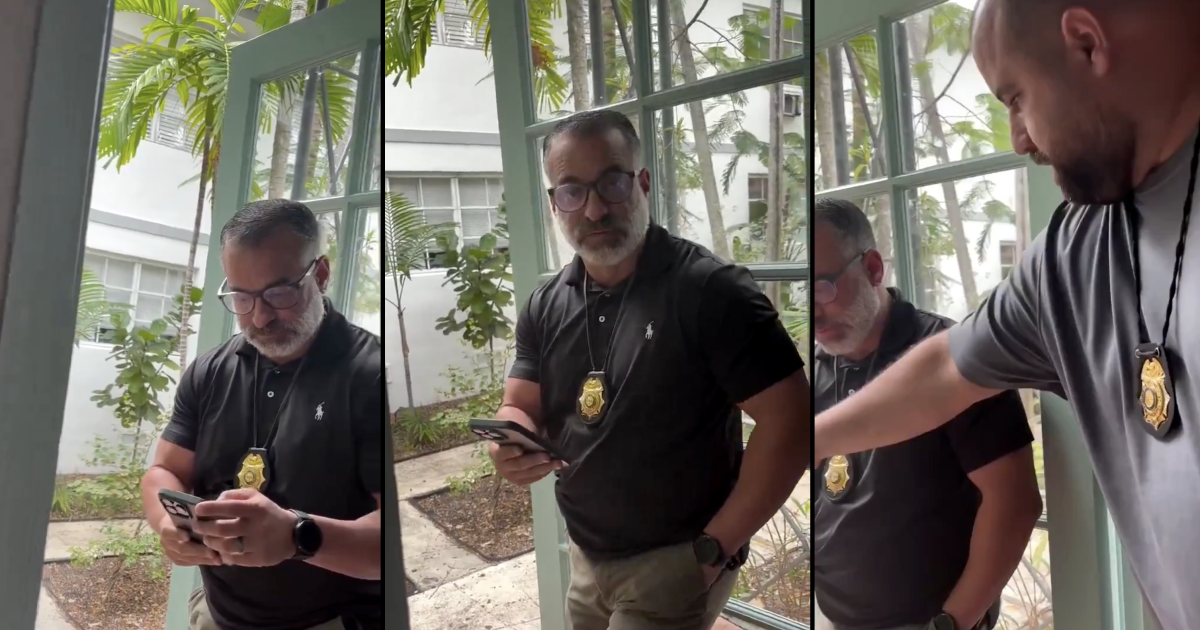
    Six days later, two Miami Police officers knocked on Pacheco’s door, claiming they were there “to have a conversation” and confirm that it was her who made those comments. In a video of the interaction, the officers justify their visit by saying they wanted to prevent “somebody else getting agitated or agreeing with” Pacheco’s post. They added that the line about Meiner’s views on Palestinians “can probably incite somebody to do something radical,” and advised her “to refrain from posting things like that because that could get something incited.”

    What occurred at Pacheco’s home raises serious concerns in a free society. Her statements fall well short of the legal threshold for incitement, which applies only to speech which urges unlawful action and is likely to provoke it immediately. A careful reading of her post reveals no call for illegal activity, nor any indication that it would prompt others to act unlawfully.

    If sharp but non-threatening criticism and political commentary can be treated as unlawful incitement, freedom of speech ceases to exist in any meaningful sense.

    Residents of the United Kingdom are all too familiar with police interventions over social media content. In September, blogger Pete North was arrested for posting a meme displaying the text “F— Palestine F— Hamas F— Islam… Want to protest? F— off to a Muslim country & protest.” That same month, Deborah Anderson, an American who had been living in England for years, was visited by police for Facebook posts that “upset someone.” And last January, a couple were arrested on suspicion of harassment, evidently for comments as mild as describing an employee at their daughter’s school as a control freak in a parents’ WhatsApp chat. Sadly, such incidents are just a fraction of longstanding limitations on speech in the UK.

    These examples demonstrate why the First Amendment sets the bar so high for its few, narrow exceptions. Democracy requires ample breathing room to speak about public issues. If sharp but non-threatening criticism and political commentary can be treated as unlawful incitement, freedom of speech ceases to exist in any meaningful sense.

    Such cases highlight the need to safeguard free expression in both the U.S. and the UK. Censorious practices which appear in one place often spread elsewhere. Across the West, law enforcement responses to online criticism are becoming more common. Without vigilance, such interventions will continue. The principle is clear: free expression must be protected.
    Source link

  • Cops showing up at your door for political Facebook posts is absolutely intolerable in a free society

    Cops showing up at your door for political Facebook posts is absolutely intolerable in a free society

    This video is making the rounds — and it’s one every American should see.


    WATCH VIDEO: No one should have to fear that expressing a political opinion will lead to a knock on the door from the police.

    The video shows law enforcement showing up on the doorstep of Florida resident Raquel Pacheco. 

    What did she do? She criticized the mayor on Facebook. 

    Police coming to our doorsteps for lawful political speech — speech that doesn’t remotely rise to the level of incitement, harassment, or a true threat — is absolutely intolerable in a free society.

    The First Amendment means we have the right to criticize those in power. On Friday, we said as much to the Miami Beach Police Department.

    This isn’t the UK. Or China. Or Russia. This is America. No one should have to fear that expressing a political opinion will lead to a knock on the door from the police.

    See FIRE’s full letter to the Miami Beach Police Department.

    Source link

  • Iowa Teacher Committed Misconduct With His Anti-Kirk Facebook Posts – The 74

    Iowa Teacher Committed Misconduct With His Anti-Kirk Facebook Posts – The 74


    Get stories like this delivered straight to your inbox. Sign up for The 74 Newsletter

    An administrative law judge has ruled that an Iowa school teacher committed job-related misconduct when he posted negative Facebook comments about conservative activist Charlie Kirk.

    Matthew Kargol worked for the Oskaloosa Community School District as an art teacher and coach until he was fired in September 2025. Kargol then filed for unemployment benefits and the district resisted, which led to a recent hearing before Administrative Law Judge David Steen.

    In his written factual findings of the case, Steen reported that on Sept. 10, 2025, Kargol had posted a comment to Facebook stating, “1 Nazi down.” That comment was posted within hours of authorities confirming Kirk had been shot and killed that day while speaking at Utah Valley University in Orem, Utah.

    When another Facebook user commented, “What a s—-y thing to say,” Kargol allegedly replied, “Yep, he was part of the problem, a Nazi.”

    Steen reported that Kargol posted his comments around 5 p.m. and then deleted them within an hour. By 6 p.m., the district began fielding a number of telephone calls and text messages from members of the public, Steen found.

    According to Steen’s findings, the district’s leadership team met that evening and included Kargol via telephone conference call. District leaders asked Kargol to resign, and he declined, after which the district officials said they were concerned for his safety due to the public’s reaction to his comments.

    The district placed Kargol on administrative leave that evening, Steen found. The next day, district officials fielded roughly 1,500 telephone calls and received 280 voicemail messages regarding Kargol’s posts.

    “These calls required the employer to redirect staff and other resources from their normal duties,” Steen stated in his ruling. “The employer also requested additional law enforcement presence at school facilities due to the possibility of physical threats, which some of the messages alluded to. The employer continued to receive numerous communications from the public for days after the post was removed.”

    On Sept. 16, 2025, Superintendent Mike Fisher submitted a written recommendation to the school board to fire Kargol, with the two primary reasons cited as a disruption to the learning environment and a violation of the district’s code of ethics. Upon Fisher’s recommendation, the board fired Kargol on Sept. 17, 2025.

    According to Steen’s findings, the district calculated the cost of its response to the situation was $14,332.10 – and amount that includes the wages of the regular staff who handled the phone calls and other communications.

    As for the ethics-policy violation, Steen noted that the policy states that employees “are representatives of the district at all times and must model appropriate character, both on and off the worksite. This applies to material posted with personal devices and on personal websites and/or social media accounts.”

    The policy goes on to say that social media posts “which diminish the professionalism” of the district may result in disciplinary action, including termination, if it is found to be disruptive to the educational environment.

    The district, Steen noted, also has a policy on “employee expression” that states “the First Amendment protects a public employee’s speech when the employee is speaking as an individual citizen on a matter of public concern,” but that “even so, employee expression that has an adverse impact on district operations and/or negatively impacts an employee’s ability to perform their job for the district may still result in disciplinary action up to and including termination.”

    Based on the policies and Kargol’s conduct, Steen concluded the district fired Kargol for job-related misconduct that disqualified him from collecting unemployment benefits.

    The issue before him, Steen observed, wasn’t whether the district made a correct decision in firing Kargol, but whether Kargol is entitled to unemployment insurance benefits under Iowa law.

    In ruling against Kargol on that issue, Steen noted Kargol was aware of district policies regarding social media use as well as work rules that specifically state employees are considered representatives of the school district at all times.

    Kargol’s posts, Steen ruled, “reflected negatively on the employer and were against the employer’s interests.” The posts also “caused substantial disruption to the learning environment, causing staff at all levels to need to redirect focus and resources on the public’s response for days after the incident,” Steen stated.

    Kargol’s federal lawsuit against the school district, alleging retaliation for exercising his First Amendment right to expression, is still working its way through the courts.

    In that lawsuit, Kargol argues that in comments made last fall, Fisher made clear that his condemnation of Kargol’s Facebook posts “was rooted in his personal beliefs, not in evidence of disruption. Speaking as ‘a man of faith,’ Fisher expressed disappointment in the state of society and disapproval of Mr. Kargol’s expression. By invoking his personal religious identity in condemning Mr. Kargol’s speech, Fisher confirmed that his reaction was based on his own values and ideology, not on legitimate pedagogical concerns.”

    The district has denied any wrongdoing in that case. A trial date has yet to be scheduled.

    Several other lawsuits have been filed against their former employers by Iowa educators, a public defender and a paramedic, all of whom allege they were fired or sanctioned for online comments posted in the immediate aftermath of Kirk’s death.

    Earlier this week, two Iowa teachers sued the state’s teacher-licensing board and its executive director, alleging they improperly solicited complaints related to anti-Kirk social media posts.

    Iowa Capital Dispatch is part of States Newsroom, a nonprofit news network supported by grants and a coalition of donors as a 501c(3) public charity. Iowa Capital Dispatch maintains editorial independence. Contact Editor Kathie Obradovich for questions: [email protected].


    Did you use this article in your work?

    We’d love to hear how The 74’s reporting is helping educators, researchers, and policymakers. Tell us how

    Source link

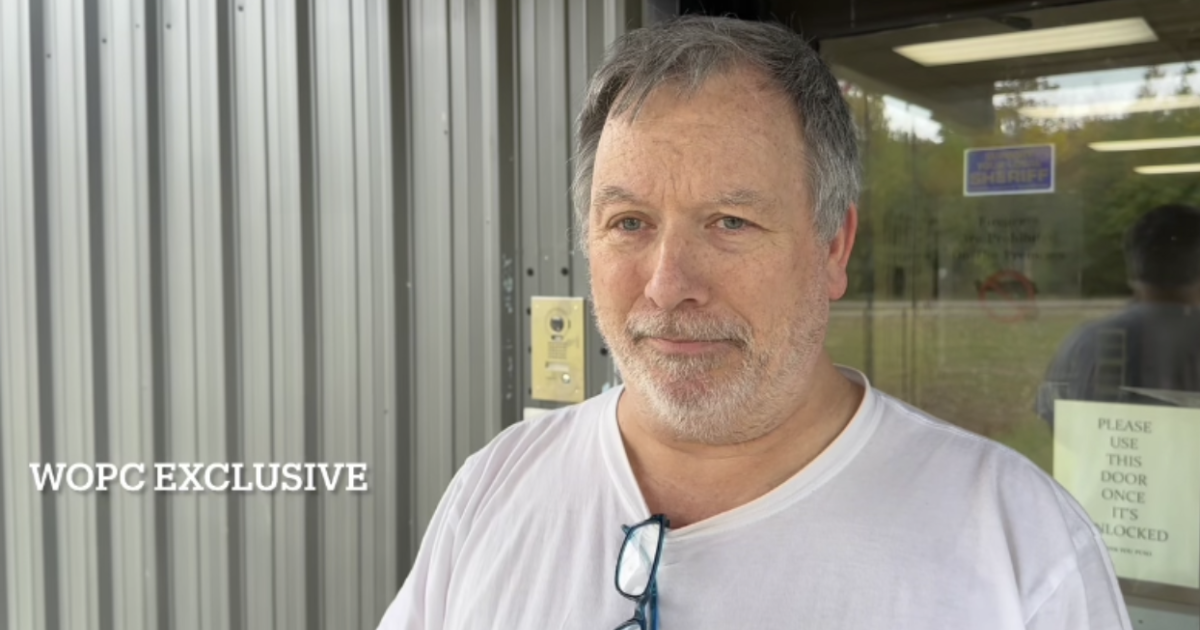
  • He spent 37 days in jail for a Facebook post — now FIRE has his back

    He spent 37 days in jail for a Facebook post — now FIRE has his back

    A 61-year-old Tennessee man is finally free after spending a shocking 37 days in jail — all for posting a meme. 

    Retired police officer Larry Bushart told a local radio station he’s “very happy to be going home” after his nightmarish ordeal. 

    But for Larry and FIRE, the fight isn’t over.

    In September, after Charlie Kirk’s assassination, Larry shared a meme on a Facebook thread about a vigil in Perry County, Tennessee. The meme quoted President Donald Trump saying, “We have to get over it” following a January 2024 school shooting at Perry High School in Iowa. The meme included the commentary, “This seems relevant today …”

    The meme that Larry Bushart shared on Facebook.

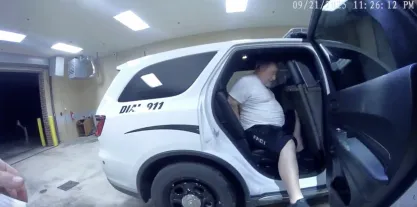
    Just after 11 p.m. on Sept. 21, four officers came to Larry’s home, handcuffed him, and took him to jail. He was locked up for “threatening mass violence at a school.” His bond — an astronomical $2 million! 

    Police justified the arrest by saying that people took the meme as a threat to their high school, which has a similar name to the one where the school shooting occurred 20 months earlier. However, police have been unable to produce any evidence that members of the public took the meme as a threat. As The Intercept noted: “There were no public signs of this hysteria. Nor was there much evidence of an investigation—or any efforts to warn county schools.”

    Larry was jailed for more than five weeks. But that wasn’t the only thing he suffered. During that time, he lost his post-retirement job doing medical transportation and missed the birth of his granddaughter.

    Bushart in a police car

    Bushart during his arrest in September, Perry County, Tennessee.

    Prosecutors finally dropped the charges — only after the arrest went viral. Now a newly freed Larry, who spent over three decades with law enforcement and the Tennessee Department of Correction, is preparing to sue.

    “A free country does not dispatch police in the dead of night to pull people from their homes because a sheriff objects to their social media posts,” FIRE’s Adam Steinbaugh told The Washington Post. Now, FIRE is representing Larry to defend his rights — and yours.

    A meme doesn’t become a threat just because a sheriff says it is. In America, there are very few exceptions to the First Amendment, including true threats or incitement of imminent lawless action. 

    Jailing first, justifying later, flips those limits on their head. If officials can arrest you because they dislike your social media posts, then none of us are safe to express ourselves.

    Stay tuned for updates.

    Source link