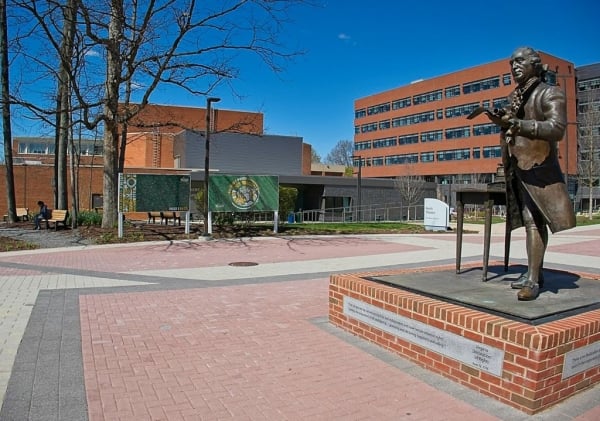
George Mason University in Virginia is under investigation for alleged violations of Title VI of the Civil Rights Act, the Department of Education announced Thursday.
Multiple university professors reportedly filed complaints that the institution “illegally uses race and other immutable characteristics in university policies, including hiring and promotion,” according to the news release.
The accusations come less than two weeks after the University of Virginia’s president was pressured to resign by the Department of Justice for similar DEI-related complaints. Thursday’s announcement sparked concerns among some higher education professionals that George Mason president Gregory Washington, who is Black, could face similar pressure. This is the second civil rights investigation that the Education Department has opened at George Mason this month. The other one is focused on allegations that university didn’t sufficiently respond to antisemitic incidents.
“It looks like the Trump administration is trying to force out George Mason’s president,” Robert Kelchen, an education policy professor at the University of Tennessee, wrote on BlueSky.
“When people ask why Higher Ed presidents aren’t being publicly vocal—here’s why,” responded Dan Collier, a higher education professor at the University of Memphis.
Department officials said in the news release that the investigation is justified by the university’s “unlawful DEI policies.” The release cited policies aimed at ensuring a diverse applicant pool and that departments at George Mason embrace antiracism and inclusiveness. The department declared race-based programming and activities illegal in guidance earlier this year, but a federal judge blocked that directive.
“This kind of pernicious and wide-spread discrimination—packaged as ‘anti-racism’—was allowed to flourish under the Biden Administration, but it will not be tolerated by this one,” said Acting Assistant Secretary for Civil Rights Craig Trainor in the release.
McDonald’s, the fast-food titan with global reach and billion-dollar profits, is the latest corporate target in an escalating campaign of economic resistance. Starting June 24, grassroots advocacy organization The People’s Union USA has called for a weeklong boycott of the chain, citing the need for “corporate accountability, real justice for the working class, and economic fairness.”
Branded the Economic Blackout Tour, the campaign seeks to channel consumer power into political and structural change. According to The People’s Union USA, Americans are urged to avoid not only McDonald’s restaurants but also fast food in general during the June 24–30 protest window. Previous actions have focused on companies like Walmart, Amazon, and Target—corporate behemoths long criticized for their low wages, union-busting tactics, and monopolistic behavior.
John Schwarz, founder of The People’s Union USA, has emerged as a vocal critic of corporate greed. In a recent video statement, Schwarz accused McDonald’s and its peers of dodging taxes and lobbying against wage increases. “Economic resistance is working,” he declared. “They’re feeling it. They’re talking about it.”
The movement is tapping into deep and widespread frustration—fueled by stagnant wages, rising living costs, and mounting corporate profits. While many Americans struggle with student loan debt, inadequate healthcare, and job insecurity, companies like McDonald’s have been accused of shielding their profits offshore and benefiting from political influence in Washington.
This is not the first time McDonald’s has come under fire. The company has faced criticism from labor rights groups for paying low wages, offering unpredictable schedules, and relying heavily on part-time or precarious employment. More recently, pro-Palestinian activists have also launched boycotts, citing alleged ties between McDonald’s franchises and Israeli military actions in Gaza.
As part of the current boycott, The People’s Union USA is pushing for a broader shift in spending—away from multinational corporations and toward local businesses and cooperatives. In line with previous actions, the group is also encouraging Americans to cut back on streaming, online shopping, and all fast-food purchases during the boycott period.
With Independence Day on the horizon, Schwarz and his allies are framing the protest as not just economic, but patriotic. “It’s time to demand fairness,” Schwarz said, “and to use our economic power as leverage to fight for real freedom—the kind that includes fair wages, democratic workplaces, and tax justice.”
While McDonald’s has not released an official response to the boycott, a 2019 letter from company lobbyist Genna Gent suggested the chain would not actively oppose federal minimum wage increases. For Schwarz and his supporters, such declarations ring hollow without meaningful action.
The July target for The People’s Union USA? Starbucks, Amazon, and Home Depot—three more corporate giants with long histories of labor disputes and political entanglements. The next wave of boycotts will extend throughout the entire month, further testing the staying power and impact of this new consumer-led resistance.
At a time when higher education, particularly the for-profit and online sectors, often channels students into low-wage service jobs with crushing debt, these campaigns raise larger questions about the role of universities in perpetuating corporate power and economic inequality.
The Higher Education Inquirer will continue to follow these developments, especially as they intersect with issues of labor, student debt, corporate influence, and the broader fight for economic justice in the United States.
That was the message displayed on signs across the National Mall on June 6, where thousands of veterans rallied against sweeping federal job cuts. With the Dropkick Murphys on stage and lawmakers like Sens. Tammy Duckworth (D-IL) and Ruben Gallego (D-AZ) in the crowd, the “Unite for Veterans, Unite for America” rally marked a striking show of both unity and frustration.
While many agencies are facing delays or court injunctions, the Department of Veterans Affairs (VA) is moving forward with plans to eliminate approximately 83,000 positions, or about 15 percent of its workforce. Public attention has been understandably focused on the impact these cuts may have on veterans’ health care. But staffing losses could also disrupt access to veterans’ education benefits, just as even more veterans and service members may be turning to higher education and career training.
Among the many education and training benefits administered by the VA, the Post-9/11 GI Bill is the cornerstone of financial aid for military learners, including veterans, service members, and their families. From 2009 to 2019, the federal government budgeted nearly $100 billion for the program, with 2.7 million enlisted veterans eligible to use those benefits over the next decade. And the return on investment is clear: Veterans who use their education benefits complete college at twice the rate of other independent students—those typically supporting themselves without parental aid—according to research by the American Institutes for Research.
Despite the GI Bill’s importance, military learners often struggle to access the benefits they’ve earned. Eligibility rules can be confusing, and transferring benefits to spouses or dependents involves time-consuming red tape. Many students and the institutions that serve them rely on VA staff to interpret the rules, resolve disputes, and ensure benefits are processed on time. With fewer staff, that support system is at risk of breaking down.
This strain comes amid a broader wave of federal downsizing that is hitting the veteran community especially hard. The federal government has long been the largest employer of veterans, and the current reduction in force across the federal government is disproportionately affecting them. In just one example, the Department of Defense is reportedly cutting 50,000 to 60,000 civilian jobs, many held by veterans.
At the same time, the Army is considering reducing its active-duty force by as many as 90,000 troops, amid shrinking reenlistment options. Even senior military leadership have seen targeted cuts. The result is that more veterans and service members will be leaving military service and looking to build new careers. This in turn will increase the demand for VA education and training benefits, just as fewer staff may be available to help them access those benefits.
For decades, support for military learners has united policymakers across party lines. In a time of significant change in Washington, we need to uphold our commitments to those who have dedicated their lives and careers to serving our nation. This includes a commitment to ensuring that the VA has the staffing and resources it needs to deliver on its promise—so every veteran can access the education benefits they’ve earned.
If you have any questions or comments about this blog post, please contact us.
Harvard Medical School’s decision to rename its Diversity, Inclusion and Community Partnership office has sparked significant reaction from students and observers, marking Harvard’s latest move to reshape its diversity infrastructure amid shifting political pressures.
The medical school will now call the unit the Office for Culture and Community Engagement, according to a letter from Dr. George Daley, dean of Harvard Medical School. The announcement comes as Harvard continues to navigate criticism over its earlier decision to rename its main “Office for Equity, Diversity, Inclusion & Belonging” to “Community and Campus Life” — a move that drew considerable backlash when the university also eliminated funding and support for affinity graduations.
“I hope it is abundantly clear that while we continue to adapt to the ever-evolving national landscape, Harvard Medical School’s longstanding commitment to culture and community will never waver,” Daley wrote in his letter to the medical school community.
The renamed office will emphasize “opportunity and access” along with “collaboration and community-building,” according to Daley’s announcement. Additionally, the Office of Recruitment and Multicultural Affairs will be absorbed into the Office of Student Affairs as part of the restructuring.
Harvard’s moves come as the Trump administration has intensified pressure on higher education institutions over diversity, equity and inclusion programming. An executive order signed by President Trump characterizes many DEI programs as “unlawfully discriminatory practices” and threatens to revoke accreditation from colleges and universities that maintain such initiatives.
The timing has also created tension for Harvard, which became the first major institution to legally challenge the Trump administration when it filed a lawsuit in response to federal threats to withdraw billions in funding. However, the DEI office renaming has been viewed by some as contradictory to that stance of resistance.
“It’s signaling that if they’re willing to capitulate on some demands, then they’re likely to capitulate in the future. This kind of sends confused, mixed signals to students,” Harvard junior and LGBTQ student Eli Johnson said about the university’s broader DEI changes.
Harvard Medical School’s decision follows similar moves by other prominent institutions. Dr. Sally Kornbluth, MIT’s president, announced plans in late May to “sunset” the university’s Institute Community and Equity Office and eliminate its vice president for equity and inclusion position, though core programs will continue under other offices. Northeastern University has also renamed its diversity office.
As part of the medical school’s transition, Daley announced the creation of a committee to “review and recommend updates” to the “principles and statements that guide our community and our values.”
A Harvard spokesperson declined to provide additional comment on the medical school’s decision or the broader reaction it has generated.
The developments highlight the challenging position many higher education institutions find themselves in as they attempt to balance longstanding commitments to diversity and inclusion with mounting political and potential financial pressures from the federal government.
The Harvard Medical School research associate and Russian native detained by Immigration and Customs Enforcement three months ago and sent to Louisiana now faces a criminal charge—for allegedly trying to smuggle frog embryos into the U.S.
The Massachusetts U.S. Attorney’s Office announced the charge in a news release Wednesday, saying it could mean “a sentence of up to 20 years in prison, a term of up to five years of supervised release and a fine of up to $250,000.”
Prosecutors allege that after the researcher, Kseniia Petrova, arrived from Paris at Boston’s Logan International Airport, a law enforcement canine “alerted its handler to the defendant’s checked duffel bag on the baggage carousel.” The release said Petrova “initially denied carrying any biological material in her checked baggage.”
Petrova’s lawyer, Gregory Romanovsky, said in a statement Thursday that “less than two hours after the Vermont judge set a hearing on Kseniia’s release, she was suddenly transferred from ICE to criminal custody. This is not a coincidence. It is an attempt by the government to justify its outrageous and legally indefensible position that this scientist working for the U.S. on cures for cancer and aging research has somehow become a danger.”
The government said in court Wednesday that it intends “to deport Kseniia to Russia,” Romanovsky said, “where it knows she will face grave danger for opposing the Putin regime.”
He said he expects Petrova will be transferred to Massachusetts in the next few weeks. Romanovsky has previously said Petrova was transporting “a non-hazardous scientific sample,” for which authorities could’ve merely fined her instead of detaining her and revoking her visa.
This audio is auto-generated. Please let us know if you have feedback.
Dive Brief:
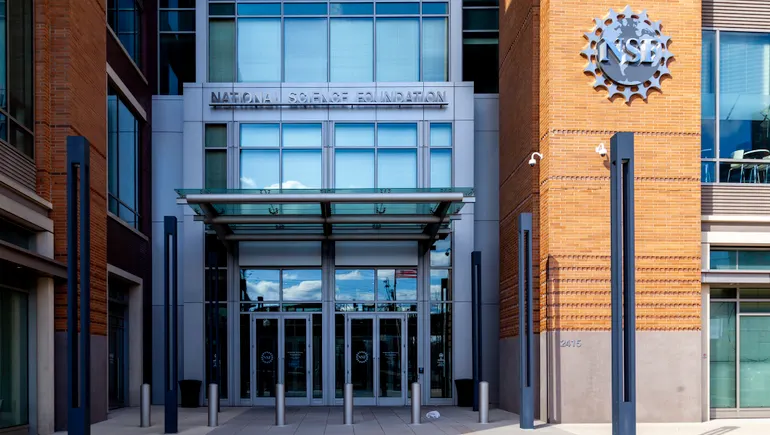
A group of universities and higher education associations is suing theNational Science Foundationover its new cap on reimbursement for indirect research costs for all future college grants.
In court documents filed Monday, the plaintiffs — led by the American Council on Education, the Association of American Universities and the Association of Public and Land-Grant Universities — allege the unilateral 15% cap, which took effect May 5, violates the law in “myriad respects” and that its effects will be “immediate and irreparable.”
The new lawsuit follows two other legal challenges over similar caps implemented by the National Institutes of Health and the U.S. Department of Energy — both of which have been blocked, at least temporarily.
In the ruling, the judge said NIH unlawfully implemented the cap and violated constitutional prohibitions on applying new rules retroactively. The Trump administration quickly appealed the ruling, and the case is ongoing.
Next came the Energy Department. In April, the agency announced the same 15% cap on indirect research costs,alleging the plan would save taxpayers $405 million annually. Again, colleges sued, and a federal judge blocked the plan — albeit temporarily — while the lawsuit moves forward.
The ACE, AAU and APLU are plaintiffs in both cases.
Now NSF has introduced its own cap, to the chagrin of colleges and higher ed experts. When announcing the 15% cap, the agency argued the move would streamline and add transparency to the funding process and“ensure that more resources are directed toward direct scientific and engineering research activities.”
But the new lawsuit argues that NSF’s policy echoes the other agencies’ attempts, to deleterious effect.
“NSF’s action is unlawful for most of the same reasons, and it is especially arbitrary because NSF has not even attempted to address many of the flaws the district courts found with NIH’s and DOE’s unlawful policies,” it said.
Like the lawsuits against NIH and Energy Department’s policies, the plaintiffs allege that the NSF’s cap oversteps the agency’s authority.
“It beggars belief to suggest that Congress — without saying a word — impliedly authorized NSF to enact a sweeping, one-size-fits-all command that will upend research at America’s universities,” it said.
In fiscal 2024, Congress gave NSF $7.2 billion to fund research and related activities. In turn, the agency funded projects at 1,850 colleges —more than 1 in 4 of the higher education institutions in the U.S. eligible to receive federal dollars.
That year, NSF awarded Arizona State University, one of the plaintiffs, 172 awards worth a total of $197.5 million in anticipated and obligated funding, according to court documents. Prior to the NSF’s new policy, the institution negotiated a 57% rate for indirect costs in fiscal 2026.
The University of Illinois, another plaintiff, receivedjust over $129 millionin NSF funding in fiscal 2024 —making the agency its biggest funder — and negotiated an indirect research funding rate of 58.6%.
The university said in court documents that it has received the most NSF funding of all U.S. colleges for six years in a row, and it is poised to lose more than $23 million a year if the agency’s new cap is allowed to continue.
The college plaintiffs are:
Arizona State University.
Brown University, in Rhode Island.
California Institute of Technology.
The University of California.
Carnegie Mellon University, in Pennsylvania.
The University of Chicago.
Cornell University.
The University of Illinois.
Massachusetts Institute of Technology.
The University of Michigan.
The University of Minnesota.
The University of Pennsylvania.
Princeton University, in New Jersey.
The lawsuit also cited an attempt by the first Trump administration to cap rates for indirect research at a federal agency. In 2017, the White House proposed cutting the cap to 10% for all NIH grants. Congress – then under Republican control as it is now — “identified serious problems immediately” and took “swift and bipartisan” action against the proposal, the lawsuit said.
The Education Department is investigating the University of California, Berkeley, regarding compliance with a federal law that requires colleges to disclose certain foreign gifts and contracts.
A notice of the investigation and corresponding records requests were sent to UC Berkeley on Friday morning after the department found that the university’s disclosures might be incomplete.
“There have been widespread media reports over the last several years of Berkeley’s very substantial—in the hundreds of millions of dollars—receipt of money from foreign governments, in this case, particularly China,” a senior Education Department official said on a press call Friday. But while the development of “important technologies” has been shared with foreign nations, the funding that made it possible “has not been reported to the department, as it’s required by law,” in Section 117 of the Higher Education Act, the official added.
Under Section 117, colleges and universities must report twice a year all grants and contracts with foreign entities that are worth more than $250,000. The department opened a similar review into Harvard last week.
UC Berkeley administrators will have 30 days to respond with the requested records. From there, the Department of Education’s general counsel, in partnership with the Departments of Justice and Treasury, will “verify the degree to which UC Berkeley is or is not compliant.” (Unlike with Harvard, the Department of Education did not disclose the specific records it had requested from Berkeley.)
“The Biden-Harris Administration turned a blind eye to colleges and universities’ legal obligations by deprioritizing oversight and allowing foreign gifts to pour onto American campuses,” Education Secretary Linda McMahon said in a news release. “I have great confidence in my Office of General Counsel to investigate these matters fully.”
Trump and congressional Republicans have been trying to crack down on the enforcement of Section 117 since the first Trump administration. Already this year, House Republicans passed a bill, known as the DETERRENT Act, which would lower the general threshold required for reporting foreign donations from $250,000 to $50,000. Gifts from some countries, like China and Russia, would have to be reported no matter the value. The Senate has yet to move forward with the bill.
When asked how Trump’s executive order differentiates itself from the DETERRENT Act, the department official said the legislation would be “entirely consistent with the EO’s directives” and that the department is “very supportive” of congressional Republicans’ efforts.
“The EO basically just says, enforce the law vigorously, return to enforcement of the law, stop the nonsense and work with other agencies to do it,” the official explained. “So whether the reporting requirement is for $250,000 or more per year or the lower threshold, our approach will be the same.”
Inside Higher Ed asked the department if there would be more investigations but has not yet received a response.
Education Secretary Linda McMahon defended the Trump administration’s crackdown on Harvard University and other colleges during a contentious appearance Tuesday on CNBC’s Squawk Box as she faced questions about the government’s decision to freeze universities’ federal funding.
Andrew Ross Sorkin and Joe Kernen, the morning talk show’s hosts, grilled McMahon during the 12-minute segment about whether freezing billions in grants and contracts was due to valid civil rights concerns or unjustified political and ideological standards; they suggested it was the latter. (Harvard sued Monday over the funding freeze, which followed the university’s decision to reject the Trump administration’s sweeping demands.)
But McMahon reiterated that, for her, it was a matter of holding colleges accountable for antisemitism on campus—not an alleged liberal bias.
“I made it very clear these are not First Amendment infractions; this is civil rights,” she said. “This is making sure that students on all campuses can come and learn and be safe.”
Harvard argued in the lawsuit that some of the demands—like auditing faculty for viewpoint diversity—do not directly address antisemitism and infringe on the private institution’s First Amendment rights.
Sorkin echoed Harvard’s argument during the interview and questioned McMahon about the lawsuit’s claims.
“The question is whether viewpoint diversity is really about free speech,” he said.
In defense, McMahon said that “this letter [of demands] that was sent to Harvard was a point of negotiation … and it was really not a final offer.” She added that she hoped Harvard would come back to the table. (Trump officials told The New York Times that the April 11 letter was sent by mistake.)
“We would like to be able to move forward with them and other universities,” she said.
McMahon later reiterated her argument that this was a civil rights matter and said, “I think we’re on very solid grounds” regarding the lawsuit.
But Kernen countered that requiring universities to hire conservative faculty members is just as bad as historically maintaining liberal ones, calling the act “thought control.”
“It’s the other side of the same coin, isn’t it?” he said.
McMahon said it’s fair to take a look at some faculty members.
Near the end of the interview, Sorkin asked McMahon about her end goal if universities lose their federal funding and tax-exempt status. (The IRS is reportedly reviewing Harvard’s tax-exemption.)
“We have not said that the tax exemption should be taken away, but I think it’s worth having a look at,” McMahon said. “I think the president has put all the tools on the table and we should have the ability to utilize all of those particular tools.”
This audio is auto-generated. Please let us know if you have feedback.
Dive Brief:
Harvard University on Thursday received a list of wide-ranging demands from the Trump administration tying the Ivy League institution’s federal funding to its complete compliance.
Among the requirements are that Harvard review and change programs and departments that the Trump administration described as “biased” and that “fuel antisemitism,” according to a copy of the letter obtained by Higher Ed Dive. It also calls for the university to make “meaningful governance reforms” that will selectively empower employees “committed to implementing the changes” demanded in the letter.
The demands came the same week the Trump administration put $9 billion of Harvard’s federal grants and contracts under review. The government alleged the probe stemmed from reports that the university failed to protect Jewish students from antisemitism.
Dive Insight:
The three federal agencies behind the letter— the U.S. Department of Education,U.S. Department of Health and Human Services, and U.S. General Services Administration — said the list of nine demands represent “broad, non-exhaustive areas of reform” that Harvard must enact “to remain a responsible recipient of federal taxpayer dollars.”
Their letter called on Harvard to eliminate all diversity, equity and inclusion efforts and prove it does not offer preferential treatment based on race, color or national origin in admissions or hiring “through structural and personnel action.”It also called for increased scrutiny of student groups and a comprehensive mask ban, with exemptions for religious and medical reasons.
But the agencies, operating as members of President Donald Trump’s Joint Task Force to Combat Anti-Semitism, offered few details on how Harvard could meet the demands.
For example, the letter did not outline which programs or departments it considered biased, nor did it say whether Harvard or the task force would determine which ones needed reform.It also didn’t describe how Harvard officials could determine why someone is wearing a mask.
The Education Department declined to answer questions on Friday. HHS and GSA did not respond to requests for comment.
Thursday’s letter marked the first time Harvard officials saw the demands, according to a university spokesperson, who did not respond to further questions. The letter did not set a hard deadline for the ultimatums, instead calling for Harvard’s “immediate cooperation.”
Before the Trump administration issued its demands, Harvard President Alan Garber acknowledged antisemitism exists on campus and said he had experienced it directly “even while serving as president.”
“We will engage with members of the federal government’s task force to combat antisemitism to ensure that they have a full account of the work we have done and the actions we will take going forward to combat antisemitism,” he wrote in a Monday message to campus. “We resolve to take the measures that will move Harvard and its vital mission forward while protecting our community and its academic freedom.”
Many members of the Harvard community, however, had a stronger response.
As of Friday afternoon, over 800 Harvard faculty members had signed a letter dated March 24 calling on the university’s governing boardsto publicly condemn attacks on universities and “legally contest and refuse to comply with unlawful demands that threaten academic freedom and university self-governance.” More than 400 alumni of the university have so far signed their own version of the same letter.
The demands made of Harvard echo the situation faced by one its Ivy League peers, Columbia University, last month.
The federal task force is threatening billions in federal funds and grants at Columbia, and it has canceled $400 million worth thus far. When the Trump administration sent Columbia a then-unprecedented list of demands, the university quickly capitulated— to the consternation of faculty and academic freedom advocates alike.
The Trump administration lauded Columbia’s compliance as a “positive first step” for maintaining federal funding but has not publicly announced that it has restored the $400 million in canceled grants and contracts.
“Columbia’s compliance with the Task Force’s preconditions is only the first step in rehabilitating its relationship with the government, and more importantly, its students and faculty,” the task force said in a statement at the time.
This audio is auto-generated. Please let us know if you have feedback.
Columbia University received a daunting laundry list of tasks Thursday from the Trump administration: Suspend or expel protesters. Enact a mask ban. Give university security “full law enforcement authority.”
The Ivy League institutionmust comply with these and other demands by March 20 or further endanger its “continued financial relationship with the United States government,”according to a copy of the letter obtained by multiple news sources.
Last week, the Trump administration’s newly created Joint Task Force to Combat Anti-Semitism canceled $400 million of Columbia’s federal grants and contracts,alleging the university had failed to take action “in the face of persistent harassment of Jewish students.” It also noted that Columbia has $5 billion in federal grant commitments at stake.
The stunning move came only four days after the task force opened an antisemitism investigation into the university.
On Monday, the U.S. Department of Education also sent warnings to 60 colleges — including Columbia — that it could take punitive action if it determines they aren’t sufficiently protecting Jewish students from discrimination or harassment.
In Thursday’s letter, Trump administration officials said they expected Columbia’s “immediate compliance” after which they hope to “open a conversation about immediate and long-term structural reforms that will return Columbia to its original mission of innovative research and academic excellence.”
The letter’s edicts are just the latest in a series of decisions made by the Trump administration and Columbia officials that have put the well-known New York institution into a tailspin.
Strong language, few details
Officials at the Education Department, U.S. Department of Health and Human Services, and U.S. General Services Administrationsent Columbia Interim President Dr. Katrina Armstrongnine policy changes the Trump administration expects the university to make to retain federal funding.
The agencies — all of which are part of the Trump administration’s antisemitism task force — accused Columbia of failing “to protect American students and faculty from antisemitic violence and harassment,” along with other alleged violations of civil rights laws.
But despite the high stakes, the task force’s demands are ambiguous.
For example, its letter orders the university to deliver a plan on “comprehensive admissions reform.”
“The plan must include a strategy to reform undergraduate admissions, international recruiting, and graduate admissions practices to conform with federal law and policy,” it said.
The task force’s letter offers no further insight into what it expects Columbia to change or how it believes the university is out of line with federal standards.
The letter goes far beyond what is appropriate for the government to mandate and will chill campus discourse.
The Foundation for Individual Rights and Expression
The GSA directed an emailed request for comment to the Education Department. Neither the Education Department nor HHS responded to inquiries Friday.
The task force also ordered the university to ban masks that “are intended to conceal identity or intimidate others,” while offering exceptions for religious and health reasons.But it did not give criteria to determine why someone is wearing a mask.
“We are reviewing the letter from the Department of Education, Department of Health and Human Services, and General Services Administration,” a spokesperson for Columbia said Friday. “We are committed at all times to advancing our mission, supporting our students, and addressing all forms of discrimination and hatred on our campus.”
The Foundation for Individual Rights and Expression, a civil rights watchdog, criticized the federal officials’ demands Friday.
While the group has been critical of Columbia’s handling of student protesters, it said the letter does not follow “the normal procedure for revocation of federal financial assistance for violations of Title VI.” Title VI refers to the law barring discrimination on race, color and national origin at federally funded educational institutions.
“While these include some policy steps that Columbia should already have taken, the letter goes far beyond what is appropriate for the government to mandate and will chill campus discourse,” FIRE said in a statement.
A change in due process
The Trump administration’s task force is demanding Columbia completeongoing disciplinary proceedings against pro-Palestinian protesters who occupied campus buildings and organized encampments last year. The university must dole out meaningful discipline — meaning expulsions or multi-year suspensions — the letter said.
The same day the task force’s letter is dated, Columbiaannounced it had issued “multi-year suspensions, temporary degree revocations, and expulsions” related to the occupation of Hamilton Hall.
In April 2024,pro-Palestinian protesters occupied the university’s Hamilton Hall after then-President Minouche Shafik announced Columbia would not divest from companies with ties to Israel.
Columbia brought New York City Police onto its private campus for the second time that month — and only the second time since 1968— against the authority of the University Senate. Officers arrested more than 100 people.
The disciplinary rulings from Columbia’s University Judicial Board, the panel that reviews misconduct cases and issues sanctions, came 11 months later.
It is unclear if the UJB issued its rulings before or after Columbia received the task force’s letter. And a university spokesperson said in an email Friday that Columbia could not confirm who or how many protesters had been sanctioned due to student privacy laws.
Columbia University Apartheid Divest, a coalition of student organizations that helped organize the protests, said on social media Thursday that 22 students had been disciplined.
Columbia University’s immediate submission and betrayal of the core mission of higher education reflects cowardice and capitulation to a government that seems intent on destroying US higher education.
Todd Wolfson
President of the American Association of University Professors
And the United Auto Workers union announced that the university had expelledGrant Miner, president of UAW Local 2710, which represents student workers at Columbia.
The move, effectively firing Miner, came “one day before contract negotiations were set to open with the University,” the union said in a statement.
“It is no accident that this comes days after the federal government froze Columbia’s funding, and threatened to pull funding from 60 other universities across the country,” it said. “It is no accident that the University is targeting a union leader whose local went on strike in the last round of bargaining.”
Todd Wolfson, president of the American Association of University Professors, condemned Columbia’s decision against Miner as “a severe violation of student and worker rights aimed at silencing all voices of dissent who have spoken out for peace and against the war in Gaza.”
He also accused the university of being willing to “sacrifice its own students to the demands of an authoritarian government.”
“Columbia University’s immediate submission and betrayal of the core mission of higher education reflects cowardice and capitulation to a government that seems intent on destroying US higher education,” he said in a Friday statement.
The task force also told Columbia to dissolve UJB.The five-member board includes representatives from the faculty, student body and the university’s noninstructional employees such as librarians and administrative staff.
In lieu of this due process system, the letter instructed the institution to shift its disciplinary proceedings entirely under Armstong’s office.
Columbia must enact “primacy of the president in disciplinary matters,” giving the president’s office unilateral power to suspend and expel students and oversee the appeals process, the letter said.
Law enforcement on campus
The Trump administration also demanded that Columbia give its security force the power to arrest and remove “agitators who foster an unsafe or hostile work or study environment” or interfere with classroom instruction.
President Donald Trump has sought to crack down on campus demonstrations, threatening to pull federal funding from colleges that allow “illegal protests” and to arrest, deport and expel student demonstrators.
U.S. Immigration and Customs Enforcement took the first step toward fulfilling that promise last week, again putting Columbia at the center of a firestorm.
On Saturday, ICE agents arrested Mahmoud Khalil, a Columbia student who completed his graduate studies in December, in his university housing.
Khalil, a permanent U.S. resident who holds a green card, served as a driving force behind the pro-Palestinian protests onColumbia’s campus and represented student activists in negotiations with the university’s administration.
A U.S. Department of Homeland Security spokesperson alleged that he “led activities aligned to Hamas,” according to The Associated Press.
Khalil’s arrest and continued detention by ICE immediately drew condemnation from free speech and civil rights groups, including the American Civil Liberties Union, which joined his legal team this week.
His detainment, which is shaping up to be a landmark civil rights case, has not deterred the Trump administration.
An official at the U.S. Department of Justice, which is also on the antisemitism task force, said Friday that the agency is investigating if campus protesters broke federal anti-terrorism laws and whether Columbia’s handling of earlier incidents violated civil rights laws.
“This is long overdue,” Deputy Attorney General Todd Blanche said at a press conference.
And on Thursday, agents from Homeland Security searched two on-campus residences at Columbia, according to Armstrong.
“The University requires that law enforcement have a judicial warrant to enter non-public University areas, including residential University buildings,” she said in a statement. “Tonight, that threshold was met, and the University is obligated to comply with the law.”
No one was arrested or detained, and nothing was taken from the residents, Armstrong said.
“I understand the immense stress our community is under,” Armstrong said. She closed the letter with counseling and well-being resources for students and, in a separate statement that day, reiterated Columbia’s commitment to its international community.
On Friday, over 100 demonstrators gathered outside of the campus’ gates to protest the sanctions against the Hamilton Hall occupiers and the university’s response to Khalil’s detainment, according to the Columbia Daily Spectator.