
Tag: facility

  • School facility governance standard aims to improve fairness, boost rental revenue

    School facility governance standard aims to improve fairness, boost rental revenue

    This audio is auto-generated. Please let us know if you have feedback.

    Dive Brief:

    • Facilitron is rolling out what it says is the first U.S. governance standard for community use of public school facilities, the digital facilities rental platform said Sept. 10.
    • The California-based company will debut the framework in San Diego this November at Facilitron University, its annual conference for school district leaders and facility managers.
    • The standard aims to align school facility use with districts’ mission and strategy, reduce legal risk, improve consistency and transparency across district operations, and ensure equitable access for community members and groups, the company says.

    Dive Insight:

    Facilitron provides facility rental and management support for some of the largest school districts in the U.S., including Florida’s Broward County Public Schools, Nevada’s Clark County School District and California’s San Diego Unified School District.

    That broad reach helped the company design a governance framework that goes beyond school boards’ existing model policies to encompass administrative regulations, site manuals, renter terms and audit tools, the company says. It draws on data from more than 15,000 schools, many of which have outdated, inconsistent and unenforceable facility-use policies, “exposing where current systems fail,” according to the company. 

    “Every district on our platform has a data trail that tells a story,” Facilitron Chief Marketing Officer Trent Allen said in an email. “Even when data is missing — because poor policy and enforcement means a lot of facility use never gets documented — you can still see the problems, like a black hole bending light in its direction.”

    Allen said many of those problems have a financial dimension. For example, many districts offer automatic subsidies for registered nonprofits, regardless of the actual public benefit the organization provides — so a national nonprofit with high participation fees gets effectively the same treatment as a grassroots group with a much smaller budget, Allen said.

    Districts’ facility-use policies — and the state statutes enabling them — leave money on the table in other ways, like sweetheart deals for school employees, rates that remain static for years, and ambiguous language that discourages districts from tapping their facilities’ full value. 

    As an example, Allen said, some Tennessee districts interpret a vaguely worded state statute prohibiting “private profit” in school facility use to mean that only nonprofit organizations can rent them, creating a situation where “essentially every use becomes a subsidized use.” That leaves out the possibility that private companies could use the facilities for charitable or other purposes. 

    Additionally, many school boards give school administrators or facilities managers free rein to adjust or waive fees, or approve informal use outside the plain text of board policy, he said.

    The upshot of all this, Allen added, is that larger districts forgo millions in potential revenue annually from facility rentals while creating conditions ripe for favoritism and inequity.

    Once one group gets access under favorable terms, every similar group is usually given the same,” he said. “Suddenly the district is on the hook for hundreds of thousands of dollars. It quickly runs into the millions and it is never budgeted for.”

    Facilitron says its national governance standard pushes back on the status quo by laying out detailed model school board policies and administrative regulations; a “modular policy toolkit” and site-level operations manual; a national terms and conditions template; and a “facility use audit framework,” which the company describes as “a diagnostic tool that reveals cost, risk and underperformance.”

    The national governance standard also includes frequently asked questions, case studies and other resources for school boards.

    “We require annual reporting, including an estimate of total subsidization. We make cost recovery the governing philosophy [and] move away from ‘nonprofit’ as the trigger for discounts, because that’s the wrong proxy for public benefit. And we separate policy into layers — board-level rules, administrative regulations, and site-level guidance — so principals aren’t left to invent their own rules,” Allen said.
    Source link

  • The accidental facility manager: Robert Alemany

    The accidental facility manager: Robert Alemany

    This audio is auto-generated. Please let us know if you have feedback.

    Relationship building is the most important skill Robert Alemany says he brings to his role as director of facilities at The Buckley School, a private K-9 school in New York City.

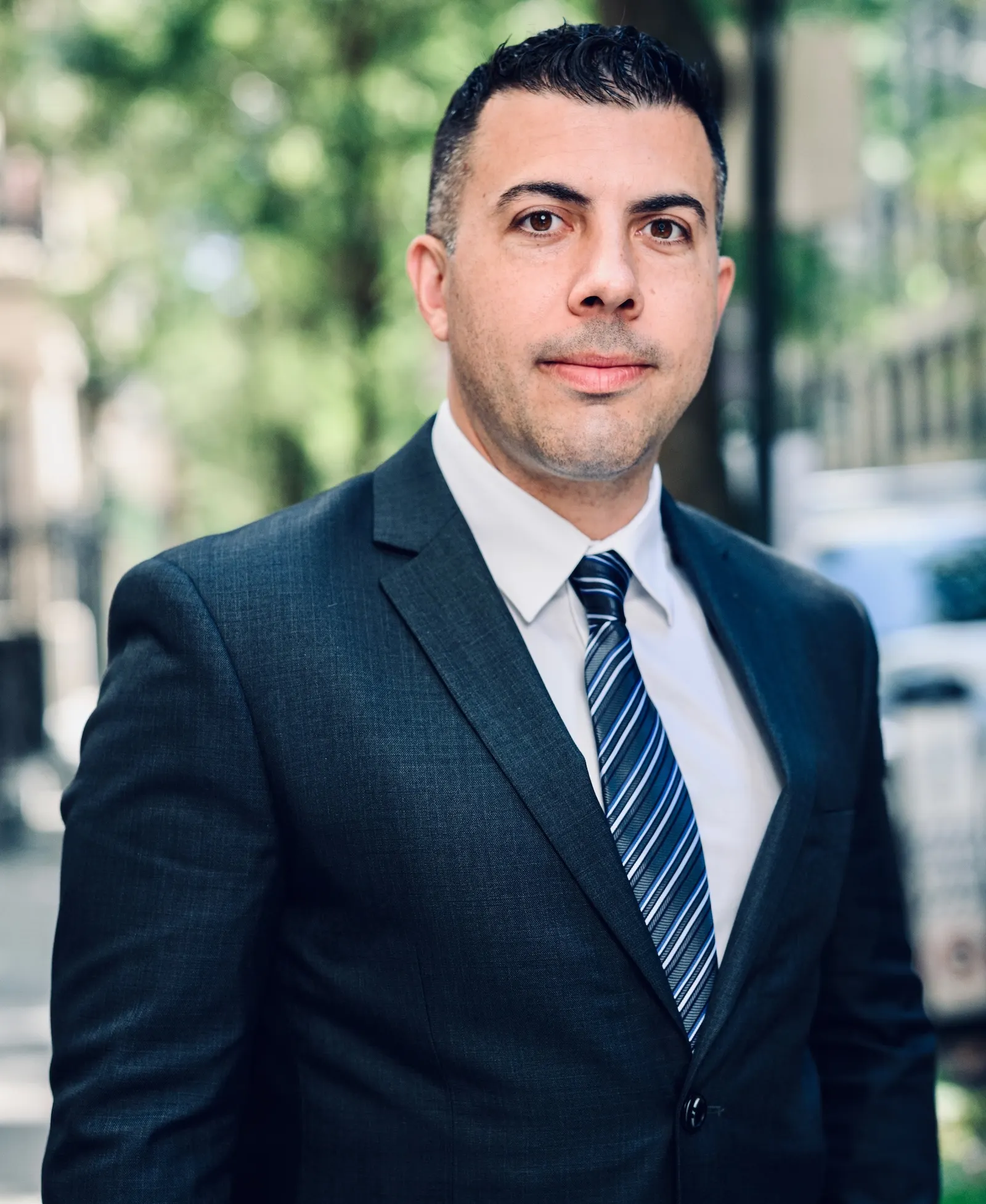
    Headshot of Robert Alemany, director of facilities at The Buckley School, NYC.

    Robert Alemany

    Permission granted by The Buckley School, NYC


    With a background in teaching and business management, he had to learn the technical side of facility management from scratch when he shifted to that line of work about five years ago. Yet it’s people management that he relies on most to succeed in his role overseeing a four-building campus of close to 400 students, he says.

    Among his big challenges this year is meeting the energy efficiency goals under New York City’s Local Law 97. One of the school’s older buildings needs upgrades if it’s to meet the city’s tough building performance standards. To learn about his career path and how he’s tackling the challenges that come with the job, Facilities Dive sat down with Alemany for a short conversation.

    The following Q&A has been edited for clarity and length. 

    FACILITIES DIVE: How did you become involved in facilities management?

    ROBERT ALEMANY: It was accidental. I started out teaching at public schools in different roles. I decided I didn’t want to be a teacher forever and got an MBA. I thought I’d go work in finance, but I kept getting these managerial roles at educational places, then got a job at a church in New York City. The church bought a parking garage, gutted it and turned it into this really contemporary facility. They decided that Monday through Saturday they would rent it out as space and just use it for church on Sundays. They used the income from the event space to pay off the mortgage. 

    I ran operations there for a while. They had somebody taking care of the building [who departed, then they] said, “Why don’t you step into this role?” I was like, “I really appreciate it, but I don’t know which way to hold a screwdriver, so I don’t think I’m your guy.” And they said, “We appreciate your management skills and the kind of person you are. You can get the skills to excel in this role,” and they gave me a shot. I started cold calling facilities managers in similar roles, getting books and doing online courses and just loved it. 

    A few years down the line, a position opened up at the school I’m at now and I thought it was a perfect fit; I had these newly acquired facility skills and I’d been a teacher. I know what they experience every day. That led me to where I am now.

    Talk about your training. 

    ALEMANY: I continue to build off what I learned and got my real estate license. I still talk to people in the field, invest in books and do online courses whenever I can. You just never stop talking to people. Even when we have vendors come in, I ask, “Why? What kind of stuff are you doing here?” 

    What’s the most important skill the job requires?

    ALEMANY: People management, which is not something that [typically] comes to mind. When people think of facilities, they think of pipes and HVAC systems and all that. But there are people that are involved in maintaining and repairing that equipment. So it’s about building relationships, especially in a city as busy as New York City. To get emergency service here, for example, relationships make a difference. We might not be on the top of the list of a company. We’re just a small fish in the pond. But by building relationships, we become a priority for others. And when you have to negotiate contracts and work through different things, people skills are at the top.

    Are there laws or regulations that cause you the most challenge? How do you manage compliance? 

    ALEMANY: Here in New York City, it’s Local Law 97 which is the law that’s governing carbon emissions. One of the buildings was last renovated in 1974. We’re fine for this year, but by 2030 we’re not going to meet the threshold that they’ve set. We’re going to be fined about $35,000 or something like that. So we’re undergoing a renovation project and engaging architects and some engineers to help us with that to reduce our carbon footprint. 

    As it relates to school buildings, some of it is health department stuff because we’ve got a nurse here. So, it’s making sure that chemical cleaners are away and out of reach of kids. We also face a lot of the regulations that other buildings do, but when they come in and do their inspections, they’re a lot stricter with us because we’re a school.

    What keeps you up at night? 

    ALEMANY: Just the idea that every facilities manager has: that something weird is going to go wrong, where you forgot if you did something or forgot to talk to someone. The unexpected. But that comes with the role. There’s a level of unpredictability, but it drives you to be as well organized as you can and think through things. Even if something doesn’t happen, you think through multiple steps and say, “Okay, if it did, what would I do? How would I respond?”  

    What advice do you have for someone who’s interested in becoming a facility manager?

    ALEMANY: Be humble, ask questions and learn from those around you. There are a lot of people that have done this before, and it’s not just facility managers, but those that have worked in the trades that love to share their passion for what they do. Don’t try to re-create the wheel. Absorb knowledge and create friendships and relationships. If anybody would want to pursue the career, I would encourage them to do it, because it really is a great career.  

    Did you have a unique journey into facilities management? Are you managing through challenges others could benefit from learning about? If you’re interested in sharing your story with others in your field, Facilities Dive would appreciate hearing from you. Send an email to [email protected]

    Correction: We have updated this story to correct the number of students at the school and clarify Alemany’s remarks about the age and condition of one building and his career path.


    Source link