Tag: Factors

  • Range of Factors Spurred Campus Cutbacks in August

    Range of Factors Spurred Campus Cutbacks in August

    Multiple colleges and universities, including some ultrawealthy ones, have announced plans to cut jobs and academic programs, as well as implement other changes, due to financial challenges driven by a range of factors.

    For some institutions, belt-tightening measures are directly tied to the economic forces battering the sector as a whole: declining enrollments, rising operating costs and broad economic uncertainty. For others, financial pressure from the Trump administration, which has frozen federal research funding at multiple institutions, prompted cuts. State lawmakers have also forced program reductions at some public institutions.

    Here’s a look at job and program cuts and other cost-cutting efforts announced in August.

    University of Chicago

    Despite its $10 billion endowment, the private institution is slashing expenses by $100 million, shedding 400 staff jobs and pausing admissions into multiple graduate programs.

    Chicago president Paul Alivisatos wrote in a statement to faculty that the university’s financial woes are twofold, tied to a persistent operating deficit, with expenditures outpacing revenues, combined with the “profound federal policy changes of the last eight months [that] have created multiple and significant new uncertainties and strong downward pressure on our finances.”

    In recent years, UChicago has been squeezed by debt, which has ballooned to more than $6 billion as leadership continued to invest in building projects, prompting critics to question how well administrators have managed the institution’s finances.

    Middlebury College

    The private liberal arts college in Vermont is shutting down the Middlebury Institute of International Studies at Monterey, across the country in California, officials announced last week.

    Middlebury president Ian Baucom said the university is winding down graduate programs at the campus over a period of two years. Managing such graduate programs was “no longer feasible,” said Baucom, who added that the decision was made for financial reasons.

    Earlier this year, the college announced it was taking action to close a budget deficit that was projected to be as high as $14.1 million. In that announcement, officials said the Middlebury Institute of International Studies was responsible for $8.7 million—more than half—of the shortfall.

    Middlebury plans to sunset programs at the California campus by June 2027.

    University of New Hampshire

    Officials at the public university in Durham last month announced the elimination of 36 jobs, 13 of which were vacant, and 10 employees had their hours reduced, according to The Portsmouth Herald.

    The layoffs are part of an effort to cut $17.5 million from UNH’s budget.

    University president Elizabeth Chilton also announced other cost-cutting efforts last month, including “scaling back professional development, student employment, building hours, dining hall hours, travel, printing, and other support services.”

    Carnegie Mellon University

    The private research university in Pittsburgh laid off 18 employees in administrative and academic support roles in early August, WESA reported, and more changes are on the horizon.

    Those cuts and other moves are part of an effort to reduce expenses by $33 million, President Farnam Jahanian wrote in a message to campus last month, noting that CMU is not operating at a deficit but is “facing significant constraints and unprecedented uncertainty.” Jahanian pointed to lower-than-expected graduate tuition revenues and federal research funding challenges.

    CMU has also paused merit raises and limited hiring. While Carnegie Mellon is undertaking a review of education offerings, Jahanian wrote that “we do not have broad layoffs planned.” Jahanian added that such measures remain “a last resort.”

    Bennington College

    The private liberal arts college in Vermont announced in mid-August that it was eliminating 15 staff jobs “as part of ongoing efforts to address budget challenges,” VT Digger reported.

    In an announcement, President Laura Walker called the cuts “a painful moment” but noted that, like its peer institutions, Bennington is “confronting an uncertain economy and a challenging overall environment for higher education.” She added that no “regular faculty positions” were cut and that the college is providing severance to affected employees.

    Utah State University

    The public institution laid off seven full-time researchers last month after the federal government terminated grants that supported those jobs, The Salt Lake Tribune reported.

    The layoffs precede what will likely be deep cuts across multiple public universities in the state, forced by new laws that require institutions to cut some programs and positions and reinvest in others that lawmakers argue are better aligned with workforce needs. So far eight institutions have proposed axing 271 programs and 412 jobs, though those cuts still await final state approval.

    Ohio University

    Fallout from the Advance Ohio Higher Education Act, which went into effect in June, continues as Ohio University announced plans to suspend 11 underenrolled programs and merge 18 others.

    The new law requires universities to take action on underenrolled programs, though Ohio University officials noted that they have submitted waiver requests to continue offering seven other programs that fall below the required threshold of at least five graduates, on average, across the past three years. The institution is seeking a waiver for undergraduate offerings in economics, dance, music therapy, nutrition science and hospitality management, among other degree programs.

    Officials cited state workforce needs or “the unique nature” of the programs in waiver requests.

    University of Connecticut

    Following a review that began last fall, trustees of the public system approved the closure of seven academic programs with low enrollment—four graduate certificate and three degree programs, CT Insider reported.

    Nearly 70 other programs are being monitored for enrollment and completion rates. Officials called the review process “good academic housekeeping.”

    Milligan University

    Citing the need to “exercise strong fiscal management,” officials at the Christian college in Tennessee announced they are suspending enrollment in six degree programs, WJHL reported.

    Milligan will no longer accept students in film, journalism, computer science, cybersecurity, information systems or a graduate coaching and sports management program. University officials pointed to falling enrollment in those programs when they announced the changes.

    University of Nebraska

    The public university system is offering buyouts to faculty members across all its campuses as part of an effort to address a $20 million budget shortfall, Nebraska Public Media reported.

    Tenured faculty members older than 62 with at least 10 years of service at Nebraska are eligible to opt in to the voluntary separation incentive program, which opened this week and closes on Sept. 30. Faculty members that opt in will receive a lump-sum payment amounting to 70 percent of their annual base salary and remain employed through June or August, depending on their contract.

    University of California, Los Angeles

    One of the wealthiest institutions on this list, UCLA announced last month that it has temporarily paused faculty hiring and is making other belt-tightening moves.

    Officials also said UCLA is looking to “streamline services,” starting with information technology.

    The public university’s move comes at least partly in response to its standoff with the Trump administration, which froze hundreds of millions in research funding to the university last month as it pressured administrators over alleged antisemitism on campus. (Some funding has been restored by a court order.) The Trump administration has also demanded a $1 billion payout from the university, which California governor Gavin Newsom called “extortion.”

    University of Kansas

    The public university announced last month that it was implementing a temporary hiring freeze as administrators aim to reduce spending by $32 million, The Lawrence Journal-World reported.

    “We are again navigating an uncertain fiscal environment because of external factors, such as disruptions to federal funding, changes in federal law, stagnant state funding, rising costs, changes in international enrollments, and a projected nationwide decline in college enrollment,” KU officials wrote in a message to campus.


    Source link

  • more international students citing quality and reputation as key factors in decision making

    more international students citing quality and reputation as key factors in decision making

    As the global education landscape evolves, understanding what motivates international students has never been more critical. NCUK’s annual student survey series, Transforming Student Futures, provides essential insights into the aspirations of approximately 1,000 international students from 88 countries participating in NCUK’s in-country pathway programmes worldwide.

    The latest findings reveal clear patterns in student priorities that demand attention from educators, policymakers, and universities. 

    Maintaining quality and reputation is key

    Quality of education stands as the decisive factor for international students, with 69.9% of respondents selecting it as their primary motivation for pursuing overseas qualifications, up from 58% in 2024. Career-focused motivations follow closely, with over half of students (56.4%) motivated by career development opportunities, including increased employability and monetary benefits.
     
    This emphasis on educational excellence is particularly pronounced among students from Nigeria, Pakistan, Myanmar, and Peru, where quality ranks as the top motivation. In Kenya, quality shares the top position with career development, while in Ghana, it ties with gaining new knowledge as the primary driver.

    Interestingly, students from China present a unique pattern, with gaining new knowledge emerging as their main motivation rather than quality alone, suggesting different educational priorities for NCUK students across source markets.

    The rise of TNE and changing learning preferences

    Traditional learning models continue to dominate student preferences, with 66% favouring fully on-campus learning experiences. However, the survey indicates growing consideration for online provision as an increasingly viable alternative, reflecting evolving attitudes toward flexible education delivery.
     
    The year-on-year increases in demand for full online learning (up from 10% to 22%), full on-campus learning at a local institution in the students home country (up from 16% to 32%) and full on-campus learning but half taught at a branch campus in the student’s home country and half taught at a main campus overseas (up from 14% to 20%) all  signal a move toward flexibility.

    This shift aligns with the recent growth of TNE, and NCUK’s in-country model and diverse qualification offerings cater to this demand, enabling students to access global education without relocating immediately.

    Is it worth us considering whether, as a sector, we sometimes place too much emphasis on policy change?

    The high confidence level in NCUK pathways – with 94% of students believing these programs will enhance their career prospects (a 5% year-on-year increase) – demonstrates strong programme satisfaction and perceived value among participants.
     
    Policy changes: The US coming up Trumps but overall, NCUK students unaffected by policy changes

    In 2025, 52% of respondents expressed concern about UK visa restrictions, up from 38% in 2024, reflecting recent tightening of post-study work policies. Conversely, the USA saw a 12% rise in positive sentiment (to 29%) due to perceived stability in immigration rules, while Australia’s appeal dipped 8% (to 22%) amid cost-of-living concerns.
     
    These shifts highlight a nuanced landscape: students from Ghana and Pakistan are more deterred by UK policy changes, while Nigerian students remain optimistic about the USA. However, the overall message here is that NCUK students’ decision making does not seem significantly influenced by policy changes, with 80% of respondents choosing the UK as their preferred destination, despite the above findings.

    Is it worth us considering whether, as a sector, we sometimes place too much emphasis on policy change?

    Implications for the future
     
    The emphasis on quality demands continued investment in academic excellence and institutional reputation to meet rising student expectations, particularly in competitive source markets like Nigeria. And further, expanding TNE and hybrid learning options will cater to students seeking quality education with flexibility, reducing reliance on traditional study-abroad models.

    NCUK’s in-country pathway programmes demonstrate strong alignment with student needs and aspirations, offering the academic preparation, university access to high-ranking institutions, and career development support that international students prioritise. As the education sector continues to evolve, maintaining focus on quality, flexibility, and comprehensive student support will remain essential for meeting the diverse and changing needs of international students.

    About the author: Andy Howells is the Chief Marketing Officer for NCUK, a leading global pathway provider. He has worked in higher education for over 15 years in senior marketing and student recruitment roles at Royal Holloway, University of London, the University of Southampton and most recently, Universities UK International (UUKi).

    Andy has won several awards, including ‘Best Issues and Crisis Campaign’ at the PR Week Global awards in 2022 for UUKi’s We Are Together campaign, and ‘Marketing Campaign of the Year’ at the PIEoneer Awards in 2023 for UUKi’s Twin for Hope campaign. In 2023, Andy led the relaunch of the UK higher education sectors, #WeAreInternational campaign.

    Andy is a father of two young children and his claim to fame is delivering his second child himself, in his car, in a supermarket car park during the first weeks of Covid lockdowns! 

    Source link

  • 3 risk factors making states vulnerable to federal funding cuts

    3 risk factors making states vulnerable to federal funding cuts

    This audio is auto-generated. Please let us know if you have feedback.

    A dozen states and their school districts are more vulnerable to federal funding rollbacks than others in K-12 because of their higher proportions of high-need districts and students living in poverty, according to an analysis from nonprofit group Education Resource Strategies.

    Another risk factor for the 12 states is their higher dependency on federal funding: 16% of Alaska’s total education revenue, for example, came from the federal government in 2021-22. Nationally, 13.7% of public school funding came from the federal government that school year, according to USA Facts.

    According to ERS, there are 12 states that meet all three risk factors: Alabama, Arkansas, Kentucky, Louisiana, Mississippi, New Mexico, North Carolina, Oklahoma, South Carolina, Tennessee, Texas and West Virginia. 

    In addition to the three risk factors reviewed by ERS, states and public schools are facing myriad other funding pressures, including federal fiscal delays and cutbacks, the end of COVID-19 emergency aid and competition from school choice options. 

    Although most funding for public schools comes from local and state coffers, reductions in federal revenue could lead to school-level impacts, including staff reductions or program cancellations, ERS said.

    3 risk factors

    In its analysis, ERS considered three risk factors that would make states more vulnerable to federal funding cuts. The first is a higher reliance on federal funds as a percentage of total education revenue. 

    While federal funding has an impact on all states, those where federal funds exceed 10% of total K-12 revenue could be more vulnerable, ERS analysts said.

    The analysis considered all federal funding directed to public K-12 districts, including Medicaid reimbursements and Supplemental Nutrition Assistance Program benefits. The analysis did not consider federal pandemic emergency funding.

    The second risk factor is the percentage of districts in a state serving students living in poverty. 

    Districts serving a high proportion of students living in poverty rely the most on federal funding, as federal grants support low income students and districts. 

    The ERS analysis said states that have more than 30% of districts defined as “high-need” means that many districts would be impacted by reductions or disruptions in federal funding. A high-need district is one in which more than 20% of students live in poverty.

    In Louisiana, for example, 81% of the state’s 69 public school districts qualify as high-need, which could be a challenge for Louisiana should Congress reduce federal funding for FY 2026, ERS said.

    The third risk factor is the percentage of students attending a high-need district. The analysis measured this as a risk factor if more than 20% of a state’s students attend a high-need district. For those states, many families would be impacted by any federal budget reductions, even if a family is not low income.

    ERS points out, however, that even if a state has a lower number of high-need districts, those few districts could be serving a large number of students. For example, only 12% of New York’s districts are considered high-need, but because New York City — a high-need district — serves more than 1 million students, 52% of the state’s students are served by a high-need district.

    An ‘unprecedented level of uncertainty’

    “It’s important for stakeholders to understand the challenges that schools and districts might face if federal funding cuts do happen, and to recognize that the impact will be different” depending on the risk factors, said Betty Chang, managing partner at ERS.

    “Districts are facing a pretty unprecedented level of uncertainty when it comes to their financial forecast,” Chang added. 

    Source link

  • Factors and Strategies for Higher Ed Student Retention

    Factors and Strategies for Higher Ed Student Retention

    Facing challenges in enrollment, retention, or tech integration? Seeking growth in new markets? Our strategic insights pave a clear path for overcoming obstacles and driving success in higher education.

    Unlock the transformative potential within your institution – partner with us to turn today’s roadblocks into tomorrow’s achievements. Let’s chat.

    Source link

  • Factors for Choosing the Best

    Factors for Choosing the Best

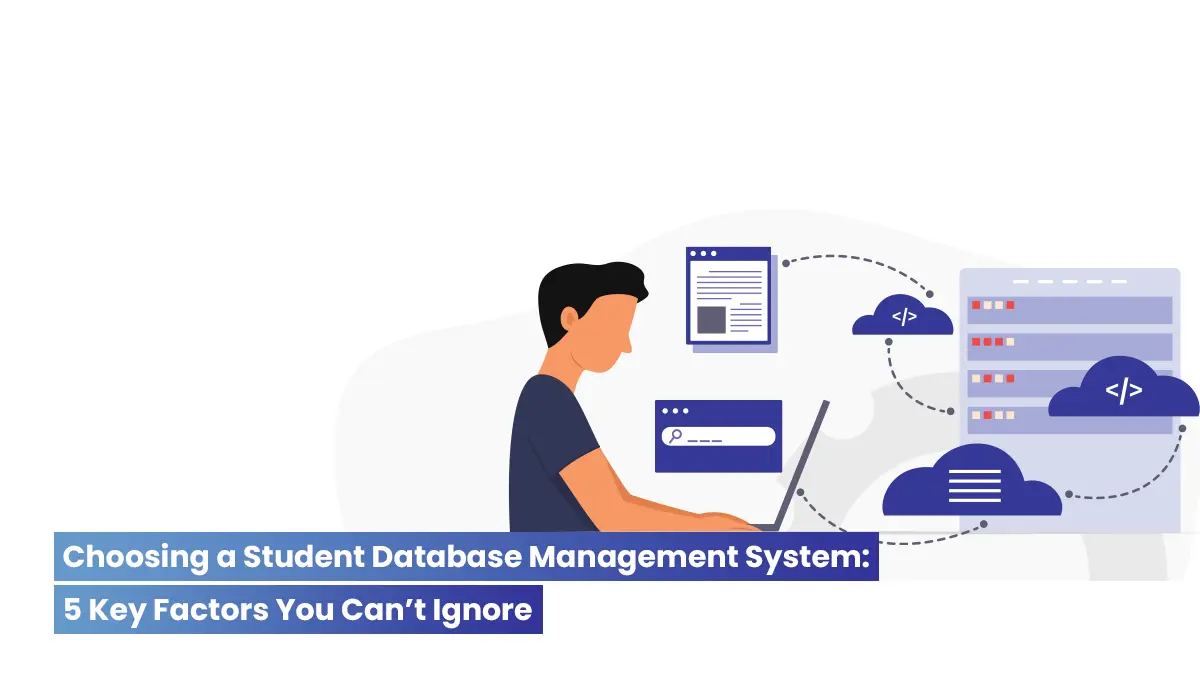
    Every educational institution relies on students, and data management is essential to their success. The appropriate Student Database Management System can alter the game for colleges and institutions as they adapt to new technology. With more and more institutions using digital solutions for student data management, as decision makers, it’s necessary to know what aspects matter the most! We recommend you consider these five factors while choosing the optimal system for your higher ed campus! 


    Five Important Factors to Keep in Mind When Selecting a Student Database Management System


    You simply can’t miss taking your institution’s demands into account while selecting a Student Database Management System. Integrating with your current infrastructure saves time, lowers mistakes, and enhances student outcomes. Let’s talk about the five most important factors that will assist you in making a smart decision for the success of your organization.


    Cloud Automation 

    A survey from Educause states that 80% of institutions of higher education have transitioned at least a portion of their services to the cloud. Institutions can be assured that their student data is safe and secured and in an accessbile format with cloud-based student database management systems. This transition to cloud automation guarantees real-time updates and more efficient operations, improving the entire experience for both students and staff. (Source: Educause Horizon Report, 2020)

    Locking Down Data Security

    A 2023 IBM study found that 60% of higher education institutions faced significant data breaches. The next big thing to consider when choosing the right student database management system is hence data security! University management systems with high data security help prevent incidents with their role-based access controls. By limiting data access to authorized personnel—whether students, staff, or parents—institutions can safeguard sensitive information, mitigate risks, and maintain compliance with data protection regulations like GDPR.  


    Better Insights, Decisions

    Inside Higher Ed found that data analytics improves student retention by 25%. The right student database management system can help administrators spot at-risk students and intervene quickly with real-time performance dashboards. Trust us, predictive analytics improve policymaking and student results by predicting future trends! 


    Notifications in a Flash 

    The majority of students (70%) say they are more involved when they are notified about upcoming activities and deadlines promptly highlights Gallup’s study. In order to improve communication and organizational efficiency, automated messages and notifications are put in place to make sure that administrators, students, and teachers never miss any essential information, such as when exams are scheduled or when assignments are due. So this is a never-miss-out when it comes to the right student database management system.


    Mobile – All You Need in Your Pocket

    PwC study indicated that over 50% of students prefer mobile apps for academic content. Mobile access keeps students and faculty linked for attendance, grade updates, and fee payments. Trust us, a smooth mobile experience boosts student engagement and satisfaction.


    Transform Student Management with Creatrix Campus

    A revolutionary student management system, Creatrix Campus simplifies every element of student life for institutions and students. Our technology connects across the web and mobile, making attendance, grading, and communication easy. Technology and student success combine at Creatrix Campus—the future of education management. Contact us now.

    Source link

  • Study Reveals Key Factors Driving Student College Choice in 2025

    Study Reveals Key Factors Driving Student College Choice in 2025

    A comprehensive new study by education research firm EAB has identified the most influential factors shaping how students choose colleges, with academic program variety, campus safety, and student organizations emerging as the top three drivers of student attraction.

    The research, analyzing data from U.S. four-year colleges, found that schools offering a wider range of majors see significantly higher student interest, with each additional program contributing to increased application and enrollment rates. Campus safety measures and the number of available student organizations were also found to be major factors in students’ decision-making process.

    “What’s particularly interesting is how these factors play out differently across institution types,” said Dr. Ryan Gardner-Cook, the project director. “For example, smaller schools gain more from incremental improvements in campus amenities and academic offerings compared to larger institutions.”

    The study also revealed that affordability remains a critical factor, especially for first-generation and low-income students. Schools with lower net prices and stronger financial aid packages showed notably higher attraction rates among these demographics.

    Environmental factors like climate and location also play a significant role. Schools in temperate climates and growing urban areas generally showed stronger appeal to prospective students. State-level political environments were found to increasingly influence student choice as well.

    The research identified nine distinct “institutional personas” ranging from “Accessible Education Anchors” to “Rigorous Academic Giants,” each with unique characteristics and challenges in attracting students. This classification system aims to help institutions better understand their competitive position and develop more effective recruitment strategies.

    For institutions looking to improve their student attraction, the study recommends focusing on controllable factors like admissions processes, student life offerings, and academic programs while finding ways to mitigate challenges related to location or cost.

    The findings come at a crucial time as higher education institutions face evolving student preferences and increasing competition for enrollment.


    Source link