Tag: Failure

  • How the manufactured narrative of ‘failure’ is distracting us from resolving the systemic problems holding back the study of Modern Languages – Part 2. 

    How the manufactured narrative of ‘failure’ is distracting us from resolving the systemic problems holding back the study of Modern Languages – Part 2. 

    This post was kindly written by Vincent Everett, who is head of languages in a comprehensive school and sixth form in Norfolk. He blogs as The Nice Man Who Teaches Languages

    In Part 1, I looked at how the low grades given at GCSE languages – up to a grade lower than in pupils’ other subjects – is a manufactured situation, easily solved at the stroke of a pen. The narrative around languages being harder is nothing to do with the content of the course or the difficulty of the exam. It is simply a historical anomaly of how the grades are allocated. There is also a false narrative that this unfair grading is due to pupils’ individual ability, the nation’s ability, or the quality of teaching. And I made a subtle plea for commentators to avoid reinforcing this narrative to push their own diagnosis or solutions. 

    In Part 2, I will consider what happens in post-16 language learning. This has also been the subject of reporting in the wake of A-Level results and the recent HEPI report. I am not going to deny that A-Level languages are in crisis. But the crisis in A-Level and the crisis of language learning post-16 are not one and the same. 

    There are specific problems with the current A-Level specification for languages. The amount of content to be studied, comprising recondite details of every aspect of the Spanish / French / German speaking world, is unmanageable. Worse, as this post explains, the content is out of kilter with the exam. All the encyclopaedic knowledge of politics, history, popular culture and high culture which takes up the bulk of the course, is ultimately only required for one question in just one part of the Speaking Exam. The difficulty of the course is compounded by the extremely high standards required, especially for students who have learned their language in the school context. I personally know of language teachers and college leaders who have discouraged their own children from taking A-Level languages in order not to jeopardise their grades for university application. It is getting to the point where I can no longer, in good conscience, let ambitious students embark on the course without warning them of the overwhelming workload and doubtful outcomes. 

    So A-Level could be improved. But as an academic course, it will always remain the domain of a tiny few. Similarly, specialist Philology degrees at university – the academic study of the language through the intersection of literary and textual criticism, linguistics and the history of the language – only attract a very small minority. Neither university language degrees, nor A-Level, are a mainstream language learning pathway. 

    It is a particularly British mentality to only value language learning if its intellectual heft is boosted by the inclusion of essays, abstruse grammar, linguistics, literature, politics, history, and a study of culture. In other words, philology. Philology is not the same as language learning.  

    Universities do offer language learning opportunities for students of other disciplines. However, in sixth form, because of the funding requirement to offer Level 3 courses, there are no mainstream language learning options available to the vast majority of students who do not study A-Level languages. We have a gap in 16-19 provision where colleges do not offer a mainstream language learning pathway. 

    This gap is fatal to language study. It means GCSE is seen as a dead-end. It means that universities have a tiny pool of students ready and able to take up language degrees or degrees with languages as a component. 

    The crisis is not one of how to channel more people into studying A-Level languages. It is a question of finding radical new ways of offering mainstream language learning post-16, and how to make this the norm. We know from the HEPI report that young people in the UK are among the most avid users of the online language learning app Duolingo. Young people are choosing to engage with language learning, but in terms of formal education, we are leaving a two-year gap between GCSE and the opportunities offered by universities. 

    If this hiatus in language learning is the problem, is there a solution? I have two suggestions. One of which is relatively easy, if we agree that action is needed. If universities genuinely believe that a language is an asset, then they could send a powerful message to potential applicants. 

    Going to university means joining an international organisation, including the possibility of studying abroad, using languages for research, engaging with other students from across the globe, and quite possibly taking a language course while at university. The British Academy reports that universities are calling for language skills across research disciplines, so I hope that they would be able to send a strong message to students in schools and colleges. 

    The message around applications and admissions could be that evidence of studying a language or languages post-16 is something that universities look for. At the very least, they could signal that an interest in self-directed language learning is something they would value. 

    I understand that most universities would stop short of making a qualification in a language a formal entry requirement, because they fear it could exclude many applicants, especially those from disadvantaged groups. But a strong message could help reverse the situation where language learning opportunities are currently denied to many under-privileged school pupils, who aren’t getting the message around the value of pursuing a language. 

    And my second, more difficult suggestion? Would it be possible to plug the two-year gap with a provision at sixth form or college? An app such as Duolingo has attractions. There is the flexibility and independence of study, as well as the focus on motivation by level of learning, hours of study or points scored. It is very difficult to imagine how a sixth form or college could provide language classes for their varied intake from schools, with different language learning experiences in different languages. 

    Is there scope here for a new Oak Academy to step in and create resources? Or for the government to commission resources from an educational technology provider? Is there a role for universities here? The inspiring Languages for All project shows what can happen when a university engages with local schools to identify and tackle obstacles to language learning. The pilot saw Royal Holloway University working with schools across Hounslow, to increase participation at A-Level in a mutually beneficial partnership. Many of the strategies could equally apply to more mainstream (non A-Level) language learning partnerships. These included strong messaging, co-ordinated collaboration between colleges, face-to-face sessions and events at the university, and deployment of university students as mentors. 

    The aim would be to transform the landscape. Currently we have a dead-end GCSE where unfair grading serves as a deterrent, and where there is no mainstream option to make continuing with language learning the norm. A strong message from universities, along with an end to unfair grading, could make a big difference to uptake at GCSE. A realisation that A-Level and specialist philology degrees are not sufficient for the language learning needs of the country could lead to alternative, imaginative and joined-up options post-16. It could also boost the provision or recognition of self-study of a language and may even lead to the reinvigoration of adult education or university outreach language classes. And it could even see a larger pool of candidates for philology degrees at university. 

    Source link

  • For students, the costs of failure are far too high

    For students, the costs of failure are far too high

    Back in May, I argued that the UK’s “pace miracle” – the system that produces the youngest, fastest-completing graduates in Europe – is damaging students’ learning and health.

    Our system’s efficiency, I suggested, comes at the cost of pressure, exhaustion, and a creeping normalisation of distress.

    But what happens when students fall behind in that miracle? What happens when someone breaks the rhythm that the entire funding and regulatory framework assumes to be normal?

    For our work with SUs, Mack Marshall and I have been looking in detail at the rules and funding that surround “retrieval”.

    From what we can see, UK higher education doesn’t just expect rapid completion – it punishes deviation from it.

    When students stumble, the architecture designed to retrieve them from failure taxes disadvantage and rewards privilege.

    The illusion of generosity

    Pretty much every university we’ve looked at has policies designed to look fair. There is almost always a promise of one reassessment opportunity, and increasingly a public line about not charging resit fees. On paper, that sounds humane – but in practice, the design is economically brutal.

    When a student fails a module and resits within the same academic year, the direct cost may be zero. But there’s no maintenance support for any extra study they need to do. And if that student is placed on reassessment-only status for the following year – allowed to resit assessments without attending teaching – they become ineligible for maintenance funding for much, much longer.

    That means no support for rent, bills, or food for months. The student who can rely on family help revises in comfort. The student who can’t works full-time through summer and fails again, or drops out entirely.

    The sector calls the resit “free” and congratulates itself on removing barriers. But the barrier was never the invoice – it was the maintenance cliff.

    This is not a marginal anomaly – it’s the structural product of the same system that glorifies pace. It’s a logic that insists most degrees must be achieved within three years – one that also dictates that recovery from failure must happen outside the funded frame.

    To understand what happens to students who fail, students need to navigate a maze of regulations, finance policies, visa rules, and handbooks – each written in its own dialect of compliance.

    Students from professional families likely know where to look and what questions to ask. They have the vocabulary, the contacts, the confidence, while first-generation students rarely do. They may well discover “compensation” rules only after exam boards meet, and learn about extenuating circumstances after the deadline passes.

    The result is an information economy that mirrors the class system. The retrieval framework may be universal, but its navigation costs are socially distributed.

    The poverty penalty v pedagogy

    When students pass a module on reassessment, their mark is often capped at the pass threshold – 40 per cent for undergraduates, maybe 50 per cent for postgraduates. The principle sounds rigorous, but the reality is punitive.

    A student who failed once because they were caring for a parent, working nights, or suffering mental ill-health can never escape the academic scar tissue unless it’s a complex and approved mit-circs application. The capping rule converts a temporary difficulty into a permanent credential penalty.

    It is the same ideology that underpins the pace miracle – a meritocracy of difficulty that romanticises struggle and treats rest as weakness. Only it is encoded in assessment policy rather than culture.

    For international students, the same logic takes on a bureaucratic form. Those who fail a single module often face a choice between reassessment-only status – which ends their visa – or repeating with attendance purely to remain sponsored.

    Repeating with attendance can cost thousands of pounds in tuition and visa fees. Many have no realistic option but to pay. The system enforces what looks like a market choice – but is in practice compulsion.

    The Lifelong Learning Entitlement – fix or mirage

    In England at least, the forthcoming Lifelong Learning Entitlement (LLE) ought to usher in flexibility. Funding will finally be linked to credits rather than years. Students will be able to study, pause, and return across their lifetimes. In theory, that should dismantle the rigid three-year cage.

    But in practice, everything will depend on how universities classify students, and how they’re allowed to resit. If reassessment-only learners are still coded as “not in attendance”, they still fall outside maintenance entitlement. The policy will have modernised the vocabulary of exclusion without addressing its cause.

    And even when students do qualify, the LLE’s promise of proportional maintenance means something subtle but serious – flexibility is offered as additional debt, not as forgiveness. Students who fall behind because of illness or bereavement will borrow more, not owe less.

    Unless maintenance is reconceived as a right to recovery rather than a privilege of progression, the LLE risks becoming a faster, more efficient version of the same trap.

    Across Europe, completion frameworks are slower and more forgiving. Some countries permit students a decade to complete a bachelor’s degree without financial penalty. Temporary setbacks don’t trigger existential crises – because variations in time are built into the design.

    As I referenced here, the HEDOCE project found that students in systems with longer completion horizons are less likely to drop out entirely and more likely to recover from setbacks. Those systems treat time as a pedagogical resource, not an efficiency problem.

    In contrast, our compressed model leaves no room for error. Once you stumble, the treadmill doesn’t slow down – it throws you off.

    Beyond efficiency

    Our systems for “retrieval” are not an isolated bureaucracy. They’re the endpoint of a philosophy – the same one I explored in the “pace miracle” piece. Both the speed and the punishment are symptoms of a culture that prizes output over understanding, and throughput over humanity.

    When the system is calibrated around efficiency, every deviation becomes failure, and every failure becomes costly. The student who needs time is framed as wasteful – and the institution that supports them risks financial loss.

    I suspect that is why academic pressure now appears so often in mental health reviews. The structure of funding itself generates the anxiety we later medicalise – what looks like individual struggle is really systemic design.

    If we genuinely wanted a system that supports learning rather than policing pace, we would start by aligning time, funding, and compassion.

    Maintenance support would continue for students on reassessment-only status. Resit marks would reflect achievement, not past misfortune. Compensation and extenuating circumstances policies would be clear, accessible, and generous.

    And more profoundly, universities would stop treating recovery as inefficiency. Every student who fails and returns would be evidence of persistence, not profligacy.

    In England, the LLE could be a turning point – a framework that finally recognises learning as cyclical and non-linear. Or it could simply re-brand the same cruelty in the language of flexibility.

    When I wrote about the UK’s “pace miracle”, I argued that we have built a higher education system that prizes speed and punishes delay – a model that achieves impressive completion rates at the cost of wellbeing, mastery, and fairness.

    Our retrieval systems are the mirror image of that miracle. One governs what happens when students move too slowly during the race – the other governs what happens when they fall altogether. Both reveal the same problem – UK HE mistakes motion for progress, and speed for success.

    A humane higher education system would not just help students recover from failure – it would stop treating recovery as failure in the first place.

    Until then, our miracle of efficiency will continue to hide a quiet cruelty. The students least able to afford failure will remain those the system punishes most heavily – not because they lacked talent or effort, but because we built a structure that makes time itself the privilege they can rarely get a loan for.

    Source link

  • How the manufactured narrative of “failure” is distracting us from resolving the systemic problems holding back the study of Modern Languages – Part One.

    How the manufactured narrative of “failure” is distracting us from resolving the systemic problems holding back the study of Modern Languages – Part One.

    Author:
    Vincent Everett

    Published:

    This post was kindly written by Vincent Everett, who is head of languages in a comprehensive school and sixth form in Norfolk. He blogs as The Nice Man Who Teaches Languages at https://whoteacheslanguages.blogspot.com.

    We have to bring an end to the Culture Wars in “Modern Foreign Languages” in England. Since 2019 we have been convulsed in an internecine political fight over whether our subject is about Communication or Intellectual Conceptualisation. Of course, it’s both. The same goes for Literature, Linguistics, Content Integrated Language Learning (CLIL), and Culture. Likewise, we can encompass transactional travel language, personal expression, professional proficiency, creative or academic language. Teachers have all of these on their radar, and make decisions on how to select and integrate them on a daily basis.

    Our subject benefits from the richness of all these ingredients, and to privilege one or to exclude others, is to make us all the poorer. Teachers work in the rich and messy overlap between Grammar and Communication, engaging with pupils at every stage through their encounters with and progression through another language.

    Meanwhile, we have allowed the culture wars to allow us to be distracted from the very real problems facing our subject. The first is unfair grading at GCSE. The allocation of grades in languages is harsher than in their other subjects. Above a grade 3, this widens to a whole grade’s difference compared to a subject like History.

    The narrative that it is harder to succeed in languages is accurate. Not because of the difficulty of the course content or the exams, but because of the determination of the allocation of grades. It’s not accurate to say that this is a reflection of pupils’ progress or the quality of teaching compared to other subjects. That calibration has not been made. In fact, grades are not calibrated one subject to another. The only calibration that is made, is to perpetuate grading within the subject year on year.

    This was most famously set up in advance when we moved to a new GCSE in 2018. The unfair grading of the old GCSE was carefully and deliberately transferred across to the new GCSE. So pupils taking the new course and the new exam, even though it was proposed to be a better course and a better exam, had no chance of showing they could get better grades. Furthermore, where under the old A-G grading system, the difference between languages and other subjects had been around half a grade, the new 9-1 grading meant that the difference in the key area of grades 4 and above, was now stretched to a whole grade, because of the way the old grades were mapped onto the new ones.

    The lower grades given out in languages are a strong disincentive for take up at GCSE. There is the accurate narrative that pupils will score a lower grade if they pick languages, which acts as a deterrent not only for pupils, but also for schools. One way to score higher in league tables is to have fewer pupils taking MFL. There is also the inaccurate narrative that this is a reflection of the pupils’ own ability, the nation’s ability, or the quality of teaching. The allocation of grades is a historical anomaly perpetuated year-on-year, not a reflection of actual achievement.

    This is the biggest issue facing modern languages. It would also be the easiest to fix. Grade boundaries in other subjects are used in order to bring standards in to line. If an exam is too easy  or too hard, and many pupils score a high mark or a low mark, the grade boundaries are used to make sure the correct number of pupils get the grade. Except, that is, in modern languages, where the thresholds are used to make sure that grades are out of line with other subjects. Imagine if languages grades were allocated in line with other subjects, would there be a clamour of voices insisting they should be made more difficult?

    There is a very real danger of misinterpreting this manufactured narrative of “failure” in languages. It features in every report or proposal, but often instead of identifying it as an artificial anomaly, it is used to diagnose a deficit and prescribe a solution. Often this is a solution taken from the culture wars, ignoring the fact that schools and teachers are already expertly blending and balancing the elements of our subject.

    Unfair grading at GCSE is the greatest of our problems, and the easiest to sort out. In Part 2, I shall look at the trickier question of what happens post-16.

    Source link

  • L.A. County’s Failure to Educate Incarcerated Youth is ‘Systemic – The 74

    L.A. County’s Failure to Educate Incarcerated Youth is ‘Systemic – The 74


    Get stories like this delivered straight to your inbox. Sign up for The 74 Newsletter

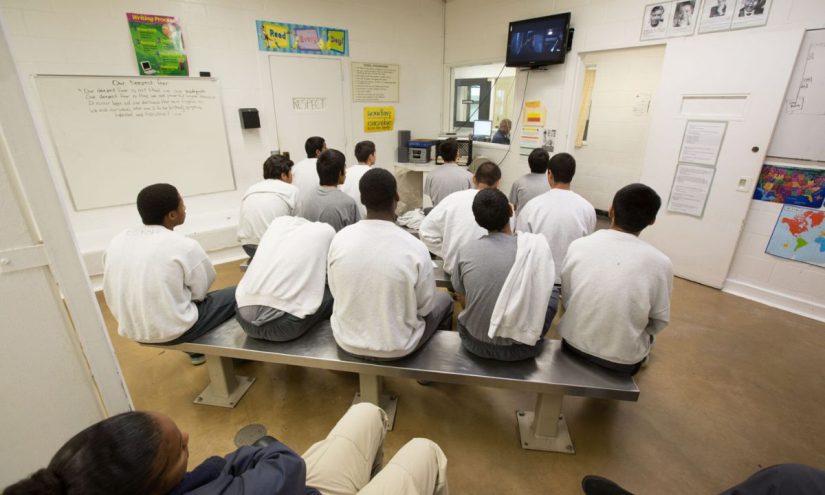
    Local government agencies in charge of youth violated the educational and civil rights of students in Los Angeles County’s juvenile justice facilities for decades by punting responsibility and inaction, according to a report released Wednesday.

    Who has the power? Chronicling Los Angeles County’s systemic failures to educate incarcerated youth” blames the disconnected, vast network of local and state agencies — from the board of supervisors to the local probation department to the county office of education and more — that play one role or another in managing the county’s juvenile legal system, for the disruption in the care and education of youth in one of the nation’s largest systems.

    “This broken system perpetuates a harmful cycle of ‘finger-pointing,’ often between Probation and Los Angeles County Office of Education, which hinders the resolution of issues that significantly affect the education of incarcerated youth,” wrote the Education Justice Coalition, authors of the report.

    The coalition includes representatives from Children’s Defense Fund-California, ACLU of Southern California, Arts for Healing and Justice Network, Disability Rights California, Youth Justice Education Clinic at Loyola Law School, and Public Counsel.

    The authors listed three demands for the board of supervisors, including reducing youth incarceration by way of implementing the previously approved Youth Justice Reimagined plan, providing access to high-quality education, and adopting transparency and accountability measures.

    Decades of documented rights violations

    A timeline outlines repeated student rights violations, some of which have resulted in class-action lawsuits and settlements requiring the county to be monitored by the federal and state departments of justice for years at a time.

    Since 2000, the timeline notes that Los Angeles County has faced:

    • A civil grand jury report calling on the board of supervisors to “improve collaboration” between the probation and education departments in order to address unmet educational needs
    • An investigation by the federal Department of Justice — and subsequent settlements — found significant teacher shortages, lack of consistency in daily instruction, and issues with support for students with special needs
    • A class action lawsuit against the county office of education and the probation department
    • An investigation by the state Department of Justice, followed by settlements, found excessive use of force and inadequate services
    • Multiple findings by a state agency of L.A. County juvenile facilities being “unsuitable for the confinement of minors”

    Most recently, the state attorney general has requested receivership, which would mean full state ownership of the county’s juvenile halls.

    The Los Angeles Board of Supervisors, the probation department, and the Office of Education did not immediately respond to a request for comment.

    The lasting impact of academic disruptions

    Dovontray Farmer experienced the mismanaged system when he entered Los Padrinos Juvenile Hall a second time as a 10th grader. Now 24 and serving as a youth mentor with the Youth Justice Coalition, Farmer said that his time in L.A. County facilities “played a major role in not being able to get properly educated — I felt betrayed, honestly.”

    Returning to school after being released was difficult, he said, because he quickly realized he was several grade levels below his classmates at his local high school.

    He’d also been part of his school’s football team before his detention at Los Padrinos when he was 17, and said he tried returning to the team once released but wasn’t allowed back.

    He said the disruption to his education and participation on the football team, which he saw as a positive influence, affected how he viewed his life.

    “There was nothing I really could do, so I was really giving up,” he said. “Like, everything that I really cared for was already gone.”

    The environment at the juvenile facilities didn’t help matters. 

    Los Padrinos recently came under fire after a video published by the Los Angeles Times showed probation officers standing idle as detained youths fought. Thirty officers have been indicted on criminal charges for encouraging or organizing gladiator-style fights among youths.

    Farmer said he was put through those same types of fights when he was at Los Padrinos as a teenager.

    “A lot of the coverage recently has been about the recent gladiator fights in 2023, but clearly this is a very systemic issue that even when a problem is resolved in the short term, we’re uncovering that it’s really indicative of a larger systemic problem,” said Vivian Wong, an education attorney and director of the Youth Justice Education Clinic at Loyola Law School, whose recent clients have included Los Padrinos students.

    Education data across several years backs Farmer’s experiences while detained.

    The most recent state data available when Farmer was detained at Los Padrinos is from 2018, when 39% of students were chronically absent, less than 43% graduated, and 12% were suspended at least once.

    That same year, the state’s average was 9% for chronic absenteeism, 83.5% for graduation, and 3.5% for suspension.

    Ongoing education concerns

    The report’s authors note that students across several facilities have lost thousands of instructional minutes, with a “lack of transparency and concrete planning to ensure that the missed services are adequately made up for, leaving students at risk of falling further behind educationally.”

    While compensatory education has typically been used to resolve instructional minutes owed, “I am not sure that’s the most realistic way to remedy the injustice that young people face, because they have endured so much abuse in these facilities,” said Wong. “It’s much more than just a loss of instruction.”

    A more appropriate response to the loss of instructional time would be a consistent investment in avoiding detention and keeping young people in their communities to maintain school stability, she added.

    Past attempts at reform have often been “done without community input or leadership, both in the design and in the implementation of those reforms,” Wong said.

    The new report, she added, is meant to be a tool toward implementing Youth Justice Reimagined, or YJR, a model against punitive measures that was largely developed with input from community organizations to restructure the local juvenile legal system.

    Three demands

    Youth Justice Reimagined, approved by the Los Angeles County Board of Supervisors in November 2020 to reform the local juvenile legal system, would move the county away from punitive approaches, such as detention, and toward rehabilitative support through counseling, family and vocational programming, small residential home placements, and more.

    Youth detention results in “severe disconnection from and disruption to their education trajectory,” wrote the report’s authors, as they urged the board to address abysmal educational access and achievement by fully funding and implementing YJR.

    The disconnect, they added, is exacerbated by delayed school enrollment when detained and upon release, the constant presence of probation officers, and turnover of educators and classmates.

    These common experiences are particularly difficult for students with learning disabilities or a history of trauma, they wrote.

    “After more than a decade of incremental reform, it is time for the County to truly reimagine youth justice,” wrote Supervisors Sheila Kuehl and Mark Ridley-Thomas in their November 2020 motion to approve YJR. “In the same way that the Board has embraced a care first, jail last approach to the criminal justice system, it is incumbent upon the Board to embrace a care first youth development approach to youth justice.”

    Despite the approval, a report published in August 2024 by the state auditor found that less than half of the YJR recommendations had been implemented by mid-2024.

    To address the high rates of chronic absenteeism, poor testing results and instructional minutes owed, the Education Justice Coalition’s second demand is to adapt educational opportunities “to address the unique and significant needs of the court school population.”

    They listed 18 actions the county probation and education departments should work together on, including:

    • Appropriate education support for students with disabilities 
    • Access to A-G approved courses for every student in a juvenile facility
    • Classrooms led by educators, rather than probation officers
    • Appropriately credentialed and culturally competent educators
    • Education access that is not disrupted due to probation staffing issues

    The coalition’s third demand centered on transparency and accountability measures by providing families with access to education planning for their children and establishing work groups that include community members.

    This story was originally published on EdSource.


    Get stories like these delivered straight to your inbox. Sign up for The 74 Newsletter

    Source link

  • College Works to Reduce Failure Rates in Entry-Level Courses

    College Works to Reduce Failure Rates in Entry-Level Courses

    First-year students who perform poorly in a course are particularly at risk of dropping out. To help boost retention of such students, the University of the Pacific has made strategic investments in promoting their success, including by remodeling gateway courses.

    During an institutional data analysis, leaders at the California institution found that first-year students who earned a D or F grade or withdrew from a class (also called DFW rate) were less likely to persist into their second year, which affected the university’s overall attrition rate.

    In particular, students who didn’t pass their gateway classes in economics, math, biology, physics or chemistry were less likely to remain enrolled at the university.

    To improve student success, the university created top-down initiatives and structures to encourage student feedback, experimentation in the classroom and cross-departmental solutions to better support incoming students.

    What’s the need: A 2018 study by EAB found that, on average, three in 10 students enrolled in any given course don’t earn credit for it, leaving them with what are known as “unproductive credits.” Among the gateway courses analyzed—Calculus 1, General Biology, Chemistry 1 and General Psychology—some universities reported an unproductive-credit rate as high as 46 percent.

    A variety of factors can cause high DFW rates, including a lack of academic preparation or personal struggles experienced by first-year students, according to EAB’s report. Other research has shown that variability in the quality of instruction or in assessment tools can also increase DFW rates.

    Closing the gap: To address obstacles in the classroom, the provost and dean of the College of the Pacific, the university’s liberal arts college, which houses the gateway courses, meet regularly with department chairs who oversee those courses.

    Addressing DFW rates can be a challenge for institutions because it often focuses attention on the faculty role in teaching, learning and assessment, leaving instructors feeling targeted or on the hot seat. To address this, the provost is working to create a culture of innovation and experimentation for course redesign, encouraging new approaches and creating institutional support for trying something new or pivoting, even if it’s not successful.

    One of the opportunities identified involved embedding teaching assistants in classes to serve as tutors for students and provide feedback to instructors. The embedded TAs are students who successfully completed the course, enabling them not only to mentor incoming students but also to provide a unique perspective on how to change the classroom experience.

    The university has also created a retention council, which invites stakeholders from across the institution to break silos, identify structural barriers and discuss solutions; that has made a significant difference in addressing retention holistically, campus leaders said.

    The university also hired an executive director of student success and retention who meets weekly with academic success teams from every department.

    Another Resource

    Indiana University Indianapolis’s Center for Teaching and Learning developed a productive discussion guide to facilitate conversations around course redesign and addressing DFW rates. Read more about it here.

    How it’s going: Since implementing the changes, the university saw a 5 percent year-over-year drop in D’s, F’s and withdrawals among gateway courses. Retention of first-year, first-time students has also climbed from 86 percent in 2020 to 89 percent this past year.

    Demand for curriculum redesign has grown from about 20 courses in the past year to 50 courses this year, requiring additional investment and capacity from leadership, administrators said. Faculty also indicate that they’re feeling supported in the course redesign process.

    In the future, university leaders said, they will also redesign the first-year experience with a greater focus on integrating academic, experiential and student life along with academic advising to encourage belonging and a sense of community. For example, they plan to use data to identify students who may need additional support to navigate life challenges or financial barriers.

    We bet your colleague would like this article, too. Send them this link to subscribe to our newsletter on Student Success.

    Source link

  • US Department of Education’s Failure to Address Food Insecurity Among College Students (Government Accountability Office)

    US Department of Education’s Failure to Address Food Insecurity Among College Students (Government Accountability Office)

    Nearly 25% of college students in 2020 reported
    limited or uncertain access to food. Despite being potentially eligible,
    most didn’t receive Supplemental Nutritional Assistance Program (SNAP)
    benefits—formerly known as “food stamps”—which could help them pay for
    food.

    A recent law gave the Department of Education
    authority to share students’ Free Application for Federal Student Aid
    data with federal and state SNAP agencies to identify and help students
    who may be eligible for benefits.

    But Education hasn’t made a plan to start sharing this data—nor have states received guidance about this opportunity.

    We recommended ways to address these issues.

    What GAO Found

    The U.S. Department of Agriculture (USDA) and the Department of
    Education have taken some steps to connect college students with
    Supplemental Nutrition Assistance Program (SNAP) benefits to help them
    pay for food, but gaps in planning and execution remain. Effective July
    2024, a new law gave Education authority to share students’ Free
    Application for Federal Student Aid (FAFSA) data with USDA and state
    SNAP agencies to conduct student outreach and streamline benefit
    administration. However, according to officials, Education had not yet
    developed a plan to implement these complex data-sharing arrangements.
    This risks delays in students getting important information that could
    help them access benefits they are eligible for. Following the passage
    of this new law, Education began providing a notification about federal
    benefit programs for students who may be eligible for them. However, it
    has not evaluated its method for identifying potentially eligible
    students. According to GAO analysis of 2020 Education data, Education’s
    method could miss an estimated 40 percent of potentially SNAP-eligible
    students.

    USDA encouraged state SNAP agencies to enhance student outreach and
    enrollment assistance. However, USDA has not included important
    information about the use of SNAP data and other student data in its
    guidance to state SNAP agencies. These gaps in guidance have left states
    with questions about how to permissibly use and share students’ data to
    help connect them with benefits.

    Student Food Assistance at a College Basic Needs Center

    Officials from the three selected states and seven colleges GAO
    contacted described key strategies for communicating with students about
    their potential SNAP eligibility. These include using destigmatizing
    language, linking students directly to an application or support staff,
    and coordinating outreach efforts with SNAP agencies. Officials from the
    states and colleges GAO contacted said it is helpful to have staff
    available on campus to assist students with the SNAP application. Some
    colleges have found it helpful to partner with their respective SNAP
    agencies to obtain information on the status of students’ applications.

    Why GAO Did This Study

    According to a national survey, almost one-quarter of college
    students were food insecure in 2020, yet GAO found many who were
    potentially eligible for SNAP had not received benefits. The substantial
    federal investment in higher education is at risk of not serving its
    intended purpose if students drop out because of limited or uncertain
    access to food. Studies have found using data to direct outreach to
    those potentially eligible can increase benefit uptake.

    GAO was asked to review college student food insecurity. This report
    addresses (1) the extent to which Education and USDA have supported data
    use to help college students access SNAP benefits, and (2) how selected
    states and colleges have used student data to help connect students
    with SNAP benefits.

    GAO reviewed relevant federal laws and agency documents. GAO also
    interviewed officials from Education, USDA, and national higher
    education and SNAP associations. GAO selected three states and
    interviewed officials from state SNAP and higher education agencies and
    seven colleges in these states. GAO visited one selected state in person
    and interviewed two virtually. States were selected based on actions to
    support food insecure students and stakeholder recommendations.

    Recommendations

    GAO is making five recommendations, including that Education develop a
    plan to implement FAFSA data-sharing and assess its benefit
    notification approach; and that USDA improve its SNAP agency guidance.
    The agencies neither agreed nor disagreed with these recommendations.

    Recommendations for Executive Action

    Agency Affected Recommendation Status
    Department of Education The
    Secretary of Education should develop a written plan for implementing
    provisions in the FAFSA Simplification Act related to sharing FAFSA data
    with SNAP administrators, to aid in benefit outreach and enrollment
    assistance. (Recommendation 1)
    Department of Education The
    Secretary of Education should, in consultation with USDA, evaluate its
    approach to identifying and notifying FAFSA applicants who are
    potentially eligible for SNAP benefits and adjust its approach as
    needed. (Recommendation 2)
    Department of Education The
    Secretary of Education should inform colleges and state higher
    education agencies that FAFSA notifications are being sent to applicants
    who are potentially eligible for SNAP benefits. (Recommendation 3)
    Department of Agriculture The
    Administrator of USDA’s Food and Nutrition Service should, in
    consultation with Education, issue guidance to state SNAP agencies—such
    as in its SNAP outreach priority memo—to clarify permissible uses of
    student data, including FAFSA data, for SNAP outreach and enrollment
    assistance. (Recommendation 4)
    Department of Agriculture The
    Administrator of USDA’s Food and Nutrition Service should issue
    guidance to state SNAP agencies—such as in its SNAP outreach priority
    memo—to clarify the permissible uses and disclosure of SNAP data to
    support SNAP student outreach and enrollment assistance. (Recommendation
    5)

    Source link