Tag: Families

  • How Prospective Families Weigh Online and Hybrid College Options

    How Prospective Families Weigh Online and Hybrid College Options

    Nearly half of all students worldwide have engaged in online learning.

    Online and hybrid education have shifted from emergency responses during the COVID-19 pandemic to permanent, influential forces reshaping education from kindergarten to high school to higher education. Once seen as supplemental, these models play a central role in how students, families, and institutions approach learning, access, and opportunity.

    Full online enrollment remains rare in grades K-12, with just 0.6% of U.S. public school students fully online. However, hybrid learning is widespread, with 63% of students using online tools daily (National Center for Education Statistics, 2023). Globally, nearly half of all students have engaged in online learning, fueling a K–12 online education market valued at more than 171 billion U.S. dollars (Devlin Peck, n.d.; Yellow Bus ABA, n.d.).

    In higher education, the shift is even more pronounced. By 2023, over half of U.S. college students had taken at least one online course, and over one-quarter were enrolled exclusively online (National Center for Education Statistics, 2023; BestColleges, 2023). Adult learners and graduate students have been especially drawn to online programs, attracted by the flexibility and accessibility they offer (Arizton Advisory & Intelligence, 2023).

    But the numbers alone do not tell the whole story. To understand the future of online and hybrid learning, we need to listen to families, not as bystanders, but as essential decision-makers, advocates, and partners in shaping students’ educational journeys.

    What families and students think, and why it matters

    Across education levels, families appreciate the flexibility of online and hybrid models but consistently voice concerns about academic rigor, social connection, and equitable access.

    In K–12, parents generally prefer in-person schooling but want schools to improve the quality of online options (Barnum, 2020; Dong, Cao, & Li, 2020; Garbe, Ogurlu, Logan, & Cook, 2020). Adult and international students in higher education often rely on online programs to balance work and family demands. However, they face barriers such as isolation, inconsistent internet access, and limited interaction with peers and faculty (Kibelloh & Bao, 2014).

    Research underscores that strong course design is essential for satisfaction and success (Babb, Stewart, & Johnson, 2010; Detyna & Koch, 2023) and that social connection is not a luxury but a critical factor in persistence and well-being (Tayebinik & Puteh, 2012). Equity gaps also loom large: students without access to reliable devices, broadband, or support networks face steeper challenges (Eduljee, Murphy, Emigh-Guy, & Croteau, 2023; Neece, McIntyre, & Fenning, 2020).

    Families’ pandemic experiences reinforce these themes. Many described overwhelming stress and inequities that left them skeptical of online learning without stronger support and communication (Dong et al., 2020; Garbe et al., 2020; Neece et al., 2020).

    Key findings: What families want, and what budget cuts threaten

    The RNL, Ardeo, and CampusESP (2025) Prospective Family Engagement Report surveyed 9,467 families of prospective college students, offering rare insight into how families view online and hybrid education not just in theory, but as a meaningful factor in enrollment decisions.

    1. Families are cautious about fully online. Only 11% said they would consider a fully online experience for their student. In contrast, about 60% were open to hybrid models, which they saw as the “best of both worlds,” combining affordability, flexibility, and connection.

    2. First-generation families are more open. Nearly one in five said they would consider fully online, and 60% were open to hybrid options. These pathways can be lifelines, but cuts to advising, technology, or aid risk undermining that promise.

    3. Income divides are stark. Families earning under $60,000 were twice as likely to express interest in fully online compared to higher-income families. Yet as state funding declines, public colleges may raise tuition or online fees, making even “affordable” pathways harder to access.

    4. Race and ethnicity matter. Black and Hispanic families showed greater openness to online and hybrid formats than Asian or White families. That opportunity will only expand if institutions sustain culturally responsive communication, peer representation, and targeted support.

    5. Generational and gender differences are shifting demand. Younger parents and female caregivers are more comfortable with online and hybrid learning. Demand will keep growing, but families may see online options as second-class without continued investments in quality and communication.

    6. Region matters, too. Families in the Great Lakes and Far West regions were more receptive to online learning, while New England families leaned more traditional. These cultural and infrastructural differences should shape institutional strategies.

    These findings show that online and hybrid education hold real promise, especially for families seeking flexibility, affordability, and access. But that promise rests on a fragile foundation. Budget cuts threaten the very investments that make these models credible: faculty development, instructional design, technology, and support services. Without them, families’ trust could erode.

    What this means for colleges: Practical implications

    The research points to clear takeaways for colleges and universities:

    • Flexibility matters, but only if paired with quality. Families want flexible options backed by evidence of rigor, outcomes, and strong faculty engagement.
    • Hybrid is a strength, not a compromise. Market it as a high-quality “best of both worlds,” not a fallback option.
    • Equity-focused support is critical. Expand device loan programs, connectivity grants, and first-generation mentoring to close gaps.
    • Culturally tailored communication builds trust. Engage families with inclusive outreach and visible peer representation.
    • Generational shifts mean rising demand. Younger parents are more open to online and hybrid; invest now to meet tomorrow’s expectations.
    • Regional strategy matters. Align program design and marketing with local cultures, broadband realities, and institutional density.
    2025 Prospective Family Engagement Report2025 Prospective Family Engagement Report

    Ultimately, this is about listening. For some families, online pathways may be the only way higher education is possible. For others, a hybrid model that blends connection with convenience is the right fit. Institutions that understand these diverse perspectives and invest in the structures that support them will be best positioned to earn families’ trust and help students thrive.

    For more insights, read the 2025 Prospective Family Engagement Report from RNL, CampusESP, and Ardeo.

    References

    Source link

  • We cannot afford to dismantle Head Start, a program that builds futures, strengthens families and delivers proven returns

    We cannot afford to dismantle Head Start, a program that builds futures, strengthens families and delivers proven returns

    The first words I uttered after successfully defending my dissertation were, “Wow, what a ride. From Head Start to Ph.D.!” Saying them reminded me where it all began: sitting cross-legged with a picture book at the Westside Head Start Center, just a few blocks from my childhood home in Jackson, Mississippi. 

    I don’t remember every detail from those early years, but I remember the feeling: I was happy at Head Start. I remember the books, the music, the joy. That five-minute bus ride from our house to the Westside Center turned out to be the shortest distance between potential and achievement. 

    And my story is not unique. Every year, hundreds of thousands of children — kids whose names we may never know, though our futures depend on them — walk through Head Start’s doors. Like me, they find structure, literacy, curiosity and belonging.  

    For many families, Head Start is the first place outside the home where a child’s potential is nurtured and celebrated. Yet, this program that builds futures and strengthens families is now under threat, and it’s imperative that we protect it. 

    Years later, while training for high school cross-country meets, I’d run past the park next to the center and pause, flooded with memories. Head Start laid the foundation for everything that followed. It gave me structure, sparked my curiosity and built my early literacy skills. It even fed my short-lived obsession with chocolate milk.  

    More than that, Head Start made me feel seen and valued. 

    Related: A lot goes on in classrooms from kindergarten to high school. Keep up with our free weekly newsletter on K-12 education. 

    There’s a clear, unbroken line between the early lessons I learned at Head Start and the doctoral dissertation I defended decades later. Head Start didn’t just teach me my ABCs — it taught me that learning could be joyful, that I was capable and that I belonged in a classroom.  

    That belief carried me through elementary school, Yale and George Washington University and to a Ph.D. in public policy and public administration. Now, as part of my research at the Urban Institute, I’m working to expand access to high-quality early learning, because I know firsthand what a difference it makes.  

    Research backs up what my story shows: Investments in Head Start and high-quality early childhood education change lives by improving health and educational achievement in later years, and benefit the economy. Yet today there is growing skepticism about the value of Head Start, reflecting an ongoing reluctance to give early childhood education the respect it deserves.  

    If Head Start funding is cut, thousands of children — especially from communities like mine in Jackson, where families worked hard but opportunities were limited — could lose access to a program that helps level the playing field. These are the children of young parents and single parents, of working families who may not have many other options but still dare to dream big for their kids.  

    And that is why I am worried. Funding for Head Start has been under threat. Although President Donald Trump’s proposed fiscal 2026 budget would maintain Head Start funding at its current $12.3 billion, Project 2025, the influential conservative policy document, calls for eliminating the program. The administration recently announced that Head Start would no longer enroll undocumented children, which a group of Democratic attorneys general say will force some programs to close.  

    Related: Head Start is in turmoil 

    I feel compelled to speak out because, for our family, Head Start wasn’t just a preschool — it was the beginning of everything. For me, it meant a future I never could have imagined. For my mother, Head Start meant peace of mind — knowing her son was in a nurturing, educational environment during the critical developmental years. My mother, Nicole, brought character, heart and an unwavering belief in my potential — and Head Start helped carry that forward. 

    My mother was just 18 when she enrolled me in Head Start. “A young mother with big dreams and limited resources,” she recounted to me recently, adding that she had “showed up to an open house with a baby in my arms and hope in my heart.” 

    Soon afterward, Mrs. Helen Robinson, who was in charge of the Head Start in Jackson, entered our lives. She visited our home regularly, bringing books, activities and reassurance. A little yellow school bus picked me up each morning. 

    Head Start didn’t just support me, though. It also supported my mother and gave her tips and confidence. She took me to the library regularly and made sure I was always surrounded by books and learning materials that would challenge and inspire me. 

    It helped my mother and countless others like her gain insight into child development, early learning and what it means to advocate for their children’s future.  

    Twenty-five years after those early mornings when I climbed onto the Head Start bus, we both still think about how different our lives might have been without that opportunity. Head Start stood beside us, and that support changed our lives. 

    As we debate national priorities, we must ask ourselves: Can we afford to dismantle a program that builds futures, strengthens families and delivers proven returns? 

    My family provides living proof of Head Start’s power.  

    This isn’t just our story. It is the story of millions of others and could be the story of millions more if we choose to protect and invest in what works. 

    Travis Reginal holds a doctorate in public policy and public administration and is a graduate of the Head Start program, Yale University and George Washington University. He is a former Urban Institute researcher. 

    Contact the opinion editor at [email protected]. 

    This story about the Head Start funding was produced by The Hechinger Report, a nonprofit, independent news organization focused on inequality and innovation in education. Sign up for Hechinger’s weekly newsletter. 

    The Hechinger Report provides in-depth, fact-based, unbiased reporting on education that is free to all readers. But that doesn’t mean it’s free to produce. Our work keeps educators and the public informed about pressing issues at schools and on campuses throughout the country. We tell the whole story, even when the details are inconvenient. Help us keep doing that.

    Join us today.

    Source link

  • Families Spending More on College

    Families Spending More on College

    Photo illustration by Justin Morrison/Inside Higher Ed | Getty Images | Rawpixel

    Families are spending about 9 percent more on college compared to last year, according to a recently released survey from Sallie Mae and Ipsos.

    The results of the survey, released earlier this week, are part of the annual “How America Pays for College” report. Ipsos surveyed about 1,000 undergraduate students and the same number of parents of undergrads from April 8 to May 8. The online survey delved into a range of topics from how they were paying for college to their views on the federal student loan program.

    On average, families spent $30,837 on college, which is similar to pre-pandemic spending—in the 2019–20 academic year, families spent $30,017 on average. In line with previous years, families are typically using their own money to pay for college, with income and savings adding up to 48 percent of the pie, and scholarships and grants accounted for a 27 percent slice.

    But 40 percent of the families surveyed didn’t seek scholarships to help pay for college because they either didn’t know about the available opportunities or didn’t think they could win one. About three-quarters of respondents who received a scholarship credited that aid with making college possible.

    Similar to other recent surveys, while a majority of families see college as worth the money, cost is still a key factor. About 79 percent reported that they eliminated at least one institution based on the price tag. Still, about 47 percent of respondents said they ended up paying less than the sticker price. That number is higher for families with students at private four-year universities. About 54 percent said they paid less compared to 45 percent of respondents at public four-year institutions.

    Source link

  • PRINCIPAL VOICE: Inviting families into our classrooms slashed absenteeism and raised reading levels

    PRINCIPAL VOICE: Inviting families into our classrooms slashed absenteeism and raised reading levels

    Two years ago, I bought each of the teachers at Hamilton Elementary in San Diego’s City Heights neighborhood a blue chair. I told them to put it in the back of their classrooms, and that if a parent or caregiver wanted to visit to see how their children are learning — no matter what the reason — that this would be a dedicated space for them.

    I may have earned some exaggerated eye-rolls from educators that day. After all, I can appreciate the disruption to learning that classroom visitors can sometimes cause, especially among excitable elementary schoolers.

    But school is our home, and it is our responsibility to invite families into our home and welcome them. And this was a necessary olive branch, my way of saying to families: “From here on out, things are going to be different.”

    And they were. They also can be different at other schools, because the benefits of family engagement go well beyond student achievement.

    Related: A lot goes on in classrooms from kindergarten to high school. Keep up with our free weekly newsletter on K-12 education.

    Research has long shown that when parents and caregivers are involved and engaged with their children’s education — whether that’s by attending parent-teacher conferences or participating in school events — student achievement, motivation and social-emotional well-being increase.

    Parent involvement with reading activities has a positive impact on reading achievement, language comprehension, expressive language skills and level of attention in the classroom, according to the National Literacy Trust.

    Research also shows that educators enjoy increased job satisfaction and are more likely to keep teaching at the school, families enjoy stronger relationships with their children and feel less isolated, and even school districts themselves become better places to live and raise children.

    None of this was the case when we returned to normalcy following Covid. Just 13 percent of students were reading on grade level, and 37 percent were chronically absent. I knew right away that before we even attempted to tackle academics, we needed to engage families and make them feel deeply connected and committed to the community I envisioned building here.

    Today, 45 percent of students are reading at grade-level, and chronic absenteeism, at 12 percent on the most recent official numbers, is down to 10 percent in our own tracking, with a goal of pushing it down to 8 percent in 2025-26.

    But it wasn’t easy given the distrust that had boiled over during the pandemic, with families skeptical of our ability to effectively support their children and school staff feeling defensive and exhausted.

    It was clear to me that families weren’t excited to send their kids to school, didn’t feel informed about what was happening on our campus and, moreover, didn’t feel comfortable — let alone capable — of communicating their needs to us.

    Complicating matters further was the need to share information across many languages other than English, which can make relationship-building and communicating expectations difficult.

    Roughly half of our students are English learners, and while the majority of their families are Spanish-speakers, there are growing populations of students whose first languages are Haitian-Creole, Pashto and Vietnamese.

    Related: What the research says about the best way to engage parents

    The first thing I did was establish open communication with parents using ClassDojo, a mobile app that gives families an easy, intuitive central access point to our teachers and staff, automatically translates all messages into parents’ native languages and allows us to share stories about what is happening in school.

    It became an easy way to build trust and collaboration between families and staff.

    Creating that type of visibility was key to breaking down walls between us. And in those early days, we didn’t post about literacy, math or anything related to academics. Instead, we focused solely on attendance and getting families to come inside the school as much as possible.

    We focused on relationship-building activities and joyful learning. We hosted after-school art classes and monthly family Fridays, when families could come to school to engage in a fun activity.

    We organized a Halloween costume drive with candy and fun games for kids; we hosted a Read Across America event where we passed out Play-Doh; and we organized other low-stakes events at school, rooted in building a partnership between home and school.

    Again, our goal wasn’t learning during these meet-ups. It was all in service of building trust and creating meaningful relationships with students and their families.

    Once we had the foundation in place, we added a focus on academics — though we rooted that learning in family engagement, too. For example, our schoolwide focus last year was phonics, so we sent activities home for families to complete with their children that were tied specifically to concepts the students needed reinforced, based on their individual assessments, like long vowel patterns and sight words.

    These activities were taught by the students and their teachers to family members during conferences.

    Beyond helping students, the exercise challenged a false narrative so many families had assumed — that they either didn’t know enough about what was happening in school to help, weren’t confident enough to help or didn’t have enough time.

    Today, the atmosphere at Hamilton feels radically different than when I first walked through the doors. When we first started hosting Family Fridays, about 10 family members and their children showed up.

    Now, we have roughly 200 caregivers at every meet-up. Families run most of the community-based initiatives at the school — from a boutique where families can shop among donated clothes twice a month, to a food distribution center, to a book club, English classes and a monthly meet-up where families can socialize.

    When district leaders visit, they’re always impressed by the participation. I tell them, if you care about family engagement, it has to be so deeply embedded into the system that people don’t have a choice but to do it.

    That’s why I’m constantly thinking about how to center family engagement in staff meetings, in attendance meetings, in literacy and math plans, in behavioral and counseling plans and in meetings about school procedures and budgets.

    It’s a strategy that not only involves families but also supports academic achievement and student well-being. For me, family engagement is the ultimate strategy for academics.

    Sometimes in the K-12 world we keep outreach and academics separate, but in reality, engagement is the key that unlocks our ability to hit academic goals and create a joyful school community.

    Dr. Brittany Daley is the principal of Hamilton Elementary School in San Diego, California.

    Contact the opinion editor at [email protected].

    This story about family engagement was produced by The Hechinger Report, a nonprofit, independent news organization focused on inequality and innovation in education. Sign up for Hechinger’s weekly newsletter.

    The Hechinger Report provides in-depth, fact-based, unbiased reporting on education that is free to all readers. But that doesn’t mean it’s free to produce. Our work keeps educators and the public informed about pressing issues at schools and on campuses throughout the country. We tell the whole story, even when the details are inconvenient. Help us keep doing that.

    Join us today.

    Source link

  • Deportation Fears Push Some New York Immigrant Students to Virtual Learning – The 74

    Deportation Fears Push Some New York Immigrant Students to Virtual Learning – The 74

    As President Donald Trump has ramped up deportations, some immigrant students across New York have been too afraid to attend class in person. In response, some school districts have turned to virtual learning, a move the state’s Education Department is sanctioning, officials revealed last week.

    “I will tell you in the sense of a crisis, we do have some districts right now … that are taking advantage and providing virtual instruction to our children who are afraid to go to school,” Associate Education Commissioner Elisa Alvarez told state officials at May’s Board of Regents meeting.

    Alvarez shared with the board a memo the state Education Department issued in March clarifying that districts have the flexibility to offer online instruction to “students who may be unable or averse to attending school, including during times of political uncertainty.”

    The memo further specified schools can tap online learning for immigrant and migrant students “who may be affected and reluctant to attend school in person due to concerns about their personal safety and security.”

    Alvarez didn’t disclose how many or which districts were using the approach and for how many students. A state Education Department spokesperson did not respond to follow-up questions.

    New York City public schools already have virtual options available and aren’t doing anything different for immigrant students fearful of attending school, a spokesperson for the city’s Education Department said.

    Still, the disclosure from state officials highlights the ongoing fears some immigrant students are facing four months into the Trump administration and raises fresh questions about how their school experiences are being affected.

    Shortly after taking office, Trump rescinded longstanding guidance barring federal immigration agents from making arrests at “sensitive locations” including schools.

    Migrant families staying in New York City shelters expressed acute fears during the week after Trump’s inauguration in January and stayed out of school in large numbers, likely contributing to lower citywide attendance rates that week (though Mayor Eric Adams later downplayed the attendance woes). Some city educators said they’ve seen attendance for immigrant students rebound since that first week.

    City policy prohibits federal law enforcement agents, including Immigration and Customs Enforcement, from entering schools without a warrant signed by a judge, and Education Department officials have trained school staff on detailed protocols for how to respond.

    At the state level, the Attorney General’s office and Education Department issued joint guidance in March reiterating that state and federal law both compel districts to only permit federal law enforcement to enter schools under very limited circumstances.

    Many school leaders have worked hard to communicate those policies and reassure anxious families. And immigration enforcement inside of schools has remained rare.

    But some high-profile raids have targeted school-age children, including one in the upstate New York hometown of Trump border czar Tom Homan that swept up three students in the local public schools, sparking fear and outrage. And there have been reports across the country of parents detained by immigration agents right outside schools during drop-off time.

    Under those circumstances, virtual learning could give schools a way to keep up some connection with students or families who might otherwise completely disengage.

    But some New York City educators said they’re still working hard to convince fearful immigrant students to come to school in person, noting that virtual learning was especially challenging for English language learners during the COVID pandemic.

    Lara Evangelista, the executive director of the Internationals Network, which oversees 17 public schools in the five boroughs catering exclusively to newly arrived immigrant students, said none of her schools have made the “purposeful choice” to engage fearful students through virtual learning.

    “Virtual learning for [English Learners] was really challenging during COVID,” she said.

    Alan Cheng, the superintendent who oversees the international schools as well as the city’s dedicated virtual schools, said he hasn’t seen any significant changes in enrollment or interest in online learning due to fear of in-person attendance among immigrant students.

    And while virtual learning might be able to offer a version of the academic experience of in-person school, it’s harder for it to replicate some of the other services that schools provide families.

    “Our schools serve much more than just the academic environment,” Cheng said. “They are really community schools, they provide health care, they provide plenty of other resources.”

    This story was originally published by Chalkbeat. Chalkbeat is a nonprofit news site covering educational change in public schools. Sign up for their newsletters at ckbe.at/newsletters.


    Get stories like these delivered straight to your inbox. Sign up for The 74 Newsletter

    Source link

  • Eating Well in College: What Students and Families Need to Know

    Eating Well in College: What Students and Families Need to Know

    Food is more than just a necessity in college — it fuels academic success, well-being, and connection, making informed dining choices essential for thriving on campus.

    Robert Nelson

    President and CEO, The National Association of College & University Food Services

    Preparing for college means choosing classes, housing, and campus activities — but what about food? While dining may not always be top of mind, what students eat has a profound impact on their academic performance, health, and overall well-being. Here’s what families should consider when planning for a successful — and well-fed — college experience.

    Food and academic success

    Skipping meals may seem like a small sacrifice when juggling a packed schedule, but the effects on academic performance are significant. Studies show that students who eat regular, balanced meals — especially breakfast — perform better on tests, have stronger focus, and experience lower stress and anxiety.

    Meal plans exist for a reason: They provide consistency, affordability, and easy access to nourishing meals that support learning, brain function, and students’ mental and physical health. Students should aim to create a meal schedule that aligns with their class and study habits, ensuring they have time to eat before long lectures or exams.

    Know your options 

    Many students arrive on campus with food allergies, religious or cultural dietary preferences, or health-related nutrition needs, yet they may not realize that college dining services can accommodate them. Parents and students should take the time to explore:

    • Allergen-friendly options: Many dining halls have designated stations or innovative programs for accommodating top allergens like nuts, dairy, gluten, and more.
    • Registered dietitians: Some schools offer access to nutrition experts who can help students make informed choices.
    • Cultural and religious meals: If students keep kosher, halal, or vegetarian diets, understanding what’s available ahead of time can make the transition smoother.

    Before move-in, students should visit the campus dining website, contact the dining team, and ask about meal options that fit their needs.

    Making the most of your plan

    A meal plan isn’t just about convenience — it’s also one of the most cost-effective ways to eat in college. Because of economies of scale, campus dining can offer a wide variety of meals at a lower cost than students would typically spend cooking for themselves or eating off-campus.

    Students should consider:

    • Understanding their chosen meal plan: Are there unlimited swipes? A set number per week? Can unused meals roll over? What is the deadline to adjust plans if needed? 
    • Knowing about alternative dining locations: In addition to dining halls, many campuses offer grab-and-go options, food trucks, or mobile ordering for busy days, included as part of the meal plan.
    • Making the most of cooking and nutrition programs: Some schools offer cooking classes, workshops, or healthy eating initiatives to help students develop lifelong food skills.

    Food as connection

    Beyond nutrition, food plays a vital role in helping students build relationships and feel a sense of belonging. Sitting down for a meal is one of the easiest ways for new students to make friends, unwind, and stay connected to campus life.

    While technology has changed how students engage with their world, dining halls remain one of the most valued spaces for face-to-face interaction — not just with peers, but also with staff who become familiar, welcoming faces in a student’s daily routine.

    A strong foundation 

    Students and families invest a great deal in higher education, and making informed choices about nutrition is part of that investment. Food is more than fuel; it’s a foundation for academic success, personal well-being, and lifelong habits. As students embark on this next chapter, taking the time to understand and prioritize their dining options can make all the difference.

    Source link

  • Hawaiʻi’s Working Families Need More Support – The 74

    Hawaiʻi’s Working Families Need More Support – The 74


    Get stories like this delivered straight to your inbox. Sign up for The 74 Newsletter

    Sarah Osofsky returned to school last year to earn her master’s degree in social work, hoping to give back to her community and find a job that would pay enough to survive Hawaiʻi’s high cost of living.

    Now, less than two weeks away from graduation, the mother of two is struggling to find a position that can sustain her family.

    Most social work jobs she’s seen in recent months offer salaries of $60,000 or less — enough to disqualify her from safety net programs like food stamps, but not enough to comfortably provide for her kids. She’s considered moving back to California where she has family who could support her, but she wants to stay in Hawaiʻi so her children can be near their dad.

    “What I’m balancing right now is, do I take a low, low paying job that then I’ll qualify for services like food stamps and Medicaid,” Osofsky said, “or do I hold out and try to find those few and far between really good jobs that will make enough so I don’t qualify but I don’t need it.”

    Osofsky’s struggle is a familiar one for working families in Hawaiʻi. In 2024, nearly 30% of Hawaiʻi households were living paycheck-to-paycheck and struggling to afford basic necessities like housing, child care and food, according to an annual count of the state’s ALICE families — an acronym for people who are asset limited, income constrained, and employed.

    Like Osofsky, roughly 40% of these families considered leaving the state over the past year, according to a study from Aloha United Way.

    While some reports indicate that more locals have been returning to Hawaiʻi in the last few years, the state’s high cost of living continues to drive some families away, straining the public education system and economy.

    Earlier this year, the Department of Education said its kindergarten enrollment dropped from 13,000 in 2019 to nearly 10,800 this year, citing estimates that 20% of people leaving Hawaiʻi are school-aged kids. The department is now starting the process of consolidating small schools, although it hasn’t yet identified which campuses are at risk of closure.

    A few years ago, state lawmakers grappling with the Covid-19 pandemic proposed a bold slate of reforms to improve the plight of working families: free school meals for all, universal access to preschool and paid family leave. But the state’s big plans for progress have resulted in incremental steps, and some families and advocates say change isn’t happening quickly enough.

    Lawmakers this session created a working group to study paid family leave but failed to turn the yearslong proposal into law. The state expanded eligibility for preschool tuition subsidies and funded preschool construction but failed to address the ongoing shortage of early learning educators. And Senate Bill 1300 — considered one of the biggest wins for students this year — expanded access to free school meals but stopped short of providing them for all kids.

    At the same time, uncertainty looms around the future of programs that rely on federal dollars to support working families, including school meals and early learning centers.

    Amid the upheaval, state lawmakers were hesitant to pass big spending measures this year, opting instead to set aside $200 million to help Hawaiʻi prepare for federal funding cuts. But some advocates say now is exactly the time for the state to make a bigger investment in families.

    “The state Legislature, and frankly, the counties, should be thinking, ‘Bad stuff is coming,’” said Deborah Zysman, executive director of Hawaiʻi Children’s Action Network. “We don’t quite know what yet, but we should be thinking about how to take care of our own people.”

    An Urgent Need For Child Care

    During the Covid-19 pandemic, Osofsky worried about the social development of her son, who was just turning 2 when lockdown restrictions began. But when he began attending the University of Hawaiʻi Mānoa Children’s Center later that year, Osofsky said, he received services for his speech delay and became comfortable making friends and recognizing letters.

    But paying for preschool was a challenge, Osofsky said. The Preschool Open Doors program provides a state subsidy to help cover tuition, but her son was ineligible when he started because the program only covered 4-year-olds at the time. The program expanded to include 3-year-olds last year.

    Hawaiʻi has pledged to offer preschool to all 3- and 4-year-olds by 2032. The Ready Keiki initiative, led by Lt. Gov. Sylvia Luke, currently estimates the state needs to add more than 330 classrooms in the next seven years to provide preschool to an additional 6,700 children.

    While lawmakers successfully expanded access to tuition subsidies and funded more preschool construction this year, progress toward the state’s ambitious goal has slowed on other fronts.

    One successful bill this session expands eligibility for preschool subsidies by including 2-year-olds and repealing the requirement that families must use the subsidy at a nationally accredited provider, which has created financial and administrative barriers for smaller programs in the past, Zysman said.

    But the Department of Human Services is on track to spend only $20 million of its $50 million budget for preschool subsidies this year, said Scott Morishige, administrator of the department’s Benefit, Employment and Support Services Division.

    To ramp up its spending, DHS is considering expanding the income eligibility to 500% of the federal poverty line. If DHS adopts the rules this summer, Morishige said, a family of four could make up to $184,000 annually and still be eligible for assistance, compared to the past income limit of $110,000.

    The state budget sets aside $20 million to build more public preschool classrooms over the next three years. The state plans on opening 25 public preschool classrooms this fall and an additional 25 classrooms the following year, far less than previous estimates that Hawaiʻi could build 40-50 classrooms annually.

    While the state would like to take a more aggressive approach to opening public preschool classrooms moving forward, Luke said, the Ready Keiki initiative is also relying on private providers and charter schools to help expand access. The state is starting larger construction projects, like standalone preschool centers, that could add seats more rapidly as they open in the next few years.

    “There is an urgency for us to open as many preschool seats as we can,” she said.

    But families’ demand for preschool could grow beyond what the state has anticipated if the federal government stops funding its own child care programs. Head Start, which relies on federal funding and serves roughly 2,800 children and pregnant mothers, is currently Hawaiʻi’s largest provider of early learning services, said Ryan Kusumoto, president and CEO of the nonprofit Parents And Children Together.

    The Trump administration has previously threatened to cut funding entirely for Head Start, although the most recent version of the federal budget keeps program funding intact. Some Hawaiʻi Head Start programs are still waiting to receive confirmation for next year’s funding, and the recent closure of some regional offices could create backlogs in awarding this money, said Ben Naki, president of the Head Start Association of Hawaiʻi.

    “There’s no existing infrastructure that can pick up those 2,800 kids,” Kusumoto said. “And we’re talking about kids who don’t have any other resources.”

    First Steps For Free Meals

    Since September, Christine Russo said paying for meals has become a greater challenge for her family as her twins joined her 10-year-old in attending school every day. She sets aside roughly $180 each month so her kids can purchase breakfast and lunch at school — a challenge for the public school teacher, whose husband is a retail store manager.

    Russo’s kids don’t qualify for free or reduced-price school meals, but she said her family could still benefit from the ongoing push to bring back a pandemic-era program that made meals free for all students.

    Lawmakers stopped short of funding a universal free meals program this year but took incremental steps by passing Senate Bill 1300. Starting next year, the state will provide free school meals to students who currently qualify for reduced-price lunch. The following year, eligibility for free school meals would be expanded to families making up to 300% of the federal poverty level, or roughly $110,000 for a family of four.

    The bill appropriates $565,000 to provide more free school meals next year and an additional $3.4 million for the program’s expansion the following year. More than 68,000 students in the Department of Education qualified for free meals this year, and 10,000 qualified for reduced-price meals.

    The bill also requires schools feed students who don’t have enough money to purchase lunch or already have meal debt. Students have accrued more than $105,000 in meal debt this school year, DOE communications director Nanea Ching said.

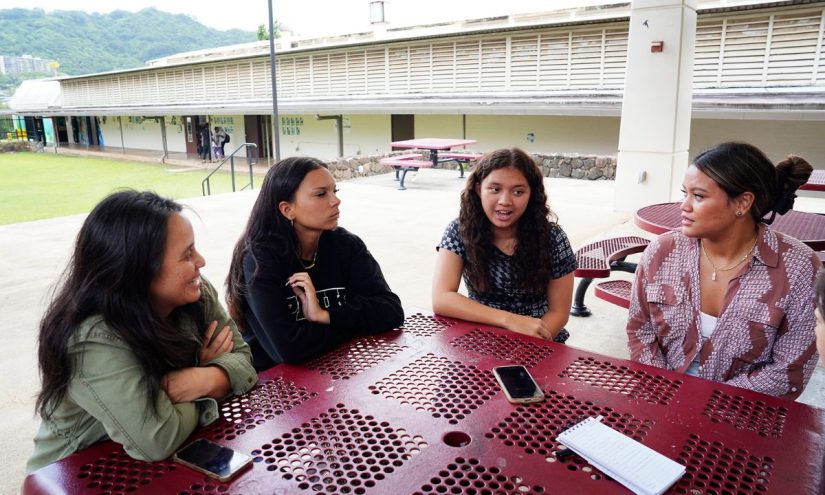
    At Castle High School, junior Tayli Kahoopii said she receives free meals, but some of her friends don’t qualify. When someone doesn’t have enough money in their account to purchase lunch, the register makes a buzzing sound — loud enough to embarrass students and, in one instance, deter Kahoopii’s friend from trying to purchase meals for a week.

    “On a daily basis, you see kids getting their food taken away, and there’s really nothing that they can do about it,” Kahoopii said, adding that it’s difficult for students to learn and focus when they don’t have access to food during the school day.

    Rep. Scot Matayoshi, who has introduced bills for the past three years proposing free school meals, said SB1300 is an important step. But he still plans on advocating for universal free school meals in the coming years, especially since it would reduce the administrative barriers schools and families face in determining who qualifies for free meals.

    Daniela Spoto, director of food equity at Hawaiʻi Appleseed, said providing all students with free school meals could also become more important with federal funding on the line. Proposed federal cuts to a program allowing schools in low-income areas to provide free meals to all children could impact 52 schools and more than 27,000 kids in Hawaiʻi, according to estimates from the Food Research and Action Center.

    “It should be a staple for our schools to have free school lunch,” said Castle junior Haliʻa Tom-Jardine, who will begin qualifying for free school meals next year. “It should be a right.”

    ‘Bad Things Are Coming’

    During the pandemic, people saw lawmakers step up and meet the needs of working families through federal initiatives like the child tax credit and free school meals, said Kayla Keehu-Alexander, vice president of community impact at Aloha United Way. Now, she said, state lawmakers need to do the same during times of uncertainty.

    “If we don’t start making some big policy changes around the cost of living, around housing, we could potentially be looking at a larger out-migration than we’ve had in the past,” she said.

    Hawaiʻi is already starting to see the possible impacts of out-migration on its schools and economy. While some people are coming back to Hawaiʻi to raise families, Keehu-Alexander said, it’s unclear if they’re joining the workforce in areas with the worst staffing shortages, like education or healthcare.

    Looking ahead to next year, Zysman said she would like to see a successful bill establishing paid family leave in Hawaiʻi, which would provide caregivers paid time off to care for their loved ones. Lawmakers have failed to pass a bill for several years, although they did approve a resolution last month establishing a working group that will study how to implement paid family leave over the next year.

    Zysman added that she’s concerned about the long-term impacts of the historic tax cut lawmakers passed last year. While she supports cuts that can make it more affordable for people to stay in Hawaiʻi, she said, she’s worried that tax breaks for the wealthiest will make it harder for the state to fund programs that can keep working families afloat.

    “In my gut, I feel like bad things are coming,” Zysman said, “and we should have acted more preemptively.”

    This story was originally published on Honolulu Civil Beat. Civil Beat’s education reporting is supported by a grant from Chamberlin Family Philanthropy.


    Get stories like these delivered straight to your inbox. Sign up for The 74 Newsletter

    Source link

  • Head Start, the federal child care program for low-income families, is turning 60 this year. Will it make it to 61?

    Head Start, the federal child care program for low-income families, is turning 60 this year. Will it make it to 61?

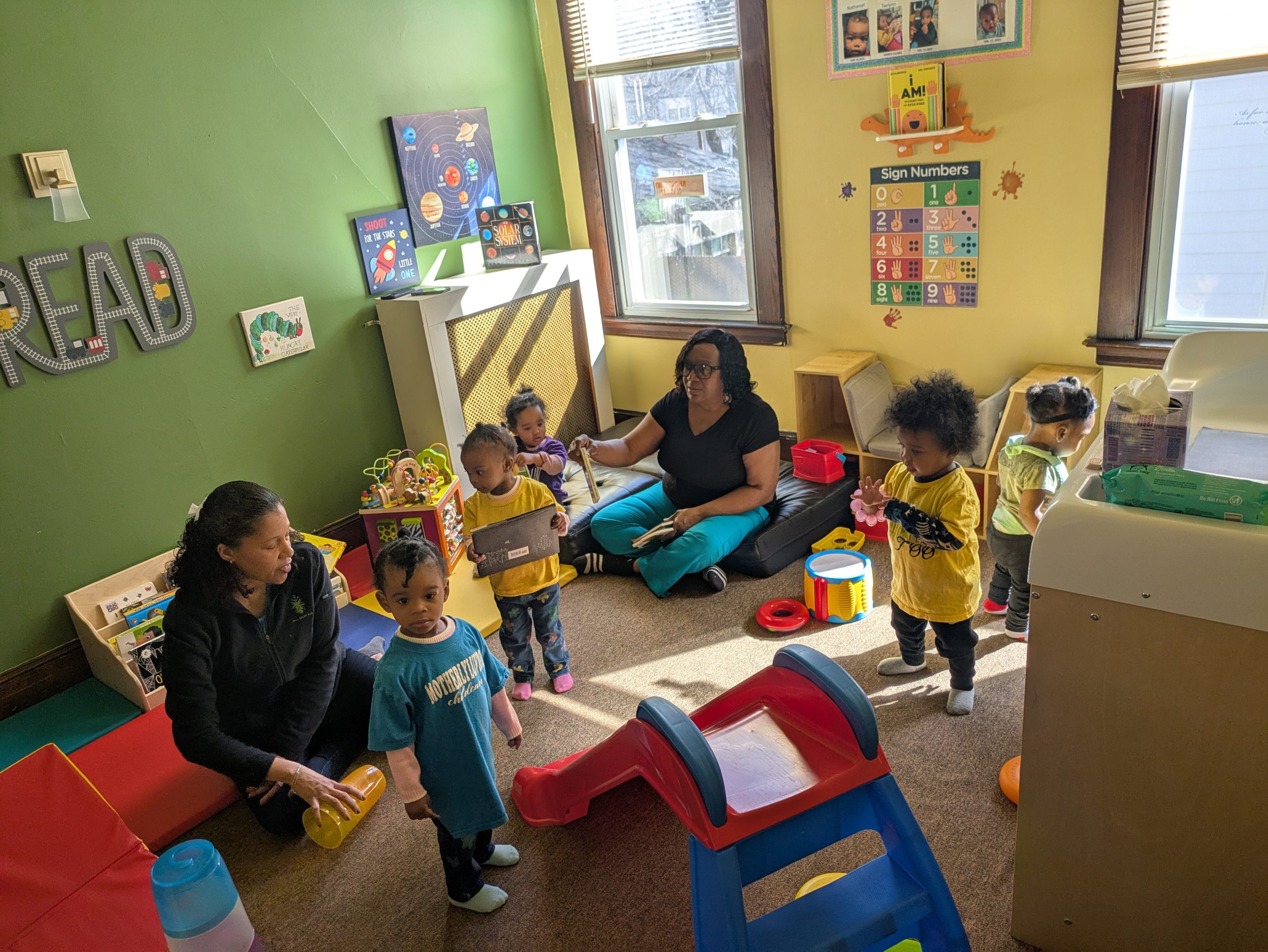
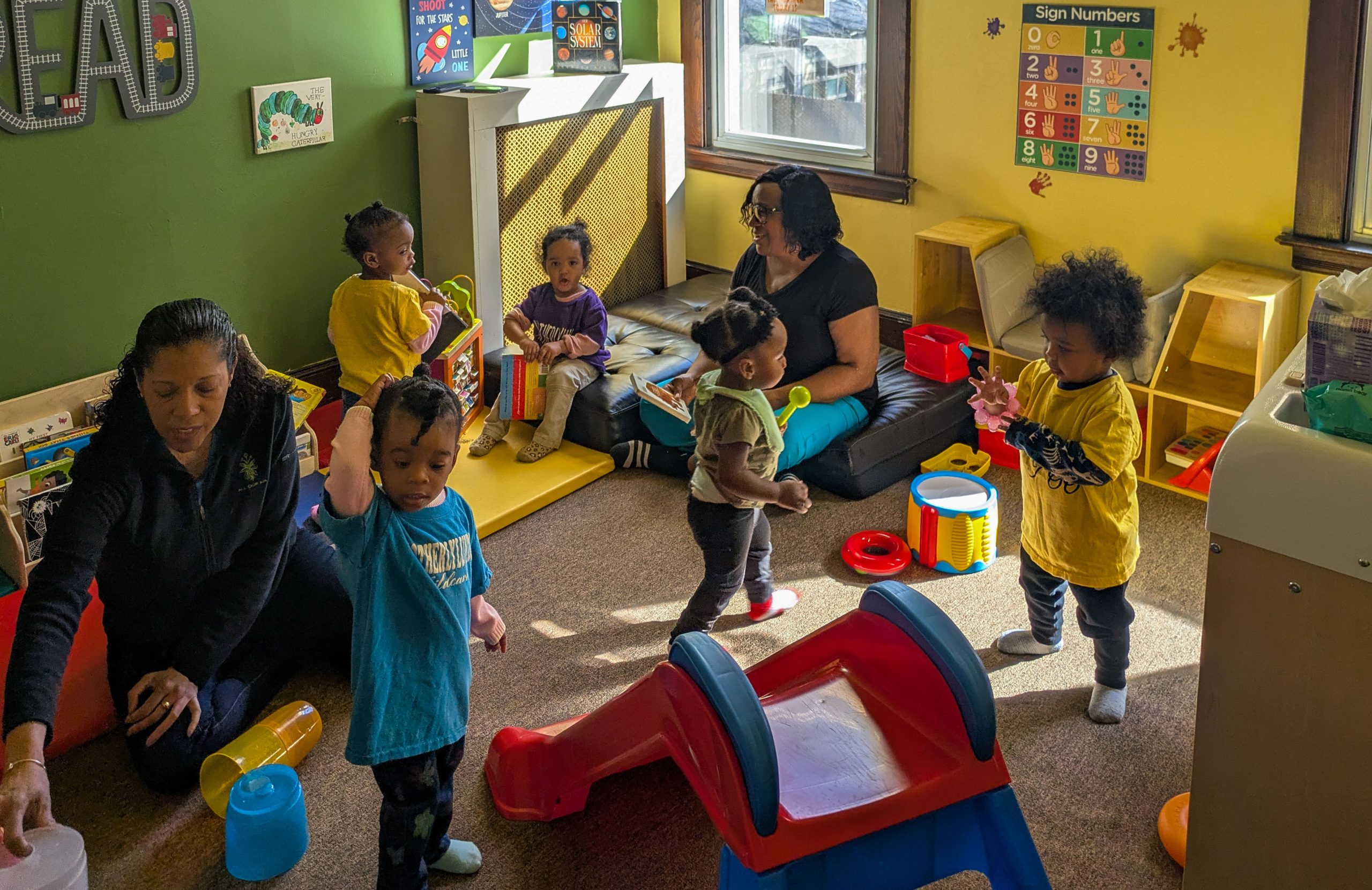
    NEW HAVEN, Conn. — Bright morning sun is streaming through her home’s windows as Sandra Dill reads a picture book about penguins to a room full of busy toddlers. While listening, the kids blow kisses, plop in a visitor’s lap, then get up to slide down a small slide.

    Dill has been running a family child care business from her home for 15 years, and every one of her 13 grandchildren has spent time here — currently it’s 20-month-old Nathaniel, who has a puff of curly hair and a gooey grin.

    “My older ones started to call it ‘grandma school,’” she said. Another one of her granddaughters, now a teenager, is returning this summer to help out.

    Four of Dill’s eight available slots are funded through Head Start. This is the federal-to-local program that funds child care and other support for the poorest families in America. (Regular Head Start serves children 3 to 5 years old; Early Head Start is for those under 3.) The program — which began right here in New Haven, Connecticut — is celebrating its 60th anniversary this year.

    It’s also never been so at risk: First a federal funding freeze hit providers, then a chunk of Head Start federal support staff were fired by the Department of Government Efficiency. On March 27, the Department of Health and Human Services announced it was cutting a further 10,000 jobs, and reorganizing the Administration for Children and Families, which administers Head Start. As of April 1, Head Start employees in five of the program’s 10 regions — Boston, New York, Chicago, San Francisco and Seattle — had reportedly been laid off, according to a LinkedIn post that day from Katie Hamm, a former official with the federal Administration for Children and Families. Hamm said there does not appear to be a transition plan laying out how Head Start programs in those regions will receive funding and support. Project 2025, the conservative policy handbook organized by the Heritage Foundation, which the Trump administration has been following closely, calls for eliminating Head Start altogether.

    “I think it’s terrible,” Dill said. “I just can’t imagine. It’s already not enough, and if this happens, it’s going to affect a lot of families that are already struggling.”

    Ed Zigler, the “father of Head Start,” was the son of immigrants from Poland. His father was a peddler and his mother plucked chickens to make a little money, according to Walter Gilliam, executive director of the University of Nebraska’s Buffett Early Childhood Institute, who counted Zigler as his closest mentor.

    When Zigler was a child, his family made its way to a settlement house in Kansas City, Missouri; these community-based charities offered a two-generation approach, caring for and educating children while also teaching English and job skills to parents and connecting families with medical care and housing help.

    “That made a huge impact on his and his family’s life,” Gilliam said.

    Related: Young children have unique needs and providing the right care can be a challenge. Our free early childhood education newsletter tracks the issues.

    As a young psychology professor at Yale, Zigler was hired as an advisor to President Lyndon Johnson to help design family programs for the federal War on Poverty. In creating Head Start, he turned to the same two-generation model he grew up with.

    To date, Head Start has served nearly 40 million children. In fiscal year 2023, the Head Start program was funded to serve 778,420 children. The program has always been underfunded: In 2020 Head Start served barely 1 in 10 eligible infants and toddlers and only half of eligible preschoolers. It’s limited to families making under the federal poverty level, which is just $31,200 for a family of four.

    The sand table at Dill’s child care is an opportunity to explore shapes, colors and textures. Credit: Anya Kamenetz for The Hechinger Report

    Still, for many of the families who do manage to make it through the doors, the program is life-changing.

    “Head Start is in every community in America,” said Cara Sklar, director of early & elementary education policy at the D.C.-based think tank New America. “It’s the original two-generation program, with wraparound support for kids. It’s really held up as a model of quality in early learning.”

    The “wraparound support” for Dill’s Early Head Start families is funded by the United Way of Greater New Haven, and comes via a network for family child care educators called All Our Kin. The network helps mothers enroll in community college and apply for housing subsidies. Dill has had mothers who lived in their cars and one who was living with her mother “six to a room,” she said. She also does regular home visits with families to talk about children’s development and support parents in goals like potty training.

    Thanks to Early Head Start, a nurse, a mental health consultant and a nutritionist all help Dill keep the kids healthy and safe. And the program also provides extra funds she can use to get back up and running if, for example, the furnace needs fixing.

    But Head Start is now facing funding challenges that go far beyond a broken furnace. “The past month has been harrowing for child care providers,” said Carolina Reyes, director of Arco Iris Bilingual Children’s Center, a preschool in Laurel, Maryland, that is a Head Start partner, and also a member of the nationwide advocacy group MomsRising. 

    The first blow to Head Start in this administration was President Donald Trump’s January 27 executive order calling for a federal funding freeze. Since Head Start is a direct federal-to-local grant program, even temporary interruptions in funding can cause programs to close their doors.

    “ Programs like mine operate on razor-thin margins,” said Reyes. “I don’t have any reserves to pull from if funding is delayed or slashed.”

    Related: Is Head Start a failure?

    While funding for most programs has resumed, Joel Ryan, the executive director of the Washington State Association of Head Start, said in a recent press conference that as late as the week of Feb. 17, one in four of his programs still had trouble accessing the Head Start payment website. 

    That same week of the 17th, almost 70 Head Start staffers were pink-slipped in the federal government’s sweep of “probationary” employees — about one-fifth of the program’s workforce. One laid-off employee, who didn’t want to give his name because he is still fighting his dismissal and fears reprisal, said he spent five years as a contractor before switching to full time this past summer, which accounted for his probationary status. He wore many hats at Head Start, doing data analytics, working with grant recipients and serving as a liaison for state partners.

    “They say we’re bloated; we could have used two more full-time people,” he said.

    The cuts, he feared, will lead to further delays in programs getting the payments they rely on, not to mention the oversight that keeps kids safe.

    “I come from the private sector. I will find another job,” he said. “The issue isn’t us, it’s the children and the families. We’ve got all these people in poverty who are getting screwed over by what’s happening.” 

    A third blow came on February 25, when the House passed a budget resolution calling for $880 billion in cuts to discretionary spending programs over the next decade, with Medicaid the prime target, along with the federal Supplemental Nutrition Assistance Program. Head Start families overwhelmingly rely on these safety net programs. The White House’s gutting of the Department of Education also threatens many services for preschoolers, especially those in special education. (This process, which maps out the next fiscal year, is separate from the recent vote to fund the government until Sept. 30.)

    “This is going from the precipice of disaster to decimating the system,” Sklar said. “All the parts that help families, from Head Start to child care to food to health care, are all being destabilized at once.”

    Gilliam said that threats to eliminate Head Start are nothing new. After designing the program during the Johnson administration, Zigler was appointed to run it under the presidency of Richard Nixon. “Some folks told him that his job was to destroy, essentially, the program that he had created,” Gilliam said.

    Related: In 2024, Head Start programs are still funded by a formula set in the 1970s

    Head Start advocates said the program has been able to fight off political challenges in the past because it is widely distributed geographically and has bipartisan support.

    “I agree that Project 2025 is a real threat to Head Start, as well as to other programs that we all care about,” said Ryan, with the Washington State Head Start association.

    “But I will say this: We have great research. We have great data. We have a great track record. We have a lot of bipartisan support in Congress. And we have parent power.”

    By coincidence, the week the House passed its budget resolution, a group of 150 Head Start parents were on Capitol Hill lobbying as part of a group called Start Early, and they met with many Republican senators.

    Tommy Sheridan, the deputy director of the National Head Start Association, struck an almost defiantly optimistic tone after the visit to lawmakers: “We still believe and have seen indicators that this administration is supportive of Head Start. And Congress as well.”

    NaMaree Cunningham and her twin sister turned two on the day of our visit. Credit: Anya Kamenetz for The Hechinger Report

    Another potential bright spot is the growth of child care support and funding on the state level. Elizabeth Groginsky is New Mexico’s first cabinet secretary for the state’s new Early Childhood Education & Care Department, and she said the pandemic woke a lot of people up to the importance of early care and education.

    “People began to understand the impact that child care has on children’s development, families’ ability to work, the overall economy,” Groginsky said.

    Since 2020, New Mexico has gone through a major expansion in home visits, child care and preschool. Vermont has made similar moves, and New York and Connecticut are heading in that direction as well. Even the deep-red state of Kentucky has expanded access.

    What all of these state-level programs have in common is that they are much more widely available to middle-class families, rather than tightly targeted to families in poverty, as Head Start still is. Historically, with programs like Medicare and Social Security, universal access has meant durable support.

    Now those states are contemplating stepping in further if the federal government drops the ball.

    “Because the state has made such an impressive commitment to child care, we’re potentially in a better spot than others,” said Janet McLaughlin, deputy commissioner for Vermont’s Department of Children and Families. And Groginsky, in New Mexico, said firmly, “The governor and the legislature — I don’t think we’ll let New Mexicans go without. They’ll find a way.”

    Support for this reporting was provided by the Better Life Lab at New America.

    Contact editor Christina Samuels at 212-678-3635 or [email protected].

    This story about Head Start was produced by The Hechinger Report, a nonprofit, independent news organization focused on inequality and innovation in education. Sign up for the Hechinger newsletter.

    The Hechinger Report provides in-depth, fact-based, unbiased reporting on education that is free to all readers. But that doesn’t mean it’s free to produce. Our work keeps educators and the public informed about pressing issues at schools and on campuses throughout the country. We tell the whole story, even when the details are inconvenient. Help us keep doing that.

    Join us today.

    Source link

  • Harvard Tuition-Free for Families With Incomes Up to $200K

    Harvard Tuition-Free for Families With Incomes Up to $200K

    Starting next academic year, Harvard will offer free tuition to students from households that earn $200,000 or less a year, according to a Monday announcement from university leaders.

    In addition, students with household incomes of $100,000 or less per year will attend Harvard for free, with the university covering not just tuition costs but food, housing, health insurance and travel expenses. Those students will also receive a $2,000 start-up grant in their first year and a $2,000 launch grant junior year to support their transitions to and from college.

    “Putting Harvard within financial reach for more individuals widens the array of backgrounds, experiences, and perspectives that all of our students encounter, fostering their intellectual and personal growth,” Harvard president Alan M. Garber said in the announcement. “By bringing people of outstanding promise together to learn with and from one another, we truly realize the tremendous potential of the University.”

    The changes make roughly 86 percent of American families eligible for Harvard financial aid, according to the announcement. The move comes at a time when the Ivy League institutions are under intense scrutiny from the Trump administration and lawmakers. Harvard joins a slew of other universities, including some highly selective institutions like the University of Pennsylvania and the Massachusetts Institute of Technology, that have unveiled expansive new financial aid plans.

    Source link

  • Encouraging Families to Promote Racial Identity and Pride in Black and Other Minoritized Children

    Encouraging Families to Promote Racial Identity and Pride in Black and Other Minoritized Children

    Dr. Donna Y. FordNow more than ever, race has become salient in politics, higher education, P-12, and the workforce, especially in this anti-DEI era. It is not uncommon for Black and other minoritized individuals to have feelings of anxiety about discussions around race, particularly for families (e.g., parents, caregivers, guardians, etc.). Having “the talk” about racism and bias has been a rite of passage for many Black children and youth in which their parents/caregivers have to discuss the intersection of race and U.S. societal issues such as how to interact with law enforcement because navigating these circumstances can easily lead to imprisonment or a life-or-death situation. Trauma is undeniable. 

    Keeping “the talk” at the forefront of this op-ed, it is imperative that families have the resources to properly discuss, show, and engage their children in active conversation about race relations so Black and other minoritized youth and families can respond appropriately, particularly in proactive ways. Moreover, families must continue to instill confidence and pride in racial identity. To set the tone, we are eager to share this Sesame Street video “Elijah Explains Race to His Son, Wes, and Elmo.”

    Children are Ready, Caregivers (and Educators) Must Be Too

    Here is an overview from Traci BaxleyResearch shows that children form race-related ideas long before they can verbalize about race and racism. It may surprise readers to know that racial awareness begins in infancy. Regardless of their age, all children get clues from their experiences (inside and outside of home) to make sense of the world. Therefore, early, intentional/proactive, honest, and age-appropriate conversations are important for promoting racial identity and pride. Here is a developmental look at children’s understanding.

    Infants show a preference for the faces of people from their own racial group as early as six months. Babies gaze longer and show happy expressions more frequently with people who look like them. Start early by introducing children to people who don’t look like them, and let children see pictures of people with a variety of skin tones and facial features.

    Toddlers use social cues such as body language and facial expressions to make sense of their world. They watch the way adults respond to differences in people and mimic our attitudes and racial biases without us even realizing it. As young as three, toddlers associate some racial groups with negative traits and use these associations to develop their own understanding about the world/environment around them. As caregivers, we need to be aware of our own biases and reactions to people whose skin color is different. Using books, videos, and music that highlight and celebrate differences.

    Preschoolers become even more aware of differences such as skin color and hair texture. They are increasingly observant of how others are similar and different from them. Toddlers compare and group/categorize people by race. Note that some children also begin to show a “pro-white” bias. Thus, they may begin to include or exclude playmates on the basis of race. Furthermore, minoritized children may associate White with wealth, power, and/or beauty.

    Dr. Erik M. HinesDr. Erik M. HinesKindergartners and first graders are beginning to notice that race is often a taboo topic – the proverbial elephant in the room. They may continue to include and exclude peers based on race. They are more aware of disturbing news, and they often ask questions about it. This is a timely opportunity to have meaningful conversations about race and racism.

    In summary, as soon as children can ask race-based questions and make comments, support their natural curiosity by answering them, even the most difficult ones.  Let them know that it’s fine/not wrong to notice skin color and to talk about race. We concur with Baxley that “the idea is to make differences normal and good!”  We are uncomfortable and not prepared, our children will notice, and experience discomfort. It will be difficult to promote racial understanding and pride, which is so needed for minoritized children in these turbulent times.

    A Final Word

    We are staunch advocates of appreciating Black culture and its legacy of innovation, education, and significant contributions to the history of the United States. Broaching race with children is imperative to ensure that they have the confidence and belief in themselves with no limitations to their talents, creativity, brilliance and genius. These conversations around race not only prepares our youth to thrive but it also normalizes how conversations on race can be proactive as opposed to reactive.

     Dr. Donna Y. Ford is Distinguished Professor of Education and Human Ecology at The Ohio State University.

    Dr. Erik M. Hines is Professor of Counseling in the College of Education and Human Development at George Mason University.

    Dr. Tanya J. Middleton is a Clinical Assistant Professor in the Department of Educational Studies at The Ohio State University. 

    Source link