Join our zero2eight Substack community for more discussion about the latest news in early care and education. Sign up now.
A state Senate panel advanced a bill Monday that would expand New Jersey’s family leave law to businesses with at least 15 workers, a change from the current threshold of 30 employees.
The bill has seen some changes since it passed the Assembly in February. It had initially lowered the worker threshold to five, to widespread criticism from the business community. Business groups remain opposed, saying that encompassing businesses with fewer than 30 employees would deter hiring and potentially force small businesses to close their doors.
“New Jersey small businesses are already shouldering some of the highest operating costs in the country, including labor, insurance, property taxes, and compliance obligations,” said Amirah Hussain of the New Jersey Chamber of Commerce. “Imposing these mandates introduces a new layer of risk and unpredictability.”
Yarrow Willman-Cole, with consumer advocacy group New Jersey Citizen Action, testified in favor of the bill, saying 1.7 million workers are not covered by the state’s current family leave law.
“We passed paid family leave 17 years ago. It took us 10 years to improve it. It should not take another decade to get this right,” Willman-Cole said. “Our laws should reflect our society’s growing caregiving needs. New Jersey is, in fact, not keeping up.”
The Senate Judiciary Committee’s Republicans and Sen. Paul Sarlo (D-Bergen), the panel’s chair, voted against advancing the bill.
New Jersey law requires that businesses provide eligible workers with up to 12 weeks of paid leave to bond with a new child or to care for a loved one. Workers pay into the fund that pays out benefits, and the benefits are based on a worker’s earnings. Workers’ jobs are protected until their leave ends.
The committee amended the bill Monday to include employees who have worked for a company for six months — current law says 12 months — and for 500 hours, down from 1,000 hours. The bill would take two years to phase in.
Elizabeth Zuckerman of the state chapter of the National Employment Lawyers Association said that whatever “small burden” the bill puts on an employer is justified to keep parents from choosing between bonding with their children or keeping their job.
“We are a pro-family country. We should support our families by allowing employers or encouraging employers to give employees time off when they need to care for a child or a family member,” Zuckerman said.
Businesses remain concerned that the bill would put an “unsustainable burden” on small employers, said Frank Jones with Big I New Jersey, which advises independent and locally owned insurance agencies.
Jones said he supports the goal of the bill to give more workers access to family leave, but when businesses with 15 employees lose one person, it’s difficult for the remaining workers to juggle the work. He also said it would drive up liability insurance costs. He stressed that paid benefits and job-protected reinstatement should be separate issues.
“The mandatory reinstatement requirement, regardless of business conditions, removes the flexibility small business employers need to survive,” Jones said. “Agencies may be forced to permanently restructure or hire to maintain client service, only to face liability for not reinstating later, even if decisions were made in good faith.”
New Jersey Monitor is part of States Newsroom, a nonprofit news network supported by grants and a coalition of donors as a 501c(3) public charity. New Jersey Monitor maintains editorial independence. Contact Editor Terrence T. McDonald for questions: [email protected].
Did you use this article in your work?
We’d love to hear how The 74’s reporting is helping educators, researchers, and policymakers. Tell us how
College recruitment is a bit like hosting a dinner party. You might set the table beautifully, prep your best dish, and send out invitations. But if you forget dessert or serve something your guests did not actually want, you will still leave people hungry.
Email is king, but do not ignore texts and portals
Email is still king, and on this, families and colleges are totally in sync. Nearly all institutions rely on it to connect with prospective students and their families (98–100%), and approximately 90% of families consider it their top way to receive college updates (RNL, 2025; RNL et al., 2025). But that is not the end of the story: lower-income and first-generation families are more likely to prefer text messages, with about 30% say getting updates on their phones suits them best. And when it comes to college portals? Most families are not shy about their feelings. Seventy-seven percent call these hubs “invaluable” for keeping track of deadlines and details.
Here is the practical takeaway. If your family portal is still in beta, you are late. The portal is the digital front porch. Families want to step in. They do not want to just peer through a window.
However, this is where institutions often fall short.
Lower-income families:They may not have unlimited data plans or reliable Wi-Fi. For them, text updates are not just convenient. They are a lifeline. Use SMS for deadlines, aid reminders, and quick check-ins.
Multilingual families: A portal that exists only in English is a locked door. Translation tools, multilingual FAQs, or videos with subtitles are not extras. They are necessities.
Busy working families: They may read email at odd hours. Keep messages concise. Make them mobile-friendly. Pack them with links that get families directly to what they need. No scavenger hunt.
Email may be the king, but texts and portals are the court. Together, they make families feel included, informed, and respected. Income, language, and schedule should not become barriers to access.
Cost clarity: The non-negotiable
Families shout this from the rooftops. Show me the money.
Ninety-nine percent say tuition and cost details are essential. Seventy-two percent have already ruled out institutions based on the sticker shock (RNL et al., 2025).
Meanwhile, many institutions are still burying their net price calculators three clicks deep or waiting until after application to share the real numbers (RNL, 2025). That delay does not just frustrate. It eliminates your campus from consideration.
Here is the practical takeaway. Put cost and aid at the forefront. Homepage, emails, campus events. If families cannot find your numbers, they will assume they are bad.
Widen the lens for a moment.
Lower-income families:They do not just compare sticker prices. They seek reassurance that aid is real, accessible, and does not come with hidden strings.
First-generation families: Jargon like “COA” and “EFC” confuses them. Use plain explanations, visuals, or short videos to demystify the process.
Multilingual families: Cost info in English-only PDFs will not cut it. Translations, bilingual webinars, and multiple-language calculators build trust.
Busy working families:Parents reading on a break or late at night do not want to hunt. Make your cost breakdowns mobile-friendly. Spell it out: “Here is the average monthly payment after aid.” No guesswork.
Clarity is equity. Make costs easy to find, easy to understand, and easy to compare. If you do, you keep your institution in the game.
Portals: High demand, low supply
Only 45% of private and 38% of public institutions offer family portals (RNL, 2025). Seventy-seven percent of families consider portals “invaluable” during the planning process (RNL et al., 2025). That is not a gap. It is a canyon.
Here is the practical takeaway. Stop debating whether you need a portal. You do. Build one. Promote it. Keep it fresh. A portal is not just another login. It is a family’s command center.
Here is why the design matters:
Lower-income families: If they juggle multiple jobs or devices, the portal must be mobile-first. No exceptions.
First-generation families: Use the portal as a step-by-step guide through the admissions maze. Clear checklists and “what comes next” nudges make all the difference.
Multilingual families: A portal only in English is a locked gate. Multilingual menus, downloadable resources, and translated FAQs turn it into a real access point.
Busy working families: On-demand matters. Record sessions, post how-to videos, and archive key communications. Parents can catch up after a late shift.
Think of your family portal as the ultimate cheat sheet. If it answers questions before families even think to ask them, you have built trust.
Campus visits still rule the court
Institutions know visits are powerful. Families confirm it. Ninety-seven percent say seeing campus in person shapes their decision (RNL, 2025; RNL et al., 2025). First-generation families value them even more.
Here is the practical takeaway. Do not just host cookie-cutter tours. Offer tailored experiences for first-generation families, local students, or academic interest groups. If your best tour story is still “this is the library,” you are missing the emotional connection.
And do not forget the families outside the “traditional tour” box.
Commuter students:Show them where they will spend their days. Lounges, commuter lockers, meal plan hacks, parking solutions. These matter.
Students working 20 hours a week to pay tuition: Highlight flexible scheduling, evening classes, and campus jobs.
Busy working families: Are you offering evening and weekend options? Can families join virtual sessions during a lunch break? If not, you are leaving them out.
The real question: Are your campus experiences built for everyone, or just for the students who can spend a sunny Thursday afternoon strolling through your quad?
Families want in, not just students
Three out of four families want at least weekly updates or timely news when it matters (RNL et al., 2025). Institutions are trying, but too often, communication still feels like a one-size-fits-all t-shirt. Technically wearable. Not flattering.
Here is the practical takeaway. Treat families as partners, not sidekicks. Share updates in plain language. Offer Spanish-language options. Spotlight ways families can support their students. Yield is not just about students. It is about family buy-in.
And remember:
Lower-income families:They may not have time to comb through long emails. Keep communication concise. Highlight financial deadlines.
First-generation families:Spell out key milestones. Provide clear “what comes next” instructions.
Multilingual families: Translate emails, texts, and portal content.
Busy working families:Send reminders multiple times of day. Record webinars. Make resources on demand.
When communication feels clear, inclusive, and personal, families lean in. When it does not, they check out. Sometimes, they cross your institution off the list.
Mind the gaps: Equity and information access
Families across the board say cost, aid, program details, and outcomes are critical. Lower-income and first-generation families face significantly larger “information deserts” when searching for them (RNL et al., 2025). Yet institutions often double down on generic email campaigns or broad digital ads. They assume everyone is starting from the same place (RNL, 2025).
Here is the practical takeaway. Equity in outreach is not just a value statement. It is a recruitment strategy. Translate materials. Send proactive aid guides. Partner with community groups to get info where it is needed most.
And remember:
Lower-income families:Scholarships and payment plan info should not be three clicks deep. Put them front and center.
First-generation families:A one-page roadmap with plain-language admissions and aid steps can level the field.
Multilingual families: One brochure in Spanish is not enough. Provide translated FAQs, videos, and multilingual staff at info sessions.
Busy working families:Host virtual Q&As in the evenings. Record them. Make sure materials are mobile-friendly.
If families cannot find or understand what they need, they will assume you do not have it. Or worse, that you do not care.
Digital tools are only as good as the content behind them
Institutions love their toys. Chatbots, SEO, and retargeted ads. These tools can be powerful (RNL, 2025). But families are not impressed by bells and whistles if the basics are missing. They want clear, easily accessible information about costs, aid, programs, and outcomes. Too often, they click into a chatbot or portal and leave frustrated because the answers are not there (RNL et al., 2025).
Here is the practical takeaway. Do not let technology become window dressing. Audit your site from a family’s perspective. Can they find costs, aid, majors, and career outcomes in under two clicks? If not, no chatbot in the world can fix it. No amount of flash will.
Think beyond the default user.
Lower-income families: Spotty internet access means your site needs to be mobile-first, fast-loading, and crystal clear.
First-generation families: Chatbots must speak plain language, not acronym soup.
Multilingual families: Add multilingual chatbot capabilities or direct them quickly to translated resources.
Busy working families: On-demand support matters. Chatbots at midnight. Video explainers that can be paused and replayed. Not just a nine-to-five phone line.
Digital tools are not about looking modern. They are about making life easier. If your tech feels like another hoop to jump through, families will bounce. If it feels like a helpful hand, families will lean in.
The big picture
The alignment is clear on some fronts. Families want email, visits, and cost clarity, and institutions largely deliver. But the gaps, portals, aid communication, and equity in outreach are where recruitment wins or loses.
Families are not just support systems. They are decision-makers. Right now, they are asking colleges to meet them with transparency, respect, and practical tools that make a complicated journey a little simpler.
In other words, if institutions want families to stay at the table, they will need to stop serving what is easiest to cook and start serving what families ordered.
Talk with our marketing and recruitment experts
RNL works with colleges and universities across the country to ensure their marketing and recruitment efforts are optimized and aligned with how student search for colleges. Reach out today for a complimentary consultation to discuss:
Johns Hopkins University announced Thursday that it’s eliminating tuition, fees and living expenses for its Homewood campus undergraduates whose families make less than $100,000 a year; students whose families earn up to $200,000 will pay no tuition. It joins a wave of other institutions—especially private, selective ones—that have announced tuition guarantees.
In a news release, the university said the change “means students from a majority of American families, including middle-class families earning above the national median household income of $87,730, can attend Hopkins at no expense.”
Further, Hopkins said, “Most families with incomes up to $250,000 will continue to qualify for significant financial aid. Even those with annual incomes exceeding $250,000 may qualify, especially when there are multiple children in college at the same time.”
Most of the university’s undergrads study on the Homewood campus, in North Baltimore. The release said the new aid levels “will go into effect for eligible current students in the spring 2026 semester and for new, incoming students next fall.”
In a message to the university community, JHU president Ron Daniels said that since businessman and former New York mayor Michael Bloomberg donated $1.8 billion to the university in 2018, Hopkins’s share of Pell Grant–eligible students rose from 15.4 percent to 24.1 percent, the highest proportion in university history.
“Our financial aid investment has continued to grow, inspired by Mayor Bloomberg’s transformative gift, with generous contributions by more than 1,200 donors who have given $240 million for financial aid at Hopkins over the last several years,” Daniels wrote. “We are in their collective debt.”
While most teachers are eager to implement the science of reading, many lack the time and tools to connect these practices to home-based support, according to a new national survey from Lexia, a Cambium Learning Group brand.
The 2025 Back-to-School Teacher Survey, with input from more than 1,500 K–12 educators nationwide, points to an opportunity for district leaders to work in concert with teachers to provide families with the science of reading-based literacy resources they need to support student reading success.
Key insights from the survey include:
60 percent of teachers are either fully trained or interested in learning more about the science of reading
Only 15 percent currently provide parents with structured, evidence-based literacy activities
79 percent of teachers cite time constraints and parents’ work schedules as top barriers to family engagement
Just 10 percent report that their schools offer comprehensive family literacy programs
Teachers overwhelmingly want in-person workshops and video tutorials to help parents support reading at home
“Teachers know that parental involvement can accelerate literacy and they’re eager for ways to strengthen those connections,” said Lexia President Nick Gaehde. “This data highlights how districts can continue to build on momentum in this new school year by offering scalable, multilingual, and flexible family engagement strategies that align with the science of reading.”
Teachers also called for:
Better technology tools for consistent school-to-home communication
Greater multilingual support to serve diverse communities
Professional learning that includes family engagement training
Gaehde concluded, “Lexia’s survey reflects the continued national emphasis on Structured Literacy and shows that equipping families is essential to driving lasting student outcomes. At Lexia we’re committed to partnering with districts and teachers to strengthen the school-to-home connection. By giving educators practical tools and data-driven insights, we help teachers and families work together–ensuring every child has the literacy support they need to thrive.”
Dear Presidents, Chancellors and OTHER Temporary Custodians of My Properties:
Greetings from the Family—I mean, the Administration. You’ve been running a nice little operation there: world-class labs, libraries, free-thinking faculty, students from all over the globe who still believe in the marketplace of ideas, all asking dangerous questions like “Why?” and “What is your evidence?”
It’s over.
As the founder of a MAJOR university, I’m here to say this: We’re gonna do things my way now.
First Order of Business: You Need My Protection
As you know, I’m a SUCESSFUL international businessman. I offer certain countries—let’s call them “friends”—deals: They pay me a modest consideration, or maybe a big, beautiful luxury jet, and I won’t slap them with tariffs to make their economy bleed out. I offer the same generous arrangement to higher ed.
Take Crooked Columbia and Brownnosing Brown—smart enough to come to the table, hand over the dough and watch my charges vanish like magic. Funding? Flowing again … for now.
High and mighty Harvard’s still holding out, though, thinking they can win a staring contest. Let’s just say their next accreditation visit is gonna be … comprehensive.
UCLA? Aka Useless College for Leftist Agendas. Rumor is my friends in D.C. have started looking real close at their books. Would be a shame if we had to start collecting on that billion the hard way.
The rest of you RADICAL LUNATIC LEFT, listen up:
Investigations into your crimes against America, like “allowing students to protest” or “letting faculty disagree with the government,” can disappear overnight … for a price.
Call it a FAVOR from a friendly accreditor.
But remember, what I giveth I can take awayeth.
I don’t do promises; I do BUSINESS. And it’s business time.
Apple, Intel, NVIDIA jump when I say jump. Universities? Child’s play.
Some say I’m an ANTISEMITISM SOCIAL JUSTICE WARRIOR on campus and sure, I like the Jews. I’ll take the compliment, right alongside credit for sprucing up big, beautiful Confederate statues.
My war on hate? Let’s just say it has … range. And if a few very fine people happen to be nearby, standing back and standing by, waiting for the signal to help CLARIFY my position, well, that’s just business.
We Don’t Need Stuck-Up Elites Who Think They’re So Smart
That NASTY WOMAN at the Bureau of Labor Statistics? The one who brought me cooked-up job numbers I didn’t like? FIRED.
That Georgia political hack who couldn’t find enough votes? ENEMY OF THE PEOPLE!
Judges who cross me? Death threats from my cyber goons have them looking over their shoulders.
Your degree, your Nobel Prize, your teaching awards—SAD! I’ve built towers with my name in gold, hosted the No. 1 reality show on television, and put my face on steaks, sneakers and Bitcoin.
So you publish in that fake Ranger Rick Nature magazine. I don’t care if your lab just cured cancer; if your research questions don’t support my worldview, your grant is pulled and your lab reassigned to our friend of the family on the board, Mikey, who’s very confident about his opinion on quantum biology.
IRB? More like, “I’m Rich, Buddy.”
Loyalty—to ME—is the only credential that matters.
WOKE Faculty Hiring and Student Admissions: GONE-ZO
MARXIST MANIACS who lack American values and good Christian sensibilities have no business shaping our young peoples’ minds. Cover letters with Bible verses or Lee Greenwood lyrics will receive special consideration.
After I cut more big, beautiful deals with my AI buddies, the bots will weed out candidate files with the words “inclusive excellence” or “diversifying the pipeline.”
No more “global citizen” snowflake CRAP. In fact, pretty soon, it’s gonna be all AI at the podium—no critical thinking, no unions, no problem.
International students are allowed, but only RICH ones, with no subversive ideas, like democracy, on their social media feeds. No students from the shithole countries—you know the list. (Come to think of it, I don’t like any country, so being from one of our so-called allies won’t help either.)
NO “underrepresented” anything. ONLY OVERREPRESENTED. Racial disadvantage, adversity, “lived experience” or some “community-based” qualifications? FORGET ABOUT IT.
We’re running a university, not a sob story contest!
You want to admit a Latina who speaks three languages and started her own nonprofit? Great—as long as all three languages are English and she’s truly FEMALE.
And while we’re at it, ban “optional” diversity statements. The only statement that matters is your pledge of allegiance. To me.
Academic Freedom, Suckers!
You thought academic freedom meant hiring the best scholars, encouraging debate and letting a thousand ideas bloom.
HILARIOUS!
From now on, FREEDOM means freedom to offer academic programs that look just like the ones we had in 1952, when America was great (minus the jazz) and McCarthy knew what higher education should look like.
It took Viktor 10 YEARS to bring his universities to heel. I’m doing it in six MONTHS, results like nobody’s ever seen before.
“woMEN’s” studies? GONE.
African American literature course? Replaced with Great Books by Even Greater White Men.
Faculty scholarship on critical race theory, gender equity or, God forbid, climate science, will get an automatic tenure-denial stamp. Come to think of it, tenure? What’s that? More like Permanent Welfare for America-Hating Communists.
Just watch what you publish, pal. I can make tenure go away real fast, the same way I disappeared USAID.
My good friend VICE CHANCELLOR Rufo will replace it with rolling one-year contracts, renewable upon click-through loyalty oath training modules.
Also, just a heads-up. Any course material still using the outdated term “Gulf of Mexico” will be flagged in our next surveillance round. My top patriot and loyal adviser, Stephen, suggests: “The Gulf of AMERICA FIRST.” And you so-called political scientists, get your facts right on who won the 2020 election. You’d best update those course materials, nice and clean, and nobody’s sabbatical turns into an extended stay at Alligator Alcatraz.
Capishe? I don’t want to have to slam any more heads together.
It’s time you got the picture, EGGHEADS: Knowledge isn’t power. Power is power.
Thank you for your attention to this matter!
Your Don
P.S. I’ll let you keep your football program. You’re welcome.
Jennifer Lundquist is a professor of sociology at the University of Massachusetts Amherst. Her satirical observations in this essay are hers alone and not intended to represent the views of her employer.
More Californians are using paid family leave benefits to care for a child after a new state law that increased payments for parents went into effect in January, according to new state data.
Claims in the first two quarters this year were up about 16%, compared with the same time period last year, according to data provided to LAist from the California Employment Development Department.
Anne Chapuis, public information officer for EDD, said several factors contributed to the uptick.
“The January 2025 benefit rate adjustment has led to higher benefit amounts for eligible customers. Also, we typically see a higher seasonal number of claims submitted near the end of each calendar year,” Chapuis said in an email.
While claims tend to tick up at the beginning of every calendar year, the uptick in the first quarter of 2025 was nearly 25% higher than the same period last year.
Before this year’s change, most workers got up to 60% of their income when they took time off to care for a new baby. Now, many workers can get up to 90% of their wages.
The changes stemmed from legislation in 2022 that aimed to allow more families to be able to take leave, especially low-income workers. Prior analysis showed that higher-income workers were using paid family leave benefits at much higher rates than workers making less than $20,000 a year.
For those making under $20,000, claims were up about 2%, while claims for those making under $60,000 were up 17%.
How paid family leave works
Currently, moms and dads can get up to eight weeks of paid family leave to bond with a new child. That’s in addition to the paid time off pregnant people get before and after giving birth to a child.
The paid family leave program in California is funded through the State Disability Insurance program, which covers about 18 million employees in the state. Workers pay into this fund with 1.2% taken out of their paychecks (it usually shows up on paystubs as “CASDI”).
Workers who make less than $63,000 a year can get up to 90% pay — workers who make above that get 70%.
Editor’s Note: While this article comes from a nurse’s perspective, the heart of it—caring deeply for others while trying to care for yourself—will resonate with educators in every setting. The self-care reminders shared here are meaningful and relevant, no matter what or whom you teach.
As nurses, we train to provide care for others—whether it is in the hospital, clinic, or community. However, many of us also play the role of caregiver within our own families, particularly during times of tremendous grief and stress. Whether it is caring for a sick loved one, supporting a family member through a crisis, or managing the aftermath of a loss, the emotional and physical demands of being the nurse in the family can feel overwhelming. In these challenging times, it is crucial to maintain balance—not only for the sake of those we care for, but also for our own well-being.
This article will explore how nurses can manage the delicate balance of caring for family members while prioritizing their own health and emotional resilience in the face of grief and stress.
The Emotional Toll of Being the Family Nurse
Grief and stress affect individuals differently, but for the nurse who is also a family member, the role can carry extra weight. The skills that we so readily apply in a professional setting—compassion, empathy, attentiveness—become deeply personal when applied to family members.
Watching a loved one suffer or navigating the complexities of a loved one’s health challenges can trigger feelings of helplessness, sadness, and frustration (Bijnsdorp, Onwuteaka-Philipsen, Boot, van der Beek, & Pasman, 2022). At the same time, the desire to “fix” or “care for” can amplify these emotions, making it harder to separate our professional instincts from the personal bond we share with the individual.
The emotional toll of being the nurse in the family can exacerbate the sense of responsibility, particularly when there are multiple tasks to juggle, such as managing medication, coordinating care, and offering emotional support. In addition to the physical and logistical demands, the emotional labor of caregiving can lead to burnout, depression, or even anxiety (Mir, Bakht, and Shah, 2024).
Acknowledging the Need for Self-Care
As a nurse, you are educated in taking care of others, but it is easy to forget that caring for yourself is equally important. The notion of self-care often takes a backseat when caregiving becomes all-consuming (Trees Bolt, 2025). However, neglecting your own needs amid grief and stress can be detrimental to both your own health and your ability to care for your loved one effectively.
To maintain your physical, emotional, and mental well-being, it is essential to establish self-care practices, even during the most demanding times. Here are some strategies for managing stress and grief while continuing to be there for your family:
Set Boundaries
It can be difficult to set boundaries when you are deeply engaged in the care of a loved one. However, it is essential to recognize that you cannot be available to others 100% of the time. Setting boundaries means giving yourself permission to take breaks, asking for help, and recognizing when you need rest. For example, you may need to limit the number of visitors or care tasks during certain hours to allow for self-care time. Clear communication with family members about your needs can help prevent feelings of guilt or resentment from building up.
Delegate Tasks When Possible
As a nurse, your training and education equips you to care for others, but it is crucial to remember that tending to your own well-being is vital; caregiving does not have to be a solo endeavor. Delegate tasks, when possible, whether it is managing household chores, running errands, or organizing transportation for appointments (Alanazi, Shaban, Ramadan, Zaky, Mohammed, Amer, & Shaban, 2023). Family members, friends, or professional services can offer support—whether it is a neighbor preparing meals, a sibling helping with daily routines, or a caregiver service stepping in for several hours. Remember, delegating is not a sign of weakness; it is a way to preserve your own energy and ensure that you can give quality care without burning out.
Seek Emotional Support
Grief and stress can feel isolating, and it is easy to fall into the trap of thinking you must carry the burden alone. Seek support from others who understand your emotional and physical needs (Fallek, Tattelman, Browne, Kaplan, & Selwyn, 2019; Rahmani, Hosseinzadeh, & Gholizadeh, 2023). This could include talking to a trusted friend, joining a support group, or speaking with a therapist who specializes in grief or caregiver stress. Sharing your feelings with others allows you to process emotions that may be difficult to express otherwise.
As a nurse, you understand the importance of emotional health, but it is easy to neglect your own emotional needs when you prioritize taking care of others. Regularly checking in with yourself can help you identify any signs of distress or burnout before they become overwhelming.
Practice Mindfulness and Stress-Relief Techniques
In times of grief and stress, practicing mindfulness or stress-relief techniques can be incredibly beneficial. Simple practices like deep breathing, meditation, or even a quick walk outside can help reduce anxiety and bring you back to the present moment (Kong, Tong, & Lui, 2024).
Yoga, journaling, or other forms of creative expression can also be valuable ways to process emotions in a safe and constructive manner.
Mindfulness helps counteract the tendency to become overwhelmed by the magnitude of the situation. By staying grounded, you can better manage your responses to stress and provide more compassionate care to your loved one.
Maintain Healthy Routines
During times of grief and caregiving, it can be tempting to put personal routines on hold. However, maintaining healthy habits—such as regular sleep, eating nutritious meals, and staying physically active—can significantly improve your ability to cope with stress (Bodziony, 2022). Sleep and nutrition are critical to emotional resilience, and regular physical activity releases endorphins, which can improve mood and reduce feelings of anxiety or sadness.
While it may feel impossible to prioritize exercise or sleep when you are juggling caregiving responsibilities, even small steps—like taking short walks or prioritizing a 10-minute rest period—can help replenish your energy and improve your ability to care for others.
Acknowledge and Accept Your Emotions
Being the nurse in the family does not mean you have to suppress your emotions. It is important to recognize and accept your feelings of grief, sadness, frustration, and even anger. These emotions are a normal part of caregiving and loss. By acknowledging and processing your feelings, you can better manage them and avoid emotional exhaustion (Fallek, Tattelman, Browne, Kaplan, & Selwyn, 2019). Give yourself permission to feel what you are feeling without judgment.
If you experience moments of doubt or guilt about needing time for yourself, remind yourself that you are better equipped to care for others when your own needs are met. Taking care of yourself is not selfish; it is necessary for sustaining your ability to support your family in the long term.
Conclusion
Being the nurse in the family during times of grief and stress is a profound responsibility that requires resilience, compassion, and self-awareness. However, it is vital to remember that you can only offer the best care to others when you take the time to care for yourself. By setting boundaries, delegating tasks, seeking support, practicing mindfulness, and maintaining healthy routines, you can better navigate the challenges of caregiving while preserving your own well-being. Grief and stress are inevitable, but by taking initiative-taking steps to care for yourself, you can continue to be a source of strength for your family while ensuring that you remain emotionally and physically capable of facing the difficult road ahead.
Angie Timm earned her BSN (1991), from OSF St. Francis Medical Center College of Nursing in Peoria, IL. and MSN (2011) from University of Phoenix with an emphasis in Health Care Education. Angie Timm is an Assistant Professor at Saint Francis Medical Center College of Nursing, Peoria, Illinois.
Dr. Maureen Hermann earned her BSN (1995), MSN (2011), and DNP (2016), with an emphasis in leadership, from Saint Francis Medical Center College of Nursing in Peoria, IL. Dr. Maureen Hermann is an Associate Professor at Creighton University, Omaha, Nebraska.
References
Alanazi, M.A., Shaban, M.M., Ramadan, O.M.E., Zaky, M.E., Mohammed, H.H., Amer, F.G.M., & Shaban, M. (2024). Navigating end of life decision making in nursing: A systematic review of ethical challenges and palliative care practices. BMC Nurs 23, 467. https://doi.org/10.1186/s12912-024-02087-5
Bijnsdorp, D. M., Onwuteaka-Philipsen, B. D., Boot, C. R. L., van der Beek, Al, J., & Pasman, H. R. W. (2022). Caregivers burden at the end of life of their loved one: Insights from a longitudinal qualitative study among working family caregivers. BMC Palliative Care, 21(142). https://doi.org/10.1186/s12904-022-01031-1
Fallek, R., Tatelman, E., Browne, T., Kaplan, R., & Selwyn, P. (2019). Helping healthcare providers and staff process grief through a hospital-based program. American Journal of Nursing, 119(7), 24-33.
Kong, Y., Tong, Z., & Liu, L. (2024). Nurses’ self-care levels and its related factors: A cross-sectional study. BMC Nurs 23, 835. https://doi.org/10.1186/s12912-024-02510-x
A version of this essay originally appeared on Robert Pondiscio’s SubStack.
A recent report from the University of Virginia—Good Fathers, Flourishing Kids — confirms what many of us know instinctively but rarely see, or avoid altogether, in education debates: The presence and engagement of a child’s father has a powerful effect on their academic and emotional well-being. It’s the kind of data that should stop us in our tracks — and redirect our attention away from educational fads and toward the foundational structures that shape student success long before a child ever sets foot in a classroom.
The research — led by my AEI colleague Brad Wilcox and co-authored by a diverse team that includes another AEI colleague, Ian Rowe — finds that children in Virginia with actively involved fathers are more likely to earn good grades, less likely to have behavior problems in school, and dramatically less likely to suffer from depression. Specifically, children with disengaged fathers are 68% less likely to get mostly good grades and nearly four times more likely to be diagnosed with depression. These are not trivial effects. They are seismic.
Most striking is the report’s finding that there is no meaningful difference in school grades among demographically diverse children raised in intact families. Black and white students living with their fathers get mostly As at roughly equal rates — more than 85% — and are equally unlikely to experience school behavior problems. The achievement gap, in other words, appears to be less about race and more about the structure and stability of the family.
Figure 9 from Wilcox et al., Good Fathers, Flourishing Kids
This may be a surprising finding to some, but not to William Jeynes, a professor of education at California State University, Long Beach, whose meta-analyses have previously demonstrated the outsized academic impact of family structure and religious faith. (The new UVA report does not study the role of church-going).
As I wrote in How the Other Half Learns, Jeynes’ work highlights how two-parent households and religious engagement produce measurable benefits in educational achievement. “When two parents are present, this maximizes the frequency and quality of parental involvement. There are many dedicated single parents,” Jeynes has noted. However, the reality is that when one parent must take on the roles and functions of two, it is simply more difficult than when two parents are present.” Jeynes’ most stunning finding, and his most consistent, is that if a Black or Hispanic student is raised in a religious home with two biological parents the achievement gap totallydisappears—even when adjusting for socioeconomic status.
My colleague Ian Rowe has been a tireless advocate for recognizing and responding to these patterns. He has longargued that NAEP, the Nation’s Report Card, should disaggregate student achievement data by family composition, not just by race and income. That simple step would yield a more honest accounting of the challenges schools are facing — and help avoid both unfair blame and unearned credit.
Yet this conversation remains a third rail in education. Many teachers and administrators are understandably wary of saying too much about family structure for fear of stigmatizing children from single-parent households, particularly in settings where single-parent households are dominant. Rowe has also faced resistance to his efforts to valorize the “Success Sequence,” the empirical finding that graduating high school, getting a full-time job and marrying before having children dramatically increases one’s odds of avoiding poverty. But being cautious is not the same as being silent, and it’s not compassionate to pretend these dynamics don’t matter when the data so clearly shows that they do.
None of this absolves educators of their duty to reach and teach every child. But it does suggest we should be clear-eyed in how we interpret data and set expectations. Teachers, particularly those in low-income communities, often shoulder the full weight of student outcomes while lacking the ability to influence some of the most powerful predictors of those outcomes. That’s frustrating — and understandably so.
Citing compelling evidence on fatherhood and family formation is not a call for resignation or excuse-making. It’s a call for awareness and intelligent action. While schools can’t influence or re-engineer family structure, teachers can respond in ways that affirm the role of fathers and strengthen the school-home connection. They can make fathers feel welcome and expected in school life — not merely tolerated. They can design family engagement activities that include dads as co-participants, not afterthoughts. They can build classroom cultures that offer structure and mentoring, especially to students who may lack it at home.
And maybe — just maybe — the field can overcome its reluctance to share with students what research so clearly shows will benefit them and the children they will have in the future. Rowe takes pains to note his initiative to teach the Success Sequence is intended to help students make decisions about the families they will form, not the ones they’re from. “It’s not about telling them what to do,” he says, “it’s about giving them the data and letting them decide for themselves.”
This leads to a final point, and for some an uncomfortable one: If we truly care about student outcomes, perhaps we should be willing to support the institutions that reliably foster them. And that includes religious schools.
Religious schools — particularly those rooted in faith traditions that emphasize marriage, family life and moral formation — often create environments where the presence of fathers and the reinforcement of shared values are not incidental but central. A recent analysis by Patrick J. Wolf of the University of Arkansas, published in the Journal of Catholic Education, found that adults who attended religious schools are significantly more likely to marry, stay married, and avoid nonmarital births compared to public‑school peers. The effects are most pronounced among individuals from lower‑income backgrounds.
In states with Education Savings Accounts (ESAs) and other school choice mechanisms, we have an opportunity — perhaps an obligation — to expand access to these institutions. That’s not merely a question of parental rights or religious liberty. It’s a matter of public interest. If these schools produce better education and social outcomes by encouraging family formation and reinforcing the value of fatherhood, the public benefits — even if instruction is delivered in a faith-based context. Said simply: The goal of educational policy and practice is not to save the system. It’s to help students flourish.
So yes, let’s fund fatherhood initiatives. Let’s run PSAs about the importance of dads. But let’s also get serious about expanding access to the kinds of schools — whether secular or religious in nature — that support the kind of family culture where children are most likely to thrive. Because if we follow the evidence where it leads, we must conclude that the biggest intervention in education is not another literacy coach or SEL curriculum. It’s dad.
State legislators from both parties want to expand family child care — the home-based sector of licensed child care, which has shrunk by more than a third since 2018. Both the House and Senate budget proposals include pilots to open new programs to meet the needs of families and employers.
For the past two years, a team from the nonprofit Southwestern Child Development Commission (SWCDC) has done just that, creating North Carolina’s first statewide system of support for family child care. In the past year, the organization has helped launch 27 new family child care programs, 20 of which are open, creating at least 160 new slots for children. Two are the first family child care programs in their counties.
Since September 2023, the team has awarded start-up grants to another 26 programs and business sustainability grants to 38 programs. It has created the first statewide family child care mentorship program, regional communities of practice, and a marketing campaign that has garnered interest from more than 200 prospective providers since April.
As state leaders ask how to improve child care access and affordability, the project’s lessons should carry forward, said Daniel Bates, the statewide project’s manager.
“I just really felt like we’ve done something here, and I hope that, no matter what, it still continues, because family child care is so incredibly important,” Bates said. “And they are part of early childhood education.”
‘People that will be around for a while’
Expanding family child care takes one-on-one support for new providers who often bring a passion for children but little knowledge of the complex regulations and business challenges that come with starting and operating a program, the project leaders said. It also requires funding.
In 2024, SWCDC, a nonprofit focused on early care and education based in western North Carolina, was awarded $525,000 from the Division of Child Development and Early Education (DCDEE) from legislative pilot funding to expand access to family child care. The project’s expected output was to help 18 programs get started. Instead, it has helped launch 27 programs by awarding grants to cover start-up costs.
The grants ranged from $5,000 to $20,000 depending on the providers’ needs and the strategic goals of the project. The average grant was about $13,000.
Providers also spent their own money to open their programs outside of the grants. A survey of some of the providers found that most had spent between $1,000 and $5,000 before receiving grants to prepare their homes and buy materials.
The new providers are in 19 counties. In Alleghany and Montgomery counties, grant recipients will be the only family child care providers in their counties. Two providers speak Spanish fluently, according to the project leaders. At least 18 have college degrees. Four of the new providers were under 30 years old. Six were in their 30s; 10 were in their 40s.
“These are people that will be around for a while,” said Vickie Ansley, SWCDC’s Child Care Resource & Referral (CCR&R) regional programs manager and family child care in-home program activity coordinator.
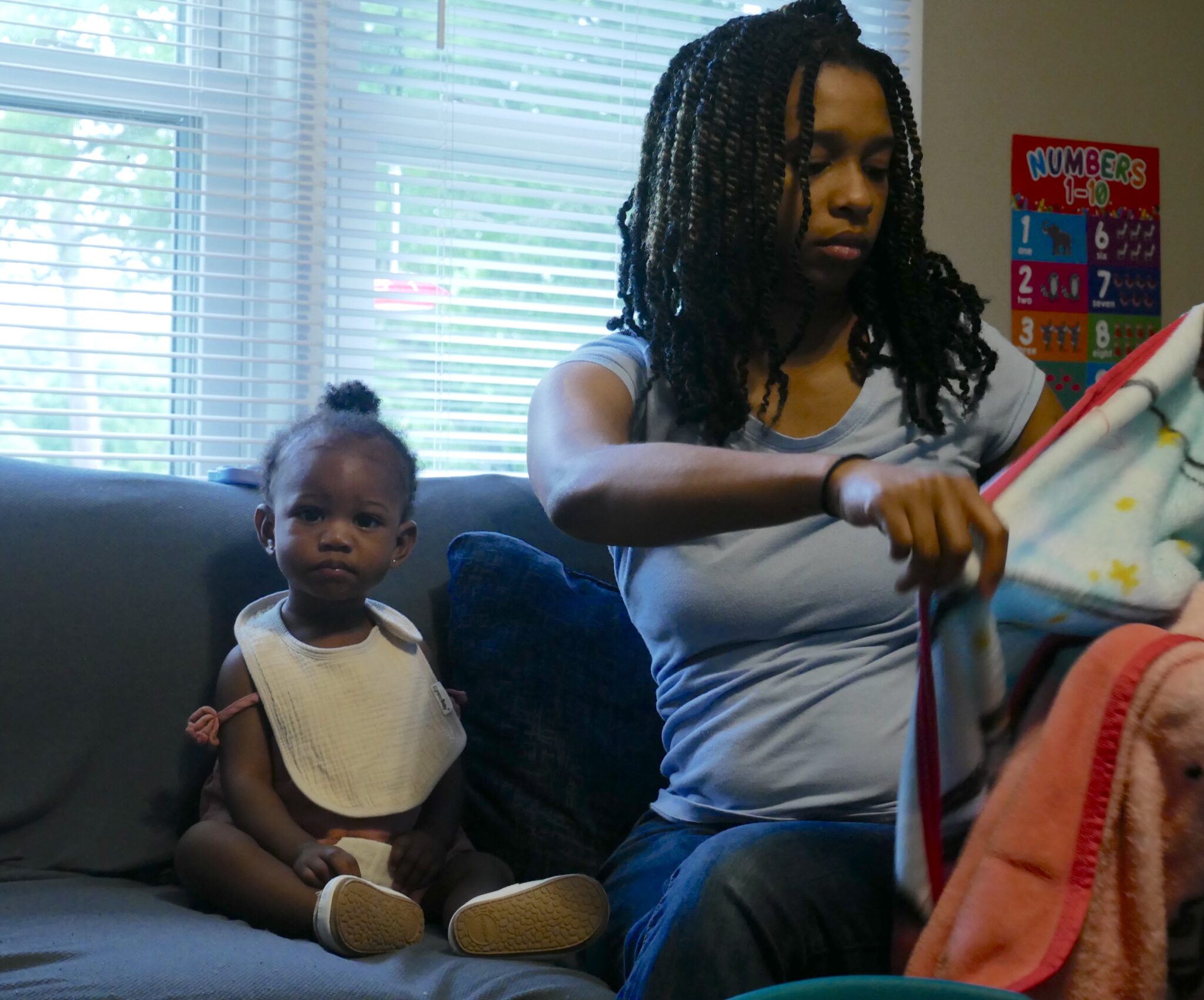
Danielle Dixon wakes up students from nap time at Helen Cole’s Day Care. (Liz Bell/EducationNC)
That grant funding was layered onto a larger statewide family child care project the organization has been leading since February 2023 through a separate $3 million contract with DCDEE from the CCDF, the federal funding stream that helps states raise the quality of child care and helps working families afford it.
The statewide project had many components, including start-up grants of up to $10,000 and business grants of up to $5,000 for access to business training, software, or devices to manage programs. It provided 64 professional development workshops to providers on a range of issues. It also created a framework for family child care substitute pools and a database of zoning contacts and information.
Hands-on support from regional consultants
The crux of the project, however, was all about hands-on support and community building, the project leaders said. The project funded 17 family child care consultants who reached 477 providers in 73 counties with coaching and consultation.
The consultants, trained in the specifics of owning and operating a family child care program, were embedded in the 14 regional CCR&R hubs covering all 100 counties.
“We’re talking about people located in those communities,” Ansley said. “They know the (providers), or they know somebody who knows them.”
Helen Cole, a family child care provider in Taylortown, says the grants she received from Southwestern Child Development Commission helped her buy high-quality materials. (Liz Bell/EducationNC)
The PDG contract is in process but will be awarded to Acelero Charitable Foundation “in collaboration with multiple agencies that support family child care.” It will focus on increasing quality and family engagement, the spokesperson said.
DCDEE employs licensing consultants who meet with all types of potential child care owners to begin the licensure process. The licensing consultants began recommending reaching out to the regional family child care consultants to new providers.
The family child care consultants then could provide knowledge specific to family child care, dedicate time and energy to decipher the complexities of starting and sustaining a business, and offer support that was independent from regulatory oversight and compliance. Some of the consultants were former family child care providers themselves.
“Prior to that, if an agency had capacity, then they provided support,” Bates said. “The services were somewhat limited, whereas this was full 100% dedication for family child care.”
The regional consultants received business training to advise providers on budget planning, financial reports, marketing, and recruiting and retaining staff.
Kathleen Hoffler, a regional consultant at the Partnership for Children of Cumberland County who once owned a family child care home, described the role as her “dream job.”
Hoffler said she has helped providers take better care of their businesses, their children, and themselves. She encouraged providers to take time off and to reach out for help.
“If you’re having issues with enrollment, if you’re having issues with collecting payments from parents, if you’re having behavior issues with kids or you’re worried that one of your kids might need some developmental screening, and you don’t have anybody to talk that out with, it’s real easy to get discouraged and possibly decide it’s not for you and you’re going to close your program,” Hoffler said.
The family child care consultants connected providers to the pilot grant opportunities and helped them budget what they needed and how they should spend the funding.
Since the consultants were embedded in CCR&R agencies, they could connect providers with a variety of professional development opportunities and resources.
And they connected providers to mentors — seasoned family child care providers who provided a listening ear and advice on overcoming obstacles — and to communities of practice, regional teams that met to share ideas and support one another.
Annette Anderson-Samuels, owner of Phenomenal Kids Child Care Services, a family child care home in Kings Mountain, was one of those mentors. She said her advice to two new providers on how to advertise their programs kept them from closing. She recently helped a provider navigate a tough conversation with parents who were not following her policies.
“It’s to help each other become better at what we do as child care providers,” Anderson-Samuels said.
There were 22 mentors and 44 mentees across the state. In his decades working in early childhood, Bates said the group has been a standout.
“They’ve crossed county lines to go help each other in person,” he said. “The interest and the willingness, wanting to improve themselves, is really out there if they have the opportunity to do that.”
‘The lost segment of early childhood education’
The number of family child care programs, child care businesses within a residence, has fallen by about 36% since 2018, compared with an overall 15% decline in all types of licensed child care.
As a generation of providers age out of the work, a lack of awareness, funding, and support — along with increased regulation — has kept new providers from entering the field, project leaders said.
The team was intentional about listening to providers’ experiences and needs before developing a system of support.
Helen Cole said her family child care home has better equipment and provides higher-quality care because of the support she received from the Southwestern Child Development Commission’s family child care projects. (Liz Bell/EducationNC)
Many brought up the low rates that family child care providers receive per child to participate in the state’s subsidy program. These rates, the state has found, do not cover the full cost of providing child care in any setting. Home-based programs receive lower amounts per child than centers. And providers in rural and low-income areas often receive lower rates than those in higher-income counties.
In rural areas where market rates are lower, “even though we need family child care in those communities desperately, market rates are a hindrance,” said Lori Jones-Ruff, SWCDC’s regional programs manager.
Jones-Ruff also sits on Gov. Josh Stein’s Task Force on Child Care and Early Education, where members have discussed the need for higher subsidy rates and a statewide floor rate that would level the playing field among counties. Research has shown the geographic disparities are wider than place-based differences in cost.
“That’s not just a center issue,” she said. “It’s for family child care as well.”
Low funding from public sources and private tuition leads to low compensation for family child care professionals. The median wage for home-based providers in 2023 was $10.20.
The team also heard about obstacles due to HOA rules and zoning regulations. They found that local ordinances were putting up barriers to new programs in some places. Septic tank requirements were among the most common and most expensive problems.
“(Providers) have recognized, ‘I don’t really need to run to Raleigh; some of the challenges I have are really just in my own backyard, and I just need to talk to my town or county,’” Bates said.
The team heard about the isolation many providers feel, being alone in their homes all day without a network to air ideas or lean on when challenges arise. Providers said they did not feel respected or supported by the state.
“Historically, there was a huge emphasis put on center-based care in North Carolina,” Jones-Ruff said. “Homes did not feel that they were as valued and as supported as center-based. And so there was a period of time where they really felt like they were kind of the lost segment of early childhood education in North Carolina.”
So the team built a strategy based on both funding and relationships.
‘Like a prayer answered’
For Helen Cole, that assistance and funding was key to opening her family child care home in Taylortown in Moore County.
“I just feel like this wouldn’t have been possible without the support and the funds,” said Cole, who recently earned her four-star license to care for children from infancy to 12 years old at Helen Cole’s Day Care.
She received more than $17,000 to start her program from the legislative pilot funding. She bought new outside equipment, furniture, dramatic play sets, age-appropriate toys and books, a new kitchen faucet, a state-approved curriculum, and a new laptop.
Cole heard about the potential grant funding for start-up costs from the state licensing consultant. She was also connected with Hoffler.
Students at Helen Cole’s program work on their counting skills. (Liz Bell/EducationNC)
Cole was excited to open after hearing about a local demand for second-shift care. After retiring as a substitute teacher in her local school district, she needed more income and was eager to fill a community need.
But after her initial meeting with a licensing consultant, she received a long checklist of everything she had to do. She said she felt overwhelmed.
“It was just so much information,” she said. “There are things on the website, but how do you adjust it for your day care?”
Plus, Cole had experience helping in her sister’s child care program, but she did not know the ins and outs of operating a small business. Even with a background in accounting, she knew the role would be challenging. So she reached out to Hoffler for an in-person meeting.
“It was like a prayer answered,” Cole said. “She broke it down for me.”
Hoffler helped Cole navigate the tough decisions that come with operating a business from your home, such as how much living space she was willing to sacrifice and what renovations were needed. And she helped Cole create a budget to apply for grant funding through the legislative pilot. She gave her ideas on high-quality and age-appropriate materials.
She also connected Cole with a mentor, helped her with business skills, and connected her with other resources through the Smart Start partnership.
Hoffler has helped her advertise her program and hold on through the ups and downs of enrollment, Cole said. Because she needed to hire another teacher, her niece Danielle Dixon, Cole said she is breaking even but has not started making a profit or been able to pay herself. She said she has been advised that it can take nine months to a year.
She said low subsidy rates and parents’ inability to afford her private rates have also been financially challenging. She serves one student whose parents are both working, making too much to qualify for a subsidy, but cannot afford her private rate of $200 per week. She only charges that family $85 per week.
Danielle Dixon, a teacher at Helen Cole’s Day Care, has worked in child care for 11 years. (Liz Bell/EducationNC)
Dixon, who has been working in child care professionally for 11 years but informally since she was 16 years old, has both of her children enrolled at the program. Dixon said her grandmother and mother, as well as three of her aunts, have worked in child care. She decided to partner with her aunt, Cole, to return to working with young children in a creative, exploratory environment after working in public schools.
Helen Cole’s Day Care opened in December in the home she was raised in, and where her mother used to take care of children whose parents were at risk of losing custody.
“All of our lives, we’ve had other children here,” Cole said.
Both Dixon and Hoffler have helped Cole strengthen her understanding and practice of early childhood care and education. Her program’s philosophy is based on relationships, exploration, and emotional and social development. Then academic foundations are added.
“It’s that give and take between you and this child,” Hoffler said. “They’re going to learn more from you if you are actively engaging with them and talking to them throughout the day, than they’ll ever learn if you give them a coloring sheet and try to teach them how to stay in the lines. There are no lines in early childhood.”
“That was a wow moment,” Cole said. “I understand that we have to have a curriculum, and we do, but the biggest thing is for them to develop on their own.”
It is this one-on-one attention and intimate environment that make family child care appeal to so many parents. Rural children, low-income children, and children of color are more likely to access home-based care than center-based, according to national advocacy and research group Home Grown. It is often more affordable, more convenient and flexible for nontraditional working hours, and more culturally and linguistically relevant to diverse families.
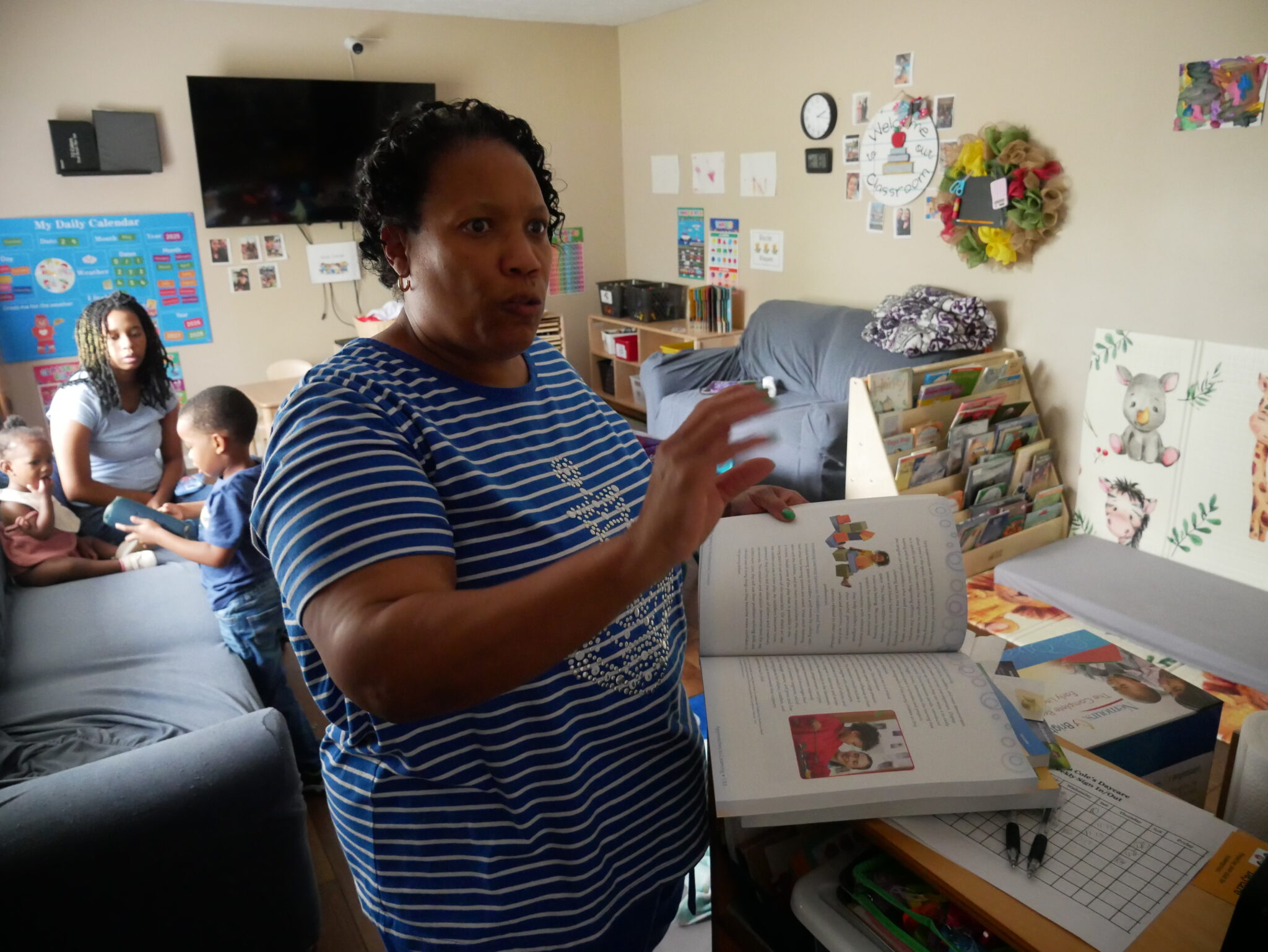
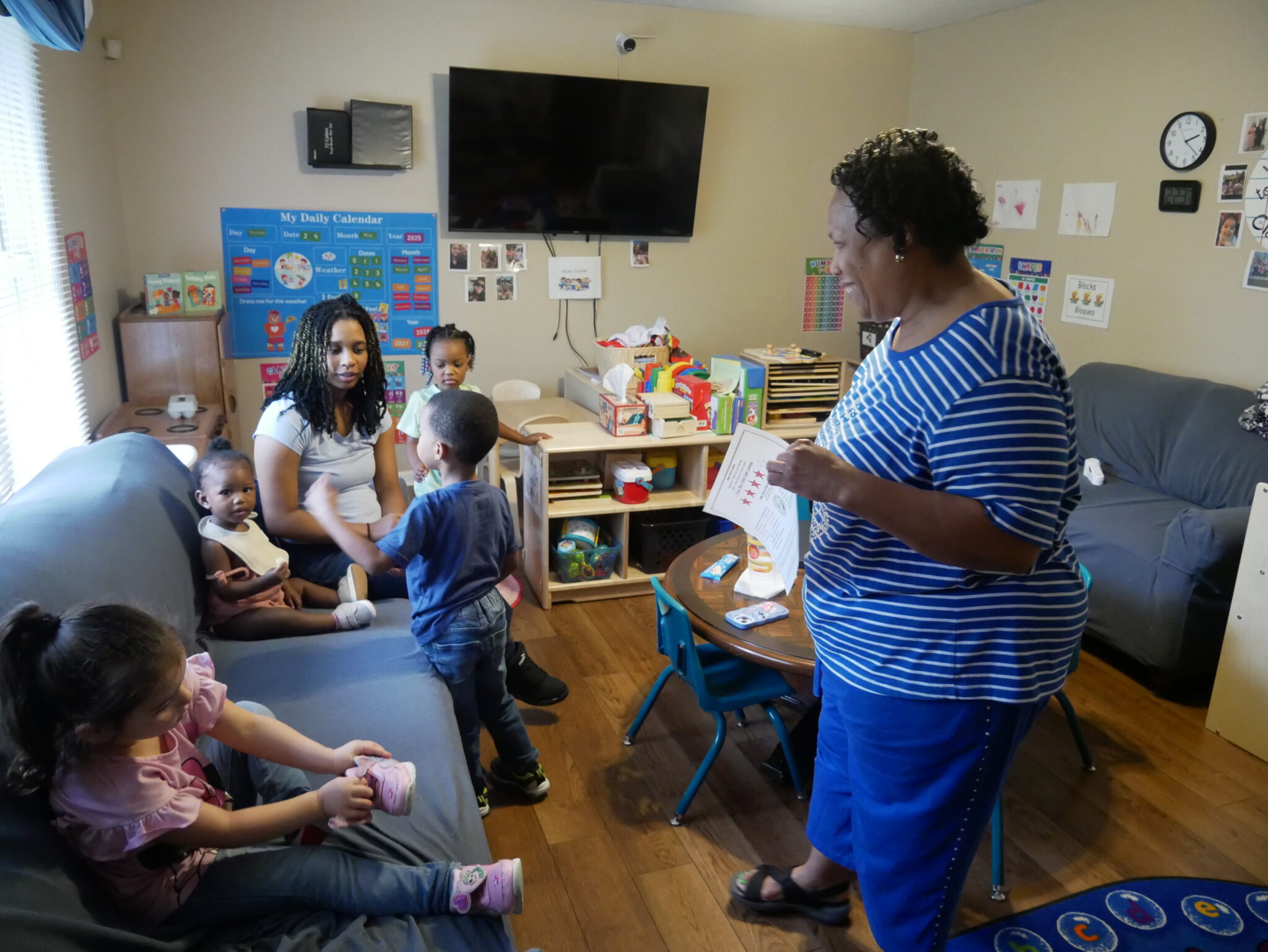
Inside Helen Cole’s child care program. (Liz Bell/EducationNC)
Kailyn Green, whose daughter has been at the program for a month, said she toured other programs with open spots but they “didn’t feel right.” Then she visited Cole’s program and did a walk-through.
“I was like, ‘I’m sold. I’m good,’” Green said.
A licensed clinical social worker, Green said she has been able to return to work without worrying. She receives texts and videos of her daughter’s days and has been impressed by how much she has progressed, especially with eating more consistently.
“I love that she truly gets the attention,” she said. “She’s been able to form a relationship with her. It’s been great.”
Hoffler said she was excited to hear about Cole’s recent accomplishment: earning four out of five stars on the state’s quality rating scale.
“I’m just so proud of her,” she said. “She handled it like a pro.”
What’s next?
There are multiple efforts to build different kinds of supports for family child care. DCDEE said the project with SWCDC taught them that “Family Child Care Homes (FCCHs) would benefit from additional funding, continued community engagement, and professional development to improve quality,” according to a DCDEE spokesperson.
“FCCHs are a vital part of our state’s early care and learning network, and DCDEE is committed to continuing our support for these small businesses,” the spokesperson said in an emailed statement.
Though the contract for the statewide project ends on June 30, the spokesperson said the division will continue using CCDF funds and federal funds from the Preschool Development Grant (PDG) Birth through Five to provide business technical assistance and other services to family child care programs.
The PDG contract is in process but will be awarded to Acelero Charitable Foundation “in collaboration with multiple agencies that support family child care.” It will focus on increasing quality and family engagement, the spokesperson said.
DCDEE is also contracting with Frank Porter Graham Child Development Institute at UNC-Chapel Hill to provide evaluation and coordination of the PDG Elevate FCCH project, which will provide extra subsidy funding to family child care programs to increase wages for providers.
The House and Senate budget proposals direct DCDEE to use CCDF funds to expand family child care capacity. The House would allocate $7 million over two years for a pilot in three localities, and the Senate would allocate $6 million for a pilot in Alamance, Harnett, and Johnston counties. The funding would go to councils of governments in each of those counties to select a third-party vendor. Both proposals have specific requirements for the chosen vendor, including experience in establishing family child care homes in at least three other states and rural areas, experience in operating a substitute pool in another state, and technology that connects families with providers and includes billing and coaching functions.
Meanwhile, Jones-Ruff said SWCDC will continue supporting family child care by retaining a statewide team with organizational funding — and will seek outside funding to continue other aspects of the project. Some of the family child care consultants will continue their work through local CCR&R or Smart Start funding.
“I can see just the monumental amount of work and the progress that has happened in such a short amount of time,” she said. “We’re not going away.”