Hello! This is Christina Samuels, the early education editor here at Hechinger.
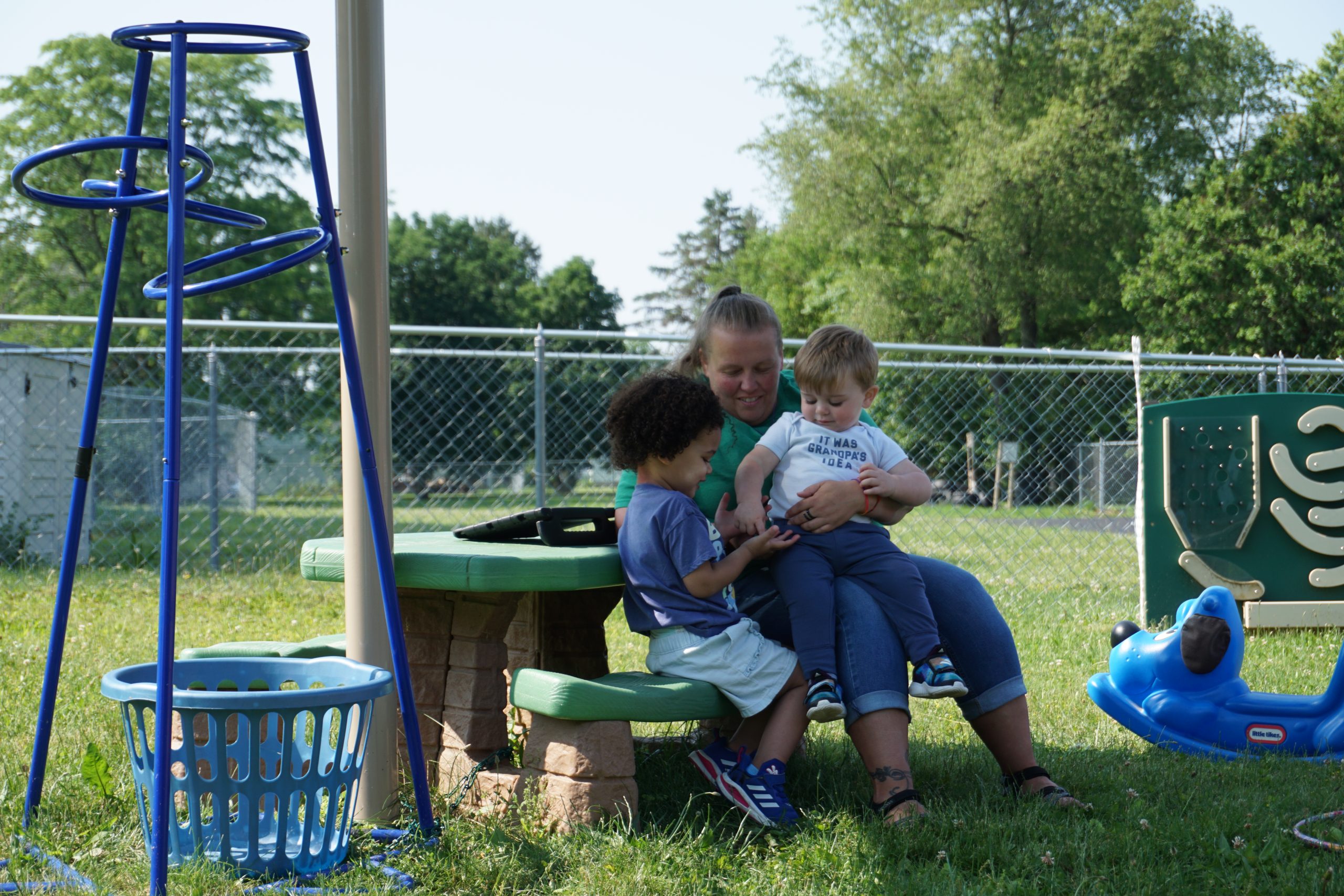
By now, I hope you’ve had a chance to read my colleague Jackie Mader’s story about the important role that Head Start plays in rural communities. While Jackie set her story in western Ohio, she also interviewed Head Start parents and leaders in other parts of the country and collected their views for a follow-up article.
In a fortunate bit of timing, the advocacy group First Five Years Fund published the results of a survey it commissioned on rural Americans and their feelings on child care access and affordability. Like the people Jackie interviewed, the survey respondents, more than half of whom identified as supporters of President Donald Trump, said they had very positive views of Head Start. The federally funded free child care program received positive marks from 71 percent of rural Republicans, 73 percent of rural independents and 92 percent of rural Democrats.
The survey also found that 4 out of 5 respondents felt that finding quality child care is a major or critical problem in their part of the country. Two-thirds of those surveyed felt that spending on child care and early education programs is a good use of taxpayer dollars, and a little more than half said they’d like to see more federal dollars going to such programs.
First Five Years Fund was particularly interested in getting respondents to share their thoughts on Head Start, said Sarah Rubinfield, the managing director of government affairs for First Five Years Fund. The program has been buffeted by regional office closures and cuts driven by the administration’s Department of Government Efficiency.
“We recognize that these are communities that often have few options for early learning and care,” Rubinfield said.
In the survey, rural residents said they strongly supported not just the child care offered by Head Start, but the wraparound services such as healthy meals and snacks and the program’s support for children with developmental disabilities. Though Head Start programs are federally funded, community organizations are the ones in charge of spending priorities.
“Rural voters want action. They support funding for Head Start and for child care. They want Congress to do more,” Rubinfield said. Though the “big beautiful bill” signed into law in July expands the child care tax credit for low-income families, survey respondents “recognized that things were not solved,” she added.
The First Five Years Fund survey was released just a few days before a congressional standoff led to a government shutdown. The shutdown is not expected to touch Head Start immediately, said Tommy Sheridan, the deputy director of the National Head Start Association, in an interview with The New York Times. The 1,600 Head Start programs across the country receive money at different points throughout the calendar year; eight programs serving about 7,500 children were slated to receive their federal funding on Oct. 1, Sheridan told the Times. All should be able to continue operating, as long as the shutdown doesn’t last more than a few weeks, he said.
“We’re watching with careful concern but trying not to panic,” Rubinfield said. “We know the impacts may not be immediate, but the longer this goes on, the harder the impacts may be for families and programs.”
This story about rural Americans was produced by The Hechinger Report, a nonprofit, independent news organization focused on inequality and innovation in education. Sign up for the Hechinger newsletter.
The Hechinger Report provides in-depth, fact-based, unbiased reporting on education that is free to all readers. But that doesn’t mean it’s free to produce. Our work keeps educators and the public informed about pressing issues at schools and on campuses throughout the country. We tell the whole story, even when the details are inconvenient. Help us keep doing that.
Q: What is the university’s mandate behind this role? How does it help align with and advance the university’s strategic priorities?
A: The university is committed to expanding and enhancing its online and mixed-mode offerings as part of its strategic priorities. The e-learning developer 1 plays a central role in this effort by collaborating with instructional designers, faculty and staff to design and deliver high-quality courses that meet compliance requirements and research-based standards. Beyond content development, the role supports faculty growth and creates opportunities to integrate new technologies, experiment with innovative solutions and strengthen both teaching and learning. This work ensures that students benefit from inclusive, engaging and flexible educational experiences in an evolving digital environment.
Q: Where does the role sit within the university structure? How will the person in this role engage with other units and leaders across campus?
A: The e-learning developer is part of eCampus and UConn Online, units within the Center for Excellence in Teaching and Learning dedicated to supporting online and mixed-mode education. While the role works closely with colleagues in eCampus and CETL, it also engages with University IT Services, the University Library and faculty and staff across departments, schools and colleges. Developers contribute as members of cross-unit production teams and committees while also managing individual projects. Along the way, they collaborate on innovative pilots, explore and integrate emerging technologies, and engage with faculty and students to improve learning experiences and to help shape the university’s evolving digital learning ecosystem.
Q: What would success look like in one year? Three years? Beyond?
A: By the end of year one, success means moving beyond basic proficiency into advanced contribution, bringing creative solutions to course design and development, collaborating effectively across units, and helping faculty integrate best practices in accessibility and inclusion. The developer demonstrates growing confidence in evaluating and applying new technologies, employs strong communication skills, and distinguishes effective pedagogical, while building trust as a reliable partner on course and program teams.
By three years and beyond, the e-learning developer is recognized as an innovator and campuswide contributor. They not only design inclusive, high-quality courses and learning objects but also pilot new tools and approaches, engage with faculty to improve learning experiences, and share insights through research and conference presentations. Their role evolves into mentorship and leadership, guiding projects and shaping conversations about digital learning strategy. At this stage, they are seen as a trusted resource and emerging leader who connects pedagogy, technology, and innovation to strengthen UConn’s online teaching and learning environment.
Q: What kinds of future roles would someone who took this position be prepared for?
A: This role provides a strong foundation for advancement into positions such as e-learning developer 2 or 3, instructional designer, faculty development specialist, or educational technology support professional, depending on the individual’s background and career goals. It also opens pathways into broader leadership roles in online education and digital learning. Along the way, developers gain hands-on experience by building courses, experimenting with new technologies, engaging with faculty and contributing to research and conference presentations—positioning them for long-term growth at the intersection of learning, technology and innovation.
Please get in touch if you are conducting a job search at the intersection of learning, technology and organizational change. If your gig is a good fit, featuring your gig on Featured Gigs is free.
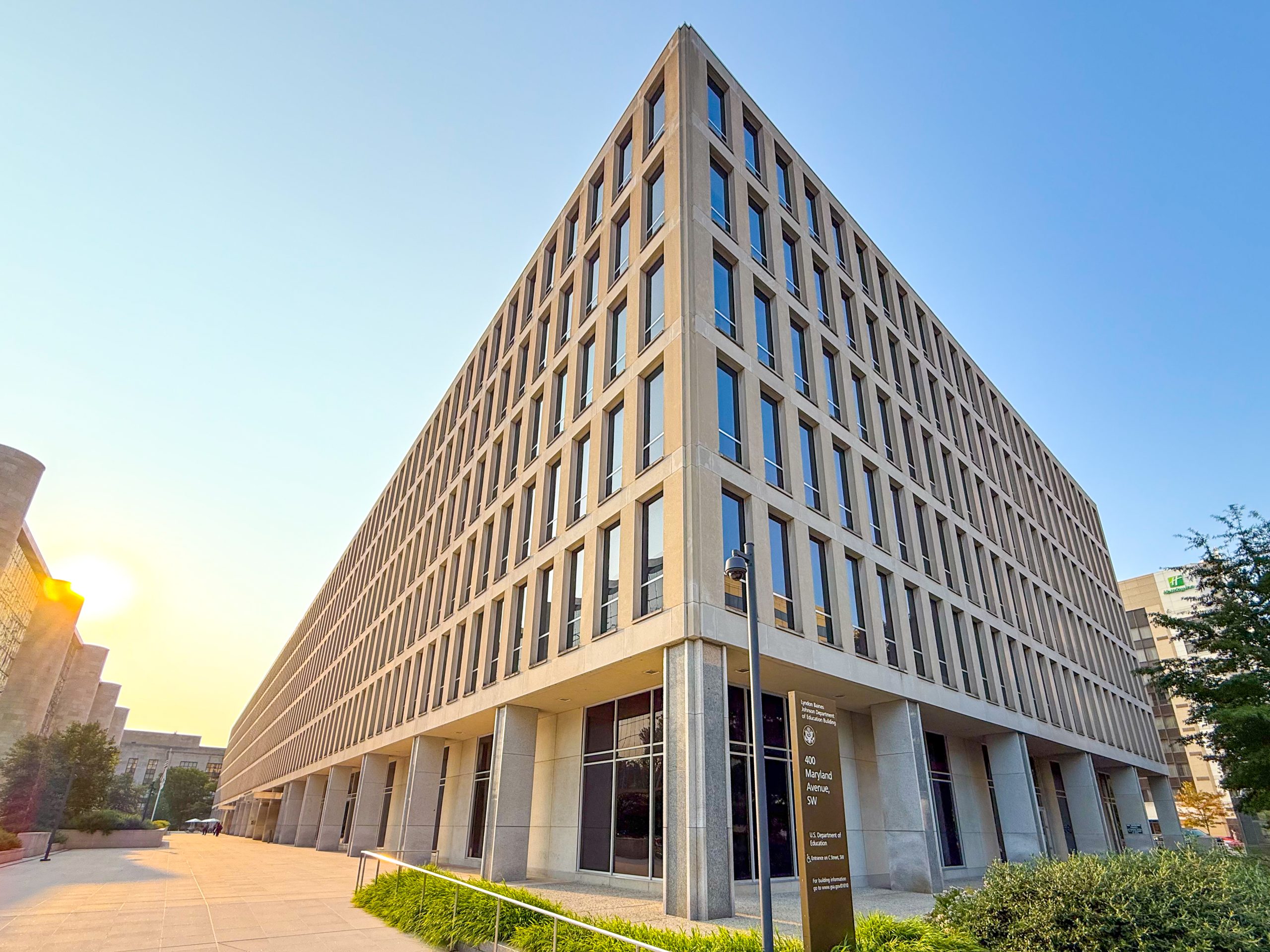
In his first two months in office, President Donald Trump ordered the closing of the Education Department and fired half of its staff. The department’s research and statistics division, called the Institute of Education Sciences (IES), was particularly hard hit. About 90 percent of its staff lost their jobs and more than 100 federal contracts to conduct its primary activities were canceled.
But now there are signs that the Trump administration is partially reversing course and wants the federal government to retain a role in generating education statistics and evidence for what works in classrooms — at least to some extent. On Sept. 25, the department posted a notice in the Federal Register asking the public to submit feedback by Oct. 15 on reforming IES to make research more relevant to student learning. The department also asked for suggestions on how to collect data more efficiently.
The timeline for revamping IES remains unclear, as is whether the administration will invest money into modernizing the agency. For example, it would take time and money to pilot new statistical techniques; in the meantime, statisticians would have to continue using current protocols.
Still, the signs of rebuilding are adding up.
Related: Our free weekly newsletter alerts you to what research says about schools and classrooms.
At the end of May, the department announced that it had temporarily hired a researcher from the Thomas B. Fordham Institute, a conservative think tank, to recommend ways to reform education research and development. The researcher, Amber Northern, has been “listening” to suggestions from think tanks and research organizations, according to department spokeswoman Madi Biedermann, and now wants more public feedback.
Biedermann said that the Trump administration “absolutely” intends to retain a role in education research, even as it seeks to close the department. Closure will require congressional approval, which hasn’t happened yet. In the meantime, Biedermann said the department is looking across the government to find where its research and statistics activities “best fit.”
Other IES activities also appear to be resuming. In June, the department disclosed in a legal filing that it had or has plans to reinstate 20 of the 101 terminated contracts. Among the activities slated to be restarted are 10 Regional Education Laboratories that partner with school districts and states to generate and apply evidence. It remains unclear how all 20 contracts can be restarted without federal employees to hold competitive bidding processes and oversee them.
Earlier in September, the department posted eight new jobs to help administer the National Assessment of Educational Progress (NAEP), also called the Nation’s Report Card. These positions would be part of IES’s statistics division, the National Center for Education Statistics. Most of the work in developing and administering tests is handled by outside vendors, but federal employees are needed to award and oversee these contracts. After mass firings in March, employees at the board that oversees NAEP have been on loan to the Education Department to make sure the 2026 NAEP test is on schedule.
Only a small staff remains at IES. Some education statistics have trickled out since Trump took office, including its first release of higher education data on Sept. 23. But the data releases have been late and incomplete.
It is believed that no new grants have been issued for education studies since March, according to researchers who are familiar with the federal grant making process but asked not to be identified for fear of retaliation. A big obstacle is that a contract to conduct peer review of research proposals was canceled so new ideas cannot be properly vetted. The staff that remains is trying to make annual disbursements for older multi-year studies that haven’t been canceled.
With all these changes, it’s becoming increasingly difficult to figure out the status of federally funded education research. One potential source of clarity is a new project launched by two researchers from George Washington University and Johns Hopkins University. Rob Olsen and Betsy Wolf, who was an IES researcher until March, are tracking cancellations and keeping a record of research results for policymakers.
If it’s successful, it will be a much-needed light through the chaos.
The Hechinger Report provides in-depth, fact-based, unbiased reporting on education that is free to all readers. But that doesn’t mean it’s free to produce. Our work keeps educators and the public informed about pressing issues at schools and on campuses throughout the country. We tell the whole story, even when the details are inconvenient. Help us keep doing that.
For many colleges, the fall 2025 enrollment numbers brought a mix of emotions. While some institutions are celebrating record-breaking classes and hitting their targets, others—equally committed to their mission—fell short. This stark contrast isn’t just a symptom of demographic shifts; it reveals a deeper, more urgent truth: the status quo is failing higher education.
Many institutions are struggling not just because of demographics, but because of outdated, fragmented enrollment strategies. They are kept in silos—admissions, marketing, financial aid—creating an inconsistent student experience that leads to missed starts, early attrition and lost potential.
Today’s Modern Learners are more discerning than ever. They expect speed, personalization and transparency, making fragmented approaches not only ineffective but unsustainable. The future of higher education does not belong to those defending the past. It belongs to institutions bold enough to build what’s next—a unified, data-informed strategy that transforms these challenges into opportunities for sustainable growth.
Missed Starts: The Silent Threat to Student Recruitment
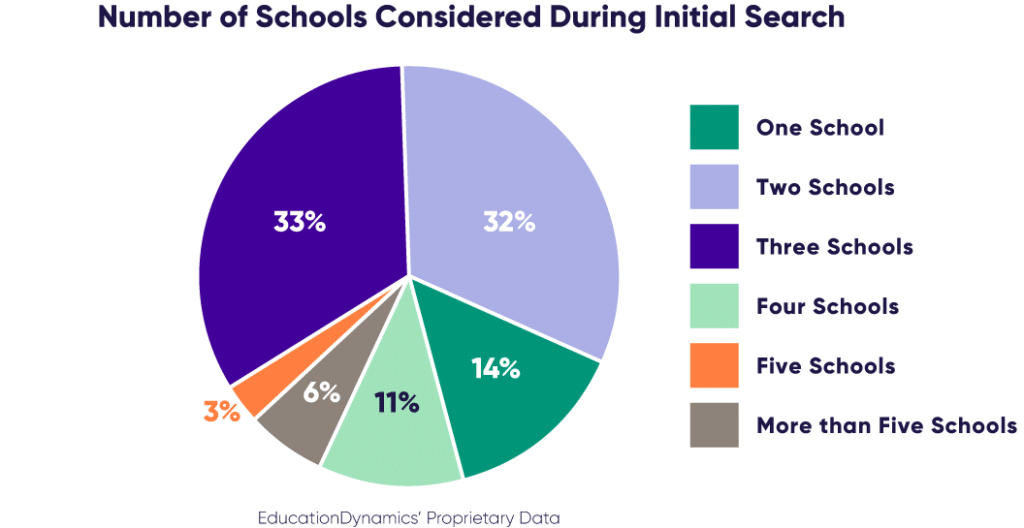
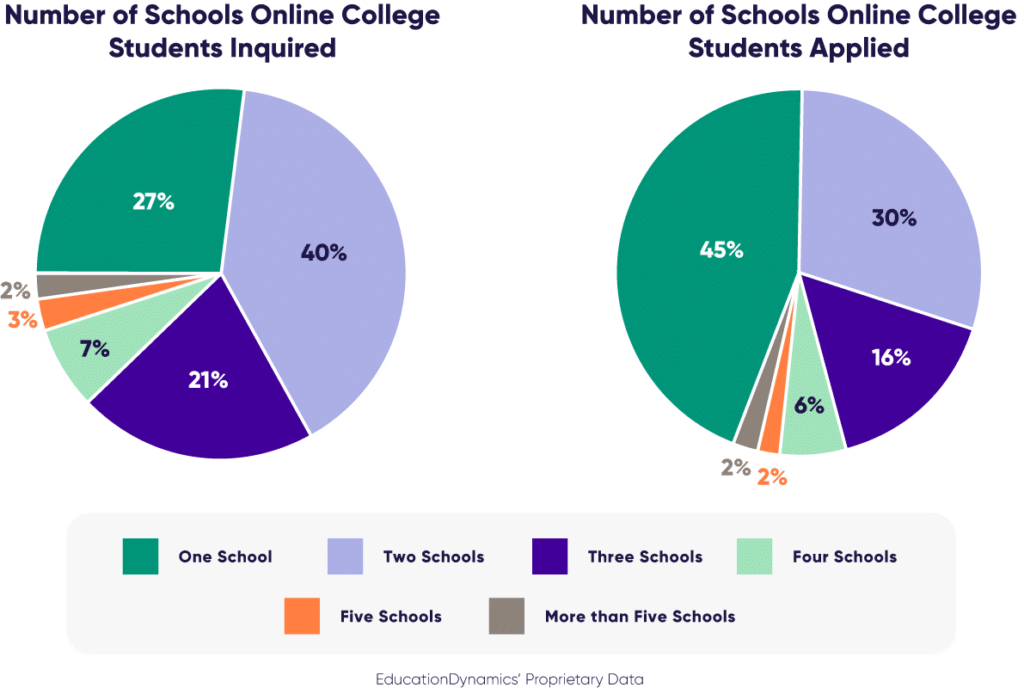
Enrollment managers face a stark reality: the decision-making window has never been shorter. Students aren’t shopping around like they once did. Students are making decisions faster than ever. According to our latest Engaging the Modern Learner Report, 67% inquire at only one or two institutions, and 45% apply to just one. This is a fundamental shift. In 2015, only 43% of learners would enroll at the first school that contacted them. By 2025, that figure has skyrocketed to nearly three in four. For your institution, this is a wake-up call. The window to turn interest into enrollment is closing, and any delay, inconsistent follow-up or fragmented outreach means you lose students before they even begin their journey.
Speed and consistency are not just critical—they are the price of admission. Slow, fragmented communication—whether through delayed responses, inconsistent messaging, or glaring gaps across departments—is not an inefficiency. It is a direct cause of a hemorrhaging enrollment funnel. The only way to transform this challenge is with a unified enrollment management approach.
Think of the bright prospective student who loves your campus culture after a visit. The prospective student sends a follow-up email with a simple question about a scholarship deadline, but the admissions team is swamped, and a response is delayed. Meanwhile, another school sends a personalized text message with the needed information, along with a link to a testimonial from a student in the desired major. This prospective student’s trust is built and stolen by the competing school, and your school is now completely out of the consideration mix—not because of your academics or campus life, but because of a missed connection.
The Four Pillars of Strategic Enrollment Management
The path to reversing missed starts and early attrition isn’t guesswork—it’s a disciplined, coordinated approach. The Four Pillars of Strategic Enrollment Management give institutions a clear framework to turn insights into action, strengthen recruitment and improve student success. By combining brand alignment, AI-driven analytics, full-funnel marketing and student-centric engagement, campuses can act decisively, close gaps in the enrollment process, and ensure every touchpoint moves students toward enrollment and persistence.
Strategic Brand Alignment for Student Recruitment
In a crowded market, a compelling and authentic brand is not optional—it’s the foundation of any winning student recruitment strategy. Reputation drives decisions more than ever, with 31% of all applicants and 51% of traditional undergraduates ranking it among their top factors for choosing a school. Most Modern Learners start their search with the institution itself rather than a specific program, which means that without a strong, visible brand, your institution risks being overlooked before the conversation even begins. For marketing and enrollment leaders, this makes it clear that visibility and authenticity are essential for influencing enrollment outcomes.
Brand is also about proving value. Affordability remains important, but today’s Modern Learners are increasingly focused on career outcomes and program benefits in addition to cost. Messaging must clearly convey the tangible return on investment and the real-world impact of a degree to resonate with prospective students. By aligning programs with student aspirations and demonstrating clear student success outcomes, institutions can create meaningful, personalized engagement that drives enrollment forward.
AI-Powered Analytics and Performance Optimization
Data alone won’t drive results; insights must inform every decision. Integrating AI into your enrollment strategy isn’t a strategy of the future—it’s a strategy of now. Competitive institutions use predictive insights to identify which students are most likely to apply, enroll and persist, turning complex data into actionable strategies. By analyzing engagement, inquiries, social sentiment and historical trends, enrollment managers can uncover funnel leaks, prioritize outreach, and allocate resources effectively.
At EducationDynamics, we combine AI-driven insights with human expertise to ensure recommendations are contextually grounded. This lets teams act quickly, maintain consistency and optimize every touchpoint. Integrated with targeted marketing insights, these analytics help institutions reach the right students with personalized messaging, strengthening enrollment management and driving long-term success.
Full-Funnel Marketing for Student Recruitment and Retention
Modern Learners move seamlessly across digital, social, email, and traditional channels—and they expect institutions to meet them wherever they are. A full-funnel marketing approach ensures every interaction reinforces the institution’s brand while delivering timely, personalized and meaningful engagement.
Now more than ever, students’ attention spans are short and their decision-making windows are fast. Consistent, relevant communication at every stage of the journey is critical: it keeps prospects engaged, strengthens trust, and positions your institution as a top choice. By aligning program-specific messaging with the broader institutional brand, enrollment managers create a unified narrative that drives conversions, builds credibility, and strengthens student engagement across the entire enrollment journey.
Every touchpoint—from initial awareness to follow-up engagement—works in concert to reduce lost starts, increase inquiry-to-application conversion and support long-term student success. This integrated approach ensures your marketing investments deliver measurable results while keeping prospective students moving efficiently through the enrollment funnel.
Student-Centric Enrollment and Retention for Student Success
Personalized engagement is a critical pillar in turning prospects into enrolled students and lifelong advocates. Students expect timely guidance, responsiveness and a sense that their individual goals are understood and valued. AI tools, including chatbots and virtual assistants, provide 24/7 support for routine questions, ensuring no inquiry is left unanswered. While technology handles the routine, your team’s expertise remains the essential ingredient. It’s the human connection—the empathy, the guidance and the personal touch—that ultimately drives commitment. Technology amplifies your reach; your team delivers the relationships.
A student-centric approach ensures every touchpoint aligns with the learner’s journey, making communications, guidance, and support feel relevant and meaningful. With the right tools, data, and training, campuses can anticipate student needs, address obstacles proactively, and build confidence early in the enrollment process. This approach strengthens trust, boosts engagement, improves persistence, and turns every interaction into an opportunity to reinforce your institution’s brand while driving measurable student success.
Uncover the Student Experience
By now, it’s clear: fragmented enrollment strategies and inconsistent outreach cost institutions students. Modern Learners expect speed, personalization and clarity—anything less, and they move on. The challenge for enrollment managers is not just knowing where students drop off, but having the tools to act before interest is lost.
Mapping the student journey provides that clarity. By tracing the entire enrollment process from inquiry to start, it uncovers friction points—broken links, slow follow-up, confusing financial aid—that silently derail prospects. Enrollment teams can pinpoint exactly where disengagement happens, intervene strategically and ensure every touchpoint reinforces your brand promise while supporting student success.
To take it a step further, you can secretly shop your own institution to reveal how your enrollment experience truly feels to the student. Delayed responses, generic messaging or unhelpful chat functions aren’t just minor inefficiencies—they signal misalignment and break trust. By uncovering these gaps, this process informs targeted improvements in communication, staff workflows and recruitment strategies, keeping your institution competitive in a fast-moving market.
Together, these tools offer a concrete roadmap to unify brand, marketing and engagement efforts—turning insights into action, closing gaps before students disengage, and ensuring every interaction drives measurable enrollment and student success.
In today’s competitive landscape, the institutions winning enrollment aren’t just reacting—they’re thinking bigger. They recognize that success comes from cross-functional collaboration, where departments work together to deliver cohesive, personalized experiences for Modern Learners.
This is more than efficiency—it’s a strategic mindset. By aligning every department around the student journey, anticipating needs, and curating experiences that reflect the expectations of Modern Learners, institutions build trust, enhance engagement and position themselves for sustainable growth and measurable outcomes.
Transform Your Enrollment Strategy
The status quo won’t carry institutions into 2026 and beyond. To stay competitive, enrollment leaders must move beyond fragmented processes and adopt integrated strategies that deliver speed, personalization, and authenticity at scale. At EducationDynamics, we do more than unify departments—we help institutions transform scattered efforts into a cohesive system that drives measurable student success.
Don’t let a fragmented strategy define your future. It’s not too late to turn things around. We help institutions move beyond the status quo to build a unified system that fixes funnel leaks, increases retention and delivers measurable student success.
Schools that train hairstylists, dental assistants and health aides will be able to keep getting federal student loan dollars even if the professionals they turn out don’t end up earning any more than a high school graduate.
That’s because programs like those, which don’t end in a college degree, were granted an exemption from new accountability measures under President Donald Trump’s ”big, beautiful bill.”
A Hechinger Report analysis of federal data found at least 1,280 such certificate programs could have been at risk of their students losing access to federal student loans — but a successful lobbying effort excluded them from the accountability measures.
Related: Become a lifelong learner. Subscribe to our free weekly newsletter featuring the most important stories in education.
Under the new law, most graduates of associate, bachelor’s and graduate degree programs must earn at least as much as someone who has only a high school diploma. If programs fail to hit that benchmark for two out of three years, their students will no longer be eligible for federal student loans. (And the schools must warn students of this possibility if they miss the mark for just one year). Without that borrowing power, many students could not afford to attend. And without those students, some of the schools might not survive.
Using the table below, see which certificate programs might have been flagged under the Trump law if not for the exemption. If graduates of a particular program ended up earning less than adults with only a high school diploma, that program could have faced losing eligibility for federal student loans under the Trump law.
Methodology
What exactly does the “big, beautiful bill” call for?
The legislation requires the Department of Education to compare earnings of working adults who have only a high school diploma to the earnings of adults four years after they complete a degree program or graduate certificate. If a postsecondary program’s graduates fail to outearn adults with only high school degrees for two out of three years, students can no longer obtain federal student loans to attend that program.
The law also sets up an appeals process and a way for programs to apply to regain eligibility for federal student loans.
What data was analyzed?
The law directs the education secretary to use census data to calculate median earnings for working adults with only a high school degree in the state where a program is located. The Department of Education will release regulations that spell out exactly how to do that math. For example, the law does not spell out whether it will look at census data averaged out over 12 months or a longer period of time.
For earnings data for high school graduates, The Hechinger Report relied on calculations from the Department of Education, which were derived from the 2022 American Community Survey 5-Year Estimates Public Use Microdata Sample from the U.S. Census Bureau.
To calculate median earnings for graduates, the law directs the Education Department to put together earnings data for a cohort of at least 30 graduates who received federal student aid for postsecondary education — which typically includes grants, loans or work-study. Graduates are excluded if they’re currently enrolled in another higher education program. If there are fewer than 30 students in a cohort, the Education Department can lump together several years of data to get to 30 students.
To get earnings data for graduates of certificate programs, Hechinger used a federal database known as College Scorecard. We downloaded field of study data for the 2022-23 school year. From this data, The Hechinger Report extracted information about certificate programs, at their main campuses, and included only programs that had median earnings data. The federal database suppresses earnings data for small programs. That left 4,431 currently operating certificate programs.
How was a program determined to be at possible risk of failing the accountability measure?
For each program, The Hechinger Report compared median graduate earnings to the high school graduate earnings data of the state where the program was located. If the graduates earned less, the program was considered to be at risk.
Under the law, postsecondary programs that don’t meet the earnings benchmark for one year have to inform all current students that they are at risk of losing their eligibility for federal student loans.
Are there any limitations to the data?
The “big, beautiful bill” takes online programs into account by considering whether students live in the same state where their academic program is based. Under the law, student earnings are compared with national data rather than state data when fewer than half of enrolled students live in the state where the school is located, which may be the case for online programs.
The Hechinger Report’s analysis instead compares every program with state earnings. That’s because the College Scorecard field of study data set is limited and only includes information about graduates employed within the same state as the institution, not whether enrolled students live in the same state as the program. In addition, College Scorecard data provides earnings data for all graduates without a breakdown for whether they receive federal aid.
Also, the Hechinger database looks at the available median earnings of all students four years after graduation for the school year 2022-23, regardless of the number of graduates. Though College Scorecard suppresses data on smaller programs, median earnings data is available for programs with 16 or more working graduates. The “big, beautiful bill” directs the Department of Education to instead lump together years of data to create cohorts of at least 30 students.
The Hechinger Report provides in-depth, fact-based, unbiased reporting on education that is free to all readers. But that doesn’t mean it’s free to produce. Our work keeps educators and the public informed about pressing issues at schools and on campuses throughout the country. We tell the whole story, even when the details are inconvenient. Help us keep doing that.
What is Full-Funnel Marketing for Higher Education?
At its core, full-funnel marketing means investing in upper-funnel awareness and mid-funnel consideration strategies to drive lead generation efforts and investing in post-inquiry marketing to continue to nurture prospects into students.
While we like to think of the student journey as a linear process and clear path that every student follows, the reality is that every student journey is unique, and it rarely follows the exact path we proscribe. In spite of this reality, it is helpful to understand the stages of the journey that all prospective students must go through in some form. Understanding the stages of the student journey allows us to deploy a full funnel approach to our marketing and enrollment management efforts – one that takes a holistic approach and creates a student-centered experience that is more likely to result in better outcomes for your marketing efforts and ultimately your students.
Rather than focusing marketing efforts on lead generation efforts, a full funnel marketing approach invests in upper funnel activities and post-inquiry student engagement opportunities. Upper funnel marketing builds awareness and educates prospective future students. Down funnel pre-post-inquiry marketing nurtures prospective students, builds a relationship and helps the student move from consideration to enrollment and graduation.
In this article we will discuss the following topics:
Understanding the Student Journey
The student enrollment funnel is a critical framework for understanding the path prospective students take from initial awareness to becoming enrolled students. By recognizing the key stages and the specific needs of students at each point, institutions can tailor their outreach and support to maximize enrollment success.
Here’s a breakdown of the key stages of the student enrollment funnel:
When prospective students are just starting to consider higher education or specific programs, they are forming their first impressions on a variety of universities. This broad stage is your institution’s opportunity to grab their attention and inform them of who you are. The goal here is the craft and deliver messaging that excites your prospective students to learn more and easing them into the next stages of their decision-making journey.
You must lead with your brand story and values. This is where you establish your reputation as a forward-thinking innovator, a career catalyst or a community builder. Use powerful visual storytelling on social and video. Use organic content to expose the authentic student experience. This is how you bypass the noise and build a foundation of trust before a student even knows your name.
Grab the attention of these prospective students so that they’re aware of your institution through these channels:
Search
Social media
Over-the-top (OTT) advertising
Program Display
Audio
Video
Crafting and delivering messaging that focuses on your institution’s unique strengths such as innovative programs, a vibrant campus life, outstanding online options, or personalized student support can be beneficial for guiding potential students through the early stages of their decision-making journey.
2. Consideration: The Value Proposition
At this stage, students have narrowed their focus to a few institutions and are actively researching their options. This consideration stage is recognized as the longest in the student journey, lasting from the moment they first become aware of colleges all the way through enrollment. During this extended period, prospective students constantly revisit and refine their choices, narrowing down their top pick schools. According to our latest Engaging the Modern Learner Report, a majority of students have at most three schools in their consideration set. This highlights the importance of maintaining engagement throughout this critical phase.
The content here must prove your value. Forget the general brochures. Provide dynamic, personalized content that highlights your reputation in a way that’s relevant to the student’s specific interests. If you’re known for a top-tier nursing program, the content must show career outcomes, job placements and alumni stories. This is about converting curiosity into tangible desire by connecting your brand promise to a student’s personal ambition.
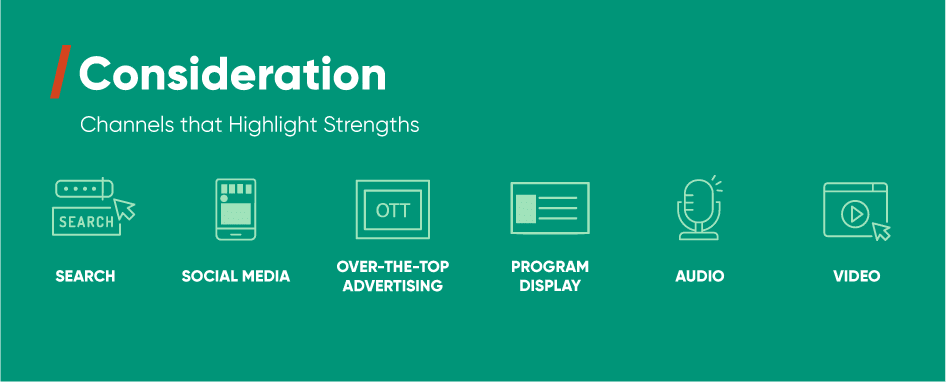
Highlight your strengths through informative content across various channels:
Search
Social media
Over-the-top (OTT) advertising
Program Display
Audio
Video
By providing informative, clear and confidence-building content that addresses student concerns, your institution can increase its visibility and solidify your institution as a top contender in the prospective student’s final selection process.
3. Conversion: The Proof of Promise
Prospective students compare their top choices and make their final decision. The communication strategy here should focus on addressing the prospective student’s final concerns, offering reassurance and providing clear and accessible information about their next steps.
During the conversion phase of the student enrollment funnel, prioritize creating a frictionless experience. By offering clear communication, readily available resources, and a streamlined application process, you can significantly increase your chances of converting prospective students into enrolled students, solidifying their decision to choose your institution.
Your admissions process is not just an application. It is a live reflection of your brand. The communication must be consistent with the brand promise. If your reputation is built on student-centric support, every email, phone call and text must be empathetic and helpful. Use hyper-personalized messaging and AI-powered tools that make the student feel heard and valued. The goal is to make the application feel like the first step in a personalized relationship not the end of a transaction.
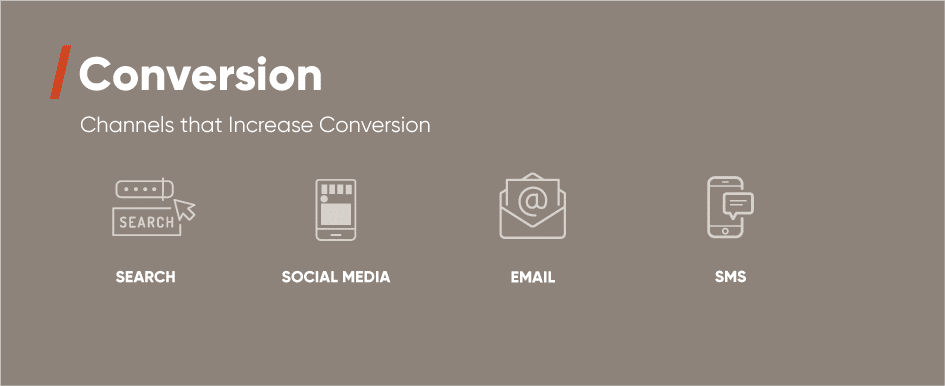
Channels for increasing the likelihood of conversion during the conversion phase:
Search
Social
Email
SMS
By providing clear guidance, addressing concerns and showcasing the value proposition of your institution, you can ensure a seamless transition from prospective student to applicant.
Your institution has successfully captured the attention of prospective students and established an initial connection. At this stage, students are dedicating time to carefully consider their top options for advancing their education. Maintain and deepen prospective students’ interest by delivering messaging that is personalized, detailed and addresses each prospect’s specific concerns and questions. The key to a successful lead nurturing strategy is to provide a supportive, no-pressure environment while supporting their decision-making process and nudging them closer to taking the next step with your school.
This is where you double down on your brand. Your nurturing strategy should not just remind students of deadlines. It should make them feel like a part of your community before they ever set foot on campus. Use targeted campaigns that introduce them to their future classmates, faculty and student support services. Reinforce the values they fell in love with during the awareness stage. This mitigates “melt” and transforms an accepted student into an enrolled student.
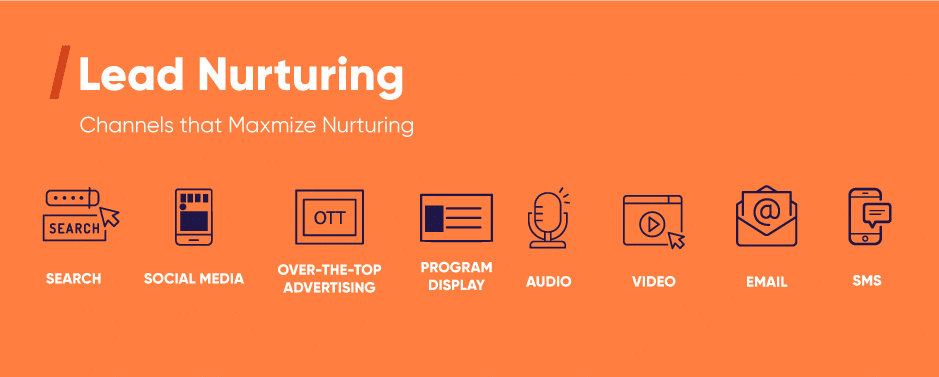
Channels that can maximize your lead nurturing efforts include:
Search
Social
OTT
Program Display
Audio
Video
Email
SMS
Truly cultivate an understanding and support for prospective students navigating through the application process by delivering messaging that inspires them to complete their educational journey, personalized guidance and reminds them of the enriching experiences that await them at your institution.
5. Enrollment: The Starting Line
At this stage, prospective students have become applicants, now it’s a matter of getting them to enroll and move forward at your institution. Offering content that effectively addresses any final concerns and provides reassurance that their decision to enroll at your institution is the right choice, right fit and right time for them.
Enrollment is not the end of the funnel. It’s the beginning of a lifetime of brand loyalty. Acknowledge and celebrate this moment. Use this stage to welcome them to the community and prepare them for their new life as a student and future advocate for your brand.
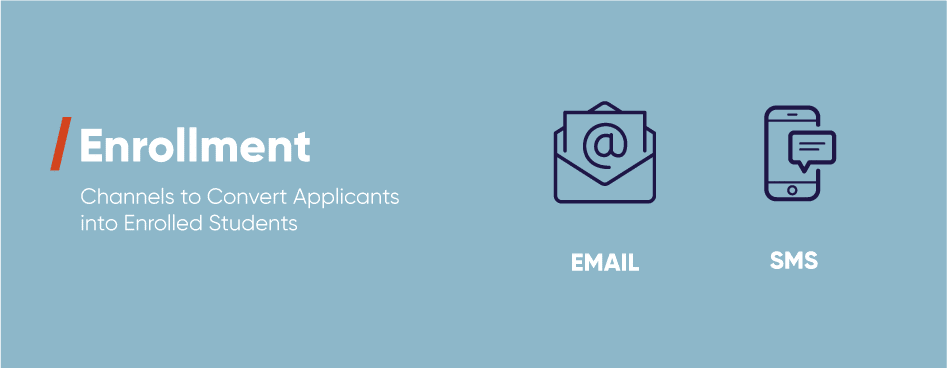
Convert your applicants into enrolled students with these channels:
Feature content that addresses barriers such as affordability, mental burnout, and enrollment complexity by highlighting the availability of financial aid, scholarships, flexible payment options and personalized support services to promote streamlined enrollment process.
Utilizing email and SMS will be the most effective in delivering this type of content. Incorporating strategies such as targeted email campaigns and personalized phone calls can be effective. As long as the content you are offering provides clear and easy-to-follow instructions for the enrollment process, your institution can help eliminate any confusion or frustration and solidifying that the students’ decision to enroll at your school was the right one.
The Importance of Full-Funnel Marketing
At EducationDynamics, we have always taken a holistic approach to student recruitment and believe it is essential for long-term growth and sustainability. We have seen several shifts in the landscape that make a full-funnel marketing strategy more valuable than ever before.
Increasing Complexity in the Media Landscape
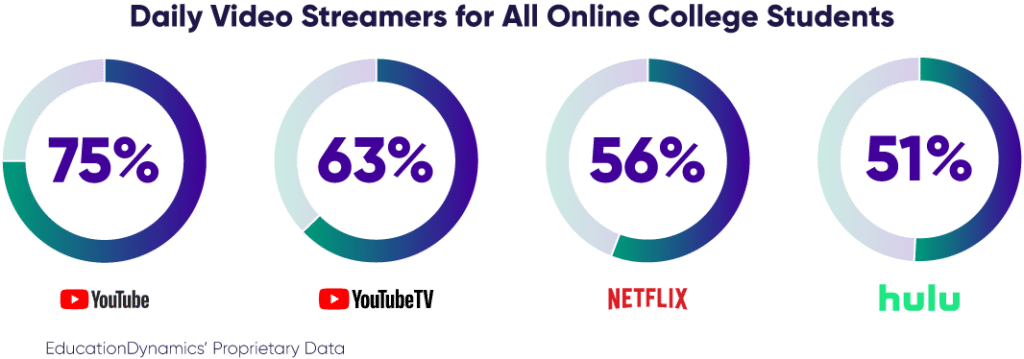
First, we see increasing complexity in the media landscape, from consumer behavior to advances in marketing channels. The average number of streaming hours consumed continues to rise. At the same time, ad-supported streaming platforms are growing in popularity and the social media landscape is fragmenting. In our latest Online College Students Report 2024, about 70% of online college students utilize primarily ad-supported streaming services and use YouTube, Spotify, YouTube TV, Netflix, and Hulu daily. These landscape changes are important in that they tell a story about where prospective students are spending their time online and how we can effectively reach them with advertising.
Changes in Prospective Students’ Search and Decision-Making Habits
Secondly, we are seeing changes in how prospective students are searching for and making decisions about higher education. As the focus on student loan debt and the value of higher education continues to be top of mind for students, we are seeing this manifest in prospective students doing more research even after the point of inquiry. In our 2024 Online College Students Report, 40% of online college students initially inquired at two schools and 21% inquired at three. Once they narrowed their selection 30% of online college students applied to two schools and 16% applied to three. Students are motivated to find the best value. They are therefore continuing to research past the point of inquiry and application to confirm their decision to invest—not just in tuition, but also their time and energy. Higher education marketers aim to respond by continuing to leverage various marketing channels to keep schools in the mix and reassure students why these schools are right for them and their circumstances.
With all these changes in the market, winning universities and colleges are shifting their marketing strategies to meet this dynamic environment. By implementing a full-funnel marketing approach, institutions can benefit from:
Increased Brand Awareness: A full-funnel strategy keeps your institution at the forefront of prospective students’ minds throughout their entire research journey. This consistent presence across various channels significantly increases brand awareness and strengthens institutional identity.
Improved Student Conversion Rates: By nurturing leads with targeted messaging and valuable content at each stage of the funnel, you effectively guide them towards enrollment. This personalized approach fosters trust and increases the likelihood of conversion from initial inquiry to final acceptance.
Stronger Return on Investment (ROI): Full-funnel marketing allows for targeted campaigns and data-driven optimization. This ensures your marketing budget is spent efficiently, reaching the right audience with the right message at the right time. You’ll see a significant improvement in ROI as you convert more qualified leads into enrolled students.
A Better Student Experience: At the heart of a full-funnel marketing strategy is a desire to deliver a better student experience by meeting the student wherever they are on the journey. A strong full-funnel marketing strategy is empathetic to the prospective student, listens to their direct and indirect engagement cues, and delivers an experience that provides the right information at the right time and on the right platform.
By embracing a full-funnel strategy, institutions can effectively navigate the complex media landscape, address the evolving needs of prospective students, and ultimately achieve their enrollment goals.
Growing Enrollment with Full-Funnel Marketing
While the execution of a full-funnel marketing approach will vary depending on the institution, there’s a common thread: measuring success through Key Performance Indicators (KPIs) tailored to each stage of the funnel. This means monitoring and measuring the micro-conversions and engagements along the journey in addition to the more obvious traditional conversion points like requests for information, application and enrollment.
Here’s a breakdown of KPIs for different funnel stages:
Top-of-Funnel (TOFU):
Brand Awareness: Focuses on metrics like impressions, reach, and brand recall to gauge how effectively your campaigns are building familiarity with your institution.
Website Traffic: Tracks overall website visits and unique visitors to understand how well your TOFU efforts are attracting potential students.
Engagement Rates: Measures user interaction on your website, such as time spent on pages, click-through rates on calls to action, and social media engagement, indicating deeper interest.
Mid-Funnel (MOFU):
There are two types of ‘Mid-Funnel’ stages in higher education marketing. We refer to the portion of the stage where the focus of marketing is on lead generation as pre-inquiry activities. Whereas, in admissions, enrollment and new student starts are the goal. We refer to this portion of the stage post-inquiry activities.
Pre-inquiry activities
Pre-inquiry activities include efforts made to connect with prospective students prior to directly contacting an institution for information. When tracking the effectiveness of these activities, higher ed marketers may consider these key metrics to determine their strategies’ ability to attract, engage and convert prospective students:
Lead Generation: Tracks cost-per-lead (CPL) alongside the volume of qualified leads generated by your mid-funnel activities (e.g., webinars, downloadable content).
Inquiry Volume: Measures the number of inquiries received through various channels, indicating a stronger interest in your programs.
Content Engagement: Analyzes how users interact with your mid-funnel content (e.g., white papers, blog posts) to assess its effectiveness in nurturing leads.
Post-inquiry activities
Following prospective students’ application submissions, your institution should prioritize a smooth transition into enrollment. A frictionless enrollment streamlines the process, ensuring a higher conversion rate while enhancing the overall student experience. To track the effectiveness of your post-inquiry activities, consider the following metrics:
Application Yield: Analyzes the percentage of applicants who complete the application process and submit their materials.
Offer Acceptance Rate: Measures the proportion of admitted students who accept your institution’s offer which indicates program interest after the students’ initial hurdle.
Lead Conversion Rates: Tracks the percentage of leads nurtured through email marketing or other channels that convert into applications.
Application Completion Rates: Measures how many inquiries progress towards completing the application process.
Bottom-of-Funnel (BOFU):
Enrollment Conversion Rate (Yield Rate): Tracks the percentage of admitted students who finalize registration and officially become enrolled to assess the effectiveness of the enrollment process.
Cost-per-Enrollment (CPE): Analyzes the total marketing spend divided by the number of enrolled students, reflecting the overall efficiency of your marketing efforts.
Deferral Rate: Analyzes the breakdown of admitted students who request to postpone their start date, providing insights into reasons for enrollment delays.
Monitoring these KPIs across the funnel stages provides valuable insights into the effectiveness of your full-funnel marketing strategy. This allows for data-driven adjustments to optimize each stage and ultimately improve your return on investment (ROI) for student recruitment.
By incorporating the costs associated with all stages of the funnel, you can leverage blended cost-per-enrollment (CPE) metrics. This provides a more holistic view of marketing effectiveness and allows you to utilize directional or causal analyses. These techniques go beyond simply observing correlations between upper funnel activities (such as brand awareness campaigns) and lead generation/bottom funnel results (like applications). They can help you understand the cause-and-effect relationships between these stages. Directional analyses can point you in the right direction, while causal analyses can provide more definitive evidence of the indirect impact that upper funnel activities have on lead generation and bottom funnel results.
Embracing a Full-Funnel Approach
As prospective students continue to search for higher education options and make decisions based on value, it is crucial for institutions to adapt their marketing strategies to meet this demand. Embracing a full-funnel approach will ensure that institutions stay competitive in the higher education market and achieve their enrollment goals.
Are you ready to transform your transform your marketing strategy to grow enrollment? Start a conversation with EducationDynamics today to discuss how we can help you implement a customized full-funnel strategy that drives enrollment growth and achieves your unique goals.
Securing steady enrollment growth and keeping students happily on board are top priorities in higher education. But how do you ensure you’re truly meeting student needs and demands? It’s all about measuring performance effectively. Gone are the days of navigating blindly through raw data; Key Performance Indicators (KPIs) are the laser-focused measures that cut through the noise, providing clear direction and a true sense of what’s working. It’s time to harness the power of data to steer your institution toward success.
Key Performance Areas
So, where do you start?
Determining your institution’s unique strategic goals is the first step. Once you know your target destination, KPIs become the navigation tools that guide you there. Look beyond generic metrics and choose a balanced set of KPIs across six performance areas:
AI Readiness
AI Readiness is the next-generation key area that proves you’re building a university that is smarter, more efficient and more responsive than anything the old systems could produce. If AI isn’t a core part of your institution’s DNA, you’re not just falling behind, you’re becoming obsolete. This isn’t about having a chatbot on your admissions page. It’s about a complete institutional transformation.
You can’t manage what you don’t measure. Here are the metrics that will expose whether your institution has truly embraced the future.
AI density: Percentage of keywords that are ranking in AI overviews.
Engagement metrics from AI chatbots such as engaged sessions and views.
AI-Driven Workflow Automation Rate: Percentage of key administrative processes (e.g., admissions review, financial aid queries) that are fully or partially automated by AI.
AI-Informed Decision-Making Rate: Percentage of high-level strategic decisions made based on predictive analytics and AI models.
Student Support AI Integration: The percentage of student inquiries (e.g., in financial aid, advising or registrar services) handled by AI-powered tools.
Personalized Learning Platform Adoption: The percentage of courses or students utilizing AI-powered platforms to tailor educational content and pace.
Enrollment and Student Retention Metrics
Strong enrollment and retention lead to higher graduation rates, reduced revenue loss and an improved institutional reputation. Driving college or university enrollment and retention involves pinpointing relevant Persistence, Progression, Retention and Completion (PPRC) metrics, gathering data from all angles (think systems, surveys, records) and using those insights to craft action plans.
These numbers aren’t just about growth. They are a measure of your institution’s ability to engage and keep students in a hyper-competitive market.
We delve deeper into this area by tracking:
Enrollment rate: Percentage of applicants who accept and enroll in the program.
Retention rate: Percentage of students who continue their studies from one semester/year to the next.
Time-to-degree completion: Average time it takes students to graduate.
Student satisfaction: Overall satisfaction with the educational experience, measured through surveys or feedback.
Application start rate: Percentage of people who begin an application.
Application completed rate: Percentage of people who finish and submit an application.
New student start rates: Percentage of accepted students who actually begin their studies.
Financial and Operational Performance
A healthy financial and operational performance ensures sustainability, resource optimization, and the ability to reinvest in student success. We monitor:
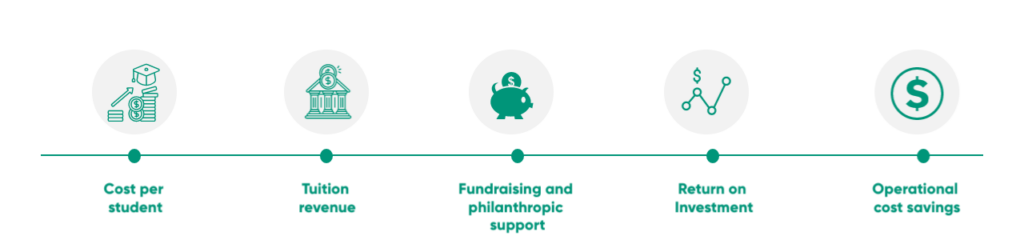
Cost per student: Average cost of educating each student.
Tuition revenue: Income generated from student tuition fees.
Fundraising and philanthropic support: Donations and grants received to support the institution.
Return on investment: Measurable benefit in relation to resources invested.
Operational cost savings: Reductions in operational expenses without compromising quality.
Student Engagement and Learning Outcomes
High student engagement and successful learning outcomes translate to greater student satisfaction, improved graduate employability and a boost to your institution’s reputation. Track the following key performance indicators:
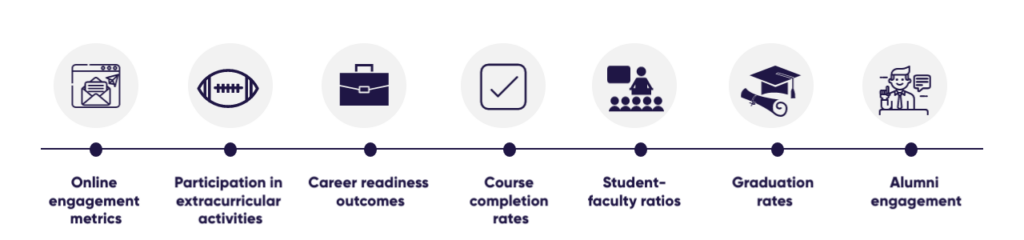
Online engagement metrics: Measures of student interaction and participation in online learning platforms.
Participation in extracurricular activities: Level of student involvement in non-academic activities.
Career readiness outcomes: Success of graduates in securing employment and achieving career goals.
Course completion rates: Percentage of students who successfully complete each course.
Student-faculty ratios: Number of students assigned to each faculty member.
Graduation rates: Percentage of students graduating within the expected or predefined timeframe.
Alumni Engagement: Level of engagement and involvement of graduates with the institution.
Diversity, Equity and Inclusion
Fostering a diverse and inclusive environment promotes equity in student success, attracts a wider talent pool, and strengthens your community. We assess:
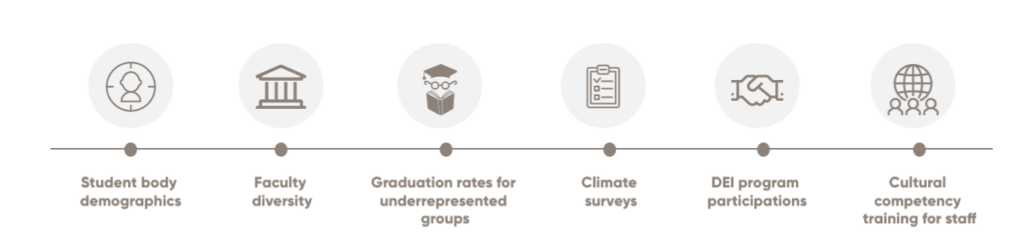
Student body demographics: Representation of different ethnicities, genders, socioeconomic backgrounds, etc. in the student population.
Faculty diversity: Representation of different groups among faculty members.
Graduation rates for underrepresented groups: Success rates of students from minority or disadvantaged backgrounds.
Climate surveys: Assessments of the campus environment in terms of inclusivity and belonging.
DEI program participations: Number of students, faculty, and staff engaging in diversity, equity, and inclusion initiatives.
Cultural competency training for staff: Efforts to equip staff with knowledge and skills to support a diverse student body.
Brand Key Performance Indicators for Reputation and Marketing Effectiveness
Effective marketing strategies to increase student enrollment play a key role in establishing a strong brand reputation and contributing to a positive public image. We monitor these key performance indicators:
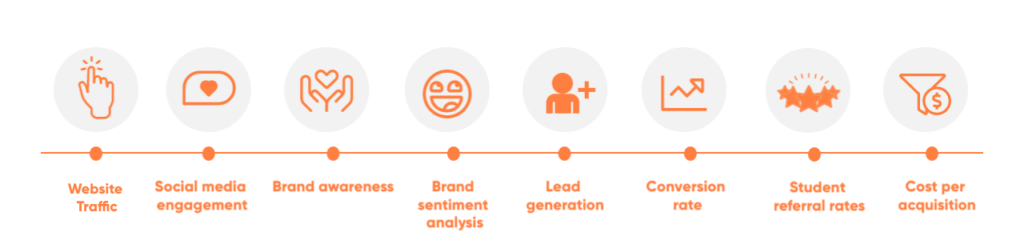
Website traffic: Number of visitors to the institution’s website.
Social media engagement: Likes, shares, comments, and other interactions on social media platforms.
Brand awareness: Recognition and familiarity with the institution by the target audience.
Brand sentiment analysis: Understanding public perception and opinion of the institution.
Lead generation: Number of potential students identified through marketing efforts.
Conversion rate: Percentage of leads who actually enroll in the program.
Student referral rates: Number of new students enrolled through recommendations from current or former students.
Cost per acquisition: Average cost of acquiring a new student through marketing campaigns.
Implementing KPIs for Success
You’ve chosen your key performance indicators (KPIs). But hold up, don’t get lost in a sea of data just yet. We must translate those fancy metrics into real action.
First things first, let’s talk SMART goals. Ditch the vague aspirations and define clear, measurable objectives. Instead of “improve student satisfaction,” aim for “increase student satisfaction score by 5% within the next semester.” See how much more focused and actionable that is?
Data is your fuel, but dashboards are your engine. Imagine analyzing spreadsheets manually – cumbersome, right? Data visualization tools and dashboards are your secret weapons for making sense of all that information. They reveal trends, highlight areas for improvement and showcase your progress in a clear, digestible way.
Collaboration is key. Don’t work in silos! Involve different departments – admissions, finance, academics, marketing – everyone who plays a role in achieving your goals. Share your KPIs, gather their insights and work together to track progress and make informed decisions. Remember, a data-driven culture thrives on shared ownership and collective action.
Remember, adaptability is your superpower. The higher education landscape is dynamic, so your KPIs should be too. Review and update them based on new priorities, data-driven insights and feedback regularly. Be flexible, be responsive and embrace continuous improvement as your guiding principle.
The Future is Not an Improvement. It’s a Revolution.
Your competitors—the legacy players—are selling you on a slightly better version of the past. More data, a slightly cleaner CRM, a new consulting strategy. But what if the problem isn’t a lack of optimization but a fundamental design flaw?
The next generation of enrollment demands a completely new approach built on intelligence, not just data.
From “Sticker Shock” to Financial Clarity You can’t afford to lose students to sticker price anxiety. The future is about radical transparency. It’s about a clear, simple financial aid process that tells a student their true cost of attendance from day one. No surprises. No opaque spreadsheets. Just clarity.
From Data Overload to Predictive Intelligence: Stop drowning in data. The future is about leveraging AI and predictive analytics to identify the students most likely to enroll and graduate. It’s about understanding their unique needs before they even ask and delivering a hyper-personalized experience that feels like it was designed just for them.
From Siloed Chaos to a Seamless Student Journey: Overthrow the departmental silos. The future of enrollment is an all-in-one platform that connects every stage of the student journey—from initial search to application, financial aid and enrollment. It’s one portal, one point of contact, one seamless experience.
Stop Tinkering. Start Transforming.
You have a choice. You can keep doing what you’ve always done, hoping a better website or a new consulting firm will solve a systemic problem. Or you can admit the old way of doing things is broken and choose to fundamentally transform your approach.
Your KPIs aren’t just a measure of your progress; they are proof that the traditional system is failing. It’s time to stop measuring the problem and start building the solution.
Ready to dismantle the old way and build the next generation of enrollment? Partner with EDDY to identify crucial KPIs, develop effective strategies to increase student enrollment, and track progress toward sustainable growth. Together, we can turn your data into a powerful force for positive change and empower your institution to reach its full potential.
Take the first step today! Contact EDDY to learn how we can help you leverage the power of KPIs and achieve your strategic goals.
Hushed conversations about the budget, a shrinking applicant pool and that dreaded enrollment cliff are no longer whispers. The numbers are in and they tell a story you know all too well: the old way of doing things isn’t working any more.
The traditional models are failing to keep pace with a new generation of students and a rapidly evolving job market. We’ve moved beyond the “enrollment cliff” as a future threat; it’s a present reality that is forcing institutions to fundamentally rethink their approach to marketing and enrollment.
The old playbook of generic campaigns and static brochures is obsolete. In 2026, the game is no longer about reaching the most students but about connecting with the right students in the most authentic way possible. This new landscape is defined by data, driven by Artificial Intelligence (AI) and built on a foundation of radical transparency. It’s a world where the institutions that survive will be those willing to break away from the establishment and challenge the status quo.
Explore the 2026 trends and predictions that are shaking up digital marketing for education industry, what it means for the next generation of enrollment and how institutions can position themselves to thrive in a new era of higher education.
Shift to GEO/AEO and “Search Everywhere Optimization”
With the rise of social search and AI Overviews, traditional Search Engine Optimization (SEO) is becoming insufficient. The new paradigm is “Search Everywhere Optimization.” This includes GEO (Generative Engine Optimization) to ensure your institution is favorably mentioned in AI-generated answers and AEO (Answer Engine Optimization) to appear in direct answers in AI Overviews as well as on platforms like TikTok, Reddit, Quora and voice assistants. By 2026, success will not be measured by a #1 ranking on a Google page, but by being the embedded answer wherever a student asks a question.
Conversational AI as the 24/7 Admissions Counselor
AI is already strongly embedded in advertising platforms to capture student interest, but the next frontier is how institutions leverage AI in lead nurturing and admissions. As shown in EducationDynamics’ latest Engaging the Modern Learner Report, 60% of students use AI chatbots for college research, a significant jump from 49% just a year ago. This will move beyond simple chatbots into sophisticated conversational AI that manages entire nurturing funnels, providing instant, personalized answers to complex questions about financial aid, credit transfers and program specifics via SMS and web chat. These AI assistants will be able to schedule campus tours, triage inquiries to the correct human counselor and provide 24/7 support, dramatically improving the prospective student experience and freeing up admissions teams to focus on high-intent, high-value interactions.
Authentic Storytelling
Authentic user generated content will be a vital part of a brand’s storytelling as more students turn to social channels and short form video to research and validate individual brands. Brands will increasingly leverage content creators’ sphere of influence, leveraging short-form video to tell showcase their brand story. This creates a massive opportunity for institutions to leverage user-generated content and partner with student-creators who can showcase the real, unpolished and relatable brand story. Think a “Day in the Life” series on TikTok or a student ambassador Q&A on Instagram Live—these genuine interactions build trust and connection in a way a static brochure never could.
AI for Personalization
AI picks up on individual user preferences and can serve ad creative that they are more likely to engage with due to better relevance. AI will use existing ad assets (images, videos, headlines, descriptions, etc.) and landing page experiences to create unique and personalized ads. Landing page personalization will also emerge in 2026 as a way to increase relevance and conversion rate optimization. To be successful, advertisers need to provide a wide variety of existing assets and have a strong landing page experience. For example, if a prospective student has previously browsed your computer science program page, an AI-powered ad could then automatically show them a video testimonial from a current computer science student, rather than a generic campus tour video.
Rise of Social for Search
Over the past couple of years, we’ve seen students turning to social for search, we will continue to see this pattern and expect it to increase. Unlike a traditional search engine that provides a list of links, social platforms offer an immersive experience. Students can search for a university’s name and instantly see “day in the life” videos, unscripted dorm tours and Q&A sessions with real students. This content feels more genuine and trustworthy than a polished university-produced video. For them, a hashtag search is less about finding a fact and more about getting a feel for a school’s culture. Having an organic and paid presence on social channels will be vital for brands to be present where their audience is searching.
More Ads in AIOs/AI Mode
To date, there have been very few instances of EDU ads within AI Overviews or AI Mode, but in 2026, we expect this to change dramatically. Google is actively integrating ads directly into its AI-generated summaries and institutions need to be prepared to take advantage of this new frontier for digital advertising for higher education.
This shift is about more than just a new ad placement; it represents a fundamental change in how advertisers reach prospective students. Instead of relying solely on keywords, digital advertising for universities in AI Overviews are triggered by the full conversational context of a user’s query. This means an ad for your nursing program could appear not just on a search for “nursing school near me,” but also on a more exploratory query like “what are the best career paths in healthcare?” that generates an AI Overview response.
To secure a presence in these valuable new placements, institutions will need to embrace Google’s AI-powered ad solutions. These include:
Broad Match: This uses Google’s AI to match your ads to a much wider range of relevant searches, including long-tail and conversational queries that are common in AI Overviews.
Performance Max: This campaign type leverages automation to find high-value conversions across all of Google’s channels, including Search, Display, YouTube and, increasingly, AI Overviews.
AI Max for Search (Beta): The newest iteration of Google’s AI-powered ad solutions, AI Max for Search is designed specifically to enhance creative relevance and expand reach within AI-driven search experiences.
As AI-generated results take up more screen space, being present in these ad placements is crucial. This is a chance to get your brand in front of students at a new moment of discovery, where they are actively seeking complex, nuanced information. Shifting to these AI-powered tools is the key to ensuring your institution remains visible and competitive.
First-Party Data is the Ultimate KPI
As audience targeting and keywords continue to get broader, across paid search and paid social, properly training AI to find and optimize to the right user will be crucial to a campaign’s success. The best signal institutions can provide is through their own data. Institutions will need to prioritize regularly importing their 1st party data to fuel their audiences and bidding strategies. Bidding to outcomes will drive quality and as a result CPCs as a KPI will decrease in importance, especially as CPCs continue to increase. Instead, the focus should remain on the cost per outcome, such as cost per application and cost per enroll. Focusing on and optimizing to these ultimate KPIs will bypass front-end noise, ensure quality and prioritize outcomes that more closely correlate to business goals.
Ready to Break Free From the Old Playbook in the Higher Education Industry?
The time for waiting is over. The institutions that will survive and thrive in this new era are those that abandon the outdated playbooks of the past and embrace a new, data-driven and authentic approach to enrollment.
This is not a time for incremental change. It’s a time for bold, strategic action. By leveraging AI for personalization and operational efficiency, embracing authentic storytelling and prioritizing first-party data, you can build a recruitment strategy that not only attracts the right students but also proves the enduring value of your institution.
Ready to transform your enrollment strategy and secure your institution’s future? EducationDynamics is the only partner with the expertise, technology and end-to-end solutions to help you not just adapt, but thrive. Contact us today to future-proof your institution.
Tanish Doshi was in high school when he pushed the Tucson Unified School District to take on an ambitious plan to reduce its climate footprint. In Oct. 2024, the availability of federal tax credits encouraged the district to adopt the $900 million plan, which involves goals of achieving net-zero emissions and zero waste by 2040, along with adding a climate curriculum to schools.
Now, access to those funds is disappearing, leaving Tucson and other school systems across the country scrambling to find ways to cover the costs of clean energy projects.
The Arizona school district, which did not want to impose an economic burden on its low-income population by increasing bonds or taxes, had expected to rely in part on federal dollars provided by the Biden-era Inflation Reduction Act, Doshi said.
But under HR1, or the “one big, beautiful bill,” passed on July 4, Tucson schools will not be able to receive all of the expected federal funding in time for their upcoming clean energy projects. The law discontinues many clean energy tax credits, including those used by schools for solar power and electric vehicles, created under the IRA. When schools and other tax-exempt organizations receive these credits, they come in the form of a direct cash reimbursement.
At the same time, Tucson and thousands of districts across the country that were planning to develop solar and wind power projects are now forced to decide between accelerating them to try to meet HR1’s fast-approaching “commence construction” deadline of June 2026, finding other sources of funding or hitting pause on their plans. Tina Cook, energy project manager for Tucson schools, said the district might have to scale back some of its projects unless it could find local sources of funding.
“Phasing out the tax credits for wind and solar energy is going to make a huge, huge difference,” said Doshi, 18, now a first-year college student. “It ends a lot of investments in poor and minority communities. You really get rid of any notion of environmental justice that the IRA had advanced.”
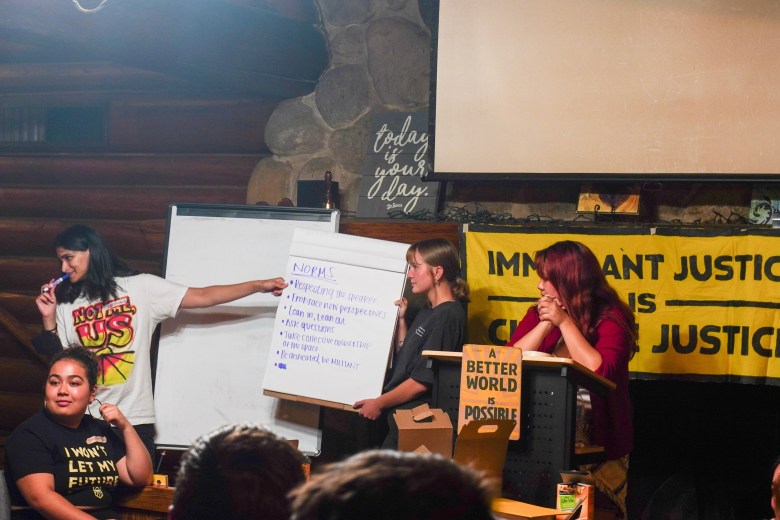
Emma Weber leads a chant at a Colorado state capitol rally in support of “The Green New Deal for Colorado Schools.” Credit: Courtesy of Emma Weber
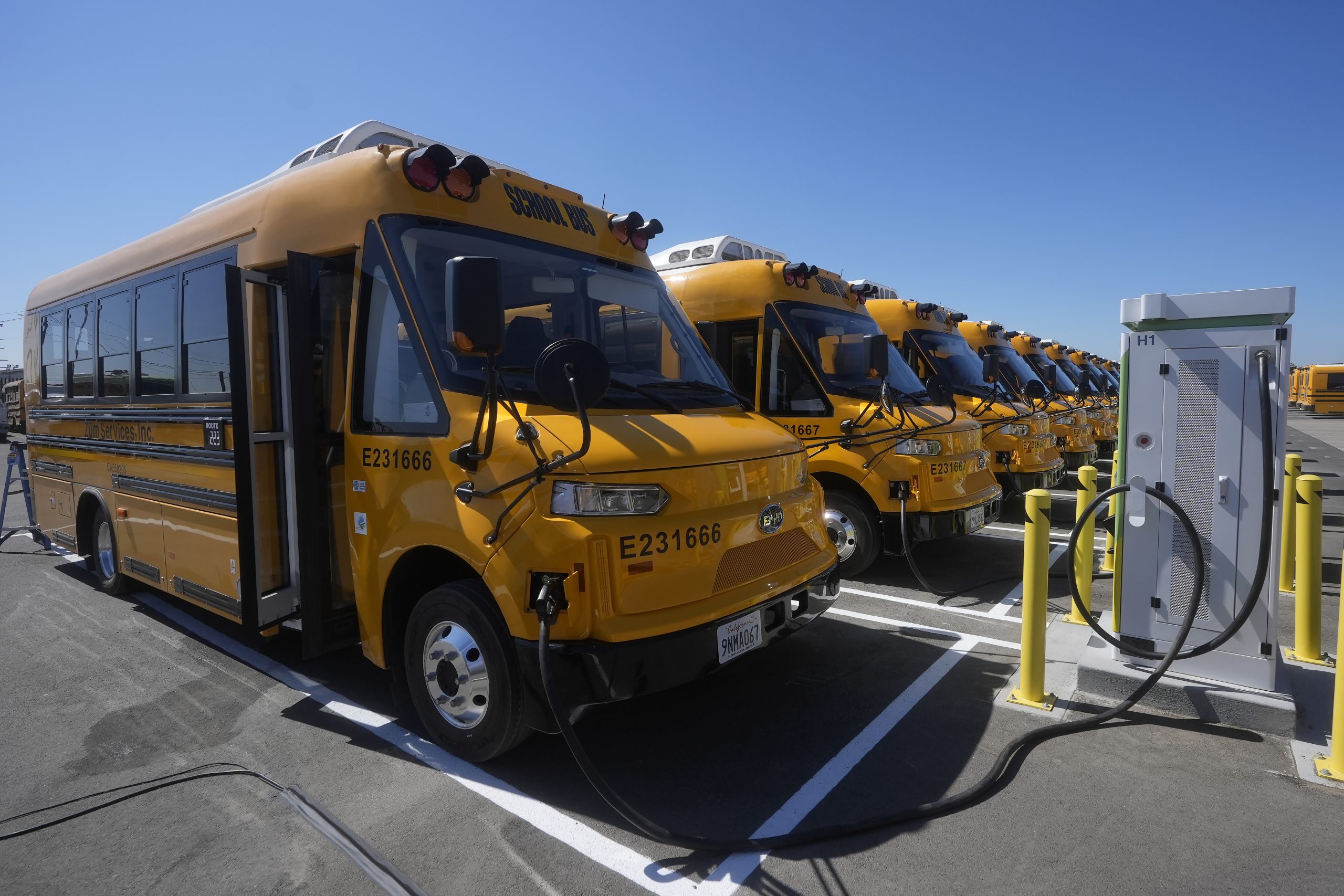
The tax credits in the IRA, the largest legislative investment in climate projects in U.S. history, had marked a major opportunity for schools and colleges to reduce their impact on the environment. Educational institutions are significant contributors to climate change: K-12 school infrastructure, for example, releases at least 41 million metric tons of emissions per year, according to a paper from the Annenberg Institute at Brown University. The K-12 school system’s buses — some 480,000 — and meals also produce significant emissions and waste. Clean energy projects supported by the IRA were helping schools not only to limit their climate toll but also to save money on energy costs over the long term and improve student health, advocates said.
As a result, many students, consultants and sustainability leaders said, they have no plans to abandon clean energy projects. They said they want to keep working to cut emissions, even though that may be more difficult now.
Related: Become a lifelong learner. Subscribe to our free weekly newsletter featuring the most important stories in education.
Sara Ross, cofounder of UndauntedK12, which helps school districts green their operations, divided HR1’s fallout on schools into three categories: the good, the bad and the ugly.
On the bright side, she said, schools can still get up to 50 percent off for installing ground source heat pumps — those credits will continue — to more efficiently heat and cool schools. The network of pipes in a ground source pump cycles heat from the shallow earth into buildings.
In the “bad” category, any electric vehicle acquired after Sept. 30 of this year will not be eligible for tax credits — drastically accelerating the IRA’s phase-out timeline by seven years. That applies to electric school buses as well as other district-owned vehicles. Electric vehicle charging stations must be installed by June 30, 2026 at an eligible location to claim a tax credit.*
The expiration of the federal tax credits could cost a district up to $40,000 more per vehicle, estimated Sue Gander, director of the Electric School Bus Initiative run by the nonprofit World Resources Institute.
Solar projects will see the most “ugly” effects of HR1, Ross said.
Los Angeles Unified School District is planning to build 21 solar projects on roofs, carports and other structures, plus 13 electric vehicle charging sites, as part of an effort to reduce energy costs and achieve 100 percent renewable energy by 2040. The district anticipated receiving around $25 million in federal tax credits to help pay for the $90 million contract, said Christos Chrysiliou, chief eco-sustainability officer for the district. With the tight deadlines imposed by HR1, the district can no longer count on receiving that money.
“It’s disappointing,” Chrysiliou said. “It’s nice to be able to have that funding in place to meet the goals and objectives that we have.”
Emma Weber, at left, trains student leaders at Sunrise Movement’s “summer intensive” in Illinois this year. Credit: Courtesy of Emma Weber
LAUSD is looking at a small portion of a $9 billion bond measure passed last year, as well as utility rebates, third-party financing and grants from the California Energy Commission, to help make up for some of the gaps in funding.
Many California State University campuses are in a similar position as they work to install solar to meet the system’s goal of carbon neutrality by 2045, said Lindsey Rowell, CSU’s chief energy, sustainability and transportation officer.
Tariffs on solar panel materials from overseas and the early sunsetting of tax credits mean that “the cost of these projects are becoming prohibitive for campuses,” Rowell said.
Sweeps of undocumented immigrants in California may also lead to labor shortages that could slow the pace of construction, Rowell added. “Limiting the labor force in any way is only going to result in an increased cost, so those changes are frightening as well,” she said.
New Treasury Department guidance, issued Aug. 15, made it much harder for projects to meet the threshold needed to qualify for the tax credits. Renewable energy projects previously qualified for credits once a developer spent 5 percent of a project’s cost. But the guidelines have been tightened — now, larger projects must pass a “physical work test,” meaning “significant physical labor has begun on a site,” before they can qualify for credits. With the construction commencement deadline looming next June, these will likely leave many projects ineligible for credits.
“The rules are new, complex [and] not widely understood,” Ross said. “We’re really concerned about schools’ ability to continue to do solar projects and be able to effectively navigate these new rules.”
Schools without “fancy legal teams” may struggle to understand how the new tax credit changes in HR1 will affect their finances and future projects, she added.
Some universities were just starting to understand how the IRA tax credits could help them fund projects. Lily Strehlow, campus sustainability coordinator at the University of Wisconsin, Eau-Claire, said the planning cycle for clean energy projects at the school can take ten years. The university is in the process of adding solar to the roof of a large science building, and depending on the date of completion, the project “might or might not” qualify for the credits, she said.
“At this point, everybody’s holding their breath,” said Rick Brown, founder of California-based TerraVerde Energy, a clean energy consultant to schools and agencies.
Brown said that none of his company’s projects are in a position where they’re not going to get done, but the company may end up seeing fewer new projects due to a higher cost of equipment.
Tim Carter, president of Second Nature, which supports climate work in education, added that colleges and universities are in a broader period of uncertainty, due to larger attacks from the Trump administration, and are not likely to make additional investments at this time: “We’re definitely in a wait and see.”
For youth activists, the fallout from HR1 is “disheartening,” Doshi said.
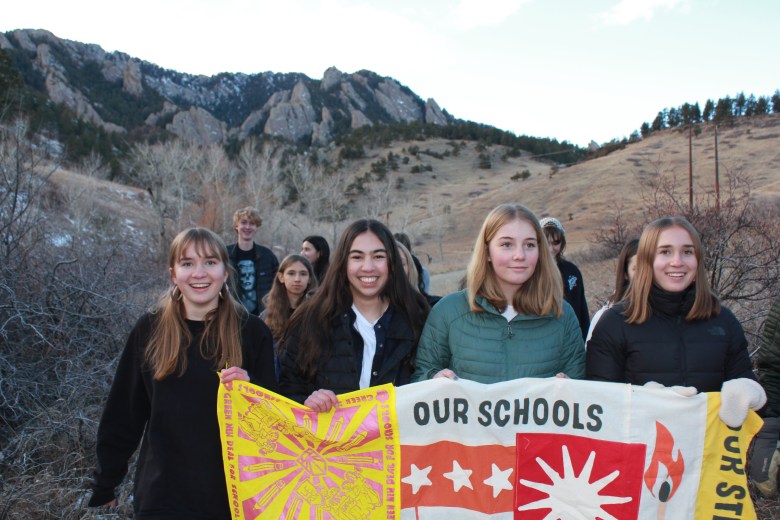
Emma and Molly Weber, climate activists since eighth grade, said they are frustrated. The Colorado-based twins, who will start college this fall, helped secure the first “Green New Deal for Schools” resolution in the nation in the Boulder Valley School District. Its goals include working toward a goal of Zero Net Energy by 2050, making school buildings greener, creating pathways to green jobs and expanding climate change education.
Emma, far left, and Molly Weber, far right, work with climate leaders from the Boulder Valley School District’s Sunrise Movement to prepare for Colorado’s legislative session. Credit: Courtesy of Emma Weber
“It feels very demoralizing to see something you’ve been working so hard at get slashed back, especially since I’ve spoken to so many students from all over the country about these clean energy tax credits, being like, ‘These are the things that are available to you, and this is how you can help convince your school board to work on this,’” Emma Weber said.
The Webers started thinking about other creative ways to pay for the clean energy transition and have settled on advocating for state-level legislation in the form of a climate superfund, where major polluters in a community would be responsible for contributing dollars to sustainability initiatives.
Consultants and sustainability coordinators said that they don’t see the demand for renewable energy going away. “Solar is the cheapest form of energy. It makes sense to put it on every rooftop that we can. And that’s true with or without tax credits,” Strehlow said.
*Correction: This version of the story includes updated information on the timeline for the expiration of tax credits for electric vehicle charging stations.
Contact editor Caroline Preston at 212-870-8965, via Signal at CarolineP.83 or on email at [email protected].
The Hechinger Report provides in-depth, fact-based, unbiased reporting on education that is free to all readers. But that doesn’t mean it’s free to produce. Our work keeps educators and the public informed about pressing issues at schools and on campuses throughout the country. We tell the whole story, even when the details are inconvenient. Help us keep doing that.
ELYRIA, Ohio —Nolan Norman had no idea what microelectronic manufacturing entailed when his adviser at Midview High suggested he take the school’s new class on it last year.
Yet once he started fusing metal to circuit boards, he says he was hooked. “When I was little, I thought that wizards made these things,” the 18-year-old joked of the electronics he’s now able to assemble. Despite long “hating” the idea of college, he was motivated to enroll in the microelectronic manufacturing bachelor’s degree program at nearby Lorain County Community College this fall. He’s spent the summer working in a job in the field that gives him both college credit and pays $18 an hour. Said Norman: “Now I’m seeing the path to get to be one of these wizards.”
Norman’s path wasn’t accidental: Two years ago, Lorain County Community College partnered with Midview High to create the course, one of several ways the college is trying to recruit and train more young people for jobs in manufacturing.
Nationally, more than 400,000 manufacturing jobs are going unfilled, many of them in advanced manufacturing, which requires the sort of high-tech skills and postsecondary credentials that Norman is working toward. President Donald Trump is leveraging tariffs in part, he has said, to grow manufacturing jobs in the United States, including those that involve machinery or robotics and training after high school.
Nolan Norman, 18, an incoming freshman at Lorain County Community College, observes a circuit board under a microscope on Aug. 6 in Elyria, Ohio. Credit: Dustin Franz for The Hechinger Report
Yet as it is, colleges have struggled to add and revise their training based on employer input and prepare students for tomorrow’s jobs, not just today’s. In the area surrounding Lorain County Community College, officials estimate that they’d have to teach four times the number of students to meet today’s unfilled manufacturing jobs.
Gogebic Community College, in rural Michigan, suspended its 22-year-old manufacturing technology program this spring because of low enrollment. “We could not get people into it,” registrar Karen Ball said, speaking in her personal capacity and not on behalf of the institution. “The needs in manufacturing are evolving so quickly, that to stay on top of it is too difficult.”
And then there is the history of manufacturing in communities like Norman’s, where so many factories moved to other countries in recent decades. The manufacturing workforce in the Great Lakes region shrunk by 35 percent between 2000 and 2010, a loss of 1.6 million jobs. But nationwide manufacturing has seen some recovery since then, rising from 11.5 million manufacturing jobs in 2010 to 12.9 million today, according to an analysis by the Economic Innovation Group.
“If your family experienced tumultuous layoffs in steel or automotives, they may see manufacturing as a risky pathway rather than a solid pathway,” said Marisa White, vice president for enrollment management and student services at Lorain County Community College. “Individuals are like, ‘I don’t want my kids to go into something like that.’”
Related: Interested in more news about colleges and universities? Subscribe to our free biweekly higher education newsletter.
White and other Lorain officials, though, have been slowly making strides in adding more students in recent years — and in trying to keep up with the needs of companies.
Printed circuit boards before components are attached in a lab at Lorain County Community College in Elyria, Ohio. Credit: Dustin Franz for The Hechinger Report
In addition to partnering with Midview High, staff from the college set up tables at food banks and Boys and Girls Clubs where they answer questions about its manufacturing degree and certificate programs, and even partner with a nearby manufacturing nonprofit that uses holograms and a robot dog to get the attention of high school students. That is paying off, officials say. The college now produces 120 graduates each year in advanced manufacturing — a category that includes industrial engineering tech, mechanical engineering tech, welding, automation and microelectronics — compared to 43, a decade ago.
It has also cultivated a large network of local employers and a system to do market research before launching certificate programs. In some cases, it partners with companies that pay for employees to get training at Lorain college. In a classroom on a recent Wednesday, one of those electrician apprentices, Tyler Tector, 25, had rigged a series of plastic tubes to a small air pump. He hoped it would generate enough suction to keep its grip on his lab partner’s smartphone, which dangled precariously in the air (and already had a cracked screen from some previous misadventure).
The assignment was part of a class in practical applications of fluid power. Tector’s employer, Ford Motor Co., was sending him and a small group of other apprentice electricians to take this class once a week, so they could better work with the growing number of robots at the local engine plant.
Nick Wade, an electrical apprentice for Ford Motor Co., works on a circuitry exercise during professor Brian Iselin’s practical applications of fluid power course at Lorain County Community College in Elyria, Ohio. Credit: Dustin Franz for The Hechinger Report
“Robots are the best co-workers,” joked Tector, who added that he’s not worried about bots putting him out of a job because so many humans are needed to fix them. “They do exactly what you tell them to do. They don’t ask questions. They don’t yell and complain.” They are finicky though, he added. If anything in a robot’s area gets bumped out of place even a fraction of an inch, that could throw the machine off and require reprogramming.
So many employers told college officials they need technicians with basic knowledge across a range of trades that the college is starting a new associate degree program in the fall called Multicraft Industrial Maintenance that will include lessons like the one Tector is doing but in a condensed format.
“Because of the high-tech nature of things, employers don’t want students siloed into trades anymore,” said Brian Iselin, an assistant professor in manufacturing who is leading the effort.
Johnny Vanderford, who leads the college’s microelectronic manufacturing degree program, often spends part of his lunch break scouring LinkedIn for the latest job postings by local employers to see what skills they are looking for. His program’s model involves finding every student a paid internship, and students can take classes two days a week or in the evening to have the rest of the time free for paid work in the field.
Professor Brian Iselin teaches a course to employees of Ford’s Cleveland Engine Plant No. 1 at Lorain County Community College in Elyria, Ohio. Credit: Dustin Franz for The Hechinger Report
Vanderford pointed to a PowerPoint slide showing more than 90 manufacturing companies in the area he said the college has worked with: “We basically tailor our curriculum to meet their workforce needs.” In some cases that means wedging into a class syllabus training on some specialized machine that might be used at only a handful of employers.
Rather than simply having advisory committees with a few large companies that meet occasionally, today Lorain and many other colleges follow a model that involves frequent discussions with company leaders, instructors directly participating in those meetings and a greater focus on the skills employers need.
“Those relationships take time,” said Shalin Jyotishi, managing director of the Future of Work and Innovation Economy Initiative at the think tank New America. He says that it is hard for other community colleges to replicate best practices from Lorain because they are labor-intensive to enact.
Employers also have a tendency to change their plans. For instance, when Tesla pledged to build an electrical vehicle plant in Flint, Michigan, the local Mott Community College started an EV program, said Jyotishi. But the plant never came. “The college still has a Tesla sign,” he said.
The numbers no longer add up at Gogebic Community College, in Michigan’s Upper Peninsula.
When the college suspended its program in manufacturing technology in May, it had just three students.
As with many programs at the college, a single employee was charged with administering and teaching. Doing all that plus staying on top of nearby companies’ workforce needs was “unsustainable,” said Ball, the registrar.
The few small manufacturers in the area all say they have different needs, rather than one clear set of skills, she said, noting that “you can’t be a generalist in manufacturing.” Even when the college does identify a needed skill to teach, it takes at least six months to a year to get the program approved by college leaders and the accreditor. By then, companies might need something different.
And the pay offered by small manufacturers is often low, despite an expectation of training beyond a high school diploma, said Ball.
The Richard Desich SMART Center at Lorain County Community College in Elyria, Ohio, houses the microelectronic manufacturing systems program, which teaches students about the manufacture of semiconductors. Credit: Dustin Franz for The Hechinger Report
Nationwide, automation has reduced the earning power for many manufacturing jobs, said Jyotishi of New America. “For a long time manufacturing was the bedrock of the middle class,” said Jyotishi. “That wage premium for manufacturing has actually gone away.”
And there’s a danger that as colleges aim to please employers, they will create programs that are too narrow, argues Davis Jenkins, senior research scholar at Columbia University’s Community College Research Center. (Editor’s note: The Hechinger Report, which produced this story, is an independent unit of Columbia’s Teachers College.) “You don’t want specific skills training — you don’t want to just train students to work in a fab,” he said, referring to a facility where microchips and other electronics are produced. “Whenever schools buy a lot of specific equipment for training, I worry a lot. What students really need are broader skills.”
Even Lorain doesn’t always find the right fit. During the pandemic, the college started what it calls fast-track programs, which typically run 16 weeks, across a range of professional fields (not just manufacturing). But because of mixed success attracting students, officials recently slimmed the list from 60 to 13, said Tracy Green, vice president of strategic and institutional development at Lorain County Community College. And the college recently started winding down a program in industrial safety because of a lack of student interest, even though there are still a large number of job postings by local companies for jobs with those skills, said Iselin.
One provision in Trump’s new “one big, beautiful bill” promises a boost to manufacturing education, however. For the first time, the law will allow low-income students to use federal Pell Grants for short-term certificate programs, in what is known as Workforce Pell. It’s a change many community college leaders have been calling for for years as they have created more short-term programs in response to demand by students and employers who want to quickly gain new skills in fast-changing areas, including manufacturing. But that program won’t be up and running until the 2026-27 academic year.
The promise of a big new employer moving to town can galvanize student interest in manufacturing.
In Ohio, the talk for years has been a $28 billion Intel chip manufacturing plant under construction in Columbus. The facility is expected to bring some 3,000 jobs to the area, and the company has committed $50 million to workforce education in the state, including $2 million to Lorain County Community College, which it used to buy new classroom equipment, support student scholarships, and pay for program development and instructor training.
Chris Dukles, 36, an electrician apprentice for Ford Motor Co., takes notes during a course taught by Brian Iselin at Lorain County Community College. Credit: Dustin Franz for The Hechinger Report
The top graduates in Lorain County Community College’s microelectronic manufacturing program each year typically get internships at Intel’s closest existing plant, which is in Chandler, Arizona, a suburb of Phoenix. It’s a motivator to work hard in their classes, some students say.
Lia Douglas, a student in the microelectronic manufacturing program at Lorain, scored one of those slots and headed to Arizona last summer. The experience, though, was sobering.
“My plan really was to make a good impression with my internship, get a job maybe in Arizona even if it was for a year or two, and then try to move back to Ohio when they have an Ohio plant,” she said.
But one day last July, all the employees were unexpectedly summoned to an all-hands call where the company announced a wave of layoffs and reductions in some benefits that had interested Douglas, including a sabbatical program. This year, Intel announced that the opening of the Ohio plant has been delayed until 2030.
“I learned I had a little too much faith in a company and the promises of a company,” she said. “And it reminded me that at the end of the day, the company has to make money.”
She’s still glad she chose Lorain’s program, which has landed her several local internships and opened her eyes to the many small and mid-sized manufacturers in the area.
Lia Douglas is a student in the microelectronic manufacturing program at Lorain County Community College. Credit: Dustin Franz for The Hechinger Report
And she has been hooked on a career in making things ever since she was in middle school and a family friend taught her a bit of welding. Her hero was Adam Savage, co-host of the TV show “MythBusters,” who she even got to meet at a comic book convention in Cleveland.
Douglas complains that students are told in high school that they either have to choose a trade for hands-on work or an academic track to prepare for a career behind a desk that might involve design and project management. She says that as manufacturing changes, there’s plenty of room to do both. In fact, she says, when a group of doctoral students from Kent State University recently visited the college’s clean room, she was amused to see them struggle with some of the tools the students routinely use in the microelectronic manufacturing program.
“It takes as much brainpower to figure out what is the right tool for the right process as getting a Ph.D.,” she said.
Contact editor Caroline Preston at 212-870-8965, via Signal at CarolineP.83 or on email at [email protected].
The Hechinger Report provides in-depth, fact-based, unbiased reporting on education that is free to all readers. But that doesn’t mean it’s free to produce. Our work keeps educators and the public informed about pressing issues at schools and on campuses throughout the country. We tell the whole story, even when the details are inconvenient. Help us keep doing that.