Rigorous research rarely shows that any teaching approach produces large and consistent benefits for students. But tutoring seemed to be a rare exception. Before the pandemic, almost 100 studies pointed to impressive math or reading gains for students who were paired with a tutor at least three times a week and used a proven curriculum or set of lesson plans.
Some students gained an extra year’s worth of learning — far greater than the benefit of smaller classes, summer school or a fantastic teacher. These were rigorous randomized controlled trials, akin to the way that drugs or vaccines are tested, comparing test scores of tutored students against those who weren’t. The expense, sometimes surpassing $4,000 a year per student, seemed worth it for what researchers called high-dosage tutoring.
On the strength of that evidence, the Biden administration urged schools to invest their pandemic recovery funds in intensive tutoring to help students catch up academically. Forty-six percent of public schools heeded that call, according to a 2024 federal survey, though it’s unclear exactly how much of the $190 billion in pandemic recovery funds have been spent on high-dosage tutoring and how many students received it.
Related: Our free weekly newsletter alerts you to what research says about schools and classrooms.
Even with ample money, schools immediately reported problems in ramping up high-quality tutoring for so many students. In 2024, researchers documented either tiny or no academic benefits from large-scale tutoring efforts in Nashville, Tennessee, and Washington, D.C.
New evidence from the 2023-24 school year reinforces those results.Researchers are rigorously studying large-scale tutoring efforts around the nation and testing whether effective tutoring can be done more cheaply. A dozen researchers studied more than 20,000 students in Miami; Chicago; Atlanta; Winston-Salem and Greensboro, North Carolina; Greenville, South Carolina; schools throughout New Mexico, and a California charter school network. This was also a randomized controlled study in which 9,000 students were randomly assigned to get tutoring and compared with 11,000 students who didn’t get that extra help.
Their preliminary results were “sobering,” according to a June report by the University of Chicago Education Lab and MDRC, a research organization.
The researchers found that tutoring during the 2023-24 school year produced only one or two months’ worth of extra learning in reading or math — a tiny fraction of what the pre-pandemic research had produced. Each minute of tutoring that students received appeared to be as effective as in the pre-pandemic research, but students weren’t getting enough minutes of tutoring altogether. “Overall we still see that the dosage students are getting falls far short of what would be needed to fully realize the promise of high-dosage tutoring,” the report said.
Monica Bhatt, a researcher at the University of Chicago Education Lab and one of the report’s authors, said schools struggled to set up large tutoring programs. “The problem is the logistics of getting it delivered,” said Bhatt. Effective high-dosage tutoring involves big changes to bell schedules and classroom space, along with the challenge of hiring and training tutors. Educators need to make it a priority for it to happen, Bhatt said.
Some of the earlier, pre-pandemic tutoring studies involved large numbers of students, too, but those tutoring programs were carefully designed and implemented, often with researchers involved. In most cases, they were ideal setups. There was much greater variability in the quality of post-pandemic programs.
“For those of us that run experiments, one of the deep sources of frustration is that what you end up with is not what you tested and wanted to see,” said Philip Oreopoulos, an economist at the University of Toronto, whose 2020 review of tutoring evidence influenced policymakers. Oreopoulos was also an author of the June report.
“After you spend lots of people’s money and lots of time and effort, things don’t always go the way you hope. There’s a lot of fires to put out at the beginning or throughout because teachers or tutors aren’t doing what you want, or the hiring isn’t going well,” Oreopoulos said.
Another reason for the lackluster results could be that schools offered a lot of extra help to everyone after the pandemic, even to students who didn’t receive tutoring. In the pre-pandemic research, students in the “business as usual” control group often received no extra help at all, making the difference between tutoring and no tutoring far more stark. After the pandemic, students — tutored and non-tutored alike — had extra math and reading periods, sometimes called “labs” for review and practice work. More than three-quarters of the 20,000 students in this June analysis had access to computer-assisted instruction in math or reading, possibly muting the effects of tutoring.
The report did find that cheaper tutoring programs appeared to be just as effective (or ineffective) as the more expensive ones, an indication that the cheaper models are worth further testing. The cheaper models averaged $1,200 per student and had tutors working with eight students at a time, similar to small group instruction, often combining online practice work with human attention. The more expensive models averaged $2,000 per student and had tutors working with three to four students at once. By contrast, many of the pre-pandemic tutoring programs involved smaller 1-to-1 or 2-to-1 student-to-tutor ratios.
Despite the disappointing results, researchers said that educators shouldn’t give up. “High-dosage tutoring is still a district or state’s best bet to improve student learning, given that the learning impact per minute of tutoring is largely robust,” the report concludes. The task now is to figure out how to improve implementation and increase the hours that students are receiving. “Our recommendation for the field is to focus on increasing dosage — and, thereby learning gains,” Bhatt said.
That doesn’t mean that schools need to invest more in tutoring and saturate schools with effective tutors. That’s not realistic with the end of federal pandemic recovery funds.
Instead of tutoring for the masses, Bhatt said researchers are turning their attention to targeting a limited amount of tutoring to the right students. “We are focused on understanding which tutoring models work for which kinds of students.”
The Hechinger Report provides in-depth, fact-based, unbiased reporting on education that is free to all readers. But that doesn’t mean it’s free to produce. Our work keeps educators and the public informed about pressing issues at schools and on campuses throughout the country. We tell the whole story, even when the details are inconvenient. Help us keep doing that.
Illinois hospital staff will soon be required by law to refer parents of severely premature infants to services that can help prevent years of intensive and expensive therapy later, when the children are older. The new law follows reporting from The Hechinger Report that exposed how hospitals often fail to connect many eligible parents to these opportunities for their children after they leave neonatal intensive care units.
Earlier this year, Hechinger contributor Sarah Carr wrote about how, across the country, far too few parents are made aware of the kinds of therapies their babies are entitled to under federal law. Such early intervention services can ultimately reduce the need for these children to require costly special education support as schoolchildren.
Carr noted: “Federal law says children with developmental delays, including newborns with significant likelihood of a delay, can get early intervention from birth to age 3. States design their own programs and set their own funding levels, however. They also set some of the criteria for which newborns are automatically eligible, typically relying on qualifying conditions like Down syndrome or cerebral palsy, extreme prematurity or low birthweight. Nationally, far fewer infants and toddlers receive the therapies than should. The stats are particularly bleak for babies under the age of 1: Just 1 percent of these infants get help. Yet an estimated 13 percent of infants and toddlers likely qualify.”
After the Hechinger Report story was published, Illinois state Rep. Janet Yang Rohr authored legislation to require that hospitals distribute materials informing parents of premature and low birth weight babies about their eligibility for early intervention therapies. The bill also required that hospitals make a nurse or physical therapist available to explain these rights to families.
Related: Young children have unique needs and providing the right care can be a challenge. Our free early childhood education newsletter tracks the issues.
“The problem is that these families often don’t know about these services,” Yang Rohr said last spring, after her chamber passed the bill. “So this bill improves that early intervention process by requiring NICU staff to share information about these services and requires hospital staff to write a referral to these programs for families that are eligible.”
Illinois Representative Janet Yang Rohr Credit: ILGA
Carr also wrote: “The stakes are high for these fragile, rapidly growing babies and their brains. Even a few months of additional therapy can reduce a child’s risk of complications and make it less likely that they will struggle with talking, moving and learning down the road. In Chicago and elsewhere, families, advocates and physicians say a lot of the failures boil down to overstretched hospital and early intervention delivery systems that are not always talking with families very effectively, or with each other hardly at all. ‘They really put the onus of helping your child get better outcomes on you,’ said Jaclyn Vasquez, an early childhood consultant who has had three babies of her own spend time in the NICU.”
“Early intervention is life-changing for many families, as these programs provide critical services and therapies as children develop,” Illinois state Sen. Ram Villivalam said when the bill was sent to Pritzker. “But, these services can only benefit those they are able to reach, which means uplifting the program and expanding its outreach to those who need it is imperative.”
Contact editor Nirvi Shah at 212-678-3445, securely on Signal at NirviShah.14 or via email at [email protected].
The Hechinger Report provides in-depth, fact-based, unbiased reporting on education that is free to all readers. But that doesn’t mean it’s free to produce. Our work keeps educators and the public informed about pressing issues at schools and on campuses throughout the country. We tell the whole story, even when the details are inconvenient. Help us keep doing that.
Paulina Cossette spent six years getting a doctoral degree with the goal of becoming a university professor. But it wasn’t long before she gave up on that path.
With higher education under political assault, and opportunities as well as job security diminished by enrollment declines, Cossette felt burnt out and disillusioned. So she quit her hard-won job as an assistant professor of American government at a small private college in Maryland and used the skills she’d learned to go into business for herself as a freelance copy editor.
Now Cossette is hearing from other newly minted Ph.D.s and tenured faculty who want out — so many, she’s expanded her business to help them leave academia, as she did.
Seemingly relentless attacks and funding cuts since the start of Donald Trump’s second presidential term have been “the straw that broke the camel’s back,” said Cossette, who left higher education on the eve of the pandemic, in 2019. “I’m hearing from a lot more people that it’s too much.”
An exodus appears to be under way of Ph.D.s and faculty generally, who are leaving academia in the face of political, financial and enrollment crises. It’s a trend federal data and other sources show began even before Trump returned to the White House.
Nearly 70 percent of people receiving doctorates were already leaving higher education for industry, government and other sectors, not including those without job offers or who opted to continue their studies, according to the most recent available figures from the National Science Foundation — up from fewer than 50 percent decades ago.
As for faculty, more than a third of provosts reported higher-than-usual turnover last year, in a survey by Hanover Research and the industry publication Inside Higher Ed. That was before the turmoil of this late winter and spring.
Related: Interested in innovations in higher education? Subscribe to our free biweekly higher education newsletter.
“People who can get out will get out,” said L. Maren Wood, director and CEO of the Center for Graduate Career Success, which works with doctoral and other graduate students at 69 colleges and universities to provide career help.
If the spree of general job-switching that followed Covid was dubbed “the Great Resignation,” Wood said, what she’s seeing now in higher education is “the Great Defection.”
Getting a Ph.D. is a traditional pipeline to an academic career. Now some of the brightest candidates — who have spent years doing cutting-edge research in their fields to prepare for faculty jobs — are leaving higher education or signing on with universities abroad, Wood said.
“It’s going to affect the quality of a student’s experience if they don’t get to study with those leading minds, who are going into private industry or to other countries,” she said.
“What’s the joke about those who can’t do, teach? You don’t want to be in a situation where the only people left in your classrooms are the ones who can’t do anything else.”
Parents sending children to college in the fall should know that they’ll be taking classes “with a faculty member who is worried about his or her research funding and who doesn’t have the help of graduate student teaching assistants. And that’s really going to impact the quality of your student’s experience,” said Julia Kent, a vice president at the Council of Graduate Schools, who conducts research about Ph.D. career pathways.
“The quality of undergraduate education is at stake here,” Kent said.
Even Ph.D.s who want to work in academia are being thwarted.
During the Great Recession and the pandemic — two recent periods when there were few available faculty jobs — doctoral candidates could continue their studies until things got better, Wood said. This time, the Trump administration’s cuts to research funding have stripped many of that option.
“This is way worse” than those earlier crises, she said. “Doctoral students are in panic mode.”
The same deep federal cuts mean doctoral candidates in science, technology, engineering, math and other fields can’t complete the research they need to be eligible for what few academic jobs do become available.
“You’re basically knee-capping that younger generation, which undermines the intergenerational dynamism that takes place in higher education. And that trickles down into the classroom,” said Isaac Kamola, an associate professor of political science at Trinity College and head of the Center for the Defense of Academic Freedom at the American Association of University Professors, or AAUP.
Doctoral candidates early in their programs are questioning whether they should stay, said Wood. That could reduce the supply of future faculty. So will the fact that some universities have reduced the number of new Ph.D. candidates they will accept or have rescinded admission offers, citing federal budget cuts. Fewer prospective candidates are likely to apply, said Timothy Burke, a professor of history at Swarthmore College who has written about this topic.
“Our graduating students right now are thinking differently about what it means to start a doctorate,” Burke said.
Meanwhile, he said, “all the things that were dismaying to many faculty of long standing just feel worse. People who would have been totally content to stay put, whose prospects were good, who had good positions, who were more or less happy — now they’re thinking hard about whether there’s a future in this.”
That means undergraduates could experience fewer available classroom professors and teaching and graduate assistants or the “only tenuous presence of faculty who are thinking hard about going somewhere else,” he said. “There are going to be programs that are going to be shut. There are going to be departments running on fumes.”
The route to a university faculty job has always been hard. Finishing a doctoral degree takes a median of nearly six years, according to the American Academy of Arts and Sciences — nearly seven in the arts and humanities.
Doctoral students who manage to finish their programs have always had to fight for faculty positions, even before institutions announced cutbacks and hiring freezes.
Universities enroll far more doctoral candidates, to provide cheap labor as teaching and research assistants, than they will ever hire. The number of doctoral degrees awarded rose from 163,827 in 2010 to an estimated 207,000 this year, the National Center for Education Statistics says — a 26 percent increase, during a period in which the number of full-time faculty positions went up at less than half that rate.
With colleges and universities under stress, still more doctoral candidates now face the prospect of spending years “training for a career that isn’t actually available,” said Ashley Ruba, a Ph.D. who left higher education to work at Meta, where she builds virtual reality systems.
“If you told someone going to law school that they couldn’t get a job as a lawyer, I don’t think they’d do it,” said Ruba, who is also the founder of a career-coaching service for fellow Ph.D.s called After Academia.
People already in faculty jobs appear equally on edge. More than 1 in 3 said in a recent survey that they have less academic freedom than in the past; half said they worry about online harassment.And faculty salaries have been stagnant. Pay declined for the three years starting with the pandemic, when adjusted for inflation, the AAUP reports, and has still not recovered to pre-pandemic levels.
People with Ph.D.s can earn more outside academia — an average of 37 percent more, one study found. Employers value skills including active learning, critical thinking, problem-solving and resilience, which is “everything you learn in a doctoral program,” Ruba said.
The proportion of faculty considering leaving their jobs who are looking for work outside of academia has spiked. Before the pandemic, it was between 1 and 8 percent each year. Since then, it has been between 11 and 16 percent, according to R. Todd Benson, executive director and principal investigator at the Collaborative on Academic Careers in Higher Education at the Harvard Graduate School of Education, or COACHE. The figure comes from surveys conducted at 54 major universities and colleges.
A Facebook group of dissatisfied academics, called The Professor Is Out, has swelled to nearly 35,000 members. It was started by Karen Kelsky, a former anthropology professor who previously helped people get jobs in academia and now coaches them on how to leave it.
“It’s difficult to overcome the stereotype of a university professor, which is that they’re coddled, they’re overprivileged, they’re arrogant and just enjoying total job security that nobody else has,” said Kelsky, who also wrote “The Professor Is In: The Essential Guide to Turning Your Ph.D. Into a Job,” a second edition of which is due out this fall.
Today, “they are overworked. They’re grossly underpaid. They are being called the enemy. And they’re bailing on academia,” she said.
“Every time I talk to a tenured professor, they tell me how miserable they are and how desperate they are to get out,” said Kelsky. “And there’s no way this isn’t having real-life, tangible impacts on the quality of education students are getting.”
Contact writer Jon Marcus at 212-678-7556, [email protected]orjpm.82 on Signal.
The Hechinger Report provides in-depth, fact-based, unbiased reporting on education that is free to all readers. But that doesn’t mean it’s free to produce. Our work keeps educators and the public informed about pressing issues at schools and on campuses throughout the country. We tell the whole story, even when the details are inconvenient. Help us keep doing that.
ELKHART, Ind. — The numbers were discouraging, and in some cases getting worse. Nearly 30 percent of Indiana’s high schoolers were chronically absent in 2022. Only about 52 percent of students in the state enrolled in collegein 2023, a 12-percentage-point drop in seven years. Fewer students were pursuing other paths, too: The share of students enlisting in the military, for example, declined by 41 percent from 2018 to 2022.
When Katie Jenner toured the state after becoming education secretary in 2021, she heard from many students who said they simply didn’t value high school or see how it would help them.“That was really hard to hear,” Jenner said. “We had to look in the mirror and say, ‘OK, this is the reality. Let’s do better.’”
Jenner and her team began redesigning what high school looks like in Indiana, in an effort to make it more relevant to young people’s futures and help them gain a better grasp of career paths. For too long, she and others argued, kids had been pushed to plan for four-year college, yet only about half of seniors actually enrolled, and those who did go often dropped out before graduating.
When a draft of the plan was released in early 2024, it drew fierce protest from many parents and educators who worried the state was prioritizing workforce learning over academics. Jenner and her staff reworked the proposal, eventually crafting a plan that alleviated some, though not all, of the concerns.
The “New Indiana Diploma” — which was signed into law in April and goes into effect for all incoming first-year students this academic year — gives students the option to earn different “seals” in addition to a basic diploma, depending on whether they plan to attend college, go straight to work or serve in the military. Jenner describes it as an effort to tailor the diploma to students’ interests, expose students to careers and recognize different forms of student achievement.
Experts said the template is something of a model nationally, at a time when more states are reconsidering how to help students prepare for careers and the federal government is also pushing alternatives to four-year college. Elements of that effort have earned bipartisan support: Presidents from both parties have advocated for expanding work-based learning, and President Donald Trump recently called for the creation of 1 million new apprenticeships.
“The basic architecture of American high school is being questioned and challenged,” said Timothy Knowles, president of the Carnegie Foundation.* Indiana is at the forefront of an effort to incorporate more experiential learning instead of restricting education to school buildings, he said: “Indiana is really breaking ground.”
The initial proposal Jenner’s agency drafted would have created two high school diplomas, “Graduates Prepared to Succeed” and “Graduates Prepared to Succeed Plus.” Both would have scaled back math and science requirements and loosened recommendations for world languages and other electives. Meanwhile, they would have encouraged all students to participate in work-based learning in apprenticeships, internships or job shadowing, with at least 75 hours in such activities required for the “plus” diploma.
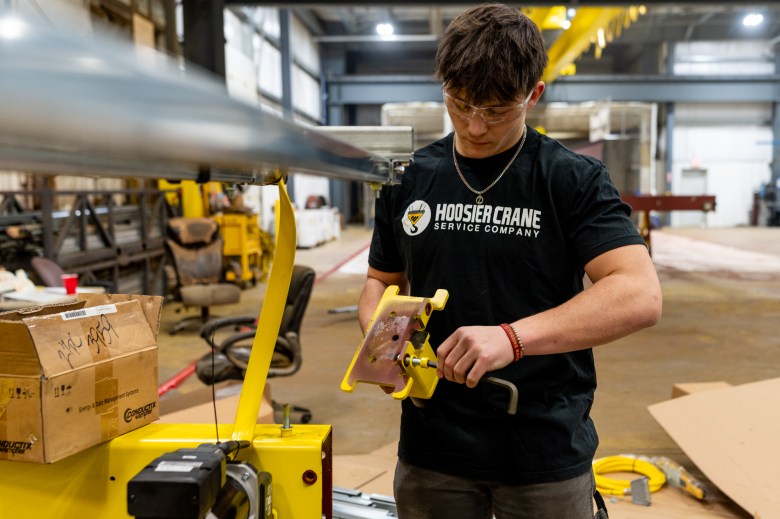
Indiana hopes that work-based learning opportunities at companies like Alpha Systems and Hoosier Crane Service Company, in Elkhart, Indiana, can flourish under the new diploma system. Credit: Camilla Forte/The Hechinger Report
In 2024, the state board of education held dozens of meetings to gather feedback on the proposal for the revamped diplomas — and the backlash was intense. Leaders of higher education institutions, including the state’s flagship schools, Indiana and Purdue universities, said students graduating under the new system would not meet minimum requirements for admission. Purdue’s president, Mung Chiang, wrote a letter to Jenner showing that the proposed diploma system required too few credits in every subject except English.
Hoosier parents were furious that their children might have to sacrifice more challenging courses to fulfill the mandatory work experience requirement under the “plus” option. At an Indiana Department of Education hearing in June 2024, parent Michelae Hill was among dozens who criticized the proposal, calling it “intentionally dumbing down our population” and warning that “what will happen is that we are ensuring a permanent underclass, we are ensuring cheap workers.” There were also questions about the logistics of workplace learning, including transportation and possible safety issues on job sites.
State education policy makers went back to the drawing board. The revised version, adopted last December, establishes one basic diploma that all graduates earn, plus the seals students can pursue depending on their post-high-school plans. Even within each seal, students have several ways of meeting the requirements.
For example, to receive the “enrollment” seal — meant primarily for college-bound students — high schoolers can choose from more advanced classes in math, science, social studies and world languages, and may earn additional credits in Advanced Placement, International Baccalaureate or other such college-level courses. An “enrollment honors plus” seal requires that students concurrently obtain a credential such as an associate’s degree or technical certificate and complete 75 hours of work-based learning in apprenticeships, internships or other such programs.
“We wanted rigor and flexibility and less cookie cutter,” said Jenner.
Even the updated system has critics, though. For the basic diploma, students must earn a minimum of 42 credits, two more than before. But how students reach that threshold is different: Economics, geometry and Algebra II are no longer required, while courses in financial literacy and communication are. Physical education is one credit instead of two, and world languages and fine arts are no longer recommended electives.
Professor Michael Hicks, who runs the Center for Business and Economic Research at Ball State University in Indiana, said he worries about the reduced mathematics rigor in particular. While most states do not require Algebra II for graduation, the class is often seen as a necessity for admission to selective colleges and for certain careers. Hicks said high-achieving, well-resourced students may benefit from the flexibility of the new diploma, as could students committed to the military. But many other students could be harmed, he said, if they are left with the impression that the basic diploma alone will prepare them well for college when it does not.
“It is essentially funneling children away from academic opportunity very early at a time when we really needed to have more kids pushed into the academic options that would get them into college,” he said, arguing that people with college degrees outearn those with only a high school education and have also fueled the state’s and country’s economic growth of the past several decades. “This curriculum will cause the Indiana economy to stall and potentially go into reverse.”
At public meetings last winter, some parents and educators raised concerns that the new system amounted to an unfunded mandate for school districts and would put a huge burden in particular on counselors, who would be working closely with students to help chart their diploma paths. Critics also objected to the de-emphasis of other classes like music and foreign languages. Megan Worcester, the president of the Indiana Foreign Language Teachers Association, said the reduced emphasis on foreign language would hurt the state’s economy; she cited a study in which nearly 1 in 4 employers surveyed said they had lost or couldn’t pursue a business opportunity because of language barriers.
Jenner, a former high school teacher, said the new diploma allows students greater flexibility to choose electives depending on their goals, which could include language and music study. While Algebra II is no longer required, students must take four math credits beyond the required Algebra I and personal finance, she said. Jenner also said the state had allocated a portion of $50 million in discretionary funding to train counselors in helping students navigate the new diploma system. In addition, it dedicated up to $10 million in grants to help students pay for transportation, equipment and certifications related to work-based learning, and also provided financial assistance to companies that take on apprentices. Each school that offers work-based learning will receive an extra $500 per participating student.
The new plan eventually quieted the concerns of many education leaders. Several universities, including Indiana and Purdue, released letters of support. “We appreciate the thoughtful adjustments to the work based learning requirements, AP testing and transferability of dual credits,” wrote Pamela Whitten, president of Indiana University. (Neither university agreed to an interview with its leaders.) All major education groups in the state, including the Indiana State Teachers Association, Indiana School Boards Association and the Indiana Association of Public School Superintendents, endorsed the plan.
Ty Zartman, a student apprentice at Hoosier Crane Service Company in Elkhart, Indiana, decided to go straight to work after graduating high school, despite being a straight A student. Parents and educators objected to Indiana’s first proposal for a new high school diploma system, arguing that the emphasis on workplace experience would crowd out academic learning. Credit: Camilla Forte/The Hechinger Report
In April, Gov. Mike Braun announced that beginning this year, students who earn the state’s “enrollment honors plus” seal will be automatically accepted into the state’s public colleges and universities, including Purdue and Indiana, potentially persuading more students to enroll.
Parent Chantee Eldridge said she believes the new diploma will make higher education more affordable and help students sharpen their career plans at an earlier age. Her son, Micah, is a 16-year-old senior at Brownsburg High School, near Indianapolis, and has already taken dual credit courses through a partnership with Vincennes University. College credits can be expensive, she said, so earning them at no cost in high school can be a big money saver.
Micah, who has a 3.7 GPA and plays semi pro soccer, said he’s always enjoyed challenging classes and plans to go to college. “When things get repeated, that’s when I get bored and start to tap out mentally,” he said. In college, he anticipates studying psychology — a surprise to his mother, who expected him to pursue math or physics, two topics he’s always excelled in. She likes the idea of him doing an internship with a psychologist, so he can learn more about the field and gain practical work experience before he goes to college; that’s the sort of opportunity that will become more common under this new diploma system.
“Very rarely do you know exactly what you want to do between 16 and 18,” Eldridge said. “That will help students and their families make an informed decision.”
For students who want to go straight into the workforce, the employment seals are designed to provide exposure to career options and work experience that boost students more quickly into higher-paying roles. Under the “employment honors” seal, students must: take coursework or earn a credential aligned to a specific occupation; complete 150 hours of work-based learning; and demonstrate communication, collaboration and work ethic skills. The “employment honors plus” seal requires that students also earn an associate’s degree or advanced industry certificate and complete 650 hours of work-based learning.
Matt Mindrum, president and CEO of the Indy Chamber, said that most of the 150,000 vacant jobs in Indiana right now don’t require a four-year degree. “And yet 100 percent of our high school students are pushed through a college preparatory path. That makes no sense,” he said. He believes an alternate path is critical for driving economic growth in the state, by helping to fill existing jobs and attract new businesses.
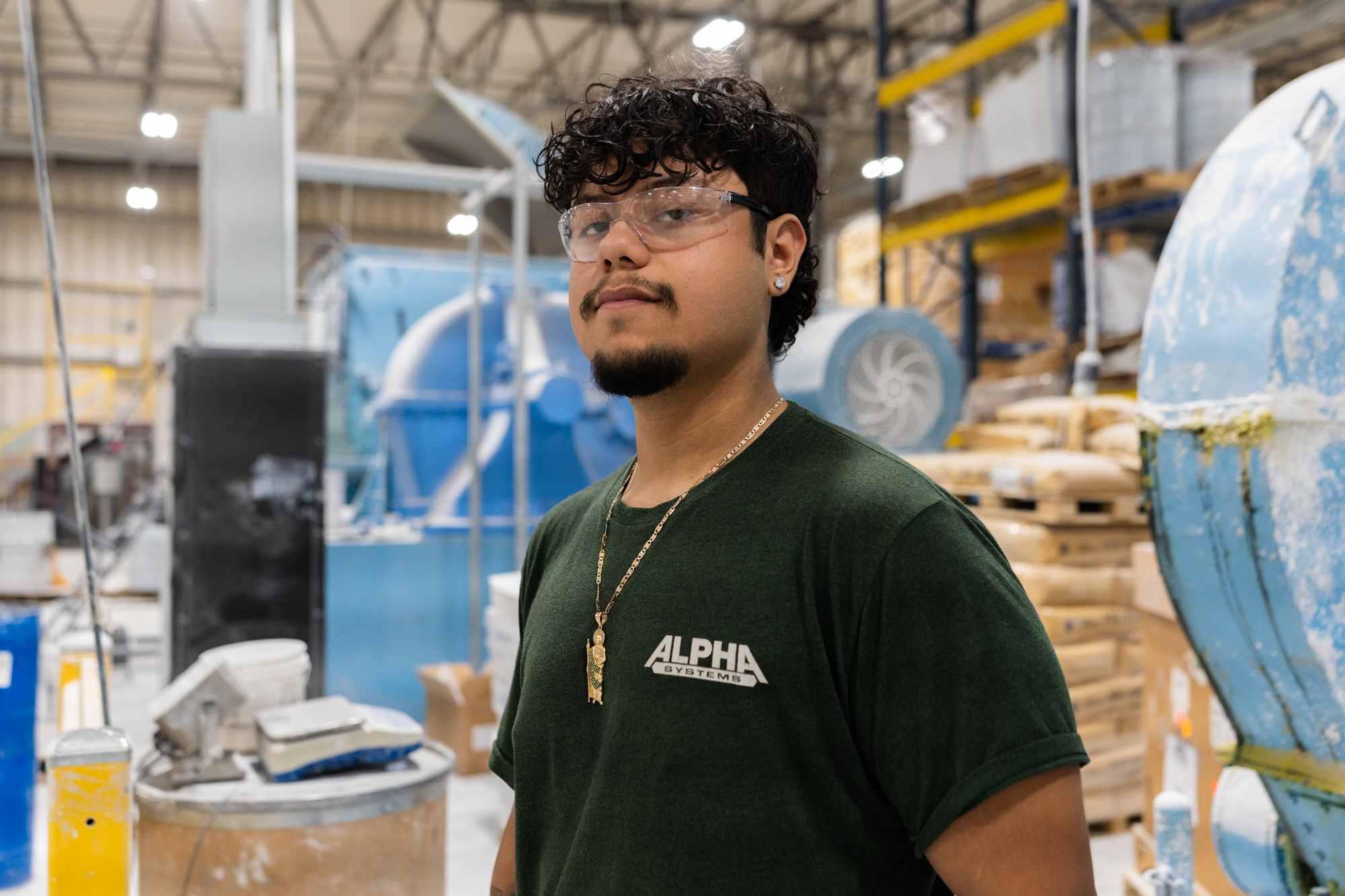
Edgar Soto, a senior at Concord High School in Elkhart, is the kind of student Mindrum has in mind. Soto said he has never wanted to attend a four-year college. To get workforce experience, he enrolled in an apprenticeship through his school and is up before dawn each morning to start work with manufacturing technology company Alpha Systems. “It’s something new every day. I love it,” he said. He earns $17 an hour and gives half his paycheck to his mom for family expenses. When school is in session, he spends his afternoons taking classes back at Concord High.
Indiana’s Elkhart County has been at the forefront of expanding apprenticeships to high schoolers, but it’s had trouble recruiting companies — a challenge for the state as it tries to expand work-based learning. Credit: Camilla Forte/The Hechinger Report
Working has motivated him to study harder at school, he said; he’s never cared for math, but when he realized it was important for his job, he began asking his teacher for extra help. “I got a taste of the real world and I want to be that type of person who does things right,” he said.
Alpha Systems pays for him to take classes in industrial systems through the state community college system, Ivy Tech, and has promised to pay for any further postsecondary education if he stays with the company. In just a few years, company executives said, he could easily make more than $40 an hour, approximately $80,000 a year.
Mindrum is working with employers around the state to try to increase work-based learning opportunities so they match student demand, a particular challenge in rural areas. Communities that have already made a commitment to work-based learning have had trouble recruiting enough employers: For example, in Elkhart County, only 1 in 3 high schoolers who apply for an apprenticeship gets one. Schools will also have to reorganize class schedules and overcome transportation challenges to ensure students can complete the necessary work-based learning under the various seals. The state has a goal of 50,000 apprenticeships by 2030. “It’s an aggressive but achievable target,” Mindrum said.
Supporters hope the revamped diploma will also encourage more students to enlist in military service. Nationally, the military is struggling to recruit, and according to Army data, just 23 percent of 17- to 24-year-olds who apply to the U.S. military meet its medical fitness and academic requirements. In Indiana, the number of students enlisting in the National Guard dropped by 38 percent between 2018 and 2022, the sharpest decline of any state.
Retired Maj. Gen. Dale Lyles, who led the Indiana National Guard and helped create the “enlistment” seal criteria, said students often don’t know much about enlisting and the benefits of military service. In Indiana, for example, serving in the National Guard unlocks free tuition to state colleges.
The new diploma options are meant to fix that: Students in the “enlistment honors” and “enlistment honors plus” seals are taught about each branch of service, what it means to swear an oath to your country and the many different job opportunities available. They also must take a public service course or complete a year of Junior ROTC and receive a certain score on the military’s aptitude test, the Armed Services Vocational Aptitude Battery, among other requirements. Students can receive coaching for the test and have the opportunity to visit Camp Atterbury-Muskatatuck, a nearly 35,000-acre military post, for hands-on learning opportunities.
“Today’s military is much different than it was even five years ago, just because of the high degree of technology,” said Lyles, citing the Indiana National Guard’s platoon that flies automated aerial drones and its cyber warfare battalion. “We are in a battle for talent.” He added that the pathway emphasizes that there are other ways to serve, including as a firefighter, as a police officer or in the Department of Homeland Security.
Nicholas Purdy, a 17-year-old from Marion, has three grandparents who served in the military and said he’s always been interested in enlisting. In his first year of high school, he signed up for JROTC, and he said he loves traveling to other states for competitions and leadership camps where students participate in activities such as rappelling, water operations and land navigation. “It doesn’t matter what your background is, how much money you have, your looks,” he said of the experience. “The only thing that matters is your character.”
His mother, Stephanie Purdy, said she’s seen his confidence deepen as a result of his experiences with JROTC. Nicolas has won ribbons and pins for marksmanship and leadership that he wears on his uniform, and he likes the idea that under the new seals, those accomplishments would be reflected on his high school transcript. Nicholas wants to become a combat medic in the army. “The training set me up for really good opportunities, and it’s all paid for,” he said.
Jenner’s work continues — with a pressing deadline, as schools roll out these changes for first-year students this year. Her office is working on an online advising tool, a pilot program to help communities identify solutions to transportation challenges, guidance for educators on the new diploma options and courses, and incentives for school districts to measure skills like communication, collaboration and work ethic, not just academic outcomes.
It’s a big task. “This is new terrain for our country when you think about the level of scale we’re trying to accomplish,” said Jenner. “We don’t have a model to just copy and paste, so we’re going to learn some lessons along the way.”
*Due to an editing error, an earlier version of this story included an inaccurate description of the Carnegie Foundation.
Contact editor Caroline Preston at 212-870-8965, via Signal at CarolineP.83 or on email at [email protected].
The Hechinger Report provides in-depth, fact-based, unbiased reporting on education that is free to all readers. But that doesn’t mean it’s free to produce. Our work keeps educators and the public informed about pressing issues at schools and on campuses throughout the country. We tell the whole story, even when the details are inconvenient. Help us keep doing that.
As the spring semester got under way in January at the University of Colorado at Colorado Springs, a dozen military veterans waited for their GI Bill student benefit checks to show up.
Then they waited, and waited some more, until the money finally arrived — in April.
By that time, three had left.
Getting GI Bill benefits from the Veterans Administration, which student veterans use to pay for their tuition, textbooks and housing, already took weeks. Since federal government staffing cuts since President Donald Trump took office, it’s been taking at least three times longer, said Jeff Deickman, assistant director for veteran and military affairs at the student veteran center on that campus.
Deickman’s counterparts at other colleges say the VA’s paperwork often has errors, causing further delays. They say some student veterans are dropping out.
“I can spend, on bad days, three hours on the phone with the VA,” said Deickman, himself a 20-year Army veteran and a doctoral student. “They’ll only answer questions about one student at a time, so I have to hang up and start over again.”
The start of the new administration brought big personnel cuts to both the VA and the U.S. Department of Education, which manages some student aid for veterans. Now, advocacy groups and universities and colleges that enroll large numbers of veterans are bracing for the planned layoffs and departures of nearly 30,000 VA employees and additional cuts at the Department of Education.
Many are also concerned about the potential for reduced scrutiny of the for-profit college sector, which critics contend has taken advantage of veterans’ tuition payments without providing the promised educational benefits.
Related: Interested in innovations in higher education? Subscribe to our free biweeklyhigher education newsletter.
Veterans who are just starting to feel the effects of federal cuts, and organizations that support them, worry things will only get worse, said Barmak Nassirian, vice president for higher education policy at the advocacy group Veterans Education Success. The nonprofit has been getting calls from students anxious about confusing information they’re receiving from federal agencies, he said, and it’s been hard to get answers from the government.
“Part of the challenge of wrapping our arms around this is the opaqueness of the whole thing. We’re sort of feeling our way around the impact,” Nassirian said.
“The whole process” has become a mess, said one 33-year-old Navy vet in Colorado, who used a more colorful term common in the military and asked that his name not be disclosed for fear of reprisal. “It’s making a lot of us anxious.”
Social media lays bare that anxiety — and frustration. In posts, veterans complain about stalled benefits and mistakes.
“I just wish I could speak to someone who could help but all of the reps seem to be unable to assist and simply tell me to reapply, which I have 4x, just for another denial,” wrote one on Reddit, about attempts to have a student loan forgiven.
“Complete nightmare,” another Reddit poster wrote about the same process. “Delays, errors, and employees that don’t know anything. No one knows anything right now.”
Federal law guarantees that disabled vets’ student loans will be forgiven, for instance, but veterans with total permanent disabilities have reported that their applications for their loans to be discharged were denied. One said the Department of Education followed up with a letter saying the denial was a mistake, but the agency hasn’t explained how to correct it.
The Education Department did not respond to an interview request. The VA declined to answer even general questions about benefit delays unless provided with the names of veterans and colleges that reported problems.
Such cuts threaten to “disrupt access to veterans’ education benefits, just as even more veterans and service members may be turning to higher education and career training,” top officials at the American Council on Education, or ACE — the nation’s largest association of colleges and universities — wrote in June.
That’s on top of existing frustrations. Veterans already struggle to get the benefits they’ve earned, college administrators and students say.
Many colleges and even some prominent veterans’ advocacy groups didn’t want to talk about this. Student Veterans of America, one of the largest advocacy groups for veteran students, did not respond to repeated interview requests. Ten of the colleges and universities that boast large veteran enrollments — including San Diego State, Georgia State, Angelo State, Arizona State and Syracuse — also did not respond or declined to answer questions.
Veterans and advocates are concerned that ongoing Education Department cuts will erode oversight of education institutions that take GI Bill benefits but leave veterans with little in return — primarily for-profit colleges that were found guilty of, and have been punished repeatedly for, defrauding students. In some cases, those colleges suddenly closed before students could finish their degrees, but kept their tuition while leaving them with useless credits or credentials.
Veterans are already twice as likely as other students to attend for-profit colleges, according to the Postsecondary National Policy Institute.
While it might take years until the effects of weakened scrutiny are fully visible, Nassirian said, it already appears that staffing cuts at the divisions within the Education Department that kept an eye on for-profit colleges have led those schools to start targeting veterans again.
“Without a doubt it is now easier for schools that want to push the envelope to get away with it,” he said. “When you have fewer cops on the beat you’re going to see higher crime. And we’re still just a nanosecond into this new environment.”
Veterans can lose their GI Bill benefits even when a college defrauds them.
The risk is particularly high for low-income veterans and those from diverse backgrounds, said Lindsay Church, executive director of Minority Veterans of America. Those student veterans are less likely to have parents who have experience with higher education, Church said, making them more vulnerable to fraud.
But the most immediate problems with staffing cuts are payment delays and paperwork errors, student veterans and their advisers said.
At Pikes Peak State College, a community college in Colorado Springs, some veterans still hadn’t received their GI Bill benefits as the semester wound down in May, said Paul DeCecco, the college’s director of military and veteran programs. Because of trouble reaching counselors at the VA, others were never able to enroll in the first place, DeCecco said.
“Counselors are just overwhelmed and not able to respond to students in a timely manner,” he said. “Students are missing semesters as a result.”
In the military city of San Diego, where thousands of former and current service members go to college, student veterans at Miramar College this year waited months to hear about VA work-study contracts. Previously approved within days, those contracts allow students to get paid for veteran-related jobs while attending school, said LaChaune DuHart, the school’s director of veterans affairs and military education.
Other veterans went weeks without textbooks because of delayed VA payments, DuHart said.
“A lot of students can’t afford to lose those benefits,” she said, describing the “rage” many student veterans expressed over the long wait times this year. “A lot of times it’s that emotional reaction that causes these students not to come back to an institution,” she said.
Colleges routinely see student veterans quit because of benefit delays, numerous experts and administrators said, something that has gotten worse this year. Several recounted stories of veterans without degrees choosing to look for work rather than continue their education because of frustration with the VA — even though studies show that graduating from college can dramatically increase future earnings.
Those who stayed have faced the added stress of waiting for their benefits, or not being able to get their questions answered.
“We always tell them to be prepared for delays,” said Phillip Morris, an associate professor of education research and leadership at the University of Colorado at Colorado Springs who studies student veterans. “But if you can’t pay your rent because your benefits are not flowing the way you’re expecting them to, that’s increasing anxiety and stress that translates to the classroom.”
The Hechinger Report provides in-depth, fact-based, unbiased reporting on education that is free to all readers. But that doesn’t mean it’s free to produce. Our work keeps educators and the public informed about pressing issues at schools and on campuses throughout the country. We tell the whole story, even when the details are inconvenient. Help us keep doing that.
(Note: This is the second piece in a two-part series on absenteeism in schools. Read the first part, on seven insights from researchers.)
Chronic absenteeism, when students miss 10 percent or more of the school year, is 50 percent higher across the nation than before the pandemic. Researchers say it’s difficult for schools to address the problem because it is both so intense,with students missing huge chunks of the school year, and so extensive, affecting both rich and poor students and even high achievers.And the reasons vary widely, from asthma and bullying to transportation problems and the feeling that school is boring.
“It’s hard to know where and when to target resources,” said Sam Hollon, a data analyst at the American Enterprise Institute, which hosted a symposium on the problem in May. “Who do you help when every student potentially can be a candidate for help?”
Related: Our free weekly newsletter alerts you to what research says about schools and classrooms.
The Trump administration’s immigration enforcement is exacerbating the problem. A June draft paper by Stanford University professor Thomas Dee calculated that recent raids coincided with a 22 percent increase in daily student absences with particularly large increases in absenteeism among the youngest students.
Talking about the problem isn’t enough. Researchers say they want to study more schools that are making headway. It remains unclear if there are broadly applicablefixesor if each school or eveneach student needs individual solutions. Some underlying root causes for skipping school are more complex than others, requiring psychotherapy or housing assistance, which schools can’t provide alone. Here are a few examples of how very different communities are tackling the problem.
Providence: Bus stops and weekend food bags
Principal W. Jackson Reilly of Nathanael Greene Middle School in Providence, Rhode Island, said that when he arrived in April 2023, half of his 900 students in grades six to eight were chronically absent, up from 30 percent of students before the pandemic. Thirty percent of his teachers were also chronically absent. Achievement scores were in the state’s bottom 1 percent.
Reilly managed to slash his chronic absenteeism rate in half to 25 percent this past 2024-25 year. That’s still high. One in four students missed more than 18 days of school a year. But, it’s better.
He began by identifying 150 kids who were just over the threshold for chronic absenteeism, those who missed between 18 and 35 days, hoping that these kids would be easier to lure back to school than those who were more disengaged. Reilly and a group of administrators and guidance counselors each took 10 to 15 students and showed their families how much school they had missed and how low their grades were. His team asked, “What do you need in order for your kid to be coming to school?’”
The two most common replies: transportation and food.
Many students lived only a mile away, too close to school to qualify for bus service. Yet the walk deterred many, especially if it was raining or snowing. Yellow buses often passed these children’s homes as they were transporting children who lived farther out, and Reilly convinced the district to add stops for these chronically absent children.
Ninety percent of his students come from families who are poor enough to qualify for the federal free or reduced-price lunch program and 80 percent are Hispanic. Although many children were fed breakfast and lunch at school, their families admitted that their kids would get so hungry over the weekend that they didn’t want to wake up and come to school on Mondays. Reilly partnered with a food pantry and sent bags of meat and pasta home with students on Fridays.
Individual attention also helped. At the start of each school day, Reilly and his team check in with their assigned students. Kids who show up get five “green bucks” to spend on snacks and prizes. Administrators call the homes of those who didn’t come to school. “If they did not answer the phone, we’d make a home visit,” said Reilly.
The most dramatic overhaul was scheduling. Reilly scrapped individual schedules for students and assigned four teachers to every 104 students. The kids now move in pods of 26 that take all their classes together, rotating through the same four teachers throughout the day. The classrooms are right near each other, creating a smaller community within the school.
“It’s all about relationship building,” said Reilly. When students look forward to seeing their classmates and teachers, he said, they’re more motivated to come to school.
Researchers say fostering relationships is effective. Hedy Chang, executive director of Attendance Works, a nonprofit organization that advises schools on how to boost attendance rates, said it’s still a battle to persuade some school leaders (and school board members) that making school a more welcoming place is more productive than punishing kids and families for skipping school.*
Reilly said his school now posts the lowest student and teacher chronic absenteeism rates in Providence. And he said his school is the highest performing middle school in the city and among the highest statewide in reading.
New York City: Catching the butterflies
A cluster of New York City high schools are taking a more data-driven approach, guided by New Visions, a consulting organization that supports 71 city high schools.
After some experimentation, New Visions staff saw strong improvement in attendance in one subgroup of students who were on the cusp of missing 10 percent of school days, but had not yet crossed the chronic absenteeism threshold. These are students who might miss a day or two every week or every other week but were relatively engaged at school. Jonathan Green, a New Visions school improvement coach who is spearheading this effort, calls them “butterflies.” “They would flutter in and out every week,” he said.
Green suggested that someone at school meet weekly with these butterflies and show them their attendance data, set goals for the coming week and explain how their attendance was leading to better grades. The intervention took two to five minutes. “There were marked changes in attendance,” said Green.
New Visions built a website where school administrators could print out two-page documents for each student so the data, including monthly attendance and tardiness, appeared in an easy-to-digest format. The quick meetings took place for eight to 10 weeks during the final grading period for the semester. “That’s when there’s the most opportunity to turn those potentially failing grades into passing grades,” said Green. “We were finding these sweet spots within the school calendar to do this very high resource, high-energy intensive weekly check-in. It’s not something that anyone can easily scale across a school.”
Staff had to figure out the bell schedule for each child and intercept them between classes. One succeeded in holding their entire caseload of students below the chronic absenteeism threshold. Not everyone thought it was a good idea: Some school administrators questioned why so much effort should go into students who weren’t yet chronically absent rather than students in greater trouble.
The dramatic results help answer that question. Among schools in the Bronx that volunteered to participate in the butterfly intervention, chronic absenteeism rates dropped 15 percentage points from 47 percent in 2021 to 32 percent in 2025, still high. But other Bronx high schools in the New Visions network that didn’t try this butterfly intervention still had a chronic absenteeism rate of 46 percent.
Green said this solution wouldn’t work for other high schoolers. Some have trouble organizing their study time, he said, and need more intensive help from teachers. “Two- to five-minute check-ins aren’t going to help them,” said Green.
Indianapolis: Biscuits and gravy
The leader of an Indiana charter school told me he used a system of rewards and punishments that reduced the chronic absenteeism rate among his kindergarten through eighth graders from 64 percent in 2021-22 to 10 percent in 2024-25.
Jordan Habayeb, the chief operating officer of Adelante Schools, said he used federal funds for the school breakfast and lunch program to create a made-from-scratch restaurant-style cafeteria. “Fun fact: On homemade biscuit and gravy days, we saw the lowest rates of tardies,” he said.
Researchers recommend avoiding punishment because it doesn’t bring students back to school. But Habayeb said he adheres strictly to state law that requires schools to report 10 absences to the state Department of Child Services and to file a report with the county prosecutor. Habayeb told me his school accounted for a fifth of truancy referrals to the county prosecutor.
The school created an automated warning system after five absences rather than waiting for the critical 10-day loss. And Habayeb said he dispatched the safety and attendance officer in a van to have “real conversations with families rather than being buried in paperwork.” Meanwhile, students who did show up received a constant stream of rewards, from locker decorations to T-shirts.
Parent education was also important. During mandatory family orientations, the school illustrated how regular attendance matters for even young children. “We shared what a child might miss during a three-day stretch in a unit on ‘Charlotte’s Web’ — showing how easily a student could leave with a completely different understanding of the book,” said Habayeb. “This helped shift perspectives and brought urgency to the issue.”
Kansas City: Candy and notes
School leaders in Kansas City, Kansas, shared some tips that have worked for them during a webinar earlier this month hosted by Attendance Works. One elementary school reduced its chronic absenteeism from 55 percent in 2021 to 38 percent in 2024 by assigning all 300 students to an adult in the building, encouraging them to build an “authentic” relationship. Teachers were given a list of ideas but were free to do what seemed natural. One teacher left candy and notes on their assigned students’ desks. A preschoolerproudly pasted his note, which said he was a “genius,” on the front door of his house. “The smiles kids have on their faces are amazing,” said Zaneta Boles, the principal of Silver City Elementary School.
When students do miss school, Boles said educators try to take a “non-blaming approach” so that families are more likely to divulge what is going on. That helps the school refer them to other community agencies for assistance.
Albuquerque: A shining example regroups
Alamosa Elementary School in Albuquerque, New Mexico, was once a shining example of a school that persuaded more families to send their kids to class. Chronic absenteeism fell as low as 1 in 4 students in 2018, when The Hechinger Report wrote about the school.
But Alamosa has not been immune from the surge of absenteeism that has plagued schools around the nation. Chronic absenteeism spiked to 64 percent of students during the 2021-22 school year, when Covid variants were still circulating. And it remained shockingly high with 38 percent of students missing more than 10 percent of the 2024-25 school year — exactly matching the 50 percent increase in chronic absenteeism across the country since 2019.
“We were on a roll. Then life happened,” said Daphne Strader, Albuquerque Public Schools’ director of coordinated school health, who works to reduce absenteeism.
Strader said Alamosa and other Albuquerque schools have made some successful changes to how they’re tackling the problem. But the volume of absenteeism remains overwhelming. “There’s so many kids who have needs,” Strader said. “We need more staff on board.”
Strader said attendance interventions had been “too siloed” and they’re focusing more on the “whole child.” She’s encouraging schools to integrate attendance efforts with other initiatives to boost academic achievement and improve student behavior. “Students are hungry, they’re dysregulated, they don’t have grit,” said Strader, and all of these issues are contributing to absenteeism. But she also concedes that some students have more severe needs, and it’s unclear who in the system can address them.
Her biggest advice for schools is to focus on relationships. “Relationships drive everything,” said Strader. “One of the major consequences of the pandemic was the isolation. If I feel a sense of belonging, I’m more likely to come to school.”
*Clarification: This sentence was modified to make clear the Attendance Worksexecutive director did not say all school leaders oppose the idea of eliminating punishments for absenteeism.
The Hechinger Report provides in-depth, fact-based, unbiased reporting on education that is free to all readers. But that doesn’t mean it’s free to produce. Our work keeps educators and the public informed about pressing issues at schools and on campuses throughout the country. We tell the whole story, even when the details are inconvenient. Help us keep doing that.
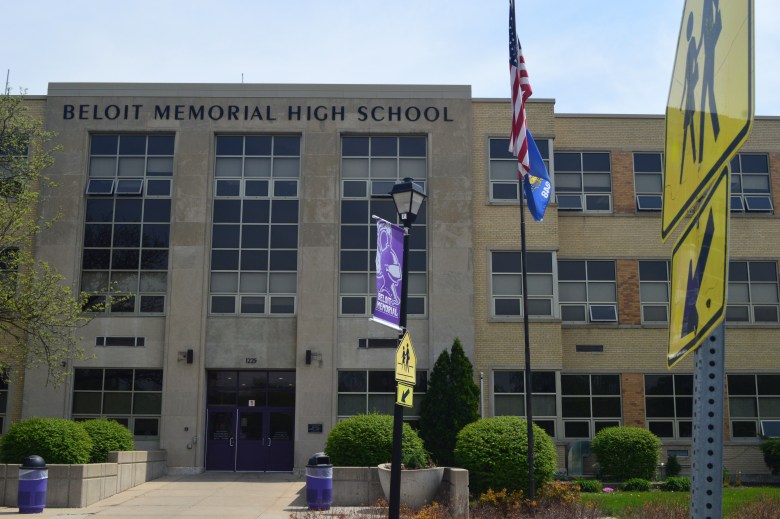
BELOIT, Wis. — As Chris Hooker eyed a newly built piece of ductwork inside Beloit Memorial High School, a wry smile crept over his face. “If you worked for me,” he told a student, considering the obviously crooked vent, “I might ask if your level was broken.”
Hooker, the HVAC manager of Lloyd’s Plumbing and Heating Corp. in nearby Janesville, was standing inside a hangar-sized classroom in the school’s advanced manufacturing academy, where students construct full-size rooms, hang drywall and learn the basics of masonry. His company sends him to the school twice a week for about two months a year to help teach general heating, venting and air conditioning concepts to students.
“I cover the mountaintop stuff,” he said, noting that at a minimum students will understand HVAC when they become homeowners.
But the bigger potential payoff is that these students could wind up working alongside Hooker after they graduate. If his firm has an opening, any student recommended by teacher Mike Wagner would be a “done deal,” Hooker said. “Plus, if they come through this class, I know them.”
Manufacturing and construction dominate the business needs inside Beloit, a small city of 36,000 just minutes from the Illinois border. Sitting at the nexus of two major highways, and within 100 miles of Chicago, Milwaukee and Madison, Beloit is home to a range of businesses that include a Frito-Lay production plant, an Amazon distribution center and a Navy subcontractor. In the next two years, a $500 million casino and hotel complex is scheduled to open.
But staffing these companies into the future is a major concern. Across the country, the average age of manufacturing workers is increasing, and one in four of these workers is age 55 or older, according to U.S. Bureau of Labor Statistics’ 2021 figures, the most recent available. In many other jobs the workforce is aging, too. Wisconsin is one of several states looking to boost career and technical education, or CTE, as a possible solution to the aging and shrinking workforce.
Having industry standard machines is a key part of Beloit Memorial High School’s manufacturing program; here a student uses a JET metalworking machine to create precise cuts for his project. Credit: Wayne D’Orio for The Hechinger Report
While the unemployment rate of Rock County, which includes Beloit, is 3.6 percent, only slightly higher than the state’s 3.2 percent, there’s a worker mismatch in the city, according to Drew Pennington, its economic development director.
Every day, 14,000 city residents travel outside of Beloit to work, while the same number commute into the city to fill mostly higher-paying jobs, said Pennington.
So when Beloit decided to revamp its public high school in 2018, CTE and work-based learning were at the forefront of the transformation.
The 1,225-student school now has three academies that cover 13 different career paths. After ninth grade, students choose to concentrate in an area, which means taking several courses in a specific field. Students also have the option to do work-based learning, which can mean internships, a youth apprenticeship or working at high-end simulated job sites inside the school.
“This creates not just a pipeline to jobs but also to career choices,” said Jeff Stenroos, the district’s director of CTE and alternative education.
“There are a lot of really good-paying jobs in this area. Students don’t need to leave, or go earn a four-year degree,” Stenroos said. An auto mechanic can “earn six figures by the age of 26 and that’s more than an educator with a master’s degree,” he said.
Beloit’s effort is a shift in high school emphasis similar to the extensive CTE programs being run in other places, notably Indiana, Kentucky and Alabama. In 2024, 40 states enacted 152 CTE-related policies, the biggest push in five years, according to Advance CTE, a nonprofit group that represents state CTE officials. Nationwide, about 20 percent of high school students take a concentration of CTE courses, it says, adding that the high school graduation rate for students who concentrate in CTE is 90 percent, 15 percentage points higher than the national average.
Three years ago, Wisconsin called for 7 percent of its high school students to be in workplace learning programs by 2026. Beloit’s progress puts it far ahead of that target. In Beloit Memorial, nearly 1 in 3 students meet this designation today, Stenroos said.
The high school features a cavernous construction area where students build full-scale rooms, learn masonry and complete plumbing and electrical wiring projects. The metal shop offers 16 welding stations and a die-cutter machine that allows students to create customized pieces to fit projects. Down the street, the school runs an eight-bay car repair center, a space it took over when a Sears autobody shop left town.
These spaces are “better than a lot of technical colleges,” Stenroos said.
In addition to their high school courses, Beloit Memorial students pile up industry-recognized certifications, Stenroos said. More than 40 percent of its students graduate with at least one certification, and 1 in 4 of them has multiple certifications.
While some simple certifications, such as OSHA Workplace Safety, can be accomplished in just 10 hours, others, such as those for the American Welding Society, require up to 500 hours of student work, he added. The state has called for 9 percent of graduating high school students to have earned at least one certification by next year. To incentivize schools to offer these opportunities, the state’s Department of Workforce Development pays schools for each student who earns a certification; in 2024, Beloit received $85,000 through this program, Stenroos said.
One of the school’s best automotive students, Geiry Lopez, graduated this year with five Automotive Service Excellence certifications. Standing less than 5 feet tall, Lopez said she is not bothered that she might not look like a typical mechanic. “I know I can do this,” she said, adding that she hopes to work on heavy machinery such as tractor trailers after she graduates.
She’s worked on her own car, with some fellow students, replacing the brakes, a front axle, rotors and wheel bearings at the school’s garage, she said, although she still hasn’t been able to drive it.
“My dad is taking forever to teach me how to drive,” she said.
The garage operates like an actual business, but the only customers are teachers and other Beloit staffers and students. Students estimate work costs, order parts and communicate with customers before any repairs take place. While oil changes and brake replacements are common, some students are totally rebuilding an engine in one car.
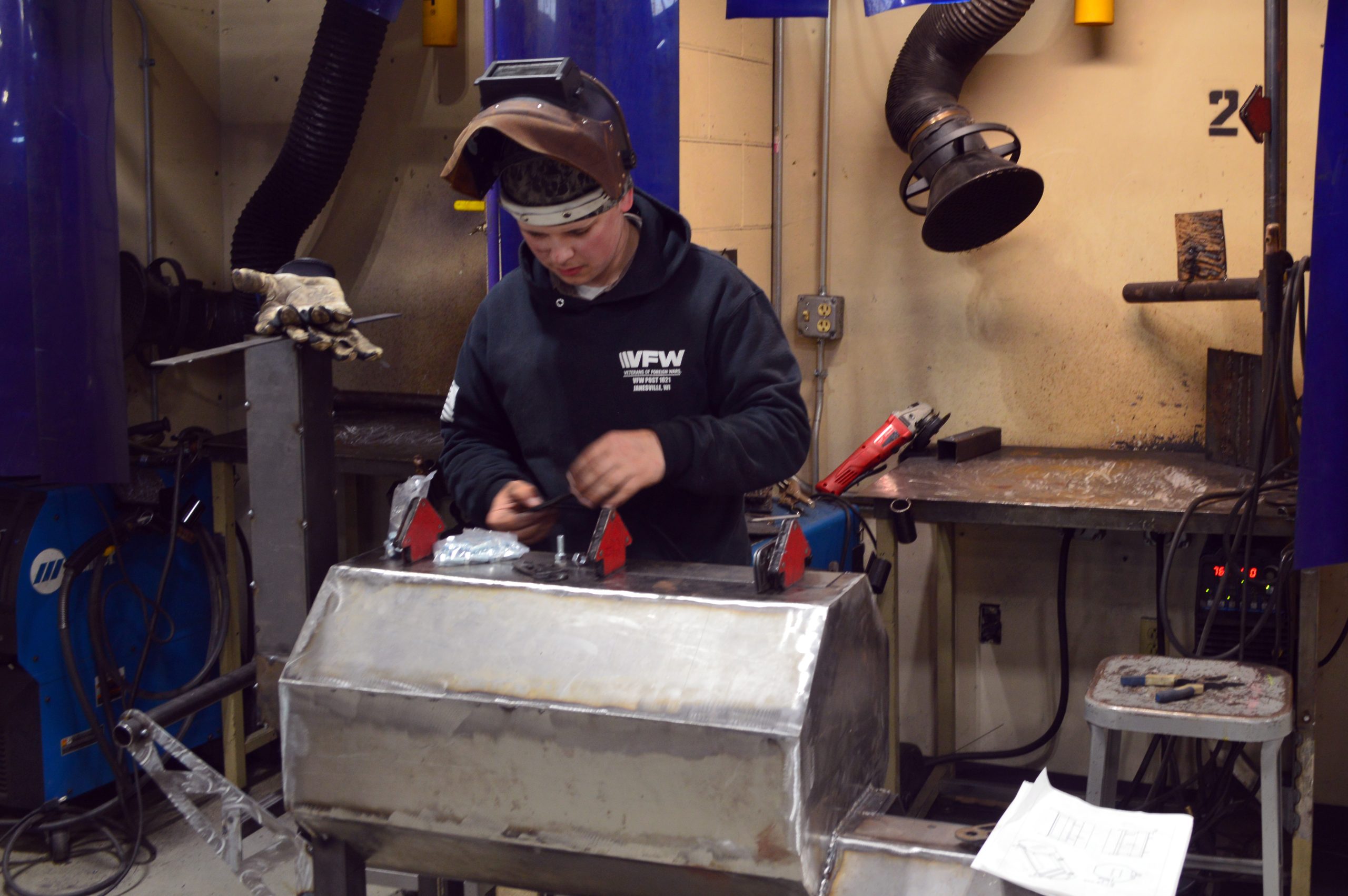
Over in the welding room, rising senior Cole Mellom was putting the finishing touches on a smoker he built in less than a month’s time. He said he loved the creativity of finding a plan, cutting the metal and building something that he could sell, all while in school. Plus, he knows that welding is a key skill needed for his dream job, race-car fabrication.
Officials revamped the Beloit Memorial High School in 2018 to funnel students into academies that are connected to jobs in the area and the state. Credit: Wayne D’Orio for The Hechinger Report
In the past, students created a custom-made protective plate that the city’s police use on a bomb squad vehicle.
The welding program has 125 students this year and had to turn away 65 more because of space limitations, Stenroos said; last year, 17 of the school’s welding academy graduates enlisted in the armed forces to specialize in welding.
These programs are designed to help meet the future needs of the state’s workforce. More than one-third of Wisconsin jobs will require education beyond high school but less than a bachelor’s degree by 2031, according to the Association for Career and Technical Education. For the last four years, the state has had more job openings than people on unemployment.
“There’s more jobs than there are people to fill them right now,” said Deb Prowse, a former career academy coach at Beloit Memorial who now works at Craftsman with Character, an area nonprofit that helps train students for careers in skilled trades.
Hooker, the Lloyd’s Plumbing HVAC manager, agreed. “Every project we work on has a delay, from a multimillion-dollar mansion to a three-bedroom spec,” he said. “There aren’t enough workers.”
The main reason Beloit Memorial has been able to zoom past state and national goals for both CTE and work-based learning is the school’s single-minded focus since 2018 on helping to ensure that its graduates will understand what businesses need and giving them a head start toward gaining those skills.
High school officials actually pared back the program from 44 pathways to 13, Stenroos said, part of an effort to tie each pathway to specific jobs. About 75 percent of pathways target area jobs, with the remaining quarter highlighting prominent professions within the state, he added.
Even though three straight budget referendum defeats have left the district with a $6.2 million funding gap, Stenroos said he’s been able to keep the CTE equipment modernized through donations and strategic allocation of the school’s federal Perkins grant and the state reimbursement for student certifications. In one instance, the school recently bought a $20,000 scanner for its automotive program; the machine can not only help diagnose a car problem, but also connect students to garages throughout the country that have successfully fixed the specified problem.
“It’s an expensive piece of equipment,” Stenroos said, “but it’s industry-certified and will give students real-life experience.”
Each of the three academies has an advisory board of teachers and industry professionals who work out how to embed practical lessons in classroom curriculum. “We ask business people, ‘What do you need, and how can we help our kids get there?’” said Stenroos.
“It’s really cool how receptive the school is to feedback,” said Heather Dobson, the business development manager at Corporate Contractors, Inc., a 200-person general contracting firm.
She explained that the district has incorporated small changes over the years, such as having students work in Microsoft programs instead of Google Classroom apps and teaching them how to write a professional email.
“Rarely is there an idea presented that they don’t embrace,” said Celestino Ruffini, the CEO of Visit Beloit, a nonprofit that promotes tourism of the city. The school is expanding its hospitality program because of the expected influx of jobs connected to the new casino and hotel, he said.
All the changes aren’t at the high school, however. In order to employ Beloit Memorial students, Frito-Lay had to alter its corporate policy of not allowing anyone under 18 to work in its plants, according to Angela Slagle, a supply chain manager there. The company now hires Beloit Memorial students for its career exploration youth apprenticeship program, she added.
The connection to area businesses goes beyond the school’s leaders. Each year, about 10 teachers complete an externship in which they spend one week of their summer at a local business. Teachers are paid $1,000 for the 20 hours, and they not only learn about what jobs a company may have but also find ways to incorporate real-world problems into their classroom lessons.
A few summers back, math teacher Michelle Kelly spent a week at Corporate Contractors. She was searching for different ways to use construction-based math problems with her students. In addition to using math to estimate a bid for a project or calculate the surface area of a job, she realized that complex math is needed to build a truss, the framework used to support a roof or bridge.
Because the triangular truss is supported by different lengths of wood inside its structure, Kelly said, building one requires the calculation of angles, total area, how much wood is needed and more. Since all her algebra students were in the school’s construction academy, she partnered with those teachers to go beyond blueprints and have the 10th graders build trusses, a collection of which sit in the back of her classroom.
A student’s detailed outline for creating a truss in Michelle Kelly’s 10th grade algebra class at Beloit Memorial High School, which is embracing career and technical education. Credit: Wayne D’Orio for The Hechinger Report
She sees this work as one way to help counter the chronic absenteeism that has existed since Covid. Teaching with this kind of hands-on work makes students see the relevance of algebra, she said. “Would it be easier to just have them take a test? Yes.”
Beloit Memorial Principal Emily Pelz said the school’s work is paying off. In the last four years, the school’s four-year graduation rate has ticked up slightly, from 83.4 percent in 2021-22 to 85.2 percent in 2024-25, while its attendance went from 78.5 percent to 84.8 percent in the same period, Pelz said.
Rik Thomas, a rising senior who already has his own business repairing and modifying cars, said this work has definitely made him more interested in school. While he thought the academy would merely explain what a construction career might include, “It’s nice to find out how to do the work.” His father works in construction and, Thomas added, “He loves that I take this program.”
Thomas and his classmates built a wooden shed earlier this year and were able to sell it for $2,500, with the money going to pay for more materials. Likewise, the first smoker created in the welding class was bought by Stenroos; the students are looking forward to posting the second one for sale after they determine how much they should charge.
While the school’s construction and other trade-related fields have drawn the most attention, its three academies also offer career paths in healthcare, education, business, the arts, hospitality and more.
For example, rising senior Tayvon Cates said he hopes to study pre-med at a historically Black college or university on his way to becoming a cardiology radiologist. Cates, who is in the school’s health and education academy, said, “If you want to do something, the school can help you do it.”
The Hechinger Report provides in-depth, fact-based, unbiased reporting on education that is free to all readers. But that doesn’t mean it’s free to produce. Our work keeps educators and the public informed about pressing issues at schools and on campuses throughout the country. We tell the whole story, even when the details are inconvenient. Help us keep doing that.
Last August, Republican Rep. Gino Bulso looked out at a room filled with dozens of fellow state lawmakers as he touted new legislation he had just helped become a reality in Tennessee. Under the law, a fetal ultrasound or a video of a computer-animated fetus developing in the womb had become mandatory viewing for students in the state’s sex education classes.
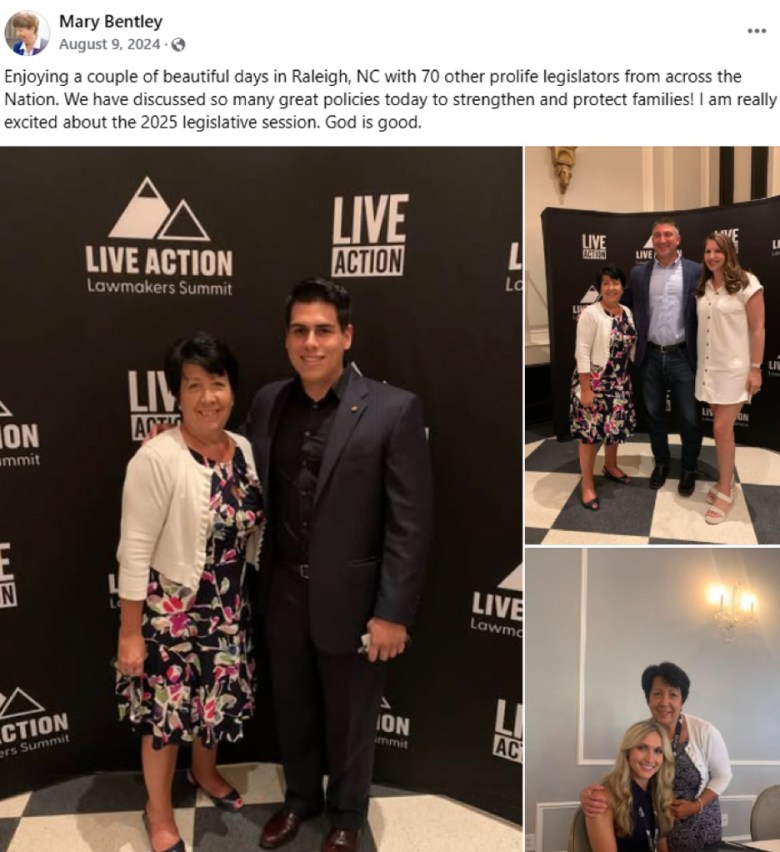
Bulso was there at the request of the event’s host, anti-abortion advocacy nonprofit Live Action. The group had gathered legislators from across the country to provide them “with the policy information and persuasion strategies they need to end abortion,” according to its annual report.
Bulso’s panel, “The Agenda for Life in Schools and Beyond,” focused on how he had successfully shepherded his bill into becoming the second so-called fetal development education law in the country.
When lawmakers returned to their home states after the Live Action event, The Hechinger Report found, at least 10 of them sponsored bills similar to Bulso’s, in some cases proposing that students as young as third grade watch fetal development videos. Another legislator who introduced such a bill had sent his chief of staff and wife to the event. And the volume of legislation stemming from the gathering may be higher: Live Action keeps its list of attendees private, though many lawmakers posted about the event on social media or were featured in Live Action’s promotional materials.
Since 2023, when North Dakota became the first state to pass fetal development education legislation, anti-abortion lawmakers in more than 20 additional states have proposed such bills; 6 of those states, including Bulso’s, have passed them. As a result, this fall, nearly 4 million children will attend school in a state that requires them to watch a video or ultrasound of a fetus in the womb during sex education classes. And this year, legislators in four states tried to go even further: Their proposals would have required students to view depictions of abortions, including computer-animated videos.
After the fall of Roe v. Wade in 2022, public schools have become an increasingly important battleground in the fight over abortion rights. Even though 12 states now ban abortion in all circumstances, the number of procedures has increased nationwide since the Supreme Court’s decision to overturn Roe.Public support for abortion rights has also risen. Many anti-abortion advocates hope that getting their message in front of students can help them win the hearts and minds of young people and change these trends in the long run.
While critics, including medical professionals and some parents, say that the fetal development education materials being introduced to schools are manipulative and little more than propaganda, Live Action and other groups that produce them maintain they are medically accurate and unbiased. Experts in sex education and abortion policy say a related problem is the dearth of sex education in schools — students, on average, receive only about six hours during their high school years — that creates a vacuum for anti-abortion groups to move into.
“They’re attempting to reach children at an age where I would assume most haven’t been exposed to issues of an abortion,” says Alisa Von Hagel, a political science professor at University of Wisconsin-Superior who has studied the strategies of the anti-abortion movement. “They’re attempting to be the first to imprint this quote, unquote ‘knowledge’ or opinion about these issues.”
During a debate earlier this year in the Arkansas Senate, Republican Sen. Alan Clark referred to his state’s proposal as “one of the most important pro-life bills that’s ever come before us.” He also said, “It will shape the minds of kids from now on.”
The proposal would have required showing a video created by Live Action to students starting in sixth grade. In the video, titled “Meet Baby Olivia,” a narrator tells the viewer that life begins at conception and says the fetus, named Baby Olivia, begins playing and exploring as early as 11 weeks.
In an annual report, Live Action noted that its “Meet Baby Olivia” video caused a “37-point shift towards the pro-life perspective among viewers.” The organization also highlighted the impact its materials can have on kids, in particular, to help “instill a reverence for life as children at impressionable ages develop their world view.”
Tennessee state Rep. Gino Bulso sponsored the nation’s second fetal development education law. He credits the anti-abortion group Live Action with helping him get it passed. Credit: George Walker IV/AP Images
Both Bulso and Noah Brandt, Live Action’s vice president of communications, have said the only goals of Baby Olivia and fetal development education are to teach and inform students — but they also expected it to leave an impression. “It is intuitive that, after watching that, people would be less likely to support abortion on demand,” Brandt said.
Live Action’s work to connect with students is also part of playbooks for other anti-abortion organizations. Take Heartbeat International, for example, a group that supports clinics known as “crisis pregnancy centers,” which provide limited medical care and encourage people not to have abortions. Heartbeat also offers in-person and online training, including one program on how to “Change the Nation with Pro-life Education,” featuring specific tactics for working with public schools. One speaker at Heartbeat’s 2023 national conference described performing an ultrasound on a pregnant woman in front of public school students to “plant a seed of life.”
Before creating “Meet Baby Olivia,” Live Action was best known for anti-abortion campaigns and undercover stings against Planned Parenthood, and largely worked outside of policymaking. But as the organization has grown in recent years, it has begun to coordinate directly with legislators.
Live Action held its inaugural lawmaker summit in 2022, two months after Roe was overturned. The following spring, North Dakota passed a fetal development education law, the nation’s first.
Many proposed fetal development education bills mention the video “Meet Baby Olivia” by name. Critics say that the video is designed to manipulate the viewer’s emotions, while its creator, Live Action, says it is accurate. Credit: Live Action
By 2024, the summit had doubled in size to host 70 lawmakers at a four-star hotel in Chapel Hill, North Carolina. Lawmakers attended panel discussions titled “Saving Our Children and Helping Their Mothers” and “Communications and Persuasion: Winning the Messaging War.” Live Action also screened its abortion videos, including “Meet Baby Olivia.”
On his panel, Bulso walked through every step of creating Tennessee’s law, from filing the bill to committee deliberations to its eventual passage. He gave Live Action credit for providing him with resources to help make the case that “Meet Baby Olivia” was scientifically accurate.
Most of the proposed fetal development education bills don’t prescribe a specific video, but many suggest the Baby Olivia video. Two bills in Texas do mention alternatives: A 1983 film by PBS’s NOVA called “The Miracle of Life” and a video produced by the St. John Paul II Life Center, a crisis pregnancy center.
Said Brandt, it’s up to “lawmakers, school board members, teachers, that kind of thing, to try to make prudential judgments about, ‘Is the actual resource I’m using a good resource to accomplish the goal that I’ve been tasked to accomplish?’”
“Meet Baby Olivia” in particular, has been sharply criticized by medical experts since Live Action released the video in 2021. Many doctors have raised concerns about its language and portrayal of the timeline of fetal development. Parents and students in Fargo, North Dakota, used arguments such as these to convince the school district to use a different video to meet the state law.
“The Baby Olivia video is designed to manipulate students’ emotions rather than to share objective facts about embryonic and fetal development,” Nisha Verma, senior advisor of reproductive health policy and advocacy for the American College of Obstetricians and Gynecologists, said in a statement. “The video attempts to advance anti-abortion policies such as fetal personhood and uses non-scientific language about conception, pregnancy, embryos, and fetuses to evoke an emotional response.”
Live Action maintains the video is medically accurate — and has its own roster of anti-abortion doctors who endorse it, including a handful who collaborated with the organization on the video’s creation.
The approval of some medical professionals was part of the appeal of “Meet Baby Olivia” and another Live Action video series called “What Is Abortion?” for New Hampshire Rep. John Sellers, another Republican who attended the group’s lawmaker summit. The series shows a computer rendering of three different points in the pregnancy process.
Since 2023, getting fetal development education into public schools has been a priority for the anti-abortion group, Live Action. Credit: Live Action
In January, Sellers filed two bills to make Live Action’s videos required viewing for New Hampshire students — including college students in the case of “Meet Baby Olivia.” Both bills, however, faced opposition: Nearly 700 residents officially recorded their objection with the state or submitted testimony opposing the fetal development bill, and 1,080 registered their opposition to the abortion video legislation. By comparison, the number of residents who registered in favor was 23 and 30, respectively.
Many of those who submitted written testimony called the bill an attempt to indoctrinate students; Sellers maintained the legislation was nonpolitical. “We’re just trying to get the information out to the kids so they’re educated,” he said in an interview. “I don’t know how you indoctrinate somebody with the truth of the development of life … or the truth that these are the types of procedures of abortions. I can’t see that being indoctrination.”
Sellers said further that he hoped education could help people “make a better decision of, ‘Should I get an abortion or not?’”
Several people who opposed Sellers’ bills agreed that the videos contained some factual information and that topics such as fetal development and abortion could be useful to learn about in schools, but it was the presentation of the information — and that it came from an anti-abortion group — that worried them, they explained.
“My biggest concern is that it’s set up to come from a moralistic and fear-based place as opposed to a medical or wellness model,” said Stephanie Vazzano, a therapist who lives in New Hampshire who submitted written testimony opposing the abortion video bill. “They do have some facts. When you watch them you can be really seduced by those facts … but then these other things get slipped in.”
During the hearing for his bills, Sellers repeatedly said he was open to other abortion videos being shown but didn’t know of any. This lack of alternativeshas allowed Live Action to succeed in getting into schools so far, said Mary Ziegler, a law professor at University of California-Davis and author of several books on the history of abortion debates. “Part of what they’ve exposed is that there are gaps in the way we’ve done sex education,” she points out. “There’s truth in the sense that sex education programs across the board, including those favored by progressives, don’t have enough information about pregnancy, childbirth, abortion or fetal development.”
In many ways, Live Action’s efforts — as well as those of Heartbeat International and other organizations working to reach K-12 students — are a response to groups that run comprehensive sex education programs. Five states require comprehensive sex education, and individual districts in other states also provide it. These programs typically cover an array of topics including contraception, gender identity, consent, and options if one becomes pregnant. Planned Parenthood offers such a program to schools and has become the single-largest provider of sex ed nationwide.
“I’m sympathetic if someone says we wouldn’t want any organization that has any point of view creating any materials for our public school system,” Brandt of Live Action said. “But I would just say that’s not the reality that’s happening across the country. It’s tough to find curriculum that is from a group that no one would oppose.”
Even some anti-abortion Republicans have drawn a line at directly promoting the use of Live Action materials in public schools. Among them is Arkansas Sen. Breanne Davis, who led the opposition to a bill that specifically called for “Meet Baby Olivia” to be shown in schools. She raised concerns about requiring content from “a political advocacy group.” Davis said in an interview, “That’s just out of bounds for what we should be putting into law.”
At least 11 state legislators who attended Live Action’s Lawmaker Summit, including Arkansas Rep. Mary Bentley, introduced fetal development legislation during the 2025 legislative session. Credit: Facebook
In hearings, Arkansas representative and bill sponsor Mary Bentley argued it would be easier and better for school districts to be told which video to use rather than have to make that determination themselves. She remains staunchly in support of the Baby Olivia video: “I think it’s so good to help kids understand the process of fetal development,” she said. “I just assumed that it would get the support that we needed in the most pro-life state in the nation.”
Davis proposed a competing bill, one that would require the Arkansas department of education to adopt standards for age-appropriate fetal development education, including showing an ultrasound, in the future. No video would be required, but districts could still show one, such as “Meet Baby Olivia,” if they chose to.
In the end, Bentley’s bill died and Davis’s legislation was signed into law in April.
For Brandt, of Live Action, the law falls short of what he considers the “gold standard” of fetal development education, but “We’re happy that they passed some version of it,” he said. “That is definitely better than nothing, and maybe can even be improved upon in the future.”
Contact investigations editor Sarah Butrymowicz at [email protected] or on Signal: @sbutry.04.
The Hechinger Report provides in-depth, fact-based, unbiased reporting on education that is free to all readers. But that doesn’t mean it’s free to produce. Our work keeps educators and the public informed about pressing issues at schools and on campuses throughout the country. We tell the whole story, even when the details are inconvenient. Help us keep doing that.
Paid search marketing has always played a central role in how students find and engage with colleges and universities. But how students search and what they expect from the experience has fundamentally changed. Today’s Modern Learners are digital-first and highly discerning, which raises the stakes for any higher education marketing strategy, especially when it comes to search visibility. Modern Learners are not just typing in keywords; they’re asking complex questions and increasingly expect fast, relevant answers that feel tailored to their individual goals.
In this new reality, search is no longer just a tool; it is your institution’s reputational front door. For many students, the first impression comes from your search presence—whether your institution appears at all, and what shows up when it does. This moment shapes how they perceive your brand and can influence their decision to engage further.
With advancements such as Google’s AI Overview and AI Mode, the line between paid and organic results is disappearing. These features pull from multiple sources to deliver a single, curated response designed to satisfy intent rather than merely match keywords. This means your search strategy can no longer operate in silos. Paid and organic efforts must work in tandem, and both need to be structured around how students actually search, not how institutions are used to marketing.
Yet, many institutions still rely on legacy paid search strategies that are fragmented and overly focused on isolated keywords. These outdated tactics often miss the nuance of modern search behavior, leading to underperformance and missed opportunities.
This is especially critical during a time when marketing budgets are under pressure and visibility is harder to earn. To remain competitive, higher ed marketers need to reimagine paid search not as a list of bid terms or ad placements, but as a strategic channel that influences both enrollment outcomes and institutional reputation. What’s at stake isn’t just performance. It’s how your brand is perceived in the channels that matter most.
Intent Is the New Currency of Paid Search
Paid search has long been valued for its ability to deliver results quickly and cost-effectively. But in today’s environment, true efficiency means more than just driving volume through simply targeting the right keywords. Today, successful campaigns are built around understanding and aligning with the why behind a student’s search, not just the what.
That’s where intent becomes essential. Intent reveals what a prospective student is trying to accomplish, what stage of the decision process they’re in and what they expect from their educational experiences. With today’s AI-powered platforms, marketers can now interpret and respond to this intent with greater precision than ever before.
Modern tools like Performance Max—Google’s fully automated, goal-based ad campaign—and Broad Match—its flexible keyword matching option—draw from a range of real-time signals like device type, browsing behavior, location, and time of day. These platforms use that context to determine not just who to reach, but how and when to deliver the most relevant message.
This shift is especially important when engaging adult and online learners. These prospective students often search in short, focused bursts across devices and platforms. Intent-based targeting helps ensure your message appears at the right moment, when a prospective student is most open to taking the next step.
The benefit goes beyond smarter targeting. Institutions that embrace intent-based strategies often see improved efficiency, stronger lead quality and a higher return on investment. More importantly, they’re creating a search experience that meets students where they are.
For higher education marketers, this requires a mindset shift. Paid search is no longer about chasing keywords or building lengthy lists of terms. It’s about reading behavior, responding with context and building relevance. Those who adapt to this new model will be better positioned to influence outcomes and build lasting brand reputations.
Why Over-Segmentation Hurts AI Performance
Aligning with student intent requires more than new tools—it requires rethinking how campaigns are structured. That’s where over-segmentation becomes a critical barrier. Not long ago, higher education marketing professionals found success by keeping campaigns tightly focused. You’d build detailed audience segments, carefully tailor your messaging and control every aspect of targeting. It worked well in a time when more control often meant better results.
That playbook doesn’t hold up in today’s AI-driven paid media environment. In fact, over segmentation actively holds your campaigns back.
AI performs best when it’s given space to learn and optimize. It needs strong signals, such as first-party data, clear conversion goals and smart bidding strategies, to work effectively. Overly narrow targeting and rigid parameters create inefficiencies and limit performance.
That’s why marketers should focus less on segmentation and more on supplying clear, meaningful data that helps AI reach the right students and drive outcomes like increased inquiries and stronger application intent.
At the same time, student journeys have changed. Modern Learners aren’t moving through the funnel in linear paths. Ther research process is fast-paced and shaped by real-life pressures like work schedules, finances and family responsibilities.
Prospective students don’t just want more content—they want information that’s relevant to their needs and arrives when it matters most. Modern paid media strategies must move beyond simple demographics to focus on behaviors, intent and how students search.
Transforming Strategy Into Results
As search evolves, so too must the role of the higher ed marketer. In today’s AI-driven landscape, students are exploring their options in more nuanced ways. To keep pace, marketing strategies must shift from keyword-first thinking to approaches that prioritize context, content and the student journey. Here’s how forward-thinking teams are putting that into action:
AI works best when it has strong signals to learn from. That means it’s often more effective to group campaigns by intent rather than breaking them up by individual programs or markets. For example, grouping similar programs together can help your budget go further by focusing on where there’s actual search demand, even if it means less control over specific program-level results.
Content That Works Harder
When you’re working in a keywordless environment, your content does the targeting. Search platforms rely on your landing pages, headlines and descriptions to understand what you offer and who you want to reach. That’s why clear, relevant content is critical. The schools seeing the best results are the ones creating content that aligns with what students are actually searching for.
Making the Most of First-Party Data
Performance Max campaigns are especially powerful when they’re fueled by high-quality first-party data. Feeding in enrollment signals, audience segments and behavioral insights allows AI to deliver more personalized outreach across platforms. This enhances reach and efficiency without compromising targeting precision.
Scaling with AI Max and Broad Match
New tools like AI Max are opening doors to even more automation. AI Max combines broad match, keywordless targeting and AI-generated creative to help schools reach students in AI-driven placements. Paired with the right paid search strategy, Broad Match helps your content appear in the natural, conversational queries students actually use.
Aligning Paid and Organic Strategies
The strongest higher education marketing strategies bring paid search marketing and organic search marketing under one roof. When teams align on landing pages, keywords and messaging, both channels amplify each other—driving more qualified traffic, improving conversions and boosting visibility across search results. This gives AI clearer context and helps create a smoother experience for students.
Continuous Testing and Learning
AI doesn’t mean putting things on autopilot. The best results come when marketers stay involved—testing creative, improving landing pages and updating their audience signals. All of that helps the AI learn and get better over time.
When campaigns are built around clear intent and fueled by rich data and relevant content, AI moves beyond automation—it becomes a strategic partner. This empowers institutions to reach the right students with precision, reduce wasted spend and create meaningful connections that drive enrollment success.
Harness AI to Amplify Your Team’s Impact
AI isn’t here to replace your marketing team. Instead, it helps them work smarter and focus on what really matters. AI tools take care of the routine tasks like adjusting bids, testing creative and targeting audiences in real time. This gives your marketers more time to concentrate on strategy, keeping your brand consistent, understanding student journeys and improving conversions.
This partnership between marketers and AI is the future of higher ed marketing. Adapting your strategy to today’s search landscape helps strengthen both your enrollment pipeline and your brand foundation.
At EducationDynamics, we think differently about AI’s potential to power higher education marketing teams by combining creativity, data-driven insight and technology to drive meaningful growth.
This is more than just a new way to run campaigns. It’s a shift toward meeting students more effectively—aligning enrollment and brand goals in a way that builds trust, boosts visibility and drives lasting success.
Five years after the start of the pandemic, one of the most surprising ways that school has profoundly, and perhaps permanently, changed is that students aren’t showing up. Here are some insights from a May symposium at the American Enterprise Institute where scholars shared research on the problem of widespread absenteeism.
1. Chronic absenteeism has come down a lot from its peak in 2021-22, but it’s still 50 percent higher than it was before the pandemic.
Roughly speaking, the chronic absenteeism rate nearly doubled after the pandemic, from 15 percent of students in 2018-19 to a peak of almost 29 percent of students in 2021-22. This is the share of students who are missing at least 10 percent, or 18 or more days, of school a year. Chronic absenteeism has dropped by about 2 to 3 percentage points a year since then, but was still at 23.5 percent in 2023-24, according to the most recent AEI data.
Related: Our free weekly newsletter alerts you to what research says about schools and classrooms.
Chronic absenteeism is more than 50 percent higher than it used to be. There are about 48 million public school students, from kindergarten through 12th grade. Almost 1 in 4 of them, or 11 million students, are missing a lot of school.
2. High-income students and high achievers are also skipping school.
Absenteeism cuts across economic lines. Students from both low- and high-income families are often absent as are high-achieving students. Rates are the highest among students in low-income districts, where 30 percent of students are chronically absent, according to AEI data. But even in low-poverty districts, the chronic absenteeism rate has jumped more than 50 percent from about 10 percent of students to more than 15 percent of students. Similarly, more than 15 percent of students in the highest-achieving school districts (the top third) are chronically absent, up from 10 percent in pre-pandemic years.
“Chronic absenteeism affects disadvantaged students more often, but the rise in chronic absenteeism was an unfortunate tide where all boats rose,” said Nat Malkus, deputy director of education policy studies at AEI.
The data show strikingly large differences by race and ethnicity, with 36 percent of Black students, 33 percent of Hispanic students, 22 percent of white students, and 15 percent of Asian students chronically absent. But researchers said once they controlled for income, the racial differences were not so large. In other words, chronic absenteeism rates among Black and white students of the same income are not so disparate.
3. Moderate absenteeism is increasing.
Everyone is missing more school, not just students who are frequently absent. Jacob Kirksey, an associate professor of education policy at Texas Tech University, tracked 8 million students in three states (Texas, North Carolina and Virginia) from 2017 to 2023. Half had “very good” absentee rates under 4 percent in 2019. By 2023, only a third of students were still going to school as regularly. Two-thirds were not.
“A lot of students who used to miss no school are now missing a couple days,” said Ethan Hutt, an associate professor at the University of North Carolina at Chapel Hill, who noticed the same phenomenon in the North Carolina data that he studied. “That’s just become the norm.”
4. Many students say they skip because school is ‘boring.’
Researchers are interviewing students and families to try to understand why so many kids are skipping school.
Kevin Gee, a professor of education at the University of California, Davis, analyzed surveys of elementary, middle and high school students in Rhode Island from 2016 to 2024. He found that more students are reporting missing school for traditionally common reasons: not getting enough sleep and illness.
After the pandemic, parents are more likely to keep their kids home from school when they get sick, but that doesn’t explain why absenteeism is this high or why physically healthy kids are also missing so much school.
Gee found two notable post-pandemic differences among students in Rhode Island. Unfinished homework is less of a reason to skip school today than it used to be, while more elementary school students said they skipped school because “it’s boring.”
Researchers at the symposium debated what to do about school being boring. Some thought school lessons need to be more engaging for students who may have shorter attention spans. But others disagreed. “I think it’s OK for school to be boring,” said Liz Cohen, a research fellow at the Johns Hopkins Institute for Education Policy. “We need to adjust expectations that school should be as exciting as ‘Dora the Explorer’ all the time.”
5. Mental health issues contribute to absenteeism.
Morgan Polikoff, a professor of education at the University of Southern California, has also analyzed surveys and noticed a “strong connection” between mental health struggles and chronic absenteeism. It was unclear if the increase in mental illness was triggered or exacerbated by the pandemic, or if it reflects anxiety and depression issues that began before the pandemic.
He’s interviewing families and teenagers about why they’re absent, and he says he’s seeing high levels of “disengagement” and mental illness. Parents, he said, were often very concerned about their children’s mental health and well-being.
“Reading the transcripts of these parents and kids who are chronically absent is really difficult,” said Polikoff. “A lot of these kids have really severe traumas. Lots of very legitimate reasons for missing school. Really chronic disengagement. The school is not serving them well.”
6. Showing up has become optional.
Several researchers suggested that there have been profound cultural shifts about the importance of in-person anything. Seth Gershenson, an economist and associate professor of public affairs at American University, suggested that in-person school may seem optional to students in the same way that going to the office feels optional for adults.
“Social norms about in-person attendance have changed, whether it’s meeting with the doctor or whatever,” said Gershenson, pointing out that even his graduate students are more likely to skip his classes. “We’re going to be absent now for reasons that would not have caused us to be absent in the past.”
At the same time, technology has made it easier for students to skip school and make up the work. They can download assignments on Google Classroom or another app, and schedule a video meeting with a classmate or even their teacher to go over what they missed.
“It is easier to be absent from school and make up for it,” said USC’s Polikoff. In his interviews, 39 of the 40 families said it was “easy” to make up for being absent. “People like that everything is available online and convenient. And also, there is absolutely no question in my mind that doing that — which is well-intentioned — makes it much easier for people to be absent.”
The numbers back that up. Gershenson calculated that before the pandemic, skipping 10 days of school caused a student to lose the equivalent of a month’s worth of learning. Now, the learning loss from this amount of absenteeism is about 10 percent less; instead of losing a month of school, it’s like losing 90 percent of a month. Gershenson said that’s still big enough to matter.
And students haven’t felt the most severe consequence: failing. Indeed, even as absenteeism has surged, school grades and graduation rates have been rising. Many blame grade inflation and an effort to avoid a high school dropout epidemic.
7. Today’s absenteeism could mean labor force problems tomorrow.
Academic harm may not be the most significant consequence of today’s elevated levels of chronic absenteeism. Indeed, researchers calculated that returning to pre-pandemic levels of chronic absenteeism would erase only 7.5 percent of the nation’s pandemic learning losses. There are other more profound (and little understood) reasons for why students are so far behind.
More importantly, the experience of attending school regularly doesn’t just improve academic performance, researchers say. It also sets up good habits for the future. “Employers value regular attendance,” said Gershenson. He said employers he has talked to report having trouble finding reliable workers.
“There’s much more than test scores here,” Gershenson said. “This is a valuable personality trait. It’s part of a habit that gets formed early in school. And we’ve definitely lost some of that. And hopefully we can bring it back.”
Next week, I’ll be writing a follow-up column about how some schools are solving the absenteeism puzzle — at least with some students — and why the old pre-pandemic playbooks for reducing absenteeism aren’t working as well anymore.
The Hechinger Report provides in-depth, fact-based, unbiased reporting on education that is free to all readers. But that doesn’t mean it’s free to produce. Our work keeps educators and the public informed about pressing issues at schools and on campuses throughout the country. We tell the whole story, even when the details are inconvenient. Help us keep doing that.