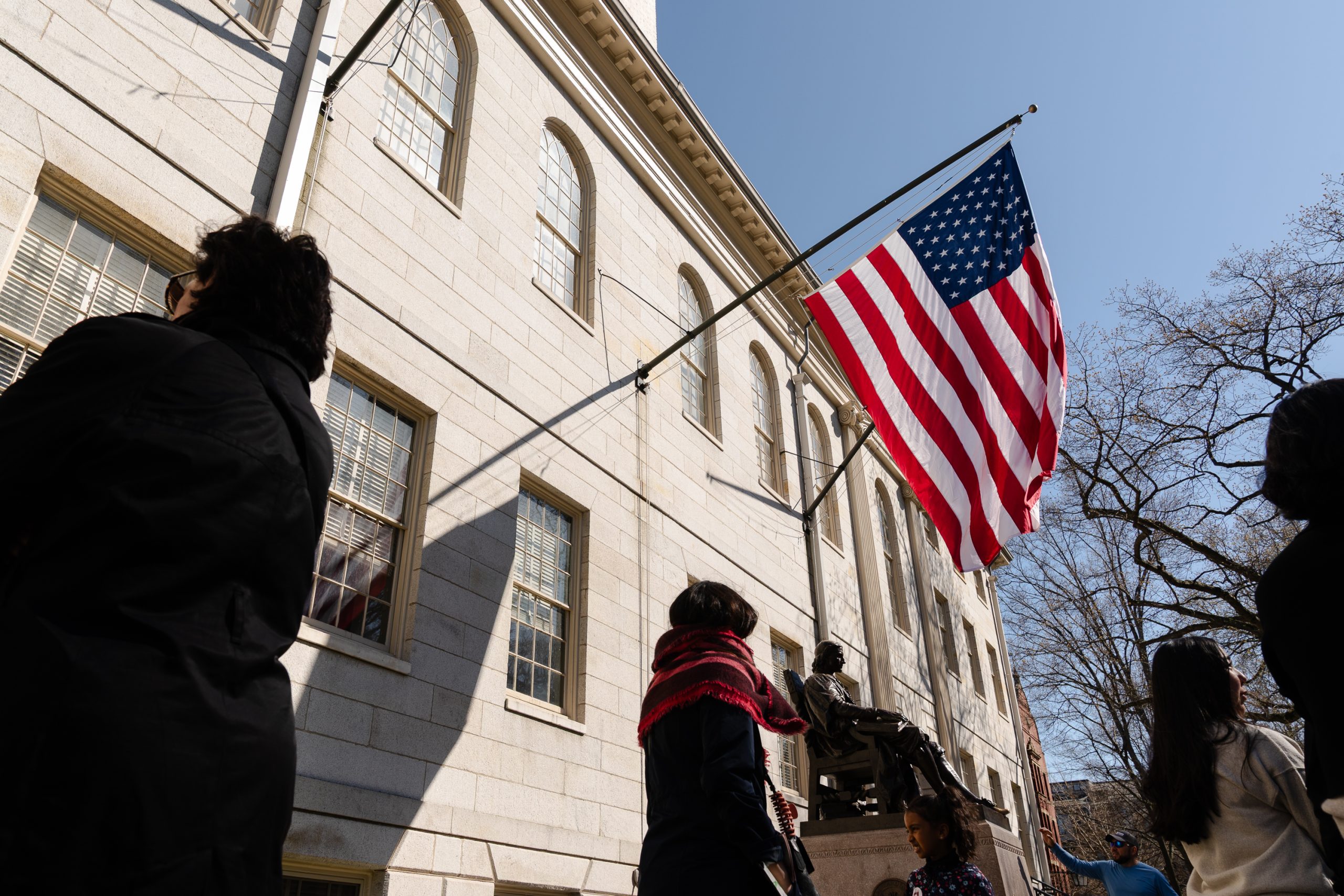
The Trump administration moved quickly after taking office to open dozens of investigations into schools and universities nationwide. Most of those announced publicly mark a dramatic shift in priorities from previous administrations.
The Education Department and other agencies are looking into allegations of antisemitism and racial discrimination against white students at dozens of colleges. The agency also has begun investigating policies that protect transgender athletes and, in some cases, targeted entire state departments of education as part of that work.
Related: Become a lifelong learner. Subscribe to our free weekly newsletter featuring the most important stories in education.
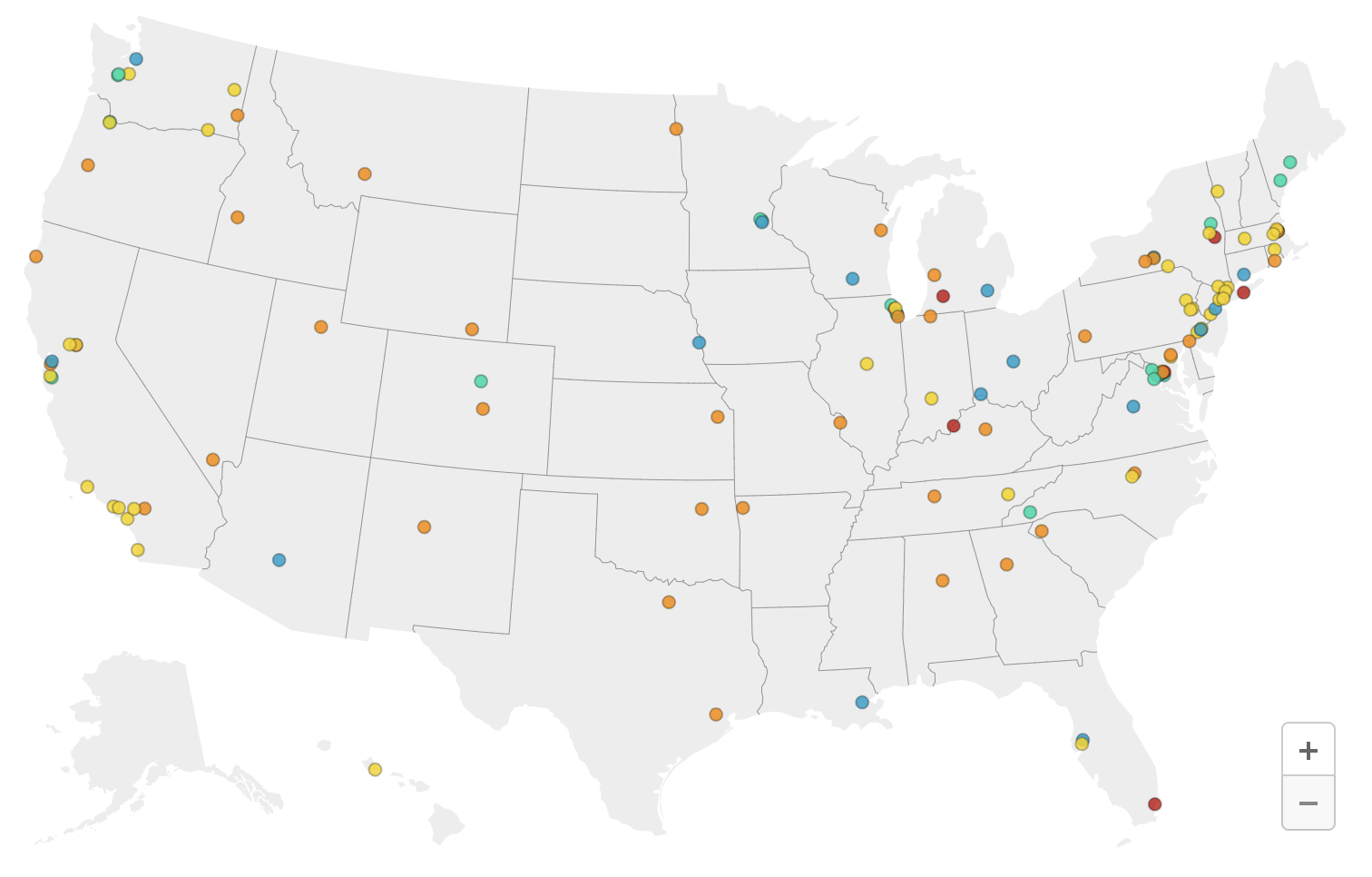
Here’s a look at investigations the Trump administration has announced. This map and list will be updated. Know of an investigation we missed? Tell us: [email protected].
Although the majority of investigations that have been opened are in states considered to be liberal, almost every state in the country has at least one entity under scrutiny. And many institutions face more than one investigation.
To date, colleges and universities have received the most attention from the administration, with more than 60 targeted over alleged incidents of antisemitism and another 45 under scrutiny over their work with a program that aims to increase diversity among Ph.D. candidates. Most of the K-12 investigations involve transgender policies, including those about access to sports and locker rooms.
Contact investigations editor Sarah Butrymowicz at [email protected] or on Signal: @sbutry.04
The Hechinger Report provides in-depth, fact-based, unbiased reporting on education that is free to all readers. But that doesn’t mean it’s free to produce. Our work keeps educators and the public informed about pressing issues at schools and on campuses throughout the country. We tell the whole story, even when the details are inconvenient. Help us keep doing that.
The other day, I came across an article about child care that felt so familiar I let out an exasperated sigh. Child care, the article announced, is now more expensive than college tuition and rent in most states. Many of us had just read another version of the article in March. And before that, in November 2024. Then there’s the one that dates back a little further — to 2013.
Many of these stories, which seem to come out on an annual basis, fail to mention that this is a problem that spans decades. The real news is that it hasn’t gotten any better, and many American lawmakers don’t seem to care enough to take action.
I asked Elliot Haspel his thoughts on this a few weeks ago when I interviewed him about his new book, “Raising a Nation,” which will be available Aug. 11. In the book, he presents 10 arguments — some of them well known and others less intuitive — for why child care needs to be a more supported part of American society. His book starts with an anecdote that echoes my observation on the dispiriting lack of momentum around the issue: In 1998, President William Jefferson Clinton stood in the Rose Garden and declared in an address that child care was essential to the nation’s economy. President Barack Obama made the same argument in 2015. President Donald Trump did the same in 2019. Yet as the years go by, little changes.
“We have been having many of the same child care battles for a long time, for decades and decades and decades,” Haspel told me.
Haspel’s arguments in “Raising a Nation” include “The Economic Case,” where he digs into how child care affects business productivity and the labor force; and the “The Patriotic Case,” where he presents parenthood as patriotic and argues child care is important for American democracy.
He cites numerous worrisome examples of the consequences of insufficient policy and investment. In making “The Community Case,” for instance, he tells a jarring story from Montrose, Colorado, where the lack of child care has led to difficulties recruiting and retaining police officers. That, in turn, negatively affects the city’s crime rate and response time to emergency calls. And in arguing “The Antipoverty Case,” he highlights extensive research on how a lack of child care is a key theme for families who are unable to move out of poverty.
“Care is, in fact, just as important to our social infrastructure as having a public education system, having public libraries, having public parks,” he told me.
As he writes, it’s clear why we haven’t made much progress as a nation, and why we remain behind nearly every other wealthy country in investing in child care: “We have never established that good child care belongs among the pantheon of American values.”
While Haspel’s book focuses more on why we need more robust child care policy than howwe get there, he provides a few ideas for the latter: giving child care educators a wage that could support their own families, investing in stay-at-home parents and informal caregivers along with licensed care, and including before- and after-school care and summer care in the system. While those seem like lofty goals, Haspel argues it is indeed fully “American” to embrace such policies. Access to high-quality child care, he argues, is not an “individual family obligation but rather a societal imperative.”
This story about child care was produced by The Hechinger Report, a nonprofit, independent news organization focused on inequality and innovation in education. Sign up for the Hechinger newsletter.
The Hechinger Report provides in-depth, fact-based, unbiased reporting on education that is free to all readers. But that doesn’t mean it’s free to produce. Our work keeps educators and the public informed about pressing issues at schools and on campuses throughout the country. We tell the whole story, even when the details are inconvenient. Help us keep doing that.
NEW ORLEANS — Kapri Clark used the $50 to help pay for her braces. Lyrik Grant saved half of it, and used the rest for dance classes. Kevin Jackson said he squandered the cash on wings, ride shares for dates and some DJ equipment he later tossed.
For the past five years, Clark, Grant, Jackson and hundreds of high schoolers in New Orleans have shopped — or saved — as part of a project to explore what happens if you give cash directly to young people, no strings attached.
“That was the most helpful thing ever,” said Clark, now a student at the University of Louisiana at Lafayette, who said she could still use that extra cash.
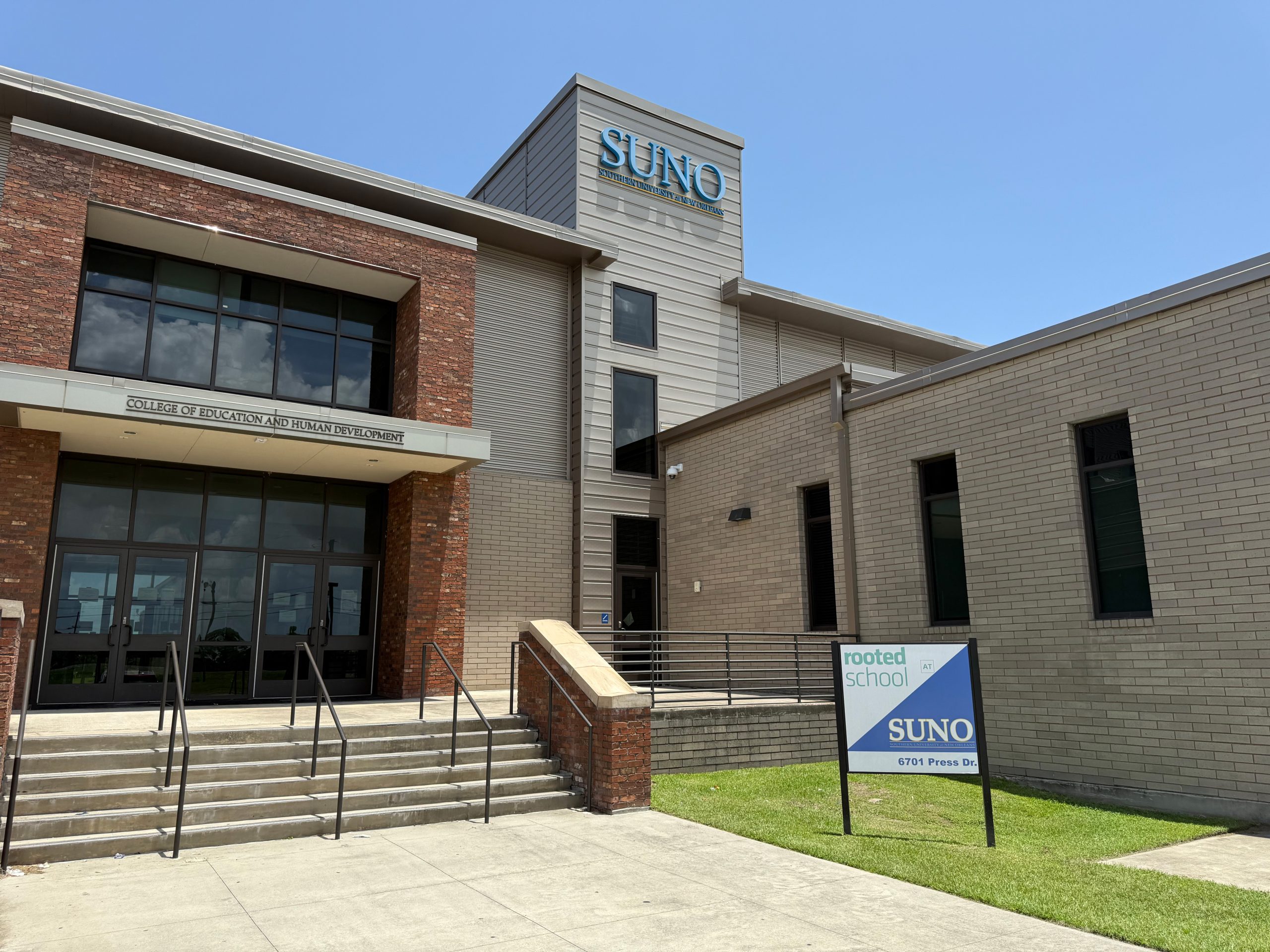
“The $50 study,” as it’s known, began at Rooted School, a local charter school, as an experiment to increase attendance. The study has since grown to eight other high schools in the city, as well as Rooted’s sister campus in Indianapolis, with students randomly selected to receive $50 every week for 40 weeks, or $2,000 total. By comparing their spending and savings habits to a larger control group, researchers wanted to figure out whether the money improved a teen’s financial capability and perception of themselves. They also wanted to know: Could the cash boost their grade-point averages and reading scores?
Now, as the experiment expands to Washington, D.C., and perhaps Texas, a final report of the $50 study suggests a little bit of spending cash can make a difference in young people’s lives.
The report, released Tuesday, shows students who received the cash payments were slightly more likely to attend school than those who didn’t. Academic performance did not differ between the groups. But financially, the extra cash helped students acquire stronger long-term planning skills and familiarity with savings accounts and other financial products. They ended the study, on average, with $300 saved away — a 15 percent savings rate, triple the national average for American adults.
“When young people are given the opportunity to manage money in low-stakes environments, they build the habits that shape long-term financial health,” said Stacia West, an associate professor at the University of Tennessee, Knoxville and co-founder of the Center for Guaranteed Income Research, which partnered with the Rooted School Foundation to run the study. “The short-term habits we’re seeing are laying the foundation for lifelong financial capability.”
Across the United States and the globe, hundreds of communities have tinkered with some form of universal basic income, or UBI, a social welfare program that provides people with regular cash payments to meet their needs. Direct cash transfer programs like the $50 study or the child tax credit for families are similar, but they often provide smaller amounts and target specific populations to boost a person’s income. Many studies have linked UBI to financial stability and better employment and health outcomes.
In the U.S. and Canada, researchers have found links between cash transfer pilots that focus on low-income families and better test scores and graduation rates for their kids. So far, though, few experiments have targeted young people or examined how the programs influence their lives specifically.
Talia Livneh, senior director of programs at the Rooted School in New Orleans, poses for a portrait on the school grounds. Credit: Daniella Zalcman for The Hechinger Report
“There’s a deep, deep distrust that we adults have of young people,” said Jonathan Johnson, CEO of the Rooted School Foundation, which operates the network’s four charter schools. “That distrust is to their detriment.”
In New Orleans, roughly 4 in 5 of Rooted students come from economically disadvantaged families, and during the pandemic, many struggled to prioritize school. Some students skipped class to provide child care for their working parents, or because they needed to work themselves, according to Johnson. With some seed funding from a local education nonprofit, Rooted started a “micropilot” to test whether cash could help students make ends meet and get themselves to school.
The original cohort included 20 students, half of whom received the $50 payment. In that micropilot, those receiving the cash saw their material wellbeing improve, meaning their family could more easily afford rent or utilities, and they gained skills around setting financial goals. Rooted added students from its Indianapolis campus and another high school in New Orleans, G.W. Carver. And for their final report released this week, researchers sifted through the spending and survey data from 170 students who received the cash payments and 210 students who did not.
The two-year report found students in the treatment group attended 1.23 more days of school, and spent close to half their funds on essentials like food and groceries. The report also noted that 70 percent of all students at the participating schools qualify for subsidized meals, suggesting “this spending may reflect efforts to meet immediate nutritional needs.” One 12th grader in a survey mentioned using the money to feed their siblings.
Kapri Clark recalled waiting every Wednesday morning for the $50 deposit to appear in her banking app. And every Wednesday afternoon, during her senior year at Carver High School, she put that money toward her $200 bill for braces she covered out of pocket.
She braided hair to cover the rest, and still books clients when she has time in between her studies to become a nurse at the Lafayette campus. Even in college, Clark can see the need for some supplemental income for herself and her peers.
“I make enough to take care of myself, but I watch every dollar,” said Clark. “There’s a lot of people struggling in life to eat, to live. Think if they got kids.”
Read Irvin, chief of staff for Collegiate Academies in New Orleans, a network of five charter high schools that includes Carver High, said the $2,000 had provided the extra incentive a few students needed to stick it out until graduation. “That’s incredibly impactful for their life trajectories,” she said.
In January 2024, the city of New Orleans invested $1 million to bankroll another extension of the study, as part of an economic mobility initiative that tapped federal Covid relief funding. During the pandemic, a skyrocketing murder rate and spike in overall crime had convinced the city to help more residents, especially young people, find stability.
“Research shows that people who are economically stable are less likely to commit crime,” said Courtney Wong, the city’s deputy director of economic development.
The city funding not only expanded the $50 study to nine high schools, it also set a longer timeline for the research: About 800 seniors who participate will have their data tracked for 18 months after their graduation.
A former high school teacher and administrator, Wong said $50 could have made a difference in the lives of many of her former students.
“This targets young people in that perfect moment,” she said. “They’re in the right spot where even a little amount of help could have big, positive impacts before issues of crime or unemployment or things like that even come up.”
Researchers also found students who received the $50 reported greater agency. They felt more control over their finances and more confidence about making long-term financial decisions. Students, according to the report, aligned their spending to future goals such as college prep classes and getting a driver’s license.
Lyrik Grant, a rising junior at Carver High School, is the second-youngest of six kids with two working parents. She could ask them for help, but the $50 allowed Grant to afford the tights and tops she needed for dance class on her own. The money helped cover a college entrance exam, which she aced, and Grant wants to learn how to drive soon.
“My first thought was: What am I going to do with all this money?” Grant said, adding that the cash helped some of her classmates find financial stability. “Children don’t always want to spend their parent’s money, and some parents don’t always have money to give them.”
Still, for some students, the money wasn’t exactly life-changing. Irvin of Collegiate Academies said many used the cash to “just be teenagers.”
That was true for Kevin Jackson, a rising junior at Rooted School New Orleans.
“It’s cool to get free money,” he said. “I was spending it on the TikTok shop: posters, keyboards, lights — stuff I liked, not stuff I actually needed.”
Despite the studies that show a positive impact from UBI, many Americans appear skeptical of the idea of a federal program that gives unconditional financial support to people. Aditi Vasan, a pediatrician and researcher at PolicyLab at the Children’s Hospital of Philadelphia, said skeptics often worry about recipients using public dollars for drug use or other illicit behavior, even though the data does not support that.
Still, that fear will likely keep any large-scale cash transfer program from being adopted in the United States any time soon, she said.
“That concern exists certainly for cash transfers in general but might be particularly magnified for teens,” Vasan said. “We’ve not seen that play out in the evidence from the quality studies that have been done.”
Next year, in Washington, D.C., the nonprofit Education Forward will fund a pilot of the $50 study with 40 high schoolers. The Rooted school network resumed talks, meanwhile, to take the study to neighboring Texas, after state lawmakers earlier this year failed to pass legislation that threatened to ban local governments from adopting guaranteed income programs.
Talia Livneh, senior director of programs for the Rooted School Foundation, said the politics may need to catch up to the research.
“I don’t think what we’re doing is so radical. I believe this just works,” she said. “Kids don’t lack character. They lack cash,” Livneh added. “They deserve deep, deep trust that students and people know what’s best for them.”
It’s been four years since Vernell Cheneau III received the $50 for 40 weeks while a student at Rooted in New Orleans, and his economic life isn’t easy. He struggled for months to find part-time work in his hometown. But on a recent summer morning, the same day he finally received a job offer, Cheneau recalled what he learned from the study.
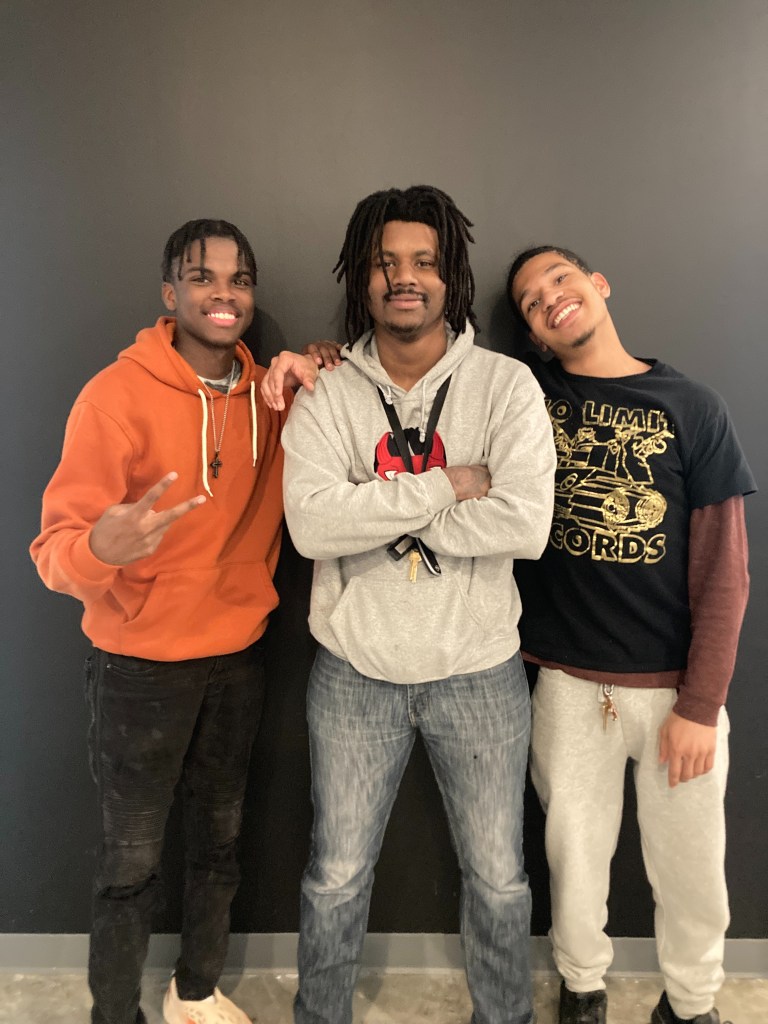
Vernell Cheneau III (left) with two other students who participated in the cash transfer program at Rooted School, in New Orleans. Credit: Courtesy of Rooted School
“You learn that money goes fast, especially if it’s free,” said Cheneau, 22.
As a student, he tried to use the money to build some credit history. Since then, he’s learned the full cost of being an adult in America: health care, fuel and maintenance for his car, getting your hair done before a new job. Cheneau has also spent that time trying to convince friends and family to support UBI.
Most oppose giving “free” money to people, he said. “How much does it cost to feed children? Get to work? We can’t just allow people to drown.”
“Everything costs something,” Cheneau added. “If you’re stuck in a rut, it’s expensive to restart. In this country, it’s expensive to be poor.”
Contact staff writer Neal Morton at 212-678-8247, on Signal at nealmorton.99, or via email at [email protected].
The Hechinger Report provides in-depth, fact-based, unbiased reporting on education that is free to all readers. But that doesn’t mean it’s free to produce. Our work keeps educators and the public informed about pressing issues at schools and on campuses throughout the country. We tell the whole story, even when the details are inconvenient. Help us keep doing that.
For the last 15 years, science teacher Jeff Grant has used information on climate change from the federal website Climate.gov to create lesson plans, prepare students for Advanced Placement tests and educate fellow teachers. Now, Grant says, he is “grabbing what [he] can” from the site run by the National Oceanic and Atmospheric Administration’s Climate Program Office, amid concerns that the Trump administration is mothballing it as part of a broader effort to undermine climate science and education.
“It’s just one more thing stifling science education,” said Grant, who teaches at Downers Grove North High School in the Chicago suburbs.
Since early May, all 10 editorial contributors to Climate.gov have lost their jobs, and the organization that produces its education resources will soon run out of money. On June 24, the site’s homepage was redirected to NOAA.gov, a change NOAA said was made to comply with an earlier executive order on “restoring gold standard science.” Those steps follow many others the president has made to dismantle federal efforts to fight climate change, which his administration refers to as the “new green scam.”
Former employees of Climate.gov and other educators say they fear that the site, which will no longer produce new content, could be transformed into a platform for disinformation.
“It will make it harder for teachers to do a good job in educating their students about climate change,” said Glenn Branch, deputy director of the nonprofit National Center for Science Education. “Previously, they could rely on the federal government to provide free, up-to-date, accurate resources on climate change that were aimed at helping educators in particular, and they won’t be able to do so if some of these more dire predictions come to pass.”
Such concerns have some foundation. For example, Covid.gov, which during the Biden administration offered health information and access to Covid-19 tests, has been revamped to promote the controversial theory that the coronavirus was created in a lab. The administration has also moved aggressively to delete from government sites other terms that are currently out of favor, such as references to transgender people that were once on the National Park Service website of the Stonewall National Memorial, honoring a major milestone in the fight for LGBTQ+ rights.
Kim Doster, director of NOAA’s office of communications, declined to answer specific questions but shared a version of the statement posted on the NOAA website when Climate.gov was transferred. “In compliance with Executive Order 14303, Restoring Gold Standard Science, NOAA is relocating all research products from Climate.gov to NOAA.gov in an effort to centralize and consolidate resources,” it says.
Related: Want to read more about how climate change is shaping education? Subscribe to our free newsletter.
Climate.gov, founded in 2010 to support earth science instruction in schools, had become a go-to site for educators and the general public for news and information about temperature, sea level rise and other indicators of global warming.
For many educators, it has served a particularly key role. Because its resources are free, they are vital in schools that lack resources and funding, teachers and experts say.
Rebecca Lindsey, Climate.gov’s lead editor and writer, was one of several hundred NOAA probationary employees fired in February, then rehired and put on administrative leave, before being terminated again in March. The rest of the content production team — which included a meteorologist, a graphic artist and data visualizers — lost their jobs in mid-May. Only the site’s two web developers still have their jobs.
A screenshot of the Sea Level Rise Viewer, an interactive NOAA that’s listed as a resource on Climate.gov, a government climate website. Credit: NOAA Office for Coastal Management
Lindsey said she worries that the government “intended to keep the site up and use it to spread climate misinformation, because they were keeping the web developers and getting rid of the content team.”
In addition, the Climate Literacy and Energy Awareness Network, the official content provider for the education section of the site, has not received the latest installment of its three-year grant and expects its funds to run out in August.
“We won’t have funding to provide updates, fix hyperlinks and make sure that new resources are being added, or help teachers manage or address or use the resources,” said Anne Gold, CLEAN’s principal investigator. “It’s going to start deteriorating in quality.”
CLEAN, whose website is hosted by Carleton College, is now searching for other sources of money to continue its work, Gold said.
With the June 24 change redirecting visitors from Climate.gov to NOAA.gov/climate, the website for the first time falls under the purview of a political appointee: Doster. Its previous leader, David Herring, is a science writer and educator.
Melissa Lau, an AP environmental science teacher in Piedmont, Oklahoma, said the relocated site was “really difficult to navigate.”
As someone who lives in Tornado Alley, Lau said, she frequented CLEAN and NOAA sites to show her students localized, real-time data on storm seasons. She said she is concerned that teachers won’t have time to track down information that was shifted in the website’s move and, as a result, may opt not to teach climate change.
The executive order on “restoring gold standard science” that appears to have triggered the shift gives political appointees the authority to decide what science information needs to be modified to align with its tenets.
While the disclaimer posted to NOAA.gov seems to imply that Climate.gov did not meet this requirement, educators and researchers said that the site and its CLEAN education resources were the epitome of a gold standard.
“I want to stress that the reason why CLEAN is considered the gold standard is because we have such high standards for scientific accuracy, classroom readiness and maintenance,” Gold said. “We all know that knowledge is power, and power gives hope. … [Losing funding] is going to be a huge loss to classrooms and to students and the next generation.”
This is only the latest attack by the Trump administration on education around climate change. This month, the U.S. Global Change Research Program’s website, GlobalChange.gov, was shut down by the administration, after the program was defunded in April. The website once hosted an extensive climate literacy guide, along with all five iterations of the National Climate Assessment — a congressionally required report that informed the public about the effects and risks of climate change, along with local, actionable responses.
The Department of Commerce, which oversees NOAA, has cut other federal funding for climate research, including at Princeton University, arguing that these climate grant awards promoted “exaggerated and implausible climate threats, contributing to a phenomenon known as ‘climate anxiety,’ which has increased significantly among America’s youth.”
“The more you know [about climate change], the more it’s not a scary monster in the closet,” said Lauren Madden, professor of elementary science education at the College of New Jersey. “It’s a thing you can react to.” She added, “We’re going to have more storms, we’re going to have more fires, we’re going to have more droughts. There are things we can do to help slow this. … I think that quells anxiety, that doesn’t spark it.”
And climate education has broad public support — about 3 in 4 registered voters say schools should teach children about global warming, according to a 2024 report from the Yale Program on Climate Change Communication. Similarly, 77 percent of Americans regard it as very or somewhat important for elementary and secondary school students to learn about climate change, according to a 2019 study. And all but five states have adopted science standards that incorporate at least some instruction on climate change.
As a result, many science teachers rely on federal tools and embed them in their curriculum. They are worried that the information will no longer be relevant, or disappear entirely, according to Lori Henrickson, former climate integration specialist for Washington state’s education department. Henrickson, who lost her job this June as the result of state budget cuts, was in charge of integrating climate education across content areas in the state, from language arts to physical education.
The .gov top-level domain connotes credibility and accessibility, according to Branch: “It is also easier for teachers facing or fearing climate change denial backlash to cite a reliable, free source from the federal government.”
With Climate.gov’s future uncertain, educators are looking to other resources, like university websites and tools from other countries.
“I’m sure there will continue to be tools, and there will be enough people who will be willing to pay to access them,” Madden said. But, she added, “they probably won’t be as comprehensive, and it won’t feel like it’s a democratic process. It’ll feel like: If you or your employer are willing to chip in for it, then you’ll have access.”
“I feel like with all the federal websites, I’m constantly checking to see what’s still up and what’s not,” Madden said.
Bertha Vazquez, education director for the Center of Inquiry, an organization that works to preserve science and critical thinking, said she worried that the disappearance of climate information could leave U.S. students behind.
“The future of the American economy is not in oil, the future of the American economy is in solar and wind and geothermal. And if we’re going to keep up with the international economy, we need to go in that direction,” she said. But while the U.S. should be leading the way in scientific discovery, Vazquez said, such work will now be left to other countries.
Lau said she felt helpless and frustrated about Climate.gov’s shutdown and about the “attack on American science in general.”
“I don’t know what to do. I can contact my legislators, but my legislators from my state are not going to be really open to my concerns,” she said. “If students next year are asking me questions about [science research and funding], I have to tell them, ‘I do not know,’ and just have to leave it at that.”
Contact editor Caroline Preston at 212-870-8965, via Signal at CarolineP.83 or on email at [email protected].
The Hechinger Report provides in-depth, fact-based, unbiased reporting on education that is free to all readers. But that doesn’t mean it’s free to produce. Our work keeps educators and the public informed about pressing issues at schools and on campuses throughout the country. We tell the whole story, even when the details are inconvenient. Help us keep doing that.
PITTSBURGH — Stephen Wells was trained in the Air Force to work on F-16 fighter jets, including critical radar, navigation and weapons systems whose proper functioning meant life or death for pilots.
Yet when he left the service and tried to apply that expertise toward an education at Pittsburgh’s Community College of Allegheny County, or CCAC, he was given just three credits toward a required class in physical education.
Wells moved forward anyway, going on to get his bachelor’s and doctoral degrees. Now he’s CCAC’s provost and involved in a citywide project to help other people transform their military and work experience into academic credit.
What’s happening in Pittsburgh is part of growing national momentum behind letting students — especially the increasing number who started but never completed a degree — cash in their life skills toward finally getting one, saving them time and money.
Colleges and universities have long purported to provide what’s known in higher education as credit for prior learning. But they have made the process so complex, slow and expensive that only about 1 in 10 students actually completes it.
Many students don’t even try, especially low-income learners who could benefit the most, according to a study by the Western Interstate Commission for Higher Education and the Council for Adult and Experiential Learning, or CAEL.
“It drives me nuts” that this promise has historically proven so elusive, Wells said, in his college’s new Center for Education, Innovation & Training.
Stephen Wells, provost at the Community College of Allegheny County in Pittsburgh. An Air Force veteran, Wells got only a handful of academic credits for his military experience. Now he’s part of an effort to expand that opportunity for other students. Credit: Nancy Andrews for The Hechinger Report
That appears to be changing. Nearly half of institutions surveyed last year by the American Association of Collegiate Registrars and Admissions Officers, or AACRAO, said they have added more ways for students to receive these credits — electricians, for example, who can apply some of their training toward academic courses in electrical engineering, and daycare workers who can use their experience to earn degrees in teaching.
Related: Interested in innovations in higher education? Subscribe to our free biweekly higher education newsletter.
The reason universities and colleges are doing this is simple: Nearly 38 million working-age Americans have spent some time in college but never finished, according to the National Student Clearinghouse Research Center. Getting at least some of them to come back has become essential to these higher education institutions at a time when changing demographics mean that the number of 18-year-old high school graduates is falling.
“When higher education institutions are fat and happy, nobody looks for these things. Only when those traditional pipelines dry up do we start looking for other potential populations,” said Jeffrey Harmon, vice provost for strategic initiatives and institutional effectiveness at Thomas Edison State University in New Jersey, which has long given adult learners credit for the skills they bring.
Being able to get credit for prior learning is a huge potential recruiting tool. Eighty-four percent of adults who are leaning toward going back to college say it would have “a strong influence” on their decision, according to research by CAEL, the Strada Education Foundation and Hanover Research. (Strada is among the funders of The Hechinger Report, which produced this story.)
The Center for Education, Innovation & Training at the Community College of Allegheny County in Pittsburgh. The college is part of a citywide effort to give academic credit for older students’ life experiences. Credit: Nancy Andrews for The Hechinger Report
When Melissa DiMatteo, 38, decided to get an associate degree at CCAC to go further in her job, she got six credits for her previous training in Microsoft Office and her work experience as everything from a receptionist to a supervisor. That spared her from having to take two required courses in computer information and technology and — since she’s going to school part time and taking one course per semester — saved her a year.
“Taking those classes would have been a complete waste of my time,” DiMatteo said. “These are things that I do every day. I supervise other people and train them on how to do this work.”
On average, students who get credit for prior learning save between $1,500 and $10,200 apiece and nearly seven months off the time it takes to earn a bachelor’s degree, the nonprofit advocacy group Higher Learning Advocates calculates. The likelihood that they will graduate is 17 percent higher, the organization finds.
Justin Hand dropped out of college because of the cost, and became a largely self-taught information technology manager before he decided to go back and get an associate and then a bachelor’s degree so he could move up in his career.
He got 15 credits — a full semester’s worth — through a program at the University of Memphis for which he wrote essays to prove he had already mastered software development, database management, computer networking and other skills.
“These were all the things I do on a daily basis,” said Hand, of Memphis, who is 50 and married, with a teenage son. “And I didn’t want to have to prolong college any more than I needed to.”
Meanwhile, employers and policymakers are pushing colleges to speed up the output of graduates with skills required in the workforce, including by giving more students credit for their prior learning. And online behemoths Western Governors University and Southern New Hampshire University, with which brick-and-mortar colleges compete, are way ahead of them in conferring credit for past experience.
“They’ve mastered this and used it as a marketing tool,” said Kristen Vanselow, assistant vice president of innovative education and partnerships at Florida Gulf Coast University, which has expanded its awarding of credit for prior learning. “More traditional higher education institutions have been slower to adapt.”
It’s also gotten easier to evaluate how skills that someone learns in life equate to academic courses or programs. This has traditionally required students to submit portfolios, take tests or write essays, as Hand did, and faculty to subjectively and individually assess them.
Now some institutions, states, systems and independent companies are standardizing this work or using artificial intelligence to do it. The growth of certifications from professional organizations such as Amazon Web Services and the Computing Technology Industry Association, or CompTIA, has helped, too.
“You literally punch [an industry certification] into our database and it tells you what credit you can get,” said Philip Giarraffa, executive director of articulation and academic pathways at Miami Dade College. “When I started here, that could take anywhere from two weeks to three months.”
Data provided by Miami Dade shows it has septupled the number of credits for prior learning awarded since 2020, from 1,197 then to 7,805 last year.
“These are students that most likely would have looked elsewhere, whether to the [online] University of Phoenix or University of Maryland Global [Campus]” or other big competitors, Giarraffa said.
Fifteen percent of undergraduates enrolled in higher education full time and 40 percent enrolled part time are 25 or older, federal data show — including people who delayed college to serve in the military, volunteer or do other work that could translate into academic credit.
“Nobody wants to sit in a class where they already have all this knowledge,” Giarraffa said.
At Thomas Edison, police academy graduates qualify for up to 30 credits toward associate degrees. Carpenters who have completed apprenticeships can get as many as 74 credits in subjects including math, management and safety training. Bachelor’s degrees are often a prerequisite for promotion for people in professions such as these, or who hope to start their own companies.
The University of Memphis works with FedEx, headquartered nearby, to give employees with supervisory training academic credit they can use toward a degree in organizational leadership, helping them move up in the company.
The University of North Carolina System last year launched its Military Equivalency System, which lets active-duty and former military service members find out almost instantly, before applying for admission, if their training could be used for academic credit. That had previously required contacting admissions offices, registrars or department chairs.
Among the reasons for this reform was that so many of these prospective students — and the federal education benefits they get — were ending up at out-of-state universities, the UNC System’s strategic plan notes.
“We’re trying to change that,” said Kathie Sidner, the system’s director of workforce and partnerships. It’s not only for the sake of enrollment and revenue, Sidner said. “From a workforce standpoint, these individuals have tremendous skill sets and we want to retain them as opposed to them moving somewhere else.”
California’s community colleges are also expanding their credit for prior learning programs as part of a plan to increase the proportion of the population with educations beyond high school.
“How many people do you know who say, ‘College isn’t for me?’ ” asked Sam Lee, senior advisor to the system’s chancellor for credit for prior learning. “It makes a huge difference when you say to them that what they’ve been doing is equivalent to college coursework already.”
In Pittsburgh, the Regional Upskilling Alliance — of which CCAC is a part — is connecting job centers, community groups, businesses and educational institutions to create comprehensive education and employment records so more workers can get credit for skills they already have.
That can provide a big push, “especially if you’re talking about parents who think, ‘I’ll never be able to go to school,’ ” said Sabrina Saunders Mosby, president and CEO of the nonprofit Vibrant Pittsburgh, a coalition of business and civic leaders involved in the effort.
“Our members are companies that need talent,” Mosby said.
There’s one group that has historically pushed back against awarding credit for prior learning: university and college faculty concerned it might affect enrollment in their courses or unconvinced that training provided elsewhere is of comparable quality. Institutions have worried about the loss of revenue from awarding credits for which students would otherwise have had to pay.
That also appears to be changing, as universities leverage credit for prior learning to recruit more students and keep them enrolled for longer, resulting in more revenue — not less.
“That monetary factor was something of a myth,” said Beth Doyle, chief of strategy at CAEL.
Faculty have increasingly come around, too. That’s sometimes because they like having experienced students in their classrooms, Florida Gulf Coast’s Vanselow said.
Still, while many recognize it as a recruiting incentive, most public universities and colleges have had to be ordered to confer more credits for prior learning by legislatures or governing boards. Private, nonprofit colleges remain stubbornly less likely to give it.
More than two-thirds charge a fee for evaluating whether other kinds of learning can be transformed into academic credit, an expense that isn’t covered by financial aid. Roughly one in 12 charge the same as it would cost to take the course for which the credits are awarded.
Debra Roach, vice president for workforce development at the Community College of Allegheny County in Pittsburgh. The college is working on giving academic credit to students for their military, work and other life experience. Credit: Nancy Andrews for The Hechinger Report
There are other confounding roadblocks and seemingly self-defeating policies. CCAC runs a noncredit program to train paramedics, for example, but won’t give people who complete it credits toward its for-credit nursing degree. Many leave and go across town to a private university that will. The college is working on fixing this, said Debra Roach, its vice president of workforce development.
It’s important to see this from the students’ point of view, said Tracy Robinson, executive director of the University of Memphis Center for Regional Economic Enrichment.
“Credit for prior learning is a way for us to say, ‘We want you back. We value what you’ve been doing since you’ve been gone,’ ” Robinson said. “And that is a total game changer.”
Contact writer Jon Marcus at 212-678-7556, [email protected]orjpm.82 on Signal.
The Hechinger Report provides in-depth, fact-based, unbiased reporting on education that is free to all readers. But that doesn’t mean it’s free to produce. Our work keeps educators and the public informed about pressing issues at schools and on campuses throughout the country. We tell the whole story, even when the details are inconvenient. Help us keep doing that.
Scores of speech therapists across the country erupted last month when their leading professional association said it was considering dropping language calling for diversity, equity and inclusion and “cultural competence” in their certification standards. Those values could be replaced in some standards with a much more amorphous emphasis on “person-centered care.”
“The decision to propose these modifications was not made lightly,” wrote officials of the American Speech-Language-Hearing Association (ASHA) in a June letter to members. They noted that due to recent executive orders related to DEI, even terminology that “is lawfully applied and considered essential for clinical practice … could put ASHA’s certification programs at risk.”
Yet in the eyes of experts and some speech pathologists, the change would further imperil getting quality help to a group that’s long been grossly underserved: young children with speech delays who live in households where English is not the primary language spoken.
“This is going to have long-term impacts on communities who already struggle to get services for their needs,” said Joshuaa Allison-Burbank, a speech language pathologist and Navajo member who works on the Navajo Nation in New Mexico where the tribal language is dominant in many homes.
In a written statement after this story published, a spokesperson for the association stressed that the proposed changes have not been finalized, and said that member feedback is currently under review.
“ASHA remains steadfast in our belief that all health care services should be non-discriminatory and address the needs of every individual,” the spokesperson added. She characterized the proposed changes as “an evolution, not a retreat,” and noted that person-centered care aims to ensure “clinicians are equipped to deliver services tailored to each person’s context, including their lived experience, language background, cultural identity, and home environment.”
A shift away from DEI and cultural competence — which involves understanding and trying to respond to differences in children’s language, culture and home environment — could have a devastating effect at a time when more of both are needed to reach and help multilingual learners, several experts and speech pathologists said.
They told me about a few promising strategies for strengthening speech services for multilingual infants, toddlers and preschool-age children with speech delays — each of which involves a heavy reliance on DEI and cultural competence.
Embrace creative staffing. The Navajo Nation faces severe shortages of trained personnel to evaluate and work with young children with developmental delays, including speech. So in 2022, Allison-Burbank and his research team began providing training in speech evaluation and therapy to Native family coaches who are already working with families through a tribal home visiting program. The family coaches provide speech support until a more permanent solution can be found, said Allison-Burbank.
Home visiting programs are “an untapped resource for people like me who are trying to have a wider reach to identify these kids and get interim services going,” he said. (The existence of both the home visiting program and speech therapy are under serious threat because of federal cuts, including to Medicaid.)
Use language tests that have been designed for multilingual populations. Decades ago, few if any of the exams used to diagnose speech delays had been “normed” — or pretested to establish expectations and benchmarks — on non-English-speaking populations.
For example, early childhood intervention programs in Texas were required several years ago to use a single tool that relied on English norms to diagnose Spanish-speaking children, said Ellen Kester, the founder and president of Bilinguistics Speech and Language Services in Austin, which provides both direct services to families and training to school districts. “We saw a rise in diagnosis of very young (Spanish-speaking) kids,” she said. That isn’t because all of the kids had speech delays, but due to fundamental differences between the two languages that were not reflected in the test’s design and scoring. (In Spanish, for instance, the ‘z’ sound is pronounced like an English ‘s.’)
There are now more options than ever before of screeners and tools normed on multilingual, diverse populations; states, agencies and school districts should be selective, and informed, in seeking them out, and pushing for continued refinement.
Expand training — formal and self-initiated — for speech therapists in the best ways to work with diverse populations. In the long-term, the best way to help more bilingual children is to hire more bilingual speech therapists through robust DEI efforts. But in the short term, speech therapists can’t rely solely on interpreters — if one is even available — to connect with multilingual children.
That means using resources that break down the major differences in structure, pronunciation and usage between English and the language spoken by the family, said Kester. “As therapists, we need to know the patterns of the languages and what’s to be expected and what’s not to be expected,” Kester said.
It’s also crucial that therapists understand how cultural norms may vary, especially as they coach parents and caregivers in how best to support their kids, said Katharine Zuckerman, professor and associate division head of general pediatrics at Oregon Health & Science University.
“This idea that parents sit on the floor and play with the kid and teach them how to talk is a very American cultural idea,” she said. “In many communities, it doesn’t work quite that way.”
In other words, to help the child, therapists have to embrace an idea that’s suddenly under siege: cultural competence,
Quick take: Relevant research
In recent years, several studies have homed in on how state early intervention systems, which serve children with developmental delays ages birth through 3, shortchange multilingual children with speech challenges. One study based out of Oregon, and co-authored by Zuckerman, found that speech diagnoses for Spanish-speaking children were often less specific than for English speakers. Instead of pinpointing a particular challenge, the Spanish speakers tended to get the general “language delay” designation. That made it harder to connect families to the most tailored and beneficial therapies.
A second study found that speech pathologists routinely miss critical steps when evaluating multilingual children for early intervention. That can lead to overdiagnosis, underdiagnosis and inappropriate help. “These findings point to the critical need for increased preparation at preprofessional levels and strong advocacy … to ensure evidence-based EI assessments and family-centered, culturally responsive intervention for children from all backgrounds,” the authors concluded.
Carr is a fellow at New America, focused on reporting on early childhood issues.
Contact the editor of this story, Christina Samuels, at 212-678-3635, via Signal at cas.37 or [email protected].
The Hechinger Report provides in-depth, fact-based, unbiased reporting on education that is free to all readers. But that doesn’t mean it’s free to produce. Our work keeps educators and the public informed about pressing issues at schools and on campuses throughout the country. We tell the whole story, even when the details are inconvenient. Help us keep doing that.
UPDATE: After this story was published, the Education Department issued a press release Monday afternoon, July 7, announcing that Matthew Soldner will serve as acting commissioner of the National Center for Education Statistics, in addition to his role as acting director of the Institute of Education Sciences. The job of statistics chief had been vacant since March and had prevented the release of assessment results.
The repercussions from the decimation of staff at the Education Department keep coming. Last week, the fallout led to a delay in releasing results from a national science test.
The National Assessment of Educational Progress (NAEP) is best known for tests that track reading and math achievement but includes other subjects, too. In early 2024, when the main reading and math tests were administered, there was also a science section for eighth graders.
Why the delay? There is no commissioner of education statistics to sign off on the score report, a requirement beforeit is released, according to five current and former officials who are familiar with the release of NAEP scores, but asked to remain anonymous because they were not authorized to speak to the press or feared retaliation.
Related: Our free weekly newsletter alerts you to what research says about schools and classrooms.
Peggy Carr, a Biden administration appointee, was dismissed as the commissioner of the National Center for Education Statistics in February, two years before the end of her six-year term set by Congress. Chris Chapman was named acting commissioner, but he was fired in March, along with half the employees at the Education Department. The role has remained vacant since.
A spokesman for the National Assessment Governing Board, which oversees NAEP, said the science scores will be released later this summer, but denied that the lack of a commissioner is the obstacle. “The report building is proceeding so the naming of a commissioner is not a bureaucratic hold-up to its progress,” Stephaan Harris said by email.
The delay matters. Education policymakers have been keen to learn if science achievement had held steady after the pandemic or tumbled along with reading and math. (Those reading and math scores were released in January.)
The Trump administration has vowed to dismantle the Education Department and did not respond to an emailed question about when a new commissioner would be appointed.
Keeping up with administration policy can be head-spinning these days. Education researchers were notified in March that they would have to relinquish federal data they were using for their studies. (The department shares restricted datasets, which can include personally identifiable information about students, with approved researchers.)
But researchers learned on June 30 that the department had changed its mind and decided not to terminate this remote access.
Lawyers who are suing the Trump administration on behalf of education researchers heralded this about-face as a “big win.” Researchers can now finish projects in progress.
Still, researchers don’t have a way of publishing or presenting papers that use this data. Since the mass firings in mid-March, there is no one remaining inside the Education Department to review their papers for any inadvertent disclosure of student data, a required step before public release. And there is no process at the moment for researchers to request data access for future studies.
“While ED’s change-of-heart regarding remote access is welcome,” said Adam Pulver of Public Citizen Litigation Group, “other vital services provided by the Institute of Education Sciences have been senselessly, illogically halted without consideration of the impact on the nation’s educational researchers and the education community more broadly. We will continue to press ahead with our case as to the other arbitrarily canceled programs.”
Pulver is the lead attorney for one of three suits fighting the Education Department’s termination of research and statistics activities. Judges in the District of Columbia and Maryland have denied researchers a preliminary injunction to restore the research and data cuts. But the Maryland case is now fast-tracked and the court has asked the Trump administration to produce an administrative record of its decision-making process by July 11. (See this previous story for more background on the court cases.)
Just as the Education Department is quietly restarting some activities that DOGE killed, so is the National Science Foundation (NSF). The federal science agency posted on its website that it had reinstated 114 awards to 45 institutions as of June 30. NSF said it was doing so to comply with a federal court order to reinstate awards to all University of California researchers. It was unclear how many of these research projects concerned education, one of the major areas that NSF funds.
Researchers and universities outside the University of California system are hoping for the same reversal. In June, the largest professional organization of education researchers, the American Educational Research Association, joined forces with a large coalition of organizations and institutions in filing a legal challenge to the mass termination of grants by the NSF. Education grants were especially hard hit in a series of cuts in April and May. Democracy Forward, a public interest law firm, is spearheading this case.
The Hechinger Report provides in-depth, fact-based, unbiased reporting on education that is free to all readers. But that doesn’t mean it’s free to produce. Our work keeps educators and the public informed about pressing issues at schools and on campuses throughout the country. We tell the whole story, even when the details are inconvenient. Help us keep doing that.
Higher Education is under intensifying scrutiny as federal regulations tighten, and public trust continues to waver. A growing threat to this is student aid fraud. Organized schemes are exploiting institutional systems to siphon millions in financial aid, particularly targeting Pell Grant disbursements and student aid refunds. The result is a direct hit to both institutional revenue and reputation. Institutions can no longer afford to operate passively. They must lead with transparency, accountability and systems built to withstand obstacles. In an era already marked by increasing skepticism surrounding higher education, this is a risk that institutions cannot afford to ignore
In June 2025, The US Department of Education announced identity verification measures for over 125,000 FAFSA applicants—a clear signal that proactive fraud prevention is no longer optional. Failure to act risks financial loss, audit exposure and reputational damage. Explore how your institution can recognize the warning signs, implement smart prevention strategies and build a strong foundation of trust that supports both reputational and revenue goals.
Understanding the Modern Fraudster’s Playbook
Today’s fraudsters are highly strategic. They understand how to game institutional processes—enrolling just long enough to trigger student aid refunds, then disappearing soon after. By carefully selecting enough credits to qualify for more aid, these fraudsters have fueled the rise of “ghost enrollments” — fraudulent student records created to claim federal aid without actual attendance.
This surge is fueled by gaps in infrastructure, less stringent verification procedures and siloed systems, all challenges that hit resource-limited institutions hardest. The rapid expansion of online learning has outpaced the sophistication of verification systems, reducing touchpoints to confirm student legitimacy. Adding to this challenge, outdated or isolated internal systems often lack real-time data sharing between critical departments such as admissions, financial aid and academic offices.
These deceptive tactics lead to more than just financial losses; they corrupt enrollment data, misguide long-term strategic planning and damage an institution’s reputation. Enrollment fraud is not just a compliance problem but a strategic issue that compromises the very accuracy of the data institutions depend on to create budgets, predict enrollment trends and allocate resources effectively.
Without real-time data sharing and alignment between systems, institutions remain vulnerable to fraud and flawed decision-making. EducationDynamics supports colleges and universities in closing these gaps through integrated data strategies that prioritize accuracy and system-wide consistency.
Identifying the Warning Signs
Early detection is an institution’s strongest defense against coordinated financial aid fraud. As schemes grow more sophisticated, so must the systems and vigilance required to stop them. Fraudsters are increasingly leveraging tools like AI to complete assignments, VPNs to hide their locations and fake identities to access financial aid. Even with these evolving tools, fraud leaves detectable patterns—and catching these patterns can become a valuable asset for institutions.
Red Flag Reports are among the most valuable tools institutions can use to identify fraudulent activity before financial aid is disbursed. These reports highlight anomalies in student data that may otherwise go unnoticed, offering a proactive mechanism to pause and review questionable activity. Implementing this type of reporting is a critical step toward closing system gaps and elevating your fraud prevention infrastructure.
To effectively intercept fraud, institutions should actively monitor for specific indicators across the enrollment and financial aid process, such as:
Multiple students tied to the same bank account or IP address
Invalid or recycled phone numbers tied to applicants
Unusual enrollment or participation patterns, such as registering for the maximum credit load with no subsequent academic engagement
Last-minute documentation or sudden changes to refund delivery preferences
VPN usage that obscures geographic location, particularly when login or application behavior conflicts with submitted residence information
By actively seeking out these red flags and embracing modern verification practices, institutions can significantly bolster their defense.
Actionable Strategies for Institutional Defense
This is the era of proactive defense, demanding that institutions build workflows that not only accommodate scrutiny but leverage it to strengthen their practices.
To achieve this, institutions must:
Empower Staff for Early Detection
Use Red Flag Reports to monitor for suspicious indicators such as shared IP addresses, duplicate bank accounts and invalid phone numbers. These reports empower your staff to pause questionable disbursements and trigger manual reviews, catching issues that might otherwise slip through.
Build Verification Workflows to Withstand Volume
Build scalable, repeatable workflows to efficiently handle identity checks, document intake and federal verification requirements. Implement triage systems that ensure timely reviews, minimizing student disruption while maintaining operational efficiency and compliance.
Create Strategic Friction
Introduce intentional friction points that deter fraudsters without impeding legitimate students. Examples include phone verification for refund information or holding disbursements until after the add/drop period. These small process shifts significantly raise the barrier for fraudulent activity, preventing large-scale losses.
Require the Financial Responsibility Agreement
Make it standard practice to collect signed Financial Responsibility Agreements (FRAs) before disbursement. Doing so strengthens your paper trail and creates another point of identity verification, helping deter those attempting to abuse the system.
Modernize Refund Security
Require muti-factor authentication (MFA) when students update refund profiles, and default to e-refunds over checks. Limit paper disbursements and ensure funds are only returned to verified payment methods, significantly reducing fraud risk and maintaining transaction integrity.
Showcase Strong Digital Infrastructure
When institutions adopt secure, transparent payment systems, they project competence. Adopting strong digital infrastructure is more than an operational improvement; it’s a powerful brand message. A secure system builds public trust and reinforces your institution’s responsible stewardship of student funds.
Break Down Silos and Align Teams
Financial Aid cannot combat fraud in isolation. Establish a collaborative task force with key stakeholders from IT, Registrar and Academic Affairs. Faculty, for instance, are often early observers of suspicious academic behavior. When departments share insights, vulnerabilities are closed far more swiftly.
Create Real-Time Communication Loops
Facilitate consistent touchpoints between Financial Aid, Accounts Receivable and IT to rapidly flag and act on anomalies. Integrated communication accelerates response times and minimizes oversight risks.
Strengthen Awareness Across Campus
Incorporate scam awareness into existing financial literacy programs. Students who understand phishing and fraud risks are less likely to fall victim and more likely to report suspicious behavior.
Develop a Crisis Communication Playbook
A public incident of financial aid fraud extends beyond headlines; it directly threatens an institution’s credibility. Build a comprehensive crisis communication playbook that ensures a fast, transparent, and coordinated response. Proactive planning is crucial, and institutions can significantly strengthen their efforts by partnering with trusted reputation management experts.
When institutions elevate fraud prevention to a core business function, they safeguard far more than their balance sheets, protecting their reputation, enrollment pipeline and overall standing.
Why This Matters for Institutional Leaders
Fraud prevention is a strategic responsibility that demands the attention of every institutional leader. The consequences of fraud aren’t limited to financial aid offices. Fraud compromises presidential planning, marketing performance and enrollment numbers—all while chipping away at public trust. If institutional leaders want to chart a course for sustainable growth, defense against fraud must be built into the foundation of that strategy.
Presidents
For presidents, fraud erodes the central pillars that define institutional stability—financial resilience and decision-making confidence. Ghost enrollments and fake students distort budget forecasts, inflate success metrics and mask areas of real vulnerability.
Fraud prevention supports long-term vision by ensuring that enrollment, funding and performance data reflect institutional realities, not manipulations. In an environment where every resource must be justified, clarity is a leadership requirement.
Marketing Leaders
Marketing teams are measured by outcomes. Fraud makes those outcomes unreliable. Invalid inquiries and ghost enrollments inflate to the top of the funnel, while wasting precious budget. For leaders who rely on brand perception to drive engagement and attract prospects, fraud directly undermines their efforts, risking a loss of trust and diminished return on investment.
Enrollment Leaders
Enrollment leaders face rising stakes driven by declining traditional student populations and heightened expectations for conversions. In this environment, fraud distorts the metrics that enrollment leaders depend on. It artificially inflates applicant numbers, conceals melt and obscures true student movement through the funnel.
More importantly, fraudulent applications divert the time and energy of enrollment coaches. Every moment spent chasing a ghost applicant is a moment stolen from a real applicant who may never get the support they need. Over time, this leads to higher melt, poorer service and declining performance. Strategic financial aid conversations can refocus coaching efforts on real prospects and improve yield through trust-building and transparency.
Fraud prevention empowers enrollment leaders to understand their true audience and make decisions rooted in authentic student behavior, not artificial patterns. Aligning enrollment management strategies with proactive fraud prevention creates a foundation that drives sustained success.
Building a Resilient Institution
Fraud prevention is an ongoing commitment to institutional resilience. As fraudsters evolve their tactics, institutions must continually refine their defenses with smarter workflows, updated red flag criteria and technology. The most resilient schools treat fraud prevention as core infrastructure, integrating it into strategic planning rather than siloing it within financial departments. More importantly, many fraud safeguards also enhance the experience of students and staff by eliminating confusion and freeing teams to focus on supporting real students. When institutions take a proactive approach to fraud, they’re not only protecting their operations—they’re actively preserving the credibility and brand reputation that define long-term success.
EducationDynamics is here to help you turn defense into momentum. By aligning revenue strategy with reputation stewardship, we empower institutions to lead with clarity, act with confidence and build a foundation for success in an increasingly high-stakes environment.
NEW YORK — The fish, glassy-eyedand inert, had been dead for decades. Yet its belly held possible clues to an environmental crisis unfolding in real time.
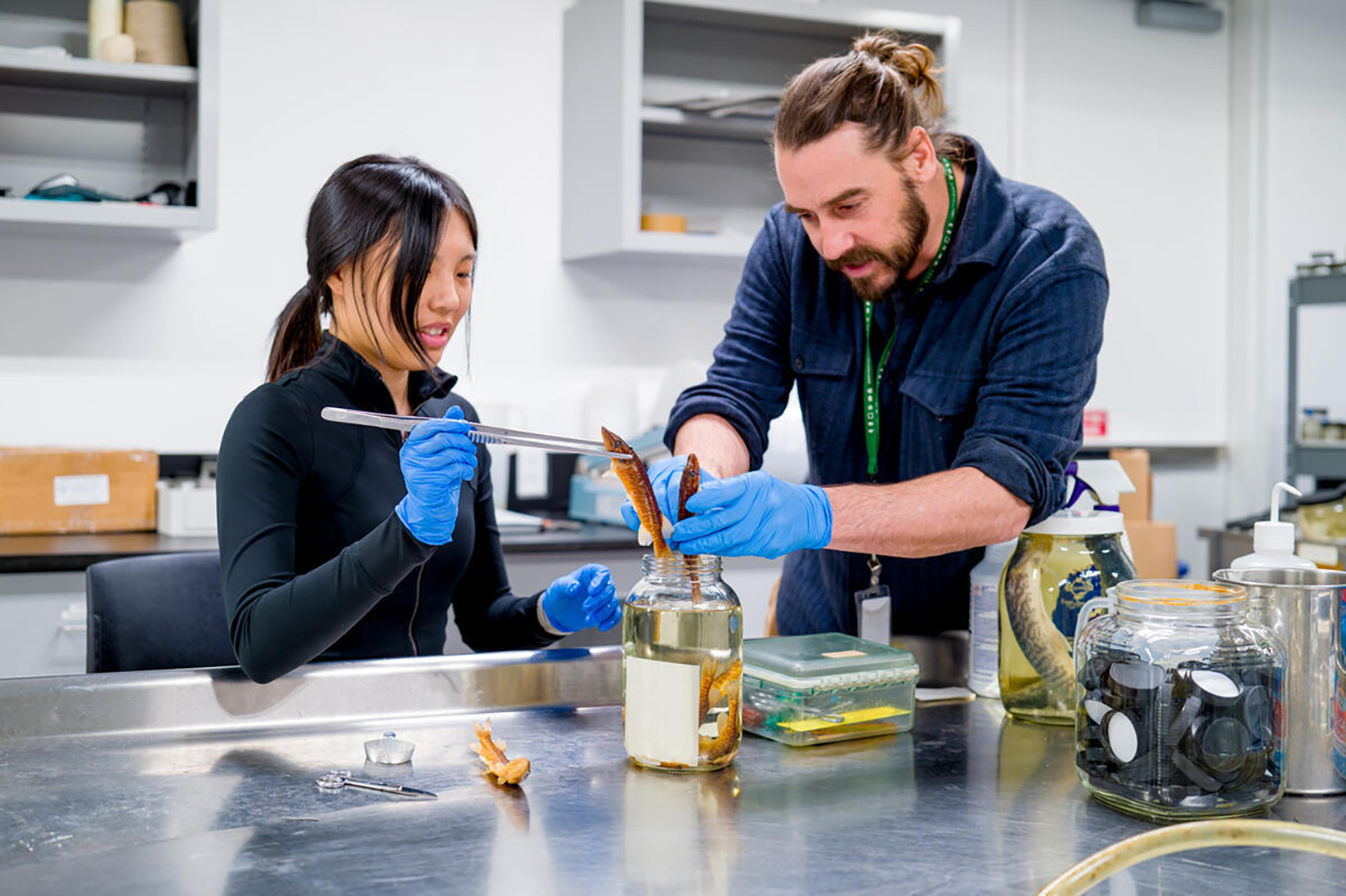
Forceps in hand, Mia Fricano, a high school junior, was about to investigate. She turned over the fish, a bluegill, and slid in a blade, before extracting its gastrointestinal tract. Then, she carried the fish innards to a beaker filled with a solution that would dissolve the biological material, revealing if there were any tiny particles of plastic — known as microplastics — inside.
Mia and two other high schoolers working alongside her in a lab this spring were part of a program at the American Museum of Natural History designed to give young people hands-on experience in professional science. Called the Science Research Mentoring Program, or SRMP (pronounced “shrimp”), the program enrolls roughly 60 high school juniors and seniors each year who collaborate with scientists on a research project.
Mia and her peers were matched with Ryan Thoni, an ichthyologist and curatorial associate in the museum’s division of vertebrate zoology. Thoni’s project to gather information on when and how microplastics began to enter the environment relied on the museum’s vast collection of fish specimens dating from more than a century ago — some 3.2 million in total.
Concern about the tiny pieces of plastic debris has grown in the last few years, along with early-stage research on the health risks they pose. The particles are found in human blood, breast milk and even the brain — and in animals, including, as it turned out, nearly all the fish in Thoni’s lab.
“It was kind of shocking to see just how many we did find,” Mia said later. “We weren’t expecting to find more than two to three per fish but in some fish, we would find over 15.” Specimens from the 1970s or earlierwere less likely to contain high levels of microplastic, more than three or so pieces, and fish near urban centers seemed to have more of the plastics, on average, than fish from less populated areas.
“It really does make you realize just how much the environment has been affected,” said Mia. “There hasn’t been a lot of research on it yet,” she added. “Our project might be able to help future people who are also doing research on microplastics.”
Related: Want to read more about how climate change is shaping education? Subscribe to our free newsletter.
SRMP, started in 2009, is operating at a time when the federal government is eliminating fellowships and other support for early career scientists, and defunding scientific research broadly. That both amplifies the need for, and complicates the work of, programs like this one, said Amanda Townley, executive director of the nonprofit National Center for Science Education. Over the last 15 years in particular, such programs have played a big role in giving students a chance to do the kind of applied science that is rarely available in K-12 classrooms because of money and time constraints, she said.
“Museums, university extensions, sometimes libraries, have really done this tremendous job of creating spaces for high school and younger students to engage with scientists doing science,” said Townley. “Those museums, libraries and universities are all under attack.” She added: “We’re going to see a generational impact.”
While the American Museum of Natural History has received some federal government funding, the SRMP program’s money comes from private foundations and individual donors, with additional support from the New York City Council. Students in SRMP participate in a summer institute in August, when they learn basics like how to investigate research questions. Then they spend two afternoons a week during the school year on their projects.
Each student receives a stipend, $2,500 over the course of the year. “It’s really important for high school students to know their time is valuable,” said Maria Strangas, the museum’s assistant director of science research experiences. “They are doing something here that is really useful for the researchers; it’s an education program, but they aren’t the only ones who are benefiting.”
Students from New York City schools that partner with the museum can apply, as well as those who have participated in programs with the museum in the past. SRMP has also spawned a network of about 30 similar programs across the city, with institutions including Brooklyn College, Bronx River Alliance and many others participating.
In the lab on the sixthfloor of the museum, Mia, who attends the New York City Museum School, cleaned out a beaker, while Yuki Chen, a senior at Central Park East High School, sat at a metal table, dissecting a pike. Thoni inserted a slide containing material harvested from one of the fish under a microscope, and pointed out a few microplastics, which looked like threads.
Ryan Thoni of the American Museum of Natural History, right, with high schoolers Mia Fricano (center) and Freyalise Matasar. Credit: Caroline Preston/The Hechinger Report
Freyalise Matasar, a junior at the Ethical Culture Fieldston School in the Bronx, plucked a white sucker fish from a jar. She said SRMP had altered her career trajectory. Before the program, she was considering studying journalism in college, but her experience this year persuaded her to focus on engineering and data science instead.
“I have totally fallen in love with science,” she said. “It’s been an amazing experience to see what professional science looks like — and more than just see it, to be a part of it.”
Freyalise said she wanted to build those skills in order to help fight climate change, perhaps by working on weather models to predict climate risks and ideally spur people to action. “It’s the biggest problem faced by our generation. It’s inescapable and unignorable, no matter how much people try,” she said. “It’s everyone’s responsibility to do what they can to fight it.”
Microplastics contribute to climate change in several ways, including by potentially disrupting oceans’ ability to sequester carbon and by directly emitting greenhouse gases.
Interest in climate science among young people is growing, even as the federal government tries to zero out funding for it. Other climate-related topics SRMP students explored this year included the climate on exoplanets, the ecology of sea anemones and aquatic wildlife conservation in New York City.
Sometimes the fish dissections were gross: Mia, who plans to study biology and machine learning in college, sliced into one large fish to find poorly preserved, rotten innards — and a major stink. Sometimes they provided a lesson beyond pollution: Yuki identified a small pickerel inside a larger one. (Pickerels prey even on members of their own species, the students learned.)
The scientists in the program, most of whom are postdoctoral fellows, are trained on how to be effective mentors. “Scientists are often not trained in mentorship; it’s something that people pick up organically seeing good or bad examples in their own lives,” said Strangas. “A lot of it comes down to: ‘Think about the impact you want to have, think about the impact you don’t want to have, think about the power dynamic at play, and what this student in front of you wants to get out of it.’”
Thoni earned rave reviews from the students, who said he ensured they understood each step of the research process without being patronizing.
Thoni’s next steps include working to publish the microplastics research, which could earn the students their first co-authorship in a scientific journal. “Aside from forgetting to put on gloves,” he said in a playful jab at one student, “they can operate this machine on their own. They do science.”
Contact editor Caroline Preston at 212-870-8965, via Signal at CarolineP.83 or on email at [email protected].
This story about science careers was produced by The Hechinger Report, a nonprofit, independent news organization focused on inequality and innovation in education. Sign up for the Hechinger newsletter on climate and education.
The Hechinger Report provides in-depth, fact-based, unbiased reporting on education that is free to all readers. But that doesn’t mean it’s free to produce. Our work keeps educators and the public informed about pressing issues at schools and on campuses throughout the country. We tell the whole story, even when the details are inconvenient. Help us keep doing that.
Since January, President Donald Trump has taken countless steps to transform the nation’s colleges and universities. His administration has cut scientific and medical research, ended efforts to promote diversity equity and inclusion (DEI), introduced newly aggressive policies on loan repayment, revoked visas for international students, and more. While Trump’s battles with Harvard and Columbia have received the most attention, the administration’s actions have had consequences far beyond those two universities.
We want to know how the Trump administration is affecting higher education and life on your campus. What, if any, changes are you seeing at your college or university because of federal policy shifts? In what ways do you see higher education changing?
If you prefer, you can also email us directly at [email protected]. Contact editor Lawrie Mifflin at [email protected] or 212-678-4078. Contact editor Caroline Preston at 212-870-8965, via Signal at CarolineP.83 or on email at [email protected].
This story about higher education was produced by The Hechinger Report, a nonprofit, independent news organization focused on inequality and innovation in education. Sign up for our newsletters.
The Hechinger Report provides in-depth, fact-based, unbiased reporting on education that is free to all readers. But that doesn't mean it's free to produce. Our work keeps educators and the public informed about pressing issues at schools and on campuses throughout the country. We tell the whole story, even when the details are inconvenient. Help us keep doing that.