
Tag: featuring

  • Pepperdine Closes Exhibit Featuring “Overtly Political” Art

    Pepperdine Closes Exhibit Featuring “Overtly Political” Art

    Henry Adams/Pepperdine Graphic

    Last month Pepperdine University in Malibu, Calif., opened an art exhibit titled “Hold My Hand In Yours,” which was scheduled to run for six months in the on-campus Frederick R. Weisman Museum of Art. But On Oct. 6, the university closed the exhibit after artists learned their work had been removed or altered for being “overtly political.”

    The exhibition, curated by Weisman Museum director Andrea Gyorody, centered on the imagery of hands in paintings, drawings, sculpture and videos, among other media, with a focus on hands as a means of labor and care, according to the museum’s website.

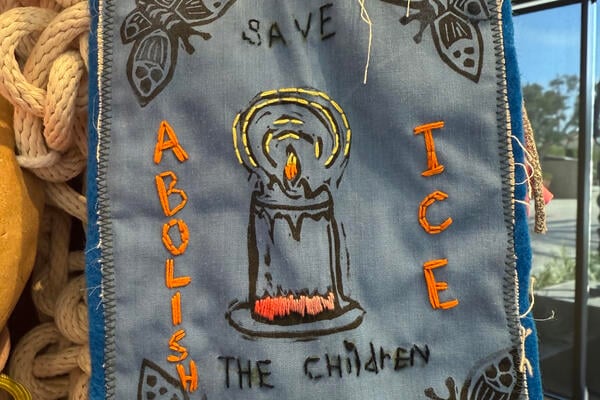
    Last week, one of the artists in the show learned her video had been turned off at the university’s request, and a sculpture had been modified to hide text that said “Save the Children” and “Abolish ICE,” Hyperallergic reported. The creators requested their pieces be removed from the museum, and several other contributors followed suit in solidarity with the affected artists and in opposition to the university.

    Pepperdine administrators alleged the pieces went against the museum’s policy to “avoid overtly political content consistent with the university’s nonprofit status,” Michael Friel, senior director of communication and public relations at Pepperdine, told Inside Higher Ed in an email.

    In addition to removing pieces, the university inquired about posting signage that notifies visitors that “the artwork does not necessarily reflect the views of the university,” Friel noted. “That process has not been successful.” With the addition of the artists pulling their work, the museum decided to close the gallery. All compensation agreements are being honored and inconvenienced artists have received an apology, according to Friel.

    “For the past week, the administration’s rationale for the initial censorship and removal has been murky and opaque, and honestly, still unclear to me. It didn’t have to be this way,” Stephanie Syjuco, an artist who was featured in the show, wrote on Instagram.

    The Weisman Museum is housed under the university’s advancement office. “Our intent is to maintain the highest standards of excellence as we celebrate artistic expression through the visual arts,” Friel said.

    In 2019, Pepperdine censored a senior art student’s gallery because the art featured nude bodies; officials placed the art in a mobile gallery instead of in the Weisman Museum, which featured work by the artist’s peers.  


    Source link

  • FIRE highlights artistic freedom with launch of new YouTube interview series featuring heavy metal and punk’s biggest stars

    FIRE highlights artistic freedom with launch of new YouTube interview series featuring heavy metal and punk’s biggest stars

    Today the Foundation for Individual Rights and Expression presents a new video series — “Fire with FIRE” — featuring some of the biggest and up-and-coming names in heavy metal and punk rock.

    Throughout the summer, FIRE will drop a new conversation every other week on our YouTube channel with the likes of:

    Artists can be the canaries in the coalmine. Too often, they are the first to be censored, or worse — much, much worse. 

    In Nazi Germany, the regime destroyed and banned certain art, particularly Jewish art, and labeled it “degenerate.” Jewish artists like Charlotte Salomon — who some argue created the first graphic novel — were sent to death camps and murdered by Adolf Hitler’s thugs.

    The Soviets were no better. Artists who rebelled against the confines of the state-approved artform of “Socialist Realism” were blacklisted, sent to the gulag, or executed. (After the Soviet Union’s fall, Russian dictator Vladimir Putin revived the old regime’s repression of artists, most famously targeting the punk rock and performance art collective Pussy Riot. Most members now live in exile after criticizing Russia’s brutal invasion of Ukraine.)

    In 1973, the military dictatorship of Gen. Augusto Pinochet tortured and murdered Chilean artist and folk singer Víctor Jara for his music and political activism. His murderers pumped him full of bullets and then dumped his body on a public road. Message sent. 

    After the Islamic Revolution engulfed Iran, the ultra-religious government banned Western heavy metal and punk music. The Iranian regime has persecuted, arrested, and thrown in prison musicians daring to play such music. In 2015, for example, the members of the Iranian death metal band Confess were sentenced to years in prison and 74 lashes for blasphemy, disturbing public opinion, and anti-government propaganda. They fortunately escaped to Norway. 

    America isn’t immune to such crackdowns on creative expression either.

    During the McCarthy era of the late 1940s into the 1950s, artists like director, actor, and writer Orson Welles; screenwriter and novelist Dalton Trumbo of “Spartacus” and “Johnny Got His Gun” fame; folk singer Pete Seeger; and many others were blacklisted because of their left-wing politics and Communist ties, real or imagined. 

    In the 1960s and 1970s, the FBI surveilled artists associated with the Civil Rights and antiwar movements. The bureau maintained files on John LennonThe Monkees, and the proto-punk band MC5. Even the soul and gospel singer Aretha Franklin had a 270-page FBI file, with G-men monitoring her because of her connections to the Civil Rights movement and “Black extremists.” 

    During the 1980s, the Parents Music Resource Center — co-founded by future Vice President Al Gore’s wife Tipper — created a moral panic around heavy metal, punk, and pop artists like Twisted Sister, the Dead Kennedys, and Prince. The PMRC’s crusade led not only to “Parental Advisory” stickers on albums but also to what is arguably Glenn Danzig’s best composition ever, “Mother.” 

    Enter the “Fire with FIRE” interview series. 

    Every two weeks, FIRE will release conversations with six of the biggest metal and punk artists in music right now about their inspirations, their influences, and why free expression not only makes life worth living, but is also essential to a free society. 

    First up: Spencer Charnas of Ice Nine Kills. What a bloody mess this interview is. Our host Ryan J Downey slices into Spencer’s musical inspirations, why horror movies infest his music and art, and how Disney censored Ice Nine Kills — with Spencer getting the last howling laugh. 


    Like it. Share it. Tell us what you think in the YouTube comments. And let us know who you’d love us to interview in the future!

    Source link