Tag: February

  • I asked students why they go to school–this answer changed how I design campuses

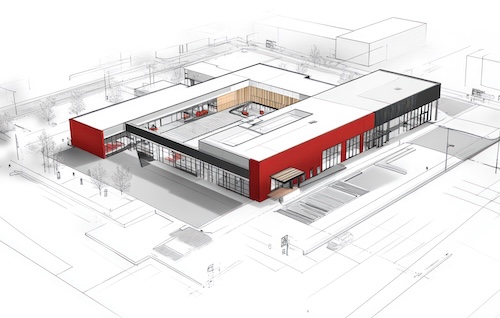
    I asked students why they go to school–this answer changed how I design campuses

    This story was originally published by Chalkbeat. Sign up for their newsletters at ckbe.at/newsletters.

    At first, the question seemed simple: “Why do we go to school?”

    I had asked it many times before, in many different districts. I’m a planner and designer specializing in K-12 school projects, and as part of a community-driven design process, we invite students to dream with us and help shape the spaces where they’ll learn, grow, and make sense of the world.

    In February of 2023, I was leading a visioning workshop with a group of middle schoolers in Southern California. Their energy was vibrant, their curiosity sharp. We began with a simple activity: Students answered a series of prompts, each one building on the last.

    “We go to school because …”

    “We need to learn because …”

    “We want to be successful because …”

    As the conversation deepened, so did their responses. One student wrote, “We want to get further in life.” Another added, “We need to help our families.” And then came the line that stopped me in my tracks: “We go to school because we want future generations to look up to us.”

    I’ve worked with a lot of middle schoolers. They’re funny, unfiltered, and often far more insightful than adults give them credit for. But this answer felt different. It wasn’t about homework, or college, or even a dream job. It was about legacy. At that moment, I realized I wasn’t just asking kids to talk about school. I was asking them to articulate their hopes for the world and their role in shaping it.

    As a designer, I came prepared to talk about flexible furniture, natural light, and outdoor learning spaces. The students approached the conversation through the lens of purpose, identity, and intergenerational impact. They reminded me that school isn’t just a place to pass through — it’s a place to imagine who you might become and how you might leave the world better than you found it.

    I’ve now led dozens of school visioning sessions, no two being alike. In most cases, adults are the ones at the table: district leaders, architects, engineers, and community members. Their perspectives are important, of course. But when we exclude students from shaping the environments they spend most days in, we send an implicit message that this place is not really theirs to shape.

    However, when we do invite them in, the difference is immediate. Students are not only willing participants, they’re often the most honest and imaginative contributors in the room. They see past the buzzwords like 21st-century learning, flexible furniture, student-centered design, and collaborative zones, and talk about what actually matters: where they feel safe, where they feel seen, where they can be themselves.

    During that workshop when the student spoke about legacy, other young participants asked for more flexible learning spaces, places to move around and collaborate, better food, outdoor classrooms, and quiet areas for mental health breaks. One asked for sign language classes to better communicate with her hard-of-hearing best friend. Another asked for furniture that can move from inside to outside. These aren’t requests that tend to show up on state-issued planning checklists, which are more likely to focus on square footage, capacity, and code compliance, but they reflect an extraordinary level of thought about access, well-being, and inclusion.

    The lesson: When we take students seriously, we get more than better design. We get better schools.

    There’s a popular saying in architecture: Form follows function. But in school design, I’d argue that form should follow voice. If we want to build learning environments that support joy, connection, and growth, we need to start by asking students what those things look and feel like to them — and then believe them.

    Listening isn’t a checkbox. It’s a practice. And it has to start early, not once construction drawings are finalized, but when goals and priorities are still being devised. That’s when student input can shift the direction of a plan, not just decorate it.

    It’s also not just about asking the right questions, but being open to answers we didn’t expect. When a student says, “Why do the adults always get the rooms with windows?” — as one did in another workshop I led — that’s not a complaint. That’s a lesson in power dynamics, spatial equity, and the unspoken messages our buildings send.

    Since that day, about a year and a half ago, when I heard, “We want future generations to look up to us,” I’ve carried that line with me into every planning session. It’s a reminder that students aren’t just users of school space. They’re stewards of something bigger than themselves.

    So if you’re a school leader, a planner, a teacher, or a policymaker, invite students in early. Make space for their voices, not just as a formality but as a source of wisdom. Ask questions that go beyond what color the walls should be. And don’t be surprised when the answers you get are deeper than you imagined. Be willing to let their vision shift yours.

    Because when we design with students, not just for them, we create schools that don’t just house learning. We create schools that help define what learning is for. And if we do it right, maybe one day, future generations will look up to today’s students not just because of what they learned, but because of the spaces they helped shape.

    Chalkbeat is a nonprofit news site covering educational change in public schools.

    For more news on district and school management, visit eSN’s Educational Leadership hub.

    Latest posts by eSchool Media Contributors (see all)

    Source link

  • New presidents and provosts appointed in February

    New presidents and provosts appointed in February

    Stacy Bartlett, currently the chief of staff at Point University in Georgia, will become the institution’s president, effective July 1.

    Michael Benson, president of Coastal Carolina University, has been named the 27th president of West Virginia University, starting in July.

    John Butler, the Haub Vice President for University Mission and Ministry at Boston College, has been appointed the institution’s president, beginning in the summer of 2026.

    Elizabeth Cantwell, president of the Utah State University system, has been appointed president of Washington State University, effective April 1.

    Sylvia Cox, executive vice president and chief academic officer at Southeastern Community College, has been named president of Rockingham Community College, effective May 1.

    Wendy Elmore, currently executive vice president and provost of Lamar State College–Orange in Texas, has been named the institution’s next president, effective June 1.

    Andrea Goldsmith, dean of the School of Engineering and Applied Science at Princeton University, will become the seventh president of Stony Brook University, effective Aug. 1.

    Adam Hasner, executive vice president of public policy for the Geo Group, has been named president of Florida Atlantic University.

    Elizabeth Kiss, who most recently served as CEO of the Rhodes Trust, will become president of Union College, effective July 1.

    Michelle Larson, president and CEO of the Adler Planetarium in Chicago, has been named president of Clarkson University, effective April 1.

    Dean McCurdy, provost and senior vice president for academic affairs at Ivy Tech Community College, has been named president of Colby-Sawyer College, effective June 1.

    Heather Norris, formerly the interim chancellor of Appalachian State University, has been appointed to the position permanently, effective March 1.

    Joseph Odenwald, president of Southwestern Michigan College, has been named president of Alma College, effective June 1.

    Andrew Rich, dean of the Colin Powell School for Civic and Global Leadership at the City College of New York, has been appointed president of Franklin & Marshall College, beginning this summer.

    Daniel Shipp, the president of Pittsburg State University, has been named president of Maryville University in Missouri, starting in June.

    Shane Smeed, president of Park University in Missouri, has been appointed president of Utah Tech University.

    Gentry Sutton, currently executive vice president and vice president of advancement at Warner University in Florida, has been appointed president of the institution.

    Suzanne Walsh, president of Bennett College in North Carolina, has been named president of City University of Seattle, effective July 1.

    Jermaine Whirl, who most recently served as president of Augusta Technical College, has been appointed president of Savannah State University, effective April 1.

    Source link

  • New college presidents appointed in February

    New college presidents appointed in February

    Stacy Bartlett, currently the chief of staff at Point University in Georgia, will become the institution’s president, effective July 1.

    Michael Benson, president of Coastal Carolina University, has been named the 27th president of West Virginia University, starting in July.

    John Butler, the Haub Vice President for University Mission and Ministry at Boston College, has been appointed the institution’s president, beginning in the summer of 2026.

    Elizabeth Cantwell, president of the Utah State University system, has been appointed president of Washington State University, effective April 1.

    Sylvia Cox, executive vice president and chief academic officer at Southeastern Community College, has been named president of Rockingham Community College, effective May 1.

    Wendy Elmore, currently executive vice president and provost of Lamar State College–Orange in Texas, has been named the institution’s next president, effective June 1.

    Andrea Goldsmith, dean of the School of Engineering and Applied Science at Princeton University, will become the seventh president of Stony Brook University, effective Aug. 1.

    Adam Hasner, executive vice president of public policy for the Geo Group, has been named president of Florida Atlantic University.

    Elizabeth Kiss, who most recently served as CEO of the Rhodes Trust, will become president of Union College, effective July 1.

    Michelle Larson, president and CEO of the Adler Planetarium in Chicago, has been named president of Clarkson University, effective April 1.

    Dean McCurdy, provost and senior vice president for academic affairs at Ivy Tech Community College, has been named president of Colby-Sawyer College, effective June 1.

    Heather Norris, formerly the interim chancellor of Appalachian State University, has been appointed to the position permanently, effective March 1.

    Joseph Odenwald, president of Southwestern Michigan College, has been named president of Alma College, effective June 1.

    Andrew Rich, dean of the Colin Powell School for Civic and Global Leadership at the City College of New York, has been appointed president of Franklin & Marshall College, beginning this summer.

    Daniel Shipp, the president of Pittsburg State University, has been named president of Maryville University in Missouri, starting in June.

    Shane Smeed, president of Park University in Missouri, has been appointed president of Utah Tech University.

    Gentry Sutton, currently executive vice president and vice president of advancement at Warner University in Florida, has been appointed president of the institution.

    Suzanne Walsh, president of Bennett College in North Carolina, has been named president of City University of Seattle, effective July 1.

    Jermaine Whirl, who most recently served as president of Augusta Technical College, has been appointed president of Savannah State University, effective April 1.

    Source link

  • Department of Education Releases FAQ on February 14 “Dear Colleague” Letter

    Department of Education Releases FAQ on February 14 “Dear Colleague” Letter

    by CUPA-HR | March 3, 2025

    On March 1, the Department of Education’s Office for Civil Rights (OCR) released a Frequently Asked Questions  document providing further guidance on OCR’s February 14, 2025, “Dear Colleague” letter.

    The February 14 “Dear Colleague” Letter

    The “Dear Colleague” letter outlines OCR’s enforcement position with respect to the legal requirements “under Title VI of the Civil Rights Act of 1964, the Equal Protection Clause of the United States Constitution, and other relevant authorities,” in light of the Supreme Court’s 2023 ruling in Students for Fair Admissions v. Harvard (SFFA). The letter states SFFA “clarified that the use of racial preferences in college admissions is unlawful, sets forth a framework for evaluating the use of race by state actors and entities covered by Title VI.” OCR declares in the letter that, in accordance with SFFA, federal law “prohibits covered entities from using race in decisions pertaining to admissions, hiring, promotion, compensation, financial aid, scholarships, prizes, administrative support, discipline, housing, graduation ceremonies, and all other aspects of student, academic, and campus life.” The letter states that OCR will “take appropriate measures to assess compliance with the applicable statutes and regulations based on the understanding embodied in this letter beginning no later than 14 days from today’s date,” which was February 28. OCR also notes in the letter that institutions that fail to comply “face potential loss of federal funding.”

    CUPA-HR joined the American Council on Education and dozens of other higher education associations in a February 25, 2025, letter to OCR noting  that the language in the “Dear Colleague” letter is ambiguous and, as a result, campuses are confused about their compliance responsibilities. CUPA-HR, ACE and the other associations requested in the letter that the department rescind the “Dear Colleague” letter and “engage with the higher education community to ensure a clear understanding of their legal obligations in this area.”

    The FAQ

    The March 1, 2025, FAQ provides details on how to file a discrimination complaint, the department’s view on what type of activity is unlawful and the department’s approach to enforcement.

    Enforcement

    With respect to the department’s approach to enforcement, the FAQ states that if OCR “determines that a school failed to comply with the civil rights laws that it enforces, [it] will contact the school and will attempt to secure its willingness to negotiate a voluntary resolution agreement.” The FAQ then states that “if a school is unwilling to negotiate a resolution agreement, OCR will inform the school of the consequences, which may result in OCR initiating enforcement through administrative proceedings or referring the case to the Department of Justice for judicial proceedings.”

    Unlawful Activity

    OCR notes in the FAQ that OCR’s assessment of whether an institution’s policies and programs are lawful “depends on the facts and circumstances of each case,” but provides more details on specific activities that do or may violate the law. The FAQ notes that it regards the following activities as unlawful:

    • preferences and stereotypes as a factor in admissions, hiring, promotion, scholarship, prizes, administrative support, sanctions, discipline, and other programs and activities;
    • any programming, graduation ceremonies, housing, or any other aspect of school life that allows one race but not another or otherwise separates students, faculty, or staff based on race; and
    • policies that appear neutral on their face but are made with racially discriminatory purpose.

    With respect to the last bullet, OCR states in determining “whether a school acted with a racially discriminatory purpose, [it] may analyze different types of circumstantial evidence that, taken together, raise an inference of discriminatory intent.” OCR provides the following “non-exhaustive list,” which may include:

    • whether members of a particular race were treated differently than similarly situated students of other races;
    • the historical background or administrative history of the policy or decision;
    • whether there was a departure from normal procedures in making the policy or decision;
    • whether there was a pattern regarding policies or decisions towards members of a particular race;
    • statistics demonstrating a pattern of the policy or decision having a greater impact on members of a particular race;
    • whether the school was aware of or could foresee the effect of the policy or decision on members of a particular race; and
    • the school’s history and stated policy of using racial classifications and race-based policies to further DEI objectives, “equity,” a racially oriented vision of social justice, or similar goals.

    The FAQ also describes activities that could be unlawful. Specifically, the FAQ notes that “extreme practices at a university — such as requiring students to participate in privilege walks, segregating them by race for presentations and discussions with guest speakers, pressuring them to participate in protests or take certain positions on racially charged issues, investigating or sanctioning them for dissenting on racially charged issues through DEI or similar university offices, mandating courses, orientation programs, or trainings that are designed to emphasize and focus on racial stereotypes, and assigning them coursework that requires them to identify by race and then complete tasks differentiated by race — are all forms of school-on-student harassment that could create a hostile environment under Title VI.”

    DEI?

    The FAQ notes, “whether a policy or program violates Title VI does not depend on the use of specific terminology such as ‘diversity,’ ‘equity,’ or ‘inclusion,’” but rather whether it discriminates “based on race, color, or national origin.” The FAQ notes that institutions “may not operate policies or programs under any name that treat students differently based on race, engage in racial stereotyping, or create hostile environments for students of particular races,” or programming that “discourages members of all races from attending, either by excluding or discouraging students of a particular race or races.”

    The FAQ also notes, however, that “programs focused on interests in particular cultures, heritages, and areas of the world would not in and of themselves violate Title VI, assuming they are open to all students regardless of race.” OCR also states that “educational, cultural, or historical observances — such as Black History Month, International Holocaust Remembrance Day, or similar events — that celebrate or recognize historical events and contributions, and promote awareness,” are lawful “so long as they do not engage in racial exclusion or discrimination.”

    Next Steps

    CUPA-HR will continue to monitor and keep members apprised of any further developments.


    Source link

  • Students Explore STEM with Engineers

    Students Explore STEM with Engineers

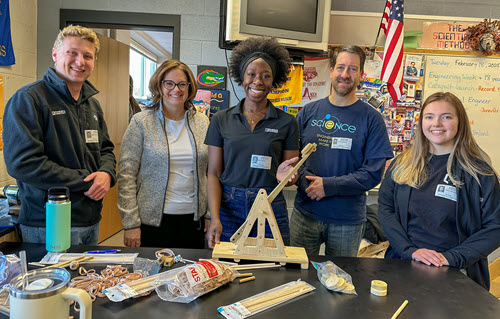
    Middletown, PA – Phoenix Contact engineers head back into the classroom this week to teach sixth-grade science class at Middletown Area Middle School in Middletown, Pa. The classes are part of Phoenix Contact’s National Engineers Week celebration.

    Phoenix Contact has worked with the school every February since 2007. The engineers lead hands-on lessons that make science fun. The goal is to inspire young people to consider careers in science, technology, engineering, and math (STEM).

    The lessons include:

    • Building catapults
    • Racing cookie tins down ramps
    • Building an electric motor
    • Learning about static electricity with the Van de Graaff generator

    “Our engineering team created this outreach program many years ago, and the partnership with Middletown Area School District has stood the test of time,” said Patty Marrero, interim vice president of human relations at Phoenix Contact. “National Engineers Week is a special time for them to share their passion for technology with students. It’s also our chance to thank our engineers for the creativity and innovations that drive our company forward.”

    About Phoenix Contact

    Phoenix Contact is a global market leader based in Germany. Since 1923, Phoenix Contact has created products to connect, distribute, and control power and data flows. Our products are found in nearly all industrial settings, but we have a strong focus on the energy, infrastructure, process, factory automation, and e-mobility markets. Sustainability and responsibility guide every action we take, and we’re proud to work with our customers to empower a smart and sustainable world for future generations. Our global network includes 22,000 employees in 100+ countries. Phoenix Contact USA has headquarters near Harrisburg, Pa., and employs more than 1,100 people across the U.S.

    For more information about Phoenix Contact or its products, visit www.phoenixcontact.com, call technical service at 800-322-3225, or email [email protected].

    eSchool News Staff
    Latest posts by eSchool News Staff (see all)

    Source link

  • HR and the Courts — February 2025

    HR and the Courts — February 2025

    by CUPA-HR | February 12, 2025

    Each month, CUPA-HR General Counsel Ira Shepard provides an overview of several labor and employment law cases and regulatory actions with implications for the higher ed workplace. Here’s the latest from Ira.

    EEOC Reports That It Collected a Record $700 Million for Workers in 2024 in Discrimination Claims

    The Equal Employment Opportunity Commission collected nearly $700 million for workers in 2024, eclipsing the previous record of $660 million collected in 2023. The agency reported that almost $470 million was collected for private sector, state and local workers through mediation, conciliation and administrative settlements. Nearly $200 million was collected through mediation, conciliation and administrative settlements for federal workers. An additional $40 million was collected for employees through litigation.

    Of the 111 lawsuits filed by the agency in fiscal year 2024, 40% involved claims under the Americans with Disabilities Act and 6% involved claims under the Age Discrimination in Employment Act. Most of the remainder involved Title VII claims of race, color, religion, sex, or national origin discrimination. More than a dozen of these lawsuits involved systemic allegations raised for multiple employees.

    Trump Administration Firing of NLRB and EEOC Members Leaves Agencies Without a Quorum to Do Business

    The Trump administration discharged, in unprecedented fashion, sitting members of the National Labor Relations Board and the Equal Employment Opportunity Commission, leaving both agencies without a quorum to do business. The Supreme Court has ruled that the NLRB cannot issue decisions without a quorum. This means that the NLRB cannot decide unfair labor practice cases or decide appeals of union election cases until it regains three members confirmed by the Senate. In addition, the Trump administration terminated the sitting independent NLRB general counsel who makes decisions on what cases to prosecute before the board.

    Without a quorum, the EEOC cannot issue new regulations or guidance, nor revoke or edit existing ones. In addition, without a quorum, the EEOC cannot vote to initiate new class action cases and is limited in taking on new enforcement litigation.

    Court of Appeals Revives Challenge to Fellowship Program — Case Dismissed After Mutual Settlement

    The 2nd U.S. Circuit Court of Appeals (covering Connecticut, New York and Vermont) reversed a trial judge’s decision dismissing a challenge to a fellowship program at Pfizer. To address challenges in recruitment, retention and promotion of diverse employees, Pfizer created and reserved its fellowship program for Black/African American, Latino/Hispanic, and Native American students. The plaintiffs contended that the fellowship program unlawfully discriminated against non-minority individuals (Do No Harm v. Pfizer Inc. (2nd Cir. No. 23-15, Opinion 1/10/25)). The three-judge panel remanded the case back to the trial judge to review whether the dismissal was proper.

    This case is another example of increased scrutiny of DEI programs in the wake of the Supreme Court’s decision on Students for Fair Admissions v. Harvard, which curtailed the use of race in college admissions. Bloomberg reported that the parties reached an agreement to settle the case. The full settlement is not available but it appears the fellowship program will end with the induction of the current year’s recipients.

    NLRB’s Authority to Impose Employee Remedial Orders for “Consequential” Damages Trimmed by Court of Appeals

    The 3rd U.S. Circuit Court of Appeals recently trimmed the scope of permissible remedial orders granted by the NLRB to employees who win unfair labor practice cases. The appeals court drew a distinction between traditional make-whole remedies for employees who are fired as a result of an unfair labor practice and traditional back pay and reinstatement. The latter continues to be permissible, but the NLRB’s authority to order “consequential” damages for reimbursement for late credit card fees, medical expenses and the like are not permissible (NLRB v. Starbucks (3rd Cir. No. 23-1953, 12/27/24)).

    As a practical matter, absent a decision on this issue by the Supreme Court, the NLRB will continue to assert its authority to render consequential damage awards, but the awards will not be enforceable in the states covered by the 3rd Circuit, which includes Delaware, New Jersey and Pennsylvania.

    Hostile Work Environment Challenges to DEI Training Pass Summary Judgment Stage — First Amendment Claims Have Been Filed on Both Sides

    Bloomberg reports that a number of challenges to DEI training — on the grounds that they create a hostile work environment for White employees — are surviving the summary judgment stage of initial litigation. Nonetheless, commentators conclude that most of that litigation will ultimately fail to clear the hurdle that requires the action to be “pervasive” in order to prove a hostile work environment case. Commentators also point out that the anti-DEI movement is likely to grow during the new Trump administration.

    In addition to hostile work environment cases, public employees have challenged public employers under the First Amendment for forcing the employee to listen to and affirm DEI concepts. However, employers that support DEI training have successfully used the First Amendment to challenge a Florida law restricting the use of certain workplace DEI training concepts (Honeyfund.com Inc. v. Florida (11th Cir. No. 22-13135, 3/4/24)).

    ACLU, NAACP and Professors Raise First and Fourteenth Amendment Challenge to Alabama Law Barring Public Funding of DEI Programs

    The Alabama chapter of the American Civil Liberties Union, the NAACP, and a group of Alabama professors have filed suit in federal court, alleging that the new Alabama state law barring public funding of DEI programs violates the First and Fourteenth Amendments of the U.S. Constitution (Simon v. Ivey (N.D. Ala. No. 2:25-cv-00057, complaint 1/14/25)). The complaint alleges that the Alabama law restricts the funding of teaching “academic viewpoints” deemed to be “divisive” and prohibits funding of student groups espousing such views in violation of the First and Fourteenth Amendments.

    The complaint further alleges that such viewpoint bans disproportionately affect Black students and Black faculty members. The complaint also alleges that the Alabama law violates minority students’ and professors’ right to equal protection from intentional discrimination and freedom of association under the First Amendment. The complaint further argues that the Alabama law should be struck down as “void for vagueness” under the applicable constitutional standard.

    U.S. Supreme Court Eases Standard for Employers to Prove Employees Are Not Entitled to Overtime Pay

    The U.S. Supreme Court rejected a heightened standard of proof needed to show that employees are exempt from the Fair Labor Standards Act overtime requirements (E.M.D. Sales v. Carrera (U.S. No. 23-217 Opinion 1/15/25)). This will make it somewhat easier for employers to show that employees are not entitled to overtime pay. The Supreme Court held in a unanimous decision written by Justice Kavanaugh that employers are subject to the regular “preponderance of the evidence” rule in proving that an employee is not subject to the applicable overtime rules rather than the higher “clear and convincing” standard.

    Justice Kavanaugh concluded on behalf of a unanimous court that, where a law is silent on the applicable standard of proof, as the FLSA is, the regular preponderance of the evidence rule applies. Under this standard, an employer must show that it is more likely than not that the employee is exempt from the overtime requirements.


    Source link

  • The Fifteen: February 7, 2025

    The Fifteen: February 7, 2025

    Today is the tenth edition of The Fifteen. Higher Education is in flux around the world, and we are taking a look at reforms in the EU, India and Indonesia, with stops in Australia and Hong Kong. We’re also looking at some contrasting approaches to managing AI, keeping track of the ongoing political confrontation between students and the government in Serbia, as well as—inevitably—keeping tabs on whatever it is Trump is doing to American Higher Ed.

    1. As more colleges announce program cuts (now over 200 in total), the Ontario Public Service Employee’s Union is calling for the government to step in as colleges continue to announce program cuts. Advocates call for more provincial funding for Ontario colleges to stop program cuts. (CBC News)
    2. Trump has shown that he’s willing to do just about anything, and his talk of shutting down the Education Department may be more than just bark. Trump Planning EO Directing Education Department to ‘Diminish Itself,’ Reports Say. (Inside Higher Ed)
    3. American Higher Ed has already had a rough couple of weeks as the slew of executive orders continues: OMB FUNDING PAUSE, MORE EOS MARK HECTIC WEEK FOR HIGHER ED. (ACE)
    4. Financially troubled Saint Augustine University in North Carolina refuses a loan from a local lender because it might mean naming a more serious set of Board members. Saint Augustine’s University Rejected Lower-Interest Loan Contingent on Board Chair’s Resignation (Indy Week)
    5. India continues to send millions of students abroad each year as its higher education sector struggles to keep up with growing demand. The government is putting more money into battling this brain drain by investing in universities at home. UNION BUDGET 2025: Targeted reforms and investments expected to strengthen higher education system (EducationTIMES)
    6. The European Commission has been working on developing EU-recognized degrees, but the project is hitting roadblocks. National differences hinder development of European degrees. (Science Business)
    7. Another new year, another purge in North Korean universities. N. Korean university’s year-end purge: From foreign songs to USB drives. (Daily NK)
    8. Despite not really moving all that quickly to implement the vaunted “universities accord,” Australia’s Labour government is on to a new public inquiry, this one on governance. It’s not receiving rave reviews from the sector. ‘Lawless’ Australian universities face new Senate inquiry. (Times Higher Education)
    9. The political situation in Serbia continues to evolve; the president has invited talks with university leaders in response to widespread student protests. Student protests in Serbia, Vucic summons university leaders. (Nova Europa)
    10. The American higher education system became rich in part through government land-grants. Now, in Indonesia, the government is trying to give universities the opportunity to make money via mining rights. Bill granting mining rights to universities splits opinion. (University World News)
    11. The question of who is a “local” student continues to vex Hong Kong. In response to parents fuming about their children losing places at prestigious universities to students from the mainland, the territorial government is reviewing the regulations. Hong Kong to review ‘local’ student definition over loopholes. (Times Higher Education)
    12. Buyer’s remorse in Argentina; the Milei government, one year later. Students are turning on Milei after helping him win power. (Buenos Aires Times)
    13. International student numbers are recovering in the UK (slowly). Early data indicates international enrolment growth for UK higher education’s January 2025 intake. (ICEF)
    14. The release of Chinese LLM Deepseek may mark a momentary lead over the US in the development of large Language Models, but at Chinese Universities, the emphasis is still on limiting the use of AI: Universities seek to restrict AI use by students. (People’s Daily Online)
    15. In the United States, meanwhile, California State University is dropping a huge amount of money onto a new AI skills initiative for its half million students. CSU unveils massive venture to provide free AI tools and training across all 23 campuses. (Los Angeles Times)

    HESA’s AI-CADEMY: Canada Summit for Post-Secondary Education is nearly sold-out! Join us in Calgary on March 6&7 to discuss the future of technology in the higher education sector.

    Source link

  • National Advisory Committee on Institutional Quality and Integrity Meets February 19-20. (US Department of Education)

    National Advisory Committee on Institutional Quality and Integrity Meets February 19-20. (US Department of Education)


    Education Department

    Hearings, Meetings, Proceedings, etc.:

    National Advisory Committee on Institutional Quality and Integrity

    FR Document: 2025-01459
    Citation: 90 FR 7677 PDF Pages 7677-7679 (3 pages)
    Permalink
    Abstract: This notice sets forth the agenda, time, and instructions to access or participate in the February 19-20, 2025 meeting of NACIQI, and provides information to members of the public regarding the meeting, including requesting to make written or oral comments. Committee members will meet in-person while accrediting agency representatives and public attendees will participate virtually.

    Source link

  • HR and the Courts — February 2024 – CUPA-HR

    HR and the Courts — February 2024 – CUPA-HR

    by CUPA-HR | February 14, 2024

    Each month, CUPA-HR General Counsel Ira Shepard provides an overview of several labor and employment law cases and regulatory actions with implications for the higher ed workplace. Here’s the latest from Ira.

    Basketball Players Are Employees of Dartmouth, NLRB Concludes—Union Vote Scheduled for March 5

    Student-athletes on the Dartmouth College men’s basketball team will vote March 5 on whether to join a union in an election supervised by the National Labor Relations Board. The applicable NLRB regional director issued a decision on February 5, holding that the basketball players are employees of Dartmouth, as the institution provides compensation to the athletes and exerts control over them (NLRB Reg’l Dir., No. 01-RC-325633, 2/5/24, 2/9/24).

    The basketball players filed a petition to be represented by the Service Employees International Union, Local 560, in September. Dartmouth has indicated that it will appeal the regional director’s decision to the full NLRB after the March 5 election.

    The regional director decided that the basketball players meet the definition of employees under the National Labor Relations Act because “Dartmouth has the right to control the work performed by the Dartmouth men’s basketball team.” The regional director further held that the athletes receive compensation in the form of equipment totaling nearly $3,000 an athlete per season, tickets to events, and travel and lodging from the institution.

    This is the first time that the NLRB has ruled that student-athletes are employees under the NLRA. In 2014, the NLRB declined to take jurisdiction over Northwestern University football players in denying an election in that case. The regional director in the Dartmouth case concluded that nothing in the Northwestern case precluded a later decision that student-athletes are employees under the NLRA.

    This issue is also being litigated by the NLRB on the West Coast in unfair labor practice proceedings alleging that student-athlete basketball and football players have been improperly classified as students and not employees of the University of Southern California, the NCAA and the PAC-12 Conference.

    SpaceX Challenges Constitutionality of NLRA

    SpaceX filed a formal complaint in federal district court in response to a complaint the NLRB issued. The NLRB’s complaint concerned SpaceX firing eight employees over a letter they filed within the company’s internal distribution network. The letter called into question SpaceX CEO Elon Musk’s public comments and called for the organization to distance itself from Musk. The employees were fired, and the NLRB issued a complaint alleging that they were fired in violation of the NLRA as a result of engaging in concerted activities protected by the NLRA.

    SpaceX alleges that the NLRA is unconstitutional because it violates the separation of powers and deprives the employer the right to a jury trial (Space Exploration Technologies v. NLRB et al (Case No. 1:24:00001 S.D. Tx. 1/4/24)). The lawsuit specifically alleges that the NLRB’s structure of requiring complaints to be heard and initially adjudicated by administrative law judges, with appeal rights to the NLRB and eventually to the U.S. Court of Appeals, deprives employers their right to a jury trial. SpaceX alleges that the NLRB’s administrative structure violates its Sixth Amendment right to a jury trial on criminal matters.

    NLRB Seeks to Bring More Higher Ed Religious Institutions Under Its Jurisdiction

    In a recent hearing over a case primarily involving whether the NLRB should have jurisdiction over student-athletes, the NLRB attorneys also asked the administrative law judge (ALJ) to reverse the Trump-era, 2020 decision in the Bethany College case, which broadly exempted religiously affiliated, non-profit, higher ed institutions that hold themselves out publicly as religious institutions.

    The NLRB attorneys argued that the Bethany case was wrongfully decided and that the ALJ should return to the NLRB’s prior rule laid down in the Pacific Lutheran case. Under the Pacific Lutheran decision, religious higher ed institutions are exempt from NLRB jurisdiction only if the faculty members perform religious functions in addition to lay teaching responsibilities.

    Appeals Court Revives Professor’s Claim That Termination Violated His Contract Without Due Process

    The 5th U.S. Circuit Court of Appeals (covering Louisiana, Mississippi and Texas) reversed a lower court’s dismissal of a tenured biology professor’s contract violation claim stemming from his termination. The appeals court ruled that the trial court erred in concluding that the Jackson State University professor’s claim was barred by the statute of limitations. The professor was terminated for alleged unauthorized research, which stemmed from his use of unauthorized undergraduate students to assist in his research involving the use of human urine.

    The professor was suspended in 2015. The department chair concluded in mid-2015 that he would recommend the professor’s termination based on the reports he heard. In 2018, the faculty personnel committee sided with the professor, but the university president rejected the committee’s reinstatement recommendation in 2018. In March 2019, the board of the Mississippi Institutions of Higher Learning (IHL) terminated the professor per the university president’s decision. The professor sued in 2022, and the trial court dismissed on three-year statute-of-limitations grounds. The appeals court reversed, holding that the IHL decision, which was the final termination decision, was when the statute of limitations would start running and therefore the lawsuit was filed within the three-year statute of limitations and can go forward.

    EEOC on Alert for Workplace Discrimination Resulting From Israel-Hamas War

    At her first press event as the Equal Employment Opportunity Commission’s new general counsel, Karla Gilbride indicated that the EEOC has received reports from workers and advocacy organizations representing the Jewish, Muslim and Arab communities of an increase in workplace discrimination against protected groups resulting from the Israel-Hamas war. The EEOC has signaled interest in pursuing domestic workplace discrimination that may result from “local, national or global events.” The general counsel indicated that it is a priority in the agency’s strategic enforcement plan to be responsive in this area.

    Gilbride concluded, “We’re reviewing that data to get a better handle on whether we at EEOC are recognizing an uptick in discrimination on the basis of religion or national origin affecting Jewish, Muslim and Arab communities or people who might be perceived as belonging to those communities even if they did not actually belong to those communities.” The general counsel indicated that global events in the past, such as 9/11, have led to an increase in domestic workplace discrimination.

    Employee at University of Michigan at Dearborn Has First Amendment, Free Speech Right to Speak to Press

    The 6th Circuit U.S. Court of Appeals (covering Kentucky, Michigan, Ohio and Tennessee) rejected the University of Michigan at Dearborn’s defense of sovereign immunity and allowed a university employee’s claim of First Amendment speech retaliation to proceed (Ashford v. Univ of Michigan (6th Cir., No. 22-02057, 1/9/24)). The appeals court held that the employee’s speaking to the press about the university’s “mishandling” of a student’s sex harassment complaint against a professor was a matter of public concern. Further, this matter was not part of the employee’s job responsibilities or duties. The court held that the employee was speaking as a private citizen on a matter of public concern and is therefore allowing the employee’s request that his 10-day suspension be expunged to move forward.

    The employee is also requesting an injunction against the university barring future retaliation for speech he might engage in. According to the lawsuit, the plaintiff alleged that the local campus police mishandled a student’s sex harassment complaint. The plaintiff alleged that he raised his concerns internally with his supervisor and with campus security before speaking with the press. The employee also alleges that the newspaper came to him for comment and initiated the process, which led to his statement. The court reiterated that the plaintiff was not speaking to further his official duties but was speaking as a private citizen.

    Yale Professor Sues, Claiming Sex Discrimination Against Males

    A federal trial court recently ruled that a Yale University medical school professor’s claim of gender discrimination can proceed to trial. The claims of discrimination result from the university’s additional decision to remove the professor’s endowed chair designation, sometime subsequent to the university’s initial punishment for his sex harassment transgressions (Simons v. Yale University (2024 BL 15344, D. Conn., No. 3:19-cv-01547, 1/17/24)).

    The professor alleged that only men are subject to multiple punishments for the same infraction. The court ruled that losing an honorific title could be an adverse job action even if pay was not reduced in that action. The court concluded that the plaintiff had previously been punished in multiple ways concerning the incident, including losing his positions as chief of the section of cardiovascular medicine and director of the university’s cardiovascular research center.


    Source link

  • 7 Free Online Courses to Boost Your Resume in February 2024

    7 Free Online Courses to Boost Your Resume in February 2024


    7 Free Online Courses to Boost Your Resume in February 2024


    Source link