This audio is auto-generated. Please let us know if you have feedback.
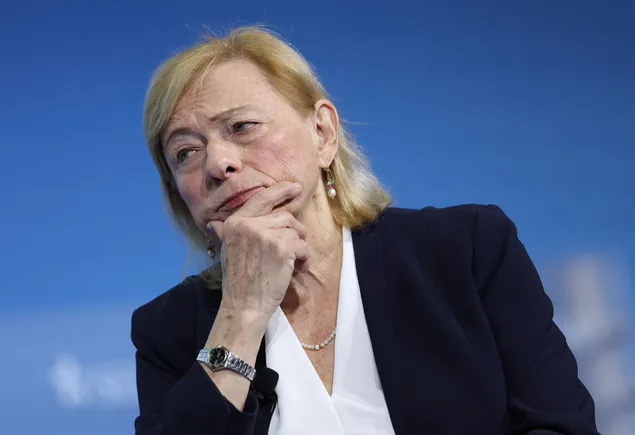
The U.S. Department of Education on Friday moved to terminate federal K-12 funding for the Maine Department of Education, following through on its promise to cut off the state and ultimately others if they do not enforce Title IX so as to keep transgender students from girls’ locker rooms, restrooms and athletic teams.
The move marks the first time the Trump administration has officially initiated a cut in federal funding to a state K-12 school system over civil rights violations.
The department at the same time referred its Title IX investigation of Maine to the U.S. Department of Justice for enforcement — after multiple threats that it would do so if the state did not sign onto a resolution agreement within 10 days of the agency finding Maine in violation of Title IX.
“The Department has given Maine every opportunity to come into compliance with Title IX, but the state’s leaders have stubbornly refused to do so, choosing instead to prioritize an extremist ideological agenda over their students’ safety, privacy, and dignity,” said Craig Trainor, acting assistant education secretary for civil rights in an April 11 statement.
Gov. Janet Mills “would have done well to adhere to the wisdom embedded in the old idiom — be careful what you wish for,” Trainor said. “Now she will see the Trump Administration in court.”
Mills has maintained since the investigation’s launch that the state is not in violation of Title IX. The governor has said the federal investigation is “not just about who can compete on the athletic field,” but rather “about whether a President can force compliance with his will, without regard for the rule of law that governs our nation. I believe he cannot.”
A swift investigation
The directed investigation — meaning one initiated without a public complaint — was initiated by the department on Feb. 21 and concluded less than a month later in March. The move was precipitated by a public spat between Mills and Trump in February over the state’s transgender athlete policies, during which Mills threatened to see Trump in court.
The day the investigation was launched, alongside a nearly identical one into Maine by the U.S. Department of Health and Human Services also over Title IX, Mills said the outcome was “all but predetermined.”
Indeed, the investigation’s directed nature, quick turnaround time, high stakes attached, and referral to the Department of Justice — which traditionally has been reserved for egregious cases — has raised eyebrows in the education civil rights community.
The seemingly targeted, quick and aggressive enforcement strategy marks a significant shift from education civil rights enforcement under past administrations. Investigations traditionally took months or years, involved interviews and other investigative tools, and concluded with a negotiation with schools to bring them into compliance with federal law. Resolution agreements often included changes to school district operations like conducting climate surveys or hiring or training staff to ensure all students have access to an equal education.
Resolution agreement rebuffed
In this case, however, the administration gave Maine 10 days to sign a draft resolution agreement that would change state and district policies to define “females” by “a reproductive system with the biological function of producing eggs (ova),” and “males” by having “a reproductive system with the biological function of producing sperm.” “Gender” would be the same as “sex” under the agreement.
The draft agreement also would have required the state to apologize to each cisgender girl impacted by the state’s transgender female athlete policy “for allowing her educational experience and participation in school sports to be marred by sex discrimination.”
After the state refused to sign the agreement, the department warned officials on March 31 that it would send the case to the Department of Justice by April 11.
“Under prior administrations, enforcement was an illusory proposition. No more,” said Trainor in a March 31 statement. “The Trump-McMahon Education Department is moving quickly to ensure that federal funds no longer support patently illegal practices that harm women and girls.”
While cutting off states or districts from funds was always within the Education Department’s power, it was a stick that was rarely used in past administrations, and especially not over Title IX, according to the Association of Title IX Administrators.
Within three months under this Trump administration, the department has threatened the cancellation of more than $9.5 billion for Ivy League universities over alleged Title VI and Title IX violations related to alleged antisemitism and LGBTQ+ policies, threatened some 60 colleges and a handful of districts with additional loss of funding over allegations of antisemitism, and promised that “this is only the beginning.”
This audio is auto-generated. Please let us know if you have feedback.
From internet access to 1:1 devices, ed tech use in schools has grown at a rapid pace since Congress formed the Office of Educational Technology three decades ago within the U.S. Department of Education.
But now that OET is gone, former employees fear the office’s progress to push for equitable access to technology for students and teachers nationwide will be lost — particularly as the implementation of artificial intelligence tools accelerates.
The Trump administration informed all seven OET employees in a March 12 email that their positions and office were being “abolished” as the Education Department announced massive layoffs across the agency.
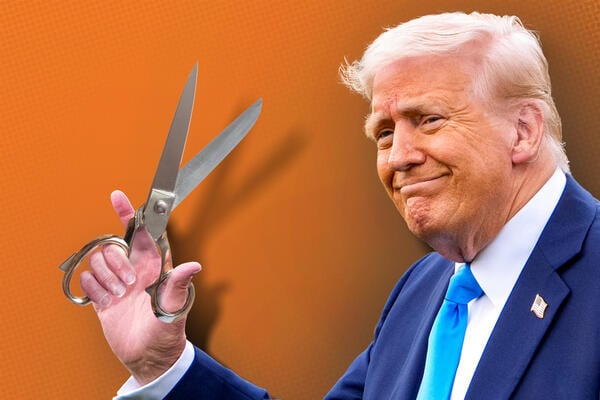
Just a couple weeks later, President Donald Trump signed an executive order directing U.S. Secretary of Education Linda McMahon to “take all necessary steps to facilitate the closure” of the Education Department. The move comes as the Trump administration aims both to reduce the overall size of the federal government and to give states more authority over their education systems.
The Education Department did not respond to a request for comment on OET’s closure.
When Kristina Ishmael, OET’s deputy director from October 2021 to December 2023, found out about the office’s closure, she said she felt “shock and surprise, as well as disappointment and anger.” Ishmael added that those feelings extended to the decimation of other Education Department offices as well.
OET’s role in guiding schools
OET’s responsibilities over the years, among many other things, included the development of six National Educational Technology Plans between 2000 and 2024.
The latest plan identified three persistent barriers to equity in ed tech to be addressed by education leaders at state, district and school levels. Those barriers included inequitable implementation of ed tech in classrooms, uneven availability of ed tech professional development opportunities for teachers, and gaps in students’ access to broadband connections, devices and digital content.
There is still a lot of work to do to address those inequities, Ishmael said.
Just months after ChatGPT debuted, OET began to release guidance on AI use in schools, focusing first on its impact on educators, and then on responsibilities for ed tech industry leaders and logistical concerns for school district leaders.
Beyond offering nonregulatory federal guidance, OET worked with multiple offices in the Education Department and other federal agencies. Additionally, OET acted as a point of contact for Congress to keep lawmakers informed about the state of ed tech in classrooms, according to former staff.
For instance, OET collaborated with the Office for Civil Rights when the Education Department released guidance last year on students’ civil rights protections regarding the use of AI tools in schools, said Anil Hurkadli, who held a one-year appointment as OET’s acting deputy director through Jan. 20.
“If we don’t have a really clear interpretation or articulation of how civil rights laws do indeed apply in the use of educational technology and educational settings, you create a lot of risk that districts and states are not procuring products and services in ways that are in alignment with those laws,” Hurkadli said.
The same issue applies to ed tech developers, Hurkadli said. If the industry creates tools without a clear understanding of civil rights laws, they also run the risk of violating students’ privacy and potentially compromising their sensitive data, he added.
OET served as a key convener for districts and states in the ed tech space, which also included student and teacher perspectives, Hurkadli said. For decades, the office leveraged its federal role to advocate both within the government and with external stakeholders for equitable access to ed tech in classrooms.
Without OET, there will be “a gaping hole in those efforts at a time when technology is accelerating at a pace where we can’t afford to lose ground,” Hurkadli said.
“The Office of Ed Tech has always been a lighthouse” on these issues, Ishmael said. Now that OET is no longer around to push for guidelines or guardrails, or to inform policymaking at the federal level, she said, the onus to address persistent issues with inequity and implementation will fall on state and school district leaders “who may not have that background or that expertise.”
OET’s loss ‘will slow us down’
With OET’s closure, online access to all of its publications and guidance for schools over the years has vanished. However, the European Edtech Alliance has archived OET’s work — including its AI resources and the National Educational Technology plans — which are now publicly accessible on the alliance’s website. The nonprofit supports global growth of digital education by connecting European ed tech organizations, trade associations and providers.
Even before the office closed, research had pointed to early signs of uneven and fragmented AI adoption across districts and states. In an April 1 House hearing, Democratic lawmakers voiced their concerns that this issue could worsen alongside the shuttering of OET.
Since generative AI tools first became available almost 2 1/2 years ago, over half of states have put out their own guidance on the technology, according to TeachAI, a national coalition that aims to guide schools on safe and ethical AI use.
That means the other half of states still lack AI guidance — and 40% of districts reported in a 2024 survey that they hadn’t released their own AI policies, said Keith Krueger, CEO of the Consortium for School Networking, in an email.
“Having thoughtful information from OET has helped move much of the country along with the historic opportunity, as well as key risks,” Krueger wrote. “But now the loss of federal leadership on ed tech will slow us down.”
The decision to close the office is “unprecedented,” and because it was established by Congress through the Technology for Education Act of 1994, Krueger said he “expects the courts will eventually determine that not staffing it is unlawful.”
The Trump administration is freezing more than $1 billion in federal funds at Cornell University and $790 million at Northwestern University—the latest colleges to see their federal grants and contracts threatened, The New York Timesreported Tuesday, citing anonymous officials.
The affected funds will include money from the Agriculture, Defense, Education and Health and Human Services Departments. The Times didn’t say why those universities were losing the money aside from noting that both institutions are facing civil rights investigations related to alleged antisemitism on campus. In recent weeks, Northwestern has sought to highlight its efforts to combat antisemitism, which include policy changes and mandatory antisemitism training for students, faculty and staff.
However, the administration can’t legally pull funding from colleges for civil rights violations until after a lengthy process that’s supposed to include notice to Congress and the opportunity for judicial review. Still, the Trump administration has used other avenues—which some experts say are illegal and are the subject of legal challenges—to cut off money. They include tapping a task force to investigate colleges and targeting their grants and contracts. The task force is currently reviewing Harvard University’s federal funding, which totals $9 billion, and has demanded several changes in order for the college to continue receiving money.
“This was wrong last week, it is wrong this week, and it will be wrong next week,” said Ted Mitchell, president of the American Council on Education.
Jon Yates, a Northwestern spokesman, said the university learned via the media about the freeze, which would affect “a significant portion of our federal funding.”
“The University has not received any official notification from the federal government,” Yates wrote in an email to Inside Higher Ed. “Federal funds that Northwestern receives drive innovative and life-saving research, like the recent development by Northwestern researchers of the world’s smallest pacemaker, and research fueling the fight against Alzheimer’s disease. This type of research is now at jeopardy. The University has fully cooperated with investigations by both the Department of Education and Congress.”
Cornell didn’t respond to an Inside Higher Ed request for comment.
The American Jewish Committee on Tuesday warned the Trump administration against making dramatic cuts to universities’ funding, adding that such a step should be a last resort.
Fifteen researchers across a range disciplines from the biomedical sciences and STEM to education and political science share their experiences of losing research grants and what impact the loss of billions of dollars in federal funding will have on science, public health and education in Inside Higher Ed today.
The Trump administration told researchers Rebecca Fielding-Miller, Nicholas Metheny and Sarah Peitzmeier that trainings connected to their National Institutes of Health grant focused on the prevention of intimate partner violence against pregnant and perinatal women were “antithetical to the scientific inquiry, do nothing to expand our knowledge of living systems, provide low returns on investment, and ultimately do not enhance health, lengthen life, or reduce illness.”
“We could not disagree more,” Fielding-Miller, Metheny and Peitzmeier write. “Anyone who has cared for a child or for the person who gave birth to them knows that preventing maternal and infant death and abuse should be a nonpartisan issue. The current administration is intent on making even this issue into ‘us’ versus ‘them.’ When it comes to public health, there is no such thing.”
Meanwhile, Judith Scott-Clayton writes that the decision to cancel a Department of Education grant funding a first-of-its-kind randomized evaluation of the Federal Work-Study program—four and a half years into a six-year project—will leave policymakers “flying blind.”
“Since 1964, the FWS program has disbursed more than $95 billion in awards,” Scott-Clayton wrote. “In comparison, our grant was less than three-thousandths of 1 percent of that amount, and the amount remaining to finish our work and share our findings with the public was just a fraction of that.”
Additionally, the Trump administration has variously moved to cancel or suspend research contracts and grants at Columbia University, the University of Pennsylvania and most recently Princeton University as part of punitive actions tied to investigations of campus antisemitism or, in Penn’s case, the decision to allow a trans woman to compete on the women’s swim team three years ago. The administration also briefly froze (and then unfroze) United States Department of Agriculture funds for the University of Maine system after the state’s governor engaged in a tense exchange with President Trump at the White House.
Below, 15 researchers across nine different research areas who have had their federal grants terminated since the start of the Trump administration share just a few of the thousands of stories behind these cuts.
—Elizabeth Redden, opinion editor
Preventing Intimate Partner Violence
Prostock-Studio/iStock/Getty Images Plus
By Rebecca Fielding-Miller, Nicholas Metheny and Sarah Peitzmeier
Each year, more than 3,000 American women are murdered by their partners. Pregnancy and the postpartum period are high-risk periods for intimate partner violence (IPV), which is linked to negative maternal outcomes such as miscarriage, hemorrhage and postpartum depression. Perinatal IPV is also linked to worse infant health outcomes, such as preterm birth and low birth weight, and to adverse childhood experiences. This makes prevention of perinatal IPV crucial not just for the survivor but for the entire family.
Perinatal IPV and its cascade of negative outcomes are preventable—but only if we study the epidemiology and prevention of IPV as rigorously as we study hypertension or any other perinatal complication. A grant rescinded last month by the NIH would have trained a cohort of 12 early-career clinicians and researchers to learn how to study IPV as part of their ongoing research on pregnancy, birth and the postpartum period. We proposed training investigators working in diverse communities across the spectrum of America, with a commitment to including communities disproportionately impacted by IPV and maternal mortality, including Black and LGBTQ+ communities. To solve a problem with constrained resources, it is efficient to focus efforts on where the problem is most severe. While the termination letter named this targeting of training resources an “amorphous equity objective,” we call it a data-driven approach to rigorous science.
Training grants like this one help shift an entire field by giving young investigators the skills and knowledge to add a focus on IPV to their research for the next several decades. In addition to training these 12 young researchers, the grant would have also supported turning the mentorship curriculum we developed into an open-access online training for clinicians and researchers to access in perpetuity, multiplying the impact of the work to train even more investigators in the field. As with the approximately 700 other terminated NIH grants, cutting this work before our aims are realized but after significant costs have been incurred to establish the mentorship team and design the curriculum is the definition of government inefficiency and waste.
With this grant rescinded, none of the promised training will occur. Pregnant people and their babies from every community across America will continue to suffer, without the benefit of advances in the science of how we prevent these violence exposures. Our termination notice claims that the proposed trainings are “antithetical to the scientific inquiry, do nothing to expand our knowledge of living systems, provide low returns on investment, and ultimately do not enhance health, lengthen life, or reduce illness.” We could not disagree more. Anyone who has cared for a child or for the person who gave birth to them knows that preventing maternal and infant death and abuse should be a nonpartisan issue. The current administration is intent on making even this issue into “us” versus “them.” When it comes to public health, there is no such thing. American families deserve better.
Rebecca Fielding Miller is an associate professor of public health at the University of California, San Diego. Her research focuses on health disparities in infectious disease and gender-based violence.
Nicholas Metheny is an Atlanta-area scientist and registered nurse with clinical and research experience in the post-violence care of women and sexual and gender minority communities.
Sarah Peitzmeier is an assistant professor at the University of Maryland School of Public Health who develops and tests interventions to prevent gender-based violence. She is also a practicing birth doula and victim advocate.
Is Work-Study Working?
Okrasyuk/iStock/Getty Images Plus
By Judith Scott-Clayton
On March 7, at 9:49 a.m., I received an email with “GRANT AWARD TERMINATION” in all caps in the subject line. Attached to the email was a letter, addressed to me as project director and referring to our Department of Education grant by its award number. The letter was generic, virtually identical to three other termination letters received that day at the Community College Research Center at Columbia University’s Teachers College, where I am affiliated. It did not mention our project title nor provide any project-specific details to explain why our project, as the email states, “is now inconsistent with, and no longer effectuates, the Department’s priorities.” A few hours later, I received a formal notification that the grant end date was that day: March 7, 2025.
The project—a collaboration with Adela Soliz of Vanderbilt University and Tom Brock of CCRC—was titled “Does Federal Work-Study Work for Students? Evidence From a Randomized Controlled Trial.” The Federal Work-Study (FWS) program was created in 1964 as part of the Economic Opportunity Act and covers up to 75 percent of the wages of college students working part-time in mostly on-campus jobs, with colleges paying the rest. In a typical year, the program provides more than $1 billion in support to more than 450,000 college students with financial need at more than 3,000 institutions all across the country. Several states also have their own similar programs.
Our study would be the first to rigorously evaluate the causal impact of the program on students’ enrollment, employment, persistence and degree completion. We were also conducting interviews, focus groups and surveys to understand how students find FWS jobs, what kinds of work they do, what resources institutions devote to running the program and how much it all costs to operate, all with the goal of ensuring the program is delivering the maximum impact for every single student that participates and for every dollar spent.
At the time of its cancellation, we were about four and a half years into a six-year project. We were right in the middle of randomizing what would be the final cohort of our study sample and fielding the final round of a student survey. This final year is especially important, because the early cohorts were heavily impacted by the pandemic. For the past three weeks, we have been scrambling to pull together any other resources we could find to preserve our options and avoid losing this final cohort of participants. We have also been scrambling to figure out how to continue to pay critical staff and doctoral students involved in the project until we can figure out the next steps.
As for the broader impact of the termination: The Federal Work-Study program itself will keep on going, at least for now; we just won’t know whether it works or not. We hypothesize that it may provide valuable work-based learning opportunities that keep students engaged and give them advantages in the labor market after college, but it’s possible that it distracts students from their studies and hurts their academic performance. We may think that it helps students to afford college, but perhaps the complexity of finding a specific job and navigating all the necessary paperwork reduces its value for the students that need help the most. The next time the program is up for debate, policymakers will be flying blind: Without actual evidence all we can do is speculate.
Since 1964, the FWS program has disbursed more than $95 billion in awards. In comparison, our grant was less than three-thousandths of 1 percent of that amount, and the amount remaining to finish our work and share our findings with the public was just a fraction of that. Our project was motivated by a desire to help policymakers ensure that every dollar invested in financial aid has the maximum possible impact for low-income students. So it is discouraging to learn, so close to the finish line, that this first-of-its-kind evaluation of a major federal program is “now inconsistent with, and no longer effectuates, the Department’s priorities.”
Judith Scott-Clayton is a professor of economics and education at Teachers College, Columbia University, in the Department of Education Policy and Social Analysis, where she directs the Economics and Education Program and teaches courses on the economics of education, labor economics and causal inference.
Democracy Research
AlexeyPushkin/iStock/Getty Images Plus
By Rob Blair, Jessica Gottlieb, Laura Paler and Julie Anne Weaver
We lost funding for the Democratic Erosion Consortium (DEC) as part of the federal government’s recent cancellation of foreign assistance grants. Directed by scholars at Brown University, the University of Houston and American University, DEC works to make academic research on democratic backsliding accessible to policymakers and practitioners seeking evidence-based strategies to defend democracy around the globe.
Originally launched in 2017 on a shoestring budget, DEC began as an effort to improve pedagogy on a troubling trend observable both abroad and at home: the strategic dismantling of democratic norms and institutions by elected leaders with autocratic ambitions. In 2022, in line with the U.S. government’s dual interests in democratic resilience and evidence-based policymaking, we received a grant from the State Department to expand DEC’s work.
The State Department’s investment enabled us to grow our reach beyond the classroom and into the policy arena. We drew on an expanding network of scholars to synthesize evidence on urgent questions—such as how to reduce the spread of misinformation and measure democratic decline. We also built out a novel event data set on democratic erosion and trained partners around the world to use it in their own work.
The immediate consequences are clear: several full- and part-time staff lost funding for their jobs. But the long-term damage is hard to quantify. It’s difficult to argue for the value of evidence-based policymaking in foreign aid when the entire category of foreign assistance has effectively been gutted. More than that, the partnerships we built between academics, practitioners and policymakers were yielding real-time insights and responses—a rare example of successful research-policy collaboration. That infrastructure is now gone.
And at a moment when democratic backsliding is accelerating in many parts of the world, the U.S. government is stepping away from efforts to understand and counter it. Ending this grant not only weakens the ability to monitor democratic erosion globally, it also reduces public awareness and understanding of a phenomenon that is increasingly visible in the U.S. itself.
With the federal policy audience for our work largely gone, we are refocusing our efforts on our other two core constituencies: students and academics. We continue to support instructors engaged in teaching our democratic erosion course and to improve the Democratic Erosion Event Dataset. And in response to growing concern about democratic backsliding in the U.S., we’re developing a more robust domestic data-collection effort, paired with public engagement.
Given intense partisan disagreement around what even constitutes democratic erosion, we are seeking to increase the credibility of new evidence by capturing partisan-diverse perspectives and applying our established comparative framework to U.S. events. We are hoping to continue this work, despite the loss of our federal grant, because the political reality in the U.S. and around the world tells us we need to be worried about democratic erosion now more than ever.
Rob Blair is the Arkadij Eisler Goldman Sachs Associate Professor of Political Science and International and Public Affairs at Brown University.
Jessica Gottlieb is an associate professor at the University of Houston’s Hobby School of Public Affairs.
Laura Paler is an associate professor in the Department of Government in the School of Public Affairs at American University.
Julie Anne Weaver is the research director of the Democratic Erosion Consortium and a lecturer on government at Harvard University.
COVID-19 and Related Immunology Research
peterschreiber.media/iStock/Getty Images Plus
By Matthew Woodruff
On March 24, 2020, I stood in a Biosafety Level 2+ facility at Emory University with six colleagues being taught best practices for working with the largely unknown pathogen, SARS-CoV-2. Other unknowns included where we would get masks (N95s were unavailable), risks of infection to our young kids at home and who would pay for the experiments needed to gain insight into the deadly new virus sweeping across the nation.
That last question was answered relatively quickly. Rapid investment by the first Trump administration’s NIH launched SeroNet, a five-year effort across 25 institutions to “expand the nation’s capacity for SARS-CoV-2 serologic testing on a population-level and advance research on the immune response to SARS-CoV-2 infection and COVID-19 vaccination among diverse and vulnerable populations.” We did just that. Over the coming years, taxpayer dollars funded more than 600 peer-reviewed publications, reflecting significant advances in disease pathology, treatment strategies, disease impact in immunocompromised patients, vaccine testing and more.
Our team at Emory led projects dedicated to understanding the balance between productive and pathogenic immunity in hopes of alleviating disease. We discovered why your immune system sometimes turns on itself in the throes of severe infection, uncovered similarities between the immune responses of chronically autoimmune patients and those who were seriously ill with COVID-19, and documented continued disturbances in patients with long COVID. Importantly, we learned that these responses weren’t unique to COVID-19 and were broadly relevant to human health.
In 2022, I started my own lab founded on those concepts. We have been optimistic that the work we are doing will ultimately serve the American people in our shared desire to live longer, healthier lives.
But over the past months, that optimism has dissipated. Ham-handed targeting of “DEI” awards leaves us unable to understand how diverse human populations might respond differently to infection or develop different kinds of chronic diseases. Mistrust of the same vaccine programs that have halted the spread of measles globally has left us unable to test next-generation vaccines that might provide broad protection against emerging viral strains. And then, on March 24, it was announced that the five-year commitment that the first Trump administration made to our work would no longer be honored. Our COVID-related funding through SeroNet would be halted, effective immediately.
Our fledgling program, a few months ago extremely promising, is now on life support. My lab has invested heavily with our time and limited resources, which are now running thin, into promising new areas of clinically relevant immunology that suddenly look like financial dead ends. The decision to halt entire fields of study in what was previously highly fertile scientific space is as damaging as it is unprecedented, and our lab is left with a business model that is now fundamentally broken.
Matthew Woodruff is an assistant professor of immunology at the Emory University Lowance Center for Human Immunology. His lab studies antibody responses in the context of infection, vaccination and autoimmune disease.
Training Tomorrow’s Biomedical Workforce
Unaihuiziphotography/iStock/Getty Images Plus
By Samantha Meenachand Ryan Poling-Skutvik
On March 21, the NIH terminated our training grant award, which supported the Enhancing Science, Technology, Engineering, and Math Education Diversity (ESTEEMED) program at the University of Rhode Island. The mission of URI ESTEEMED was to increase the preparation of undergraduate students—freshmen and sophomores—to conduct biomedical research, enabling them to succeed in advanced research in preparation to pursue a Ph.D. in STEM. Our ultimate goals were to provide students who were from groups underrepresented in STEM or from disadvantaged economic backgrounds with academic enrichment, research and soft skills development, and a sense of community. NIH claims that our award “no longer effectuates agency priorities” and that it involves “amorphous equity objectives, [that] are antithetical to the scientific inquiry.”
While the language in the termination email itself was derisive and political, the fallout from the loss of this award will be felt for years to come. The state of Rhode Island immediately lost $1.2 million in direct economic activity, and an important workforce development initiative will end, significantly reducing state and regional competitiveness in a growing technological field. Like many other states, Rhode Island has a pressing need for professionals trained in biotechnology, and recruiting people to Rhode Island has often proven to be challenging. This challenge is exemplified by the recent establishment of the Rhode Island Life Sciences Hub with a specific mandate to grow the biotechnology sector in the state.
By contrast, there is a large untapped pool of talent within Rhode Island, who are limited by access to education and training in large part due to the financial pressures families face. Our URI ESTEEMED program recruited talented students who likely would not have had the resources necessary to enter these careers. While NIH would like to argue that ESTEEMED was used to “support unlawful discrimination on the basis of race and other protected characteristics,” ESTEEMED trainees were selected through a rigorous and competitive application process, making these awards merit-based. Without the financial support of this program, many of our trainees would not have been able to attend URI or would not have had the opportunity to focus on research.
URI ESTEEMED in its current form will cease to exist at the end of this semester. We are still figuring out to what capacity we can continue to recruit and train students, but without NIH funds, training programs such as ESTEEMED will not be able to alleviate the many pressures these students face. The political decision to terminate this grant inflicts direct financial pain on some of the most promising students, and these effects will reverberate for years to come.
Samantha Meenach is a professor in the Department of Chemical, Biomolecular, and Materials Engineering at the University of Rhode Island.
Ryan Poling-Skutvik is an assistant professor in the Department of Chemical, Biomolecular, and Materials Engineering and the Department of Physics at the University of Rhode Island.
Alzheimer’s and Dementia Research for Diverse Populations
By Jason D. Flatt
Research funding for diverse populations impacted by Alzheimer’s disease and related dementias (ADRD) is currently being terminated by the U.S. federal government. These terminations are attributed to the premise that the research is incompatible with agency priorities. For instance, funding for studies including older transgender individuals, as well as lesbian, gay, bisexual, queer, intersex and other LGBTQIA+ identities, has been terminated. In addition, funding decisions have been rescinded, and grants have been pulled from scientific review. The National Institutes of Health has stated, “Research programs based on gender identity are often unscientific, have little identifiable return on investment, and do nothing to enhance the health of many Americans. Many such studies ignore, rather than seriously examine, biological realities. It is the policy of NIH not to prioritize these research programs.”
To date, around 700 NIH grants have been terminated, including many important studies on HIV/AIDS, cancer, COVID-19 and ADRD. Of these, about 25 have focused on ADRD. Personally, I have lost nearly $5 million in research funding from the NIH and the Department of Defense because my ADRD research includes transgender people. My research focuses on the needs of LGBTQIA+ and non-LGBTQIA+ older adults, particularly those affected by ADRD and Parkinson’s disease, as well as their caregivers and health-care providers. Some have suggested that we remove or rephrase “forbidden” language in future grants and/or exclude transgender people from our studies, but I will not do that. It is not pro-science and will not ensure that all people benefit from our research. The current and future termination of grants and contracts will have a significant impact on the health of older Americans, slow our innovation, limit our ability to provide care and impede progress in finding a cure.
I am working to raise awareness about these terminations and find ways to either reverse the decisions or secure alternative funding for this vital research. This includes speaking with the press, informing policymakers, generating visibility on social media alongside colleagues and peers, consulting with legal experts, and engaging with community members. I am also deeply concerned about the future of early-career scientists, who are essential in leading efforts to find cures for diseases affecting our communities, especially as the baby boomer generation ages. Many of the grants that have been terminated were early-career awards for newly minted doctoral researchers and faculty, diversity supplements for doctoral students, and competitive NIH predoctoral and postdoctoral fellowships.
In light of today’s sociopolitical climate, it is more important than ever for our civic, academic and research communities to unite in advocating for inclusion, standing up for diverse groups, including LGBTQIA+ communities, and ensuring that early-career scholars and the broader aging population have opportunities for potential cures, treatments and health care.
Jason D. Flatt is an associate professor at the University of Nevada, Las Vegas, School of Public Health, in the Department of Social and Behavioral Health.
I have spent the past year and a half as a postdoc researching the effects of Virginia’s Get a Skill, Get a Job, Get Ahead (G3) initiative, a tuition-free community college program implemented in 2021. Similar to most statewide free college programs, G3 is a last-dollar scholarship program for state residents attending one of Virginia’s 23 community colleges, though students who already receive the maximum Pell Grant and enroll full-time are eligible for an additional living stipend to support the costs of books, transit and other expenses frequently incurred while enrolled. Virginia implemented the program as a bipartisan pandemic-recovery strategy to reverse steep enrollment declines in community colleges and boost credential completion in five high-demand workforce areas: early childhood education, health care, information technology, manufacturing and skilled trades, and public safety.
Like so many other critical research projects in education, our Institute of Education Sciences funding was terminated by the Trump administration’s ongoing efforts to gut the Department of Education and publicly funded research at large. The abrupt termination of the grant, which supports researchers at both the University of Pennsylvania and the Community College Research Center at Columbia University’s Teachers College, is a depressing way to finish out my postdoc. The project is part of a larger IES grant that established the Accelerating Recovery in Community Colleges network, a group of research teams focused on strategies to improve community college enrollment and student success. The loss of funding means canceled conference presentations and convenings; it means planned collaborations with other research teams in the network will not happen. We simply cannot accomplish all the things we set out to do without the resources provided by the grant.
The grant termination is demoralizing on multiple levels. It funded my postdoc, which has been an invaluable experience in developing my skills as an education policy researcher. While my position was nearing its end regardless, the ongoing forced austerity on public-facing research portends a future where these types of opportunities are not available to later generations of scholars. And on a less personal note, canceling education research, especially toward the end of its life cycle, is extremely wasteful and inefficient. It hinders the completion of projects that public money has already been invested in and limits dissemination efforts that help to drive the overwhelmingly positive return on investment from these types of research projects.
This is a real shame in the case of our work on G3. Our findings and planned future research on the policy hold critical implications for policymakers and institutions in Virginia and across the US. States like Arkansas, Indiana and Kentucky have similarly implemented workforce-targeted free college initiatives. And given the heightened attention from policymakers on career and technical education in recent years, it is reasonable to think more states will follow suit. Our work on G3 is in service of improving community college student outcomes so that more students have the resources and opportunities to pursue meaningful careers and life trajectories. Without any federal funding, it will only be more difficult to uncover the best ways to go about achieving these ends.
Daniel Sparks is a postdoctoral researcher in economics and education at the University of Pennsylvania’s Graduate School of Education.
Training Pediatric Physician-Scientists
FluxFactory/e+/Getty Images
By Sallie Permar
The NIH made the abrupt decision last month to terminate the Pediatric Scientist Development Program (PSDP), a long-standing initiative that has trained generations of physician-scientists dedicated to advancing child health. This decision was made without an opportunity for resubmission or revision, and it appears to be linked to diversity, equity and inclusion requirements in our renewal application, components we were previously required to include and encouraged to expand by our reviewers, and that were later weaponized as justification for defunding.
For more than 40 years, the PSDP has served as a critical pipeline for training pediatric physician-scientists. Through rigorous mentorship, research training and career development, the PSDP has trained more than 270 pediatric physician-scientists, helping launch the careers of child health researchers who have made groundbreaking discoveries in areas such as childhood cancer, genetic disorders, autoimmunity and infectious diseases. At a time when pediatric research faces increasing challenges, this decision further weakens an already fragile infrastructure. It is not merely an administrative setback; it has immediate and far-reaching consequences that will be felt across academic institutions and the future of the health of children and the adults they become. Pediatric research is the highest yield of all medical research, providing lifetimes of health.
Without federal funding, our health as Americans faces several dire immediate and long-term impacts:
Loss of training opportunities and career uncertainty for pediatric researchers: The PSDP was on track to expand through deepening of our public-private institutional partnership funding model, due to increasing interest across states and pediatric specialties. We received a record high number of talented applicants this year. Now we are now forced to determine how many, if any, new trainees can be supported. Additionally, the program serves as the critical bridge between physician-scientists’ clinical training and their ability to secure independent research grants. With NIH funding cut, current trainees will face financial instability, and prospective trainees might be forced to abandon their research, and their career aspirations, altogether.
Weakening of the pediatric research pipeline: The PSDP has been a key factor in addressing the national shortage of pediatric physician-scientists. Without it, fewer pediatricians will enter research careers, exacerbating an already urgent pediatric workforce crisis at a time when children are presenting with more complex health needs.
Children’s health in jeopardy: Cutting PSDP funding halts critical research on chronic childhood diseases like genetic conditions, asthma and obesity, leaving millions of children without hope for better treatments or cures, directly reducing their chance for health and quality of life.
The PSDP’s termination is not just a loss for academic medicine, it is a direct threat to the future of pediatric research and children’s health. Pediatricians pursuing research careers already face significant challenges, including limited funding opportunities and lower salaries compared to other medical specialties. By eliminating the PSDP, the NIH has removed one of the most effective mechanisms for supporting these researchers at a critical stage in their careers.
We call on academic leaders, policymakers and child health advocates to take immediate action. The future of children’s health research depends on our ability to reverse this decision and ensure that pediatric physician-scientists continue to receive the training and support they need to advance medical discoveries for the next generation.
Sallie Permar is the Nancy C. Paduano Professor and Chair at Weill Cornell Medicine and pediatrician in chief at New York–Presbyterian/Weill Cornell Medical Center.
Global Development and Women’s Empowerment
By Denise L. Baer
On Monday, Jan. 27, I received an email from local project staff in Guatemala canceling that day’s key informant interview due to the “review of cooperation projects by the United States government” and the request to “suspend activities” until further notice. This was the first notice that the evaluation of the Legal Reform Fund (LRF) project that I was conducting had been paused—and, in effect, permanently canceled. After checking in with the project implementer, the American Bar Association’s Rule of Law Initiative (ABA-ROLI), I received formal notification of the pause later that same day.
LRF provided contextualized expert legal technical assistance and training to partnering government agencies, parliamentarians, judges, court staff and women entrepreneurs to improve women’s access to land, property rights and credit in Guatemala, Indonesia, Mexico and Timor-Leste. I had been working on the evaluation for about two months, with the intent to complete all initial staff interviews before the end of January and then move on to field data collection. The evaluation had been approved last December by the Department of State, with approval of the inception report coming from the department’s Office of Global Women’s Issues just a week earlier. While I’d been tracking the flurry of executive orders, I doubted that this project would violate the new “two-gender” policy—after all, it was funded through the Women’s Global Development and Prosperity (W-GDP) Initiative created by President Trump himself during his first administration in 2019 and championed by his daughter Ivanka with great fanfare. The initiative aimed to help 50 million women in developing countries realize their economic potential by 2025; the LRF project was only one of many funded by W-GDP initially and later continued by the Biden administration.
The LRF project ended December 2024. Was it effective and efficient? Were the planned outcomes achieved? We will never know. Since I was paid by ABA-ROLI for the work conducted to date before the pause, the primary cost of this discontinuance is not to me personally, but to the American people, who funded this project. The call for this evaluation and the approval of my proposal was born of the government’s desire for efficiency and to ensure funded initiatives were going according to plan. Indeed, the Government Accountability Office had identified a less-than-robust implementation framework in many early W-GDP projects, and this evaluation was intended to provide critical evidence of whether processes had improved.
Now we will never know how strong the evidence base is for supporting women entrepreneurs through this initiative. It is profoundly stunning that not only would the Trump administration stop work midstream for so many projects, but they would also stop evaluations of project work already completed—even for programs they themselves created and supported. How does funding a project and then shutting down the work of determining how effective that project was fight waste, fraud and abuse?
Denise L. Baer is a scholar-practitioner fellow at the Graduate School of Political Management at George Washington University.
When Linda McMahon was initially picked to be the secretary of education, I wrote a piece that detailed how comparing her to former secretary of education Betsy DeVos was likely inappropriate. I ended that piece by cautiously suggesting that McMahon would strongly align with elements of the Heritage Foundation’s Project 2025 and of the think tank she led, the America First Policy Institute. I also suggested that because the president is ambiguous in his attitudes toward following court orders, McMahon might feel emboldened to engage in similar behavior.
Since my previous op-ed, McMahon was confirmed as secretary of education and has since shared her vision for the Department of Education in various interviews. While her focus is primarily on K-12 education issues, for higher education she has consistently emphasized that Pell Grants and loans will remain safe—a topic I will revisit later. However, the most predictable outcome has proven accurate: McMahon’s approach aligns closely with the intentions outlined by Heritage and AFPI, as ED is targeted for closure.
One way to frame McMahon’s leadership and recent behavior as secretary is that she’s the agency’s appointed destructor (just before signing an executive order seeking the dismantlement of the department, President Trump quipped, “Hopefully she will be our last secretary of education.”) Now, ED cannot be eliminated without congressional approval. However, there are many decisions the administration can make to severely hobble the department and offices within it. Some of these decisions have already been executed.
Of the nearly 2,000 layoffs, more than 300 happened within the Federal Student Aid office—and almost immediately the Free Application for Federal Student Aid site went down for a few hours. Even with a full staff, the Biden administration had well-documented issues with keeping the FAFSA running smoothly, which led to a 9 percent decline in FAFSA submissions for first-time applicants in 2024, or about 432,000 fewer applications over all. Given the department’s reduced capabilities, I have little confidence that it can process FAFSA applications promptly.
On March 21, President Trump announced that the Small Business Administration would take over the student loan portfolio, an interesting move given that McMahon was the SBA head during Trump’s first term. No clear explanation has been provided for why the SBA should take charge of the portfolio, and no public plan for such a transfer has been released. Additionally, the SBA intends to cut its staff nearly in half, reducing its 6,500-person workforce by about 2,700 employees, while managing this titanic task.
In recent interviews, McMahon has offered no further clarification on this decision, noting that additional ED functions might also be transferred to other departments. While she proposed working with Congress to interpret the legality of these actions, she also has hinted that congressional approval may not be necessary.
In addition to concerns surrounding financial aid, we should anticipate weaker accountability measures and diminished academic research moving forward. ED’s Institute for Education Sciences has faced significant staff cuts. Although the Integrated Postsecondary Education Data System remains active, providing essential data on enrollment, costs, financial aid and graduation rates, its future is uncertain. This data set is crucial for researchers at foundations and think tanks focused on accountability, as well as for academics studying outcomes in higher education. However, with the survey submission link recently down and limited staff to oversee the system, IPEDS may soon lack accuracy or even public accessibility. As other federal data sets also face potential risks, researchers may need to reconsider the standards for defining good work in this evolving landscape.
Yet, the staff cuts may have been too abrupt, as ED recently asked several dozen employees to return to fulfill statutory obligations, including responsibilities related to financial aid and loans. However, uncertainty persists regarding how the administration and Secretary McMahon interpret these obligations and the level of efficiency required for their execution.
McMahon’s influence on higher education has already extended beyond the “Sweet Chin Music” directive for ED (“Sweet Chin Music” is the finishing move of WWE legend Shawn Michaels—a super kick to the face). She seems eager to serve as a bridge for aligning higher education with conservative priorities, as demonstrated by her direct involvement with the revocation of $400 million in federal grants and contracts to Columbia University—the first test case in a broader strategy to pressure universities over allegations of campus antisemitism. Critics argue this is a pretext for advancing a conservative agenda rather than a genuine effort to protect Jewish students and employees, with similar tactics now being applied to Harvard and Princeton Universities. The administration also seems to be using a similar strategy to pressure other institutions like the University of Pennsylvania over issues related to Title IX and transgender athletes.
To regain federal funding, Columbia was given a list of demands, which included enacting a new campuswide mask ban and placing the Middle Eastern, South Asian and African Studies Department under academic receivership—actions widely criticized as federal overreach. Though Columbia has taken multiple steps to address concerns about antisemitism, including seeking the arrest of pro-Palestinian protesters for trespassing, expelling students and temporarily revoking diplomas, the administration in effect deemed these actions insufficient.
Though Columbia has largely complied with the administration’s demands, there is little indication that the withheld funds will be restored or to what degree. Regardless of readers’ personal views on the outcome, Columbia’s compliance demonstrates that institutions likely are increasingly susceptible to federal interventions. Looking ahead, I expect both Republican and Democratic administrations to exert distinct political pressures on institutions, significantly reshaping higher education—a shift partly influenced by McMahon’s direct role in the Columbia negotiations.
Since the National Institutes of Health grant cancellations began, I have described federal government agencies as “unreliable partners” for higher education. The “unreliable partners” label remains fitting as McMahon continues to dismantle ED and transfer its responsibilities to other departments, which is likely to cause extreme inefficiencies. I am especially concerned about delays in FAFSA processing and whether financial aid will reach institutions and students on time next academic year—if at all. Administrators should prepare for these risks. Furthermore, as Columbia has complied with the administration’s demands, it’s possible that future financial aid may come with new conditions (e.g., mask bans on all campuses)—or be intentionally withheld until expectations are met.
Daniel A. Collier is an assistant professor of higher and adult education at the University of Memphis. His work focuses on higher education policy, leadership and issues like student loan debt and financial aid. Connect with Daniel on Bluesky at @dcollier74.bsky.social.
Head Start child care providers in Wisconsin and five other Midwestern states were stunned Tuesday to learn that the federal agency’s Chicago regional office was closed and their administrators were placed on leave — throwing new uncertainty into the operation of the 60-year-old child care and early education program.
“The Regional Office is a critical link to maintaining program services and safety for children and families,” said Jennie Mauer, executive director of the Wisconsin Head Start Association, in a statement distributed to news organizations Tuesday afternoon.
The surprise shutdown of the federal agency’s Chicago office — and four others across the country — left Head Start program directors uncertain about where to turn, Mauer said.
“We have received calls throughout the day from panicked Head Start programs worried about impacts to approving their current grants, fiscal issues, and applications to make their programs more responsive to their local communities,” Mauer said.
The regional offices are part of the Office of Head Start in the Administration for Children and Families at the U.S. Department of Health and Human Services (HHS).
In an interview, Mauer said there had been no official word to Head Start providers about the Chicago office closing. Some program leaders learned of the closing from private contacts with people in the office.
“We have not seen official information come out” to local Head Start directors, who operate on the federal grants that fund the program, Mayer said. “It’s just really alarming. For an agency that is about serving families, I don’t understand how this can be.”
The National Head Start Association issued a press release Tuesday expressing “deep concern” about the regional office closings.
“In order to avoid disrupting services for children and families, we urge the administration to reconsider these actions until a plan has been created and shared widely,” the association stated.
Katie Hamm, the deputy assistant secretary for early childhood development at HHS during the Biden administration, posted on LinkedIn shortly before 12 noon Tuesday that she had learned of reduction-in-force (RIF) notices to employees in the Administration for Children and Families earlier in the day.
RIF notices appear to have gone to all employees of the Office of Head Start and the Office of Child Care in five regional offices, Hamm wrote, in Boston, New York, San Francisco and Seattle in addition to Chicago.
“Staff are on paid leave effective immediately and no longer have access to their files,” Hamm wrote. “There does not appear to be a transition plan so that Head Start grantees, States, and Tribes are assigned to a new office. For Head Start, it is unclear who will administer grants going forward.”
Hamm left HHS at the end of the Biden administration in January, according to her LinkedIn profile.
Mauer said regional office employees “are our key partners and colleagues,” and their departure has left Head Start operators “incredibly saddened and deeply concerned.”
Regional employees work with providers “to ensure the safety and quality of services and to meet the mission of providing care for the most vulnerable families in the country,” Mauer said.
The regional offices provide grant oversight, distribute funds, monitor Head Start programs and advise centers on complying with regulations, including for child safety, she said. They also provide training and technical assistance for local Head Start programs.
“The Regional Office is a critical link to maintaining program services and safety for children and families,” Mauer said. “These cuts will have a direct impact on programs, children, and families.”
In addition to Wisconsin, the Chicago regional office oversees programs in Ohio, Indiana, Illinois, Michigan and Minnesota.
Head Start supervises about 284 grants across the six states in programs that enroll about 115,000 children, according to Mauer. There are 39 Head Start providers in Wisconsin enrolling about 16,000 children and employing about 4,000 staff.
The federal government created Head Start in the mid-1960s to provide early education for children living in low-income households. Head Start operators report that the vast majority of the families they serve rely on the program to provide child care so they can hold jobs.
The regional office closings came two months after a sudden halt in Head Start funding. Head Start operators get a federal reimbursement after they incur expenses, and program directors have been accustomed to being able to submit their expenses and receive reimbursement payments through an online portal.
Over about two weeks in late January and early February, program leaders in Wisconsin and across the country reported that they were unable to log into the system or post their payment requests. The glitches persisted for some programs for several days, but were ultimately resolved by Feb. 10.
Mauer told the Wisconsin Examiner on Tuesday that so far, there have not been new payment delays. But there has also been no communication with Head Start operators about what happens now with the unexpected regional office closings, she said.
“No plan for who will provide support has been shared, and the still-existing regional offices are already understaffed,” Mauer said. “I’m very nervous to see what happens. With no transition plan this will be a disaster.”
In her statement, Mauer said the regional office closing was “another example of the Federal Administration’s continuing assault on Head Start” following the earlier funding freeze and stalled reimbursements.
She said closing regional offices was undermining the program’s ability to function.
“We call on Congress to immediately investigate this blatant effort to hamper Head Start’s ability to provide services,” Mauer stated, “and to hold the Administration accountable for their actions.”
Wisconsin Examiner is part of States Newsroom, a nonprofit news network supported by grants and a coalition of donors as a 501c(3) public charity. Wisconsin Examiner maintains editorial independence. Contact Editor Ruth Conniff for questions: [email protected].
The Trump administration presented Harvard University with a letter Thursday outlining “immediate next steps” the institution must take in order to have a “continued financial relationship with the United States government,” The Boston Globe reported and Inside Higher Ed confirmed.
The ultimatum came just three days after the president’s Joint Task Force to Combat Anti-Semitism notified the university it had been placed under review for its alleged failure to protect Jewish students and faculty from discrimination. If the case follows the precedent set at other universities, Harvard and its affiliate medical institutions could lose up to $9 billion in federal grants and contracts if they do not comply.
Sources say the move is driven less by true concern about antisemitism on campus than by the government’s desire to abolish diversity efforts and hobble higher ed institutions it deems too “woke.” This week alone, the administration has retracted funds from Brown and Princeton Universities. Before that, it targeted the University of Pennsylvania and Columbia University and opened dozens of civil rights investigations at other colleges, all of which are ongoing.
Many of the task force’s demands for Harvard mirror those presented to Columbia last month, including mandates to reform antisemitism accountability programs on campus, ban masks for nonmedical purposes, review certain academic departments and reshape admissions policies. The main difference: Columbia’s letter targeted specific departments and programs, while Harvard’s was broader.
For example, while the letter received by Columbia called for one specific Middle Eastern studies department to be placed under receivership, Harvard’s letter called more generally for “oversight and accountability for biased programs [and departments] that fuel antisemitism.”
Inside Higher Ed requested a copy of the letter from Harvard, which declined to send it but confirmed that they had received it. Inside Higher Ed later received a copy from a different source.
Some higher education advocates speculate that the Trump administration’s latest demands were deliberately vague in the hopes that colleges will overcomply.
“What I’ve learned from various experiences with higher ed law is that it’s unusual to be general in legal documents,” said Jon Fansmith, senior vice president of government relations and national engagement for the American Council on Education. Trump’s “open-ended” letter “starts to look like a fishing expedition,” he added. “‘We want you to throw everything open to us so that we get to determine how you do this.’”
But conservative higher ed analysts believe the demands—even when broadened—are justified.
“Many of these are extremely reasonable—restricting demonstrations inside academic buildings, requiring participants and demonstrations to identify themselves when asked, committing to antidiscrimination policies, intellectual diversity and institutional neutrality,” said Preston Cooper, a senior fellow at the American Enterprise Institute.
Still, he raised questions about how certain mandates in the letter will be enforced.
“When you see this in the context of the federal government trying to use funding as a lever to force some of these reforms, that’s where one might raise some legitimate concern,” he said. “For instance, trying to ensure viewpoint diversity is a very laudable goal, but if the federal government is trying to … decide what constitutes viewpoint diversity, there is a case to be made that that is a violation of the First Amendment.”
What Does the Letter Say?
The demands made of Harvard Thursday largely target the same aspects of higher ed that Trump has focused on since taking office in January.
Some center on pro-Palestinian protests, like the requirements to hold allegedly antisemitic programs accountable, reform discipline procedures and review all “antisemitic rule violations” since Oct. 7, 2023.
Others focus on enforcing Trump’s interpretation of the Supreme Court’s 2023 ruling on affirmative action; the university must make “durable” merit-based changes to its admissions and hiring practices and shut down all diversity, equity and inclusion programs, which the administration believes promote making “snap judgments about each other based on crude race and identity stereotypes.”
The letter was signed by the same three task force members who signed Columbia’s demand letter: Josh Gruenbaum, commissioner of the Federal Acquisition Service; Sean Keveney, acting general counsel for the Department of Health and Human Services; and Thomas Wheeler, acting general counsel for the Department of Education.
The most notable difference in Harvard’s letter is that the task force is demanding “full cooperation” with the U.S. Department of Homeland Security. That department and its Immigration and Customs Enforcement agency have been arresting and revoking visas from international students and scholars who, the government says, are supporting terrorist groups by participating in pro-Palestinian protests.
Will Harvard Capitulate?
Harvard already appears to be taking steps to comply. On Wednesday, the university put a pro-Palestinian student group on probation. The week before, a dean removed two top leaders of the Center for Middle Eastern Studies, which has been accused of biased teaching about Israel.
A letter to the campus community from university president Alan Garber also suggested capitulation is likely.
“If this funding is stopped, it will halt life-saving research and imperil important scientific research and innovation,” Garber wrote following the task force’s review. “We will engage with members of the federal government’s task force to combat antisemitism.”
But Fansmith noted such actions may not be enough to predict whether Harvard will fully acquiesce to the Trump administration’s demands.
“If you look at all of these institutions over the last two years, they’ve been making a number of changes in policies, procedures, personnel and everything else,” he said. “And a lot of that was happening and was at pace before this administration took office and started sending letters.”
Harvard was one of the first three universities that the House Committee on Education and the Workforce grilled about antisemitism on campus in December 2023. Shortly after, then-president Claudine Gay—the first Black woman to lead Harvard—resigned. The university has since been working to make changes at the campus level.
Both Fansmith and Cooper pointed to Trump’s mandates regarding curriculum as the most likely to face opposition, as was the case at Columbia.
A little over a week after the Trump administration laid out its ultimatum, Columbia capitulated and agreed to all but one demand: The university refused to put its department of Middle Eastern studies into receivership, a form of academic probation that involves hiring an outside department chair. Instead, it placed the department under internal review and announced it would hire a new senior vice provost to oversee the academic program.
“You need to be making sure that Jewish students are not subject to harassment,” Cooper said. But “where that crosses the line is if the federal government is telling the universities … ‘this is how you have to appoint somebody to put an academic department into receivership,’ as was the original demand made of Columbia.”
Regardless of how Harvard responds, one thing seems likely: There are more funding freezes to come.
“A lot of folks were expecting Columbia to file a legal challenge, and when that didn’t happen, that might have emboldened the administration a bit to go after some of these other institutions,” Cooper said. But sooner than later, “one of these institutions might say, ‘We’re not going to make the reforms.’”
“I don’t have a great guess as to which institution that will be,” he added, “but I would expect we probably will see a lawsuit at some point.”
This audio is auto-generated. Please let us know if you have feedback.
Dive Brief:
University of California San Diego is bracing for budget cuts of up to 12.5%as it faces a potentially massive dropoff in federal funding, according to the university.
Officials predict government changes could lead to annual funding shortfalls of between $75 million and $500 million, Chancellor Pradeep Khosla said in a Wednesday community message. Researchers at the university have so far reported 50 notices of federal grant disruptions.
Citing “unprecedented conditions,” Khosla said UC San Diego is freezing all hiring and delaying capital projects.The latter includes an “indefinite” delay on construction of a new life sciences building and clinical research building.
Dive Insight:
UC San Diegois already feeling the brunt of the Trump administration’s efforts to pull the plug on wide swaths of federal funding to the higher education sector, including billions in grants commitments from multiple agencies.
In his message, Khosla noted “a concerning rise in payment delays on expected grant revenues from most federal agencies.”
As the chancellor explained, that impacts the university’s cash flows, withUC San Diego facing both short-term and long-term cash challenges from the government’s actions.
“Abrupt termination of research funding has far-reaching and damaging consequences not just for the research, but for individuals, teams, our university and society as a whole,” Khosla said.
More, and deeper, funding cuts could be on the way as President Donald Trump and Republicans seek to restructure the federal government’s role in the U.S. and potentially make dramatic reductions to existing education and research programs.
A new 15% cap on reimbursement for indirect research costs at theNational Institutes of Health— which for now have been blocked by a federal judge —would cost UC San Diego $150 million annually, the university has said.
Additionally, potential reductions to research funding and grants,as well as to reimbursement rates for Medicare and Medicaid,could all hurt UC San Diego and its medical center, Khosla said.
The university was under some financial strain even before Trump took office. For fiscal 2024, the institution logged a $2.5 million total operating deficit as its expenses grew faster than revenues, according to its latest financials.
The good news is that the university is growing, unlike many of its peers. In fall 2024, its headcount reached 43,533, a record for the university and up about a third from a decade ago, according to institutional data.
The university’s hiring freeze is part of a broader initiative across the University of California system as it grapples with funding cuts at both the federal and state levels.
The Trump administration plans to block $510 million in federal contracts and grants for Brown University in retaliation for the university’s alleged failure to address antisemitism on campus, The New York Times reported.
The Daily Callerfirst reported the news, writing that “an administration official” said Brown’s grants “would be paused” while the government conducts a review of the university’s response to claims of antisemitism.
Brown provost Frank Doyle sent an email to campus leaders Thursday, acknowledging “troubling rumors emerging about federal action on Brown research grants,” but noting that they had received “no information to substantiate any of these rumors,” the Times reported.
Brown was among the 60 higher ed institutions to receive a letter last month from the Office for Civil Rights warning of “potential enforcement actions” if they failed to comply with federal antidiscrimination law.
After Columbia became the first institution to have its grants frozen, Brown president Christina Paxson issued a statement reiterating the university’s commitment to upholding both federal law and academic freedom. She noted that if Brown were prevented from performing “essential academic and operational functions, we would be compelled to vigorously exercise our legal rights to defend these freedoms, and true to our values, we would do so with integrity and respect.”
On Thursday night, leaders of the Brown Corporation and of Brown’s Jewish community, released a statement praising Brown’s commitment to Jewish students.
“Brown University is home to a vibrant Jewish community that continues to flourish with the steadfast support of the administration,” it read. “Amidst broader concerns about antisemitism on college campuses, Brown stands out as an inclusive environment where Jewish life is deeply integrated into campus culture.”