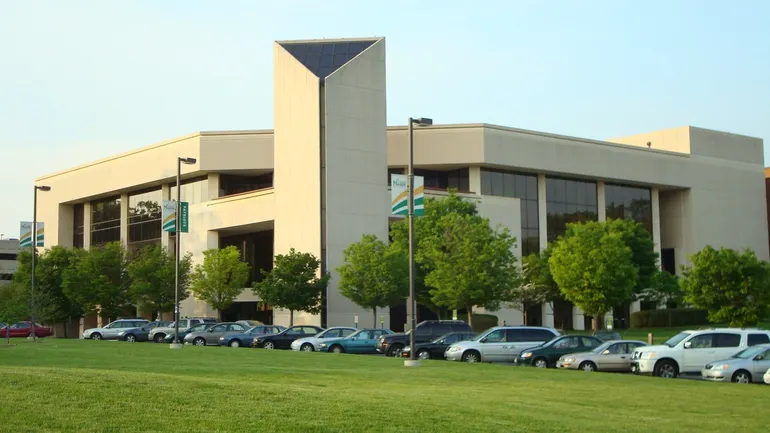
Northwestern University is moving forward with plans to eliminate more than 400 staff positions as it confronts significant financial challenges stemming from a $790 million federal funding freeze implemented by the Trump administration, according to multiple sources familiar with internal discussions.
The cuts will affect staff across multiple schools within the university system, including the Weinberg College of Arts and Sciences and the McCormick School of Engineering. Administrators have begun notifying affected departments of the impending workforce reductions.
In a university-wide communication released earlier this week, Northwestern leadership confirmed the elimination of approximately 425 positions throughout the institution. Half of these positions are currently vacant, while the remainder will result in actual job losses. The reductions are expected to decrease the university’s staff-related budget by roughly 5 percent.
The administration characterized the decision as necessary to address what they termed a “significant budget gap” that cannot be resolved without reducing personnel expenses, which represent 56 percent of Northwestern’s total annual operating costs.
Prior to implementing the staff reductions, university leadership directed schools and administrative units to approach the cuts strategically, with instructions to “think strategically about how to minimize the impacts to their units, our workforce, students, and the University.”
Northwestern University plans to cut about 425 staff jobs— amounting to roughly 5% of the private nonprofit’s staffing budget — senior leaders said Tuesday in a community message.
Nearly half of the jobs are vacant, while others will be cut through layoffs, which administrators are working to complete within 48 hours of the announcement.
The Illinois university is navigating a host of financial challenges, including federal research funding cuts and a potentially higher endowment tax under the Republicans’ new spending law.
Dive Insight:
In their message Tuesday, Northwestern President Michael Schill, Provost Kathleen Hagerty and Chief Financial Officer Amanda Distel described recent months as “among the most difficult in our institution’s 174-year history.”
About a month and a half ago, the same group of officials said the university faced “an increasing strain” on its finances from both looming federal policy changes and increasing expenses.
At the time, they rolled out a series of austerity measures, including a pause on employee raises, a hiring freeze for faculty and staff, health insurance changes, reduced capital spending,and lowered budgets for academic and administrative units.
While the university has cut nonpersonnel budgets by 10%, employee costs make up 56% of Northwestern’s total annual spending. “We still are left with a budgetary gap that cannot be bridged without cutting personnel costs,” the officials said.
The layoffs announced this week represent “a drastic step that causes pain and anxiety both for the individuals whose lives are affected, but also for our entire community, and we do not take it lightly,” they said. They also noted that schools and units were given discretion in making cuts and asked to “think strategically” to minimize the impact to units, workers, students and the university.
Northwestern is among the prominent universities targeted by the Trump administration through probes into their responses to antisemitism on campus by the U.S. departments of Education and Health and Human Services.
The university, however, has reported an 88% year-over-year decline in complaints of antisemitic discrimination or harassment as of November 2024.
Nonetheless, the Trump administration in April reportedly froze $790 million funds to Northwestern.Although the university at the time hadn’t received official notification of a targeted freeze from the government, it saw around 150 stop-work orders and grant terminations from federal agencies by May 1.
Last week, The Wall Street Journal reported via an anonymous source that the Trump administration was in talks with Northwestern and other universities about possible deals that would involve a hefty fine to resolve the investigations. The news followed Columbia University’s controversial settlement with the government requiring a $221 million payment in return for the government restoring most of its research funding.
In an op-ed published in The Daily Northwestern on Tuesday, a group of Northwestern faculty described such fines as a “ransom” and called on university leadership to “resist the administration’s attack on fundamental democratic principles by refusing to ‘make a deal’ with the administration.”
NATIONAL HARBOR, Md.—Just outside of Washington, D.C., across the Potomac River, Capitol Hill cast a shadow over the annual meeting of the National Association of College and University Business Officers, where concerns over federal funding and policy changes were palpable among attendees.
At panels and in side conversations during the three-day meeting, held at the sprawling Gaylord National Resort and Convention Center, attendees swapped strategies, drilled into pressing issues and commiserated over pressures on the sector wrought by both the political environment and a business model that is strained in many places. Representatives of a diverse mix of institutions from across the nation attended, but common challenges emerged: They worry about the impact of looming federal policy changes, which they expect to add pressure to institutions already grappling with financial challenges related to enrollment declines, high tuition discount rates and other issues.
Here’s a recap of themes and moments that emerged from the conference.
‘Fear, Anxiety and Contempt’
At a packed panel covering recent activity out of Washington, NACUBO vice president for policy and research Liz Clark noted the strains business officers are feeling amid a “tumultuous year” marked by a flurry of federal actions, including the passage of the so-called One Big Beautiful Bill Act, pushed by President Donald Trump, which included various provisions for higher education.
The legislation, signed earlier this month, caps some student loans while eliminating the Grad PLUS program, limits repayment options and requires programs to pass an earnings test for attendees to access federal student loans, among other provisions, including changes to the endowment tax. Passed on a partisan line with Republicans under pressure to deliver Trump’s signature legislation, Clark noted it is just one action—albeit a significant one—that has reshaped higher education this year.
Clark added that 2025 has “brought a lot of fear, anxiety and contempt” as colleges navigate restrictions on diversity, equity and inclusion programs; cancellation of federal grants and contracts; and various state laws that have “created a challenging environment” for the sector.
“I feel like we have, this year, been dealing with everything, everywhere, all at once,” Clark said.
Clark noted that despite the concerns she highlighted, the One Big Beautiful Bill Act, which she abbreviated “Bubba,” and other policies that were proposed could have hit higher education much harder. One example she offered was the endowment tax, which in the final bill fell far short of what House Republicans initially proposed.
But in another panel on tax reform, Clark suggested that the endowment tax could still be revised in ways that resemble earlier proposals and would have affected more universities and at higher rates.
“Don’t forget that ideas never die in Washington,” Clark warned.
Legal Perspectives
A panel of higher education lawyers also weighed in on current challenges for the sector.
Kate Hudson, deputy vice president and counsel for government relations and public policy at the Association of American Universities, warned at the start that the session would not have “a whole lot of good news.” Given the rapid pace of changes from the federal government, she also offered a caveat: “Anything I say today could be out of date in 72 hours.”
Hudson noted that campus attorneys are dealing with multiple actions from the federal government, such as federal funding freezes and far-reaching executive orders, as the Trump administration seeks to reshape everything from academic research to college admissions.
“I don’t think it is too dramatic to say that this is a wholesale renegotiation by force of the government-academia partnership,” Hudson said. “I don’t think that’s an overstatement.”
Jen Gartner, deputy general counsel at the University of Maryland, argued that the relationship between the federal government and research institutions shifted from “extremely collaborative and collegial” to a suddenly “adversarial approach” that has left universities flummoxed. That strain has particularly been felt around grants, which she said have often been terminated for unclear reasons. She also said the federal government has provided unclear information on such cancellations, sometimes providing contradictory statements in the same termination notice.
And as higher education attorneys have sought answers, she said, they’ve reviewed few.
“It’s not just that universities don’t know what to do—agencies don’t know what to do, either, and [staff are] not picking up the phone or responding to emails if they’re even still there,” Gartner said.
Related to research, Hudson also warned that Trump administration’s scrutiny of international students, which includes now vetting their social media posts for evidence of hostility toward the U.S. government and culture, also has the potential to harm the sector.
“It’s not an overestimation to say that threats … to legal immigration, to your campuses, do present an existential threat to the academic research enterprise itself at a time when [research and development] budgets and graduates from STEM degrees in our competitors, such as China, are off the charts and reaching new heights,” she said. “International students will go elsewhere.”
Hudson added that the AAU has not historically focused on immigration law, but that has suddenly shifted amid the threats to international students and faculty.
A Hard Year Ahead?
Inside Higher Ed also hosted a panel at this year’s conference to discuss the results of the 15th annual Survey of College and University Chief Business Officers, released last week. That survey, conducted in partnership with Hanover Research, found college business officers confident in the long-term outlook but worried about their financial situation in the near future.
Most respondents believe their institutions will be in worse financial shape next year. Only 43 percent expressed the belief that their institution would be in better shape next year. But Rick Mills, president and CEO of United Educators, was skeptical about the sentiment that financial situations will improve by next year given the various challenges discussed at the conference.
“At one level, I take heart in the optimism,” Mills remarked. “I think it’s what keeps all of us going, and what gets you to work in the morning, and perhaps, in the end, helps us solve the problem. On the other hand, it strikes me as slightly fantastical thinking in the current environment.”
This story about AmeriCorps jobs was produced by The Hechinger Report, a nonprofit, independent news organization focused on inequality and innovation in education. Sign up for the Hechinger newsletter.
Lily Tegner didn’t know what she wanted to do when she graduated from Oregon State University with a chemical engineering degree five years ago. She entered the workforce at a point when unemployment briefly skyrocketed and companies were freezing hiring because of the Covid pandemic. “I didn’t have a very clear direction as far as where I was going in life,” she said.
Like hundreds of thousands of other young adults, Tegner kick-started her career through AmeriCorps, a federal agency that sends its members to communities across the country to tutor students, help after disasters strike and restore wildlife habitats, among other activities. She took a position at the Alaska Afterschool Network, where her job was to help find ways to expand science, technology, engineering and math access in its programs. Four years later, she’s still there — now, as a full-time employee managing the nonprofit’s AmeriCorps program.
“This state became my home,” Tegner said, adding that her year in AmeriCorps “completely changed the trajectory of my career.”
An AmeriCorps member poses with a student in one of the Alaska Afterschool Network’s funded programs. The organization lost its AmeriCorps funding last spring. Credit: Courtesy of Alaska Afterschool Network
This spring, Alaska Afterschool Network was one of hundreds of organizations abruptly notified that its AmeriCorps funding had been terminated. Federal funding cuts forced the nonprofit to eliminate three full-time positions and cancel 19 internships scheduled for this summer. Tegner’s job is also at risk, though the organization is trying to find a way to keep her on.
In late April, the Trump administration slashed 41 percent of AmeriCorps’ funding, cutting about $400 million in grants and letting go of more than 32,000 members serving in hundreds of programs across the United States. In June and also this month, judges ordered the government to restore some funding, but the ruling does not reinstate all the money that was taken away. Shrinking AmeriCorps is among the many steps the Trump administration has taken to curb what he has called “waste, fraud and abuse” of federal funds. More action is expected in the months ahead.
Related: Become a lifelong learner. Subscribe to our free weekly newsletter featuring the most important stories in education.
Over the years, the program former President Bill Clinton created has deployed more than a million people.On top of gutting AmeriCorps, the cuts have diminished the reach of an agency that has been a critical path to a career for recent high school and college graduates at a time when entry-level jobs can be difficult to find.
AmeriCorps was created more than three decades ago to oversee expanded federal volunteer programs, incorporating existing projects including Volunteers in Service to America and the National Civilian Community Corps. Its members take on community service positions across the country that can last for up to two years. They receive a small living stipend, and full-time members are eligible for health insurance. At the end of their terms, members are awarded a grant that can be used to pay college tuition or student loans.
“AmeriCorps dollars have a powerful ripple effect, for both the AmeriCorps members and the students that they serve,” said Leslie Cornfeld, founder and CEO of the National Education Equity Lab, a nonprofit that brings college courses to high-poverty schools. “In many instances, it helps them define their careers.”
About half of the AmeriCorps funding for the Philadelphia Higher Education Network for Neighborhood Development was cut this spring. Credit: Courtesy of PHENND
Federal surveys of AmeriCorps members from 2019, 2021 and 2023 show that 90 percent of members joined the national program in part to gain skills that would help them in school and work, and well over 80 percent said their experience in AmeriCorps helped further their “professional goals and endeavors.”
The Trump administration cited fraud as part of its reason for nearly halving the AmeriCorps budget. Audits of the agency have raised questions about its financial management.
Peter Fleckenstein, 23, joined Aspire Afterschool in Arlington, Virginia, through AmeriCorps last year after graduating from the University of Delaware with a degree in psychology. He saw AmeriCorps as a way to build out his resume; even the entry-level positions he encountered during his job search required experience in the field.
In his position at the after-school program, Fleckenstein leads daily activities for a group of about two dozen fourth grade students. The experience has helped him crystallize his career aspirations: Before AmeriCorps, he was considering clinical social work or teaching. Now, he wants to become a counselor.
“Working with the kids here is a lot of behavior management: problem solving, helping them regulate themselves,” Fleckenstein said. “Doing one-on-one work with them, building habits and routines with them — that is something that I could focus on more if I was in a counseling job.”
Fleckenstein’s position was cut in April before he could complete his one-year term set to end in August, but Aspire Afterschool was able to raise money through donations to hire him and some of the nonprofit’s other AmeriCorps members part-time to finish out their grant year.
The Philadelphia Higher Education Network for Neighborhood Development lost half of its AmeriCorps funding this past spring when the federal agency was slashed. Credit: Courtesy of PHENND
While some members have joined Americorps after graduating, student Deja Johnson, 24, joined as a way to help pay for college. Her term at The Scholarship Academy — a nonprofit in Atlanta helping low-income high school students navigate financial aid applications — was supposed to end with a $7,400 education grant. Because the terms were cut short, members have been told they’ll get only a prorated portion of the money.
“It’s a little bit of a shame,” said Johnson, who is using the education grant to pursue a bachelor’s degree in nonprofit leadership.
“That’s what a lot of us look forward to with this work that we’re doing, because we know how much of a sacrifice it can be at times. It’s that ‘pouring into our community’ — and that’s how our community pours into us,” Johnson said.
The AmeriCorps termination letters told grantees that their programs no longer met agency priorities, but the nonprofits were not told what those priorities are. Programs with different missions, in both Democratic- and Republican-led communities, were cut.
Sira Coulibaly, a member with the Philadelphia Higher Education Network for Neighborhood Development’s Next Steps AmeriCorps program, packs bags of food for the Metropolitan Area Neighborhood Nutrition Alliance. Credit: Courtesy of PHENND
The Hindman Settlement School, a nonprofit in rural Kentucky, was one victim of the cuts. The organization receives about $1 million a year from AmeriCorps for its program tutoring students with math and reading learning disabilities in more than two dozen schools. Losing that funding means drastically scaling back services, said Josh Mullins, senior director of operations at the Hindman Settlement School. He said he does not know why Hindman’s grants were terminated: The nonprofit regularly passes its audits, and its last annual report showed an average gain of seven months in reading levels among students in its dyslexia intervention program.
A statement published in January on an AmeriCorps webpage says the agency is in the process of “conducting a full review” to comply with President Donald Trump’s executive order banning diversity, equity and inclusion in federal programs. But Mullins and other AmeriCorps grantees said diversity, equity and inclusion efforts were not listed anywhere as part of their operations.
“That’s what’s devastating,” Mullins said. “It was completely out of our control. There was nothing you could do.”
The administration also gutted 85 percent of the agency’s federal staff, which has caused problems even for programs that are still receiving AmeriCorps funding.
The federal government terminated about half of the AmeriCorps grants for the Philadelphia Higher Education Network for Neighborhood Development. The group uses the funding to place members in local nonprofits and to help develop community partnerships in high-poverty schools. Director Hillary Kane said she’s been experiencing delays from the national AmeriCorps office in getting members approved for the programs that are still operating.
“We need the humans in D.C. to do the stuff that they do, so we can do the stuff that we do,” Kane said. “The person we communicate with isn’t there.”
About half of the AmeriCorps funding for the Philadelphia Higher Education Network for Neighborhood Development was cut this spring. Credit: Courtesy of PHENND
On June 5, a federal judge granted a temporary injunction ordering the Trump administration to restore AmeriCorps funding in states that had sued over the budget cuts. The lawsuit, which was filed by two dozen Democratic-led states in May, challenges the administration’s authority to cancel the funding without Congressional approval. But the judge’s injunction does not require the Trump administration to reinstate AmeriCorps’ federal employees, and funding is not being restored to programs in states that did not sign on to the lawsuit, including Alaska, home of the Alaska Afterschool Network, or Virginia, where Aspire Afterschool is based.
The Hindman Settlement School in Kentucky was one organization whose funding was restored this summer because of the lawsuit. Mullins said he’s hopeful the nonprofit will continue to receive AmeriCorps funding for the upcoming grant cycle in the fall.
For Kane, the injunction does not undo the chaos caused by the abrupt cancellation of half of her Philadelphia organization’s funding. Many terminated members that were with Kane’s organization have already moved on.
Programs whose grants were cut can apply again in the next grant cycle, but the president’s 2026 budget calls for shutting down AmeriCorps entirely.
While the debate in Washington rages, current and former volunteers mourn the potential loss of a program they said gave their lives meaning and led to employment. The avenue AmeriCorps provided for Tegner to start a career at the Alaska Afterschool Network gave her purpose in life, she said. She’s worried if the program ends, there won’t be another pathway on the same scale for young idealists who aren’t sure what they want to do with their lives.
“It helps young people of all ages grow and try new things,” Tegner said. “That’s very much what it was for me.”
Contact staff writer Ariel Gilreath on Signal at arielgilreath.46 or at [email protected].
The Hechinger Report provides in-depth, fact-based, unbiased reporting on education that is free to all readers. But that doesn’t mean it’s free to produce. Our work keeps educators and the public informed about pressing issues at schools and on campuses throughout the country. We tell the whole story, even when the details are inconvenient. Help us keep doing that.
The U.S. Department of Educationannounced Monday that it has opened a civil rights investigationinto Duke University and its law journal, based on allegations that the institution racially discriminates to select the publication’s editors.
Separately, the Education Department and the U.S. Department of Health and Human Services also sent a letter Monday to university officials saying they’re reviewing allegations that Duke’s medical school and Duke Health racially discriminate in their hiring, admissions, financial aid and recruitment practices.
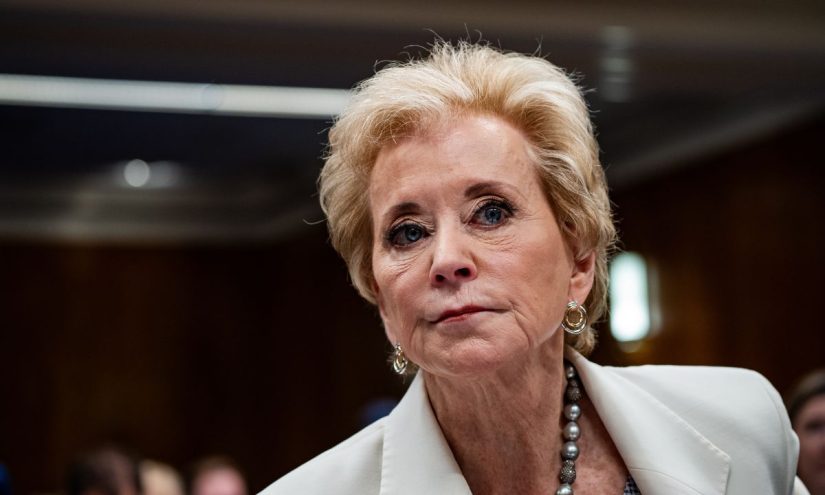
The probes come less than a week after U.S. Education Secretary Linda McMahon said officials hoped that Columbia University’s $221 million settlement with the federal government would be a “template for other universities around the country.”
Dive Insight:
Like with the federal government’s previous Columbia probes, the Education Department has opened an investigation into Duke University to determine whether it has violated Title VI, which prohibits federally funded institutions from discriminating based on race, color or national origin.
The department said its probe is based on recent reporting that Duke Law Journal racially discriminates against students applying to be editors. It comes one month after The Washington Free Beacon,a conservative publication, alleged that Duke Law Journal potentially gave students applying to be editors an edge if they held leadership positions in affinity groups or if they explained how their “membership in an underrepresented group” would help them promote diverse voices.
Duke Law Journal shared this information only with the law school’s affinity groups, according to the Beacon.
The letter from HHS and the Education Department doesn’t provide the source of the allegations of racial discrimination against Duke’s medical school and Duke Health.However, it says Duke Health would be “unfit for any further financial relationship with the federal government” if the federal government determines they are true.
In their letter, officials suggested they want to cut a deal with the university.
“Our Departments have historically recognized Duke’s commitment to medical excellence and would prefer to partner with Duke to uncover and repair these problems, rather than terminate this relationship,” McMahon and HHS Secretary Robert F. Kennedy Jr. wrote.
The two Cabinet secretaries demanded that the university review and reform policies at Duke Health to ensure they don’t include illegal racial preferences, including by making “necessary organizational, leadership, and personnel changes.”
They also asked Duke to establish a Merit and Civil Rights Committee, which would be delegated authority from the university’s board, to conduct the review.
“The Committee must be made up of those members of Duke’s leadership and medical faculty most distinguished in and devoted to genuine excellence in the field of medicine, and the members chosen must satisfy the federal government as to their competence and good faith,” McMahon and Kennedy said in their letter.
McMahon and Kennedy threatened Duke with enforcement actions if the federal government and the Merit and Civil Rights Committee reach an impasse — or if they don’t change the “alleged offending policies” within six months.
Following Columbia’s controversial agreement with the federal government — which also included vast policy changes — law and free speech scholars warned that the Trump administration may attempt to increase their pressure campaigns against other universities to cut deals.
“The Trump administration has made clear that while Columbia is first in line, it intends to reach comparable agreements with other schools — to scale the Columbia shakedown into a broader model of managing universities deemed too woke,”David Pozen, a Columbia law professor, wrote in a blog post. “As has already occurred with law firms, tariffs, and trade policy, regulation by deal is coming to higher education.
A freeze on federal education funding that prompted two lawsuits has been lifted, and states will be able to access the money next week, the U.S. Department of Education announced Friday.
The White House Office of Management and Budget (OMB), which argued that districts were spending the money to advance a “radical left-wing agenda,” has completed its review of five different programs totaling $5.5 billion, said Madison Beidermann, spokeswoman for the department.
The funds support education for English learners and migrant students and pay for staff training and extra instructional positions. The news came a week after the administration released over $1.3 billion for summer and afterschool programs, which was also held up for review.
The department alerted states June 30, one day before they expected to receive the money, that the review was in process, forcing programs to cut staff and end summer programs early. Congress appropriated the funds for this coming school year, and President Donald Trump signed the budget in March.
The release of the funds, announced just hours before Education Secretary Linda McMahon was scheduled to meet with the nation’s governors in Colorado Springs, Colorado, comes as superintendents nationwide were preparing to eliminate services like literacy and math coaches, according to a survey conducted by AASA, the School Superintendents Association. Half of the 628 chiefs who responded from 43 states said they would have to lay off staff who work with special education students if the funds weren’t released. American Federation of Teachers President Randi Weingarten brought the message to attendees at the union’s annual TEACH conference in Washington, D.C.
“The administration backed down and we are getting the money,” she said to a cheering audience. “Those of you who lobbied yesterday, thank you. Those of you who brought the lawsuit, thank you.”
Attorney generals from 24 blue states and the District of Columbia sued on July 14 over the freeze, arguing that the administration’s actions were harming schools. School districts, parents, unions and nonprofits filed a second challenge on July 21, saying that OMB has never stood in the way of the department’s practice of releasing the funds in two steps, first on July 1 and the rest on Oct. 1. Republican senators joined their Democratic colleagues in pressuring the administration to free up the money.
Friday’s announcement doesn’t mean the legal fight is over. In a statement, Skye Perryman, president and CEO of Democracy Forward, which is handling the second case, said the legal team would “continue to monitor the situation and work in court to ensure the administration fully complies with the law and that these resources reach the schools and students who need them most.”
Districts can now start the school year without the shortfall, but that doesn’t mean advocates’ worries are over about future disruptions to funding. The July 1 distribution date is a longstanding practice, not something written into the law.
Tara Thomas, government affairs manager for AASA, said her organization wants to “have additional conversations” with Congress or the administration to “ensure that this type of uncertainty at the last minute doesn’t happen again. Districts need to continue to rely on stable, timely, reliable federal funding.”
Another fight over education funds could also be ahead. The White House is reportedly preparing another recissions package that would target education funding. Thomas said she didn’t know what might be included, but it could be cuts that the Department of Government Efficiency made to grant programs.
On Friday, Trump signed a recissions package, pulling back $9 billion in funds from public television and foreign aid.
This audio is auto-generated. Please let us know if you have feedback.
The U.S. Department of Justice on Thursday opened an investigation into George Mason University to determine whether it discriminates against employees based on sex and race, including in promotion and tenure decisions.
The news comes after the U.S. Department of Education opened two investigations into the public institution earlier this month over claims the university hasn’t done enough to respond to antisemitism and illegally uses race in employment decisions.
The flurry of federal inquiries raises questions regarding the future of George Mason’s president, after pressure from the Justice Department pushed former University of Virginia President Jim Ryan to announce his abrupt resignation in June.
3 probes in 3 weeks
In a Thursday letter to George Mason, DOJ alleged that “race and sex have been motivating factors in faculty hiring decisions to achieve ‘diversity’ goals” under President Gregory Washington’s tenure. The agency cited Biden administration-era emails and statements from Washington in which he discussed a desire to support diversity and faculty of color and oppose racism on an institutional level.
The DOJ’s letter opens an investigation into whether the university has violated Title VII, which bars employers from discriminating based on race, color, religion, sex or national origin.
“When employers screen out qualified candidates from the hiring process, they not only erode trust in our public institutions — they violate the law, and the Justice Department will investigate accordingly,”Harmeet Dhillon, assistant attorney general of DOJ’s civil rights division, said in a statement.
The agency said it has “not reached any conclusions” yet and called on the university to provide relevant information.
George Mason did not immediately respond to a Friday request for comment on DOJ’s investigation.
“Painted as discriminatory”
On Wednesday, Washington strongly repudiated similar allegations from the Education Department. The agency is investigating the university’s faculty hiring practices over potential violations of Title VI,which bars federally funded institutions from discriminating based on race, color or national origin.
“Our diversity efforts are designed to expand opportunity and build inclusive excellence — not to exclude or advantage any group unlawfully,” he said in a statement July 16.
The university’s faculty performance evaluations do not “use race or anti-racism measures as determinants of institutional success,” Washington said,and George Mason’s promotion and tenure policies do not give preferential treatment based on protected characteristics.
The university president said that all inclusivity work done by a task force at George Mason aligned with the One Virginia Plan, a state-level initiative promoting diversity and inclusion in the state government’s workforce.
The plan, established during former Democratic Gov. Ralph Northam’s administration, is set to conclude at the end of 2025and is unlikely to be extended by Republican Gov. Glenn Youngkin, a vehement opponent of diversity and inclusion efforts.
Washington, the first Black president to lead George Mason,also commented on “the “profound shift in how Title VI is being applied,” in what he called “a stark departure from the spirit in which civil rights law was written.”
“Longstanding efforts to address inequality — such as mentoring programs, inclusive hiring practices, and support for historically underrepresented groups — are in many cases being reinterpreted as presumptively unlawful,” Washington said. “Broad terms like ‘illegal DEI’ are now used without definition, allowing virtually any initiative that touches on identity or inclusion to be painted as discriminatory.”
The Education Department never publicly announced its first investigation into George Mason, which alleges that the university failed to respond “effectively to a pervasive hostile environment for Jewish students and faculty.”George Mason confirmed the investigation on July 3, though a conservative news outlet began publishing government documents about the case the day before.
Colleges targeted by the Trump administration have been subject to rapid-fire federal investigations, which have then consistently been leaked to conservative publications, he said, the day before the Education Department notified his university of its second investigation.
“It seems like this is orchestrated,” Washington said. “The same people who are kind of aligned that got rid of Jim Ryan are aligned against me.”
Déjà vu in Virginia higher ed
At UVA, Ryan stepped down last month amid a DOJ investigation into the university’s diversity work.
He took office in 2018 — a year after white supremacists held the Unite the Right rally on UVA’s campus — and implemented an array of diversity initiatives during his tenure.
Ryan announced he would resign at the end of the academic year rather than attempting to “fight the federal government in order to save my own job.”
“To do so would not only be quixotic but appear selfish and self-centered to the hundreds of employees who would lose their jobs, the researchers who would lose their funding, and the hundreds of students who could lose financial aid or have their visas withheld,” he said in his announcement, touching on many of the Trump administration’s methods for attempting to bring colleges to heel.
Following a record-breaking advocacy campaign that saw 20,636 letters sent to Congress, the House of Representatives has set out drastically modified cuts to US cultural exchanges, which had been at risk of “decimation” under Trump’s previous proposed budget.
The new plans will shrink the funding cuts to the Bureau of Educational and Cultural Affairs (ECA) to 5.5% next year, as compared to the 93% initially announced in the proposed FY2026 budget.
Though the proposals still amount to a $41 million cut to current funding, “it’s nowhere close to the doomsday scenario of the [President’s budget request]” executive director of the Alliance for International Exchange Mark Overmann told The PIE News.
“This means that the conversation about FY26 is completely new. The President’s budget can be thrown out the window,” he said, welcoming the “significant show of support for exchanges from the House and a big win for us”.
The plans – laid out in the House Appropriations Bill on July 14 – propose a 22% cut to overall State Department funding and are the latest step in the FY26 budget process, expected to be finalised late this year.
The new legislation earmarks over $700m for ECA, a “surprising” figure and a vote of confidence in the value of educational and cultural exchanges.This includes $287 million for Fulbright.
“And this mark from the House means that our community’s advocacy has been heard,” said Overmann.
This means that the conversation about FY26 is completely new. The President’s budget can be thrown out the window.
Mark Overmann
Though there are still many steps to go, including a review by the Senate, the unexpected move is an encouraging development and a rare piece of good news for stakeholders who expected the worst after Trump’s “draconian” proposals this May.
While important, the President’s budget request has no sway over the final allocations, with stakeholders emphasising at the time of its release that it amounted to nothing more than a “wish list” and was not binding.
The true figures will be drawn from the House and Senate Appropriations, with the latter expected imminently.
Traditionally, the Senate has come in higher than the house for ECA funding, with stakeholders hopeful that the trend will continue this year.
The news has provided a glimmer of hope during an uncertain time for US study abroad, with 40 ECA employees caught up in the Trump administration’s mass layoffs of State Department staff last week.
This audio is auto-generated. Please let us know if you have feedback.
The U.S. Department of Education’s withholding of $6.2 billion in federal K-12 grants has local and state school systems scrambling to figure out how to make up for the budget shortages. It has also caused a swell of advocacy from families, lawmakers, educators and others across the nation.
The withheld funds for fiscal year 2025 were expected to be released by the Education Department July 1. Programs at risk due to the funding hold include English learner services, academic supports, after-school programming and professional development.
The frozen funds represent at least 10% or more of states’ overall K-12 federal revenues if the money is not distributed, according to the nonpartisan Learning Policy Institute.
At the local level, superintendents and principals are voicing concern about how the funding freeze will impact their school services, particularly those that serve English learners, homeless students and students from low-income families.
Chase Christensen, principal and superintendent of the 80-student Sheridan County School District #3 in rural Clearmont, Wyoming, said his district was expecting $30,000 in Title II and IV funding that is being withheld.
The district had nearly finalized its roughly $4 million budget for the upcoming school year when it learned of the federal funding freeze. It then adjusted the budget to remove those federal funds and is making up the difference by leaving a staffing position vacant.
Although the budget adjustment means student services under those title programs can continue, Christensen said “every dollar of federal funding for education is impactful” at the individual student level.
“When these funds are pulled, especially this late in the game for budget planning and everything else, students are going to be the ones that lose out,” Christensen said.
Nationally, bigger districts have the largest funding gaps, according to a New America analysis of data from 46 states that had available funding figures. Those districts include Los Angeles Unified School District ($82 million), Florida’s Dade County School District ($38 million), and Nevada’s Clark County School District ($22 million).
Advocacy groups and policymakers are calling on the Trump administration to restore the funds. The Boys and Girls Clubs of America, a nonprofit that supports afterschool programs, said the impact of the blocked funds will be “swift and devastating,” in a statement from President and CEO Jim Clark.
Clark said 926 Boys and Girls Clubs across the country could close, and 5,900 jobs would be lost if the funding is not released. “Afterschool and summer learning programs are cornerstones of academic success, public safety, and family stability for millions of young people — but right now, we stand at a dangerous tipping point,” Clark said.
The National English Learner Roundtable, a coalition of more than a dozen national and state-based organizations supportive of English learner services, said in a Thursday statement, “This unprecedented move by the Department has blindsided schools that have always been able to rely on these funds to support the start of the school year, and has created budgetary chaos for nearly every K-12 school district.”
On Thursday, 150 Democratic House lawmakers sent a letter to U.S. Education Secretary Linda McMahon and White House Office of Management and Budget Director Russell Vought demanding the title funds be released.
“This late-breaking decision, which provided no timeline for which states can expect a final decision, is leaving states financially vulnerable and forcing many to make last minute decisions about how to proceed with K12 education in this upcoming school year,” the letter said.
The funding hold has already led to staff layoffs, program delays and cancellations of services, the House members said.
Spending under review
The withheld funds were appropriated by Congress and approved by President Donald Trump earlier this year. States expected to gain access to the monies starting July 1, as routine. But the day before, on June 30, the Education Department told grantees not to expect the funds while it conducts a review and referred questions to OMB.
The specific grant funding being withheld includes:
Title II-A for professional development: $2.2 billion.
Title IV-A for student support and academic enrichment: $1.4 billion.
Title IV-B for 21st Century Community Learning Centers: $1.3 billion.
Title III-A for English-learner services: $890 million.
Title I-C for migrant education: $375 million.
On Thursday, in a statement to K-12 Dive, OMB said no funding decisions have been made and that it is conducting a “programmatic review of education funding.”
The office also said, “initial findings show that many of these grant programs have been grossly misused to subsidize a radical leftwing agenda.”
OMB and the Education Department have not indicated a timeframe for the review of the frozen federal funds.
The Trump administration has said it is scrutinizing spending across all federal agencies to ensure there is no waste, fraud or abuse of taxpayer dollars. Republican leaders have said they want to reduce the scope of the federal government to give states and districts more financial decision-making.
Additionally, since Trump’s inauguration in January, the Education Department has sought to lay off about half its staff, temporarily withheld federal COVID-19 emergency funding, scaled back education research, and promised to shut down the agency.
Supplement, not supplant concerns
All the turmoil is taking a toll on school and district education leaders, said the Center on Reinventing Public Education in a recent post. To support districts, CRPE recommends that state education agencies provide clarity about funding rules and help districts craft innovative solutions for budget shortages.
Finding funding efficiencies such as potential district consolidations may also need to be considered, CRPE said.
Christensen, the Wyoming principal and superintendent, said clarification and guidance from his superintendent networks and the National Association of Secondary School Principals has been helpful to him during this moment of funding uncertainty. Christensen was named Wyoming’s 2025 Secondary Principal of the Year by the Wyoming Association of Secondary School Principals earlier this year.
AASA, The School Superintendents Association, meanwhile, is telling its members that the “supplement, not supplant” rule for federal funding — the practice of using federal funds to replace state or local funds — should not be a concern at this time.
AASA points to a 2013 Education Department letter that said if a district needs to to use local dollars to make up for a funding shortfall in federal money, but then later receives the federal funding, this scenario would not trigger a “supplement, not supplant” concern because the local dollars were being loaned or fronted to fill that federal funding gap.
The 2013 letter also recommends districts document if they use local funds to fill in federal funding shortages.
Abstract: In accordance with the Paperwork Reduction Act (PRA) of 1995, the Department is proposing an extension without change of a currently approved information collection request (ICR).
Clarification of Federal Public Benefits under the Personal Responsibility and Work Opportunity Reconciliation Act
Abstract: The U.S. Department of Education (Department) issues this interpretation to revise and clarify its position on the classification of certain Department programs providing “Federal public benefits,” as defined in Title IV of the Personal Responsibility and Work Opportunity Reconciliation Act of 1996 (PRWORA), Public Law 104-193. The Department concludes that the postsecondary education programs and “other similar benefit” programs described within this interpretive rule, including adult…
Abstract: This notice sets forth the agenda, time, and instructions to access the National Assessment Governing Board’s (hereafter referred to as the Board or Governing Board) standing committee meetings and quarterly Governing Board meeting. This notice provides information to members of the public who may be interested in attending the meetings and/or providing written comments related to the work of the Governing Board. The meetings will be held either in person and/or virtually, as noted below….
Matching Documents
Subscribe to Any Search Result
Did you know that you can subscribe to any search result? After performing any search on FederalRegister.gov you can choose to receive any future documents that match your search via email. Just click the subscribe button on the right side of the search box.
Subscribe to an Agency’s Documents
From any agency page on FederalRegister.gov you can choose to receive email updates of new documents from that agency. Choices of subscriptions include Documents on Public Inspection, Newly Published Documents, and Documents Deemed Significant.