A record number of American students are applying to UK universities, with applications up nearly 14% over last year. The shift reflects something deeper than academic preference. It’s a response to uncertainty – political, cultural, and institutional – within the US higher education system.
Students are assessing the climate as carefully as the curriculum, and for many, overseas options are starting to look more stable, more supportive, and more aligned with their values.
For years, US institutions have concentrated on drawing international students into their classrooms and research labs. These efforts have been crucial to advancing STEM research, sustaining graduate-level enrolment, and feeding innovation pipelines. That trend continues, but the story is evolving.
An outbound shift is now underway, with a growing number of American students pursuing degrees abroad. They’re no longer just participating in short-term exchanges or postgraduate fellowships, they’re committing to full undergraduate and master’s programs in other countries.
This change matters – and it signals both a loss of tuition revenue and a weakening of domestic confidence in US higher education itself.
Global competitors are moving decisively
Universities in the UK, Canada, Australia, Germany, and the Netherlands have responded to this moment with strategy and urgency. They’ve expanded international recruitment offices, developed targeted campaigns for US students, and aligned their degree programs with global employment pathways.
Tuition transparency, faster visa timelines, and the option to work post-graduation are all part of a larger value proposition. These countries have positioned themselves as predictable, inclusive, and serious about talent retention.
When American students earn degrees abroad, they begin forming professional relationships, research collaborations, and employment ties in other countries
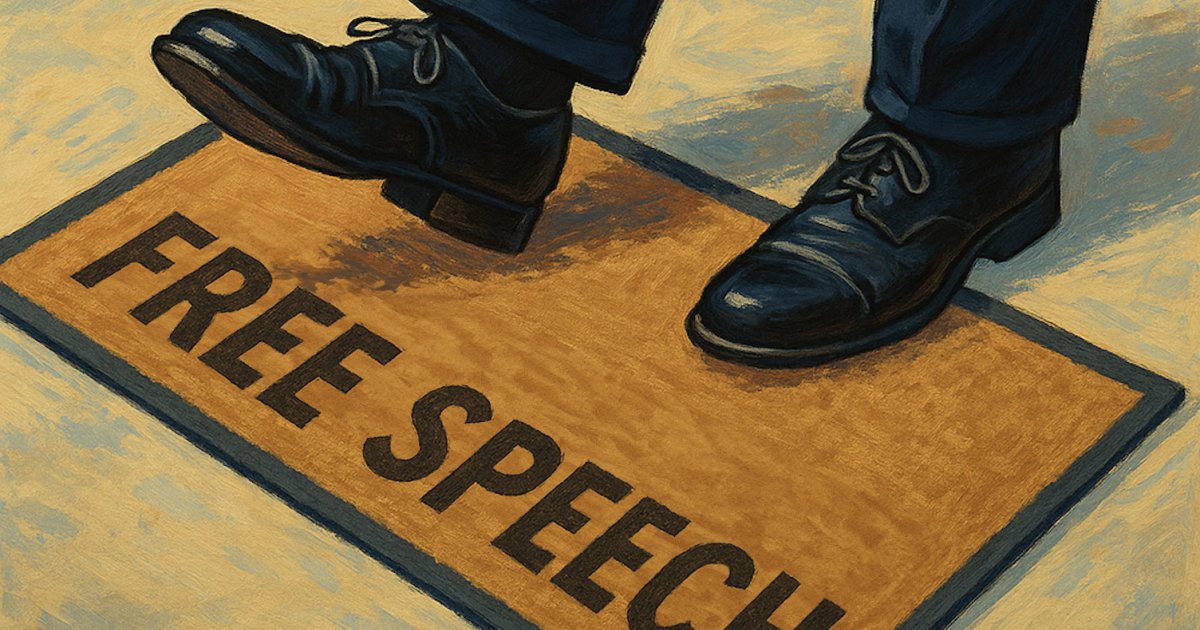
The messaging stands in sharp contrast to the environment many students perceive at home in the US, where they’re regrettably familiar with ongoing threats to federal research funding, campus free speech tensions, and anti-immigrant rhetoric. Legislative actions in some states, such as restrictions on DEI programs or faculty tenure, further complicate the picture for students who see higher education as a place of openness and critical inquiry.
Even where the academic offering remains strong, the broader social climate is giving students pause. Many now fear that attending university in the US could come with limitations on expression, uncertainty around institutional support, or even diminished international credibility. These concerns are pushing more prospective students, both international and domestic, to weigh their options with increasing care.
The landscape is becoming borderless
Higher education is no longer a domestically bounded experience. Today’s students are growing up in a digital-first world where comparison is constant and information is immediate. They can browse course catalogs from universities in five countries before lunch.
They’re watching lectures on TikTok from professors in London, Melbourne, and Berlin. They’re discussing housing, scholarships, and career prospects with peers on Reddit, Discord, and WhatsApp. The idea of applying to college abroad no longer feels radical or risky – it feels strategic.
At the same time, the financial argument for international study has grown stronger. In the UK and parts of Europe, undergraduate degrees often take three years instead of four. Tuition is fixed, predictable, and, in some cases, lower than the out-of-state rates at US public universities.
Students can begin building global networks immediately, with exposure to cross-cultural collaboration built into the experience. That combination of efficiency, affordability, and international orientation is hard to ignore.
Consequences will extend beyond enrollment trends
If this shift continues, the implications go well beyond enrolment figures. When American students earn degrees abroad, they begin forming professional relationships, research collaborations, and employment ties in other countries. That international experience can strengthen global literacy, which is good in theory, but it may also weaken long-term institutional connections to the US – particularly if graduates choose to live, work, and innovate elsewhere.
This becomes especially relevant in sectors where talent mobility drives economic growth. If a critical mass of globally minded US students pursue AI, climate tech, public health, or diplomacy degrees abroad and then launch their careers overseas, the domestic pipeline for advanced skills and leadership becomes harder to sustain. These are early signs of a broader trend, and we should treat them with urgency.
The same applies to the soft power of US education. For decades, American universities have served as platforms for international exchange, not only bringing foreign students in, but equipping domestic students to become global ambassadors. If that dynamic begins to fade, so does the country’s influence in shaping global norms around research, ethics, and innovation.
Prioritising stability and trust
Reversing this trend will require more than competitive admissions packages. US institutions – and the policymakers who shape their environment – must work to restore trust. That means safeguarding academic freedom, ensuring transparent financial support structures, and publicly affirming the value of international engagement.
Students are listening closely. They are attuned to leadership choices and the broader societal signals surrounding higher education. If they sense instability or retreat, they will continue to look abroad.
Universities also need to communicate more effectively with prospective students about their long-term value. That includes articulating what makes a US education distinctive, and doing so without leaning solely on prestige or nostalgia. There must be a renewed emphasis on civic purpose, global relevance, and practical opportunity. The next generation is looking for clarity, meaning, and alignment between their educational investment and the world they hope to shape.
The US can lead again, if it chooses to
The United States still possesses unmatched institutional capacity in research, innovation, and cultural reach. But influence is not a static asset. It depends on the willingness to adapt and lead with principle. The current wave of outbound student mobility should not be dismissed as an anomaly. It’s a signal. How US higher education responds – at both the institutional and national levels – will determine whether it remains a magnet for talent or becomes just one option among many.