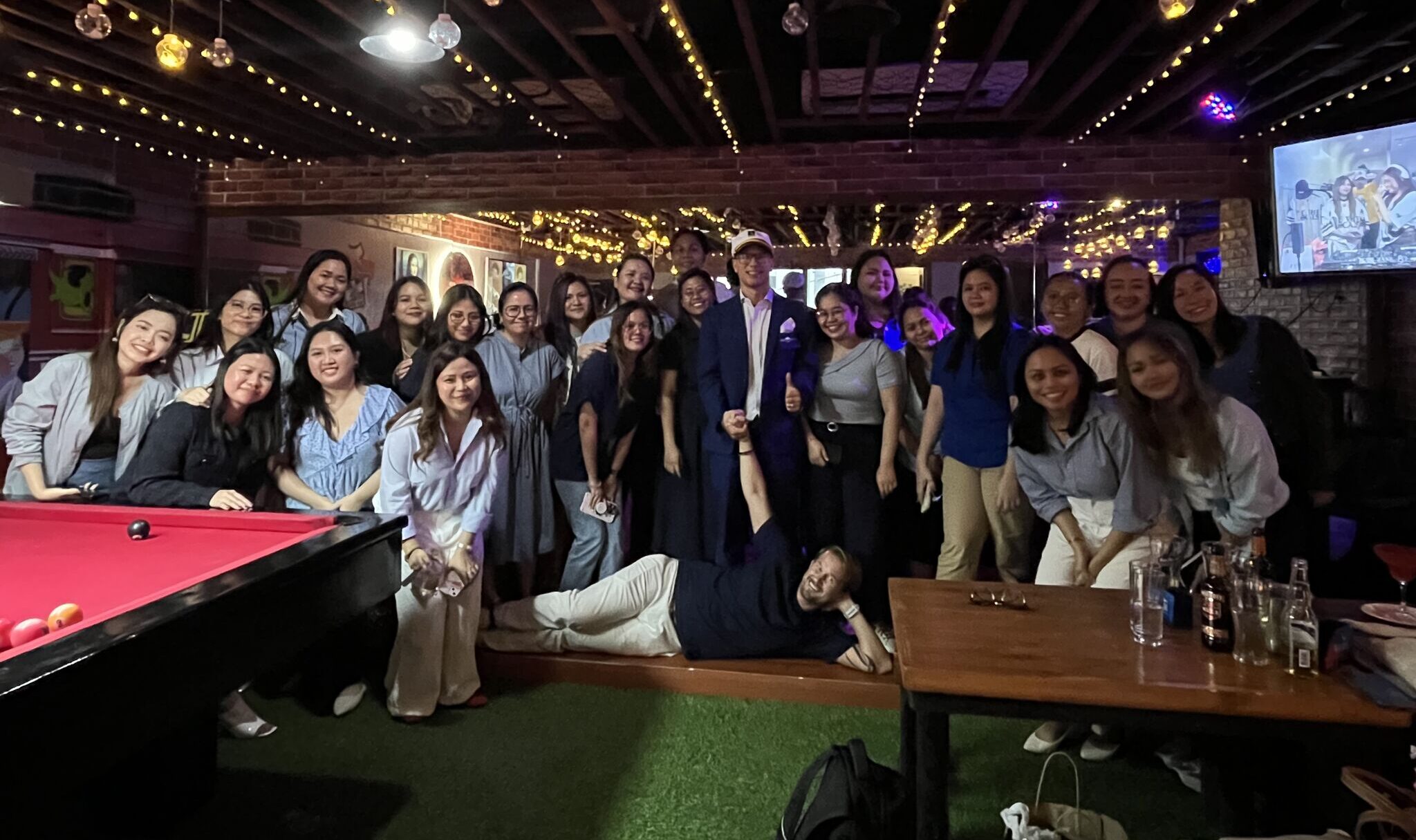
My last name, Suominen, could translate to Finland. Years ago, while registering for the APAIE conference, I decided to internationalise it. Harry Finland was born. It was practical, memorable, and a little playful.
Now, at the end of this year, Harry Finland will be no more.
International education has been my way of living and understanding the world as it could be. It is one of the greatest collective stories of our time: how a single student crossing a border can transform an entire family’s future. How the world rarely changes in political summits, but changes every time young people from different countries become friends.
After 20 years in this field, I am making one of the biggest shifts of my life and stepping away from the operational role that has shaped almost half of it. I want to write this to you, the PIE community, because this is not just a story about me. It is a story about us.
From a bulletin board in Finland to a life in Asia
In 2005, I had completed all my study credits and was preparing to graduate from my alma mater in Finland when I came across a bulletin board ad about studying in Shanghai as a freemover. I postponed my graduation by six months and travelled to Asia for the first time in my life.
I didn’t know how deeply I would be bitten by the ‘Asian Fly’ – or how that decision would open the door to everything that later became a startup, a lifestyle, or simply my life. I didn’t know it would lead to already 17,000 life-changing student experiences from 130 countries. I didn’t know I would meet my Finnish wife, Susanne, under the Thailand sun. I didn’t know our two creations, Asia Exchange and Edunation, would one day find a home at Keystone Education Group.
But I did have a quiet intuition that would later become our motto: the further you go, the more you grow.
What makes this community extraordinary
If there is one message I hope remains from my story, it is this: I never did anything alone. Asia Exchange was built with my high-school friend, Tuomas Kauppinen. Edunation was built with Tuomas and Susanne.
And in 2024 Keystone became a home where our vision can expand and our impact deepen. None of this would be possible without the strength of our teams: people who work with heart, and who believe in the mission.
This field is full of people who continue to care. And that is not a given in a world driven by efficiency, data points, and deadlines.
But you, my dear colleagues:
• listen to the student who has no one else
• build programs whose impact is measured in decades, not quarters
• believe in collaboration when division often feels more likely
• work relentlessly so young people can realise their once-in-a-lifetime opportunities
The work you do transforms individuals, institutions, countries, and entire societies.
Five lessons learned from a life spent enabling study abroad
As I stand between an ending and a beginning, I can summarize my journey in five reflections that explain why everyone should study abroad:
- Understanding the world and other people: studying abroad dismantles simplistic thinking. It teaches how to live alongside different values, beliefs, and ways of life. It builds empathy and cultural intelligence. These skills are essential for leadership and for preventing conflicts. I truly believe studying abroad can even prevent wars from happening. Imagine if today’s leaders of the major nations had grown up with these skills…
- Independence and resilience: Living and studying in a foreign country forces individuals to take responsibility for themselves. Navigating bureaucracy, language barriers, and uncertainty develops resilience, problem-solving skills, and confidence.
- Global competence and employability: students develop abilities that cannot be gained at home alone: working in multicultural teams, adapting quickly, communicating across cultures, and thinking globally.
- Lifelong networks: Studying abroad creates exceptionally strong human connections. The relationships built in transformative moments become lifelong friendships, collaborations, and opportunities.
- A deeper sense of identity: stepping outside one’s home culture helps individuals understand who they are and what they value. Studying abroad strengthens roots; it does not weaken them.
In short, studying abroad may be the most meaningful experience a student ever has. You and your colleagues are the enablers of this.
My mission in this field was always about building and enabling impact. Now it is time to step aside and allow a new chapter of my life to unfold. What it will be, I do not yet know. Hopefully something meaningful.
Thank you.
To the PIE community, colleagues, partners, students, and friends: thank you.
You have turned this field into a movement that keeps growing, even as the world becomes more complex.
The mission continues every time a student boards a plane, makes a friend abroad, or discovers a new version of themselves. It continues in the organisations we built, and especially in the people who are behind those organisations.
Borders may divide countries, but they never stand a chance against people who dare to cross them.
Thank you for letting me be part of this. Thank you for making this the most meaningful chapter of my life. Keep going. The world needs you.
Staying curious,
Harri Suominen
Co-founder, Asia Exchange and Edunation (Keystone companies)
From Finland, based in Malaysia