Tag: File

  • Southern University Student’s Parents File Wrongful Death Lawsuit Following Alleged Fraternity Hazing

    Southern University Student’s Parents File Wrongful Death Lawsuit Following Alleged Fraternity Hazing

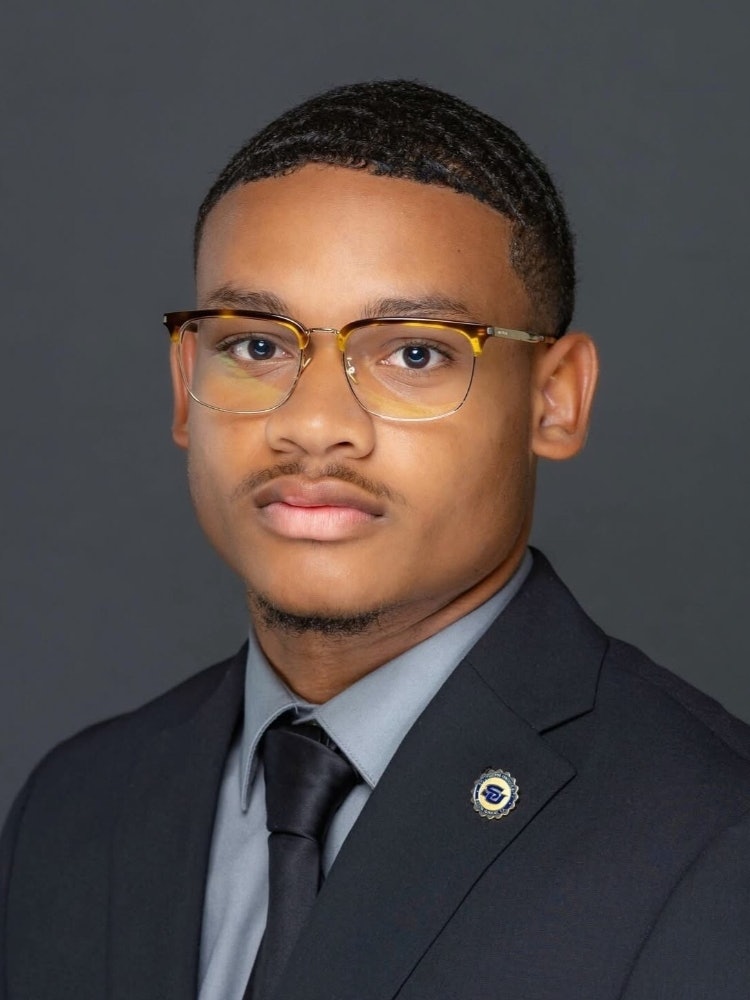
    T Caleb Jayden Wilson he parents of Caleb Jayden Wilson have filed a comprehensive civil lawsuit seeking accountability from multiple parties they allege are responsible for their son’s death following a fraternity hazing incident at Southern University.

    Urania Brown Wilson and Corey Wilson, Sr., filed the wrongful death and survival damages petition Friday in the 19th Judicial District Court in East Baton Rouge Parish, seven months after losing their 20-year-old son. The junior mechanical engineering student and member of Southern’s renowned “Human Jukebox” marching band died in February following what authorities describe as a brutal hazing ritual.

    The lawsuit casts a wide net of accountability, naming as defendants Omega Psi Phi Fraternity Inc., its local Beta Sigma and Lambda Alpha chapters, the State of Louisiana through the Board of Supervisors of Southern University and A&M College, and 12 individual fraternity members.

    Among the individual defendants are Caleb M. McCray, Kyle M. Thurman, and Isaiah E. Smith—all previously arrested by Baton Rouge police in connection with Wilson’s death. McCray faces the most serious charges, including manslaughter and felony criminal hazing.

    The petition alleges multiple levels of negligence, from gross misconduct by individuals to institutional failures by the university and fraternity organizations. According to the filing, Wilson died as a direct result of being repeatedly punched in the chest during an unsanctioned, off-campus ritual at a local warehouse on February 27.

    The lawsuit particularly criticizes the response following Wilson’s collapse, alleging that fraternity members delayed calling emergency services and instead transported him to a local hospital where they provided false information about his injuries before abandoning him.

    Following an internal investigation that found the Beta Sigma chapter violated the student code of conduct, Southern University expelled the chapter and implemented a temporary moratorium on new member intake activities for all Greek organizations.

    The civil action seeks to leverage Louisiana’s strengthened anti-hazing laws, including the Max Gruver Act, which criminalized certain forms of hazing following another high-profile fraternity death. The legislation was named after Louisiana State University student Maxwell Gruver, who died in a 2017 fraternity hazing incident.

    The case highlights ongoing concerns about hazing culture in higher education and the challenges institutions face in monitoring and preventing dangerous initiation practices, particularly those occurring off-campus and outside official oversight.


    Source link

  • It’s More Difficult to File Student Aid Complaints, Dems Say

    It’s More Difficult to File Student Aid Complaints, Dems Say

    Alex Wong/Getty Images

    Massachusetts senator Elizabeth Warren and four of her fellow Democrats asked Education Secretary Linda McMahon in a letter Monday why her department has made it more difficult to file complaints about federal student aid and demanded her staff remove any extra steps that have been added to the process.

    “ED is covering up its attempts to make [the Office of Federal Student Aid] less responsive to millions of students, families, and borrowers who rely on the agency to lower the cost of attending college and protect them from loan servicer misconduct,” the senators wrote. “We urge you to immediately act on our findings by streamlining the ‘Submit a Complaint’ process and restoring FSA’s workforce so borrowers can get the help they need.”

    Who Signed the Letter?

    Richard Blumenthal (Conn.), Mazie Hirono (Hawaii), Jeff Merkley (Ore.), Chris Van Hollen (Md.), Elizabeth Warren (Mass.)

    In the letter, Warren states that she told FSA in March that the button for submitting online complaints had been “hidden.” The department responded in April that the button had just been moved from the top of the webpage to the footer and relabeled as “submit feedback.”  The department added that no employees who handle technical functions of the aid applications of loan servicing had been laid off, and while some employees that handle complaints were, the remaining employees will “still be responding” to future complaints. 

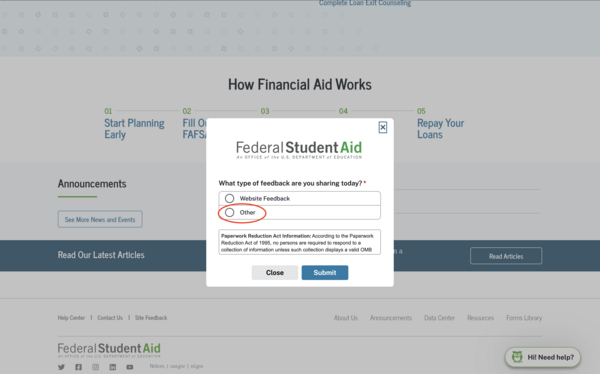
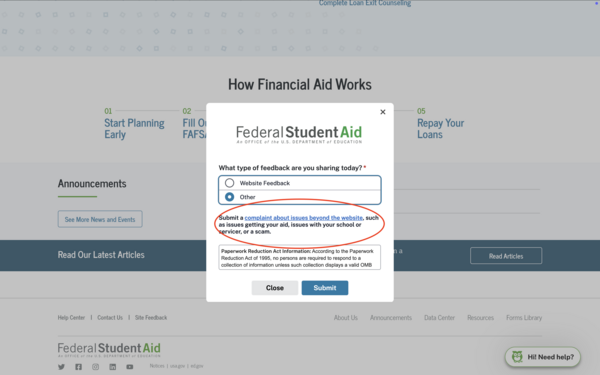
    But the Democrats say they tested those claims and found the department’s reassurances were misleading. Although the department did move and rename the complaint button, it also added a series of four extra navigation clicks that must be made before the user actually reaches the webpage where they can file a complaint. (Inside Higher Ed checked the website and verified these steps. You can see screenshots of the process below.)

    “Via an unintuitive, multi-step process,” the department is “making it more difficult for borrowers to let ED know when they are experiencing issues with their student loan servicer,” the letter reads.

    The senators argue that this change was geared toward increasing the difficulty of filing complaints, citing an email sent by a senior department staff member and obtained by Politico. According to a report published by the department at the end of the Biden presidency, more than 289,000 complaints were filed with FSA in 2024 alone.

    In the email obtained by Politico, the official wrote, “I believe this change would help decrease contact center volume and the number of complaints … so an overall win.”

    Step two FSA complaint process, click other
    Step three of FSA complaint process, click complaint about issues beyond website
    Step four of FSA complaint process, select submit feedback

    Source link

  • FIRE and coalition partners file brief rebuking the U.S. government for attempting to deport Mahmoud Khalil for his protected speech

    FIRE and coalition partners file brief rebuking the U.S. government for attempting to deport Mahmoud Khalil for his protected speech

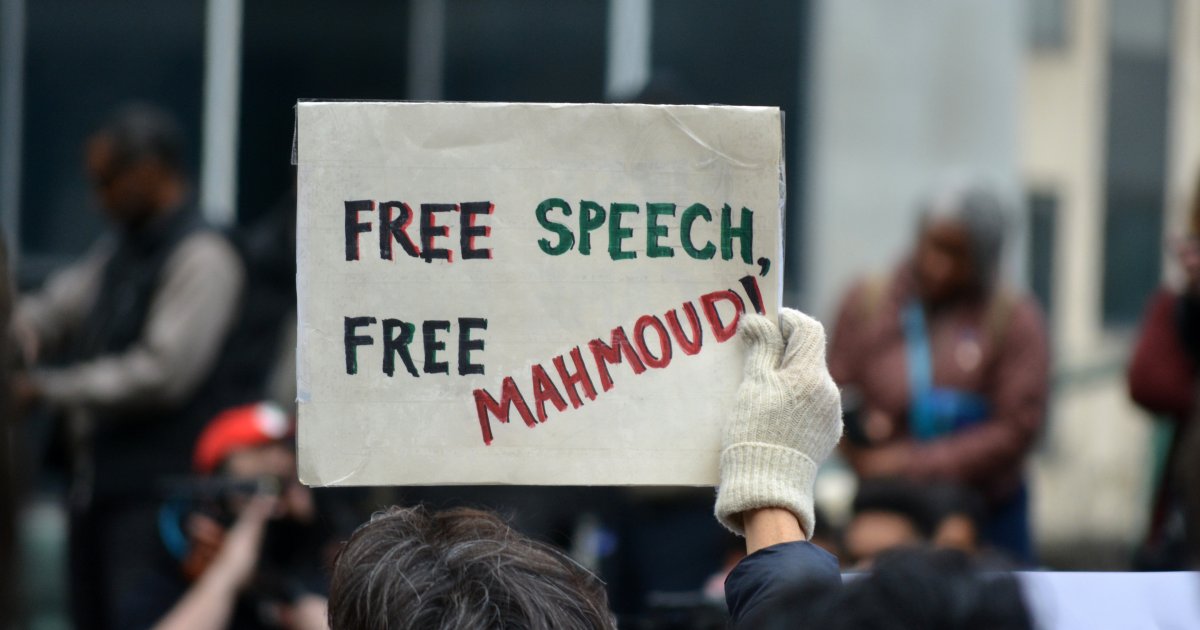
    WASHINGTON, March 20, 2025 — The Foundation for Individual Rights and Expression filed a brief Thursday with a clear message: Jailing people for their political expression betrays America’s commitment to free speech.

    FIRE’s brief — joined by a coalition of civil liberties groups — explains the First Amendment violations stemming from the Trump administration’s unconstitutional detention of and attempts to deport Mahmoud Khalil, a lawful permanent resident of the United States, for his expression. After 12 days in detention, the government still has not charged Khalil with a crime. 

    The “friend of the court” brief from FIRE, the National Coalition Against Censorship, the Rutherford Institute, PEN America, and the First Amendment Lawyers Association argues the Trump administration’s attempt to deport Khalil constitutes textbook viewpoint discrimination and retaliation in violation of the First Amendment.

    “Khalil’s arrest, which President Donald Trump heralded as the ‘first of many to come,’ is an affront to the First Amendment and the cherished American principle that the government may not punish people based on their opinions,” said Conor Fitzpatrick, FIRE supervising senior attorney.

    In its attempt to deport Khalil, the government has thus far focused solely on Khalil’s protected speech rather than charging him with criminal behavior. An administration official told The Free Press that the “allegation here is not that he was breaking the law,” and White House Press Secretary Karoline Leavitt said Khalil faces deportation because he was “siding with terrorists” and “distributed pro-Hamas propaganda flyers with the logo of Hamas.”

    The Supreme Court held in 1945 that non-citizens are entitled to full First Amendment protections. And those protections cover unpopular expression, especially when that expression is political speech. The Supreme Court held in its landmark Texas v. Johnson decision that “if there is a bedrock principle underlying the First Amendment, it is that the government may not prohibit the expression of an idea simply because society finds the idea itself offensive.”

    The administration is relying on a rarely used Cold War-era statute that empowers the secretary of state to deport a lawfully present non-citizen if the secretary determines their “presence or activities” has a “potentially serious” effect on America’s foreign policy. The administration claims that authority extends even to deporting green card holders for protected speech.

    FIRE disagrees. The statute is unconstitutionally vague and gives the secretary of state unfettered discretion to deport lawful permanent residents without giving them notice of what conduct triggers expulsion. Not only does the First Amendment trump a Cold War-era statute, but the sweeping authority the administration claims it confers “places free expression in mortal peril,” as FIRE’s brief argues.

    The brief also explains that the contours of the United States’ foreign policy are ever-changing and provide no meaningful guidance as to what opinions lawful permanent residents may or may not voice. If lawfully present non-citizens can be deported simply for endangering American “foreign policy,” the only sure way to avoid deportation is to self-censor and not voice any opinions. 

    “No one in the United States of America should fear a midnight knock on their door because they voiced an opinion the government doesn’t like,” Fitzpatrick said. “Accepting Secretary Rubio’s position would irreparably damage free expression in the United States.”

    FIRE’s brief analogized the administration’s approach to Article 51 of the Chinese Constitution, which warns that exercising “freedom” must not conflict with the “interests” of the government. “Allowing the government to step in as a censor when it believes free speech threatens the government’s interests is a loophole with an infinite diameter,” Fitzpatrick said. “It has no place in America’s tradition of individual liberty.”

    If Khalil’s deportation proceeds, the chilling effect will be profound for other international students who are presently studying at American universities. 

    “Other foreign college students will have good reason to fear criticizing the American government during classroom debates, in term papers, and on social media,” FIRE attorney Colin McDonell said. “Holding students engaged in basic political expression to different standards based on their citizenship status is poisonous to free speech on campus.”


    The Foundation for Individual Rights and Expression (FIRE) is a nonpartisan, nonprofit organization dedicated to defending and sustaining the individual rights of all Americans to free speech and free thought — the most essential qualities of liberty. FIRE educates Americans about the importance of these inalienable rights, promotes a culture of respect for these rights, and provides the means to preserve them.

    CONTACT:
    Karl de Vries, Director of Media Relations, FIRE: 215.717.3473 x335; [email protected]

    Source link

  • States File Lawsuit Challenging Education Department Cuts

    States File Lawsuit Challenging Education Department Cuts

    Twenty Democratic state attorneys general filed a lawsuit Thursday against the Trump administration for its massive job cuts at the Education Department, seeking to block what they say is “an effective dismantling” of the department. 

    The suit argues that by eliminating half the staff, the department is essentially abdicating its responsibility to deliver statutorily mandated programs, like federal student aid and civil rights investigations—many of which also affect state programs. 

    “This massive reduction in force is equivalent to incapacitating key, statutorily-mandated functions of the Department, causing immense damage to Plaintiff States and their educational systems,” the suit reads.

    The plaintiffs include Arizona, California, Colorado, Connecticut, Delaware, the District of Columbia, Hawaii, Illinois, Maine, Maryland, Massachusetts, Michigan, Minnesota, Nevada, New Jersey, New York, Oregon, Vermont, Washington and Wisconsin.

    The lawsuit is at least the eighth to be filed against the Trump administration over its education policies in the past month. Follow Inside Higher Ed’s Trump Lawsuit Tracker for updates on the case.

    Source link