Tag: fill

  • Hawaiʻi Is Increasingly Relying On Unlicensed Teachers To Fill Vacancies – The 74

    Hawaiʻi Is Increasingly Relying On Unlicensed Teachers To Fill Vacancies – The 74


    Get stories like this delivered straight to your inbox. Sign up for The 74 Newsletter

    As students returned to class earlier this month, Hawaiʻi schools reported the lowest number of teacher vacancies the state has seen in more than five years. As of last week, only 73 teacher positions were unfilled, compared to more than 1,000 in the aftermath of the Covid-19 pandemic.

    But schools are employing a growing number of unlicensed teachers, also known as emergency hires, to fill those vacancies. Last August, Hawaiʻi schools started the year with 670 emergency hires, an 80% increase from four years ago. 

    Emergency hires can work in schools for up to three years but must make progress toward earning their licenses. 

    The recent increase in emergency hires partly stems from state efforts to put more teachers in classrooms, including increasing pay for unlicensed educators in 2023. But while research shows that emergency hires tend to have higher retention rates, they may also be less effective than licensed teachers, who typically have more training and classroom experience.

    While the Hawaiʻi teacher licensing board tracks emergency hires in schools, it doesn’t publish regular data on how many of these teachers go on to earn their teacher licenses and continue working in public schools here.    

    Even so, principals and researchers say hiring unlicensed teachers is better than leaving positions vacant, which can leave schools scrambling for substitutes. The state has also explored other options to recruit and retain educators, like raising teacher pay and bringing in workers from the Philippines, but some solutions may only be temporary. 

    “There’s a united front to attract qualified educators that are already certified,” said Chris Sanita, principal at Hāna High and Elementary. “I think it’s a larger state issue on housing and affordability.” 

    A Growing Population

    In 2018, Brandon Galarita began teaching at Ke’elikōlani Middle School as an emergency hire, hoping to build on his experience as a substitute teacher and use his college degree in English. While the pay was low, Galarita said, working full-time as an emergency hire allowed him to earn a living while also completing the requirements for a teacher license. 

    “At least it starts building a teacher if they want to go into education,” said Galarita, who earned his license from the University of Hawaiʻi Mānoa in 2020. “I would hope that the influx of emergency hires will result in more teachers that are staying in the profession.” 
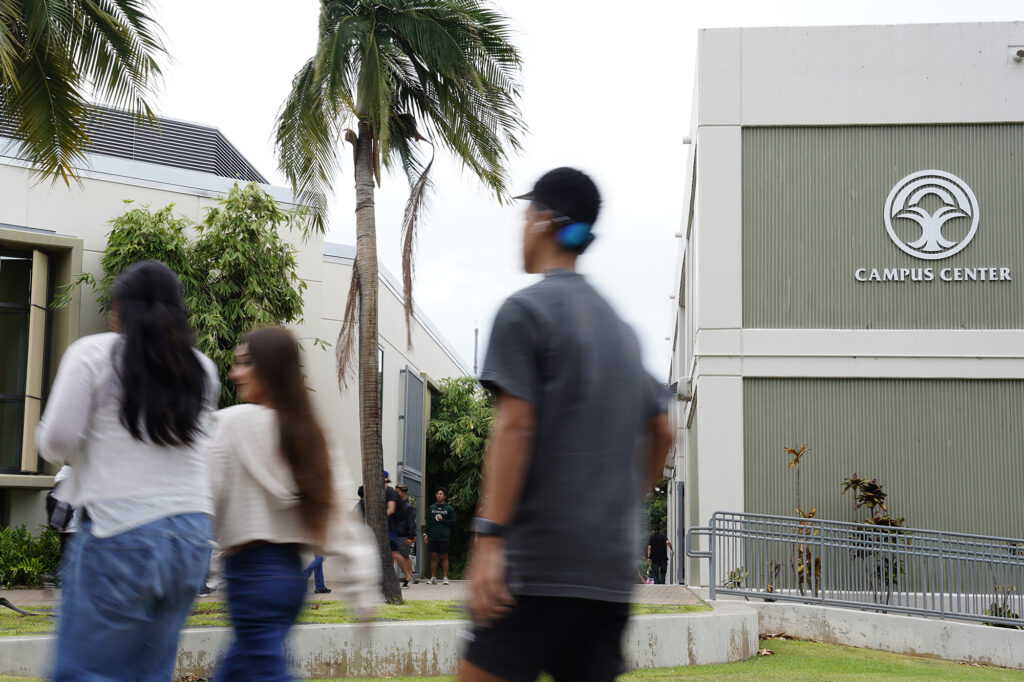
    University of Hawaiʻi Mānoa’s College of Education offers a program that helps cover the costs of tuition and fees for residents pursuing their teacher’s license. (Kevin Fujii/Civil Beat/2024)

    Osa Tui Jr., president of the state teachers’ union, said he attributes the big jump in emergency hires to the pay raise they received two years ago. Currently, emergency hires earn about $50,300 a year, compared to $38,500 previously. 

    “These numbers reflect exactly what we were hoping to accomplish,” Tui said. 

    The state has encouraged prospective educators, including emergency hires, to earn their licenses through the Grow Our Own initiative at UH Mānoa, which helps cover the costs of tuition for teacher preparation programs. Teachers who complete the program and earn their licenses must work in public schools for at least three years. 

    Emergency hire numbers don’t always reflect teachers’ progress toward earning their licenses, said Waiʻanae Intermediate School Principal John Wataoka. While he has around 11 emergency hires on staff this year, only one of the teachers has yet to complete a teacher preparation program.

    The rest have finished their training but are waiting to take a licensing exam or haven’t received the results of their final tests yet, Wataoka said. 

    “Right now, it’s just a waiting game,” he said. 

    But a recent study of emergency hires entering Massachusetts schools during the pandemic suggests that unlicensed teachers may be less effective than other educators. Students taught by emergency hires tended to have lower math and science test scores compared to their peers, according to research from the National Center for Analysis of Longitudinal Data in Education Research. 

    Jonathon Medeiros, a teacher at Kauaʻi High School and vice president of the Hawaiʻi Education Association, said he understands parents’ possible concerns about emergency hires and the quality of education students are receiving. But it’s still preferable to have an emergency hire in a classroom than a substitute — or nobody at all.

    In the past, Medeiros said, students were occasionally sent to the library or cafeteria for study hall when there weren’t enough educators to teach every class and the state faced a shortage of substitute teachers. 

    Unlike emergency hires, DOE doesn’t require substitute teachers to have a college degree.   

    “We all want skilled, caring, talented teachers who are from the community and committed to their schools,” Medeiros said. “How do we make sure we get those people in every single classroom is the key question.”

    Expanding The Pool

    While the boost in emergency hire pay has attracted more teachers to public schools, the state is still searching for other solutions to increase the hiring pool. 

    At Waiʻanae Intermediate, Wataoka said he’s hired seven international teachers to fill staff positions over the past two years. The J-1 visa program, which DOE has participated in since 2019, allows teachers from other countries, primarily the Philippines, to teach in the state for up to five years. 

    This year, the department hired around 100 new teachers through the visa program, Superintendent Keith Hayashi said in a Board of Education meeting earlier this month. International teachers’ interest in working in Hawaiʻi is comparable to past years, he said, despite concerns that participation could drop after Immigration Customs and Enforcement agents raided the shared Maui home of teachers from the Philippines last spring. 

    On Maui, Sanita said he’s also seeing the impact of the bonuses introduced for teachers in hard-to-fill positions five years ago. While it’s difficult to attract people to Hāna — a town with limited housing and no stop signs – the $8,000 bonus for remote schools helps retain teachers who would otherwise struggle with the high cost of living, Sanita said.   
    “The differentials have really helped people, our teachers in Hana, not to have five different side hustles,” Sanita said. “They can actually teach and make ends meet.” 

    The bonuses have also incentivized teachers to remain at Waiʻanae Intermediate even when they face long commutes from other parts of the island, Wataoka said. While the Leeward Coast has the greatest concentration of new teachers in the state, the $8,000 bonus has helped experienced teachers cover the cost of gas to West Oʻahu and remain at Waiʻanae Intermediate.

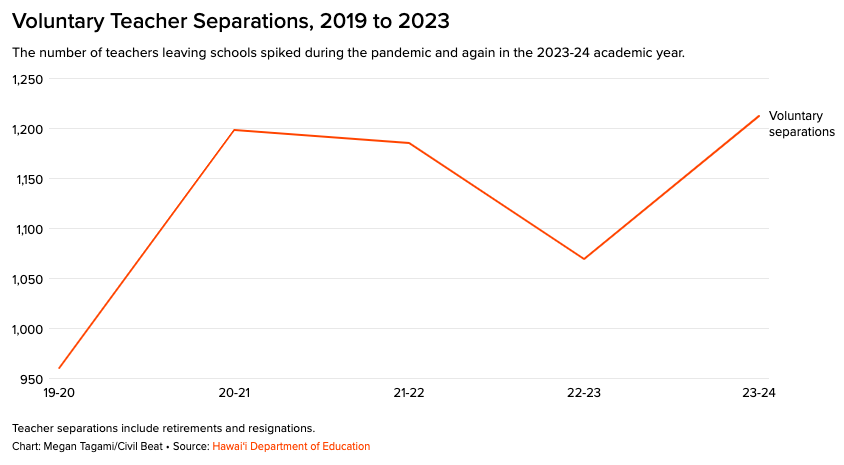
    But despite more retention measures in place, the department saw a jump in the number of teachers leaving schools last year. Over 1,200 teachers voluntarily resigned or retired from DOE in the 2023-24 school year, compared to roughly 1,000 the year before.

    Tui said there’s no single answer as to why the number of teachers leaving schools jumped. In some cases, teachers may have felt more comfortable changing jobs after the pandemic as they faced less uncertainty in the job market, he said. 

    This year, educators continuing to work in public schools will receive a 3% pay raise, with some veteran teachers receiving a larger raise of around 7%. While the pay increase will encourage teachers to stay in schools longer, Tui said, it’s possible the state will see a wave of educators retiring after three years as they qualify for higher state pensions. 

    For teachers hired before 2012, the state uses their three highest years of pay to determine their pensions. 

    “We have to make sure that we can get people into the profession that we can recruit to handle a drop off like that,” Tui said. 

    Civil Beat’s education reporting is supported by a grant from Chamberlin Family Philanthropy.


    Get stories like these delivered straight to your inbox. Sign up for The 74 Newsletter

    Source link

  • Creative approaches to teaching math can help fill AI talent gap

    Creative approaches to teaching math can help fill AI talent gap

    Key points:

    Not surprisingly, jobs in AI are the fastest growing of any in the country, with a 59 percent increase in job postings between January 2024 and November 2024. Yet we continue to struggle with growing a workforce that is proficient in STEM. 

    To fill the AI talent pipeline, we need to interest kids in STEM early, particularly in math, which is critical to AI. But that’s proven difficult. One reason is that math is a stumbling block. Whether because of math anxiety, attitudes they’ve absorbed from the community, inadequate curricular materials, or traditional teaching methods, U.S. students either avoid or are not proficient in math.  

    A recent Gallup report on Math Matters reveals that the U.S. public greatly values math but also experiences significant gaps in learning and confidence, finding that: 

    • 95 percent of U.S. adults say that math is very or somewhat important in their work life 
    • 43 percent of U.S. adults wish they had learned more math skills in middle or high school. 
    •  24 percent of U.S. adults say that math makes them feel confused  

    Yet this need not be the case. Creative instruction in math can change the equation, and it is available now. The following three examples from respected researchers in STEM education demonstrate this fact. 

    The first is a recently published book by Susan Jo Russell and Deborah Schifter, Interweaving Equitable Participation and Deep Mathematics. The book provides practical tools and a fresh vision to help educators create math classrooms where all students can thrive. It tackles a critical challenge: How do teachers ensure that all students engage deeply with rigorous mathematics? The authors pose and successfully answer key questions: What does a mathematical community look like in an elementary classroom? How do teachers engage young mathematicians in deep and challenging mathematical content? How do we ensure that every student contributes their voice to this community? 

    Through classroom videos, teacher reflections, and clear instructional frameworks, Russell and Schifter bring readers inside real elementary classrooms where all students’ ideas and voices matter. They provide vivid examples, insightful commentary, and ready-to-use resources for teachers, coaches, and school leaders working to make math a subject where every student sees themselves as capable and connected. 

    Next is a set of projects devoted to early algebra. Significantly, research shows that how well students perform in Algebra 2 is a leading indicator of whether they’ll get into college, graduate from college, or become a top income earner. But introducing algebra in middle school, as is the common practice, is too late, according to researchers Maria Blanton and Angela Gardiner of TERC, a STEM education research nonprofit. Instead, learning algebra must begin in K-5, they believe. 

    Students would be introduced to algebraic concepts rather than algebra itself, becoming familiar with ways of thinking using pattern and structure. For example, when students understand that whenever they add two odd numbers together, they get an even number, they’re recognizing important mathematical relationships that are critical to algebra. 

    Blanton and Gardiner, along with colleagues at Tufts University, University of Wisconsin Madison, University of Texas at Austin, Merrimack College, and City College of New York, have already demonstrated the success of an early algebra approach through Project LEAP, the first early algebra curriculum of its kind for grades K–5, funded in part by the National Science Foundation.  

    If students haven’t been introduced to algebra early on, the ramp-up from arithmetic to algebra can be uniquely difficult. TERC researcher Jennifer Knudsen told me that elementary to middle school is an important time for students’ mathematical growth. 

    Knudsen’s project, MPACT, the third example of creative math teaching, engages middle school students in 3D making with everything from quick-dry clay and cardboard to digital tools for 3D modeling and printing. The project gets students involved in designing objects, helping them develop understanding of important mathematical topics in addition to spatial reasoning and computational thinking skills closely related to math. Students learn concepts and solve problems with real objects they can hold in their hands, not just with words and diagrams on paper.  

    So far, the evidence is encouraging: A two-year study shows that 4th–5th graders demonstrated significant learning gains on an assessment of math, computational thinking, and spatial reasoning. These creative design-and-making units are free and ready to download. 

    Math is critical for success in STEM and AI, yet too many kids either avoid or do not succeed in it. Well-researched interventions in grade school and middle school can go a long way toward teaching essential math skills. Curricula for creating a math community for deep learning, as well as projects for Early Algebra and MPACT, have shown success and are readily available for school systems to use.

    We owe it to our students to take creative approaches to math so they can prepare for future AI and STEM professions. We owe it to ourselves to help develop a skilled STEM and AI workforce, which the nation needs to stay competitive. 

    Latest posts by eSchool Media Contributors (see all)

    Source link

  • Charles Sturt cuts jobs to fill $35m budget hole – Campus Review

    Charles Sturt cuts jobs to fill $35m budget hole – Campus Review

    Charles Sturt University’s vice-chancellor has notified staff the institution needs to remove $35 million from its operating budget by the end of 2027.

    Please login below to view content or subscribe now.

    Membership Login

    Source link

  • Legal defense fund will seek to fill gap left by OCR reduction

    Legal defense fund will seek to fill gap left by OCR reduction

    This audio is auto-generated. Please let us know if you have feedback.

    Education attorneys are set to launch a new organization by fall 2025 that would defend students’ civil rights in court and also track and report civil rights data. The effort, according to its founding nonprofit, aims to fill the gap left by the Trump administration’s dismantling of the U.S. Department of Education and its civil rights enforcement arm. 

    The Public Education Defense Fund will be launched by the National Center for Youth Law, which advocates for educational equity among other youth-related issues. It will contract with former Office for Civil Rights attorneys. 

    “At a time when civil rights protections for students are under unprecedented attack, preserving those rights is not negotiable — it’s vital,” said Johnathan Smith, chief of staff and general counsel at NCYL. “We can’t stand by while the federal government abandons its responsibility to uphold the basic rights of children and young people in this country.”

    As part of the administration’s efforts to “end bureaucratic bloat” and send educational control to the states, U.S. Secretary of Education Linda McMahon laid off half of the Education Department’s staff as part of what she called the agency’s “final mission.” The move was followed by an executive order from President Donald Trump calling for the department to be shut down to “the maximum extent appropriate and permitted by law.”

    The Education Department’s Office for Civil Rights took a major blow, with the department shuttering seven of the 12 regional offices that were in charge of more than half of the nation’s open civil rights cases. Over 200 OCR employees were laid off as part of the reduction in force.

    Under the Biden administration, those employees carried a load of more than 40 cases per person. Attorneys fired as part of the reduction in force were in charge of investigating civil rights complaints related to discrimination and harassment in schools, as well as overseeing resolution agreements with school districts. These agreements guide the school systems involved in making policy changes to improve educational access, especially for historically marginalized students.

    Prior to the announcement of the Public Education Defense Fund, NCYL filed a lawsuit against the Education Department in March to challenge the changes at the OCR. The lawsuit said the civil rights enforcement arm “stopped investigating complaints from the public based on race or sex discrimination, it cherry-picked and, on its own initiative, began targeted investigations into purported discrimination against white and cisgender students.”

    Source link

  • To fill “education deserts,” some states want community colleges to offer bachelor’s degrees

    To fill “education deserts,” some states want community colleges to offer bachelor’s degrees

    MUSCATINE, Iowa — The suspect moved menacingly toward her, but Elexiana Oliva stood her ground, gun drawn and in a half crouch as she calmly tried to talk him down.

    The confrontation wasn’t real, and neither was the gun. But the lesson was deadly serious.

    Oliva is a criminal justice major at Muscatine Community College in this largely agricultural community along the Mississippi River. She was in a simulation lab, with that scenario projected on a screen as classmates watched, spellbound.

    Just 18, Oliva is determined to become a police detective, a plan that includes earning a bachelor’s degree after she finishes her associate degree here. But she’ll have to go somewhere else to do it — likely, in her case, to a university in Texas.

    Oliva and her classmates here are among the 13 million adults across the country who the American Council on Education estimates live beyond a reasonable commute from the nearest four-year university — a problem getting worse as private colleges in rural places close, public university campuses merge or shut down and rural universities cut majors and programs.

    “It’s not our fault that we grew up in a place where there’s not a lot of big colleges and big universities,” Oliva said.

    Related: Interested in innovations in higher education? Subscribe to our free biweekly higher education newsletter.

    Iowa has joined a growing number of states that are considering letting community colleges like this one offer bachelor’s degrees, or where community colleges have already started adding them, as a way of filling these so-called rural higher education deserts and training workers in rural places for jobs in fields where there are growing shortages.

    “It would be a big game-changer, especially for those who have a low income or a medium income and want to go and further our education,” Oliva said.

    Downtown Muscatine, Iowa. About an hour from the nearest public university, Muscatine could benefit from a proposal to let community colleges offer bachelor’s degrees. Credit: Mike Rundle for The Hechinger Report

    About half of states allow community colleges to offer bachelor’s degrees. In Iowa, which is among the half that don’t, lawmakers have commissioned a study to determine whether it should add bachelor’s degrees in some programs at the state’s 15 community colleges. An interim report is due in May.

    A similar proposal in Illinois is backed by that state’s governor, JB Pritzker, who has said the move would make it easier and more affordable for residents to get degrees — “particularly working adults in rural communities.” Three-quarters of community college students in Illinois said they would pursue bachelor’s degrees if they could do it on the same campus, according to a survey released by Pritzker’s office.

    Kentucky’s legislature is considering converting one technical and community college into a four-year institution offering both technical and bachelor’s degrees. Some Wyoming community colleges have also added a limited number of bachelors degrees.

    And in Texas, Temple College will open a center in June where students at the two-year public institution will be able to earn bachelor’s degrees through partner Texas A&M University-Central Texas, including in engineering technology with a concentration in semiconductors.

    “When you can offer university classes on community college campuses, that makes a world of difference” to rural students, said Christy Ponce, the president of Temple.

    What’s been blocking many of these students from continuing their educations, Ponce said, “is the sheer distance. There’s not a public university option within an hour or more away. And affordability and transportation barriers are huge issues.”

    Fewer than 25 percent of rural Americans hold bachelor’s degrees or higher, according to the National Center for Education Statistics, compared to the national average of 33 percent. And the gap is getting wider, the U.S. Department of Agriculture finds in its most recent analysis of this.

    Related: ‘Easy to just write us off’: Rural students’ choices shrink as colleges slash majors

    Significantly fewer students in rural places than in urban areas believe that they can get degrees, a Gallup survey for the Walton Family Foundation found, citing the lack of nearby four-year universities as a principal reason.

    In those states that already allow community colleges to offer bachelor’s degrees, they’re often limited to certain high-demand fields, such as teaching and nursing. Even as this idea has spread, America’s 960 public community colleges collectively confer only about 1 percent of bachelor’s degrees each year, the American Association of Community Colleges reports.

    In many places, what’s stopping them from giving out more is opposition from four-year universities and colleges, many of which are increasingly hard up for students as the number of 18-year-olds begins to fall — a phenomenon enrollment managers have dubbed the demographic cliff.

    That Illinois proposal, for example, is stalled in committee after several public and private university presidents issued a statement opposing it. Negotiations are continuing.

    While community colleges in California have been allowed since 2021 to offer bachelor’s degrees, several have been blocked from adding four-year programs that the California State University System contends it already offers. An independent mediator has been brought in to resolve the impasse.

    Related: Fewer students and fewer dollars mean states face closing public universities and colleges 

    And while the two-year, public College of Western Idaho will launch a bachelor’s degree in business administration in the fall, it’s doing so only over the objections of Boise State University, which said it “could hurt effective and efficient postsecondary education in Idaho, cannibalizing limited resources available to postsecondary education and duplicating degree offerings.”

    Community colleges also need more students; their enrollment declined by 39 percent from 2010 to 2021, and they face that same impending demographic cliff. Those that add bachelor’s degrees increase their full-time enrollment from 11 percent to 16 percent, research conducted at the University of Michigan has found.

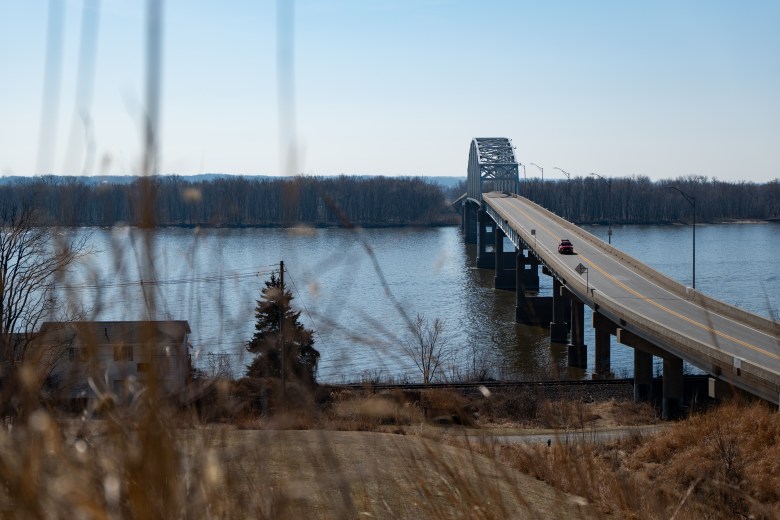
    The Norbert F. Beckey Bridge, seen from the Mark Twain Overlook in Muscatine, Iowa, which links Muscatine with Rock Island County, Illinois, across the Mississippi River. Credit: Mike Rundle for The Hechinger Report

    The principal impetus for the largely bipartisan push to offer bachelor’s degrees at community colleges, however, is to train more workers for those fields in which there are shortages.

    “What I think is misunderstood is that, in general, these are not like the baccalaureates that conventional four-year institutions offer,” said Davis Jenkins, a senior research scholar at the Community College Research Center at Teachers College, Columbia University. (The Hechinger Report, which produced this story, is an independent unit of Teachers College.)

    Related: In this tiny and shrinking Mississippi county, getting a college degree means leaving home behind

    Bachelor’s degrees at community colleges, said Jenkins, “meet an economic need for bachelor’s degree graduates that isn’t being met by other institutions.”

    That includes by helping rural workers move up in their jobs without leaving home. “It’s all about serving our workforce needs,” said Iowa state Rep. Taylor Collins, Republican chair of Iowa’s House Committee on Higher Education, who requested the study into whether bachelor’s degrees should be offered at community colleges in that state. “It’s a way to upskill our workforce.”

    In his own district, south of Muscatine, “we’re kind of on an island where we only have the community college” — especially since the closing of nearby private Iowa Wesleyan University in 2023. “There are a lot of students who are place-bound. There are a lot of students who want to live locally” and not move away to get a bachelor’s degree.

    That’s a focus of the ongoing study, said Emily Shields, executive director of Community Colleges for Iowa, which is conducting it. “Sometimes people have ties, responsibilities, jobs, family things, where moving to where there is a degree available isn’t an option for them,” Shields said.

    Sure, she said, rural students can take courses online. But “you’re not getting the student services, you’re not getting activities, you’re not getting the other sort of enrichment support and belonging that a lot of our students, I think, are looking for.” 

    Many also say they’re looking for the kind of individual attention they get in their hometown and at a community college such as the one in Muscatine, which has an enrollment of 1,800.

    Related: Tribal colleges win reprieve from federal staff cuts

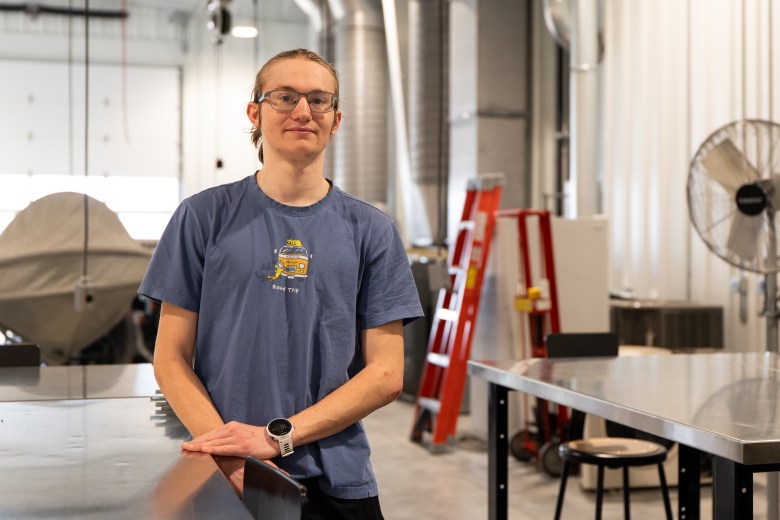
    Shiloh Morter stayed in his hometown of Muscatine, Iowa, to go to community college. Among the advantages, he says: “The sunsets here are pretty nice. I can tell you, there’s not a whole lot of other places that have clouds like we do.” Credit: Mike Rundle for The Hechinger Report

    Shiloh Morter bikes to campus on all but the very coldest days. He plans to become an engineer, but “figured I would save the money and go to community college and try and branch out and develop better habits” first, said Morter, who is 20.

    In the automotive technology garage off the main corridor of the small school, cars were lined up neatly with their hoods popped. Nursing students worked on anatomically correct crash test dummy-style “patients.”

    Twenty-year-old Mykenah Pothoff enrolled at the college when it debuted a registered nursing program, saving herself money on tuition and a nearly hourlong drive, each way, to the University of Iowa. She also was worried about “just, like, finding my way around” the university, which has more than 30,000 students.

    Jake Siefers is majoring in psychology at an Iowa community college. If he could stay and get his bachelor’s degree in the same place, “it would be huge,” he says. “There’s a lot of untapped human potential” in rural places that could benefit from more access to higher education. Credit: Mike Rundle for The Hechinger Report

    Jake Siefers, 32, is a psychology major planning to go on to get bachelor’s and master’s degrees. Siefers said he hopes to help other people who, like him, are recovering from alcoholism, and for whom he said there are too few services in Iowa. So he came home to Muscatine to start working toward an associate degree at the community college.

    I could afford it, and it was close and I actually know a lot of people that work here,” said Siefers. “It’s great coming in here and being, like, ‘Hey, I went to high school with you, and you work in the office.’ I mean, that’s everyone in Iowa, right?”

    If he could stay and get his bachelor’s degree in Muscatine, “it would be huge,” he said. “There’s a lot of untapped human potential” in rural places that could benefit from the kind of access to a higher education that is now more limited, said Siefers. 

    Letting students like them finish bachelor’s degrees near where they live “would make it easier for everybody,” said Jaylea Perez, 19, another psychology major who also plans to earn one.

    Jaylea Perez is enrolled in community college in Iowa but eventually hopes to earn a bachelor’s degree in psychology. Adding bachelor’s degrees at community colleges “would make it easier for everybody,” she says. Credit: Mike Rundle for The Hechinger Report

    Simply having bachelor’s degrees available would make rural students aspire to them who otherwise might not, said Naomi DeWinter, president of Muscatine Community College.

    “Everything opens up to them,” said DeWinter, in a coffee shop across the highway from the Walmart.

    She sees the most potential among people already working, such as paraprofessionals in schools who want to become teachers; a state job board lists nearly 1,000 vacancies in Iowa for teachers.

    DeWinter recalled a graduate so exemplary that he was featured in a promotional video, who after earning his associate degree started substitute-teaching while commuting in his free time to the University of Iowa to get his bachelor’s degree — one course at a time.

    “He said, ‘That’s how I’m juggling my work, my family and the affordability,’ ” she said. “His whole career is going to be over before he’s a [full-time] teacher. I feel as though we failed him.”

    Like the substitute teacher, students said they want to stay in Muscatine, despite those limits. They like the peace and quiet compared to cities — hardly anyone ever honks, they noted — and the sense of community evident among the friends who run into each other at the Hy-Vee.

    “We don’t have the best view of the Milky Way, but we for sure definitely don’t have a bad one,” said Shiloh Morter, ticking down a list of advantages to living on the sweeping plain carpeted with cultivated fields and dotted with barns and silos. “And, yeah, the sunsets here are pretty nice. I can tell you, there’s not a whole lot of other places that have clouds like we do.”

    Contact writer Jon Marcus at 212-678-7556 or [email protected].

    This story about rural higher education and community college bachelor’s degrees was produced by The Hechinger Report, a nonprofit, independent news organization focused on inequality and innovation in education. Sign up for our higher education newsletter. Listen to our higher education podcast.

    The Hechinger Report provides in-depth, fact-based, unbiased reporting on education that is free to all readers. But that doesn't mean it's free to produce. Our work keeps educators and the public informed about pressing issues at schools and on campuses throughout the country. We tell the whole story, even when the details are inconvenient. Help us keep doing that.

    Join us today.


    Source link

  • Career coaches fill critical gaps in Ph.D. training

    Career coaches fill critical gaps in Ph.D. training

    To the editor:

    In “The Doctoral Dilemma” (Feb. 3, 2025), Inside Higher Ed reporter Johanna Alonso describes career coaching as a “cottage industry” of “gurus” that emerged to fill critical gaps in graduate training. As a career coach cited in the article, I was disappointed to see such an inaccurate and biased portrayal of my work. 

    Coaching is a professional industry with proven methods, tools, and credentialing provided by the International Coaching Federation (ICF). Coaching is distinct from “consulting,” and it’s an intentional, strategic step for anyone seeking to change careers. This is why Johns Hopkins University employs coaches as part of its Doctoral Life Design Studio. Yet, the article portrays these university-led coaching initiatives as legitimate, structured and holistic, while describing coaching outside of the university as an opportunistic “cottage industry.” Why frame the same service in two very different ways?

    From our wide-ranging, 20-minute interview, Alonso only highlighted my hourly rate—$250/hour for a single one-to-one meeting—without any context. There is no mention of the benefits of career coaching, or whether universities like Johns Hopkins pay their coaches a similar rate. The monetary cost, presented in isolation, suggests exploitation. The reality? As a neurodivergent person, I find one-to-one meetings draining, so I’ve priced them to limit bookings. Instead, I direct Ph.D.s toward my free library of online content, my lower-cost group programs and my discounted coaching packages, all of which have helped Ph.D.s secure industry roles that double or triple their academic salaries. The article doesn’t include these details.

    The most telling sign of the article’s bias is the use of the word “guru.” Why use a loaded term like “guru” instead of “expert” to describe career coaches? As I frequently remind my clients, language shapes perception. Ph.D.s are more likely to be seen as industry-ready professionals if they use terms like “multi-year research project” instead of “dissertation” or “stakeholders” instead of “academic advisers.” The same logic applies here—calling career coaches “gurus” trivializes our work, implying we are self-appointed influencers rather than qualified professionals. I’ll never forget the professor who once tweeted, “If life outside of academia is so great, why do alt-ac gurus spend so much time talking about it? Don’t they have better things to do?”

    My response? “I wouldn’t have to do this if professors provided ANY professional development for non-academic careers.”

    Because contrary to what the article claims, I didn’t start my coaching business because I wished there were more resources available to me. I started it because, after I quit my postdoctoral fellowship for an industry career, I spent untold hours providing uncompensated career support to Ph.D.s. For nearly two years, I responded to thousands of messages, created online resources, reviewed résumés and met one-to-one with hundreds of Ph.D. students, postdocs and even tenured professors—all for free, in my leisure time. Eventually, I burned out from the incessant demand. I realized that, if I was going to continue pouring my time into helping Ph.D.s, I needed to be compensated. That’s when I started my business.

    Academia conditions us to see for-profit businesses as unethical, while “nonprofit” universities push students into a lifetime of high-interest debt. It convinces us that charging for expertise is predatory, while asking Ph.D.s to work for poverty wages is somehow noble. It forces us to internalize the idea that, if you truly care about something, you should sacrifice your well-being and life for it. But our time is valuable. Our skills are valuable. We deserve to be fairly compensated for our labor, inside and outside of academia.

    Career coaching isn’t the problem. The real problem is that academia still refuses to take a critical look in the mirror.

    Ashley Ruba is the founder of After Academia.

    Source link