Tag: Final

  • DHS final rule to overhaul H-1B visa in favour of higher earners

    DHS final rule to overhaul H-1B visa in favour of higher earners

    The final rule, released by the Department of Homeland Security (DHS) on Tuesday is due to take effect on February 27, in time for the annual H-1B spring lottery. 

    It is currently under review by the Office of Management and Budget (OMB) and is set to be officially published on December 29.

    Alongside favouring “higher-skilled” and “higher-paid” workers, DHS said the change would “disincentivise abuse of the H-1B program to fill relatively lower-paid, lower-skilled positions, which is a significant problem under the present H-1B program”. 

    It is part of wider government efforts to ensure H-1B visas are issued to high earners, which saw the administration hiking the H-1B visa fee to $100,000 – a move it later clarified would not apply to F-1 students changing status within the US. 

    The drastic hike, which is up to 20 times more than what employers previously paid, has drawn three legal challenges, including one from the US Chamber of Commerce. 

    Today’s rule will come as little surprise to the sector after it was proposed in the Federal Register on September 24, with critics arguing that the change would constrain the US tech sector which they say would be moved to ramp up offshoring facilities and jobs.  

    53% of current international students say they would not have enrolled in the US if H-1B access was determined by wage levels

    NAFSA

    “There simply are not enough American computer science graduates to support the decades-long record of US innovation and economic growth. That is the wonder of the US tech sector,” Intead CEO Ben Waxman previously told The PIE. 

    “Why would the US government want to constrain that engine?” he asked.  

    What’s more, the change is likely to contribute to the declining appeal of the US among prospective international students who increasingly cite work experience and job opportunities as primary factors shaping study decisions.  

    In a recent NAFSA survey of current US international students, over half of respondents (53%) said they would not have enrolled in the first place if access to H-1B was determined by wage levels.  

    A similar proportion (54%) indicated they would never have enrolled in the US if it wasn’t for Optional Practical Training (OPT), which experts anticipate is also under threat

    The H-1B visa, popular with the likes of Amazon, Microsoft and Apple, enables US employers to temporarily employ international workers in “specialty occupations” across a wide range of industries such as healthcare, computer science and financial analysis.  

    Currently, there is an annual cap of 85,000 new H-1B visas, and when this cap is exceeded, applicants are placed into a random lottery which determines who is awarded a visa.  

    Under the new weighted system, higher earners will be entered into the selection pool more times than lower earners, ranging from one to four times.  

    Source link

  • Final Exam: Test yourself on the past year’s K-12 news

    Final Exam: Test yourself on the past year’s K-12 news

    This audio is auto-generated. Please let us know if you have feedback.

    How well did you keep up with this year’s developments in K-12 education? To find out, take our 10-question quiz below. Then, share your score by tagging us on social media with #K12DivePopQuiz.

    Source link

  • Whitmer Calls Literacy Her ‘Number One Priority’ for Final Year as Governor – The 74

    Whitmer Calls Literacy Her ‘Number One Priority’ for Final Year as Governor – The 74


    Get stories like this delivered straight to your inbox. Sign up for The 74 Newsletter

    In a keynote speech at the Michigan Literacy Summit, held Tuesday at the Michigan Science Center, Gov. Gretchen Whitmer said that improving literacy rates would remain her top priority in her final year as governor.

    “Helping every child read is tough. It’s a worthwhile goal,” she said. “It’s a long term project that will pay off in decades, not days. It’s a team effort that requires buy-in from students, parents, teachers and policy makers.”

    She referenced the increased implementation of the “science of reading” law, which she signed in October 2024, as part of this priority. That law standardized literacy teaching methods across the state and implemented regular dyslexia testing for students up to third grade. She also touted the free school breakfast and lunch program, a key piece of the state’s education budget, and funding to reduce class sizes.

    Michigan currently ranks 44th in the nation for 4th grade reading skills, Whitmer said, calling it a “crisis.”

    “The vast majority of people in our state agree this isn’t the fault of any one person or any one policy or any one political party,” she continued. “I know how hard every one of our educators works every day, but we’re all feeling the impact of our literacy crisis.”

    Gov. Gretchen Whitmer and State Superintendent Glenn Maleyko pose for a photograph before her speech at the Michigan Literacy Summit. Dec. 16, 2025. | Photo by Katherine Dailey/Michigan Advance.

    State Superintendent Dr. Glenn Maleyko, who officially took over the role leading the state’s department of education on Dec. 8, introduced Whitmer to a crowd of educators and advocates, who had gathered in Detroit for the day-long event that included panels with teachers and school leadership.

    “What stood out to me the most was the governor’s genuine commitment to partnership,” Maleyko said. “She understands that improving outcomes for students is not about politics, it’s about listening, working together and staying focused on what matters most.”

    This was Whitmer’s first public appearance since Michigan House Republicans canceled nearly $650 million in spending for departmental projects, a move heavily criticized by Democrats as “untransparent” and “cruel”. While Whitmer’s press secretary shared similar criticism from the governor’s office, Whitmer herself has yet to make a statement on the cuts, and left the summit before speaking to the press.

    Michigan Advance is part of States Newsroom, a nonprofit news network supported by grants and a coalition of donors as a 501c(3) public charity. Michigan Advance maintains editorial independence. Contact Editor Jon King for questions: [email protected].


    Did you use this article in your work?

    We’d love to hear how The 74’s reporting is helping educators, researchers, and policymakers. Tell us how

    Source link

  • College Coach for Seniors: Expert Help for Your Final Year Application Push

    College Coach for Seniors: Expert Help for Your Final Year Application Push

    Senior year is not just another academic milestone. It is the moment when everything you have done so far must come together in a clear, credible way. Colleges are no longer evaluating potential alone—they are evaluating readiness, follow-through, and direction.

    At this point, small choices matter more than big promises. Admissions officers want to understand how you think, how you respond to pressure, and how you make decisions under time constraints. That is why senior-year applications are less about adding more and more and more about refining what already exists.

    For students in San Diego and across Southern California, this often means balancing demanding school schedules with extracurricular commitments, part-time work, family responsibilities, and competitive peer environments. The students who stand out are not the busiest—they are the most intentional.

    The goal now is clarity. A clear story. A clear plan. And a clear sense of who you are becoming as you step into college.

    Choosing colleges with strategy, not stress

    One of the fastest ways seniors lose confidence is by building a college list that creates pressure instead of momentum. A strong list should help you move forward, not leave you stuck second-guessing every decision.

    At this stage, your list should reflect three things:

    • Schools where your academic profile aligns realistically

    • Programs that make sense for your interests and strengths

    • Deadlines and requirements you can manage without rushing

    Southern California students often apply to a mix of UC, CSU, and private universities, each with very different expectations. Treating them all the same is a mistake. Each application type requires its own approach, timeline, and level of detail.

    Instead of asking, “Is this school impressive?” ask:

    • Can I clearly explain why this school is a good fit for me?

    • Do I have sufficient time to complete this application?

    • Would I be excited to attend if admitted?

    When your list is built around fit and feasibility, your writing improves, your stress drops, and your applications feel more confident.

    Making your activities work harder for you

    San Diego high school senior reviewing college application deadlines and essays at home.San Diego high school senior reviewing college application deadlines and essays at home.

    Many seniors underestimate the power of the activities section. This is where colleges learn how you spend your time when no one is grading you.

    You do not need to hold formal titles or run large organizations. What matters is how you show responsibility, initiative, and growth. Admissions readers are trained to look for substance, not labels.

    Strong activity descriptions focus on:

    Jobs, family responsibilities, long-term commitments, and community involvement are significant for students in diverse regions like San Diego. Supporting a family business, caring for siblings, or working long hours during the school year can demonstrate maturity and time management when clearly explained.

    Senior year involvement still counts. Colleges recognize that leadership may emerge late, especially when students assume larger roles as others graduate. What matters is honesty and impact, not length alone.

    Writing essays that sound like a real person

    The best essays do not sound impressive—they sound true. Admissions officers read thousands of polished essays every year. What catches their attention is a voice that feels genuine and self-aware.

    When deadlines are close, the most effective essays usually:

    • Focus on a specific moment instead of a broad theme

    • Show thinking, not just events

    • Reveal growth without spelling it out

    • End with forward motion

    Avoid trying to cover your entire life story. One meaningful experience, explored thoughtfully, does more work than a long list of accomplishments. If a reader can understand how you think, they can imagine you on their campus.

    Supplemental essays become easier when you stop treating each one as brand new. Build strong core responses about your interests, goals, and values, then adjust them to reflect each school’s programs and culture. This keeps your writing consistent and saves time without sounding repetitive.

    Staying organized when everything is happening at once

    College application checklist showing deadlines, recommendation letters, and activity planning for seniors.College application checklist showing deadlines, recommendation letters, and activity planning for seniors.

    Strong applications are rarely the result of last-minute effort. They are the result of systems that keep things moving even when life gets busy.

    Successful seniors usually have:

    • One master list of deadlines

    • Clear weekly goals

    • Draft versions saved and labeled

    • Recommendation plans set early

    Teacher recommendations deserve special care. Choose teachers who know how you think, not just how you perform. Provide context on your goals and remind them of projects or moments that reflect your strengths. This helps them write in greater detail rather than offer general praise.

    Build in buffer time. Submitting early protects you from technical issues and gives you space to review your work with fresh eyes. Calm, organized applicants submit stronger applications—it really is that simple.

    How expert guidance supports seniors at the most critical stage

    The proper support does not replace your voice or take over your work. It sharpens your thinking, improves your clarity, and helps you avoid common mistakes that cost time and confidence.

    For seniors, practical guidance focuses on:

    • Refining college lists with realism and purpose

    • Structuring essays without flattening personality

    • Translating activities into meaningful impact

    • Managing deadlines and expectations

    • Preparing for interviews and next steps

    In competitive regions like Southern California, many students are academically strong. What separates successful applicants is not intelligence alone, but how well their story is communicated.

    Senior year is demanding, but it is also an opportunity. With the proper structure and support, it becomes a focused push rather than a stressful scramble—and the applications you submit will reflect that.

    At College Planning Source, we help students and families navigate every step of the college admissions process. Get direct one-on-one guidance with a complimentary virtual college planning assessment—call 858-676-0700 or schedule online at collegeplanningsource.com/assessments. 

    Source link

  • The Final Stretch: Designing a Meaningful Course Ending – Faculty Focus

    The Final Stretch: Designing a Meaningful Course Ending – Faculty Focus

    Source link

  • The Final Stretch: Designing a Meaningful Course Ending – Faculty Focus

    The Final Stretch: Designing a Meaningful Course Ending – Faculty Focus

    Source link

  • Court Approves Final Settlement Allowing Revenue Sharing Between Higher Ed Institutions and College Athletes – CUPA-HR

    Court Approves Final Settlement Allowing Revenue Sharing Between Higher Ed Institutions and College Athletes – CUPA-HR

    by CUPA-HR | June 9, 2025

    On June 6, a federal judge for the U.S. District Court for the Northern District of California approved a settlement in House v. NCAA, which will allow higher education institutions to share revenue with student-athletes directly.

    The settlement creates a 10-year revenue-sharing model that will allow the athletic departments of the higher education institutions in the Power Five conferences (the ACC, Big 12, Big Ten, Pac-12, and SEC) and any other Division I institutions that opt in to distribute approximately $20.5 million in name, image, and likeness (NIL) revenue during the 2025-2026 season. The revenue-sharing cap will increase annually and be calculated as 22.5% of the Power Five schools’ average athletic revenue. The settlement also includes an enforcement arm to penalize institutions that exceed the $20.5 million cap, which will be overseen by a new regulatory body, the College Sports Commission. Institutions can start to share revenue beginning on July 1, 2025.

    Additionally, the settlement requires the NCAA and Power Five conferences to pay approximately $2.8 billion in damages to Division I athletes who were barred from signing NIL deals. This covers athletes dating back to 2016. It also replaces scholarship limits with roster limits.

    The settlement does not change college athletes’ ability to enter into NIL contracts with third parties, but under the settlement, all outside NIL deals valued at greater than $600 will have to go through a clearinghouse for approval. The clearinghouse will determine if the revenue is for a valid business purpose and if it reflects fair market value.

    Prior to this settlement, college athletes could only earn NIL revenue through partnerships with outside parties, such as companies or donor groups. The original case, House v. NCAA, was brought by two former college athletes in June 2020. They challenged the NCAA’s then-policy that prohibited athletes from earning NIL compensation. The case was consolidated with Carter v. NCAA and Hubbard v. NCAA, two similar cases. None of the cases ever made it to trial. Instead, in an effort to avoid higher damages, the NCAA and Power Five conferences agreed to a settlement in May 2024, and the court granted preliminary approval in October 2024.

    As NCAA President Charlie Baker explained in a letter, the settlement “opens a pathway to begin stabilizing college sports. This new framework that enables schools to provide direct financial benefits to student-athletes and establishes clear and specific rules to regulate third-party NIL agreements marks a huge step forward for college sports.”

    CUPA-HR will keep members apprised of updates related to this settlement and the future of student-athletics.


    Source link

  • Final Message | The Universities at Shady Grove (USG)

    Final Message | The Universities at Shady Grove (USG)

    Hello everyone,

    Today is the last post of the semester, and my last post. I will graduate with my Bachelor’s degree at the end of this semester. So, I thought I would reflect and share everything I learned and am still learning.

    I chose to write all my blog posts with the theme of stress because it is at the root of struggles regarding mental health, impacting well-being, and connects us all. Stress is a reaction that leads us to feel stressed, which can consume and mess with our well-being and mental health. I also chose to add plenty of images or videos because, as a visual learner, seeing something that captures the essence of ideas helps convey the message and grabs attention to help with understanding. I thought I would insert as many eye-catching images capturing the feel of the concept, connecting the audience with the message as it does with me. Before coming to USG, through the psychology program at UMBC, I also studied art at MC, and putting images in blogs helped me connect meaning with visual aids in writing.

    Here are my favorite posts and visuals, a reflection on them, lessons, experiences, and tips:

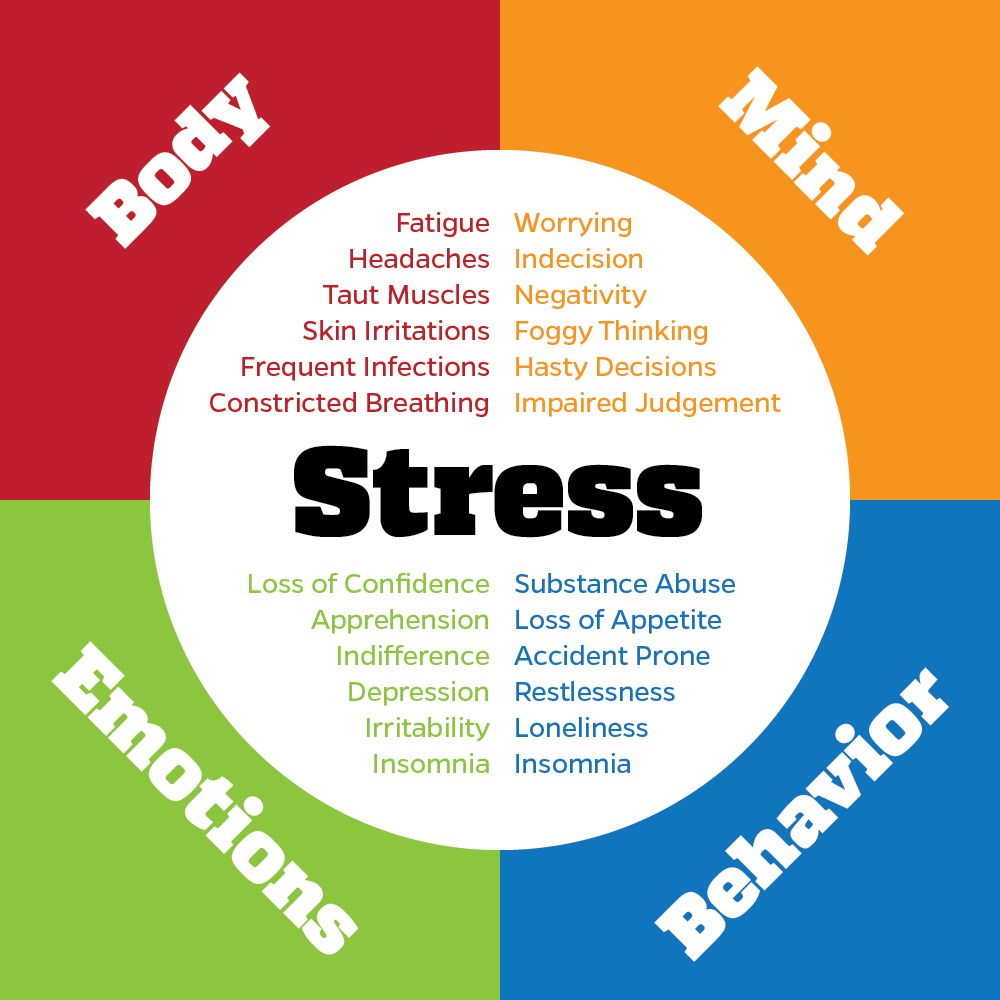
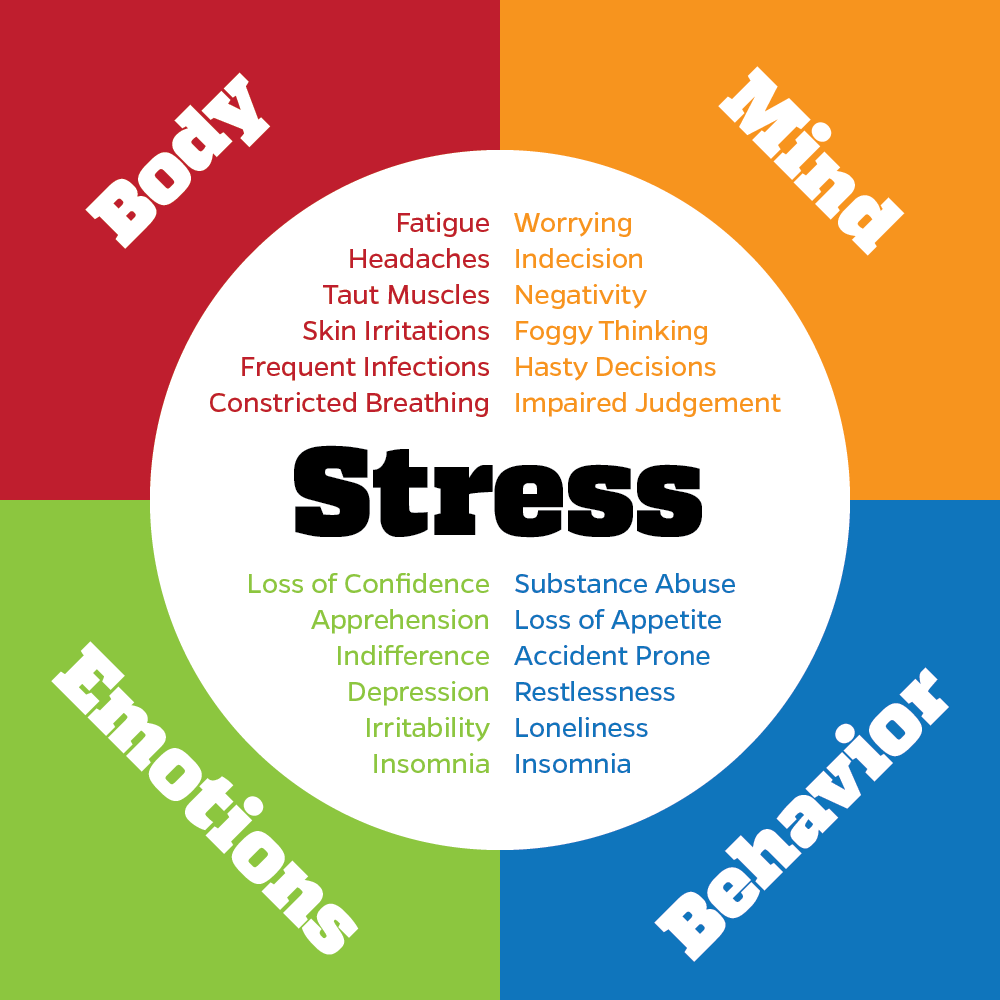
    In Handling Stress for Health and Wellness, I mentioned that stress can affect health and well-being, detailing the manifestations of stress, some I became familiar with.

    Source: Health and Fitness, Medium https://images.app.goo.gl/DeJDXpaZKLCJPbLR8

    Getting on track, one step and breath at a time, mentioned clear headspace, productivity, focus, motivation, and how to avoid stress getting in the way of that. I learned about productivity and the power of visualization in something like decluttering, how a clear and organized space helps mental ease in tracking stress and productivity for success.

    Source: https://images.app.goo.gl/KF17kySWP5n4cTej9
    Source:https://images.app.goo.gl/5tpSKWE6PVAwir7r8

    Presenting Yourself, showcasing how stress is so powerful in interfering with speech, expressing feelings of doubt, incertainty, and nerves I experienced.

    Source: Google Images, Calm Clinic, https://images.app.goo.gl/k79MfM5vBGbPvGBc8

    Refocusing; with Colors of Spring power of visualization, seeing the colors and catching attention, distracting from working, and continuing motivation, trying to mess with staying on track, influencing stress, related to my last post Reigiting, Recharging and Reseting, about Burnout, the way to combat the distractions, lack of or change in motivations whether it is exhaustion or relaxation, the key is balance to stay happy and healthy flow of work and productivity.

    Source:https://images.app.goo.gl/7rQxnmA5WrXXwWo66

    I underestimated breathing, slowing down, resting, simplifying, moving, stretching, and knowing I am not alone. I will add being gentle with yourself, going back to the basics, letting go, embracing change, adapting to challenges, turning it into a positive, and working on mindset, as things I learned, and additional tips.

    Source: https://images.app.goo.gl/EsbkQZXb4SCmhQ2G7

    Here is my final message: Stress is a part of life; accept and overcome it.

    Source: Happiness.com, https://images.app.goo.gl/C812SQL8QJ3ooih49

    I met many people who influenced my journey and introduced me to resources that helped me with my growth, progress, and success. Thank you for reading my posts, and I wish everyone good luck with finals and the future.

    Unknown's avatar

    About Daniela Garcia-Rojas

    A First generation- American and Colombian-American aspiring psychologist focusing on wellness through education, writing about mental health, stress, and mindset. A senior in the Psychology program at UMBC at USG and MC graduate with an Associate of Arts . I also live with physical and learning disabilities, which have shaped my unique journey. I enjoy art, writing, reading, and arts and crafts; I used to swim, horseback ride, and practice archery.

    Source link

  • Trump administration court filing may spell end of overtime final rule

    Trump administration court filing may spell end of overtime final rule

    This audio is auto-generated. Please let us know if you have feedback.

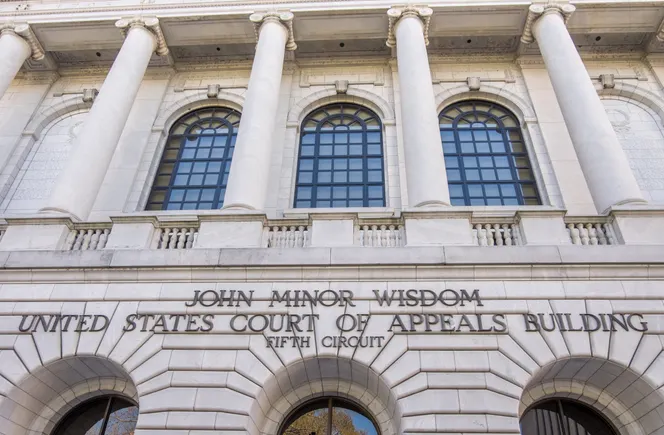
    U.S. Department of Justice attorneys asked the 5th U.S. Circuit Court of Appeals to temporarily suspend the Labor Department’s appeals in two cases challenging its 2024 Fair Labor Standards Act overtime rule, according to an April 24 court filing.

    Texas district court judges twice blocked DOL’s final rule, which increased the minimum salary threshold for overtime pay eligibility in two steps. First, a November 2024 decision sided with plaintiffs including the state of Texas and enjoined the rule nationwide. A second judgment set aside and vacated the rule in response to a lawsuit by marketing agency Flint Avenue.

    The government asked that the 5th Circuit place its appeals in abeyance “pending the agency’s reconsideration of the rule.” It said counsel for the appellees in both cases did not oppose its request.

    The Biden administration’s effort to expand overtime eligibility to millions of U.S. workers would have pushed the annual minimum threshold under the FLSA to $58,656 in 2025 with automatic, additional increases every three years beginning in July 2027. An initial increase to $43,888 per year took effect before Texas federal judges blocked it along with the rule’s other components.

    The entire policy is almost certain to be erased by the second Trump administration, according to attorneys who previously spoke to HR Dive. Prior to the Biden-era rule, DOL had last increased the overtime-pay threshold during Trump’s first administration in 2019.

    Source link

  • Final “Intellectual Affairs” column by Scott McLemee (opinion)

    Final “Intellectual Affairs” column by Scott McLemee (opinion)

    The historian and political analyst Garry Wills once described writing for magazines and newspapers as a way to continue his education while getting paid to do it. The thought made a lasting impression on me and has been a driving force since well before I started writing “Intellectual Affairs” in 2005.

    Twenty years is a sizable portion of anyone’s life; a kind of record of it exists in the form of something short of a thousand columns. I am a slow writer (my wonderful and long-suffering editors at IHE can confirm this), and quantifying the amount of time invested in each piece would probably make me feel older, even, than I look.

    The launch of the column came after a decade of covering scholarly books and debates, first as a contributing editor at Lingua Franca and then as a senior writer at The Chronicle of Higher Education. The founders of Inside Higher Ed approached me with an offer of far less money but complete freedom in what and how I wrote. The decision was easy to make. The offer seemed as close to tenure as a perpetual student could hope to get.

    The shift from writing for dead-tree publications to an online-only venue was not an obvious choice to make, but IHE’s audience and reputation grew rapidly. Getting review copies of new books was not always straightforward or quick. Confusion with other publications having similar names was also a problem. But “Intellectual Affairs” began to draw a certain amount of attention—whether enthusiastic, contemptuous or trollish—in the academic blogosphere of the day.

    The work itself, while grueling at times, was for the most part gratifying. Scholars would write to express astonishment that I’d actually read their books, and even understood them. It seemed best to regard that as a compliment.

    I tend to forget about a column as soon as it’s finished and rarely look at it again. To explain this it is impossible to improve upon Samuel Johnson, who was a columnist of sorts even though the term had not yet been coined. In 1752 he wrote,

    “He that condemns himself to compose on a stated day will often bring to his task attention dissipated, a memory embarrassed, an imagination overwhelmed, a mind distracted with anxieties, a body languishing with disease: he will labour on a barren topic till it is too late to change it; or, in the ardour of invention, diffuse his thoughts into wild exuberance, which the pressing hour of publication cannot suffer judgment to examine or reduce.”

    It’s not always that bad, but the experience he describes is familiar and typically yields the resolution to start earlier next time. But there is no next time with this column.

    I’ve revisited the digital archive in recent days to assemble the selection below. If “Intellectual Affairs” has served as the notebook of an intellectual vagabond, here are a few pages from a long, strange trip.

    Among the earlier columns was one considering the practice of annotating texts while you are reading—specifically, ones printed on paper with ink. A few people found my account of an improvised method useful. These days I mark up PDFs along much the same lines.

    Much Sturm und Drang over e-publishing was underway during the column’s first decade—not least in scholarly circles. A column from 2014 surveys some of the trends predicted, emergent and/or collapsing at the time. Another piece described efforts to rethink literary history with an eye to the prevailing energy sources at the time a text was written.

    More offbeat (and a personal favorite) was this exposé of the unspeakable secret behind Miskatonic University’s financial stability. Another piece brought together the purported psychic powers of Edgar Cayce, a.k.a. “the sleeping prophet,” with news of a technological advance permitting someone to “read” a closed book, or its first few pages, at any rate.

    Early in the last decade, the New York Public Library prepared to offload a sizable portion of its holdings to locations outside the city—freeing up space for more computer terminals. Scholars and citizens spoke up in protest. A second column was necessary to correct the record after an official spun his way through a response to the first one.

    Compulsive and compulsory technological change was at issue in this column suggesting that the Pixar film WALL-E owed a lot to the dystopian satire presented in the cultural theorist Kenneth Burke’s “Helhaven” essays. It was a bit of a stretch, sure, but the point was to honor their “margin of overlap,” as KB would say.

    Many interviews ran in “Intellectual Affairs” over the years. Two in particular stand out. The earliest was with Barbara Ehrenreich on the occasion of her 2005 book about white-collar labor. I also reviewed two of her later books, here and here.

    The other interview was with George Scialabba—a public intellectual working at a certain distance from the tenure track—on the occasion of his first book. His collected essays appeared not too long ago.

    I stand by this assessment of Cornel West’s self-portrait. It caused a ruckus for a few days, but nothing changed in its wake, which is disappointing.

    While by no means prescient, a column on the scholarly study of ignorance from 2008 still feels topical. The subject remained far too relevant 15 years later. Someone will eventually start an Institute for Applied Agnotology; it won’t have trouble finding financial backing.

    Also distressingly perennial is a column considering social-scientific analysis of American demagogues of the 1930s and ’40s. A sequel of sorts, at least in hindsight, was this look into the stagnant depths of a spree killer’s worldview. And I was at work on a column about Ku Klux Klan historiography when Charlottesville broke into the news.

    Less connected to the news cycle but likewise bloody was an item filed after attending a seldom-performed Shakespeare play in 2009. A year earlier, I looked into the far-fetched legend that The Tempest was inspired by a small island near New Bedford, Mass. (Copies of this column were available for a while in pamphlet form at the local historical society.)

    Finally—and a matter of bragging rights— there’s this piece on the first volume of a biography of the long-forgotten Hubert Harrison, a Caribbean-born African American polymath and pan-African activist from the early 20th century. On more than one occasion the author told me that nothing generated more interest in the book than the column.

    George Orwell characterized the professional book reviewer as someone “pouring his immortal spirit down the drain, half a pint at a time.” I once considered this amusing; now it makes me wince. (It’s not even a whole pint, mind you.) The rewards of non-celebrity-oriented cultural journalism tend to be meager and infrequent, but writing this column for Inside Higher Ed has provided more than my share. Thanks in particular to Scott Jaschik, Sarah Bray and Elizabeth Redden for their patience and keen eyes.

    Scott McLemee is Inside Higher Ed’s “Intellectual Affairs” columnist. He was a contributing editor at Lingua Franca magazine and a senior writer at The Chronicle of Higher Education before joining Inside Higher Ed in 2005.

    Source link