Tag: finalizes

  • ED Finalizes PSLF Rule Limiting Who Gets Forgiveness

    ED Finalizes PSLF Rule Limiting Who Gets Forgiveness

    Employees at any company the Trump administration deems as having “a substantial illegal purpose” will no longer qualify for Public Service Loan Forgiveness under a new set of regulations finalized Thursday by the Department of Education.

    The final rule is very similar to the first draft released in August—both of which have been heavily criticized. The policy change, in the works for months, stemmed from an executive order issued in March. Lawsuits challenging the new rule, which takes effect July 1 of next year, are expected as soon as next week.

    “My first reaction when reading the rule was that we will see them in court,” said Brian Galle, a law professor at the University of California, Berkeley, who submitted a comment along with at least a dozen other scholars of tax law.

    Collectively, the commenters called on department officials to conduct an extensive review and study over the rule, none of which were completed. So now, Galle said, the department will face the consequences.

    “I know that firsthand,” he explained. “A rule that I wrote for the Securities and Exchange Commission was sent back by the Fifth Circuit because there was one statistical study that the agency didn’t do.”

    Under the new rule, illegal activities will include: aiding and abetting violations of immigration or civil rights law, supporting terrorism, providing gender-affirming care, or “trafficking” children from one state to another for purposes of emancipation. The education secretary will decide whether an employer violates the rule based on a “preponderance of the evidence.”

    Many Democrats, industry leaders and student borrower advocates who have spoken out against the rule say it is vague and could allow Trump and future presidents to abuse executive power, essentially choosing which organizations qualify based on ideological preferences.

    Rep. Bobby Scott, a Virginia Democrat and ranking member of the House Education and Workforce Committee, told Inside Higher Ed that the rule “opens the door for all kinds of mischief.”

    “If you’re on the Trump side of the partisan political agenda on an issue, you get loan forgiveness. If you’re on the other side of the controversy, you don’t,” he explained. “A group promoting civil rights may be in jeopardy.”

    The National Council of Nonprofits went as far as declaring the new rule “unlawful” and saying it sets “a troubling precedent.”

    “Federal law makes clear that eligibility under PSLF applies to all charitable nonprofit organizations,” the organization wrote. “The Education Department does not have the authority to change eligibility. By unlawfully excluding certain nonprofits, the final rule opens the door to government overreach and abuse.”

    The Trump administration and fellow Republicans, however, say it has nothing to do with partisan politics and instead is focused on terminating unlawful actions that by their “very nature run contrary to the public good.”

    “As the name suggests, Public Service Loan Forgiveness was intended to help meet workforce needs for employers who serve the public good. Unfortunately, the open-ended nature of PSLF has forced taxpayers—many of whom never went to college, to foot the bill for employees at radical organizations that violate state and federal laws,” Rep. Tim Walberg, a Michigan Republican and chair of the Education and Workforce Committee, said in his statement about the rule.

    Education Under Secretary Nicholas Kent also chimed in, saying in a statement that “the Trump Administration is refocusing the PSLF program to ensure federal benefits go to our nation’s teachers, first responders, and civil servants who tirelessly serve their communities.”

    In addition to defining what activities are illegal, the rule outlines types of evidence that the secretary may consider in the decision process, establishes an appeals process and states that the department must provide “prompt notification” to both borrowers and employers when their eligibility is at risk. It also notes that, in general, employers with “minor compliance issues” and “no concerted practice of illegal activity” will be safe.

    The department estimates that fewer than 10 employers will be affected each year. But critics say that estimate is based on little research and worry the effect will be much broader.

    The National Council of Nonprofits said ultimately the rule could harm millions, as countless communities depend on their local nonprofits. By putting the nonprofit workforce at risk, they added, the rule jeopardizes nonprofits’ ability to meet those needs and provide essential services.

    A collection of half a dozen physicians’ groups echoed that point, arguing that if hospitals and the medical professionals they employ lose access to PSLF, it could jeopardize both physicians’ financial stability and patients’ access to care.

    “PSLF is not just a loan program; it is a lifeline that allows medical graduates to choose primary care or psychiatry careers in high-need areas without being weighed down by insurmountable debt,” the group wrote in a news release. “We strongly urge the Department of Education to preserve physicians’ access to the PSLF program and recognize that a healthy America depends on a strong physician workforce.”

    Galle from Berkeley believes that this lack of awareness regarding the scope of impact will become evident in court. He said that such a lack of evaluation, along with what he sees as the department’s executive overreach in issuing the rule, will give any plaintiffs a strong case in court.

    “The Supreme Court in the last eight years has really been at pains to say that Congress doesn’t give agencies … the authority to be way outside their lane,” he said. “And you couldn’t possibly be further outside your lane and your expertise than ED is with this rule.”

    Shortly after the department announced the final rule, multiple legal groups said they intend to sue over it.

    Democracy Forward, which has led a number of lawsuits against the Trump administration this year, and Protect Borrowers, a student loan advocacy group, described the new policy as “a craven attempt to usurp the legislature’s authority in an unconstitutional power grab.”

    Student Defense, a policy, litigation and advocacy organization, accused the president of “playing political football with the financial well-being of people who have dedicated their lives to public service.”

    All three said a lawsuit can be expected in a matter of days.

    “Congress created the Public Service Loan Forgiveness program because it is important for our democracy that we support the people who do the hard work to serve our communities,” Democracy Forward wrote in its release. “In our democracy, the president does not have the authority to overrule Congress.”

    Galle said the key question in the legal fight will be whether the Supreme Court will enforce those checks and balances.

    “Under any judge or justice who was applying the law as it is today, I don’t think this rule would have any hope of being upheld,” he said. “The only room for doubt is that it seems like the Supreme Court is willing to ignore most of what current law is.”

    Source link

  • Florida Finalizes Interim President Hire

    Florida Finalizes Interim President Hire

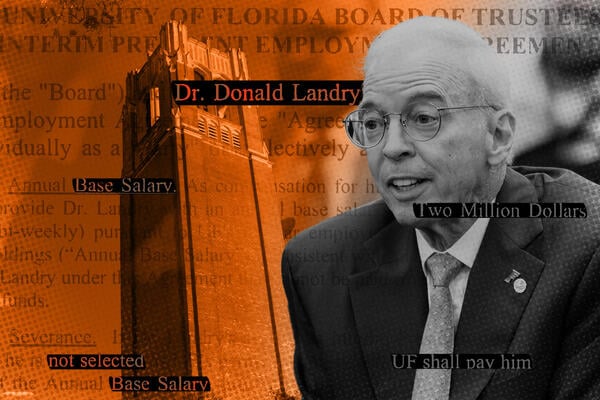
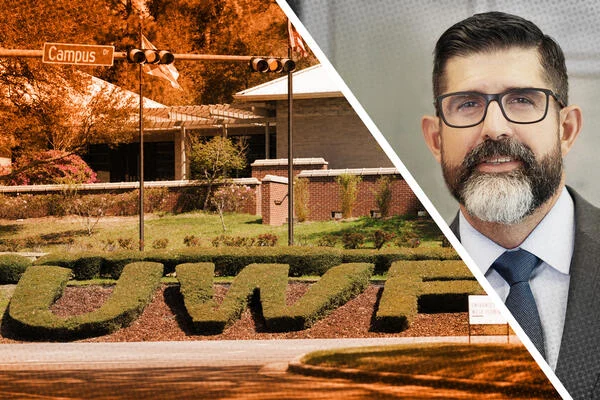
    The Florida Board of Governors unanimously approved Donald Landry on Thursday as interim president of the University of Florida, three months after it rejected Santa Ono for the job in a split vote.

    Landry, who has a lengthy academic résumé but has never been a college president, will now be among the top-paid campus leaders in the country, with a base salary of $2 million and the potential to earn an additional $500,000 in bonuses. But the one-year contract also includes an unusual caveat: Landry will earn $2 million in severance pay if he is not selected for the permanent job.

    Such a guarantee is an anomaly for an interim president, one expert said.

    The Interview

    Landry’s interview with the Board of Governors Thursday was much less contentious than Ono’s.

    The board grilled Ono, who resigned as president of the University of Michigan to pursue the top job at UF, for almost three hours, mostly over his past support of diversity, equity and inclusion initiatives, which he sought to distance himself from ahead of the interview.

    But on Thursday, it was clear from the outset that board members liked what they saw in Landry.

    Prior to the vote, University of Florida Board of Trustees chair Mori Hosseini ticked off Landry’s accomplishments, noting he is a celebrated physician and academic. Hosseini also highlighted his various roles, such as chair emeritus of the Department of Medicine at Columbia University and president of the American Academy of Sciences and Letters, as well as his prior experience on the President’s Council on Bioethics during the George W. Bush administration, among other achievements.

    “We are excited to see what UF can accomplish under his leadership,” Hosseini told the board.

    The statewide Board of Governors also seemed excited about the candidate, approving his hire after an interview of around 30 minutes, which included more complimentary remarks from members praising Landry for his leadership in the health field and for filing an amicus brief supporting Florida and Texas officials in a Supreme Court case last year. In that brief, Landry argued against content moderation efforts on social media platforms, which he cast as censoring alternative perspectives and “suppressing dissent on a host of scientific questions.”

    Paul Renner, a former Republican lawmaker and current gubernatorial candidate, told Landry, “In addition to your remarkable academic record, it strikes me as unique that I don’t know anyone else in academia that’s filed an amicus brief to the Supreme Court in defense of free speech.”

    Renner also asked how Landry would defend free speech at UF.

    Landry answered that beyond academic freedom and free speech, there “is a right to teach and a right to learn.” He said he would prevent disruptions to “the teaching functions of the university” by emphasizing time, place and manner restrictions “as significant as necessary but as small as possible” to balance free speech with UF’s mission. Landry also emphasized the importance of inculcating a culture of civility and the need for UF students and faculty to buy in.

    At another point in the interview, Landry expressed concerns about “ideological pressure” to “not speak to certain topics,” specifically referring to climate change. He argued that climate activism has suppressed the free discussion of science, which Landry said “is not settled in that area.”

    The Contract

    One expert noted that several parts of Landry’s contract stand out as unusual—starting with severance pay if he’s denied the permanent job in a year.

    “I’ve never seen a guarantee of any type given to an interim,” said Judith Wilde, a research professor at George Mason University who studies presidential searches and contracts.

    The salary itself is also quite substantial, especially for an interim president, she said. Ono was set to make around $3 million a year, which Wilde suspects the next permanent president will also get.

    “Given the way that Santo Ono was treated in Florida, they may have been fearful that it would be difficult to get anybody to come. So they’ve advertised, in a sense, that they are still willing to give a big salary,” Wilde said. “Whoever steps into that job will probably get at least $3 million.”

    Wilde also said that the key duties and responsibilities listed in Landry’s contract are highly prescriptive compared to other contracts, which don’t spell out specifics to the same level of detail. Among other duties, Landry is directed to appoint a permanent provost, fill interim dean positions and other vacant leadership roles, and “accelerate efforts” to encourage “Jewish students who feel threatened or harassed at other institutions to apply for admission.”

    He is also instructed to “work with Florida and Federal [Department of Government Efficiency] to eliminate waste, fraud, and abuse”—a provision that has appeared in other presidential contracts. (While Ono’s contract also included that provision, it was less prescriptive over all.)

    Several of the key duties and responsibilities, including certain hiring decisions, require the approval of UF’s board chair, which Wilde said would grant significant power to Hosseini.

    “In essence, it makes him a co-president,” Wilde said.

    Source link

  • Senate vote finalizes Linda McMahon as education secretary

    Senate vote finalizes Linda McMahon as education secretary

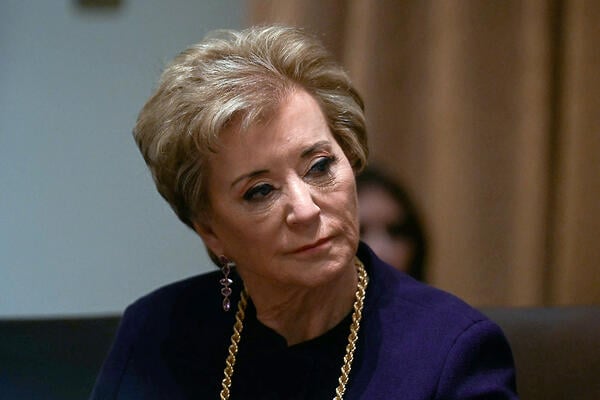
    Linda McMahon was narrowly confirmed along party lines as President Trump’s secretary of education in a 51-to-45 Senate vote late Monday afternoon and sworn in shortly after at the Department of Education building.

    All eyes are now on the White House as educators, policy experts and advocates anxiously wait to see if Trump will sign a controversial but highly anticipated executive order to abolish the very department McMahon has been confirmed to lead.

    The president and his allies have promoted the idea of dismantling the 45-year-old agency since the early days of his campaign for a second term, saying the department has grown too big and interferes in matters best left to local and state authorities.

    But the idea isn’t entirely new, nor would it be easy to implement. It would require legislative support, as the department’s existence is written into statute. Shuttering it would require a majority vote in both houses of Congress.

    “We can expect there to be a bit of a panic when the order comes out,” Emmanual Guillory, senior director of government relations at the American Council on Education, told Inside Higher Ed.

    It remains unclear to observers what mechanisms the Trump administration would use to close the department, however.

    “This will all depend on what dismantling the department truly means,” Guillory said. “I believe that the executive order would be somewhat broad, like we’ve seen [in the case of the diversity, equity and inclusion orders], and it will give the department the opportunity to refine the details.”

    Still, Trump has continued to promote the concept, and red states across the country have backed it. Chatter about the executive order began circling just days after he took office in January, and the plans were confirmed by multiple news sources in early February, though specifics were still unclear.

    Since the plans were leaked, Trump himself has publicly confirmed his intention to dismantle the department, although he did not disclose specific details on how he would do so.

    Guillory believes that much like when Republicans have tried to get rid of the department in the past, they will lack the congressional votes needed to officially do so. But Trump could keep the skeleton of the department and move its core functions elsewhere, he said.

    “Our thinking, because we’ve seen this before, is that likely a lot of the functionality of the department would get placed at other agencies, but we would be curious as to what functions would be terminated entirely,” he said. “That would cause the most concern for our members … Will those things simply be moved to another agency, or will some of those things not?”

    There are certain functions that are protected by the Higher Education Act of 1965, Guillory said. “The department legally would not necessarily be able to just terminate student aid programs, for example.” But he still worries the transition of oversight from one department to another may not be seamless.

    Shortly before the vote began on Monday, the Senate minority leader, Chuck Schumer of New York, made the Democrats’ stance on McMahon’s nomination clear.

    “Before colleagues vote on Linda McMahon’s nomination for secretary of education, they should remember a vote for Mrs. McMahon is a vote for draconian cuts to education … That’s why I am so proud that every Democrat will vote no,” he said.

    Other democratic lawmakers warned during floor comments on Thursday that McMahon’s confirmation, and the major department-level changes she’s backed, could risk the future of the department.

    Senator Gary Peters of Michigan said the country needs a secretary of education “who values and respects public education.”

    “Instead of working to protect funding,” he said, “she’s blatantly supported efforts to dismantle our education system.”

    For more background on what senators have said about McMahon, check out Inside Higher Ed’s live blog from her confirmation hearing, or read the five key takeaways.

    Senator Alex Padilla of California noted the cuts that have already been made to more than 100 departmental research contracts and countless nonpartisan career staff members.

    “They’re making it clear that this is just the beginning,” he said. “We could talk about Linda McMahon’s qualifications, or frankly lack thereof, but I’m not shocked, because President Trump isn’t looking for someone with the background or commitment to public education in America. He’s looking for someone to destroy it.”

    Although no Republicans commented Thursday, they voted unanimously to confirm McMahon in Monday’s vote (Republican senators Shelley Moore Capito of West Virginia and Cynthia Lummis of Wyoming were not present for the vote. Two Democrats were also absent). The majority leader, Senator John Thune of South Dakota, spoke in support of McMahon before the final confirmation.

    “Mrs. McMahon is an accomplished businesswoman and public servant,” he said. “I’m glad that Mrs. McMahon plans to work in a way that empowers those closest to the student, because they are in the best position to do what’s right for that student … I look forward to working with Mrs. McMahon to limit bureaucracy, empower state governments and let good teachers do what they’re best at.”

    Top Agenda Items

    Guillory expects McMahon to pick up accreditation policies as one of the first issues up for discussion.

    He also is expecting the new secretary to prioritize rethinking and potentially amending the financial value transparency and gainful-employment rule, a policy initiated by the Biden administration to better hold higher ed institutions accountable for students’ outcomes. A lawsuit was filed against the regulation in 2023, but federal judgment has been put on pause to allow the new administration’s Education Department to determine its position on the policy.

    It still remains unclear whether Trump will try to protect the gainful-employment rule or repeal it and drop the case, but Guillory has been encouraged by the line of communication between the department and higher ed leaders on the topic.

    “They’ve been really good about listening to and hearing from our members directly on some of the issues that they’ve experienced while they were reporting [financial transparency data] and they are really trying to get feedback on how can we make this better,” he said.

    Other topics of focus for McMahon will likely include expanded details on Trump’s enforcement of Title IX; his diversity, equity and inclusion orders; and the freeze of applications to income-driven repayment plans for student loans, Guillory said.

    Source link

  • Biden administration finalizes distance ed, TRIO rules

    Biden administration finalizes distance ed, TRIO rules

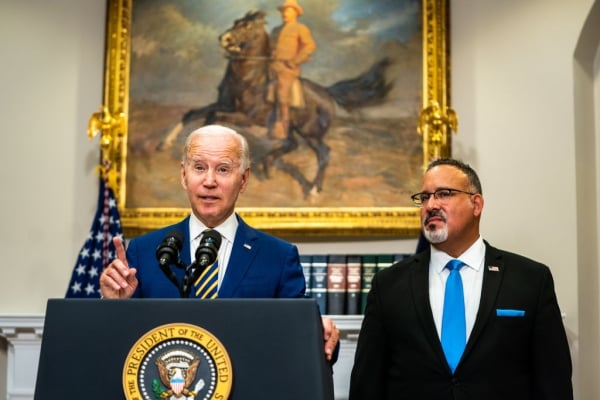
    The Biden administration’s regulations changing how colleges are held accountable and adding new requirements for institutions to access federal financial aid are now in place, though legal challenges loom. 

    Demetrius Freeman/The Washington Post/Getty Images

    Colleges will have to submit to the federal government new data on their distance education programs under a batch of new rules the Biden administration finalized Monday.

    The rules, which will take effect July 1, 2026, will likely be the president’s last package of new regulations for colleges and universities before Trump takes office Jan. 20.

    The new regulations carry out Biden’s plan to increase federal oversight of online programs, but the final version doesn’t go as far as the president initially intended After receiving significant pushback from online education lobbyists, the Education Department conceded, backing off a plan to  disallow asynchronous options for clock-hour courses or require colleges to take attendance in online classes.

    The package does, however, still include rules that require colleges to report more data on enrollment in distance education classes, which include those offered online or via correspondence. Higher ed institutions won’t have to begin submitting the data until July 1, 2027.

    “Online learning can reach more students and sometimes at a lower cost to students, but what we know about the outcomes of online education compared to traditional in-person instruction is woefully inadequate,” Under Secretary James Kvaal said in the release. “The new reporting in this final rule will help the department and the public better assess student outcomes at online programs and help students make informed choices.”

    The final rule also included technical changes to federal college prep programs known as TRIO. But the department decided not to move forward with a plan to open eligibility to some TRIO programs to undocumented students—a long-sought goal of some TRIO directors and advocates, as well as higher education associations. 

    Distance Education

    But one of the most controversial parts of the rule for colleges and universities was whether Biden would decide to end any asynchronous options for students in online clock-hour programs, which are typically short-term workforce training programs that lead to a certificate.

    A Trump-era rule allowed asynchronous learning activities—such as watching a prerecorded video—to count toward the required number of credits in short-term clock-hour programs. But the department said in its proposal that because of the hand-on nature of many clock-hour programs, the change often results in a “substandard education” that “puts students and taxpayers at risk.” 

    Hundreds of professors and higher education groups disagreed. Some, particularly those representing for-profit programs, argued in public comments that the proposal exceeded the department’s authority and would burden institutions. Others said the new rules reflected an antiquated mindset about college modality, arguing that disallowing asynchronous options could limit access for students who benefit from the flexibility that online education provides.

    While the department decided not to end asynchronous distance ed programs, the agency intends to keep a close eye on the courses. 

    “The department refined these final rules based upon extensive public comment on a notice of proposed rulemaking published over the summer,” department officials said in a news release. “However, we remind institutions that asynchronous clock hours cannot be used for homework and that there must be robust verification of regular and substantive interaction with an instructor.”  

    No Expanded TRIO

    Although the decision not to expand eligibility for TRIO has fewer implications for colleges, the move is a blow for the TRIO directors and immigration equity advocates who have been working for years to open up the program.

    Miriam Feldblum, executive director of the Presidents’ Alliance on Higher Education and Immigration, told Inside Higher Ed that nearly 100,000 undocumented students graduate from high school each year, many of whom could benefit from TRIO services. 

    But Republicans opposed the idea. Six GOP members of Congress, including Virginia Foxx, a North Carolinian and former chair of the House education committee, blasted the concept in a letter to Secretary Miguel Cardona in August.

    “The proposed expansion is a blatant attempt to provide additional taxpayer-funded services to those not seeking citizenship in the name of reducing ‘burden.’ The department’s proposed expansion will stretch funding thin and risk those currently eligible for TRIO,” they wrote.

    Some college administrators and TRIO directors in red states are worried about the potential political backlash Biden’s new regulation could cause for their programs.

    “The fighter in me thinks that this is a tough time to go to battle and have an unforced error or a target on our backs and [on] TRIO, given the contentious nature of immigration policy right now,” Geoffrey Garner, a TRIO program director from Oregon, said in at January 2024 advisory committee meeting. “We just think right now is not the best time for this proposal, as much as it breaks my heart to say that out loud.”

    That advisory committee ended up backing the changes to expand some TRIO programs to undocumented students.

    Education Department officials said its decision wasn’t due to political tensions. Rather, they said the proposal “was too narrow … in scope of additional populations to be served.”

    Under the department’s proposed rule, high school students who aren’t citizens or permanent residents could qualify for Upward Bound, Talent Search and Educational Opportunity Centers but not Student Support Services or the McNair Scholars Program.

    “An expansion of student eligibility under only certain TRIO programs would create confusion, as many grantees administer grants under more than one TRIO program,” officials wrote in the final rule. “Eligibility for only certain TRIO programs would increase administrative burden by requiring grantees to deny similarly situated noncitizens from participating under certain TRIO programs, but not others.”

    Source link

  • EEOC Finalizes Guidance on Workplace Harassment – CUPA-HR

    EEOC Finalizes Guidance on Workplace Harassment – CUPA-HR

    by CUPA-HR | May 8, 2024

    On April 29, the U.S. Equal Employment Opportunity Commission issued final guidance on workplace harassment and discrimination titled “Enforcement Guidance on Harassment in the Workplace.” The guidance clarifies existing employer obligations to address workplace discrimination and aims to assist employers in recognizing, managing and preventing in-person and online workplace harassment.

    Background

    The EEOC administers and enforces Equal Employment Opportunity law to protect workers against workplace discrimination. As such, the EEOC issues guidance to help employers and employees understand their obligations and rights under EEO law to a workplace free from discrimination. In October 2023, the EEOC issued its proposed guidance on harassment in the workplace, in which they provided an overview and examples of situations that would constitute workplace harassment. The EEOC received over 38,000 comments from the public in response to the proposed guidance, which they analyzed to develop the final guidance summarized below.

    Summary of Final Guidance

    The EEOC’s final guidance aligns with and expands upon the proposed guidance and revises previous EEOC workplace harassment and discrimination guidance to address significant legal developments in recent years. Specifically, the guidance includes new overviews of workplace protections against harassment based on sexual orientation and gender identity, which the 2020 Supreme Court Bostock v. Clayton County ruling established as precedent. The guidance also addresses pregnancy, childbirth and related medical conditions as protected characteristics under the scope of “sex.” Though pregnancy has previously been protected against workplace harassment under laws like the Pregnancy Discrimination Act, recent laws like the Pregnant Workers Fairness Act and its implementing regulations have strengthened the protections afforded to pregnant workers, necessitating the need for the EEOC to update its guidance.

    In addition to the expanded scope of sex, the EEOC also includes new guidance on potential challenges relating to social media and the workplace. This includes conduct occurring in a non-work-related virtual setting (such as social media platforms or private messaging systems on personal computers or phones) that could impact the workplace. In the guidance, the EEOC provides scenarios in which certain messages shared via private messages on phones or posts shared on social media platforms about employees could create hostile work environments, triggering the requirement for employers to correct the situation.

    In total, the guidance provides 77 examples to explain harassment and discrimination in the workplace, hostile work environments, employer liability and obligations to correct workplace harassment and discrimination, and systemic harassment. As the EEOC noted in the proposed rule, the guidance and its examples “do not have the force and effect of law and are not meant to bind the public in any way.” Instead, the guidance is “intended only to provide clarity to the public regarding existing requirements under the law or agency policies.”

    In addition to the guidance, the EEOC also published educational materials for employers and employees seeking direction and support on harassment prevention strategies, including a summary of key provisions, an FAQ for employees, and a fact sheet for small businesses.

    CUPA-HR will keep members apprised of further EEOC guidance on discrimination and harassment in the workplace.


    Source link