
Tag: financing

  • Private New York colleges get $50M in state financing for capital projects

    Private New York colleges get $50M in state financing for capital projects

    This audio is auto-generated. Please let us know if you have feedback.

    Dive Brief:

    • New York is contributing $49 million in capital grants to 35 of the state’s private nonprofit colleges to help fund upgrades to facilities, build new labs and research spaces, and invest in new technology and equipment. 
    • The state’s Higher Education Capital Matching Grant Program — led by a three-person board composed of political appointees — last week awarded grants ranging from tens of thousands of dollars to $5 million, New York Gov. Kathy Hochul announced on Friday.
    • Under the 20-year-old program, eligible colleges must invest $3 of their own money for every $1 of public funds. The next round of applications for projects is set to open in mid-December.

    Dive Insight:

    Since 2005, HECap has directed $369.8 million in state funding toward over 300 projects at private nonprofit colleges in New York, the governor’s office said. 

    The program makes the state a financial partner for private colleges, many of which were established well before the 1948 creation of the State University of New York system. 

    After a more than yearlong application process, the state’s HECap Board approved the latest round of projects at an Oct. 20 meeting. Colleges can use the funds to design, acquire, build, rebuild, renovate or equip buildings. Selected projects are meant to support a college’s academic offerings or student life, as well as to drive economic development in the state.

    These projects stand for our ongoing commitment to keeping New York at the forefront of education and economic opportunity,” Hochul said in a Friday statement

    The current round of combined public and institutional funds represents a $195 million capital investment in independent higher education facilities, according to Hochul’s office. 

    The grants cover a wide range of amounts to nearly three dozen institutions, including:

    • $1.8 million to Albert Einstein College of Medicine for renovations to a commons area and recreation center. 
    • $5 million to Clarkson University for the first phase of renovations to an engineering and science complex.
    • $69,800 to Maria College to purchase and install technological equipment. 
    • $1.8 million to Cornell University to build a large classroom space in a library.
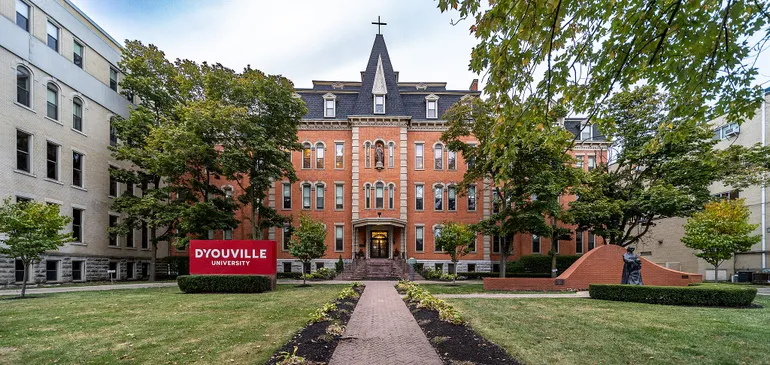
    • $5 million to D’Youville University for renovations to a facility supporting its osteopathic medicine college. 
    • $5 million to Hobart and William Smith Colleges for construction of a new science building and renovation of three adjacent facilities.
    • $1.8 million to the Rochester Institute of Technology to upgrade its electrical infrastructure. 
    • $1.6 million to Sarah Lawrence College to create an experiential learning center.

    New York’s continued public financing of capital projects comes while colleges across the country wrestle with sizable backlogs of deferred maintenance and facilities needs, many left over from the pandemic era as institutions put off those investments.

    Last year, analysts with Moody’s Investor Service estimated a “hidden liability” of deferred maintenance needs at colleges potentially amounting to nearly $1 trillion — and just among the roughly 500 institutions Moody’s rated at the time. 

    Rising costs, high interest rates and financial pressures can make those needs all the more difficult to meet.

    Few have the necessary resources and credit strength to sustain the higher amounts needed to tackle the full extent of their infrastructure needs,” Moody’s analysts said in their report. Colleges that can’t afford upgrades face recruitment risks in enrollment and staff talent as buildings continue to deteriorate. 

    The backlog of projects is so large that capital spending increases on existing facilities have served only to slow the growth of unmet need, according to a report earlier this year from the building intelligence firm Gordian.
    Source link

  • Biden administration opened ‘new chapter’ on college financing, Kvaal says

    Biden administration opened ‘new chapter’ on college financing, Kvaal says

    This audio is auto-generated. Please let us know if you have feedback.

    James Kvaal is the outgoing U.S. under secretary of education. His tenure ends with the inauguration of Donald Trump on Jan. 20.

    After decades of an accelerating student debt crisis, Joe Biden is the first president to use every available tool to alleviate the burden of borrowing for college. He will be remembered for turning the page on the worst consequences of the country’s failed experiment with debt-financed college and beginning a new chapter on how to pay for higher education.

    For the past two generations, increasing reliance on student debt seemed like an easy solution to paying for college. Loan terms were set at no cost to the government, and students were expected to easily earn enough to pay the loans back following graduation.

    But it didn’t work out that way. One in three borrowers don’t graduate, leaving them with debt but no degree. Because interest piles up so fast, more than 20 million people owe more than they borrowed. Before the pandemic, more than a million people default on their college loans every year.

    Some critics say that student debt affects borrowers of all income levels equally. But hair stylists, massage therapists and other workers earning modest wages often went into debt to get the training, certificates or degrees needed for their jobs. And debt is not just a problem for the roughly 43 million people with student loans. It hurts their families and communities because it stands in the way of economic security, homeownership and potential new businesses.

    .

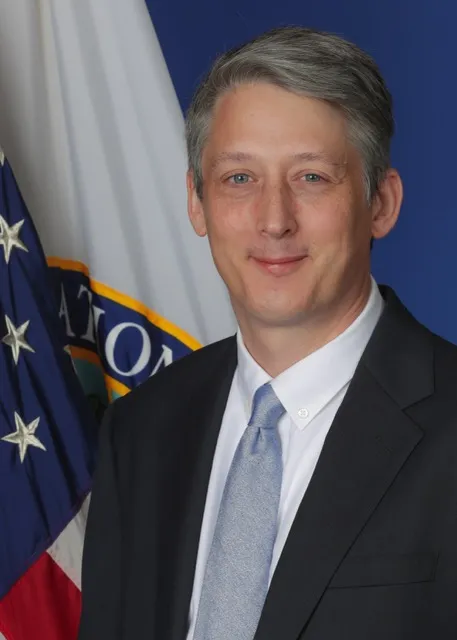
    James Kvaal, the U.S. under secretary of education under President Joe Biden

    Permission granted by U.S. Department of Education


    Others say we should eliminate student debt altogether. But until Congress and states invest in lower tuitions and larger scholarships — as President Biden has proposed — loans will remain essential for many low-income and middle-class students.

    The COVID-19 pandemic exacerbated these festering problems. Nearly 3 of every 5 students lacked adequate access to food or housing during the pandemic, putting them at risk of dropping out. And most borrowers of modest means expected they couldn’t afford loan payments.

    By pausing payments and interest on federal loans, the administration saved the average borrower in repayment more than $3,800 and helped them persevere through the national emergency. President Biden also fought partisan opponents in court for up to $20,000 in one-time relief for borrowers — all the way to the U.S. Supreme Court.

    While the pause gave borrowers a break, the U.S. Department of Education worked on long-term solutions.

    First, we focused on people who were owed forgiveness but were blocked by bureaucracy.

    For example, only 7,000 people had ever received Public Service Loan Forgiveness from the program’s creation in 2007 to when President Biden took office in 2021. Many public servants planned their careers around this benefit only to learn too late that they had the wrong type of loan or had spent years in the wrong repayment plan. Now, more than 1 million borrowers have received the relief they earned.

    We also kept promises to borrowers with permanent disabilities and those who were cheated by colleges. In total, we have approved more than 5 million people for loan relief. Many more borrowers are set to benefit in the years to come.

    I’ve heard countless stories about what this life-changing relief has meant for Americans. They say they are finally able to plan for retirement, pay off medical expenses, or even have more children.

    At the same time, not all of our efforts succeeded. Some 40 million borrowers and their families continue to feel the weight of both the Supreme Court decision to deny one-time relief and litigation hindering our ability to help borrowers experiencing hardship.

    Second, to help people with low incomes and high debts, the Biden administration created Saving on a Valuable Education, or SAVE — an income-driven repayment plan that could cut monthly payments in half for eligible borrowers. People making payments would finally see their balances going down, instead of up due to ballooning interest.

    SAVE served almost 8 million people before partisan lawsuits held it up, and it’s now under judicial review. The SAVE plan is similar to other repayment plans the department has created over the past 30 years, and we continue to defend it in court.

    Source link