Faculty writing has never been more crucial. In an era of heightened competition for grants, promotion pressures and demands for public engagement, writing is the vehicle through which faculty share their expertise, secure funding and advance their careers. Research shows that successful academic writers aren’t necessarily better writers—they’re better-supported writers. They have systems, communities and resources that support their productivity and help sustain engagement with writing as their needs change across their roles, responsibilities and careers.
Faculty writers are seeking support for their writing. Where do they go when they need it? Many are unsure.
Support for faculty writing on campus is often decentralized or may vary from year to year, making it difficult to find or accessible only to those with the advantage of an informed mentor. Support for faculty writing might be offered in any number of campus locations: centers for teaching and learning, provosts’ offices, offices for faculty advancement, writing centers or academic support centers, research centers for grant writing, graduate student support centers, or individual departments. Writing support may be outsourced through institutional memberships to organizations such as the NCFDD or the Textbook and Academic Authors Association, which offers webinars, writing programs and templates for downloading.
Department chairs and campus administrators may want to support faculty writers but aren’t sure where to begin. Or if there is a problem, it’s considered an individual faculty problem and not one that calls for a campus response.
Perhaps there’s an underlying assumption that faculty should already know how to write and shouldn’t need support to meet basic job expectations, like publishing a certain number of articles before tenure. Establishing a faculty writing space or central resource hub might be seen as suggesting they need remedial help—much like the stigma writing centers face as places where “bad” students are sent.
Yet today’s faculty are expected to write across more genres than ever before: grant proposals, peer-reviewed articles, public-facing pieces, social media content and policy briefs. Each involves different skills and audiences. The faculty member who can craft a compelling journal article may struggle with a foundation proposal or an op-ed. Writing support isn’t remedial—it’s strategic professional development.
The current moment also presents unique challenges. Post-pandemic isolation has disrupted the informal networks that previously supported faculty writing. Budget constraints mean fewer resources for individual faculty development, making shared writing support more essential. New faculty arrive on campus without the professional development resources or mentor networks that previous generations took for granted, while midcareer faculty face mounting pressure to produce more with less support.
We can do better in our support of faculty writers. If you want to help, here are ways to do better, or to get started.
Gather resources. Even though writing support might be available, it may not be widely known, or up-to-date, and it may be dispersed across many different units or offices on campus. Create a centralized web page gathering information for all campus resources for faculty writing. The entity that hosts the site will be different for each campus. For some, it’s the provost’s office. For others, it’s a writing or teaching center. List the resources—where faculty can go for support—and help faculty navigate the resources by providing descriptions (not just links), categories (i.e., “find a writing group”) and contact information. Collaborate with faculty to curate a list of recommended books, podcasts and writing spaces they have found helpful.
Make faculty writing visible. What if faculty writing support were as central to campus as student writing support? A teaching center could include a workshop on writing about teaching; the provost’s office or campus research center could offer workshops on developing institutional review board protocols. Consider reserving dedicated spaces for faculty to gather and write (such as a faculty writing room) or schedule specific writing times/days in a university writing center or campus coffee shop. Give them a name (Writing Wednesdays, Motivating Mondays). Writers can plan for these meet-ups and write in the company of others, in public rather than isolated in individual offices.
Organize a virtual workshop watch session and follow-up discussions. Gather faculty for a workshop watch session. After the workshop, help participants continue to discuss what they learned and how they’ll apply it through group check-ins or follow-up meetings. Try NCFDD’s core curriculum webinar “Every Semester Needs a Plan,” The Professor Is In’s “Art of Productivity,” or join a London Writers’ Salon Writers’ Hour, and talk about everyone’s work after the writing session.
Identify a faculty cohort to support for a year. Supporting all faculty writers with diluted support is often ineffective. Instead, focus on associate professors one year, new faculty writers the next and clinical faculty writers the next. Help them connect and be resources for each other throughout the year through writing retreats and writing groups. Build a campus writing community one cohort at a time.
Collaborate with campus partners. Combine campus resources to support writers. Could the library offer a meeting space? Two departments co-convene a writing group? Campus units could take turns hosting a daylong writing space once a month, helping writers learn about different spaces and writers across campus.
Start a writing support library. This can be virtual or in a central location on campus. Partner with the library to keep track of which books are in circulation or in high demand. Consider developing a workshop or writing group around in-demand books.
Ask faculty what they need and listen and respond. If we don’t ask faculty what they need, we won’t know. What some faculty need now may be different than what they needed last fall.
Support connectors. Every campus has them—the person or department that is a go-to for troubleshooting faculty questions and connecting them to writing resources. Amplify their reach, and support the faculty relationships and networks they’ve already established. Support the person or people who will curate that library, update the resource list, collaborate with campus partners and serve as a faculty writer point of contact.
What’s next? Start by mapping what already exists on your campus. Create one central hub where faculty can find all writing-related resources. Make faculty writing as visible and supported as student writing. It’s OK to start small: Try one of these strategies we’ve shared and notice what happens. And remember—supporting faculty writers isn’t about fixing deficiencies. It’s about recognizing that writing is central to faculty success and deserves the same institutional attention we give to other essential job functions. Faculty are an invaluable resource in our campus ecosystems. Let’s lower the barrier to them finding the support they need to write well. When they thrive, so do our institutions.
Jennifer Ahern-Dodson is an associate professor of the practice in writing studies at Duke University, where she directs the Faculty Write Program.
Christine Tulley is a professor of English at the University of Findlay and president of Defend, Publish & Lead, a faculty development organization.
Educators tap two tech firms to create NYC Childcare Navigator, a free platform that cuts through the chaos.
A one-stop shop
Frustrated by the maze of agencies, websites, and applications families face to find childcare and possible financial support, New York City teachers said, “Enough!”
The United Federation of Teachers, the union that represents more than 200,000 educators and professionals in New York City, teamed up with two tech firms to build a better approach: NYC Childcare Navigator.
Navigator is a platform that connects New York City families to upwards of 12,000 childcare options across the five boroughs. It offers instant eligibility checks for money-saving programs, step-by-step application support, and the most comprehensive directory of childcare providers in the city — all in one free, easy-to-use website.
The union created the tool as a benefit for its own members, but it was so successful that the union opened it up to all New York City residents in October.
“We couldn’t gatekeep something that we knew so many New York City families needed,” said Michael Mulgrew, president of the United Federation of Teachers.
Centralizing tailored childcare
The union partnered with Mirza, a city-based tech firm that builds platforms to connect low-wage workers with local, state, and federal benefits, including for childcare.
“We wanted to get meaningful benefits to parents, but there wasn’t a single place that would allow a parent to see all the options available. That felt like a big missing piece. But it also pointed toward a solution,” said Siran Cao, CEO and Co-Founder of Mirza, who said she was inspired by how her own mother navigated a new country and the impact that a few well-timed bits of financial support had on her own family.
The union then introduced Upfront, a software company that consolidates multiple sources of childcare providers into a single, centralized database. The result: parents using the NYC Childcare Navigator can see every licensed program in NYC (center, home, and school-based), searchable by zip code, child’s age, availability, languages spoken, special needs, and many other filters. For the first time, childcare providers can claim a dedicated page to share current information about their specific childcare services.
“It’s everything in a single location instead of having to make dozens of calls and scour multiple, incomplete websites,” said Levin-Robinson, who said she was motivated by how challenging it was to find care for her own children.
As Thu Thu Htet, “T”, was nearing graduation at her high school in Burma, she knew she wanted to go abroad to study engineering. She wanted to study at the Rochester Institute of Technology in New York State, but didn’t want to spend tens of thousands of dollars a year in tuition, since international students don’t qualify for federal aid.
Instead, she decided to start her higher education journey at Monroe Community College, also in Rochester, where tuition is cheaper. T, now in her second semester, has made friends with dozens of other international students at MCC, who have helped her feel less lonely being so far away from family.
“There are times where I don’t feel like I fit in. Or I feel alone sometimes. The most important thing is the friends that you have,” she said.
International student enrolments have surged at US community colleges ever since the pandemic, including this fall. As community colleges host more international students, administrators are looking for ways to make them feel welcome on campuses where most students are local commuters.
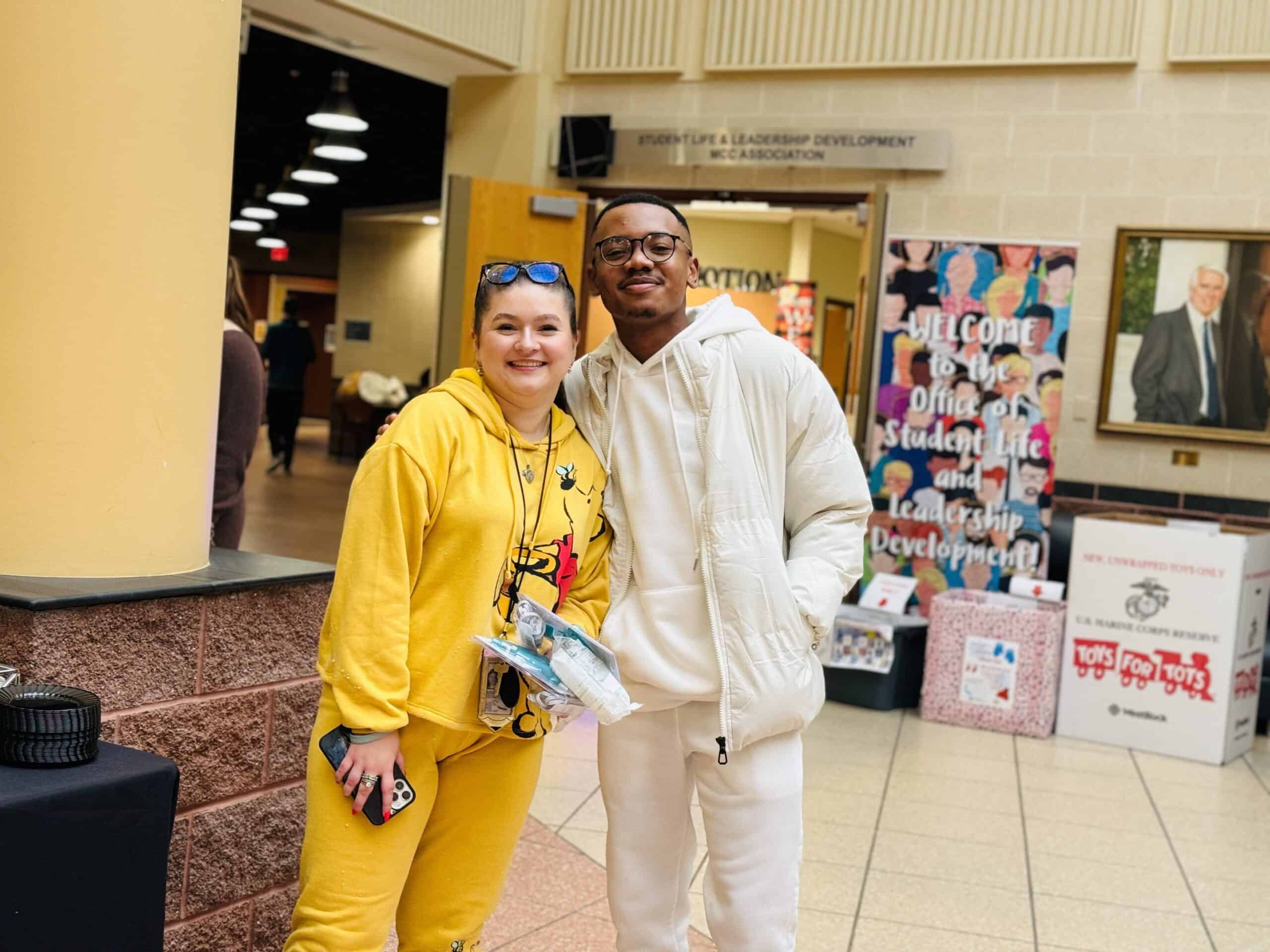
One way international students at MCC can find support is through campus life. T serves as the president of the Global Union – a student-run club for international students, immigrant students, and anyone interested in learning about other cultures. Through her role, she greets new students, helps them to overcome challenges, and organises events to help them showcase their cultures.
“Sometimes, you need to be around people that have the same feeling as yours. When we are in the same club with immigrants, refugees, or other international students, we feel like we fit in with each other,” T said.
An unexpected increase
Because of President Trump’s policies, analysts predicted a 15% drop in total international students at American colleges and universities this fall. Experts warned that the Trump administration’s near month-long pause on visa interviews, travel bans, and war against many of the nation’s most prestigious universities would harm enrolment.
Instead, this fall’s international student enrolment across all degree programs, including OPT, grew by 0.8%, according to the Student and Exchange Visitor Information System (SEVIS) data that the Department of Homeland Security publishes.
Community colleges have helped to move the needle. For associate degree programs, international student enrolment increased by 9.1%, with community colleges welcoming nearly 5,500 more students than last year. Meanwhile, enrolment shrunk slightly for master’s programs and hardly changed for bachelor’s programs.
Rather than choosing not to study in the US this fall, it seems like students are choosing different kinds of degrees or schools. That’s according to Chris Glass, director of Boston College’s higher education program, who recently analysed the latest SEVIS data.
“If we’re to take this data at face value, the system is far more resilient than the tumultuous headlines would suggest,” Glass previously told The PIE News .
Based on his analysis, the over 9% growth of international students at community colleges may not be a fluke. Glass argues that international students gravitate toward schools with less political spotlight, more affordable tuition, and access to opportunities after graduation. Community colleges check all of those boxes.
MCC is hosting more international students now than before the pandemic. This fall, the campus’ international student body grew by 35%, hosting 120 students from over 30 countries.
MCC’s international recruiting efforts for soccer, baseball, and other sports has helped to draw students from across continents, said Carly O’Keefe, MCC’s assistant director of global education and international services. The current men’s and women’s soccer team roster has a combined 34 international students.
In addition, unlike many other community colleges, MCC has dorms. For T, attending a college with on-campus dorms was critical, since she had no family or friends in Rochester to live with.
O’Keefe said international students at MCC bring ideas and culture from across the globe, enriching a campus where most students are local. Some local students – limited by jobs, financial constraints, or family obligations – have never traveled overseas.
“They’re able to make friendships with people from other countries that they maybe would have never connected with otherwise,” she said.
Finding a community through campus life
The wall of the Global Union office is decorated with dozens of paintings of hot air balloons containing flags, created by students to represent their countries. Colourful cloth flags and souvenirs from across the world fill the room.
“At the time when I saw the Korean flag, I was so proud,” said Onyu Cha, a first-semester international student from South Korea studying nursing.
Hot air balloon paintings at Global Union office. Photo: MCC Global Union
Onyu made friends with other Koreans through campus life and through her sister, who also lives in Rochester. Recently, she and other Korean students went to her sister’s house to cook food for the holiday of Chuseok, a mid-autumn harvest festival often referred to as Korean Thanksgiving.
Through her role as the vice-president of the Global Union, Onyu has got to learn about the cultures of other students. Currently, the club is planning for an event to celebrate holidays from across the world, all on one day. That’s similar to last year’s Global Fusion Festival – an event in the campus atrium to celebrate the cultures of all MCC students. It featured African drummers, Ukrainian dancers, and food from across the globe.
Judichael Razafintsalama – a student from Madagascar who graduated from MCC last May – said serving as the Global Union president allowed him to support his fellow international students.
Having international students on campus at a community college can be really enriching to a local community
Dr. Melissa Whatley, William & Mary
The summer before starting his first year at MCC, Razafintsalama landed in Rochester around 2am. When he got to his dorm, he realised he had no food. The vending machines were empty, the campus’ food services were closed, and he hadn’t set up rideshare on his phone. To get groceries, he walked two hours to a Walmart and back, carrying four bags while jet lagged.
Now, international students come together to help the Office of Global Education provide packages of canned food, granola bars and utensils for incoming international students.
“We even helped two of our students move into their apartment and make sure that everything is settled after going through what I went through,” Razafintsalama said.
Razafintsalama said he’s had the chance to teach others at MCC about his country and his culture. Most students he encountered had never met anyone from Madagascar, the island nation off the southeastern coast of Africa.
“They usually attach it to the cartoon movie,” he said. “It’s great because I can see that people are interested in my country and to see what it actually is like.”
Supporting international students’ social and housing needs is critical to making them feel welcome, said Dr. Melissa Whatley, an assistant professor of higher education at William & Mary University. Her research group recently released a report on international education at community colleges, finding that 82% hosted international students.
Whatley hopes that these colleges are providing international students with campus life opportunities and, if they don’t have dorms, are helping students to find housing.
“Having international students on campus at a community college can be really enriching to a local community, to the extent that the community is equipped to welcome them,” she said.
Concerns over travel ban
Currently, the US hosts over 1.2 million international students or recent graduates, according to SEVIS data. The dataset doesn’t distinguish between students and graduates working temporarily through Optional Practical Training (OPT). More in-depth statistics will become available once the Institute of International Education publishes its annual report later in November.
However, because of President Trump’s travel ban, some prospective international students have been restricted from studying in the US. That includes Burmese students who didn’t secure a visa before June 9.
MCC has seen an uptick in Burmese students ever since a civil war broke out in the country, interrupting higher education for many students. The war began in 2021 when military forces toppled the country’s democratically elected government. Last spring, MCC still hosted more students from Burma than from any other country, O’Keefe said.
Now, Burma is among the 12 countries included in Trump’s travel ban, impacting all immigrant and non-immigrant visas. Seven more countries are under a partial travel ban that impacts international student visas.
As for international enrolments at MCC? “We’ll see how the trends change over the next few semesters. I would be surprised to see such a significant level of continued growth but we can hope things at least stay stable,” O’Keefe said in an email.
The takeaway from this fall’s enrolment data is that students’ perceptions take a long time to change, said Gerardo Blanco, academic director of the Centre for International Higher Education at Boston College. He previously told The PIE that the 0.8% international student increase revealed in SEVIS records came as a surprise, but that doesn’t mean there won’t be a decline in coming years.
“I hope the takeaway message is not that the US is invincible, in that even hostile policies towards international students cannot change perceptions,” he said.
You’ll often hear two words come up in advising sessions as students look ahead to college: match and fit. They sound interchangeable, but they’re not.
Match refers to what colleges are looking for from students. It’s mostly determined by admissions requirements such as GPA and test scores, and in some cases, other criteria like auditions, portfolios, or athletic ability. Fit is more of an art than a science; it refers to what the student is looking for in a college, including personal preferences, social and cultural environment, financial factors, and academic offerings. When we talk to students about college fit, it’s an opportunity for them to ask themselves whether they like what a certain institution offers beyond being admitted.
In the college admissions process, both terms matter. A strong match without a good fit can leave a student disengaged and negatively affect their chances of graduating from college. Nearly a quarter of undergraduate freshmen drop out before their second year, and it seems likely to me that a lot of these cases boil down to bad fits. On the other hand, a great fit that isn’t a match could be difficult for admission in the first place, and if a student is admitted anyway, the rigorous coursework they encounter might be more than they’re ready for. To maximize postsecondary success, advisors, families, and students alike should fully understand the difference between match and fit and know how to approach conversations about each of them.
Match: Reach, target, and solid
As I’ve worked with advisors over the years, one of the best ways we’ve found to guide students on match is using the categories of “Reach,” “Target,” and “Solid” schools. We can determine which schools belong to what category using the data that colleges share about the average incoming GPAs and test scores of admitted classes. Typically, they report weighted GPAs and composite test scores from the middle 50 percent of accepted applicants, i.e., from the students who fall anywhere from the 25th to 75th percentile of those admitted.
Reach: These are schools where admission is less likely, either because a student’s test scores and GPA are below the middle 50 percent or because the school traditionally admits only a small percentage of eligible applicants.
Target: These are schools where either GPA or test scores fall in the middle 50 percent of admitted students.
Solid: These are schools where students are well within the middle 50 percent for both GPA and test scores.
Building a balanced college list across these categories is essential in the college planning process. Often, I see high-achieving students over-index on too many Reach schools, which may make it hard for them to get accepted anywhere on their list, simply because their preferred schools are ultra-selective. Meanwhile, parents and guardians may focus heavily on fit and overlook whether the student actually meets the college’s admission criteria. Advisors play a key role in keeping these data-informed conversations grounded with the goal of a balanced list of college options for students to pursue.
The importance of early planning
Timing matters. In general, if you meet with students early enough, conversations about fit are productive, but if you’re meeting with students for the first time in their senior year, the utmost priority should be helping them build a balanced list. Ideally, we want to avoid a situation where a student thinks they’re going to get into the most competitive colleges in the country on the strength of their GPA and test scores, only to find out that it’s not that easy. If advisors wait until senior year to address match, students and families may already have unrealistic expectations, leading to difficult conversations when options are limited.
On the other hand, we would stress that although GPA is the factor given the most weight by admissions offices, there are ways to overcome match deficits with other elements of a college application. For instance, if a student worked part-time to support their family or participated in co-curricular activities, colleges using holistic review may see this as part of the student’s story, helping to balance a GPA that falls outside the typical range. These experiences highlight a student’s passions and potential contributions to their chosen major and campus community. We don’t want students to have unrealistic expectations, but we also shouldn’t limit them based on numbers alone.
In any case, advisors should introduce both match and fit concepts as early as 9th grade. If students have a specific college in mind, they need to be aware of the match requirements from the first day of freshman year of high school. This allows students to plan and track academic progress against requirements and lets families begin exploring what kind of environment, resources, and financial realities would make for the right fit.
Fit: A personal process
Once match is established, the next step is making sure students ask: “What do I want in my college experience?” The answers will involve a wide range of factors:
Institutional type: Public or private? Small liberal arts college or large research university?
Academic considerations: What majors are offered? Are there study abroad programs? Internship opportunities?
Student life: What is the student body like? What kind of extracurriculars, sports, and support services are offered? Are there fraternities and sororities? What is the campus culture?
Affordability: What financial aid or scholarships can I expect? What is the true net cost of attendance?
Outcomes: What a student hopes to gain from their postsecondary experience, including specific degrees or credentials, career preparation, financial benefits, personal growth, and skill development.
Fit also requires conversations within families. I’ve found that open communication can reveal misunderstandings that would otherwise falsely limit students’ options. Sometimes students assume their parents want them close to home, when in fact, parents just want them to find the right environment. Other times, families discover affordability looks very different once they use tools like free cost calculators. Ongoing dialogue about these topics between advisors, students, and families during the high school years helps prepare for better decisions in the end.
Bringing it all together
With more than 4,000 colleges and universities in the U.S. alone, every student can find a college or university that aligns with their goals and abilities. Doing so, however, is both an art and a science. Advisors who help families focus on both dimensions, and start the conversation early, set students up to receive those treasured acceptance letters and to thrive once they arrive on campus.
For school districts developing their proficiency in postsecondary readiness factors, like advising, there is an increasing amount of support available. For one, TexasCCMR.org, has free guidance resources to strengthen advising programs and other aspects of college and career readiness. While Texas-focused, many of the insights and tools on the site can be helpful for districts across the country in building their teams’ capabilities.
Donald Kamentz, Contigo Ed
Donald Kamentz is a skilled facilitator and education consultant utilizing his diverse experiences in both non-profit management and K-12 education to help organizations best serve all student populations. As the Founder and CEO of Contigo Ed, Donald Kamentz brings his over 30+ years of diverse experiences and passion for working in the postsecondary access and success arenas. He has been a member of both the National Association of College Admission Counseling (NACAC) and the Texas Association for College Admission Counseling (TACAC) since 1999.
Latest posts by eSchool Media Contributors (see all)
You have expert insights—plenty of them. You give impromptu lectures in office hours, debate podcast guests midrun and readily join boisterous debates over dinner. Maybe you’re even drafting a book that builds a careful case from your expert point of view. But when it comes time to write your own op-ed? That sharp idea can start to feel too complex, too niche or—let’s be honest—too wordy for 800 words aimed at a general audience.
That’s not a failing; it’s a feature of your training. Academics are trained to distill ideas for their peers, not for nonspecialists. You argue carefully, if not compactly. You cite meticulously, not conversationally. But public writing demands something different—skills to illuminate complex concepts in a way that an intelligent lay reader can follow, feel and act on.
Before you spend an afternoon translating your expert insight into an 800-word article you pitch to a newspaper or magazine, run your idea through this op-ed readiness test. It won’t replace compelling writing, but it may help determine whether your idea is ready to leave the seminar room and live, persuasively, on the opinion page.
Who cares? It’s a tough question, but not a cynical one. Just because something fascinates you doesn’t mean that it matters to the broader public. That’s not a judgment of your topic. It’s a reminder to find the resonance. What’s at stake beyond your personal experience or corner of the discipline? You don’t have to write about what’s already dominating headlines. In fact, if your idea surfaces something overlooked or offers a fresh lens, it may be exactly what public discourse needs. Urgency is not always about volume; it’s often about insight.
So ask yourself: Who, beyond academia, might find your idea clarifying, challenging or useful? Who might see their own experience differently—or see someone else’s for the first time? Who, if they read what you have to say, might think differently about something that affects their life, work, vote or values? If your answer is, “Well, maybe more people should care,” you might be onto something. But part of your task is to show them why.
Why now—or why always? Editors love a good news hook. If your idea connects to a breaking story, an upcoming decision or a public debate gaining steam, then run with it. But run fast. In journalism, “timely” means submitting within hours or a day or two, not weeks. If something is happening right now and you have a fresh angle, start writing.
Of course, not every op-ed needs a news peg. If your idea speaks to an enduring question or a slow-burning issue—and does so with clarity, urgency or surprising insight—it still has a shot. Just know that in an editor’s crowded inbox, a time peg can help your piece stand out. An “evergreen” op-ed may need to work harder and land stronger to compete.
Can you make your case by paragraph two? You don’t have to dumb down your argument, but you do have to speed it up. Public readers and their editors have strong opinions about long, slow windups. Spoiler: They don’t like them.
Try writing a working headline for your piece that’s under 60 characters. Then distill your argument in one or two crisp, compelling sentences—no acronyms, no jargon and no “hence” or “thus.” (Also, no “as Foucault reminds us.”) These sentences should appear early, ideally by the end of paragraph two. At first, this mandate can feel reductive. But being concise isn’t a betrayal of complexity. It’s a tool for focus. You’re not flattening your idea; you’re making it easy to find. If your piece needs detailed footnotes or a literature review, it’s probably not (yet) an op-ed.
What’s the aha? Your op-ed should offer insight that readers haven’t already heard several times this week. If your takeaway is “what you’ve heard, but with citations,” then it may still need sharpening. Some of the best pieces offer a twist such as an unexpected data point, an odd-but-illuminating comparison or a perspective that flips conventional wisdom on its head. You’re trying to make an intelligent reader think, “I hadn’t thought of that.”
Are you writing to connect—or to impress? You’re not writing to prove you’ve done the reading; you’re writing to help someone else think differently. Your op-ed should feel like an intelligent conversation over coffee, not a cautious explanation in a lecture hall. You don’t have to be breezy or punchy (unless that’s your style), but you should sound like a real person with a distinct voice. This isn’t about being casual for its own sake. It’s about being readable.
If your draft feels like it could be suitable for peer review, try loosening the syntax. Ask yourself: How would I say this to a smart friend who doesn’t share my training? Readers want active verbs, not hedges. When you write like someone who wants to be understood—not just cited—you don’t dilute your thinking; you make it land.
Will a reader remember it tomorrow? A good op-ed doesn’t just inform, it lingers. It leaves a mark, even a small one, on a reader’s thinking. That might come from a vivid image, a well-turned phrase or a question that unsettles something they thought they knew. If your argument is technically sound but leaves no lasting impression, it’s worth asking: What do I know that will stay with the reader? What might echo later, in a moment of uncertainty, over a dinner-table debate or in a voting booth?
If your idea for an op-ed makes it through these six questions, chances are it’s ready to leave the seminar room. From there, it’s all about shaping the piece—tightening the structure, sharpening the language and leading with your point. An op-ed doesn’t need to say everything you know on your topic. It just needs to make one point well, in a way that readers will remember.
Not every idea belongs on the op-ed page—but yours might. Ask the questions, trust your instincts and, when you’re ready, write it, shape it and send it.
And if you’d like more help along the way, sign up for my monthly newsletter. You’ll get notice of each new article in “The Public Scholar,” plus practical writing tips, behind-the-scenes insights from my work and inspiration from other academics finding their voice in public spaces. Your expertise is hard-won. What might happen if you shared what you know more broadly?
Susan D’Agostino is a mathematician whose stories have published in The Atlantic, BBC, Scientific American, The Washington Post, Wired, The Financial Times, Quanta and other leading publications. Her next book, How Math Will Save Your Life, will be published by W. W. Norton. Sign up for Susan’s free monthly newsletter here.
New research has found that rural LGBTQ+ teens experience significant challenges in their communities and turn to the internet for support.
The research from Hopelab and the Born This Way Foundation looked at what more than 1,200 LGBTQ+ teens faced and compared the experiences of those in rural communities with those of teens in suburban and urban communities. The research found that rural teens are more likely to give and receive support through their online communities and friends than via their in-person relationships.
“The rural young people we’re seeing were reporting having a lot less support in their homes, in their communities, and their schools,” Mike Parent, a principal researcher at Hopelab, said in an interview with the Daily Yonder. “They weren’t doing too well in terms of feeling supported in the places they were living, though they were feeling supported online.”
However, the research found that rural LGBTQ+ teens had the same sense of pride in who they were as suburban and urban teens.
“The parallel, interesting finding was that we didn’t see differences in their internal sense of pride, which you might kind of expect if they feel all less supported,” he said. “What was surprising, in a very good way, was that indication of resilience or being able to feel a strong sense of their internal selves despite this kind of harsh environment they might be in.”
Researchers recruited young people between the ages of 15 and 24 who identified as LGBTQ+ through targeted ads on social media. After surveying the respondents during August and September of last year, the researchers also followed up some of the surveys with interviews, Parent said.
According to the study, rural teens were more likely than their urban and suburban counterparts to find support online. Of the rural respondents, 56% of rural young people reported receiving support from others online several times a month compared to 51% of urban and suburban respondents, and 76% reported giving support online, compared to 70% of urban and suburban respondents.
Conversely, only 28% of rural respondents reported feeling supported by their schools, compared to 49% of urban and suburban respondents, the study found, and 13% of rural respondents felt supported by their communities, compared to 35% of urban and suburban respondents.
Rural LGBTQ+ young people are significantly more likely to suffer mental health issues because of the lack of support where they live, researchers said. Rural LGBTQ+ young people were more likely to meet the threshold for depression (57% compared to 45%), and more likely to report less flourishing than their suburban/urban counterparts (43% to 52%).
The study found that those LGBTQ+ young people who received support from those they lived with, regardless of where they live, are more likely to report flourishing (50% compared to 35%) and less likely to meet the threshold for depression (52% compared to 63%).
One respondent said the impact of lack of support impacted every aspect of their lives.
“Not being able to be who you truly are around the people that you love most or the communities that you’re in is going to make somebody depressed or give them mental issues,” they said in survey interviews, according to Hopelab. “Because if you can’t be who you are around the people that you love most and people who surround you, you’re not gonna be able to feel the best about your well-being.”
Respondents said connecting with those online communities saved their lives.
“Throughout my entire life, I have been bullied relentlessly. However, when I’m online, I find that it is easier to make friends… I met my best friend through role play [games],” one teen told researchers. “Without it, I wouldn’t be here today. So, in the long run, it’s the friendships I’ve made online that have kept me alive all these years.”
Having support in rural areas, especially, can provide rural LGBTQ+ teens with a feeling of belonging, researchers said.
“Our findings highlight the urgent need for safe, affirming in-person spaces and the importance of including young people in shaping the solutions,” Claudia-Santi F. Fernandes, vice president of research and evaluation at Born This Way Foundation, said in a statement. “If we want to improve outcomes, especially for LGBTQ+ young people in rural communities, their voices–and scientific evidence–must guide the work.”
Parent said the survey respondents stressed the importance of having safe spaces for LGBTQ+ young people to gather in their own communities.
“I think most of the participants recognize that you can’t do a lot to change your family if they’re not supportive,” he said. “What they were saying was that finding ways for schools to be supportive and for communities to be supportive in terms of physical spaces (that allowed them) to express themselves safely (and) having places where they can gather and feel safe, uh, were really important to them.”
Hopelab seeks to address mental health in young people through evidence-based innovation, according to its organizers. The Born This Way Foundation was co-founded by Lady Gaga and her mother, West Virginia native Cynthia Bisset Germanotta.
The organization is focused on ending bullying and building up communities, while using research, programming, grants, and partnerships to engage young people and connect them to mental health resources, according to the foundation’s website.
In his criminally underread 1978 book The Grasshopper, the philosopher Bernard Suits takes seriously the science-fiction commonplace that, once robots are doing everything for us, humans will have to find something else to do.
His response is that we’d play, living lives of leisure, like Aesop’s grasshopper, and engaging in activities with a lusory attitude: living playfully, engaging in activities not because we have to, but because we want to. Fully-automated luxury play! As much as I could easily play videogames all day, work isn’t going anywhere any time soon. But the rise of AI in education has prompted me to revisit this topic.
Universities are, quite rightly, thinking very carefully about what their staff and students do with AI, emphasising the ways in which it can enhance, and perhaps even replace, aspects of our work. But there are separate, parallel questions: what can’t AI do for us, and what shouldn’t it do? And what are we going to do with all the time it saves us?
Doing and being seen to have done
Human lives are full of experiences, and there’s a danger with the rise of AI that we weaken our connection with the actual doing of things. AI might help us to plan a holiday itinerary, book a hotel or draft a jealousy-inducing social media post (or even deepfake pics from a holiday that didn’t happen), but it can’t go on holiday for us. And similarly, in learning environments, whilst it can enhance learning, overreliance on AI runs the risk of hollowing out the experiential core of learning and leaving students not having actually done anything.
A real challenge for educators is to know how to get students to understand the value of experience in a world that incentivises taking shortcuts. I lead Rise at Manchester Met: a co-curricular programme that is designed to draw together all the things that students do that aren’t their degree, and our team works hard to help students to understand that they are more than their degree subject.
The traditional catch-all term for this is “extra-curricular” – it’s the things that students do in addition to the curricula they are following. But in practice “co-curricular” is a more accurate term. “Co” indicates that activity happens alongside and with the curriculum. There is a crossover in the experiences that students are having. Picture the curriculum and co-curricular activities as two streams that are sometimes totally divergent, sometimes parallel, and often overlapping in productive ways.
Identity shapes participation
Students don’t stop being students when they engage in co-curricular activities, but similarly they don’t stop being a community organiser, or a hockey player, or a freelance arts journalist, when they’re in the classroom. My doctoral thesis argued that half of the “game” of higher education is students understanding how they can bring their own identities to transform their participation, and “position-switch” between roles. The co-curricular is at its most powerful when these distinct identities and experiences begin to transform and enhance each other.
Moving from “extra” to “co” also challenges the primacy of the core curriculum as the foundation of student experience, and acknowledges that, for many of our students, “student” might not be their primary identity. We must accept that, for some students, their co-curricular activity might be more engaging, more relevant and more career-focused than their core degree programme. For others, the stuff they are doing outside their degree programme might be necessary and unavoidable, and will often pre-date their involvement at university; paid-work and caring responsibilities tend to take precedence over lectures, and there may be ways to make this count too.
However, when you type “co-curricular” into your search engine of choice, you won’t really see university websites. It’s a term that, at present, seems to be owned by the upper-end of British private boarding schools. In a sense this stands to reason; pupils essentially live in these schools during term time, and activities take place as part of their wider life at school. Here “co-curricular” is an expectation, and provides the social and cultural capital building for which British private schools are famous.
This conceptual dominance raises an issue of social justice, though. There is a sense that all of the “extra” stuff, at both schools and universities, is the domain of students who are privileged enough to take part, and who have the time and resources to make it happen. Working outside the curriculum is too often seen as a privilege for the privileged, and effectively becomes self-fulfilling as students with the free time to volunteer reap the developmental benefits of volunteering their time. Other students are already on the back foot when it comes to claiming their share of experience.
Embarrassment of riches
Rise was set up to challenge this narrative, by giving students time and resource to develop their social capital in flexible ways, and to recognise developmental activities that might not have traditionally been included under the extra-curricular umbrella. There’s a broader conversation to be had in the sector, not about how we encourage already busy students to do more, but about how we encourage students to recognise their learning beyond the curriculum.
In Manchester and beyond, the skills pendulum seems to swinging once more away from digital skills and towards “soft skills” – again, reflecting AI’s dominance of education conversations. Co-curricular space has a valuable contribution to make to developing empathy, critical thinking and interacting with other human beings. It is, ultimately, about sharing experiences, and the more we can expand this, the more everyone will benefit.
Students will have experiences outside of their degree programmes whether we design for it or not, but a renewed emphasis on co-curricular activity would allow them (and us) to understand that formal education settings don’t have a monopoly on learning and development. We worry so much about students being “time-poor”; what happens if we understand this as “experience-rich” instead, and recognise their learning accordingly?
In an AI-dominated dystopia, the co-curricular might be where we find the last vestiges of human experience in higher education. Being more optimistic, in a Grasshopper-influenced utopia, we’d all have the time to luxuriate in human experience. Co-curricular space provides insight into what this might look like, and gives students ways to develop away from the curriculum that might speak to future possibilities.
Interested in thinking more about co-curricular experience? At Manchester Met we’re pulling together a cross-sector group of HE professionals working in co-curricular space, and we’d love your input. Click here to sign up for updates.
Alexandre de Moraes, the polarizing Brazilian Supreme Court Justice, is no friend to free speech. Though he is a popular figure within Brazil among those who see him as a protector of democracy, he has aggressively wielded his authority to censor, especially on the internet, with little transparency.
From his position in Brazil’s Supreme Court, de Moraes has doggedly pursued wide swaths of speech and speakers off and on the internet, as well as the tech companies hosting them. In a highly public incident last year, Brazil blocked X — and even threatened VPN users accessing it with massive fines — over the company’s noncompliance with de Moraes’ orders.
The actions of de Moraes, and Brazil’s Supreme Court more broadly, have repeatedly drawn the ire of the Trump administration. But chief among President Trump’s grievances is the prosecution of his political ally, former Brazilian President Jair Bolsonaro, who is accused of attempting a coup to overturn his 2022 election loss to President Luiz Inácio Lula da Silva.
How has the Trump administration responded?
Last month, the administration enacted a series of punishments against Brazil’s leadership and de Moraes specifically. In a July 30 executive order, Trump announced tariffs and other sanctions due to Brazil’s prosecution of Bolsonaro and other actions that “conflict with and threaten the policy of the United States to promote free speech and free and fair elections at home and abroad.” The order follows Trump’s weeks-earlier threat of tariffs over the “witch hunt” against Bolsonaro.
Secretary of State Marco Rubio also revoked the visas of de Moraes “and his allies on the court” and their families. And under the Global Magnitsky Human Rights Accountability Act, usually reserved for the most serious human rights abuses, the Department of the Treasury announced sanctions targeting any of de Moraes’s U.S. assets.
Unprincipled, partisan free speech advocacy is no free speech advocacy at all
There is plenty to debate about how to best protect free speech on the global internet, and around the world more generally, and what actions the United States can take in its defense. But, even though Brazil’s adversarial relationship with free expression is deeply alarming, it’s impossible to ignore the incongruity of the Trump administration putting itself in the position of diagnosing and treating government censorship.
Physician, heal thyself.
The opening months of Trump’s second term in office have offered a nonstop, headspinning bonanza of violations, threatened and enacted, against Americans’ First Amendment rights.
I write regularly in the Free Speech Dispatch about the myriad threats to freedom of expression, from Russia to the UK to India to Hong Kong. It’s painfully, brutally clear we need leadership to push back against the wave of global repression that threatens all of our rights. But that leadership must practice what it preaches and avoid simply using concerns about free speech as a pretext to fight partisan political battles. On both counts, this administration has failed.
You will make no converts to the free speech cause by proving right the critics who suspect its advocates are guided by partisan aims, not principled ones. Instead, you will breed cynicism and harm the very cause you claim to support.
This same posturing marred Vice President JD Vance’s objections to European censorship, an ugly trend that’s in dire need of principled critiques. Instead, Vance claimed that under Trump, the “new sheriff in town,” the administration “may disagree with your views, but we will fight to defend your right to offer them in the public square.”
The ugly reality is that the U.S. is rapidly ceding its moral authority to criticize foreign governments’ censorship, like that emanating from Brazil’s Supreme Court, when its own president and agencies are gleefully flouting the First Amendment and free speech principles day in and day out.
Perhaps most baffling was the administration’s objection to the Brazilian government’s targeting of Paulo Figueiredo, a Brazilian journalist, and “U.S. resident, for speech he made on U.S. soil.” Readers may also be able to think of some more government officials targetingimmigrants legally residing in the U.S. for protected speech made on U.S. soil — and they’re doing so from our White House and State Department, not thousands of miles away.
Global censorship is a real challenge, and it’s only getting worse. But until the U.S. removes the censorial beam from its own eye, we may find that other nations are unmoved by our criticisms and cures. Or, they may perhaps even be interested in doling them out to us.
This story about AmeriCorps jobs was produced by The Hechinger Report, a nonprofit, independent news organization focused on inequality and innovation in education. Sign up for the Hechinger newsletter.
Lily Tegner didn’t know what she wanted to do when she graduated from Oregon State University with a chemical engineering degree five years ago. She entered the workforce at a point when unemployment briefly skyrocketed and companies were freezing hiring because of the Covid pandemic. “I didn’t have a very clear direction as far as where I was going in life,” she said.
Like hundreds of thousands of other young adults, Tegner kick-started her career through AmeriCorps, a federal agency that sends its members to communities across the country to tutor students, help after disasters strike and restore wildlife habitats, among other activities. She took a position at the Alaska Afterschool Network, where her job was to help find ways to expand science, technology, engineering and math access in its programs. Four years later, she’s still there — now, as a full-time employee managing the nonprofit’s AmeriCorps program.
“This state became my home,” Tegner said, adding that her year in AmeriCorps “completely changed the trajectory of my career.”
An AmeriCorps member poses with a student in one of the Alaska Afterschool Network’s funded programs. The organization lost its AmeriCorps funding last spring. Credit: Courtesy of Alaska Afterschool Network
This spring, Alaska Afterschool Network was one of hundreds of organizations abruptly notified that its AmeriCorps funding had been terminated. Federal funding cuts forced the nonprofit to eliminate three full-time positions and cancel 19 internships scheduled for this summer. Tegner’s job is also at risk, though the organization is trying to find a way to keep her on.
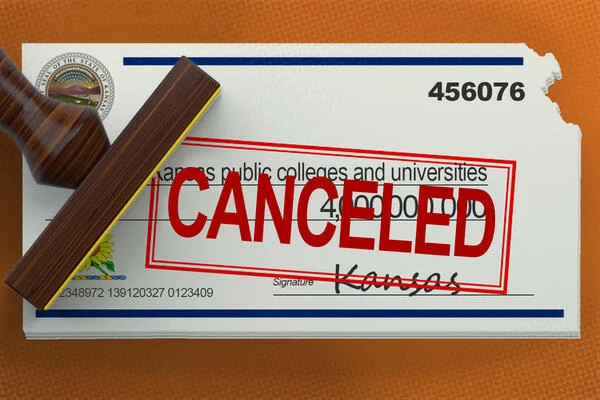
In late April, the Trump administration slashed 41 percent of AmeriCorps’ funding, cutting about $400 million in grants and letting go of more than 32,000 members serving in hundreds of programs across the United States. In June and also this month, judges ordered the government to restore some funding, but the ruling does not reinstate all the money that was taken away. Shrinking AmeriCorps is among the many steps the Trump administration has taken to curb what he has called “waste, fraud and abuse” of federal funds. More action is expected in the months ahead.
Related: Become a lifelong learner. Subscribe to our free weekly newsletter featuring the most important stories in education.
Over the years, the program former President Bill Clinton created has deployed more than a million people.On top of gutting AmeriCorps, the cuts have diminished the reach of an agency that has been a critical path to a career for recent high school and college graduates at a time when entry-level jobs can be difficult to find.
AmeriCorps was created more than three decades ago to oversee expanded federal volunteer programs, incorporating existing projects including Volunteers in Service to America and the National Civilian Community Corps. Its members take on community service positions across the country that can last for up to two years. They receive a small living stipend, and full-time members are eligible for health insurance. At the end of their terms, members are awarded a grant that can be used to pay college tuition or student loans.
“AmeriCorps dollars have a powerful ripple effect, for both the AmeriCorps members and the students that they serve,” said Leslie Cornfeld, founder and CEO of the National Education Equity Lab, a nonprofit that brings college courses to high-poverty schools. “In many instances, it helps them define their careers.”
About half of the AmeriCorps funding for the Philadelphia Higher Education Network for Neighborhood Development was cut this spring. Credit: Courtesy of PHENND
Federal surveys of AmeriCorps members from 2019, 2021 and 2023 show that 90 percent of members joined the national program in part to gain skills that would help them in school and work, and well over 80 percent said their experience in AmeriCorps helped further their “professional goals and endeavors.”
The Trump administration cited fraud as part of its reason for nearly halving the AmeriCorps budget. Audits of the agency have raised questions about its financial management.
Peter Fleckenstein, 23, joined Aspire Afterschool in Arlington, Virginia, through AmeriCorps last year after graduating from the University of Delaware with a degree in psychology. He saw AmeriCorps as a way to build out his resume; even the entry-level positions he encountered during his job search required experience in the field.
In his position at the after-school program, Fleckenstein leads daily activities for a group of about two dozen fourth grade students. The experience has helped him crystallize his career aspirations: Before AmeriCorps, he was considering clinical social work or teaching. Now, he wants to become a counselor.
“Working with the kids here is a lot of behavior management: problem solving, helping them regulate themselves,” Fleckenstein said. “Doing one-on-one work with them, building habits and routines with them — that is something that I could focus on more if I was in a counseling job.”
Fleckenstein’s position was cut in April before he could complete his one-year term set to end in August, but Aspire Afterschool was able to raise money through donations to hire him and some of the nonprofit’s other AmeriCorps members part-time to finish out their grant year.
The Philadelphia Higher Education Network for Neighborhood Development lost half of its AmeriCorps funding this past spring when the federal agency was slashed. Credit: Courtesy of PHENND
While some members have joined Americorps after graduating, student Deja Johnson, 24, joined as a way to help pay for college. Her term at The Scholarship Academy — a nonprofit in Atlanta helping low-income high school students navigate financial aid applications — was supposed to end with a $7,400 education grant. Because the terms were cut short, members have been told they’ll get only a prorated portion of the money.
“It’s a little bit of a shame,” said Johnson, who is using the education grant to pursue a bachelor’s degree in nonprofit leadership.
“That’s what a lot of us look forward to with this work that we’re doing, because we know how much of a sacrifice it can be at times. It’s that ‘pouring into our community’ — and that’s how our community pours into us,” Johnson said.
The AmeriCorps termination letters told grantees that their programs no longer met agency priorities, but the nonprofits were not told what those priorities are. Programs with different missions, in both Democratic- and Republican-led communities, were cut.
Sira Coulibaly, a member with the Philadelphia Higher Education Network for Neighborhood Development’s Next Steps AmeriCorps program, packs bags of food for the Metropolitan Area Neighborhood Nutrition Alliance. Credit: Courtesy of PHENND
The Hindman Settlement School, a nonprofit in rural Kentucky, was one victim of the cuts. The organization receives about $1 million a year from AmeriCorps for its program tutoring students with math and reading learning disabilities in more than two dozen schools. Losing that funding means drastically scaling back services, said Josh Mullins, senior director of operations at the Hindman Settlement School. He said he does not know why Hindman’s grants were terminated: The nonprofit regularly passes its audits, and its last annual report showed an average gain of seven months in reading levels among students in its dyslexia intervention program.
A statement published in January on an AmeriCorps webpage says the agency is in the process of “conducting a full review” to comply with President Donald Trump’s executive order banning diversity, equity and inclusion in federal programs. But Mullins and other AmeriCorps grantees said diversity, equity and inclusion efforts were not listed anywhere as part of their operations.
“That’s what’s devastating,” Mullins said. “It was completely out of our control. There was nothing you could do.”
The administration also gutted 85 percent of the agency’s federal staff, which has caused problems even for programs that are still receiving AmeriCorps funding.
The federal government terminated about half of the AmeriCorps grants for the Philadelphia Higher Education Network for Neighborhood Development. The group uses the funding to place members in local nonprofits and to help develop community partnerships in high-poverty schools. Director Hillary Kane said she’s been experiencing delays from the national AmeriCorps office in getting members approved for the programs that are still operating.
“We need the humans in D.C. to do the stuff that they do, so we can do the stuff that we do,” Kane said. “The person we communicate with isn’t there.”
About half of the AmeriCorps funding for the Philadelphia Higher Education Network for Neighborhood Development was cut this spring. Credit: Courtesy of PHENND
On June 5, a federal judge granted a temporary injunction ordering the Trump administration to restore AmeriCorps funding in states that had sued over the budget cuts. The lawsuit, which was filed by two dozen Democratic-led states in May, challenges the administration’s authority to cancel the funding without Congressional approval. But the judge’s injunction does not require the Trump administration to reinstate AmeriCorps’ federal employees, and funding is not being restored to programs in states that did not sign on to the lawsuit, including Alaska, home of the Alaska Afterschool Network, or Virginia, where Aspire Afterschool is based.
The Hindman Settlement School in Kentucky was one organization whose funding was restored this summer because of the lawsuit. Mullins said he’s hopeful the nonprofit will continue to receive AmeriCorps funding for the upcoming grant cycle in the fall.
For Kane, the injunction does not undo the chaos caused by the abrupt cancellation of half of her Philadelphia organization’s funding. Many terminated members that were with Kane’s organization have already moved on.
Programs whose grants were cut can apply again in the next grant cycle, but the president’s 2026 budget calls for shutting down AmeriCorps entirely.
While the debate in Washington rages, current and former volunteers mourn the potential loss of a program they said gave their lives meaning and led to employment. The avenue AmeriCorps provided for Tegner to start a career at the Alaska Afterschool Network gave her purpose in life, she said. She’s worried if the program ends, there won’t be another pathway on the same scale for young idealists who aren’t sure what they want to do with their lives.
“It helps young people of all ages grow and try new things,” Tegner said. “That’s very much what it was for me.”
Contact staff writer Ariel Gilreath on Signal at arielgilreath.46 or at [email protected].
The Hechinger Report provides in-depth, fact-based, unbiased reporting on education that is free to all readers. But that doesn’t mean it’s free to produce. Our work keeps educators and the public informed about pressing issues at schools and on campuses throughout the country. We tell the whole story, even when the details are inconvenient. Help us keep doing that.
DES MOINES, Iowa — Macon Smith stood in front of a nearly empty classroom 1,000 miles from home. He asked his opponent and the two judges in the room if they were ready to start, then he set a six-minute timer and took a deep breath.
“When tyranny becomes law, rebellion becomes duty,” he began.
In front of Macon, a 17-year-old high school junior, was a daunting task: to outline and defend the argument that violent revolution is a just response to political oppression.
In a few hours, Macon would stand in another classroom with new judges and a different opponent. He would break apart his entire argument and undo everything he had just said.
“An eye for an eye makes the whole world blind,” Macon started.
It doesn’t really matter what opinion Macon holds on violence or political oppression. In this moment in front of the judges, he believes what he’s saying. His job is to get the judges to believe with him.
Macon was one of more than 7,000 middle and high school students to compete in the National Speech and Debate Tournament this summer in Iowa, run by an organization that is celebrating a century in existence.
In that time, the National Speech and Debate Association has persevered through economic and social upheaval. It is entering its next era, one in which the very notion of engaging in informed and respectful debate seems impossible. The organizers of this event see the activity as even more important in a fracturing society.
“I don’t think there’s an activity in the world that develops empathy and listening skills like speech and debate,” said Scott Wunn, the organization’s president. “We’re continuing to create better citizens.”
Macon Smith, a rising senior from Bob Jones Academy in South Carolina, competes in the third round of the Lincoln-Douglas Debate at the National Speech and Debate Tournament in Iowa this summer. Credit: Meenakshi Van Zee for The Hechinger Report
Though the tournament is held in different cities around the country, for the 100th anniversary, the organizers chose to host it in Des Moines, where the association’s headquarters is based.
Preparing for this competition was a year in the making for Macon, who will be a senior at Bob Jones Academy, a Christian school in Greenville, South Carolina, this fall. Students here compete in more than two dozen categories, such as Original Oratory, in which they write and recite their own 10-minute speeches, or Big Questions, where they attempt to argue broad, philosophical ideas.
Macon’s specialty, the Lincoln-Douglas Debate, is modeled after a series of public, three-hour debates between Abraham Lincoln and Sen. Stephen Douglas in 1858. In this event, two students have just 40 minutes to set up their arguments, cross-examine each other and sway the judges.
“Even if I don’t personally believe it, I can still look at the facts and determine, OK, this is a good fact, or it’s true, and argue for that side,” Macon said.
Debaters often have to tackle topics that are difficult, controversial and timely: Students in 1927 debated whether there was a need for a federal Department of Education. In 1987, they argued about mandatory AIDS testing. In 2004, they debated whether the United States was losing the war on terror. This year, in the Public Forum division, students debated whether the benefits of presidential executive orders outweigh the harms.
While the speech and debate students practiced for their national event, adults running the country screamed over each other during a congressional hearing on state sanctuary policies. A senator was thrown to the floor and handcuffed during a press conference on sending the National Guard to immigration enforcement protests in Los Angeles. Most Americans feel political discourse is moving in the wrong direction — both conservatives and progressives say talking politics with someone they disagree with has become increasingly stressful and frustrating.
Speech and debate club, though, is different.
“First of all, it gives a kid a place to speak out and have a voice,” said Gail Nicholas, who for 40 years has coached speech and debate at Bob Jones Academy alongside her husband, Chuck Nicholas, who is Macon’s coach. “But then also learn to talk to other people civilly, and I think that’s not what’s being modeled out there in the real world right now.”
Macon Smith, a rising senior from Bob Jones Academy in South Carolina, shows off the notes that he took during debates at the National Speech and Debate Tournament in Iowa. Credit: Meenakshi Van Zee for The Hechinger Report
On the second day of the competition in a school cafeteria in West Des Moines, Macon was anxiously refreshing the webpage that would show the results of his rounds to learn whether he would advance to semifinals.
For most of the school year, Macon spent two days a week practicing after school, researching and writing out his arguments. Like many competitors, he has found that it’s easy to make snap judgments when you don’t know much about an issue. Decisively defending that view, to yourself and to others, is much harder.
“I tend to go in with an opinion and lose my opinion as the topic goes on,” said Daphne DiFrancesco, a rising senior from Cary Academy in Cary, North Carolina.
Traveling for regional events throughout the school year means Macon has become friends with students who don’t always share his conservative views. He knows this because in debate, discussing politics and religion is almost unavoidable.
“It doesn’t make me uncomfortable at all,” Macon said. “You don’t want to burn down a bridge before you make it with other people. If you stop your connection with a person right at their political beliefs, you’re already cutting off half of the country. That’s not a good way to conduct yourself.”
Macon, and other students in the clubs, said participating has made them think more deeply about their own beliefs. Last year, Macon debated a bill that would defund Immigration and Customs Enforcement, an agency he supports. After listening to other students, he developed a more nuanced view of the organization.
“When you look at the principle of enforcing illegal immigration, that can still be upheld, but the agency that does so itself is flawed,” he said.
Henry Dieringer, a senior from L.C. Anderson High School in Austin, Texas, went into one competition thinking he would argue in favor of a bill that would provide work permits for immigrants, which he agrees with. Further research led him to oppose the idea of creating a federal database on immigrants.
“It made me think more about the way that public policy is so much more nuanced than what we believe,” Henry said.
On the afternoon of the second day of the national tournament, Macon learned he didn’t advance to the next round. What’s sad, he said, is he probably won’t have to think this hard about the justness of violent revolution ever again.
“There’s always next year,” Macon said.
Callista Martin, 16, a rising senior from Bainbridge High School in Washington state, also didn’t make the semifinals. Callista and Macon met online this year through speech and debate so they could scrimmage with someone they hadn’t practiced with before. It gave them the chance to debate someone with differing political views and argument styles.
Macon Smith, a rising senior from Bob Jones Academy in South Carolina, takes notes during a round of the Lincoln-Douglas Debate at the National Speech and Debate Tournament in Iowa. Credit: Meenakshi Van Zee for The Hechinger Report
“In the rounds, I’m an entirely different person. I’m pretty aggressive, my voice turns kind of mean,” Callista said. “But outside of the rounds, I always make sure to say hi to them before and after and say things I liked about their case, ask them about their school.”
Talking to her peers outside of rounds is perhaps the most important part of being in the club, Callista said. This summer, she will travel to meet with some of her closest friends, people she met at debate camps and tournaments in Washington.
Since Callista fell in love with speech and debate as a freshman, she has devoted herself to keeping it alive at her school. No teacher has volunteered to be a coach for the debate club, so the 16-year-old is coaching both her classmates and herself.
A lack of coaches is a common problem. Just under 3,800 public and private high schools and middle schools were members of the National Speech and Debate Association at the end of this past school year, just a fraction of the tens of thousands of secondary schools in the country. The organization would like to double its membership in the next five years.
That would mean recruiting more teachers to lead clubs, but neither educators nor schools are lining up to take on the responsibility, said David Yastremski, an English teacher at Ridge High School in New Jersey who has coached teams for about 30 years.
It’s a major time commitment for teachers to dedicate their evenings and weekends to the events with little supplemental pay or recognition. Also, it may seem like a risk to some teachers at a time when states such as Virginia and Louisiana have banned teachers from talking about what some call “divisive concepts,” to oversee a school activity where engaging with controversial topics is the point.
“I primarily teach and coach in a space where kids can still have those conversations,” Yastremski said. “I fear that in other parts of the country, that’s not the case.”
Dennis Philbert, a coach from Central High School in Newark, New Jersey, who had two students become finalists in the tournament’s Dramatic Interpretation category, said he fears for his profession because of the scrutiny educators are under. It takes the fun out of teaching, he said, but this club can reignite that passion.
“All of my assistant coaches are former members of my team,” Philbert said. “They love this activity [so much] that they came back to help younger students … to show that this is an activity that is needed.”
On the other side of Des Moines, Gagnado Diedhiou was competing in the Congressional Debate, a division of the tournament that mimics Congress and requires students to argue for or against bills modeled after current events. During one round, Gagnado spoke in favor of a bill to shift the country to use more nuclear energy, for a bill that would grant Puerto Rico statehood, and against legislation requiring hospitals to publicly post prices.
Gagnado Diedhiou, a senior from Eastside High School in South Carolina, competing in the first round of the Congressional Debate at the National Speech and Debate Tournament in Iowa in June. Credit: Meenakshi Van Zee for The Hechinger Report
Just like in Congress, boys outnumbered girls in this classroom. Gagnado was the only Black teenager and the only student wearing a hijab. The senior, who just graduated from Eastside High School in Greenville, South Carolina, is accustomed to being in rooms where nobody looks like her — it’s part of the reason she joined Equality in Forensics, a national student-led debate organization that provides free resources to schools and students across the country.
“It kind of makes you have to walk on eggshells a little bit. Especially because when you’re the only person in that room who looks like you, it makes you a lot more obvious to the judges,” said Gagnado, who won regional Student of the Year for speech and debate in her South Carolina district this year. “You stand out, and not always in a good way.”
Camille Fernandez, a rising junior at West Broward High School in Florida, said the competitions she has participated in have been dominated by male students. One opponent called her a vulgar and sexist slur after their round was over. Camille is a member of a student-led group — called Outreach Debate — trying to bridge inequities in the clubs.
“A lot of people think that debate should stay the same way that it’s always been, where it’s kind of just — and this is my personal bias — a lot of white men winning,” Camille said. “A lot of people think that should be changed, me included.”
Despite the challenges, Gagnado said her time in debate club has made her realize she could have an influence in the world.
“With my three-minute speech, I can convince a whole chamber, I can convince a judge to vote for this bill. I can advocate and make a difference with some legislation,” said Gagnado, who is bound for Yale.
About 10,000 people attended the National Speech and Debate Tournament in Iowa this June during the organization’s centennial anniversary. Credit: Meenakshi Van Zee for The Hechinger Report
A day before the national tournament’s concluding ceremony, a 22-year-old attendee rushed the stage at the Iowa Event Center in Des Moines during the final round of the Humorous Interpretation speech competition, scaring everyone in the audience. After he bent down to open his backpack, 3,000 people in the auditorium fled for the exits. The man was later charged with possession of a controlled substance and disorderly conduct. For a brief moment, it seemed like the angry discourse and extreme politics from outside of the competition had become a part of it.
In response, the speech and debate organization shifted the time of some events, limited entrances into the building and brought in metal detectors, police officers and counselors. Some students, Gagnado among them, chose not to return to the event.
Still, thousands of attendees stayed until the end to celebrate the national champions. During the awards ceremony, where therapy dogs roamed the grounds, Angad Singh, a student from Bellarmine College Preparatory in California competing in Original Oratory, took the national prize for his speech on his Sikh identity and the phrase “thoughts and prayers” commonly repeated by American leaders after a tragedy, titled “Living on a Prayer.”
“I’ve prayed for change,” Singh told the audience. “Then I joined speech and debate to use my voice and fight for it.”
The Hechinger Report provides in-depth, fact-based, unbiased reporting on education that is free to all readers. But that doesn’t mean it’s free to produce. Our work keeps educators and the public informed about pressing issues at schools and on campuses throughout the country. We tell the whole story, even when the details are inconvenient. Help us keep doing that.