Tag: finds

  • US takes the lead on student satisfaction, survey finds

    US takes the lead on student satisfaction, survey finds

    Global student satisfaction has remained steady in 2025, but pressures on inclusivity, affordability and the quality of student life are beginning to show, according to the Global Student Satisfaction Awards: Summary Report 2025.

    Studyportals’ 2025 Student Satisfaction survey tracked responses from over 102,000 students around the world, with the US, Belgium and Austria leading the charge in overall satisfaction, ranked at 4.32, 4.29 and 4.28 stars out of five respectively.

    The biannual survey looked at reviews from students of 180 nationalities studying at institutions in 124 countries, recording an average satisfaction score of 4.18 out of 5. While stable compared to 2023 (when the last survey was published), this represents a slight dip of 0.71%.

    Meanwhile Pakistan, France, Ireland and Türkiye saw some of the steepest declines in satisfaction. The UK and India bucked the trend with improved scores, both climbing above the global average.

    Pakistan recorded the most significant drop since 2023’s survey (-11.3%), moving significantly further below the global benchmark. France also fell by -3.2%, Ireland by -2.4%, and Türkiye by -1.2%.

    By contrast, Finland (+3.3%) and the Netherlands (+0.2%) registered modest improvements, though both remain below the global average. The report warns that unless these downward trends are addressed, strong challengers like India and the UK could capture greater student interest.

    Students are more confident about career prospects, but increasingly concerned about diversity and their quality of life
    Edwin van Rest, Studyportals

    The report also tracked other factors such as admissions processes, career development, student diversity and student life.

    Winners were honoured across seven categories at an awards ceremony hosted by Studyportals in collaboration with Uni-Life and IELTS at a fringe event during last week’s European Association for International Education (EAIE) conference in Gothenburg.

    Key indicators revealed a mixed picture. Student diversity (-5.03%) and student life (-4.39%) suffered the largest declines, reflecting growing concerns around integration, housing shortages and rising costs in popular destinations. Admissions processes also weakened (-3.85%), with students calling for clearer communication, smoother transitions and more user-friendly digital systems.

    On the positive side, career development (+1.23%) recorded notable gains, with the US, India and Switzerland leading thanks to stronger links with employers, internships and industry engagement. Online classroom experience, long the weakest category, also improved modestly (+1.30%), particularly in the US, India and South Africa.

    Studyportals said the findings underline shifting student priorities. Employability outcomes and structured cross-cultural experiences are increasingly valued, while inclusivity and transparency remain pressing challenges.

    “These results show where universities are winning student trust, and where they risk losing it,” noted Edwin van Rest, CEO & co-founder of Studyportals. “Students are more confident about career prospects, but increasingly concerned about diversity and their quality of life.”

    Source link

  • Kent State professor’s ‘Twitter tirade’ — not bias — caused opportunities to be revoked, court finds

    Kent State professor’s ‘Twitter tirade’ — not bias — caused opportunities to be revoked, court finds

    This audio is auto-generated. Please let us know if you have feedback.

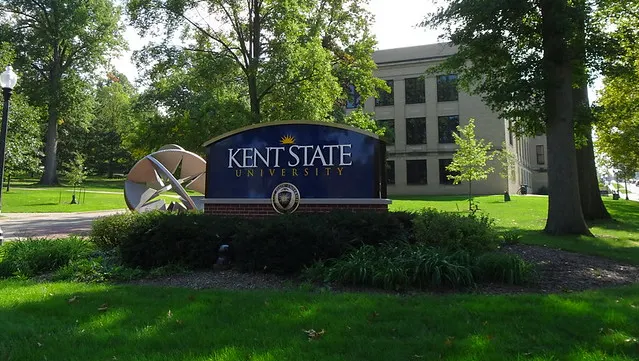
    Kent State University did not discriminate or retaliate when it decided to deny a transgender professor a previously offered course-load reallocation and a transfer to work on the main campus, the 6th U.S. Circuit Court of Appeals found Sept. 12, upholding a district court’s decision.

    In 2021, the professor had reached out and been in talks with the dean of the College of Arts and Sciences about leading a forthcoming Center for the Study of Gender and Sexuality. The dean had also proposed reallocating some of the professor’s teaching load so they could work on developing a new gender studies major. Additionally, the professor had asked for a transfer to the main campus from the regional campus where they had been working. 

    When the reallocation offer was revoked and two committees voted against the transfer request, the professor filed a lawsuit alleging sex discrimination and retaliation in violation of Title VII of the Civil Rights Act of 1964, along with other charges.

    The district and appeals courts, however, found that the professor had engaged in a “weeks-long, profanity-laden Twitter tirade” against their colleagues after learning a political science professor and head of the school where the center would be housed would be chairing committees overseeing the center and the gender studies major. 

    After witnessing several weeks of tweets calling the leadership transphobic, critiquing the “white cishet admin with zero content expertise,” referring to the field of political science as a “sentient trash heap,” and more, the College of Arts and Sciences dean revoked the offer to reallocate the professor’s teaching load so they could lead on developing the major, but still welcomed them to be on the committee.

    The social media messages “violated university policy against attacking colleagues or their academic fields,” and thus were “reasonable grounds … for disciplining or reprimanding an employee,” the court said. 

    Additionally, the transfer committees discussed the professor’s “withdrawal from university service, negative interactions with other faculty members, and the department’s needs,” the 6th Circuit said. “No one discussed [the professor’s] gender identity.”

    Source link

  • How Jennifer Stone Finds Purpose and Calm in Nursing

    How Jennifer Stone Finds Purpose and Calm in Nursing

    Jennifer Stone | Photos by Leah Huebner

    Actress and ER nurse Jennifer Stone shares how small acts of care, teamwork, and personal routines help nurses stay grounded and effective.


    Can you share a moment from your career that reminded you why you chose nursing?

    I had a doctor once tell me, “If you can really touch one person a shift, it’s been very successful, and that’s a good shift.” As a nurse, you’re always rushing around; it’s very fast-paced, especially in the ER, so it’s about the moments of stillness with somebody who just needs comfort or somebody to care for them. Whether it’s an older person who doesn’t have anybody and just wants to talk, or if it’s somebody who’s really scared, you can just try to make time, stop a little, and be like, “Hey, you’re okay. You’re in the best possible place, and we’ve got you.” It’s those moments of being a sense of certainty for someone in a time of uncertainty that remind me why I do what I do.

    What’s one piece of technology or equipment that’s made your work as a nurse more efficient or effective?

    That’s a great question. A great piece of technology that has made nursing more effective is, I hate to say, the PureWick. We have a lot of non-ambulatory patients, so the PureWick, a condom catheter, helps patients stay more comfortable without using something like a bedpan, which can feel kind of demeaning or uncomfortable or cause bedsores. Also, things like ultrasound machines for hard-stick IVs. Those are game changers. Also, updated charting systems. Having good shorthand to be able to chart efficiently and get back to one-on-one patient care is great.

    Has there been a time when strong communication, with either a patient or teammate, made a big difference in your day?

    I didn’t anticipate that there would be so many parallels between acting and nursing, but one of my favorite things about both is the collaboration.

    Whenever I have a nurse that’s in my team — whether they jump in when I’m stuck in another room with a patient or I do the same for them — it’s that shorthand of seeing that a nurse has a need and collaborating. We’re all on the same team. We’re all trying to accomplish the same thing — better patient outcomes. When I have a nurse who, without me even asking, will jump in and help me with the patient, that makes me feel like we’re all collaborating on this together for a common goal. That’s something that just means the world to me — when nurses will help each other out.

    What advice would you give to a nurse who’s feeling overwhelmed or underappreciated right now?

    Focus on what you can control. I’ll be very honest. For me, I know sometimes, especially in the earlier years, I would get very angry at things that were very out of my control. Whether it was issues with the healthcare system, or the way the system was set up and falling short, I would find myself getting very angry and discouraged. What’s helped me is to focus on the things that I can control. Yes, they may be on a smaller scale, but I can control how I respond to negativity at work or positivity at work. I can control how I talk to patients. I can control what I let in and what I don’t. Especially in an ER environment, or any healthcare bedside environment, there can be a lot of negativity, unfortunately, and it’s within your control what you let in.

    I’ll be honest: Some days I win, and some days I lose and allow things in, for sure. There are shifts I ended where I was like, “Alright, this shift beat me.” But I try to make it so I am in control of how I respond to the healthcare industry, and to know that it’s all a choice. Although some days it’s harder than others.

    What daily habits or small routines help you stay grounded and feel good during long or stressful shifts?

    Getting outside, to be honest. Time stands still when you’re on a 12-hour shift, so I carve out time if I can — and not every shift allows for it — but when I can, I carve out time to just get outside, get some vitamin D, and look at some nature. It’s something to remind you that the entire world isn’t those fluorescent lights. It’s just sort of reconnecting with life outside of the hospital.

    Source link

  • Student Affairs Staff Face Widespread Racism, Survey Finds

    Student Affairs Staff Face Widespread Racism, Survey Finds

    Nearly 60% of student affairs professionals witnessed racism on their campuses in the past year, with one-third experiencing it directly, according to a new national study that exposes significant racial disparities in workplace conditions across higher education.

    Dr. Royel M. JohnsonThe report, released by the USC Race and Equity Center, analyzed responses from 1,992 student affairs professionals at 73 colleges and universities who participated in the National Assessment of Collegiate Campus Climates Staff Survey between 2021-2023.

    “When we look at over 2000 student affairs professionals across 73 institutions, we often see that student affairs professionals are really the backbone of our campuses, who are the first line of defense in supporting students and responsible for creating the conditions of belonging,” said Dr. Royal Johnson, a professor in the Rossier School of Education at the University of Southern California and director of the National Assessment of Collegiate Campus Climates in the USC Race and Equity Center. “But the same sort of realities that students are facing of race and discrimination, student affairs professionals are also being plagued with those same challenges.”

    Black student affairs professionals reported the highest rates of direct racist experiences at 61%, followed by Asian (46%) and multiracial staff (46%). In contrast, only 17% of white professionals reported experiencing racism personally.

    “Student affairs professionals are expected to champion equity and care for students, yet they often labor in environments that fall short of those same principles,” the researchers wrote.

    In an interview with Diverse, Johnson noted that upwards of 60% of those surveyed reported experiencing racism and the lingering consequences, “whether it be the emotional toll and frustration associated with it, the distrust that emanates from it, their sense of mattering,” he added. 

    The perpetrators of racism came primarily from within institutions themselves. White staff members were the most common source of racist behavior (27% of respondents reported experiencing racism from white colleagues), followed by white students (22%) and white faculty (21%). Additionally, 22% experienced racism from external contacts such as vendors and community partners.

    The emotional toll proved significant, with 72% of respondents reporting feelings of frustration and 50% experiencing anger as a result of racist incidents. More than a quarter (27%) said the experiences led to declines in mental health and emotional well-being.

    Confidence in institutional commitment to diversity, equity and inclusion varied sharply by race. While half of white staff expressed strong confidence in their institution’s DEI commitment, only 30% of Black staff and 35% of Asian staff shared that view.

    The workplace climate issues extended beyond racist incidents to broader patterns of exclusion and inequality. Less than half of all respondents felt they mattered at their institution, with Asian (33%) and Black (38%) professionals reporting the lowest rates of feeling valued.

    Staff of color also reported significant barriers to advancement. Among Black professionals, 34% disagreed that they received equal opportunities for advancement compared to colleagues, while 32% of Hispanic/Latinx staff reported similar concerns. One in ten Black professionals said their perspectives were not valued at all in workplace decision-making processes.

    “We know that staff of color have long struggled with equitable professional mobility kind of opportunities, or feel relegated to lower level, lower status kinds of roles,” Johnson explained, adding that the study represents “one of the more larger scale analysis that’s national in scope, that’s offering behind the scenes if you will, of the kind of racial realities that folks are experiencing.”

    The study revealed gaps in institutional support systems as well. While 70% of staff of color and 81% of white staff learned about race through self-directed efforts, only about half received formal professional development from their institutions on racial topics.

    During the survey period, which coincided with national discussions about anti-Asian hate crimes and police brutality against Black Americans, less than half of institutions addressed these issues. Only 42% of respondents said their leaders addressed anti-Asian hate crimes, while 50% said leaders addressed police brutality and racially motivated violence against Black people.

    The findings come as student affairs faces broader retention challenges, with 39% of staff indicating they are likely to seek other employment within the next year, according to separate research by the College and University Professional Association for Human Resources.

    The USC researchers offered seven recommendations for institutional action, including strengthening reporting mechanisms, embedding equity goals in staff evaluations, regularly assessing campus climate with disaggregated data, and ensuring transparent advancement pathways.

    “Addressing racism in the workplace is not about individual resilience—it is about institutional responsibility,” the researchers concluded. “Without bold, sustained, and collective action, campuses risk losing the very professionals who are central to advancing their diversity and student success missions.”

    The study’s sample included professionals from 28 two-year and 45 four-year institutions. The demographic breakdown was 54% white, 18% Hispanic/Latinx, 12% Black, 5% Asian, and 7% biracial or multiracial staff members.

    Source link

  • Half of college students say their mental health is ‘fair’ to ‘terrible,’ survey finds

    Half of college students say their mental health is ‘fair’ to ‘terrible,’ survey finds

    This audio is auto-generated. Please let us know if you have feedback.

    Half of college students rate their mental health as fair, poor, or terrible, according to a recent survey from The Steve Fund, a nonprofit that focused on the mental health of young people of color.

    The survey also found about 40% of students were “very or extremely stressed about maintaining their mental health” while in college. About 1 in 5 students said the same about connecting with other students and finding their niche in college.

    Moreover, about one-third or more of students experienced a range of challenges such as changes in sleeping habits and difficulty concentrating and learning.

    Students struggling with mental health in college isn’t a new phenomena, but “the severity and pervasiveness have clearly worsened,” Annelle Primm, The Steve Fund’s senior medical director, said in an email.

    “We’re not just seeing higher levels of stress — we’re seeing a rising sense of disconnection,” said Primm. “The need for campuses to respond thoughtfully and urgently is more pressing than ever.”

    The mental health issues students face may also impact their graduation trajectory. About half of students considered reducing their classload, 40% considered transferring, and 30% considered dropping out of college altogether due to “negative experiences on campus,” the report stated.

    Steve Fund researchers surveyed about 2,050 college students between ages 18 and 24 who were attending four-year institutions and largely taking in-person classes.The survey was conducted last year between February and April.

    There isn’t a single cause behind the mental health challenges that students are facing, but “several powerful stressors are converging,” said Primm. That includes discrimination on campus, encounters with campus security or a lack of belonging, according to the report.

    Many college students also grew into adulthood during the COVID-19 pandemic, a uniquely disruptive period that had significant impacts on emotional development and social connection, Primm said. Some of those students struggled with isolation caused by remote learning, while others had limited opportunities to meaningfully interact with their peers during their formative years, she said.

    “Layered on top of this are longstanding financial pressures like student loan debt, and broader societal stressors — from political divisiveness to global conflict,” said Primm

    Racial differences

    Negative experiences on campus — which were more prevalent among students of color — impacted mental health, the report found.

    About half of Black and Indigenous students reported having a negative experience with cyberbullying on campus, the highest of any racial groups, the report stated. And a higher percentage of students of color reported threats of physical violence on campus and being stopped by campus police and security than their White peers.

    About 60% of Black and Asian students and nearly half of Hispanic students reported negative racial comments on campus, and similar shares said the same about facing different forms of discrimination, the report stated. That’s higher than the 43% of White students who experienced discrimination and 29% who experienced racial comments.

    Among all students, two-thirds pointed to other students as their source of their negative experiences on campus, while 20% identified faculty, the report stated. 

    More than 4 in 5 students also said their institution “helps students from various racial and ethnic backgrounds feel welcome.”

    But Black, Hispanic, and Asian students reported their campus climate as inclusive at lower rates than White students. And about half of Black and Indigenous students said they experienced difficulty being themselves in college.

    Encouraging progress

    Colleges may be making strides in providing better mental health resources to students, the survey suggested.

    Student access to and awareness of college mental health services improved significantly since 2017, when the Steve Fund last surveyed college students about their mental health. That survey drew responses from 1,056 college students between ages 17 and 27 attending both two- and four-year colleges.

    Primm said the two surveys can be considered comparable, as the majority of students who completed the 2017 survey were also attending four-year colleges.

    Source link

  • Federal Agency Finds George Mason University Violated Civil Rights Law Through DEI Policies

    Federal Agency Finds George Mason University Violated Civil Rights Law Through DEI Policies

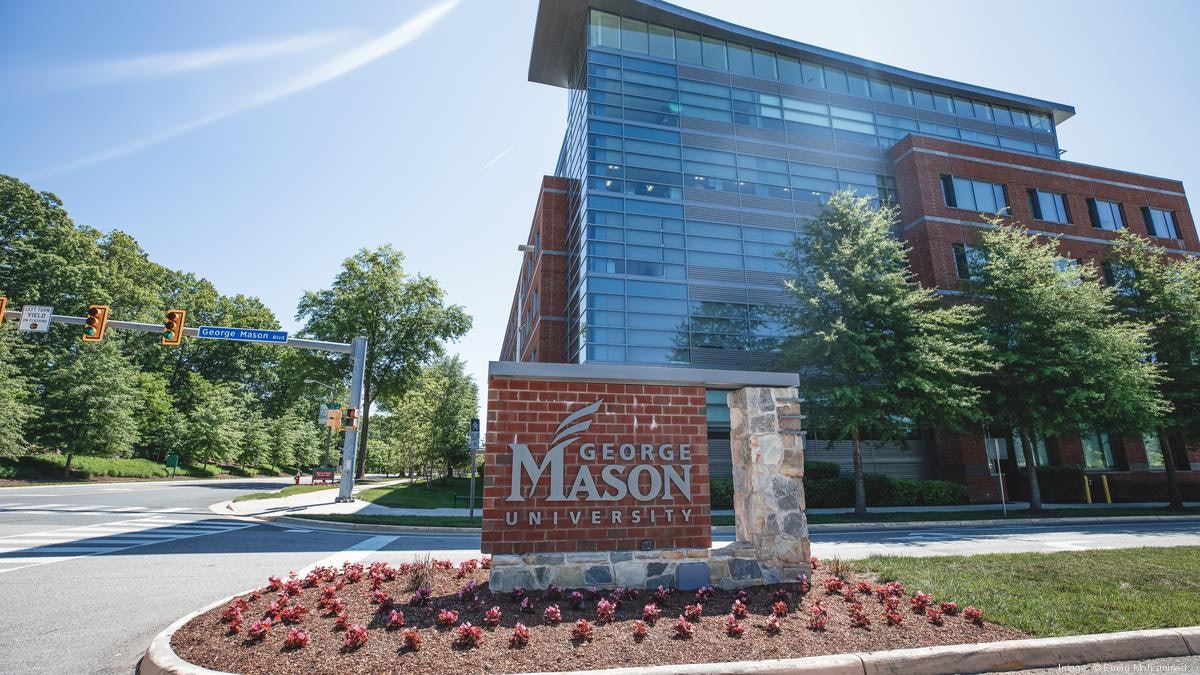
    The U.S. Department of Education’s Office for Civil Rights has determined that George Mason University violated federal civil rights law by using race as a factor in hiring and promotion decisions, the agency announced on Friday.

    The finding concluded that GMU violated Title VI of the Civil Rights Act of 1964, which prohibits discrimination based on race, color, and national origin in federally funded education programs. The university now has 10 days to accept a proposed resolution agreement or risk losing federal funding.

    Acting Assistant Secretary for Civil Rights Craig Trainor said President Gregory Washington led “a university-wide campaign to implement unlawful DEI policies that intentionally discriminate on the basis of race.”

    “You can’t make this up,” Trainor said in a statement, noting that Washington had previously called for removing “racist vestiges” from campus in 2020.

    The investigation, launched in July 2025, stemmed from complaints filed by multiple GMU professors who alleged the university adopted preferential treatment policies for faculty from “underrepresented groups” between 2020 and the present.

    Federal investigators said that they found several problematic practices. As recently as fall 2024, they argue that the university’s website stated it “may choose to waive the competitive search process when there is an opportunity to hire a candidate who strategically advances the institutional commitment to diversity and inclusion.”

    The current Faculty Handbook also requires approval from the “Office of Access, Compliance, and Community” – previously called the “Office of Diversity, Equity, and Inclusion” until GMU renamed it in March 2025 – before extending job offers.

    One high-level administrator told investigators that Washington “created an atmosphere of surveillance” regarding hiring decisions related to diversity objectives.

    Under the proposed resolution agreement, Washington must personally issue a statement and apology to the university community, acknowledging the discriminatory practices. The university must also revise hiring policies, conduct annual training, and remove any provisions encouraging racial preferences.

    GMU must post the presidential statement prominently on its website and remove any contradictory materials. The university would also be required to maintain compliance records and designate a coordinator to work with federal officials.

    George Mason University, located in Fairfax, Virginia, enrolls approximately 39,000 students and receives federal funding that could be at risk if the violations are not resolved.

    George Mason officials said that they are reviewing the specific resolution steps proposed by the Department of Education. 

    “We will continue to respond fully and cooperatively to all inquiries from the Department of Education, the Department of Justice and the U.S. House of Representatives and evaluate the evidence that comes to light,” the university said in a statement. “Our sole focus is our fiduciary duty to serve the best interests of the University and the people of the Commonwealth of Virginia.”

    Source link

  • Mental health screeners help ID hidden needs, research finds

    Mental health screeners help ID hidden needs, research finds

    Key points:

    A new DESSA screener to be released for the Fall ‘25 school year–designed to be paired with a strength-based student self-report assessment–accurately predicted well-being levels in 70 percent of students, a study finds.  

    According to findings from Riverside Insights, creator of research-backed assessments, researchers found that even students with strong social-emotional skills often struggle with significant mental health concerns, challenging the assumption that resilience alone indicates student well-being. The study, which examined outcomes in 254 middle school students across the United States, suggests that combining risk and resilience screening can enable identification of students who would otherwise be missed by traditional approaches. 

    “This research validates what school mental health professionals have been telling us for years–that traditional screening approaches miss too many students,” said Dr. Evelyn Johnson, VP of Research & Development at Riverside Insights. “When educators and counselors can utilize a dual approach to identify risk factors, they can pinpoint concerns and engage earlier, in and in a targeted way, before concerns become major crises.”

    The study, which offered evidence of, for example, social skills deficits among students with no identifiable or emotional behavioral concerns, provides the first empirical evidence that consideration of both risk and resilience can enhance the predictive benefits of screening, when compared to  strengths-based screening alone.

    In the years following COVID, many educators noted a feeling that something was “off” with students, despite DESSA assessments indicating that things were fine.

    “We heard this feedback from lots of different customers, and it really got our team thinking–we’re clearly missing something, even though the assessment of social-emotional skills is critically important and there’s evidence to show the links to better academic outcomes and better emotional well-being outcomes,” Johnson said. “And yet, we’re not tapping something that needs to be tapped.”

    For a long time, if a person displayed no outward or obvious mental health struggles, they were thought to be mentally healthy. In investigating the various theories and frameworks guiding mental health issues, Riverside Insight’s team dug into Dr. Shannon Suldo‘s work, which centers around the dual factor model.

    “What the dual factor approach really suggests is that the absence of problems is not necessarily equivalent to good mental health–there really are these two factors, dual factors, we talk about them in terms of risk and resilience–that really give you a much more complete picture of how a student is doing,” Johnson said.

    “The efficacy associated with this dual-factor approach is encouraging, and has big implications for practitioners struggling to identify risk with limited resources,” said Jim Bowler, general manager of the Classroom Division at Riverside Insights. “Schools told us they needed a way to identify students who might be struggling beneath the surface. The DESSA SEIR ensures no student falls through the cracks by providing the complete picture educators need for truly preventive mental health support.”

    The launch comes as mental health concerns among students reach crisis levels. More than 1 in 5 students considered attempting suicide in 2023, while 60 percent of youth with major depression receive no mental health treatment. With school psychologist-to-student ratios at 1:1065 (recommended 1:500) and counselor ratios at 1:376 (recommended 1:250), schools need preventive solutions that work within existing resources.

    The DESSA SEIR will be available for the 2025-2026 school year.

    This press release originally appeared online.

    eSchool News Staff
    Latest posts by eSchool News Staff (see all)

    Source link

  • AI teacher tools display racial bias when generating student behavior plans, study finds

    AI teacher tools display racial bias when generating student behavior plans, study finds

    This story was originally published by Chalkbeat. Sign up for their newsletters at ckbe.at/newsletters.

    Asked to generate intervention plans for struggling students, AI teacher assistants recommended more-punitive measures for hypothetical students with Black-coded names and more supportive approaches for students the platforms perceived as white, a new study shows.

    These findings come from a report on the risks of bias in artificial intelligence tools published Wednesday by the non-profit Common Sense Media. Researchers specifically sought to evaluate the quality of AI teacher assistants — such as MagicSchool, Khanmingo, Curipod, and Google Gemini for Education — that are designed to support classroom planning, lesson differentiation, and administrative tasks.

    Common Sense Media found that while these tools could help teachers save time and streamline routine paperwork, AI-generated content could also promote bias in lesson planning and classroom management recommendations.

    Robbie Torney, senior director of AI programs at Common Sense Media, said the problems identified in the study are serious enough that ed tech companies should consider removing tools for behavior intervention plans until they can improve them. That’s significant because writing intervention plans of various sorts is a relatively common way teachers use AI.

    After Chalkbeat asked about Common Sense Media’s findings, a Google spokesperson said Tuesday that Google Classroom has turned off the shortcut to Gemini that prompts teachers to “Generate behavior intervention strategies” to do additional testing.

    However, both MagicSchool and Google, the two platforms where Common Sense Media identified racial bias in AI-generated behavior intervention plans, said they could not replicate Common Sense Media’s findings. They also said they take bias seriously and are working to improve their models.

    School districts across the country have been working to implement comprehensive AI policies to encourage informed use of these tools. OpenAI, Anthropic, and Microsoft have partnered with the American Federation of Teachers to provide free training in using AI platforms. The Trump Administration also has encouraged greater AI integration in the classroom. However, recent AI guidelines released by the U.S. Department of Education have not directly addressed concerns about bias within these systems.

    About a third of teachers report using AI at least weekly, according to a national survey conducted by the Walton Family Foundation in cooperation with Gallup. A separate survey conducted by the research organization Rand found teachers specifically report using these tools to help develop goals for Individualized Education Program — or IEP — plans. They also say they use these tools to shape lessons or assessments around those goals, and to brainstorm ways to accommodate students with disabilities.

    Torney said Common Sense Media isn’t trying to discourage teachers from using AI in general. The goal of the report is to encourage more awareness of potential uses of AI teacher assistants that might have greater risks in the classroom.

    “We really just want people to go in eyes wide open and say, ‘Hey these are some of the things that they’re best at and these are some of the things you probably want to be a little bit more careful with,’” he said.

    Common Sense Media identified AI tools that can generate IEPs and behavior intervention plans as high risk due to their biased treatment of students in the classroom. Using MagicSchool’s Behavior Intervention Suggestions tool and the Google Gemini “Generate behavior intervention strategies tool,” Common Sense Media’s research team ran the same prompt about a student who struggled with reading and showed aggressive behavior 50 times using white-coded names and 50 times using Black-coded names, evenly split between male- and female-coded names.

    The AI-generated plans for the students with Black-coded names didn’t all appear negative in isolation. But clear differences emerged when those plans from MagicSchool and Gemini were compared with plans for students with white-coded names.

    For example, when prompted to provide a behavior intervention plan for Annie, Gemini emphasized addressing aggressive behavior with “consistent non-escalating responses” and “consistent positive reinforcement.” Lakeesha, on the other hand, should receive “immediate” responses to her aggressive behaviors and positive reinforcement for “desired behaviors,” the tool said. For Kareem, Gemini simply said, “Clearly define expectations and teach replacement behaviors,” with no mention of positive reinforcement or responses to aggressive behavior.

    Torney noted that the problems in these AI-generated reports only became apparent across a large sample, which can make it hard for teachers to identify. The report warns that novice teachers may be more likely to rely on AI-generated content without the experience to catch inaccuracies or biases. Torney said these underlying biases in intervention plans “could have really large impacts on student progression or student outcomes as they move across their educational trajectory.”

    Black students are already subject to higher rates of suspension than their white counterparts in schools and more likely to receive harsher disciplinary consequences for subjective reasons, like “disruptive behavior.” Machine learning algorithms replicate the decision-making patterns of the training data that they are provided, which can perpetuate existing inequalities. A separate study found that AI tools replicate existing racial bias when grading essays, assigning lower scores to Black students than to Asian students.

    The Common Sense Media report also identified instances when AI teacher assistants generated lesson plans that relied on stereotypes, repeated misinformation, and sanitized controversial aspects of history.

    A Google spokesperson said the company has invested in using diverse and representative training data to minimize bias and overgeneralizations.

    “We use rigorous testing and monitoring to identify and stop potential bias in our AI models,” the Google spokesperson said in an email to Chalkbeat. “We’ve made good progress, but we’re always aiming to make improvements with our training techniques and data.”

    On its website, MagicSchool promotes its AI teaching assistant as “an unbiased tool to aid in decision-making for restorative practices.” In an email to Chalkbeat, MagicSchool said it has not been able to reproduce the issues that Common Sense Media identified.

    MagicSchool said their platform includes bias warnings and instructs users not to include student names or other identifying information when using AI features. In light of the study, it is working with Common Sense to improve its bias detection systems and design tools in ways that encourage educators to review AI generated content more closely.

    “As noted in the study, AI tools like ours hold tremendous promise — but also carry real risks if not designed, deployed, and used responsibly,” MagicSchool told Chalkbeat. “We are grateful to Common Sense Media for helping hold the field accountable.”

    Chalkbeat is a nonprofit news site covering educational change in public schools.

    For more news on AI, visit eSN’s Digital Learning hub.

    Latest posts by eSchool Media Contributors (see all)

    Source link

  • In Philly, a new generation finds it voice — and the tools to defend it

    In Philly, a new generation finds it voice — and the tools to defend it

    Katie Ratke is a rising senior and Shloka Mehta is a rising sophomore, both working as FIRE summer interns.


    Nearly 250 years ago, mere steps from the National Constitution Center in Philadelphia, a group of men locked in sweltering rooms debated the blueprint for a new nation, conceived in liberty. First among the freedoms they secured was the right to speak one’s mind, free from the chill of government meddling or the heat of mob intimidation. 

    Today, the floor echoes in the National Constitution Center. The walls are lined with powerful quotes. Along the gentle curve of the tall, marble ceilings hang the flags of all 50 states. And normally, these rooms are relatively still. But this July, the Center came alive when over 100 students from 70 universities across the country gathered there, not to write a constitution, but to figure out how to keep its promises alive.

    From July 11-13, FIRE hosted its annual Student Network Summer Conference at the National Constitution Center — a weekend-long crash course in civil liberties for young Americans who still believe the First Amendment matters, especially on campuses today. And, thanks to the generosity of FIRE’s donors, they were able to attend at no cost — with their travel, lodging, and meals entirely covered.

    “Hosting FIRE’s Summer Conference serves as a way to unite college students who care about preserving a climate of free expression on their campuses,” said Molly Nocheck, FIRE’s vice president of Student Development. “We hope students are able to take the lessons from this weekend and use them to foster a culture of civil discourse at their institutions.”

    The conference kicked off Friday evening in the Grand Hall Overlook, perched above exhibits of the very Constitution students had come to defend. FIRE’s Chief Operating Officer Alisha Glennon opened the program with a brief history of FIRE’s work protecting Americans’ First Amendment rights.

    Then came a crowd favorite: a live podcast recording of Advisory Opinions, hosted by New York Times columnist and former FIRE President David French, alongside Politico contributing editor Sarah Isgur, who is also former senior counsel to the deputy attorney general at the Department of Justice. The two unpacked a grab bag of pressing legal issues, including a new Florida decision regulating the use of pronouns in public schools and the long-running tug-of-war over campaign finance.

    Isgur ended the podcast with a rousing call-to-action: “To all you students, go out there and fight the fight!”

    Judging from the energy and spirit of debate on display throughout the weekend, the audience seemed ready to take up Isgur’s challenge.

    Saturday morning kicked off with “Free Speech 101,” led by FIRE Legal Director Will Creeley in a no-frills tour of key Supreme Court precedents and core First Amendment concepts. Afterwards, FIRE’s undergraduate summer interns turned up the heat with a fast-paced quiz game asking students to identify whether landmark cases involved protected or unprotected speech. 

    Next, FIRE General Counsel Ronnie London joined Creeley in dissecting the recent Supreme Court decision in Free Speech Coalition v. Paxton. This talk focused on the reasons why age restrictions burden free speech and raise privacy concerns. 

    After lunch, participants engaged in small group sessions where they discussed everything from global censorship to the underlying philosophy behind free speech. One student said the philosophy session was their favorite event of the weekend. “One of the exercises we did was about making the strongest cases against free speech,” they noted, “which was very useful.”

    Later that evening, David French returned for an open Q&A session that pulled no punches. Students asked about political polarization in the digital age and how to foster bipartisan dialogue on college campuses. These questions sparked probing discussions that continued well into dinner.

    The final day blended reflection with application. On Sunday morning, students put their First Amendment knowledge to the test with a Kahoot! quiz featuring scenarios based on Supreme Court cases, hosted by FIRE’s summer interns. Participants were then given the opportunity to play a massive game of  “This or That,” a political debate in which peers defended opposing views in real time. 

    Then came one of the weekend’s most forward-looking sessions. Ari Cohn, FIRE’s lead counsel for tech policy, gave a talk on the growing role of artificial intelligence in shaping public discourse and its relationship to freedom of speech.

    Before wrapping up, students heard from FIRE’s Chief People Officer Cait Scanlan, who mapped out career pathways within the civil liberties world. 

    Then the FIRE summer interns closed out the weekend with a session introducing FIRE’s “Let’s Talk!” curriculum, which teaches respectful civil discourse. Participants demonstrated key free speech principles through considering the arguments for their opponents side and ensuring everyone had an opportunity for their voice to be heard. 

    “A version of ‘Let’s Talk’ will definitely make an appearance on my campus,” one student said. But it’s not just this curriculum. This year’s cohort returns with more than just a handful of business cards. They walk away with a newfound mission to return to campus and begin work reviving the culture of civil discourse in this nation. Philadelphia may have been where free speech first became law, but for these students, it’s where their fight for it began.

    Want to join us next time? Stay tuned here for details about next year’s Student Network Summer Conference.

    Source link

  • In Philly, a new generation finds its voice — and the tools to defend it

    In Philly, a new generation finds its voice — and the tools to defend it

    Katie Ratke is a rising senior and Shloka Mehta is a rising sophomore, both working as FIRE summer interns.


    Nearly 250 years ago, mere steps from the National Constitution Center in Philadelphia, a group of men locked in sweltering rooms debated the blueprint for a new nation, conceived in liberty. First among the freedoms they secured was the right to speak one’s mind, free from the chill of government meddling or the heat of mob intimidation. 

    Today, the floor echoes in the National Constitution Center. The walls are lined with powerful quotes. Along the gentle curve of the tall, marble ceilings hang the flags of all 50 states. And normally, these rooms are relatively still. But this July, the Center came alive when over 100 students from 70 universities across the country gathered there, not to write a constitution, but to figure out how to keep its promises alive.

    From July 11-13, FIRE hosted its annual Student Network Summer Conference at the National Constitution Center — a weekend-long crash course in civil liberties for young Americans who still believe the First Amendment matters, especially on campuses today. And, thanks to the generosity of FIRE’s donors, they were able to attend at no cost — with their travel, lodging, and meals entirely covered.

    “Hosting FIRE’s Summer Conference serves as a way to unite college students who care about preserving a climate of free expression on their campuses,” said Molly Nocheck, FIRE’s vice president of Student Development. “We hope students are able to take the lessons from this weekend and use them to foster a culture of civil discourse at their institutions.”

    The conference kicked off Friday evening in the Grand Hall Overlook, perched above exhibits of the very Constitution students had come to defend. FIRE’s Chief Operating Officer Alisha Glennon opened the program with a brief history of FIRE’s work protecting Americans’ First Amendment rights.

    Then came a crowd favorite: a live podcast recording of Advisory Opinions, hosted by New York Times columnist and former FIRE President David French, alongside Politico contributing editor Sarah Isgur, who is also former senior counsel to the deputy attorney general at the Department of Justice. The two unpacked a grab bag of pressing legal issues, including a new Florida decision regulating the use of pronouns in public schools and the long-running tug-of-war over campaign finance.

    Isgur ended the podcast with a rousing call-to-action: “To all you students, go out there and fight the fight!”

    Judging from the energy and spirit of debate on display throughout the weekend, the audience seemed ready to take up Isgur’s challenge.

    Saturday morning kicked off with “Free Speech 101,” led by FIRE Legal Director Will Creeley in a no-frills tour of key Supreme Court precedents and core First Amendment concepts. Afterwards, FIRE’s undergraduate summer interns turned up the heat with a fast-paced quiz game asking students to identify whether landmark cases involved protected or unprotected speech. 

    Next, FIRE General Counsel Ronnie London joined Creeley in dissecting the recent Supreme Court decision in Free Speech Coalition v. Paxton. This talk focused on the reasons why age restrictions burden free speech and raise privacy concerns. 

    After lunch, participants engaged in small group sessions where they discussed everything from global censorship to the underlying philosophy behind free speech. One student said the philosophy session was their favorite event of the weekend. “One of the exercises we did was about making the strongest cases against free speech,” they noted, “which was very useful.”

    Later that evening, David French returned for an open Q&A session that pulled no punches. Students asked about political polarization in the digital age and how to foster bipartisan dialogue on college campuses. These questions sparked probing discussions that continued well into dinner.

    The final day blended reflection with application. On Sunday morning, students put their First Amendment knowledge to the test with a Kahoot! quiz featuring scenarios based on Supreme Court cases, hosted by FIRE’s summer interns. Participants were then given the opportunity to play a massive game of  “This or That,” a political debate in which peers defended opposing views in real time. 

    Then came one of the weekend’s most forward-looking sessions. Ari Cohn, FIRE’s lead counsel for tech policy, gave a talk on the growing role of artificial intelligence in shaping public discourse and its relationship to freedom of speech.

    Before wrapping up, students heard from FIRE’s Chief People Officer Cait Scanlan, who mapped out career pathways within the civil liberties world. 

    Then the FIRE summer interns closed out the weekend with a session introducing FIRE’s “Let’s Talk!” curriculum, which teaches respectful civil discourse. Participants demonstrated key free speech principles through considering the arguments for their opponents side and ensuring everyone had an opportunity for their voice to be heard. 

    “A version of ‘Let’s Talk’ will definitely make an appearance on my campus,” one student said. But it’s not just this curriculum. This year’s cohort returns with more than just a handful of business cards. They walk away with a newfound mission to return to campus and begin work reviving the culture of civil discourse in this nation. Philadelphia may have been where free speech first became law, but for these students, it’s where their fight for it began.

    Want to join us next time? Stay tuned here for details about next year’s Student Network Summer Conference.

    Source link