Tag: fine

  • Texas State’s ‘value neutral instruction’ walks a fine (and risky) line

    Texas State’s ‘value neutral instruction’ walks a fine (and risky) line

    Over the past year, many Texas politicians and university leaders have pursued hamfisted and unconstitutional higher education reforms that too often violate the expressive rights of students and faculty. 

    We recently explained how some government officials misread the law and used online outrage to chill controversial speech and punish a Texas A&M professor for protected expression. Other recent highlights from Texas include a campus speech law prohibiting expressive activities after 10:00 p.m. and a systemwide ban on drag shows at Texas A&M schools. In both cases, FIRE filed suit and won preliminary victories ensuring students can continue exercising their expressive rights.

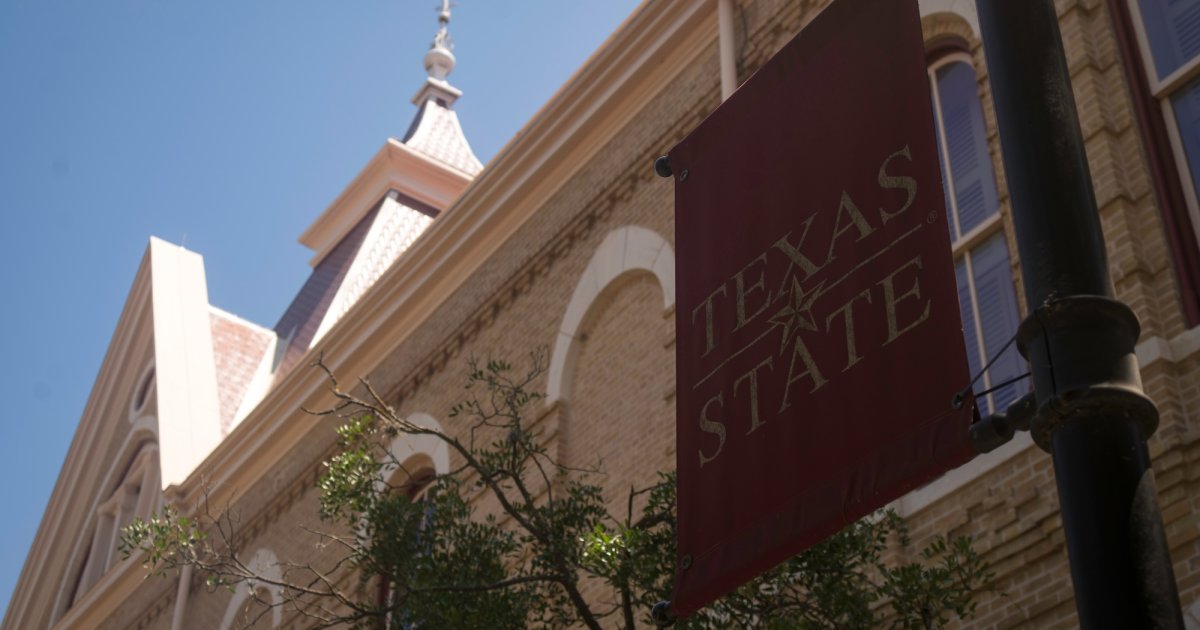
    Recently, FIRE learned that Texas State University is taking its own stab at institutional reform. It is conducting a “curricular review” built around a guide titled “Value Neutral Instruction and the Curriculum,” which encourages faculty to frame their teaching around inquiry and intellectual exploration, rather than beginning from predetermined conclusions.

    This is a sound pedagogical goal. Professors should present competing arguments and perspectives to students, teach them to evaluate the evidence and think critically, and arrive at their own conclusions. And the guidance does much more than most to protect the core of academic freedom and stay within constitutional bounds. However, like many other efforts at curricular reform, it nevertheless risks chilling protected expression and infringing upon academic freedom. The Devil, as they say, is in the details.

    The good

    Much of the guidance is framed as best practices, not mandatory policy. That matters because academic freedom requires giving faculty broad latitude to direct classroom discussion and design syllabi as they see fit. The guidance also focuses more on teaching style than class content, which limits the scope of the risks discussed below.

    It also promises that faculty may “share their own scholarly perspective when relevant,” and that academic freedom includes the right to “pursue truth without political constraints” and reach “controversial scholarly conclusions.” Those provisions are essential because faculty at public colleges have the First Amendment right to teach pedagogically relevant material. And unlike many reform efforts that offer vague nods to academic freedom, this language specifies what faculty can actually do — pursue truth, reach controversial conclusions, and share their views in class.

    Regarding course content, the guidance makes clear that faculty may “cover any topic, including obvious moral wrongs,” and when it comes to “contested questions . . . neutral instruction does not avoid these topics” (more on that later). This is a far cry from the many bills we’ve opposed that identify certain “divisive concepts” and restrict the freedom to discuss them in class. Here again, constitutional considerations demand nothing less. The Supreme Court has explained that the First Amendment “does not tolerate laws that cast a pall of orthodoxy over the classroom.”

    VICTORY: Federal court halts Texas’ ‘no First Amendment after dark’ campus speech ban

    A federal judge issued a preliminary injunction blocking the University of Texas from enforcing a law that bans virtually all free speech on public university campuses after dark


    Read More

    The guidance also protects the right of students to come to their own conclusions, stating that they should not be graded on viewpoint-based criteria, such as “whether [they] agree with [a] particular ideology.” Along the same lines, the guidance warns against class learning objectives that assume students will leave with particular viewpoints, highlighting some examples that it claims are “frequently flagged”: 

    • “Students will value diversity”
    • “Students will demonstrate commitment to social justice”
    • “Students will recognize their privilege”
    • “Students will develop empathy for marginalized groups”
    • “Students will embrace antiracist identity”

    If this type of learning objective is common, as the guidance claims, that’s a real problem for students’ freedom to come to their own well-reasoned conclusions. Such learning outcomes stray from education and veer into indoctrination.

    The guidance instead suggests that students should leave any class with the ability to:

    1. Remember: Retrieve relevant knowledge. 

    2. Understand: Construct meaning from material. 

    3. Apply: Use procedures in given situations. 

    4. Analyze: Break material into parts and determine relationships. 

    5. Evaluate: Make judgments based on criteria. 

    6. Create: Put elements together to form coherent whole.

    In sum: Students should learn the material, understand the material, and be able to apply the material to reach their own well-reasoned conclusions. These are high-level learning objectives, and setting them is well within the purview of university decision-makers.

    The risks

    While the language highlighted above may be unobjectionable, or even desirable on its face, it’s important to remember the context in which it comes: a review of the entire curriculum. This review might fairly aim to target courses with ideologically prescriptive learning outcomes, but it could also be a leverage point for strictly applying the guidelines and targeting disfavored ideas. We have warned schools that curricular reviews targeting certain ideas can violate the First Amendment by creating a chilling effect. 

    And right off the bat, the guidance dips its toe in these waters by advising faculty to avoid using particular words or phrases in course titles and descriptions. For example, the guidance cautions against using the following words in course titles: “Dismantling, Decolonizing, Interrogating, Challenging, Centering, Combating, Liberation, Resistance, Activism, Justice-Oriented, Transformative, Anti-[Group], and Pro-[Political Position].”

    Although public university leaders may give some direction to educational style and goals, the guidance’s focus on particular words suggests a level of pedagogical micromanagement that will chill expression and undermine faculty autonomy.

    If this process results in Texas State censoring professors or banning ideas from the classroom, we urge faculty to reach out to FIRE.

    And its core framing language — “value-neutral instruction” — is itself fraught. Texas State positions this principle as a defining feature of its curriculum going forward, but public university faculty members have a First Amendment right to share their non-neutral views on relevant material. Though despite this framing concern, the guidance explicitly protects that right.

    The guidance also says professors should consider whether a class reading list “represent[s] intellectual pluralism.” But as ever with this type of direction, the question is: how much pluralism is enough?

    The key with these provisions will be how they’re applied, particularly within the context of the curricular review. Are they merely best practices that serve as high-level pedagogical guidance from the university? Or are they policies that will be strictly enforced to target disfavored ideas and micromanage classroom discussion?

    Similarly, although the guidance tells faculty that they should not “avoid [controversial] topics,” it adds that “neutral instruction . . . approaches them differently.” Suggested best practices include avoiding straw-man arguments, focusing on the logical structures of different arguments, modeling intellectual humility, and prioritizing process over outcome. In general, this is legitimate pedagogical guidance. But again, professors must retain wide latitude to apply them in different ways that fit particular classroom environments and pedagogical imperatives. And these standards must never serve as a pretext to punish professors for expressing or defending controversial but relevant ideas.

    In this fraught moment for higher education, we must remember that not every attempt at institutional reform is created equal. Some are good-faith attempts to redirect educational approaches and goals. Others attempt to police ideas and micromanage discussion. In Texas State’s case, there’s both reason for caution and room for optimism. We’ll soon see whether university leaders are serious about academic freedom when the rubber meets the road. 

    If this process results in Texas State censoring professors or banning ideas from the classroom, we urge faculty to reach out to FIRE. Faculty can submit a case online or reach out to us via our 24-hour Faculty Legal Defense Fund hotline at 254-500-FLDF (3533).

    Source link

  • $1.2B Fine, Nix Trans Athlete Wins, More

    $1.2B Fine, Nix Trans Athlete Wins, More

    Juliana Yamada/Los Angeles Times/Getty Images

    The details of the Trump administration’s demands on the University of California, Los Angeles—in addition to the previously reported $1.2 billion payout the federal government asked for—have finally been revealed. A lawsuit by UC faculty unions forced the higher ed system to release a copy of a draft resolution agreement, shedding light on the terms UC was first faced with nearly three months ago.

    The Trump administration has demanded, among other things, that UCLA not enroll “foreign students likely to engage in anti-Western, anti-American, or antisemitic disruptions or harassment.” In the same paragraph, the proposed resolution agreement says UCLA would have to “socialize international students to the norms of a campus dedicated to free inquiry and open debate.”

    The federal government also demanded that UCLA ban overnight campus demonstrations and mandate that masked campus protesters reveal their identities when asked.

    Multiple provisions aim to limit transgender individuals’ rights. The document demands that UCLA’s medical school and affiliated hospitals stop “performing hormonal interventions and ‘transgender’ surgeries” on anyone under 18; stop allowing transgender women to play on women’s sports teams; strip records, awards and other recognition from transgender women athletes; and send personal apologies to the cisgender women who placed lower than trans athletes.

    California voters banned affirmative action in public education nearly 30 years ago, but the demand letter suggests the Trump administration doesn’t think UCLA has complied. It would require UCLA to bar providing “information about candidates’ race, sex, ethnicity, or other protected characteristics to faculty or other UCLA personnel with decision-making authority over hiring, retention, promotion or tenure.”

    Other provisions target affirmative action in hiring and student admissions, including a line that says, “UCLA shall discontinue race- and ethnicity-based scholarships.” The proposed agreement says “proxies used to effectuate race-based or sex-based outcomes” aren’t allowed in selecting for fellowship programs and also bans the use of such undefined proxies in hiring and admissions.

    The document’s release comes after UC said in early August that it would negotiate with the federal government, citing the estimated $584 million in funding that at least three different federal agencies had announced they were suspending. That funding freeze followed a July 29 letter to UC from the Department of Justice, which said its months-long investigations across the system had so far concluded that in its response to a pro-Palestinian protest encampment in spring 2024, UCLA violated the equal protection clause of the 14th Amendment and Title VI of the Civil Rights Act of 1964.

    It was yet another example of the Trump administration accusing a selective university of tolerating antisemitism and cutting off hundreds of millions of federal dollars. But, unlike Harvard and Columbia Universities, UCLA is a public institution, and its targeting by the federal government represents an expansion of the administration’s campaign to overhaul higher ed.

    Last week, the University of Virginia became the first known public institution to settle with the administration over discrimination allegations. That settlement didn’t require a payout, but among other things, UVA committed to not use proxies for race; to end all diversity, equity and inclusion programming; and to prohibit trans athletes from participating in sports.

    Media earlier reported some of the administration’s demands on UCLA, but university officials didn’t make the details public until Friday, when a lawsuit by the UCLA Faculty Association and Council of UC Faculty Associations forced them to.

    “Accession to these demands would be to undermine everything that has made the UC the successful engine of social mobility and economic might that it has been for our state,” Anna Markowitz, president of the UCLA Faculty Association, wrote in an email. “It will harm undergraduate learning opportunities, and hamper UC’s ability to be a scholarly leader on the international stage. It enshrines ideology at the heart of the institution rather than decades of empirical and scholarly understanding. We stand against this extortion effort.”

    Markowitz said the “UCLA FA and CUCFA have stood with our union colleagues in calling for no negotiations since the beginning.” The university administration “is under intense federal pressure,” she said, and she urged them to resist—“particularly because other faculty legal action has resulted in the restoration of nearly all of the temporarily suspended federal grants.”

    Indeed, Stett Holbrook, a UC spokesperson, wrote in an email to Inside Higher Ed Monday that “as for terminated federal research funds, that figure is in the tens of millions”—a far cry from the August estimate of $584 million.

    He provided a statement saying, “UC has been clear it must evaluate its response to the administration’s settlement proposal that, like all settlement communications, is confidential. As stated previously, the proposed $1.2 billion settlement payment alone would derail work that saves lives, grows our economy, and fortifies our national security. UC remains committed to protecting the mission, governance, and academic freedom of the University.”

    White House and DOJ officials didn’t respond to requests for interviews Monday or answer written questions.

    Source link

  • The OfS’s fine on Sussex is a blow against free speech, not for it

    The OfS’s fine on Sussex is a blow against free speech, not for it

    • Peter Scott is Emeritus Professor of Higher Education Studies at UCL and was Vice-Chancellor of Kingston University between 1998 and 2010.

    Freedom of speech and academic freedom are difficult enough to define and police. The task has become more difficult because they have got caught up in the two most toxic issues of the moment – Palestinian rights and anti-Zionism (seen as shading into anti-semitism) on the one hand and support for the Israeli Government on the other; and women’s and trans rights and transphobia. Never has it been more true that hard cases make bad law.

    This seems to have been lost on the Office for Students with its recent decision on the Kathleen Stock case, whose gender-critical views had led to protests and demonstrations by trans activists, to fine the University of Sussex more than £500,000 (with the threat that fines could be even higher for universities which, in the eyes of the OfS, fail to protect free speech and academic freedom in a similar way). Unsurprisingly, that decision is being challenged by Sussex on a number of grounds, including the OfS’s refusal to meet the University’s representatives face-to-face before reaching it, a curious decision in the light of normal proceedings in legal and quasi-legal cases. Remember the lawyers’ old Latin tag audi alteram partem.

    The Stock case was one of three recent high-profile free speech cases. The two others were the case of David Miller, the University of Bristol professor who won an employment tribunal case after his dismissal by the University for his anti-Zionist views and that of Jo Phoenix, the Open University (OU) professor who won a similar case for constructive dismissal following the University’s failure to support her when attacked for her gender critical views.

    The same two toxic issues were in play in all three cases. It is difficult to see how, from the OfS’s perspective, Bristol and the OU were not as much in breach as Sussex of the OfS’s regulatory condition E1 for failing to uphold the relevant public interest governance principles (ensuring staff have the freedom ‘to question and test received wisdom’ and ‘to put forward new ideas and unpopular opinions’ without placing themselves in jeopardy). Two separate employment tribunals found that this is exactly what happened to Professors Miller and Phoenix, although in the first case through gritted teeth. Constructive dismissal and dismissal certainly count as being placed ‘in jeopardy’.

    The OfS opened its investigation into ‘free speech matters’ at Sussex under the general powers it had under its regulatory framework. The fine was assessed within the same framework. The Higher Education (Freedom of Speech) Act, which has given the OfS extra powers to investigate individual complaints, had not yet been passed. In any case, the incoming Labour Government chose last year not to implement some key provisions in that Act. So, when it launched the Sussex enquiry, the OfS did not yet have the power to investigate individual cases. Officially, it did not do so in the case of Kathleen Stock, although it appears she was interviewed as part of the investigation.

    So it remains a mystery why the OfS decided not to investigate the Miller and Phoenix cases which, on the face of it, raised the same issues and, as a result, should have led to the same concern – and similar fines? Surely not because of the political and media firestorm that the Stock case set off. Instead, the OU was allowed to ‘mark its own homework’ by setting up the Dandridge review, which failed to placate Professor Phoenix. Bristol publicly expressed its ‘disappointment’ at the tribunal’s findings, so no regrets and no acknowledgement that free speech had been an issue. The involvement of employment tribunals was no bar to an OfS investigation. Any differences between the three cases cannot explain why Sussex was picked out, because the OfS did not carry out investigations into the other two cases and so could not be aware of any differences.

    The OfS report is a curious document. It is largely context-free, in the sense that Professor Stock’s case is so briefly sketched that anyone unfamiliar with the case would find it difficult to understand what had happened. The formal reason for this context-lite brevity is that the OfS was not investigating what had happened to Professor Stock. Officially there was no Stock case. But a more substantial reason surely is that this absence of context was necessary in the light of its claim, in the words of the Director for Freedom of Speech and Academic Freedom, Professor Arif Ahmed, that ‘The OfS will continue to focus on a protection and promotion of lawful speech – irrespective of the views expressed. We will continue to be impartial and viewpoint neutral in our regulation and decisions’.

    In truth, free speech and academic freedom, even within the law, can never be absolute. This is explicit in section 43 of the Education (No. 2) Act of 1986 which states that universities ‘must take such steps as are reasonably practical to ensure that freedom of speech within the law is secured’. ’As are reasonably practical’ is an essential phrase, to which I will return. There will always be views which it is lawful to express but nevertheless are highly objectionable in the eyes of many people, and especially of those who feel they are threatened.

    Nor can they really be ‘viewpoint neutral’. The two toxic issues under discussion demonstrate this clearly. The expression of anti-Israeli and anti-Zionist views, because it is sometimes in danger of shading into anti-Semitism, is treated as beyond the pale. Gender-critical views, in contrast, despite the fact that they may be perceived to be transphobic, are firmly within it. The former, therefore, deserve to be banned and universities that tolerate their expression stigmatised or punished; the latter to be protected and universities that do not do so punished – as Sussex has been with its hefty fine. To be clear, I am not expressing an opinion about these viewpoints, just highlighting how they are treated differently.

    Why? Both Jewish and trans people, rightly or wrongly, feel threatened by what for them are hostile views. That is not sufficient in itself to override freedom of speech or academic freedom which, remember, are expected to be ‘unpopular’. This difference in treatment can only be explained with reference to history and politics. But, if the definition, and protection, of free speech and academic freedom are essentially political, the ‘viewpoint neutrality’ espoused by the OfS is an illusion. Its own decision to investigate Sussex was clearly partisan. The 2023 Act, which gave the OfS the mandate to investigate individual complaints, arose in a particular political context. It reflected the belief that conservative viewpoints were unwelcome in universities and therefore needed to be protected. Protecting liberal views was never the game.

    If free speech and academic freedom are context-specific, two questions arise. The first is practical. If that context is to be assessed and common sense applied – or, in the phrase in the 1986 Act, steps ‘as are reasonably practical’ defined – who is best placed to do that? In short, who is competent to make these complex decisions in which competing, and passionate, differences must be balanced? The effective choice is between officials in a State agency who are likely to have limited experience at the sharp end of university management, and vice-chancellors, their senior colleagues and university communities at large who know the people and personalities and real-world contexts. Free speech cases will not always be straightforward. They may contain multiple strands – breakdowns in professional relationships, complaints by students (ostensibly sovereign ‘customers’), even underperformance.

    The second question is one of principle, and much more important. In a liberal democracy that aspires to be an open society, should the State, or State agencies, ever be allowed to decide these delicate issues, particularly with regard to academic freedom, in the process invading and inevitably reducing the autonomy of universities? Of course, authoritarian and totalitarian States routinely behave in this way. They have no interest in academic freedom. But in a democracy, a foundational principle of academic freedom is surely that it is not defined or policed by the political authorities.

    The only conceivable justification for State intervention in a free society is that, if universities do not protect freedom of speech, they must be made to do so, as the partially implemented 2023 Act prescribes. There are two answers to this.

    • First, during the modern era, the practice has always been to trust universities to protect academic freedom because they understand it best. When I was a member of the board of the former Higher Education Funding Council for England two decades ago, no one would have suggested that HEFCE should have the power to fine universities for failing to uphold free speech. What is truly chilling is the erosion of institutional autonomy, with remarkably little protest or pushback. It is interesting how the political right, while believing passionately in a small State in the context of public services, economic regulation and taxation, believes equally passionately in a very strong State in the context of ideological surveillance.
    • Second, is there really a problem here – or, more accurately, a new problem? There is little evidence that universities have become less trustworthy in terms of protecting academic freedom. Of course, there have always been issues with ‘viewpoint diversity’ (in the phrase used by the US Government to justify its assault on Harvard – I’m coming on to Trump next…). In Economics departments dominated by econometricians behavioural economists are not always welcome. Some education departments may have ‘coloniality’ on the brain. Even peer review or the Research Excellence Framework may have ‘chilling effects’ in certain circumstances. But overall universities have always known, better than politicians, that intellectual creativity and productivity depend on a variety and diversity of ideas and of people.  

    … which brings me finally to Trump and Harvard. In a crooked sense, we should be grateful to President Trump for his brutish honesty. No serious attempt to disguise partisanship beneath a cloak of dispassionately protecting all free speech and academic freedom, just the driving desire to punish America’s greatest universities for refusing to toe the MAGA line in an extraordinary spasm of national self-harm. Harvard has been asked, and bravely refused, to allow the US Government to carry out ‘audits’ of departments suspected of being ‘woke’, to influence admissions, to vet academic appointments, to have access to lists of students, especially international students, who have taken part in demonstrations against Israel’s actions in Gaza, and outlaw all policies designed to promote diversity, equity and inclusion.

    The US example is important for two reasons, however little the OfS may appreciate being bracketed with Trump. First, the political focus on free speech, in the current form of the ‘war on woke’, has all the marks of being ‘made in America’, ideology borrowing rather than truly home-grown. Now we have been shown the future, and it stinks. Do we really want to go there? Second, the same politically partisan focus has actually made it more difficult to have a measured debate about free speech and academic freedom which, very sadly, is badly needed in a world from which reason, trust and mutual respect appear to have fled – and online abuse, fake news and AI have arrived. The OfS report on Sussex, and its disproportionate fine, are – in effect – a blow against rather than a blow in favour of free speech in higher education.

    Source link

  • Podcast: Sussex fine, franchising | Wonkhe

    Podcast: Sussex fine, franchising | Wonkhe

    This week on the podcast we’re discussing the Office for Students fine of £585,000 levied against the University of Sussex for breaches of free speech conditions, as vice chancellor Sasha Roseneil calls the process “Kafka-esque” and plans a legal challenge.

    Plus we examine what Bridget Phillipson has called “one of the biggest financial scandals universities have faced” – franchising. Does the scandal point towards a shift towards a more “planned” system?

    With Vivienne Stern, Chief Executive at Universities UK, Jonathan Simons, Partner and Head of the Education Practice at Public First, Debbie McVitty, Editor at Wonkhe and presented by Mark Leach, Editor-in-Chief at Wonkhe.

    Sussex fined almost £600k over free speech

    So are universities allowed to chill misogyny or not?

    The franchise problem may not have a quick answer

    Welcome to the walk-in degree

    What is the franchising boom doing to drop-out?

    Source link