Tag: fires

  • FIRE’s defense of pollster J. Ann Selzer against Donald Trump’s lawsuit is First Amendment 101

    FIRE’s defense of pollster J. Ann Selzer against Donald Trump’s lawsuit is First Amendment 101

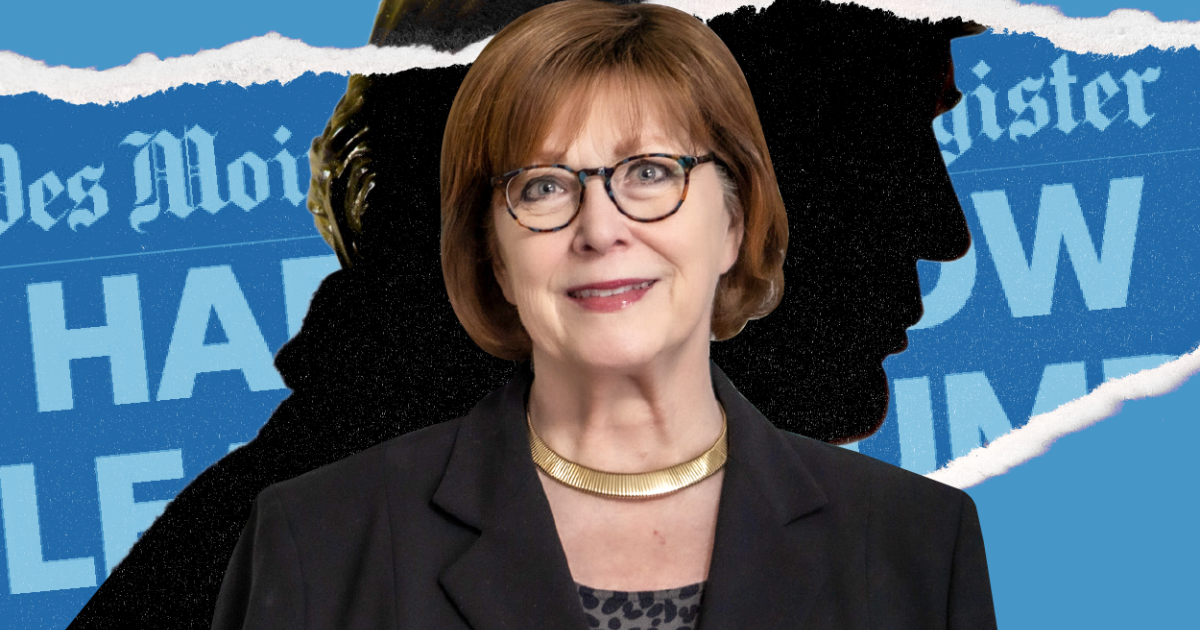
    It is hard to imagine a legal claim that violates basic First Amendment principles more thoroughly than does President-elect Donald Trump’s lawsuit against veteran Iowa pollster J. Ann Selzer and The Des Moines Register. 

    His civil lawsuit arises from a poll published before the November 2024 election that predicted Vice President Kamala Harris in the lead in Iowa. It seeks damages and a court order to prevent the newspaper from publishing any future “deceptive polls” that might “poison the electorate.”  

    Trying to punish newspapers for supposedly “false” reports is not a new phenomenon. Backlash to the Sedition Act of 1798, in which Congress criminalized “false” criticism of some politicians, laid the foundation of First Amendment doctrine. This lawsuit is just a new name for the same theory long rejected under the First Amendment.

    Trump’s lawsuit, brought under an Iowa law against “consumer fraud,” violates long-standing constitutional principles. It’s also entirely meritless under the Iowa law. 

    Enlisting the courts to settle political grudges is directly at odds with the First Amendment’s protection for political speech.

    The lawsuit is the very definition of a “SLAPP” suit — a Strategic Lawsuit Against Public Participation. Such tactical claims are filed purely for the purpose of imposing punishing litigation costs on perceived opponents, not because they have any merit or stand any chance of success. In other words, the lawsuit is the punishment. And it’s part of a worrying trend of activists and officials using consumer fraud lawsuits to target political speech they don’t like. 

    FIRE opposes SLAPP suits and is representing Selzer in order to vindicate her — and your — First Amendment rights.

    Every election has its outlier polls.

    Election polling is core First Amendment activity. It asks people how they will vote and shares an opinion — an educated guess — predicting the likely outcome. Every presidential election cycle brings hundreds of polls, and every cycle has outliers giving false hope (or added anxiety) to supporters of a given candidate.

    Selzer’s Iowa polls have long enjoyed “gold standard” status, accurately predicting Donald Trump’s victories in Iowa in 2016 and 2020. But despite using the same methodology as her previous polls, Selzer’s final 2024 poll, commissioned by the Register, was this cycle’s outlier, predicting a narrow Harris victory. 

    Selzer owned up to the margin between her poll and the eventual outcome of Trump comfortably winning Iowa. She acknowledged the “biggest miss of my career” and did what good pollsters do: She explained her methodology and publicly shared the poll’s crosstabs (results reported out by demographic and attitudinal subgroups), its questionnaire (with demographic information and weighted and unweighted responses), and her theories on the resultsinviting others to offer theirs in turn

    A bogus ‘consumer fraud’ lawsuit

    The post-election transparency Selzer provided wasn’t enough for Trump, despite his winning the presidency.

    During a press conference last month, Trump theorized that the poll was fabricated entirely and pledged to “straighten out the press” because it was “almost as corrupt as our elections are.” That evening, he sued Selzer, her polling company, the Register, and the newspaper’s parent company, Gannett, claiming the poll’s publication violated Iowa’s consumer fraud statute

    This lawsuit uses an inapplicable state statute as a cudgel to force Selzer and the Register to waste time and money on lawyers to respond to the allegations. Enlisting the courts to settle political grudges is directly at odds with the First Amendment’s protection for political speech. 

    Trump’s calls to investigate pollster put First Amendment at risk

    News

    President-elect Donald Trump called for an investigation after Des Moines Register pollster Ann Selzer predicted just days before the election that he would lose Iowa by three points.


    Read More

    Start with the law. Consumer fraud laws target sellers who make false statements to get you to buy something. They’re about the scam artist who rolls back the odometer on a used car, not a newspaper poll or TV weather forecast that gets it wrong.

    Just read the Iowa statute. Trump must identify a fraudulent or deceptive statement “in connection with the advertisement, sale, or lease of consumer merchandise, or the solicitation of contributions for charitable purposes.” Selzer’s poll did not advertise or solicit anything, much less “consumer merchandise,” which Iowa law defines as that intended for “personal, family, or household uses.” 

    Trump’s complaint also argues Selzer engaged in “brazen election interference.” But publishing a poll doesn’t constitute “election interference.” Under Iowa law, election “interference” is conduct like submitting a “counterfeit official election ballot,” encouraging someone to vote when you know they legally cannot, or other forms of direct interference with the conduct of the election. 

    Conducting and publishing a poll is protected First Amendment speech. It has nothing to do with “election interference.”

    The use of consumer fraud lawsuits collides with the First Amendment

    The notion that officials can recast the electorate as “consumers” to punish political speech or news they don’t like is squarely at odds with the First Amendment — yet it’s a theory increasingly advanced by partisans on both the left and the right. From the left, there are calls to regulate “misinformation” on social issues and, from the right, calls to impose “accountability” on news media for their political commentary. 

    Consumer fraud statutes have no place in American politics, or in regulating the news. But it has become an increasingly popular tactic to use such laws in misguided efforts to police political speech. For example, a progressive nonprofit tried to use a Washington state consumer protection law in an unsuccessful lawsuit against Fox News over its COVID-19 commentary. And attorneys general on the right used the same “we’re just punishing falsehoods” theory to target progressive outlets. Right now, Texas is arguing in a federal appellate court that it can use the state’s Deceptive Trade Practices Act to punish political speech even if it is “literally true,” so long as officials think it’s misleading.

    Any attempt — by Democrats, Republicans, or anyone else — to punish and chill reporting of unfavorable news is an affront to the First Amendment.

    Attempts to prohibit purportedly false statements in politics are as old as the republic. In fact, our First Amendment tradition originated from colonial officials’ early attempts to use libel laws against the press. 

    America rejected this censorship after officials used the Sedition Act of 1798 to jail newspaper editors for publishing “false” and “malicious” criticisms of President John Adams. Thomas Jefferson pardoned and remitted the fines of those convicted, writing that he considered the Act “to be a nullity, as absolute and as palpable as if Congress had ordered us to fall down and worship a golden image.” 

    The Supreme Court has since described our experience with the Sedition Act as the event that “first crystallized a national awareness of the central meaning of the First Amendment.” And it has held that government efforts to bar the publication of news reports are “the essence of censorship.” 

    Since then, courts have soundly and repeatedly rejected modern campaigns to regulate “false” speech because, under the First Amendment, “the citizenry, not the government, should be the monitor of falseness in the political arena.”

    SLAPPs chill speech because lawyers are expensive and lawsuits are stressful

    Even when a court dismisses a meritless lawsuit against a speaker, the person filing the lawsuit still “wins” because their critics must spend time and money on the legal process. As Trump once colorfully put it after losing a lawsuit: “I spent a couple of bucks on legal fees, and they spent a whole lot more. I did it to make his life miserable, which I’m happy about.” 

    Some states have anti-SLAPP statutes that require a plaintiff suing over speech to show his case has merit. If he cannot, the plaintiff has to pay the defendant’s legal fees — discouraging plaintiffs from chilling speech through the cost of a lawsuit. But Iowa is not among those states.

    So FIRE is stepping in to represent Selzer and her polling company, Selzer & Company, against this baseless suit. By providing pro bono support, we’re helping to remove the financial incentive of SLAPP suits — just as we’ve done when a wealthy Idaho landowner sued over criticism of his planned airstrip, when a reddit moderator was sued for criticizing a self-proclaimed scientist, and when a Pennsylvania lawmaker sued a graduate student for “racketeering.” (If you are a lawyer who wants to help provide pro bono support to people facing lawsuits for their speech, please join FIRE’s Legal Network.)

    Any attempt — by Democrats, Republicans, or anyone else — to punish and chill reporting of unfavorable news is an affront to the First Amendment. Hearing an opinion or prediction that turns out to be “wrong” is the price of living in a free society. And no American should fear that their commentary on American elections should subject them to liability.

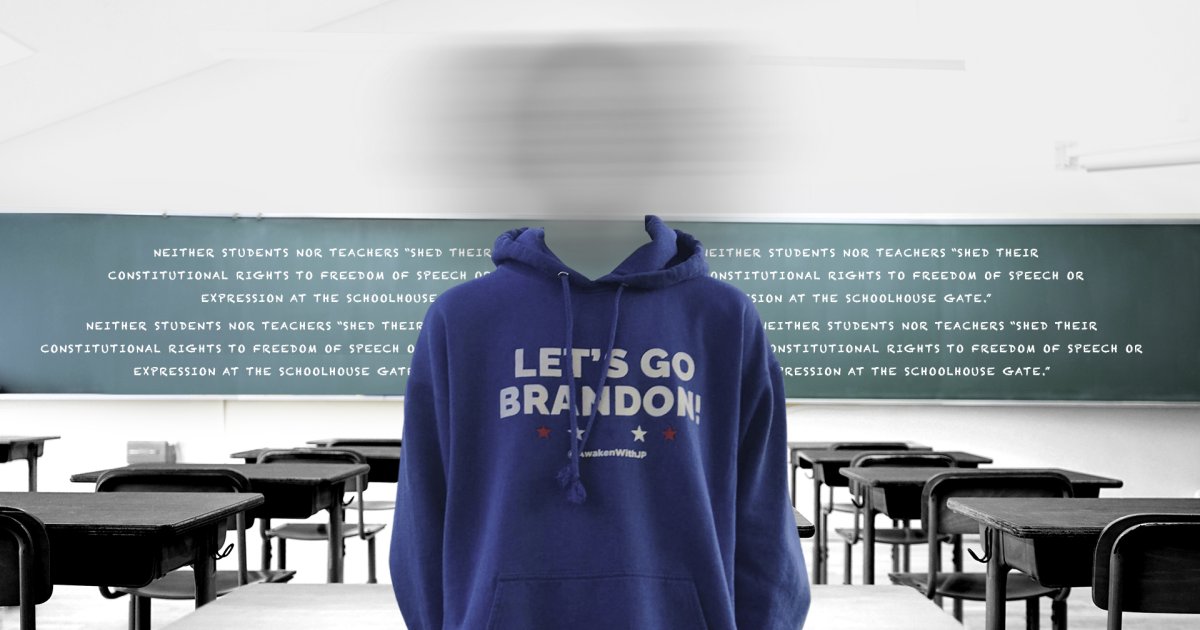
    FIRE protects the First Amendment, whether it’s threatened by the president of the United States or your local mayor. And we do so for all Americans, whether you’re a conservative student unable to wear a “Let’s Go Brandon” sweatshirt, a professor censored under Florida’s STOP WOKE Act, or a libertarian mother arrested for criticizing her city’s mayor

    If your First Amendment rights are threatened, contact FIRE.

    Source link

  • Free speech advocates converge to support FIRE’s ‘Let’s Go Brandon’ federal court appeal

    Free speech advocates converge to support FIRE’s ‘Let’s Go Brandon’ federal court appeal

    FIRE, supported by a wave of prominent organizations and scholars as “friends of the court,” has appealed a district court’s ruling that limited the rights of students to attend middle and high school wearing clothes bearing the “Let’s Go Brandon” political slogan. FIRE is asking a federal appeals court to strike down the decision below and uphold freedom of expression for public school students, and a broad spectrum of free speech advocates and language experts are backing us up.

    So what happened? In April 2023, FIRE sued a west Michigan school district and two administrators for preventing two students from wearing “Let’s Go Brandon” sweatshirts. The “Let’s Go Brandon” slogan originated during an October 2021 NASCAR race. After the race, won by Brandon Brown, members of the crowd chanted “Fuck Joe Biden” during Brown’s post-race interview. A commentator remarked that the fans were shouting “Let’s Go Brandon!” 


    WATCH VIDEO: NASCAR fans chant “Fuck Joe Biden” after the race.

    Since then, the presidential campaign of Donald Trump and Republican members of Congress have used the phrase widely, including during Congressional floor speeches, to show their displeasure with the Biden administration. The “Let’s Go Brandon” slogan airs uncensored on broadcast television, national cable news, and broadcast radio for all to hear. In the case on appeal, FIRE’s clients wore their “Let’s Go Brandon” sweatshirts to school to express their disapproval of Biden and his administration. 

    During the lawsuit, the school acknowledged the students did not cause any disruption with their apparel. Yet this past August, the District Court for the Western District of Michigan upheld the school district’s censorship of “Let’s Go Brandon” apparel, holding “Let’s Go Brandon” is legally indistinguishable from “Fuck Joe Biden” and therefore constitutes “profanity.” 

    As FIRE’s appeal argues, that’s not how speech works. “Heck” is not the same as “hell,” “darn” is not the same as “damn,” and “Let’s Go Brandon” is not the same as “Fuck Joe Biden.” The government may not censor public school students’ political expression absent substantial disruption. Nor may school districts bypass this First Amendment protection by dubbing disfavored political speech “profane.” 

    This case will play a critical role in protecting the rights of other minor students to engage in non-disruptive political expression as guaranteed under the First Amendment.

    Last week, 18 individuals and organizations, including some of the world’s foremost linguistic experts, joined together to file eight amicus curiae, or “friend of the court” briefs in support of minors’ free speech rights. These briefs urge the Sixth Circuit to recognize what has long been understood outside the courtroom — sanitized expression is, by design, distinguishable from the profane language it replaces: 

    Linguistic Scholars: Dr. Melissa Mohr, Dr. Rebecca Roache, Professor Timothy Jay, Professor John H. McWhorter, and Professor Steven Pinker are internationally recognized linguistic scholars whose works focus on the history, psychology, and sociology of swearing. Each has written extensively on how language works and the role it continues to play in society. Together, they submitted a brief through Quinn Emanuel Urquhart & Sullivan, LLP, helpfully delineating the different types of “sanitized expression,” including euphemisms like “Let’s Go Brandon,” and describing their ubiquity and importance in political discourse. As they state at the beginning of their brief: “This case is not about swearing; it is about not swearing.”

    First Amendment Scholars: Dean Erwin Chemerinsky, Professor Clay Calvert, Professor Roy Gutterman, Professor Mary-Rose Papandrea, and Professor Joseph A. Tomain submitted an amicus brief through Cornell Law School’s First Amendment Clinic and attorney Michael Grygiel. Drawing on decades of study, the scholars methodically apply seminal First Amendment decisions to this particular case. Their brief argues: “the lower court failed to apply Tinker’s ‘substantial disruption’ test, as required when schools seek to prohibit student expression within the school environment that communicates a political message,” and thus “departed from longstanding public student constitutional free speech principles.”

    Liberty Justice Center: The Liberty Justice Center’s amicus brief asserts the district court’s decision represents an unprecedented expansion of “profanity” and is part of a nationwide increase in political censorship. The brief describes how “censorship of entirely mainstream political discourse has become all too common around the country” and school authorities increasingly seek to restrict free expression. The LJC argues that the district court’s opinion exacerbates this growing problem, by authorizing schools to treat “every euphemism . . . as the equivalent of its reference.”

    Dhillon Law Group, Young America’s Foundation, and Hamilton Lincoln Law Institute: These organizations submitted an amicus brief asserting the lower court’s failed to properly apply Tinker and its progeny to the students’ “Let’s Go Brandon” sweatshirts, which likewise represented political, non-profane student speech. Through careful analysis of First Amendment doctrine, their brief explains that the “district court erred in disregarding the political nature of appellants’ ‘Let’s Go Brandon’ apparel” and undervaluing the importance of First Amendment protections in K-12 public schools.

    National Coalition Against Censorship: The National Coalition Against Censorship submitted an amicus brief through Covington & Burling LLP to challenge the district court’s categorization of “Let’s Go Brandon” as unprotected “profane” expression. The brief argues that the “district court’s analysis would create a new, ill-defined category of ‘euphemistic’ profanity,” and “give school officials wide latitude to silence viewpoints they find objectionable, a result at odds with existing First Amendment doctrine.” The brief asserts that the lower court’s decision “represents a serious departure from our nation’s historical commitment to protecting political speech” and urges the Sixth Circuit to reverse. 

    Manhattan Institute: The Manhattan Institute’s amicus brief emphasizes the critical importance of preserving free speech rights in K-12 public schools, where students develop the skills necessary to productively engage in democratic society. The brief describes case law reflecting the importance of these freedoms in primary and secondary schools — and argues the district court’s opinion fails to “accurately reflect this understanding.”

    Parents Defending Education: Parents Defending Education submitted an amicus brief through Consovoy McCarthy PLLC arguing that the district court’s decision cannot be reconciled with First Amendment principles. The brief emphasizes how the school codes at issue in this case are part of a growing and concerning “trend of schools adopting speech codes prohibiting controversial speech.” And the brief asserts each of the cases relied on by the lower court are distinguishable.

    Buckeye Institute: The Buckeye Institute’s amicus brief contends that under established First Amendment doctrine, “[r]egulation of speech under the First Amendment should constitute a rare exception.” Yet, they argue, the Michigan school district, motivated by desire to censor what it deems undesirable speech, disregarded that doctrine in order to censor non-disruptive political speech “that does not fall within one of the Supreme Court’s approved exceptions” to the First Amendment’s protection. 

    Our clients and their counsel are grateful for the support of this impressive and diverse amicus coalition. This case will play a critical role in protecting the rights of other minor students to engage in non-disruptive political expression as guaranteed under the First Amendment.

    Source link