Tag: firstgen

  • First-Gen Students More Likely to Drop Out Due to Low GPA

    First-Gen Students More Likely to Drop Out Due to Low GPA

    First-generation students make up half of all undergraduates, but only one quarter of them retain and graduate with a degree.

    A recent study from the National Bureau of Economic Research analyzed first-generation student data against that of their continuing-generation peers to identify gaps in the classroom that may be hindering their success. Researchers found that first-generation students who received lower-than-expected grades in their first term were more likely to leave college entirely compared to their peers who also underperformed but utilized other pathways to continue in higher education.

    The findings point to a need for additional support resources to help first-generation students understand academic recovery opportunities—including course withdrawal and switching majors—to promote persistence to graduation.

    Digging into data: The study relies on transcript data from 145,000 first-year students at Arizona State University from 2000 to 2022, as well as survey data fielded during the 2021–22 academic year.

    Researchers found that parental education is a significant predictor of a student’s academic success, even when controlling for a variety of characteristics, including demographics, household income, major choice and early college performance.

    One distinguishing factor between continuing and first-generation students was their use of academic policies to protect their grades. First-generation students were less likely to change their majors or withdraw from courses, strategies that some students deploy to save their GPAs. They were also less likely to know their peers or turn to family members for support when faced with academic challenges, researchers wrote.

    “First-generation students who encounter negative grade events have about a 40 percent likelihood of dropping out, which is around five percentage points higher than observationally identical continuing generation students who face the same academic setback,” according to the study. “Rather than dropping out, we find that continuing-generation students who face academic difficulties in their first year are more likely to switch majors.”

    Researchers surveyed students to understand how their academic perceptions and outcomes could influence their retention. Results showed that first-generation students were more likely to consider poor grades as detrimental to their success or a signal of their academic failure, which might push them to drop out.

    One example of this was the decision to switch majors. While all students were more likely to switch majors if their first semester grades fell below a 3.0 GPA, continuing-generation students were much more likely to switch their major because of lower grades; first-generation students were more inclined to remain in their major even with poor grades.

    Researchers hypothesized that first-gen students may be less likely to switch majors because they have a less differentiated perspective on major earnings, meaning they expect similar earnings after graduating college regardless of their major. Therefore, poor grades in one major would mean poor outcomes in all fields—not just that particular program.

    Survey Says

    A 2025 Student Voice survey by Inside Higher Ed and Generation Lab found that 55 percent of first-generation students said one of their top reasons for deciding to attend college was to pursue a specific career or profession.

    First-generation students were slightly more likely to say they enrolled to increase their earning potential or to achieve a personal goal, compared to their continuing-generation peers.

    One solution: As part of the study, researchers evaluated Arizona State University LEAD (Learn Explore Advance Design), a program that supports incoming students with lower grades or test scores. LEAD participants complete special first-year courses that focus on durable skills including time management and offer smaller class sizes and more interaction with faculty. The program also has dedicated staff and peer mentors who support incoming students.

    Data shows the program effectively helped students learn to navigate the university; participants had a slightly higher GPA and reported a greater sense of belonging and positive mental health. LEAD students were also more likely to switch majors and less likely to declare an undecided major, signaling to researchers that the program improved students’ cultural capital and flow of information.

    Related Research: First-generation students can be left behind in the classroom because they’re unaware of the “hidden curriculum,” or unspoken norms and processes involved in navigating higher education.

    Similarly, one research project found that first-generation students were less aware of conduct systems and how to interpret the student handbook, which could result in disproportionate disciplinary action.

    Read more here.

    How does your college help first-generation students navigate the hidden curriculum? Tell us more here.


    Source link

  • Stop Labeling Students “First-Gen” (opinion)

    Stop Labeling Students “First-Gen” (opinion)

    New policy mandates force us to rethink how best to meet what the Boyer 2030 Commission termed “the equity-excellence imperative.” One way to pursue this goal is to consider the role played by first-generation student success initiatives, which continue to enjoy broad public support. In the current climate, higher ed may be forgiven a rush to establish centers or initiatives for first-generation student success, as many colleges and universities already have. But before we get to raising funds and creating logos, let’s pause and consider new ways to think about and organize such efforts to best meet the moment.

    To put it bluntly, what business is it of ours, or anyone’s, what a student’s parents’ educational attainment happens to be? The usual answer is that we inquire because we aim to foster upward social mobility, and because we know from research that students who are the first in their families to attend college do not succeed at the same cohort rates as so-called continuing-generation students. But I emphasize cohort rates because we are not talking about a group, defined by self-awareness and interaction, but indeed a cohort, defined by impersonal and ill-defined criteria. At the level of individuals and families, first-gen discourse presumes deficits, is intrusive and can be off-putting and condescending.

    Neither of your parents (you have two, right?) earned a bachelor’s degree?

    I’d venture that most who work with first-gen students would agree that there are enduring questions about how best to define who is and is not first-generation using one of several plausible definitions. And even after four decades of promotion, I think it’s fair to say that few students arrive on campus as self-conscious “first-gens,” however defined.

    Some imagine that they qualify if they are the first of their siblings to attend college. Others wonder, understandably, if a parent’s associate degree or years of college attendance not resulting in degree attainment substitutes for an earned bachelor’s degree. A few may even think, erroneously, that they qualify if they are the first in their family to attend a particular institution.

    And then there are the overriding problems of stigma and stereotype threat. Efforts to dispel negative connotations and instill pride notwithstanding—First!—most people can smell a rat when in the presence of Rodentia. While some minoritized students may find it a useful alternative to other, more vexing labels, many students wrestle with it, as they might with any label, especially in the absence of a related scholarship or other inducement. I used to regularly tell first-gens that the land-grant university to which they had matriculated was theirs, that it was made for them and that it was nice of them to let others use it, too. But such tricks of the trade are needed only because the reality, often stark, is so contrary.

    Instead of fighting a Sisyphean battle tainted by class bias, I suggest that we acknowledge that first-gen discourse defines students by a characteristic that is out of their control and that the label is troubling when applied to individual students. Consider that we have more control over almost every other way of identifying ourselves, including our gender and sexuality! Parents, guardians and other parental authorities are as close to a given as it gets, and to define one by a given is reductionist and objectifying.

    To help underscore the stakes involved, consider this thought experiment. What if we labeled students whose parents possess earned doctorates as “dockies” and awarded them membership in the honors program? Most would recoil at even the thought of it. We assume that dockies are privileged or at least not in need of privileged access to scarce resources. We imagine them as possessed of abundant social and cultural capital and a healthy amount of regular old capital, too. Why actively reproduce privilege?

    But let us immediately observe that such assumptions are just as potentially ill-founded for individual dockies as they are for individual first-gens. Ask a Ph.D.-holding parent of a neurodiverse child, of a drug-addicted child, a child with disabilities, a child prone to perfectionism, a child of mild ambition and so forth, and they are apt to share an earful. And let us acknowledge that dockies are often given access to scarce resources such as merit-based scholarships and extra help via supportive honors programs, and for legitimate reasons. For one, these students earn such considerations by virtue of their academic achievement. They also may need them to fulfill their considerable potential.

    The key distinction, then, is between how we relate to students as individuals and what we do to make our institutional practices and campus cultures accessible and just. But before saying more about that, I acknowledge that there is an entrenched cultural assumption in play. We hold that individuals are infinitely complex and of universal value, each unique and sacred. (I mean this exactly and empirically; no rhetorical flourish or exaggeration is involved.) Individual students are not, in this view, bearers of three or four defining categories, nor should we treat them as representatives of groups. That is called stereotypical thinking, and it leads to tokenism, and neither stereotypical thinking nor tokenism have ever been good things. Students have multiple identities, as we all do, and we should not presume which of them are most salient or assume that they are immutable or invariant.

    When, however, we turn attention to institutional and cultural realities—particularly to our college and university’s policies and practices, to campus values, norms and built environment and so forth—then, yes, by all means, dust off social science and humanities textbooks and deploy concepts, data and pertinent humanistic discourses that are needed to make sense of systems, contested histories, shared meanings and the like. Here is where centers for first-generation student success have their rightful place, as hubs for institutional reform, designed to bring into existence a higher education that meets students where they are, as we say.

    First-gen centers might support research into how students experience college life and in other ways help faculty, staff, administrators and graduate students working with undergraduate students to better understand and interact with them. (Three cheers for faculty meals in residence halls!) First-gen centers might facilitate integration of high-impact practices into curricula, rendering these no-longer-nice-to-haves affordable and accessible, and help banish class biases as revealed in diffuse condescension by the college-educated and well-heeled with respect to those thus othered and belittled. Let us put an end to arcane language used for the latent purpose of policing class distinctions and eliminate barriers of entry to STEM majors, which track already underresourced students into lower-paying professions, however otherwise socially vital and personally fulfilling.

    Colleges and universities cannot meet their missions in a democratic society unless they are shorn of institutionalized discrimination rooted in white supremacy, patriarchy, what the poet Adrienne Rich called “compulsory heterosexuality,” ableism, ageism, as well as discrimination against veterans and active-duty armed service members, students whose home countries are not the United States or for whom English is not their first language, students from rural communities, students from urban communities, students from tribal communities, students from foster homes, students who are first-gen as well as students who identify with one or more of the above and then some. Our to-do list is long and varied.

    First-gen discourse is, like most student success discourse, best suited for use by administrators. It is not usually the language of educators, nor should we foist it upon students themselves. To best aid students who are the first in their families to attend college, make higher education affordable, campuses welcoming, curricula efficient and effective. Facilitate transfer student success via inter-institutional peer tutoring, and in myriad similar ways remove the fences surrounding the ol’ ball field in the DEI social imaginary. Higher education may then serve the people, one individual at a time.

    Steven P. Dandaneau is an associate professor of sociology at Colorado State University. He is a former advisory board member for the Center for First-Generation Student Success, an initiative of NASPA: Student Affairs Administrators in Higher Education and the Suder Foundation, and was recognized as a First Scholars First Generation Champion in 2018.

    Source link

  • Contextualizing Completion Gaps for First-Gen Students

    Contextualizing Completion Gaps for First-Gen Students

    First-generation students are twice as likely to leave college without completing a bachelor’s degree than their peers, even if they come from higher-income backgrounds and come to college academically prepared, according to a new report from the Common App. The findings suggest these factors do make a difference for student success outcomes but don’t erase other barriers first-generation students might face.

    The report, released Thursday and the fourth in a series on first-generation students, used data from the National Student Clearinghouse Research Center to track enrollment, persistence and completion rates for 785,300 Common App applicants in the 2016–17 application cycle. (Students whose parents didn’t complete bachelor’s degrees made up 32 percent of the sample.) The report also took into account how a range of factors could affect student outcomes, including students’ incomes, their levels of academic preparation and how well-resourced their colleges are.

    Previous studies have shown that “first-generation students are certainly not a monolith,” said Sarah Nolan, lead author of the report and a research scientist at Common App. “We were hoping to give readers a sense for … which first-generation students might in particular need more support.”

    The good news is the report found first-generation applicants enroll in college at rates on par with their peers. Over 90 percent of Common App applicants, first-generation and otherwise, enrolled in college within six years of applying.

    But first-generation students were slightly more likely to not enroll immediately (17 percent) or to enroll at a two-year college (12 percent) compared to other applicants (14 percent and 4 percent, respectively). That gap mostly closed when comparing students with strong academic records, defined as having SAT or ACT scores or GPAs in the top quartile. According to the report, that finding may be because a higher share of first-generation students may need extra coursework before enrolling in a four-year institution.

    Students might also work to save up for college first or opt for community colleges’ more affordable tuition rates, the report suggested. Lower-income first-generation students, who qualified for application fee waivers, were also less likely to immediately enroll at four-year institutions and more likely to first enroll at a community college compared to similar students not from first-generation backgrounds.

    Over all, “we are really heartened to see that there’s really not very strong differences in college enrollment,” Nolan said.

    Completion rates, however, are another story. While about 70 percent of first-generation students do complete a bachelor’s degree within six years of enrolling, the report found stark disparities between them and their peers.

    About half of first-generation students completed a bachelor’s degree within four years, compared to 68 percent of continuing-generation students, a gap of 18 percentage points. And that disparity persisted when looking at six-year graduation rates. About 69 percent of first-generation students graduated within six years, compared to 86 percent of continuing-generation students, a 17-percentage-point difference.

    These gaps shrank but didn’t disappear for first-generation students with strong academic records and higher incomes. Academically prepared first-generation students were twice as likely to disenroll with no degree than their continuing-generation counterparts, 14 percent and 6 percent, respectively. In a similar vein, 24 percent of higher-income first-generation students left college without a degree within six years compared to 12 percent of their continuing-generation counterparts. Even for first-generation students who were both academically prepared and relatively well-off, these gaps remained.

    Differences in the institutions first-generation and continuing-generation students attend—and the levels of supports they offer—didn’t account for completion-rate gaps, either.

    Even when attending the exact same institutions, first-generation students were 10 percentage points less likely to earn a bachelor’s degree within six years than continuing-generation students.

    However, higher per-student expenditures did seem to contribute to better student success outcomes. At institutions that spent at least $20,000 per student, 84 percent of first-generation graduated within six years, compared to 94 percent of continuing-generation students. The gap between first-generation and continuing-generation students’ completion rates widened to 15 percentage points at colleges that spent more moderately, $10,000 to $15,000 per student, and 17 percentage points at colleges with low per-student expenditures, less than $7,500.

    These findings suggest that, while first-generation students disproportionately face financial constraints and barriers to college prep, it doesn’t explain away their graduation rate gaps. And students attending less resourced institutions isn’t a full explanation, either. Other obstacles must be at play.

    What those barriers are may be “best answered by speaking with first-generation students themselves and unpacking what’s happening at the individual level,” Nolan said. But first-generation students likely struggle with limited access to information about higher ed and its “hidden curriculum” of expectations, regardless of income, high school performance or which college they attend.

    “Having the right resources at the right time on the pathway—that’s really critical for student success,” Nolan added.

    The stakes of success are high—the report found many first-generation students spent considerable time and money on college with no degree to show for it. Almost a third of first-generation students who didn’t earn a degree were enrolled for at least four years.

    But a hopeful finding is that “additional investment can be quite positive for helping these students really actualize their potential,” Nolan said.

    Source link

  • College president fears that federal education cuts will derail the promise of student parents, student military veterans and first-gen students

    College president fears that federal education cuts will derail the promise of student parents, student military veterans and first-gen students

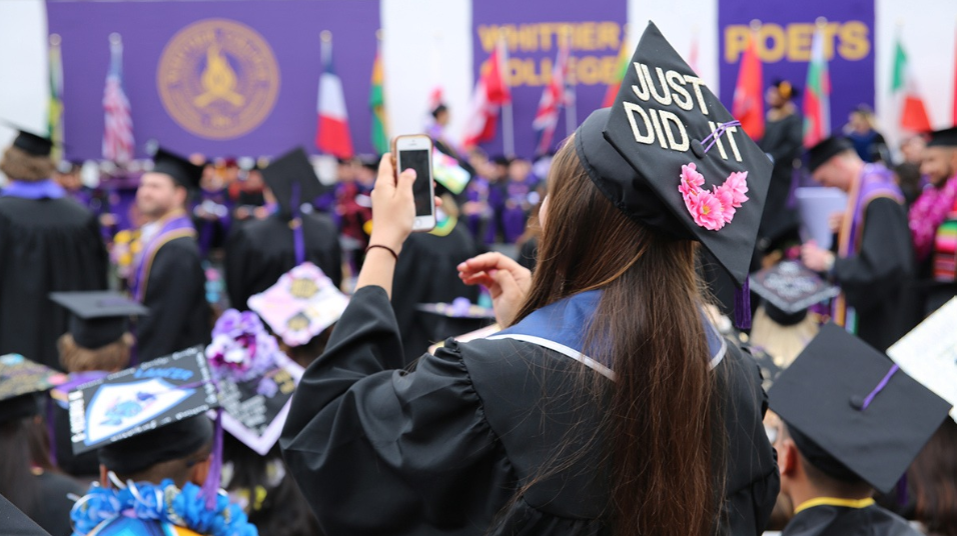
    As a college president, I see the promise of higher education fulfilled every day. Many students at my institution, Whittier College, are the first in their families to attend a university. Some are parents or military veterans who have already served in the workforce and are returning to school to gain new skills, widen their perspectives and improve their job prospects.  

    These students are the future of our communities. We will rely on them to fill critical roles in health care, education, science, entrepreneurship and public service. They are also the students who stand to lose the most under the proposed fiscal year 2026 federal budget, and those who were already bracing for impact from the “One Big Beautiful Bill” cuts, including to the health care coverage many of them count on. 

    The drive with which these extraordinary students — both traditionally college-aged and older — pursue their degrees, often while juggling caregiving commitments or other responsibilities, never fails to inspire me.  

    Related: Interested in innovations in higher education? Subscribe to our free biweekly higher education newsletter. 

    We do not yet know the precise contours of the spending provisions Congress will consider once funding from a continuing resolution expires at the end of September. Yet we expect they will take their cues from the president’s proposed budget, which slashes support for students and parents and especially hammers those already struggling to improve their lives by earning a college degree, with cuts to education, health and housing that could take effect as early as October 1.  

    That budget would mean lowering the maximum Pell Grant award from $7,395 to $5,710, reversing a decade of progress. For the nearly half of Whittier students who received Pell Grants last year, this rollback would profoundly jeopardize their chances of finishing school. 

    So would the proposal to severely restrict Federal Work-Study, which supports a third of Whittier students according to our most recent internal analysis, and to eliminate the Supplemental Educational Opportunity Grant, which more than 16 percent of our student body relies upon. In addition, this budget would impose a cap on Direct PLUS Loans for Parents, which would impact roughly 60 percent of our parent borrowers. It would also do away with the Direct PLUS Loans for Graduates program.  

    These programs are lifelines, not just for our students but for students all across the country. They fuel social mobility and prosperity by making education a force for advancement through personal work ethic rather than a way to rack up debt. 

    If enacted, these proposed cuts would gut the support system that has enabled millions of low-income students to earn a college degree.  

    Higher education is a bridge. To cross it and achieve their full potential, students from all walks of life must have access to the support and resources colleges provide, whether through partnerships with local high schools or with professional gateway programs in engineering, accounting, business, nursing, physical therapy and more. Yet, to access these invaluable programs, they must be enrolled. How will they reach such heights if they suddenly can’t afford to advance their studies? 

    The harm I’ve described doesn’t stop with cuts to financial aid, loans and services. Proposed reductions also target research funding for NASA, NIH and the National Science Foundation. One frozen NASA grant has already led to the loss of paid student research fellowships at Whittier, a setback not just in dollars but in momentum for students building real-world skills, networks and résumés.  

    These research opportunities often enable talented first-generation students to connect their classroom learning to career pathways, opening the door to graduate school, lab technician roles and futures in STEM fields. We’ve seen how federal funding has supported student projects in everything from climate data analysis to environmental health.  

    Stripping away support for hands-on research undermines the federal government’s own calls for colleges like ours to better prepare students for the workforce by dismantling the very mechanisms that make such preparation possible. 

    Related: These federal programs help low-income students get to and through college. Trump wants to pull the funding 

    It’s particularly disheartening that these changes will disproportionately hurt those students who are working the hardest to achieve their objectives, who have done everything right and have the most to lose from this lack of investment in the future.  

    The preservation and strengthening of Pell, Work-Study, Supplemental Educational Opportunity grants and federal loan programs is not a partisan issue. It is a moral and economic imperative for a nation that has long been proud to be a land of opportunity.  

    Let’s build a system for strivers that opens doors instead of slamming them shut.  

    Let’s recommit to higher education as a public good. Today’s students are willing to work hard to deserve our continuing belief in them.  

    Kristine E. Dillon is the president of Whittier College in California. 

    Contact the opinion editor at [email protected]. 

    This story about education cuts was produced by The Hechinger Report, a nonprofit, independent news organization focused on inequality and innovation in education. Sign up for Hechinger’s weekly newsletter. 

    The Hechinger Report provides in-depth, fact-based, unbiased reporting on education that is free to all readers. But that doesn’t mean it’s free to produce. Our work keeps educators and the public informed about pressing issues at schools and on campuses throughout the country. We tell the whole story, even when the details are inconvenient. Help us keep doing that.

    Join us today.

    Source link

  • Recognizing First-Gen Student Athletes

    Recognizing First-Gen Student Athletes

    First-generation students can often feel alone or isolated on their college campuses, but a new initiative at the University of Texas, San Antonio, seeks to put first-generation student athletes in the spotlight.

    Starting this fall, UTSA competitive athletes will be given special patches to place on their uniforms, recognizing their unique identity as a first-gen learner.

    “We’ve been really intentional about telling the stories of our student athletes and sharing their personal stories that extend far beyond the fields and courts of competition,” said Lisa Campos, vice president for intercollegiate athletics and athletic director.

    Approximately 45 percent of UTSA’s student population are the first in their families to attend college, and over one-third of student athletes (or 113 students) are also first-gen learners. So far, a majority of student athletes have opted to wear the patch—which displays the campus mascot, a roadrunner, and the words “first gen”—on their uniforms for the upcoming year, Campos said.

    First gen in context: While NCAA student athletes are more likely to report thriving while in college, according to a study by Gallup, first-generation students are less likely to be engaged and connected on campus.

    A 2023 Student Voice survey by Inside Higher Ed and College Pulse found 37 percent of first-gen students spent zero hours per week engaging in extracurricular activities, while just 25 percent of continuing-generation students reported spending no time participating in activities on campus.

    Navigating institutional processes and the hidden curriculum of higher education can also be barriers to first-generation student success, because these students are less likely to ask for help or use campus resources.

    “First-gen students need a lot of support and a lot of education about what the college experience is like because, unlike other students, there’s not someone in their household who can answer all of the questions they may have,” Campos said.

    Past research shows, when given academic and emotional support, first-generation student athletes feel more driven and capable of graduating from their college or university.

    Students on display: The patch is just one piece of how the university seeks to celebrate first-generation students’ identities. UTSA’s athletic department is in the middle of a campaign that highlights stories of first-generation students, coaches and staff, recognizing their unique experiences. The department is also creating a resource hub on its website for first-gen student athletes.

    As a first-gen student herself, Campos said attending and graduating from college is a major accomplishment for these students because of how new and unfamiliar the experience can be. “It’s important to us to recognize those student athletes who every day are changing the trajectory of their families for generations to come.”

    Many of UTSA’s athletic staff members, including those on the leadership team or senior staff, are also first-generation college graduates, which Campos said provides them a better understanding of how to support student athletes.

    Across the university, first-generation students can participate in a mentorship program and other special programming from the First-Generation and Transfer Student division.

    How does your campus celebrate first-generation student identities? Tell us about it.

    Source link

  • Encouraging first-gen students to study abroad

    Encouraging first-gen students to study abroad

    Study abroad is tied to personal and professional growth for college students, but crossing the border can be an enormous hurdle or feel unattainable for some learners.

    A new initiative at Bucknell University seeks to empower and support first-generation and low-income students who are interested in experiential learning and study away through workshops, financial aid and mentorship.

    In this episode of Voices of Student Success, host Ashley Mowreader speaks to Chris Brown, Bucknell’s Andrew Hartman ’71 and Joseph Fama ’71 Executive Director of the Center for Access and Success, to learn more about the center and how it reduces barriers to student participation in high-impact activities.

    Listen to the episode here and learn more about The Key here.

    Read a transcript of the podcast here.

    Source link