Tag: firstgeneration

  • The Resilience of First-Generation Students

    The Resilience of First-Generation Students

    First-generation students face a host of barriers when they go to college. Terms commonly used in higher ed, like “registrar,” “provost” or “credit hours,” can be mystifying. They’re confronted with a hidden curriculum, a set of unspoken expectations for how to succeed. And they don’t always know whom to turn to for help.

    But a new book, the first of three volumes on first-generation students, argues that these challenges, while important to study, offer an incomplete picture of who these students are.

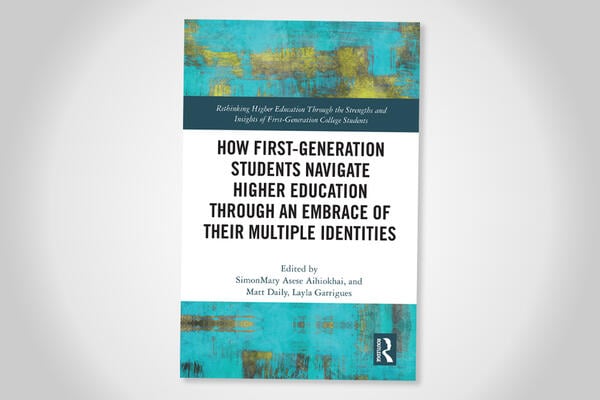
    The book, How First-Generation Students Navigate Higher Education Through an Embrace of their Multiple Identities (Routledge, 2025), explores in a series of essays how different identities, including class and race, affect the first-generation student experience and how these students bring unique strengths and assets to the classroom. It also offers guidance to different types of institutions about how to support first-generation students better and highlights colleges and universities that have modeled successful reforms and programs. Some of the essays are research-focused and written by scholars, while others are personal narratives authored by first-generation college graduates.

    Co-editor Matt Daily, assistant vice president and dean of students at Idaho State University, spoke with Inside Higher Ed about why he’s working to change the discourse around first-generation students, alongside his co-editors, University of Portland professors SimonMary Asese Aihiokhai and Layla Garrigues. The conversation has been edited for length and clarity.

    Q: A theme throughout this book is the idea that too often first-generation students are studied through a deficit-focused lens that emphasizes their challenges rather than their strengths. Why was it important to you to shift that approach?

    A: For a long time, when we’ve talked about first-gen, we’ve come in thinking that they need something, that they are lacking something, and I think for the last five years or so, that narrative has really shifted. It’s shifted from “What are they lacking?” to “What are they contributing?”

    As we were doing a lot of research, as we were having a lot of conversations, while that’s something that we’re talking about at our respective institutions and starting to do more across the United States and beyond, it’s still something that we have to keep reminding ourselves is important—to really focus on the assets or the strengths that students bring.

    And so, we thought that when we were dreaming up this project—and that’s a fun story, too, about how it came to be—we thought it really needs to be based in the strengths. And it would be so nice for practitioners, scholars, students, that they could find that the real theme and the real foundation and the real thread through it is the strengths of first-gen students, and what it is that they’re really bringing to these college campuses.

    Q: What are some of the strengths and assets of first-generation students that you think are too often overlooked?

    A: There’s really no one-size-fits-all for first-gen. Each first-gen student is as unique as the experience itself. I think that’s actually one trap we fall into: We really have to take each case as they come in and create that space.

    In the introduction, I mention how Tara Yosso talks about her “community cultural wealth” model and cultural capital and talks about this idea of [ties to] family and culture [as] strengths. I think those are strengths that are really important. Laura Rendón also talks about—what Yosso was saying and building on it—this idea of ganas or perseverance, which is that ability to really develop inner strength and becoming self-reliant and determined to succeed.

    There’s something about first-gen students where they are just so gritty. They really stick with it, and they are so inspiring. I love the way that they’re able to sort of exist in multiple worlds. I could have my college world, my peers, but also a lot of first-gen students work, so I can have that world, and then my family, and then maybe I’m from a different country. Really understanding how to exist in all those different worlds and being able to do that successfully, I think that is an incredible strength.

    My biggest criticism of first-gen students is that they are too humble. They don’t think that their story is worthy enough to share. They don’t think it has worth, and I think they’re dismissive [of themselves], and that is my biggest criticism. Because for the amount of different first-gen students we have, there are an equal amount of stories that come with them. We need to encourage them to really share those and know that they have worth.

    Q: Going off of that, you interspersed scholarly research with student narratives in this essay collection. Why was it important to you to include both perspectives?

    A: That was really intentional. I think that the student voice gets ignored if we’re just talking about theory. If we’re going to talk about students, we need to hear their voice, right? It needs to be expressed, and we need to really have that authentic perspective. And so that was something we talked about early on in the project … especially in the last chapter, where we wanted to have students themselves or recent graduates share.

    And I think that there’s equally as much value in terms of the research as to what the students are expressing, as they’re sort of in the moment, so to speak. I think [it’s important] even just coaching students that their voice matters … that you can go up and talk to senior administrators … and there’s value in that. I think that was one thing we were really hoping with this anthology was that maybe a graduate student or an undergraduate student could read that and feel inspired and go, “Oh, you know, this is something I could see myself doing,” and really get that spark, too. Gosh, if that happened, I would be over the moon.

    Q: The book also emphasizes taking an intersectional approach to serving first-generation students. What does that mean to you? And what do you think we miss when we don’t factor in these students’ other identities?

    A: I think that’s just so important. And I have to kind of acknowledge my own positionality. I’m a white male. And I am not first-gen. I will never understand a lot of these identities because I don’t identify that way. And so that’s something that’s been a part of my own journey. That was why it was so important with Simon, myself and Layla—we’re just a diverse collection. And then when you get to the other contributors, they do identify in a variety of different ways.

    But that being said, identity is so important to the cultural richness of our college campuses. When I talk to college students, we talk about their gender identity, and sometimes that can be fluid; we talk about their racial or ethnic identity. We talk about their sexual identity, even their academic identity—meaning, what does it mean when I go from high school to college? Does that academic identity come into question when I experience different levels of success? But I think a lot of those identities we talk about, they’re visible. A lot of those identities we can see.

    First-gen is not one of them. And that’s what’s interesting about being first-gen is you will never see physically if someone is first-gen. And so, it’s sort of this hidden identity. In a lot of my experiences working with first-gen students, I almost feel that I’ve outed them. When I explain to them, “Hey, I think you’re first-generation based on the information you’ve given me,” there’s a variety of different reactions, because it’s sort of a later-emerging identity. It’s not maybe one that’s discussed when a student is in elementary school, [with someone telling them], “Hey, you’re going to be a first-generation college student.” And so, I think what’s interesting is when you talk about this identity with other first-gen students, it’s one of many that intersect. But I think the timing of the intersection is so different for every first-gen student, if that makes sense.

    In my previous role in Portland, when I would reach out to say, “I think you’re a first-gen student,” a lot of students would say, “No, I don’t want to be a first-gen student,” because they would think me identifying them in that way is something that’s negative. And part of that was really [making] that shift and going, “I am identifying you based on your mom and dad’s educational history or parent or guardian, and you might be first-gen—and that is so beautiful. Let’s celebrate that.”

    I can be first-gen and a male or first-gen and African American male or I can be first-gen and a student athlete. What do those identities mean? Just being able to share what that identity means is so important for why a student is in college.

    And I think that they forget that even as they graduate and go on to whatever’s next after college, to share that they’re first-gen is something that graduate schools, employers, what have you—they really value that.

    It’s been programmed for so long that this is such a deficit. We’re working really hard at institutions to say, “Yeah, share that out—because of those qualities we talked about, this makes you a valuable part of this community.”

    Q: I thought it was interesting that multiple chapters described how first-generation students can feel isolated from campus life, but also that campus life made them feel isolated from their home lives and families. How do you see the role of family and community for first-generation students’ success, and how do you think higher ed institutions can better account for that?

    A: We assume that for first-gen students, when they go to college, that their families are behind it 100 percent, and that is not always the case. I think a lot of times the person that’s the most in favor of them going to college is themselves. And there’s a lot of, you know, “Why don’t you just work at the store?” The argument to convince others to go to college sometimes falls on the first-gen student, and we forget that. And so that kind of carries on through the experience, [family] going, “Why do you need to go to these programs?” or “Why do you need to go abroad?” It’s sort of having to be the explainer and the decoder for college life, and that is a lot for one student.

    And so, I think that there is some push and pull with families sometimes, because the family wants to be supportive, but they don’t know how to be supportive strategically. In talking to a lot of families, I’ve coached them, saying, “Hey, you can just call your daughter or son and just say, ‘I love you. I support you doing this. I don’t know how I can strategically do that, but I want you to know I support you.’” That type of thing just goes so far.

    The thing that’s also interesting, to your point about feeling isolated, we talk about programs and strategies that can really help first-gen students. But also on college campuses, the onus is on the student. You need to go do these things to be successful. And that’s not a first-gen thing, that’s a college thing. And I sort of push back on that. I think it’s on the institution to really create these spaces, to make students feel welcome, that they belong, that they matter, that they feel that they can have some sense of value in these spaces with their peers. And going back to first-gen identity, they’re not going to know who else is first-gen unless we create spaces where the students can find who else among their peer group is. And so, I think you kind of have to shift it a little bit.

    They maybe feel isolated from family because we’re asking them to do a lot of things, such as engage with campus community, campus life, but sometimes that might come into conflict with what they’re being asked to do with their families, whether it’s watch my little brother or go to Grandma’s birthday party. That happened one time where a student really had to negotiate why they had to be on campus that first weekend of school for a lot of the programming [when] they were going to miss Grandma’s birthday. It really puts them in this code-switching situation where they feel isolated because they don’t feel anyone really gets what they’re going through.

    Q: The book also offers a lot of concrete advice on how to better structure services and support for first-generation students and ensure they’re engaged and able to take advantage of opportunities like internships and study abroad. What do you think are some of the practical action steps you want to see higher ed leaders take away after reading this book?

    A: I think high-impact practices are so important.

    We talk so much about what student success means—what does it mean to have a sense of belonging, that type of thing—but I think one thing we really don’t talk a lot about is, other than the degree that the students are seeking, what is it that we really want them to take away from the college experience? What type of skills? Do we want them to think critically? Do we want them to be really engaged with the community? I think that we need to be really intentional on our college campuses about talking about what we want the students to take away, besides the degree. That can really help them in their next step. And I hope that maybe this book can talk a little bit about that. Can we really reimagine what we’re trying to do rather than just be very transactional about the degree?

    I hope that they realize that it’s important to invest in this, that we need to invest in sustainable programs. Because I think a lot of times, what you have happen is different leaders or champions of first-gen work will leave institutions and then these initiatives really fizzle out. So, how can we think strategically that it’s not about the person, it’s about the program and initiatives. I think some of the things we talk about in here are almost a love letter to higher education institutions to say, “Look, this population is worth investing in, and it’s not just a one-size-fits-all, but if we can all adopt something that’s really creative and sustainable, all these students across the United States and even globally can benefit.”

    Source link

  • America’s future depends on more first-generation students from underestimated communities earning an affordable bachelor’s degree

    America’s future depends on more first-generation students from underestimated communities earning an affordable bachelor’s degree

    I recently stood before hundreds of young people in California’s Central Valley; more than 60 percent were on that day becoming the first in their family to earn a bachelor’s degree.

    Their very presence at University of California, Merced’s spring commencement ceremony disrupted a major narrative in our nation about who college is for — and the value of a degree.

    Many of these young people arrived already balancing jobs, caregiving responsibilities and family obligations. Many were Pell Grant-eligible and came from communities that are constantly underestimated and where a higher education experience is a rarity.

    These students graduated college at a critical moment in American history: a time when the value of a bachelor’s degree is being called into question, when public trust in higher education is vulnerable and when supports for first-generation college students are eroding. Yet an affordable bachelor’s degree remains the No. 1 lever for financial, professional and social mobility in this country.

    Related: Interested in innovations in higher education? Subscribe to our free biweekly higher education newsletter.

    A recent Gallup poll showed that the number of Americans who have a great deal of confidence in higher education is dwindling, with a nearly equal amount responding that they have little to none. In 2015, when Gallup first asked this question, those expressing confidence outnumbered those without by nearly six to one.

    There is no doubt that higher education must continue to evolve — to be more accessible, more relevant and more affordable — but the impact of a bachelor’s degree remains undeniable.

    And the bigger truth is this: America’s long-term strength — its economic competitiveness, its innovation pipeline, its social fabric — depends on whether we invest in the education of the young people who reflect the future of this country.

    There are many challenges for today’s workforce, from a shrinking talent pipeline to growing demands in STEM, healthcare and the public sector. These challenges can’t be solved unless we ensure that more first-generation students and those from underserved communities earn their degrees in affordable ways and leverage their strengths in ways they feel have purpose.

    Those of us in education must create conditions in which students’ talent is met with opportunity and higher education institutions demonstrate that they believe in the potential of every student who comes to their campuses to learn.

    UC Merced is a fantastic example of what this can look like. The youngest institution in the University of California system, it was recently designated a top-tier “R1” research university. At the same time, it earned a spot on Carnegie’s list of “Opportunity Colleges and Universities,” a new classification that recognizes institutions based on the success of their students and alumni. It is one of only 21 institutions in the country to be nationally ranked for both elite research and student success and is proving that excellence and equity can — and must — go hand in hand.

    In too many cases, students who make it to college campuses are asked to navigate an educational experience that wasn’t built with their lived experiences and dreams in mind. In fact, only 24 percent of first-generation college students earn a bachelor’s degree in six years, compared to nearly 59 percent of students who have a parent with a bachelor’s. This results in not just a missed opportunity for individual first-generation students — it’s a collective loss for our country.

    Related: To better serve first-generation students, expand the definition

    The graduates I spoke to in the Central Valley that day will become future engineers, climate scientists, public health leaders, artists and educators. Their bachelor’s degrees equip them with critical thinking skills, confidence and the emotional intelligence needed to lead in an increasingly complex world.

    Their future success will be an equal reflection of their education and the qualities they already possess as first-generation college graduates: persistence, focus and unwavering drive. Because of this combination, they will be the greatest contributors to the future of work in our nation.

    This is a reality I know well. As the Brooklyn-born daughter of Dominican immigrants, I never planned to go away from home to a four-year college. My father drove a taxi, and my mother worked in a factory. I was the first in my family to earn a bachelor’s degree. I attended college as part of an experimental program to get kids from neighborhoods like mine into “top” schools. When it was time for me to leave for college, my mother and I boarded a bus with five other students and their moms for a 26-hour ride to Vanderbilt University in Nashville, Tennessee.

    Like so many first-generation college students, I carried with me the dreams and sacrifices of my family and community. I had one suitcase, a box of belongings and no idea what to expect at a place I’d never been to before. That trip — and the bachelor’s degree I earned — changed the course of my life.

    First-generation college students from underserved communities reflect the future of America. Their success is proof that the American Dream is not only alive but thriving. And right now, the stakes are national, and they are high.

    That is why we must collectively remove the obstacles to first-generation students’ individual success and our collective success as a nation. That’s the narrative that we need to keep writing — together.

    Shirley M. Collado is president emerita at Ithaca College and the president and CEO of College Track, a college completion program dedicated to democratizing potential among first-generation college students from underserved communities.

    Contact the opinion editor at [email protected].

    This story about first-generation students was produced by The Hechinger Report, a nonprofit, independent news organization focused on inequality and innovation in education. Sign up for Hechinger’s weekly newsletter.

    The Hechinger Report provides in-depth, fact-based, unbiased reporting on education that is free to all readers. But that doesn’t mean it’s free to produce. Our work keeps educators and the public informed about pressing issues at schools and on campuses throughout the country. We tell the whole story, even when the details are inconvenient. Help us keep doing that.

    Join us today.

    Source link

  • What First-Generation Students Need for Career Development

    What First-Generation Students Need for Career Development

    Title: First-generation College Students’ Career Entry: College Perspectives

    Authors: Melinda Mechur Karp, Suzanne Lyons, Nancy Stalowski, and Mary Fugate

    Source: FirstGen Forward and Phase Two Advisory

    First-generation college students experience the transition from high school to college and enrollment in higher education in a unique way. While there is significant research on first-generation students’ postsecondary pursuits and how they cross the boundary from the K-12 system into colleges and universities, less attention has been dedicated to exploring first-generation students’ career development and movement into the workplace.

    A new brief by FirstGen Forward helps to close this knowledge gap, drawing on a national survey from 411 colleges and universities across 47 states and Washington, DC, and six focus groups with higher education professionals. Eighty-nine percent of those interviewed work directly with first-generation initiatives and programs, and 72 percent of respondents identify as first-generation graduates themselves.

    Additional highlights and insights include:

    First-generation college student career development is highly unique. First-generation students rely heavily on institutional resources and mentors to help them progress through unfamiliar environments, which include institutions. Focus group participants indicated that students often need additional mentorship and support in understanding how their experiences as first-generation students can be career assets and how they can be reframed in job applications.

    First-generation respondents frequently indicated they need exposure to individuals who share their identities who can help them explore their future career pathways. When asked what students need for future career support, 20 percent of survey respondents said opportunities to build social capital, including networking, mentoring, and internship opportunities.

    Institutional approaches to promoting first-generation career development differ. First-generation students indicated they rely on both general university career services and programs tailored to them. Thirty-six percent of respondents reported their postsecondary institution offers career services tailored to first-generation students, 43 percent stated their institution does not, and the rest were unsure. Of 201 written survey responses about specific knowledge first-generation students need, the most commonly mentioned skill was interview preparation. However, the survey responses indicate that only 66 percent of respondents’ institutions offer this.

    First-generation College Students’ Career Entry: College Perspectives is the first of six research and policy briefs that will make up a national landscape analysis. Additional briefs will be released over the coming months.

    To read the full report from FirstGen Forward, click here.

    —Austin Freeman


    If you have any questions or comments about this blog post, please contact us.

    Source link

  • Unifying supports for first-generation students on campus

    Unifying supports for first-generation students on campus

    University of South Carolina

    While first-generation students are a growing population in higher education, they remain less likely to retain or complete a credential, compared to their continuing-generation peers.

    A new initiative at the University of South Carolina unifies assistance for students who are the first in their families to attend college to guide them through the university and provide a sense of belonging. The First-Generation Student Center is connected to a first-generation living-learning community and offers embedded academic and socioemotional support, which reduces the need for students to seek support independently.

    What’s the need: USC serves a large number of first-generation learners—one in five undergraduate students or around 6,000 individuals.

    “We know from our campus data on students in our long-standing TRIO program that they do not have the gaps in retention and graduation that our other first-generation students have,” says Shelley Dempsey, assistant provost for graduation and retention. “However, the program is at max capacity.  It was time for our university to provide additional options to serve students in a similar demographic who are not able to be a part of the TRIO program.”

    The center was designed to provide increased and more specialized services for learners in a physical space that promotes students’ feelings of belonging.

    Dempsey sees particular benefits with first-generation student support, including social capital growth and impacting future generations of their families. But Dempsey also notes improving processes and the student experience for first-generation degree attainment is a benefit for the institution as a whole.

    How it works: The First-Generation Center (FGC), which opened in fall 2024 within Maxcy College residence hall on campus, includes a variety of support services and resources.

    A dedicated director and assistant director support the center, as does a faculty director, who oversees the living and learning community for 151 first-generation students.

    Within the center, students can engage with an embedded mental health counselor for one-on-one in-person or virtual sessions, as well as group sessions on common themes like homesickness and exam anxiety. The Student Success Center has embedded staff presence for drop-in hours, and the FGC hosts other partners across campus, including financial aid, the career center and the meal card office, to provide insights into navigating higher ed.

    “The idea is that if we can have all of these offices have a presence in the FGC as a safe space, then we build comfort and confidence with the first-generation students to utilize them in their locations outside the FGC as well,” Dempsey says.

    This fall, the center hosted a series called First-Gen Connections that provided relevant information related to campus experiences and deadlines. Athletics staff led a discussion on how students can earn ticket priority for sporting events and offered students a behind-the-scenes tour of the football stadium, for example.

    How it’s going: Since launching the center, USC leaders have seen an increase in first-generation student involvement. The center was advertised through meetings, events and campus media including newsletters, but word of mouth has been the most effective marketing campaign.

    Several sections of University 101, USC’s first-year seminar program, also meet in the center, which helps raise awareness of the support offerings.

    This fall, efforts to include first-generation students were noticeable in mini-grant applications for research and creative projects alongside a mentor, with 55 percent of applicants being first-gen learners.

    “We want our first-generation students to know that they are just as capable, and sometimes that takes bringing the info to them in a designated space so that they don’t have to navigate the large university and unfamiliar lingo or jargon for themselves,” Dempsey says.

    What’s next: The current target is incoming and first-year students, with the hopes of continuing to involve them as they progress through the institution, but administrators hope to reach graduate students, as well.

    “We are in the process of conducting a needs assessment to know how to increase our supports going forward,” Dempsey says.

    The university will also track other student metrics including involvement in high-impact practices, GPA, DFW rates, campus involvement and leadership opportunities. Additionally, leaders will compare utilization of support services among first-gen students who engage with the center compared to their peers who are also first-gen but not associated with the center.

    If your student success program has a unique feature or twist, we’d like to know about it. Click here to submit.

    Source link