Tag: Fish

  • Finally, a focus on freshwater fish

    Finally, a focus on freshwater fish

    Africa is home to more than 3,200 recorded freshwater fish species — a number that grows annually as new species are described, including 28 in 2024 alone. Yet many of these species live in isolation, bound to single lakes or rivers. The continent’s geography, fractured by plateaus, mountains and deserts, has produced distinct and stunning radiations of life. 

    Consider the cichlids of Africa’s Great Lakes: Lake Malawi alone harbours over 800 species, most found nowhere else. Some parent their young by brooding them in their mouths; others, like Nimbochromis livingstonii, feign death to lure prey. In the Congo’s lightless rapids, Lamprologus lethops has evolved with skin-covered eyes. 

    Lungfish, relics of the Devonian era, survive years of drought by burrowing into mud and breathing air through primitive lungs. The ornate bichir, another ancient lineage, gulps air through a lung-like swim bladder and can endure short stints out of water if kept moist. 

    Cichlids and cuckoo catfish

    In Lake Tanganyika, the cuckoo catfish surreptitiously deposits its eggs among those of mouthbrooding cichlids, leaving its young to be raised — at the expense of their foster siblings — by another species.

    These are not curiosities, but rather sentinels. Freshwater fish are the regulators of aquatic ecosystems — grazers, predators, cleaners and recyclers of aquatic systems.  

    They “are an aquatic version of the canary in the coal mine for Africa’s rivers, lakes and wetlands,” the report warns. “If the continent’s freshwater ecosystems deteriorate to the point where they can’t support thriving fish populations, they won’t be healthy enough to continue to underpin Africa’s societies and economies”.

    The cost is already being felt. On the Kafue Flats in Zambia, once a thriving fishing ground that supplied 15-22% of the nation’s catch, dam construction has altered seasonal flood pulses. Permanent inundation has decoupled the river from its floodplain. Five key fish species have become commercially extinct. 

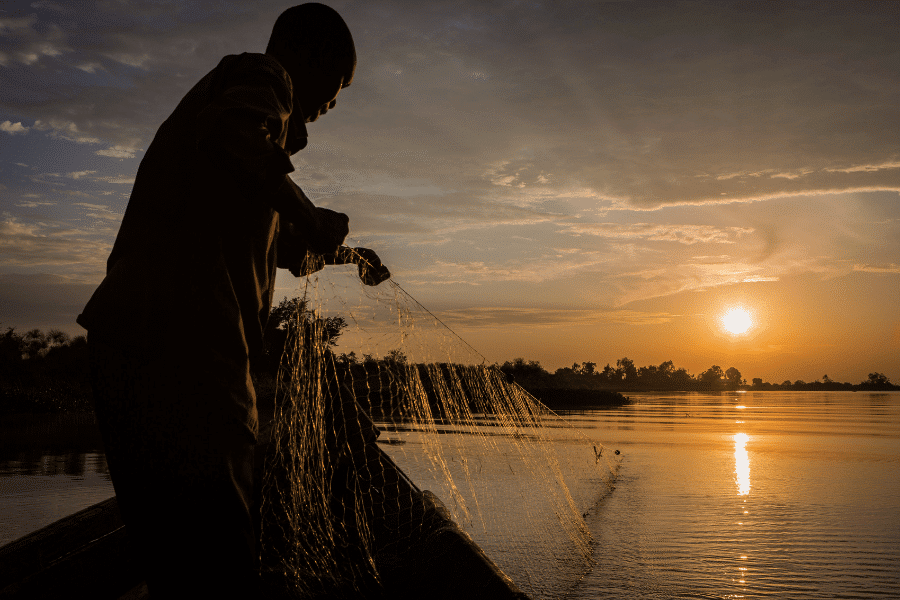
    In Salonga National Park in the Democratic Republic of Congo, local fishers have resorted to toxic fishing methods, poisoning the very waters they depend on. Along the Rufiji River in Tanzania, traditional species like the Rufiji tilapia are declining under pressure from monofilament nets and habitat loss.

    Despite the devastation, the report also offers hope. Community-led conservation is showing results. In Tanzania’s Lake Tanganyika region, 21 Beach Management Units — local organizations of fishers, elders, and women — are enforcing seasonal fishing bans and banning destructive gear. In Zambia’s Liuwa Plain and conservancies in Namibia, fishers are co-managing resources with support from WWF and The Nature Conservancy. 

    Conserving freshwater ecosystems

    In Angola, community leaders are building bottom-up monitoring systems to track and protect fish stocks. In Madagascar, captive breeding programs are trying to save rainbowfish and cichlids teetering on the edge of extinction.

    Still, freshwater ecosystems remain the “forgotten sibling” of terrestrial and marine conservation. Their decline has unfolded quietly, out of sight of many global decision-makers. “It’s time we stopped treating freshwater fishes as an afterthought,” said Nancy Rapando, WWF’s Africa Food Futures Lead. “They are central to Africa’s biodiversity, development and future. We must act now before the rivers dry out.”

    The report outlines a science-based Emergency Recovery Plan — a six-pillar framework that includes restoring natural river flows, improving water quality, protecting habitats, ending unsustainable use, controlling invasive species and removing obsolete dams to let rivers run free. 

    “These six pillars have all been successfully implemented successfully around the world,” said Eric Oyare, WWF Africa’s freshwater lead. “With bold leadership, African countries can adapt them to local contexts.”

    The Freshwater Challenge, a growing coalition aiming to restore 300,000 kilometres of degraded rivers and 350 million hectares of wetlands now includes 20 African countries. 

    But headlined declarations are not enough. What’s required is a shift in how governments, funders and societies value the submerged world. For decades, development decisions — from damming rivers to draining wetlands — have ignored the true cost of fish loss. Policies rarely account for the food, labour and cultural systems tied to inland fisheries. 

    “Africa’s freshwater fishes are not forgotten by the people who depend on them, whose lives and livelihoods are interwoven with the continent’s rivers, lakes and wetlands and the fish beneath their surface,” the report said. “But they have invariably been out of sight and out of mind for policymakers, especially when it comes to big decisions that impact freshwater ecosystems.”


    Questions to consider:

    1. What is the goal of the COP15 meeting in Brazil this year? 

    2. Why do freshwater lakes deserve the same protections as oceans?

    3. What freshwater lake is nearest to you and what lives in it?


    Source link

  • High school sleuths search fish guts for clues to plastic pollution

    High school sleuths search fish guts for clues to plastic pollution

    NEW YORK — The fish, glassy-eyed and inert, had been dead for decades. Yet its belly held possible clues to an environmental crisis unfolding in real time.   

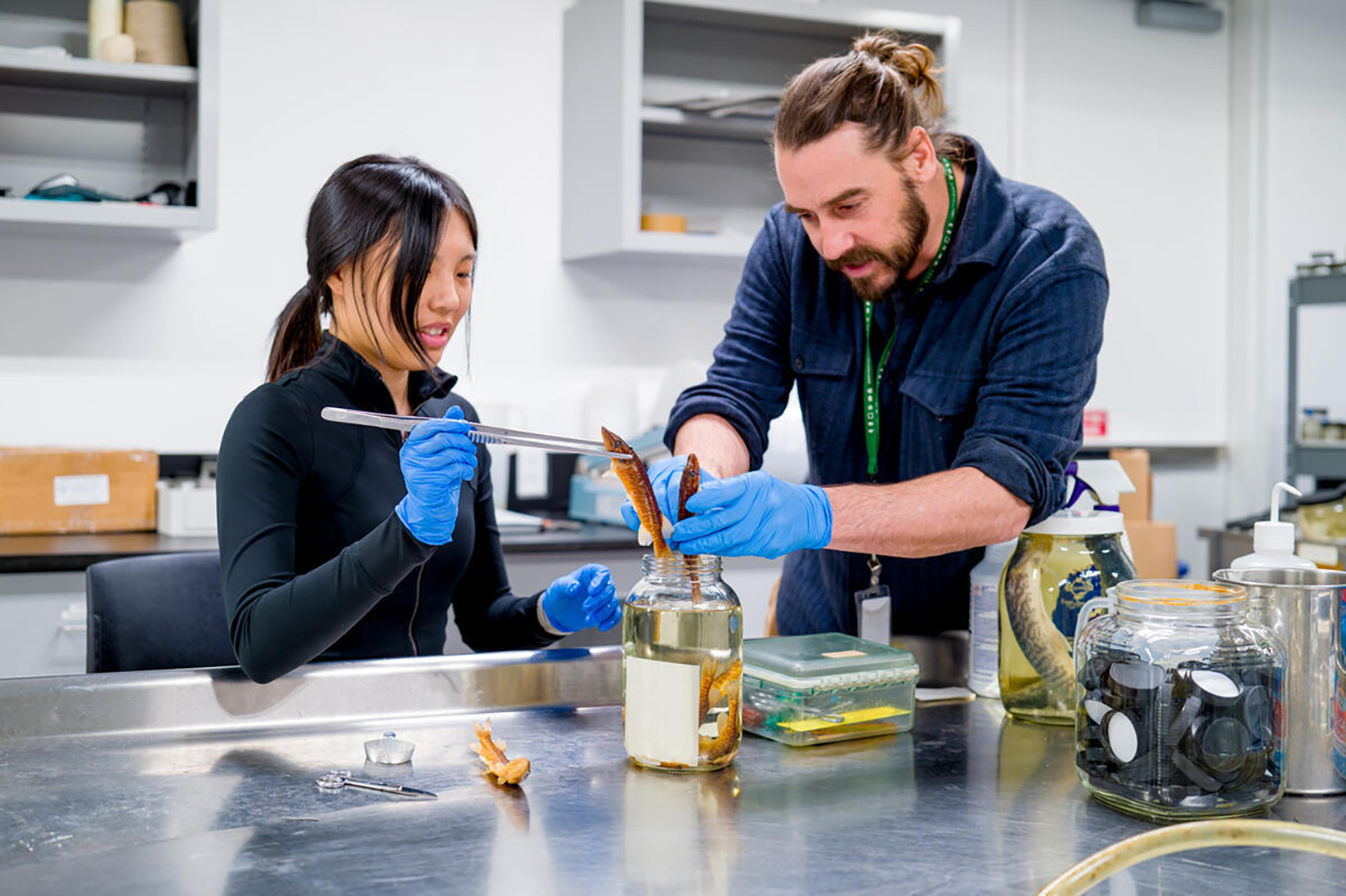
    Forceps in hand, Mia Fricano, a high school junior, was about to investigate. She turned over the fish, a bluegill, and slid in a blade, before extracting its gastrointestinal tract. Then, she carried the fish innards to a beaker filled with a solution that would dissolve the biological material, revealing if there were any tiny particles of plastic — known as microplastics — inside.

    Mia and two other high schoolers working alongside her in a lab this spring were part of a program at the American Museum of Natural History designed to give young people hands-on experience in professional science. Called the Science Research Mentoring Program, or SRMP (pronounced “shrimp”), the program enrolls roughly 60 high school juniors and seniors each year who collaborate with scientists on a research project. 

    Mia and her peers were matched with Ryan Thoni, an ichthyologist and curatorial associate in the museum’s division of vertebrate zoology. Thoni’s project to gather information on when and how microplastics began to enter the environment relied on the museum’s vast collection of fish specimens dating from more than a century ago — some 3.2 million in total.

    Concern about the tiny pieces of plastic debris has grown in the last few years, along with early-stage research on the health risks they pose. The particles are found in human blood, breast milk and even the brain — and in animals, including, as it turned out, nearly all the fish in Thoni’s lab.    

    “It was kind of shocking to see just how many we did find,” Mia said later. “We weren’t expecting to find more than two to three per fish but in some fish, we would find over 15.” Specimens from the 1970s or earlier were less likely to contain high levels of microplastic, more than three or so pieces, and fish near urban centers seemed to have more of the plastics, on average, than fish from less populated areas. 

    “It really does make you realize just how much the environment has been affected,” said Mia. “There hasn’t been a lot of research on it yet,” she added. “Our project might be able to help future people who are also doing research on microplastics.”  

    Related: Want to read more about how climate change is shaping education? Subscribe to our free newsletter.

    SRMP, started in 2009, is operating at a time when the federal government is eliminating fellowships and other support for early career scientists, and defunding scientific research broadly. That both amplifies the need for, and complicates the work of, programs like this one, said Amanda Townley, executive director of the nonprofit National Center for Science Education. Over the last 15 years in particular, such programs have played a big role in giving students a chance to do the kind of applied science that is rarely available in K-12 classrooms because of money and time constraints, she said. 

    “Museums, university extensions, sometimes libraries, have really done this tremendous job of creating spaces for high school and younger students to engage with scientists doing science,” said Townley. “Those museums, libraries and universities are all under attack.” She added: “We’re going to see a generational impact.” 

    While the American Museum of Natural History has received some federal government funding, the SRMP program’s money comes from private foundations and individual donors, with additional support from the New York City Council. Students in SRMP participate in a summer institute in August, when they learn basics like how to investigate research questions. Then they spend two afternoons a week during the school year on their projects. 

    Each student receives a stipend, $2,500 over the course of the year. “It’s really important for high school students to know their time is valuable,” said Maria Strangas, the museum’s assistant director of science research experiences. “They are doing something here that is really useful for the researchers; it’s an education program, but they aren’t the only ones who are benefiting.” 

    Students from New York City schools that partner with the museum can apply, as well as those who have participated in programs with the museum in the past. SRMP has also spawned a network of about 30 similar programs across the city, with institutions including Brooklyn College, Bronx River Alliance and many others participating. 

    In the lab on the sixth floor of the museum, Mia, who attends the New York City Museum School, cleaned out a beaker, while Yuki Chen, a senior at Central Park East High School, sat at a metal table, dissecting a pike. Thoni inserted a slide containing material harvested from one of the fish under a microscope, and pointed out a few microplastics, which looked like threads. 

    Ryan Thoni of the American Museum of Natural History, right, with high schoolers Mia Fricano (center) and Freyalise Matasar. Credit: Caroline Preston/The Hechinger Report

    Freyalise Matasar, a junior at the Ethical Culture Fieldston School in the Bronx, plucked a white sucker fish from a jar. She said SRMP had altered her career trajectory. Before the program, she was considering studying journalism in college, but her experience this year persuaded her to focus on engineering and data science instead. 

    “I have totally fallen in love with science,” she said. “It’s been an amazing experience to see what professional science looks like — and more than just see it, to be a part of it.”

    Freyalise said she wanted to build those skills in order to help fight climate change, perhaps by working on weather models to predict climate risks and ideally spur people to action. “It’s the biggest problem faced by our generation. It’s inescapable and unignorable, no matter how much people try,” she said. “It’s everyone’s responsibility to do what they can to fight it.”   

    Related: So much for saving the planet. Science careers, and many others, evaporate for class of 2025

    Microplastics contribute to climate change in several ways, including by potentially disrupting oceans’ ability to sequester carbon and by directly emitting greenhouse gases.

    Interest in climate science among young people is growing, even as the federal government tries to zero out funding for it. Other climate-related topics SRMP students explored this year included the climate on exoplanets, the ecology of sea anemones and aquatic wildlife conservation in New York City.

    Sometimes the fish dissections were gross: Mia, who plans to study biology and machine learning in college, sliced into one large fish to find poorly preserved, rotten innards — and a major stink. Sometimes they provided a lesson beyond pollution: Yuki identified a small pickerel inside a larger one. (Pickerels prey even on members of their own species, the students learned.) 

    The scientists in the program, most of whom are postdoctoral fellows, are trained on how to be effective mentors. “Scientists are often not trained in mentorship; it’s something that people pick up organically seeing good or bad examples in their own lives,” said Strangas. “A lot of it comes down to: ‘Think about the impact you want to have, think about the impact you don’t want to have, think about the power dynamic at play, and what this student in front of you wants to get out of it.’”  

    Thoni earned rave reviews from the students, who said he ensured they understood each step of the research process without being patronizing. 

    Thoni’s next steps include working to publish the microplastics research, which could earn the students their first co-authorship in a scientific journal. “Aside from forgetting to put on gloves,” he said in a playful jab at one student, “they can operate this machine on their own. They do science.”

    Contact editor Caroline Preston at 212-870-8965, via Signal at CarolineP.83 or on email at [email protected]

    This story about science careers was produced by The Hechinger Report, a nonprofit, independent news organization focused on inequality and innovation in education. Sign up for the Hechinger newsletter on climate and education.

    The Hechinger Report provides in-depth, fact-based, unbiased reporting on education that is free to all readers. But that doesn’t mean it’s free to produce. Our work keeps educators and the public informed about pressing issues at schools and on campuses throughout the country. We tell the whole story, even when the details are inconvenient. Help us keep doing that.

    Join us today.

    Source link

  • Ambow Education Continues to Fish in Murky Waters

    Ambow Education Continues to Fish in Murky Waters

    In May 2022, The Higher Education Inquirer began investigating Ambow Education after we received credible tips about the company as a bad actor in US higher education, particularly with its failure to adequately maintain and operate Bay State College in Boston. The Massachusetts Attorney General had already stepped in and fined the school in 2020 for misleading students. 

    As HEI dug deeper, we found that Ambow failed years before under questionable circumstances. And we worked with a number of news outlets and staffers in the offices of Senator Elizabeth Warren and Representative Ayanna Pressley to get justice for the students at Bay State College. 

    Since that 2022 story we continued to investigate Ambow Education, its CEO Jin Huang, and Ambow’s opaque business practices. Not only were we concerned about the company’s finances, we were wary of any undue influence the People’s Republic of China (PRC) had on Ambow, which the company had previously acknowledged in SEC documents. 

    A Chinese proverb says it’s easier to fish in murky waters. And that’s what it seemed like for us to investigate Ambow, a company that used the murky waters in American business as well as anyone. But not everything can remain hidden to US authorities, even if the company was based out of the Cayman Islands, with a corporate headquarters in Beijing. 

    In November 2022, Ambow sold all of its assets in the People’s Republic of China, and in August 2023 Bay State College closed abruptly. We reported some strange behaviors in the markets to the Securities and Exchange Commission, but they had nothing to tell us. Ambow moved its headquarters to a small rental space in Cupertino, where it still operates. 

    In 2024, Ambow began spinning its yarns about a new learning platform, HybriU, using Norm Algood of Synergis Education as its huckster. HybriU presented at the Computer Electronics Show in Las Vegas and at the ASU-GSV conference in San Diego and used those appearances as signs of legitimacy. It later reported a $1.3 million contract with a small company out of Singapore.

    In 2025, Ambow remains alive but with fewer assets and only the promise of doing something of value. Its remaining US college, the New School of Architecture and Design, has had problems paying its bills, and there are at least two cases in San Diego Superior Court pending (for failure to pay rent and failing to pay the school’s former President). However, Ambow has been given a clean bill of health by its regional accreditor, WSCUC.

    A report by Argus Research, which Ambow commissioned, also described Ambow in a generally positive light, despite the fact that Ambow was only spending $100,000 per quarter on Research and Development. That report notes that Prouden, a small accounting firm based in the People’s Republic of China is just seeing Ambow Education’s books for the first time. In April 2025 we wonder if we’ll get adequate information when Ambow reports its 2024 annual earnings, or whether we find just another layer of sludge. 

    Source link