Tag: Florida

  • At Least 10 Florida Universities Have Signed ICE Agreements

    At Least 10 Florida Universities Have Signed ICE Agreements

    At least 10 Florida public universities have struck agreements with the federal government authorizing campus police to question and detain undocumented immigrants.

    Inside Higher Ed requested public records from all 12 State University System of Florida institutions related to their agreements with U.S. Immigration and Customs Enforcement. Based on the results, it is clear that at least 10 have signed deals with ICE: Florida A&M University, Florida Atlantic University, Florida Gulf Coast University, Florida International University, New College of Florida, the University of Central Florida, the University of Florida, the University of North Florida, the University of South Florida and the University of West Florida.

    Florida State University and Florida Polytechnic University are in the process of signing the paperwork, according to spokespersons at each institution.

    It is unclear whether any of the 28 members of the Florida College System, which don’t all have sworn police forces, have made similar arrangements with ICE. An FCS system spokesperson did not respond to a request for comment on whether its colleges have also entered such agreements.

    Universities across the state signed memorandums of agreement at the direction of Republican governor Ron DeSantis, who ordered law enforcement agencies to partner with ICE “to execute functions of immigration enforcement,” according to a Feb. 19 news release.

    Legal experts and Florida faculty members note that such agreements are rare and mark a shift away from the typical duties of campus police, which don’t usually include immigration enforcement. They also raised concerns about how such arrangements could create a climate of fear on campuses.

    Enforcers Seeking Partners

    The DeSantis directive came shortly after the governor tapped Larry Keefe, a former U.S. attorney for the Northern District of Florida, to serve as executive director of the nascent State Board of Immigration Enforcement, created by Florida’s Legislature. Keefe is known for helping DeSantis orchestrate flights of migrants from Texas to Massachusetts in 2022.

    Keefe was named to the role on Feb. 17. Eight days later, Jennifer Pritt, executive director of the Florida Police Chiefs Association, sent an email to multiple universities that included a template for a memorandum of agreement with ICE. “Director Keefe is seeking participation from as many municipalities as possible, as soon as possible,” Pritt wrote.

    Most universities, however, offered limited statements about their agreements with ICE. A Florida Board of Governors spokesperson also provided few details.

    “Several police departments at universities within the State University System of Florida are partnering with U.S. Immigration and Customs Enforcement,” Cassandra Edwards, director of public affairs for FLBOG, wrote by email. “We do not maintain these records and recommend contacting individual universities for specific information about the partnerships.”

    Public records show that Florida Poly was hesitant to sign on, apparently due to guidance by Polk County sheriff Grady Judd, who is also on the State Board of Immigration Enforcement.

    “He wants us to hold off and not sign because he’s going to be handling all from Polk and not wants [sic] us to be involved as of now,” Florida Poly police chief Rick Holland wrote in a March 25 email response to questions from administrators at other universities about the agreements.

    Though Florida Poly noted it is still in the consideration process, emails obtained by Inside Higher Ed show another message from Holland indicating that Florida Poly appears willing to sign.

    “Can you send me a signed copy of your MOU as a template to where I need to sign?” Holland wrote in an April 3 email sent to Jennifer Coley, the chief of police at New College of Florida.

    (Florida Poly confirmed after publication that it planned to sign the paperwork Wednesday.)

    The Agreements

    Memorandums of agreement reviewed by Inside Higher Ed show that universities that entered arrangements with ICE will grant their police the authority to perform tasks typically reserved for government officials, such as questioning, arresting and preparing charges for individuals on campus suspected of immigration violations.

    Campus police will be required to undergo mandatory training “on relevant administrative, legal, and operational issues tailored to the immigration enforcement functions to be performed,” according to copies of agreements between universities and ICE reviewed by Inside Higher Ed.

    Universities that signed agreements did not provide a timeline for when the training might begin.

    Michael Kagan, a law professor and director of the University of Nevada, Las Vegas, Immigration Clinic, said such agreements are uncommon at universities, noting that he is unaware of any others. He said they are essentially “force multipliers for ICE that deputize local police agencies to do the work that ICE would normally do itself.”

    Jennifer Chacón, a professor at Stanford Law School, also said that she had not heard of prior agreements between campus police and ICE. Chacón noted that 287(g) agreements, introduced in 1996 to delegate immigration enforcement powers to other law enforcement agencies, have ebbed and flowed over the years, rising under Republican presidents and falling under their Democratic counterparts. Under President Donald Trump, who has made a crackdown on immigration a central part of his policy agenda, such agreements are proliferating.

    “Over the last three months, we’ve seen an explosion in 287(g) agreements under Trump,” Chacón said.

    ‘Designed to Increase Fear’

    Faculty and legal scholars are skeptical and concerned about campus agreements with ICE.

    In a statement to Inside Higher Ed, the Florida International chapter of United Faculty of Florida called for the university to immediately withdraw from the program, which it condemned.

    “We affirm that every member of our university community has a basic right to feel safe on campus—free from profiling, surveillance, and fear of deportation,” members wrote. “FIU’s latest act of anticipatory obedience undermines the rights of our community and jeopardizes the opportunity for all students and faculty to learn from and engage with their non-citizen peers. FIU’s haste to comply with ICE is in direct conflict with its stated vision. These actions distract from our educational mission and erode the inclusive environment FIU claims to foster.”

    The statement added the student body is “majority Hispanic, heavily immigrant, and home to nearly 600 students protected by the Deferred Action for Childhood Arrivals (DACA) program,” calling the agreement a betrayal of FIU’s legacy as a prominent Hispanic-serving institution.

    Faculty at FIU also wrote that they were “equally alarmed to hear about the termination of the F-1 visa status of 18 FIU students.” (As of Tuesday evening, at least 1,234 students at 209 colleges have had their visas revoked, in some cases for participating in campus protests but often for unclear reasons.)

    Legal scholars shared faculty members’ concerns about the fallout of such agreements.

    “It seems like this is designed to increase fear. And whether that’s by design or not, it is likely to increase racial profiling on campus, and it is not at all an effective way to police immigration,” Chacón said.

    Kagan said he would be unsurprised to see similar agreements at universities in other red states.

    “I think that it will accentuate the extremes in terms of how different university systems react to the reality that immigrants are part of their campus life,” he said. “You have one extreme, where Florida is saying, ‘Let’s hunt them down with our own police,’ while you have other university systems that have started programs to be more welcoming to undocumented students.”

    Editor’s note: This article has been updated to reflect that Florida Poly plans to sign an agreement with ICE on Wednesday.


    Source link

  • Embattled University of West Florida Trustee Resigns

    Embattled University of West Florida Trustee Resigns

    Scott Yenor, chair of the Board of Trustees at the University of West Florida, resigned Wednesday ahead of a looming fight with lawmakers, The Pensacola News Journal reported.

    Yenor, a political science professor at Boise State University, made national headlines in 2021 when he made misogynistic remarks at the National Conservatism Conference, taking aim at feminism and arguing that women should not pursue certain career fields, such as engineering.

    He also described “independent women” as “medicated, meddlesome and quarrelsome.”

    Yenor and other conservative trustees appointed at UWF in January faced protests from the community. But it was ultimately pressure from state lawmakers over other remarks that seemed to push Yenor out. In a series of social media posts in February, Yenor seemed to imply that only straight white men should be in political leadership posts. Some critics, including Randy Fine, a Republican state senator at the time of the post, read his remarks as exclusionary of Jewish men. (Fine recently won a special election to represent Florida’s First Congressional District.)

    Fine, who is Jewish, subsequently called Yenor a “bigot” and “misogynist.”

    Under Florida law, a trustee appointed by the governor can begin serving immediately, before confirmation by the State Legislature. With the confirmation process underway, Yenor stepped aside amid speculation that lawmakers could refuse to sign off on his appointment.

    “Gov. Ron DeSantis’ higher education reforms are models for the country,” Yenor wrote in a resignation email obtained by The Pensacola News Journal. “I was looking forward to bringing the Governor’s positive vision for higher education to the University of West Florida (UWF) as a member of the Board of Trustees. Opposition to my nomination among a group within Florida’s senate, however, leads me to resign from UWF’s Board of Trustees effectively immediately.”

    The potential rejection would mark a rare break between DeSantis and Florida’s Republican-dominated Legislature, which has largely supported the governor’s agenda during his time in office. Earlier this year, the Senate Appropriations Committee did not confirm Adam Kissel, another UWF board appointee, though there is still a path for him to be confirmed anyway. In 2023, the Florida Senate rejected another DeSantis pick and bumped Eddie Speir from the New College of Florida board simply by not taking action on the confirmation rather than rejecting it.

    Source link

  • University of Florida Signs Agreement With ICE

    University of Florida Signs Agreement With ICE

    The University of Florida has signed an agreement to partner with U.S. Immigration and Customs Enforcement to help crack down on undocumented students, according to The Independent Florida Alligator, a student publication.

    The Florida Phoenix confirmed the report with a UF spokesperson, who said the university had agreed to deputize campus police as immigration officers but did not provide more details.

    The news broke the day after UF students held a rally on campus to protest the arrest and self-deportation of a Colombian student whom ICE agents stopped in late March for driving with an expired registration.

    UF is not the first institution in the state to commit to working with ICE; Florida Atlantic University signed a similar agreement earlier this month.

    Source link

  • Florida Atlantic Police Seek Immigration Enforcement Powers

    Florida Atlantic Police Seek Immigration Enforcement Powers

    Florida Atlantic University reportedly has a pending agreement with the federal government to allow its campus police department to question and detain individuals who are suspected of being in the U.S. without legal authorization, The Florida Phoenix reported.

    The public university located in Boca Raton is a Hispanic-serving institution.

    If FAU police acquire immigration enforcement authority, the university would seemingly be the first in the nation to deputize campus cops as federal enforcement agents, the Phoenix noted.

    However, it appears that all other Florida institutions with sworn police departments will follow FAU’s lead to comply with a February directive from Gov. Ron DeSantis requiring state law enforcement agencies to enter into an agreement “to execute functions of immigration enforcement within the state” so “deportations can be carried out more efficiently.”

    “All state law enforcement agencies are expected to follow the governor’s Feb. 19 directive on working U.S. Immigration and Customs Enforcement,” FAU spokesperson Joshua Glanzer wrote to Inside Higher Ed. “This includes FAUPD and other state university police departments.”

    The move comes after Florida Atlantic hired former GOP lawmaker Adam Hasner to be president in February. Hasner, who once boasted of being “the most partisan Republican in Tallahassee,” served in the Florida House of Representatives from 2002 to 2010. Prior to taking the top job at FAU, Hasner was an executive at the GEO Group, a for-profit prison company. 

    The GEO Group currently runs more than a dozen U.S. Immigration and Customs Enforcement detention centers in California, Florida, Texas and various other states, according to its website.

    Hasner’s history with the GEO Group was a matter of contention for students and others during the hiring process; some raised objections during public forums about his for-profit prison past. Other critics expressed concerns about his lack of administrative experience in higher education.

    Source link

  • New College of Florida Fires Chinese Adjunct

    New College of Florida Fires Chinese Adjunct

    New College of Florida fired a Chinese adjunct instructor after he asked why he wasn’t being paid and officials replied that they had overlooked regulations prohibiting his employment, according to a Suncoast Searchlight investigation.

    Kevin Wang—whose area of concentration was listed as Chinese Language and Culture on his now-deleted college directory page—told the nonprofit news outlet that he previously lost his professorship in China over criticizing Chinese leader Xi Jinping and the Chinese Communist Party. He’s seeking asylum and is allowed to work in the U.S., Searchlight reported.

    But New College fired him March 12, citing a university regulation based on Florida’s “countries of concern” law, the outlet reported. This came two days after Wang inquired why he hadn’t been getting paychecks all semester, Searchlight wrote. New College didn’t return Inside Higher Ed’s requests for comment Friday.

    Florida’s Legislature has passed multiple laws limiting public colleges’ and universities’ relationships with listed “countries of concern,” such as China. The Searchlight story pointed to 2023’s Senate Bill 846, which—with exceptions—bars institutions from participating “in any agreement” with a “foreign principal.” The law defined foreign principals as “any person who is domiciled in a foreign country of concern and is not a citizen or lawful permanent resident of the United States.” The Florida Board of Governors followed up the law by releasing guidance, Searchlight reported.

    Wang told the outlet, “I truly hope that such interference undermining academic freedom will not occur again in a place that claims to be a ‘beacon of democracy.’”

    Source link

  • Florida Virtual School Partners with University of Florida and Concord Consortium to Launch ‘Artificial Intelligence in Math’ Online Certification for Middle, High School Students 

    Florida Virtual School Partners with University of Florida and Concord Consortium to Launch ‘Artificial Intelligence in Math’ Online Certification for Middle, High School Students 

    ORLANDO, Fla. — Florida Virtual School (FLVS) is partnering with the University of Florida (UF) and the Concord Consortium to introduce a groundbreaking year-long “Artificial Intelligence (AI) in Math” supplemental certification for FLVS middle and high school students enrolled in the school’s Flex option. FLVS instructors who teach Algebra 1 will lead this innovative program, teaching the online courses while also supplementing students’ learning with activities that build students’ understanding of math and AI concepts. FLVS students enrolled in Algebra 1 who elect to earn the certification will begin April 7. 

    The certification will introduce students to the foundational principles of AI that intersect with core math topics while offering insights into real-world applications, ethical considerations, and career opportunities in AI-related fields. By merging 21st-century technology with education, the program aims to boost students’ math skills, cultivate positive attitudes toward mathematics, and expose them to the rapidly evolving AI landscape.

    “As a leader in online education for more than 27 years, Florida Virtual School is committed to being at the forefront of educational innovation,” said Dr. Louis Algaze, president and CEO of Florida Virtual School. “By partnering with the University of Florida and the Concord Consortium, we are equipping our students with essential math skills and the knowledge to navigate and succeed in an AI-enhanced world.”

    The certification also includes a collaborative feedback loop between FLVS teachers and UF and Concord Consortium researchers. Teachers will provide critical insights into the online course structure and student outcomes, helping to refine and improve the certification’s effectiveness for future online learners.

    “AI is revolutionizing industries worldwide, creating new opportunities,” said Jie Chao, project director at the Concord Consortium. “Our partnership with FLVS allows us to offer robust AI learning opportunities to students with limited access to such resources, bridging the educational gaps and preparing young people for an AI-powered future.”

    FLVS teachers will also complete 40 hours of online professional development as part of the program. The training will include learning about specialized learning technologies designed to help visualize abstract math concepts and create interactive AI model explorations to ensure students engage with the AI development process in meaningful and dynamic ways.

    FLVS Flex students who are either currently enrolled or are interested in taking Algebra 1 can now sign up for the “AI in Math” certification by filling out this survey. Students who complete the program as part of their FLVS math class will receive enrichment credit and the AI Literacy certificate issued by UF and the Concord Consortium.  

    About Florida Virtual School (FLVS) 

    At Florida Virtual School (FLVS), the student is at the center of every decision we make. For 27 years, our certified online teachers have worked one-on-one with students to understand their needs and ensure their success – with FLVS students completing 8.1 million semester courses since the school’s inception. As a fully accredited statewide public school district, Florida students in grades Kindergarten through 12 can enroll tuition-free in full-time and part-time online education options. With more than 200 effective and comprehensive courses, and over 80 fun and exciting clubs, FLVS provides families with a safe, reliable, and flexible education in a supportive environment. As a leading online education provider, FLVS also offers comprehensive digital learning solutions to school districts, from online courses that result in high student performance outcomes, to easy-to-use online platforms, staff training, and support. To learn more, visit  our website.

    eSchool News Staff
    Latest posts by eSchool News Staff (see all)

    Source link

  • Florida equivalent of DOGE to audit state universities

    Florida equivalent of DOGE to audit state universities

    Florida governor Ron DeSantis is launching a state initiative to cut spending and optimize efficiency modeled after the Elon Musk’s federal Department of Government Efficiency, which has cut billions in contracts at federal agencies, The Orlando Sentinel reported.

    Over the course of a year, Florida’s version of DOGE intends to sunset dozens of state boards and commissions, cut hundreds of jobs, and probe university finances and managerial practices.

    “This is the DOGE-ing of our state university system, and I think it’s going to be good for taxpayers, and it’s ultimately going to be good for students as well,” DeSantis said Monday.

    He added that the state would leverage artificial intelligence to help with the initiative.

    The Republican governor also indicated that the state-level initiative would target what he referred to as “ideological study stuff” in an effort to “make sure that these universities are really serving the classical mission of what a university should be, and that’s not to impose ideology. It’s really to teach students how to think and to prepare them to be citizens of our republic.”

    The move comes as the state has already targeted curriculum in recent months, stripping hundreds of courses from the general education offerings of state universities earlier this year. Many of the classes touched on topics such as race, gender, sexuality, and non-Christian religions.

    Florida has also hired multiple GOP officials—some sitting, others who previously served—to lead state universities, including several who have no higher education management experience.

    In a response to DeSantis, who pressed for the need to eliminate inefficiencies, the Florida Democratic Party noted that Republicans have controlled state politics for nearly 30 years and questioned the outgoing governor’s motivations in launching the state equivalent of DOGE.

    Source link

  • Florida Dreamer Tuition Policy Reversal Threatens $25 Million Economic Impact

    Florida Dreamer Tuition Policy Reversal Threatens $25 Million Economic Impact

    Education advocates and immigration policy experts are warning of significant economic, and workforce impacts following Florida’s decision to rescind in-state tuition waivers for undocumented students who graduated from Florida high schools. The policy change, signed into law by Governor Ron DeSantis, marks a significant shift in the state’s approach to higher education access for Dreamers.

    The decision is expected to cost Florida institutions approximately $25 million in tuition and fees, according to TheDream.US, a national organization supporting higher education access for Dreamers. The organization’s President and CEO, Gaby Pacheco, a long-time Miami resident, said that the impact extends beyond immediate financial consequences, potentially affecting Florida’s future workforce development and economic growth.

    “Our state is turning its back and hindering the potential of students who have succeeded throughout their K-12 education,” says Pacheco, noting that many affected students arrived in the United States at an average age of six years old. The organization has already helped more than 600 Florida-based Dreamers graduate college, with many now working as nurses, teachers, engineers, and entrepreneurs within the state.

    The Presidents’ Alliance on Higher Education and Immigration, through its Director of Policy and Strategy Diego Sánchez, points to concerning workforce implications. With Florida facing shortages in healthcare, teaching, and STEM fields, the policy change could exacerbate existing gaps in critical sectors. Sánchez, himself a former undocumented student in Florida, argues that the state risks losing bilingual, skilled professionals to other regions with more inclusive education policies.

    The impact of this policy shift could be particularly significant given Florida’s traditional role as a hub for educational and economic opportunity. Critics argue that the change contradicts the state’s historical position as a beacon of dynamism and opportunity, potentially deterring talented students from pursuing higher education in Florida.

    Advocates point out that many affected students are deeply integrated into Florida communities, having completed their entire K-12 education in the state’s public schools. The new policy, they argue, creates barriers for these students to continue their education and contribute to the state’s economy, potentially forcing them to either abandon their educational pursuits or seek opportunities in other states with more favorable policies.

    As this policy takes effect, educational institutions and advocacy groups are working to assess the full scope of its impact on Florida’s educational landscape and future workforce development. The change represents a significant shift in Florida’s approach to higher education access and raises questions about the state’s long-term economic and workforce strategy.

    Source link

  • Florida ends in-state tuition for undocumented students

    Florida ends in-state tuition for undocumented students

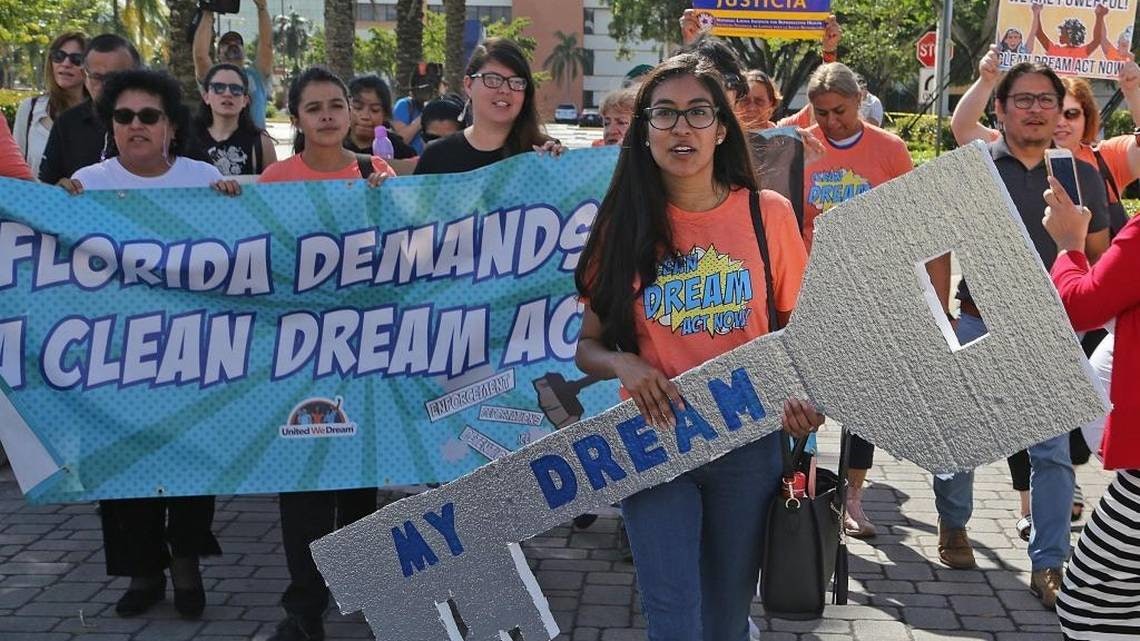
    Florida state lawmakers have eliminated in-state tuition for undocumented students, reversing a decade-old law that once enjoyed bipartisan support.

    Previously, undocumented students in Florida could apply for waivers to pay in-state tuition rates, if they went to high school in the state for at least three consecutive years and enrolled in college within two years of graduating.

    Under the new policy, included in a sweeping immigration bill signed by Governor Ron DeSantis last week, only “citizens of the United States” or those “lawfully present in the United States” qualify. Students receiving the waivers need to be “reevaluated for eligibility” by July 1.

    “I don’t think you should be admitted to college in Florida if you’re here illegally,” DeSantis said in a press conference Friday, “but to give in-state tuition was just a slap in the face to taxpayers.”

    Florida was one of 25 states that offered in-state tuition to undocumented students at public colleges and universities, according to the Higher Ed Immigration Portal, a data hub run by the Presidents’ Alliance on Higher Education and Immigration. These reduced tuition prices came as a relief to undocumented students, who can’t access federal financial aid like their peers and often lack work authorization unless they’re part of the Deferred Action for Childhood Arrivals, or DACA, program. (Of the approximately 400,000 undocumented students enrolled in U.S. colleges and universities, most don’t hold DACA status.)

    Policymakers in other states are considering taking similar steps to curb in-state tuition for these students as they embrace President Donald Trump’s national push against undocumented immigration. Since the presidential election in November, state lawmakers in Massachusetts, Minnesota and Texas have introduced legislation to remove in-state tuition for undocumented students. As the issue becomes a political lightning rod, politicians in other states are doubling down on financial supports for these students, introducing bills that would expand in-state tuition eligibility, including in Indiana, New Mexico, Oregon and Pennsylvania.

    Miriam Feldblum, president and CEO of the Presidents’ Alliance, said advocates “should be prepared and ready” to come out against similar legislation elsewhere in the country.

    A Game of ‘Political Football’

    In-state tuition for undocumented students has become a “political football” in Florida, said Jared Nordlund, Florida state director at UnidosUS, a Latino civil rights organization. But that wasn’t always the case.

    Republican lieutenant governor Jeanette Nuñez—who resigned last week to become interim president of Florida International University—originally advocated for extending in-state tuition to undocumented students, and former Republican governor Rick Scott, now Florida’s senior U.S. senator, signed the bill into law. Nuñez has since pulled back her support for the policy, posting on X in January that the law had “run its course” and needed to be repealed.

    The political winds have shifted on what was once a fairly bipartisan issue, Nordlund said. “Ten years ago, the Republican Party wasn’t the party of Trump.”

    Ira Mehlman, media director at the Federation for American Immigration Reform, an organization that promotes more restrictive immigration policies, applauded Republican state lawmakers for “not rewarding people who are in the country illegally.”

    “The more you reward people for breaking the laws, even if it’s through their kids, the more likely people are to disobey the laws,” Mehlman said. And “you are filling seats that might otherwise have gone to kids who are equally deserving and whose parents have not violated any laws.”

    Now undocumented students are left to pay out-of-state tuition prices, a significant cost difference. During the 2023–24 academic year, average tuition and fees at Florida colleges and universities for out-of-state students was more than triple the cost state residents paid, according to the Florida Policy Institute, an organization that promotes economic mobility in Florida. The state’s in-state tuition waivers benefited an estimated 6,500 undocumented students that year.

    The Ripple Effects

    An undocumented student at University of Central Florida, who requested anonymity, told Inside Higher Ed that she couldn’t have pursued a bachelor’s degree as a full-time student without in-state tuition. She would’ve gone for an associate degree instead, taking one or two classes at a time, to keep costs down.

    Without in-state tuition, “who knows if I’d be graduating right now,” she said.

    The student, who was brought to Florida from Mexico at age 4, is graduating this spring, before the policy change takes effect. But she worries about her peers who won’t have the same resources she did. She previously helped and encouraged other undocumented students to apply for the in-state tuition waiver because of how much it helped her.

    “I gave them that hope,” she said, “and now it’s being snatched away from them.”

    The student argued she and other undocumented students would use their degrees to contribute to the local labor market, a point they’ve made to state lawmakers in the past; her long-term goal is to open a marketing agency and work with small business owners in the state.

    “We studied here our whole life, and our goal is to get our degree and be able to contribute to the economy,” she said.

    Diego Sánchez, director of policy and strategy at the Presidents’ Alliance, said he scrambled to pay for college in Florida before in-state tuition became available to undocumented students like him.

    In 2008, he enrolled at St. Thomas University, a private institution, and joined as many activities as he could that came with university scholarships—student government, choir and cross country, even though he wasn’t a singer or a runner. He couldn’t have afforded college otherwise, which is why he and other activists advocated for in-state tuition for Florida’s undocumented population. He’s “very disappointed” to see that win reversed.

    “It’s about scoring political points,” Sánchez said. “And unfortunately, these students who grew up in Florida, went to our public schools, are going to suffer the consequences … The state has already invested in them, and they’re working their way up to contribute to the community, [to] pay taxes.”

    Undocumented students and their supporters argue Florida is going to lose out on these students as future skilled workers at a time when the state is challenged by workforce shortages and an aging population.

    Feldblum said these students tend to be “tremendously determined” and will likely attend college in other states, taking their talents with them. She also expects some will stop out of higher ed altogether because they can’t afford it or because they don’t know about other resources available to them, like privately funded scholarships.

    “When there are obstacles put in front of students, when students are told, ‘You’re not welcome here’ in different ways, that’s really discouraging,” she said. “That’s disincentivizing,” when Florida has a “need for talent, the need for workforce development.”

    What’s Next

    The fight for in-state tuition in Florida isn’t over, some advocates say.

    “Hopefully we can eventually undo the repeal [of in-state tuition] when the time is right,” Nordlund said. For now, he’s focused on educating state lawmakers and the public about the economic benefits of the repealed policy.

    Sánchez plans to lobby state lawmakers to at least let undocumented students already in college finish their degrees at in-state tuition prices, a proposed amendment to the law that previously failed. He hopes colleges and universities push state lawmakers on the issue as well.

    He continues to worry, however, that these kinds of attacks on students’ in-state tuition “could spread to other parts of the country.”

    Mehlman would like to see other states, and even Congress, look to Florida’s example and work to end in-state tuition for noncitizens nationwide.

    “Florida and Texas have sort of been leaders in this area,” he said, “and they certainly can show the way for other states that might be considering this as well.”

    Source link

  • Florida ends in-state tuition for undocumented students

    Florida ends in-state tuition for undocumented students

    Florida state lawmakers voted on Thursday to get rid of in-state tuition for undocumented students as part of a sweeping immigration bill, The Miami Herald reported.

    Previously, undocumented students who attended high school in the state for at least three consecutive years and enrolled in college within two years of graduating could receive a waiver to pay in-state tuition rates. Now their tuition costs will go up significantly, a particular challenge given that these students can’t receive federal student aid.

    Democratic lawmakers attempted to amend the bill so that undocumented students currently enrolled at public universities could pay in-state rates for the next four years, but the amendment failed in the state Senate.  

    “We wanted to repeal in-state tuition and focus on Floridians,” Governor Ron DeSantis said at a news conference Thursday.

    Source link