Want more women in your organizations? It’s time to start talking about the three M’s: menstruation, menopause, and motherhood.
Meleah Ashford
Writer and Life Coach, Find Solid Ground Coaching
“Today, discussing women’s health remains a taboo because people feel uncomfortable when anyone broaches it,” says Dr. Carolina Amador, the associate director of corporate intelligence at BioMarin, in a recent AWIS Magazine article. “I believe that we should talk about and advocate for women’s health as the first step in creating an equitable workplace.”
The vast majority of women in the workplace have dealt with challenges related to monthly menstruation during their careers. In a 2023 survey, respondents cited their top symptoms as abdominal cramps, irritability, and fatigue. 15% of respondents had a more chronic menstrual condition such as endometriosis, polycystic ovary syndrome, premenstrual dysphoric disorder, or fibroids. Sixty-one percent had worked when they didn’t feel well enough to work. According to Let’s Talk Menopause, 20% of the workforce is in some phase of menopause transition, which comes with its own extensive list of uncomfortable and potentially debilitating symptoms.
Motherhood includes yet another set of considerations. Between 10% and 20% of all known pregnancies end in miscarriage. Sadly, not all companies have policies for infant loss. If they do, they offer a scant 3-5 days off when recovery can take weeks. After successful births or adoptions, mothers are four times more likely than men to have their competence questioned, they are offered fewer opportunities than men, and they earn less than men over their careers.
Implementing effective, inclusive policies
Organizations have a huge opportunity to craft policies that support the three M’s. What does this look like?
Normalize conversations around these topics
Allow flexible work hours or remote work for those with menstrual pain, menopausal symptoms, mental health needs, and caregiving responsibilities for children, elders, or dependents with disabilities
Provide lactation rooms and on-site childcare or stipends to offset caregiving expenses
Create clear and transparent leave policies for childbirth, adoption, loss of a child, illness of a child, and how to return smoothly to work
Explicitly extend sick or personal leave for menstruation and menopause challenges
Initiate employee resource groups focused on the three M’s
Supporting women’s health is not just good for women; other employees would benefit from flexible hours. It is also good for your business. It will help you attract and retain more women. Research from McKinsey & Company shows that companies with more women in leadership have healthier cultures, generate more innovation, and experience better performance.
“We see companies within all facets of the STEM enterprise competing to attract and retain impactful women,” says Meredith Gibson, CEO of the Association of Women in Science, whose Career Center connects recruiters with women in STEM. “Organizations have an opportunity to differentiate themselves by creating policies and offering benefits that support women’s health.”
We need to retain more women in STEM to effectively tackle the world’s complex challenges. I encourage businesses to boldly and proactively address women’s health as an avenue to creating a more inclusive, attractive, and productive enterprise — or run the risk of losing out.
Ever wonder why students don’t read the syllabus, despite the time and effort we put into creating it? It serves as a contract between instructors and students (Eberly, Newton, & Wiggins, 2001), outlining the entire semester’s expectations, assignments, and deadlines. Yet, many students simply aren’t motivated to read it. They often find syllabi overwhelming, unengaging, or even unreadable. In many classes, professors go over the syllabus during the first week (Richmond, 2016), so frequently that students have dubbed it “syllabus week” — not exactly the most exciting start to a semester! Students often form impressions about their courses within the first few minutes of class (Roberto, 2021). Simply standing in front of the room and reading through the syllabus page by page isn’t the most engaging way to showcase what your class has to offer.
What if there were more effective ways to get students to not only read it, but to actively engage with it? Many students skip over it because learning management systems (LMS) like Canvas, Blackboard, and D2L now contain everything they need in one place. Yet, as instructors, we still rely on the syllabus to provide a clear roadmap for the semester.
So, how can we make it more engaging? Below are some strategies to encourage students not only to read the syllabus but to enjoy exploring what your class has to offer and what to expect throughout the semester. Here are five effective strategies to encourage students to engage with your syllabus. While some involve additional technology, leveraging these tools can enhance the experience and make the syllabus more interactive.
Use Notebook LM to create a podcast of your syllabus. Professors can use Notebook LM to generate a podcast version of their syllabus by uploading your syllabus and allow the AI to summarize and structure the content into an engaging audio format. This makes the syllabus more accessible and interactive for students.
Do polling questions using apps like PollEverywhere, Mentimeter and my favorite, Slido, to create interactive quizzes about key syllabus details. By turning the syllabus into a fun, live Q&A session, students engage actively while reinforcing important information about course policies, deadlines, and expectations in an engaging and memorable way.
Think-Pair-Share. Ask students to reflect on the following questions: How does this syllabus compare to others you’ve had? What strengths stand out to you? What challenges do you anticipate after reading it? Have them write down their thoughts individually, then pair up to discuss their responses. Finally, bring the class together for a group discussion, allowing you to clarify any questions or concerns as students share their insights. This activity not only helps students engage with the syllabus but also fosters a sense of community on the first day by encouraging interaction and shared understanding.
Have students annotate the syllabus. Have students annotate the syllabus—a great suggestion from an X post by Remi Kalir. In pairs or small groups, students will review the syllabus together, adding annotations that include clarifying questions, opinions on assignments and readings, and responses to course policies. Using a shared document like Google Docs allows everyone to see and engage with each other’s comments in real time. Another tool to use could be Perusall as the annotation tool. This not only helps students actively engage with the syllabus but also serves as a valuable community-building activity on the first day. The professor can then review the comments to address questions and provide further clarification.
Syllabus Station. In this community-building activity, students will work in groups to identify three key takeaways from the syllabus. At a designated syllabus station in a gallery walk, each group will review a hard copy of the syllabus, discuss its most important points, and write their top three on a large post-it poster. As groups rotate through the stations, they will add their insights to the poster, creating a collaborative summary of essential course information. This interactive approach encourages engagement with the syllabus while fostering teamwork. (I wrote an article on this in Faculty Focus, highlighting different first-day stations I use in class. Begin the Semester with Classroom Community Building Activities to Increase Student Engagement)
Many of these strategies align with community-building activities that foster a supportive and engaging classroom environment, encouraging student participation and a sense of belonging (Ricevuto & McLaughlin, 2022). By implementing one of these approaches, you not only help students engage with the syllabus but also strengthen classroom connections—creating a win-win situation.
Additionally, many of these techniques can be adapted for online courses with slight modifications. In an online setting, these techniques can be easily adapted:
Annotation activities can be done using collaborative tools like Hypothesis or Perusall, where students can highlight and comment directly on the syllabus.
Polling questions using Slido, PollEverywhere, or Mentimeter can be embedded in a live session or asynchronously in a discussion board.
Gallery walk-style activities can be recreated using shared Google Docs, Padlet boards, or discussion forums where students contribute key syllabus takeaways.
Podcast versions of the syllabus can be recorded using Notebook LM, making it more accessible for students who prefer audio content.
By making small adjustments, these interactive techniques can work just as effectively in an online environment, ensuring that students engage with the syllabus while also building a sense of community within the virtual classroom.
By using these interactive strategies, you can transform the syllabus from a passive document into an engaging, community-building tool. Whether through annotation activities, polling questions, collaborative discussions, or creative formats like podcasts, these approaches help students actively engage with course expectations while fostering a sense of connection with their peers. When students feel involved from the start, they are more likely to participate, ask questions, and take ownership of their learning. Creating a welcoming and interactive syllabus experience not only ensures students understand the course structure but also sets the tone for a supportive and engaging classroom environment—both in-person and online.
Dr. Joanne Ricevuto is the Assistant Vice President for Instructional Success, overseeing faculty programming at her institution and leading professional development workshops on key topics in higher education. She also serves as the managing editor for the Office of Instructional Success website. With over 20 years of experience in higher education, she has taught as a professor of early childhood education and has authored numerous articles on virtual learning and student engagement. She is also the co-author of Engaging Virtual Environments: Creative Ideas and Online Tools to Promote Student Interaction, Participation, and Active Learning.
References
Elberly, M. B., Newton, S. E., & Wiggins, R. A. (2001). The syllabus as a tool for learner-centered learning. The Journal of General Education, 50, 56–74.
Ricevuto, J. & McLaughlin, L. (2022). Engaging virtual environments: Creative ideas and online tools to promote student interaction, participation, and active learning. Stylus Publishing.
Richmond A. S. (2016). Constructing a learner-centered syllabus: One professor’s journey. IDEA paper #60. IDEA Center, Inc.
Roberto, M. (2021, April 9). Engaging students on the first day and every day: 7 strategies for connecting in the classroom. Harvard Business Publishing Education.
Co-Authored By Aaliyah Lee-Raji, Amadis Canizales, Amaiya Peterson, Andrew Stillwell, Anessa Mayorga, Aniyah Campbell, A’niyah Leather, Anna Fleeman, Brookelyn Vivas, Cassandra Mathieu, Christian Bennett, Clio Chatelain, Daniel Abernethy, Fatoumata Sow, India Davis, Isabella Maiello, Jazmine Collins, Jennifer Sanchez-Martinez, Joseph Stauffer, Karlee Howard, Kaylee Japak, Keanell Tonny, Kristian Isom, Leonardo Pisa, Mackenzie Lemus, Maddox Wreski, Madelyn Beasley, and Saverio Consolazio
In higher education, one of the greatest challenges is getting students not only engaged in learning but also excited about research. An equally pressing issue is navigating the increasing role of artificial intelligence (AI) in the teaching and learning space. This semester, I aimed to tackle both by teaching a psychology of wellness class that integrated the principles of positive psychology with the use of AI tools. During the two-week module on positive psychology, I wanted students to experience research and writing as positive and engaging activities. I floated the idea of co-authoring an article on student wellness from their perspective, incorporating the responsible use of AI, fostering a passion for research, and ensuring that the process was enjoyable.
Here is how the project unfolded:
Day 1: Setting the Stage for Collaborative Writing
The project began by gauging student interest in co-authoring an article on student wellness. I asked those who wanted front-facing credit and authorship acknowledgment to text me their consent and indicate if they would be comfortable with their photo(s) being included. Importantly, students had the option to opt-out at any time if they felt uncomfortable with the direction of the article. I was fortunate because a large majority of the students showed a genuine interest in this assignment.
To kick off the project, I used ChatGPT to generate an outline based on positive psychology as aligned with the textbook chapters and student-led ideas and topics. The students were then divided into groups, where each group received a dedicated workspace in our learning management system, D2L. Each group selected a predetermined subtopic to focus on, and I tasked them with using ChatGPT to generate 20 ideas on that subtopic. From those 20 ideas, the groups narrowed it down to three, which they discussed in detail, considering both research-based and personal experiences. Each group member took notes to guide the next stage of the project.
Day 2: Mind Mapping and Cross-Pollination of Ideas
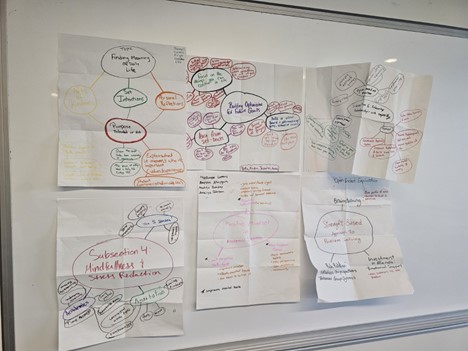
On the second day, students were given poster paper and markers to create mind maps of their ideas and help gain clarity on their discussions from the previous day. Each group placed their chosen topic at the center of the mind map and organized the associated ideas around it. The mind mapping exercise allowed students to visually connect their thoughts and discussions from day one.
One member from each group was nominated to circulate among the other groups, engaging in discussions about each team’s subsection of the article. This not only gave students a broader perspective on how their topics related to the overarching theme of student wellness but also facilitated the flow of information between teams. After gathering input from other teams, the group representative brought the new insights back to their original group, enhancing their understanding of their own topic and how it fit into the larger article. To ensure continuity, students took photos of their mind maps, which would later serve as guides for the writing process.
Day 3: Writing and Research Alignment
On the third day, each group was tasked with creating a document that contained a minimum of five references, with each group member responsible for contributing at least one reference. The document consisted of chunks of article drafts accompanied by their respective references. Students were asked to align these references with the ideas discussed during the earlier sessions and integrate them into their mind maps. Next, students took 15 minutes individually within a shared Google doc to write about their subsection, drawing from their mind maps and class discussions. This individual writing time allowed students to consolidate their thoughts and begin crafting their portion of the collaborative article.
Day 4: Ethical Use of AI in the Writing Process
The fourth day focused on ethical AI usage. We began with a discussion on how students had been using AI tools like ChatGPT and how they envisioned using any type of AI tools in the creation of this article. Together, we created an AI disclosure statement, agreeing on how AI would be used during the editing phase.
We explored specific AI prompts that could enhance their writing, including:
“Rephrase for clarity.”
“Organize this paragraph for the introduction, summary, or conclusion.”
“Give me a starting sentence for this paragraph.”
These prompts were designed to guide students in using AI as a tool to enhance clarity and organization rather than relying on it to write the content.
Day 5: Final Writing and Cohesive Editing
On the final day, students returned to their group documents and spent 15 minutes revising their sections. Afterward, they worked together to co-edit the document without the use of AI, striving to make the article more cohesive and polished. Finally, we revisited the agreed-upon AI prompts, and students were given the option to use AI only when they felt it was necessary for tasks like rephrasing sentences or organizing paragraphs.
The project culminated in a completed article on student wellness, co-authored by students and enhanced by responsible AI usage. The collaborative process not only demystified research and writing but also empowered students to see these activities as positive, engaging, and enjoyable experiences.
Takeaways From This Teaching Experience
The AI writing project was a valuable learning experience for the students, as it incorporated individual and collaborative learning elements alongside technology-based approaches. Reflecting on this experience, I have identified several key takeaways to carry forward into the new semester of teaching and learning.
The Importance of Throwback Learning Experience: Something Familiar Traditional tools like markers and poster boards remain essential in fostering cohesion, socialization, and competence-building. These activities encouraged students to engage in discussions and create visual representations of their ideas, which helped build their confidence and reinforce the collaborative process.
Starting With Original Ideas Matters Students benefited from discussing their ideas within the context of originality before integrating AI-generated content. Generative AI poses a potential threat to originality, emphasizing the need for human thought, discussion, and creativity to provide a benchmark for comparing the quality and intentionality of AI contributions.
Clear Parameters and Prompts Are Essential Defining the role of AI in the writing process was critical for success. Many students initially viewed AI as a tool for producing entire works. By discussing the parameters beforehand, it became clear that AI was to be used to supplement and enhance cohesion rather than replace the creative process.
The Importance of Prompt Development Students gained a growing understanding of the importance of crafting effective prompts for AI. Recognizing how prompts influence AI outputs is a crucial skill that was previously underdeveloped in many students. Moving forward, this skill will be vital as they navigate the intersection of human creativity and AI assistance.
Final Thoughts
Developing effective AI prompts is a pivotal skill that empowers students to use AI intentionally and meaningfully in their learning. A well-crafted prompt acts as the foundation for generating accurate, relevant, and cohesive responses, highlighting the importance of clarity, specificity, and purpose in the initial instructions given to the AI. By understanding how to formulate prompts, students can better harness the potential of AI to support their ideas, enhance their creativity, and improve the quality of their work without relying on AI to replace their original contributions.
This skill also encourages critical thinking, as students must evaluate the type of input needed to achieve a desired outcome, troubleshoot issues in responses, and refine their prompts for better results. Moreover, it aligns with the broader need for digital literacy in education, preparing students to interact responsibly and effectively with technology in academic, professional, and personal contexts.
Lastly, incorporating intentional AI use into teaching strategies ensures that students not only learn how to use these tools but also understand their limitations and ethical considerations. By balancing traditional methods, which foster originality and human connection, with innovative technologies like AI, educators can create a holistic learning environment that values both creativity and technological fluency. This balance will be crucial as AI continues to play an increasingly integral role in education and beyond.
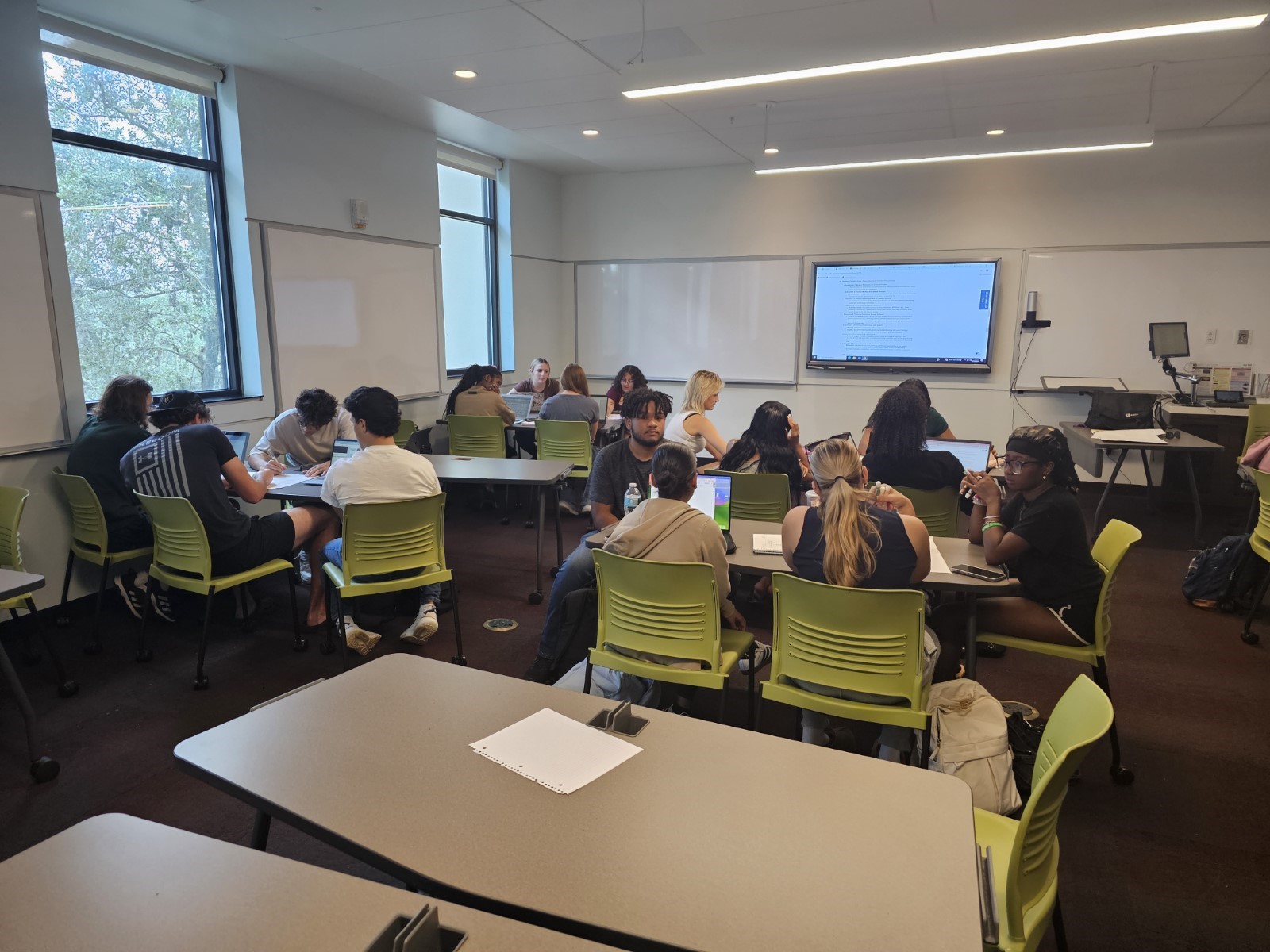
Dr. Courtney Plotts’ students in class.A snapshot of the students’ work.
Special Note of Pride: I would like to note that this group of students worked on this project during class and completed this while two natural disasters accrued, power outages, remote and in person learning and did a great job considering the circumstances. I am so proud of each of them! We originally had bigger visions for the project but due to weather we had to make some changes to the plan!
Freshman College Students’ Advice to Peers for Health & Wellness in 2025
The new year always comes with the possibility of change and growth. As students, much of our growth focus is academics and learning-based. Being academically successful isn’t an easy task. Student wellbeing is an important factor in the learning process (Frazier & Doyle-Fosco, 2024). And for most of us, throwing ourselves into our studies and homework can come with negative side effects like burnout, stress, and decreased mood and motivation. But being successful doesn’t have to come at the risk of your mental health. In our view, academic success means more than good grades and knowledge. Although you may have gone through something last year, or are still going through it now, it doesn’t have to affect you in a negative way. There is so much more that goes into being successful. Success requires dedication, consistency, self-care, and a positive mindset. But for many of us a positive mind set is hard to come by.
The Collective Obstacle
The average age of our class is 19.7 years of age. We have lived with social media all of our lives. A lot of voices have imparted information. Some good, some not so good. The negativity that is readily accessible on social media can lead to negative self-talk. “Negative self-talk refers to your inner voice making critical, negative, or punishing comments. These are the pessimistic, mean-spirited, or unfairly critical thoughts that go through your head when you are making judgements about yourself” (Scott, 2023). Negative self-talk can be detrimental to your psychological well-being. It can really bring you down after you do it for too long. Negative self-talk can also induce stress, depression, and relationship problems. How you can start to believe the negative self-talk: you can start to believe negative self-talk after a while of you doing it. The more you start to tell yourself you can’t do something, the more you’ll start to believe it.
The effects of positive self-talk are the opposite of negative self-talk. It will improve your mental health, can reduce stress, lessen depression, and improve relationships. This not only impacts academics, but other aspects of life. To minimize negative self-talk, you can catch your inner critic when it’s happening and change your thinking to think more positive thoughts, remember that thoughts are not facts, contain your negativity, shift your perspective, think like a friend, or other trusted advisors.
Two Positive Ideas to Embrace in 2025
Two ideas to embrace in the new year that can jumpstart your positivity are evaluating how you think about failure and the control of your future. Failure is an inevitable part of life, but it is through our setbacks that we find opportunities for growth and success. How we respond to failure matters more than the failure itself, and cultivating a mindset of optimism is key to overcoming challenges (Hilppö & Stevens, 2020). Optimism, combined with grit—the perseverance and passion to achieve long-term goals—forms the foundation for a positive and resilient lifestyle. Together, these qualities enable us to turn obstacles into stepping stones and approach life’s difficulties with determination and hope. Think of failures as learning opportunities. Think about the knowledge you gain from hindsight when thinking about failure.
Additionally, understanding the distinction between what we can and cannot control is crucial for maintaining positivity and health (Pourhoseinzadeh, Gheibizadeh,& Moradikalboland, Cheraghian, 2017). Accepting that not everything is within our power allows us to shift our focus to areas where we can make a difference and grow from the experience. Remaining positive during challenging situations and remembering the aspects we can influence help us navigate adversity with a constructive mindset. It’s also important to respect that some factors are beyond our control and may happen for reasons we do not yet understand. By seeking to understand why certain things are outside our control, we can cultivate acceptance and use these moments as opportunities for reflection and personal growth.
The Importance of Health Communication in 2025
Healthy communication is critical to positive personal growth. Asking open-ended questions is important when engaging in meaningful communication because it ensures that there are no assumptions being made. One researcher found that assumptions “lead to consistent and unnecessary community failures” (Macrae, 2018, p.5). Additionally, healthy communication can build true connections among people and better understanding. Also, avoiding assumptions is a way to stay present in the moment allowing you to determine if there is genuine interest in the conversation. Most importantly, health aspects of communication like listening, reflecting, and pausing encourage new thinking and can develop new ideas just about anything.
In addition to healthy communication, think about sharing more of your experiences with peers. Starting from a place of curiosity and health, inquire about someone’s well-being. You can start with a simple phrase like “Are you ok?” Or be ready and willing to share your own personal experience when the time is right. Not only can this help someone else but sharing your story can also help you process what you have been through. Sharing and listening to each other’s experiences can show understanding and help you feel more willing to share now and in the future. Understanding and being present is a power combination for communication.
Lastly, remember that relationships are complex. Whether parental, academic, or personal, everyone has their relationships challenges. One tactic to strengthen relationships is humor. Remember to laugh and enjoy life and the people around you. Most people forget about light heartedness and humor, and how humor can help strengthen and resolve issues within a relationship. Humor can improve the quality of relationships by reducing the stress, tension, and anxiety of the people within the relationship. This effect can only occur if humor is used respectfully in relationships. When used right, humor also can create a more comfortable relationship with less anxiety and sadness for those in it. It’s ok to laugh—even in challenging times.
Summary
A positive mindset is the root of achieving any goal you put your mind to. As a collective voice, we hope the information we shared is valuable information. Our goal was to share meaningful information for your new year and new journey in 2025. As students, we fully understand the importance of mental health, especially because all of us experienced covid at some of the most challenging times of our lives. We hope this information helps you in the new year as much as it helped us learn and grow. Remember to stay happy, healthy, and safe in the new year and think positive!
Dr. Courtney Plotts is a Dynamic Keynote Speaker, Author, and Professor. Dr. Plotts is the National Chair of the Council For At-Risk Student Education and Professional Standards, the country’s only organization that provides standards for working with marginalized and nontraditional students in Kindergarten to College. Her role as National Chair includes training, consulting, and research. Her subject matter expertise has been used in a variety of book publications. Most recently “Small Teaching Online” By Flower Darby with James M. Lang published in June 2019. Dr. Plotts was recognized in 2017 by the California State Legislature for a bold commitment to change in education. She is currently in talks with higher education institutions to launch an institute that focuses on diversity and best practices in online teaching spaces to launch in 2021.
References
Frazier, T., & Doyle Fosco, S. L. (2024). Nurturing positive mental health and wellbeing in educational settings – the PRICES model. Frontiers in public health, 11, 1287532. https://doi.org/10.3389/fpubh.2023.12875
Hilppö, J., & Stevens, R. (2020). “Failure is just another try”: Re-framing failure in school through the FUSE studio approach. International Journal of Educational Research, 99, 101494. https://doi.org/10.1016/j.ijer.2019.101494
Macrae, C. (2018). When no news is bad news: Communication failures and the hidden assumptions that threaten safety. Journal of the Royal Society of Medicine, 111(1), 5–7. https://doi.org/10.1177/0141076817738503
Pourhoseinzadeh, M., Gheibizadeh, M., & Moradikalboland, M., Cheraghian, B. (2017). The Relationship between Health Locus of Control and Health Behaviors in Emergency Medicine Personnel. International journal of community based nursing and midwifery, 5(4), 397–407.
In undergraduate classrooms, instructors encounter a variety of students with diverse backgrounds and different personalities. Since discussion-based learning, both in-person and virtual, remains important, teachers should find ways to encourage student engagement in classroom activities and discussions. Student engagement is also critical to the success of students who are more self-directed and specialized, as it allows them to dive deeper into course material within their specialized areas of interest.
When more students are engaged, class conversations become richer, enhancing student learning. For instance, introverted students may have strong opinions and much to contribute but may hesitate to share during class. Students, whether introverted or not, might feel uncomfortable or uninterested in joining group discussions for various reasons. It is the instructor’s challenge to create a comfortable class environment. Not only will students benefit, but instructors can feel more at ease in their own classrooms.
Genuine connections between students are based on trust, which can be encouraged in several ways. Trust-building connections are fostered in an environment with instructor presence and constructive feedback. Students benefit from instructor buy-in, effort, and intention.
To boost classroom interaction and active participation, instructors can include proven strategies in their “teaching toolkit” to foster empathetic connections among their students. Here are some suggestions for your consideration:
Outline course guidelines clearly. Students need to understand what is expected of them in your course. If class participation standards are set from the beginning—with appropriate explanations regarding “why”—student buy-in should increase. After students understand course expectations, instructors should make every effort to give students timely and constructive feedback. Doing so keeps students accountable and reinforces the course guidelines.
Model reflective listening. When students participate in a class discussion, instructors should make eye contact, give full attention, and provide visual cues to show understanding. Taking a moment to paraphrase or ask clarifying questions shows engagement and listening on the instructor’s part.
Encourage reflective listening. Help reduce distractions when students speak. Invite students to validate each other’s responses. Brief instructor participation when students are having group discussions and modeling behavior you seek to encourage can go a long way.
Praise appropriately. Offer brief, genuine praise when students reflectively listen to each other and provide gentle reminders when appropriate.
Creatively introduce group discussions. Mix things up. Consider having students draw questions from a hat for discussion or assign a different group member to lead the discussion for each question. You may wish to time discussions or set goals so student groups stay focused and on task.
Use a variety of classroom activities, but don’t overdo it. Include a group discussion or short activity during every class period. Recognize that classroom activities are like seasoning on food—a little is great, but too much can be overwhelming. Classroom activities should drive home the purpose of the course material being covered. In-class activities can break up what may be perceived as monotony by students.
Encourage students to interact with new classmates. Student groups should rotate frequently to ensure that everyone has the opportunity to interact with different individuals. You may wish to randomly assign groups to mix students up.
Invite alternative views. Be sensitive to different perspectives and alternate points of view. Help students recognize that conflicts can be resolved without contention. Students don’t have to agree on a particular topic or point of view, but they do need to show respect to others. To help students and teachers better understand the importance of respecting different perspectives, share a mantra with your students, such as: “Seek to understand before seeking to be understood” to emphasize the value of listening and understanding others’ viewpoints before expressing one’s own views to foster a more respectful and open-minded classroom environment.
Use peer feedback grading. Learning to give constructive feedback is a skill students can learn with practice. Prompting from the instructor can go a long way when it comes to feedback. Making suggestions such as having students include pros and cons or commenting only on things that are in the student’s control may be helpful.
Share stories. Who doesn’t enjoy an interesting and relevant story? Stories help students remember information in a fun way. Collect stories that illustrate key principles and important points you’re trying to teach. Stories are relatable and can put listeners at ease.
Encourage students to share their own stories. Classrooms consist of diverse individuals with a multitude of different stories and perspectives. Sharing stories is an excellent way for students to learn more about the worldviews of others.
Use appropriate humor. Laughter creates connection. Including tasteful humor in activities and discussions can improve student buy-in and retention. An easy place to start could be to include a joke or riddle-of-the-week for your class to contemplate.
Invite student feedback. Make course consistency and fairness a priority. Students need to feel they are valuable and their opinions matter. After receiving excellent feedback, instructors should seriously consider making appropriate changes.
Recognize that potential pitfalls can also accompany increased student engagement. Classroom challenges may include:
Uneven participation or nonparticipation. Some students may attempt to dominate activities and discussions. In any group, some individuals will always be more talkative while others will be quieter.
Inconsistent results. No two student groups are ever the same. What works in one class may fail spectacularly in another. Stay flexible and be ready to move on if something isn’t working.
Time management. Activities may take longer than anticipated, so be conscious of the clock. Setting a timer can be helpful to keep everyone on task.
Student conflicts. Disagreements can lead to conflict, so it’s important to foster a culture of classroom respect to minimize conflict and prevent personal attacks.
Overwhelmed introverts. Some students may feel uncomfortable speaking and participating in group activities, but be patient and gently encourage their involvement.
Increased preparation time. Successful activities often need advance planning and materials, so keeping a list of activity and discussion ideas can help avoid last-minute scrambling.
While practice doesn’t necessarily make perfect, expect to have some less-than-perfect experiences as you adjust your teaching style to incorporate some of these techniques. Keep what works—jettison the rest. With forethought and practice, you can make your classrooms more open and inviting to your students.
Dr. Allie Hamstead DC is an Assistant Professor of Clinical Sciences at Sherman College of Chiropractic. She specializes in perinatal and pediatric care. She graduated from the University of South Carolina in 2007 and Sherman College in 2012. She is a practicing chiropractor in Simpsonville, South Carolina and mother to four daughters.
Kenneth L. Alford is a professor of Church History and Doctrine at Brigham Young University and a Colonel, U.S. Army (Retired). He has authored/edited 13 books and over 200 articles.
The U.S. Department of Education’s Office for Civil Rights has paused the majority of its investigations, according to a new report from ProPublica, and shifted focus to new cases related to gender-neutral bathrooms, trans women athletes and alleged antisemitism and discrimination against white students.
Those cases, in contrast with most historically taken on by OCR, were not launched in response to student complaints, but rather as a result of direct orders from President Donald Trump’s administration. OCR employees told ProPublica that they have been instructed to cancel meetings related to cases opened prior to Trump taking office and to avoid communicating with students, families and institutions involved in those cases.
One OCR employee who spoke to ProPublica under the condition of anonymity said many of the cases they have been asked to stop investigating are urgent.
“Many of these students are in crisis,” the employee said. “They are counting on some kind of intervention to get that student back in school and graduate or get accommodations.”
About 12,000 complaints were under investigation at the end of former president Joe Biden’s term, including 6,000 related to discrimination against students with disabilities, 3,200 related to racial discrimination and 1,000 related to sexual assault or harassment, ProPublica’s analysis of OCR data found.
Eighteen students crammed themselves into a stuffy classroom assigned for my first-year seminar course on a sunny day in September. With desk tops touching and knapsacks piled high, we maneuvered through introductions and the kind of icebreakers that research indicates can strengthen learning outcomes. At one point, I asked these college newcomers to share academic and career aspirations. Their responses were a tribute to the dreams of young minds: future pediatric nurses, speech pathologists, and more than one veterinarian were gathered in our small, unassuming space.
These students appeared motivated to learn—a direct contrast to the disengagement narrative that permeates today’s education circles. But despite the enthusiasm, research points to a far more sobering reality: approximately half of all college students fail to graduate within six years of enrollment. Those rates can be even more perilous for certain cohorts, including recipients of Pell Grants, the federal financial aid awarded to undergraduate students demonstrating need.
Many of the students gathered in my classroom fit within this most vulnerable category and would likely face the types of hurdles that can diminish learning resolve. Academics demands coupled with the pull of daily life can negatively tip the balance of student outcomes, siphoning away student motivation, according to educational scholar Howard McClusky. His Theory of Margin framework likens student motivation to the calibration of “loads,” versus the counter force of resources, or what he refers to as “power.” Students with sufficient margin between these competing forces have the capacity to take on new challenges, including the hard work of learning; students with insufficient margin fall into overwhelm and have a higher rate of failure.
Determined to hold onto and even strengthen the learner motivation that was apparent on day one of my class, I was committed to the following motivational practices that could lessen the load and promote the type of power needed to make it to the finish line. Here’s what that looked like:
Community lies at the heart of successful student outcomes, so emphasizing the relational aspect of learning became a guiding principle for the class. Leveraging the energy of the first few weeks when enthusiasm is especially strong is an opportunity to forge group connections and cultivate peer-to-peer support. Research points to these informal bonds as a vital form of power, so beginning on the first day of class, my students were placed in groups determined by common areas of academic focus and career aspiration. To override reticence to working collaboratively, we spent class-time setting up What’s App groups and practicing the type of outreach and response that familiarized group members with the act of reaching out to one another.
Career Readiness has become a valued currency in today’s higher education sector, not only because it helps ease entry into the workforce but also serves to more deeply bind education with employment. Our class therefore included assignments requiring students to research their future fields. Using the U.S. Bureau of Labor Statistics website, students were able to deepen understanding of specific fields in terms of industry growth, income, and even entry requirements. Anchoring aspirations with real-world realities was an opportunity to guide students towards their stated goals in real and relevant ways which further enhanced their learning motivation.
Continual Reflection invites students into their learning journeys while also kick-starting metacognition, thereby contributing to learning motivation and success. The simple act of inviting students to think about their learning process can deepen engagement while helping to nudge knowledge acquisition into retention, the goal of good teaching. Reflection can be as simple as dedicating the last few minutes of class to having students write about what they learned and what they would like to revisit for better understanding. We undertook this exercise in almost every one of our 15 weeks. In addition, students captured their reflections via electronic portfolios that served as a permanent record of their progress.
Harnessing the drive and energy needed to maintain motivation over the course of a semester can present challenges, particularly in our post-pandemic years when factors of isolation, stamina, and access to optimal learning environments have taken their toll. We encountered many stumbling blocks over the course of the semester, but in the end each of my 18 students reached the finish line of the course. Countering learning head winds requires an understanding of the complex phenomenon of learner motivation and then committing to evidence informed practices that can maintain—even strengthen—the energy and drive to succeed. That can mean more work and effort in the classroom, but for instructors committed to student success, this is its own deeply satisfying motivational force.
Juli S. Charkes, EdD, has been a classroom instructor for the past 14 years, teaching organizational leadership, communications, and media studies at both the undergraduate and graduate levels. From 2021 to 2025, she directed the Center for Teaching and Learning at Mercy University, where she oversaw faculty development and strategy across 100 academic programs.
References
Ash, S. L., & Clayton, P. H. (2009). Generating, deepening, and documenting learning: The power of critical reflection in applied learning. Journal of Applied Learning in Higher Education, 1(1), 25-48.
Biney, I. K. (2022). McClusky’s Theory of Margin and its implications on adult learners in higher education institutions. Journal of Adult and Continuing Education, 28(1), 98-118. https://doi.org/10.1177/1477971421989337
National Center for Education Statistics. (2022). Undergraduate Retention and Graduation Rates. Condition of Education. U.S. Department of Education, Institute of Education Sciences. Retrieved May 31, 2022, from https://nces.ed.gov/programs/coe/indicator/ctr.
Sasan, J. M. V., Tugbong, G. M., & Alistre, K. L. C. (2023). An exploration of icebreakers and their impact on student engagement in the classroom. International Journal of Social Service and Research, 3(11). https://ijssr.ridwaninstitute.co.id/index.php/ijssr/article/view/566
Schön, D. A. (1983). The reflective practitioner: How professionals think in action. New York: Basic Books.
The power of human stories is undeniable. Whether conveyed through music, art, writing, or oral storytelling—sharing one’s lived experience can have a profound impact. Stories connect people by tapping into their universal emotions, experiences, and values. They can also preserve and pass on traditions, customs, language, and culture or be utilized as a persuasive tool to inspire action.
In educational settings, storytelling can be transformative. When students are given opportunities to reflect on their lives and narrate their experiences, they can better understand themselves and others. Stories also give students a voice, which is particularly important for those who are disenfranchised. By sharing their stories, the inequities they experience are humanized, which might lead to institutional change, such as policy shifts that can close equity gaps.
Ways to Integrate Storytelling in the Classroom
Storytelling Templates: Offer a simple storytelling template to guide students in their reflective thinking and writing. It might be helpful to have them consider the main characters, setting, and plot of their narratives. Stories can be organized chronologically, thematically, or by using a cause/effect or problem/solution design.
Example:
What are your goals in school? How will having an education improve your life?
What challenges, if any, have you experienced in school?
How are you working to overcome these challenges?
How can the school help you succeed? What support or resources would help?
Interactive Journals: Utilize an interactive journal, where students can share their stories. Then, a teacher can respond with positive feedback, questions, or additional reflective prompts.
Exit Tickets: Give students exit tickets at the end of class so they can write stories to share personal connections they have made with class concepts. This can help them slowly feel more comfortable sharing their stories and begin to see the relevance of the material to their personal or professional lives.
Human Library: Every student has a story to share. It might be about their role as a student, athletic accomplishments, time in the military, or experiences in a family. Each student’s story is like a book that their classmates can “check out” to learn more about them.
Student Interviews: As an icebreaker during the first week of class, students can create interview questions so they can get to know their classmates. Ideally, they will meet most, if not all, of their peers, which will help them start to build a classroom community.
Creative Outlets: Encourage students to share their stories through podcasts, blog posts, comic strips, posters, or presentations. Creative expression may help students talk about experiences that are difficult to put into words.
Although there are many benefits to having students share their stories, there may also be challenges to consider. For some students, it can be emotionally draining to revisit past experiences, especially if they are traumatic. As such, it is important for teachers to approach these activities with compassion and understanding.
Considerations for Respectful Storytelling
Safe Learning Spaces: Building a safe learning space where trust is built may prime students for sharing their stories. This takes time, so teachers may want to wait to assign storytelling until rapport has been built in the classroom.
Promote Boundaries: Not everyone will feel comfortable sharing their stories. Teachers may give students the option to opt out or to choose what parts of their stories they feel comfortable sharing.
Encourage Respectful Listening: The audience should have clear expectations for how to respectfully listen to their classmates’ stories. By using empathetic body language such as leaning in, nodding, and making eye-contact when a student is opening up, it can have a profound impact and provide validation.
Alternate Assignments: If speaking openly is too personal, teachers can let students share their stories in alternate formats. Consider creative outlets, such as art, music, or memory boxes.
Model Vulnerability: Teachers can model storytelling in class. Then, they can speak to the courage it takes to be vulnerable in front of others.
Acknowledge Effort: When students do take the risk and open up in class, teachers can genuinely praise their efforts. This is particularly important when students are sharing a tough topic.
Incorporating storytelling into the classroom can empower students to share their unique experiences and perspectives. By thoughtfully guiding these activities, teachers can create spaces where all students feel seen and valued. When students share their stories, they build bridges of compassion, which can foster inclusion in the classroom and enrich the learning community.
Amy M. Anderson, EdD, teaches communication studies courses at Spokane Community College and Whitworth University. She earned her doctorate in teaching and learning from Grand Canyon University and her master’s degree in communication and leadership studies from Gonzaga University. Amy enjoys researching, writing, and presenting on topics relating to communication, higher education, leadership, teaching, and reflective practice. She is also passionate about improving equity, diversity, and inclusion in and out of higher education institutions.
Kelly R. Maguire, EdD, teaches for the College of Doctoral Studies at Grand Canyon University. She earned a doctorate in teaching and learning from Grand Canyon University, a master’s degree in English, and a master’s degree in elementary education from Northern Arizona University. Her bachelor’s degree in elementary education was earned at the University of Arizona. Her research and presenting interests include teacher training, pre-service teachers, microteaching, content knowledge, and reflective practice.
The power of human stories is undeniable. Whether conveyed through music, art, writing, or oral storytelling—sharing one’s lived experience can have a profound impact. Stories connect people by tapping into their universal emotions, experiences, and values. They can also preserve and pass on traditions, customs, language, and culture or be utilized as a persuasive tool to inspire action.
In educational settings, storytelling can be transformative. When students are given opportunities to reflect on their lives and narrate their experiences, they can better understand themselves and others. Stories also give students a voice, which is particularly important for those who are disenfranchised. By sharing their stories, the inequities they experience are humanized, which might lead to institutional change, such as policy shifts that can close equity gaps.
Ways to Integrate Storytelling in the Classroom
Storytelling Templates: Offer a simple storytelling template to guide students in their reflective thinking and writing. It might be helpful to have them consider the main characters, setting, and plot of their narratives. Stories can be organized chronologically, thematically, or by using a cause/effect or problem/solution design.
Example:
What are your goals in school? How will having an education improve your life?
What challenges, if any, have you experienced in school?
How are you working to overcome these challenges?
How can the school help you succeed? What support or resources would help?
Interactive Journals: Utilize an interactive journal, where students can share their stories. Then, a teacher can respond with positive feedback, questions, or additional reflective prompts.
Exit Tickets: Give students exit tickets at the end of class so they can write stories to share personal connections they have made with class concepts. This can help them slowly feel more comfortable sharing their stories and begin to see the relevance of the material to their personal or professional lives.
Human Library: Every student has a story to share. It might be about their role as a student, athletic accomplishments, time in the military, or experiences in a family. Each student’s story is like a book that their classmates can “check out” to learn more about them.
Student Interviews: As an icebreaker during the first week of class, students can create interview questions so they can get to know their classmates. Ideally, they will meet most, if not all, of their peers, which will help them start to build a classroom community.
Creative Outlets: Encourage students to share their stories through podcasts, blog posts, comic strips, posters, or presentations. Creative expression may help students talk about experiences that are difficult to put into words.
Although there are many benefits to having students share their stories, there may also be challenges to consider. For some students, it can be emotionally draining to revisit past experiences, especially if they are traumatic. As such, it is important for teachers to approach these activities with compassion and understanding.
Considerations for Respectful Storytelling
Safe Learning Spaces: Building a safe learning space where trust is built may prime students for sharing their stories. This takes time, so teachers may want to wait to assign storytelling until rapport has been built in the classroom.
Promote Boundaries: Not everyone will feel comfortable sharing their stories. Teachers may give students the option to opt out or to choose what parts of their stories they feel comfortable sharing.
Encourage Respectful Listening: The audience should have clear expectations for how to respectfully listen to their classmates’ stories. By using empathetic body language such as leaning in, nodding, and making eye-contact when a student is opening up, it can have a profound impact and provide validation.
Alternate Assignments: If speaking openly is too personal, teachers can let students share their stories in alternate formats. Consider creative outlets, such as art, music, or memory boxes.
Model Vulnerability: Teachers can model storytelling in class. Then, they can speak to the courage it takes to be vulnerable in front of others.
Acknowledge Effort: When students do take the risk and open up in class, teachers can genuinely praise their efforts. This is particularly important when students are sharing a tough topic.
Incorporating storytelling into the classroom can empower students to share their unique experiences and perspectives. By thoughtfully guiding these activities, teachers can create spaces where all students feel seen and valued. When students share their stories, they build bridges of compassion, which can foster inclusion in the classroom and enrich the learning community.
Amy M. Anderson, EdD, teaches communication studies courses at Spokane Community College and Whitworth University. She earned her doctorate in teaching and learning from Grand Canyon University and her master’s degree in communication and leadership studies from Gonzaga University. Amy enjoys researching, writing, and presenting on topics relating to communication, higher education, leadership, teaching, and reflective practice. She is also passionate about improving equity, diversity, and inclusion in and out of higher education institutions.
Kelly R. Maguire, EdD, teaches for the College of Doctoral Studies at Grand Canyon University. She earned a doctorate in teaching and learning from Grand Canyon University, a master’s degree in English, and a master’s degree in elementary education from Northern Arizona University. Her bachelor’s degree in elementary education was earned at the University of Arizona. Her research and presenting interests include teacher training, pre-service teachers, microteaching, content knowledge, and reflective practice.
When my son started the fourth grade, his teacher provided a thick bound packet of cursive writing worksheets. She said that completing the packet was optional, but only if completed would her students earn their “pen license” and move from years of pencil use to the holy grail, ink. Using AI should also be earned; earned after becoming AI literate. Banning AI use in college classrooms is a pointless and exhausting endeavor. Instead, we should learn alongside our students to become AI literate. Our society is fully emerged in the AI era with nearly half of US states releasing AI guidance, the state of California signing legislature to include AI literacy in K12 curriculum, and recent guidance from the US Dept of Education on AI implementation in postsecondary education. It is imperative that all of us, students and faculty alike in higher ed institutions, learn AI basics and earn the right to use generative AI responsibly.
So, what does it mean to be AI literate? The answer to this question is changing daily and yet, there are many resources to help our students and us build awareness, knowledge, and skill in AI use. There are online short courses that share many of the same AI literacy basics, including:
Building awareness of how AI is already being used in various fields from healthcare to retail to education and more
Understanding AI vocabulary and acronyms, such as machine learning, deep learning, large language models (LLMs), neural networks, and natural language processing (NLP)
Critique skills to uncover hallucinations, falsehoods, and biases in the output,
Acknowledging privacy, safety, and environmental concerns
Skill in prompt engineering, and 6. knowledge and practice in AI uses in specific contexts
Together, with our students, we can turn to many free online options. Below is a short list I’ve discovered for myself and have provided to my students:
Elements of AI: An online course by MinnaLearn and the University of Helsinki to learn the capabilities of AI through theory and practical exercises.
AI 101 for Teachers: A series of videos, with companion guides, on AI foundations for educators from collaborative partners – Code.org, Educational Testing Service (ETS), International Society for Technology in Education (ISTE), and Khan Academy.
2024 AI Literacy Canvas Module ( Request Form): This AI literacy Canvas module with a Creative Commons CC BY-NC-SA license designed by the Center for Teaching Excellence and Innovation (CTEI at Rush University, covers four areas of AI literacy: recognition, comprehension, critical thinking, and proficiency.
Ultimately, learning AI basics does go beyond short online courses and requires iterative practice using a variety of AI tools. Once we all know the basics, we can use established frameworks to help guide more informed discussions establishing dos and don’ts for responsible AI use in our courses. And yes, some, maybe even many, will abuse the privilege of AI use in your class, and you’ll find a big splatter of blue cross-outs or black ink smudges, but it’s still better than banning pens completely. Let’s provide avenues to improve our awareness, knowledge, and skills in AI use as we all collectively figure out how to manage in a future world where AI will be embedded in our work.
Madeline Craig is an associate professor and technology integration coordinator at Molloy University in Rockville Centre, NY. In improving her own AI knowledge and skill, she relies on her professional learning networks on LinkedIn, Bluesky, and ISTE CONNECT while at the same time playing with a wide variety of AI tools.
U.S. Department of Education, Office of Educational Technology. (2024). Navigating Artificial Intelligence in Postsecondary Education: Building Capacity for the Road Ahead, Washington, DC.
Most of us have the experience of registering for a workshop only to discover that it is a lecture or (worse) an advertisement for the presenter. A genuine workshop aims to empower the participants such that they leave with new ideas and skills.
What follows are some suggested principles we have prepared for workshop facilitators that move beyond a “talkfest” to genuine learning.
Principle 1: Come early and “own” the learning space.
You need to give plenty of time to ensuring the room is arranged to facilitate quality discussion and learning. Make sure that all the technology is working. Greet people as they enter to let them know they are valued and welcome.
Principle 2: A workshop is not a lecture.
The word “workshop” implies that work will be done by the participants. This means the center of attention should be on the students doing work, not on the expert talking about their expertise. Many experts are bad at teaching workshops because they are used to lecturing. A lecture has the spotlight on the speaker, but a workshop has the spotlight on the students. Instead of crafting a message for people to listen to, a good workshop is designed to maximize participant engagement and give the participants the opportunity for guided instruction in doing things. Many workshops are born from lectures, which explains why those workshops are so ineffective and boring.
Principle 3: Small group work is ideal.
Good workshops involve discussion, and discussion is most fruitful in groups of 3-4 members. In smaller groups, every person has the opportunity to express an opinion, and it is far more difficult to remain silent and uninvolved. In groups of five or more, certain individuals will tend to monopolize the discussion, and it is possible for one or more members to remain uninvolved observers. Remember that the two keys to effective learning are involvement and application. Participants are more likely to become involved in a smaller group than in a larger group.
Principle 4: Think in units of three:
Explain: Walk the participants through a relatively small piece of information or skill, perhaps (as relevant) providing a model or example that participants can build from.
Exercise: Have everyone try to do that thing (while you wander around and help people one on one).
Debrief: Discuss the results of the experience: where people got stuck, and what things people learned, or realized they want to learn.
Principle 5: Less is More.
Don’t try to “cover the content”. Address one or two key issues and give time for participants to wrestle with a smaller amount of content but at a deeper level. The result is likely to be more profound and deep in learning.
Principle 6: Keep in mind that discussion takes time.
If you break the class into smaller groups, set a time limit and remind them about halfway through, to ensure that everyone has an opportunity to participate. This gives the group permission to ask anyone who is monopolizing the conversation to finish so that others may have a turn. As teacher/facilitator you should move around the groups, ensuring that they have understood the questions and are progressing through them at an appropriate pace. Your presence will communicate interest and concern, and greatly motivate the students to stay on task and engage with the material.
Principle 7: Carefully design discussion questions in advance.
The best questions need crafting and design. Ensure that every question is divergent and open. Seek to connect not only with the mind but with attitudes and actions.
Principle 8: Stay out of the center.
Participants are coming to learn, and they generally learn from others as much as they do from you. As a general rule you should not talk for more than 5-10 minutes before having the participants reflect and engage. In total the participants should be doing at least half the talking – and more. Facilitation is the name of the game.
Principle 9: Closure is important.
A time of reporting is valuable, but it needs five to ten minutes following the small-group work, and the class structure needs to be planned accordingly. It is generally best not to take extensive responses from each group, as this can become boring and counterproductive. A very effective procedure is to ask each group to contribute its single most important insight. Each insight should be a new contribution to the class reflections rather than the same repetitive information. Only when every group has had an opportunity to share one or two ideas do you solicit additional responses. Sharp and short reporting can give an almost electric dynamism to the feedback process.
Principle 10: Plan to be available after the workshop.
Oftentimes the most significant learning is one-on-one between you and a participant.
Perry Shaw EdD is honorary research associate at Morling College, Australia, and author of Transforming Theological Education.
Orbelina Eguizabal E. PhD is Professor of Christian Higher Education, PhD and EdD Programs in Educational Studies, Talbot School of Theology, Biola University.