Tag: Focus

  • Five areas of focus for student equity in CTE completion

    Five areas of focus for student equity in CTE completion

    Career and technical education can support students’ socioeconomic mobility, but inequitable completion rates for students of color leave some behind.

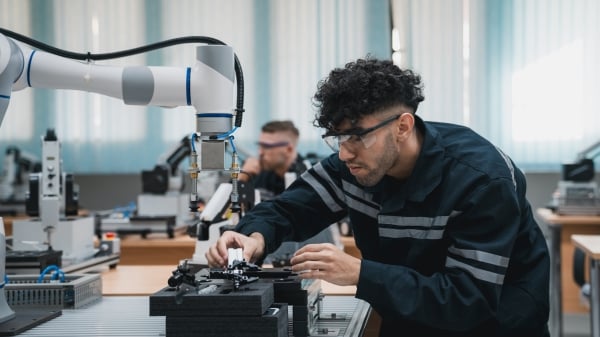
    NewSaetiew/iStock/Getty Images Plus

    Career and technical education programs have grown more popular among prospective students as ways to advance socioeconomic mobility, but they can have inequitable outcomes across student demographics.

    A December report from the Urban Institute offers best practices in supporting students of color as they navigate their institution, including in advising, mentoring and orientation programming.

    Researchers identified five key themes in equity-minded navigation strategies that can impact student persistence and social capital building, as well as future areas for consideration at other institutions.

    The background: The Career and Technical Education CoLab (CTE CoLab) Community of Practice is a group led by the Urban Institute to improve education and employment outcomes for students of color.

    In February and May 2024, the Urban Institute invited practitioners from four colleges—Chippewa Valley Technical College in Wisconsin, Diablo Valley College in California, Wake Technical Community College in North Carolina and WSU Tech in Kansas—to virtual roundtables to share ideas and practices. The brief includes insights from the roundtables and related research, as well as an in-person convening in October 2024 with college staff.

    “Practitioners and policymakers can learn from this knowledge and experience from the field to consider potential strategies to address student needs and improve outcomes for students of color and other historically marginalized groups,” according to the brief authors.

    Strategies for equity: The four colleges shared how they target and support learners with navigation including:

    • Using data to identify student needs, whether those be academic, basic needs or job- and career-focused. Data collection includes tracking success metrics such as completion and retention rates, as well as student surveys. Practitioners noted the need to do this early in the student experience—like during orientation—to help connect them directly with resources, particularly for learners in short courses. “Surveying students as part of new student orientation also provides program staff immediate information on the current needs of the student population, which may change semester to semester,” according to the report.
    • Reimagining their orientation processes to acclimate first-year students and ensure students are aware of resources. Chippewa Valley Technical College is creating an online, asynchronous orientation for one program, and Diablo Valley College is leveraging student interns to collect feedback on a new orientation program for art digital media learners. Some future considerations practitioners noted are ways to incentivize participation or attendance in these programs to ensure equity and how to engage faculty to create relationships between learners and instructors.
    • Supporting navigation in advising, mentoring and tutoring to help students build social capital and build connections within the institution. Colleges are considering peer mentoring and tutoring programs that are equity-centered, and one practitioner suggested implementing a checklist for advisers to highlight various resources.
    • Leveraging existing initiatives and institutional capacity to improve navigation and delivery of services to students, such as faculty training. One of the greatest barriers in this work is affecting change across the institution to shift culture, operations, structures and values for student success, particularly when it disrupts existing norms. To confront this, practitioners identify allies and engage partners across campus who are aligned in their work or vision.
    • Equipping faculty members to participate in navigation through professional development support. Community colleges employ many adjunct faculty members who may be less aware of supports available to students but still play a key role in helping students navigate the institution. Adjuncts can also have fewer contract hours available for additional training or development, which presents challenges for campus leaders. Diablo Valley College revised its onboarding process for adjuncts to guarantee they have clear information on college resources available to students and student demographic information to help these instructors feel connected to the college.

    Do you have an academic intervention that might help others improve student success? Tell us about it.


    Source link

  • Embracing the Silence – Faculty Focus

    Embracing the Silence – Faculty Focus

    Source link

  • Indiana University Faculty Who Focus on Student Engagement Using Top Hat See 11.5% Decrease in Student Withdrawal Rate

    Indiana University Faculty Who Focus on Student Engagement Using Top Hat See 11.5% Decrease in Student Withdrawal Rate

    Course withdrawals carry significant academic and financial consequences for students and universities. Studies consistently demonstrate that withdrawing from first-year courses can greatly increase a student’s risk of discontinuing their studies, reducing their likelihood of completing a degree (Akos & James, 2020).

    TORONTO – October 22, 2024 – Top Hat, a leading provider of student engagement solutions for higher education, has released the first significant finding in an ongoing research initiative with Indiana University exploring the impact of student engagement leveraging Top Hat on retention and academic outcomes. The study, involving an analysis of hundreds of courses from the Spring, Summer, and Fall semesters of 2023, observed that the use of Top Hat by instructors resulted in an 11.5 percent decrease in the mean student withdrawal rate compared to similar course types without using the platform. In absolute numbers, this would equate to approximately 289 of the sampled Indiana University students continuing their course work during the 2023 academic year. The findings highlight the positive impact of integrating Top Hat into course delivery on student retention, particularly in introductory courses that often have higher drop-out rates.

    The Top Hat platform empowers educators to use frequent low stakes assessments to increase student engagement during lectures through interactive polls, quizzes, and discussions. The use of frequent low stakes assessments have been shown to improve student confidence, academic outcomes and retention (Meer & Chapman, 2014). The principles of active learning can also be extended outside of class through Top Hat Pages, a content editing and personalization tool that enables instructors to create or customize their own interactive learning materials. Every interaction is captured by the platform, providing students with real-time feedback, while empowering faculty with data-driven insights they can use to identify struggling students and improve the impact of their instruction.

    “Indiana University is deeply committed to the success of our students, and the findings from this research demonstrate how the thoughtful integration of instructional technologies has contributed to strengthening our undergraduate retention,” said Gina Londino-Smolar, Ed.D., Teaching Professor at IU Indianapolis. “Implementing active learning and frequent assessment, which have been shown to improve student outcomes, has been an important focus for us and our partnership with Top Hat has been instrumental in enabling us to scale these practices across our institution, ensuring a consistent, high quality learning experience for our students.”

    The study’s primary objective is to evaluate the influence of Top Hat on various student outcomes, with an initial focus on withdrawal rates—a key indicator of student success. The collaborative research project, approved by the Institutional Review Board (IRB), involved analyzing data from thousands of individual courses. From the original large dataset, similar courses based on discipline and level were identified in order to equalize the sample size and undertake a more accurate analysis. After filtering the dataset, 235 unique Top Hat courses were compared against a similar set of 235 unique courses that did not use Top Hat.

    Indiana University began working with Top Hat in 2017 and, based on high rates of faculty adoption, made the decision to offer the platform free of charge to all students by entering into an enterprise license agreement the following year. By addressing concerns around equity, student affordability and ensuring compliance with respect to data privacy and standards for web accessibility, adoption has increased substantially. For the 2023/2024 academic year 1,022 faculty and 51,679 students across more than 1,900 individual courses from all nine IU campuses used Top Hat to enhance learning.

    “This study reinforces the importance of providing faculty with tools that make evidence-based practices, like active learning, easier to adopt,” said Maggie Leen, CEO of Top Hat. “The data speaks for itself—when instructors have access to the tools to support effective teaching methods, it can lead to stronger student engagement and higher persistence. We’re proud to be part of Indiana University’s efforts to increase on-time graduation rates for their students.”

    The 2030 IU Strategic Plan has one pillar dedicated to Student Success and Opportunity with a commitment to student affordability and experience throughout their educational journey to have success in the workplace and beyond. The incorporation of Top Hat to engage students with the course content, reducing withdrawal rates, can be seen as a direct contribution to the pillar for student success.

    Since its founding in 2009, Top Hat has continued to introduce new features to make proven teaching methods more accessible to instructors. Most recently, Top Hat announced the release of Ace, an AI-powered teaching and learning assistant that enables instructors to generate assessment questions and discussion prompts based on their lecture slides and course materials. As a personalized study assistant, Ace allows students to break down challenging concepts, find guidance tackling difficult homework assignments, and create on-demand practice questions they can use to prepare for high stakes assessments. 

    The initial findings will inform both Indiana University and Top Hat’s future strategies for enhancing student outcomes. The research initiative is currently focused on identifying patterns of usage by instructors across disciplines and their impact on student engagement and academic performance. Ongoing analysis is exploring the impact of Top Hat on the academic experience of various student populations, including historically underrepresented groups with a focus on how the platform supports equitable access to learning, improves engagement, and contributes to closing achievement gaps.

    About Indiana University

    Indiana University (IU) is one of the nation’s leading public research universities, with 90,000 students across 930+ academic programs, seven campuses, two regional academic centers and nine School of Medicine campuses. Since 1820, Indiana University has helped students create brighter futures while also driving innovation, from breakthroughs in DNA technology to cancer research to trailblazing cultural programs and resources. IU is home to world-class academics with the country’s largest medical school, the world’s first school of philanthropy, the top-ranked Kelley School of Business and O’Neill School of Public and Environmental Affairs, and the Luddy School of Informatics, Computing and Engineering, the nation’s first school of informatics. The university’s campuses are united by IU 2030, an aspirational vision for a bold and ambitious future focused on student success and opportunity, transformative research and creativity, and service to the state of Indiana and beyond. Learn more at iu.edu.

    About Top Hat

    As the leader in student engagement solutions for higher education, Top Hat enables educators to employ proven student-centered teaching practices through interactive content and tools enhanced by AI, and activities in in-person, online and hybrid classroom environments. To accelerate student impact and return on investment, the company provides a range of change management services, including faculty training and instructional design support, integration and data management services, and digital content customization. Thousands of faculty at 750 leading North American colleges and universities use Top Hat to create meaningful, engaging and accessible learning experiences for students before, during, and after class.

    Contact [email protected] for media inquiries.

    Source link

  • Neurodiversity at Work: Focus on ADHD in Women – CUPA-HR

    Neurodiversity at Work: Focus on ADHD in Women – CUPA-HR

    by Julie Burrell | August 5, 2024

    A full picture of neurodiversity in the workplace includes understanding how gender shapes employees’ experiences of neurodevelopmental disorders. Although they’re diagnosed at roughly the same rates as men, women with ADHD may be overlooked in conversations about attention-deficit/hyperactivity disorder. Until fairly recently, ADHD was seen as primarily affecting children, with the typical view of someone with the disorder as a restless or hyperactive boy.

    Awareness about how ADHD can manifest differently in women — and how gender stereotypes play a significant role in diagnosis and treatment — can help foster a culture that uplifts neurodiversity and the skills that neurodiverse employees can offer an organization. Employees with ADHD bring unique strengths and perspective to their work, such as creativity, courage and hyperfocus.

    Here’s what HR needs to know about ADHD and how it can be different for women.

    Misconceptions About ADHD

    Rather than a set of behaviors, ADHD is a neurodevelopmental condition affecting about 2% to 5% of adults, and falls under the same broad umbrella as autism spectrum disorder and dyslexia. A stereotypical picture of someone with ADHD is “a boy who can’t sit still and is disruptive in class,” according to Dr. Deepti Anbarasan, a clinical associate professor of psychiatry at New York University.

    Women who receive ADHD diagnoses in adulthood may have struggled with inattention and executive functioning for much of their lives. Because girls and women with ADHD often present as inattentive rather than hyperactive, and because women often develop coping skills that mask ADHD, women often receive late-in-life diagnoses. By the time women reach adulthood, however, the rates of diagnosis are close to those seen in men.

    ADHD in women often presents as challenges with executive functioning, which can include difficulties with attention and focus, as well as emotional dysregulation, trouble with finishing tasks or juggling multiple tasks, and absentmindedness. Women with ADHD might also suffer from anxiety and depression, and even suicide attempts and self-harm. Some people with ADHD compensate by working extra hours during their personal time to keep up with their day-to-day work, causing added stress.

    A Strengths-Based Approach

    Though ADHD can pose real challenges at work, a strengths-based approach highlights the advantages that employees with ADHD bring to their jobs. In a recent study, for example, 50 adults with ADHD identified the positive aspects of living with the condition, including energy and drive, a high degree of creativity, an ability to hyperfocus, and traits such as resilience, curiosity, and empathy. The same study emphasizes that experiencing ADHD as challenging or beneficial depends on the context and sociocultural environment that a person is in.

    HR as a Leader in Neurodiversity

    Given how much context and sociocultural environment matters, creating a campus climate that supports neurodiversity is critical. HR can champion neurodiversity through awareness and well-being programs. Because ADHD often occurs alongside depression and anxiety, a holistic approach to well-being is recommended. (Learn how the University of Texas Health Science Center at San Antonio gained traction with their mental health awareness campaign.)

    HR can also advocate for accommodations to support neurodivergent employees. For example, task separation is a common management strategy to help employees set their work priorities. In emails and written communication this might look like establishing clear parameters, breaking requests down into bulleted lists, and clearly spelling out instructions like “two-minute ask” or “response requested.” (For many more suggestions on how to uplift neurodiversity on campus, including practical tips for accommodations, read Neurodiversity in the Higher Ed Workplace.)

    There’s a business case to be made for a robust attention to neurodiversity: increased retention and productivity, reduced absenteeism, and developing employees’ strengths. Supporting neurodiversity also builds an appealing workplace culture, one that signals to employees that their whole person is valued.

    More Resources on Women With ADHD

    ADHD Is Different for Women, a podcast by the Harvard Business Review

    Duke Center for Girls and Women with ADHD 

    Women and Girls with ADHD from the organization Children and Adults with Attention-Deficit/Hyperactivity Disorder (CHADD)


    Source link

  • The Secret to Unstoppable Focus

    The Secret to Unstoppable Focus


    Forget Caffeine, Try Priming: The Secret to Unstoppable Focus


    Source link