Tag: Focused

  • A more focused research system does not by itself solve structural deficits

    A more focused research system does not by itself solve structural deficits

    Financial pressures across the higher education sector have necessitated a closer look at the various incomes and associated costs of the research, teaching and operational streams. For years, larger institutions have relied upon the cross-subsidy of their research, primarily from overseas student fees – a subsidy that is under threat from changes in geopolitics and indeed our own UK policies on immigration and visa controls.

    The UK is now between a rock and a hard place: how can it support the volume and focus of research needed to grow the knowledge-based economy of our UK industrial strategy, while also addressing the financial deficits that even the existing levels of research create?

    Several research leaders have recently been suggesting that a more efficient research system is one where higher education institutions focus on their strengths and collaborate more. But while acknowledging that efficiency savings are required and the relentless growth of bureaucracy – partly imposed by government but also self-inflicted within the HEIs – can be addressed, the funding gulf is far wider than these savings could possibly deliver.

    Efficiency savings alone will not solve the scale of structural deficits in the system. Furthermore, given that grant application success rates are systemically below 20 per cent and frequently below ten or even five per cent, the sector is already only funding its strongest applications. Fundamentally, currently demand far outstrips supply, leading to inefficiency and poor prioritisation decisions.

    Since most of the research costs are those supporting the salaries and student stipends of the researchers themselves, significant cost-cutting necessitates a reduction in the size of the research workforce – a reduction that would fly in the face of our future workforce requirement. We could leave this inevitable reduction to market forces, but the resulting disinvestment will likely impact the resource intensive subjects upon which much of our future economic growth depends.

    We recognise also that solutions cannot solely rely upon the public purse. So, what could we do now to improve both the efficiency of our state research spend and third-party investment into the system?

    What gets spent

    First of all, the chronic underfunding of the teaching of UK domestic students cannot continue, as it puts even further pressure on institutional resources. The recent index-linking of fees in England was a brave step to address this, but to maintain a viable UK research and innovation system, the other UK nations will also urgently need to address the underfunding of teaching. And in doing so we must remain mindful of the potential unintended consequences that increased fees might have on socio-economic exclusion.

    Second, paying a fair price for the research we do. Much has been made of the seemingly unrestricted “quality-related” funding (QR, or REG in Scotland) driven by the REF process. The reality is that QR simply makes good the missing component of research funding which through TRAC analysis is now estimated to cover less than 70 per cent of the true costs of the research.

    It ought to be noted that this missing component exists over all the recently announced research buckets extending across curiosity-driven, government-priority, and scale-up support. The government must recognise that QR is not purely the funding of discovery research, but rather it is the dual funding of research in general – and that the purpose of dual funding is to tension delivery models to ensure HEI efficiency of delivery.

    Next, there is pressing a need for UKRI to focus resource on the research most likely to lead to economic or societal benefit. This research spans all disciplines from the hardest of sciences to the most creative of the arts.

    Although these claims are widely made within every grant proposal, perhaps the best evidence of their validity lies in the co-investment these applications attract. We note the schemes such as EPSRC’s prosperity partnerships and their quantum technology hubs show that when packaged to encompass a range of technology readiness levels (TRL), industry is willing to support both low and high TRL research.

    We would propose that across UKRI more weighting is given to those applications supported by matching funds from industry or, in the case of societal impact, by government departments or charities. The next wave of matched co-funding of local industry-linked innovation should also privilege schemes which elicit genuine new industry investment, as opposed to in-kind funding, as envisaged in Local Innovation Partnership Funds. This avoids increasing research volume which is already not sustainable.

    The research workforce

    In recent times, the UKRI budgets and funding schemes for research and training (largely support for doctoral students) have been separated from each other. This can mean that the work of doctoral students is separated from the cutting-edge research that they were once the enginehouse of delivering. This decoupling means that the research projects themselves now require allocated, and far more expensive, post-doctoral staff to deliver. We see nothing in the recent re-branding of doctoral support to “landscape” and “focal” awards that is set to change this disconnect.

    It should be acknowledged that centres for doctoral training were correctly introduced nearly 20 years ago to ensure our students were better trained and better supported – but we would argue that the sector has now moved on and graduate schools within our leading HEIs address these needs without need for duplication by doctoral centres.

    Our proposal would be that, except for a small number of specific areas and initiatives supported by centres of doctoral training (focal awards) and central to the UK’s skills need, the normal funding of UKRI-supported doctoral students should be associated with projects funded by UKRI or other sources external to higher education institutions. This may require the reassignment of recently pooled training resources back to the individual research councils, rebalanced to meet national needs.

    This last point leads to the question of what the right shape of the HEI-based research-focused workforce is. We would suggest that emphasis should be placed on increasing the number of graduate students – many of whom aspire to move on from the higher education sector after their graduation to join the wider workforce – rather than post-doctoral researchers who (regrettably) mistakenly see their appointment as a first step to a permanent role in a sector which is unlikely to grow.

    Post-doctoral researchers are of course vital to the delivery of some research projects and comprise the academic researchers of the future. Emerging research leaders should continue to be supported through, for example, future research leader fellowships, empowered to pursue their own research ambitions. This rebalancing of the research workforce will go some way to rebalancing supply and demand.

    Organisational change

    Higher education institutions are hotbeds of creativity and empowerment. However, typical departments have an imbalanced distribution of research resources where appointment and promotion criteria are linked to individual grant income. While not underestimating the important leadership roles this implies, we feel that research outcomes would be better delivered through internal collaborations of experienced researchers where team science brings complementary skills together in partnership rather than subservience.

    This change in emphasis requires institutions to consider their team structures and HR processes. It also requires funders to reflect these changes in their assessment criteria and selection panel working methods. Again, this rebalancing of the research workforce would go some way to addressing supply and demand while improving the delivery of the research we fund.

    None of these suggestions represent a quick fix for our financial pressures, which need to be addressed. But taken together we believe them to be a supportive step, helping stabilise the financial position of the sector, while ensuring its continuing contribution to the UK economy and society. If we fail to act, the UK risks a disorderly reduction of its research capability at precisely the moment our global competitors are accelerating.

    Source link

  • NCES Data Show Modern Learners Want Career Focused Degrees

    NCES Data Show Modern Learners Want Career Focused Degrees

    Brief

    The 2023 NCES completion data points to some interesting – and impactful – student trends that continue to paint a picture of a fundamentally changing set of priorities for the Modern Learner. Specifically, more students are moving towards degrees that have firm career outcomes, either in furthering their current career or starting a new endeavor.

    Institutions need to pay attention to these trends in order to prepare themselves for a radically different higher education market in the next 5-7 years. This includes prioritizing programs that align with the market’s appetite, as well as re-investing in the value proposition of programs that are currently declining in popularity.

    Other Highlights

    • Associate degree completions saw marked decline, which is notable considering the growth of Undergraduate Certificate completions. Students seem to be preferring certificates that can lead to employment opportunities.
    • STEM programs continue to either grow or remain stable, depending on the level of the degree. This was most notable at the Graduate level. As more jobs continue to require advanced degrees, this trend is set to only grow in importance.
    • Liberal Arts programs across all levels experienced significant YoY reductions in completions. Schools that are defined by their Liberal Arts programs will need to assess ways in which they continue to project relevance as the market shifts.
    • Undergraduate Health Profession programs also saw a decline, which goes against the commonly held belief that the labor market and these programs are continuing to grow. This is something that should definitely be monitored and evaluated, to ensure that institutions do not over-invest in a sector that may be slowing.

    2023 NCES Completions Data and the Changing Priorities of the Modern Learner

    The 2023 National Center for Education Statistics (NCES) completions data offers a rich and complex tapestry of insights into the trajectory that the Modern Learner is taking their education. As enrollment managers and marketers, it is our imperative to move beyond surface-level observations and delve into the intricate patterns and implications woven within these numbers. This data serves not merely as a historical record but as a powerful compass, guiding us towards a deeper understanding of the Modern Learner’s market demands, and the strategic decisions that will chart the course for institutions in the years to come.

    This year’s data unveils a series of significant shifts in student choices, reflecting both the evolving needs of the labor market and the lingering reverberations of the COVID-19 pandemic. We observe a notable decline in associate degree completions, particularly in general studies and humanities, while undergraduate certificates continue their upward trajectory. At the bachelor’s level, STEM fields remain stable, while other areas, especially those associated with traditional liberal arts programs, face headwinds. Graduate programs, particularly in STEM disciplines, are experiencing a surge in completions, and both undergraduate and graduate certificates continue to gain popularity.

    In this analysis, we will dive deep into the data, exploring the specific programs experiencing growth or decline, examining the multifaceted factors driving these trends, and discussing the profound implications for higher ed. We will delve into the remarkable growth in graduate programs and certificates, highlighting the increasing demand for advanced credentials in the labor market. We will also confront the undergraduate decline, exploring the potential impact of the COVID-19 pandemic and the looming 2025 enrollment cliff, with a particular focus on the challenges facing private non-profit liberal arts schools. By understanding these multifaceted trends and their interconnectedness, we can proactively adapt our strategies, ensuring that our institutions not only remain relevant and competitive but also thrive amidst a landscape in flux.

    Associate Degree: Trade Focused

    The 5% decline in associate degree completions is notable both in what programs dropped and which programs are continuing to see growth. The most significant drop emanates from Liberal Arts and Sciences, General Studies, and Humanities, programs that have historically served as a bridge to further education or a broad foundation for diverse career paths. 61% of the YoY decline were in this category. The decline in these areas, coupled with the simultaneous rise in undergraduate certificates, suggests a growing preference among students for more focused, career-oriented pathways that offer a faster and more tangible return on investment.

    This shift in student preferences is not surprising in the context of a rapidly changing labor market that increasingly values specialized skills and knowledge. Students are seeking educational pathways that provide them with a clear and direct route to employment and career advancement. In this environment, the perceived value of broad-based, general education programs may be diminishing.

    However, amidst this overall decline, we observe encouraging signs of growth in fields directly aligned with high-demand skills. Programs such as Construction Trades, Mechanic and Repair Technologies/Technicians, and Computer and Information Sciences and Support Services have all witnessed increases in completions. This trend underscores the enduring value of associate degrees that equip students with tangible, marketable skills, enabling them to seamlessly transition into the workforce and meet the demands of employers seeking skilled talent.

    Bachelor’s Degree: Value Proposition Challenges

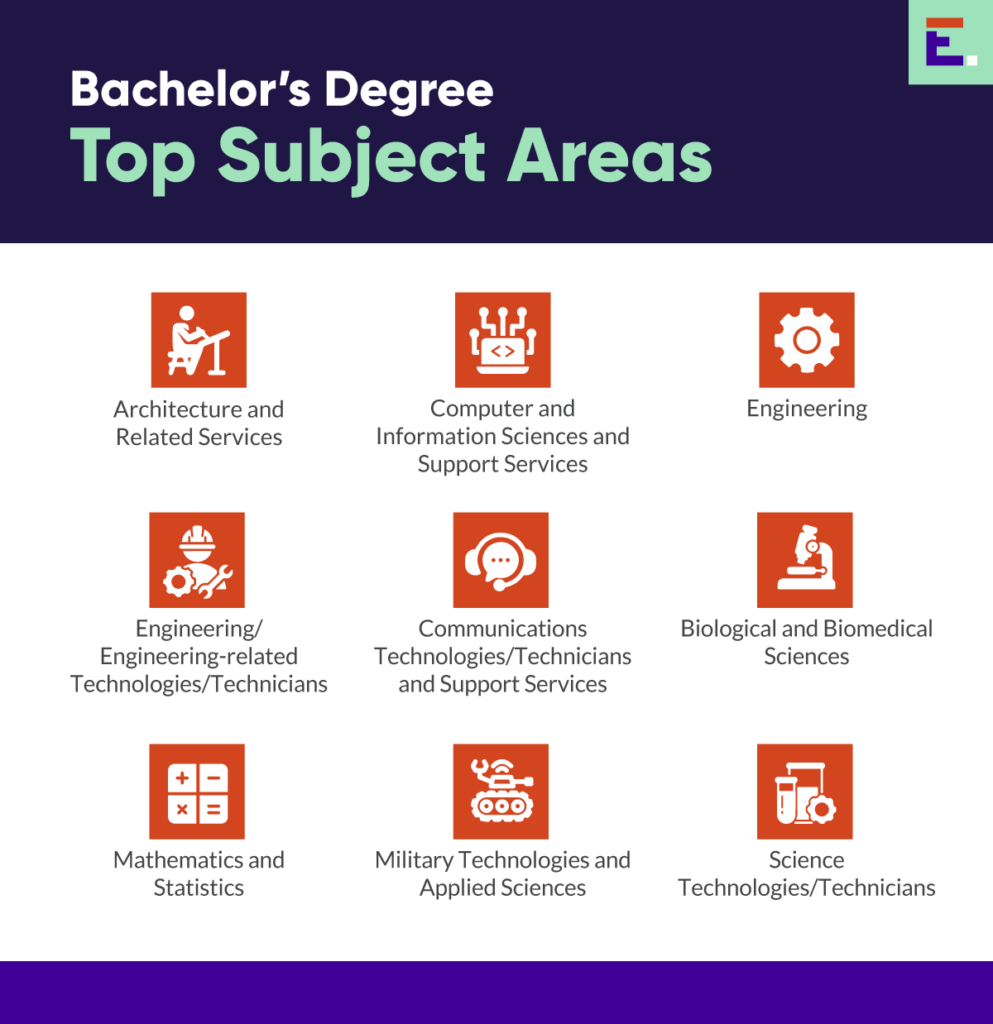
    At the bachelor’s level, we encounter a mixed bag of stability and change. While STEM fields remain a stronghold, with only a negligible 0.07% dip, other areas, particularly those associated with traditional liberal arts programs, are facing challenges. The most pronounced decline occurs in Health Professions, a field traditionally associated with strong job prospects and stable growth. This decline, juxtaposed with the increase in master’s level completions in Health Professions, suggests a potential shift towards requiring advanced degrees for certain healthcare roles. This mirrors a broader trend of “graduate degree bloat” in the labor market, where employers increasingly demand advanced credentials for positions that previously required only a bachelor’s degree.

    The COVID-19 pandemic has undoubtedly exacerbated the challenges facing undergraduate programs. The disruption to traditional learning models, coupled with economic uncertainty and concerns about the value of a college degree, has led many students to reconsider their educational plans. The looming 2025 enrollment cliff, which predicts a significant drop in the number of high school graduates, further compounds these challenges, creating a perfect storm for undergraduate enrollment.

    Private non-profit liberal arts schools are particularly vulnerable in this environment. The growth areas in the undergraduate space are mainly concentrated in STEM programs, leaving liberal arts institutions grappling with declining enrollments and a need to reimagine their value proposition. Adapting to this changing landscape will require innovative approaches to curriculum design, student support, and career services. Tuition driven, liberal arts institutions must demonstrate the relevance and value of their programs in today’s world, not only highlighting the critical thinking, communication, and problem-solving skills that their graduates possess (which has always been their particular promise), but also their undergraduate’s career opportunities.

    Graduate Studies: Career Growth and Specialization

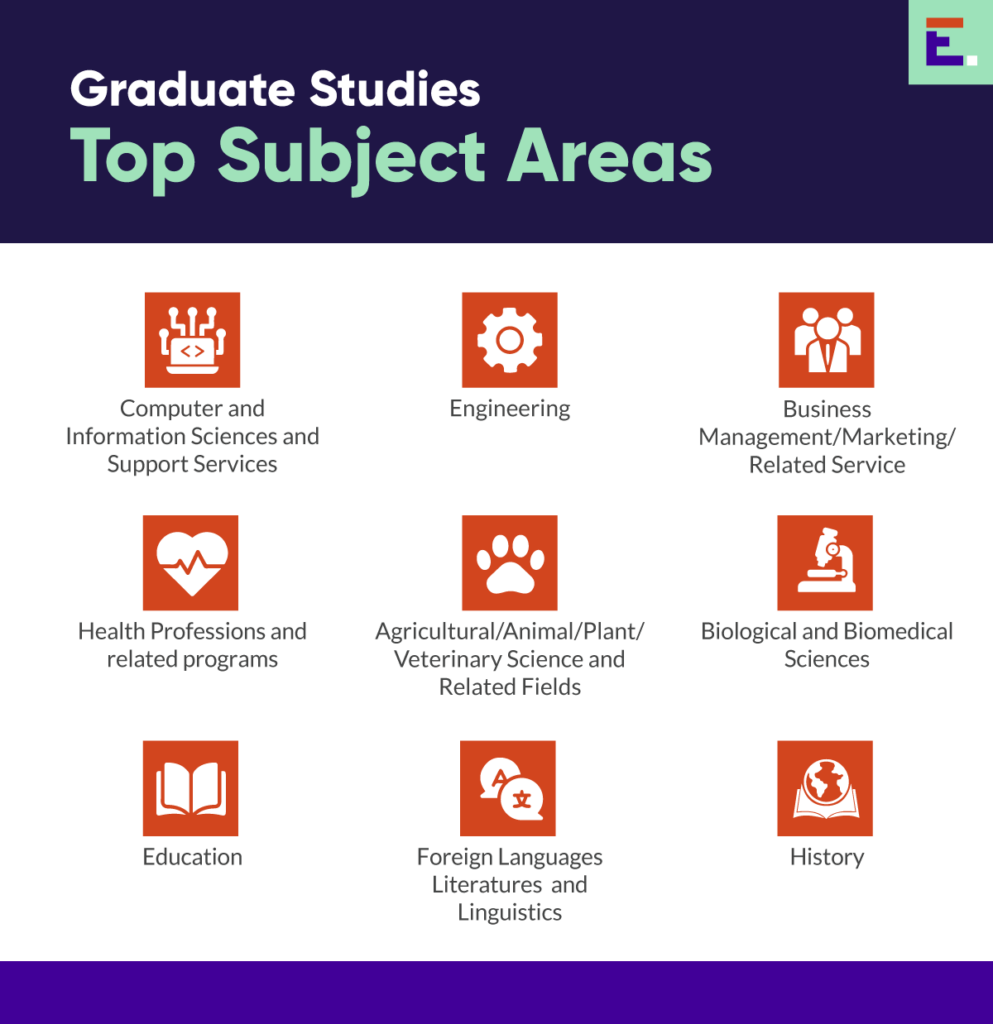
    Graduate programs, especially those in STEM disciplines, are experiencing a period of remarkable growth. The 51% and 25% surges in Computer and Information Science and Support Services and Engineering master’s completions, respectively, echo the trends at the bachelor’s level and underscore the premium placed on advanced technical expertise. The overall 30% rise in STEM master’s completions further solidifies this trend, reflecting the insatiable demand for skilled professionals in these fields.

    This surge in graduate completions aligns with the broader trend of graduate degree bloat (others might more favorably describe it as “expansion”) in the labor market. As certain industries and professions increasingly require advanced degrees for career advancement, we can anticipate continued growth in graduate programs, particularly in fields that offer a clear pathway to high-demand, well-paying jobs. This presents a significant opportunity for institutions to expand their graduate offerings and cater to the growing population of working professionals seeking to upskill and advance their careers.

    Graduate certificates are also experiencing growth, with a 2% increase in completions. The growth in fields like Computer and Information Technology, Psychology, and Engineering/Engineering-related Technologies/Technicians demonstrates the appeal of these focused credentials for professionals seeking to enhance their skill sets or transition into new careers. The flexibility and shorter duration of graduate certificates make them an attractive option for busy professionals who may not have the time or resources to pursue a full master’s degree – especially if the certificates are tied to a degree later.

    The flourishing graduate landscape presents a wealth of opportunities for institutions. Expanding graduate program offerings, enhancing online and hybrid learning options, and strategically marketing to working professionals are all essential strategies for capitalizing on this growth. The increasing popularity of graduate certificates also underscores the need for institutions to develop a diverse portfolio of graduate programs that cater to the varied needs and preferences of learners.

    Navigating the Data’s Implications for Engaging with the Modern Learner

    The 2023 NCES completions data provides a roadmap for navigating the complexities of the higher education landscape. The trends we’ve observed highlight the growing preference for career-focused programs, specialized credentials, and flexible learning options. They also underscore the challenges facing undergraduate programs, particularly in the liberal arts, in the wake of the COVID-19 pandemic and the approaching enrollment cliff.

    To thrive in this environment, institutions must be proactive, agile, and data-driven. The Modern Learner is looking for clear career outcomes – not just in program availability but in the flexibility that comes with balancing work with furthering education. They want to know exactly what they can expect from their investment of time and money to the program. Schools must also reimagine their programs, enhance student support services, and strategically market offerings to meet the evolving needs of learners and the demands of the labor market. They need to embrace innovation and explore new models of education that provide students with the skills and knowledge they need to succeed in the 21st century.

    For associate degree programs, this may involve a greater emphasis on career-focused pathways, stackable credentials, and partnerships with employers. Bachelor’s degree programs, especially in the liberal arts, may need to re-articulate their value proposition, highlighting the transferable skills and lifelong learning benefits that their graduates acquire. Graduate programs should continue to expand and innovate, offering a mix of traditional degrees and flexible certificates to meet the diverse needs of working professionals.

    Above all else, if this data is speaking to troubling realities on campus, the most important takeaway should be: trying the same strategies that are producing tepid results in regards to enrollment growth will not be the solution going forward. If you are seeing challenging enrollment numbers for any level of program, think about how your institution can more readily adapt to these changing trends, whether that be introducing multiple starts per term, reworking tuition costs, or making better strategic use of marketing and enrollment processes for priority programs.

    Is Your Institution Ready for the Modern Learner?

    We help schools all the time who have been trying to fit a square peg into a round hole, and often the solution is for an outside perspective to create a vision for the future. The time to act is right now, there is a quickly closing time frame for ensuring a flourishing future for your institution. In fact for many schools, it is already too late. The Modern Learner is moving at a swift pace, and if universities do not keep up, they will quickly be left behind.

    Source link

  • Dr. Jennifer T. Edwards: A Texas Professor Focused on Artificial Intelligence, Health, and Education: Preparing Our Higher Education Institutions for the Future

    Dr. Jennifer T. Edwards: A Texas Professor Focused on Artificial Intelligence, Health, and Education: Preparing Our Higher Education Institutions for the Future

    As we prepare for an upcoming year, I have to stop and think about the future of higher education. The pandemic changed our students, faculty, staff, and our campus as a whole. The Education Advisory Board (EAB) provides colleges and universities across the country with resources and ideas to help the students of the future.

    I confess, I have been a complete fan of EAB and their resources for the past ten years. Their resources are at the forefront of higher education innovation.

    🏛 – Dining Halls and Food Spaces

    🏛 – Modern Student Housing

    🏛 – Hybrid and Flexible Office Spaces

    🏛 – Tech-Enabled Classrooms

    🏛 – Libraries and Learning Commons

    🏛 – Interdisciplinary Research Facilities


    Higher education institutions should also focus on the faculty and staff as well. When I ask most of my peers if they are comfortable with the numerous changes happening across their institution, most of them are uncomfortable. We need to prepare our teams for the future of higher education. 

    Here’s the Millennial Professor’s Call the Action Statements for the Higher Education Industry

    🌎 – Higher Education Conferences and Summits Need to Provide Trainings Focused on Artificial Intelligence (AI) for Their Attendees

    🌎 – Higher Education Institutions Need to Include Faculty and Staff as Part of Their Planning Process (an Important Part)

    🌎 – Higher Education Institutions Provide Wellness and Holistic Support for Faculty and Staff Who are Having Problems With Change (You Need Us and We Need Help)

    🌎 – Higher Education Institutions Need to Be Comfortable with Uncommon Spaces (Flexible Office Spaces)

    🌎 – Faculty Need to Embrace Collaboration Opportunities with Faculty at Their Institutions and Other Institutions

    Here are some additional articles about the future of higher education:

    Higher education will continue to transition in an effort to meet the needs of our current and incoming students. 

    For our particular university, we are striving to modify all of these items simultaneously. It is a challenge, but the changes are well worth the journey.

    Here’s the challenge for this post: “In your opinion, which one of the items on the list is MOST important for your institution?”

    ***. 

    Check out my book – Retaining College Students Using Technology: A Guidebook for Student Affairs and Academic Affairs Professionals.

    Remember to order copies for your team as well!


    Thanks for visiting! 


    Sincerely,


    Dr. Jennifer T. Edwards
    Professor of Communication

    Executive Director of the Texas Social Media Research Institute & Rural Communication Institute

    Source link

  • Dr. Jennifer T. Edwards: A Texas Professor Focused on Artificial Intelligence, Health, and Education: Preparing for Research Presentations

    Dr. Jennifer T. Edwards: A Texas Professor Focused on Artificial Intelligence, Health, and Education: Preparing for Research Presentations

    Hi Y’all!

    A few weeks ago, I had the pleasure of presenting for an Undergraduate Research Group at my university. When they initially asked me about presenting about visual presentations, I had to think back to the numerous presentations that I have been fortunate to facilitate all over America. 

    Then, I thought about the items that I wish I would have had on site when I saw the place where I needed to place my poster. So, I decided to make a “Poster Presentation Survival Kit”. This kit contains: masking tape, t-pins, white out, sharpie markers, and cuticle clippers (to serve as scissors for your poster (just in case)). 


    The presentation was well received and they asked for a copy. I was very impressed with this group and their questions focused on research and the presentation process. We also had a great conversation about presenting information that has not yet been published. 

    Here’s the presentation:

    Here are some additional resources. Thanks UNC, UC Davis, and Bucknell!

    Enjoy! Please let me know if you have any questions.

    Dr. Jennifer Edwards

    ***

    Check out my book – Retaining College Students Using Technology: A Guidebook for Student Affairs and Academic Affairs Professionals.

    Remember to order copies for your team as well!


    Thanks for visiting! 


    Sincerely,


    Dr. Jennifer T. Edwards
    Professor of Communication

    Executive Director of the Texas Social Media Research Institute & Rural Communication Institute

    Source link

  • Dr. Jennifer T. Edwards: A Texas Professor Focused on Artificial Intelligence, Health, and Education: Resource Alert: A Health Check-In for Meeting and Classrooms

    Dr. Jennifer T. Edwards: A Texas Professor Focused on Artificial Intelligence, Health, and Education: Resource Alert: A Health Check-In for Meeting and Classrooms

    Throughout the past few years we have definitely been part of a Zoom and Microsoft Team centric world. As we meet with teams and individuals, we have to account for the life that is happening on the other side of the screen. Through Zoom we have a unique opportunity to gain a glimpse into another person’s life to which we would normally not have access.

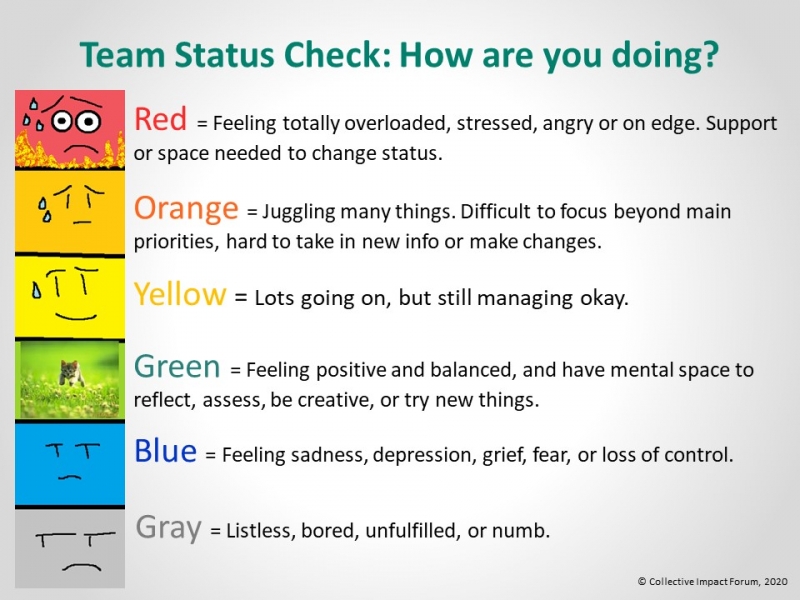
    This means that we have a moral and ethnical responsibility as peers and as leaders to genuinely care about the people to which we are communicate with on Zoom. Here’s a great resource from the Collective Impact Forum (http://www.collectiveimpactforum.org). 

    The Team Color Check-In Tool is a communication tool to help people in virtual and face-to-face conversations have a check-in. The colors range from:

    Red

    Orange

    Yellow

    Green

    Blue

    Gray

    Team Status Check for Individuals and Groups

    If you are wondering how to apply this for your teams or classrooms, I would definitely recommend the following:

    #1 – Utilize it when you meet with individuals one-on-one (BEFORE) the meeting.

    #2 – Utilize it in Zoom via an anonymous poll to gauge how their audience is feeling BEFORE the meeting and providing resources at the end of the meeting (or in a follow-up email).

    #3 – Send the check-in tool to your team/organization at the beginning of the week and provide workshops and support throughout the week for the team. 

    Respond Below – How would you use the resource?  Do you think teams would benefit from this resource? How would you modify it? 

    Thanks for reading!  

    Sincerely,

    Dr. Jennifer T. Edwards
    Professor of Communication

    Executive Director of the Texas Social Media Research Institute & Rural Communication Institute

    ***

    Check out my book – Retaining College Students Using Technology: A Guidebook for Student Affairs and Academic Affairs Professionals.

    Remember to order copies for your team as well!

    Source link

  • Dr. Jennifer T. Edwards: A Texas Professor Focused on Artificial Intelligence, Health, and Education: Learning How to Curb Inflation with a Garden

    Dr. Jennifer T. Edwards: A Texas Professor Focused on Artificial Intelligence, Health, and Education: Learning How to Curb Inflation with a Garden

    I love gardening. Whether my gardening takes place in a container, in an urban area, or in a rural area, I am all about it! This year, my daughter decided that she wanted to become a mini-gardener as well.

    As a result, we are growing…tomatoes, peppers, eggplant, watermelon, and lettuce. I teach her to watch the prices as they continue to increase. My daughter and I talk about innovative ways to counteract the increasing prices. Our strategy is gardening!

    I am part of a wealth of gardening groups. My favorites are “Black Girls Garden” and Black girl container gardening groups on Facebook. These groups give me inspiration and ideas to garden for my family and for the community. One thing that I like the most is the emphasis on sharing seeds and supporting one another. I also work with our community garden group as well.

    This summer, I have been very fortunate to learn even more gardening skills from the local Agrilife Extension agent in Panola County, Clarissa Moon. She is an excellent teacher and she provides so much educational outreach for the community.

    Another resource that I absolutely love is the USDA, which has great resources for gardening as well. I subscribe to their blog, “Farmers.gov Blog” and it has some incredible tips for gardening. It also features several other sections on their website that  feature articles. These categories are:

    Of course, my favorite is Farm Life! I love the “Friday’s on the Farm” series.

    Check them out! What is your favorite part?

    Thanks for visiting! 

    Sincerely,

    Dr. Jennifer T. Edwards
    Professor of Communication

    Executive Director of the Texas Social Media Research Institute & Rural Communication Institute

    ***

    Check out my book – Retaining College Students Using Technology: A Guidebook for Student Affairs and Academic Affairs Professionals.

    Remember to order copies for your team as well!

    Source link

  • Dr. Jennifer T. Edwards: A Texas Professor Focused on Artificial Intelligence, Health, and Education: COVID-19 Outreach in Rural Areas

    Dr. Jennifer T. Edwards: A Texas Professor Focused on Artificial Intelligence, Health, and Education: COVID-19 Outreach in Rural Areas

    Over the past few months, our Rural Communication Institute (RCI) team (Dr. Jennifer T. Edwards, Dr. Subi Gandhi, and Dr. LaShondra Manning) has been tirelessly providing education and outreach for the rural areas of East Texas. This outreach has been both challenging and rewarding since the pediatric vaccine was approved by the Center for Disease Control (CDC) and the Texas Department of State Health Services (DSHS).

    Educating parents about the benefits of the COVID-19 vaccine has been one of the most rewarding experiences of my life. As a parent, I am always very excited to share health information, but especially this information has been very important for me.

    Here’s a workshop that we were very excited to view from the Texas Department of Health and Human Services. This workshop was focused on “What About the Children: Changing the Landscape on Rural Vaccine Coverage”. It focused on health in rural areas, especially for our youngest populations.

    Also, we have been fortunate to receive funding for travel for our outreach events, shirts, and giveaways. Here’s a special shout out to the Episcopal Health Foundation in Texas, because they provided so much support for our project.

    At first, we partnered with existing vaccination clinics and these were not very well attended, but THEN we decided to venture out on our own and to create our own clinics with the health of the Texas Department of State Health Services. We have been experimenting with the best time and date for our clinics as well all content for the clinics.

    We decided a “Summer Fun and Health Clinic” approach has been the best outreach strategy for reaching the community. The mid-day clinics (before 5pm) were not as well attended for some audiences (i.e. – parents), but other times had much better attendance (after 5pm).

    Also, we partnered with Agrilife (Mrs. Clarissa Moon) and Above Average Health Care and House Calls. Agrilife provided educational outreach sessions and Above Average Health Care and House Calls offered health checks and interpretations of lab results.

    Do you have any suggestions for us? We are so thankful for our partners!

    ***

    Check out my book – Retaining College Students Using Technology: A Guidebook for Student Affairs and Academic Affairs Professionals.

    Remember to order copies for your team as well!


    Thanks for visiting! 


    Sincerely,


    Dr. Jennifer T. Edwards
    Professor of Communication

    Executive Director of the Texas Social Media Research Institute & Rural Communication Institute

    Source link

  • Dr. Jennifer T. Edwards: A Texas Professor Focused on Artificial Intelligence, Health, and Education: FREE 11th Annual Texas Social Media Conference

    Dr. Jennifer T. Edwards: A Texas Professor Focused on Artificial Intelligence, Health, and Education: FREE 11th Annual Texas Social Media Conference

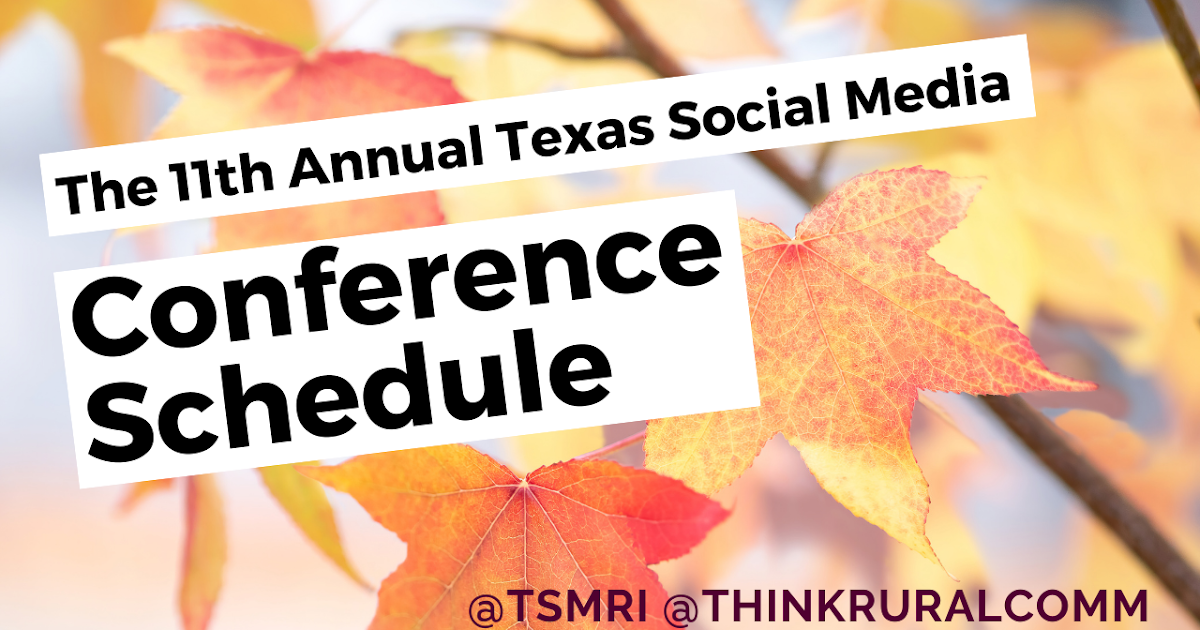
    Yes! I am excited! We are getting back into the training and development mode with the Texas Social Media Research Institute (and the Rural Communication Institute)! Are you looking for a FREE conference focused on social media and rural communication? Check out our conference schedule!

    Tuesday, November 2nd

    5pm – Journal Club (Discussing “Reality check: How adolescents use

    TikTok as a digital backchanneling medium to speak back against

    institutional discourses of school(ing).”

    Thursday, November 4th

    8pm – #TXSocialMedia Twitter Chat – Pumpkin Spice Lattes, Sweater

    Weather, and Autumn/Winter Social Media Outreach Strategies

    Monday, November 8th

    6pm – How Public Health Agencies in the United States in the United

    Kingdom Communicate with their Target Audience During the COVID19

    Pandemic (Presented by: Riley Odom, Megan Mackay, Erin McDonald,

    Bayley Chenault, Sydney Brown)

    8pm – How the Texas Department of Health and Safety and Colorado

    Department of Health and Environment are Communicating about

    Health During COVID19 (Presented By: Halie Hix, Shelby Hargrove,

    Magnolia Dunlap, Michaela Bierman, Steven Duncan)

    Tuesday, November 9th

    5pm – Journal Club – Discussing the article: “We (Want To) Believe in

    the Best of Men: A Qualitative Analysis of Reactions to

    #Gillette on Twitter”

    7pm – How the United States Federal Government and the State of Texas

    Communicate with the Public During the Pandemic (Presented by: Kristi

    Cortez, Jessica Thomas, Kennedy Onuam, Julia Nolen)

    Thursday, November 11th

    3pm – Neurodiversity at Work; Assignment Construction Strategies for

    Creative Thinkers in Online Teams (Presented By: Melanie Mason (University

    of Texas at Arlington)

    8pm – #TXSocialMedia Twitter Chat – Veterans Day and How the Military

    Engages the Public Through Social Media

    Thursday, November 11th

    11:59pm – #TXSocialMedia Undergraduate and Graduate Fellowship

    Applications Due

    Sunday, November 14th

    6:30 pm – How the Louisiana Department of Education and the Texas

    Education Agency are Communicating about Health During COVID19

    (Presented By: Katherine Mitchell, Audrey Morton, Jorge Irizarry,

    Audrey Morton, Morgan Maley, Christina Byrd)

    Monday, November 15th

    7pm – #TXSocialMedia LIVE: Let’s Network Session on Zoom –

    Social Media and Privacy – The Good, the Bad, and the Ugly

    Tuesday, November 16th

    1pm – Connecting & Engaging with Students –

    Presented By: Narissra Punyanunt-Carter & Dr. Ryan Martinez (Texas Tech University)

    3pm – Alzheimer’s (and Rural Health) Community Forum for Tarleton

    Staff and Faculty- Register online: alznct.news/ACF1116

    5pm – Journal Club – Discussing “Small Businesses Still Missing the Boat

    on Social Media and Internet Advertising.”

    Thursday, November 18th

    8pm – #TXSocialMedia Twitter Chat – National Rural Health Day –

    Innovative Ways Rural Residents Can Practice Preventative Care

    7pm – #TXSocialMedia LIVE: Let’s Network Session on Zoom – Innovative

    Ways TikTok Can Be Utilized in Education, Business, and Life

    Saturday, November 27th

    All Day – Use the Hashtag #ShopSmall for Small Business Saturday

    Monday, November 28th

    7pm – #TXSocialMedia LIVE: Let’s Network Session on Zoom –

    Social Media and Health – How Does Social Media Impact Our Health?

    Tuesday, November 30th

    12:30pm – Student-based Resourcing: Responding to Increased Needs as

    a Rural Institution (Presented by: Dr. Lora Helvie-Mason

    & Cameron Ellner, Tarleton State University)

    6pm – How the Texas Department of Health and Human Services

    and the State of Louisiana Department of Health are Communicating

    About Health (Presented By: Averill Hubbard, Zachary Mesa, Dylan

    Antonelli, Olivia Teague, Kyon Barnes)

    7pm – #TXSocialMedia LIVE: Let’s Network Session on Zoom –

    Hooked on Social: Social Media the New Kid’s Toy?

    Are They Becoming Hooked TOO EARLY?

    National Day of Giving – Give to the Rural Communication Institute and

    the Texas Social Media Research Institute

    National Mason Jar Day –

    Highlight Innovative Ways You Can Use Mason Jars

    (Use the #TXSocialMedia and #ThinkRuralComm hashtags)

    Save-the-Date & Call for Proposals

    The 12th Annual #TXSocialMedia Conference & the 3rd Annual Rural

    Communication Conference will be held on Friday, April 22, 2022 in Fort

    Worth Texas. Submit a Proposal – http://www.tinyurl.com/SMCCFP/

    Executive Director of the Texas Social Media Research Institute & Rural Communication Institute

    Source link

  • Dr. Jennifer T. Edwards: A Texas Professor Focused on Artificial Intelligence, Health, and Education: Reflecting on the 2020 Census

    Dr. Jennifer T. Edwards: A Texas Professor Focused on Artificial Intelligence, Health, and Education: Reflecting on the 2020 Census

    In Fall 2019, I was truly fortunate to receive a grant from the Hogg Foundation to promote the 2020 Census in East Texas. Yes, this area includes my hometown county – Panola County, then Rusk County and Shelby County. This was an AMAZING project! Thanks Hogg Foundation!

    The North East Texas Counts campaign had three goals for the project. Goal one was “to select and train 200 NETX Counts Ambassadors and Junior Ambassadors to tell the importance of the census to the community”. Goal two was “to engage and educate at least 3,000 residents in the tri-county community (especially hard-to-count populations) about the importance of the census”. The final goal, goal three” was “to saturate the tri-county community media outlets with Census information pertinent to their residents”. Through this campaign, we hosted 25 outdoor Census booths, eight interactive community information sessions, an engaging social media campaign, and received coverage in almost 10 newspapers and television outlets.

    The North East Texas Counts began the Census season by communicating with key contacts in the community and scheduling large-scale events to educate the community about the Census. We scheduled events at the local community college, library, etc. After the three counties restricted large scale and in-person events, we decided to develop a more robust online training and development process for our interns and volunteers.

    We offered numerous outdoor Census education table sessions. However, instead of offering these sessions outside large big-box retailers in the country, we offered these sessions in formats more focused on common pain points experienced by residents of the three counties and safety protocols of the counties. Instead of shopping at big-box retailers, the residents were more focused on shopping in smaller retailers, visiting gas stations, and visiting the post office. As a result, our strategy changed. During this process, we coined the phrase, “from gas stations to grocery stores”, because these were the essential places visited by residents during the pandemic. During this process, we offered information booths outside of gas stations, libraries in each county, Tractor Supply stores, city council areas, and on the side of the major highways. These strategies proved to be very effective because many residents indicated they have not taken the Census before and they did not know the importance of the Census. We were able to provide support for these residents through interactive in-person, on-one-one programming focused on the Census.

    Community Communication

    The North East Texas Counts team began the Census season by communicating with key contacts in the community and scheduling large-scale events to educate the community about the Census. We scheduled events at the local community college, library, etc. After the three counties restricted large scale and in-person events, we decided to develop a more robust online training and development process for our interns and volunteers.

    We offered three pop-up Census education table sessions outside large big-box retailers in the country. During these sessions, participants received USB chargers, Census t-shirts, and USB wall plugs. These technology and apparel items were essential items during the pandemic, because individuals in these areas usually have to travel to larger cities for technology items. People saw our items as they drove on the highways and many turned around to hear about the Census and to receive the items. Many residents commented that they have seen several Census shirts around their town and they wanted to learn more. We did not have any Census t-shirts left after September 30, 2020.

    North East Texas Counts Census – Coverage

    This project was one of the TOP projects of my faculty career. It truly changed my life and impacted the way that I see local, state, and federal government. This project ENERGIZED me!

    Stay tuned!


    Sincerely,


    Dr. Jennifer T. Edwards
    Professor of Communication

    Executive Director of the Texas Social Media Research Institute & Rural Communication Institute

    Source link

  • Dr. Jennifer T. Edwards: A Texas Professor Focused on Artificial Intelligence, Health, and Education: Use Google Trends for FREE Search Engine Keywords

    Dr. Jennifer T. Edwards: A Texas Professor Focused on Artificial Intelligence, Health, and Education: Use Google Trends for FREE Search Engine Keywords

    I really like using Google Trends for almost EVERYTHING! I use Google Trends for creating news articles, blog posts, course syllabi, and even when designing graphics!

    Here’s a video that I created about Google Trends – an amazing FREE technology!

    Exploring Google Trends is one of the best ways to discover social media topics and ideas for posts. Here’s a quick video focused on how to use Google Trends for Content Generation.

    Check it out! You can use Google Trends for everything from education to community engagement. Also, these are great for governmental outreach and engagement as well (depending on the search terms within your community).

    ###

    Try this campaign! Also, there are more campaigns available in my book – Retaining College Students Using Technology: A Guidebook for Student Affairs and Academic Affairs Professionals.

    Remember to order copies for your team as well!

    Thanks for visiting! 


    Sincerely,


    Dr. Jennifer T. Edwards
    Higher Education Speaker and Researcher


    My Social Media Channels!
    Remember to Follow Me on Twitter! @drjtedwards
    I Always Post Higher Education Videos on YouTube
    Find Me on Instagram
    Engage with Me on Facebook!
    Watch My Videos on Twitter Live – http://www.periscope.com/drjtedwards/
    Email Me! I am PR Friendly! – [email protected]


    Source link