Tag: Foundation

  • National Science Foundation Suspends Grants at UCLA

    National Science Foundation Suspends Grants at UCLA

    Frederic J. Brown/AFP via Getty Images

    (This article has been updated with comment from UCLA.)

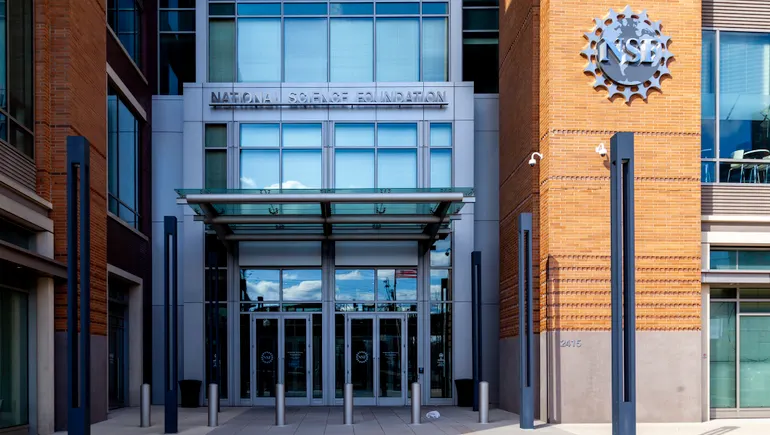
    The National Science Foundation said Thursday that it’s suspending grant awards at the University of California, Los Angeles. 

    An NSF spokesperson said that the university’s awards “are not in alignment with current NSF priorities and/or programmatic goals,” though they didn’t offer more specifics. NSF changed its priorities in April and, as a result, cut off funding to programs related to diversity, equity and inclusion and those aimed at combating misinformation

    Freelance journalist Dan Garisto wrote on BlueSky that nearly 300 grants at UCLA are now suspended. That includes a $25 million grant that supports the university’s Institute for Pure and Applied Mathematics. (In 2022, UCLA had about 450 grants from the NSF, totaling more than $350 million.)

    UCLA chancellor Julio Frenk wrote in a letter to the campus community that the freeze extended beyond NSF to include grants from the National Institutes of Health and other federal agencies.

    “This is not only a loss to the researchers who rely on critical grants,” Frenk wrote. “It is a loss for Americans across the nation whose work, health, and future depend on the groundbreaking work we do.”

    Frenk noted that UCLA was prepared for a grant freeze and has developed contingency plans. “We will do everything we can to protect the interests of faculty, students and staff—and to defend our values and principles,” he pledged.

    The Associated Press reported that the freeze affected $339 million in federal grants.

    The grant suspension comes as UCLA finds itself the Trump administration’s latest target in its growing war with higher education. Earlier this week, the university settled a lawsuit in which a group of Jewish students alleged that UCLA enabled pro-Palestinian activists to cut off Jewish students’ access to parts of campus. On the same day the settlement was announced, the Justice Department accused UCLA of violating the federal civil rights law that bars antisemitism and race-based discrimination.

    Frenk said the government claimed “antisemitism and bias as the reasons” for the freeze. But he argued that Trump’s “far-reaching penalty of defunding life-saving research does nothing to address any alleged discrimination.” 

    He added that UCLA shares the goal of eradicating antisemitism, detailing the steps the university has taken in the last year to address the issue, including establishing new policies for campus protests.

    UCLA has until Aug. 5 to respond to the DOJ’s notice of violation; DOJ officials threatened that the university would “pay a heavy price for putting Jewish Americans at risk.” The Justice Department is also investigating the admissions practices at UCLA, but that inquiry hasn’t wrapped up yet.

    Source link

  • Justin Amash | The Foundation for Individual Rights and Expression

    Justin Amash | The Foundation for Individual Rights and Expression

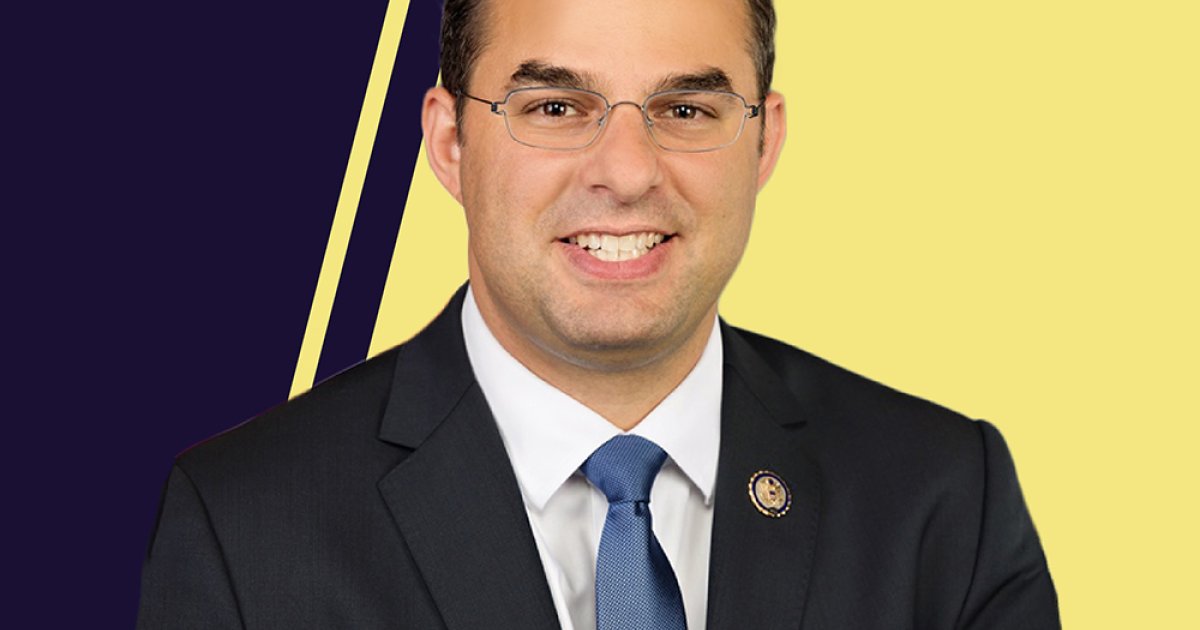
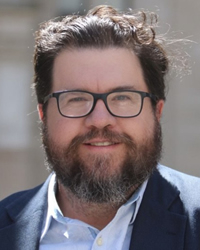
    Throughout his career, former Congressman Justin Amash
    has been a strong advocate for freedom of speech, writing that “The
    value of free speech comes from encountering views that are
    unorthodox, uncommon, or unaccepted…Free speech is a barren
    concept if people are limited to expressing views already widely
    held.”

    In this special live episode, filmed in front of 200+
    high schoolers attending FIRE’s Free Speech Forum at American
    University in Washington, D.C., Amash takes questions from the
    audience and discusses his upbringing, his political career, the
    state of American politics, and how the Constitution guided his
    work in Congress.

    Earlier this year, Congressman Amash
    joined
    FIRE’s Advisory Council.

    Timestamps:

    00:00 Intro

    03:30 Upbringing

    06:21 Law school

    13:15 Time in Congress

    15:59 Why Amash publicly explained each of his
    votes

    26:30 On being the first libertarian in Congress

    30:57 Connection between his principles and free
    speech

    33:10 Trump’s first impeachment

    42:48 Dealing with pushback from constituents

    46:03 Term limits for members of Congress?

    55:25 How high schoolers can pursue a career in
    politics

    59:45 Has there been a regression in First Amendment
    protections?

    01:07:32 What Amash is up to now

    01:08:06 Outro

    Enjoy listening to the podcast? Donate to FIRE today and
    get exclusive content like member webinars, special episodes, and
    more. If you became a FIRE Member
    through a donation to FIRE at thefire.org and would like access to
    Substack’s paid subscriber podcast feed, please email
    [email protected].

    Source link

  • How funding policy has affected foundation year provision

    How funding policy has affected foundation year provision

    The coming academic year (2025-26) is the first in which classroom-based foundation year (FY) fees will be capped at a level below the higher level fee cap.

    For many who have experienced or supported foundation year tuition this is a retreat from a proven method for supporting people who have been failed by compulsory schooling in continuing their education. Critics would point to a few years of sustained growth, particularly in franchised provision, that is of more questionable quality and benefit.

    Foundation years are an anomaly in that they sit neither at level three (alongside other pre-university qualifications like A levels or the Access to HE Diploma [AHED]) or level four (alongside higher national diplomas, and the first years of both undergraduate degrees and higher technical qualifications). As such, they will face the worst of both worlds: level 3 funding (for classroom-based provision) covered by level 4 repayment rules and level 4 regulatory interventions.

    Why cut?

    In a ministerial statement that, in a dazzling display of self-awareness, actually used the phrase “fix the foundations” twice, the Secretary of State set a fee limit of £5,760 (the maximum current cost of an AHED, though in practice fees are nearer £4,000) as a maximum for “classroom-based” (non-STEM) foundation years on 4 November 2024.

    There’s a paragraph on the ostensible reasoning for this that is worth bearing in mind:

    The government recognises the importance of foundation years for promoting access to higher education, but they can be delivered more efficiently in classroom-based subjects, at a lower cost to students.

    This sounds more like an access-focused intervention rather than an attempt to cut provision, although it is rather divorced from the cost of provision. This is despite a 2023 report from IFF Research which noted that, based on the available data and on a series of interviews:

    the cost of delivering FY and the first year of a UG degree in the same subject area was found to be broadly similar

    Indeed, there were suggestions that FYs may actually work out more expensive, given the need for more contact time and the tendency towards smaller classes. We should leave aside for the moment the great difficulties we have in understanding the cost of higher education provision more generally, and note that the evidence base for this particular decision is weak. And there is, to be clear, a huge absence of meaningful data about FYs more generally – something DfE itself attempted (after a fashion) to remedy with an ad hoc data release in October of 2023.

    Review of routes

    If you were wondering where the impetus for this policy intervention originally came from, you have to look back to Philip Augar’s review of post-18 fees and funding back in 2019:

    We recommend that student finance is no longer offered for foundation years, unless agreed with the OfS in exceptional cases.

    In broad-brush terms, his argument was that foundation years did a similar job to some level 3 qualifications (specifically the Access to HE Diplomas) at greater cost: he characterised this as “enticing” underqualified students onto expensive four year degrees that may not be in their best interests.

    It was one of many largely arbitrary (and mercifully forgotten) Augar recommendations on higher education funding, to the credit of the previous government it was very much more aligned to addressing the value offered to students. As Michelle Donelan said in 2022:

    We also know that there are some people who need a second chance, an opportunity to get into higher education through a less conventional route. Often this route is through foundation years, but we think it is unfair that some of those who take advantage of this transformational opportunity have to pay over the odds. So we are reducing the fee limit for foundation years to make them more accessible and more affordable for those who need a second chance.

    Quantity and quality

    Okay. So, ignoring Augar, there’s never been an agenda to cancel or limit the availability of foundation years. The cuts are based (albeit on some quite shaky data) on reducing costs for students while maintaining affordability for providers.

    There is, however, widely reckoned to be a quality issue with some FYs offered via franchise or partnership arrangement – something which DfE did not appear to have considered in collecting data or commissioning reports.

    With the 2025 recruitment cycle mostly over, we now have the ability to assess how the sector has responded to these interventions via the Unistats dataset.

    As I never tire of telling people, Unistats is not perfect but it is useful. The big headline story we’ve tracked in recent years is a reduction in the number of undergraduate courses on offer overall – down 6 per cent between 2023 and 2024, and down a further 3 per cent between 2024 and 2025.

    Foundation supply

    But underneath this we lost one in ten courses with compulsory foundation years (courses that must start with a foundation year) between 2023 and 2024, and a further five percent between 2024 and 2025. The latter year also saw nearly 6 per cent of optional foundation years (courses that can include a foundation year if required) disappear.

    [Full screen]

    What about franchise provision? Using a unistats proxy (does the registered UKPRN match the display UKPRN, or is there an additional UKPRN for a different teaching location) it appears that the number of franchised compulsory foundation years grew from 90 in 2023 to 107 in 2024. This trend reversed between 2024 and 2025 (with numbers falling back below 80), but the number of optional franchised foundation years fell off a cliff after 2023: from 53 in 2023 to just 12 in 2024, and 13 in 2025.

    At a (top level) subject area the dominance of social sciences and business foundation years has declined a little – engineering foundation years have always been popular and have broadly persisted over the three years in question (and are the most popular by far at Russell Group providers). Among franchised provision business and management still dominates, but the last three years has seen a rise in the number of creative and engineering foundation years offered (largely with specialised providers as franchisers).

    Policy outcomes and policy intentions

    So, it all depends on how you take the impetus of the government’s change in foundation year policy. If it was a measure to reduce overall the number of classroom (non-STEM) foundation years it has had some questionable success, likewise if you believe it was a policy designed to limit the spread of franchised foundation year degrees.

    It is possible that it has driven savings within universities – allowing foundation years to be run more cheaply. This might explain things like the paradoxical rise in franchised foundation years in creative arts alongside a drop in non-franchised provision – smaller and less historically encumbered (and potentially lower quality) providers may be better at running these foundation years at a lower overall cost.

    Here’s who is offering these courses – and what they are.

    [Full screen]

    This defaults to FY provision in 2025 but is – with a bit of effort, a fascinating tool for looking over the complete three years of courses advertised to undergraduates.

    As usual, we are hugely short of data – the fact that unistats (of all things) offers the best lens on what is happening suggests that there’s nobody in DfE with an eye on what is going on.

    But rumours of the demise of the classroom based foundation year, or even the franchise model in providing this, are likely to be overstated. It remains to be seen, by whatever measure, whether the cut-price offer is as good.


    Source link

  • Extortion in plain sight | The Foundation for Individual Rights and Expression

    Extortion in plain sight | The Foundation for Individual Rights and Expression

    This essay was originally published by The Dispatch on July 4, 2025.


    Paramount Global’s decision to pay $16 million to end President Donald Trump’s lawsuit over a 60 Minutes interview with Kamala Harris was a “win for the American people,” according to Trump’s lawyers. And it happened because “CBS and Paramount Global realized the strength of this historic case and had no choice but to settle.”

    Well, not quite.

    The case is “historic” for sure, but not in a good way or because the advocates came up with profound theories of media law. Quite to the contrary: The case is so baseless, so devoid of factual or legal support, and so diametrically opposed to basic First Amendment principles it is hard to imagine how those who filed it sleep at night. 

    The main question about Paramount’s decision to settle this comically frivolous lawsuit is not why the company decided to settle, but why did resolving it take this long if the “historic case” were so “strong?” The reason for the settlement is obvious. Paramount, the corporate parent of the CBS television network, had a gun to its head. 

    Paramount must get approval from the Federal Communications Commission for its proposed $8 billion merger with Skydance Media (which includes the transfer of 28 CBS-owned and -operated broadcast stations). The merger agreement expired April 7 but was extended to July 7. So it was pay-up or shut-up time.

    The holdup, in every sense of that word, came in the form of FCC Chairman Brendan Carr, whom President Trump elevated to head the commission on Inauguration Day. As one of his first official acts, Carr opened his own investigation of the Harris interview over supposed “news distortion,” and he slow-rolled the FCC’s merger review process. The Securities and Exchange Commission and European regulators had approved the merger back in February, but the FCC continued to “ponder” the matter as the deal clock ticked down.

    Trump’s $16M win over ’60 Minutes’ edit sends chilling message to journalists everywhere

    Trump’s $16M win over a “60 Minutes” edit sends a chilling message to journalists everywhere. FIRE’s Bob Corn-Revere calls it what it is: the FCC playing politics.


    Read More

    But let’s give him the benefit of the doubt: Couldn’t it be that Carr was just carefully considering nuanced issues of media law in order to safeguard the public from big-network media bias? After all, Trump had claimed that CBS had edited its interview deceptively to make Harris “look better” — something he called “totally illegal,” an “UNPRECEDENTED SCANDAL,” and for which the FCC should “TAKE AWAY THE CBS LICENSE.” Never mind that networks are not licensed by the FCC (stations are), the rant led to the lawsuit in Texas and later the FCC investigation.

    Loopy all-cap social media posts aside, there was never a legitimate basis either for the lawsuit or the FCC action. Every day, from the smallest newspaper to the largest network, reporters and editors must digest and condense the information they collect — including quotes from politicians and other newsmakers — to tell their stories concisely and understandably. For instance, Trump has repeatedly received the same treatment. Fox News repeatedly edited interviews with then-candidate Trump during the campaign, editing answers to enhance coherence, eliminate digressions, and excise insults. Making sense of the stuff that pours from politicians’ mouths is not easy. And here, CBS was accused of something unforgivable: committing standard journalism. 

    This was never about swapping out answers to different questions or rewriting answers, as Trump and his supporters falsely claim. During the interview, 60 Minutes correspondent Bill Whitaker asked then-Vice President Harris a question about the Biden administration’s relationship with Israeli Prime Minister Benjamin Netanyahu: 

    MR. BILL WHITAKER: But it seems that Prime Minister Netanyahu is not listening. The Wall Street Journal said that he — that your administration has repeatedly been blindsided by Netanyahu, and in fact, he has rebuffed just about all of your administration’s entreaties.

    VICE PRESIDENT KAMALA HARRIS: Well, Bill, the work that we have done has resulted in a number of movements in that region by Israel that were very much prompted by, or a result of many things, including our advocacy for what needs to happen in the region. And we’re not going to stop doing that. We are not going to stop pursuing what is necessary for the United States to be clear about where we stand on the need for this war to end.

    CBS broadcast two excerpts of Harris’ answer on two separate programs: On Face the Nation, CBS aired the first sentence of Harris’ answer. On 60 Minutes, CBS aired the last sentence of the answer. Really — that’s all this is about.

    The FCC in the past has never defined the editing process as “news distortion.” In fact, it has steadfastly maintained the First Amendment bars it from doing so. Chairman Carr’s decision to reopen a closed complaint in a matter he knows to be baseless and beyond the FCC’s authority is unprecedented and indefensible.

    We need a far stronger word than ‘hypocrite’ to capture this moment. We have a president who on day one issued an executive order purporting to ‘restore free speech’ … [then] deployed agency heads to retaliate against news organizations that displease him.

    And the arguments in the now-settled lawsuit are even more frivolous (if that’s even possible). Trump’s lawyers argued that the Harris interview violated the Texas Deceptive Trade Practices Act and the federal Lanham Act as a “false, misleading, or deceptive act or practice” and asserted $20 billion in damages. Those laws are designed to prevent consumer deception in marketing practices (like turning back the odometer on a used car) or false advertising. They simply don’t apply to editorial judgments by news organizations. No court in any jurisdiction has ever held that such a cause of action might be valid, and few plaintiffs have ever attempted to bring such outlandish claims. Those who have done so were promptly dismissed.

    But who needs good arguments or supporting legal authority when federal regulators are willing to ignore their oath to uphold the Constitution and back your political power play?

    Of course, Carr has maintained that there was no link between the Texas lawsuit and the FCC’s merger review or news distortion investigation. But let’s get real. Before he was named chairman, Carr said he didn’t think the 60 Minutes interview “should be a federal case,” and “we don’t want to get into authenticating news or being a Ministry of Truth.”

    But once Trump announced Carr as his pick to head the agency, Carr changed his tune, telling Fox News the FCC would review the 60 Minutes complaint while considering whether to approve the Paramount-Skydance merger. The hypocrisy here is staggering. As chairman, Carr has routinely boasted that he wants to move quickly to spur business and investment. Yet here, he mysteriously lagged in reviewing the Paramount Global-Skydance merger (coincidentally, no doubt) as settlement negotiations dragged on in Texas.

    We need a far stronger word than “hypocrite” to capture this moment. We have a president who on day one issued an executive order purporting to “restore free speech” and to bar any federal official from engaging in censorship. At the same time, the very same president deployed agency heads to retaliate against news organizations that displease him and to do so in support of his private litigation efforts. And we have an FCC chairman who used to say things like “[a] newsroom’s decision about what stories to cover and how to frame them should be beyond the reach of any government official, not targeted by them,” who has made micromanaging news editing a defining principle of his administration.

    Meanwhile, settlement of Trump’s case against CBS and the anticipated merger approval raise some significant questions. Sens. Elizabeth Warren, Bernie Sanders, and Ron Wyden have asked whether the settlement might violate federal bribery laws, which prohibit corruptly giving anything of value to public officials to influence an official act. In a similar vein, the Freedom of the Press Foundation has threatened (as a Paramount shareholder) to bring a derivative action against the company for conflict of interest, and last May filed a shareholder information demand. 

    Whatever else may happen, this week’s settlement announcement is not the end of this saga. But one thing is clear: The bullying tactics that led to this settlement stain our nation’s character and taint not just those who engage in them but also those who give in.

    Source link

  • Civic engagement offers a firm foundation for universities contributing to regional economic growth agendas

    Civic engagement offers a firm foundation for universities contributing to regional economic growth agendas

    When searching for friendly support or warm words from politicians, the media, and the public, UK universities are increasingly being left empty-handed.

    Last year’s modest increase in tuition fees allowed universities a temporary reprieve after years of tightening financial constraints but came with a firm warning that standards must improve and was quickly wiped out by rises in National Insurance. Meanwhile, culture wars and negative perceptions on quality and graduate outcomes continue to dominate discourse around the sector, fuelling criticism of universities from all directions.

    Richard Jones, vice president for regional innovation and civic engagement at the University of Manchester posited last week that university leaders may be tempted to look for easy savings in their civic impact work – initiatives that engage with and benefit their local community but ultimately fall outside of a university’s traditional mission of teaching and research. But as he argues, this would be a profound mistake.

    The outlook in recent years for universities may have been challenging, but hope lies in Labour’s focus on place-based policy. Place has driven flagship funding decisions and policies including the Spending Review and the Industrial Strategy, with more money being devolved from Whitehall to the regions in pursuit of growth. New Mayoral Strategic Authorities have been empowered to take the reins on transport, investment, spatial planning and skills, with the promise of further autonomy as they mature. A new Green Book – government’s methodology for assessing public investments – is being updated and will broaden the criteria to look more favourably at investments outside London and the South East.

    Universities are perfectly placed to be the drivers of Labour’s regional growth ambitions. The priority sectors in last week’s Industrial Strategy – including advanced manufacturing, life sciences, and clean energy industries – are some of UK universities’ best strengths. Moreover, as anchor institutions located in the heart of communities, universities are physically well-placed to address causes of economic decline.

    Civic engagement for economic growth

    The civic university movement, which champions collaboration between universities and their localities, has an established framework for institutions looking to ramp up civic impact initiatives with their civic university agreements. More than 70 civic university agreements are already in place between universities and their local authorities, with universities in Manchester, Nottingham, Sheffield, Exeter, Derby and London, among others, providing a range of examples for institutions to learn from.

    A UPP Foundation series of roundtables held in four regions across England recently has also highlighted that the civic university movement remains active, with a wealth of civic activity taking place across the country. Universities are finding creative ways to engage with their local communities, with examples including offering to host events in university spaces, or running a café that demystifies the benefits of nuclear energy while providing employment and training for local people. For institutions nervous about signing up to lengthy and potentially costly partnerships, participants at the roundtables instead stressed that smaller gestures can be just as meaningful. Rather than draining resources, civic activity can in fact alleviate funding pressures when universities work together to learn from one another.

    Irrespective of geography, participants were united in their contention that universities should collaborate with their local partners to develop civic initiatives, working collaboratively to address the real day-to-day problems communities want help with, such as helping local businesses transition to net zero.

    Labour’s devolution agenda also offers an opportunity for universities to become visible bridges working across regions and political geographies. While mayoral devolution has been lauded in cohesive urban centres like Manchester and Birmingham, there are concerns the model will work less well in rural areas where proposed Mayoral Combined Authorities will intersect with traditional county borders. For such regions, universities can both serve as bolsters to wider regional identity and can benefit from the flexibility of their own geography that may span mayoral regions.

    The opportunities are there for universities to re-embed civic activity into their core work under Labour’s agenda – but it needs brave leadership to embrace them. In the face of tough financial decisions, university leaders must champion the benefits of civic activity. The late Bob Kerslake, chair of the UPP Foundation’s Civic University Commission 2018–19, deeply understood the potential and necessity for universities to be rooted in their local communities. For a higher education sector that has spent recent years on uncertain footing, tapping into Kerslake’s vision could provide a more certain path forward.

    The UPP Foundation’s full report UPP Foundation Spring 2025 Roundtables: The Role of Universities in Regional Placemaking explores the key themes of the roundtable discussions. You can download the report here.

    Source link

  • Federal Court Orders Reinstatement of Southern Education Foundation Grant After DEI Controversy

    Federal Court Orders Reinstatement of Southern Education Foundation Grant After DEI Controversy

    Raymond PierceThe Southern Education Foundation has secured a significant legal victory in its fight against the U.S. Department of Education, with a federal judge ordering the reinstatement of a key grant that was terminated earlier this year over allegations of illegal diversity, equity, and inclusion practices.

    On May 21, 2025, a judge in the U.S. District Court for the District of Columbia granted SEF’s motion for preliminary injunction, ordering the Department of Education to restore the organization’s Equity Assistance Center-South grant and reimburse all outstanding expenses. The grant, which had been terminated on February 13, 2025, enables SEF to provide technical assistance to public school districts and state agencies across 11 Southern states to help them comply with federal civil rights law.

    The court’s ruling was particularly pointed in its criticism of the Education Department’s decision to terminate the grant. 

    “In view of the history of race in America and the mission of SEF since the Civil War, the audacity of terminating its grants based on ‘DEI’ concerns is truly breathtaking,” the judge wrote in the opinion.

    The Southern Education Foundation, which has operated for more than 150 years with a mission to advance educational opportunities for Black students in the South, traces its origins to the late 1800s when it supported education for individuals recently emancipated from enslavement. The organization’s Equity Assistance Center represents a continuation of work that began with the original Desegregation Assistance Centers.

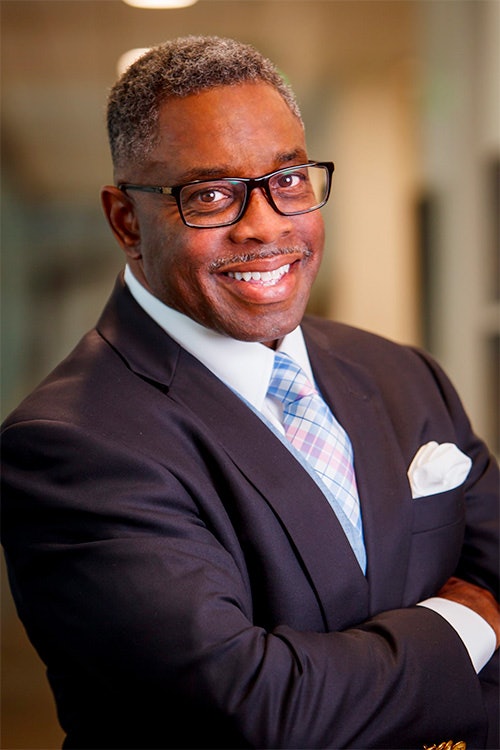
    “We are pleased with the Department of Education’s compliance with the court order by reinstating our grant,” said SEF President and CEO Raymond Pierce. “With the grant reinstated, SEF can move forward with developing the assistance needed to free school districts from policies and practices that remain from the dark era of lawful segregation which continue to hinder equal education opportunity for far too many children.”

    The preliminary injunction provides temporary relief while the case proceeds through the courts. The judge found that SEF was likely to succeed on the merits of its claim that the Department violated federal law in terminating the grant. However, the reinstatement is not yet permanent, pending the outcome of the full legal proceedings.

    The case highlights ongoing tensions around diversity, equity, and inclusion initiatives in education, particularly as they relate to organizations with deep historical roots in civil rights work. The Southern Education Foundation’s century-and-a-half commitment to educational equity predates modern DEI terminology by decades, making the Department’s allegations particularly contentious.

    The EAC-South serves a critical function in the region, providing technical assistance to help school districts navigate complex federal civil rights requirements. This support is particularly vital in states with histories of legal segregation, where legacy policies and practices can continue to create barriers to equal educational opportunity.

    The reinstatement allows SEF to resume its work immediately, though the organization will be watching closely as the legal case progresses. The preliminary nature of the court’s order means that while SEF can continue operating the program, the long-term resolution of the dispute remains uncertain.

    The case represents a broader debate about the role of equity-focused programming in education and the extent to which federal agencies can regulate or restrict such work. For the Southern Education Foundation, the stakes extend beyond a single grant to encompass the organization’s fundamental mission and its ability to continue serving communities that have historically faced educational inequities.

    Source link

  • 16 states sue National Science Foundation over wide-reaching research cuts

    16 states sue National Science Foundation over wide-reaching research cuts

    Dive Brief:

    • Sixteen states sued the National Science Foundation on Wednesday over the agency’s cap on funding for research overhead and its mass termination of grants related to diversity, equity and other topics deemed verboten by the Trump administration. 
    • Plaintiffs allege both moves violate federal law and threaten major research projects and millions of dollars in federal funding at universities in their states. An NSF spokesperson declined to comment on the lawsuit. 
    • The suing states — nearly all of whom have Democrat attorneys general — asked a federal judge in New York to block NSF’s indirect cost cap and its April directive barring diversity-related grants.

    Dive Insight:

    On April 18, the science research agencywhich was founded in 1950 and had a budget of $9 billion last fiscal yearissued a statement announcing it would prioritize research focused on creating “opportunities for all Americans everywhere.” 

    “Research projects with more narrow impact limited to subgroups of people based on protected class or characteristics do not effectuate NSF priorities,” the agency said at the time.

    The same day, NSF began issuing mass termination notices for projects that seek to boost participation in scientific fields by “women, minorities, and people with disabilities,” according to Wednesday’s complaint. Studies on misinformation and environmental justice also received termination notices.

    The canceled projects include a University of Delaware study on post-traumatic stress disorder and suicidality among veterans; a new doctoral program in New Jersey promoting increased participation of underrepresented groups in science-related Ph.D.s; and a University of Oregon initiative providing some 20,000 students with learning experiences in computer science. 

    Later, in May, NSF moved to cap reimbursement for indirect research costs at 15% for all new grants issued to colleges. The cuts affect funding for equipment, administrative staff, laboratory construction and other expenses in research programs.

    The funding cap already sparked at least one other lawsuit, from a group of higher education associations.

    The change could bring steep financial and infrastructural damage to university research programs that the government relies on to advance knowledge and technology in the country, the state plaintiffs argued. 

    According to Wednesday’s lawsuit, the “vast majority” of university projects in the plaintiff states had negotiated indirect research rates between 40% and 60% with NSF. Those states’ “institutions will not be able to maintain essential research infrastructure and will be forced to significantly scale back or halt research, abandon numerous projects, and lay off staff,” the plaintiffs argued. 

    In both cases — the April directive and May indirect cost cap — the NSF violated law, the states said. 

    In the case of the April directive, the plaintiffs pointed to statutes that explicitly direct the agency to promote scientific participation among underrepresented groups in the U.S. 

    They further argue that the longstanding policy has worked, citing statistics showing that the number of women in science and engineering occupations or with related degrees doubled between 1995 and 2017. Participation in these fields by those from minority groups rose from 15% to 35% during the period. 

    The plaintiffs likewise argued that the indirect cost cap undermines a federal law directing the NSF to support basic scientific research and education programs.

    Under the Trump administration this year, the National Institutes of Health and the U.S. Department of Energy also both adopted similar 15% caps on overhead reimbursement. Courts have blocked both policies, though the cases are ongoing.

    Source link

  • Alliant Credit Union Foundation Grants $108K to Boost AI and Digital Programs at Ridgewood High School

    Alliant Credit Union Foundation Grants $108K to Boost AI and Digital Programs at Ridgewood High School

    The Alliant Credit Union Foundation has awarded a $108,000 grant to Digital Leaders Now, the nonprofit that powers the Digital Leaders Academy at Ridgewood Community High School District 234, to support the implementation of innovative digital opportunity programs.

    The initiative will begin rolling out in Spring 2025, with full program implementation for the 2025-2026 school year. The grant will help students gain critical digital skills, enhance career preparation opportunities at Ridgewood and beyond, and ensure teachers have the necessary resources to integrate technology into the classroom effectively.

    “The Alliant Credit Union Foundation is committed to fostering educational opportunities that prepare students for the future,” said Meredith Ritchie, President of The Alliant Credit Union Foundation. “By partnering with the Digital Leaders Academy, we are helping to bridge the digital divide and ensure that students in Ridgewood Community High School District 234 are equipped with the skills and knowledge they need to succeed in the evolving workforce.”

    The grant will support key initiatives, including:

    • Integration of AI Tools: Students will gain hands-on experience using AI and emerging technologies to enhance their learning and problem-solving skills.
    • Teacher Training & Development: Supporting professional development programs that empower educators with the tools and knowledge to incorporate digital learning strategies into their curriculum.
    • Digital Fluency Expansion: Enhancing student digital literacy and technology-based learning experiences to build a foundation for future careers.
    • Career Readiness Programs: Preparing students for high-demand technology roles by connecting them with industry experts, mentorship opportunities, and real-world applications of digital skills.

    Through this initiative, the Alliant Credit Union Foundation continues its mission of driving positive change in education by expanding access to technology and professional development resources.

    “The Digital Leaders Academy is a testament to the power of partnership and community. With the support of Alliant, we’re equipping students, teachers, and parents with the tools to thrive in the digital age, because when we invest in digital fluency, we unlock limitless potential,” said Caroline Sanchez Crozier, Founder of Digital Leaders Now, an Illinois-based nonprofit, and creator of Digital Leaders Academy.

    Ridgewood Community High School District 234 students will benefit from enhanced learning experiences, giving them a competitive edge in today’s digital economy.

    Kevin Hogan
    Latest posts by Kevin Hogan (see all)

    Source link

  • Gates Foundation to Spend $200B Before Closing in 2045

    Gates Foundation to Spend $200B Before Closing in 2045

    Bill Gates is planning to close his philanthropic foundation in 2045, but not before he ramps up spending on health research and other humanitarian efforts.   

    STAT News reported Thursday that the Gates Foundation, which launched in 2000, will spend $200 billion over the next two decades—double the $100 billion it spent on global health, development, gender equity and other work during its first 25 years. The announcement comes amid President Trump’s directives to cut billions of dollars in federal research funding to universities, effectively shutter the United States Agency for International Development and withdraw the United States from the World Health Organization. 

    In an interview with The New York Times, Gates said some of those decisions stunned him and predicted that unless there’s a big reversal of the Trump administration’s policies, “we’ll probably go from 5 million to 6 million” child deaths a year instead of earlier projection that child deaths would decrease by one million. 

    “The world’s richest man has been involved in the deaths of the world’s poorest children,” he said, referring to the unelected billionaire bureaucrat Elon Musk, who runs the Department of Government of Efficiency, which ordered the decimation of USAID. “He put it in the wood chipper because he didn’t go to a party that weekend.”

    Over the next 20 years, the Gates Foundation will focus its resources on achieving three goals: that “no mom, child or baby dies of a preventable cause”; that “the next generation grows up in a world without deadly infectious diseases”; and that “hundreds of millions of people break free from poverty, putting more countries on a path to prosperity.”

    “There are too many urgent problems to solve for me to hold onto resources that could be used to help people. That is why I have decided to give my money back to society much faster than I had originally planned,” Gates, co-founder of Microsoft, wrote in a blog post. “I will give away virtually all my wealth through the Gates Foundation over the next 20 years to the cause of saving and improving lives around the world.”

    Source link

  • Is cancel culture dead? | The Foundation for Individual Rights and Expression

    Is cancel culture dead? | The Foundation for Individual Rights and Expression

    The co-authors of “The Canceling of the American Mind”
    discuss its new paperback release and where cancel culture stands a
    year and a half after the book’s original publication.


    Greg Lukianoff

    Rikki Schlott

    Timestamps:

    00:00 Intro

    04:35 Origin of book

    07:56 Definition of cancel culture

    17:55 Mike Adams, canceled professor

    23:51 Alexi McCammond, former Teen Vogue
    editor-in-chief

    31:57 Echo chambers on social media

    35:09 Trump administration ‘canceling’ law firms and
    higher ed institutions

    44:02 Rikki’s libertarian political identity

    51:02 Is cancel culture dead?

    54:26 Outro


    Read the transcript.

    Enjoy listening to the podcast? Donate to FIRE today and
    get exclusive content like member webinars, special episodes, and
    more. If you became a FIRE Member
    through a donation to FIRE at thefire.org and would like access to
    Substack’s paid subscriber podcast feed, please email [email protected].

    Show notes:

    Source link