

Tag: founders

  • Why Founder’s College Is the Answer to Declining College-Going

    Why Founder’s College Is the Answer to Declining College-Going

    In a recent Forbes column, Lumina Foundation president Jamie Merisotis reminded us that degrees must do more than certify coursework—they must create real value for students and employers. In Indiana, where Sagamore Institute’s 2040 workforce economy study and the Indiana Commission for Higher Education warn of falling college-going rates, this challenge is especially urgent.

    That is the backdrop for Butler University’s boldest experiment yet: Founder’s College, launched August 2025.

    Compressing Time, Expanding Values

    The Founder’s College model confronts a growing national conversation: does the U.S. need more pathways beyond the traditional four-year degree? Institutions across the country are piloting three-year bachelor’s options and embedded two-year credentials to align faster, more affordable education with urgent labor market shortages while maximizing current infrastructure to meet needs.

    Butler University has placed itself in this conversation with uncommon clarity. At Founder’s College, students complete a two-year associate degree in six structured semesters, front-loading the critical skills usually acquired in a student’s junior and senior years—career motivation, professional identity and workforce readiness. This compressed pathway is not cut-rate—it is deliberately sequenced with degree programs tied to Classification of Instructional Programs codes and O*NET occupational standards synced to NACE competencies, ensuring that every credential reflects real career demand in Indiana and beyond.
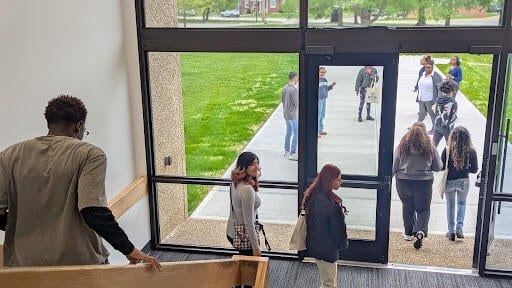
    Founder’s students walking down steps

    A Workforce-Aligned, Equity-Driven Blueprint

    The Indianapolis labor market, seeing a 3.1 percent GDP growth, underscores the need for this approach (Indiana University News, 2004). The monetary value of all that is produced in the state is outpacing state and national averages. At the same time, in-demand industries—especially health care, professional services, technology and advanced manufacturing—are confronting skill mismatches. Employers are offering jobs, yet Indiana’s college-going rate has slipped to historic lows, leaving pipelines partially empty (Indiana Business Research Center, 2024). The Indiana Department of Workforce Development reports wages are rising, up 4.1 percent in the metro area in 2025 according to InContext Indiana.

    Institutions like Butler University are not blind to the demographic challenges either. A declining birth rate, an aging workforce, admissions redesigns and disruptive technologies such as AI intensify the demand for midlevel, adaptable credentials to reskill workers quickly.
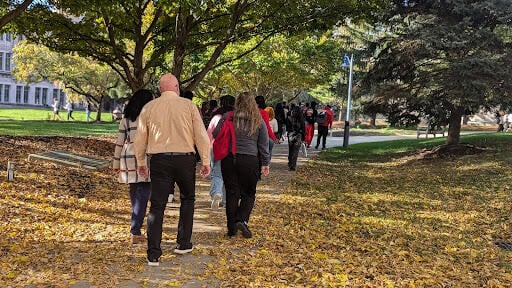
    Founder’s students walking a path on campus

    Here is where Founder’s College shifts the ground. It builds wraparound supports—career coaching, social workers, family inclusion and embedded apprenticeships—into the core of its structure rather than leaving them at the margins. By lowering tuition costs to nearly debt-free levels for students and building in work-integrated experiences, Founder’s College creates a system where opportunity is the design, not the exception.

    Global Research, Local Application

    Butler’s experiment does not arise in a vacuum. It mirrors and operationalizes the findings of major policy reports:

    A 2024 Organisation for Economic Co-operation and Development report recommends expanded investment in skills and high-quality education to combat slowing productivity growth coupled by aging, digitalization and climate changes. It stresses repeatedly that the U.S. is falling behind peer nations in connecting academic programs to workplace readiness, particularly in apprenticeships and microcredentials. The Founder’s College requirement that every student engage in structured, mentored, for-credit work experience directly addresses that gap.

    The America AI Action Plan 2025 highlights the accelerating impact of artificial intelligence on the skills profile of jobs. Handshake reports increase in generative AI usage too. While OECD 2025 reminds us that there is a changing landscape requiring adaptability, complex interdisciplinary problem-solving and liberal arts and professional academic digital fluency are no longer optional. At Founder’s College, technical writing studios, digital credentialing, industry certification and technology integration prepare students to thrive in an AI-mediated workplace.

    FutureEd research from 2023 emphasizes transparency in skills attainment and the use of short-term, stackable credentials as levers of equity. By awarding credentials midjourney and maximizing learning mobility, a call from the LEARN Commission—not just at degree completion—Founder’s College signals value to students, employers and families at every step.
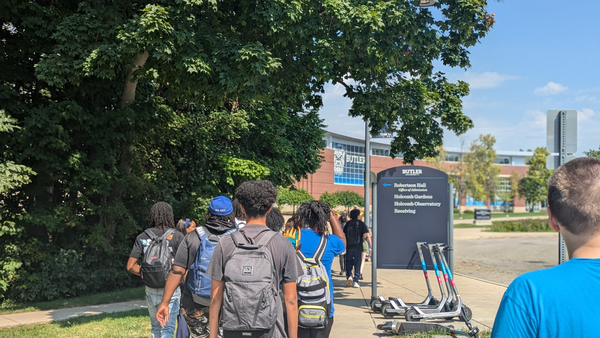
    Taken together, these frameworks make Founder’s College not just a local response to Indiana’s challenges, but a globally informed model tuned to the future of work.

    Founder’s College directly widens the workforce pipeline—by lowering the cost barrier, embedding workforce credentials and signaling to families that college is not just accessible, but immediately useful.
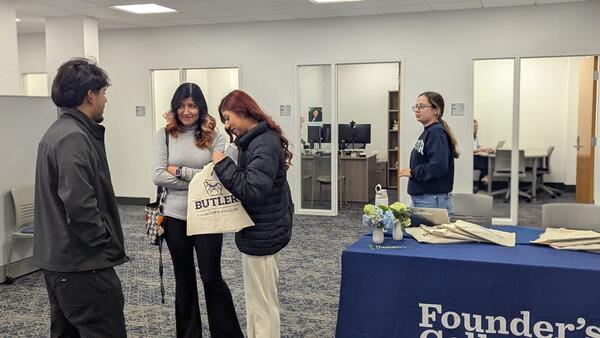
    Founder’s students in student center

    A Case Study and a Challenge

    Across the United States, demographic and migration patterns are reshaping where and how higher education demand will grow. The U.S. South, with its younger, more racially and ethnically diverse populations and steady in-migration, stands poised to lead the nation in enrollment growth through 2035. In contrast, much of the Midwest faces different headwinds: smaller cohorts of college-age students, declining K–12 enrollments and out-migration of young families.

    Rather than a simple story of winners and losers, this shift underscores the divergent opportunities that regions face. In the South, higher education systems will need to expand capacity, affordability and culturally responsive pathways that meet the aspirations of new, more diverse learners. In the Midwest, the challenge is not only to stabilize enrollment but to re-engage adults with some college, no credential and to strengthen the link between education and regional economic renewal.

    Nationally, forecasts for the next decade suggest that the future of higher education will depend on how well institutions adapt to a shrinking pool of traditional-age learners while expanding access for new groups, including working adults and first-generation students. Recruitment, funding models and program design will need to evolve accordingly.

    Using the 2020 U.S. Census as a baseline, when 43 percent of Americans identified as people of color and more than half of minors identified as nonwhite, it’s clear that the next generation of university-bound students will be more multiracial and more globally connected than ever before. Their appetite for education will be shaped by digital fluency, early exposure to STEM and environmental learning, and a social consciousness steeped in sustainability, mental health and civic responsibility.

    For Indiana, where college-going rates are at historic lows, this is more than institutional innovation. Founder’s College is therefore both a case study and a challenge.

    • To other universities: Reimagine the traditional degree in ways that speak to today’s students and employers.
    • To states: Invest in models that don’t just get more students in the door, but get them to good jobs, faster.
    • And to students themselves: Butler is showing you that higher education is within reach, aligned with your life and positions you for thriving success.

    As Merisotis wrote, the future belongs to institutions that make degrees more valuable. Indiana may have just found its vanguard.

    Source link

  • Community colleges in the lurch after WIOA bill founders

    Community colleges in the lurch after WIOA bill founders

    A bipartisan effort to update the nation’s workforce development law is dead, depriving hundreds of community colleges of increased funds and opportunities to cut through the red tape surrounding short-term job training.

    The Stronger Workforce for America Act would have given community colleges automatic eligibility to enter into training contracts with local workforce development offices, introduced a new federal grant and protected several existing programs from potential budget cuts in the new fiscal year.

    The bill’s sponsors were hopeful that the bipartisan legislation to reauthorize the Workforce Innovation and Opportunity Act would pass Congress before the end of the year, as it was included in a wider spending package to fund the government. But when Republicans voiced opposition to the omnibus spending bill just over 24 hours before the government shutdown deadline, lawmakers reversed course. They instead passed a pared-down continuing resolution to fund the government through mid-March, and WIOA reauthorization didn’t make the cut.

    Leaders on the House education and workforce committee had said the Stronger Workforce for America Act would create “transformative change” for the American workforce, pointing to how WIOA helps American workers keep pace with an ever-changing job market and gain high-demand skills. Reauthorizing WIOA was a top priority for Representative Virginia Foxx, the North Carolina Republican who chaired the committee until December.

    Members of the House and Senate education and workforce committees worked for the last two years to update the workforce bill, which expired in 2020. The House plan overwhelmingly passed last spring, and the Senate released a draft plan over the summer. The Senate bill didn’t move forward, but key lawmakers in the House and Senate reached a compromise in late November to update WIOA.

    Groups like the National Association of Workforce Boards and the American Association of Community Colleges say the death of the Stronger Workforce act won’t kill their programs, but nonetheless they expressed concerns about how a lack of reauthorization makes their programs vulnerable. They are trying to remain hopeful that reauthorization will be a priority for this Congress.

    “As the session waned, it was clear that getting a bill enacted in 2024 was going to be extremely difficult,” David Baime, senior vice president of government relations at AACC, said in a statement. “However, we are grateful for WIOA’s champions and very optimistic that a reauthorization will be enacted by the next Congress.”

    Until then, Inside Higher Ed called Baime to talk about the bill and what it means for community colleges and short-term workforce training. Here are three key obstacles he said remain until WIOA gets an update.

    Bureaucracy and Eligibility

    One of the largest benefits for community colleges under the Stronger Workforce act was that their training programs would have automatically qualified for federal WIOA grants.

    Currently, any training provider—be it a community college, an employer or a for-profit technical institution—must meet certain performance criteria in order to receive WIOA dollars. About $500 million is available for job training vouchers each year.

    Often, colleges receive funds by entering a contract with a local workforce board. The process begins with local workforce development agencies identifying key trades or certifications that are in high demand among their community. Then the board picks an approved training provider and contracts with them to train a set number of workers.

    But for years, jumping through the hoops required to make that eligibility list kept many underresourced community colleges from receiving those contracts and federal funds.

    “The bureaucratic nature of WIOA has made for some presidents not being as engaged as they might be,” Baime said. “In these cases, they just don’t find it worthwhile to invest a lot of time in their local workforce boards.”

    The WIOA update would have cut down that red tape.

    Increased Funds

    But even if community colleges did automatically qualify, Baime said, the funding set aside specifically for training programs is limited, and competition with other providers like for-profit technical institutions and employers is steep.

    “In fact, a lot more money for training goes to our students through Pell than through WIOA,” Baime explained.

    Since 2020, the Strengthening Community Colleges Training Grant program has provided dedicated funding for training programs at community colleges. Most recently, the Labor Department awarded $65 million to 18 colleges. Through five rounds of funding, more than 200 colleges have received a total $265 million.

    But the grant program was never formally authorized. That means there is no mandate requiring Congress to set aside a certain amount of funds each year, and the grant depends entirely on advocacy from specific lawmakers.

    The WIOA update would have authorized the grant, providing statutory protection for the funds.

    “SCCTG is a really important program for us. The program relies upon a tested model of community colleges working directly with businesses, in coordination with the federal workforce system. It’s not funded at the level we would like, but it reflects an appropriate prioritization of the role that community colleges play in job training,” Baime said.

    A few other, less direct funding increases were also lost when the legislation died. For example, one policy would have required 50 percent of all WIOA funds to be spent on training rather than administrative fees, leading local workforce boards to invest more in contracts with outside providers.

    Another would have specified that historically broad H1-B grants, which use the revenue from skills-based visas to train American workers, must be used to upskill individuals forced out of their current roles by innovations like AI. Workers would have received up to $5,000 through that change.

    “We think a voucher that size may be an attractive inducement for dislocated workers to receive training at community colleges,” Baime said.

    Future Vulnerability

    Finally, for community colleges, a key concern is how the incoming Congress and Trump administration will approach WIOA, especially now that legislation has failed.

    Republicans in Congress have made it clear they want to “substantially reduce funding,” so Baime fears that WIOA funding of all types could face serious cuts.

    The SCCTG, for example, which has historically been advocated for by Democrats, may no longer get a budget line at all.

    “The importance of workforce education is appreciated by lawmakers across the Hill,” he explained. “But we certainly would have rather gotten that bipartisan, bicameral demonstration of support by being part of this bill and enacted into statute going into the [fiscal year 2026] appropriations process.”

    Source link